“A STUDY TO ASSESS THE EFFECTIVENESS OF STRUCTURED
TEACHING PROGRAMME REGARDING KNOWLEDGE ON
EXCLUSIVE BREAST FEEDING AMONG PRIMI MOTHERS
ATTENDING OUTPATIENTDEPARTMENT IN SUDHA HOSPITAL,
AT ERODE”
By
Register No: 30111133
Dissertation Submitted toTHE TAMILNADU DR. M.G.RMEDICALUNIVERSITY Chennai,
Tamilnadu.
In partial fulfillment
Of the requirements for the degree of Master of Science
In
Obstetric and Gynecological Nursing
“A STUDY TO ASSESS THE EFFECTIVENESS OF STRUCTURED
TEACHING PROGRAMME REGARDING KNOWLEDGE ON
EXCLUSIVE BREAST FEEDING AMONG PRIMI MOTHERS
ATTENDING OUTPATIENT DEPARTMENT IN SUDHA
HOSPITAL, AT ERODE
By
Reg. No:30111133
M.Sc. NURSING (2011-2013)
NANDHA COLLEGE OF NURSING ERODE-638052
“A STUDY TO ASSESS THE EFFECTIVENESS OF
STRUCTURED TEACHING PROGRAMME REGARDING
KNOWLEDGE ON EXCLUSIVE BREAST FEEDING AMONG
PRIMI MOTHERS ATTENDING OUTPATIENT
DEPARTMENT IN SUDHA HOSPITAL, AT ERODE
Approved by Nandha college research committee.
Principal :………
Prof.Mrs.R.Vasanthi, M.Sc., (N) Professor in Paediatric Nursing, Principal,Nandha College of Nursing, Erode-638052.
Research Guide :………..
Mrs.Hamudhunniza,M.Sc.,(N) Reader,
HOD Obstetrical and Gynecological Nursing, Nandha College of Nursing,
Erode-638052.
Medical Guide :……… Dr.Veena Mathan Kumar,MD, D.G.O
Consultant- Obstetrics & Gynecologist. M.N.P Nursing Home
Perundurai - 638052
A Dissertation submitted to
The Tamil Nadu Dr. M.G.R Medical University, Chennai In partial fulfillment of the requirement for
Degree of Master of Science in Nursing
VIVAVOCE:
1. INTERNAL EXAMINER: _______________________________
ENDORSEMENT BYHEADOFTHEINSTITUTION
This is to certify that the dissertation
“A STUDY TO ASSESS THE
EFFECTIVENESS OF STRUCTURED TEACHING PROGRAMMES
REGARDING KNOWLEDGE ON EXCLUSIVE BREAST FEEDING
AMONG
PRIMI
MOTHERS
ATTENDING
OUTPATIENT
DEPARTMENT IN SUDHA HOSPITAL, AT ERODE
is a bonafide research work by: 30111133, Nandha College of Nursing , Erode in partial fulfillment of the University rules and regulation for award of M.Sc., in Obstetrical and Gynecological Nursing under my Guidance and Supervision, during the academic year 2014-2015.Name and signature of the Guide and Head of the department
Mrs. Hamudhunniza, M.Sc., (N)Reader,
Head of the department, Obstetrical and Gynecological Nursing,
Nandha College of Nursing,
Erode – 638052.
Name and signature of the Principal
Prof. Mrs. R. Vasanthi, M.Sc. (N)Professor in Pediatric Nursing,
Principal, Nandha College of Nursing,
ACKNOWLEDGEMENT
“Be who you are say you feel because those who mind don’t matter and those who matter
don’t mind”
The success of my thesis would have been a dream without supports; help and coordination of my teacher, family members‟ take pleasure to mention their names that played a noteworthy
part in this project work.
First and for most thank the “ALMIGHTY GOD” for his showers of blessing thought this
venture.
“Lord said my grace is sufficient for you, for my strength is made perfect in weakness.” I
express my deep sense of gratitude to the lord almighty for the blessing and mercy which enabled me to reach up to this step and complete my study.
I acknowledge here with respect, the golden opportunity offered to me by the
Thiru.N. Shanmugan, (B. Com) Chairman, Nandha Institution for giving me an opportunity
to undertake my M.Sc Nursing program in this esteemed institution.
I expressed my sincere thanks to Thiru.k. Nandha Kumar Pradeep, M.B.A, Secretary of
Nandha Educational Trust for awarding me opportunity to facilitate this course.
I wish to extend my sincere thanks to Thiru.. Krishnamoorthy, A.O, Nandha Paramedical Science for his support and inspiration during our study.
study. Her patient listening, encouraging words and deep understanding indeed have been pillars of strength for me.
It is pleasure and privilege to express my sincere thanks and deep gratitude to my esteemed subject guide to Mrs .S. Hamidhunniza MSc (N), Reader, HOD Department of Obstetrics
and Gynecology,for her valuable guidance during every step of my study. Her timely help and
encouragement supported me a lot throughout my study, which is truly immeasurable.
I extend my thanks to the entire Master of Nursing Faculty for their constructive criticisms and encouragement which led to the successful completion of the study.
I wish to extend my sincere thanks to Prof. Mr. Dhanapalan (Biostatistician) Nanda College of Nursing.
Grateful acknowledgement is expressed by all the experts who spared their valuable time for content validity of the tools and their guidance.
I am grateful to the,SUDHAHOSPITAL, Erode for granting permission to conduct the study. I extend my warm appreciation to the staffs facilitating the execution of this project.
Grateful acknowledgement is expressed to all the experts who spared their valuable time for content validity of the tools and their guidance.
My grateful thanks are extended to all the persons who participated in the study without whose active cooperation it would not have been possible to delve into the personal nature of this inquiry.
A special thanks to Mrs Jaya Seela (Ph.D. English Literature), Nandha matriculation English Language Edit
Special thanks to Mrs. Thamilarasi, Library and Information Assistant for extending library facilities throughout the study. I also thank the personnel of Christian Medical College, Vellore, Medical Library for their valuable contribution to the pool of literature.
I also owe my gratitude to my friends of Obstetrics and Gynecology Department. Who shared the ups and downs of the past two years and were a constant source of fun and support.
My lovable thanks to my husband MR.B.WILBERT SINGH BMT. For his support, prayers, constant encouragement, valuable suggestions, timely help and inspiration which boosted up my morale during the course of this study.
I express of deep sense of gratitude to my parents ,brother, and my daughter and to all my family members for their constant support, prayers and encouragement.
Above all, I express my deep sense of gratitude to God Almighty for his ever abiding grace and blessing which gave me strength for the successful completion of this project.
TABLE OF CONTENTS
SL.NO. CHAPTER
PAGE NO.
I. INTRODUCTION 1
Background of the study 1
Need for the study 7
Statement of the problem 13
Objectives of the study 13
Research hypotheses 13
Operational definitions 14
Assumptions 15
Delimitations 15
Conceptual framework 16
II. REVIEW OF LITERATURE 19
Studies related to exclusive breast feeding
Studies related to knowledge of primi mothers on exclusive
breast feeding.
19 28
III METHODOLOGY 32
Research approach 32
Research design 32
Variables under study 33
Setting of the study 34
Population 34
Sample size 35
Sampling Technique 35
Criteria for sample selection 35
Development of research instrument 35
Method of data collection 36
Data collection instrument 36
Description of the tool 37
Scoring 37
Testing of the instrument 38
Reliability 38
Pilot study 38
Data collection process 38
Data analysis plan 39
Ethical consideration 41
IV DATA ANALYSIS AND INTERPRETATION 43
Section–I:Distribution of Samples in terms of Demographic Variables
45 Section–II: Assessment of pretest and posttest level of
knowledge regarding exclusive breast feeding among primi mothers
52
Section –III: Comparison of pretest and post test score of knowledge regarding exclusive breast feeding among primi mothers
54
Section – IV: Association between pretest scores of knowledge regarding exclusive breast feeding among primi mothers with selected demographic variables
56
V DISCUSSION 58
VI SUMMARY, CONCLUSION, IMPLICATIONS AND RECOMMENDATIONS
61
Result and interpretation 62
Implications 63
Recommendations 64
Conclusion 65
REFERENCES 66
LIST OF TABLES
SL. NO. TABLES PAGE NO.
1. Distribution of samples in terms of demographic variables 45 2. Distribution of samples in terms of age 47 3. Distribution of samples in terms of education 48 4. Distribution of samples in terms of occupation 49 5. Distribution of samples in terms of sources of information 50 6. Distribution of samples in terms of type of family 51
7.
Pre-test and Post-test level of knowledge regarding exclusive breast
feeding among primi mothers 52
8.
Comparison of pre-test and post-test score of knowledge regarding
exclusive breast feeding among primi mothers 54
9.
Association between pre-test scores of knowledge regarding exclusive breast
LIST OF FIGURES
SL.
NO. FIGURES
PAGE NO.
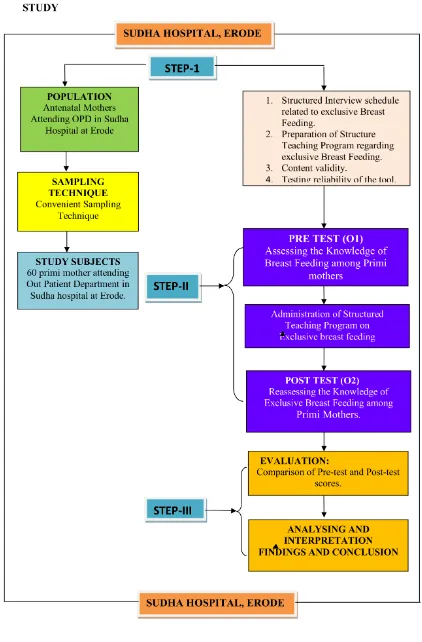
1. Conceptual framework based on J.W. Kenny‟s open system model 18 2. Schematic representation of Research Design of the study 42 3. Distribution of samples in terms of Age. 47 4. Distribution of samples in terms of Education. 48 5. Distribution of samples in terms of Occupation. 49 6. Distribution of sample in terms of source of Information. 50 7. Distribution of sample in terms of Type of Family. 51
8.
Pre-test and Post-test level of knowledge regarding exclusive breast
feeding among primi mothers 52
9.
Mean and Standard Deviation of Pre-test and Post-test scores of
LIST OF ANNEXURES
ANNEXURE
NO. CONTENT
PAGE NO.
A. Letter requesting permission for conducting the final study 70 B. Letter seeking expert opinion for content validity of tools 72
C. Editor‟s certificates 78
D.
Structured interview schedule (English version) Part A :- Demographic variables
Part B :- Knowledge Questionnaires
80 81
E. Structured interview schedule and questionnaires (Tamil
version) 86
F. Content on Exclusive Breast Feeding 90
ABSTRACT
The present research was “A STUDY TO ASSESS THE EFFECTIVENESS OF STRUCTURED TEACHING PROGRAMMES REGARDING KNOWLEDGE ON
EXCLUSIVE BREAST FEEDING AMONG PRIMI MOTHERS ATTENDING
OUTPATIENT DEPARTMENT IN SUDHA HOSPITAL, AT ERODE”. It was
conducted by Mrs. SHIRLY.C in partial fulfillment of the requirement for the degree of Master of Science in Nursing at The Nandha College of Nursing, under The Tamil Nadu Dr.M.G.R. Medical University, Chennai during the year 2015.
The Objectives of the study were;
1.
To assess the level of knowledge on Exclusive breast feeding among Primi mothersbefore and after administration of structured teaching program.
2.
To implement and evaluate the effectiveness of the Structured Teaching Programmeregarding knowledge on Exclusive breast feeding among Primi mothers.
3.
To find out the association between pre-test level of knowledge score on exclusivebreast feeding with demographic variables such as age,education,occupation,source of information, type of family .
HYPOTHESES:
H2: There will be a significant association between the pre-test knowledge on exclusive breast feeding among primi mothers with selected demographic variables such as age, education, occupation, source of information, type of family.
The research approach used for this study was Quasi Experimental study and the research design was “Pre experimental design”. 60 primi mothers were selected by using purposive
sampling technique. Data were collected with the help of interview methods. The tool was given to five experts for content validity. Pilot study was conducted to find the feasibility of the study and to plan for data analysis. Descriptive statistics (frequency percentage, mean & standard deviation) and inferential statistics (chi-square, paired „t‟ test) were used to analyse the data.
The significant findings of the study were:
As per demographic characteristics, majority of 33 primi mothers (55%) belongs to
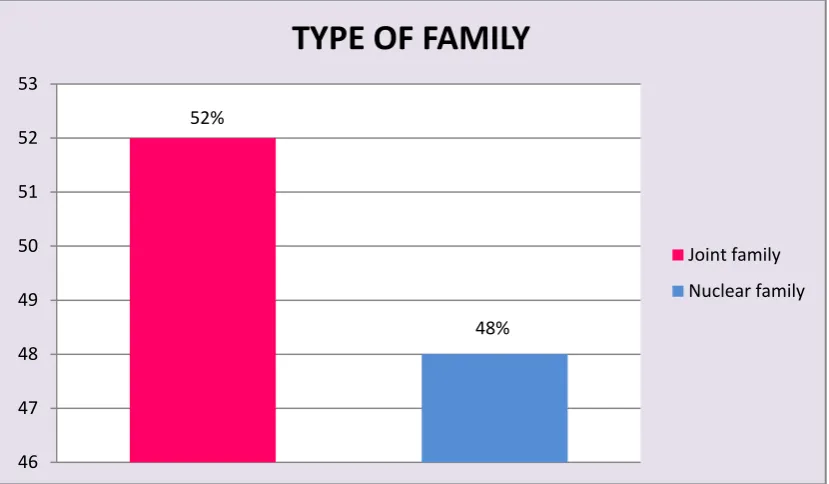
the age group between 21 – 25 years, 24 primi mothers (40%) were educated up to high school level, 26 primi mothers (43%) were working in private sector, for 23 primi mothers (38%) their parents were the source of information, and 31 primi mothers (52%) belongs to joint family.
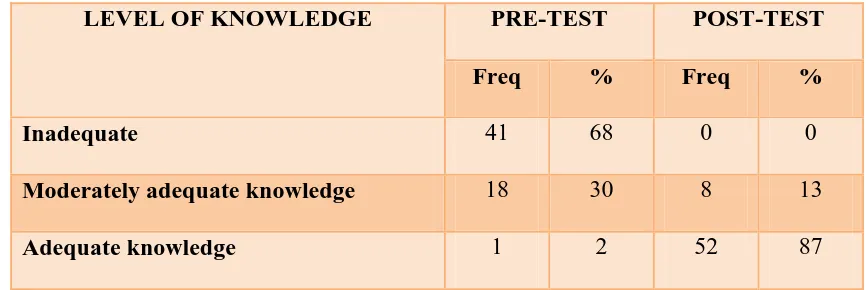
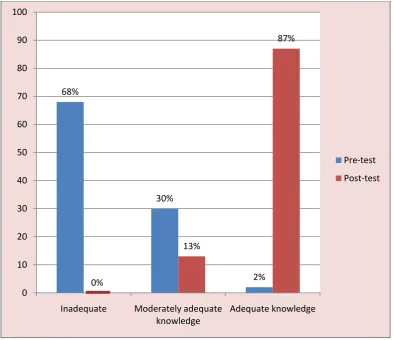
The pre-test revealed that majority of primi mothers, 41 of them (68%) had
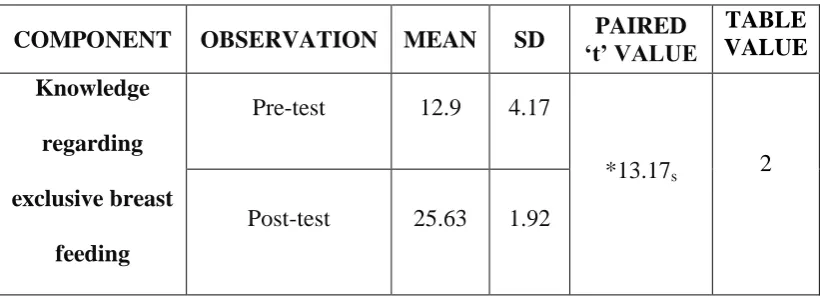
The comparison of pretest and post test score of knowledge regardingexclusive breast
feeding among primi mothers. The mean pre-test score is 12.9 and mean post-test
score is 25.63. The paired„t‟ test value was *13.17 when compared to the table value
(2) is high. This shows that structured teaching Programme regarding exclusive breast
feeding significantly increases the knowledge level among the primi mothers.
There is significant association exist between pre-test score of knowledge regarding
exclusive breast feeding and selected demographic variable. According to education,
X2=14.32 were as the table value=12.59 is less than the calculated value at P<0.05 level it is evident that there is significant association exist between pre-test score of knowledge regarding exclusive breast feeding and education.
There was no significant association between pre-test score of knowledge regarding
exclusive breast feeding and other demographic variables like age, occupation, source
of information and type of family.
RECOMMENTATIONS FOR FUTURE RESEARCH:
Based on the findings of the study the following recommendations are mad;
The study can be replicated using a large sample to validate the findings on generalization
A study can also be done to assess the knowledge, attitude and practice of the primi mothers regarding exclusive breast feeding.
Study can be done with randomization for better result.
The study can be conducted among different groups in hospital and community settings.
The study can be conducted using various research designs.
KEY WORDS:
1
CHAPER-1
INTRODUCTION
“A newborn baby has only three demands.
They are warmth in the arms of its mother,
Food from her breasts and security in the knowledge
of her presence; breastfeeding satisfies all three”
- Grantly Dick -2012
One of the primary functions of the family involves providing a framework for the production and reproduction of persons, biologically and/or socially. This can occur through the sharing of material substances (such as food); the giving and receiving of care and natural rural rights and obligations; and moral and sentimental ties. Thus, one's experience of one's family shifts over time. From the perspective of children, the family is a "family of orientation": the family serves to locate children socially and plays a major role in their enculturation and socialization. From the point of view of the parent(s), the family is a "family of procreation," the goal of which is to produce and en cultrate and socializes children. However, producing children is not the only function of the family; in societies with a sexual division of labor, marriage and the resulting relationship between two people, it is necessary for the formation of an economically productive household
“The statement that men and women are to reproduce is part of blessing God. The strong tie between mother and child provide the baby‟s first model for intimate
2
on the mother side, during pregnancy there is anatomical and Psychological changes in the first trimester usually involves anxiety about the unborn baby. Pregnancy is an experience full of growth, change, enrichment, and challenge. Forthcoming parenthood causes psychological changes in both mother and father.
ELIZABATH EDEN
Breast-feeding is good for new mothers as well as for their babies. There are no bottles to sterilize and no formula to buy, measure and mix. It may be easier for a nursing mother to lose the pounds of pregnancy as well, since nursing uses up extra calories. Lactation also stimulates the uterus to contract back to its original size. Physiological changes take place in a mother‟s body during pregnancy are associated
with and caused by the effects of specific hormones .These changes enable her body for labor and develop her breasts for production of milk during the puerperium.
ANNAMMAL JECOB-2010
A study published on 2008 at the Public Library of Science Computational Biology found that breast feeding mobilizes more then the usual brain cells that secrete oxytocin. Breast feeding puts dendrites to work as well to secrete oxytocin. Breast-feeding stimulates the uterus to contract back to its original size. There is strong evidence that breastfeeding decreases her risk of breast cancer. Continuing to breastfeed beyond the initial months can be challenging for many new mums. Scientists have long known that the mother‟s brain is flooded with oxytocin when
breast feeding But until recently that had been puzzled as to how enough oxytocin was Produced to alter the mother‟s moods. Oxytocin , which is also secrete during labour and sexual intercourse, is known as the “Love hormone”. It increases feeling of
3
while breast feeding. Breastfeeding also fosters closeness between mother and child in other ways. It enables mother and baby to have more physical and skin –to –skin contact.
Lactation describes the secretion of milk from the mammary glands and the period of time that a mother lactates to feed her young. In humans the process of feeding milk is called breastfeeding or nursing. When the baby sucks its mother's breast, a hormone called oxytocin compels the milk to flow from the alveoli, through the ducts (milk canals) into the sacs (milk pools) behind the areola and then into the baby's mouth. Lacto genesis is defined as the onset of milk production and secretion. Galactopoietic is the maintenance of milk production.This stage requires prolactin and oxytocin. Prolactin contributes to the increased growth and differentiation of the alveoli, and also influences differentiation of ductal structures. High levels of prolactin during pregnancy and breastfeeding also increase insulin resistance, increase growth factor levels (IGF-1) and modify lipid metabolism in preparation for breastfeeding. During lactation, prolactin is the main factor maintaining tight junctions of the ductal epithelium and regulating milk production through osmotic balance. At birth, prolactin levels remain high, while the delivery of the placenta results in a sudden drop in progesterone, estrogen, and HPL levels. This abrupt withdrawal of progesterone in the presence of high prolactin levels stimulates the copious milk production of Secretory Activation. After birth, oxytocin contracts the smooth muscle layer of band-like cells surrounding the alveoli to squeeze the newly produced milk into the duct system. Oxytocin is necessary for the milk ejection reflex, or let-down to occur.
4
During pregnancy there is progressive anatomical and physiological change not only
Confined to the genital organs but also to all systems of the body. The changes in breast are best evident in a primigravida. Size of the breasts becomes evidence even in early weeks. This is due to marked hypertrophy and proliferation of the ducts (estrogen) and the connective tissue stoma. During the second trimester, in the leucocytes in the breast are stimulated to develop further and produce colostrum due to the influence of prolactin released from the anterior pituitary. The colostrum contains lactose; total proteins and immunoglobulins.During this period, the high levels of progesterone prevent the production of milk.
KAMINI RAO-2011
World breast feeding week is August first week (1-7days).
WHO
After the baby born from the mother‟s uterus the care for a child to begin is the first few hours of life with exclusive breast feeding and appropriate interventions‟ at 4-6
months in the form of timely complementary feeding. Exclusive breast feeding for 6 months means that the infant receives only breast milk from her mother with the exception of drops or medications, during this time and after 6 months breast feeding should continue for 24 hrs or more long with appropriate complementary feedings. Breast feeding is the ideal form feeding in the neonate.
D.C Dutta-2001
Exclusive breastfeeding – that is the infant only receives breast milk without any
5
integral part of the reproductive process with important implications for the health of mothers. Review of evidence has shown that, on a population basis, exclusive breastfeeding for 6 months is the optimal way of feeding infants. Thereafter infants should receive complementary foods with continued breastfeeding up to 2 years of age or beyond
WHO-2013
The first milk is colostrum
Colostrum is in breasts starting about the 5th month of pregnancy.
Colostrum is available in small amounts which perfectly match the baby‟s
stomach size at birth.
Breast milk begins to be produced when the baby is born, and increases in amount daily, as the baby‟s stomach size grows.
Small amounts of colostrum in the first few days keep the baby from
overfilling his stomach. This is important while the baby is learning to coordinate sucking, swallowing, and breathing.
Colostrum gives baby protection against disease that no formula can give.
www.icmh.org-2009
Colostrum‟s (early breast milk) is the perfect starter food for the baby. This yellowish,
6
act as natural laxative to help clear the meconium from baby‟s intestines. The amount
of breast milk will increase over the first few days after birth. Breast milk has the perfect balance of water and nutrients containing fats, sugars, proteins, minerals, vitamins, enzymes and antibodies (IgA,IgG and IgM)and hormonal factors (lactoferrin) that provide immunological defence to the newborn. It is also designed to promote brain and body growth. Exclusive breast feeding will saves lives of babies by preventing some gastro intestinal diseases such as vomiting, diarrhea and malnutrition.
S.S.PRABHVDEVA-2009
Breast feeding also allows the baby to bond in a way that cannot be matched by bottle feeding. Good feeding is one of the basic components of health and as particulars of optimal child development survival and maintenance of health through our life. All New born who cry soon after birth and do not show any signs of illness must be kept close to their mother and put to the breast soon after birth. This will ensure warmth initiation of breast feeding and emotional bonding Breast feeding should be initiated within the first hour after birth. The nutritional and health status of infants depends mainly on the feeding practices of the community. Early life is a period of rapid
growth with the weight of infant doubling by 6 months and tripling by one year of age.
DR.RITEN KUMAR, 2004
7
complementary feeding beginning at 6 month of age & not before age ever. Cultural norms, painful breast feeding experiences, separation of mother & baby & lack of appropriate support & information often leads to premature introduction of inappropriate foods before the age of 6 month. Too early introduction of these liquids & foods & reduced Breast feeding Exposes the infant to harmful pathogen, jeopardizes the infant‟s growth, decreases the mother‟s breast milk supply & disrupts
the birth spacing effect of Breast feeding. On the other side of the spectrum, if foods are introduced too late infants may be at risk from limited energy & nutrient intake that can affect their growth, development, & health.
- Baby friendly Hospital Initiative
NEED FOR THE STUDY
“While breast feeding may not seem the right choice for every parent; it is the best choice for every baby”
-Amy Spangler-2012
8
The 10th five year plan of Government of India had set a target to increase exclusive breast feeding rate to 80% during first 6 months from the current level of around 40.5% and increase rate initiation of breast feeding within one hour to 50% from the current level of about 15% and increased rate of complementary feeding 33.5% to 75% to reduce infant and childhood mortality and improve health and development of infants and young children.
Breast feeding is ideal composition for easy digestion with low osmotic load. Two
vital considerations for the infants in tropical countries are breast feeding and avoidance of infection. It confers passive immunity to the baby as the milk contains protective antibodies IgA, IgG.It contains vitamin D which protects as the against rickets. Its lysozyme content protects against infection and long chain fatty acids helps in neurological development of the baby. Breast milk is readily available. It is more convenient. Breast feeding acts as a natural contraception and psychologically it establishes a healthy mother-child relationship.
10th five year plan of Government of India
It has been identified a group of genes in breast milk that contribute to a more
9
introduction of complementary food. But nearly half of under 5 children were underweight.
According to the findings of a report published in Times of India, an estimated number of 70 per cent of infant deaths in India occur during the first 29 days of life. According to the news report in Times of India Jammu and Kashmir leads the list of infant deaths as the valley has the highest percentage of deaths ranging to 82.1 per cent, followed by Maharashtra, Himachal Pradesh, Punjab, West Bengal, Rajasthan and Madhya Pradesh. As per the Registrar General's latest data Sample Registration System 2010, in comparison to 2009 only 32,000 less children died in 2010. The statistics revealed that 88 fewer deaths occurred per day. However, even then 8.26 lakh children were found to be dead due to various reasons in the year 2010.
Times of India-2012.
The survey mentions these numbers in the same breath as a 57 in 1,000 live birth infant mortality rate compared to 44 in 1,000 live births of sub-Saharan Africa. An important developmental parameter, IMR continues to stay high despite the two-decade long campaign to bring it down.40% of under five mortality rate were account only with neonatal death.
10
as promotes bonding and a close relationship between mother and infant. Economical advantages are infants with fewer illnesses in lower health care costs.
The physical advantages for the infant include breast milk is nutritionally perfect for infants, readily with no preparation or sterilization, easily digested resulting in less gas, presence of antibodies and other protective factors reduce the risk of asthma, food allergies, eczema, respiratory infections and reduce the risk for some cancers, diabetes, chronic bowel diseases and diarrhea.Breast feeding promotes nervous system development and increases the intelligence. There is reduced incidence of sudden infant death syndrome with breast fed infants.
Whatever the reasons for artificial feeding at the earliest, many mothers complains they not have adequate milk to satisfy their babies hunger. So they start to wean earlier without knowing that, they themselves hindering the healthy life of their beloved off –spring. It has been estimated that breast feeding initiated in first one million babies around the world can be saved. It is in our hand being health professionals should provide ways and means to promote breast feeding. California at San Francisco recently found that women who slept fewer than 6 hours per night had longer labors and were 4.5 times more likely to have cesarean deliveries. Based on these findings, the researchers recommend that doctors discuss both sleep quantity and sleep quality with their pregnant patients as part of basic prenatal care and stress the importance of "sleeping ".
11
different. The disparity of their knowledge and practice has to be assessed for improving the delivery of such services to these groups.
WHO and UNICEF developed the 40-hour Breastfeeding Counseling: A training course to train a cadre of health workers that can provide skilled support to breastfeeding mothers and help them overcome problems, both institutions have also developed a 5-day course on Infant and Young Child Feeding Counseling, to train health workers so they become competent and able to promote appropriate breastfeeding, complementary feeding and feeding of infants in the context of HIV. Basic breastfeeding support skills are also part of the 11-day Integrated Management of Childhood Illness training course for first-level a health worker, which combines skills for adequate case management with preventive care. Evaluation of breastfeeding counseling delivered by trained health professionals as well as community workers has shown that this is an effective intervention to improve exclusive breastfeed.
- WHO
Kornides M, etal (2013). The prenatal exposure to breastfeeding information from
12
benefits were 11.2 (95% CI: 6.87-18.45) times more likely to initiate breastfeeding and 5.62 (95% CI: 4.19-7.54) times more likely to breastfeed at two months than those with lower levels of knowledge. Women whose families prenatally supported exclusive breastfeeding were 8.21(5.12-13.2) times more likely to initiate and continue breastfeeding (OR 3.21, 95% CI: 2.51-4.11). Clinicians who supported breastfeeding only also increased the odds of a woman initiating breastfeeding (OR 1.95, 95% CI: 1.31-2.88). Interventions to increase maternal knowledge of breastfeeding benefits and family and clinician support of breastfeeding in the prenatal period may help increase breastfeeding rates. The encouragement of breastfeeding needs to be a priority among health care providers to improve the health of mothers and infants.
Karin M. Hillenbrand,(2012) conduct a surveys study on Effect of an Educational
13
of breastfeeding adequacy with the mother and correct management of lactation problems.
STATEMENT OF THE PROBLEM STATEMENT
A STUDY TO ASSESS THE EFFECTIVENESS OF STRUCTURED TEACHING PROGRAMME REGARDING KNOWLEDGE ON EXCLUSIVE BREAST FEEDING AMONG PRIMI MOTHERS ATTENDING OUT PATIENT DEPARTMENT IN SUDHA HOSPITAL AT ERODE.
OBJECTIVES:
1. To assess the level of knowledge on Exclusive breast feeding among Primi mothers before and after administration of structured teaching program.
2. To implement and evaluate the effectiveness of the Structured Teaching Programme regarding knowledge on Exclusive breast feeding among Primi mothers.
3. To find out the association between pre-test level of knowledge score on exclusive breast feeding with demographic variables such as age, education, occupation, source of information, type of family .
HYPOTHESES:
H1 : Structured Teaching Programme will be effective in improving knowledge on exclusive breast feeding among primi mothers.
14
variables such as age, education, occupation, source of information, type of family.
ASSUMPTION:
Primi mother may have less knowledge regarding exclusive breast feeding.
Structured Teaching Programme is effective in improving the knowledge of
exclusive breast feeding among primi mother.
OPERATIONAL DEFNITION:
ASSESS:
It means the process of collecting, organizing, validating and recording data.
In this study, the knowledge among of primi mothers regarding exclusive breast feeding is assessed.
EFFECTIVENESS:
Effectiveness is defined as which producing an intended result, impressive or striking.
It is change which is a result. It refers to significant improvement of knowledge on regarding exclusive breast-feeding among primi mothers.
STRUCTURED TEACHING PROGRAMME:
15
In this study it refers to the planned information or techniques regarding Exclusive Breast-feeding on knowledge will be given to the group of primi mothers with the help of LCD presentation.
EXCLUSIVE BREAST – FEEDING
It means giving nothing orally other than colostrum and breast milk. Breast feeding is the feeding of an infant or young child with only breast milk directly from female human breast.
KNOWLEDGE:
It is the information gained through experience on education.
It refers to correct response of the primi mother‟s regarding Exclusive breast feeding which is measured by structured questionnaire.
PRIMI MOTHERS:
Primi mothers are a woman pregnant for the first time.
ASSUMPTION:
Primi mothers may have less knowledge regarding exclusive breast feeding.
Structured teaching Programme is effective in improving the knowledge of exclusive breast feeding among primi mothers.
DELIMINATION:
This study in limited to:
Primi mothers attending outpatient department in Sudha hospital at erode.
Sample size limited to 60 primi mothers only.
16
CONCEPTUAL FRAMEWORK
Conceptual frameworks are inter-related concepts that assembled together in some rational scheme by virtue of their relevance to a common theme. Conceptual framework helps to stimulate research and the extension of knowledge by providing both direction and inputs. (Polit and Hungler, 1999)
Conceptual framework is the precursor of a theory. It provides broad prospective for nursing practice, research and education. Conceptual framework plays several inter- related roles in the progress of science. Their overall purpose is to make scientific and meaningful findings and also to generalize the findings.
(Polit and Hungler, 1999)
The present study is focused on the effectiveness of structured teaching programme regarding exclusive breast feeding among primi mothers. The study is based upon J.W.Kenny‟s open system model. The system‟s theory is concerned with changes
due to interrelation between various factors in a situation. All living systems are open, in which there is a continual exchange of matter, energy and information. Open system have varying degrees of input and gives back output in form of matter, energy and information.
17
possible, negative or neutral. In this study the concepts have been modified as follows.
INPUT:-
According to J.W. Kenny‟s input can be matter, energy and information from the environment. In the present study the input refers to assessment of the level of knowledge regarding exclusive breast feeding among primi mother through structured interview schedule questionnaire.
THROUGHPUT:-
Throughput was the implementation of structured teaching programme regarding exclusive breast feeding to the primi mother.
OUTPUT:-
The expected outcome was obtained by assessing the level of knowledge regarding exclusive breast feeding among primi mother through self-structured questionnaire. The output was considered in terms of change in posttest level of knowledge regarding exclusive breast feeding among primi mother obtained through structured interview schedule questionnaire.
FEEDBACK:-
19 CHAPTER-II
REVIEW OF LITERATURE
Review of literature is a broad systematic and critical collection and evaluation of important scholarly published literature as well as unpublished materials. The review
serves as an essential background for any research. B.T. Basavanthappa, 2004
The process of reading, analyzing, evaluating, and summarizing scholarly materials about a specific topic. The results of a literature review may be compiled in a report
or they may serve as part of a research, article, thesis, grant, and proposal. Nordquist Richar
REVIEW OF LITERATURE:
A. Studies related to exclusive breastfeeding
B. Studies related to knowledge of primi mothers on exclusive breast feeding
A. STUDIES RELATED TO EXCLUSIVE BREAST FEEDING:
Abuidhail J, etal (2013) This study is to investigate the prevalence, duration,
20
up phone interviews at the end of first, fourth and sixth months after birth. The findings of this study showed that the prevalence of EBF as recommended by WHO was 1%. The average duration of EBF was one month. The main barriers of EBF were: infants feel hungry after breast feeding, short period between pregnancies, and breast problem. The researcher concluded the postpartum mothers initiated EBF practice within the first hour after giving birth; however, this practice declined gradually as the infant grew up within the first six months after birth. Implications for practice: antenatal education sessions in the Jordanian governmental hospitals about EBF are required to meet the WHO recommendations. Furthermore, midwives and nurses have to focus on effective breast feeding process to overcome the barriers of EBF during antenatal education and postnatal care.
Ali Mohamed Al-Binali – (2012) . Conducted a cross sectional study on breast
21
participants. Insufficient breast milk and work related problems were the main reasons given by 169 (44%) and 148 (38.5%) of participants, respectively, for stopping breastfeeding before two years. Only 33 participants (8.6%) had attended classes related to breastfeeding. However, 261 participants (68%) indicated the willingness to attend such classes, if available, in future pregnancies. This study revealed that breast milk insufficiency and adverse work related issues were the main reasons for a very low rate of exclusive breastfeeding among female school teachers in Abha female educational district, Saudi Arabia. A very low rate of attending classes addressing the breastfeeding issues during pregnancy, and an alarming finding of a high percentage of babies receiving readymade liquid formula while still in hospital, were also brought out by the present study. Such findings, if addressed comprehensively by health care providers and decision-makers, will lead to the improvement of breastfeeding practices in the study community.
Setegn T, etal ( 2012) conducted a community based cross-sectional study on Factors
22
frameworks. A multivariable logistic regression analysis was used to identify independent predictors of exclusive breastfeeding after controlling for background variables. The prevalence of exclusive breastfeeding in the last 24 hours preceding the survey was 71.3%. The median duration of exclusive breastfeeding was three months and mean frequency of breastfeeding was six times per day. Being unemployed [AOR: 10.4 (95% CI: 1.51, 71.50)] and age of infants of less than two months [AOR: 5.6 (95% CI: 2.28, 13.60)] were independently associated with exclusive breastfeeding. The study concluded that a large proportion of infants are not exclusively breastfed during the first 6 months, despite what is recommended in the
national and global infant and young child feeding (IYCF) guidelines. Employed mothers were less likely to practice exclusive breastfeeding, implying the need for promoting workplace breastfeeding practices and creating an enabling environment for exclusive breastfeeding. Extensions of maternity leave up to the first six month of child's age to achieve optimal level of exclusive breastfeeding practices should also be looked into as an alternative solution among mothers.
Malays J Nutr- (2012) A qualitative study using in-depth interviews was conducted
23
superiority of breastfeeding and feasibility of practice. The researcher concluded many women accepted breastfeeding practice but found it challenging to practice EBF especially when confronted with low milk production, perceived low nutritional quality breast milk, and work commitments. Women should be educated on the importance of EBF with regard to the nutritional adequacy of breast milk and long-term benefits for mother and children.
Int Breastfeed J. (2012) The cross-sectional study was conducted from March to February 2010 involving both quantitative and qualitative data. A total of 608 mothers were selected randomly. A convenience sampling technique was used to generate the qualitative data. The qualitative data were analyzed using thematic frameworks. A multivariable logistic regression analysis was used to identify independent predictors of exclusive breastfeeding after controlling for background variables.
Tengku AT, etal (2012): conducted a qualitative study using in-depth interviews was
24
regard to belief in the superiority of breastfeeding and feasibility of practice. Many women accepted breast feeding practice but found it challenging to practice EBF especially when confronted with low milk production, perceived low nutritional quality breast milk, and work commitments. The researcher concluded that the Women should be educated on the importance of EBF with regard to the nutritional adequacy of breast milk and long-term benefits for mother and children.
Phillips G, Brett K, P.(2011) conducted a study on Previous breastfeeding practices and duration of exclusive breastfeeding among multiparous women in the United States Examined the influence of duration of exclusive breastfeeding (DEBF) for a mother's earlier children on the DEBF for her later children among multiparous women from the 2002 National Survey of Family Growth. DEBF was categorized as: never breastfed (NBF) (referent); not exclusively breastfed or exclusively breastfed for <4 months (EBF<4); and exclusively breastfed for ≥4 months (EBF≥4).We
examined DEBF using weighted percentages and odds ratios (OR) with 95% confidence intervals (CI) from multinomial logistic regression models, adjusting for maternal factors. About 70% of multiparous women (n=2,149) repeated the duration of exclusive breastfeeding of their first child for their second child; 14% of women repeated EBF≥4. Among multiparous women, the adjusted odds ratio for EBF≥4 for
25
conclusion, mothers generally repeated the DEBF of their previous child. For third children, DEBF of the second child was more likely to be repeated than that of the first child.
Miriam Falco June 21st, (2010): conducted this study to assess breastfeeding
knowledge and practices and the factors influencing them among women in rural Punjab, India. We interviewed 1,000 women in a community-based analytical cross-sectional study that was carried out in 20 villages of the District of Amritsar, Punjab, India, in 2005-2006 by standard cluster sampling. Time at initiation of breastfeeding and variables like understanding about the importance of colostrums, nutrition during lactation, and motivation by health workers were assessed. Statistical analysis was done by percentages compared with the χ² test .Two hundred twenty-five respondents
(23.8%) started breastfeeding their babies on the first day of birth, but in terms of early breastfeeding only 128 (13.5%) respondents put their babies on the breast within 4 hours of birth. Of the 1,000 respondents, 356 (35.6%) of the respondents were unaware of the importance of colostrums, 733 (77.6%) were not given advice on benefits of breastfeeding/weaning, and 306 (33.5%) of respondents had not increased their diet during lactation.
Garg R, etal (2010) conducted a community-based cross-sectional study on
26
percentages compared with the χ² test. Two hundred twenty-five respondents (23.8%)
started breastfeeding their babies on the first day of birth, but in terms of early breastfeeding only 128 (13.5%) respondents put their babies on the breast within 4 hours of birth. Of the 1,000 respondents, 356 (35.6%) of the respondents were unaware of the importance of colostrums, 733 (77.6%) were not given advice on benefits of breastfeeding/weaning, and 306 (33.5%) of respondents had not increased their diet during lactation. The researcher concluded that the early breastfeeding knowledge and practices were suboptimal among the mothers in rural Punjab. Health education on breastfeeding and nutrition remains the dark area. Research and public health efforts like one-to-one "breastfeeding counseling and health education on nutrition" to the mother by health workers should be promoted among rural women.
RN Chaudhary-(2010) conducted a cross sectional study on Knowledge and practice
of mothers regarding breast feeding: A cross sectional study was carried out on 200 mothers of under 1 year old children who attending the pediatric Out Patient Department, well baby clinic and immunization clinic at BPKIHS, Dharan Nepal. Mothers were interviewed using pre-designed questionnaire. All mothers knew that they had to breast feed their babies, but they did not have adequate knowledge about the appropriate way of breastfeeding. 10% knew that they have to initiate breast feeding within ½ hour of birth, 10% had idea on pre lacteal feed, 25% had idea on importance of colostrum‟s, 15% knew the meaning of exclusive breast feeding, and
27
mothers got any advice regarding breast feeding during ANC visits. So the researcher concluded that the mothers needed the knowledge and importance of Exclusive breast feeding during ANC visit.
Bramson L etal - (2010) conducted a hospital-based, prospective cohort study on
Effect of early skin-to-skin mother--infant contact during the first 3 hours following birth on exclusive breastfeeding during the maternity hospital stay. Data collected in 19 hospitals in San Bernardino and Riverside counties by California Prenatal Services Network on all mothers (n = 21 842) who delivered a singleton infant (37-40 weeks gestation) between July 2005 through June 2006. Multivariate ordinal logistic regression showed that maternal infant-feeding method intention (measured prior to birth), socio demographic characteristics, intra partum variables, and early skin-to-skin mother-infant contact during the first 3 hours following birth (controlling for delivery hospital) were correlated with exclusive breastfeeding during the maternity hospitalization. Compared with mothers with no early skin-to-skin contact, exclusive breastfeeding was higher in mothers who experienced skin-to-skin contact for 1 to 15 minutes (odds ratio [OR] 1.376; 95% confidence interval [CI], 1.189-1.593), 16 to 30 minutes (OR 1.665; 95% CI, 1.468-1.888), 31 to 59 minutes (OR 2.357; 95% CI, 2.061-2.695), and more than 1 hour (OR 3.145; 95% CI, 2.905-3.405). The results demonstrate a dose-response relationship between early skin-to-skin contact and breastfeeding exclusivity.
Ogbonna C Daboer JC -(2008) A cross sectional study to determine the current level
28
consented were recruited for the study through a house-to-house visit. Three assistants (two females and a male) were recruited and trained on the questionnaire administration. Data analysis was by SPSS software and chi-square test of proportion for statistical significance of association was done. Out of the 470 nursing mothers studied 387 (82.3%) were able to define correctly exclusive breastfeeding while 315 (67.0%) practiced or were practicing exclusive breastfeeding at the time of this study. The knowledge and practice of exclusive breastfeeding was found to increase with increasing age and better educational status of the women. Ninety six (20.4%) nursing mothers said they never breastfed their babies while in public place. Although knowledge and practice of exclusive breastfeeding among the women were considerably high, the younger age brackets were less knowledgeable arid adherent to the practice. Targeting adolescents for exclusive breastfeeding education and sensitization is necessary in preparing them for motherhood.
B.STUDIES RELATED TO KNOWLEDGE OF PRIMI MOTHERS RELATED
TO EXCLUSIVE BREAST FEEDING
29
birthing courses. The responders were equipped in knowledge on various levels. It proves the necessity of sys- thematic and planned education for women. The system of lactation counseling should be an integral part of post-labor care in obstetrician clinics.
Kuzma etal - (2013) A conducted a study using interviews based on a semi-structured questionnaire (n = 140) and Focus Group Discussions (FGDs) was
30
R V Mohite, etal - (2012) conducted a cross sectional study was conducted on knowledge of breast feeding among primi gravid mother at Ante-natal clinic of Krishna Hospital and Medical Research Center, Karad district Satara. Pre-tested structured preform used to collect information from 590 married primi gravid mothers attending ante-natal clinic during study period by utilizing personal interview method. Socio-demographic frequency percentage distribution, knowledge scoring and statistical association was analyzed by using chi-square test. Out of 590 primi gravid mothers, 59.66% showed fair quality of knowledge about breast feeding. knowledge about rooming in, family support for breast feeding & burping after breast feeding was 97.7%, 95.4% , 93.5% however weaning, colostrum‟s feed, hazards of bottle fee ding and prenatal food was 84%, 82.7%,75.5% and 54% respectively. Statistical association was existed between age as, education, religion, socio-economic status and respectively Knowledge breast feeding among primi gravitas mothers attending ANC clinic was of fair in quality. The researcher concluded that the Women should be educated on the importance of Exclusive breast feeding.
Przegl Lek- (2012): The study was conducted on knowledge about breast feeding
31
The responders were equipped in knowledge on various levels. It proves the necessity of sys- thematic and planned education for women. The system of lactation counseling should be an integral part of post-labor care in obstetrician clinics.
Bellintxon M, etal - (2011) conducted a qualitative study on Initiating breastfeeding:
experiences of first-time mother. A qualitative study with a descriptive phenomenological approach was used. Twelve first-time mothers were interviewed in-depth on two occasions: once a few days after childbirth, and another time one month from giving birth. The data were recorded and transcribed verbatim. Giorgio‟s
32
CHAPTER-III
METHODOLOGY
Methodology of research refers to the ways of obtaining, organizing and analyzing data. Methodological studies address in the development validation and evaluation of research tools or methods.
- POLIT AND BECK (2004)
This chapter deals with research approach , research design, settings, population, sample, sampling technique, criteria for sample selection , development and description of the tool, validity and reliability, pilot study, data collection procedure and plan for data analysis.
RESEARCH APPROACH:
“It is the applied form of research that involves finding out how well a program,
practice, procedure, or policy is working
The research approach used for this study was Quantitative Educative and evaluative approach.
RESEARCH DESIGN:
“It is the overall plan for addressing a research question, including specifications, for enhancing the integrity of the study”.
– POLIT AND BECK (2008)
The research design used for this study was:
33 Key:-
O1 – Assessment of knowledge regarding exclusive breastfeeding among primi
mothers attending outpatient department in Sudha hospital at erode. X- Structure teaching program on exclusive breast feeding.
O2- Assessment of knowledge regarding exclusive breastfeeding among primi mothers attending outpatient department in Sudha hospital at erode.
VARIABLES
:
“Variables are the qualities, prosperities or the characteristics of the person, things or situation that change or vary”.
– POLIT AND BECK (2008)
Independent Variable:
“It is the variable that stands alive and is not depending on any other”. The structure
teaching program regarding knowledge on exclusive breastfeeding among primi mothers attending outpatient department in Sudha Hospital at Erode was the independent variable in this study.
Dependent Variable:
“It is the outcome variable of interest. It is the variable that is hypothesized to depend on or caused by the other”. The knowledge of primi mothers attending
Out Patient department in Sudha hospital at Erode was the dependent variable. Pre
Experimental Design
34 Extraneous Variables:-
Extraneous variables for this study were previous exposure of primi mothers to programmers, seminars regarding exclusive breastfeeding. Extraneous variables also included exposure of primi mothers to situations that demand execution of exclusive breastfeeding.
RESEARCH SETTING:-
The setting is the physical location of the site in which data collection takes place. The study was conducted in outpatient department of Sudha hospital at erode.
POPULATION:-
Defines population as the entire set of individuals having some common characteristics. In this study, population included that al lAntenatal mothers attending Out Patient Department in Sudha hospitals at Erode.
(POLIT AND HUNGLER, 1999)
SAMPLE:-
Sample is a subset of population selected to participate in a research study.
(POLIT AND HUNGER, 1999)
35
SAMPLE SIZE:
The samples comprised of 60 primi mothers attending Outpatients Department in Sudha hospital at Erode.
SAMPLING TECHNIQUE:-
Sampling technique used for this study was convenient sampling technique.
CRITERIA FOR SAMPLE COLLECTION
Inclusion criteria
1. Primi mothers who knows Tamil language. 2. Mothers who are willing to participate. 3. Primi mothers‟ age between 20-30years. 4. Primi mothers at the time of data collection.
Exclusion criteria:
1. Mothers who are affected by systemic diseases like cancer and HIV positive mother.
2. Mentally ill mothers.
3. Mothers those who are taking chronic psychiatric drugs, and mothers under gone thyroid treatments.
DEVELOPMENT OF RESEARCH INSTRUMENT:-
36
Questioning allows gathering information or data from a large number of samples, relatively quickly and inexpensively .It avoids interviewer bias, offers anonymity and is cost-effective.
The instruments used in the study were:- 1. Demographic data.
2. Questionnaire related to knowledge of exclusive breast feeding.
DATA COLLECTION METHOD:-
Interview method was used.DATA COLLECTION INSTRUMENT:-
Structured Interview schedule was prepared by the investigator based on the objectives of the study, after reviewing the literature about exclusive breast feeding.
The following steps were carried out in formulating the tool. 1. Related literature was reviewed.
2. Blue print was prepared.
3. Subject expert were consulted for their valuable suggestion regarding the tool and alterations were made from accordingly.
4. Statistician was consulted for the preparation of the for statistical data analysis.
5. Reliability was checked by doing pilot study.
37
variables and 30 questions related to knowledge regarding on exclusive breast feeding.
DESCRIPTION OF THE INSTRUMENT:
Structured Interview schedule on exclusive breast feeding consisted of 3 sections. SECTION-I
Demographic Data:
It included items for obtaining information regarding age, education, Occupation, source of information, type of family.
SECTION-II
PART-A- Questionnaire related to knowledge of exclusive breast
feeding.
It consisted of 30 multiple choice questions, divided into areas of exclusive breast feeding.
Scoring:-
Each corrected response given 1 mark and incorrect response was given 0 marks. The maximum possible score was 30.The number of correct responses was calculated out of 30. The level was categorized based on the scores obtained as follows:-
Adequate knowledge- 24-30
Moderately adequate knowledge-15-23
38 TESTING THE INSTRUMENTS:
Content validity:-
The instruments were validated by 5 experts from the field of nursing and Obstetrics and gynecology. The experts suggested addition, deletion of certain items and re-organization were Made and the tool was finalized.
Reliability:-
“The reliability of an instrument is the degree of consistency or dependability
with which an instrument measures an attribute”.
– POLIT AND BECK (2008)
To ensure reliability, of the tool was established using test retest method. The reliability value of the tool is 0.9 so the tool was found to be feasible and reliable.
PILOT STUDY:-
It is a small scale version or trial run of the main study. in order to test the feasibility and relevance of the study , a pilot study was conducted among 6 prime mothers attending outpatient department in Erode G.H, after getting permission from concerned authorities .They were selected by using convenient sampling technique .The structure interview schedule was used to collect the data from primi mothers. Data analysis was done by using differential and inferential statistics. The study reports ensured feasibility of the study.
DATA COLLECTION PROCESS:-
39
2. Prior to data collection, permission was obtained from concerned authorities.
3. Primi mothers who fulfilled the criteria were selected by using the convenience sampling technique.
4. The researcher introduced himself to the participation and established rapport with them.
5. The purpose of the study was explained to each study participant. 6. The researcher assured the participants of the study before starting the
data collection.
7. Oral consent was obtained from primi mothers attending Out Patient Department in Sudha hospital at Erode.
8. The pre-test was conducted with the help of structured interview schedule. The tool was distributed to the primi mothers.
9. The structure teaching program was administered to primi mothers. All the prim mothers took active participation in the program. The post test was conducted with the help of the same of structured interview schedule. 10.The end of successful data collection, the researcher conveyed thanks to
the Doctor for winding up the study.
11.The total duration of the data collection was 4 weeks.
DATA ANALYSIS PLAN:-
Data analysis is the systematic organization and synthesis of research data and testing of null hypotheses by using the obtained data.
40
The collected data was organized, tabulated and analyzed by using descriptive and interference statistics.
Frequencies and percentage were used for the analysis of the demographic
data.
Mean score, mean percentage and standard deviation of the difference
were used for analyzing the pretest and post –test scores.
Paired “t” test was used to find out the difference in knowledge between
the pretest and post test.
The chi - square test was used to find out the association between levels
of knowledge.
S.
No Data analysis Method Purposes
1 Descriptive statistics
Frequencies and percentages mean score, mean percentage and standard deviation of the difference.
For the analysis of the demographic data. For analyzing the pretest and post test score.
2 Inferential statistics
41 ETHICAL CONSIDERATION:-
42
43
CHAPTER-IV
DATA ANALYSIS AND INTERPRETATION
Analysis is a “process of organizing and synthesizing data in such a way that research
questions can be answered and hypothesis tested.”
(Polit and Hungler-2004)
Analysis enables the researcher to reduce, summarize, organize, evaluate, interpret and communicate numerical information,
( Polit and Hungler-2004 )
This chapter highlights the analysis and interpretation of data collected from 60 primi mothers attending Out Patient Departmentin Sudha hospital at Erode in order to evaluate the knowledge regarding exclusive breastfeeding among primi mothers .The data collected from the primi mothers before and after the structured teaching program was organized , analyzed and interpreted by using descriptive &inferential statistics.
The data collected was calculated based on the following objectives of the study:
1. To assess the level of knowledge on Exclusive breast feeding among Primi mothers before and after administration of structured teaching program.
44
3. To find out the association between pre-test level of knowledge score on exclusive breast feeding with demographic variables such as age, education, , occupation, source of information, type of family among Primi mothers.
ORGANIZATION OF FINDINGS
The data was organized, analyzed and presented under the following heads. Section –I Distribution of samples in terms of demographic variables.
Section –II Assessment of Pre-test and Post-test level of knowledge regarding
exclusive breast feeding among primi mothers.
Section-III Comparison of Pre-test and Post test score of knowledge regarding
exclusive breast feeding among primi mothers.
Section-IV Association between pre-test scores of knowledge regarding exclusive
breast feeding among primi mothers with selected demographic
variables such as age, education, occupation, source of information,
type of family.
45
SECTION –I
DISTRIBUTION OF SAMPLES IN TERMS OF DEMOGRAPHIC
[image:62.595.101.526.176.749.2]VARIABLES
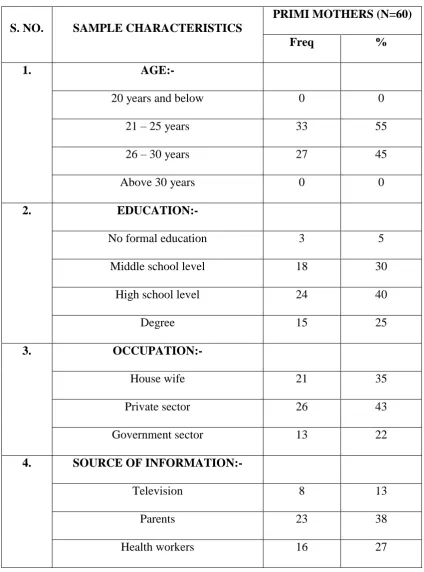
Table-1: Distribution of Samples in Terms of Demographic Variables
S. NO. SAMPLE CHARACTERISTICS
PRIMI MOTHERS (N=60)
Freq %
1. AGE:-
20 years and below 0 0
21 – 25 years 33 55
26 – 30 years 27 45
Above 30 years 0 0
2. EDUCATION:-
No formal education 3 5
Middle school level 18 30
High school level 24 40
Degree 15 25
3. OCCUPATION:-
House wife 21 35
Private sector 26 43
Government sector 13 22
4. SOURCE OF INFORMATION:-
Television 8 13
Parents 23 38
46
Friends 13 22
5. TYPE OF FAMILY:-
Joint family 31 52
Nuclear family 29 48
The data given in table – 1shows that according to age, majority 33 primi mothers (55%) belongs to the age group between 21 – 25 years, 27 primi mothers (45%) belongs to the age group between 26 – 30 years, and none of the primi mothers comes under the age group of 20 years and below and above 30 years.
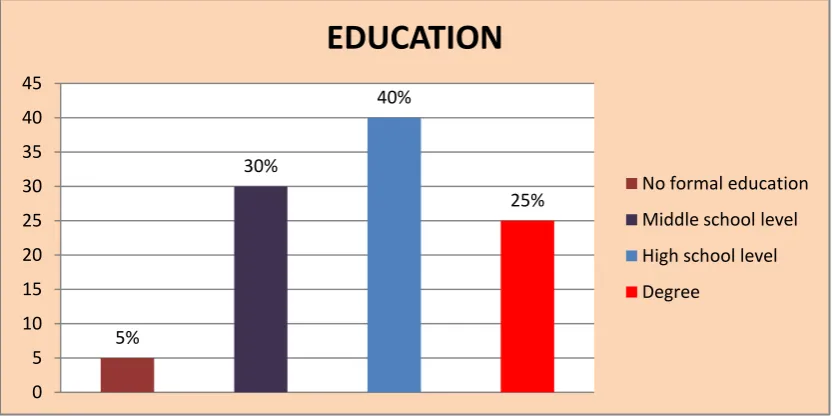
With regarding to education, majority 24 primi mothers (40%) were educated up to high school level, 18 primi mothers (30%) were educated up to middle school level, 15 primi mothers (25%) were degree holders and 3 primi mothers (5%) had no formal education.
According to occupation, majority 26 primi mothers (43%)were working in private sector, 26 primi mothers (43%) were house wives, 13 primi mothers (22%) were working in government sector.
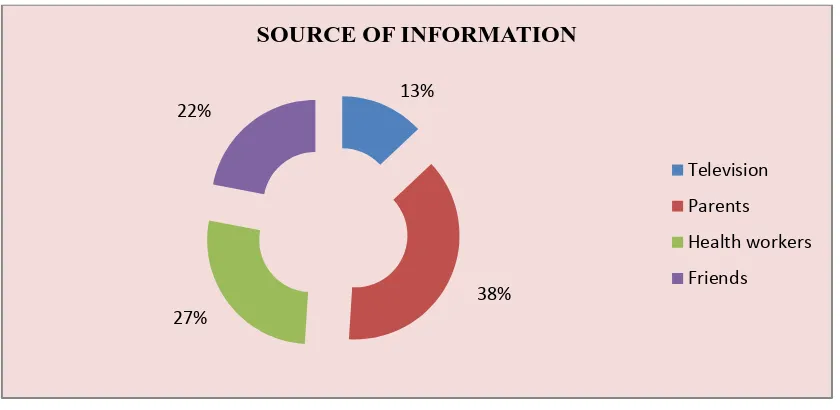
Regarding the source of information, majority 23 primi mothers (38%) got information from their parents were the source of information, for 16 primi mothers (27%) health workers were their source of information, for 13 primi mothers (22%) their friends were their source of information and for 8 primi mothers (13%) television was their source of information.
47
Table - 2. Distribution of samples in terms of age
S. NO SAMPLE CHARACTERISTICS
PRIMI MOTHERS (n=60)
Freq %
1. AGE
20 years and below 0 0
21 – 25 years 33 55
26 – 30 years 27 45
Above 30 years 0 0
Table – 2 shows that majority of 33 primi mothers (55%) belongs to the age group between 21 – 25 years, 27 primi mothers (45%) belongs to the age group between 26 – 30 years, and none of the primi mothers comes under the age group of 20 years and
[image:64.595.111.526.440.667.2]below and above 30 years.
Figure -3.Distribution of samples in terms of age
0% 10% 20% 30% 40% 50% 60%
20 year and below
21-25 years 26-30 years Above 30 years
AGE
20 year and below
21-25 years
26-30 years
48
Table – 3. Distribution of