EFFECTIVENESS OF STRUCTURED TEACHING PROGRAMME ON KNOWLEDGE AND ATTITUDE REGARDING EXPRESSION AND STORAGE OF BREAST MILK AMONG EMPLOYED POSTNATAL
MOTHERS IN SOTHUPAKKAM, KANCHIPURAM DISTRICT By
Ms. G. ELAIYAMUDHA
A Dissertation submitted to
THE TAMILNADU Dr.M.G.R MEDICAL UNIVERSITY,
CHENNAI
IN PARTIAL FULFILMENT OF THE REQUIREMENT FOR THE DEGREE OF
MASTER OF SCIENCE IN NURSING
EFFECTIVENESS OF STRUCTURED TEACHING PROGRAMME ON KNOWLEDGE AND ATTITUDE REGARDING EXPRESSION AND STORAGE OF BREAST MILK AMONG EMPLOYED POSTNATAL
MOTHERS IN SOTHUPAKKAM, KANCHIPURAM DISTRICT
By
Ms. G. ELAIYAMUDHA
M. Sc., (Nursing) Degree Examination,
Branch – III, Obstetric and Gynaecological Nursing, Adhiparasakthi College of Nursing,
Melmaruvathur – 603 319.
A dissertation submitted to
THE TAMIL NADU Dr.M.G.R.MEDICAL UNIVERSITY, CHENNAI
In partial fulfilment of the requirement for
Internal Examiner External Examiner
EFFECTIVENESS OF STRUCTURED TEACHING PROGRAMME ON KNOWLEDGE AND ATTITUDE REGARDING EXPRESSION AND STORAGE OF BREAST MILK AMONG EMPLOYED POSTNATAL
MOTHERS IN SOTHUPAKKAM, KANCHIPURAM DISTRICT
APPROVED BY DISSERTATION COMMITTEE
April – 2012
Signature: _______________________________________
Dr. N. KOKILAVANI, M.Sc. (N)., Ph.D.,
PRINCIPAL AND HEAD OF THE DEPARTMENT – RESEARCH, ADHIPARASAKTHI COLLEGE OF NURSING,
MELMARUVATHUR - 603 319.
Signature: _______________________________________ DR.K.SIVANKUMAR, M.D., D.G.O.,
DEPARTMENT OF OBSTETRIC AND GYNAECOLOGY, MELMARUVATHUR ADHIPARASAKTHI INSTITUTE OF MEDICAL SCIENCE AND RESEARCH,
MELMARUVATHUR - 603 319.
Signature: _______________________________________
PROF.S.SHENBAGAVALLI, M.SC., (N),
HEAD OF THE DEPARTMENT - OBSTETRIC AND GYNAECOLOGICAL NURSING, ADHIPARASAKTHI COLLEGE OF NURSING,
MELMARUVATHUR - 603 319.
T IN PAR EFFEC KNOW STORA MO T IN THE TAM RTIAL FU CTIVEN WLEDG AGE O THERS Bran THE TA N PARTI MILNADU ULFILME MA ESS OF E AND F BREA S IN SOT
M. Sc. ch – III, Adhi
A D AMIL NA
IAL FU
U Dr.M.G ENT OF T
STER O A F STRU ATTITU AST MI THUPA Ms. G ., (Nursi , Obstet iparasa Melmar Disserta ADU Dr. C LFILME FOR T G.R. MED THE REQ F SCIEN APRIL – UCTURE UDE RE LK AMO AKKAM By . ELAIY ing) Deg tric and kthi Col ruvathur ation su . M.G.R CHENN ENT OF THEDEG DICAL UN QUIREM
NCE IN N
2012
ED TEA EGARD
ONG E , KANC
YAMUD gree Ex Gyneco llege of r – 603
ubmitte R. MED
AI
F THE R GREE O NIVERSI ENT FO NURSING ACHING DING EX MPLOY CHIPUR DHA xaminat ological Nursing 319.
d to ICAL U
REQUIR OF
ITY, CHE R THE D
MASTER OF SCIENCE IN NURSING APRIL – 2012.
CERTIFIED THAT THIS A BONAFIDE WORK OF
Ms. G. ELAIYAMUDHA
ADHIPARASAKTHI COLLEGE OF NURSING MELMARUVATHUR-603 319.
SUBMITTED IN PARTIAL FULFILMENT OF THE REQUIREMENT FOR THE DEGREE OF MASTER OF SCIENCE IN NURSING FOR THE TAMILNADU DR. M.G.R. MEDICAL UNIVERSITY,
CHENNAI – 600 032. COLLEGE SEAL
SIGNATURE
Dr.N.KOKILAVANI ,M.SC.,(N), M.A (Pub.Admn).,M.Phil.,Ph.D., PRINCIPAL,
ADHIPARASAKTHI COLLEGE OF NURSING, MELMARUVATHUR – 603 319,
ACKNOWLEDGEMENT
I express my deep sense of gratitude to our FOUNDER, HIS HOLINESS ARUL THIRU AMMA, for his blessings and guidance, which enabled me to reach up to this level and to complete my study.
I am grateful to THIRUMATHI. LAKSHMI BANGARU ADIGALAR, Chief executive officer, Adhiparasakthi College of Nursing, Melmaruvathur, for given me the opportunity to pursue my study in this prestigious institution.
With great respect and honor, I extend my thanks to our beloved SAKTHI THIRUMATHI B.UMADEVI., M.Pharm., Ph.D., correspondent , Adiparasakthi college of nursing , Melmaruvathur for her sscompassionate spirit of stalwart support throughout the
study.
I wish to express my heartfelt gratitude to Dr. K. SIVAN KUMAR, M.D., D.G.O., Head of Department of Obstetric and Gynaecology, Melmaruvathur Adhiparasakthi Institute of Medical Sciences and Research, , Melmaruvathur, for the encouragement and support throughout my study.
I wish to extend my thanks to DR.C.SUSILA, M.SC(N),Ph.D., Principal, Billroth College of Nursing, Chennai, for the content validity and valuable suggestions for this study.
I am greatly indebted and express my sincere gratitude to Prof. B. VARALAKSHMI, M.Sc. (N)., M.Phil., Vice Principal, Adhiparasakthi College of Nursing, Melmaruvathur, for her constant support, expert advice, and valuable guidance to complete the work systematically.
I acknowledge my deep sense of heartfelt thanks to Prof.S.SHENBAGAVALLI M.Sc. (N), Head of the department, Obstetric and Gynaecological Nursing, Adhiparasakthi College of Nursing, Melmaruvathur, for her suggestions to complete my study.
I acknowledge my special thanks to Ms.S.SHAKILA,M.Sc.(N), Reader, Department of Obstetric and Gynaecological Nursing, Adhiparasakthi College of Nursing, Melmaruvathur, for her suggestions to complete my study.
I acknowledge my deep sense of heartfelt sincere thanks to Mrs. V. VASANTHA LAKSHMI, M.Sc(N)., Lecturer, Department of Obstetric and Gynaecological Nursing, Adhiparasakthi College of Nursing, Melmaruvathur, for her suggestions to complete my study.
I express my grateful thanks to Mrs. V.SHIRLEY SATHYA, M.Sc(N)., Lecturer, Department of Obstetric and gynaecological nursing, Adhiparasakthi college of nursing, Melmaruvathur, for her valuable suggestions to complete my study.
I wish to extend my thanks to Mr. B. ASHOK M.Sc., M.Phil, Lecturer in Biostatistics, Adhiparasakthi College of Nursing, Melmaruvathur, for his assistance in statistical analysis and making the dissertation in a great success.
I would like to thank all the TEACHING FACULTY MEMBERS, Adhiparasakthi College of Nursing, Melmaruvathur for their help during the study.
I wish to express my gratitude to MR.A.CHANDRAN, LIBRARIAN, Adhiparasakthi college of nursing, Melmaruvathur for permitting me to utilize the books, dissertations and journals for my study.
I would like to thank all the NON TEACHING STAFF MEMBERS, Adhiparasakthi College of Nursing, Melmaruvathur for their help during the study.
I would like thank to THE TAMILNADU DR. MGR. MEDICAL UNIVERSITY LIBRARY for reference books and journals for my dissertation.
I am specifically grateful to the participants of my study for their sincere co- operation and interest which showered upon the successful completion of this study, without which my venture would not be a fruitful one.
LIST OF APPENDIX
S.No APPENDICES P.No
I Questionnaire(English) i
II Structured teaching programme (English) xii
III Questionnaire (Tamil) xxv
IV Structured teaching programme (Tamil) xxxvii
CHAPTER I
INTRODUCTION
Breast feeding is a complex interaction between mother and
infant that has enhanced or inhibited by wide range of social,
psychological, and physiological factors. The first feed deserved
special attention. In some societies, the first contact with food is
traditionally an important ritual occasion.
Breast feeding is a biological process that is highly
influenced by various psychological and environmental factors
such as education, occupation, family support and nutrition. The
way in which breast feeding is initiated in the early postnatal period
is an important process likely to continue for the growth of the
infant.
Breast milk provides the main source of nourishment in the
first year of life. More affluent societies all over the globe, breast
feeding appears to have become a lost art and feeding bottle has
suppressed the breast feeding. A great asset in India is that an
average Indian mothers although poor in nutritional status has a
remarkable ability to breast feed her infant for prolonged period.
Longitudinal studies indicated that poor Indian women secreted as
Breast feeding provides significant health benefits for infants
and mothers. The American academic of pediatrics and the
American college of obstetrics and gynecology has policy
statement supporting breast feeding that reflect recent
advancement in understanding the mechanism underlining the
benefits of breast feeding and in the clinical management of breast
feeding . Despite of popular belief that there are few
contraindications to breast feeding, providing maternal support and
structured antenatal and postpartum breast feeding education are
the most effective means of achieving breast feeding a success. In
addition immediate skin-skin contact between the mother and
infant has shown to improve early initiation of breast feeding
outcomes.
BABY FRIENDLY HOSPITAL INITIATIVE: In1992, United
Nations Children’s Fund and World Health Organization
launched the baby friendly initiative amongst doctors, nurses,
health workers and parents, in hospitals and maternity centers to
promote, protect and support breast feeding. The object is to
reestablish the superiority of breast feeding in order to protect the
newborn’s health by becoming baby friendly. To fulfill the initiative
of UNICEF and WHO laid down ten steps to correct the baby
These are: (i) there must be a written breast feeding policy,
(ii) all health care staff must be trained to implement this policy. (iii)
all pregnant women must be informed about the benefits of breast
feeding. (iv) mothers should be helped to initiate breast feeding
with in half-an- hour of birth. (v) mothers are shown the best way to
breast feed. (vi) unless medically indicated, the newborn should be
given no food or drink other than breast milk. (vii) to practice
‘rooming in’ by allowing mothers and babies to remain together 24
hours a day. (viii) to encourage demand breast feeding. (ix) no
artificial teats to babies should be given. (x) breast feeding support
groups are established and referred to them on discharge.
Breast milk has been traditional food for newborn babies. It
fulfills not only the physical need for optimum growth but enhances
emotional and intellectual development. It prevents all the
infections from infant period to adult hood. Humanization of animal
milk can never be reality as it would not be possible to add milk the
immunological components, growth factors, hormones, enzymes
and other components that make human milk a veritable living
tissue.
Nutrition is one of the basic needs of living organisms, be
they are born or even while they are in their mother’s womb. By
mother from her womb and after birth from mother’s breast milk.
Breast milk contains an ideal balance of nutrients for the complete
growth of body and brain; more than a food it is a multipurpose
medicine, rich in anti infective factors which protect the baby.
Breast milk contains a number of protective substances
including anti-bodies, disease resistant factors and antimicrobials.
The nutrients which are needed by the baby like carbohydrate,
protein, fat, minerals and vitamins are available in simple form in
the breast milk. All these factors that inhibit disease and promote
infant maturation make the breast milk a real boon for healthy
infants until the middle of the first year of their life.
Although breast-feeding has been recognized as pre-requisite
for growth and development of healthy child, in the modern urban
setting, it is complicated by the increasing tendency of women to
work in situations where they are separated from their infants and
depend on the formula feed. About 50% of the women had been
employed when they become pregnant and return to their work
places when their children are three months old.
Breast milk is of particular importance for low birth weight and
sick newborns. These babies often require prolonged
hospitalization and benefit most from the biochemical and
mothers of these babies have lactation problems and may find it
difficult to keep up their breast milk supply. Factors responsible for
this include perinatal stress, anxiety, and separation from baby due
to work. Breast milk contains several anti-infective factors like
lactoferrin and high level of bifidus factors which protect the baby
from infections, viable phagocytic, macrophage, lymphoid cells.
Para amino benzoic acid provides protection against malaria, large
protein content causes lower solute load on the kidney. The active
fat lipase in the breast milk promotes digestion of fat and provides
free fatty acids.
Today many women have chosen to work after they have a
baby, many must return to work because of economic necessity. If
a mother has to breastfeed her infant successfully during the
period of separation, she must learn the art of breast milk
expression and storage; mother can express breast milk and store
it in a refrigerator or in a cool place to feed her baby in her
absence
Expressed breast milk can be collected and stored in sterile
plastic container and after the breast milk is collected, it should be
cooled immediately by placing it in a refrigerator or on ice in a
cooler, where ever possible, breast milk should be given fresh so
should be brought to room temperature and then it should be given
to infant.
NEED FOR THE STUDY
Breast feed is the most natural feed and breast milk is the
best milk. The basic food of infant is mother’s milk. Since the
breast milk is essential for the infant’s health, the mother has to
continue the exclusive breast feeding. But in cases of working
women, they can feed their child only when they are getting leisure
time. One of the other methods through which the working women
can manage their baby’s health is through expressed breast milk.
Expression of breast milk is beneficial to both the baby as well as
the mother; it provides nutrition to the child and prevents breast
complications also.
Premature cessation of exclusive breast feeding and
introduction of formula feed unnecessarily exposes children to the
risk of infection and malnutrition. About 1.4 million deaths of child
aged below two years are due to the sub optimal breast feeding
practices. 20% of neonatal death can be prevented by enacting
exclusive breast feeding. World health Organization, American
college of Pediatrics and American academy of paediatrics,
recommended feeding the baby for first six month only with breast
milk.
Mother working outside the home is one of the reasons for
early weaning in 2005, 9% of women who got married and had a
child of one year of age or younger returned to the work. Recent
surveys show that the rate of working women increased up to
82%-86%. Lack of support and knowledge regarding management
of breast feeding while employed, a non –supportive work
environment, and problems of expressing breast milk are
frequently given as reasons that working in easily. The American
Academy Pediatrics (2010), all address the importance of
supporting breast feeding mothers who return to the work force.
They recommend providing appropriate facilities and adequate
time for manual expression in the workplace.
Mori J Good Win (2010) a study was conducted on middle
class mothers on breast feeding duration and employment at
Washington. The survey reveals that the usual duration of breast
feeding is significantly shorter for working women, which 16 weeks
average compared with the 25 weeks for non working mothers.
Progona et al.,(2009) a study was conducted to assess the
knowledge and attitude on employed mothers regarding breast
reveals that 46.60% of the mothers knew that working mother can
continue breast feeding by feeding with expressed breast milk and
can be stored at room temperature for 6-8 hours. The researcher
has also recommended an education programme to be developed
with regard to expression and storage of breast milk for employed
mothers.
Sheegan et al.,(2009) a prospective study was conducted
that clinical support can make the difference in exclusive breast
feeding success among working mothers. The study compared
with an intervention group of mothers (146) who had been given
handouts on how to practice hand expression of breast milk and
storage method with a control group.
A world wide survey conducted by WHO (2010) showed that
every year, there are about million infants born, of which majority
(85%) are in the developing countries. Before they reach the age
of one year, 10% of these children died and another four percent
die before they are five years old. The major cases for the mortality
and morbidity among infants and children are due to malnutrition
(40%), diarrhoeal disease (15%) and infectious diseases (30%).
This can be prevented by meeting the nutritional needs of the
Although breast-feeding has been recognized for healthy
child growth and development, in the modern urban setting, it is
complicated by the increasing tendency of women to work in
situations where they are separated from their infants and depend
on the formula feed. About 50% of the women had been employed
when they become pregnant and return to their work places when
their children are three months old.
Premature cessation of exclusive breast-feeding and
introduction of pre lacteal feed unnecessarily exposes children to
the risk of infection and malnutrition. In developing countries,
where the infant formula is rapidly replacing human milk, the death
rate due to infection is higher and malnutrition starts earlier and is
more severe.
Rapid industrialization and urbanization increases the stress
for women to seek gainful employment outside their homes.
Maternal employment has been cited as the major reason for the
decline in breast feeding. A recent survey of middle class mothers
on breast feeding duration and employment by Ruby lukose in
India showed that the usual duration of breast feeding is
significantly shorter for working mothers, which is 16 weeks on
In India there are a lot of mothers who are working, so
there is a need to develop a module on expression and storage of
breast milk, with a view that the health professionals for the
employed mothers could utilize this module as a health education
material. The module can also help the mothers to practice hand
expression of breast milk in order to develop skill before returning
to work, which will support them to cope with their employment
along with breast – feeding.
Kumar G ( 2010) Wrote an article and stated that early and
unrestricted breast feeding offers health benefits for both mother
and baby prevents many common difficulties such as engorgement
in mother’s, nipple confusion in the breast.
WHO recommendation( 2011) Breast feeding is the
optimal way to feed an infant . It greatly improves quality of life by
providing unique nutritional , immunological , economical,
ecological, psychological and child spacing benefits .
Mortin , R,.(2010) Said that breast care is directed at
maintaining cleanliness and adequate breast support is necessary
for the normal function of the breast and the comfort of the mother.
All these studies shown that though most working women
want to do the best for their children, they lack information on the
breast milk. So encouragement before and after delivery is very
important.
Hence investigator find it important to give a teaching
programme on expression of breast milk in order to develop a skill
before returning to work, which will support them to cope with their
employment along with breast feeding.
From the above studies it is evident that, mothers who return
to work are constantly under the stress as to how to manage
breast-feeding and employment. Usually these mothers wean
earlier and their infants are at the risk of infections. Along with this,
the various difficulties faced by the employed mothers to continue
breast-feeding, initiated the investigator to undertake a study in
order to enable the breast-feeding mothers to make a successful
transition to the work place.
STATEMENT OF THE PROBLEM
EFFECTIVENESS OF STRUCTURED TEACHING PROGRAMME ON
KNOWLEDGE AND ATTITUDE REGARDING EXPRESSION AND
STORAGE OF BREASTMILK AMONG EMPLOYED POSTNATAL
OBJECTIVES
¾ to assess the level of knowledge and attitude regarding expression and storage of breast milk among employed
postnatal mothers.
¾ to determine the effectiveness of structured teaching programme regarding expression and storage of breast milk.
¾ to find out the association between post test knowledge and attitude of postnatal mothers with their demographic
variables.
OPERATIONAL DEFINITIONS
EFFECTIVENESS
It is the extent to which an action produces (or) intended (or)
desired outcome. The study refers to the extent to which structured
teaching programme on expression and storage of breast milk
among employed postnatal mothers.
STRUCTURED TEACHING PROGRAMME
It refers to the systematically planned teaching strategy
designed to provide information on expression and storage of
BREAST MILK
Breast milk is the white liquid produced by post natal women
to breast feed their babies.
EXPRESSION AND STORAGE OF BREAST MILK
Refers to expressing breast milk by manual expression (or)
using breast pumps and storage of breast milk at room
temperature.
EMPLOYED POST NATAL MOTHERS
It refers to the postnatal mothers, those who are working
after the birth of a child and extending for about six weeks.
HYPOTHESIS
H1 There is a significant difference between the pre and post
test scores on knowledge and attitude regarding expression and
storage of breast milk among employed postnatal mothers.
H2. There is no significant association between post level of
knowledge and attitude regarding expression and storage of breast
milk and demographic variables among employed postnatal
mothers.
ASSUMPTIONS OF THE STUDY
1. Employed postnatal mothers will have inadequate knowledge
2. Structured teaching programme regarding expression and
storage of breast milk will improve the knowledge and
attitude of the employed postnatal mothers.
DELIMITATIONS
The study is limited to:
¾ Mothers who are willing to participate
¾ Mothers who can interact in Tamil or English.
¾ Duration of data collection only the 6 weeks.
¾ Mothers those who are working. PROJECTED OUTCOME
¾ This study helps the mothers to get adequate knowledge and attitude regarding expression and storage of breast milk.
¾ The findings on the demographic characteristics will help to identify the factors, which are influencing the mothers to
improve the knowledge and attitude regarding expression
CONCEPTUAL FRAMEWORK
Concept is defined as a complex mental formulation of an
object (or) event that is derived from the individual’s perception
and experience. A study that has its root in the specified
conceptual model is often called as a conceptual framework.
The conceptual frame work for this study directed from
“General system theory”. According to general system theory, it is
a set of interacting art with in boundary which makes the system
work well to its overall objectives.
General system theory is useful for the whole process
in to essential task to ensure goal realization. The number of part
of the system is totally dependent on what is needed to accomplish
the goal (or) purpose. The goal is necessary for any system to
function. The aim of the study is to improve the knowledge on
mothers regarding expression and storage of breast milk.
Bertalanffy explained that the system has four major aspects.
1. Input
2. Through put
3. Out put
INPUT
It is any form of energy, information and matter that enters in
to a system through its boundaries.
→ Pretest is done to assess the knowledge of employed
postnatal mothers regarding expression and storage of
breast milk.
→ Structured teaching programme for employed postnatal
mothers in terms of knowledge regarding expressed breast
milk feeding practices.
THROUGH PUT
It is the process that occurs in between the input & output
process. In this study, throughput refers to structured teaching
programme on knowledge and attitude regarding expression and
storage of breast milk feeding practices.
OUTPUT
It is energy material information that is transferred to the
environment. In this study output is the change in the knowledge
and attitude regarding expression and storage of breast milk for
employed postnatal mothers. Further it includes evaluating the
structured teaching programme and knowledge regarding
expression and storage of breast milk among employed postnatal
moderately adequate knowledge and inadequate knowledge
regarding expression and storage of breast milk.
FEED BACK
Feedback is the result of output. It allows the system to
monitor its internal function. So that it can either increase or
restrict its input. Feedback is necessary for those who belong to
the group that falls under in adequate knowledge, moderately
adequate knowledge. Group subsequent session will be
performed during the home visit, which will increase their
knowledge on expression and storage of breast milk.
CHAPTER II
REVIEW OF LITERATURE
Review of literature is a systematic identification, location, scrutiny and summery of written materials that contains
information on research problem.
Review of literature is an essential step in the research
project. It provides basis for future investigation, justifies light on
the feasibility of the study, reveals contains of data collection and
relates the findings from one study to another with a hope to
establish a camp comprehensive study of scientific knowledge in a
professional discipline, from which valid and pertinent theories may
be developed.
Review of literature for the present study has been
organized under the following headings.
I. Review of literature related to breast feeding and its
importance.
II. Review of literature related to expression of breast
milk.
I.Review Of Literature Related To Breast Feeding and its
importance.
Breast feeding network of India (2011) stated that breast
feeding saves infant life. The result showed, infants 14 times less
likely to die from diarrhea , 4 times likely to die from respiratory
diseases and 3 times less likely to die from other infections as
compared to a bottle feed infants.
Pilleberi.A.,(2010) conducted a study on breast care. The
result described that the women should wash her breast daily with
clear water at the time of her bath or shower and then dries them
with a soft towel. Soap should be avoided because it tends to dry
and crack nipples leading to fissures and breast abscess.
Hoyer, H., (2009) Conducted a study on successful breast
feeding as a result of a health education programme for mothers
and results found out that the written instructions as well as
personal encouragement by the field nurse exerted a favourable
influence on breast feeding practices which was taken as a guide
line for our further professional work and change of standards in
the field of breast feeding promotion.
Taskin L A.,(2009) Conducted an experimental study on
impact of breast care techniques on prevention of possible post
compresses or expressed breast milk was more effective in
preventing cracked nipples and keeps the nipples dry and clean.
The number of cases with nipple pain was less in the group that
applied expressed breast milk.
Jennifer Callen, et.al., (2008) conducted a study on breast feeding is benefit for preterm infants. The result showed that by
proper breast feeding the infant was protected from nutritional,
gastrointestinal, immunological, developmental, and psychological
disorder. This way, researchers and clinicians can begin to
understand the barriers to breastfeeding at various time periods in
the breastfeeding experience and begin implementing strategies to
remove these barriers.
Reamf. M et.al. (2008) conducted a study on breast feeding
among employed mothers. The objective of the study to protect,
promote, and support breastfeeding among women in the labor
force is an important global issue that requires greater attention.
An increasing proportion of women of child-bearing age are
employed outside the home. The study concludes Women who
resume full-time work outside the home when their infants are
young tend to have shorter durations of breastfeeding and less
exclusive breastfeeding. The special needs of women working
address international policy regarding the protection, promotion,
and support of breastfeeding among women who work outside the
home.
Bezek SK et.al., (2007) conducted a study on maternal
employment has been associated with decreased duration of
breastfeeding. The result says that anticipatory guidance specifics
such as feeding patterns, guidelines for pumping and storing
breast milk, and information regarding available resources are
clinical knowledge areas that pediatric health care providers must
have to increase breastfeeding rates and duration among women
who return to the work force after the birth of their baby.
Quarles A,et.al.,(2007)The authors examined the
breastfeeding duration and management of two groups of mothers
with different exposures to services of a Certified Lactation
Consultant (CLC) .Results showed that: (a) mothers at H1 had
significantly longer durations of breastfeeding than peers at H2 (b)
a significantly greater proportion of mothers at H1 attained their
intended duration of breastfeeding compared to mothers at H2
group and (c) in a stepwise multiple regression analysis, intended
length of breastfeeding accounted for 18% of the variance in
education 3%. The results support the theory of reasoned action
and the theory of patient education.
Bear K,et.al.,(2007) described the components of early
follow-up and guidelines for assessment. The result states,
management strategies for common problems are discussed, such
as nipple soreness, cracked nipples, plugged ducts and mastitis,
insufficient infant weight gain, perceived inadequacy of milk
supply, breast-milk jaundice, sexual adjustment and failure at
breastfeeding. Breastfeeding guidelines for employed mothers and
adoptive mothers are indicated.
lewallen LP et.al.,(2006) conducted a study on prevention of
breast complications among post natal mothers. To examine the
sixty-eight percent of women were still breastfeeding at 8 weeks,
although 37% of those reported supplementing with formula. Of
those who had stopped, the most common reason was insufficient
milk supply. Other reasons included painful nipples and latch
problems, personal reasons, returning to work or school, and
drugs/illness of the mother or baby. Most women received help
with breastfeeding in the hospital, but only 55% received help with
breastfeeding after hospital discharge. Every opportunity should be
taken to address these issues both in the hospital and through
Hill PD et.al.,(2006) determined the difference in milk
volume occurred among mothers with and without breastfeeding
experience who used either a single or double breast pumping
regimen the first 5 weeks postpartum. The results showed that
mothers with previous breastfeeding experience had greater milk
weights over time, but weights were not significantly different when
compared with those mothers with no previous breastfeeding
experience. The findings of the two repeated analyses indicated
the complexity of the milk production response, and the
importance of considerations of environmental as well as
physiologic factors.
Callen J et.al., (2006) conducted a study to identify the barriers to the successful establishment and maintenance of
breastfeeding in very-low-birth weight (VLBW) infants, both in the
hospital and after discharge, and changes in barriers over time.
The result indicated the need to address time-period-specific
barriers encountered during the breastfeeding experience of
II. Review of literature related to expression of breast
milk.
Slusser wm et.al.,(2011) conducted a study to assess the
barrier for breastfeeding women working full-time outside the
home: breast milk expression in the workplace. The result showed,
mothers express breast milk about twice a day when infants are 4
months old and 6 months old with a significant decline in frequency
(P <.05) comparing the 2 age groups. Most mothers spend 1 hour
or less expressing breast milk when infants are or 6 months old
with a significant difference (P <.05) between the 2 age groups.
Mothers of younger infants were no more likely to work fewer days
per week than were mothers of older infants.
Labiner-Wolfej et.al.,(2009) stated that eight -five percent of
breastfeeding mothers of infants in the youngest age group had
successfully expressed milk at some time since their infant was
born. The study reporting in all 3 age groups, expressing milk on a
regular schedule, compared with occasionally, was positively
associated with maternal employment and the use of an electric
versus manual breast pump.
Hopkinson J, et.al.,(2008) described the mechanical
characteristics of breast pumps have been shown to influence milk
evaluated the impact of a novel pump design on milk extraction,
milk fat content, maternal hormone response, maternal
satisfaction, long-term milk production, and duration of
breastfeeding following return to the workforce.
Sisk P,et.al.,(2008) identified the patterns of factors that supported or hindered initiation of breast milk expression and
maintenance of breast milk production after the birth of a very low
birth weight (VLBW) infant in a sample of US women with varied
prenatal infant feeding intentions. The result showed that family
support, positive attitudes toward pumping, and anticipation of
breastfeeding supported maintenance of breast milk production.
From these data emerge points of intervention where additional
support could improve mothers' experiences and increase duration
of breast milk feeding.
Meier PP et.al.,(2008) evaluated the effectiveness of an
evidence-based breastfeeding program (Rush Mothers' Milk Club)
for mothers and their very-low-birth-weight (VLBW) infants. The
Rush Mothers' Milk Club effectively achieved lactation outcomes
that approach the national health objective, although the mothers
had significant risk factors for initiating and sustaining lactation.
The findings have important implications for clinicians,
Chapman DJ et.al.,(2008) investigated the effects of breast
pumping before the onset of lactation on early milk transfer and
subsequent breastfeeding duration among women giving birth by
cesarean delivery. The result showed breast pumping did not
improve milk transfer during the first 72 hours postpartum and may
negatively affect breastfeeding duration among primiparous
women. Lactation, lactogenesis, breast milk, breast pumping, milk
expression, breastfeeding, cesarean delivery.
Spicer K.et.al., (2008) established that breast milk is the
best source of nutrition for the premature infant. The clinical nurse
has the opportunity to educate the mother on the importance of
breast milk for the premature infant and to support the mother
through the course of pumping. The result says the importance of
educating the bedside nurse regarding the physiology of lactation
so that the mother is adequately assisted in expressing breast milk
for her vulnerable infant.
Hayes DK et.al.,(2007) conducted a study on duration of
breastfeeding. Our findings suggest that the manual breast pump
may work as well as the electric breast pump when breastfeeding
is encouraged and supported among women returning to work or
reasons why women with greater education breastfeed for a
shorter duration
Sarah N.et.al., (2007) explored the breastfeeding women’s
experiences of expressing breast milk. The most common reason
for expressing milk was to “store extra breast milk”. The most
important reason was “not enough milk”/“to make more milk”. The
majority of women used an electric breast pump, and this method
of expressing was preferred by 59% of women. Adverse effects of
pumps were pain and damage to nipples. Breast pumps may have
a role in enabling women to extend the duration of breast milk
feeding, but further research is needed.
Binns CW et .al.,(2006) investigated the association
between expression of breast milk and breastfeeding duration.
This study found that mothers who express breast milk are more
likely to breastfeed to six months (any breastfeeding). While further
research is required in different cultures to confirm these results,
the appropriate use of expressed breast milk may be a means to
help mothers to achieve six months of full breastfeeding while
giving more lifestyle options.
Dykes F et.al.,(2006) described the lived experience of
breast feeding, in primiparous women. The main focus was upon
for the purpose of exclusively nourishing their babies. Perceived
breast-milk inadequacy is underpinned by a complex and
synergistic interaction between socio-cultural influences, feeding
management, the baby's behavior, lactation physiology and the
woman's psychological state.
Meehan K et.al.,(2005) enumerated the importance of
electric pump loan program designed to facilitate breastfeeding for
low-income mothers returning to full-time work was evaluated.
Mothers who received an electric pump as soon as requested did
not request formula until 8.8 months on average, whereas those
who did not receive an electric pump requested formula on
average at 4.8 months. Mothers who received an electric pump
when requested were 5.5 times as likely as mothers who did not
receive an electric pump to not request formula at 6 months.
Morton J et.al.,(2005) conducted a study on
pump-dependent mothers of preterm infants commonly experience
insufficient production. We observed additional milk could be
expressed following pumping using hand techniques. We explored
the effect on production of hand expression of colostrum and
hands-on pumping (HOP) of mature milk. Mothers taught HOP
infants may avoid insufficient production by combining hand
techniques with pumping.
Mitoulas et.al., (2005) compared breastfeeding and
expression characteristics in 30 mothers of exclusively
breastfeeding, healthy term infants. The result shows the mean
breastfeed volume was similar to the volume of milk expressed in
a 5-minute period. Furthermore, this study is the first to establish
protocols that allow for the objective determination of breast pump
efficacy.
Pantazi M et.al.,(2005) reported the two surveys of nurses
and midwives working in a large pediatric hospital and three
neonatal units regarding support for mothers to provide breast
milk. The result illustrate the need for appropriate breastfeeding
policies and staff training. There is a particular lack of studies
based in the United Kingdom on breastfeeding in pediatric units. It
is hoped that this article will generate discussion among staff about
the breastfeeding support they offer and ways to strengthen it.
III. Review of literature related to storage of breast
milk.
Francis J.et.al., (2010) conducted a study on storage of
result of the study was the bottle used in this study had
measurable and decrease in the mean concentration of ascorbic
acid.
Cossev. V.et.al.,(2010) conducted a study in neo natal
intensive care unit with the increasing uses of human milk and
growing evidence of the benefits of mother’s milk for preterm and
ill newborn. The study implicated strict hygiene and care full
temperature is important during the expression, collection,
transport, and storage of maternal milk. In contrast to formula milk,
no legal standards exist for the use of expressed maternal milk.
Turoil D,et.al.,(2009) investigated the extent formula milk
and stored breast milk which was commonly used in hospitals,
could be pro-oxidant sources for new born babies. The finding of
the study was, all the considered lipid per oxidation product were
higher in human milk than formula, and lipid per oxides were
much higher in human milk stored at 20 degrees C. many
differences were found between different formula milk.
Johnson C.J.et.al.,(2009) analyzed the effects of methods
of collection and storage on nutrients in human milk. These
findings indicate that collection methods and storage procedures
used for comparatively brief periods will affect the concentrations
May berry.L.J.et.al.,(2008) conducted a study data on
breast milk expression, collection and storage practices. The result
of the study shows 88% of the mothers reported having received
information on breast feeding from ICN nurses, 47% were not
provided with written take-home instruction. 18% mothers
considered discontinuing breast milk collection citing insufficient
milk supplies and time requirement citied as common reasons.
Pittard W.Bet.al.,(2008) conducted a study on working
mother’s breast milk. It is the bacteriostatic quality of without
benefit of refrigeration. the finding of the study was thus, mother
who expressed milk for their own infants while at work may
assume that the bacterial contamination of their milk will not
increase significantly for Up to but no longer than 6 hours after
expression, if they have no access to refrigeration
Larson .E.et.al.,(2007) A bacteriological content of
ex[pressed breast milk studied in 30 mothers at the time of
expression and after 24 and 48 hours of refrigeration. There were
no significant differences in colony count between the three time
intervals. The study concluded that it is bacteriologically safe to
refrigerate expressed breast milk for up to 48 hours.
ReynoldS.G.J (2006) A simplified system of human milk
for use in a neonatal intensive care unit.20 milk samples were
obtained at a single expression using a standard hand pumps and
divided into three parts .the study concluded that milk can be
safely and conveniently stored by this method without loss or
damage to the components of raw breast milk important for
CHAPTER-III
METHODOLOGY
This chapter deals with the description of methodology and
different steps which, had been undertaken for gathering and
dramatizing data for the investigator to determine the effectiveness
of structured teaching programme on knowledge and attitude
regarding expression and storage of breast milk among employed
postnatal mothers in sothupakkam, Kanchipuram district.
RESEARCH DESIGN
Pre experimental one group pre test post test research design
was used to assess the effectiveness of structured teaching
programme on knowledge and attitude regarding expression and
storage of breast milk among employed postnatal mothers.
SETTING
The setting selected for the study had been the residential
areas in sothupakkam village, Kanchipuram district.
POPULATION
The target population of this study was employed postnatal
SAMPLE SIZE
Sample size consists of 60 employed postnatal mothers
who met the inclusion criteria
.
SAMPLING TECHNIQUE
Systematic sampling technique had been used to select the
sample. Those who fulfill the inclusion criteria had been selected.
CRITERIA FOR SAMPLE SELECTION
Inclusion criteria
¾ Postnatal mothers who are all employed.
¾ Postnatal mothers who could understand Tamil / English
¾ Postnatal mothers who are willing to participate in the study Exclusion criteria
¾ Employed postnatal mothers who had been selected for pilot study
¾ Mothers having children more than one year of age
¾ Postnatal mothers who were not co-operative to the study DESCRIPTION OF THE INSTRUMENT
The instrument used for data collection was an interview
schedule. This was developed based on the objectives of the study
and through review of literature. The Instrument consists of three
PART I: questionnaire for demographic variables
PART II: questionnaire to assess the knowledge of postnatal
mothers regarding expression and storage of breast milk.
PART III: A three point Likert scale was used to assess the
attitude of employed postnatal mothers regarding expression and
storage of breast milk.
CHAPTER IV
DATA ANALYSIS AND INTERPRETATION
This chapter deals with analysis and interpretation of data
collected from 60 samples of employed postnatal mothers in a
It deals with description of tool, report of the pilot study, reliability,
validity and informed consent, scoring procedure, scoring
interpretation, data collection procedure and statistical method.
DESCRIPTION OF THE TOOL
The instrument was classified into 3 parts.
PART I
It consists of demographic variables of employed postnatal
mothers in a selected residential areas at sothupakkam, such as
age of mother, education and occupational status of the mother,
monthly income, type of family, religion ,number of children ,
previous experience with expression and storage of breast milk,
and source of information . The data had been collected by
questionnaire method.
PART II
The data was collected through the well prepared multiple
choice questionnaire. It consists of 25 questions and total score
were 25. Each correct response carries a score of ‘one’ and the
score of wrong answer is zero. A total score of multiple choice
PART III
A three point Likert scale was used to assess the attitude of
employed postnatal mothers regarding expression and storage of
breast milk.
REPORT OF PILOT STUDY
The pilot study was conducted in selected residential areas
of sothupakkam for a period of one week .The questionnaire
method had been used to find out the reliability, validity, feasibility
and practicability of the tool and which was evaluated by experts of
the Research committee.
The investigator used systematic sampling technique to select the
6 samples by using paired “t” test, the effectiveness of structured
teaching programme on knowledge and attitude regarding
expression and storage of breast milk among employed postnatal
mothers had been assessed. The result of the pilot study showed
that there was an improvement in knowledge and attitude of
employed postnatal and the conduction of study was found to be
feasible.
The tool was prepared by the investigator based on literature
review, under the guidance of experts and on the basis of
objectives, which had been assessed and evaluated, approved by
Experts of Research committee. The content validity of the tool
was obtained from research experts from the field obstetrics and
gynecological nursing.
RELIABILITY
The assessment tool was developed by the investigator
based on the review of literature, which was evaluated and
approved by the experts of the Research committee. Reliability
was checked by split-half method. The reliability was 0.71.
Reliability and practicability of the tool was tested through the pilot
study and used for main study.
INFORMED CONSENT
The dissertation committee prior to the pilot study approved
the research proposal. The oral consent from each employed
postnatal mother was obtained before starting the data collection.
The main study was conducted in residential areas of
sothupakkam village. The investigator introduced herself to the
employed postnatal mothers and developed a good rapport and
made them to cooperate and accept for the study. After getting
demographic data from the employed post natal mother’s.
Mothers’ pre test was done with the help of the prepared tool. After
the pre test, structured teaching programme was administered
using charts and handouts. After seven days the post test was
done to evaluate the effectiveness of teaching programme by
using same evaluation tools. Based on the collected data
effectiveness was found by comparing the pre test and post test
score.
SCORE INTERPRETATION
PART II
It consists of 25 multiple choice questions to assess the
knowledge of expression and storage of breast milk. Employed
postnatal Mothers had been interviewed. Each correct answer was
‘zero’. Based on scoring the percentage of knowledge was
calculated by using the formula.
Obtained score
Score interpretation = × 100 Total Score
Score Description
≥ 50% Inadequate knowledge 51-75% Moderately adequate knowledge
≤ 75% Adequate knowledge
PART III:
Focused on attitude towards the expression and storage of
breast milk. It consists of ten items.
The positive statements had been scored in the order as
Disagree - 1
Uncertain - 2
Agree - 3
The negative statements had been scored in the order as
Agree - 1
Uncertain - 2
Disagree - 3
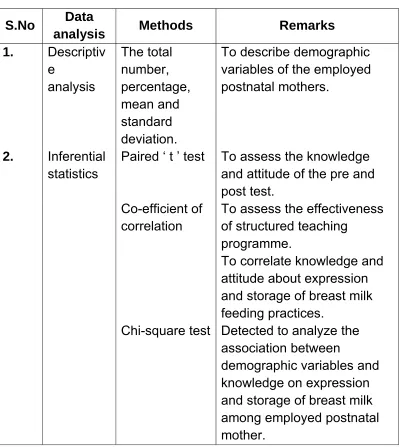
Descriptive statistical analysis and inferential statistical
analysis methods had been used to find out the percentage, mean,
standard deviation, Paired ‘t’ test ,co-efficient of co-relation, and
[image:52.612.125.527.211.658.2]chi square test .
Table: 4.2
S.No Data
analysis Methods Remarks
1. Descriptiv e analysis The total number, percentage, mean and standard deviation.
To describe demographic variables of the employed postnatal mothers.
2. Inferential statistics
Paired ‘ t ’ test To assess the knowledge and attitude of the pre and post test.
Co-efficient of
correlation
To assess the effectiveness of structured teaching
programme.
To correlate knowledge and
attitude about expression and storage of breast milk feeding practices.
Chi-square test Detected to analyze the association between
DATA ANALYSIS AND INTERPRETATION
SECTION –A
Frequency and percentage distribution of demographic
variables of employed postnatal mothers.
SECTION – B
Frequency and percentage distribution of pre test and post
test level of knowledge and attitude regarding expression and
storage of breast milk among employed postnatal mothers.
SECTION – C
Comparison between mean and standard deviation of pretest
and posttest of effectiveness of structured teaching programme on
expression and storage of breast milk among employed postnatal
mothers
SECTION – D
Mean and standard deviation of improvement score for
expression and storage of breast milk among employed postnatal
mothers
SECTION – E
Correlation between knowledge and attitude on expression
SECTION – F
Analyzing the association between demographic variables
and knowledge and attitude on expression and storage of breast
SECTION –A
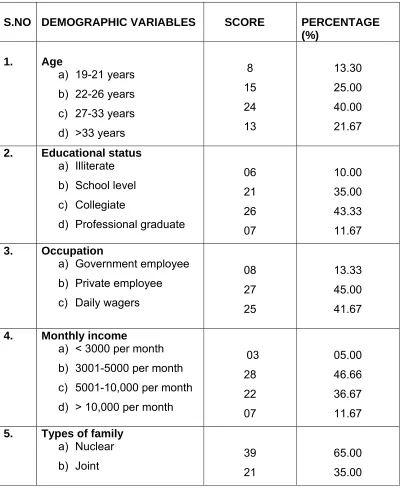
TABLE 4.1: FREQUENCY AND PERCENTAGE DISTRIBUTION OF
DEMOGRAPHIC VARIABLES OF EMPLOYED POSTNATAL MOTHERS
N=60
S.NO DEMOGRAPHIC VARIABLES
SCORE PERCENTAGE
(%)
1. Age
a) 19-21 years b) 22-26 years c) 27-33 years d) >33 years
8 15 24 13 13.30 25.00 40.00 21.67
2. Educational status
a) Illiterate b) School level c) Collegiate
d) Professional graduate
06 21 26 07 10.00 35.00 43.33 11.67 3. Occupation
a) Government employee b) Private employee c) Daily wagers
08 27 25 13.33 45.00 41.67
4. Monthly income
a) < 3000 per month b) 3001-5000 per month c) 5001-10,000 per month d) > 10,000 per month
03 28 22 07 05.00 46.66 36.67 11.67
5. Types of family
6. Religion a) Hindu b) Muslim c) Christian d) Others 44 09 05 02 73.33 15.00 08.33 03.30
7. Number of children
a) One b) Two
c) Three and above
33 25 02 55 41.67 3.33
8. Previous experience with
expression and storage of breast milk a) Yes b) No 12 48 20 80
9. Sources of information on
expression and storage of breast milk
a) Health personnel b) Mass media c) Friends
d) Family members
[image:56.612.122.526.63.453.2]43 12 02 03 71.67 20.00 3.33 05.00
Table 4.1 depicts the frequency and percentage distribution
of the personal factors of demographic variables of employed
postnatal mothers. Out of 60 mothers, with regard to the age of the
mother eight (13.33%) were in 19 - 21 years, 15 (25%) between
22- 26 years, 24(40%) in 27- 30 years, 13(21.67%) above >
30years. Regarding educational status six (10%) were illiterate, 21
(35%) had school level, 26(43.3%) had collegiate, seven (11.67%)
(13.33%) were government employee, 27(45%) private employee,
25(41.67%) daily wager. Regarding Income three (5%) earning up
to Rs 3000 per month, 28(46.6%) up to Rs 3001-5000 per month,
22(36.67%) up to Rs 5001-10,000 per month, seven (11.67%)
earning above Rs 10,000 per month. Type of family reveals about
39(65%) belonged to joint family, 21(35%) belonged to nuclear
family. Regarding the religion 44(73.33%) Hindu, nine (15%)
Muslims, five (8.33%) Christian, two (3.33%) others. Regarding
number of children 33 (55%) had one child, 25(41.67%) had two
children, two (3.33%) had above two children. Previous experience
of expression and storage of breast milk feeding practices 12(20%)
said yes, 48(80%) said No. Regarding the source of information,
43 (71.67%) had from health personnel, 12 (20%) from mass
media, two (3.33%) from friends, three (5%) had from family
SECTION – B
TABLE – 4.4.1 FREQUENCY AND PERCENTAGE DISTRIBUTION OF LEVEL OF KNOWLEDGE AMONG EMPLOYED POSTNATAL MOTHERS
N=60
Knowledge Adequate Moderate Inadequate
N % N
% N %
Pre test - - 5 08.03 55 91.07
Post test 40 66.07 20 33.03 - -
Table 4.4.1 shows that the knowledge regarding expression
and storage of breast milk, through the pre test and post test
based on questionnaire method. On the pre test among 60
mothers five (8.3%) mothers had moderate knowledge, 55(91.7%)
mothers had inadequate knowledge, none of them was in
adequate knowledge. In the post test 40(66.7%) mothers had
adequate knowledge, 20(33.33%) mothers had moderate
SECTION – C
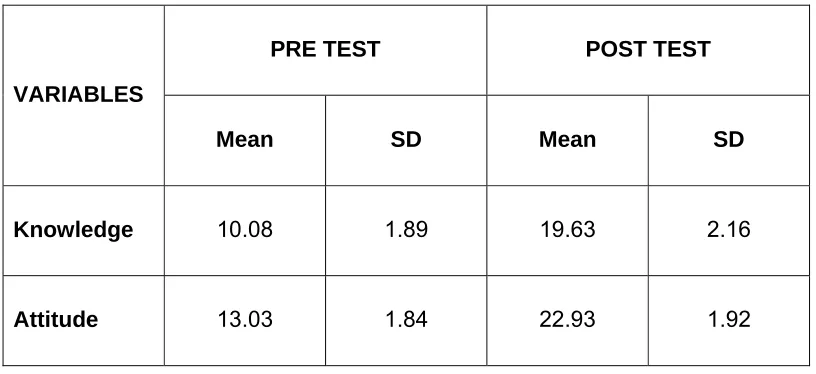
TABLE – 4.5 COMPARISON BETWEEN MEAN AND STANDARD DEVIATION OF PRE TEST AND POST TEST SCORE OF KNOWLEDGE AND ATTITUDE REGARDING EXPRESSION AND STORAGE OF BREAST MILK
VARIABLES
PRE TEST POST TEST
Mean SD Mean SD
Knowledge 10.08 1.89 19.63 2.16
Attitude 13.03 1.84 22.93 1.92
Table 4.5 reveals that pre test knowledge mean was 10.08 with
standard deviation of 1.89 and post test knowledge mean was
19.63 with standard deviation of 2.16. Pre test attitude mean was
13.03 with standard deviation of 1.84 and post test mean was
22.93 with standard deviation of 1.92.
SECTION D
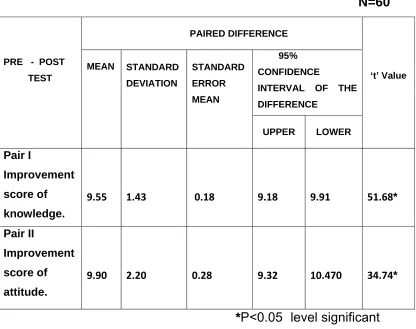
TABLE – 4.6 MEAN AND STANDARD DEVIATION OF PRE TEST AND POST
TEST SCORE OF EMPLOYED POSTNATAL MOTHERS
N=60
PRE - POST TEST
PAIRED DIFFERENCE
‘t’ Value MEAN STANDARD DEVIATION STANDARD ERROR MEAN 95% CONFIDENCE
INTERVAL OF THE DIFFERENCE
UPPER LOWER
Pair I Improvement score of knowledge. 9.55 1.43 0.18
9.18 9.91
51.68*
Pair II Improvement score of attitude. 9.90 2.20 0.28 9.32 10.470
34.74*
*P<0.05 level significant
Table 4.6 reveals the improved mean and standard deviation of
effectiveness of knowledge and attitude on expression and storage
of breast milk. Among 60 mothers the improved mean score of
knowledge was 9.5 with the standard deviation of 1.4. The improved
mean score of attitude was 9.9 with the standard deviation of 2.2.
The confidential interval of knowledge score was -9.18-9.92.The
milk score was 9.33 -10.47. Paired “t” value for knowledge was 51.6
and for attitude 34.7. This implies that the structured teaching
programme was effective in improving knowledge and attitude
regarding breast milk.
SECTION – E
TABLE – 4.7 CORRELATION BETWEEN KNOWLEDGE AND
ATTITUDE ON EXPRESSION AND STORAGE OF BREAST MILK
POST TEST KNOWLEDGE
SCORE
POST TEST ATTITUDE SCORE
TOTAL
CORRELATION
GOOD FAIR N %
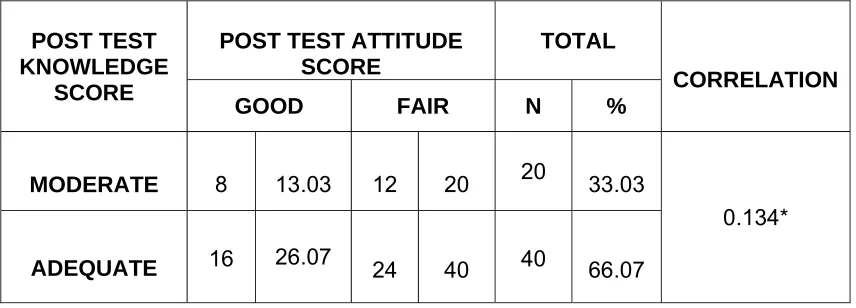
MODERATE 8 13.03 12 20 20 33.03
0.134*
ADEQUATE 16 26.07 24 40 40 66.07
Table 4.7 depicts the correlation between knowledge and attitude
on expression and storage of breast milk feeding practices after
structured teaching programme. There was a positive correlation
[image:62.612.106.534.166.320.2]SECTION – F
TABLE – 4.8 ASSOCIATION BETWEEN DEMOGRAPHIC
VARIABLES AND POST TEST SCORE OF EXPRESSION AND
STORAGE OF BREAST MILK AMONG EMPLOYED POSTNATAL
MOTHERS
S.
NO. DEMOGRAPHIC VARIABLES
POST TEST SCORE
INADEQUATE MODERATELY ADEQUATE
N % N % N % 1 Age
a. 19 – 21 years 00 00 05 08 03 05
5.088 (NS)
b. 22 – 26 years 00 00 06 10 09 15
c. 27 – 30 years 00 00 05 08 19 32
d. Above 30 years 00 00 04 07 09 15
2 Educational status
7.755* (S)
a. Illaterate 00 00 05 08 01 02
b. School level 00 00 05 08 18 27
c. Collegiate level 00 00 08 13 18 30
d. Professional Graduate 00 00 02 03 05 08 3 Occupation
a. Goverment employee 00 00 02 03 06 10
0.5* (S)
b. Private employee 00 00 08 13 19 32
c. Daily wages 00 00 10 17 15 25
4 Religion
0.315 (NS)
a. Hindu 00 00 14 23 30 50
b. Christian 00 00 03 05 06 10
c. Muslim 00 00 02 03 03 05
d. Others 00 00 01 02 01 02
5 Type of Family
a. Nuclear 00 00 11 18 28 47 1.319
(NS)
b.Joint 00 00 09 15 12 20
6 No. of Children
a. Yes 5 16.6 - - 5 16.6 0.2
(NS)
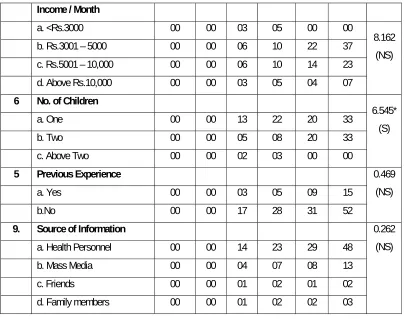
Income / Month
a. <Rs.3000 00 00 03 05 00 00
8.162 (NS)
b. Rs.3001 – 5000 00 00 06 10 22 37
c. Rs.5001 – 10,000 00 00 06 10 14 23
d. Above Rs.10,000 00 00 03 05 04 07
6 No. of Children
6.545* (S)
a. One 00 00 13 22 20 33
b. Two 00 00 05 08 20 33
c. Above Two 00 00 02 03 00 00
5 Previous Experience 0.469
(NS)
a. Yes 00 00 03 05 09 15
b.No 00 00 17 28 31 52
9. Source of Information 0.262
(NS)
a. Health Personnel 00 00 14 23 29 48
b. Mass Media 00 00 04 07 08 13
c. Friends 00 00 01 02 01 02
d. Family members 00 00 01 02 02 03
[image:64.612.122.527.65.384.2]N – Non Significant NS – Non Significant
Table 4.8 Shows that there was a significant association between post test level of knowledge and education, number of children.
There was no significant association between the other
demographic variables like age, occupation, income, family type,
religion, previous experience, and source of information. Hence we
could realize that there is an effectiveness of structured teaching
programme on knowledge and attitude on expression and storage
CHAPTER –V
RESULTS AND DISCUSSION
The aim of the study was to assess the effectiveness of
structured teaching programme on expression and storage of
breast milk among employed postnatal mothers. A total number of
60 employed post natal mothers had been selected for the study.
The pre test was conducted using questionnaire and three part
Likert attitude scale. The duration of the pre test ranged from
20-30 minutes for each mother.
After the pre test a teaching programme had been given with
the help of the charts, posters and hand out to the employed post
natal mothers. After seven days, post test was conducted by using
same questionnaire and three part likert attitude scales.
The study proved that structured teaching programme has
brought about excellent changes in the level of knowledge and
attitude regarding expression and storage of breast milk among
The first objective was to assess the knowledge and
attitude regarding expression and storage of breast milk
among employed postnatal mothers.
The assessment of the knowledge regarding expression and
storage of breast milk feeding practices had been carried out in
residential areas of sothupakkkam, Kancheepuram district. The
employed postnatal mothers who met inclusion criteria were
selected and each of them was assessed with demographic
variables, questionnaire method and attitude scale. The data
analysis showed that on the pre test among 60 mothers five (8.3%)
mothers had moderate knowledge, 55 (91.7%) mothers had
inadequate knowledge, none of them was in adequate knowledge.
In the pre test eight (13.3%) had fair attitude, 52 (86.07%) mothers
had poor attitude. In the post test 36 (60%) mothers had good
attitude 24(40%) had fair attitude none of them was in poor
attitude. In the post test 40 (66.7%) mothers had adequate
knowledge, 20 (33.33%) mothers had moderate knowledge and
none of them was in inadequate knowledge. It reveals that,
employed postnatal mothers need educational programme to
improve their knowledge about expression and storage of breast
The second objective was to determine the effectiveness
of structured teaching programme on expression and storage
of breast milk among employed postnatal mothers.
Among 60 mothers the improved mean score of knowledge
was -9.5 with the standard deviation of 1.4. The improved mean
score of attitude was -9.9 with the standard deviation of 2.2.The
confidential interval of knowledge score was -9.18-9.91.The
confidential interval of attitude on expression and storage of breast
milk score was -9.32