PROGRAMME ON KNOWLEDGE REGARDING
WARNING SIGNS OF PREGNANCY AMONG
PRIMI GRAVID MOTHERS.
Dissertation Submitted To
THE TAMILNADUDR.M.G.R.MEDICALUNIVERSITY
CHENNAI
IN PARTIAL FULFILLMENT OF REQUIREMENT FOR THE AWARD OF
DEGREE OF
C
ST
COLLEGE
IGNATURTHE TAM
IN PART WARNCert
MA
KU
E SEAL
E :
MIL NAD
TIAL FULFIMAS
NING SIGNS PRIMI GR SAIDAP AT CHEtified that th
Mrs.
ADHA CO
UNDRATHU
______
Prof.T
R.N., R Princip Madha Kundra Chenna DissertDU DR.
C
ILLMENT O DTER OF S
A
S OF PREG RAVID MO
ET HEALT ENNAI, 201
his is the bo
SUGANTH
LLEGE O
UR, CHEN
__________
TAMILAR
R.M., M.Sc. pal,College of N athur,
ai – 600 069
tation Submi
M.G.R. M
CHENNA
OF REQUIR DEGREE OFSCIENCE
APRIL201
GNANCY A THERS IN TH POST1 – 2012.
onafide wor
HY.C
OF NURSIN
NNAI - 600
____
RASI. B
(N). M.phil.Nursing,
, Tamil Nad
itted To
MEDICA
AI
REMENT FO FE IN NURS
2.
AMONGrk of
NG,
069
, Ph.D., du.AL UNIV
OR THE AW
SING
VERSITY
WARNING SIGNS OF PREGNANCY AMONG PRIMI GRAVID MOTHERSIN
SAIDAPET HEALTH POST AT CHENNAI, 2011 – 2012.
Approved by Dissertation Committee on: 03.02.2011
Research Guide : _________________________ Prof. Tamilarasi. B
R.N., R.M., M. Sc. (N)., M. Phil., Ph.D., Principal,
Madha College of Nursing, Kunrathur,
Chennai – 600 069, Tamil Nadu.
Clinical Guide : ______________________ Mrs. Kanagavalli.P
R.N., R.M., M.Sc. (N),
Head of the department – Obstetrics and Gynecology
Madha College of Nursing, Kunrathur,
Chennai – 600 069, Tamil Nadu
Medical Guide : ________________________ Dr. Sheela Gopinath
M.B.B.S, D.C.H The Zonal Officer,
Saidapet Zone,
Chennai.
Dissertation Submitted To
THE TAMIL NADU DR. M.G.R. MEDICAL UNIVERSITY
CHENNAI
IN PARTIAL FULFILLMENT OF REQUIREMENT FOR THE AWARD OF DEGREE OF
The LORD is my strength and my shield; my heart trusts in Him, and I am helped. My heart leaps for joy and
I will give thanks to Him in song.
Psalm 28:7
I thank the God almighty for all he has done for this study, for the good health, for the support through people, finance and materials. Without his Grace and Mercy nothing would be possible.
My hearty thanks to Founder Dr. S. Peter, Chairman, Madha Group of Academic Institutions, Chennai for giving me an opportunity to carry out this study successfully.
It is my honor to express my sincere indebtedness to Prof. Tamilarasi. B, R.N., R.M., M.Sc. (N)., M.Phil., PhD., Principal, Madha College of Nursing, for providing me an opportunity to conduct this study and for the expert guidance and encouragement without which I would not have completed the dissertation successfully.
I express my sincere gratitude to Prof. Grace Samuel, R.N.,R.M., M.Sc (N)., Vice Principal, Madha College of Nursing, for her splendid guidance and perusal in the study.
My immense gratitude to Mrs. Kanagavalli.P, R.N., R.M., M.Sc. (N).,
Head of the Department of Obstetrics and Gynecology and Research guide for guiding and correcting various documents of mine with attention andcare. She has taken pain to go through the project and made necessary correction asand when
neededto help at all times for the successful completion of the research work.
valuable suggestion and support throughout this study.
With special references, I thank the Deputy Project Coordinator, District Family Welfare Bureau, Corporation of Chennai and I owe my gratitude to
Dr. Sheela Gopinath M.B.B.S, D.C.H., Zonal officer, Saidapet Zone, Chennai for her support, suggestion and guidance to conduct the study and successful completion of the study.
It’s my privilege to thank the experts who had validated the study tool with their constructive and valuable suggestions. My special word of thank to
Prof.Kalyani, R.N., R.M., M.Sc. (N)., Professor and Head of the Department of Obstetrics and Gynecology, Chettinad College of Nursing and Dr. Shalini. M.B.B.S, M.D, D.G.O., Madha Medical College and Hospital.
I wish to acknowledge my heartfelt gratitude to all the Head of the Departmentsand Faculty members of Madha College of Nursing.I extend my gratitude to the statistician, for his expert support in statistical analysis amidst in his hectic schedule. I extend my special thanks to the librarians of Madha College of Nursing and the Tamil Nadu Dr. M.G.R Medical University.
I express my deep sense of gratitude to all the participants in this study for their tremendous cooperation without whom this study would have been impossible.
I am grateful to my husband Mr. Arun Wesley for his patience, support, boundless love and encouragement.
My deepest gratitude to my grandparents Mr. Gnana Packianathan and
Mrs. Kamalam Packianathan and my parents Mr. Chandrabose and
Mrs. Malarvizhi Chandrabose as no suitable word can fully describe their everlasting love to me.
CHAPTER CONTENTS
PAGE
No.
I INTRODUCTION 1-3
Need for the study Statement of the problem Objectives Operational definitions Hypothesis Delimitations 4 7 7 7 8 8
II REVIEW OF LITERATURE 9-22
Review of related literature Conceptual framework
10-17 18-22
III METHODOLOGY 23-27
Research Design Setting of the study Population
Sample Sample size
Sampling Technique
Criteria for sample selection Description of the instrument Validity
Reliability
Ethical consideration Pilot study
Data collection procedure Data Analysis 23 23 24 24 24 24 24 25 26 26 26 26 27 27
IV DATA ANALYSIS AND INTERPRETATION 28-49
V DISCUSSION 50-54
VI SUMMARY, CONCLUSION, NURSING
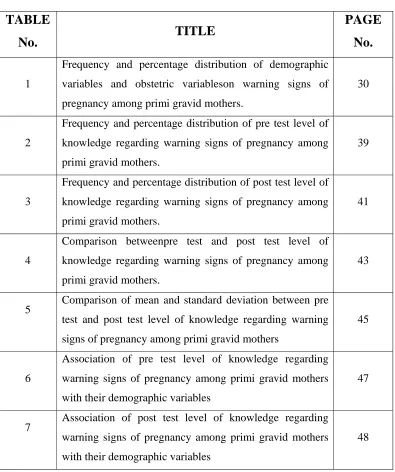
TABLE
No.
TITLE
PAGE
No.
1
Frequency and percentage distribution of demographic variables and obstetric variableson warning signs of
pregnancy among primi gravid mothers.
30
2
Frequency and percentage distribution of pre test level of knowledge regarding warning signs of pregnancy among primi gravid mothers.
39
3
Frequency and percentage distribution of post test level of knowledge regarding warning signs of pregnancy among primi gravid mothers.
41
4
Comparison betweenpre test and post test level of knowledge regarding warning signs of pregnancy among
primi gravid mothers.
43
5 Comparison of mean and standard deviation between pre test and post test level of knowledge regarding warning signs of pregnancy among primi gravid mothers
45
6
Association of pre test level of knowledge regarding warning signs of pregnancy among primi gravid mothers with their demographic variables
47
7 Association of post test level of knowledge regarding warning signs of pregnancy among primi gravid mothers
with their demographic variables
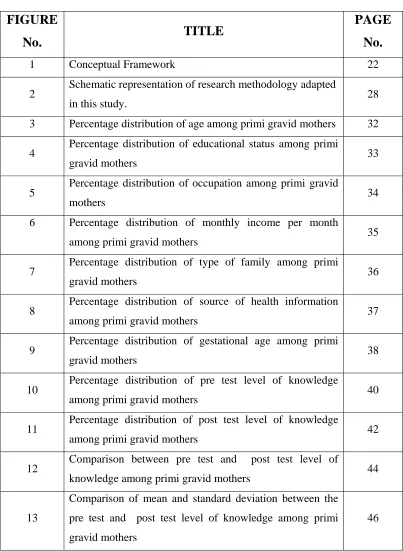
[image:8.612.127.522.86.558.2]FIGURE
No.
TITLE
PAGE
No.
1 Conceptual Framework 22
2 Schematic representation of research methodology adapted
in this study. 28
3 Percentage distribution of age among primi gravid mothers 32
4 Percentage distribution of educational status among primi
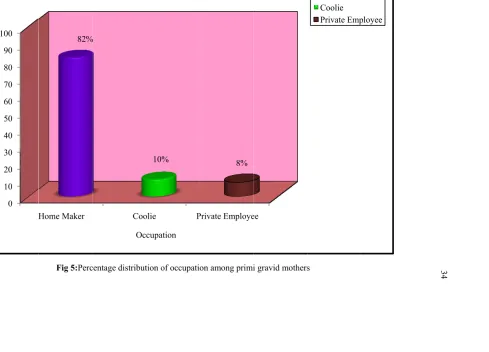
gravid mothers 33
5 Percentage distribution of occupation among primi gravid
mothers 34
6 Percentage distribution of monthly income per month
among primi gravid mothers 35
7 Percentage distribution of type of family among primi
gravid mothers 36
8 Percentage distribution of source of health information
among primi gravid mothers 37
9 Percentage distribution of gestational age among primi
gravid mothers 38
10 Percentage distribution of pre test level of knowledge
among primi gravid mothers 40
11 Percentage distribution of post test level of knowledge
among primi gravid mothers 42
12 Comparison between pre test and post test level of
knowledge among primi gravid mothers 44
13
Comparison of mean and standard deviation between the
pre test and post test level of knowledge among primi gravid mothers
APPENDIXNo.
TITLE
PAGE No.
A Instrument i
B Consent letter ii
C Permission letter iii
D Certificate for content validity iv
E Certificate for editing v
Abstract
Pregnancy is a happy time for most women. While most expectant mothers
experience an average pregnancy, there are certain dangers associated with this condition which can result in health complications for both mother and baby. Knowledge of obstetric danger signs and birth preparedness are strategies aimed at enhancing the utilization of skilled care during low risk births and emergency obstetric care in complicated cases in low income countries
A study was conducted to assess the effectiveness of structured teaching
programme on knowledge regarding warning signs of pregnancy among primi gravid mothers in Saidapet Health Post at Chennai. The hypothesis of this study was there is no significant relationship between the structured teaching programme on the level of knowledge regarding warning signs of pregnancy among primi gravid mothers. Extensive review of literature facilitates the investigator to collect the relevant
information of facts to support the study. The conceptual framework of this study was based on King’s Theory of Goal Attainment.
The study was conducted by adopting a pre experimental one group pre test post test design. Sixty primi gravid mothers who fulfilled the inclusion criteria were selected by purposive sampling technique. Each day the investigator collected data from 2-3 primi gravid mothers to assess the level of knowledge on warning signs of pregnancy. A structured questionnaire was distributed to the mothers to assess the pre
test level of knowledge on warning signs of pregnancy among primi gravid mothers. Then followed by a structured teaching programme on warning signs of pregnancy and its management were educated to the primi gravid mothers. A post test was conducted to assess the level of knowledge with the same questionnaire provided in the pre test.
Analysis revealed that the paired‘t’ test value of 28.14 was highly significant
Review
of
Data Analysis
and
Summary,
Conclusion,
Nursing
Implications,
Recommendations
& Limitations
Appendices
CHAPTER-I
INTRODUCTION
"...thousands of women could be saved each year if they had access to skilled care during pregnancy and childbirth,
and access to emergency obstetric care. Most of the interventions they need are simple,
affordable and highly effective."
- Dr.Lee Jong Wook
Few life events are as wonderful, ambivalent, memorable and defining as pregnancy. While the process of gestation has many common threads and themes for all women, each mother’s experience is unique. Furthermore, the same woman may experience pregnancy differently each time that she goes through it. The changes that the expectant woman undergoes involve not only her physical but also psychological, spiritual, emotional, interpersonal and social dimensions.
When a woman becomes pregnant, she is very aware that a new life is growing within her for the next nine months. Millions of women give birth to healthy babies every day. But on the other hand there are women who have miscarriages, still birth or children with birth defects. This acts as a constant reminder of fragility and delicacy of the process from conception to childbirth. It is a long road with pitfalls at every turn. While most women negotiate the path to motherhood successfully, always at the back of their minds runs the thought that things can go wrong if they are not careful.
Gupta.N, (2004) mentioned that nature has bestowed a woman with the capability of producing children, the process that makes her mother. But sad part is that, this normal life furthering process of procreation can lead to as grim a situation as death. At least 40% of all pregnant women will experience some type of complications during their pregnancies. For about 15%, these complications will be potentially life threatening and will require immediate obstetric care. Maternal death also compromises the health and survival of infants and children they have behind. The death of a woman during pregnancy and childbirth is not only a health issue but also a matter of social injustice
Over half a million women die each year due to complications during pregnancy and birth. The vast majority of these deaths are preventable. In recent years, there has been increased recognition that reducing maternal mortality is not just an issue of development, but also an issue of human rights. Preventable maternal mortality occurs where there is afailure to give effect to the rights of women to health, equality and nondiscrimination. Preventable maternal mortality also often represents a violation of a woman’sright to life.
Maternal health has particularly close relationshipwith the right to the highest attainable standard ofhealth. This fundamental human right is now recognized. The right to health includes entitlements to goods and services, including sexual and reproductive health care and information. It requires action to break down political, economic, social and cultural barriers that women face in accessing the interventions that can prevent maternal mortality. It requires participation by stakeholders in policy andservice development. And it requires accountability for maternal mortality. In short, the promotion and protection of the right to health demand actions that lead to a significant and sustained reduction in maternal mortality.
commitment and cultural barriers are other obstacles that need to be overcome if women are to access technical services and information that can often prevent maternal mortality and morbidity.
There are some signs and symptoms such as severe vomiting, severe bleeding per vagina, unusual swelling of face, arms and legs, high fever, pallor, severe headache, leaking of watery fluid through vagina, decreased fetal movements and no indication of labor after two weeks of expected date of delivery which needs to be identified. These conditions required other, complementary actions such as health education.
Kolesar.N, (2008) stated that if we observe, how Mother Nature proceeds, we see that before planting and cultivating anything, Nature forms an ecological environment by preparing the soil, likewise the main actor in the creation of a good family is a mother. There are many examples of mothers who haveworked successfully in this way, bringing into the world healthy and well balanced children. The promise of brighter future or humanity is closely linked with prenatal education. Through appropriate prenatal education our current violence oriented society can gradually be transformed into a saner, better balanced and more creative generation of human beings.
The teaching programme’s strategies include diminishing maternal mortality and morbidity, strengthening the ability to detect warning signs of maternal mortality in public and private medical units and providing refresher training courses to improve the quality of attention to women in labor and other complications that arise. Bringing down the maternal mortality rate is one of the primary goals in accordance with efforts to improve maternal and prenatal health care in the state.
NEED FOR THE STUDY
Most women will have normal pregnancies with no complications. Pregnancy is a happy time for most women. While most expectant mothers experience an average pregnancy, there are certain dangers associated with this condition which can result in health complications for both mother and baby. It is important to note that group prenatal education programs are only one component of the care and support necessary through pregnancy, birth and the postpartum period. Comprehensive health promotion practices encourage a blend of strategies with intersectoral collaboration.
Each day in U.S., two women die of problems related to pregnancy or childbirth. The numbers have been rising, for reasons that are not entirely clear. After plunging in the 1900s, maternal mortality rates in California tripled between 1996 and 2006, from 5.6 deaths per 100,000 births to 16.9. Nationally, the rate defined as deaths from obstetrical causes within one year of giving birth, rose from 7.6 per 100,000 to 13.3 per 100,000.For each death, experts estimate, there are about 50 instances of complications related to pregnancy or childbirth that are life threatening or cause permanent damage.
Factors that contribute to a higher risk of maternal mortality can include biomedical factors such as direct obstetric complications of hemorrhage, infection, obstructed labor, hypertensive disorders of pregnancy and septic abortion. The reminders are due to other direct obstetric causes such as pulmonary embolism, ectopic pregnancy or indirect causes that are aggravated by pregnancy such as malaria, hepatitis, diabetes mellitus and heart disease. Worldwide the most common cause of maternal mortality is hemorrhage, but the proportion due to each cause varies between regions. It has been estimated that approximately 40% of women may suffer an acute problem in pregnancy and 9-15% may experience a problem needing higher level care.
are often neglected, and existing health facilities may not be accessed by women in need. Additionally, lack of education and understanding around health related issues can contribute to delays in seeking care when it is needed or to the inappropriate management of life threatening pregnancy complications.
In the last decades, the life expectancy of the population in India has shown remarkable improvement from 41 years in 1961 to the present day of 65 years. Yet, over a 100,000 women in India continue to die of pregnancy related causes every year. The Maternal Mortality Ratio in India is 212 per 1, 00,000 live births (SRS, RGI 2011). The major causes of these deaths have been identified as ante partum and post partum hemorrhage, toxemia which is due to pregnancy induced hypertension, anemia, obstructed labor, puerperal sepsis and unsafe abortion. This Maternal Mortality ratio has to be decreased to 109 per 1, 00,000 live births by the year 2015 according to Millennium Development Goals.
The maternal mortality rate in India is a subject of grave concern. The maternal mortality rate in Tamil Nadu is 97 per 1, 00, 000 live births (2007 – 2009). Important contributing causes are anemia, poverty, ignorance, malnutrition, inter current infections, hemoglobinopathies. Though health departments create awareness both center and state level through mass media for planned maternal and child health programme, still most of the mothers living in remote areas are not aware of this due to lack of literacy, ignorance and social cultural factors.
Promotion of maternal and child health has been one of the most important objectives of the Family Welfare Programme in India. The current Reproductive and Child Health Programme phase II was launched in October 1997. The Reproductive and Child Health Programme incorporates the components covered under the Child Survival and Safe Motherhood Programme. In order to improve maternal health at the community level, a cadre of community level skilled birth attendant who will attend the pregnant mother in the community is being considered.
Antenatal care provides an opportunity to educate the pregnant mother about pregnancy and child birth. Under usage of antenatal care has been repeatedly associated with adverse maternal outcomes. However there is controversy about the impact of antenatal education on pregnancy outcome. Antenatal education programmes are a very important component of antenatal care worldwide since it makes women contribute to the maximum for a better pregnancy outcome and care of the neonate. Antenatal care provides advice, reassurance and education on nutrition during pregnancy, danger signs of pregnancy, screening programs for HIV and other sexuality.
Nurses working in prenatal setting can help to ensure that women are well informed about the normal course of pregnancy so they can recognize and alert health care provides when a complication is occurring. They can actively participate in risk assessment at prenatal visits. Nursing research is needed in areas such as what is the best way to determine each woman’s individual needs. So prenatal instructions can be specifically planned and increasing the number of prenatal visits for high risk women could reduce complications during pregnancy.
STATEMENT OF THE PROBLEM
A study to assess the effectiveness of structured teaching programme on knowledge regarding warning signs of pregnancy among primi gravid mothers in Saidapet Health Post at Chennai.
OBJECTIVES
1. To assess the pre test level of knowledge regarding warning signs of pregnancy among primi gravid mothers.
2. To assess the post test level of knowledge regarding warning signs of pregnancy among primi gravid mothers.
3. To evaluate the effectiveness of the structured teaching programme on level of knowledge regarding warning signs of pregnancy among primi gravid mothers. 4. To associate the pre test and post test level of knowledge regarding warning
signs of pregnancy among primi gravid mothers with their demographic variables.
OPERATIONAL DEFINITIONS
Effectiveness: Refers to difference in the level of knowledge after administering the
structured teaching programme on warning signs of pregnancy among primi gravid mothers.
Structured Teaching Programme: Refers to an organized group teaching for 30
minutes by lecture cum discussion method to impart knowledge regarding warning signs of pregnancy.
Knowledge: Refers to facts or information obtained from the primi gravid mothers
regarding the warning signs of pregnancy.
Warning signs of pregnancy: Refers to an intimation, threat or a sign of impending
fetal movements and no indication of labor after two weeks of expected date of delivery.
Primi gravid mothers: Refers to a woman who is conceived for the first time
between 8 - 24 weeks of gestation calculated from last menstrual period or ultrasonography.
HYPOTHESIS
There is no significant relationship between the structured teaching programme and level of knowledge regarding warning signs of pregnancy among primi gravid mothers.
DELIMITATIONS
• The sample size was delimited to 60 primi gravid mothers
CHAPTER - II
REVIEW OF LITERATURE
The review of relevant literature is nearly always a standard chapter of the thesis or dissertation. The review forms an important chapter in a thesis where its purpose is to provide the background to and justification for the research undertaken (Bruce, 1994). A literature review is a “critical analysis of a segment of a published body of knowledge through summary, classification and comparison of prior research studies, reviews of literature, and theoretical articles”
PART I: REVIEW OF RELATED LITERATURE
Pregnancy is a time of joy and great anticipation for most expectant families. However, that happiness and tremendous hope for the future can suddenly be halted by the diagnosis of a complicated pregnancy. Every expectant mother should delight in the changes that accompany the progression of her pregnancy, but at the same time be aware that certain occurrences are not considered normal.
Safe Motherhood programmes like structured teaching, information education and communication packages are designed to reduce the high numbers of deaths and illness resulting from complications of pregnancy and childbirth. In too many countries, maternal mortality is a leading cause of death for women of reproductive age. Most maternal deaths result from haemorrhage, complications of unsafe abortions, pregnancy induced hypertension, sepsis and obstructed labour. Safe Motherhood programmes seek to address these direct medical causes and undertake related activities to ensure women have access to comprehensive reproductive health services.
• Literature related to warning signs of pregnancy.
PART I
REVIEW OF RELATED LITERATURE
Literature related to warning signs of pregnancy
In India, most of the mothers have poor knowledge regarding antenatal, intranatal care and postnatal care. Illiteracy, poverty and lack of communication and transport facility make them vulnerable to serious consequences. Though the mothers are the prominent care providers within the family and key to human development and wellbeing, the fundamental right health is denied to them in most parts of the world. The death of mother increases the risk to the survival of her young children, as the family cannot substitute a maternal role.
Knowledge of warning signs of pregnancy, labour and postnatal period is the first essential step for appropriate and timely referral. Nurses have all the potential, that of compassion, care and attitude and can contribute significantly in educating and creating awareness in the clinical and community area on warning signs of pregnancy and its management especially among the vulnerable groups. This can be done by conducting campaigns, regular antenatal visits, early detection and referral services, so the maternal mortality and morbidity rates can still be reduced.
Turan. J. M, et al., (2011) had conducted a quasi experimental study to
evaluate the effectiveness of a community based intervention for the promotion of safe motherhood among 466 women in Eritrea. Volunteers from a remote rural community in north Eritrea were trained to lead educational sessions to increase the women’s knowledge on birth danger signs and use of antenatal care services. The findings showed that the women’s knowledge increased significantly following the educational session. Thus the study concluded that participatory educational sessions led by community volunteers increase the women’s knowledge in preventing and managing birth danger signs and encourage the use of essential maternity services.
Kabakyenga. J. K, et al., (2011) had assessed the knowledge of obstetrical
statistically significant. Thus the study has concluded that the knowledge of obstetrical danger sign among all recently delivered women was very low and it was suggested that primary and secondary education program should be promoted to enhance the impact of key danger signs on birth preparedness practices.
Naariyong. S, et al., (2011) had conducted a comparative study to assess the
knowledge of pregnancy danger signs among 600 women between the areas of community based health planning services and areas of non community based health planning services in the north district of Ghana. The researcher used a structured questionnaire to collect the data. The findings of the study showed that community based health planning services play a vital role in improving the quality of antenatal care. Therefore it serves as a basis in educating the women about pregnancy danger signs.
Anya. S. E, et al., (2011) had conducted a study to assess the effectiveness of
information, education and communication on antenatal care among 457 pregnant women attending six urban and six rural antenatal clinics in the larger health division in Gambia. The results showed that above 35% were informed about diet and nutrition, 30% on care of the baby, 24% on family planning, 23% on place of birth and only 19% of pregnant women were informed about the danger signs of pregnancy. The study has concluded that the information, education and communication on the above aspects of antenatal care were poor.
John. M. S, (2011) had conducted a study to assess the knowledge regarding
warning signs in pregnancy among 60 antenatal mothers attending outpatient department in selected hospitals of Mangalore Taluk. Analysis revealed that majority of the women (87%) had inadequate knowledge on warning signs of pregnancy. The study concluded that most of the women had inadequate knowledge and they should be educated through video assisted teaching or through structured teaching programme in developing knowledge on warning signs of pregnancy.
Azeim. A. A, et al., (2010) had conducted a descriptive study to determine
The collected data includes the socio demographic data, first booking, number of visit, timing of every visit, provided care such as history, examination, investigation, health and nutrition education, counseling about screening of sexually transmitted diseases, plan of delivery and family planning. The results showed that 84% had only one visit and 16% had four antenatal visits. The study concluded that only a small portion of women who had four antenatal visits were aware of the danger signs of pregnancy.
Pembe. B. A, et al., (2010) had conducted a study to assess the quality of
antenatal care counseling on pregnancy danger signs by 32 healthcare providers in 18 primary health centers at Rufiji district in Tanzania. The observer collected information about counseling on the danger signs and conducted interviews to 435 pregnant women following antenatal care. The results showed that 2 out of 5 antenatal mothers were not counseled on pregnancy danger signs. The study was concluded that higher trained cadre nurses were not informing about danger signs of pregnancy when compared to the lower cadre nurses.
Wiegers. T. A, et al., (2010) had conducted a study to assess the knowledge
on danger signs of pregnancy, labour and child birth among 320 pregnant women and health care providers in rural areas of Krygyzstan and Tajikistan, Central Asia. The results showed that most of the pregnant women had limited knowledge and the health care providers in both the places did not have an adequate professional level of knowledge in perinatal health issues and lack basic skills to monitor their work.
Wafaa. A, et al., (2010) had conducted an exploratory descriptive study to
Nwachi. U. E, et al., (2010) had conducted a study to assess the factors influencing the prevalence of anemia in pregnancy among 2287 pregnant women attending 40 public health care centers in Trinidad and Tobago. The findings showed that the prevalence of anemia was 15.3% and there was no significant difference found among the selected clinics or countries. The study concluded that the factors like teenage pregnancy, high parity and previous spontaneous abortions were directly related to the prevalence of anemia.
Karaoglu. L, et al., (2010) had conducted a study to assess the prevalence of
nutritional anemia in pregnancy among 823 pregnant women in east Anatolian province, Turkey. Blood samples were drawn and routine blood studies including the total blood count, serum iron, folate and vitamin B12 were done. The findings revealed that pregnant mothers having a low family income, grand multi parity and mothers having habit of soil eating were observed to have nutritional anemia.
Sarode. V.M, (2009) had conducted a study to assess the influence of literacy
on pregnancy complications among 433 mothers in the slums of Mumbai. A total of 433 households who have given at least one live birth during the last three years prior to the survey were considered. The results showed that about 45% of the women in the study area reported that they had at least one problem during pregnancy. Among the mothers 45% had excessive fatigue, 22% had excessive vomiting, 25%had swelling of the legs, 39% had pain in abdomen, 41% had white discharge, 19% had blurred vision, 14% had vaginal bleeding, 13% had convulsions, 25% had night blindness and 3% had anemia. The study findings recommended the need for effective awareness campaign, committed health workers, easy access to the services, better healthcare delivery system and quality health care.
Nikiema. B, et al., (2009) had conducted a study to assess the information on
respectively. The study concluded that the recalling of information increased with the number of antenatal visits.
Banerjee. B, (2009)had conducted a descriptive study to assess the level of
information, education and communication services on pregnancy and child care among 400 antenatal and post natal women in an urban health center, New Delhi. During observation, warning signs of pregnancy was explained to only 10% of antenatal and postnatal women and only 8% of the mothers had been told about all issues regarding pregnancy and child care. The study concluded that, information, education and communication regarding maternal and child care was a neglected service in the health facility.
Hoque. M, (2008) had conducted a study to assess the level of knowledge on
danger signs of pregnancy among 340 black pregnant women in Kwazulu Natal at South Africa. The findings showed that only half of them knew about some of the danger signs of pregnancy and also it was significantly associated with the age of expectant mother. The study concluded that, since the pregnant women had low level of knowledge on danger signs of pregnancy, an urgent attempt should be taken in introducing health education strategies to the rural population of South Africa.
Guilford. W. H, et al (2008) had conducted a study to assess the knowledge
of prenatal care among 320 women in Costa Rican and Panamanian health care clinics. The four specific domains of prenatal care were danger signs of pregnancy, nutrition, threats from illness and acceptable activities were assessed. The results showed that Costa Rican women scored higher than Panamanian women in most domains of knowledge in pre natal health care. The study concluded that direct education and awareness relates with the promotion of prenatal care.
Matsuyama. A, (2008) had conducted a study to assess the perception of
on health education in creating awareness on bleeding as a danger sign during pregnancy.
Hailu. M, et al., (2007) had conducted a study to assess pregnant women’s
knowledge about obstetrical danger signs among 735 pregnant women in AletaWondo district, Sidama zone, Southern Ethiopia. A structured questionnaire was used to collect data on socio demographic characteristics, obstetric history and knowledge about danger signs of pregnancy. The result showed that the knowledge levels of pregnant women about obstetrical danger signs were low and affected by the residential area. Therefore the identified deficiencies in awareness should be addressed through maternal and child health services by designing appropriate strategies including provision of targeted information, education and communication.
Kumbani. L. C, et al., (2006) had conducted a descriptive study to explore
the level of knowledge on obstetrical complications during pregnancy among 45 primi gravid mothers with gestation period between 28 to 42 weeks attending an urban health center in Blantyre, Malawi. The findings showed that 60% of the primi gravid mothers were knowledgeable about obstetric complications. However only 58% of the primi gravid mothers had some knowledge and could make an informed decision to go to a health facility with pregnancy complications. The study concluded that there was a critical need for provision of information on obstetrical complications in pregnancy that required immediate treatment.
Alam. A. Y, et al., (2005) had conducted a comparative study to assess the
knowledge, attitude and practices on utilizing and non utilizing antenatal care facilities during pregnancy among married women between the age of 15 to 49 years in Islamabad. Totally 200 married women were enrolled as samples. Among them, 100 married women in group I were assessed on utilizing the antenatal care facilities. Whereas, 100 women in group II were assessed on non utilizing the antenatal care facilities. The results showed that knowledge about danger signals in pregnancy was significantly higher among women utilizing antenatal care facilities.
signs of pregnancy and child birth in Mkuranga district, Coast region, Tanzania. The results showed that trained traditional birth attendants were more knowledgeable on danger signs during pregnancy and childbirth compared to untrained traditional birth attendants. The study concluded that the traditional birth attendants especially in remote rural areas like Tanzania should be trained on early identification of mothers with obstetrical complications and on their prompt referral to health facilities that can provide emergency obstetric care.
Perreira. K. M, et al., (2002)hadconducted a descriptive study on increasing
awareness of danger signs in pregnancy in Guatemala among 637 pregnant women between April 1997 and May 1998. Three Information, Education and Communication programmes were implemented such as a clinical based programme involving training of health providers and the provision of educational media to the pregnant women, a community based strategy consisting of radio messages regarding obstetric complications and educational sessions. The results showed that the women those who have heard radio messages were 3 to 5 times more likely aware of danger signs in pregnancy than others. The study concluded that safe motherhood programmes can effectively increase the knowledge of danger signs through clinic and community based educational strategies.
Corona. O. E, et al., (1996) conducted a descriptive study to assess the
factors related to the recognition of alarm signals during pregnancy among 100 pregnant women in Spain. The samples were further divided into 6 sub groups. The results showed that adolescent groups were not able to recognize the alarm signs during pregnancy and the pregnant women who had experienced least alarm signs failed to answer most of the questions. The study concluded that, enhancing the relationship between the physician and the pregnant mother would help the pregnant women to recognize the alarm signals during pregnancy at the earliest.
Chiwuzie. J, et al., (1995) had conducted a study to assess the causes of
that the women need to be educated in creating awareness about approaching the modern obstetrical institutions to reduce the mortality rate.
PART II
CONCEPTUAL FRAME WORK
The conceptual framework represents a less formal attempt at organizing a Phenomenon. Conceptual models deal with concepts that are used as building blocks and provide a conceptual perspective regarding interrelated phenomena which are closely structured.
The central focus of King’s framework is man as a dynamic human being whose perceptions of objects, persons and events influence his behavior, social interaction, and health (King, 1971). King’s conceptual framework includes three interacting systems with each system having its own distinct group of concepts and characteristics. These systems include personal systems, interpersonal systems, and social systems. King’s basic assumption maintained that nursing is a process that involves caring for human beings with health being the ultimate goal (Torres, 1986). The three systems that constitute King’s conceptual framework provided the basis for the development of her Theory of Goal Attainment.
The personal system refers to the individual. The concepts within the personal system and fundamental in understanding human beings are perception, self, body image, growth and development, time, and space. King, (1981) viewed perception as the most important variable because perception influences behavior. King summarized the connections among the concepts in the following statement. An individual’s perceptions of self, of body image, of time and space influence the way he or she responds to persons, objects, and events in his or her life. As individuals grow and develop through the life span, experiences with changes in structure and function of their bodies over time influence their perceptions of self. Interpersonal systems involve individuals interacting with one another. King refers to two individuals interacting as dyads, three individuals as triads, and four or more individuals as small or large groups.
in a health care organization to help and to be helped to maintain a state of health that permits functioning in roles. King believed that interactions between the nurse and the client lead to transactions that result in goal attainment. Furthermore, King proposed that through mutual goal setting and goal attainment, transactions result in enhanced growth and development for the client (Woods, 1994).
The theory is based on the concepts of the personal and interpersonal systems including interaction, perception, transaction and action. A basic theory for conceptual framework, which is aimed to assess the effectiveness of structured teaching programme on warning signs of pregnancy among primi gravid mothers. This involves interaction between the researcher and the primi gravid mother. The seven major concepts are described as follows:
Perception
Perception is the person’s representation of the reality. It influences all other behavior of a person and it is more subjective and unique to each person. The researcher perceives that primi gravid mothers who are conceived for the first time will have lack of knowledge regarding warning signs of pregnancy as it is unique and depends on various factors like age, educational status, occupation, source of health information and their gestational age. The researcher considers that the primi gravid mothers are anxious due to lack of knowledge about warning signs pregnancy.
Judgement
The judgement is a decision made by the researcher and the primi gravid mothers. Here the researcher judges that the primi gravid mothers have lack of knowledge regarding warning signs of pregnancy and also the primi gravid mothers seek help from internal resources like, family members, neighbours and external resources like, health personnel and media to attain maximum knowledge on warning signs of pregnancy.
Action
pregnancy with the help of audiovisual aids like flip charts, booklets and the primi gravid mothers are eager to listen and understand the various warning signs of pregnancy and its management.
Mutual goal setting
Here the researcher plans to educate about the warning signs of pregnancy and its management and the primi gravid mothers are actively involving in this structured teaching programme on warning signs of pregnancy.
Reaction
Reaction means decision to act. In this study the researcher developed a tool to assess the existing level of knowledge on warning signs of pregnancy among primi gravid mothers attending antenatal clinic.
Interaction
Interaction is a process of perception and communication between person and environment and between person and person, represented by verbal and non verbal behaviors that are goal directed. Here the researcher gave a structured teaching programme among primi gravid mothers attending antenatal clinic under ten components such as general information about warning signs of pregnancy, severe vomiting, severe bleeding per vagina, unusual swelling of face, arms and legs, high fever, pallor, severe headache, leaking of watery fluid through vagina, decreased fetal movements and no indication of labor after two weeks of expected date of delivery.
Transaction
King’s conceptual framework and theory of goal attainment provides a useful structure for the current research by using a structured teaching programme in educating primi gravid mothers regarding warning signs of pregnancy. King’stheory provides direction for nursing practice byemphasizing the processes of multidisciplinary collaboration, communication, interaction, transaction and use of critical thinking. Nurses who interact withother systems will influence the health outcomes of the patients and families during their hospital stay and beyond discharge, with the result that the patient becomes their own health manager.
22
Fig 1.MODIFIED KING’S GOAL ATTAINMENT THEORY (1981) R E S E A R C H E R P R I M I G R A V I D M O T H E R S
Perception: The primi gravid mothers perceive lack of knowledge regarding warning signs of pregnancy
Judgment: Primi gravid mothers have inadequate knowledge on warning signs of pregnancy
Action: Planning for a structured teaching
programme regarding warning signs of pregnancy.
Perception: The primi gravid mothers are anxious due to lack of knowledge about warning signs of pregnancy
Judgment: Seeks help from internal and external resources to attain maximum knowledge.
Action: Eager to listen and understand about warning signs of pregnancy. Adequate Knowledge (Goal attained) Moderate Knowledge (Goal not attained) Inadequate Knowledge (Goal not attained) Reinforcement Reassessment Reaction: (Pretest) The researcher develops a tool to assess the existing level of knowledge on warning signs of pregnancy Transaction : (Post Test) The effectiveness of structured teaching programme was assessed by post test level of knowledge on warning signs of pregnancy by using the same tool. Interaction: Structured
teaching programme was given under ten components:
• General information about warning signs of pregnancy
• Severe vomiting
• Severe bleeding per vagina
• Unusual swelling of face, arms and legs
• High fever
• Pallor
• Severe headache
• Leaking of watery fluid through vagina
• Decreased fetal movements
• No indication of labor after 2 weeks of expected date of delivery Mutual
CHAPTER-III
METHODOLOGY
The methodology of the research study is defined as the way the information is gathered in order to answer the question or analyze the research problem. It includes aspects like research design, setting of the study, population, sample, sample size, sampling technique, criteria for sample selection, description of the tool, pilot study, data collection procedure and data analysis.
RESEARCH DESIGN
The research design adopted for this study was pre experimental one group pre test post test design, to assess the effectiveness of structured teaching programme on knowledge regarding warning signs of pregnancy among primi gravid mothers.
SETTING OF THE STUDY
The study was conducted in Saidapet Health Post at Chennai, which has a provision of 100 beds. The center is well equipped with modern modalities and it has adequate facilities like, separate antenatal clinics for the mothers under 6 months and for third trimester respectively. The ante natal clinic was conducted every Tuesdays and Thursdays, registration for both old and new cases was done on the same day. The antenatal clinic was organized by two gynecologists, two sector health nurses and 8 multipurpose health workers.
POPULATION
The population consists of all primi gravid mothers who attend the antenatal outpatient department in Saidapet Health Post at Chennai.
SAMPLE
The sample consists of primi gravid mothers between 8 –24 weeks of gestation who attend the antenatal outpatient department and those who fulfilled the inclusion criteria.
SAMPLE SIZE
The sample size consists of 60 primi gravid mothers who were between 8 – 24 weeks of gestation.
SAMPLING TECHNIQUE
Purposive sampling technique was used to select the primi gravid mothers who were between 8 – 24 weeks of gestation to assess the effectiveness of structured teaching programme on warning signs of pregnancy
CRITERIA FOR SAMPLE SELECTION
Inclusion criteria
• Primi gravid mothers who were between 8 – 24 weeks of gestation regardless of high risk conditions.
• Primi gravid mothers who had attended antenatal outpatient department.
• Primi gravid mothers who were available at the time of data collection.
• Primi gravid mothers who were willing to participate in the study.
Exclusion criteria
• Primi gravid mothers who were in labor.
DESCRIPTION OF THE INSTRUMENT
The instrumentwas developed after the literature review and guidance from the experts. It consists of three parts
Part I
It consists of demographic variables of the primi gravid mothers which include age, education, occupation, family income, type of family, source of information and gestational age.
Part II
Assessment of level of knowledge regarding warning signs of pregnancy among primi gravid mothers. It consists of 40 multiple choice questions regarding the causes, manifestations and management of warning signs of pregnancy. The correct response carries 1 mark and wrong answer carries 0 marks
The scores was interpreted as follows
• 76 - 100% - Adequate knowledge
• 51 - 75% - Moderately adequate knowledge
• ≤ 50% - Inadequate knowledge
Part III
Instructional module for structured teaching programme regarding warning signs of pregnancy.
VALIDITY
The content validity of the instrument was obtained from the experts in the field of Obstetrics and Gynecology. The expert suggested simplification of language, reduction and reorganization of certain items were made. Appropriate modification was made accordingly and the tool was finalized.
RELIABILITY
The study was conducted on the effectiveness of structured teaching programme on knowledge regarding warning signs of pregnancy among primi gravid mothers in Saidapet Health Post at Chennai. Reliability was measured by test re test method. The correlation coefficient value was found to be 0.9. So the tool was considered highly reliable to conduct this study.
ETHICAL CONSIDERATION
The study was conducted after the approval of dissertation committee.Formal
written permission was obtained from the Deputy Project Coordinator, Chennai Corporation. The primi gravid mothers were explained about the study purposes. The formal written consent was taken from the samples. The usual assurance of anonymity and confidentiality was obtained.
PILOT STUDY
The refined tool was used for pilot study to test the feasibility, appropriateness and practicability. The pilot study was conducted in Saidapet Health Post at Chennai from the duration of 18.04.2011 to 24.04.2011. A formal written permission from the concerned authorities and a written consent from the primi gravid mothers was obtained. It was carried out with 6 primi gravid mothers who fulfilled the inclusion criteria by purposive sampling method.
DATA COLLECTION PROCEDURE
A formal written permission was obtained from the Deputy Project Coordinator, Corporation of Chennai and the Zonal officer in Saidapet Health Post. The data were collected over a period of 4 weeks in the month of June from 01.06.2011 to 30.06.2011. The study was carried out with 60 primi gravid mothers who fulfilled the inclusion criteria. Purposive sampling technique was used for selecting the primi gravid mothers. A written consent was obtained from the primi gravid mothers. Self introduction was given followed by adequate explanation about the purpose of the study to ensure better cooperation.
Each day about 4 to 5 primi gravid mothers was assessed on the level of knowledge regarding warning signs of pregnancy. A pre test was conducted to assess the existing knowledge regarding warning signs of pregnancy followed by that a structured teaching programme on warning signs of pregnancy and its measures was educated to the primi gravid mothers. A post test was conducted to assess the level of knowledge with the same questionnaire provided in the pre test.
DATA ANALYSIS
The data was analyzed in terms of the objectives of the study using descriptive and inferential statistics. Demographic variables of primi gravid mothers was analysed in terms of frequency and percentage. Mean and Standard Deviation was used to compute pre test and post test level of knowledge among primi gravid mothers. Paired‘t’ test was used to evaluate the effectiveness of structured teaching programme on knowledge regarding warning signs of pregnancy among primi gravid mothers. Chi Square test was used to associate the pre test and post test level of knowledge among the primi gravid mothers with their demographic variables.
A study to assess the effectiveness of structured teaching programme
on knowledge regarding warning signs of pregnancy among
primi gravid mothers in Saidapet Health Post at Chennai.
[image:48.612.137.491.142.660.2]
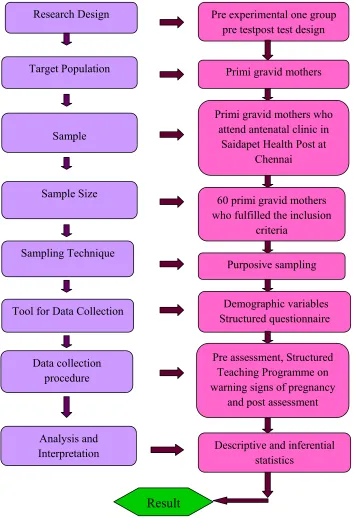
Fig. 2: Schematic representation of research methodology adapted in this study.
Research Design Pre experimental one group
pre testpost test design
Target Population
Sample
Primi gravid mothers
Primi gravid mothers who attend antenatal clinic in
Saidapet Health Post at Chennai
Sample Size 60 primi gravid mothers
who fulfilled the inclusion criteria
Sampling Technique
Tool for Data Collection
Data collection procedure Analysis and Interpretation Purposive sampling Demographic variables Structured questionnaire
Pre assessment, Structured Teaching Programme on warning signs of pregnancy
and post assessment
Descriptive and inferential statistics
CHAPTER IV
DATA ANALYSIS AND INTERPRETATION
Abdellah and Levine mentioned that interpretation of tabulated data could bringlight to the real meaning of the findings of a study. According to Kerlinger, “Analysis is the categorizing, ordering, manipulating andsummarizing of data to obtain answer to the research questions”. The analysis of the data was done using descriptive and inferential statistical methods, organized andpresented in the form of tables and graphs. The data analysis was done based on theobjectives of the study.
Section A: Frequency and percentage distribution of demographic and obstetric
variables on warning signs of pregnancy among primi gravid mothers.
Section B: Frequency and percentage distribution of pre test level of knowledge
regarding warning signs of pregnancy among primi gravid mothers.
Section C: Frequency and percentage distribution of post test level of knowledge
regarding warning signs of pregnancy among primi gravid mothers.
Section D: Comparison between pre test and post test level of knowledge
regarding warning signs of pregnancy among primi gravid mothers.
Section E: Comparison of mean and standard deviation of pre test and post test
level of knowledge regarding warning signs of pregnancy among primi gravid mothers.
Section F: Association of pre test level of knowledge regarding warning
signs of pregnancy among primi gravid mothers with their demographic variables.
Section G: Association of post test level of knowledge regarding warning signs
SECTION - A
Table 1: Frequency and percentage distribution of demographic and obstetric variables on warning signs of pregnancy among primi gravid mothers.
N=60
S.No Demographic variables Frequency Percentage
1 Age
≤ 20 years
21-25 years 26-30 years 14 38 08 23 64 13
2 Educational Status
Primary education Secondary education Graduation 6 40 14 10 67 23 3 Occupation Home maker Coolie Private employee 49 6 5 82 10 8
4 Family Income Per Month
Rs.1001 - Rs. 2000 Rs. 2001 - Rs. 3000 Above Rs. 3001
14 29 17 24 48 28
5 Type of Family
Nuclear family Joint family 33 27 55 45
6 Source of Health Information
Health personnel Family members 22 38 37 63
7 Gestational Age
8 - 12 weeks 13 - 24 weeks
22 38
Table 1 represents the frequency and percentage distribution of demographic and obstetric variables on warning signs of pregnancy among primi gravid mothers.
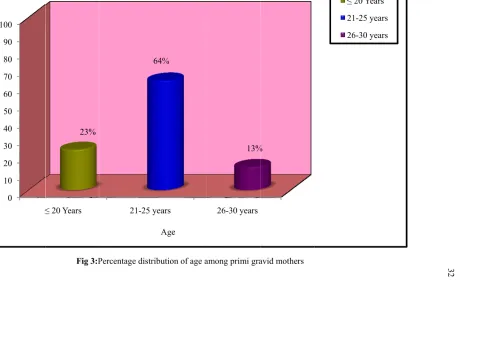
With respect to the age of primi gravid mothers, 38 (64%) were in the age group of 21-25 years, 14 (23%) were in the age group of ≤ 20 years and 8 (13%) were
in the age group of 26-30 years. Considering the educational status of primi gravid mothers, 40 (67%) have completed higher secondary education, 14 (23%) have completed graduation and 6 (10%) have completed primary education.
Regarding occupationof primigravid mothers 49 (82%) were homemakers, 6 (10%) were coolies and 5 (8%) were private employees. In accordance with the monthly income, 29 (48%) belong to the income group of Rs. 2001-3000, 17 (28%) belong to the income group of above Rs.3001 and 14 (24%) belong to the income group of 1001-2000.
Pe rc en ta ge 0 10 20 30 40 50 60 70 80 90 100 ≤ Pe rc en ta ge
Fig 3:P
≤ 20 Years
23%
Percentage distr 21-25 y
ribution of age a years
64%
Age
among primi gra 26-30 years
13%
avid mothers %
≤ 20 Y
[image:52.612.116.681.124.475.2]Fig 4: Percent 23%
tage distribution %
Edu
n of educational 1
ucational Status
status among p 10%
67%
rimi gravid mot Pr Se Gr
thers
rimary Educatio econdary Educat
raduation
n tion
Pt
0 10 20 30 40 50 60 70 80 90 100
H
Perce
nt
age
Fig 5:Perc Home Maker
82%
centage distribut Coo %
Oc
tion of occupatio
olie P
10%
cupation
on among primi Private Employe
8%
i gravid mothers ee
s
Home Make Coolie Private Emp
er
ployee
[image:54.612.123.671.122.482.2]
Fi
0 10 20 30 40 50 60 70 80 90 100
R
Pe
rcenta
ge
ig 6:Percentage s.1001 - 2000
24%
distribution of f Rs.2001
Family in
family income p 1 - 3000
48%
come per month
per month amon Above Rs.300 28%
h
ng primi gravid m 00
%
mothers
Rs.1001
-Rs.2001 - 3
Above Rs.3
2000
3000
3000
Pe
rc
en
ta
ge
0 10 20 30 40 50 60 70 80 90 100
Pe
rc
en
ta
ge
Fig 7:Perce Nuclear Fam
5
entage distributio mily
55%
Type of fa
on of type of fam Joint F amily
mily among prim Family
45%
mi gravid mother
Nuclear Fa Joint Fami
amily ily
[image:56.612.124.672.125.484.2]
Fig
0 10 20 30 40 50 60 70 80 90 100
Pe
rcentage
8:Percentage d
Health Pers
istribution of so onnel
37%
Source of H
ource of health i Family Me
ealth Informatio
nformation amo embers
63%
on
ong primi gravidd mothers Health Personn
Family Membe
nel
ers
[image:57.612.144.657.124.470.2]
Fig 9:Percen 63.3%
ntage distributio G
on of gestational Gestational Age
l age among prim e
mi gravid mothe 36
ers 6.7%
8-12 Weeks 13-24 Weeks
[image:58.612.137.658.124.445.2]
SECTION – B
Table 2: Frequency and percentage distribution of pre test level of knowledge regarding warning signs of pregnancy among primi gravid mothers.
N=60
Level of knowledge Frequency Percentage
Inadequate 42 70
Moderate 16 27
Adequate 2 3
Fig
0 10 20 30 40 50 60 70 80 90 100
Pe
rc
en
ta
ge
10: Percentage
Inadequate 70%
distribution of p Mod
Level of Kno
pre test level of derate
27%
owledge
f knowledge amo Adequate
3%
ong primi gravidd mothers Inadequate Moderate Adequate
e
[image:60.612.146.650.121.466.2]
SECTION – C
Table 3: Frequency and percentage distribution of post test level of knowledge regarding warning signs of pregnancy among primi gravid mothers.
N=60
Level of knowledge Frequency Percentage
Inadequate 3 5
Moderate 13 22
[image:61.612.129.517.153.280.2]Adequate 44 73
Table 3 represents the frequency and percentage distribution of post test level of knowledge on warning signs of pregnancy among primi gravid mothers. In post test only 3 (5%) of primi gravid mothers had inadequate knowledge and 13 (22%) of them had moderate knowledge and almost 44 (73%) of them had adequate knowledge.
Fig 1
0 10 20 30 40 50 60 70 80 90 100
Pe
rcentage
11: Percentage d
Inadequate 5%
distribution of p Mod
Level of Kno
post test level of derate
22%
owledge
f knowledge am Adequate
73%
mong primi gravi %
id mothers Inadequ Modera Adequa
uate ate ate
[image:62.612.132.665.123.473.2]SECTION – D
Table 4:Comparisonbetween pre test and post test level of knowledge regarding warning signs of pregnancy among primi gravid mothers.
N=60
Level of knowledge
Pre test Post test
Frequency Percentage Frequency Percentage
Inadequate 42 70 3 5
Moderate 16 27 13 22
[image:63.612.127.522.149.400.2]Adequate 2 3 44 73
Table 4 represents the frequency and percentage distribution of pre test and post test level of knowledge on warning signs of pregnancy among primi gravid mothers. With respect to the pre test level of knowledge 42 (70%) of primi gravid mothers had inadequate knowledge and 16 (27%) of them had moderate knowledge and only 2 (3%) of them had adequate knowledge, whereas in post test only 3 (5%) of primi gravid mothers had inadequate knowledge and 13 (22%) of them had moderate knowledge and almost 44 (73%) of them had adequate knowledge.
Fig 12
0 10 20 30 40 50 60 70 80 90 100
Percentage
2:Comparison b
Pre te 70%
between pre test est
27%
3%
Level o
and post level o of knowledge
of knowledge am Post test 5%
22%
mong primi grav 73%
vid mothers Inadeq Moder Adequ
quate rate uate
[image:64.612.127.666.123.472.2]SECTION – E
Table 5: Comparison of mean and standard deviation between pre test and post test level of knowledge regarding warning signs of pregnancy among primi gravid mothers.
N=60
Assessment Mean Standard deviation Paired ‘t’ value
Pre test 18.67 3.86
28.14***
Post test 32.07 1.86
[image:65.612.127.520.171.323.2]*** p<0.001
F
a
1
1
2
2
3
3
4
4
5
[image:66.612.114.687.94.454.2]Mean score
Fig 13:
Comparis
among primi gra
0
5
10
15
20
25
30
35
40
45
50
son of mean and
avid mothers
Pre test
18.67
d standard devia
3.86
Level of Kn
ation between th
Post
32
nowledge
he pre test and p
test
2.07
1.86
post test level off knowledge
Mean
Standard
deviation
SECTION – F
Table 6: Association of pre test level of knowledge regarding warning signs of pregnancy among primi gravid mothers with their demographic variables.
N=60
S.No Demographic Variables
Pretest level of knowledge
Chi square
χ2
Inadequate Moderate Adequate
n % n % n %
1. Age
≤ 20 yrs
21 -25 yrs 26 -30 yrs
10 28 4 71.4 73.7 50.0 4 8 4 28.6 21.1 50.0 0 2 0 0 5.3 0 χ2=3.79 df= 4 NS
2 Educational Status
Primary education Secondary education Graduation 4 29 9 66.7 72.5 64.3 2 10 4 33.3 25.0 28.6 0 1 1 0 2.5 7.1 χ2=1.16 df= 4 NS
3 Occupation
Home maker Coolie Private employee 36 5 1 73.5 83.3 20.0 12 1 3 24.5 16.7 60.0 1 0 1 2.0 0 20.0 χ2=9.03 df= 4 NS
4 Family Income Per
Month
Rs.1001 - Rs. 2000 Rs. 2001 - Rs. 3000 Above Rs. 3001
10 20 12 71.4 69.0 70.6 4 8 4 28.6 27.6 23.5 0 1 1 0 3.4 5.9 χ2=0.90 df= 4 NS
5 Type of Family
Nuclear family Joint family 26 16 78.8 59.3 6 10 18.2 37.0 1 1 3.0 3.7 χ2=2.80 df= 2 NS
6 Source of Health
Information Health personnel Family members 16 26 72.7 68.4 5 11 22.7 28.9 1 1 4.5 2.6 χ2=0.39 df= 2 NS
7 Gestational Age
8 - 12 weeks 13 - 24 weeks
16 26 72.7 68.4 5 11 22.7 28.9 1 1 4.5 2.6 χ2=0.39 df= 2 NS
[image:67.612.125.524.168.605.2]NS- Non Significant
Table 6 showed the association of pre test level of knowledge among primi gravid mothers and their demographic variables. None of the demographic variables are significantly associated with their pre test level of knowledge score.
SECTION – G
Table 7: Association of post test level of knowledge regarding warning signs of
pregnancy among primi gravid mothers with their demographic variables.
N=60
S.No Demographic Variables
Post test level of knowledge
Chi square
χ2
Inadequate Moderate Adequate
n % n % n % 1. Age
≤ 20 yrs
21 -25 yrs 26 -30 yrs
2 1 0 14.4 2.6 0 6 7 0 42.8 18.4 0 6 30 8 42.8 79.0 100 χ2=10.77 df= 4 S**
2 Educational Status
Primary education Secondary education Graduation 2 1 0 33.3 2.5 0 2 10 1 33.3 25.0 7.1 2 29 13 33.3 72.5 92.9 χ2=14.81 df= 4 S** 3 Occupation Home maker Coolie Private employee 3 0 0 6.1 0 0 12 0 1 24.5 0 20.0 34 6 4 69.4 100 80 χ2=2.87
df = 2 NS
4 Family Income Per Month
Rs.1001 - Rs. 2000 Rs. 2001 - Rs. 3000 Above Rs. 3001
0 2 1 0 6.9 5.9 4 6 3 28.6 20.7 17.6 10 21 13 71.4 72.4 76.5 χ2=1.41 df= 2 NS
5 Type of Family
Nuclear family Joint family 1 2 3.0 7.4 10 3 30.3 11.1 22 22 66.7 81.4 χ2=3.34 df= 2 NS
6