Single mode fiber variable optical attenuator based on a ferrofluid shutter
Anna Duduś, Robert Blue and Deepak Uttamchandani
Centre for Microsystems and Photonics, University of Strathclyde, Glasgow, G11XW, UK *Corresponding author: [email protected]
Received Month X, XXXX; revised Month X, XXXX; accepted Month X, XXXX; posted Month X, XXXX (Doc.
ID XXXXX); published Month X, XXXX
We report the fabrication and characterization of a single mode fiber variable optical attenuator (VOA) based on a ferrofluid shutter actuated by a magnetic field created by a low voltage electromagnet. We compare the performance of a VOA using an oil-based ferrofluid with one using a water-based ferrofluid, and demonstrate a broadband optical attenuation of up to 28dB with polarization dependent loss (PDL) of 0.85 dB. Our optofluidic VOA has the advantages over MEMS-based VOAs of a simple construction and the absence of mechanical moving parts.
1. Introduction
In recent years optics/photonics technology has been combined with microfluidics technology to create the new field of optofluidics. This emerging topic of research has so far yielded a range of devices and systems with exciting and sometimes unique optical functionalities, which have applications in optical sensing, optical imaging as well as optical communications [1, 2]. This paper reports an optofluidic implementation of a well-known device used in optical fiber communications, namely a single mode fiber variable optical attenuator (VOA). VOAs are widely used in fiber optical communications, sensing and signal processing. In optical communications (where optical signals can fluctuate in power) the VOA is used to dynamically control the optical power level from light sources, the gain equalization of amplifiers, and manage the optical power in receiver front-ends to avoid overload. In the field of optical test and measurement, VOAs are used to evaluate photoreceivers for dynamic range and linearity, and for avoiding saturation of optical detectors during optical sensitivity measurements. Optical fiber VOAs have often been based on MEMS technology, and moving fiber [3], shutter [4] and mirror types [5] of MEMS VOAs have been successfully demonstrated. However, MEMS based VOAs have the disadvantage that they may have mechanical reliability problems associated with using movable micromechanical elements [6]. On the other hand, optofluidics can offer the advantages of developing optical VOAs having no mechanical moving parts and being amenable to miniaturisation. Nevertheless, there are relatively few examples of fiber optic VOAs using optofluidics as a baseline technology. Reza and Riza [7] created a single mode fiber (SMF) VOA using a commercial liquid lens (Varioptic, France) positioned in the free space between two fiber coupled lenses. The electrowetting actuated liquid lens was used to control light power coupling between the two lensed fibres, leading to VOA action. The device had broadband variable attenuation up to 40 dB. Müller et al. [8] demonstrated a bistable VOA with a single attenuation up to 47 dB using electrowetting induced motion to switch between water and opaque oils situated between a lensed fiber and a detector. Similarly, a voltage induced dielectric force was used to stretch a liquid crystal across an aperture between lensed SMFs achieving a broadband VOA with a range of 30 dB when driven at 40 Vrms [9]. Alternatively, Liou and Yu [10] used a photoresponsive liquid crystal situated within a photonic crystal fiber to create an in-line variable optical attenuator. In this case an external blue laser irradiated the liquid crystal to change the refractive index of the liquid and thus change the optical guiding conditions within the fiber. For a four second irradiation exposure (switching time) an optical attenuation of up to 26 dB could be demonstrated.
Another implementation of an optofluidic VOA used the variable interfacial reflection from a liquid filled microfluidic channel between lensed fibers. A changing concentration of calcium chloride in water caused a change in refractive index of the fluid in the channel leading to a change in reflection from the transparent walls of the polydimethylsiloxane (PDMS) channel, thereby achieving optical attenuation up to 35 dB [11].
In this paper we present a novel shutter-type, “all-fluidic” single-mode fiber VOA with ferrofluid based actuation which achieves the above technical specifications of at least 20dB attenuation over a broad optical bandwidth. The optical shutter is also fluidic, consisting of a plug of opaque fluid placed in direct contact with a plug of transparent fluid within a common fluidic channel having transparent walls. This sliding fluidic shutter is actuated by a ferrofluid/magnetic actuator driven by a miniature electromagnet. The shutter is located in the gap between two graded-index (GRIN) lensed single-mode optical fibers aligned on opposite sides of the fluidic channel. By changing the position of the fluidic shutter the optical power transfer between the input and output fibers is varied. In this way, a fiber-optic based VOA is realized. We have investigated the performance of two different formats of the fluidic shutter/actuators, one created using an oil-based ferrofluid actuator and a second using a water-based ferrofluid actuator. We first present a simple one-dimensional model of the VOA in Section 2 before describing the fabrication and performance of the two VOA formats in Sections 3 and 4.
2. Theoretical Model
A simple one-dimensional model is used to investigate the behavior of a shutter type VOA. Figure 1 shows a schematic of the optical shutter operation where a movable and opaque shutter slides transversely between two GRIN lenses, interrupting the optical path, thereby attenuating the power received by the GRIN lens on the right of Figure 1. The one-dimensional power distribution of light traveling from the “input” GRIN lens to the “output” GRIN lens can be described by a Gaussian function:
𝐴(𝑥1) = ∫ √2𝜋𝜎1 𝑒𝑥𝑝 (−(𝑥−𝜇) 2
2𝜎2 ) 𝑥1
3𝜎 (1)
where 𝐴(𝑥1) is the attenuation when the opaque shutter blocks the light from position 3σ to position 𝑥 = 𝑥1. Taking the diameter of the GRIN lens face to be
[image:2.595.195.402.359.437.2]6σ and equal to 1.2 mm yields a value of 3σ = 0.6 mm while 𝑥1 ∈ (−3𝜎, 3𝜎).
Fig. 1 Schematic of shutter system modeled using a one-dimensional Gaussian light distribution
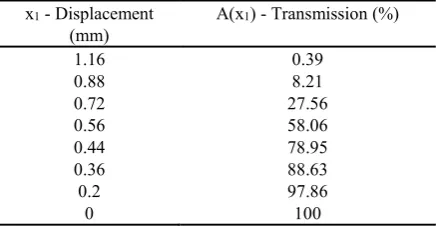
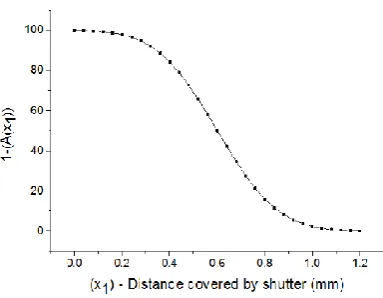
Optical beam diffraction is not taken into consideration in the model, therefore it is assumed that a parallel beam of light travels from the input GRIN lens to the output GRIN lens in Figure 1, and that no light is lost i.e. 100% transmission occurs from the input to the output lens. This is a reasonable assumption since the function of the GRIN lens is to create such a parallel beam of light. It is further assumed that the light beam remains circular in cross-section with diameter of 1.2 mm (equal to the diameter of the GRIN lens) and that the maximum translation of the shutter (x = -3σ) will block all the light transmitted between the two GRIN lenses. Table 1 shows the required shutter displacement across the light beam versus the transmitted optical power (shown graphically in Figure 2).
Table 1. Shutter displacement with corresponding calculated VOA transmission
x1 - Displacement
(mm)
A(x1) - Transmission (%)
1.16 0.39
0.88 8.21
0.72 27.56
0.56 58.06
0.44 78.95
0.36 88.63
0.2 0
[image:2.595.67.287.602.715.2]Fig. 2 Variation of optical power transmitted between a pair of GRIN lenses with increasing opaque shutter displacement.
3. Oil-based Ferrofluid Actuator
The first VOA which we investigated had the shutter created from a plug of opaque ferrofluid (comprising a solution of Rapid Electronics Limited CHE006 ferrofluid in mineral oil in the ratio 1:30) in direct contact with a plug of transparent fluid, in this case water. The dilution ratio of 1:30 was selected after experimenting with different concentrations of ferrofluid/mineral oil solutions. The concentration of ferrofluid chosen was found not to leave a residue on the channel glass wall whilst being opaque enough to achieve high attenuation. This sliding fluidic shutter is translated by a ferrofluid/magnetic actuator comprising a plug of undiluted oil-based ferrofluid (CHE006) driven by a miniature magnet (Figure 3). All three fluids are located within the same microfluidic channel. The 1:30 ferrofluid shutter was located between a pair of GRIN lensed single mode fibers. The electromagnet, positioned as shown in Figure 3, was used to generate a magnetic field which displaced the position of the ferrofluid actuator, and therefore the fluidic shutter. The shutter was translated along the fluidic channel, thereby varying the optical power transferred between the input and output fibers.
Fig. 3 Configuration of single mode fiber VOA using an oil-based ferrofluid actuator
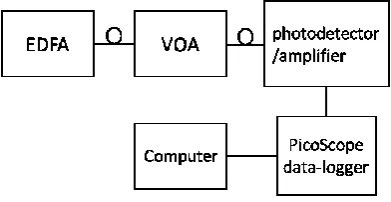
[image:3.595.161.436.405.546.2]Fig. 4 Schematic of the experimental setup to test optical properties of VOA
The VOA was initially characterized with the use of a magnet positioned upon a micro translation stage. The movement of the magnet changed the position of the 100% ferrofluid slug which, as consequence, pushed the fluidic shutter along the channel between the lenses. The magnetic field strength of the magnet was 1100 Oe measured with a gaussmeter (GM07/GM08, Hirst Magnetic Instruments). The magnet on the translation stage was moved in steps of 100 μm. Figure 5 shows the measured optical attenuation versus the translation position of the ferrofluid actuator. The transmission changed from 100% (no opaque shutter in the light path) to approximately 0% (opaque shutter completely covers the light path). The shutter required a distance of 1.4 mm of translation to achieve 0% optical transmission from one GRIN lens to the other. The process was fully reversible (as shown in Figure 5) and the plug could be easily moved back to increase the light transmission. The water between the 100% and diluted ferrofluid was found to fully repel the ferrofluid to the extent no residue remained on the channel wall. The hysteresis between forward and backward ferrofluid plug movement was approximately 5%. A typical response time for on/off attenuation (i.e. to fully move a distance of 1.4 mm) was measured as 3 s using a video camera. The response time for the present configuration is dependent on factors such as the concentration of the ferrofluid, strength of the magnetic field, friction of the channels walls and viscosity of the front liquid. This response time is comparable to the response time of the fiber VOA reported in [10].
Fig. 5 Optical transmission between GRIN lenses versus the position of the shutter (backward and forward movement of plug) showing a hysteresis up to 5%
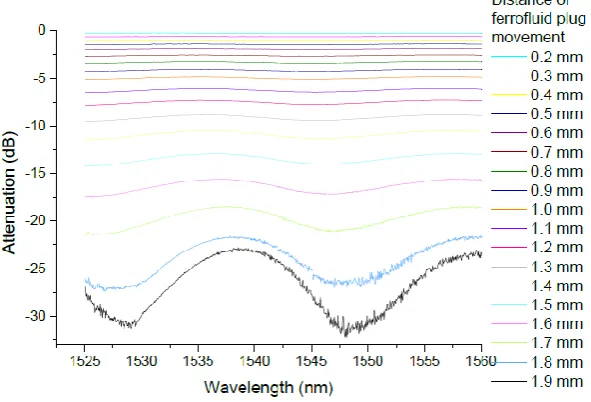
[image:4.595.187.409.393.539.2]Fig. 6 Broadband optical performance of the VOA showing the wavelength dependent loss and the growth of optical fringes as the attenuation increases
Fig. 7 Schematic of shutter system showing how the interferometer is created in the fluidic channel
From the results presented on the graph in Figure 6, it is possible to deduce the refractive index of the ferrofluid. For the interferometric setup shown in Figure 8, the relationship between the different parameters can be expressed by equation (2) [14]:
𝑛2=𝜆𝜆1𝜆2 1−𝜆2∗
1
𝐿 + 𝑛1 (2)
[image:5.595.180.417.346.448.2]Fig. 8 Broadband optical performance of the VOA showing the wavelength dependent loss for an index matched fluidic VOA
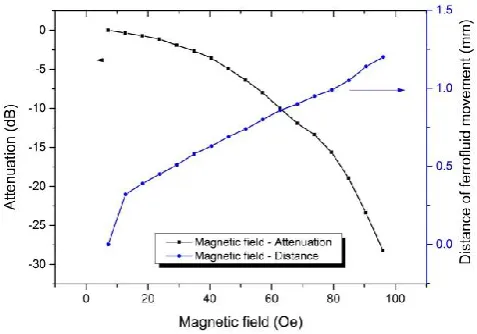
The improved index matched ferrofluid VOA was combined with an electromagnet situated at a 3 mm distance from the ferrofluid to determine if low voltage actuation was possible with this VOA. The electromagnet was operated by varying the magnetic field over the range 0 Oe up to 100 Oe. The magnetic field of the electromagnet was changed by increasing the voltage in 0.25 V steps between 0 and 4 V. The corresponding attenuation values are shown in Figure 9 demonstrating a viable fluidic-based VOA operated by low voltage. The maximum optical attenuation that was achieved was 28 dB for a magnetic field of 96 Oe (4V). The results can be compared with the theoretical results to estimate how much the ferrofluid plug has moved. For example for 40 Oe (1.5 V) the attenuation is 3.5 dB (~44%) and from theoretical analysis the plug displacement can be estimated to be 0.62 mm (Figure 9).
Fig. 9 Optical attenuation versus magnetic field of electromagnet
Additionally, the polarization dependent loss (PDL) was investigated. A polarization controller was connected to the input fiber and the PDL was measured to be 0.85 dB at the highest attenuation of 28 dB.
4. Water-based Ferrofluid Actuator
[image:6.595.179.418.376.543.2]Fig. 10 Water-based ferrofluidic VOA using two liquids
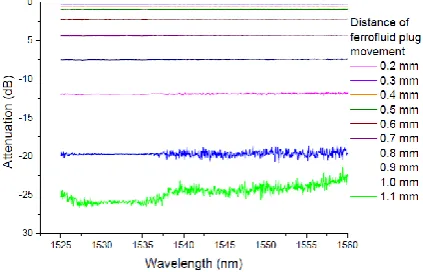
[image:7.595.192.404.350.486.2]To reduce the generation of previously seen interference fringes (Figure 6), the refractive index of the mineral oil was chosen to be close to the refractive index of the water-based ferrofluid. The refractive index of the oil was measured to be 1.467 (measured with a 60/70 Abbe refractometer), but the refractive index of the water-based ferrofluid could not be directly measured due to a lack of transparency. The water-based ferrofluid was subsequently diluted to 1:30 in concentration and the refractive index of the diluted and more transparent solution was measured as 1.460. This measurement indicated that the refractive index of undiluted water-based ferrofluid will be at least higher than this value. Figure 11 shows the broadband results obtained using the water-based ferrofluidc VOA. The highest attenuation for the 1525 to 1560 nm wavelength band was 25 dB with a 3 dB WDL, indicating again that interferometric effects can be minimized by careful design of the VOA’s fluid components.
Fig. 11 Broadband optical performance of water-based ferrofluid VOA showing the wavelength dependent loss
5. Conclusion
We have presented two types of optofluidic broadband variable optical attenuators based on the ferrofluid/magnetic actuation. The maximum attenuation of approximately 28 dB was achieved for the oil-based ferrofluid combined with glycerine-water solution and approximately 25 dB for the water-based ferrofluid combined with mineral oil. Experimentation with the refractive index of the fluidic components showed that the WDL can be reduced to create a viable broadband VOA by taking steps to reduce optical interference effects. In comparison to other VOAs, the optofluidic single mode fiber VOA has a simple design and fabrication process in comparison to MEMS VOAs; has relatively low operating voltage (4 V) in comparison to liquid crystals VOAs e.g. the device [9] which requires 40 Vrms; enables overall low fabrication cost of the device to be attained; and achieves an optical attenuation range which meets typical application requirements in both attenuation and bandwidth.
References
1. L. Pang, H. M. Chen, L. M. Freeman and Y. Fainman, “Optofluidic devices and applications in photonics, sensing and imaging,” Lab Chip 12, 3543-3551 (2012).
2. D.Zhang, N. Justis and Y. Lo, “Fluidic adaptive lens of transformable lens type”, Appl. Phys. Lett. 84, 4194 -4196 (2004).
4. X. M. Zhang, Q. W. Zhao, A. Q. Liu, J. Zhang, John H. Lau, and C. H. Kam, “Asymmetric Tuning Schemes of MEMS Dual-Shutter VOA,” J. Lightwave Technol. 26 569-579 (2008).
5. H. Cai, X. M. Zhang, C. Lu, A. Q. Liu, and E. H. Khoo, “Linear MEMS variable optical attenuator using reflective elliptical mirror,” IEEE Photonics Technology Letters. 17 402-404 (2005).
6. O. Tabata, T. Tsuchiya, O. Brand, G. K. Fedder, C. Hierold J. G. Korvink (eds), Reliability of MEMS: Testing of Materials and Devices (2008), Wiley-VCH.].
7. S. A. Reza and N. A. Riza, “A liquid lens-based broadband variable fiber optical attenuator,” Optics Communications 282, 1298-1303 (2009).
8. P. Müller, A. Kloss, P. Liebetraut, W. Mönch and H. Zappe, “A fully integrated optofluidic attenuator,” Journal of Micromechanics and Microengineering 21, 125027 (2011).
9. S. Xu, H. Ren, J. Sun, and S. Wu, Optics Express 20, 17059-17064 (2012).
10 J. Liou and C. Yu, “Optically tunable fiber attenuators based on photonic liquid crystal fibers,” 2012 17th Opto-Electronics and Communications Conference (OECC 2012) Technical Digest, Busan, Korea, IEEE, pp. 787-788, July 2012.
11. M. I. Lapsley, S. S. Lin, X. Mao, and T. J. Huang, Applied Physics Letters 95, 083507 (2009).
12. M. Konstantaki, A. Candiani, and S.Pissadakis, “Magnetic tuning of optical fibre long period gratings utilizing ferrofluids”, in Proceedings of ICTON 2009, paper Tu.B4.1.
13. S. de Pedro, V. J. Cadarso, X. Muñoz-Berbel, J.A. Plaza, J. Sort, J. Brugger, S. Büttgenbach, and A. Llobera, "Magnetically-actuated variable optical attenuators using ferrofluid-doped elastomer implemented by combination of soft lithography and inkjet printing technologies", in Conference Proceedings IEEE MEMS 2013, 548-551.
13. M. Konstantaki, A. Candiani, and S.Pissadakis, “Optical fibre long period grating spectral actuators utilizing ferrofluid
as outcladding overlayers”, Journal of the European Optical Society, 6, 11007 (2011)