R E S E A R C H A R T I C L E
Open Access
Understanding delayed access to antenatal care:
a qualitative interview study
Rosalind Haddrill
1, Georgina L Jones
1*, Caroline A Mitchell
2and Dilly OC Anumba
3Abstract
Background:Delayed access to antenatal care (‘late booking’) has been linked to increased maternal and fetal mortality and morbidity. The aim of this qualitative study was to understand why some women are late to access antenatal care.
Methods:27 women presenting after 19 completed weeks gestation for their first hospital booking appointment were interviewed, using a semi-structured format, in community and maternity hospital settings in South Yorkshire, United Kingdom. Interviews were transcribed verbatim and entered onto NVivo 8 software. An interdisciplinary, iterative, thematic analysis was undertaken.
Results:The late booking women were diverse in terms of: age (15–37 years); parity (0–4); socioeconomic status; educational attainment and ethnicity. Three key themes relating to late booking were identified from our data: 1)‘not knowing’: realisation (absence of classic symptoms, misinterpretation); belief (age, subfertility, using contraception, lay hindrance); 2)‘knowing’: avoidance (ambivalence, fear, self-care); postponement (fear, location, not valuing care, self-care); and 3)‘delayed’(professional and system failures, knowledge/empowerment issues).
Conclusions:Whilst vulnerable groups are strongly represented in this study, women do not always fit a socio-cultural stereotype of a‘late booker’. We report a new taxonomy of more complex reasons for late antenatal booking than the prevalent concepts of denial, concealment and disadvantage. Explanatory sub-themes are also discussed, which relate to psychological, empowerment and socio-cultural factors. These include poor reproductive health knowledge and delayed recognition of pregnancy, the influence of a pregnancy‘mindset’and previous pregnancy experience, and the perceived value of antenatal care. The study also highlights deficiencies in early pregnancy diagnosis and service organisation. These issues should be considered by practitioners and service commissioners in order to promote timely antenatal care for all women.
Keywords:Pregnancy, Antenatal care, Access, Late booking, Qualitative study
Background
Antenatal care is widely acknowledged as contributing to improved pregnancy outcomes, with delayed access (‘late booking’) linked to increased maternal, fetal and infant mortality and morbidity. The previous five United Kingdom (UK) Maternal Mortality reports have identi-fied late booking as a significant risk factor for maternal death for all women, and particularly black and minority ethnic women [1,2]. Different definitions of late booking exist, from 16–22 weeks gestation. The UK prevalence of booking after 18–20 weeks gestation is reported at
between 2.8% and 16%, similar to rates reported for con-tinental Europe and the United States of America (USA), but with some studies showing significant regional vari-ation [3-9]. UK guidance recommends that all pregnant women should have had their first antenatal appointment with a midwife by 10–12 completed weeks of pregnancy, in order to identify and respond to clinical and social risk factors, and that all antenatal screening should be com-pleted before 21 weeks gestation [2,10,11].
Observational studies, mostly from outside the UK, have suggested that ‘late bookers’ for antenatal care are typically from socially excluded groups; ethnicity in par-ticular, but also young age, low income and educational level, lack of support and substance misuse have been * Correspondence:[email protected]
1
School of Health and Related Research, University of Sheffield, Regent Court, 30 Regent Street, Sheffield S1 4DA, UK
Full list of author information is available at the end of the article
found to be common characteristics in this group of women [3,4,7,12-14]. However, little explanatory qualita-tive research concerning women’s attitudes towards access to, and initiation of, antenatal care has been undertaken. A meta-analysis [15] and a Command paper published by the Department of Health (DoH) [16] iden-tified this as an important gap in the literature and rec-ommended further research in this area.
A subsequent DoH study surveyed a range of ‘hard to reach’ groups, identifying a number of interrelated bar-riers, which delayed, curtailed or even prevented access to antenatal care [17]. Callaghan et al., in a London-based qualitative study, similarly found varied and complex rea-sons for non-attendance antenatally [18]. Downe et al’s
[19] meta-synthesis of barriers to antenatal care concludes that the reasons for late, infrequent or non-attendance at antenatal services in the UK remain to be fully evaluated, in order for appropriate interventions to be developed. Consequently, we aimed to carry out a qualitative study with a broad range of late booking women, with our ob-jective being to gain a deeper understanding of the reasons why some women present late for antenatal care. This article details the method and findings of the study and discusses these in relation to previous research on late booking.
Methods
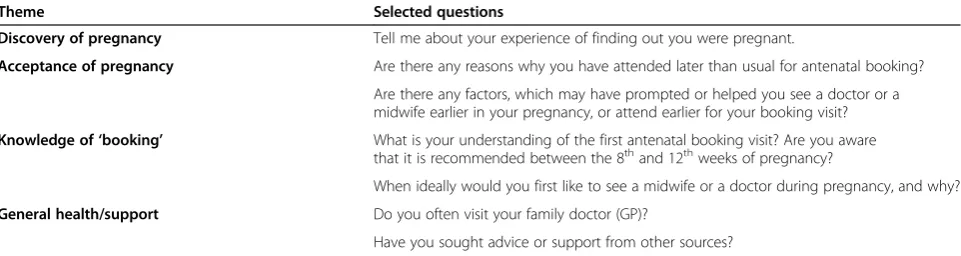
Semi-structured individual interviewing with late book-ing pregnant women was chosen to provide a flexible and personal method of data collection, which had the potential to generate rich detail and insight. The topic guide for the interviews was developed after a literature review and discussion within a multidisciplinary group comprising of an academic social scientist, obstetrician, midwives and a General Practitioner (GP). It is sum-marised in Table 1. Late booking was defined as first hospital antenatal attendance at 20 or more weeks gesta-tion. This is because although recent UK antenatal guid-ance for pregnant women with complex social factors [20] identifies the limit of early booking as 12+6 weeks (and the Euro-Peristat definition [21] is by the end of
the first trimester: 14 weeks), late booking is defined as 20 weeks. It was recognised that women booking at 13 weeks gestation are likely to demonstrate significantly different reasons and attitudes towards their care than a woman booking at a more advanced gestation such as 20 weeks and beyond. The gestation was chosen to maximise the number of women who had purposefully chosen to delay the initiation of care, rather than as a re-sult of the late discovery of pregnancy.
Women who had received antenatal care, other than an initial referral appointment with their community midwife, prior to this hospital attendance, were ex-cluded. Attendance at hospital, rather than this initial appointment, was chosen to examine whether external as well as personal factors were influential. In Sheffield, 6% of pregnant women booked after 19 weeks gestation in 2009–2010, though this figure was higher amongst women aged under 20 (8.7%) [22]. In accordance with other qualitative studies with socially excluded groups we anticipated that we would need to interview around 25 women. A purposive recruitment strategy was theor-etically informed by the literature review: we aimed to recruit a maximum variety sample of women and to continue to interview until no new themes emerged [23]. Ethical Approval for the study was obtained from the North Sheffield Ethics Committee (reference 05/ Q2308/153).
[image:2.595.58.539.604.732.2]The individual semi-structured interview format en-abled participants to express their views on the topic and generated additional areas of discussion. It devel-oped during the study through the iterative processes of simultaneous data collection and analysis, and constant comparison. The interviews were undertaken in commu-nity settings and hospital antenatal clinics and wards. We used a number of sampling strategies in order to identify women for the study. Firstly, antenatal clinic notes and referral letters were reviewed to identify any woman attending at more than 19 weeks gestation; these women were then followed up by the research midwife. Secondly, we attempted to obtain a diverse (maximum variety) sample of late booking women that included ‘at
Table 1 An overview of the semi-structured interview guide
Theme Selected questions
Discovery of pregnancy Tell me about your experience of finding out you were pregnant.
Acceptance of pregnancy Are there any reasons why you have attended later than usual for antenatal booking?
Are there any factors, which may have prompted or helped you see a doctor or a midwife earlier in your pregnancy, or attend earlier for your booking visit?
Knowledge of‘booking’ What is your understanding of the first antenatal booking visit? Are you aware that it is recommended between the 8thand 12thweeks of pregnancy?
When ideally would you first like to see a midwife or a doctor during pregnancy, and why?
General health/support Do you often visit your family doctor (GP)?
risk ‘groups identified from the literature, for example teenagers, recent migrants, women with substance misuse problems, women with learning disabilities, and overall, as far as was possible, women from a variety of other social and occupational backgrounds. This purposive sampling strategy involved intensive networking with key healthcare practitioners including community and hospital midwives, specialist midwives and doctors (for example substance misuse and teenage pregnancy clinics) involved in the care of potential late booking women.
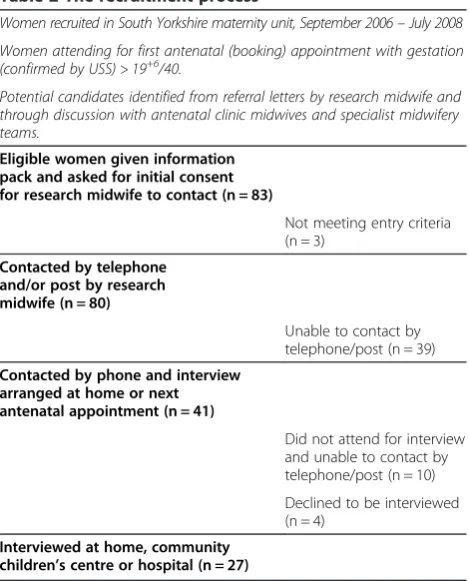
We continued to interview women until no new themes emerged, whilst ensuring diversity according to the above theoretically informed criteria. The recruitment process is illustrated in Table 2. At the first hospital antenatal clinic appointment, potential participants were given written in-formation about the study and gave verbal consent for us to contact them to arrange an interview, at a time and in a location of their choice. There was no funding for inter-preters, however a few women whose first language was not English were recruited, where they were able to under-stand the project fully and give written informed consent to participate. Particular care was taken when seeking con-sent from more vulnerable women, in particular the four teenagers aged less than 18 years and the three women with learning disabilities, to ensure that the study and their voluntary participation was clearly explained and understood, in some cases in consultation with supporting adults. Attention was also made to the interview format
and location for these women to try to put them at ease. No financial inducements were made to participants, al-though reimbursements for any travel expenses incurred were offered.
Prior to each interview, informed consent was ob-tained and demographic and postcode data were re-corded. Interviews were tape recorded, transcribed verbatim and checked for accuracy. A self-conscious the-matic analysis of data was undertaken by the research team, using the methods outlined by Braun and Clarke [24]. NVivo8 (QSR International, Burlington MA.) soft-ware was used to organise the transcribed data. Consid-eration of reflexivity and potential researcher bias were important, as RH is a registered midwife and PhD stu-dent, GLJ is an academic social scientist, CM is an aca-demic GP and DOA is an acaaca-demic consultant specialist in fetomaternal medicine. All the interviews were carried out by RH who had undergone training in qualitative interviewing as part of a research post and she was not involved in the clinical care of any of the women. In addition to independent analysis of transcribed data (RH, GJ, CM), interdisciplinary analysis meetings were held that included critical appraisal of the literature, sys-tematic data and coding framework verification and challenging of interpretive analysis.
Results
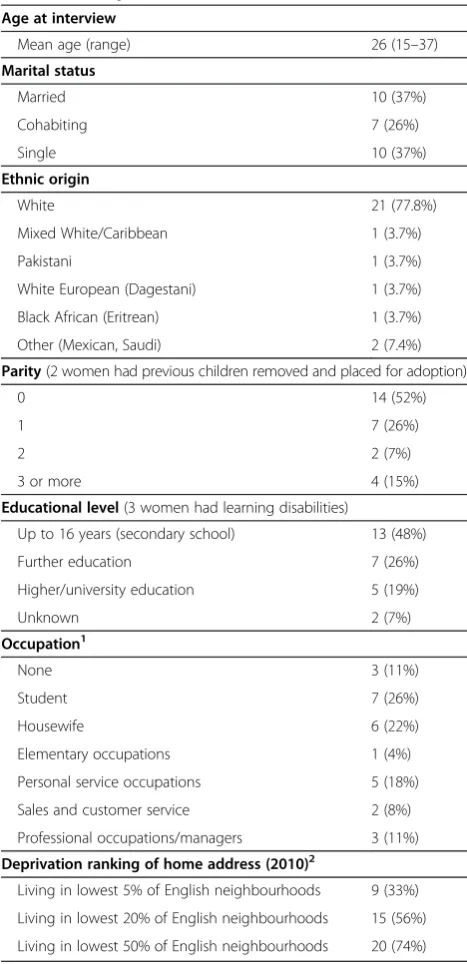
Twenty-seven women were interviewed. Their demo-graphic details are summarised in Table 3. Twenty-one women were White British, whilst six were from other ethnic groups. The women reported a wide range of occupations and educational levels; many lived in neigh-bourhoods with high deprivation indices.
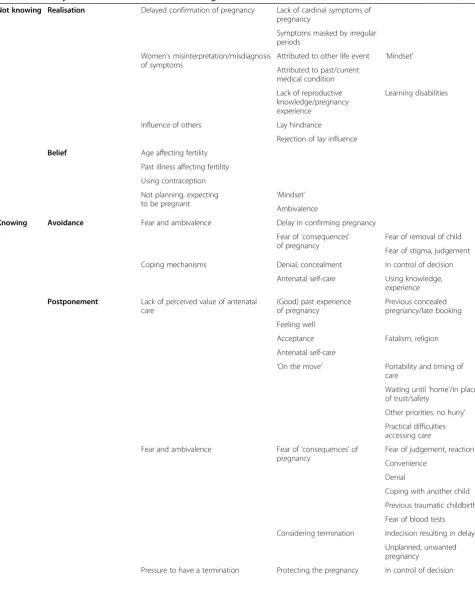
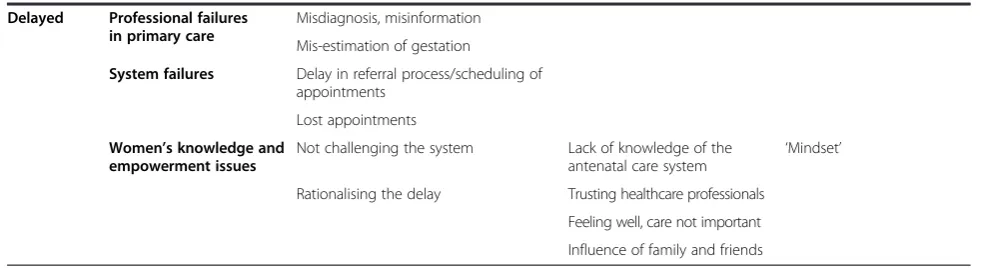
The interviews identified a variety of often interrelated personal and service organisational reasons for not acces-sing antenatal care earlier. These included not recogniacces-sing the pregnancy, recognising but avoiding or postponing antenatal care, and practical difficulties resulting in delay such as their location, administrative errors and the failure of healthcare professionals to diagnose pregnancy and/or expedite care for late bookers. A taxonomy of reasons for late presentation derived from the thematic analysis of the data is presented in Table 4.
“Not Knowing” Realisation
[image:3.595.57.292.442.733.2]Many of the women interviewed had said they had not known they were pregnant for weeks or sometimes months, which had delayed them accessing care. These were divided into women who either had not noticed any of the‘cardinal’symptoms of pregnancy (e.g. nausea, vomit-ing and amenorrhoea), or those who had symptoms but did not recognise them as pregnancy. Reported‘normal’cycle irregularity masked the ability of some women to perceive
Table 2 The recruitment process
Women recruited in South Yorkshire maternity unit, September 2006–July 2008 Women attending for first antenatal (booking) appointment with gestation (confirmed by USS) > 19+6/40.
Potential candidates identified from referral letters by research midwife and through discussion with antenatal clinic midwives and specialist midwifery teams.
Eligible women given information pack and asked for initial consent for research midwife to contact (n = 83)
Not meeting entry criteria (n = 3)
Contacted by telephone and/or post by research midwife (n = 80)
Unable to contact by telephone/post (n = 39)
Contacted by phone and interview arranged at home or next antenatal appointment (n = 41)
Did not attend for interview and unable to contact by telephone/post (n = 10)
Declined to be interviewed (n = 4)
classic pregnancy symptoms early enough to access ante-natal care:
“To be honest, my periods aren’t regular so I didn’t know how many weeks I was. I can go without periods for 6 months…And because of my periods I suppose it took a while before I knew I was pregnant for definite”.
(#9, Gravida 3 Para 2)
Multiparous women had also attributed symptoms such as amenorrhoea, nausea or weight change to life events:
“I had a bleed and I thought I’d just had a period. We were opening this pub and it was just really stressful and I thought I was feeling sick because we weren’t eating. We were working from 10 in the morning until 2 or 3 at night. So I just thought I was run down”.
(#6, G2 P1)
Other women, in retrospect, recognised that they had experienced pregnancy symptoms but had misinter-preted these due to a lack of knowledge or experience. Key groups for whom a lack of reproductive knowledge was the main reported reason were those women with learning disabilities and young women. In these in-stances, it was often family members or close friends who noticed the pregnancy before the woman herself:
“I found movements moving about in my stomach and I wondered what it was…I didn’t have any sickness or anything like that, so I went to see my GP, he examined me and said I could be like 6 months pregnant”.
(#2, G1P0)
“My dad had an idea that I could be pregnant because I was a bit swollen. He said“you’re pregnant”. I said
“I haven’t got an idea”. He said“I think you ought to go and get checked”. So a fortnight later I went and checked, I went back home and said“Dad, you’re right, I am pregnant”. He went“I told you I was right didn’t I”.(#7, G1P0, learning disabilities)
We also identified lay hindrance as a barrier. Some women reported that family, friends and partners had also attributed the classical pregnancy symptoms to an-other reason, most evident in relation to symptoms of nausea and vomiting:
“We all just used to be sat there and I‘d go to the toilet and M used to say‘she’s got an upset stomach’. That’s all she used to say, that’s all we put it down to, just an upset stomach, we didn’t think of anything else”.
(#28, G2P1, learning disabilities)
Belief
[image:4.595.56.290.98.581.2]17 of the 27 women interviewed stated that they had not planned to become pregnant, for another 6 this was im-plied and others suggested that their pregnancy was intended but mistimed. These women did not have a pregnancy ‘mindset’, so were not expecting the sym-ptoms of pregnancy, thus leading to a delay in diag-nosis and initiation of antenatal care. For example,
Table 3 Participant characteristics (n = 27)
Age at interview
Mean age (range) 26 (15–37)
Marital status
Married 10 (37%)
Cohabiting 7 (26%)
Single 10 (37%)
Ethnic origin
White 21 (77.8%)
Mixed White/Caribbean 1 (3.7%)
Pakistani 1 (3.7%)
White European (Dagestani) 1 (3.7%)
Black African (Eritrean) 1 (3.7%)
Other (Mexican, Saudi) 2 (7.4%)
Parity(2 women had previous children removed and placed for adoption)
0 14 (52%)
1 7 (26%)
2 2 (7%)
3 or more 4 (15%)
Educational level(3 women had learning disabilities)
Up to 16 years (secondary school) 13 (48%)
Further education 7 (26%)
Higher/university education 5 (19%)
Unknown 2 (7%)
Occupation1
None 3 (11%)
Student 7 (26%)
Housewife 6 (22%)
Elementary occupations 1 (4%)
Personal service occupations 5 (18%)
Sales and customer service 2 (8%)
Professional occupations/managers 3 (11%)
Deprivation ranking of home address (2010)2
Living in lowest 5% of English neighbourhoods 9 (33%)
Living in lowest 20% of English neighbourhoods 15 (56%)
Living in lowest 50% of English neighbourhoods 20 (74%)
1
Occupation from: Standard Occupational Classification 2000 (SOC2000), accessed from:
http://www.ons.gov.uk/ons/guide-method/classifications/archived-standard-classifications/standard-occupational-classification-2000/index.html.
2
English Index of Multiple Deprivation Score (2010) for Lower Layer Super Output Areas (LSOAs) accessed from:http://www.neighbourhood.statistics.
Table 4 Summary of women’s themes for late booking
Not knowing Realisation Delayed confirmation of pregnancy Lack of cardinal symptoms of pregnancy
Symptoms masked by irregular periods
Women’s misinterpretation/misdiagnosis of symptoms
Attributed to other life event ‘Mindset’
Attributed to past/current medical condition
Lack of reproductive knowledge/pregnancy experience
Learning disabilities
Influence of others Lay hindrance
Rejection of lay influence
Belief Age affecting fertility
Past illness affecting fertility
Using contraception
Not planning, expecting
to be pregnant ‘
Mindset’
Ambivalence
Knowing Avoidance Fear and ambivalence Delay in confirming pregnancy
Fear of‘consequences’ of pregnancy
Fear of removal of child
Fear of stigma, judgement
Coping mechanisms Denial, concealment In control of decision
Antenatal self-care Using knowledge, experience
Postponement Lack of perceived value of antenatal care
(Good) past experience of pregnancy
Previous concealed pregnancy/late booking
Feeling well
Acceptance Fatalism, religion
Antenatal self-care
‘On the move’ Portability and timing of care
Waiting until‘home’/in place of trust/safety
Other priorities: no hurry’
Practical difficulties accessing care
Fear and ambivalence Fear of‘consequences’of pregnancy
Fear of judgement, reaction
Convenience
Denial
Coping with another child
Previous traumatic childbirth
Fear of blood tests
Considering termination Indecision resulting in delay
Unplanned, unwanted pregnancy
some women in their thirties had assumed age would more significantly adversely affect their fertility than was actually the case, a belief which in one instance was reinforced by their general practitioner’s initial misdiagnosis:
“When they (the GPs) said‘I was going through the change’I thought‘well could I be’because at 37 I thought‘well I might be’because you hear women go through it earlier than I did and I think I got that into my head more than anything and I never
contemplated that I was pregnant”.(#13, G5P4)
Other women reported that they didn’t believe they could be pregnant because they had been ill recently or had existing medical conditions associated with sub- or infertility, such as polycystic ovarian syndrome. Contra-ceptive failure was also a significant factor:
“Last time, it was just weird because I went for the Depo and they told me I was 25 weeks pregnant. I got caught on the Depo and I didn’t know that, and I took the pills and I got caught on the contraceptive pill this time…and I didn’t know with this one”.(#28, G2P1, learning disabilities)
In addition to explaining their reasons for late book-ing, women reflected on the experience. Most of the women interviewed, including young women and primi-gravidas, were aware of the optimum time to access antenatal care and were clear that they would have booked early, if circumstances had been different. For example, many of the ‘not knowing’ women expressed regret at not accessing care earlier and acknowledged the desirability of attending for early antenatal care:
“If I had known I would have come virtually the first couple of weeks I knew, if you know what I mean, but as I say, I had no clue, no idea. I would have gone straightaway, yes, I would advise anybody to do that straightaway”.(#12, G5P4)
Many women expressed feelings of guilt at accessing care late; particularly in terms of the negative conse-quences for their unborn baby that could have arisen from missed screening and not following recommended dietary and lifestyle changes.
“I missed out on folic acid; I regret that very much. I took it with my other children. In some ways I think I let this baby down, I didn't give it what the others had…I feel guilty about that”.(#8, G3P2)
This was not a universal response however. Some women who had not known they were pregnant were pleased to have ‘missed’ part of the pregnancy: impatience for the pregnancy to be over and their baby to arrive was expressed by several women and their partners; as one woman described
“It was really good because I thought I won’t have to wait as long, because 9 months is long. Even now, I feel like it’s been such a long time”.(#16, G1P0)
“Knowing”
The study identified a second large group of women who knew that they were pregnant but did not access early care. There were three key themes amongst these women: avoidance, postponement and being delayed by others, with avoidance and postponement themes emerging from 14 of the 27 interviews. Whereas women avoiding care had made no plans to access care, women who postponed their care intended to access care ‘at some point’ in the future. Avoidance in the study reflected a woman’s refusal to consider the pregnancy and its consequences. In contrast postponement reflected a period of ambivalence about and evaluation of the pregnancy, as women considered their choices and priorities.
Avoidance
[image:6.595.53.548.101.235.2]Two key themes were identified for why women wanted to avoid antenatal care. Firstly, some women were fearful Table 4 Summary of women’s themes for late booking(Continued)
Delayed Professional failures in primary care
Misdiagnosis, misinformation
Mis-estimation of gestation
System failures Delay in referral process/scheduling of appointments
Lost appointments
Women’s knowledge and empowerment issues
Not challenging the system Lack of knowledge of the
antenatal care system ‘
Mindset’
Rationalising the delay Trusting healthcare professionals
Feeling well, care not important
of the social consequences of the pregnancy i.e. removal of the baby by social services, or the response and judgement from the baby’s father, their family and peers; particularly teenagers who feared the stigma and negative stereotypes that exist surrounding teenage pregnancy.
“I knew you had to go for all the tests and things like that, but I just couldn’t go. Because I was only 17, I just thought I couldn’t tell anyone, thought people would look at me like…I don’t know, just like I was, irresponsible…I didn’t want to think about it. So I thought I’d just put it to the back of my mind”.
(#8, G1P0)
Secondly, some women, especially the most vulnerable groups such as substance misusing women and those with learning disabilities, described significant ambiva-lence towards the pregnancy.
“I had an idea about 2 months before, but I did a pregnancy test and that didn’t work, It didn’t say negative or positive, just no result came up. So then I just put it to the back of my mind, and my mum mentioned it again in a little while and I did another pregnancy test and that worked.
(#15, G1P0, on methadone)
Postponement
This group of women did not access antenatal care on time but always intended to do so ‘at some point’. For example, some well women chose to seek care at a time “convenient”for them. For many, a good past experience of pregnancy influenced their decision to postpone it, based on the premise that antenatal care was only needed if they felt unwell.
No, they’ve all been normal thank God and I think if there were any previous problems with them I would have probably found out but I just felt healthy, I felt OK you know, I just felt normal basically and I suddenly saw my belly getting a bit bigger and my clothes weren’t fitting as much”.
(#12, G4P3)
Some women postponed access because of initial am-bivalence and because they initially planned to terminate the pregnancy, only‘booking’when they decided to con-tinue with the pregnancy. Others delayed accessing ante-natal care because of their religious belief that anteante-natal screening for fetal abnormality was unimportant:
“We are Muslims so we are not allowed to have an abortion. After 40 days from the pregnancy it’s not
allowed for you, and before the 40 days you should have some serious problem like your heart’s not good or the baby is very damaged. So it’s not just I don’t want it, because I have already 1 child, so I didn’t think about that at all. I have to accept that really and thank God for it”.(#19, G2P1)
An intuitive process of‘do it yourself antenatal care’was re-ported by some women which included self-checks and active self-care, in order to promote and monitor the healthy pro-gress of their pregnancy, until they felt able to access care.
“I knew quite a bit anyway I kept referring to my books and just checking and thinking‘oh yes it’s alright’so there was nothing bad. Bits I’d got from college and things like that, so obviously I was thinking I can feel this so I don’t think there’s anything wrong”.
(#8, G1P0)
“I’d done everything that I could possibly do myself because obviously with having A, I knew what you could eat, what you couldn’t eat, this that and other, so I followed everything religiously, took my Pregnacare every single day, made sure I drank plenty, had plenty of rest, so I carried out what I knew, but obviously I’d had no checks to make sure everything was progressing alright, I’d had movement, I noted down when I’d had movement and things like that, so I’d done all I could”.
(#27, G2P1)
Being ‘on the move’ also acted as a barrier. For ex-ample, if a woman was returning home from abroad or working elsewhere in the UK, or living in temporary ac-commodation, they described deferring access to ante-natal care until they felt settled in a place of trust and safety. Overall, there was a lack of understanding of the value and/or the‘portability’of antenatal care.
“I didn’t know York, I didn’t have any transport when my partner was out at work every day. I didn’t know where buses used to go…But I didn’t want to change my doctor, because I’m going back home to my own house. I wanted to have my baby in [Sheffield], I didn’t want to have my baby in a town that I didn’t know”.
(#6, G2P1)
“I knew that my husband didn’t really want one, so I kept it to myself for a while…I really just did not want to go through with it[termination]and then I just kept putting it off…thinking, I’ve put it off that long, they’re not going to be able to do anything about it and we will have to carry on”.(#27, G2P1)
Many of the‘knowing’women also expressed regret at not accessing early care, and demonstrated an under-standing of its benefits. However, as one of them ob-served, their understanding of what was theoretically ‘correct’ and desirable in terms of antenatal care might bear little relation to what had happened in their own pregnancy and the choices they had made:
“I would advise anybody who knew to go. I just don’t take my own advice!”(#27, G2P1)
“Delayed”
This group of women had usually been aware from a relatively early stage that they were pregnant and were willing to engage in timely antenatal care. However, due to a combination of reasons they had booked late. There were examples of professional failures, involving GP and/or nurse misdiagnosis, or mis-attribution of preg-nancy symptoms to lifestyle or medical causes:
“I began to feel really sick and really unwell and lo and behold I was pregnant. But I’d gone to the doctors and I’d gone to see the nurse and I’d gone back repeatedly and they said because you’ve stopped drinking, stopped smoking it’s just all the toxins and such like coming out so nothing to worry about”.
(#17, G1P0)
System failures also occurred, for example, letters not being sent and/or received which were typically the re-sult of failings in secondary care. Women experiencing this often had a lack of knowledge of pregnancy and the antenatal care ‘system’ and appropriate scheduling, or language difficulties which prevented them from challen-ging delays. However lack of empowerment was also a key theme: women passively accepted delayed appoint-ments and typically did not challenge health professional misdiagnosis of early pregnancy symptoms. Some women appeared to rationalise the consequent delay as they were well, or were not in a pregnancy mindset to enable focus-ing on the actual gestation.
“I kept thinking‘well it seems a long time for me not [to be seen]’…I could have pushed it more at week 15 if I had thought about it, if I had had more knowledge, but I foolishly thought because I had been given the date that that was it - and I asked my midwife and
she said it was a bit surprising but not anything to be worried about”.(#14 G1P0)
Discussion
Our study identified three key themes, on the basis of which we suggest a taxonomy for understanding why women present late for antenatal care: ‘not knowing’; ‘knowing’; and being ‘delayed’. Explanatory sub-themes relate to individual circumstances, empowerment and socio-cultural factors. These include the recognition of a mother’s own pregnancy and the influence of a preg-nancy ‘mindset’, the perceived value of antenatal care and the influence of previous pregnancy experience. Other sub-themes include avoidance and postponement strategies and the acceptance of delay. These themes suggest more complexity than the denial, concealment and disadvantage frequently reported, and that whilst vulnerable groups are strongly represented in this co-hort, women do not always fit a socio-cultural stereotype of a ‘late booker’ [3,4,13-15]. Many themes associated with late booking found in previous studies of margina-lised women are evident amongst women across the social, educational and cultural spectrum in this study [19]. However our themes suggest a different emphasis. Particularly there is a greater emphasis on considerations of convenience, relevance and familiarity (leading to the postponement of care), and a lack of a pregnancy‘mindset’ relating to the expectation of becoming pregnant.
Method
of interviews was influential in this respect: women interviewed in their homes, particularly those who had not realised they were pregnant, were generally open and happy to talk in detail and at length about not accessing care. Similarly, women who had experienced professional or system failures were angry or frustrated and keen to tell their story. However women interviewed in hospital, often the women who had concealed their pregnancies, were reluctant to talk about non-access, be-ing quite defensive in their responses, suggestbe-ing that they felt that they would be judged and/or condemned by the healthcare ‘establishment’for making the‘wrong’ choices [26].
Recognising the pregnancy
This study suggests that for some women‘not knowing’ that they are pregnant is a complex mixture of lack of recognition, acknowledgement and acceptance of the signs, symptoms and consequences of pregnancy. It is influenced by many factors, including knowledge and experience of pregnancy, both personally and amongst a woman’s social network, physical and psychological health and the expectation of becoming pregnant. The concept of ‘knowing’in this context suggests identifica-tion and understanding, an acknowledgement of the physical and social consequences of the pregnancy, from the woman and potentially those around her. Few other studies, particularly quantitative studies, have demon-strated the complex relationship of influences and the importance the notion of a‘pregnancy mindset’plays.
Women’s apparent poor knowledge and awareness of pregnancy, particularly younger women and women with learning disabilities, and their failure to recognise many early signs and symptoms, were common themes in this study and have been widely reported [19]. Some misinterpreted pregnancy symptoms and attributed even multiple symptoms to causes other than pregnancy, es-pecially when their perceived likelihood of becoming pregnant was low, for example for age, health or contra-ceptive reasons. Others considered that they had not ex-perienced any pregnancy symptoms at all, suggesting that a lack of knowledge or self-awareness, denial or some other personal perceptions were influential. The shock and potential anxiety of conceiving outside of optimum conditions, for example an unplanned or un-expected pregnancy (the majority of women in this study), may have resulted in an inability to place preg-nancy symptoms into what one author calls a‘ meaning-ful whole’ [27] leading to misinterpretation and delay. Many women admitted that they had not put all their symptoms together to build a picture of themselves as pregnant, and as such had not created a pregnancy ‘identity’.
Planning the pregnancy
Lack of pregnancy planning or intent to become preg-nant plays a significant part in delayed attendance for antenatal care [27], but this is usually discussed in the context of the fear and ambivalence women feel after a pregnancy is confirmed, rather than the initial recogni-tion of pregnancy signs and symptoms. Numerous fac-tors influence a woman’s perception of the likelihood of her conceiving. Contraceptive use and its influence on women’s acceptance of pregnancy has not been men-tioned in other studies but was highly significant in this study. The shocked comments of the eight women using contraception suggest a combination of factors: a lack of knowledge about conception and the risks of pregnancy whilst using contraception, but more importantly a lack of belief in becoming pregnant.
Ambivalence, even when pregnancy was desired, was a common reaction amongst women to the discovery of an unplanned pregnancy, and has been identified in pre-vious studies as influencing the initiation of antenatal care [27,28]. The lack of preparation for pregnancy found in the study not only affected women’s ‘mindset’ and delayed confirmation of the pregnancy, but also led to feelings of fear, depression and ambivalence amongst some women, particularly related to the consequences of the pregnancy. This resulted in the denial, delaying and avoidant coping strategies evident in many other studies [29,30]. These feelings and behaviours were particularly apparent amongst those who had considered a termin-ation or who felt most likely to be judged, such as teen-agers and substance misusing women. However this was not a common theme, and was far less prevalent than in other studies. This may in part be due to the particular women who were prepared to be interviewed, but also the effect of being interviewed by a midwife, even one not involved in their care.
Accepting the pregnancy
Other authors have discussed an in-between or liminal state where women are neither pregnant or‘unpregnant’, between pregnancy discovery and pregnancy acceptance, when women would make the pregnancy ‘official’ and take action [27]. For some women in the study, failure to accept their pregnancies by refusing or ignoring a pregnancy test was clearly part of this‘little bit pregnant’ phase and demonstrated an avoidant coping strategy. For others, this phase lasted from days to months, whilst women considered whether to continue or terminate the pregnancy, and a process of passive continuation of the pregnancy ensued [31].
The‘social pregnancy’
women need a certain amount of approval and social support before their pregnancy (and the need for ante-natal care) can be acknowledged and accepted, both by the woman herself and her social network [27,29,32,33]. Access to antenatal care is heavily influenced by a woman’s willingness to embrace her pregnancy and par-ticularly the social aspects of the pregnancy [17]. The dynamics between a pregnant woman and others influ-ence both the‘discovery’of a pregnancy and the creation of a woman’s pregnancy identity. At its most positive, such a supportive relationship can strongly influence the coping mechanisms of women, and reduce and prevent delay in accessing care. However where support was per-ceived to be lacking there was a reluctance to reveal the pregnancy, and thus to access care, for fear of disap-proval, rejection, or‘consequences’.
In some cases in this study the resulting anxiety led to an initial denial and ongoing concealment, particularly from official confirmation and involvement, which con-tinued for a significant proportion of the pregnancy, followed eventually by ‘layers’ of revealing to those in their social network. This secrecy about pregnancy was particularly significant amongst young women, again a common theme in other studies [34,35].
This social network extends beyond family to commu-nity members and to potential care providers [29]. Lutz [36] discusses the idea of pregnancy as ‘public life’: an external, idealised view of the woman’s life, pregnancy and family [35]. A pregnancy becomes public property once disclosed and made official, for example, by book-ing for antenatal care. As such, many women feel the need to assume a role, a positive image of themselves as capable, pregnant women, happy to be pregnant, which may not be the reality of the situation. Booking for care also crosses a line of inevitability, and demonstrates pub-licly a commitment to the pregnancy and to mother-hood. As several women in the study indicated, fear of judgement, stigma, scrutiny or even the consequences of the pregnancy, such as coping with another child, meant that they were not ready to take this step, leading to avoid-ance or postponement of care. Women struggling to cope with difficult personal circumstances were particularly likely to delay access. However, many women simply had other priorities in their lives which impacted on their abil-ity and willingness to engage with the‘public property’of their pregnancy, and the accompanying care.
Pregnancy as wellness
Many studies have identified that some women consider pregnancy a natural, normal life event, a state of ‘well-ness’rather than a medical condition requiring immedi-ate attention, and would only attend for care if unwell [18,33]. Similarly, in our study there was a fatalism towards or acceptance of the pregnancy, a positivism
linked with a feeling of wellbeing, which led to some women either not trying to access early care or not chal-lenging delays. In this way, a non-medicalised but very positive pregnancy identity also led to‘late booking’.
Prioritising antenatal care
Other studies have demonstrated that beliefs about the importance of antenatal care are not always predictive of behaviour and do not account significantly for lack of use [37]. Almost all the women interviewed demon-strated some knowledge of antenatal care and support to attend it, and stated that early antenatal care was‘a good thing’. Many women demonstrated their understanding of the convention of attending for antenatal care, using expressions like,“that’s what everyone does, isn’t it?”and
“you need to go earlier, to see what’s correct”. This was articulated more clearly than an understanding of the value or purpose of antenatal care, suggesting a wish to accord with a social norm rather than a rational and em-pirical belief in the importance of antenatal care.
For some women booking for antenatal care is an act of engagement with the maternity system, a system based on surveillance and prevention, which they may not subscribe to. However as we (and others) illustrate, most women accept the importance of antenatal care‘in theory’. For it to be acceptable‘in practice’it needs to be appropriate, a good fit to the woman, an idea expressed elsewhere in healthcare research [18,38]. Women’s per-ceptions of convenience, and thus attendance, are influ-enced by their view of the relevancy of the care to themselves and their lives [37]. Our findings suggest that women made their own judgement of this ‘fit’/relevance in relation to antenatal care, and their priorities reflected this. Dixon-Woods et al’s[39] idea of ‘candidacy’[38] is also reflected in the study, suggesting that access to healthcare is a dynamic process of negotiation, influenced by people engaging in defining their own understanding of what is appropriate medical attention and intervention for themselves. Some of the pregnant women in our study made this judgement in the context of their previous preg-nancy experience, their beliefs and their acceptance of pregnancy. There was a suggestion amongst multiparous women that they were more relaxed about missing early care, because of their previous positive pregnancy experi-ence, and that antenatal care was particularly important for first pregnancies, when women had more to learn. As in other studies, antenatal care was identified by many as important but not an immediate priority, something that could be postponed [18,29].
Location of care
considered ‘vulnerable’. Practical barriers to care have been widely reported in other studies [17,32-34], however only one of the women interviewed expressed any prob-lems relating to their home circumstances or financial background that had prevented them from accessing care, again suggesting that most were well supported. The women’s responses suggested rather a differing set of pri-orities, a consideration of convenience and an assessment of the value of early care, linked to location, health and past experience. For example five women chose not to book for care until they were‘home’- a place of perceived trust, familiarity and safety. All were able, but chose not, to access early care where they were, choosing other prior-ities in their lives. This illustrates how perceptions of the value and convenience of antenatal care in turn affect women’s attitudes towards its timing, portability and ne-cessity, but also the importance women place on a familiar environment for such care. Women perceived their late attendance as an inconvenience or something to be ex-pected, rather than feeling that they had been prevented from accessing care, reflecting women’s experience of actively choosing to delay care, from a considered and experienced perspective [40].
Coping strategies
Where women had other priorities and had made the decision to avoid or postpone antenatal care, they dem-onstrated differing strategies to deal with their decision. For some women it was simply denial, a refusal to ac-knowledge publicly their pregnancy, a passive acceptance of delay or‘hoping for the best’based on instinct(“I just assumed I’d be all right”).However, others demonstrated a more active, considered approach to their pregnancies, engaging in a process of self-care. Two women explicitly (and others implicitly) used their experience of pregnancy, both theoretical and real, to make sophisticated judgements about the progress of their pregnancies. This self-reliance was seen as a positive, purposeful thing by the women, who wished to take control, stay well and informed, and make their own decisions about the pregnancy.
Some authors have presented this self-care in negative terms as passive non-attendance based on ignorance [40,41]. Our study suggests a more positive view, women making what they perceived as the best choices them-selves in their circumstances, when they feared this control and choice would be removed; the ‘taking care of self’ suggested by Sword [37]. This presents women making decisions from a considered perspective, associ-ated with the belief that pregnancy is a natural state that does not require early professional intervention [27,31,37]. This thoughtful process echoes that seen else-where in healthcare research, such as Pound et al’s
[42] notion of ‘resistance’to medicine taking, with non-compliance not simply a passive failure but the result of
active engagement and decision-making by patients, dem-onstrating ingenuity and energy. This concept of women challenging orthodoxy, in choosing to trust their own in-stincts about maintaining good health in pregnancy, re-quires further examination as it suggests a link to women’s health beliefs and/or a possible cynicism about the med-icalisation of the‘normal’process of pregnancy.
Accepting delay
Some cases in the study highlighted the lack of a coher-ent approach between primary, community and second-ary care towards the management of early pregnancy. A significant number of women in the study experienced administrative and professional failures, sometimes as a result of misdiagnosis of pregnancy or mis-estimation of gestation, leading to and exacerbating other delays. There is little evidence of this in other studies of late booking [18]. Most significant however was women’s ac-ceptance and lack of challenge of these delays. On first examination this appeared to be because of a further lack of knowledge, particularly relating to the antenatal care ‘system’. However this lack of knowledge was not a universal characteristic of the delayed women, as several were well educated about pregnancy and antenatal care. Women’s lack of empowerment and passive acceptance of the delays they encountered was linked to other sig-nificant factors, namely their ‘mindset’and preparedness for pregnancy, the trust they placed in healthcare profes-sionals and the value and priority they placed on ante-natal care, as a result of past experience, feeling well and the influence of others.
Overall the women’s reflections on their late booking have emerged as an additional area of interest from our study data. For example, the perception amongst some women that delayed access was a positive thing, with an impatience for the pregnancy to be over as soon as pos-sible, has not previously been discussed. These findings reveal another layer of attitudes and behaviours influen-cing access, further pieces in the late booking ‘jigsaw’, which merit further consideration.
Conclusions
to a woman’s first antenatal appointment [19,43]. For a small number of (potentially the most vulnerable) women preventative factors may also be part of this ac-ceptance and decision-making. Lack of reproductive knowledge could be part of this. To address this there-fore requires intervention prior to conception as well as in early pregnancy.
The focus in this study has been the diversity of views of late booking women, in comparison to most previous studies which have targeted low income or vulnerable women from specific communities [13,17,19,29,35]. There are some resonant themes in our work with those previ-ously published, such as lack of pregnancy recognition/ planning, fear, chaos and self-care [18,27,29,31,37]. We found a lack of challenge to delays resulting from system and professional failures, and a complex relationship of beliefs and behaviours, combined with lack of reproduct-ive knowledge, as the main threads running through the study. This lack of knowledge included knowledge of contraception, the symptoms of early pregnancy and the purpose, timing and value of antenatal care. It was most evident amongst nulliparous women and women with risk factors such as learning disabilities, substance misuse and for whom English was not their first language; often those identified as most at risk in previous maternal mortality reports [1,2]. Our group of study participants also in-cluded several women who might be considered‘low risk’ antenatally, had they not booked late. It may be that these women represent a larger group than previously identified. However, there is a lack of research relating to the socio-demographic characteristics of late booking women in the UK and if we are to challenge stereotypical categorisation this requires further study.
Lack of pregnancy planning has been linked to delayed access in previous studies and was evident in the major-ity of women in the study, some of whom were previous late bookers [27,29]. This, the existence of lay hindrance and a lack of active engagement in care suggests a need for improved promotion of the value and relevance of early antenatal care generally in the population. Pre-conceptual discussion/education is a key recommenda-tion in the most recent UK maternal mortality report. However, as only an estimated 50% of pregnancies in the UK (and USA) are intended there is the need for oppor-tunistic reproductive education and contraceptive coun-seling in community settings [2,44]. We consider that a more holistic view of women’s reproductive health (through women’s ‘life course’) and reproductive health targeting need to be adopted. This would maximise op-portunistic contraceptive/ health reviews in primary care, and re-emphasise the value of the 6 week postnatal check for women (currently poorly attended), to high-light the value and relevance of early antenatal care. Our study suggests that the risk of repeated late booking may
be associated with direct and indirect experience of late booking, and this area is worthy of further research. There is also a role for community-based information/ advice campaigns (as recently introduced locally, influ-enced by the findings of this study) about early preg-nancy symptoms and care, particularly targeting areas with higher than average late booking.
In addition, improved management of early antenatal care, the more‘joined up’approach identified as missing by several women in the study, is required. Improved communication between community midwives, family doctors and reproductive and sexual health services, but also health and social care services that are outside of the National Health Service (NHS), could help to ensure the transfer of appropriate information, and the referral and follow up of women in early pregnancy. This could also help to ensure the prevention of system and profes-sional failures.
Our study identified aspects of reproductive know-ledge and beliefs relating to early pregnancy, as well as hindering and facilitating factors relating to lay and pro-fessional involvement. These require further investiga-tion and analysis, in terms of what makes women present for pregnancy care, and the relationship between pregnant women and the professionals who care for them. The themes identified challenge over–simplistic perspectives concerning the reasons why women present late (socio-cultural adversity, the ‘concealed pregnancy’, ‘denial’) and the view of late bookers as passive and ignorant. Research to understand key practitioner per-spectives on delayed access to antenatal care has been undertaken by the research team and will be published separately. Together we hope these studies will contrib-ute to a greater understanding between pregnant women and health and social care practitioners in the future, and will be considered by both service commissioners and practitioners in order to promote the provision of timely antenatal care for all women.
Abbreviations
UK:United Kingdom; USA: United States of America; DoH: Department of Health (UK); GP: General Practitioner (family doctor); G: Gravida; P: Parity; NHS: National Health Service (UK); USS: Ultrasound scan.
Competing interests
The authors declare that they have no competing interests.
Authors’contributions
practitioners, co-supervised the analysis of the data and assisted with the writing of the manuscript. All authors read and approved the final manuscript.
Authors’information
R Haddrill BSc (Hons) MA PGCert-Postgraduate research student,,School of
Health and Related Research (ScHARR), University of Sheffield; Senior Lecturer in Midwifery, Sheffield Hallam University.
GL Jones BA (Hons), MA, D.Phil,−Reader in Social Science, Section of Health Economics & Decision Science, ScHARR, University of Sheffield.
CA Mitchell MBChB MD PGCert MEd - Senior Clinical Lecturer/General Practitioner, Academic Unit of Primary Medical Care, University of Sheffield. DOC Anumba MBBS MD LL.M (Medical Law) - Professor of Obstetrics and Gynaecology and Honorary Consultant in Obstetrics & Fetomaternal medicine, Academic Unit of Reproductive and Developmental Medicine, University of Sheffield.
Acknowledgements
We would like to thank all the women who participated and gave their time and support to this study and the Sheffield Health and Social Care Research Consortium for funding this research.
Author details
1School of Health and Related Research, University of Sheffield, Regent Court,
30 Regent Street, Sheffield S1 4DA, UK.2Academic Unit of Primary Medical Care, Samuel Fox House, Northern General Hospital, University of Sheffield, Herries Road, Sheffield S5 7AU, UK.3Academic Unit of Reproductive and Developmental Medicine, University of Sheffield, The Jessop Wing, Tree Root Walk, Sheffield S10 2SF, UK.
Received: 1 February 2014 Accepted: 5 June 2014 Published: 16 June 2014
References
1. Lewis G (Ed):The Confidential Enquiry into Maternal and Child Health (CEMACH). Saving Mothers’Lives: reviewing maternal deaths to make motherhood safer - 2003–2005. The Seventh Report on Confidential Enquiries into Maternal Deaths in the United Kingdom.London: CEMACH; 2007. 2. Centre for Maternal and Child Enquiries (CMACE):Saving Mothers’Lives:
reviewing maternal deaths to make motherhood safer: 2006–08. The Eighth Report on Confidential Enquiries into Maternal Deaths in the United Kingdom.BJOG2011,118(Suppl. 1):1–203.
3. Kupek E, Petrou S, Vause S, Maresh M:Clinical, provider and sociodemographic predictors of late initiation of antenatal care in England and Wales. BJOG2002,109:265–273.
4. Redshaw M, Rowe R, Hockley C, Brocklehurst P:Recorded Delivery: A National Survey of Women’s Experience of Maternity Care 2006.Oxford: National Perinatal Epidemiology Unit; 2007.
5. Rowe RE, Magee H, Quigley MA, Heron P, Askham J, Brocklehurst P:Social and ethnic differences in attendance for antenatal care in England. Public Health2008,122(12):1363–1372.
6. The Health and Social Care Information Centre:NHS Maternity Statistics; 2009–10. http://www.hscic.gov.uk/article/2021/Website-Search?productid=114&q=NHS+ maternity+statistics+2009-2010&sort=Relevance&size=10&page=1&area=both#top. 7. Redshaw M, Heikkila K:Delivered with care: a national survey of women’s
experience of maternity care.Oxford: National Perinatal Epidemiology Unit; 2010. 8. Wildman K, Blondel B, Nijhuis J, Defoort P, Bakoula C:European indicators
of health care during pregnancy, delivery and the postpartum period. Eur J Obstet Gynecol Reprod Biol2003,111:S53–S65.
9. National Center for Health Statistics, National Vital Statistics System:Prenatal Care; 2006. http://205.207.175.93/VitalStats/TableViewer/tableView.aspx? ReportId=15101.
10. National Collaborating Centre for Women’s and Children’s Health:NICE Clinical Guideline: Antenatal Care–Routine Care for the Healthy Pregnant
Woman.London: RCOG Press; 2008.
11. Department of Health:The Pregnancy Book.London: Department of Health; 2009. 12. Braveman P, Marchi K, Egerter S, Pearl M, Neuhaus J:Barriers to timely
prenatal care among women with insurance: the importance of pre-pregnancy factors.Obstet Gynecol2000,95:874–880.
13. Alderliesten ME, Vrijkotte TGM, van der Wal MF, Bonsel GJ:Late start of antenatal care among ethnic minorities in a large cohort of pregnant women.BJOG2007,114:1232–1239.
14. Raatikainen K, Heiskanen N, Heinonen S:Under-attending free antenatal care is associated with adverse pregnancy outcomes.BMC Public Health 2007,7:268.
15. Rowe RE, Garcia J:Social class, ethnicity and attendance for antenatal care in the United Kingdom: a systematic review.J Public Health Med 2003,25:113–119.
16. Department of Health:Government Response to the Health Select Committee’s Fourth, Eighth, and Ninth Reports of Session 2002–03 on the Provision of Maternity Services, Inequalities in Access to Maternity Services and Choice in Maternity Services.London: The Stationary Office; 2004.
17. Dartnall L, Ganguly N, Batterham J, for EdComs:Access to Maternity Services Research Report.London: Department of Health; 2005.
18. Callaghan M, Buller AM, Murray SF:Understanding‘late bookers’and their social circumstances.Brit J Mid2011,11(1):7–13.
19. Downe S, Finlayson K, Walsh D, Lavender T:‘Weighing up and balancing out’: a meta-synthesis of barriers to antenatal care for marginalised women in high-income countries.BJOG2009,116(4):518–529. 20. National Collaborating Centre for Women’s and Children’s Health:NICE
Clinical Guideline: Pregnancy and Complex Social Factors: A Model for Service Provision for Pregnant Women with Complex Social Factors.London: RCOG Press; 2010.
21. EURO-PERISTAT project:European Perinatal Health Report: The Health and Care of Women and Babies in Europe in 2010; 2013. http://www.europeristat. com/reports/european-perinatal-health-report-2010.html.
22. Horsley S:Access to Maternity Services–Health Equity Audit, October 2010. Sheffield: Maternal and Child Health Planning and Commissioning Group; 2010. 23. Bryman A:Social Research Methods.3rd edition. Oxford: Oxford University
Press; 2008.
24. Braun V, Clarke V:Using thematic analysis in psychology.Qual Res Psych 2006,3:77–101.
25. Lincoln YS, Guba EG:Naturalistic Inquiry.Newbury Park: SAGE Publications Inc.; 1985.
26. Jomeen J:The paradox of choice in maternity care.J Neonat Nurs2012, 18:60–62.
27. Peacock NR, Kelley MA, Carpenter C, Davis M, Burnett G, Chavez N, Aranda V, Members of the Chicago Social Networks Project:Pregnancy discovery and acceptance among low-income primiparous women: a multicultural exploration.Matern Child Health J2001,5:109–118.
28. Hulsey TM:Association between early prenatal care and mother’s intention of and desire for the pregnancy.JOGNN2001,30(3):275–282. 29. Daniels P, Noe GF, Mayberry R:Barriers to prenatal care among black women
of low socioeconomic status.Am J Health Behav2006,30:188–198. 30. Johnson AA, Hatcher BJ, El-Khorazaty MN, Milligan RA, Bhaskar B, Rodan MF,
Richards L, Wingrove BK, Laryea HA:Determinants of inadequate prenatal care utilization by African American women.J Health Care Poor U2007, 18(3):620–636.
31. Patterson ET, Freese MP, Goldenberg RL:Seeking safe passage: utilizing health care during pregnancy.Image–J Nursing Schol1990, 22(1):27–31.
32. Johnson JL, Primas PJ, Coe MK:Factors that prevent women of low socioeconomic status from seeking prenatal care.J Am Acad Nurse Pract 1994,6(3):105–111.
33. Lia-Hoagberg B, Rode P, Skovholt CJ, Oberg CN, Berg C, Mullett S, Choi T: Barriers and motivators to prenatal care among low income women. Soc Sci Med1990,30(4):487–495.
34. Leatherman J, Blackburn D, Davidhizar R:How postpartum women explain their lack of obtaining adequate prenatal care.J Adv Nursing1990, 15:256–267.
35. Teagle SE, Brindis CD:Perceptions of motivators and barriers to public prenatal care among first time and follow-up adolescent patients and their providers.Matern Child Health J1998,2:15–24.
36. Lutz KF:Abused pregnant women’s interactions with health care providers during the childbearing year.JOGNN2005,34(2):151–162. 37. Sword W:Prenatal care among women of low income: a matter of
“taking care of self”.Qual Health Res2003,13:319–332. 38. Penchansky R, Thomas JW:The concept of access: definition and
relationship to consumer satisfaction.Med Care1981,19(2):127–140. 39. Dixon-Woods M, Cavers D, Agarwal S, Annandale E, Arthur A, Harvey J,
40. Omar MA, Schiffman RF:Recipient and provider perspectives of barriers to rural prenatal care.J Comm Health Nurs1998,15:237–249.
41. Mayer JP:Unintended childbearing, maternal beliefs and delay of prenatal care.BIRTH1997,24(4):247–252.
42. Pound P, Britten N, Morgan M, Yardley L, Pope C, Daker-White G, Campbell R:Resisting medicines: a synthesis of qualitative studies of medicine taking.Soc Sci Med2005,61:133–155.
43. Philippi J:Women’s perceptions of access to prenatal care in the United States: a literature review.J Midwifery Wom Heal2009,54(3):219–225. 44. Finer LB, Zolna MR:Unintended pregnancy in the United States:
incidence and disparities, 2006.Contraception2011,84:478–485.
doi:10.1186/1471-2393-14-207
Cite this article as:Haddrillet al.:Understanding delayed access to
antenatal care: a qualitative interview study.BMC Pregnancy and
Childbirth201414:207.
Submit your next manuscript to BioMed Central and take full advantage of:
• Convenient online submission
• Thorough peer review
• No space constraints or color figure charges
• Immediate publication on acceptance
• Inclusion in PubMed, CAS, Scopus and Google Scholar
• Research which is freely available for redistribution