University of Southern Queensland
Using Second Life and Skype for Facilitating the Development
of Listening Comprehension in Second Language Learners
A dissertation submitted by
Natasha Levak, MAppling, MEd, BEd For the award of
Certification of Dissertation
The work submitted in this dissertation is original, except as acknowledged in the text. The material herein has not been submitted, either in whole or in part, for any other award at this or any other university except where acknowledged.
_______________________________ _______________________
Signature of Candidate Date
________________________________ ________________________
Signature of Principal Supervisor Date
________________________________ ________________________
Abstract
The study investigated the effectiveness of using Skype and Second Life as part of facilitation techniques for promoting the development of listening
comprehension in learners of second languages. The languages used in the study were: English and Croatian. The 35 participants involved were studying at four universities located in Sydney and Brisbane in Australia, Split in Croatia and Mostar in Bosnia and Herzegovina. The effectiveness of the facilitation techniques, as measured by a pre-test and post-test, and the participants’ perceptions of the
techniques, as discussed in the interviews, were investigated. Information relating to the affordances of each online tool was also collected during the interviews.
Quantitative results indicated that both Second Life and Skype were beneficial tools for facilitating listening comprehension. Qualitative results assisted in building a more comprehensive understanding of the use of both Second Life and Skype for developing listening comprehension. Based on the interview results, a new version of the facilitation technique was developed that utilised both Second Life and Skype and focused on the pedagogical aims of tasks driving the selection of the most appropriate online tools, as determined by the tools’ affordances, to be utilised during the tasks. The framework for the selection and use of ICTs for facilitating second language learning was developed to assist educators in planning for using a range of learning tools effectively by aligning their affordances with the learning aims. The continuum of language learning spaces was created to assist in
conceptualising the range of learning opportunities available to language learners in various environments and their benefits. Further investigation to identify the
strategies language learners can use in virtual learning spaces is suggested.
Acknowledgements
I would like to thank my Principal Supervisor Associate Professor Jeong-Bae Son who was a positive source of wisdom along my journey. His commitment and pursuit of excellence in all that he does is evident in his work as a supervisor. I especially enjoyed the gift he has of being able to answer a question with a question that would somehow lead me on the correct path. I would also like to thank my Associate Supervisor Professor Peter Albion for his comments and suggestions during the writing process.
Thank you to Luka Budak from the Croatian Studies Centre at Macquarie University, Tania Blažević and Josipa Korljan from the University of Split, Vanessa Clark from the University of Queensland, and Anđelka Raguž from the University of Mostar: each of them a passionate educator who gave freely of their time and expertise to make this study a worthwhile process for all involved. A special thanks to the Croatian Consul General Mirjana Piskulić for her expertise and consultation in relation to the Croatian language and Maria Milić who assisted as a second rater.
Table of Contents
Certification of Dissertation ... i
Abstract ... ii
Acknowledgements ... iii
Table of Contents ... 1
List of Figures ... 5
List of Tables... 6
Chapter 1. Introduction ... 8
1.1 Background to the Research ... 9
1.2 Context of the study ... 10
1.3 Research aims and questions ... 12
1.4 Terms and definitions ... 14
1.5 Structure of the dissertation ... 16
Chapter 2. Literature Review ... 19
2.1 Introduction ... 19
2.2 Language Development ... 20
2.2.1 Theories of Language Development ... 20
2.2.1.1 Schema and script theory ... 20
2.2.1.2 Anderson’s three phase model of comprehension ... 23
2.2.1.3 Alderson’s linguistic threshold hypothesis ... 24
2.2.1.4 Cognitive load theory ... 25
2.2.1.5 Language learning spaces ... 25
2.2.2 Motivation and Authentic Texts ... 27
2.2.3 Learning Problems ... 28
2.3 Listening Comprehension ... 29
2.3.1 Definition of Listening Comprehension ... 29
2.3.2 Strategy Use ... 29
2.3.3 Task-based Learning ... 33
2.3.4 Facilitating Listening Comprehension in the Zone of Proximal Development ... 35
2.3.5 Planning for Tasks Using Development Standards ... 36
2.3.6 Testing for Listening Comprehension ... 38
2.3.6.1 Testing purposes ... 38
2.3.6.2 Assessment and the zone of proximal development ... 38
2.3.6.3 Listening test development and validation ... 41
2.4 Computer-mediated Communication ... 44
2.4.1 Importance of Researching the Use of CMC for Language Learning... 44
2.4.2 Methodological Considerations ... 45
2.4.3 Facilitating the Development of Foreign Language Learning and CMC ... 48
2.4.3.1 Roles of the computer in the language classroom ... 48
2.4.3.2 CMC, motivation and authentic texts ... 49
2.4.3.3 CMC and strategy use ... 51
Development ... 61
2.4.6 Utilising Second Life for Cross National Collaborative Learning and Listening Development ... 64
2.4.7 Facilitating Listening Comprehension Development using CMC ... 71
2.4.8 Barriers to Incorporating ICTs into Language Learning and Teaching Practices ... 73
2.5 Summary ... 74
Chapter 3. Methodology... 76
3.1 Subjects ... 76
3.2 Research Approach ... 81
3.3 Research Design ... 83
3.4 Facilitation Techniques ... 87
3.4.1 Development and Structure of Facilitation Techniques ... 87
3.4.2 Overview of the Second Life Facilitation Technique ... 94
3.4.3 Overview of the Skype Facilitation Technique ... 100
3.4.4 Content Modifications to Facilitation Techniques ... 104
3.5 Ethical Considerations ... 105
3.6 Methods of Data Collection ... 107
3.6.1 Overview ... 107
3.6.2 Pre-tests and Post-tests ... 109
3.6.2.1 Justification of the use of the pre-tests and post-tests ... 109
3.6.2.2 Utilising the Common European Framework of Reference for Languages: Learning, Teaching, Assessment (CEFR) ... 111
3.6.2.3. Operational model of listening comprehension competence ... 112
3.6.2.4 Validity, reliability and feasibility ... 112
3.6.2.6 Piloting the tests ... 122
3.6.2.7 Marking processes ... 123
3.6.2.8 Administration of the Tests ... 124
3.6.2.9 Training staff to administer the tests ... 125
3.6.2.10 Ethical considerations ... 125
3.6.3 Email Reflections ... 126
3.6.3.1 Justification for the use of email reflections ... 126
3.6.3.2 Email reflections from the participants ... 126
3.6.3.3 Email reflections from the facilitators... 126
3.6.3.4 Researcher observation notes ... 127
3.6.3.5 Ethical considerations ... 127
3.6.4 In-depth Interview ... 128
3.6.4.1 Justification of the interview ... 128
3.6.4.2 Validity and reliability ... 129
3.6.4.3 Interview development and structure ... 130
3.6.4.4 Ethical considerations ... 133
3.6.4.5 Administration of the interview ... 134
3.7 Methods of Data Analysis... 136
3.7.1 Overview of Data Analysis and Triangulation of Results ... 136
3.7.2 Analysis of the pre-test to inform teaching ... 137
3.7.3 Analysis of the Pre-test and Post-test ... 138
3.7.4 Analysis of the Interview ... 138
3.7.5 Analysis of the Email Reflections ... 139
3.7.6 Analysis of the Researcher’s Observation Notes ... 139
Chapter 4. Results ... 141
4.1. Treatment Period 1: Group 1 English Second Life ... 142
4.1.1 Pre-test and Post-test Results ... 142
4.1.2 Interview Results ... 143
4.1.3 Researcher’s Observation Notes... 148
4.1.4 Triangulation of Results and Summary ... 148
4.2 Treatment Period 1: Group 2 Croatian Second Life ... 149
4.2.1 Pre-test and Post-test Results ... 149
4.2.2 Interview Results ... 150
4.2.3 Researcher’s Observation Notes... 154
4.2.4 Triangulation of Results and Summary ... 155
4.3 Treatment Period 2: English Group 3 Skype ... 156
4.3.1 Pre-test and Post-test Results ... 156
4.3.2 Email Reflections ... 156
4.3.3 Interview Results ... 157
4.3.4 Triangulation of Results and Summary ... 160
4.4 Treatment Period 2: Croatian Group 4 Skype ... 160
4.4.1 Pre-test post-test Results ... 160
4.4.2 Interview Results ... 161
4.4.3 Triangulation of Results and Summary ... 164
4.5 Treatment Period 3: English Group 5 Second Life ... 164
4.5.1 Pre-test and Post-test Results ... 164
4.5.2 Interview Results ... 165
4.5.3 Triangulation of Results and Summary ... 167
4.6 Treatment Period 3: Croatian Group 6 Second Life ... 167
4.6.1 Pre-test and Post-test Results ... 167
4.6.2 Interview Results ... 168
4.6.3 Triangulation of Results and Summary ... 170
4.7 Treatment Period 3: English Group 7 Skype ... 171
4.7.1 Pre-test and Post-test Results ... 171
4.7.2 Interview Results ... 172
4.7.3 Triangulation of Results and Summary ... 174
4.8 Treatment Period 3: Croatian Group 8 Skype ... 175
4.8.1 Pre-test and Post-test Results ... 175
4.8.2 Interview Results ... 175
4.8.3 Triangulation of Results and Summary ... 177
4.9 Stage 2 Analysis... 178
4.9.1 Overview ... 178
4.9.2 Skype Data Collated ... 178
4.9.3 Second Life Data Collated... 180
4.10 Stage 3 Analysis... 182
4.11 Summary ... 190
Chapter 5. Discussion ... 191
5.1 Effectiveness of Utilising Second Life and Skype for Listening Comprehension Development ... 192
5.1.1 Schema and Script Theory ... 192
5.1.2 Alderson’s (1994) Linguistic Threshold Hypothesis (LTH) and Effectiveness ... 194
5.1.3 Cognitive Load Theory and Effectiveness ... 196
5.1.5 Authentic Purpose, Resources and Audience ... 199
5.1.6 Strategy Use and Effectiveness ... 203
5.1.7 Effectiveness of the Facilitation Techniques Related to Ability Level .... 205
5.2 Affordances of Second Life and Skype ... 206
5.3 Continuum of Language Learning Spaces ... 217
5.4 Facilitating Listening Comprehension Development Using Second Life and Skype ... 224
5.5 Summary ... 229
Chapter 6. Conclusions, Implications and Recommendations ... 231
6.1 Conclusions ... 232
6.1.1 Participants' Perceptions of Effectiveness ... 232
6.1.2 Effectiveness of the Facilitation Techniques ... 233
6.1.3 Affordances of Second Life and Skype ... 234
6.1.4 Proficiency in Using Online Tools ... 235
6.1.5 Challenges Encountered Influencing Effectiveness ... 236
6.1.6 Continuum of Language Learning Spaces ... 236
6.2 Implications ... 237
6.2.1 Student Perceptions: Interaction and Task Based Learning. ... 237
6.2.2 Training for Using Online Tools ... 237
6.2.3 Strategy Training for Learning ... 238
6.2.4 Appropriate Entry Level ... 239
6.2.5 Virtual Acculturation and Cultural Learning ... 239
6.2.6 Modified Combined Facilitation Technique ... 241
6.2.7 Continuum of Language Learning Spaces ... 242
6.3 Recommendations ... 243
6.3.1 Threshold Level for Participation ... 243
6.3.2 Training for Using Online Tools ... 243
6.3.3 Learner Strategy Training ... 243
6.3.4 Virtual Acculturation and Cultural Learning ... 244
6.3.5 Combined Facilitation Technique ... 245
6.3.6 Continuum of Language Learning Spaces ... 245
6.3.8 Further Studies ... 247
References ... 249
Appendices ... 266
Appendix A: Task Design and Evaluation Grid for Intercultural Communicative Tasks in Video-Web Communication or Virtual Worlds ... 266
Appendix B: Checklist of Listening Activities and Related Content A1-B1 ... 270
Appendix C: Participant Pair Groupings ... 273
Appendix D: An Introduction to Second Life Participant’s Manual ... 274
Appendix E. Skype Participant’s Manual: Beginners Level 2 ... 282
Appendix F. Croatian Pre-test of Listening Comprehension Level 1 ... 289
Appendix G: Croatian Pre-test of Listening Comprehension Level 2 : ... 301
Appendix H: Participant’s Guidelines to Writing Email Reflections ... 314
List of Figures
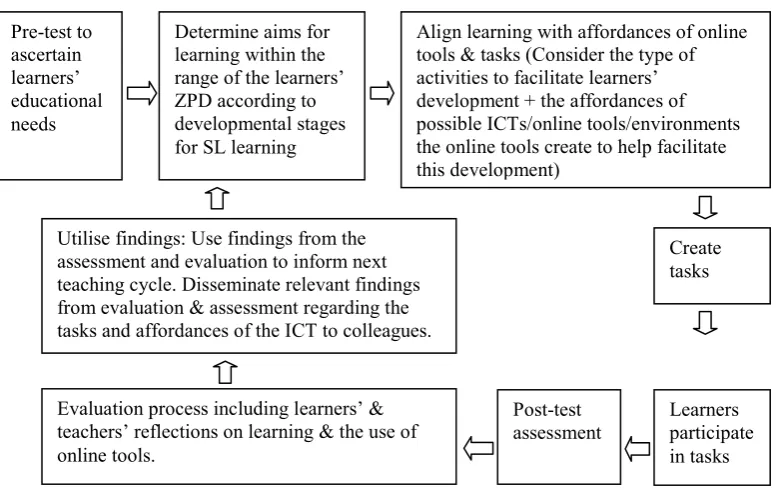
Figure 2.1. Framework for the selection and use of ICTs for facilitating
SL learning ... 73
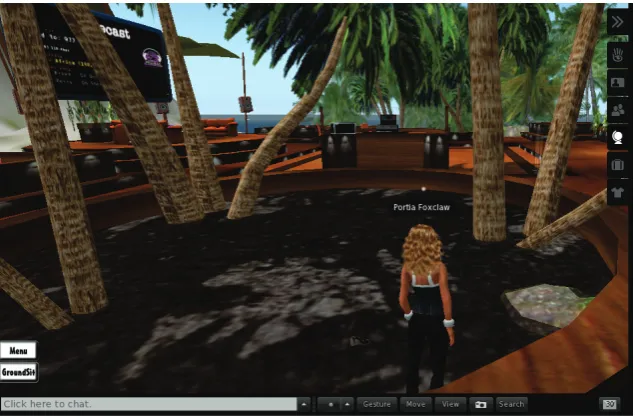
Figure 3.1. Example of a Second Life virtual location ... 7
Figure 3.2. Clothing store in Second Life located at SLurl ... 99
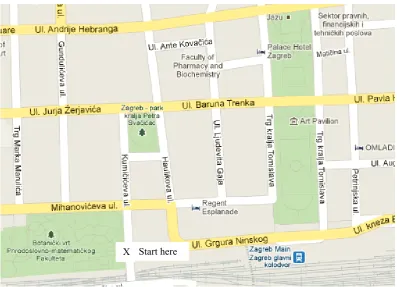
Figure 3.3. Selected section of the centre of Zagreb, Croatia ... 101
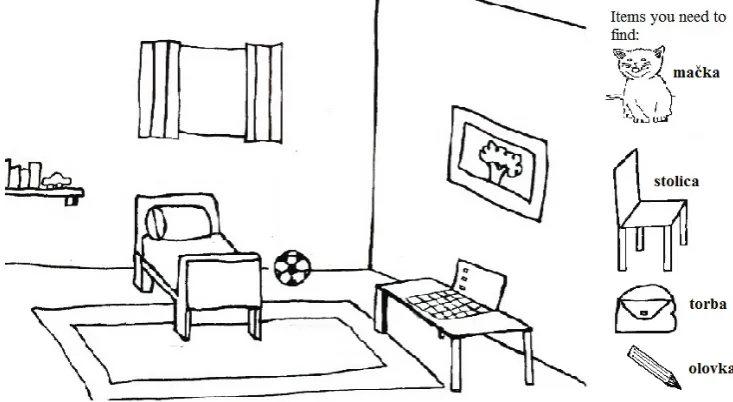
Figure 3.4. Participant’s page from the barrier game ... 102
Figure 3.5. Screen shot of Croatian listening comprehension test using Articulate ... 122
Figure 3.6. Example of marking tool in Articulate quiz maker ... 124
Figure 3.7. Research design for Stage 1 analysis using triangulation for each treatment period ... 136
Figure C.1. How to join Second Life... 275
Figure C.2. Creating your avatar ... 275
Figure C.3. Adding your details ... 276
Figure C.4. Logging on to Second Life ... 276
Figure C.5. How to move in Second Life ... 277
Figure C.6. Searching for locations ... 277
Figure C.7. Teleporting to locations ... 278
Figure C.8. Finding a friend to send a teleport request ... 278
Figure C.9. Making a teleport offer ... 278
Figure C.10. Finding a Resident to Offer Friendship ... 279
Figure C.11. Making an offer of friendship... 279
Figure C.12. Talking in Second Life ... 280
Figure C.13. Enabling voice chat ... 280
List of Tables
Table 2.1 Two Perspectives on the Relationship between Assessment and
Vygotsky’s Concept of the ZPD... 39
Table 2.2 Overview of Studies Using CMC for Language Learning ... 46
Table 2.3 Continuum of Language Learning Spaces ... 58
Table 3.1 ESL Learners’ Participant Group Profiles ... 78
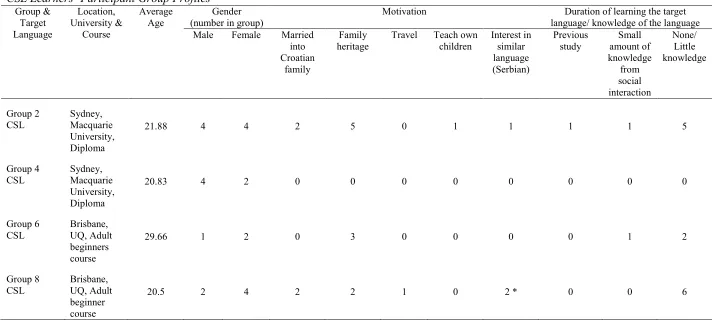
Table 3.2 CSL Learners’ Participant Group Profiles ... 79
Table 3.3 Overview of the Participant Groups in All Treatment Periods ... 87
Table 3.4 Overview of Data Collection and Analysis Techniques Relating to the Research Questions ... 108
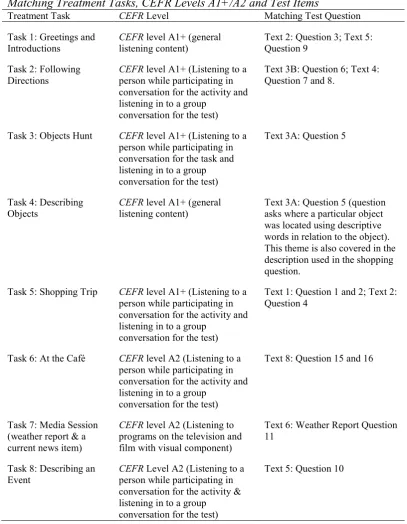
Table 3.5 Matching Treatment Tasks, CEFR Levels A1+/A2 and Test Items . 115 Table 3.6 Overview of Content Themes for Treatment Periods 1, 2 and 3 ... 120
Table 3.7 Marking Key Excerpt for Pen and Paper Version of the English Pre-test... 123
Table 3.8 Stage 2 Comparing Data from all Skype Results and then All Second Life Results ... 137
Table 4.1 Group 1: Participants’ Results ... 142
Table 4.2 Group 1: Group Results ... 143
Table 4.3 Group 2: Participants’ Results ... 150
Table 4.4 Group 2: Group Results ... 150
Table 4.5 Group 3: Participants’ Results ... 156
Table 4.6 Group 3: Group Results ... 156
Table 4.7 Group 4: Participants’ Results ... 161
Table 4.8 Group 4: Group Results ... 161
Table 4.9 Group 5: Participant’s Results ... 164
Table 4.10 Group 6: Participants’ Results ... 168
Table 4.11 Group 6: Group Results ... 168
Table 4.12 Group 7: Participants’ Results ... 171
Table 4.13 Group 7: Group Results ... 172
Table 4.14 Group 8: Participants’ Results ... 175
Table 4.15 Group 8: Group Results ... 175
Table 4.16 Strategy Use during the Skype Facilitation Tasks ... 179
Table 4.17 Perceived Benefits of the Skype Facilitation Technique ... 180
Table 4.18 Pitfalls of the Skype Facilitation Technique ... 180
Table 4.20 Perceived Benefits of the Second Life Technique ... 181
Table 4.21 Pitfalls of the Second Life Facilitation Technique ... 182
Table 4.22 Comparison of Croatian Language Learners’ Results with English Language Learners’ Results for the Skype Facilitation Technique .. 184
Table 4.23 Comparison of Croatian Language Learners’ Results with All English Language Learners’ Results for the Second Life Facilitation Technique ... 185
Table 4.24 Skype Facilitation Technique Group 3 and Group 4 Compared ... 185
Table 4.25 Skype Facilitation Technique Group 7 and Group 8 Compared ... 186
Table 4.26 Comparison between Skype and Second Life: Strategies Used ... 188
Table 4.27 Comparison between Skype and Second Life: Benefits... 189
Table 4.28 Comparison between Skype and Second Life: Pitfalls... 190
Table 5.1 Comparison of Affordances of Skype and Second Life ... 215
Table 5.2 Continuum of Language Learning Spaces ... 219
Table A.1 Task Design and Evaluation Grid for Intercultural Communicative Tasks in Video-Web Communication or Virtual Worlds ... 266
Table B.1 Checklist of Listening Activities and Related Content/Topics CEFR Levels A1+; A2; A2+; B1 ... 270
Table C.1 Participant Pair Groupings...273
Chapter 1
Introduction
When learning a second language (SL), the development of all four macro-skills (i.e., listening, speaking, reading and writing) is important. Effective listening, as with reading, entails the development of skills in understanding whereas speaking and writing have a greater focus on production (Gibbons, 2002; Josipović Smojver, 2007). Learners of SLs often view listening in the target language as being a
laborious task that can result in anxiety about communicating (Graham, 2006; Graham & Macaro, 2008). Jones (2008) promoted the deliberate programming of listening skills development by teachers giving the listening skill as much focus as speaking, reading and writing. To develop listening comprehension, SL learners require real-life or life-like practice at listening to native speakers of their target language. Teachers can utilise authentic texts and authentic audiences to provide learners with the opportunity to interact with the target culture and its artefacts in a meaningful manner that Helgesen (2003) stated as having the potential to increase learner motivation. When SL learners reside in a country where the target language is not spoken natively, it can be difficult to access native speakers and authentic texts from the target culture to gain this experience and practise. Jin and Erben (2007) asserted that computer-mediated communication (CMC) can be used as a medium to provide learners with access to native speakers with the ability to synchronise communication. It can also be used to access authentic texts in the target language.
Online tools allow for synchronous communication that enables learners to participate in authentic communication and negotiate meaning with members of the target culture during conversations without having to wait hours or days for a response (Perez, 2003). Synchronous communication can be achieved through various means, for example, via text chat and video streamed conversations using video-conferencing tools such as Skype (http://www.skype.com). Synchronous communication can also be enabled through voice and text tools in multi-user virtual environments (MUVEs), such as, Second Life from the opportunity to communicate synchronously, MUVEs also provide SL learners with an environment to meet in and an avatar, that is, a virtual self
Wehner, Gump, & Downey, 2011). This study focused on the development of listening comprehension skills utilising the learning spaces created by the online tools: Second Life and Skype. Second Life was selected as the virtual tool as virtual Zagreb was well built as a replica by a graphic designer who owned it and there were numerous interesting Australian locations available in Second Life. Other Croatian virtual spaces investigated were not as well structured. Skype was selected as the result of a survey of lecturers and students at Macquarie University studying Croatian demonstrated that many were familiar with the tool and used it previously or regularly. It also contained all necessary features for the study.
1.1 Background to the Research
The researcher, being a Croatian as well as an Australian citizen, was personally interested in Croatian language maintenance in the Croatian community located in Australia. Holding a position as a board member of the Croatian Studies Foundation led to many discussions with the Head of Croatian at Macquarie University around students’ language learning development. The Head of Croatian identified listening comprehension and speaking skills as being difficult areas for his Croatian as a second language (CSL) students to develop and was interested in assisting the investigation of methods for improving learning opportunities for his on-campus and distance students. One identified cause was that during class time students had limited opportunities to practise speaking and listening to natively spoken Croatian. For students who did not attend class on campus, concern was expressed regarding their verbal communicative competence. Students were provided with CDs containing dialogues to assist them with their listening comprehension practice. Students who attend classes on campus also participated in class discussions in Croatian. The Blackboard (http://www.blackboard.com/) learning management system was used at the time of the study (replaced with Moodle in 2012) to manage the course content online with the main purpose of transferring information and activities to students. Documents were presented in a Microsoft Word document or Portable Document Format (PDF). With students experiencing difficulty with the development of their listening comprehension, the Head of Croatian developed interest in how the Internet could be used to improve SL learners’ communicative competence in their target language.
(Deutschmann, Panichi, & Molka-Danielsen, 2009; Eroz-Tuga & Sadler, 2009; Jones & Plass, 2002; Kern, 2006; Perez, 2003). Perez (2003), in particular, posited that there is a need for empirical research in the area of CMC related to teaching methodologies and techniques. Recommendations were also made that focused the areas for research in computer-assisted language learning (CALL) to be on the use of the computer as a medium as well as a tool such as using language learning software (Kern, 2006). Eroz-Tuga and Sadler (2009) identified that there is limited research in the applicability of CMC tools such as Skype for their use in teaching, while
Deutschmann, Panichi and Molka-Danielsen (2009) identified a need for research in the use of virtual worlds such as Second Life that may enable CMC for language learning. Jones and Plass (2002) concurred that research in the use of virtual worlds in general and their use for the development of SL skills and communication is currently limited. This study attempts to address the need for the investigation of the computer being used as a medium while focusing on the strengths and weaknesses of different CMC techniques and two online tools: Second Life and Skype as well as addressing the need for the development of techniques that can effectively facilitate the development of listening comprehension skills in language learners who do not live in the country where their target language is spoken natively.
1.2 Context of the study
The study was conducted at four university sites. Two of the universities are Australian universities: Macquarie University and the University of Queensland. Two other universities are located in Split, Croatia and in Mostar, Bosnia and
Herzegovina (BiH) respectively. The participants in Australia were learning Croatian while the participants in Croatia and BiH were learning English. In Australia, the only universities to offer CSL classes were Macquarie University located in Sydney, New South Wales and the University of Queensland located in Brisbane,
Queensland. Croatian is also offered through most states of Australia at local community schools or at various Croatian clubs. The CSL students from the community courses were unsuitable for this study as they were typically under 18 years of age and did not use a similar curriculum.
Macquarie University offers Croatian language courses with students enrolled as distance students with the option to participate in on-campus sessions. CSL
Croatian, these being: as an elective forming part of a different degree being studied at Macquarie University or at another Australian university (cross-institution); as a Diploma of Languages; and as non-award studies. Approximately 100 students enrol over both semesters each year. Approximately eight to ten students choose to attend the beginner language grammar classes on campus. Distance students can access print material online or have the option of having print material posted to them. Language learning and grammar classes are based around textbooks. Each textbook can be purchased in a pack that includes the textbook and matching CD. The CDs contain spoken versions of selected dialogues from the textbook. Students are set written assignments that require them to provide written responses to language tasks. They are interacting with the course content through the use of their textbooks, completing the set tasks and listening to the CDs while practising their pronunciation and listening comprehension skills. Distance students who do not attend classes on campus have little, if any, verbal contact with their lecturer or other students. Students enrol in Croatian units at Macquarie University mainly due to having Croatian heritage, dating or being married to a Croatian.
At the University of Queensland, Croatian is offered as an adult beginner’s course through the Institute of Modern Languages. Upon completion of the course students have the option of sitting an exam and receiving a written statement of their attainment. A certificate of attendance is also available to students who have attended a minimum of 75% of the course. Classes are held once a week for two hours.
language (Franolic, 1980), yet there are enough similarities that learners of Serbian can advance their language skills by attending the Croatian class.
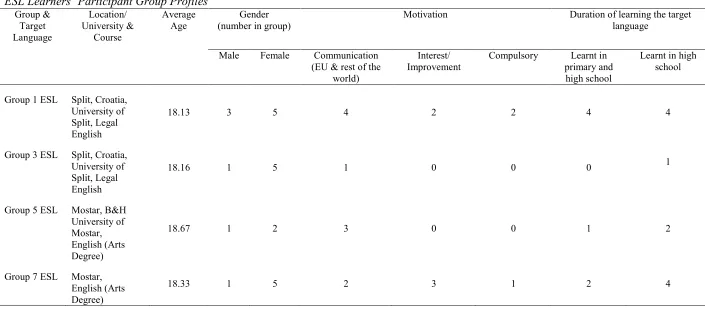
At the University of Split, English is offered as a major within an Arts Degree or as an elective within other courses. The ESL participants were studying at the Faculty of Law where English is taken by students as part of their Law degree with students attending English classes on campus once a week for an hour and a half. Approximately 25 students enroll in the English class each semester. At the University of Mostar, English is also offered as an elective or as a major within an Arts Degree. The ESL participants were studying English language and literature as part of an Arts Degree at the Faculty of Philosophy. Due to tourism and globalization of industry, the students viewed gaining communicative competence in English as a valuable skill along with other languages such as German.
1.3 Research aims and questions
With the online tools identified as a potential resource for assisting learners to develop their listening comprehension and an identified lack of research in this area (Jauregi et al., 2011; Kern, 2006; Perez, 2003), this study aims at offering new insights into the use of CMC for the learners who have limited access to native speakers of their target language. The study builds on current theories relating to listening comprehension, script theory, and social constructivist theory and learning using CMC by contextualising these concepts on a continuum of language learning spaces. It promotes the concept that online tools can be used in the classroom or from a distance to create learning experiences that display similar characteristics to
current knowledge of the affordances of Second Life and Skype for the development of listening comprehension; and (4) to introduce and examine the concept of
listening comprehension development and pedagogy related to a continuum of language learning spaces for the development of listening comprehension skills. The study specifically examined the effectiveness and the participants’ perceptions of using Second Life and Skype for developing listening comprehension for
communication in the target language. The focus groups were learning English or Croatian and were not currently residing in the country where their target language is spoken as a first language by the majority of residents. The term SL is used in this study to represent a language being learnt as a second or foreign language.
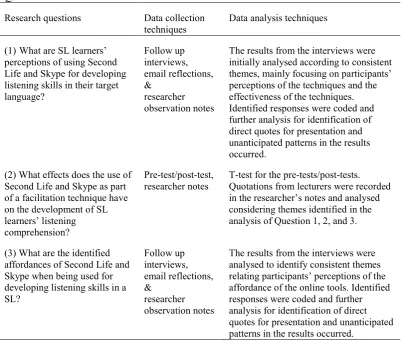
The study attempted to answer the following research questions: (1) What are SL learners’ perceptions of using Second Life and Skype for developing listening skills in their target language?; (2) What effects does the use of Second Life and Skype as part of a facilitation technique have on the development of SL learners’ listening comprehension?; and (3) What are the identified affordances of Second Life and Skype when being used for developing listening skills in a SL? These three research questions complemented each other. The first explored through in-depth interviews whether the participants viewed the Second Life or Skype facilitation technique as a beneficial method for facilitating their listening comprehension development. The second question is similar to the first and explored whether there was a measureable change in listening comprehension. The third question
1.4 Terms and definitions
For the purpose of this study, the below definitions are used:
• Affordance: Gibson (1979) used the term affordance to explain environments and how an animal interacts with the environment. Gibson acknowledged the importance of the environment in his definition of affordance: “…the
affordances of the environment are what it offersthe animal, what it provides or furnishes, either for good or ill” (Gibson, 1979, p.127). In this study, the environment is considered to be the learning space where language learning occurs and the affordances are what the learning space offers the learner, what is enables, either positive or negative.
• Computer-assisted language learning (CALL): CALL describes how computer software and applications can be used to facilitate language learning. CALL research considers teaching methodology using computer applications as well as learners’ experiences and development (Levy, 1997).
• Computer-mediated communication (CMC): CMC is a term used to describe the process of utilizing a computer and computer program (typically in conjunction with the Internet or an Intranet) to facilitate interaction among individuals or groups (Yang, 2011). CMC can be either synchronous in which communication occurs in real-time (Sykes, 2005) or asynchronous in which communication is delayed, for example, using email (Yamada, 2009).
• Information and communication technologies (ICTs): ICTs include software and hardware devices that can be used to organise, process and store
information. These devices can also be used for communication purposes (Queensland Studies Authority, 2007).
learners can collaborate and create shared resources. The distinction is made between online tools and online language learning spaces as one can also use online tools to disseminate information without collaboration.
• Listening comprehension: Listening comprehension is viewed as the skill of the listener to quickly process oral texts using semantic (bottom-up) and pragmatic (top-down) processes (Lems, Miller, & Soro, 2010; Sarandi, 2010). Listening comprehension includes interaction and the negotiation of meaning (Flood, 2003; Rost, 2002).
• Multi-user virtual environments (MUVEs): A MUVE is a collaborative multi user environment where the user is represented by an avatar and is immersed in an environment. Second Life is classified as a MUVE (Burbles, 2006; Henderson, Huang, Grant, & Henderson, 2009).
• Online tool: An online tool is a technological tool that is accessed and used on the Internet. Examples of online tools are: email, online dictionaries, Second Life and Skype. Schema: Schema is used to explain how people mentally organise and store their knowledge of the world including linguistic knowledge of the typical process and behaviours expected in typical
circumstances. The scripts are used as a reference point to guide behaviour (Hedge, 2002; Nishida, 1999).
• Second language (SL): The term SL is used to refer to a language that is not spoken natively by a language learner. The term is used in this study to incorporate the concept of learning a second or foreign language.
• Second Life: Second Life is a MUVE where the resources can be created to reflect the real world or an imaginary place with users as the creators of the virtual space and avatars as virtual representations of people located all around the globe. Interaction can take place using synchronous features such as text chat and voice as well as using asynchronous features such as note cards, bulletin boards, and slide shows. Second Life is also referred to as a virtual world (Deutschmann, Panichi, & Molka-Danielsen, 2009; Dieterle & Clarke, 2008; Schwarts, Lin, & Holmes, 2003).
plan (paid version). It is available in most countries and is able to support 28 different languages (Tian & Wang, 2010).
• Target culture: This term is used to describe the culture of the group who speaks the target language.
• Target language: The target language is the language the learner is focused on learning (Brown, Solovieva, & Eggett, 2011).
Zone of Proximal Development (ZPD): Vygotsky (1978) considered the different degrees of understanding children have and the processes they go through when learning. He considered tests to measure a child’s actual developmental level. He then focused on the learning that occurs beyond this conceptual point in what he coined “the ZPD. It is the distance between the actual developmental level as determined by independent problem solving and the level of potential development as determined through problem solving under adult guidance or in collaboration with more capable peers” (Vygotsky, 1978, p. 1579). Vygotsky continued to explain that the ZPD relates to skills and knowledge that are still in the process of developing and maturing. Ohta (2001) suggested that the ZPD, although originally used to discuss children, was also a suitable concept for discussing adult second language learning with the main difference being that adults are able to also self-assess their skills. In this study, the concept of the ZPD as described by Vygotsky is adapted to assist in educational planning for adult second language learning (as suggested by Ohta, 2001). With the pre-tests being used to represent what Vygotsky discussed as testing that demonstrates learners’ actual developmental level. The facilitation techniques were designed to provide opportunities for joint problem solving with a more capable peer (native speaker) within the participants’ ZPD, that is the knowledge and skills that are developing.
1.5 Structure of the dissertation
of authentic texts has the potential to improve learner motivation is considered along with other various problems that SL learners face. Following the discussion of language learning, theories relating specifically to listening comprehension development are presented. The discussion begins by expanding the definition of listening comprehension and considering in more detail the processes involved in understanding oral input. The literature relating to listening comprehension and strategy use is reviewed. Teaching methodologies, such as task based learning, for assisting the development of listening comprehension are outlined. The need for teachers to plan learning within the learners’ zone of proximal development and how this can be done in relation to listening comprehension is then demonstrated. The important process of assessment and testing listening comprehension is overviewed. The last section of the chapter examines the use of CMC for developing listening comprehension. Key concepts such as motivation and strategy use are revisited with a focus specifically on using CMC. The idea of utilising various learning spaces for language development and that these spaces can be ordered on a continuum ranging learning experiences from furthest to closest similarity to being in the target country is then conceptualized, outlined and grounded in current theory on the continuum of language learning spaces. Learning spaces that are created using online tools such as Second Life and Skype are examined relating to their use for SL skills development. The literature identifies the need for further research in the area of using these online tools specifically for the development of listening comprehension skills. Finally, the framework for the selection and use of information communication technologies (ICTs) for facilitating SL learning that was created to assist in the selection of the online tools in the study is provided and discussed.
Chapter 3 describes the methodology used in the study beginning with outlining the research design and approach. The development and structure of both the Second Life and Skype facilitation techniques are explained. As the study
contained participants from three different countries working as virtual teams, it was important to consider ethical issues that may present in relation to fairness and cross cultural sensitivities. The methods used for collecting data are then overviewed, these being: pre-tests and post-tests; reflections; and in-depth interviews. Following the methods of data collection, is the explanation of the methods for data analysis and the process of triangulation used to analyse the results.
results for the qualitative and quantitative data analysis are initially presented group by group. The results for the pre-tests, post-tests, and in-depth interviews (including reflections if relevant) for each group are triangulated to provide a coherent picture of how each group progressed and developed their listening comprehension as a result of participating in the relevant facilitation technique. Results relating to the ESL learners and the CSL learners are compared and contrasted for each facilitation technique. Results regarding the use of the Second Life facilitation technique are collated and the results regarding the use of the Skype facilitation technique are collated for the purpose of comparing and contrasting the results from the facilitation techniques. The comparisons were made between the groups to provide a description of the effectiveness of each technique and the affordances of each online tool.
Chapter 5 discusses the results in relation to the conceptual framework outlined in the literature review. The results are discussed relating to four main themes: effectiveness of utilising Second life and Skype for listening comprehension development; the affordances of Second Life and Skype; the continuum of language learning spaces; and facilitating the development of listening comprehension using the Second Life facilitation technique and the Skype facilitation technique. In this chapter, the individual tasks are considered for the suitability of the online tools matched with the aim of the tasks.
In Chapter 6, major conclusions are drawn from the study relating to: the perceived effectiveness of each facilitation technique; the demonstrated effectiveness of each facilitation technique (as determined by the pre-test and post-test
Chapter 2
Literature Review
2.1 Introduction
This study focuses on the development of listening skills. It considers how learners develop listening comprehension in a SL and how different learning methodologies, online tools and learning spaces influence the process of development. It aims at developing effective methods for facilitating listening comprehension and access to authentic materials and audiences for learners and at describing the affordances of different online tools for facilitating the development of listening comprehension and communication with members of the target culture. It investigates learners’ experiences and strategy use in the learning spaces created by the online tools.
The chapter begins by outlining language learning theories. Environments or ‘domains’ where language is used are then discussed. The influences on learners’ motivation for learning a SL are reviewed. The process of listening comprehension, its development and literature pertaining to the types of tasks recommended for learners to develop their listening skills and strategies will be outlined. Facilitating listening comprehension in learners’ ZPD will be considered in relation to planning and assessing processes using developmental standards.
2.2 Language Development
2.2.1 Theories of Language Development 2.2.1.1 Schema and script theory
This study is based on the pragmatic view of language comprehension that was developed out of conversational and discourse analysis and speech act theory. These theories attempt to explain the interaction that takes place between the
participants during a conversation. When a conversation begins, top-down processing is used with a general focus on meaning using the listener’s background knowledge to assist in orientating the listener to the purpose of the conversation (Helgesen, 2003; Nunan, 2002). It is assumed that all participants have an aim that they want to achieve from the interaction. Each sentence is used to continue the conversation and is related to it. The possible responses and interactions are predicted by the
participants when creating the next response. Schema and script theory can be used to explain how the learners store and organise their knowledge of the world that they draw on when attempting to comprehend an utterance (Hedge, 2002).
Everything a person knows about a circumstance (e.g., the usual people involved, what usually takes place, for what purpose and how it usually happens) is stored in their memory as a ‘script’ or ‘schema’. Schema holds information about the typical behaviour and roles expected of people in particular situations. People’s schemata allow them to understand the many utterances they encounter during a day. This information is used to guide a people’s behaviour enabling them to behave appropriately as determined by the cultural norms of the situation (Nishida, 1999). An example of a schema would be the information one stores for what usually takes place at a restaurant. At a restaurant, a typical script usually occurs between the wait staff and the customers. The waiter greets the diners and asks them what they want to order. If during the ordering the waiter asked the customers if they want to come shopping to purchase bikes, then this would not follow a typical schema of what should occur at a restaurant. The customers would become confused and unsure as to how to proceed.
Richards (1987) explained that the process of comprehension during
illocutionary meaning to the interaction; and (f) establish comprehension in the context and take the appropriate action. The participants of the interaction then remember the information attained during the interaction as propositional meanings, that is, general ideas and processes as opposed to the exact sentences that were initially heard. Grice (cited in Richards, 1987) pointed out that the participant’s knowledge and understanding of the purpose of a conversation aids comprehension. Grice believed that there are four maxims that guide cooperative conversations which form a cooperative principle. His maxims stated that utterances in a conversation need to be: (a) to the point and contain information that is required (maxim of quantity); (b) honest to be considered useful and cooperative (maxim of quality); (c) related to the topic without vagueness (maxim of relation); and (d) the required length to portray the message in a well structured manner without containing redundant information (maxim of manner).
Nishida (1999) stated that schema theory assumes that schemes or scripts are developed and reinforced by individuals participating in similar circumstances and receiving similar information regarding acceptable and unacceptable behaviours. The concept of individuals generally using both top-down and bottom-up processes when comprehending information that is spoken or written is reinforced by Nishida. However, she used different terminology calling top-town processes ‘schema driven’ processes and bottom-up processes are named ‘data-driven’ processes. She asserted that learners of the target language who have not developed their personal schemas relating to the target culture will most probably resort to data-driven processes when trying to comprehend the target language and the situation. These processes need focus and effort for learners to utilize them while attempting to understand interactions or text. Problems associated with listening comprehension may be a result of difficulties and a lack of skills with aspects of top-down or bottom-up processing (Goh, 2000).
types, for example, personality descriptors and their characteristics such as hard-working (on task, concentrates, focuses, completes work to schedule). Self schemas relate to one’s own personality traits and self-concept. They contain information developed over time that builds a person’s identity. Role schemas relate to the type of behaviours that the person and/society deem suitable and appropriate for a circumstance. These expectations can be linked to the person’s social position, race, cultural background and/or gender. Context schemas relate a person’s behaviour to a setting. These schemas store the behaviours that are expected and acceptable in various settings. Procedure schemas contain the order of activities that are suitable for different circumstances. Procedural schemas derived from experience focus on how to ascertain a desired response in a setting. Strategy schemas relate to reasoning and patterns for solving problems. Emotional schemas relate to the feelings people have about situations and experiences in their lives. These schemas are utilized in combination with other schemas.
Chang (2009) studied the cognitive processes that occur within people while they attempt to adjust to a new culture. He studied 22 expatriate workers from various fields who had worked abroad. Findings suggested that in developing an awareness of the schema of a different culture, cognitive tension and internal dialogue relating to one’s experiences connecting with the target culture played a large part of the process of developing an understanding of one’s own and the target culture. Interacting with others from the target culture highlighted similarities and differences between the cultures. A strategy used by the participant learners of the new culture, which was highlighted in Chang’s study, was that they interacted with the members of the target culture by developing relationships and friendships with them. By interacting with and watching other relevant members of the target culture, the participants in Chang’s study were able to learn about the culture and adjust to the new culture with less stress.
SL learners who do not have a grasp of what Nishida (1999) called the primary social interaction (PSI) schemas of the target culture will potentially begin their experience and interaction with native speakers of the target language and culture feeling unsure and perhaps anxious. Intercultural communication was
have knowledge of what should typically take place in a certain circumstance, especially if what is expected is quite different from their own culture. An example of such differences is that of address between Americans and Chinese. Chen (2010) explained that in the Chinese address system certain rules of proper address are followed. These are based on factors such as the individual’s age and whether or not they are related. The American English address system is quite different in that age and the person's generation can influence address, although dropping the honorific title and using only first names to address colleagues and friends is quite common. Chen also pointed out the difficulty when an equivalent term of address is not used in both cultures, for example, the use of titles for teachers. Following Chinese tradition the title ‘Teacher’ is considered to be appropriate whereas following American tradition the title ‘Mr/Mrs/Miss’ or even using only the teacher's first name can be acceptable. A person from either culture could potentially find the other culture's form of address odd or even rude.
Suthers (2003) asserted that SL learners who have developed the content schemes to a particular situation will be able to access the main content during interaction allowing them to concentrate on new content or aspects requiring further exploration. This situation is viewed as being more beneficial for the learning processes. Scripts and script theory can be used to guide teachers’ planning, course work and assessment by assisting in the structure of exposure to language and cultural aspects of the target culture. Fischer, Kollar, Mandl, and Haake (2007) explored the use of collaboration scripts (teacher written) for groups to assist with learning. The scripts are used to organise collaborative tasks, order them and assist in sharing responsibilities among group members by allocating tasks. The collaborative tasks scaffold the learners’ interaction providing them with support and guidance. Chang (2009) promoted facilitating learners’ development of schema and practising participating in various scenarios that activate schema adjustment to the new culture. Teachers are recommended to use role-playing and training for participation for various scenarios. These activities are considered to be beneficial in assisting learners to adapt to the target culture before entering the target culture/country.
2.2.1.2 Anderson’s three phase model of comprehension
cognitive perspective of language learning. The three phases are: perceptual
processing; parsing; and utilisation. Initially in the perceptual processing phase, the listener uses bottom up processing skills such as identifying phonemes. During the parsing phase, the listener processes the words heard and creates a mental concept of the general meaning of what was said. Finally within the utilisation phase, the mental concept is then considered with reference to the listener’s background knowledge of the topic or theme. The memory is retained and processed as schemata or
propositions (Anderson & Lynch, 1988; Goh, 2000).
2.2.1.3 Alderson’s linguistic threshold hypothesis
Vandergrift (2006) promoted the relevance of Alderson’s (1994) Linguistic Threshold Hypothesis (LTH) as well as a Linguistic Independence Hypothesis (LIH) for SL learning. The LTH states that learners need to gain a certain level of ability and knowledge in the SL to be able to comprehend spoken and written texts. If their knowledge of the SL is not sufficient, then their understanding will cease. The current Common European Framework of Reference for languages: Learning, Teaching, Assessment (CEFR) also refers to the LTH to the language benchmarks that learners aim to attain.
For learners wanting to visit a foreign country, it is recommended by the CEFR that they achieve at least Level B1 of the CEFR prior to visiting the country. Level B is considered to represent the LTH, that is, if learners achieve this level they should be able to negotiate their way around the target location and sustain
2.2.1.4 Cognitive load theory
Cognitive load theory as discussed by Sweller (2005) examines the amount of mental activity a learner is undertaking at a point in time in comparison with the amount of working memory available to a learner. The mental activity is considered to be the learner’s cognitive load. Three types of cognitive load are addressed, these being: 1) the amount of mental activity required due to the nature of the activity (intrinsic cognitive load); 2) the amount of mental activity required to comprehend and process the pedagogical requirements of the task as determined by the educator (extraneous cognitive load) - it is not recommended for instructors to design tasks which require the learner to use a large amount of working memory as this will interrupt and hinder the learning process; and 3) the amount of mental activity which occurs as a result of schema construction and automation in the learning process (germane cognitive load). The process of schema construction and automation in the learning process is desirable for facilitating learning and the development of skills and knowledge (Baddeley, 2000; Paas, Tuovinen, Tabbers, & Van Gerven, 2003; Sweller, 2005). Germane cognitive load resembles the process discussed by Vygotsky (1978), which occurs when learners are learning within their ZPD (see Section 2.3.4 for a discussion on the ZPD).
Baddeley (2000) stated that learners’ memory is best facilitated while using germane cognitive load when they are working with information presented in two modes: as audio and visual. By stimulating different memory systems, working memory may be improved. Virtual reality as well as video-conferencing allow for audio and visual modes of communication although virtual reality can also offer a life-like environment (Antonacci & Modaress, 2008; Jin & Erben, 2007). Grgurović and Hegelheimer (2007) promoted the use of two modes, audio and visual, for assisting learners’ listening comprehension development. The use of both modes is considered advantageous and able to assist in improving learners’ retention and learning potential.
2.2.1.5 Language learning spaces
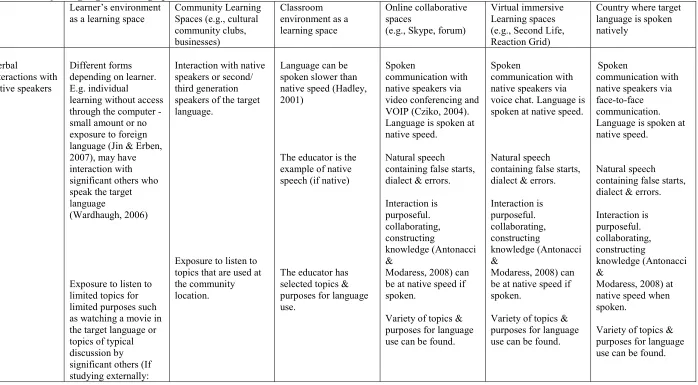
or a way of enabling people to interact with one another” (Council of Europe, 2002, p. 2). The Council of Europe (2001) posited that all language learning takes place within a domain. A domain is considered to be the context where language learning occurs. For the purpose of this study, the term ‘learning space’ is used to refer to the spaces in which a learner participates in learning activities. Various learning spaces would fall under the broader categories referred to here as domains. Four broad domain categories have been presented: the personal; educational; occupational; and public.
The personal domain consists of interactions that relate to a particular person with his/her family and socially with his/her friends. The educational domain
consists of interactions within schools or any other educational institution in which organised learning occurs for the purpose of achieving specific educational aims such as acquiring particular knowledge or skills set. The occupational domain consists of interactions that take place and relate to a person’s profession. The public domain consists of interactions that occur in the public arena and are of a public nature such as cultural and leisure time activities. Interactions with government and businesses are included here. Some circumstances may pertain to more than one domain at the same time.
Script theory (Hedge, 2002) could be used to understand the type of texts that typically occur within learning spaces in these domains. It relates the environment to the learner. Barron (2004) discussed the concept of learning ecology. The learning ecology is a group of various contexts that the learner can access. It includes physical and virtual spaces. Within these contexts are various resources and different
relationships can be formed. Chan, Hue, Chou, and Tzeng (2001) proposed that technology creates a change to the actual physical space where learning takes place, a change to the content and aims of learning, and the emergence of networked societies that are based on shared interests and purposes.
Virtual learning spaces can contain real-life spaces that resemble those that exist within the domains discussed in the CEFR. Hernández-Serrano, González-Sáanchez, and Muñoz-Rodríguez (2009) explained virtual spaces as being able to create a sense of place. They are viewed as “contexts or environments of coexistence, interaction, as well as a guide for personality development and construction of
2009, p. 2411). Benson (2006) also stated that learners should be engaging in
language learning activities in many different contexts. Gan, Humphreys, and Hamp-Lyons (2004) reinforced that learning which occurs outside the classroom is of importance and can lead to improvement in the SL.
2.2.2 Motivation and Authentic Texts
Jones (2008) insisted that teachers need to take a critical approach in the selection of learning tasks to develop listening skills. Ur (2007) suggested that teachers should develop an approach that incorporates linguistic and non-linguistic purposes such as adding authentic cultural learning to a grammar lesson. An example of incorporating linguistic and non-linguistic purposes could be: learners
participating in focused task work on what the traditional cultural routines are for birthday parties while also focusing on linguistic goals, such as, building vocabulary related to birthdays and developing sentence structure using the birthday theme vocabulary for content. The teacher is then presenting an opportunity for learners to improve their SL skills by basing an activity on linguistic goals that has a non-linguistic purpose. Jones (2008) pointed out that the purposes and expectations of activities should be made clear to learners before participating in the activities. Activities that represent real-life cultural circumstances should include resources that are a reflection of real world natural speech and not contrived speech that would not be heard in a real setting. Ur (2007) pointed out that in real life situations listeners have reasons for listening that are not based on linguistic goals. When SL learners have exposure to authentic learning resources while engaging in dynamic activities, they are extended to make more effort to communicate. The extra effort is self-initiated due to their interest and assists in increasing motivation (Warschauer & Kern, 2005). Helgesen (2003) and Lam (2002) concurred that learners are not motivated to learn language that is not in use. The use of authentic materials makes learning more relevant to the learner, creating interest in learning, and prepares the learner for real world communication. The authentic resources and tasks can be either simulated or real. Field (2002) suggested that authentic materials can be used from the beginning levels with a simplified activity.
using English. Their ability to speak English well influences their employment prospects. They need to be able to understand authentic texts. The motivation of learners studying a minority language may be different than that of learners studying English for work purposes, nevertheless whatever the initial motivation for learning is, the use of authentic texts in language learning has been acknowledged as being of great benefit to the learner (Helgesen, 2003). Chen and Brown (2011) commented that their students had felt that English language courses did not adequately prepare them to communicate in real life situations. Students believed that the textbook topics did not cover the wide range of purposes for using English that they would encounter in the real world.
2.2.3 Learning Problems
Krashen (1995) identified high motivation, having a positive self-image and being confident with low anxiety as characteristics that can assist learners to succeed in learning a SL. Anxiety, low levels of motivation and a negative self-image are considered to be inhibiting learner characteristics. Goh (2000) surveyed the literature and found that speech rate, sentence structure, lexis, sounds of the language,
2.3 Listening Comprehension
2.3.1 Definition of Listening Comprehension
Lems, Miller, and Soro (2010) related the concept of listening comprehension to Brown’s (1950) discussion of auding and define it as “an interaction between active listeners and oral texts as listeners rapidly process oral texts through their mental systems” (Brown, 1950, cited in Lems, Miller, & Soro, 2010, p. 49). They continued to explain that the mental systems “include all the previously presented listening skills, in addition to the listener's background knowledge, interpretation of the setting, and cultural and emotional filters” (Brown, 1950, cited in Lems, Miller, & Soro, 2010, p. 49). This definition of listening comprehension reflects the
recognised interplay between the semantic (bottom-up) and pragmatic (top-down) processes taking place when a listener attempts to comprehend the target language (Sarandi, 2010). Flood (2003) and Rost (2002) included a focus on interaction in their discussion on listening comprehension. The process of listening is considered to also be interactive as interlocutors negotiate meaning amongst one another
throughout their conversation. For the purpose of this study, Lems, Miller and Soro’s definition will be adopted with inclusion of Flood’s and Rost’s notion of interaction in conversation through the negotiation of meaning.
2.3.2 Strategy Use
Listeners may use a range of strategies to assist them in comprehending oral information. O’Malley and Chamot (1990) organised these strategies into three main categories: cognitive; meta-cognitive; and affective/social. Cognitive strategies relate to the top-down and bottom-up strategies used when learners attempt to listen and comprehend. They involve how the learner processes the information.
Meta-cognitive strategies are the higher order strategies that include planning, monitoring and evaluating one’s listening development and performance. Social/affective strategies relate to feelings and perspectives that influence understanding and learning. For example, anxiety can influence how well a learner performs while listening.
obstacles learners face in developing their listening abilities, these being: building confidence and enthusiasm through engaging learners’ interest; having learners verbally repeat listening texts to assist learners’ intonation and pronunciation which will help develop their listening; focusing on communicative activities that are meaningful and occur within an appropriate context; extending learners’ vocabulary by presenting new words in different contexts using a variety of word building activities; and carefully selecting interesting and meaningful texts to read to help extend learners’ vocabulary and understanding of words. They promoted that using these strategies will assist learners when listening as they will be able to: identify more words and their meanings; build their knowledge of grammar in context to reduce the chance of misunderstanding content when listening during conversations; and build their knowledge and understanding of the target culture by exposing them regularly to aspects of its history, customs, politics, arts, and other cultural aspects.
Ellis (2005) identified two main types of interaction promoted by
psycholinguistic interactionists that require different strategic processes. The first type of interaction uses strategies when interacting to negotiate meaning. For example, when SL learners are communicating in their SL and begin to lose meaning, they are able to use repair strategies to re-establish meaning, such as checking for understanding. The second type of interaction and accompanying strategies are those used when the learners are focusing on using the correct
grammatical forms of a language. The learners are aware of their own development and learning process and are seeking corrective feedback if errors are made. Nunan (2004) supported the need for interaction in strategy development.
Listening is considered by Vandergrift (2006) as requiring more demands on the learner than reading although they both rely on receptive skills due to listeners not being able to hear a spoken text multiple times. They need to process the text instantaneously while new information is being presented. Listeners need to create mental representations of the listening text while potentially dealing with a variety of accents, other sounds and false starts. Schroeders, Wilhelm, and Bucholtz (2010) asserted that these added complexities can make the processing of spoken text more laborious. SL learners may also need to consider cultural knowledge and cues that may be quite different from their first language (L1) and/or culture.
their use of compensatory strategies and comprehension skills. Developing meta-cognitive knowledge about their listening skills may assist SL learners in transferring their listening skills used with their L1 to SL listening situations. Dupuy (1999) presented results of a study on the effects of narrow listening with positive acclamations for the technique from the researcher and learner participants. Conversations between native speakers presented in an unscripted manner are viewed by Dupuy as being too hard for the novice and intermediate listener to understand. In narrow listening, the SL learners select from an assortment of short recorded listening texts on a variety of topics, for example, speakers discussing the selected topic: sailing. The learners can listen numerous times and proceed to new topics when they are ready. The listening skill is not tested during these activities so learners do not need to feel stressed about being questioned.
Vogely (1995) studied the perceived strategy use of learners of Spanish as a second language while they participated in three listening comprehension activities and generalised that the linguistic proficiency of the language learners appears to have an influence on the type and amount of strategies used. Graham, Santos, and Vanderplank (2008) studied how listening strategy use developed over time with lower-intermediate learners of French as a SL. They found that the use of strategies depends greatly on the individual. Although the two learners involved demonstrated variations in their learning styles and strategy use prior to beginning the study, their use of strategies did not alter much over six months of their participation.
Vanderplank asserted that learners need to learn how to effectively use various strategies, not simply the various strategies available for use. Vanderplank explained that learners who use what are commonly referred to as good listening strategies may use them ineffectively, compromising their listening comprehension.
transfer of grammar skills may occur.
Dörnyei (2005) stated that the level of flexibility and appropriate selection of strategies have a great influence on how strategies can be effectively used by
language learners. Macaro (2001) asserted that it is the active selection and use of strategies that assists learners in becoming successful language learners. Learners’ motivation and positive response to strategy instruction can influence their uptake of new skills (Yeldham, 2009). Graham, Santos, and Vanderplank (2011) stated that there is a need for research into the relationship between how learners develop language learning strategies and their listening proficiency development. In their study that investigated learners’ strategy development and use as well as the
influence of teaching styles on their language development, they found that, without direct strategy instruction, not many learners made any significant improvement in their listening ability. They asserted that the lack of influence that the teachers’ approach to listening had on strategy use by the learners could be a result of the teaching perspective that listening development should be facilitated as part of an exercise as opposed to teaching listening as a skill for use. Interestingly, in a study on the influence of different types of strategy instruction (bottom-up and top-down), Yeldham (2009) found that the learners began to develop a variety of strategies even though they had not been directly focused on during strategy instruction. These findings indicate a need for further research into whether strategy development is necessary or whether strategy development can also promote self-directed strategy development in learners.
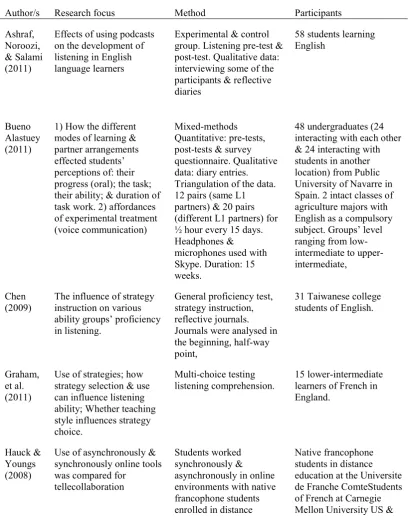
Chen (2009) investigated the relationship between strategy instruction and use and listening development across three proficiency levels: beginners,
other bottom up strategies.
2.3.3 Task-based Learning
Ellis (2003) viewed tasks as meaning focused activities that incorporate target language use. Ellis (2000) identified the potential that utilising task-based language learning has for improving learners’ communicative competence. In task-based language learning, the learners are required to solve problems and work together to achieve a desired goal. The communication requires negotiations and meaning making and needs to be related to real-life situations. Tasks are communicative activities related to the real world which learners undertake to achieve specified outcomes (Bygate, Skehan, & Swain, 2001; Skenan, 1998).
Kessler (2010) explained that the environment is an important consideration when constructing language tasks especially when practising speaking. Learners can experience more anxiety when using skills such as speaking and listening that do not allow the speakers or listeners to review the input and/or edit what they have said. MacIntyre (2007) noted the negative effect that anxiety can have on learners’ ability to communicate as well as their desire to do so. Vandergrift (2006) stressed the need for a non-threatening environment where learners are less likely to feel stressed and be able to practise their listening comprehension skills and develop their strategy use.
Doughty and Long (2003) posited that task-based language teaching, which focuses on communicative activities that prepare learners for real life situations, is suitable for use within computer simulated versions of target environments. Jauregi, Canto, Graaff, Koenraad, and Moonen (2011) stated that most definitions of task-based language learning include the concepts of orientating tasks toward goals, meaning and acquisition. In their study on verbal interaction in Second Life, tasks were used that focused on the development of intercultural awareness. They asserted that virtual methods were suitable for connecting learners separated by distance and assisting them to develop their communicative competence. Jauregi et al. (2011) outlined a set of four design principles for creating tasks to assist the development of communicative competence. They also highlighted Byram’s (1997) five design principles to assist the development of intercultural competence. The four design principals regarding communicative competence are: 1) having a communicative aim that, through a negotiation of meaning, results in a planned communicative