THE ROLE AND IMPORTANCE OF CONTEXT IN COLLECTIVE LEARNING : MULTIPLE CASE STUDIES IN SCOTTISH PRIMARY
CARE
Gail Greig
A Thesis Submitted for the Degree of PhD at the
University of St. Andrews
2008
Full metadata for this item is available in the St Andrews Digital Research Repository
at:
https://research-repository.st-andrews.ac.uk/
Please use this identifier to cite or link to this item: http://hdl.handle.net/10023/500
This item is protected by original copyright
THESIS TITLE
The role and importance of context in collective learning: multiple case
studies in Scottish primary care.
Candidate: Gail Greig
Degree of PhD
Table of Contents
Page
Abstract
i
Declarations
ii
Acknowledgements
iv
List of tables
v
List of figures
vi
Glossary of healthcare terms
vii
Foreword
viii
Chapter 1
Introduction
1
The introduction of organisational learning in public policy 1
Rationale for this study 3
Structure of thesis 4
Chapter 2 Background
7
Setting the scene: primary care 7
Diversity in primary care 10
Chapter 3
Literature Review: Organisational learning
13
Introduction 13
Overview 13
Main strands in the literature 16
Practice-based approaches to collective learning 37
Chapter 4
Literature Review: The concept of context
45
Introduction: definitions of “context” 45
Conceptualisations of context 46
Re-conceptualising context: cultural historical activity theory 52 Philosophical basis of activity theory: context as activity 65 Theoretical and methodological opportunities 71
Chapter 5
Methodology
74
Social science research paradigms 74
Researching abstract concepts 78
Thesis methodology 82
Research questions, purpose and aim 93
Chapter 6
Findings: Initial research phase
117
Exploring organisational learning in primary care teams 117 Early findings: who, what, where, how – the process of OL 118 Nature of organisational learning in primary care teams 139Chapter 7
Findings: Second research phase
143
From organisational learning to activity 143
Routine practice as an “epistemic object” 146
Identifying a suitable “epistemic object” for study 148
The “epistemic object” 150
Similarities and dissimilarities in object-oriented activity 153 Signposts to context: differences rather than similarities 163
Chapter 8 Findings and analysis: Context as activity
167
Interpreting differences through activity theory 168Mutual mediating artefacts of activity 168
Re-viewing differences 220
Different objects: the constitution of objects of activity 222
Chapter 9
Findings and analysis: Learning through activity
232
Learning in general practice – the “universal” curriculum 234 Collective learning through activity or practice 238 The role of context in learning through activity 244Chapter 10 Final analysis and discussion
254
The relevance of context in collective learning 254 Contradictions within and between activity systems 256 Mediating means in inter-linked activity systems 260 The durability of objects and ideal properties 267 Importance of context for learning in inter-linked activity systems 276
Chapter 11 Conclusion
285
Contribution of this thesis 285
Strengths and limitations of the approach adopted 286 Implications for theory, policy and practice 289
Applications for future research agenda 298
Abstract
Organisational learning is conceptualised within healthcare policy as an acontextual entity to be implemented across services through a prescribed governance framework.
Studies of organisational learning often exclude context in this way. The central questions of this thesis concern how and why context is relevant and important in relation to organisational learning. In order to address these issues, context and organisational learning were conceptualised as mutually constitutive activity and knowing-in-practice respectively. Taking a cultural-historical activity theoretical approach, learning is understood to be an intrinsic part of activity. These issues were explored empirically through qualitative case study in three purposively sampled Scottish primary care teams.
Initial findings suggested collective learning occurred through participation in everyday activity. Team accounts of apparently the same routine object of work revealed distinctive patterns of activity. Each team seemed to be doing the same thing differently. Exploration of mediating means present in each team’s activity accounted for these differences: although similar on the surface, the attribution of meaning to each was contested and shaped through the cultural, historical and inherently contextual activity which they mediated within each activity system. Further analysis demonstrated members of each primary care team co-configured these objects with members of other interlinked activity systems. Different things were actually being done in similarly different ways. This showed how inherently contextual activities shaped the content of collective learning and offered an explanation of why context is relevant and important in collective learning.
Declarations
I, Gail Greig, hereby certify that this thesis, which is approximately 100 000 words in length, has been written by me, that it is the record of work carried out by me and that it has not been submitted in any previous application for a higher degree.
I was admitted as a research student in October, 2003 and as a candidate for the degree of PhD in October, 2004, the higher study for which this is a record was carried out in the University of St Andrews between 2003 and 2007.
Date: Signature of candidate:
I hereby certify that the candidate has fulfilled the conditions of the Resolution and Regulations appropriate for the degree of PhD in the University of St Andrews and that the candidate is qualified to submit this thesis in application for that degree.
Date: Signature of supervisor:
The following is an agreed request by candidate and supervisor regarding the electronic publication of this thesis:
Access to Printed copy and electronic publication of thesis through the University of St Andrews.
Access to all or part of printed copy but embargo of all or part of electronic publication of thesis for a period of … years (maximum five) on the following ground:
publication would be commercially damaging to the researcher, or to the supervisor, or the University;
publication would preclude future publication; publication would be in breach of law or ethics
Embargo on both all or part of printed copy and electronic copy for the same fixed period of … years (maximum five) on the following ground:
publication would be commercially damaging to the researcher, or to the supervisor, or the University;
publication would preclude future publication; publication would be in breach of law or ethics
Permanent embargo of all or part of print and electronic copies of thesis (permission will be granted only in highly exceptional circumstances).
Date: Signature of candidate: Signature of supervisor:
... ... ...
Acknowledgements
The activity of producing this thesis has been collective like any other. I would like to acknowledge the financial support provided by the Chief Scientist Office of the Scottish Health Department and the support and assistance I have been fortunate enough to receive from others as I have participated in its production.
I offer my grateful thanks to all the practitioners who gave of their time so generously and allowed me to be part of their daily working lives. I would have been unable to do this without them and I hope they will find this work will be of some value.
I owe a huge debt of gratitude to my supervisors, Dr Rosemary Rushmer and Professor Huw Davies, for their complementary and supportive guidance and encouragement throughout. Whilst I am grateful for their academic and professional expertise and time, I especially appreciated their patience, tolerance and good humour which made it all so much easier and more worthwhile. Thank you both for giving me the opportunity to undertake this PhD and for enabling me to learn so much.
My thanks to the other members of the Centre for Public Policy and Management and the School of Management at the University of St Andrews (past and present), and to the members at the Social Dimensions of Health Institute of the Universities of St Andrews and Dundee, for all your help and support.
I would also like to say thank you to all my fellow participants at the AIM Doctoral Schools on organisational learning which were such fun and through which I learned an enormous amount. I am particularly grateful to Silvia Gherardi, Bente Elkjaer and Wanda Orlikowski for their helpful suggestions and great encouragement.
List of tables Page
Table 1: Table of social science paradigms 76
Table 2: Framework for empirically exploring organisational 91 learning conceptualisations
Table 3: Selection of types of primary care team 103
Table 4: Framework of inter-related initial visit case study 112 questions
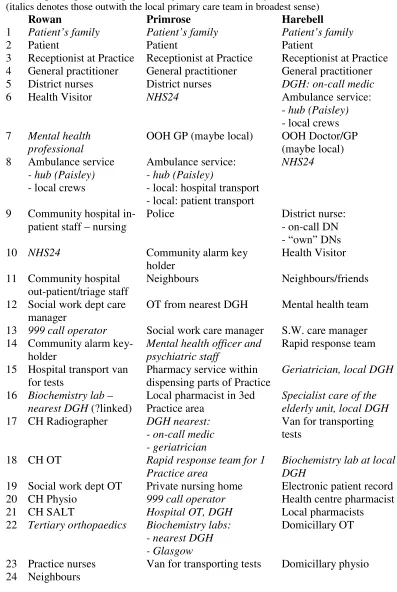
Table 5: Participants in “epistemic-object”-oriented activity 154
List of figures Page
Figure 1: Leont’ev’s activity 56
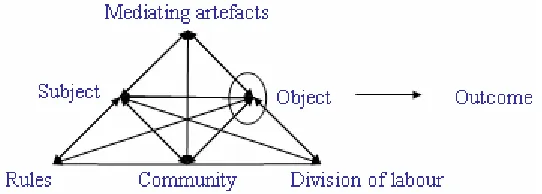
Figure 2: Activity system 61
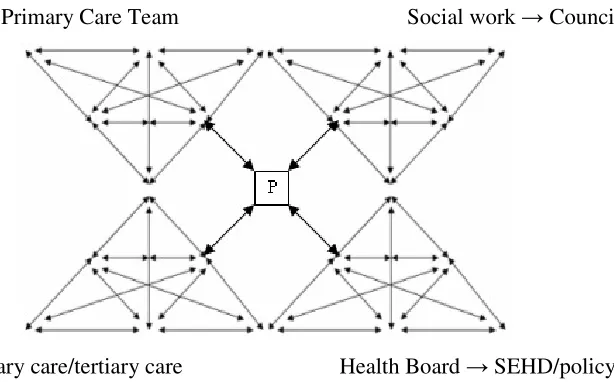
Figure 3: Primary care team 87
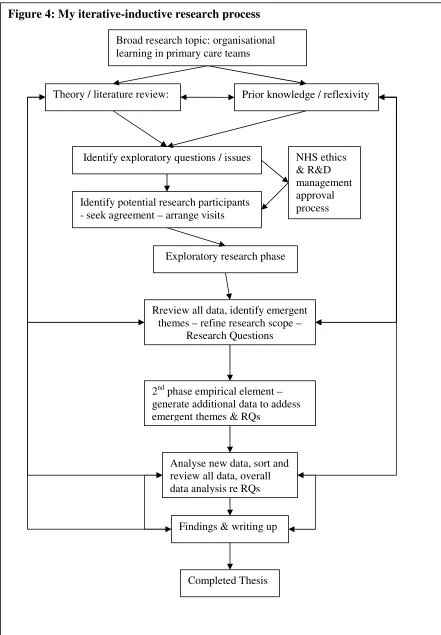
Figure 4: Iterative-inductive research process 94
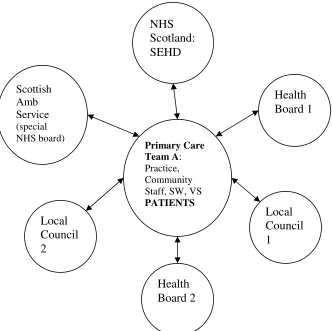
Figure 5: Possible NHS / Local Council involvement in Scottish 105 primary care teams
Figure 6: NHS Argyll and Clyde Health Board 106
Figure 7: Interlinking activity systems (generic) 259
Figure 8: Interlinking activity systems (Harebell) 261
Figure 9: Interlinking activity systems (Primrose) 262
Glossary of healthcare terms:
AHP Allied Health Professional (e.g. OT, SALT, Radiographer, Physiotherapist)
ALS Advanced Life Support
ATLS Advanced Trauma and Life Support
BASICS British Association of Immediate Care (Scotland)
CARENAP Joint clinical and social needs assessment for usually elderly patients who develop a need for support, often prior to or upon admission to hospital – for discharge planning purposes to help older person retain independence and live in community
CH Community Hospital
COGPED Committee of General Practice Education Directors
DGH District General Hospital
DoH Department of Health (England)
EGHOP Expert Group on Healthcare of Older People
F2 Foundation 2 (new doctor training grade from 2003)
GMC General Medical Council
GMS General Medical Services contract (1990)
GP General (medical) Practitioner
GP Registrar General Practitioner Registrar (qualified doctor training in specialty of General Practice)
nGMS New General Medical Services contract (2003/4)
NES NHS Education for Scotland
OFPSR Office for Public Services Reform
OT Occupational Therapist
PALS Paediatric Advanced Life Support
Physio Physiotherapist
PMS / 17c Personal Medical Service / subsection: contract
Practice primary care organisation, usually professional partnership
employing staff and providing services to the NHS under specified contract
RCGP Royal College of General Practitioners
RGH Rural General Hospital
SALT Speech and Language Therapist
Secondary care Services provided in District General Hospitals by specialists in single areas of clinical care e.g. most varieties of surgery, gynaecology, medical specialties e.g., ophthalmology, gastroenterology, etc.
SEHD Scottish Executive Health Department
SHO Senior House Officer (previous doctor training grade)
Tertiary care Services provided by leading specialists in single area of clinical care, usually in a large teaching hospital linked to a university and/or organised on a regional or national basis.
WHO World Health Organisation
Foreword
Primary healthcare forms the empirical setting for this research, in which an interpretive methodology has been adopted. Given the choice of methodology, it is important to acknowledge the positive role of the researcher’s prior knowledge of the setting or topic. This challenges the researcher to consider issues with appropriate reflexivity and transparency. Since this entire document comprises a series of choices made by the researcher, this is an important obligation throughout the thesis. Therefore, prior to commencing the presentation of the argument, I feel it is important to explain some of my own prior knowledge so that the reader may be aware of some of the influences on, and choices made about, the execution of this research.
My working life has been spent in healthcare of one sort or another over a period of twenty-one years. I joined the NHS with a joint honours degree in political studies in 1986 as a ‘graduate management trainee’ when general management was first introduced to the Scottish Health Service: I worked in almost every area of healthcare at that time including various hospitals (acute teaching, psychiatric as it was then known, sick children’s, and maternity), community health services (such as district nursing), and the Health Board headquarters. I spent several months shadowing (and sometimes helping) all sorts of people (cleaners, porters, supplies people, computing staff, physicians, surgeons, clinical psychologists, managers, nurses of all sorts, allied health professionals, kitchen staff) in their daily work in healthcare where they generously helped me learn a lot about what they did.
My first “substantive post” was as assistant administrator of a large psychiatric hospital but it became clear that the role of managers in healthcare was to enact the government policy. Having come from a small business background, I found the culture somewhat “can’t do” and when the time came for a career break, I decided to leave the NHS.
provided the medical input for the busy community hospital and approximately two hundred local nursing and residential home beds. I learned a lot about how the activities and agencies involved in caring for the local population interfaced, especially during a Total Purchasing pilot project jointly undertaken with a nearby Practice. What had always been a politically controversial project assumed Political significance when the new government terminated the policy under which the project ran. Since I had moved away from the area and working there now entailed long-distance travel, I reluctantly left the Practice.
But I didn’t leave primary care: I subsequently undertook a Masters Degree in Primary Care in which I used my experience to explore healthcare issues academically. But healthcare pervades the rest of my life too, since my husband is a GP and all of his family are healthcare professionals, past and present. And of course, I am also a patient who has experienced various aspects of healthcare services including primary care.
Chapter 1: Introduction
The introduction of organisational learning in public policy
Pick up almost any academic paper or book about UK healthcare policy or organisation and you will probably encounter a tale of constant change, of flux, experienced by those in this area of public policy and service. This ubiquitous description is due in no small part to the reform agendae pursued by successive governments since 1979; the pace of change has, if anything, accelerated since 1997 when the New Labour government took office (Exworthy, 2001; Kirkpatrick et al., 2005). The ostensible aim of change, of reforms, has always been to “improve services”. Whilst “change” remains a constant refrain, albeit having been subsumed and rebadged as “modernisation” in official publications (Harrison, 1999a; Morrell, 2006), it has been augmented with a new mantra of “learning”: individuals are urged to become “life-long learners” and organisations – including government agencies and departments, together with other types of public service organisations – are exhorted to develop the capacity of “organisational learning”, ideally by becoming Learning Organisations (Senge, 1990; DoH, 2000; SEHD, 2000b; OFPSR, 2002; Labour Party and Liberal Democrats, 2003).
which “survived and thrived” were likely to be those which supported the continuous acquisition and utilisation of relevant knowledge, through techniques of organisational learning, to achieve competency-based strategic goals (de Geus, 1997; Hamel et al., 2000). Such organisations were sometimes referred to as “Learning Organisations” by authors who prescribed a way of working regarded as the optimum model to support organisational learning (Garrett, 1990; Senge, 1990; de Geus, 1997; Garvin, 1998; Pedlar and Aspinwall, 1998).
This perspective generally defined success as the ability to capture and exploit the “learning” and “knowledge” of organisational members by various means, including the use of organisational routines such as standard operating procedures. Attention focused on how organisations could measure and therefore manage these “intangible assets”, thereby rendering them tangible assets or commodities (Hussi, 2004; Roselender and Fincham, 2004). A body of academic work arose in business schools concerning performance measurement and management in relation to organisational learning and knowledge: various performance indicators were assessed, usually in relation to enhancing market share and/or profit (Cross and Baird, 2000; Boerner et al., 2003; Cavaleri, 2004).
Organisational learning (OL) became widely regarded in the private business sector as a successful method of engendering continuous flexibility in turbulent (market) environments in order to achieve better (financial) results; the formula for success seemed to be: learning plus change equals (continuous) improved performance (Burnes et al., 2003).
initiatives (Schofield, 2001; Greer, 2005; Kirkpatrick et al., 2005). In the face of such fatigue and resistance, approaches which might overcome these problems and which were consistent with the achievement of policy aims were required. Indeed, the need for reform and improved performance of public services had become a political imperative for politicians, particularly in light of the large increase in public investment which had been committed to those services in return for reform (OFPSR, 2002; Greer, 2004). This situation set the scene for the introduction of the notion of organisational learning to the UK government’s health policy reform repertoire.
In the face of such large increases in public investment, it is not surprising that healthcare has been the focus of much public and academic debate. This typically relates to hospitals directly managed by employees of the organisations overseen by government appointed boards, known as Health Boards in Scotland (for example, see Exworthy and Halford, 1999; Boyne et al., 2003; Ferlie and McGivern, 2003; Kirkpatrick et al., 2005). These Boards have promoted the notion of organisational learning through a “clinical governance framework”, introduced to ensure services are delivered to a specific standard through a variety of prescribed mechanisms although it is arguable as to how well these articulate with one another (SEHD, 2000c, 2001a; Wilkinson et al., 2004; Sheaff and Pilgrim, 2006). However the same framework, incorporating its prescribed and particular form of organisational learning, has also been applied to the arguably less widely debated yet most heavily used area of healthcare: primary care (Donaldson, 2003).
Primary care is the area of healthcare within which the notion of organisational learning will be considered through this thesis.
Rationale for this thesis
service within primary care, namely family doctors or “GPs” (BMA and NHS Confederation, 2003). Although this represents just one in a series of successive changes which primary care has undergone in the way it has been organised over the past two decades (Ritchie, 2003), the pace of reform looked set to increase under the government’s accelerated reform-in-return-for-investment policy.
In light of the previously noted reform fatigue, some suggestions were made about how those working in primary care might cope with further reform including consideration of employing the notion of organisational learning, albeit taking a different approach to that promoted through the clinical governance framework (Davies and Nutley, 2000; Rushmer
et al., 2004). However, due to the nature of primary care, comparatively little was known about how the notion of organisational learning might fare in this area of healthcare: prior knowledge suggested that context was a generically important aspect of primary care, as the iterative-inductive process of this study will show. Therefore, the aim of the research upon which this thesis is based has been to explore empirically the notion of organisational learning in the “everyday” healthcare setting of primary care, bearing in mind the likely importance of context in primary care processes generally.
Structure of thesis
This thesis may be considered to form three main sections.
exploration may be identified. In chapter three, the notion of organisational learning will be discussed from the various perspectives found within the existing literature, in relation to the empirical setting of this research. The concept of context will be then be discussed in chapter 4, having been identified as an issue worthy of further exploration within the organisational learning literature which would appear to be compatible with the reputed diversity of primary care. A detailed discussion of the framework of activity theory, adopted as the most helpful analytical approach to the data generated through this research, may be found here. This background section concludes in chapter 5 when the methodology adopted within this research will be discussed. Here the social science approach chosen to study the phenomena of interest in this research in order to address the research questions posed, together with a full account of the iterative-inductive way in which this has been achieved, will be presented. These chapters have been structured to lead the reader through the research as it has developed.
Chapter 2: Background
The empirical setting for this research is introduced in this chapter. First, a brief overview of conceptualisations of primary care will be provided to orient the reader in relation to its role, formation and characteristics. One of these characteristics, often assumed but rarely properly explored, is the notion of diversity which will be considered briefly to set the scene for its importance as a consideration in relation to the study of organisational learning in primary care.
Setting the Scene: Primary Care
Primary care is a familiar phrase but its meaning is often ambiguous and depends upon who is using the term and to what end. Perhaps the most frequently used definition of primary care is set out in the World Health Organisation Declaration of Alma Ata:
Primary health care is essential health care based on practical, scientifically sound and socially acceptable methods and technology made universally accessible to individuals and families in the community through their full participation and at a cost that the community and country can afford to maintain at every stage of their development in the spirit of self-reliance and self-determination. It forms an integral part both of the country's health system of which it is the central function and main focus, and of the overall social and economic development of the community.
(WHO, 1978)
This definition suggests two components to the term ‘primary (health) care’ which, for the purposes of the present discussion shall be called the setting of primary care and the
Primary care: The setting within a health care system, usually in the patient's own community, in which the first contact with a health professional occurs (excluding major trauma).
(WONCA, 2002)
Primary health care: Health care that emphasizes responsibility for the patient, beginning at the time of the first encounter and continuing thereafter. This includes overall management and coordination of health care, such as the appropriate use of consultants, specialists, and other medical / health care resources. In addition, maintenance of continuity on a long term basis, including coordination of secondary and tertiary care is required.
(WONCA, 2005)
These two complementary definitions begin to reveal the potential range and complexity of the concepts and meanings encapsulated by the term, ‘primary care’. They highlight four characteristics most frequently associated with this aspect of health care which can be summarised as: equity of access covering all healthcare needs; participatory, person- rather than disease-focused care; a continuing care relationship; and cost-effective co-ordination as required within healthcare systems (Ritchie, 2003; Starfield et al., 2005).
Primary care can therefore be seen to occupy a position of great importance to the health of populations throughout the world and to the efficacy of healthcare systems (WHO, 2003; Starfield et al., 2005; WHO, 2006). In the UK, primary care has been, and remains, central to health policy fulfilling its twin cost-effective roles of universal provider of, and gatekeeper to, other types of health services (SEHD, 2005b).
So far these definitions only suggest where primary care is located within healthcare systems and offer some initial idea of its function. They do not reveal anything about who
profession itself about the most appropriate definition of general practice, when concerns were voiced that existing definitions confused the setting of primary care with the role of those working within it, not least about the role of the general practitioner (Heath et al., 2000; Olesen et al., 2000). A new definition of the European general practitioner and general practice was drawn up by academic general practice, and endorsed in the UK by the Royal College of General Practitioners, in 2002:
General practitioners/family doctors are specialist physicians trained in the principles of the discipline. They are personal doctors, primarily responsible for the provision of comprehensive and continuing care to every individual seeking medical care irrespective of age, sex and illness. They care for individuals in the context of their family, their community, and their culture, always respecting the autonomy of their patients. They recognise they will also have a professional responsibility to their community. In negotiating management plans with their patients they integrate physical, psychological, social, cultural and existential factors, utilising the knowledge and trust engendered by repeated contacts. General practitioners/family physicians exercise their professional role by promoting health, preventing disease and providing cure, care, or palliation. This is done either directly or through the services of others according to health needs and the resources available within the community they serve, assisting patients where necessary in accessing these services. They must take the responsibility for developing and maintaining their skill, personal balance and values as a basis for effective and safe patient care.
(WONCA, 2002)
A group of health care providers and ancillary staff serving the same population or geographical area, sometimes occupying the same building, working together to provide different but complementary services which are directly available on demand.
(WONCA, 2002)
These definitions demonstrate some of the complexity encapsulated in the term ‘primary care’ and offer a glimpse of the contested nature of such terms. Primary care may be thought of as a setting within the broader health and possibly social care system, as a central or foundational activity of healthcare systems, as an approach to healthcare provision based on a particular epistemic approach within the overall body of professional medical knowledge which is complemented by the skills and knowledge of other colleagues within the primary care setting. This brief overview will become important when discussing the theoretical and methodological bases, and the empirical findings of this study in chapters 4 to 9.
Diversity in primary care
A prevailing view within and about primary care, howsoever one chooses to define it, is that it is an area of healthcare practice characterised by diversity. Although broadly an anecdotal and axiomatic view, a recent review of Scottish primary care over the past twenty years suggests that diversity is an important characteristic of such services and practice which is difficult to explain based on current information (Ritchie, 2003).
which may be partially due to the connections of local practitioners who are embedded within their communities and the less fragmented nature of the services (Farmer, 2006).
However, the picture may be changing. Structural changes in primary care over recent years have led to suggestions of a reduction in diversity between Practices, through the processes of industrialization and institutional isomorphism across primary care services (Iliffe, 2002; Iliffe and Lenihan, 2003). A recent study of the new contract for general practitioners’ Quality and Outcomes Framework (QOF) scores of Practices in urban areas found that features such as Practice size had an impact on the scores achieved in organisational spheres, but did not seem to have any relationship to the clinical or other quality indicators within the Framework (BMA and NHS Confederation, 2003; Wang et al., 2006). Others have suggested the QOF may have distorted clinical prioritisation away from patients’ needs which fall outwith the areas of care for which incentives are offered (Fleetcroft and Cookson, 2006). Changes such as these may contribute to suggestions of reducing levels of diversity in primary care.
It would appear that a clear understanding about the diversity or otherwise between primary care teams or Practices remains elusive. Overall, there seems to be a continuing view that diversity is a characteristic of primary care teams, although the reasons for this are unclear and the meaning of the notion of diversity itself remains ill defined and poorly understood.
In 2003, the World Health Organisation annual report concluded that diversity and contextual factors required to be acknowledged in the organisation of healthcare, and that primary care services should occupy a central position in order to promote effective team and organisational learning if improvements in world health were to be realised (WHO, 2003). It seemed that whatever the underlying reasons, issues of diversity and difference in practice across primary care would be important considerations in any study of the notion of organisational learning in primary care.
Chapter 3: Literature Review – Organisational Learning
Introduction
In chapter 1 the policy background through which the idea of organisational learning arose in healthcare was outlined to introduce the topic of this thesis. A brief discussion of primary care was then provided in chapter 2 to introduce the empirical setting for this study. The purpose of this chapter is to consider the notion of “organisational learning” itself as a central phenomenon of interest in this thesis.
The chapter is organised as follows. First, an overview of some of the literatures related to organisational learning will be outlined in order to map the potential academic terrain relative to the thesis, including the main approaches to the subject. Some of the problems within these areas of literature will be identified and an alternative approach will be introduced and explored. Issues which continue to be of academic interest in relation to organisational learning will then be identified. The chapter concludes by locating the work presented here within the overall literature and identifying the issues within it that this thesis is intended to address.
Overview
Introductory remarks
this way salient issues will be identified, whilst others may be acknowledged but not pursued. So this review of literature is not exhaustive, but rather sets out to consider ideas of relevance in order inform the conduct of this empirical research in the potentially diverse and complex healthcare area of Scottish primary care.
Origins, scale and scope of the literature
The term “organisational learning” apparently first appeared in the literature in 1958 in a discussion about emergent problems concerning bureaucratic models of organisation, particularly in public sector organisations (March and Simon, 1958). Based on an observation made about inappropriately defensive organisational behaviour in the face of certain (unintended) consequences of previous organisational actions resulting in even more rigid and controlling behaviour (Merton, 1940), the term made its debut when the behaviour observed by Merton was subsequently described as “dysfunctional organisational learning” (March & Simon, 1958, p37). This particular problem of the rigidity of organisational behaviour, together with others identified in that initial publication (for example: adaptive and/or generative learning; the spread of what is learned – knowledge – throughout the organisation; linkages between the learning of individuals and the organisation; how best to organise to utilise learning to improve performance) formed the basis of what could be described as a research agenda concerning organisations and learning which is still in evidence almost fifty years later. The central problem under scrutiny was, and to a certain extent remains, how organisations (may) change, under which conditions and for which reasons?
Given the relative longevity of literature concerning organisational learning, the scale and contemporary nature of its growth should not be underestimated. Reviews of the literature illustrate this in various ways. For example, up until 1989 there had been a total of fifty articles published concerning organisational learning, but between 1989 and 1994, a further one hundred and eighty-four publications had emerged (Crossan and Guatto, 1996). The vast majority of these were in the field of management and organisation studies until the mid 1990s, with only four publications within the discipline of psychology at that point (Maier et al., 2001). However, the exponential growth in publications on organisational learning seemed to occur around 1996: a bibliographic analysis of citations demonstrated totals of eight hundred citations prior to 1996 and a further two thousand and two hundred between 1996 and 2003 (Easterby-Smith and Lyles, 2003).
This vast array of publications suggests a growing interest in this area of study, but the sheer volume obscures two issues which must be accounted for: the subject area of this literature is not homogenous, and much of the volume of literature focuses on either theoretical discussion and propositions, or reviews of existing literatures and further musings about its potential for research and/or for the practice of management. Each of these issues deserves brief exploration.
In relation to the type of work presented in this rapidly proliferating literature, a review of the one hundred and fifty papers published in 1997 identified that only fifteen were papers based on empirical work, and of those ten were conducted by people involved in attempting to make organisational change happen, rather than about the notion of organisational learning per se (Easterby-Smith and Araujo, 1999). In addition the comparatively slow development and limited volume of publications prior to 1996 (Crossan and Guatto, 1996) contained few empirical studies, so the overall range of empirical findings presented in the total work done in this subject area has been relatively small, although this trend has begun to be reversed as discussed subsequently in this chapter.
The nature of the work done highlights the other issue obscured by the somewhat startling number of publications on offer to the newcomer to the subject: the literature is actually a
“organisational” and “learning”. This is perhaps not too surprising given the range of academic disciplines and interests identified as taking an interest in this area. It also perhaps explains why there have been so many reviews of the literature in the late 1990s/early 2000s, which act as maps to this diverse terrain. Broadly speaking, the literature actually seems to reflect four major areas of interest, within each of which there are (sometimes many) subunits of interest. These major areas are: organisational learning, the learning organisation, knowledge management, and organisational knowledge (Easterby-Smith, 1997; Easterby-Smith and Araujo, 1999; Easterby-Smith et al., 2000; Berthoin Antal et al., 2001; Easterby-Smith and Lyles, 2003). There is further broad agreement that there are two main approaches evident within these four major areas of intererst: the learning organisation and knowledge management literatures seem concerned with prescriptive and normative approaches to the application of these subjects; meanwhile the organisational learning and organisational knowledge literatures are concerned with academic or scholarly, sometimes critical, approaches to studying these processes. It is therefore reasonable to surmise that these different literatures are characterised not only by different specific areas within the overall topic(s), but also by different ontological, epistemological and methodological perspectives within the social sciences. These require to be considered when identifying issues of relevance within the overall literature to one’s own topic of interest prior to conducting any research.
Having provided a brief “helicopter view” of the potentially relevant areas of literature, a discussion of these main areas will be presented in the next section. The potential relevance of the respective strands of literature will be considered in relation to the topic of this research. In this way some of the theoretical issues, and the methodological choices they have influenced, with regard to the conduct of the research will be highlighted.
Main stands of the literature
reflected in some of the activities of healthcare organisations. There will then be a brief acknowledgement of the organisational knowledge and memory literature, which links into a more detailed consideration of the organisational learning literature. The various approaches to the notion of organisational learning found within this strand of literature will be discussed including some consideration of their respective strengths and weaknesses. This will lead to a discussion of the approach adopted within this study. Finally, issues identified as being worthy of further exploration in the literature will be highlighted. This will provide an introduction to the research questions addressed in this thesis in relation to the empirical setting of Scottish primary care.
The Learning Organisation
It seemed that this was the new way to organise for the future and variations on the theme emerged for “leaders” of the future, prescribing how best they might achieve this goal (Garvin, 1998; Pedlar and Aspinwall, 1998). Eleven characteristics of a learning organisation were identified, including: a learning approach to strategy; participative policy-making; “informatting” (sharing critical information through information technology); formative accounting and control; internal exchange; reward flexibility; enabling structure; boundary workers as environmental scanners; inter-company learning; a learning climate; and self-development for all (Pedlar and Aspinwall, 1998). The stated intention within prescriptive texts such as these was to move away from mechanistic management as envisaged in the industrial era (Taylor, 1947) towards a new, flexible and apparently participative model designed to meet the needs of organisations and their members in what was felt to be an increasingly uncertain and chaotic world (Senge, 1990; Pedlar and Aspinwall, 1998). The literature contains many studies about whether and how this worked, or how it might be made to work more effectively (Finger and Burgin Brand, 1999; Boyle, 2002; Cavaleri, 2004; Marvin and Cavaleri, 2004), and continues to grow.
The underlying assumptions of this area of literature, for example that becoming a learning organisation is a desirable aim, and that gaining advantage for the organisation through the learning of individual members is good management practice, have been identified and in various reviews (Huysman, 1999; Easterby-Smith et al., 2000). Despite the stated aims in the prescriptive literature of taking such an approach, a brief consideration of its underlying assumptions highlights the potentially exploitative nature of the idea of the Learning Organisation regarding the relative positions between the employer and employee (for example, the expectations an employer might reasonably have about what the employee will do in return for his or her salary; whose ideas the apparently guaranteed success of the organisation is based upon; and to whom the benefits generated from such ideas might accrue).
decisions may be made; inefficiency may be avoided by paying attention to and putting in place a suitable structure which will produce the desired behaviour (Forrester, 1968). Furthermore, desirable behaviour may be pre-determined scientifically by modelling the “variables” which may be likely to influence the success or otherwise of the organisation in order to predict future performance and reduce uncertainty (Forrester, 1956). The system dynamics approach sought to provide a scientific way to account for the inherent complexities of managing an organisation and suggested that these could be favourably engineered by managers to continuously improve the performance of their organisation. In the learning organisation literature, perhaps the most famous example used to coach managers in the principles and benefits of system dynamics is the “beer game”, although other exemplars of situations arising in businesses are also used to demonstrate the efficacy of the method to managers, through which they apply the method to the problems presented to find the “best way” of dealing with them (Senge, 1990).
The reason for discussing this area of the literature first is that this is the conceptualisation of the notion of organisational learning which pertains in healthcare policy. Policy documents emphasise the utility of the learning organisation approach to manage the reduction of organisational risk and uncertainty and therefore to enhance certainty and control (Donaldson, 2003; Wilkinson et al., 2004; Sheaff and Pilgrim, 2006). Despite encouragement to pay attention to more recent work concerning the potentially problematic issues arising from this approach to managing public organisations (Ferlie et al., 2003), the approach continues to be promoted in the management of healthcare organisations (SEHD, 2000a, 2000b, 2000c, 2005a). This may be understandable as the approach complements the related promotion of evidence based practice and evidence based medicine, which are also part of the drive to reduce uncertainty by spreading “best practice” throughout healthcare. This is to be achieved through the clinical governance framework, which features the use of protocols and guidelines for professional practice (SEHD, 2001a). However, the efficacy of these measures, and the way they have been enacted, has been called into question in recent years (Sackett et al., 1996; Dopson and Fitzgerald, 2005a; Francis and Holloway, 2007).
This strand of literature has been characterised as normative and prescriptive (Tsang, 1997) and as such does not further the aims of this research. If these were to monitor the success or otherwise of managers in putting the prescription of the learning organisation into practice, perhaps by assessing their success or otherwise in implementing various policy initiatives, it may have been more relevant. However, its apparent credibility and utility in the view of policy makers and healthcare managers means that this is an important area of literature to bear in mind when considering the notion of organisational learning in primary care teams, as it forms part of the working practice of those teams to a greater or lesser extent.
Knowledge Management
former concerns the management of what is regarded as the product of that learning, namely “knowledge”. Therefore, there is an implicit assumption that knowledge is an entity which can be gathered and managed.
Knowledge itself is a problematic concept, considered at length in philosophy (various approaches to epistemology) and in sociology (Berger and Luckmann, 1967). Therefore, it may be conceptualised in various ways. As suggested, in the knowledge management literature knowledge is conceptualised as the product of learning in the organisation, which may be used to further the aims of the organisation (Cavaleri, 2004). The main ideas within this literature concern the capture, storage and retrieval of the knowledge of organisational members so that future performance of the organisation may be improved in the new knowledge-based economy (Drucker, 1998; Cross and Baird, 2000; Cross and Israelit, 2000; Alavi and Tiwana, 2003). Ideas about how this might best be achieved are linked to the ideas of “informatting” within the learning organisation literature (Pedlar and Aspinwall, 1998) concerning the sharing of knowledge throughout the organisation. This is often linked to information technology solutions, to databases holding the “learning” of members of the organisation, which may then be accessed by others within the organisation in similar situations in the future (Cross and Baird, 2000; Syed-Ikhasan and Rowland, 2004).
As with the learning organisation, the key issue in this strand of literature is its conceptualisation of knowledge as an entity to be managed for the benefit of the organisation (Easterby-Smith and Lyles, 2003). The best means of storing knowledge using new technology (for example, in databases, or by means of “intranets”) forms a key topic within this literature, together with mechanisms for realising its potential in the form of enhanced profitability (Hussi, 2004).
involves the introduction of various mechanisms including Managed Knowledge Networks to facilitate such a strategy (NES, 2006). This touches on the idea of communities of practice (Wenger, 1998; Wenger et al., 2002) which was originally based on a situated learning approach (Lave and Wenger, 1991). This suggests its current application in healthcare is somewhat contradictory to its origins. As with the learning organisation concept, the efficacy of such an approach in the work of healthcare practitioners has been shown to be questionable (Gabbay and le May, 2004; Dopson and Fitzgerald, 2005a). Therefore, although not of direct relevance to this research, the knowledge management literature is important to acknowledge due to its influence on healthcare policy and therefore its potential influence on the work of primary healthcare teams.
An obvious issue concerning both of these normative and/or prescriptive strands of literature is that they focus on the work of managers, rather than on the work the organisation per se exists to undertake and the role others play within that process (other than to be managed). Furthermore, the key concern would appear to be how managers may deliver change in organisations in order to maintain or improve the success of the organisation. By implication, success may only be judged in relation to a target or set of targets which have been pre-determined. This suggests that within these strands of literature, learning and knowledge exist as entities in relation to meeting pre-determined targets. This somewhat functional, deterministic approach may be useful and offer clarity, for example in a project evaluating the attainment of pre-set targets within an organisation, but renders these strands less than helpful for an open exploration of the notion of organisational learning and knowledge creation in primary care teams. Therefore, whilst these strands have been acknowledged as important in relation to the part they play in healthcare policy and management, they will not be pursued further in relation to this thesis.
Organisational knowledge and memory
Given the broad aim of this research, the area of literature which is likely to be most relevant concerns organisational learning. However, there is an area of literature in which the focus of study is the process of creating, storing and retrieving the outcome of learning in the form of knowledge. Therefore although dealing with some of the same concerns as the knowledge management literature, a more academic approach is taken to the study of the process, in contrast to the prescriptive approach to managing it within the knowledge management strand. Different types of knowledge are also discussed within this literature, including explicit and implicit or tacit knowledge (Nonaka, 1998; Styhre, 2004). However, the overlaps are considerable and it has been suggested that the lack of distinction in papers within the two strands has caused confusion (Vera and Crossan, 2003). Perhaps this confusion stems from the fact that, on the whole, the conceptualisation of knowledge still tends to be that of an entity which may be drawn upon, moved, stored and retrieved (Nonaka, 1998; Crossan et al., 1999). There are alternative approaches which take different views of knowledge but for conceptual reasons these will be discussed in a different section of this chapter (Blackler, 1993, 1995; Strati, 2003).
pursued further here, but rather they will considered together subsequently for conceptual reasons.
Organisational learning: characteristics of the literature
Comprising the main strand within the overall literature related to it, the academic literature concerning the notion of organisational learning is large and diverse even after setting aside the three other strands of literature already discussed briefly here. It is an area of literature about which the initial impression is confusion, if not outright chaos. Regular approaches to researching literature, such as looking back through theory development and identifying the empirical papers underpinning that development, tend to prove ineffectual in regard to this rapidly proliferating area of work. Reflection suggests that this is probably largely due to the divergence of aims, methodologies and philosophical underpinnings which may be found under the banner of “organisational learning”. But it is probably also due to the concept itself (Weick, 1991).
Perhaps the first thing to point out is that there is no agreed definition of the term, “organisational learning” despite the almost fifty years of research effort devoted to it. This is an observation made time and again in reviews of the literature (Simon, 1991; Easterby-Smith et al., 1998; Nicolini et al., 2003a; Chiva and Alegre, 2005; Shipton, 2006). Once some insight into the diversity of the literature is gained, the likely reasons for this become clearer, but initially this makes finding a departure point in the literature problematic.
It is important to note that a large proportion of this literature, from whichever perspective or approach, concerns the work of one particular group found in organisations: managers. The role and aim of this organisational group tends to be privileged within the organisational learning literature. Although the notion of organisational learning has attracted attention from a variety of academic disciplines, particularly since the mid-1990s (Dierkes et al., 2001), it has been dominated by scholars interested in the management of organisations. As will become clear, literature from this perspective tends to accept the phenomenon itself and its interest is often associated with what appear to be taken-for-granted notions of change and the management of organisations. Meanwhile, other disciplines tend to take a more enquiring approach to the notion itself and focus on the processes involved as part of social processes of organising. These differing perspectives are reflected in the methodologies adopted and the type of findings presented. Indeed, it has been suggested that these different approaches have become isolated from one another and fail to enrich overall understanding of the processes occurring in real world situations (Easterby-Smith and Lyles, 2003). As suggested some time ago, this may be less of a problem over time, as the problems highlighted by the insights of one area in the literature provide a starting point for others to pursue those issues from a different standpoint (Weick, 1991). In the next section, different conceptualisations of organisational learning will be considered in order to identify some of the methodological differences prior to discussion of some of the main themes within the literature.
Conceptualisations of organisational learning
In the absence of an agreed definition, one point of departure for discussing the notion of organisational learning is to consider the way it is conceptualised within the literature.
approaches to the study of unfamiliar and intangible phenomena in organisations, such as learning or change, will be considered (Morgan, 1986; Tsoukas, 1991; Prange, 1999).
The contrasting ways in which metaphor has been employed by academics studying organisational learning offers an insight into the way the literature diverges, thereby pointing to various paths through it. For example, some academics employ metaphors as “lenses” through which to view the phenomenon from differing perspectives, in the hope of shedding more light on it (Prange, 1999; Elkjaer and Wahlgren, 2005). But there are others who use it in a similar way to the methods used in the natural sciences where transformational modelling exercises, taking a reductionist approach to variables of interest, enable the construction of what may be regarded as generalisable theory (Tsoukas 1991). Here, organisational learning is viewed as an “indicator” which may be defined as a “latent variable” or “construct”:
…Social scientists are often concerned with explaining the causal relationships among independent and dependent variables. Many variables of interest, however, are latent – that is, not directly observable……In these cases, researchers have to choose appropriate indicators of the variables in question (sometimes called constructs)…
(Dictionary of Social Sciences, 2002)
organisational learning. Here, the balance of interest tends to be on the operation of the organisation, rather than on learning itself.
The social sciences are characterised by different research paradigms and perspectives, and this will be discussed in depth in chapter 5. Here these differences are noted in relation to the literature on organisational learning because they offer an insight into the types of studies conducted and the nature of the research questions to which they relate. Although casting organisational learning in the role of a construct to be measured, analysed, and perhaps even managed, has been promoted by some, particularly in the field of management and organisation studies (Huber, 1991), it is by no means the only way of addressing the phenomenon. Others have indicated that, although treating organisational learning as a construct may have been helpful, especially to answer “what” questions, it is unlikely to offer a full understanding of the phenomenon in real life settings where other approaches, such as the in-depth study of cases, may provide better clues in relation to “how” and “why” questions (Simon, 1991). Therefore, different approaches may be seen to offer different insights. Whilst this seems to add to the confusion within the literature about the study of the metaphor of organisational learning, it is helpful to keep this in mind in order to appraise the various conceptualisations of organisational learning in relation to one’s own topic of interest.
Having identified the different ways in which the metaphor of organisational learning is employed within the literature, it is now time to turn to the related conceptualisations within the literature. As mentioned previously, and for the reasons discussed above, it is not possible to identify an agreed definition of the concept of organisational learning. Rather, there are a range of definitions which reflect the ontological and epistemological perspectives of the authors who offer them. The following examples give some indication of some of the more well-known definitions available to scholars interested in this phenomenon:
Just as adaptations at the individual level depend upon the phenomena of the human physiology, organizational adaptation uses individual members or the organization as instruments. However, we believe it is possible to deal with the adaptation at the aggregate level of the organization, in the same sense and for the same reasons that it is possible to deal with the concept of organizational decision making. We focus on adaptation with respect to three different phases of the decision process: adaptation of goals, adaptation in attention rules, and adaptation in search rules.
(Cyert & March, 1963 p.123)
…members of the organisation act as learning agents for the organization by detecting and correcting errors in organizational theory-in-use and embedding the results of their inquiry in private images and shared maps of the organization.
(Argyris and Schon, 1978 p.29)
Organizational learning means the process of improving actions through better knowledge and understanding
(Fiol and Lyles, 1985 p.803)
….organizations are seen as learning by encoding inferences from history into routines that guide behaviour. The generic term “routines” includes the forms, rules, procedures, conventions, strategies, and technologies around which organizations are constructed and through which they operate. It also includes the structure of beliefs, frameworks, paradigms, codes, cultures, and knowledge that buttress, elaborate, and contradict the formal routines.
(Levitt and March, 1988 p.320)
organisations in the process of what is termed, “organisational learning”, an issue which will be returned to shortly.
Fiol and Lyles (1985) highlight the subsequent confusion which may have been generated by the choice of indicators as diverse as change (Levinthal, 1991), structure (Cohen, 1991), insights or knowledge (Crossan et al., 1999), systems (Shrivastava, 1983), actions (Argyris and Schon, 1978), which are studied as proxies for learning, adaptation, and unlearning (Fiol and Lyles, 1985). Based on this observation, the literature on organisational learning could be likened to a house of cards built on sand. It is therefore important to be cautious about over-interpreting research findings in this area and making causative claims which may prove less than robust under pressure. This is especially the case when seeking to apply the theoretical insights suggested by such research to the work of organisational groups other than managers, as organisational learning and management learning seem to be regarded as synonymous in many of these studies.
The drive to produce generalisable findings which seek to reduce uncertainty and demonstrate cause and effect between social phenomena which are in effect abstractions may have become more problematic than helpful. This will be discussed from a methodological perspective in chapter 5. Whilst there are other conceptualisations of the metaphor of organisational learning to be found in what might be characterised as an emergent area of literature, these will be discussed later in this chapter to avoid further confusion. At present, the discussion will be confined to what might be termed the “main stream” literature concerning organisational learning.
Main themes and difficulties
There are many reviews of the main themes within the main-stream of the organisational learning literature, each of which takes a different approach to dividing the literature up to make sense of it (for example, see Easterby-Smith, 1997; Huysman, 1999; Maier et al., 2001; Pawlowsky, 2001; Vera and Crossan, 2003; Wang and Ahmed, 2003; Shipton, 2006). Based upon the items reviewed during the course of this research, the literature seems to be split as to whether research is weighted towards issues of benefits to organisations related to learning, or issues of learning related to the organisation of work. It is on this basis that the following themes have been identified within the research and which will be discussed here.
Utilising learning
Taking the first approach, studies with a focus on organisation consider how “learning” might be utilised by the organisation and often relate to the work of managers. This involves issues including drawing upon the learning of individual organisational members to facilitate innovation and change in the work of the organisation. “Learning”, or perhaps more accurately what individuals in the organisation are prepared or able to convey of what they know, becomes a resource for the managers of an organisation to use in the drive to enhance organisational performance against a variety of publicly recognised and accepted measures in the world of business, such as productivity, profit or return on investment.
There are various approaches to this area of interest within the literature. Some focus on the identification of “core competencies” which can be used flexibly to change what the organisation makes or sells either as goods or services (Prahalad and Hamel, 2000; Cavaleri, 2004), identifying how best to improve the organisation’s ability to foster such an innovative approach (Cohen and Levinthal, 2000), and maintaining such an approach over time (Bessant and Francis, 1999).
which organisations adapt to both internal and external environmental changes have been studied, including the conditions under which their focus shifts from doing existing things better, to finding new things to do based upon abstract conceptualisations of what organisational members already know, often referred to as transferable skills (March, 1991; Dyck et al., 2005). Consideration of the process has been extended to look at what happens not only within but between organisations by studying the process of collaborative working in groups of managers and senior organisational members: findings suggest that although there appear to be difficulties in moving or “translating” what is gained from experiential learning beyond where and when it happens, these difficulties may act as an impetus for intra- and inter-organisational innovation by promoting exploitation of existing knowledge and exploration of new ways of doing things both within and between organisations (Holmqvist, 2004).
Learning as a process
The second main approach within the literature features studies in which the focus is on how learning as a process occurs within organisations. The main interest here concerns the link between how the learning of individuals becomes “institutionalised” by the organisation, so that learning may be said to have occurred at organisational level (Argyris and Schon, 1978, 1996; Crossan et al., 1999). This is often accomplished through the creation of “routines” which may encompass aspects which are both formal (codes of conduct and procedures) and informal (norms, custom and practice, accepted values) (Levitt and March, 1988).
The approach adopted by Argyris and Schon deals with many of the issues identified as problematic by March and Simon in relation to the apparent rigidity in organisations (March and Simon, 1958) from a different perspective than the behaviourist approach adopted in the earlier studies (Cyert and March, 1963). The identification of the individual as a learning agent of the organisation, and the assertion that organisational learning is captured and implemented in the work of the organisation through the use of routines, standard operating procedures and protocols, reflect the issues identified by March and Simon (1958). The difficulty arises in showing how these two levels, of what has become accepted as organisational learning, are linked. If the learning takes place within the head of the individual it is difficult to know how this is extracted, shared and encapsulated, especially within what will often be a written routine, and then shared throughout the organisation.
The notion of organisational routines (of whichever sort) as repositories for organisational learning suggests that organisational learning will always be retrospective since, from this perspective, the feedback loops must be completed in order to generate the learning. Paradoxically, this makes it difficult to conceptualise the learning as a dynamic process, and raises questions about how, why and when changes to those routines will occur, particularly if errors are detected and performance amended accordingly as suggested by the theory. It also raises issues of transferability of learning through the idea of triple loop learning or “learning-to-learn”. In order to be able to transfer learning from one situation to another by means of triple loop learning, the learning or knowledge related to that learning is necessarily conceptualised as an entity which begins in people’s heads and then must travel into the public domain, be shared, re-enter people’s heads through the feedback loops in order to become organisational level routines but without being altered during that journey.
approach to that of single, double and triple loop learning and focuses on the work of other organisational members, not mainly managers.
Studies within this second approach, weighted towards the study of learning related to organisations and the organisation of work, take a cognitive approach to learning (Philips and Soltis, 1985). Learning is conceptualised as something which originates within the heads of individuals and is then, through some sort of process, shared between the people who are members of the organisation so that the organisation may possess the knowledge derived from the sharing of individual learning. In this way, organisations may be said to be engaged in the metaphorical process of organisational learning. Whether that sharing of learning is done through feedback as in single, double and triple loop learning, or by gathering information through the accounts of work generated between organisational members as they “make sense” of what is happening in the course of their day, these approaches all share the common starting point of the individual human mind or head.