University of Warwick institutional repository: http://go.warwick.ac.uk/wrap
A Thesis Submitted for the Degree of PhD at the University of Warwick
http://go.warwick.ac.uk/wrap/3829
This thesis is made available online and is protected by original copyright. Please scroll down to view the document itself.
Developing positive teacher pupil
relationships in response to current
Chinese educational reform
– The potential contribution of Circle
Time
By
Ling Wu
A thesis submitted in partial fulfillment of the requirements
for the degree of Doctor of Philosophy
Institute of Education, University of Warwick,
Acknowledgement
First and foremost, I would like to express my sincere gratitude
to my supervisor, Dr. Peter Lang, for his guidance, support,
understanding and encouragement throughout the process of
completion of this thesis.
I would like to offer my deepest appreciation to my colleagues
and friends at the Institute of Education. Dr. Chou, Shiao-Yuh,
Dr. Tam, Po Chi; Dr. Wu, Wenli, Dr. Bai, Lu, Mr. Tan, Wee Hoe,
Ms Chang, Li-Yu, Miss Hu, Jie, Miss Xie Lidaand Ms Rossana
Espinoza.
They
offered
their
support
emotionally
and
technically in expanding my knowledge and research skills.
Special thanks to Professor Pia Christensen , Dr. Michael Hammond and
Sue Johnston-Wilder. Their comments and suggestions helped me to improve
this thesis.
Special thanks to Gill Shipp, Christine Crout and Jackie Reilly,
for their encouragement and language assistance.
Deepest gratitude to my parents, for their endless support
emotionally and financially.
I am also indebted to all students and teachers engaged in the
field work, without their contribution, I could not have
completed this research.
To my husband, Yue Zhang, who has spent years accompanying
me during this study. I deeply appreciate his love, support and
even complaints.
Declaration
I declare that all the materials contained in this
thesis are my own work and which have not been
published
before.
This
work
has
not
been
previously submitted for a degree at another
university.
____________
Ling Wu
Papers in Conference Proceedings by the author:
Wu, L. (2008). Democratic education practice in A Chinese secondary school – Introducing Circle Time to develop equal teacher-pupil relationships in changing traditional hierarchical school culture
Paper presented at the APERA Conference “Educational Research for Innovation & Quality in Education. Singapore: National Institute of Education. 25-27thNovember.
Abstract
This mixed design research sought to introduce, conduct and investigate Circle Time as
a pedagogical practice for developing an equal and positive teacher-pupil relationship in
a Chinese secondary school and as a contribution to current Chinese educational reform.
This study started from exploring English secondary students’ experience of and
perspectives on Circle Time. Therefore, a Chinese secondary school was chosen as an
experimental school to investigate the operation of Circle Time, students’ and teachers’
reaction to Circle Time and affective education. The adoption of western pedagogy into
Chinese schools resulted in an examination of both the contexts: the practical pedagogy,
Circle Time; and the environment, the Chinese secondary school. The first concept was
that Circle Time is a tool to be examined as a contribution to students’ personal and
interpersonal development. Could Circle Time function in the same way as it does in
Western Countries? The second concept was that Circle Time is an intervention, to
investigate the issues of teacher-pupil relationships and affective education in the
current Chinese educational system.
Although this study was not a pure comparative study, the significance of comparing the
students’ experience and understanding of Circle Time in both the UK and China firstly
provided guidance about the conduct of Circle Time in Chinese school; and also drew a
comprehensive picture of how to do Circle Time in Chinese school by comparing
an opportunity to examine the pedagogical practice. For the English school, they provide
the chance to understand how Circle Time functions in other cultures. However, this
study was not just about comparing students’ experience and opinions about Circle Time,
but exploring Chinese teachers’ and students’ perceptions and reactions to affective
education by investigating their attitudes and experience of participation and reflection
on this.
The findings showed that Circle Time not only provided an exceptional opportunity in
which students could express feelings, release burdens, understand and learn from each
other, develop personal and interpersonal skills and potentially raise their self-esteem
and achieve emotional competency, but it also created a unique environment in which
individuals were respected and encouraged to develop an equal and open relationship
among students and between teachers and students. The study also looked at issues
that arise for Chinese teachers in transferring their traditional hierarchical role to an
equal and democratic teacher-pupil relationship and in adopting a child-centred teaching
method to replace or supplement the current examination-orientated teaching. The
findings also showed that Chinese teachers are in need of motivation and support in
Table of Contents
Acknowledgement... i
Abstract... iii
Table of Contents ... v
List of Figures and Tables ... x
List of Pictures... xiii
Chapter 1 Introduction ... 1
1.1 Context and background... 1
1.2 Research motivation and rationales ... 4
1.3 Objectives of the study ... 9
1.4 Research questions ... 11
1.5 A brief outline of the research design ... 12
1.6 Significance of the study ... 15
1.7 Outline and structure of the thesis ... 15
Chapter 2 Background to the research – Educational reform in a Changing
China ... 21
Introduction... 21
2.1 Profound change since the opening-up policy and subsequent
reforms... 24
2.2 The only child policy and social change ... 27
2.3 The Revival of Confucianism... 32
2.4 Examination-orientated education ... 39
2.5 Current educational reform – Quality Education (Su Zhi Jiao Yu)
and relevant issues ... 46
2.6 Chinese Moral education ... 55
Chapter 3 Personal social development in Chinese affective education and
Circle Time ... 64
Introduction... 64
3.1 Affective education – western terms and eastern meanings ... 67
3.2 The needs of individuals... 72
3.3 Self-esteem and emotional development... 81
3.4 Relationships and social skills ... 86
3.5 Circle Time ... 92
3.5.1 What is Circle Time? ... 93
3.5.2 The aims of Circle Time ... 98
3.5.3 Deconstructing and reconstructing Circle Time ... 101
3.6 Circle Time and the secondary school ...109
Conclusion ...114
Chapter 4: Methodology... 116
Introduction...116
4.1 The pragmatism stance and mixed design...118
4.1.1 The ontological and epistemological justification ... 119
4.1.2 The pragmatic stance and advantages of mixed design ... 124
4.2 Research Procedures...128
4.2.1 Preliminary study in exploring Circle Time in an English secondary school... 129
4.2.2 Comparative considerations... 132
4.2.3 Procedure of conducting the main research ... 135
4.2.4 The field experiment ... 138
4.2.5 Unexpected participants – year ten students and large sized groups ... 144
4.3 Instrumentation and Methods of data collection ...146
4.3.1 Questionnaire ... 147
4.3.1.1 Self-esteem questionnaires (test)... 147
4.3.1.2 Circle Time questionnaires... 149
4.3.1.3 Foreign teachers’ opinion questionnaires... 149
4.3.2 Interview ... 150
4.3.2.1 Interviewing pupils... 152
4.3.2.2 Interviewing teachers... 153
4.3.5 Data ... 157
4. 4 Data analysis ...158
4.5 Validity and reliability...161
4.6 Reflexivity and the role of researcher ...163
4.7 Ethical consideration ...167
4.8 Language consideration...171
Conclusion ...174
Chapter 5 Chinese students’ perspectives of Circle Time in Chinese secondary
school... 175
Introduction...175
5.1 Circle Time in a Chinese secondary school – the experiment ...176
5.1.1 Experimental results 1: self-esteem test... 176
5.1.2 Experiment results 2: Academic achievement... 179
5.2 The students’ experience of Circle Time ...183
5.2.1 Circle Time is an opportunity for me to express myself... 186
5.2.2 Others can understand me more after Circle Time ... 189
5.2.3 Can Circle Time improve students’ self-awareness?... 194
5.2.4 My group gets on better with each other as a result of Circle Time ... 199
5.2.5 What do you like about Circle Time? Why? ... 206
5.2.6 The problems of Circle Time - What do you dislike about Circle Time? Why? ... 210
5.2.7 The ideal teacher-pupil relationship and Circle Time... 213
5.2.8 Can Circle Time helps in creating the ideal teacher-pupil relationship? ... 218
5.3 In-depth understanding of students’ perspectives – the interview and
document analyses ...220
5.4 A little praise makes a huge difference - A special Circle Time
session...229
5.4.1 The design... 230
5.4.2 Year 7 students withyou are the bestCircle Time session ... 231
5.4.3 Circle Time session – you are the best with year 10 students ... 236
5.4.4 Students’ reactions from pictures and observation ... 238
5.4.5 The feedback after the session – interview ... 249
5.4.6 Teachers’ reactions to the Circle Time session... 251
Chapter 6 Western seed in Eastern field - Can western pedagogy (Circle Time)
survive in a Chinese school? ... 254
Introduction...254
6.1 Western teachers’ views of Chinese schooling – the eastern field 255
6.1.1 The difference between schools in China and the UK... 2556.1.2 Teaching and learning... 257
6.1.3 What is the difference in teacher-pupil relationships and the way of teaching between Chinese teachers and teachers in your country... 257
6.1.4 What do you think are the best aspects of a Chinese school?... 259
6.1.5 The change needed in Chinese schools... 260
6.2 Chinese teachers’ view of Circle Time – the western seed in the
eastern field...264
6.2.1 Teachers’ positive feedback of Circle Time ... 265
6.2.2 Perspectives from teachers who did not recognize Circle Time at the beginning . 269 6.2.3 Questions of conducting Circle Time – Can Circle Time be examined or evaluated? ... 271
6.2.4 Opinions from teachers who did not attend Circle Time ... 273
6.2.5 Teachers perspectives of external difficulties in adopting new methods ... 278
6.3 A special case – Class 5 and Miss Chao ...280
6.3.1 A veteran class teacher with vision – Miss Chao ... 281
6.3.2 An emergency class meeting ... 284
Conclusion ...289
Chapter 7 Discussion... 290
Introduction...290
7.1 Review of individuals’ needs in the current Chinese educational
reform ...291
7.2 The needs for Changing teacher-centred teaching tradition and
classroom practice...294
7.3 Rethinking teachers’ roles and teachers’ needs...298
7.4 Teachers need support ...309
Conclusion ...314
8.1 Conceptualizing affective education in China...319
8.2 The contributions of this research...321
8.3 The limitations of this study ...322
8.4 recommendations for further study ...323
8.5 The journey of being a researcher – a reflection on my personal
development...325
8.6 Final points...327
Reference ... 328
Appendence... 343
Appendix 1.1 Self-esteem test questionnaires (Chinese)
... 344
Appendix 1.2 Self-esteem test questionnaires (English)
... 345
Appendix 2.1 Students Questionnaires about Circle Time (English)
... 348
Appendix 2.2 Students Questionnaires about Circle Time (Chinese)
... 352
Appendix 3 English teachers’ interview schedule
... 353
Appendix 4.1 Chinese teachers’ interview schedule (Chinese)
... 356
Appendix 4.2 Chinese teachers’ interview schedule (English translation)
... 358
Appendix 5 Questionnaire of Foreign teachers’ opinions of Chinese education
... 360
Appendix 6 Time table of Circle Time experiment
... 362
List of Figures and Tables
Table 2.4 Key Differences between Low- and High-PDI Societies: Family, School, and Work
Organization... 42
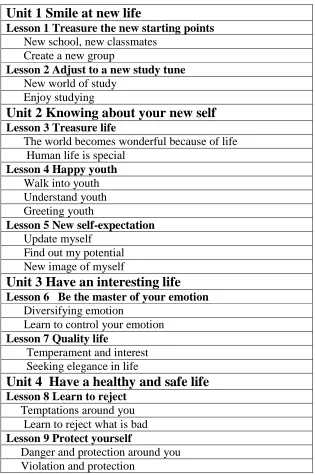
Table 3.1 Table and content of Ideology and Morality (Year 7, first term) ... 70
Table 3.2.1 Chinese Primary school and Junior middle school enrolment 2004-2007 (Numbers based on thousands)... 76
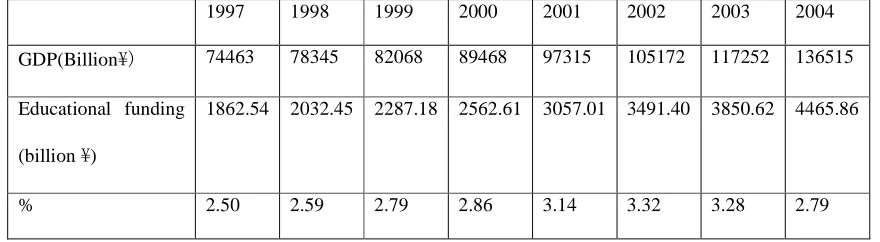
Table 3.2.2 The proportion of GDP spent on education in China... 77
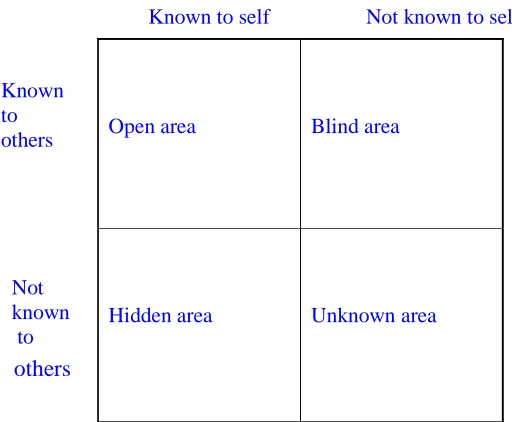
Table 3.2 Johari Window... 88
Figure 3.3 An extension of Johari window by Ling Wu: Communication can develop one’s self-esteem... 89
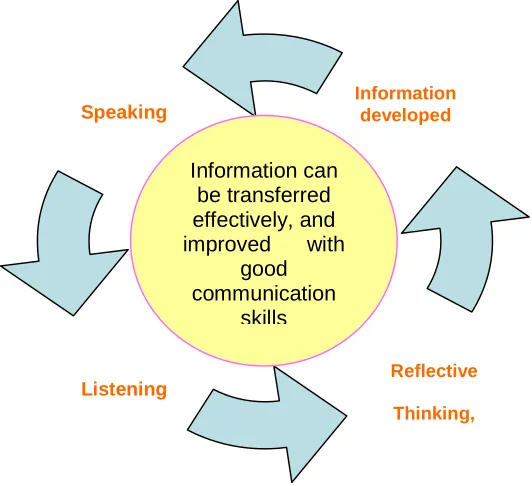
Figure 3.4 Communication Circle (created by Ling Wu) ... 91
Table 4.2 Field work schedule ... 128
Table 4.2.4.A The experiment group arrangement... 142
Table 4.2.4.B Session Plan and content of Circle Time Experiment schedule... 143
Table 4.3.1 Strengths and Weaknesses of Tests ... 148
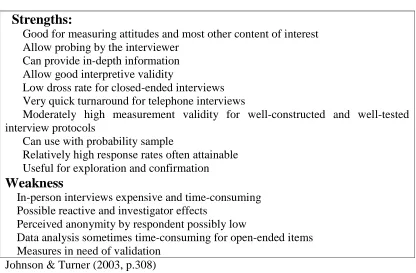
Table 4.3.2 Strengths and Weaknesses of interviews ... 151
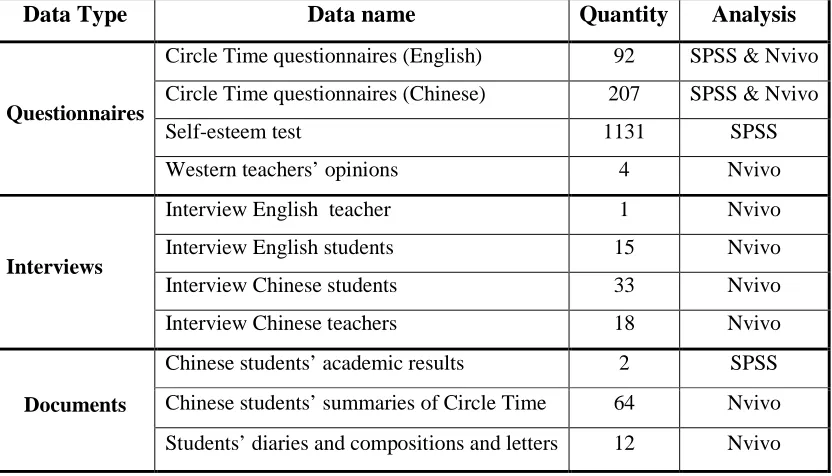
Table 4.3.5 Data collected during research ... 158
Table 4.4 Abbreviations of data source ... 161
Graph 5.1.1.A Chinese Students’ pre & post experiment self-esteem test... 177
Graph 5.1.1.B Chinese students’ pre & post experiment self-esteem tests between groups ... 178
Graph 5.1.2.A Chinese students’ pre & post experiment academic results ... 180
Graph 5.1.2.B Chinese students’ pre & post experiment academic results between groups ... 181
Graph 5.2.2.A Others can understand me more after Circle Time... 189
Graph 5.2.2.B Others can understand me more after Circle Time (English students) ... 190
Graph 5.2.2.C Others can understand me more after Circle Time (Chinese Class2 Boarders) ... 191
Graph 5.2.2.D Others can understand me more after Circle Time (Chinese Class 3 Boarders) ... 191
Graph 5.2.2.E Others can understand me more after Circle Time (Chinese Class 4 Day pupils) ... 192
Graph 5.2.2.F Others can understand me more after Circle Time (Chinese Class 5 Day pupils) ... 192
Table 5.2.2 Others can understand me more after Circle Time * groups Cross tabulation.. 193
Graph 5.2.3.A I understand myself better after Circle Time... 195
Table 5.2.3 I understand myself better after Circle Time * groups Cross tabulation ... 195
Graph 5.2.3.B I understand myself better after Circle Time (English students)... 196
Graph 5.2.3.C I understand myself better after Circle Time (Chinese Class 2 Boarders)... 197
Graph 5.2.3.D I understand myself better after Circle Time (Chinese Class 3 Boarders)... 197
Graph 5.2.3.E I understand myself better after Circle Time (Chinese Class 4 Day pupils) .. 198
Graph 5.2.3.F I understand myself better after Circle Time (Chinese Class 5 Day Pupils) .. 198
Graph 5.2.4.A My group gets on better with each other as a result of Circle Time ... 200
Table 5.2.4 My group gets on better with each other as a result of Circle Time * groups Cross tabulation ... 200
Graph 5.2.4.B My group gets on better with each other as a result of Circle Time (English students) ... 201
Graph 5.2.4.C My group gets on better with each other as a result of Circle Time (Chinese Class 2 Boarders) ... 202
Graph 5.2.4.D My group gets on better with each other as a result of Circle Time (Chinese Class 3 Boarders) ... 202
Graph 5.2.4.F My group gets on better with each other as a result of Circle Time (Chinese
Class 5 Day pupils)... 203
Table 5.2.8 Circle Time helps in creating ideal teacher-pupil relationship * English and Chinese Cross tabulations ... 219
Table 6.1 UK teachers’ views of the differences of schooling between the UK and China.. 262
Graph 6.3 Students’ pre & post Experiment Chinese literature examination result ... 281
Table 7.3 Chinese teachers’ attitudes of adopting Circle Time ... 299
Figure 7.3.1 Teachers role in relationships ... 304
List of Pictures
Picture 5.4.1 Girls during Circle Time session- You are the best... 239
Picture 5.4.2 Girls in Circle Time session – you are the best ... 240
Picture 5.4.3 A girl in the middle still feeling her hot face after one round ... 240
Picture 5.4.4 A teacher is feeling his hot face after his turn ... 241
Picture 5.4.5 A teacher’s facial reactions during Circle Time (picture 1)... 242
Picture 5.4.6 A teacher’s facial reactions during Circle Time (picture 2)... 242
Picture 5.4.7 A teacher’s facial reactions during Circle Time (picture 3)... 243
Picture 5.4.8 A teacher’s facial reactions during Circle Time (picture 4)... 243
Picture 5.4.9 A teacher’s facial reactions during Circle Time (picture 5)... 244
Picture 5.4.10 A teacher’s facial reactions during Circle Time (picture 6)... 244
Picture 5.4.11 A teacher’s facial reactions during Circle Time (Picture 7) ... 245
Picture 5.4.12 A boy’s facial expression during Circle Time (picture 1) ... 246
Picture 5.4.13 A boy’s facial expression during Circle Time (picture 2) ... 247
Picture 5.4.14 A boy’s facial expression during Circle Time (picture 3) ... 247
Picture 5.4.15 A girl is wiping tears during Circle Time ... 248
Chapter 1 Introduction
This chapter introduces the thesis. The historical background of Chinese moral education
and political, socio-economic and cultural development in the last 30 years will be
discussed. The current emotional needs of Chinese children will be considered in order to
draw attention to the potential for greater personal development that exists. The rationale
for introducing Circle Time to Chinese secondary schools and using Circle Time as a
starting point to investigate Chinese affective education will be explained. Having
presented the research questions, the motivation for doing this research and my journey in
conducting this research will be outlined. The significance of this research will be
explained. Finally, the structure and content of this thesis will be introduced
1.1 Context and background
China, with thousands of years of feudal imperial history, has strong centralized political
traditions; the present government is led by the Chinese Communist Party (CCP). It was
considered a centralized political system which had a closed door policy towards the
western world until at least the end of the Cultural Revolution in 1976. Since 1978, when
Deng Xiao Ping came into power, the government started opening up and reforming.
China not only opened the door to the western world but also opened up opportunities
and resources for development within China. Profound changes at economic, social and
even political levels have been taking place since then. During the last 30 years, China’s
economy has experienced an 8% rate of increase (A. Hu, 2007). Along with tremendous
progressing dramatically with the resultant lessening of social differences between China
and the rest of world.
In spite of the opening market and growing economic development, traditional culture
still plays an important role in Chinese society. Confucianism is widely recognised by the
Chinese as the typical Chinese traditional culture. It was criticised during the Cultural
Revolution, and now is being revived in China to fill the ‘belief vacuum’ left by the
decline of communist ideological influence (Bell, 2008; Tan, 1999). However, this
revival in Confucianism is also striving to discover the humanitarian aspect of
Confucianism rather than just to restore the older, traditional ideas. I will discuss in
Chapter 2 the revival of Confucianism in relation to Chinese affective educational reality
and current Chinese educational reform. In short, the compromise between Chinese
tradition and western values focuses on individuals and personal needs. There are three
reasons for this.
Firstly, socio-economic development makes the individual’s personal wishes possible to
achieve. As a result, personality, personal interests and opinions are encouraged and
enabled to develop with economic support.
Secondly, the only-child policy instigated in 1979 also changed the structure of the
family and family values. The only child became the focus and treasure of each family.
Traditional father-centred family structures and values have changed to centre on the only
child. Although the understanding of ‘child-centred’ is not the same as in western
pedagogy, it still puts the child as the primary concern. The only-child policy also enables
only children have become the new generation with greater potential for personal identity
and characteristics (Cai, 2003).
Thirdly, the phenomenon of globalization is changing the Chinese understanding of
educational trends and reducing the educational gaps between east and west (W. O. Lee,
1997; K. Liu, 2004; Watkins, 2007). Globalization has also caused conflict between
Chinese traditional educational thinking and new ideas. As the current globalization is
still influenced by western values and economic models, people’s moral integrity and
personality has been regarded as more important than obtaining adequate skills for
economic growth (Nolan, 2004; N. Zhang, 1992).
In 2008, as the Olympic Torch was relayed around the world to the Olympic Games
being hosted in Beijing, great attention was paid to China. Criticisms from the west were
made especially about China’s lack of openness, democracy and human rights.
Democracy cannot develop without education. However, traditional Chinese education
ignores individuals’ needs and rights (Tan, 1999). Decisions are always made from the
top-down for people rather than people joining in decision making. This system produces
hierarchical relationships. Children are more likely to value social conformity and to
assume authoritarian beliefs (Hofstede, 2001). Hofstede (2001) has coined the notion of
the PDI (Power Distant Index) to interpret relationships in family, schools and
organizations in different countries in consequence of different disciplines. Eastern Asian
culture shows a significantly high PDI index, which could significantly reflect on
Chinese society.
academic achievement and examination (Qi & Tang, 2004). Current reform has started
transferring education towards students’ holistic development. However, without
practical models in schools and with hierarchical relationships between teachers and
pupils and between teachers and management strata, student-centred reform is unclear in
terms of the direction it should take.
This study seeks to make changes possible from the practical level, and therefore will
formulate practical behavioural change between teachers’ teaching and thinking. In the
next section, the motivation and rationale for this study will be explained and interpreted.
1.2 Research motivation and rationales
The initial motivation for this study comes from my personal experience and research
interests. I started my teaching career in China in 1993 and worked in the profession for 8
years. I had experienced the Chinese Education system first hand as I grew up. When I
became experienced in teaching, I had more and more questions about the issues of the
Chinese education system. As a teacher, the tense teacher-pupil relationship increased
teaching pressure and the learning burden. Confusing educational reforms and strenuous
examination traditions made me question our teaching methods and traditional
teacher-pupil relationships in schools. Specifically I queried areas of dissatisfaction for both
teachers and pupils. Teachers were working hard to improve students’ academic
achievements; students were forced to learn and often did not appreciate their teachers’
efforts. The conflict between students’ real needs and what the teachers were attempting
teachers did not seem to achieve students’ satisfaction. School life did not appear
enjoyable for either teachers or students. I sought changes that could result in positive
development of Chinese education and for the wellbeing of Chinese children.
When doing my Master’s degree in the United Kingdom, I experienced culture shock
myself from the differences in teaching and learning. Teachers and students often have an
equal relationship in the UK. Teachers acted as facilitators rather than the sole source of
knowledge. Students were expected to solve questions with their own ideas rather than
get unique answers from the teacher. I became more aware of teachers’ attitudes and
behaviour in school and teacher-pupil relationships became the centre of my interest. My
Master’s dissertation investigated Chinese students’ views of differences in teachers and
teaching in China and in the UK based on Chinese students’ schooling experience (L. Wu,
2003). Another study of mine also compared Chinese and UK students’ perspectives on
good teachers and teaching (L. Wu, 2008). These studies focused my interest on
teacher-pupil relationship in schools.
In UK schools, teachers and students are more equal than their counterparts in China. I
realized that hierarchical relationships within Chinese society, school and family are
predominant and influence teachers’ behaviour and have therefore brought that same
influence to Chinese children. Can the UK experience address Chinese issues and if so,
how? It is not possible to change teachers’ attitudes and behaviour by spreading new
theories. Research should start from a practical level to enable people to change their
ideas from experience.
students sit at the same level in a Circle and discuss and address issues related to
Affective Education. Students can talk about their feelings; voice their opinions on
certain issues by speaking and listening to each other (Bliss, Robinson, & Maines, 1995;
Lang & Mosley, 1993; Lown, 2002; Taylor, 2003)(also refer to §3.5). Circle Time can
help students to develop their listening, speaking and social skills. Sitting in the Circle at
the same level with students, teachers can easily have eye-contact with everyone in the
Circle. The climate created by the ‘magic circle’ (Lang, 1998a) encourages people to
express feelings, voice opinions and discuss issues. By following the same rules in the
Circle, teachers and students can develop a warm and relaxed relationship. I began to
understand more deeply about Affective Education and personal social development by
taking part in Circle Time myself.
The term AE (affective education) has various meanings in different countries (Best &
Lang, 1994; Lang, 1998b); and the meanings are even more divergent between the
Chinese and UK educational cultures (X Zhu & Liu, 2004). As interpreted by Lang
(1998b; p. 4), AE operates on at least three levels: the individual, the group and the
institution.
The individual; attention directed to individual students, their self-esteem,
emotional literacy, study skills, their life and career plans;
The group; attention to the nature and quality of interactions within the groups in
which students work and relate;
The institution; a concern for the quality of the climate and ethos of the school
itself, the guidance and support it offers students; its care and concern in
The ‘Individual’ component is the core of Affective Education; however, the individual’s
holistic development cannot progress on its own. Within the group, a positive relationship
and atmosphere can help the individual to develop his/her study and social skills, raise
self-esteem and achieve emotional literacy. Positive relationship means each individual
in the relationship has the feeling of belonging, of being loved and being capable of
cooperating within the ‘group’. The groups can then enable the school to become a
‘caring’ society (Best & Lang, 1994).
The individual’s welfare and interests are the essential preoccupation of Affective
Education because ‘respect and care for the individual should be a fundamental concern
of all democratic societies’ (Lang, 1998b). Lang (1998b) particularly stresses that ‘pupils
are in fact also people’; education is not just to develop students’ cognitive ability and to
produce academically processed pupils but also, most importantly, to enable students to
contribute to society and to be ready for their future life where they should be equipped to
go beyond basic skills and academic knowledge and, hopefully, achieve holistic
development.
However, Affective Education is still an underdeveloped area in the Chinese education
system. There is some expression of Affective Education, in the term Qinggan Jiaoyu in
Chinese (Zhu, 1993, 2005); however, the term is different contextually from that in the
west. Qinggan Jiaoyu in the Chinese context is under the umbrella term of Moral
education and more related to psychological concerns. Moral education, with roots in the
Confucian tradition, is imposed within a political context, and is expressed through
years. This can be seen as the origin of Affective Education in Chinese society (Hsu,
2003). As it exists within the centralized political arena, Chinese moral education
contains less consideration of individual’s needs and their personal social development
and is in need of reform in the light of modern social and economic developmental
theories (§2.6).
The current educational reform (§2.5) is considered the only way of reducing Chinese
students’ learning burdens, and there has been a move towards considering individualism
as social and economic change which has occurred in the last three decades. The reform
is trying to reinterpret Confucianism and seeks links between AE (affective education)
and ME (moral education). In this respect, even under the strong ME tradition, AE starts
playing important roles in education and has been considered essential to students’
holistic development (Ban, 2003; Tan, 2006; Xiaoman Zhu, 1993, 2005). However,
current debates from various Chinese educators merely focus on theoretical discussions.
The educational theory of the Russian educationalist Sukhomlinsky (Xiaoman Zhu, 1993,
2005), Carl Rogers’ client-centred therapy (Yuan, 1999) and Dewey’s democratic
educational theory have been quoted in arguing for new trends in current Chinese
educational reform, and claims that it should abandon the examination-oriented education
of the current student-centred system (B. Liu, 1997; Xiaoman Zhu, 1993). However,
these debates rest only on theoretical discussions rather than practical research and
suggestions. There are strong demands for research in personal and social education in
Chinese schools.
Suzhi jiaoyu (quality education) started as a term of students’ all-round development in
1988 (S. Yan, 1988), introduced by the government (CCPCC, 1988, 1994, 1999), with
educated person and promote the whole moral, intellectual and physical development of
students in all the various aspects of education (Y. Li, 2001; G. Wang, 2002; S. Wang,
Guan, & Jiang, 2000; R. Wu & Dou, 2004; S. Yan, 1988). However, after 20 years, the
situation in schools remains unchanged. Chinese education is still examination-centred
(Wen, 01/03/2007). The students’ learning burden and pressures are increasing. Little
research has been done at the practical level to shed light on how the idea of quality
education can achieve the aim of students’ all-round development, stimulating students’
potential ability and personal and social skills. Articles about quality education mainly
focus on the argument of current education problems and perfect the theories and ideas of
quality education (Y. Li, 2001; B. Liu, 1997, 2000; Ma, 2004; G. Wang, 2002; S. Wang,
et al., 2000). The need for and shortage of practical research about students’ personal and
social development will be discussed in depth in Chapters 2 and 3; it has motivated me to
introduce Circle Time as a western pedagogy that possesses great potential benefits for
Chinese secondary school students’ in their personal and social development.
1.3 Objectives of the study
There are three objectives for carrying out this research. Firstly, it introduces Circle Time,
a western pedagogy with potential benefit, into students’ personal social development
within the Chinese school setting. Secondly, based on this experiment, Circle Time is
taken as an intervention with which to examine, explore and interpret current Chinese
Affective Education and reform. Thirdly, by comparing the Chinese and UK students’
experience and opinions of Circle Time and examining Circle Time within the Chinese
The first objective is an attempt to introduce Circle Time to the Chinese secondary school
for students’ personal and social wellbeing and to develop equal and democratic
teacher-pupil relationships. No Chinese schools had ever adopted Circle Time for students’
personal and social development before this study.
The literature of Circle Time from the UK and other western countries provides evidence
that Circle Time can enhance children’s confidence in speaking and listening; it can also
promote children’s spiritual, moral, social and cultural development (Canney & Byrne,
2006; Kelly, 1999; Weatherhead, 2008). Will the western seed of the Circle Time
pedagogy, flourish in the eastern soil that is the Chinese educational system? I
constructed experiments to test the function of Circle Time in a Chinese secondary school.
I formulated tests, questionnaires, documentation and interviews of both students and
teachers to triangulate the experiment’s outcomes. As this is an introductive study, a
preliminary study was carried out in a UK secondary school to provide comparative
aspects for the experiment, but this research is not a true comparative study in itself. The
pedagogical concern is more significant in that I was learning by doing. One of the
important aims is trying to introduce equal and democratic perceptions into Chinese
education by doing Circle Time.
The second objective of this study was to investigate Affective Education in the Chinese
educational context and, thereby, to offer appropriate suggestions for teachers and
education practitioners to support students in their personal and social skills development,
based on insights from this study. As mentioned previously, Affective Education in
Chinese schools is long on theory and short on action. This study attempts to interpret
educational action (Bassey, 1999). (See §7.) It is a researcher’s responsibility to suggest
desirable change for policy making (Robson, 2002). Circle Time is considered as a
starting point in Chinese schools to enhance the ideas of Affective Education and to
develop a positive teacher-pupil relationship that encourages equality and democratic
strategies instead of the existing traditional hierarchical pattern.
The third objective is to seek to reflect on Circle Time and UK Affective Education.
Circle Time is under the umbrella term of Affective Education in the UK for students’
personal and social development. By examining Circle Time in the Chinese context; the
pedagogy of Circle Time can be tested from another angle. Therefore, the comparative
aspects of this study can also shed light on the current UK system by ‘comparing,
importing and exporting ideas’; by ‘making the strange familiar’ and ‘making the familiar
strange’, to increase our understanding of our own society, culture and ways of educating
(Alexander, 2000; p.27). ’In studying foreign systems of education, we should not forget
that the things outside schools matter even more than the things inside the schools, and
govern and interpret things inside’ (Sadler, 1902;cited in Alexander, 1996,2000)’.
1.4 Research questions
This study investigates Chinese Affective Education. It introduces a western pedagogy –
Circle Time – to a Chinese secondary school, examining the hypothesis that Circle Time
is an effective method for students’ personal social development based on the experiment.
At the same time, Chinese students and teachers’ perceptions of Affective Education
were generated through their experience and opinions about the experiment. The aim is to
relationship is the focus concern of this study. The Chinese have long been experiencing
centralization and conformity rather than individuality, but this study tries to demonstrate
equality and democracy between teachers and pupils; as a result the individual’s point of
view is highly valued in this research. As this is a mixed design, both qualitative and
quantitative data were collected and interpreted to explore students’ and teachers’
perspectives in great detail.
The research questions comprise three levels:
Firstly, to examine the hypotheses that Circle Time can develop students’ listening,
speaking and interpersonal skills and develop positive relationships in Chinese schools.
Secondly, to compare the different opinions and experiences of Circle Time between
Chinese and UK students.
Thirdly, to explore the issues of Chinese educational reform for Affective Education.
1.5 A brief outline of the research design
This study is a mixed design based on an experiment to introduce, conduct and examine
Circle Time as a pedagogical practice to develop an equal and positive teacher-pupil
relationship in a Chinese secondary school, and thereby, to shed light on current Chinese
educational reform in the area of Affective Education. This study was seen as ‘throwing a
stone and watching ripples’. Since our childhood, we like to throw stones into water. Our
main interest is not in the stone; it is more likely that we watch the ripples or the sound
result of our throwing stones. This could explain how a mixed design could actuate
planned results or sudden unexpected results. Therefore, a follow up study will greatly
benefit research in this field. In addition, it combines a variety of methods which could
make the research claim stronger (Gorard & Taylor, 2004).
By comparing English and Chinese students’ perspectives of Circle Time, firstly, it will
guide Circle Time activities in Chinese schools; secondly, it can allow reflection on UK
Circle Time experience and thus encourage the development of literature and pedagogical
practice. Circle Time can assist in developing an equal, caring teacher-pupil relationship;
this kind of relationship can help students to develop their personal and interpersonal
skills, to raise their self-esteem and to achieve emotional competency. As Saarni (1999)
indicates, emotional experience and social experience are reciprocally influential, as ‘we
are the products of our relationships’ (Cassidy, 1994; cited in Saarni, 1999; p.9).
Teacher-pupil relationships are different within the eastern and western cultures;
therefore, the educational products will differ in certain ways. This research examines
both the pedagogy (Circle Time) and the environment (Chinese secondary Affective
Education). Can Circle Time function as it does in western countries in the Chinese
environment? How do Chinese teachers and students react to the western pedagogy?
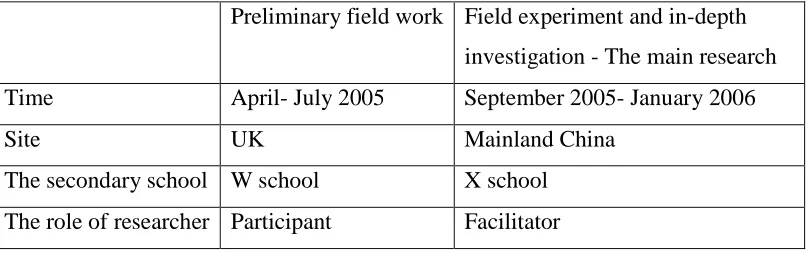
This research began with a preliminary study observing Circle Time in an English
secondary school to generate English year 7 students’ opinions of experiencing Circle
Time with teachers and their peers. This phase is an ethnographical study that explores
English students’ experience and opinions. I participated in Circle Time sessions to learn
through my own experience. The main study, based on the English school’s Circle Time
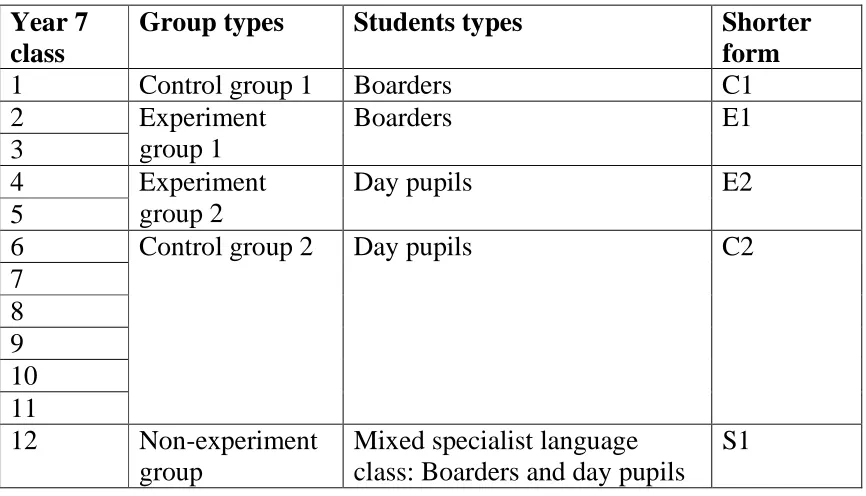
pupils. Four classes were chosen as experimental classes. Two of the experimental
classes are boarding classes (experiment 1). Students in these classes do not live locally
(city centre), their local schools (urban schools) were not as desirable to the parents and
students as the experimental school. Students in the other two classes are day pupils
(experiment 2); they live in the city centre. Their parents work either for the government
or for companies which have offices in the city centre. There were control groups
corresponding to the two experimental groups respectively. Questionnaires in the
self-esteem test were given to all year 7 students at the beginning and end of term to get a
general impression of their self-esteem attainments. Students’ academic results were also
collected as support evidence. After examining independent variables of the pedagogical
experiment, questionnaires and interviews were also adopted to gain Chinese students’
perspectives of experiencing Circle Time.
In this mixed design, questionnaires, interviews, documents and observations have been
employed in collecting rich qualitative and quantitative data. The experiment and
quantitative questionnaires established a framework in answering the research questions;
qualitative data, therefore, enriched the framework with in-depth investigation. The
interpretation of both qualitative and quantitative data assists and triangulates in
supporting the validity of findings. Data from questionnaires, different peoples’
interviews, documents and researchers’ observation notes bring perspectives from
1.6 Significance of the study
This study aims to shed light on the application of Circle Time to current Chinese
educational reform in the domain of Affective Education. New insights are revealed from
the perceptions of teachers and students. This research examines perspectives of students
and teachers of Circle Time and Affective Education by collecting data from various
sources. Findings from this research provide information from multiple angles to present
a comprehensive picture of the reality of Chinese Affective Education from the specific
practice of using Circle Time to expand the perspectives of students and teachers.
The significance of this study provides valuable information in order to 1)supplement the
limited pool of current Chinese affective educational literature by presenting a practical
model that can be adopted by action, thereby generating theories within the Chinese context;
2) provide valuable information for students, and especially for teachers to understand the
importance of providing children with opportunities to listen to each other, express feelings
and discuss issues; 3) enrich the literature of cross-culture study by developing borrowed
pedagogy and introducing it to different settings.
1.7 Outline and structure of the thesis
Including the current introductory chapter, this thesis comprises eight chapters. The thesis
provides in-depth descriptions, interpretations and discussions of Affective Education in
Chinese terms and the study of Circle Time as an intervention within the Chinese context,
therefore the implications are significant in understanding Chinese traditional culture,
current social-economic reform and predictable educational reform. Each chapter can be
Chapter Oneis the current introductory chapter which gives a brief introduction to the
thesis. The outline of the whole paper includes the background information on this study,
research motivation, rationales and research questions of this study.
Chapter Two begins with the economic and social background of this study, discusses
the changes in the economy, society and politics of China in the last 3 decades along with
China’s opening-up and reform policies, then draws attention to the one-child policy and
its influence together with the social and economic development and Chinese educational
reform. In such circumstances, the transition from traditional culture and current social
values, and the ‘belief vacuum’ are also presented to help with understanding the trend
towards reform. The chapter continues with a background description of
examination-orientated educational tradition and correlative problems of that system. Old Chinese
moral education is explored in order to reconstruct Affective Education in the Chinese
educational reform. This chapter sheds light on theoretical concerns for Affective
Education in the current Chinese educational reform from a historical perspective.
Chapter Threestarts from the individual’s needs as the core of Affective Education, and
goes on to build up arguments for the individual’s needs and personal skills, relationships
and interpersonal skills to be developed to facilitate positive relationships. In turn,
positive relationships will contribute to personal development and raise the self-esteem of
individuals. This chapter develops the theoretical framework of Affective Education from
the individuals’ basic needs to individuals within relationships; and from relationships,
that influence personal development, to the cultivation of personal emotional literacy and
interpersonal social skills. Following on the theoretical discussion, Circle Time is
developing children’s interpersonal skills and for raising their self-esteem. The definition
of Circle Time and the aim and function of Circle Time in relation to Affective Education
and personal development are interpreted in this chapter. The significance of introducing
and studying Circle Time within the Chinese context is also argued.
Chapter Four presents detailed descriptions of the research methodology, a
philosophical discussion, the research design, and the process of conducting this study.
The research design is based on best answering the research questions. The
epistemological assumption of this study is rooted in a pragmatic stance. The design of
this study is a mixed design with qualitative and quantitative strategies and methods. As
no Circle Time research had been done in Chinese schools before, the design started as a
preliminary study in an English school in order to examine firstly the research methods
and also create comparative factors to examine the Circle Time experiment in the
Chinese school. Although this is not a rigid comparative study, comparative elements
play important roles in this study.
Next there is an in-depth argument explaining the choices of the research design. The
chapter continues with an interpretation of the way the research was conducted. The
selection of samples is introduced; the structure of the experiment is explained. Then, the
instruments of the research are also presented in detail and further discussions are put
forward elucidating the advantages and disadvantages of questionnaires, interviews,
observations, and the documentary methods employed and integrated in collecting and
triangulating both qualitative and quantitative data. Furthermore, this chapter also
concludes with an explanation of how the data were analysed and interpreted. Issues of
Chapter Five draws attention to the data used in analyzing the method of Circle Time
within the Chinese context. Findings from the experiment of Circle Time in the Chinese
secondary school are described and interpreted in this chapter. Firstly, the dependent
variables of the experiment are examined and explained to show evidence in examining
the hypothesis that Circle Time can develop students’ self-esteem. Secondly, the
questionnaires about students’ experiential opinions of Circle Time are also interpreted.
The questionnaires include both Chinese and English students’ opinions; the comparison
helps this study to draw a preliminary picture of Circle Time within the Chinese context,
and also to reflect on Circle Time in English schools and the teacher-pupil relationships
within English perceptions.
In order to understand the function of Circle Time in developing students’ personal and
social behaviour and interpersonal skills, findings from in-depth interviews are also
interpreted in this chapter followed with the evaluation of the questionnaires. A specific
session of Circle Time will be presented in this chapter to show a detailed picture of how
Circle Time was conducted in the Chinese school and how students reacted to Circle
Time.
Chapter Sixthrows light on teacher-pupil relationships and the teachers’ role in adopting
a new pedagogy, on building up an equal, democratic relationship and transitioning from
examination-oriented education and teacher-centred teaching to student-centred
education.
This chapter starts from English teachers’ points of view about the differences of
teaching, learning and teacher-pupil relationships and between Chinese schools and
in both China and the UK (Wu, 2003), and seeks to present a picture of the Chinese
education system. Finally, the Chinese teachers’ opinions of Circle Time are presented
and discussed in depth. Chinese teachers’ reactions to the intervention, their concerns,
and situations of work and their emotional issues are the focus of discussion in this
chapter.
The special case of Miss Chao’s achievements in tutoring and her understanding of
education as well as her perspective of Circle Time is presented and argued to help
understand a Chinese teacher’s attitude to the current educational reform.
Chapter Seven involves discussion which seeks to reflect on research and related
societal issues. This study attempts from a practical level to initiate an opportunity for
individuals to experience listening to each other, talking about feelings in groups and
developing interpersonal skills. Therefore, individuals are seen to be valued and are
encouraged to express personal feelings as well as to build up an equal and democratic
relationship within the centralized tradition. The vision of this study is to change society
by the individual’s development at a practical level.
This chapter firstly discusses the influences of traditional culture on contemporary social
values and how those influences are related to this research. Then from the phenomena
of this research the aim is to reflect on the transition from traditional culture through
globalization and social economic development in China. The different understandings
and perspectives between Chinese teachers and students are also worth investigation and
include the conflict between new personal and social needs and strong traditions. Western
influence and eastern rejection and assimilation are also noted to aid further
The comparison between Circle Time in the Chinese school and in the English school
also reflects the differences between the east and west. The study of Circle Time in the
English school suggests the potential for the utilisation of Circle Time within the English
school culture and the resultant advantages.
Chapter Eight concludes the study with a summary and review of the theoretical
background, research design and analytical framework, then evaluates and reconsiders
the research design, the experimental field work and the findings in relation to the
research questions and the research background. Therefore, the accumulation of
knowledge in this study and personal fulfilment are also discussed in order to look at and
reflect on the research questions and in-depth discussions of the existing literature,
research findings and limitations of the research. In particular, the conclusion also gives
in-depth understanding and further implications of the current study as well as subsequent
correlative suggestions for future investigations into Chinese Affective Education,
Chapter 2 Background to the research –
Educational reform in a Changing China
Introduction
Over the last three decades, China has been experiencing profound economic, social and
political changes. The transition started with the economic opening up to the western
world and the reforms from a planned-economy to a market economy (Qi & Tang, 2004),
which has had the result, as Thornton (2008; p.vii) summarized, that China’s last 30 years
of development can be found in today’s headlines as follows: “China is the third largest
economy in the world; a land of 200 million internet users with 500 million mobile
phones; is a significant actor in some of the most pressing international concerns (North
Korea, Iran, and Africa); and is one of the keys to whether humankind succeeds in
addressing the common existential challenges of environment, energy sufficiency, and
global warming.” Bell (2008) also argues that compared with the United States’
constrained political future, China’s political future is wide open.
In 1911, the last Chinese feudal emperor ended his reign and also ended two thousand
years of imperial history in China. Dr. Sun Yat-sen (also called Sun Zhongshan) founded
the Republic of China and tried to establish a democratic commonwealth in China,
Although he had to compromise with stratocracy during his time, the idea of democracy
and a republic spread in China. His followers, ideological or official capitalists, were
close to western countries and to adopting western policies to develop capitalism in
modern China (Chow, 2007). When the CCP (Chinese Communist Party) won the Civil
traditional “balance” (均jun) of thought. Mao Zedong and his CCP government tried for nearly 30 years to get rid of social classes in China (Deng & Treiman, 1997), and they
rejected capitalism. From 1949 to 1979, political events, such as the great jump and the
Cultural Revolution took place in China, which led China to be closed to the rest of the
world; the Chinese economy fell behind western economies and some Asian countries
and also ideologically China was isolated from other countries. Since Deng Xiaoping
came to political power after the Cultural Revolution, his policy stressed economic
reform and opening up, which is close to capitalism – an economic policy found in most
western countries.
Westerners tend to view China’s last 30 years of change just in terms of economic
development and some social change; political change is thought to be coming more
slowly than capital expansion (Thornton, 2008). China is seen as a centralized country
led by the Chinese Communist Party (CCP); it retains a socialist system but has a strong
element of the market economy (Williams, Liu & Shi, 1997), which is officially named
“Socialism with Chinese characteristics (具有中国特色的社会主义)” and named by
Nolan (2004) as ‘market socialist’ because it is still at the “Primary stage of socialism (社
会主义初级阶段)”. The current Chinese characteristics suggest that politically it is a collectivist society; but the government has become separate from enterprises and allows
enterprises greater autonomy to make decisions (Chen, 2004). The Chinese have
experienced dramatic changes in the last 30 years. Some changes were predicted, some
were unexpected and some are still anticipated. China is certainly not considered a
democratic country from western countries (Nolan, 2004), however, much is taking place
Since 1978, when China adopted the policy of ‘opening up’, it has been facing profound
social, economic and political transformation (Chen & Liu, 2000; Lee, 1997; Liu, 2004).
Along with constant and rapid economic development and the spreading and expanding
of western ideology, the ordinary Chinese people have more and more opportunities to
make their own choices and to achieve their personal goals in life and in work (Williams,
et al., 1997). The opening up happened immediately after the Cultural Revolution
(1966-1976), when traditional values were undermined and the communist dream was seen as
an illusion. The ‘belief vacuum’ (Bell, 2008; Tan, 1999) has led to the current desire for
ideological, spiritual and moral education which the Chinese are now addressing.
Changes also happened because of the birth control policy or the one child policy. In
1979, the Chinese government introduced the one-child policy to bring the birth rate
under control, and to alleviate the social and environmental problems of China (J. Q.
Chen & Goldsmith, 1991; J. H. Yang, 2007). Short et al (2003, cited in J. H. Yang,
2007)) point out that the one-child policy shapes children’s well-being by fundamentally
shaping family life. The single child’s advantage in education, stated by Yang (2007))
might result from the fact that the reduced birth rate – and thus a smaller sibling size –
increases parents’ abilities to provide higher levels of education for their children. As a
consequence, the one-child policy and economic growth have changed the values and
attitudes of parents, thereby influencing current Chinese social values and educational
reforms (Romanowski, 2006).
This chapter will focus on the economic, political, social and cultural changes in
contemporary China, and therefore the influences for ideological change, Chinese moral
traditional values to the modern social transition. The objective is to answer the question
of why research into the affective domain in China is worthwhile, and the rationale for
adapting and conducting Circle Time as set out in this study as meriting attention.
2.1 Profound change since the opening-up policy and
subsequent reforms
‘Before the reforms and opening-up, Chinese society can be considered to have been
closed, conservative, authoritarian and hierarchical’ (Qi & Tang, 2004; p.466). Under a
single-party system which was established in 1949 when the Chinese Communist Party
(CCP) took power, the central government not only regulated industry and farming
resources and products and neglected markets and pricing, but also tightly controlled
political and cultural tendencies. Under a planned economic model and centralized
politics, where the individual’s interests were not really respected and valued, it was not
possible for personal initiative and self-determination to be fully developed, not only in
the economy but also in political and social life. “A highly centralized state does not
operate its political and social life completely in accordance with the legal system, but
depends on enforced administrative order and the personal authority of a leader to ensure
a submissive relationship in every aspect of society” (Qi & Tang, 2004; p.466).
Since 1978, China has begun to make major reforms to its economy and has opened the
door to the western world. The Chinese economy has been changing from being centrally
China's per capita income has grown at an average annual rate of more than 8% over the
last three decades (Hu, 2007). According to The World Band (2001), China’s annual
GDP growth rates in 1980-1990, 1990-2000 averaged 10.1% and 10.7%, respectively.
Starvation and poverty in China have been reduced but this rapid growth has been
accompanied by rising income inequalities (Hu, 2007). It is not my intention to discuss
the income inequalities in China. However, ‘China’s economic successes have also
generated inequalities and social exclusion (Chan, Ngok, & Phillips, 2008; p.5)”; which
exerted pressures for social and political change. Economic change brings a chance and
challenge for other changes.
The Chinese leaders adopted a pragmatic approach to many political and socio-economic
problems, and sharply reduced the role of ideology in economic policy. Liu (2004)
analyses the globalization and cultural trends in China, and points out that, under the
leadership of Deng Xiaoping, China has abandoned Mao’s revolutionary idealism and has
adopted an economic developmentalism in order to build a modern, market-oriented
post-socialist nation (p.5). He also noticed that Deng’s developmentalist strategy was to
integrate China into the capitalist world-system only in the economic and technological
sectors. Since 1978 when economic reforms were instituted, the government’s role in the
economy has been lessened to a great degree (Chen, 2004; Goldstein, 1996; 2004)’, while
in political, social, and cultural spheres there was never a clearly articulated acceptance
of the norms and values of global capitalism. Integration into globalization, therefore,
was never conceived as a total submission to capitalism in a strategic sense. However, an
inevitable trend towards full-scale integration into globalization has clearly appeared in
the last two decades, because modernization itself cannot be parcelled out into disjunctive
piecemeal way of reform implausible and untenable. To be precise, China can never
remain only “partially globalized’ and must come to terms with all aspects and
complexities of the consequences of globalization (K. Liu, 2004; p. 11). Long traditions
such as Confucianism will still hold their important position. Although Mao Zedong
tried to wipe out Confucianism after the establishment of his PRC, his own rule was
actually influenced considerably by Confucians (Hofstede, 2001). Liu (ibid) also
indicated that since Dong’s opening up and reform, Mao’s revolutionary idealism has
been replaced by economic capitalism, while in terms of political and cultural idealism,
the lack of a new ideological orientation now amounts to a serious crisis. The system of
dictatorship and centralization of state power has been a basic feature of traditional
Chinese politics. This kind of political organization is no longer appropriate for Chinese
society in the new situation of the ‘socialist market economy (X. Chen, 2004; p.4),
globalization and value pluralism (Qi & Tang, 2004; p. 472).
The introduction of the market economy in China has not only promoted economic
growth, but has also gradually changed people’s thinking, motivation and behaviour
towards financial interests, material consumption and individual identity (Qi & Tang,
2004). In this change, China faces both internal and external challenges. Along with its
rapid growth in the last decades, the Chinese people desire a free ideology, open
government and democratic politics after gradually achieving economic prosperity and
technological advancement. Awakening individuals voice their views via the multimedia
and internet, and put pressure on the government to be more open and to accept change
(Bell, 2008). With the world’s largest population and the largest population of internet
users, the pressure for the government to be open and efficient is powerful. 2008
the Olympic Games in Beijing, the poisoned milk powder and economic crisis after the
Olympics. Although criticism still focuses on lack of democracy, human rights and
freedom in China, undeniably the Chinese government has shown itself to be more open
to the world and to its own people; the rest of the world expects China to be a member
with open and reliable promises and a similar approach to other nations. The Chinese
people are seeking ways to join the western world while at the same time having to
compromise the strong traditions that exist.
Another essential social change is China’s birth control policy. In the next section, the
only-child policy and its influence on social and educational change will be introduced
and explained in depth.
2.2 The only child policy and social change
As mentioned earlier, since the Chinese government introduced in 1979 a one-child
policy to control fertility, and to alleviate the social and environmental problems of China,
demographers have established that the policy has successfully curbed population growth.
Short & Sun (2004) emphasize that the one-child policy shapes children’s well-being by
fundamentally shaping family life. The traditional pyramid type father-centred family
shape transferred into the inversed pyramid type, the 4-2-1 syndrome; therefore, the only
child became the centre of family life..
Since the one-child policy was implemented, family structure has changed in China. The
traditional family of more than three generations that is big in size and
family structure and the “4-2-1 syndrome”, so called because four grandparents, and two
parents pour their attention on to one spoiled child. The traditional Chinese family was
highly hierarchical and founded on the older generation. “And family relationships are
resolutely hierarchical” (Hall & Ames, 2003). The traditional family relationships are
based on Confucian philosophy, which create community as an extended family (Hall &
Ames, 2003). Children in the family were expected to obey parents and particularly grand
parents. ‘Filial piety’ was the sole morality – the correct way that enabled the family to
maintain order and stability. Children were not encouraged to leave the family; and they
were expected to look after their parents when the parents became old. The family size
was normally big because of tradition and less travel. However, the new family has
become smaller. People are willing to be more independent of their family and to have
more ‘personal space’. As each new family is entitled to have only one child, the parents
pay much attention to their own family and the only child. The advantage of this policy is
that the only child family has the possibility of a higher quality of parenting, with more
care and less neglect, as a greater portion of China’s limited resources goes into a small
group of healthier, better educated children (Tobin, Wu, & Davidson, 1989). As far as
education is concerned, the single child’s parents are able financially and emotionally to
provide higher levels of education for their children (J. H. Yang, 2007). Also, the new
system reduces the hierarchy within the family and replaces it with more democratic
relationships.
However, the only child in the family can be paid too much attention and indulged by as
many as six doting adults, and is likely to come to think of her/himself as ‘a little sun’ or
‘a little emperor’. Without siblings’ company and challenge, the only child has fewer