www.ijraset.com Volume 4 Issue VI, June 2016 IC Value: 13.98 ISSN: 2321-9653
International Journal for Research in Applied Science & Engineering
Technology (IJRASET)
©IJRASET: All Rights are Reserved
135
A Review to Find out Ideal Queue Size of AODV
Maninder Singh1, Malkit Singh2
Golden College of Engineering & Technology, Golden College of Engineering & Technology
Abstract- A Mobile ad hoc network is a group of wireless mobile nodes in which nodes forming a temporary network without any centralized access point, infrastructure, or centralized administration. Nodes can take part in communication only if they are in communication range. In a MANET network topology can dynamically change in an unpredictable manner since nodes are free to move. In mobile ad hoc network different attacks occur due to wireless link. Packet Drop Attack is the one of the attack on mobile ad hoc network. The reason behind the packet drop is the limited queue size. In this paper I have taken different queue size (1, 3, 5, infinite) set in AODV protocol and compare it by using different
Parameters and find out the ideal queue size.
Keywords- Mobile ad hoc network, AODV routing, DSR, DSDV
I. INTRODUCTION
Mobile ad hoc Network [MANET] is a network of mobile devices which does not depend in any fixed infrastructure [1]. In this the nodes are completely distributed and can work without any static and wired infrastructure. The nodes in an ad hoc network can be mobile phones, laptop, personal digital assistance (PDA’s). Nodes can act as a both transmitting and receiving data as well as router [2]. Below are the some characteristics shows that mobile ad hoc network is different from wired network.
Due to constrained energy and bandwidth. They are Address centric in nature.
It mainly conserve less energy low transmission range is used. Ad hoc network also affected by the environmental conditions. Links between the nodes may be unidirectional.
Ad-hoc networks form spontaneously without a need of an infrastructure or centralized controller. This type of peer-to-peer system infers that each node, or user, in the network can act as a data endpoint or intermediate repeater. Thus, all users work together to improve the reliability of network communications. These types of networks are also popularly known to as "mesh networks" because the topology of network communications resembles a mesh. The redundant communication paths provided by ad hoc mesh networks drastically improve fault tolerance for the network. Additionally, the ability for data packets to "hop" from one user to another effectively extends the network
coverage area and provides a solution to overcome non-line of sight (LOS) issues. Mobile applications present additional challenges for mesh networks as changes to the network topology are swift and widespread. Such scenarios require the use of Mobile Ad hoc Networking (MANET) technology to ensure communication routes are updated quickly and accurately. MANETs are self-forming, self-maintained, and self-healing, allowing for extreme
network flexibility. While MANETs can be completely self contained, they can also be tied to an IP-based global or local network (e.g. Internet or private networks). These are referred to as Hybrid MANETs[1]
II. ROUTING IN MANET
MANET basically consists of set of nodes which do not require any type of static infrastructure. It is organizing and self-configuring multihop wireless network where the structure of the network changes dynamically. The nodes moves as freely and also act as router that route data to/from other nodes in network. In this there are a limited number of nodes so the data can be sent by using multiple stations. Wireless networks have become more and more used in the computing industry.
III. CLASSIFICATION OF ROUTING PROTOCOL
Technology (IJRASET)
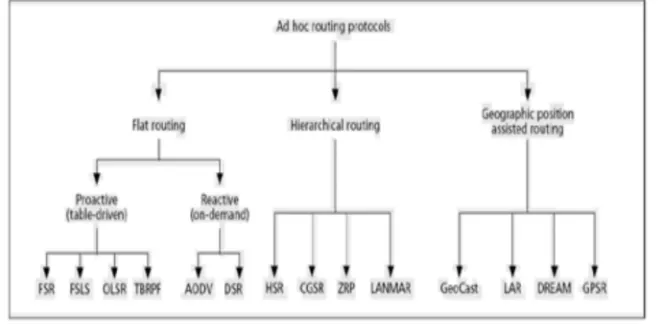
Fig 1.Classification of Routing Protocol
IV. A TABLE –DRIVEN ROUTING PROTOCOL (PROACTIVE)
These protocols are also known as proactive protocol since they maintain the routing information even before it is needed. The routing information is maintained by each and every node in the network. Routes information is mainly kept in routing tables and can be periodically updated.
V. B ON-DEMAND ROUTING PROTOCOL (REACTIVE)
These protocols are also known as reactive protocol. These protocols don’t maintain the routing information at the network nodes if there is no communication. It mainly consists of two types of protocols AODV and DSR.
VI. AODV ROUTING PROTOCOL
AODV (Ad-hoc On –Demand Distance Vector) protocol is a very simple, efficient routing protocol in Mobile Ad- hoc network which do not have fixed topology. It uses RREQ, RREP, RERR packets for performing various operations. This protocol does not maintain the routing information at the network nodes if there is no communication. If node wants to send a packet to another node then this protocol search for the route in an on demand manner and establish the connection in order to transmit and receive the packets otherwise it broadcasts RREQ. If no route is found then same RREQ send to the neighbor. This process is continuing until the destination nodes can receive the RREQ. AODV is made up of both DSR and DSDV which works on the mechanism of on Demand. Due to high mobility of nodes if topology of the network changes the AODV works like DSR and if all the nodes are static then AODV works like DSDV. Advantages of AODV
A. AODV is highly scalable because of minimum space capacity.
B. On –demand route is established.
C. AODV make more efficient use of bandwidth.
D. If there is a link breakage in active routes it can be efficiently repaired.
[image:3.612.150.481.84.252.2]E. It mainly provides unicast as well multicast routing.
Table 1. Comparison of AODV using different parameters. Parameters 1 3 5 >=5
Throughput Low Low High Very High Simulation Low Low High Very High No. of packets
Delayed
High High Low Low
V. CONCLUSION
www.ijraset.com Volume 4 Issue VI, June 2016 IC Value: 13.98 ISSN: 2321-9653
International Journal for Research in Applied Science & Engineering
Technology (IJRASET)
©IJRASET: All Rights are Reserved
137
the queue size is less than five then there is a packet drop which is mainly due to congestion. If the queue size is five or greater than five, the there is less number of packet drop. So we must keep the queue size in AODV routing of each node greater than or equal to 5.
REFERENCES
[1] International Journal of Scientific and Research Publications, Volume 5, Issue 5, May 2015 6 ISSN 2250-3153 www.ijsrp.org
[2] Jagtar Singh & Natasha Dhiman, Department of computer Science& Engineering HCTM Technical Campuses, Kaithal, India Vol.2 Issue 4 July 2013.ISSN 2278-621X.
[3] Ankur Bang, Prabhakar L.Ramteke MANET: History, Challenges and Applications. Volume 2, issue9,Septe mber2013.ISSN2319-4847
[4] Ms.Ruchica A. Kale and Prof.Dr.S.R. Gupta Department of Computer Science & Engineering PRMIT & R, Bandera vol. 6, No.2, Apr 2013 (IJCSA) ISSN: 0974-1011 (Open Access).
[5] Malik N. Ahmed, Department of Computer science & Information. System, University Technology Malaysia. Johor, Malaysia. Abdul Hanan Abdullah, Ayman El –Sayed Department of Computer science and Engineering. Menouf, Egypt. VOL. IJCNSS, 2013, 6,176-185
[6] J. C. Cano, P. M. Manzoni, “A Performance Comparison of Energy Consumption for Mobile Ad Hoc Networks Routing Protocols”, Universidad Politécnica de Valencia.
[7] J. Jacob, V. Seethalaxmi, “Efficiency Enhancement of Routing Protocols on MANET”, IJAET, May 2012. [8] P. Goyal, “MANET: Vulnerabilities, Challenges, Attacks, Applications”, IJCEM, Vol. 11, January 2011.
[9] Zuhong Feng, Long Wang and Xiujuan Gao, “An improved routing protocol Ad-AODV Based on AODV”, International Conference on Information Science and Computer Applications (ISCA 2013) Published by Atlantis Press. 2013. SSS
[10] Krishna Gorantala, “Routing Protocols in Mobile Ad-hoc Networks”, June 15.
[11] C. Perkins, E. Belding-Royer, S. Das, “Ad hoc On-Demand Distance Vector (AODV) Routing”, IETF, Rfc 356,1July 2003.
[12] Zuhong Feng, Long Wang and Xiujuan Gao, “An improved routing protocol Ad-AODV Based on AODV”, International Conference on Information Science and Computer Applications (ISCA 2013) Published by Atlantis Press. 2013.
[13] B. Malany, V. R. Sarma Dhulipala and R. M. Chandrasekaran, “Throughput and Delay Comparison of MANET Protocols”, Int. J. Open Problems Compt. Math., Vol. 2, No. 3, September 2009.