June 2010
Van Thanh Do, ITEM Ivar Jørstad, Ubisafe AS
Master of Telematics - Communication Networks and
Networked Services (2 year)
Submission date: Supervisor: Co-supervisor:
Norwegian University of Science and Technology
Secure Mobile Authentication for Linux
Workstation log on
Problem Description
The Master thesis work will study and propose how workstation identity management can be made more user-friendly and secure by using the mobile phone in the Linux workstation log on process. The current log on process is neither user friendly nor sufficiently secure. This work consists of the following tasks:
1. Study of existing identity management and authentication for enterprise network and workstations.
2. Study of Platform security architecture of Linux.
3. Study of Authentication and identity management standards and protocols (e.g. EAP, RADIUS/ DIAMETER, SAML etc.)
4. Design and implementations of solutions for integration of the mobile phone with the workstation logon processes in different operating systems
5. Threat and vulnerability analysis of proposed solution(s). Assignment given: 21. January 2010
I
Preface
This thesis is done as Master thesis in the Master of Telematics: Communication Networks and Networked Services program at the Norwegian University of Science and Technology (NTNU). The thesis has been performed in the spring semester 2010 at the department of Telematics in collaboration with Telenor R&I.
The supervisor for this thesis has been Ivar Jørstad at UbiSafe AS and the academic responsible has been professor Do van Thanh. I would like to thank them both for their help and support during the work with the thesis and especially Do Van Thanh for the valuable suggestions and comments.
Trondheim, June 17, 2010
III
Abstract
Password based logon schemes have many security weaknesses. For secure environments smart card and biometric based authentication solutions are available as replacement for standard password based systems. Nevertheless, the cost of deployment and maintenance of these systems is quite high. On the other hand, mobile network operators have a huge base of deployed smart cards that can be reused to provide authentication in other spheres significantly reducing costs. In this project we present a study of how mobile phones can be used to provide a secure low-cost two-factor workstation logon solution.
To find and study the available mobile phone based authentication architectures and come up with workstation logon architecture the study of relevant technologies utilized in these solutions: UMTS networks, Bluetooth communication, Remote Authentication Dial in User Service (RADIUS), authentication and authorization in Windows, Linux, and MAC OS X. The analysis of available mobile phone based authentication schemes like SIM Strong schemes based on EAP-SIM, Session-ID based schemes, and OTP based schemes are also added.
A solution for Linux workstation logon process has been proposed in the thesis using the Pluggable Authentication Module (PAM). The Solution uses 2 factors for authentication, one is the static password and the second factor is the mobile based authentication using a 13 character long OTP. With adding the existing technology and giving the administrator the option of selecting the authentication method for user makes the solution more suitable for an enterprise.
V
Table of Contents
1. Introduction ... 1
1.1 Motivation ... 1 1.2 Problem definition ... 2 1.3 Objectives ... 21.4 Organization of the thesis ... 3
2. Background ... 4
2.1 Identity and identity management ... 4
2.2 Identity management in enterprise systems... 8
2.3 Smart card technology ... 19
2.4 Identity management in UMTS system ... 23
2.5 Authentication and authorization in Linux ... 27
2.6 Authentication and authorization in Windows ... 36
2.7 Authentication and authorization in Mac OS X ... 42
2.8 Remote Authentication Dial In User Service (RADIUS) ... 46
2.9 Bluetooth security ... 48
3. Mobile Phone Based Authentication Systems ... 53
3.1 General Mobile Phone Authentication Schemes ... 53
3.1.1 SMS Authentication with Session-ID check ... 53
3.1.2 SIM Strong Authentication ... 54
3.1.3 EAP-AKA ... 56
3.2 One Time Password Schemes ... 56
3.2.1 One Time Password From PC to SMS ... 57
3.2.2 One Time Password From SMS to PC ... 59
3.2.3 Enhanced OTP From PC to SMS authentication ... 61
3.3 Proposed Solution for Mobile Based Linux Workstation Logon Service ... 64
4. Analysis ... 67
4.1 Requirements ... 67
4.1.1 Functional Requirements ... 67
4.2 Use Case Diagrams ... 67 4.3 Interaction Diagrams ... 72 4.3.1 Successful Authentication ... 72
5. Design ... 74
5.1 Components ... 74 5.1.1 PAM Module ... 745.1.2 Mobile Phone Module ... 75
5.1.3 Authentication Server ... 76
5.1.4 MoBA Server ... 76
5.2 Package and Class Diagrams ... 77
6. Implementation ... 81
6.1 Deployment... 81
6.2 Implementation of the Components of the solution ... 81
6.2.1 PAM Module ... 81
6.2.2 Authentication Server ... 82
6.2.3 Authenticator ... 82
6.2.4 One Time Password (OTP) ... 83
6.2.5 RADIUS Authentication Server ... 83
6.2.6 Mobile Phone Module ... 83
6.2.7 SMS Gateway ... 83
6.3 Testing the Prototype ... 83
7. Validation and Evaluation ... 87
7.1 Validating the Functionality against Requirements ... 87
7.2 Different Types of Attack ... 88
7.3 Security Evaluation of the solution... 89
8. Conclusion ... 91
References. ... 93
Appendix A ... 98
VII
List of Figures
Figure 1: Partnership Identity Management [2] ... 8
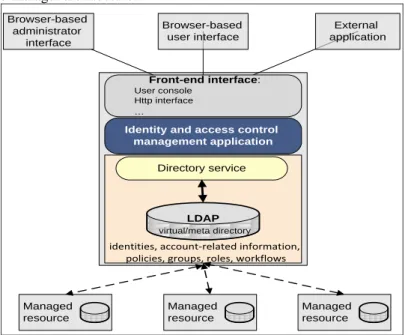
Figure 2: Identity and access manager architecture ... 11
Figure 3: Kerberos authentication model ... 13
Figure 4: ALL IP UMTS ... 24
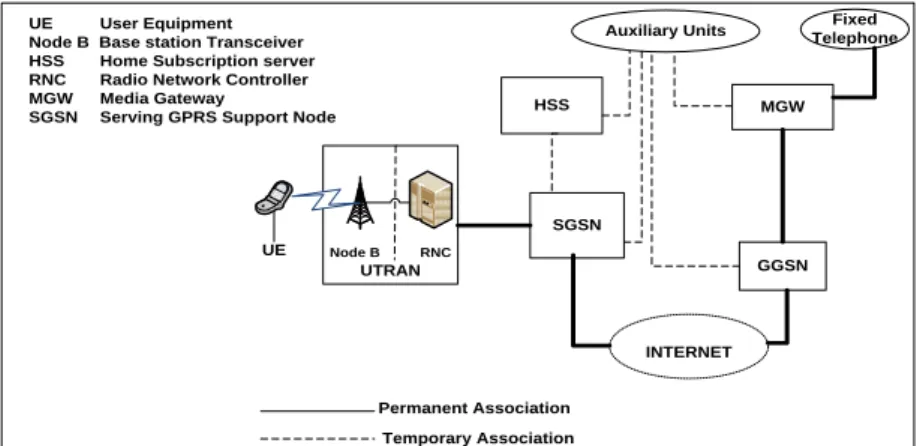
Figure 5: UMTS architecture [40] ... 25
Figure 6: Mutual Authentication and Key Agreement [40] ... 26
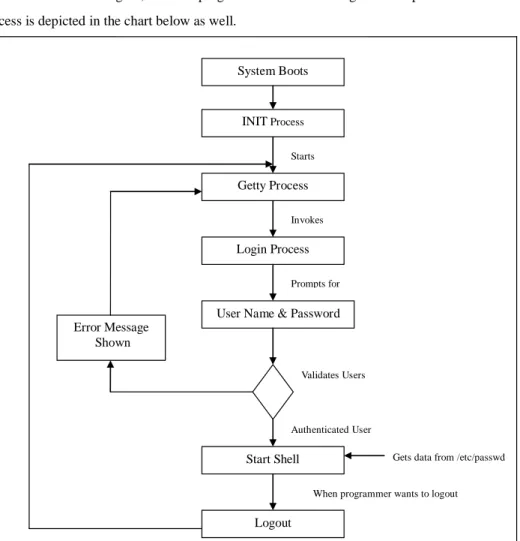
Figure 7: Login Process in Linux ... 31
Figure 8: Mapping between ACL entries & File mode Permission Bits [50] ... 33
Figure 9: PAM Application Structure ... 34
Figure 10: Interaction of NetInfo and Users [72] ... 42
Figure 11: Administrator Management with NetInfo [72] ... 43
Figure 12: Shared Domain in NetInfo [72] ... 43
Figure 13: NetInfo Hierarchies [72] ... 43
Figure 14: RADIUS Architecture [75] ... 46
Figure 15: RADIUS Different Authentication Operations ... 47
Figure 16: RADIUS Message Format ... 47
Figure 17: SSP Link Key Establishment for pairing [78] ... 49
Figure 18: Bluetooth Authentication [42] ... 51
Figure 19: Bluetooth Encryption [78] ... 52
Figure 20: SMS authentication with sessionID check ... 54
Figure 21: EAP-SIM authentication ... 55
Figure 22: EAP-AKA authentication ... 56
Figure 23: OTP from PC to phone authentication [3] ... 58
Figure 24: OTP Applet [3] ... 59
Figure 25: OTP SMS to PC authentication [3] ... 60
Figure26: Component Architecture [5] ... 61
Figure 27: Authentication process ... 62
Figure 28: Key Exchange procedure [5] ... 63
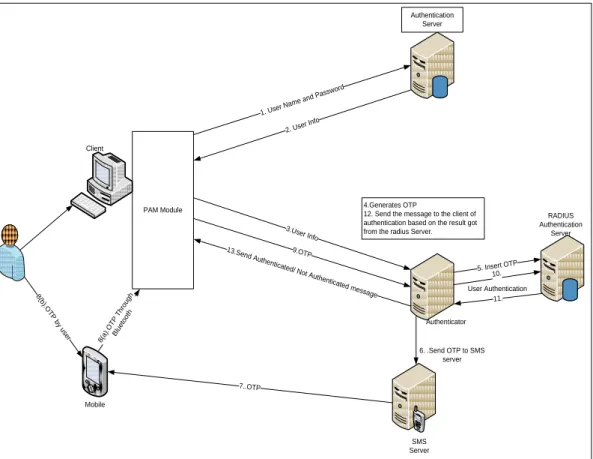
Figure 29: Mobile Based Authentication System for Linux Workstation Logon ... 65
Figure 30: General Use Case Diagram ... 68
Figure 31: OTP Generation Use Case ... 69
Figure 32: Sequence Diagram- Authentication ... 73
Figure 33: Main Component Diagram. ... 74
Figure 34: PAM Module Component Diagram. ... 75
Figure 36: Authentication Server Component Diagram. ... 76
Figure 37: MoBA Server Component Diagram. ... 77
Figure 38: MoBA System for Linux Login Service Package Diagram. ... 78
Figure 39: PAM Module Class Diagram. ... 79
Figure 40: Mobile Phone Module Class Diagram. ... 79
Figure 41: MoBA Server Class Diagram. ... 80
Figure 42: Authentication Server Class Diagram. ... 80
Figure 43: Secure MoBA for Linux Workstation Logon Deployment Diagram ... 81
Figure 44: Users in the LDAP Authentication Server ... 84
Figure 45: User Information in LDAP Server ... 84
Figure 46: Server Waiting for Clients. ... 84
Figure 47: LDAP Authentication ... 85
Figure 48: OTP Generation Snapshot ... 85
Figure 49: OTP received at User Mobile ... 85
Figure 50: User Authentication Snapshot. ... 86
Figure 51: Component Threat Model ... 89
IX
List of Tables
Table 1: Identities in UMTS components [40] ... 25
Table 2: Linux built-in groups... 28
Table 3: Types of ACL entries [50] ... 32
Table 4: Masking of permissions [50] ... 33
Table 5: Return Codes ... 35
Table 6: Built-in accounts in Windows ... 36
Table 7: Well-known system groups in Windows ... 37
Table 8: Logon rights in Windows ... 38
Table 9: Authorization in MAC OS... 45
Table 10: Rule Attributes and Description [73] ... 45
Table 11: Tokens installed with MAC OS ... 46
Table 12: Use Case-Login Service ... 68
Table 13: Use Case-Maintain User Information ... 69
Table 14: Use Case-OTP Generation ... 70
Table 15: Use Case-Get User Information ... 70
Table 16: Use Case-Generate OTP ... 71
Table 17: Use Case-Send OTP ... 71
Table 18: Use Case-Perform Authentication ... 71
Table 19: Use Case-OTP SMS ... 72
XI
Abbreviations
AAA Authentication, Authorization and Accounting ACL Access Control List
AES Advanced Encryption Standard AK Authentication Key
AKA Authentication and Key Agreement API Application Programming Interface AS Authentication Server
AuC Authentication Center BSC Base Station Controller BSS Base Station Subsystem BTS Base Transceiver Station
CK Cipher Key
DAC Discretionary Access Control EAL Evaluation assurance level EAP Extensible Authentication Protocol ECDH Elliptic Curve Diffie Hellman EIR Equipment Identity Register
FAST Flexible authentication secure tunneling GGSN GPRS support node
GID Group Identity
GINA Graphical Identification and Authentication GSM Global System for Mobile Communications HLR Home Location Register
HMAC Hash-based Message Authentication Code HSS Home subscription server
HTTP Hypertext Transfer Protocol
IAM Identity and access control management ID Identity
ID-FF Identity Federation Framework IdM Identity Management
IK Integrity Key
IMEI International Mobile Equipment Identity
IMEISV International Mobile Station Equipment Identity and Software Number IMSI International Mobile Station Identity
ISIM IP multimedia Services Identity Module IEEE Institute of Electrical and Electronics Engineers IETF Internet Engineering Task Force
IMSI International Mobile Subscriber Identity JAD Java Application Descriptor File JME Java Micro Edition
KDC Key Distribution Center
LDAP Light weight directory Access protocol LFSR Linear Feedback Shift Register LMP Link Management Protocol MAC Message Authentication Code ME Mobile Equipment
MGW Media Gateway MITM Man -In-The-Middle MNO Mobile Network Operator
MoBA Mobile Based Authentication MS Mobile Station
MSC Mobile Switching Center
MSISDN Mobile Subscriber Integrated Services Digital Network NIS Network Information Service
NIST National Institute of Standards and Technology Node B Base Station Transceiver
NONCE Number used once OTP One-Time Password OS Operating system
PAM Pluggable Authentication Module PC Personal Computer
PDA Personal Digital Assistant PIN Personal Identification Number PLMN Public Land Mobile Network
RADIUS Remote Authentication Dial In User Service RAM Random Access Memory
RAND Random number RES Response
RNC Radio Network Controller ROM Read only Memory RFC Request for comments RPC Remote Procedure Call
SAML Security Assertion Markup Language SAP SIM access protocol
SASL Simple Authentication and Security Layer SGSN Serving GPRS Support Node
SHA Secure Hash Algorithm SID Security identifier
SIM Subscriber Identity Module SIP Session Initiation Protocol SMS Short Messaging System SP Service Provider
SQL Structured Query Language SQN Sequence Number
SSO Single sign-on SSP Secure Simple Pairing TGS Ticket Granting Service TGT Ticket Granting Ticket TLS Transport Layer Security
TMSI Temporary Mobile Subscriber Identity TOTP Time-based One-time Password Algorithm UE User Equipment
UI User Interface
UID Unique Numerical User Identity UICC Universal Integrated Circuit Card
UMTS Universal Mobile Telecommunications System USIM Universal Subscription Identity Module UTRAN UMTS terrestrial radio access network. VLR Visitor Location Register
XML Extended Markup language XRES Expected Response
1 1. Introduction
This chapter gives the overview of the Thesis. It includes the motivation, problem definition, objectives and how the thesis is organized.
1.1 Motivation
Every person in our society has one or several identities. A common person normally has a national identity, an employee or student identity, an alumni identity, a driver license and a set of other digital identities. People are constantly required to prove their identity. While in the real world proving your identity usually means showing a document that identifies you but in the digital world this process can be much more sophisticated. There are digital identity attributes like login, name, etc. that can be easily copied, now to prevent the identity theft some secret credentials known only to a person and an authentication authority have to be used [1] for secure identification of a person. Therefore Identity management is one of the important concepts of the modern society.
Identity management is a nonstop process that encompasses on identity lifecycle management, authentication, and access control [2] among other things. In the perspective of the modern enterprise information systems the main idea of the identity management is to manage access and control to enterprise resources and information. Enterprise information systems provide a range of services to support business processes. With the development of e-business the functionality of such systems grows along with increase in complexity as well, which makes it difficult to provide full protection from unauthorized access. The Authentication process plays an important role, as the decision whether to give access to services or provide resources is based on identity. Therefore, it is important to ensure that an attacker (fraudster) should not be able to steal the identity or masquerade as a user to a system in some other way.
The authentication party (user) presents a proof of identity to the authenticating authority for getting access to the system. The authentication schemes are mostly based on one or the combination of the following factors: something you know (password), something you have (ID card), and something that you are (fingerprints). One of the most common authentication schemes nowadays is a static password authentication. The password authentication schemes have been in use for a very long period of time. The reason for using static password scheme is that they are easy to use and people are used to them. Though, from the security point of view these schemes have many weaknesses.
The constantly increasing computational power of modern computers is making it possible to launch a brute force extensive search attack on password based authentication schemes if the passwords used are weak. As with study of cryptographic protocols and people (hackers) new vulnerabilities of security are coming in observation quite often, thus dramatically decrease the theoretical security level in cryptographic protocols which allows attackers to launch much more efficient attacks than the extensive search. So in strong designed cryptographic schemes the use of longer keys which have higher entropy provides higher security level. Therefore, it is required to use randomly generated passwords with adequate length that consist of a combination of letters, numbers, and special symbols to overcome this problem. Though, such passwords are difficult to remember for humans and this is one of the reasons that usually people choose passwords that are easy for them to learn but can be easily compromised with a simple dictionary
attack. Additionally, the user-name/password systems that the user has to use can be large in number which may result in reusing the credentials for all systems. It is also important to notice that by using strict administrative measures may not strengthen the security of a system as a too strict password policy (difficult to remember passwords or frequent change of password, etc.) can actually weaken it, since users can end up writing down passwords. Use of default passwords or careless users who reveal their passwords either accidentally or as a consequence of social engineering attacks can further decrease the security level of a system.
1.2 Problem definition
There are systems where the ordinary static password based authentication may be sufficient as depending on the sensitivity of activity or data it has, but systems that processes sensitive data requires stronger authentication schemes e.g. Biometric systems, smart card based systems or one-time password based authentication schemes as these are considered to be much stronger than the ordinary user-name/password authentication scheme. However the cost of deployment and maintenance makes these systems less common.
In smart card development, security is a keystone to be considered. The blend of logical and physical security mechanisms makes a high level of security. The ability of storing information (e.g. identity information) and executing cryptographic protocols resulted in a huge success for smart cards to be used in security sensitive areas. The other benefit is that the Mobile network operators have already deployed smart cards to authenticate subscribers, hence having the infrastructure which can be reused to provide authentication in other services.
Thus a mobile phone authentication can provide strong authentication scheme based on the possession of the Universal Integrated Circuit Card (UICC) with a 3GPP application and based on the authentication of the card owner to the card. This solution which uses a mobile phone with a UICC card as a security token provides a much stronger scheme of security than the ordinary user-name/password authentication and at the same time decreases operational costs [3]. As currently there is no workstation logon architecture based on the mobile phones for Linux, thus we need to come up with the idea of using mobile phone based authentication scheme to integrate it in Linux operating system logon process. Thus, a study of related technologies and a detailed analysis of Linux logon process and its internal mechanisms responsible for authentication and logon are done in this thesis.
1.3 Objectives
There is a lot of research done and several solutions have been proposed, using the mobile phone based authentication [3, 4, 5]. The main objective of the thesis is to study available mobile phone based authentication solutions and to come up with the most appropriate architecture that uses mobile phones for Linux workstation logon in an enterprise environment. As in my knowledge there is no available system or a published work that deals with the mobile phone based workstation logon using Linux operating system.
The other tasks that are required for the thesis are as following:
Study of existing identity management and authentication for enterprise network and workstations.
3
Study of Authentication and identity management standards and protocols (e.g. EAP, RADIUS/DIAMETER, SAML etc.)
Design and implementations of solutions for integration of the mobile phone with the workstation logon processes in different operating systems
Threat and vulnerability analysis of proposed solution(s).
1.4 Organization of the thesis
The document has been organized in the following way:
Chapter Description Chapter 1:
Introduction
This chapter gives the overview of the thesis and consists of motivation, problem definition, objectives and how the thesis document is organized.
Chapter 2: Background
This chapter gives the background study of the technologies required for the implementation of thesis. It starts with identity and identity management then identity management in enterprises and UMTS, SIM technology, Authentication and Authorization in different operating systems and at the end covering Bluetooth security and the Radius technology. Most of the work in this chapter has been covered in the project and the thesis is the continuation of work done in the project.
Chapter 3: Mobile Based Authentication Systems
This chapter presents the different architectures proposed for the mobile based authentication system. At the end a solution for mobile based authentication system for Linux workstation has been proposed.
Chapter 4: Analysis
In this chapter the functional requirements, non functional requirements, use cases and the activity diagram of the system is discussed.
Chapter 5: Design
In this chapter the component diagrams, package diagram and the class diagrams are discussed.
Chapter 6: Implementation
In this chapter the deployment diagram has been discussed along with the test cases of the system implemented.
Chapter 7: Security Evaluation
This chapter discusses the security aspect of the proposed architecture.
Chapter 8: Conclusion
This chapter discusses the results of the knowledge obtained from the thesis with the future work.
2. Background
To come up with the solution for the mobile based Authentication for Linux workstation logon process, a study of relevant technologies utilized in these solutions have been made. First the concept of identity has been explored; thereafter a study of different identity management systems in enterprises has been performed. As the mobile phone contains a UICC smart card, it is important to study how smart cards can be helpful to provide a secure storage and execution environment. Nowadays, different authentication schemes use Bluetooth to connect the mobile phone with the computer. Therefore, it is required to study whether Bluetooth can provide a sufficient level of security for using it in the workstation logon solution.
The study of identity management in UMTS is done as many mobile phone based authentication schemes uses GSM/UMTS secrets and identities and they rely on a mobile network encryption. The authentication and authorization in different operating systems is analyzed, as it was important for the thesis. At the end Remote Authentication Dial in User service (RADIUS) has been explored.
2.1 Identity and identity management
Identity
Every object around us has some characteristics which make easy for us to recognize them e.g. shape, weight, size, height etc. Identity can be defined as: ―The similarities and differences between objects that make them unique to identify.”
The word identity is easily understood by everyone but at times it is difficult and confusing to understand when we consider the same characteristics of objects at different time and place. Identity in Logic: It is defined as the relationship between a thing and itself i.e. it can be defined with a predicate ―=‖ such if ―x=y‖ is true when x is the same thing as y. Identity is transitive (if we have A, B, C where A=B and B=C than A=C), symmetric (For A and B if A=B then only B=A), and reflexive (For every A is A).
The Identity of Indiscernibles states that: ―No two distinct substances exactly resemble each other‖. This means that: ―There does not exist two objects that can have exactly the same
properties or characteristics‖.
There are some laws that explain the above rule as if two entities are numerical identical then they must be qualitatively equal (same properties) and similarly if the two entities are qualitatively equal then they must be numerical identical. There are problems with these laws like the symmetric of the world, the infinity problem, the impact of quantum mechanics as discussed in [1].
Personal Identity
Identity of human beings is more complex. The personal identity is about the characteristics that make them unique and recognizable. Personal identity is also about ones knowing himself as well. There are certain issues that are relevant to personal identity are as follows:
5
What are the conditions that are necessary to make sure that same person exists in different times?
How a person can be recognized? How a person is unique from others? How people should perceive a person? Can a person change himself?
Who is the model of a person whom he wish to be?
As there are some human characteristics that change with time like weight, height, so then how we can make sure that the same person exists in different times? This question can be answered with the following approaches:
The Psychological Approach: It is about the psychological things like memories, beliefs. So according to this approach it is necessary to for a person to have psychological continuity to exist in different time.
The Somatic Approach: This approach is about the physical relation. So identity of a person in different time consists in the identity of his body.
The Simple View Approach: The approach says that the person in different can only exist in different times if they are identical.
Citizen Identity
Governments throughout the world are introducing digitized personal identification and authentication systems into their service relationships with citizens [6].
This has improved the efficiency of and effectiveness of public service provision as discussed with case studies in [7].
The citizen identity depends on physical characteristics and needs physical continuity for identification. There can be infinite set of characteristics so we need to restrict to a few characteristics to make the process easy. The characteristic properties are called Attributes [1].
An attribute is a characteristic attached with an individual. An attribute can be intrinsic (by nature) like finger prints, eye etc. or extrinsic (acquired from outside) like name, address etc. Attribute can be persistent or temporary.
An identifier is an attribute that is most representative for an entity with in a context. E.g. a bank account and a person have identifiers. The person can be associated with account with extra information like social security number.
Personal Identifiers are the unique attributes associated with a human being that are impossible to change like biometric attributes.
Biometrics is systems used to recognize a person on physical attributes like fingerprints, iris, face, retinal, veins.
An identity is a set of attributes that are permanent and associated with an individual which are unique and always make possible to recognize a person.
Identification is a process of associating personal identification to an individual who have some attributes.
Authentication is a process of proving the association between identifier and the individual.
Authorization is a process of deciding to give access to which action on the basis of identifiers or attributes.
An identification document or identity card is a credential used to verify the person identity. It may include name, age, profession, sex, rank, religion and new technologies are adding the biometrics as well. Passport is one of the example of identification document.
The ID cards are expensive but one of the serious concerns is privacy with electronic ID. Electronic ID cards can be used to track movements of a person.
Digital Identity is representing the identity of an individual in computers. Like we do online banking transactions the bank needs to confirm the identity of the user, so for that reason we need digital identity that may consist of name, password etc.
One of the problems that are arising is to have many login names and passwords that each user is getting. To solve the problem single sign on solutions are introduced to sign in once and have access based on user credentials to all processes without entering the credential again and again.
Identity Management
Identity management is one of the hot areas for growth as it is expected to rise to more than USD 950 million by 2009 [2].
Identity management can be defined as: ―a set of data management systems and practices designed to increase confidence in the identity of individuals where appropriate‖ [8].
Identity management can also be defined as: ―a discipline that consists of processes, policies and technologies to manage the complete life cycle of user identities across the system and to control the user access to the system resources by associating user rights and restrictions, these resources include information, services, process capability, buildings and physical asset‖ [2].
The main benefits of Identity management systems are as following.
It allows having control over user-to-application interaction which makes easy for auditing and reporting.
It helps in lower operational costs.
We have enhanced security of assets with the use of Identity management systems. We have good productivity. Users can access from outside the enterprise securely. Different companies can gave access to specific services securely without having to expose the whole system to outsiders.
There are some functions that are performed by an Identity management system are discussed as follows:
Identity Administration: This function includes the management of the digital identities in the system which can be creation of digital identity (fingerprints, name, address etc) then maintaining it and termination if required.
7
Access control: This functionality consists of providing the necessary access to the resources when required and is enforced by using access rights. It can be giving deletion, writing access to the user for some data.
Authorization: This process shows what resources the user is allowed to access. The permission to access is granted by the authority.
User Self Service: This functionality includes having such process to enable users in the administration of his identity like resetting password etc.
Auditing: This is one of the important functionalities of Identity management systems. It includes analysis of all the process which helps in making the system secure e.g. it may include digital forensics for determining the access of and illegal user.
Identification: This is a process of recognizing the users at the login.
Authentication: This is the process to make sure that the person who claims to be user is the real one.
Single Sign-on: There are certain processes that requires authentication at different stages and many times, so single sign-on helps to access all resources at once and can help in increasing productivity.
Federation: Theachievement of this process is to enable users of one domain to access the services, data of another domain securely which will help in removing redundancy and at low cost.
Reporting: This process consists of reports that are generated by auditing.The report should be meaningful for the users that may be the owner.
Directory: It stores the identities. It can include Light weight directory Access protocol (LDAP), relational databases, flat files and other types of data stores. Meta Directory: It provides the organizational view of the information in the heterogeneous directories and other storages.
Enterprise Identity Management
The organizations usually have different departments. Users in each department are given identity like user name and password which is valid for that department. If the user is given some task in another department for some time, he has to be registered in that department which can cause serious problems if he is not deleted from there than and difficult for user as well to remember many passwords and usernames. So to solve this problem it is recommend having a centralized Identity management system and the user is granted access to the resources according to the company policies, thus reducing cost, time and making it more secure.
Partnership Identity Management
Nowadays many companies have to make collaborations with other companies and terminate them as soon as possible for survival. Collaboration between companies requires sharing of data and resources, so it would be better to have control over the access given to the users of other company to avoid any serious damage. So it would be to have an identity management system
that allows the flexibility of adding the users of other company and easily assigning the required services securely without damaging the ongoing system. Figure 1 explains that system 1 can access the data of system of another company.
Figure 1: Partnership Identity Management [2] Customer Relation Identity Management
In this kind of Identity management it is encouraged to give the management task to the user as maximum as possible, which will help in reducing management cost. It needs careful evaluation that which system the user is allowed to access and which not to for security reasons.
Identity Management as Commercial Service
Identity management is a complex process which requires resources and knowledge. Companies don‘t have that much resources so they go for outsource the identity management.
Three parties are involved in this process. One is an Identity provider that manages the identities of the users. They issue and validate the identity credentials.
Second is the Service provider that provides the services for the end user. They are the relying party. They provide the services to the user on the identity credentials validated by the identity provider.
Third is the User who is using the services and proves his identity by his credential like user name and password.
So for a company who provides services have not to worry about Identity management. He works as a relying party and the Identity management is provided by the Identity provider, reducing his management cost.
2.2 Identity management in enterprise systems
To provide a range of services for supporting business processes, the enterprise information systems are made. The Business objectives are fulfilled by the development of e-business, enterprise IT systems and that is the reason behind the growth of functionality provided by IT systems. Yet, the complexity and vast functionality of these systems makes it harder to provide
9
protection against the unauthorized access to the enterprise information. The Access control management is required for outsiders, semi-trusted parties like partners, customers and insiders. For managing the access to the enterprise resources, access control system strongly depends on the identity management system. Identity and access control management (IAM) has to meet the requirement of business to have external links with partners, suppliers, customers and other people. Thus, managing the identities of corporate users is not enough; identity management goes beyond the boundaries of single enterprise.
The other fact that makes it more complicated is that many organizations have heterogeneous IT platforms, and each has its own identity database. The centralization of identity management will simplify the management tasks, will reduce the management costs, and decreases the risk that something will not be taken into account during data flows planning and privileges setup [10]. Additionally, IAM systems must fulfill the government legislation in order to provide specific services like processing credit card payments [10].
Centralized identity and access control management
With Centralized identity and access control management approach the identities and access controls for many heterogeneous systems with different repositories in an enterprise can be managed with a single interface. A directory service forms the basis of an identity and access control management system as it stores the information about the state of an enterprise system. This state information consists of identities, account-related information, policies, roles, groups, workflows etc. A directory is a unique type of database which is optimized for read operation, whereas the other databases are optimized for the write/modify operation [11]. In addition, directories are mainly accessed through Lightweight Directory Access Protocol (LDAP) and databases utilize Structured Query Language (SQL) for this purpose [11]. If we use only one server that stores all data in one location, then we can say that the directory is centralized. The directory can be distributed as well, if there is more than one server and information has been replicated between servers in order to have all the same data or it is divided between the servers so that each can hold certain part of the data.
It is difficult to manage different repositories of identities and access control rules which can also cause mistakes that can lead to weakness in security. Synchronization and consolidation of data will decrease the management costs and will make the whole system much more easily manageable. There are different methods which can provide an integrated enterprise directory service. The options can be a single directory, a meta directory or a virtual directory [10]. Single directory: In this method there is only one directory of identity information for the whole system. A single directory will simplify the management tasks as compared to a bunch of different repositories; however there have to be some modification in some applications to be able to work with a single directory [10]. Uniqueness is not in physical terms but in logical. In order to not create a single point of failure and share the load a single directory can be distributed in to several servers having the same data. Legal, political or security issues may create a barrier preventing the creation of a single directory [12]. In this case a single interface will be provided by the IAM to manage all these systems.
Meta directory: In this method all the information from different repositories is copied into a single directory with a unified namespace. The synchronization between the meta directory and satellite/original repositories is controlled through bidirectional synchronization mechanism if
there is some change occurred in the data [12]. With using this approach the requirement of modification of applications will not be needed, that will work with the particular repositories as these repositories will remain in the system [10].
Virtual directory: In this method the virtual directory will serve as an abstraction layer between various repositories and applications by providing a single logical directory which will gather the information from all the repositories in real-time. The logical presentation of data can be modified for each application. By using the same input data different application-specific views of data, optimized for application needs can be derived [13]. There is no central physical directory which will contain a copy of all data.
The main functions of IAM are:
One of the main tasks is managing users and accounts which include creating, editing, deactivating, and deleting users, setting/changing user passwords, etc.
The other task is policy and workflow based management which helps to automate management process. The Policies which can be used in an enterprise consists of account provisioning, password, authentication policy, etc. The workflow can be defined as a predefined sequence of automated processes that automates some time-consuming actions like gathering approvals. Workflows also enforce consistency (it is the sequence and the set of involved actions to be constant) and completeness (it is to not start some action until all previous are completed successfully). The Request for approvals always takes the same predefined path and is automatically delivered to the person in charge.
The functions of IAM include Privileges and Access control management for setting permissions to make sure that only those entities that have permission can access the resources. The common models used for the access control are Discretionary Access Control (DAC), Mandatory Access Control (MAC) and Role-based access control model.
The IAM functions include Enterprise single sign-on mechanism that enables a user to authenticate once to a system and can allow user to reuse this authentication for many enterprise applications during the current session. In this case the requirement to have different accounts for different service providers and remember corresponding passwords is not needed. A user gets enterprise wide access to data at once.
The IAM also provides strong authentication which imply the usage of a two factor authentication. The Technologies such as smartcards and biometrics can be used to provide two-factor authentication. According to [12] SIM-based strong authentication that uses mobile phones can be quite cost-efficient as compared to the other two-factor authentication solutions, and it is comparable in price with password-based authentication.
The IAM provides Monitoring and audit services in which system events are automatically checked against policies and rules for violations. If the violation is detected then some action is triggered like account blocking.
The IAM provides Federated identity management in which user authenticated identity information is communicated across security domains to trusted partners that exist in the same Circle of trust.Thus, a user is not required to authenticate when he accesses the resources of a collaborating company.
11 Identity and access manager architecture:
Front-end interface:
User console Http interface …
Identity and access control management application
Directory service
LDAP
virtual/meta directory
identities, account-related information, policies, groups, roles, workflows Browser-based administrator interface Browser-based user interface External application Managed resource Managed resource Managed resource
Figure 2: Identity and access manager architecture
A standard administration and management toolkit for a single directory can be used without using IAM software. But all the functions that are automated in an IAM suite have to be done manually. IAM suites can provide a benefit that they can define policies that automatically create user accounts, mail boxes, and group memberships in real-time. Moreover, creating a single directory is not always possible.
Centralized authentication and trust
At the early phase of the development of authentication solutions, the use of decentralized autonomous approach was common. In a system every station performs the authentication and authorization autonomously by maintaining its own user‘s file or user‘s database, and the access to the services and resources was provided to that station depends on that file. To allow users to use services provided by some server the administrator had to add information about those users to the users file of the server. A user is required to have an account on every station for the services and resources he uses. This kind of management approach had serious scalability issues. In case where different passwords were used for different accounts so the remembering of all passwords and the synchronizing password changes between many accounts in case one password was used for many accounts makes both these approaches a big problem in management and security. All identity and access control management procedures requires a lot of work and were prone to errors.
The solution for the problem was to use a trusted third-party authentication approach. In this method the third-party authentication authority maintains a centralized repository with identities and account relevant information. Each user is given only one account which is maintained by the third-party authority. The authentication is responsibility of trusted third party and is solely
done by it. The rest of the systems trust it. The third-party should be highly secure thus can be trusted; otherwise the compromise of the third-party would lead to the compromise of a whole system. The third-party authority can be a single point of failure; if it crashes the whole system will stop working. There are two third-party authentication based schemas [14]:
Implicit authentication schema: In this schema an authenticating entity (ex. Service provider) does not request authentication service from a centralized authentication authority. The authentication is cryptographically produced from the encrypted message given by the third-party to the entity that is being authenticated. E.g. Kerberos v5 protocol uses this kind of approach.
Explicit authentication schema: In this schema an authenticating entity explicitly requests third-party to make authentication.
There are many technologies which can provide authentication and access control, but among all the preferred are Kerberos security service and LDAP directories [15]. Kerberos prime task is to provide authentication but it can also provide some simple authorization services. Alternatively, LDAP directories are primarily used for storing and managing authorization data, but they can also provide some authentication services [15] as well. And this is the reason that these technologies can be used separately or can be integrated in one system.
Kerberos protocol
The Kerberos protocol deploys implicit authentication schema. Kerberos version 5 which is defined in RFC 4120 is the present version of the protocol. Kerberos performs mutual secure authentication in the network which is not secure, however it does not provide accounting and offers very basic authorization [16]. To provide secure authentication service Kerberos uses secret key cryptography. The three types of entities in the Kerberos architecture are as following:
Clients: They are the one that wants to use the services provided by the service providers.
Service providers: They provide the services for clients to use.
Kerberos servers: They manage Kerberos authentication. They are known as Key Distribution Centers (KDC). A secret key is shared by the KDC with every principal (a client or a service provider) in a network. The service providers and clients trust KDC. KDC is composed of three different elements. Authentication server that serves the client authentication requests. The Second element is the Ticket granting server whose job is to issue Ticket Granting Service (TGS) tickets to clients, and the third element is the database that stores identities, secret keys, policies, etc.
The security in the Kerberos schema is based on tickets and the corresponding authenticators. A ticket is an encrypted message that contains the client name, session key and the life time of the ticket. The encryption of the ticket is done with a secret key shared by a server and KDC. The authenticator consists of an encrypted client‘s name, client‘s realm, timestamp. The encryption of authenticator is done with the session key that is in the corresponding ticket. A client can authenticate by providing the ticket and the authenticator to a server.
The KDC is trusted by all principals in a realm which is an authentication domain with some administrative boundaries. The management of a realm is done by only one KDC (to share the load a KDC can be distributed between several servers, but logically it is one). Each realm has its
13
own KDC database. The principal identity is formed with the Name and the Realm parts. Kerberos authentication model
Client
Service provider
Key Distribution Center
Authentication server (AS)
Ticket Granting Server 1a. Authentication Request
AS_REQUEST
2a. Ticket Granting Service Request TGS_REQUEST 2b. TGS_REPLY 1b. Authentication Reply AS_REPLY database 3. A pplic atio n se rver AP_ REQ { con tain s TIC KET } AP_ REP LY
Figure 3: Kerberos authentication model
The Kerberos authentication procedure consists of three distinct exchanges which are discussed as following:
The Client & Authentication server exchange: The Client authenticates the KDC and obtains a Ticket Granting Ticket (TGT) which will be used to get the credentials for authenticating to a Service provider. The client can be authenticated by the Authentication server before issuing the TGT (pre-authentication), or it can wait until the Client – Ticket granting server exchange [15]. From the security prospective it is better to make pre-authentication, because this will provide a protection against the attacks on the principal‘s secret key [17] that is used by KDC to encrypt the response. The Client & Ticket granting server exchange: The Server authenticates the Client (this authentication is done in every case) and grants a Ticket Granting Service (TGS) to the Service provider which is specified in the request by the client. The TGS granted will be used in the Client – Service provider authentication.
The Client & Service provider authentication exchange: In this procedure the Client sends a request to the Service provider which normally contains the authentication information and the initial request [17]. The Client at all times authenticates to the Service provider, but the client must requests for mutual authentication explicitly [17]. The TGS and the authenticator that are in the Client‘s request facilitate the Service provider to authenticate the Client and obtain a shared session key which can be used for further protection of communication with the client [17]. If mutual authentication is requested by the Client then the reply of the Service provider contains the authentication information that enables the Client to authenticate the Service provider.
The main services that are provided by the Kerberos are as following:
Mutual Client & Server authentication: In this process a client is able to authenticate both KDC and various Service providers which will help by not allowing a malicious server to deceive a client and obtain confidential information.
Centralized management of authentication information: The Kerberos uses a centralized database for storing identity and account information.
Delegation: If a principal wants to allow a service provider to perform operations on its behalf e.g. a client can assign rights to a printing server to access client‘s files on a file server to print them out [17]. A principal can ask the KDC for a new TGT with different network address that will allow a service with that network address can act on behalf of the principal. The principal is required to transmit the new TGT and the corresponding session key to the service provider to facilitate delegation.
Single sign–on: The Kerberos supports single sign-on with caching tickets and the corresponding session keys. Thus the next time the authentication is needed, a user is not required to type in the password again. The cached credentials are used on user‘s behalf.
Cross-realm authentication: In this process a client in one realm can authenticate to a service provider from another realm. For establishing an inter-realm communication the service provider‘s KDC should be registered as a principal in the client‘s KDC. After that the client asks its KDC for a ticket to the service provider‘s KDC. It presents this ticket to the service provider‘s KDC and requests for a ticket to the service provider. It is possible to pass through several realms to authenticate to the remote service provider. The Inter-realm communication can be controlled hierarchically. So the authentication path through multiple realms can be easily created [17].
Multi-factor authentication: the traditional Kerberos authentication is done with the secret keys (for a user the secret key is derived from a password). Though, the public key cryptography for initial client – KDC authentication (PKINIT which is defined in RFC 4556) can also be used which makes it possible to use smart cards and other cryptographic tokens when authenticating through Kerberos [18]. PKINIT needs the usage of trusted by KDC and its principals Certification Authority. We can use One-Time Password mechanism and biometric scanners for the initial authentication.
There exist several different implementations of the Kerberos Protocol e.g. MIT version, Heimdal version, Windows Active Directory version etc [19]. Active Directory does not simply use Kerberos as its default authentication protocol, leaving the NTLM for compatibility [20]. But it tightly integrates it in its framework which results in some issues in environments with Windows and non-windows systems [18].
Explicit authentication schema
The authentication in this schema is entrusted to a third-party that has all the identity information. The typical authentication procedure is discussed as following:
15
a client request a service from the application server and it forwards its credentials (identity and password) to the application server
the application server requests the trusted third-party server to carry out the authentication
It is required to cryptographically protect the exchanges between the client and the application server and between the application server and the third party.
To provide a centralized third-party directory service for storing identities and account-related information, the technologies like Network Information Service (NIS), NIS+, and directory services with Lightweight Directory Access Protocol (LDAP) interface are used. Normally the NIS is used to centralize the storage of /etc/passwd, /etc/shadow, /etc/group files from all stations in the Unix-based domain, and after that this information can be accessed by clients [21]. The changes in the centralized directory are also propagated to all source stations. From administration point of view the NIS is easy to manage, but it lacks the security mechanisms. It does not provide authentication and authorization for directory access and the communication is unencrypted [16].
Both NIS and NIS+ protocols are based on Remote Procedure Calls (RPC). NIS+ is advance version of the NIS protocol. Besides providing hierarchical namespace, NIS+ offers a stronger security mechanism. Though NIS and NIS+ are legacy technologies and it is recommended to transfer to LDAP [22].
Authentication against LDAP server
The Lightweight Directory Access Protocol (LDAP), defined in RFC 4511, is a protocol that accesses the directory services which comply with X.500 standard. There are various directory servers that provide LDAP support e.g. Active Directory, IBM Tivoli Directory Server, OpenLDAP, Novell eDirectory, Sun Java System Directory Server etc.
LDAP is a client-server protocol which runs on the top of TCP. It is recommended that the servers use port 389 for an incoming request. A client requests to a server for performing some operation in the directory. The server responds to the request, performs the operation and returns a response. Some of the operations used in LDAP are bind, unbind, add, delete, search, modify, compare and startTLS.
The Bind operation is the same like authentication. The Bind request specifies the authentication identity. The Bind operation uses different authentication methods that are simple authentication method and SASL authentication method [23]. The simple authentication method is further decomposed into the following methods that are anonymous authentication, unauthenticated authentication, and name/password authentication. In the name/password authentication, for validation the client sends both the name and the password to the server. This method of authentication should only be used in environments where confidentiality protection is provided [23]. A TLS can be established for the LDAP session by sending a request with StartTLS operation by the client. The TLS will provide confidentiality and integrity protection for LDAP session, so a simple name/password authentication can be performed in a secure manner.
The Simple Authentication and Security Layer (SASL) defined in RFC 4422, is a framework which enables the use of various security mechanisms in protocols. SASL provides the abstraction layer which allows any protocol to use any mechanism. By using SASL
authentication method LDAP allows authentication through any SASL mechanism [23].
An indication of a success/failure of the authentication request is communicated by the Bind response message. LDAP has become one of the key elements in enterprise identity and access control systems [19]. It can provide a centralized storage for identity and account-related information and can be utilized to authenticate principals. The procedure of authentication starts by the client sending its identity and password to the application server over the protected channel. E.g. protection can be provided by TLS/SSL. If the LDAP server is configured in such a way that the principals need to authenticate to it, in that case the application server sends the Bind request to the LDAP server using the credentials of the client. If this authentication succeeds (in that case the LDAP server sends a Bind response message with success status), then the client is considered to be authenticated by the application server. The other simple solution for the application server is to simply retrieve the client‘s identity and password from the directory and compare it with those received from the client [24]. For using this solution it is required that the application server should authenticate to the LDAP server prior to the information retrieval and the application server should be approved by the LDAP server to perform those actions.
Enterprise Single sign-on
The mechanism of Single sign-on (SSO) enables a user to authenticate once to a system and can reuse this authentication during the current session. The technologies that can use to provide a single sign-on can be divided into three main categories [25] that are ticket–based, cookie-based, and PKI-based.
In the Ticket-based SSO the user authenticates to the authentication service and in response receives a cryptographic ticket. This ticket can later be used to authenticate to service providers. Kerberos is a one of the examples of ticket-based SSO system.
In Web-based environments the Enterprise SSO can be achieved through cryptographically protected HTTP cookies. The Sun OpenSSO Enterprise 8.0 uses this method for providing a SSO solution. The process used by OpenSSO involves the following main steps [26]:
The user request to a service provider by sending a HTTP request. The policy engine intercepts the request that protects the resource. After exploring the request and if it does not find an HTTP cookie then the policy engine redirects the user to another URL for authentication.
The browser follows the URL and sends a new HTTP request to OpenSSO Enterprise authentication service. The authentication service using one of its authentication modules, e.g. LDAP authentication, validates the user‘s credentials. The HTTP response which contains a cookie that carries an encrypted session token is sent to the client. The HTTP response redirects it to the original location.
Again the browser sends an HTTP request to the service provider for one more time. As this time the request contains the cookie with the session token. The policy engine receives the request and it checks it for the session token. The check is done by contacting the OpenSSO Enterprise service. OpenSSO Enterprise decrypts the token and it inquires whether the session data related with the session token exists. The policy engine receives a response defining whether the token is valid. After the
17
validation of session token the policy agent makes the decision whether the user should be granted access or not.
When the user contacts some other service provider next time, the cookie with the session token is incorporated in the request. Thus the policy engine that receives the request needs only to certify the token. So the second authentication procedure is not required from a user in this case.
The Public key based SSO needs to use the public key infrastructure. The trusted third party certification authority is in charge for examination of user‘s credentials and issuing certificates. The certificate and the user‘s private key can be stored on a user‘s computer or on some cryptographic token [27]. The user is authenticated by the service provider itself, the certification authority checks the identity of the user only while issuing certificate. The PKI infrastructure also provides the service of non-repudiation which is considered quite important for business [25].
Identity federation
Now days the business-to–business communication is carried out by the extensive use of internet technologies. The Business processes in a company require external connections with partners, suppliers, contractors, clients, etc. Though, creating and managing the accounts for external users locally is not an efficient solution in the perspective of security, management and operational cost [28]. Identity federation enables the inter-organization identity and management sharing and secures the external access to the required set of company‘s resources.
Identity federation depends on the trust relationship between collaborating organizations. So, one organization trusts in authentication made by another organization for users. The trust relationship is the basic requirement that makes the Single Sign-On service for cooperating organizations possible. The organization that is responsible for maintaining and managing the user‘s identity information is called the identity service provider. The functionality of service provider is to provide some service. A circle of trust is formed by at least one identity provider and a group of service providers that trust in this identity provider. There are many organizations that play the role of service provider and identity provider at the same time [4], but for some companies it is favorable to outsource identity management to an identity provider as this can help in focusing on the services they provide rather than the identity management.
Identity Federation enables flawless interaction between different organizations with completely different and independent environments. It is not required for Collaborating organizations to have similar security systems or have in depth knowledge of systems used by the partner [12]. There are many frameworks which define federated identity management; some of the examples are Liberty Alliance Identity Federation Framework (ID-FF), Web Services Federation (WS-Federation) and Security Assertion Markup Language (SAML) framework. The SAML v2.0 is considered as a favorite solution [26] as the Liberty ID-FF and SAML v1.x were contributed to OASIS consortium and are the foundation of SAML v.2.0. WS-Federation is an alternative solution for interacting with the Active Directory Federation Services [26].
SAML [29] is an XML-based framework which is used for exchanging identity, corresponding attributes and authentication information between collaborating organizations. The Information exchanged is expressed in the form of SAML assertions. Assertion consists of a set of statements about a principal (which can be a user, computer or company etc.). The types of statements that a
SAML assertion can contain are as following:
Authentication statements: It is created by the party that successfully authenticates a user. It describes the authentication mechanism and the time of authentication, etc. Attribute statements: It contains a specific principal‘s attributes like e-mail, telephone number etc.
Authorization decision statements: It describes the authorized actions
The SAML assertions are sent in a SAML protocol messages (both assertions and protocol messages consist of XML documents). The SAML bindings explain how protocol messages are carried by the underlying transport protocols. The SAML defines SOAP-based bindings and HTTP-based bindings. The security protection for message exchange is not provided in SAML protocol [30]. It depends on other protocols like TLS/SSL or IPSec for providing the functionality of confidentiality and integrity protection. The security can also be provided by XML encryption and digital signatures.
The foremost use cases of SAML are Single Sign-on and Federated identity. A common SSO scenario is when the client uses a browser application and sends a request to a service provider. For authentication the service provider redirects the user to the identity provider. An assertion is issued to the user after the authentication by the identity provider which will be used by the service provider to authenticate the user for granting access to the resource. Any requests from the same user in the same session for other service providers in the same circle of trust do not require the user to repeat the authentication procedure again.
A federated identity use case is a user is required to have a federated identity and when the collaborating organizations agreed on how user will be referred [29]. This shows that the organizations have the same meaning of the identity of the user which is referred in the message exchange. When the identity is federated then the information about that specific user can be shared between different organizations.
There are many factors on which an Identity federation model depend e.g. some of the factors that influence identity federation are like whether the exchange of identity attributes about users should be allowed, whether the users have existing local identities, whether the temporal identifiers that are used for identity federation should be destroyed after session termination etc. Some of the use cases defined by the SAML for identity federation [29] are as following:
Federation through Out-of-Band Account Linking: In this case the identity federation is established without the use of SAML protocol e.g. it could be done through the database synchronization.
Federation through Persistent Pseudonym Identifiers: In this case the permanent SAML pseudonym identifier is used for dynamically establishment of identity federation during the web SSO exchange
Federation through Transient Pseudonym Identifiers: In this case a temporary identifier is used to temporary federate identity till the termination of user‘s web session. The advantage of using this approach is that an organization is not required to manage the local accounts of users from a collaborating organization.
19
The use of Identity federation enables the organizations to provide access to external users from the collaborating organizations without managing these accounts locally. Thus, simplify the identity management, reduce the administrative costs and enhance the security. In addition it also provides the advantage for external users in presenting a web single sign-on service. SAML is the standard solution which supports both the identity federation and single sign-on.
One of the important things for business environment is Identity and access management. In this mechanism the enterprise resources are protected from an unauthorized access by the inside and external users. Business objectives require the extreme usage of internet-based applications and a limited and secure access to the enterprise resources for external users in the collaborating organizations which can be partners, contractors or clients etc. The identity and access control management tasks are complicated by the variety and complexi
![Figure 8: Mapping between ACL entries & File mode Permission Bits [50]](https://thumb-us.123doks.com/thumbv2/123dok_us/611400.2573266/49.748.204.621.215.604/figure-mapping-acl-entries-file-mode-permission-bits.webp)

![Figure 19: Bluetooth Encryption [78]](https://thumb-us.123doks.com/thumbv2/123dok_us/611400.2573266/68.748.118.620.284.791/figure-bluetooth-encryption.webp)

![Figure 24: OTP Applet [3]](https://thumb-us.123doks.com/thumbv2/123dok_us/611400.2573266/75.748.196.596.68.397/figure-otp-applet.webp)