ISSN (Print) : 2320 – 3765 ISSN (Online): 2278 – 8875
I
nternational
J
ournal of
A
dvanced
R
esearch in
E
lectrical,
E
lectronics and
I
nstrumentation
E
ngineering
(An ISO 3297: 2007 Certified Organization)
Website: www.ijareeie.com
Vol. 6, Issue 6, June 2017
GSM Based Energy Meter Reading System
with Remote Cut-Off and GUI Application
Pallavi Roy1 Kaustav Kaushik2, Pritam Singh 3,Manash Pratim Baishya4 , Debraj Sarmah5
Assistant Professor, Dept. of EE, Girijananda Chowdhury Institute of Management and Technology, Guwahati India1 UG Student, Dept. of EE, Girijananda Chowdhury Institute of Management and Technology, Guwahati India2,3,4,5
ABSTRACT: The technology of e-metering (Electronic Metering) has gone through rapid technological advancements and there is increased demand for a reliable and efficient Automatic Meter Reading (AMR) system. This paper presents the design of a simple low cost wireless GSM energy meter and its associated web interface, for automating billing and managing the collected data globally. The proposed system replaces traditional meter reading methods and enables remote access of existing energy meter by the energy provider. Also they can monitor the meter readings regularly without the person visiting each house. A GSM based wireless communication module disintegrated with electronic energy meter of each entity to have remote access over the usage of electricity. A PC with a GSM receiver at the other end, which contains the database acts as the billing point. Live meter reading from the GSM enabled energy meter is sent back to this billing point periodically and these details are updated in a central database. With proper authentication, users can access the developed web page details from anywhere in the world. The complete monthly usage and due bill is messaged back to the customer after processing these data.
KEYWORDS: Automatic Meter Reading System (AMRS); GSM, PIC; Short Messaging System (SMS);Energy meter.
I.INTRODUCTION
Energy meter are the most common instrument for monitoring of consumption of power units. Based on the meter reading, bills are prepared for the consumer. Till date, especially in third-world countries like India where majority of areas are rural or semi-urban, where the power company appoint employees to collect the meter reading so that the bill can be prepared. Hence, this manual process involve humans which lead to various drawbacks along with a huge amount has to be paid for the data collector. First of all, as humans are involved, it leads to error, for example, in various cases we have noticed that due to negligence, inefficiency and unprofessional attitude of the data collector enter wrong data in the record book, which directly reflect on the preparation of thebilling. Even there are few cases where the data collector simply fill-up imaginary or tentative reading without even visiting the physical location. If we create a summary, the following points comes out distinctly from the current practise –
1. Increasing cost for man-power 2. Wrong data due to human error
3. False data entry as the outcome of negligence 4. Failure to submit the data at right time
If a system can be implemented in such a way that the consumption of the power unit can be read remotely without human interaction or human involvement, it can eliminate all the previously mentioned drawbacks. In many western countries, a remote meter reading system has already been implemented through power line communication and in the near future, IOT can take place. But for infrastructural issues and cost effectiveness GSM communication is much more practical in India as the GSM communication becomes really cheaper and it penetrates into the interior and remote villages also.
II. A LOOK BACK AT GSM TECHNOLOGY AND GSM METER IN INDIA.
ISSN (Print) : 2320 – 3765 ISSN (Online): 2278 – 8875
I
nternational
J
ournal of
A
dvanced
R
esearch in
E
lectrical,
E
lectronics and
I
nstrumentation
E
ngineering
(An ISO 3297: 2007 Certified Organization)
Website: www.ijareeie.com
Vol. 6, Issue 6, June 2017
electromechanical meters. The watt meters were implemented to transmit data on Monthly basis to a remote central office through a dedicated telephone line and a pair of modems. A microprocessor/DSP based meter is used in this to measure the electricity consumption of multiple users in a residential area. A master PC at the control centre was used to send commands to are mote meter, which in turn transmitted data back, using the Power Line Communication (PLC) technique. These techniques were mainly implemented in areas that had a fixed telephone network. Bluetooth energy meters were designed and implemented in some areas where several meters in close proximity, communicated wirelessly with a Master PC. These are primarily designed for low power consumption. As they were operating within a short range (power class- dependent: 1meter, 10 meters, 100 meters) this technique was not effective and implemented only in areas with high population density. So a new approach of using an energy measurement technique that encompasses the GSM network as a mean of transmitting energy data is more relevant. The GSM/GPRS network offers most coverage in most developed and developing countries. This method is also effective in rural areas, which are not densely populated, and in which, most people do not have access to a fixed telephone network. So in a country like India we need to focus more on this method as it can be implemented very easily and effectively. According to the latest report by researcher Gartner India's mobile subscriber base should grow to 993 million by 2014, which expects the world's fastest-growing mobile market to close 2010 with more than 660 million subscribers. India is the second-largest wireless market in the world after China with its 618 million mobile subscribers at end-May, according to data from the country's telecoms regulator. Mobile connections were 525 million at end of 2009.Subhashis Maitra (Oct 2008) described a new concept of energy meter will be discussed, where maximum demand of energy of a consumer will be indicated in the meter used by the consumer. After exceeding the maximum demand, the meter and hence the connection will automatically be disconnected by an embedded system inserted in the meter itself. According to the maximum demand, the consumer will purchase a cash-card of amount depending on the consumption of energy and after the full consumption, the consumer again has to purchase another cash-card or recharge the same and thus the hassle related to go to the billing office, to stand in a long queue and to submit the bill, can be avoided. Also this system helps to eliminate the draw backs of billing management system, such as to take the reading from the meter, to create the bill, to print the bill, to send the bill to the proper address and to collect the amount for the bill .[6]
T El-Djazairy, B J Beggs and I F Stewart (Jun 1997) in this paper presents the results of an investigation which show that the development of the GSM network as a low cost, global carrier of digital telecommunications signals provides exciting opportunities for novel applications such as the handling of power system metering and load management telemetry. As the use of GSM for telephony becomes more widespread, it is inevitable that costs will be driven lower, and it is also inevitable that this medium for the transfer of telemetry data will become very important to the electricity supply industry in the next few years. One major issue which will require to be addressed as this development takes place is the security protection of data being transferred, particularly in the radio link paths of the network.[7]
Li Kaicheng, Liu Jianfeng, Yue Congyuan, Zhang Ming: (Jun2008) described a power load management system based on ARM-7microcontroller and GPRS is presented in this paper. The proposed system consists of electronic KWH meter, intelligent management terminal (IMT) and management centre. The intelligent terminal is sued to acquire information from KWH meter, control the energy-consuming device and communicate with management centre via GPRS network. How to implement the IMT by using ARM-7 microcontroller and GPRS telecommunication module is discussed in detail. Also the software design of the terminal with high performance embedded real-time operating system muC/OS-II is presented in this paper.[8]P.K. Lee and L.L. Lai, Fieee (Jun 2007) in their paper discuss the way to adopt the cost effective GPRS applications. Although there have been lots of theories and concepts on the GPRS applications but the real applications applying to a large network, distributed power generation or building energy/power distribution monitoring are limited. The authors focus the application of the GPRS to this on-line system application and the techniques. A practical scheme is proposed and its use to real-life system will be introduced. A practical implementation for an wireless GPRS on-line Power Quality Monitoring System will be illustrated. Results and benefit to the end users in some practical applications will be discussed.[5]
ISSN (Print) : 2320 – 3765 ISSN (Online): 2278 – 8875
I
nternational
J
ournal of
A
dvanced
R
esearch in
E
lectrical,
E
lectronics and
I
nstrumentation
E
ngineering
(An ISO 3297: 2007 Certified Organization)
Website: www.ijareeie.com
Vol. 6, Issue 6, June 2017
the billing cost, update the database, and to publish billing notification to its respective consumer through SMS, email, Web portal and printed postage mailing. A working prototype of the GAPMR system was build to demonstrate the effectiveness and efficiency of automatic meter reading, billing and notification through the use of GSM network.[2]
III.GSM METER – ARCHITECTURE
When developing a technology that might replace one which has been in use for more than thirty years, not only the key issue needs to be addressed, but added functionality and solutions to other obstacles presented by the previous technology need to be addressed. Even existing meter readers and other employers have to accept the quality and effectiveness of the proposed system. The engineering challenge is to develop a product that can serve as wireless system replacement for the metering and billing system currently in use. This emphasis that the meter under development has to work under the old circumstances and perform all the previous functions, but also be able to relay the information in a new way and perform additional functions, without the need of replacing all meters on the electrical grid simultaneously. The developed AMR system consists of three main parts: a digital GSM power meter installed in every individual consumer unit, transmission facility (SMS gateway), and billing server at the energy provider side. Overview and functional block details are shown in Fig.2
Fig. 1 Overview of Proposed System.
The proposed system for energy billing is automatic, do not require human effort to read the meter, consumer can directly know the amount he has to pay at the time of bill preparation itself and can even pay the amount online.
ISSN (Print) : 2320 – 3765 ISSN (Online): 2278 – 8875
I
nternational
J
ournal of
A
dvanced
R
esearch in
E
lectrical,
E
lectronics and
I
nstrumentation
E
ngineering
(An ISO 3297: 2007 Certified Organization)
Website: www.ijareeie.com
Vol. 6, Issue 6, June 2017
IV. DETAILED DESIGN
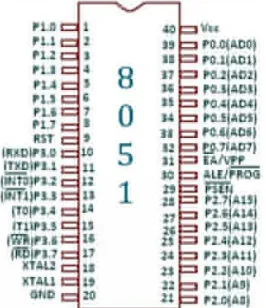
This GSM energy meter is constructed using the microchip single phase dedicated energy metering IC MCP3905A, a display, Microcontroller AT89S52 and GSM modem. A 10A class I single phase meter is designed with embedded GSM modem which utilizes the existing GSM network to send its power usage value as SMS to the energy provider wirelessly. While sending the message each time, the same data is also stored in the associated non-volatile memory (EEPROM). RTC module is also integrated in the meter to have time stamped recording of usage details. The detailed design blocks are shown in Fig. 4 and Configuration of different PIC ports for performing this functionality is demonstrated in Fig.2
Fig3 Detailed Design Blocks
In the office, the GSM unit will receive these data and software will calculate the total consumption of each user. The design can be discussed as two broad categories, Hardware detailed design and software web portal design.
a)HARDWARE DETAILED DESIGN
A. Power Supply: The microcontroller and other devices get power supply from AC to DC adapter or from direct ac lines through voltage regulator. The adapter output voltage will be 12V DC non regulated.TheLM7805/KA7805voltage regulators are used to convert 12V to 5V DC. The low cost DC power supply circuit included in the evaluation board which is created from a half wave zener diode-limited AC signal feeding aLM7805/KA7805+5V regulator can also be used.
B. External EEPROM memory: Selected EEPROM is Atmel 24C256.This memory device is used to store the data for
off line process. i.e. it stores the amount of unit the user consumed while transferring each SMS.
C. Implementation Details
b). SOFTWARE DESIGN
A. Microcontroller software design: All software used for the AT80S52 in the control circuitry was developed in 1.Keil micro vision .The meter PIC MCU is programmed via the In-System Programming (ISP) interface. GSM modem is controlled by using AT command for all kinds of operations. The algorithm for meter were developed by considering all the required outputs. The brain of the meter is this developed firmware. It can be modified and updated any time, even in the field. The firmware is written in embedded C.
B. Proteus – Simulation and Circuit Designing Software
C. Hyper Terminal, Visual Basic &MS Access/ My SQL are used for GUI control.
V. RESULT AND DISCUSSION
ISSN (Print) : 2320 – 3765 ISSN (Online): 2278 – 8875
I
nternational
J
ournal of
A
dvanced
R
esearch in
E
lectrical,
E
lectronics and
I
nstrumentation
E
ngineering
(An ISO 3297: 2007 Certified Organization)
Website: www.ijareeie.com
Vol. 6, Issue 6, June 2017
microcontroller reads the power consumption, it is stored and current reading is incremented in its software. In this design meter is calibrated such that for 1 unit of energy (kWh) consumption, it generates3200 pulses in LED. (It can be calibrated for a meter constant of 1000 imp/kWh or 100 imp/kWh or 32000 imp/kWh etc as per the requirement).Energy per count, Epc = (I max X V rms)/3200. Where Imax is the maximum load current and Vrms is the RMS voltage.Energy per LED pulse, Epp =1000 X 3600/ Mpr.,where Mpr is the pulse rate of the meter in impulse/ kWh.Practical set up created for transmitter prototype developed using the meter circuit variable load set up is connected and usage is measured.
VI. CONCLUSION
Various electronic meters have been developed and are still being developed. However the use of GSM in this particular system provides numerous advantages over methods that have been previously used. Data transmission is charged at standard SMS rates, thus the charges are not based on the duration of data transmission and thus results in cost efficient transmission of readings.
REFERENCES
[1] Yujun Bao and Xiaoyan Jiang, “Design of electric Energy Meter for long-distance data information transfers which based upon GPRS”, ISA2009. International Workshop on Intelligent Systems and Applications,2009.
[2]H.G.Rodney Tan,C.H. Lee,V.H.Mok,“Automatic power meter reading system using GSM network”, The 8 Conference (IPEC 2007). International Power Engineering
[3] Vivek Kumar Sehgal, Nitesh Panda, Nipun Rai Handa, “Electronic Energy Meter with instant billing”, UKSim Fourth European Modelling Symposium on Computer Modelling and Simulation.
[4] Bharath P, Ananth N, Vijetha S, Jyothi Prakash K. V. ,“Wireless automated digital Energy Meter”, ICSET 2008.
[5] P.K. Lee and L.L. Lai, Fieee, “A practical approach to wireless GPRS on-line power quality monitoring system”, Power Engineering Society General Meeting, 2007.
[6] Subhashis Maitra, “Embedded Energy Meter- A new concept to measure the energy consumed by a consumer and to pay the bill”, Power System Technology and IEEE Power India Conference, 2008.
[7] T El-Djazairy, B J Beggs and I F Stewart, “ Investigation of the use of the Global System for Mobile Communications (GSM) network for metering and load management telemetry”, Electricity Distribution. Part 1:Contributions. CIRED. 14th International Conference and Exhibition on(IEE Conf. Publ. No. 438).
[8] Li Kaicheng, Liu Jianfeng, Yue Congyuan, Zhang Ming. “Remote power management and meter-reading system based on ARM micro processor”, Precision Electromagnetic Measurements Digest, 2008. CPEM 2008.Conference on Digital Object Identifier.