Doctor of Education (EdD) Theses and Dissertations
12-1-2016
Student Voice: Perceptions of Teacher Expectations
Among First and Second Generation Vietnamese
and Mexican Students
Sara Gandarilla
George Fox University, [email protected]
This research is a product of the Doctor of Education (EdD) program at George Fox University.Find out moreabout the program.
This Dissertation is brought to you for free and open access by the Theses and Dissertations at Digital Commons @ George Fox University. It has been accepted for inclusion in Doctor of Education (EdD) by an authorized administrator of Digital Commons @ George Fox University. For more information, please [email protected].
Recommended Citation
Gandarilla, Sara, "Student Voice: Perceptions of Teacher Expectations Among First and Second Generation Vietnamese and Mexican Students" (2016).Doctor of Education (EdD). 90.
SECOND GENERATION VIETNAMESE AND MEXICAN STUDENTS
By
SARA GANDARILLA
FACULTY RESEARCH COMMITTEE:
Chair: Terry Huffman, Ph.D.
Members: Ginny Birky, Ph.D. and Tatiana Cevallos, Ed.D.
Presented to the College of Education, George Fox University
In partial fulfillment of the requirements for the degree of Doctor of Education
ABSTRACT
This qualitative research study explored the perceptions first and second generation
Vietnamese and Mexican high school students hold on teacher expectations based on their racial
identity. Specifically, this study explores the critical concepts of stereotype threat, halo effect,
and self-fulfilling prophecy. The primary purpose of this investigation was to enhance the
understanding of how the perception students have impacts success or lack of success for two
different student groups. This study utilizes interviews with student focus groups to examine
student perceptions of teacher expectations among Vietnamese and Mexican students and its
impact on student academic performance, the general nature of the perceptions among students,
whether or not students of the two races have different perceptions, and what students perceive to
be the major implications for teachers based on these perceptions. Results revealed that
participants perceived significant differences on what teachers expected of them. In addition,
this research also found significant differences on how students perceived they were treated
depending on their race. Therefore, the findings highlight the importance strong relationships
play in order to enhance student performance as well as how important it is for educators to
constantly be cognizant of their non-verbal communication. Furthermore, the results also point
out the importance of developing one’s own racial consciousness in order to eliminate implicit
biases and stereotypes that cause people to have conscious or unconscious behaviors that can be
harmful to students. These behaviors cause students to give up and drop out of school which in
turn widens the academic achievement gap. The results highlight important implications for
education in general. Additionally, this study examined the results associated with three ethnic
identity theoretical perspectives: ethnic identity theory, cultural ecological theory, and
ACKNOWLEDGMENTS
This dissertation portrays the thoughts and in a way validation to the experiences I have
personally encountered throughout my life as a Mexican student in the educational system of the
United States. Furthermore, it has allowed me to complete a cycle of my life that otherwise
would have not had closure. It also served as a healing process as it renewed my commitment to
advocacy in my quest for social justice and educational equity. While I faced many challenges
in completing it, such as: barriers in getting approval for the research from the district, illness,
three new job placements, and working full time as I was trying to be a good mother, wife, and
daughter; I have enjoyed writing about a topic on which I am very passionate, that motivates and
pushes me to reflect and interrupt my own biases on a daily basis. Looking at ones biases and
interrupting them is the underlying purpose of this work.
First, I want to thank you Dr. Terry Huffman, my dissertation chair who stood by my side
at all times. You encouraged me to keep going; always looking for ways to keep me motivated.
You have been one of the few people in my life who has fully believed in me. As a Mexican, I
have had to face many stereotypes and people have been biased towards me just for being a
Mexican. Not you, Dr. Huffman, you were able to see me, the person, not the label. Your check
ins were always timely and just what I needed at the right time. It would have been so easy to
simply give up, so many other people of color do. I probably would have been one of those
people, if it was not for your encouragement. I would also like to thank Dr. Ginny Birky. Dr.
Birky you not only helped me in my grammatical revisions. You also encouraged me along the
way. I so much appreciate the way you lifted me by inviting me to come as a guest speaker to
doctoral students. You made me feel that my voice was important. I felt humbled and so valued.
and for helping me write my thoughts in a way that not only made sense but were complete. I
will also like to thank all the professors that made my studies at George Fox run smoothly and
with the least amount of barriers possible, especially, Dr. Gary Tiffin and Dr. Steve Song for
challenging me and for all the advice you both gave me. You have all inspired me.
You have no idea how much this inspiration helped me throughout this process. Writing
this dissertation was not an easy task. I am very passionate about social justice and about
speaking my truth. However, writing it in a way that others can hear it was probably the most
challenging part of the process. It is hard to deliver a message that is so personal. It is hard to
keep out frustration, disappointment, and if I dare say anger. I am one of the few Mexicans that
“has made it” this far. Yes, I am one of the lucky few. Yes, I am privileged. Therefore, I feel
that I have the responsibility to continue to advocate with love and humility to help all students.
Students like the ones that were courageous enough to help me in this journey.
Thank you also to the students that spend their time after school sharing their experiences
with me when they could have been spending it having fun with friends instead of remembering
not-so-pleasant experiences. You are all truly amazing, intelligent individuals that will
accomplish great things. I believe in you!
In addition to these students, there were a couple of other important people. Thank you
Dr. Kehaulani Haupu my dear friend and colleague. You were one of my rocks throughout this
process. You helped me unconditionally not only with some transcripts. The moral and spiritual
support you gave me cannot be described with words. Your encouragement and your way of
showing me that you believed in me, was what gave me the strength to continue. I could not
have done it without you. You showed me the way! Thank you also to Janelle Bynum, my
a gift from the heavens. You have been at my side during the ups and downs encouraging,
promoting, supporting and at times challenging me. I still remember the first time we met many
years ago. I learned a lot from you during that first interaction and I continue to learn from you
every time we talk. I am very fortunate for having you in my life.
There is no way, however, that I could have completed such journey without the support
and constant encouragement of my family. To my husband Roberto Gandarilla, thank you for
pushing me. You have always stood by my side. Your patience, devotion, and love towards me
has blinded you in such a way that you have put your wants and desires away and placed mine as
a priority. Without you, I would not be who I am today. I still remember the day many years
ago when you urged me to go back to school. Your exact words were, “I know you love to learn,
I know you love school, your English may not be that good right now, but you are smart, you can
get a college degree, go get it, I will help you, always”. It has been 25 years since that day and
you have been true to your word. I do not have a way to repay all you have done for me. To my
three children Omar, Sara, and Jose Gandarilla, thank you for being my heart, soul, drive, and
courage. You three are my blessings. Everything I do is in hopes of setting a positive example
for you. You are my world. Lastly, thank you to my parents Jose and Benita Lara. You both
taught me the value of hard work. You also taught me to never give up no matter the challenges
I may be facing. You also taught me the importance of having a good education despite the fact
that you mom only finished sixth grade and you dad only finished second grade. You may not
know much of the educational system or what a doctorate degree is but you certainly knew how
to raise courageous, passionate, responsible, and dedicated children. You taught me to be
This dissertation does not fulfill an academic program. Instead it is my hope that it will
be used to develop racial consciousness so that all of the students have access to a biased free
learning environment in which each student is seen as a capable individual so that they may
TABLE OF CONTENTS
ABSTRACT ... ii
ACKNOWLEDGMENTS ... iii
TABLE OF CONTENTS ... vii
LIST OF TABLES ...x
CHAPTER 1 ...1
Introduction ...1
Statement of the Problem ...4
Research Questions ...5
Ethnic Identity Theoretical Perspectives ...6
Key Terms ...6
Limitations and Delimitations...9
Conclusion ...10
CHAPTER 2 ...12
Review of the Literature………12
Introduction ...12
Stereotype Threat and Student Academic Performance ...12
Model Minority: Impact and Implications ...16
The Halo Effect and Asian Student Academic Achievement ...21
Family Factors that Impact Student Achievement ...22
Theoretical Perspectives on Ethnic Identity and the School Experience ...28
Conclusion ...35
CHAPTER 3 ...38
Methodology ...38
Introduction ...38
Setting ...39
Participants and Sampling Strategy ...40
Research Design ...41
Data Collection and Analytical Procedures ...45
Research Ethics ...46
Potential Contributions of the Research ...48
CHAPTER 4 ...50
Findings...50
Introduction ...50
Profile of Students...50
Focus Group Sessions and Data Analysis ...54
Results ...56
Research Question #1: What is the general nature of the perceptions on teacher expectations among the Vietnamese and Mexican students? ...57
Research Question #2: Do the Vietnamese students and the Mexican students articulate differing perceptions of what teachers expect of their academic performance? ...61
Research Question #3: What do the Vietnamese students and the Mexican students perceive to be the major implications of the perceptions held by their teachers? ...68
Additional Themes ...71
Themes shared by both affinity groups ...72
Need for students to be viewed as individuals ...72
Importance of accurate knowledge of students’ cultural history ...74
Themes unique among the Mexican students ...76
Teacher perception of parent involvement ...76
Student lack of trust in teachers ...78
Treatment by teachers can result in loss of self-esteem ...79
CHAPTER 5 ...82
Discussion ...82
Introduction ...82
Examination of the Findings and Ethnic Identity Theoretical Perspectives ...85
Student-Driven Ideas on the Implications of the Study ...90
Recommendations for Practice and Scholarship ...91
Significance of the Research ...94
Final Reflections ...96
REFERENCES ...97
APPENDICES ...107
Appendix A: Letter to School Principal ...108
Appendix B: Focus Group Interview Questions ...109
Appendix C: Letter of Parent Consent – English Version ...110
LIST OF TABLES
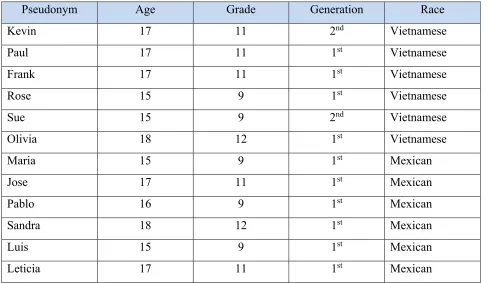
Table 1. Summary Profile of Student Participants ...54
CHAPTER 1
INTRODUCTION
The achievement gap between Latino/a and Asian students is significant. In many school
districts, Asian students outperform not only Latino/a students but other ethnic groups including
White students (Gregory, Skiba, & Noguera, 2010). Schools are challenged by perplexing
achievement gaps and are constantly trying to understand these phenomena. Many students in
both ethnic groups (Latinos and Asians) have English as their second language. Among Latinos,
Spanish is their first language and some participate in schools where they are taught in their
native language. Among Asian students, numerous languages are considered as native language.
As a result many Asian students are enrolled in schools that cannot offer bilingual instruction in
many of their less commonly used languages. Thus, it is generally easier for schools to provide
bilingual instruction for Latino/a students than it may be for them to provide such instruction for
some Asian students.
Instruction in one’s own language can be a critical factor in academic performance.
According to Krashen (2004), “literacy transfers” occur when students are taught in their native
language and, while gaining proficiency in that language, the literacy skills transfer into a second
language. Thus, the student gains a double benefit. However, if literacy transfers occur for
students who receive bilingual instruction, it begs an important question. Namely, although
Latino/a students are more likely to receive bilingual instruction compared to many Asian
students, why do Asian students consistently academically outperform Latinos and other ethnic
groups? Obviously this is a highly complex question and the answer reasonably includes an
should not ignore the possibility that one of these factors could involve what students perceive
regarding teacher expectations. Simply put, an important researchable question is, could a factor
influencing school experience among these two student groups involve the perceptions young
people hold on what their teachers expect of them based on their ethnicity? Put another way, do
Asian and Latino/a students believe their teachers form expectations based on prevailing
stereotypes of their ethnic group membership?
Steele and Aronson (1995) argue that “stereotype threat” is a serious barrier to academic
success for minority students. Essentially, stereotype threat involves a situation in which a
student is judged according to prevailing negative, prejudicial views about a racial or cultural
group. Steele and Aronson refer to stereotype threat as a predicament in which a young person,
subjected to the negative beliefs held by those making academic evaluations, may actually
internalize perceived low expectations. Ultimately, such a predicament results in a self-fulfilling
prophecy in which the student, regardless of real academic ability, performs poorly. They
explain:
It [stereotype threat] focuses on a social-psychological predicament that can arise from
widely-known negative stereotypes about one’s group. It is this: the existence of such a
stereotype means that anything one does or any of one’s features that conform to it make
the stereotype more plausible as a self-characterization in the eyes of others, and perhaps
even in one’s own eyes. We call this predicament stereotype threat and argue that it is
experienced, essentially, as a self-evaluation threat. (Steele & Aronson, 1995, p. 797,
italics in the original)
Griffin (2002) found that GPA is a strong predictor of school attrition. Students with a
Furthermore, Osborne and Walker (2006) studied how negative stereotypes regarding the
intellectual capacity of certain (stigmatized) groups, suffer aversive consequences such as
student dropout. They state that groups that are most at risk for withdrawing from school are
students of color. For example, Latino/a or African-Americans are believed by some to have
lower intellectual ability; yet, many of these students were those who were highly invested in
schooling. The research findings emphasize the importance of having a supportive environment
that eliminates stereotype threat for all students regardless of color or their academic ability.
Contrary to the negative perception of Latino/a students, Asian students traditionally have
been regarded as the “model minority” (Gao, 2009). While the predicament of low versus high
academic performance as presented by stereotype threat may be a contributing factor in
explaining the lack of performance for Latino/a students, its opposite effect may also assist to
explain the positive academic achievement for Asian students. That is, if stereotype threat works
against students victimized by negative prejudicial attitudes (such as Latinos), it is also
reasonable to assume that a corresponding “halo effect” may function for students who are
generally believed to be academically gifted or motivated (such as Asians) (Sue, Bucceri, Lin,
Nadal, & Torino, 2007).
Ironically, while a presumed halo effect may seem to assist some groups such as Asian
students, it can also create its own unique forms of stress and difficulties (French, Tran, &
Chavez, 2013; R. Lee, 2003). For example, Gao (2009) argues that Asian students internalize
prevailing perceptions regarding their ethnicity and academic achievement. As a result, many
Asian students strive to live up to such existing perceptions. Based on his findings, Gao
concludes that a positive stereotype representing an idealized picture of how students are
Furthermore, Tenenbaum and Ruck (2007) found that teachers and non-Asian students have
higher expectations of Asian students and hold them to a higher standard. Being regarded as a
“model minority” can come at a heavy emotional price. For example, Curry-Stevens (as cited in
Korn, 2012) argues that not all Asian groups are successful and educators need to be cautious
about labeling Asian students as the model minority. Furthermore, they suggest that due to the
stereotypical belief about Asian students, many students are not being properly served in our
educational system and are slipping through the cracks.
The goal of the research is to gain an understanding of how a sample of first and second
generation Vietnamese and Mexican students perceive their teachers’ academic expectations of
them. Research has demonstrated that students will rise to teachers’ expectations. However,
many minority students are not academically successful. Therefore, an important question is:
What are the general perceptions on teacher expectations that this sample of Vietnamese and
Mexican students hold? Moreover, given the dangers inherent in stereotype threat, an equally
important question is: Will a sample of Mexican students, a group traditionally vulnerable to
stereotype threat, hold contrasting perceptions of teacher expectations compared to a sample of
Vietnamese students, who may potentially benefit from a supposed halo effect? An additional
extremely important question is: What do these different samples of students believe are the
significant consequences of their perceptions based on the expectations held by teachers for
them?
Statement of the Problem
This research explored the perceptions of two samples of students on teacher
expectations. I used focus groups to examine and compare how a sample of first and second
academic performance. A goal of the investigation was to gain an understanding on the nature of
the students’ understanding of the impact of teachers’ academic expectations and the role this
perception played in their schooling experience. Further, this study included both applied and
theoretical potential. As a practical matter, insights into the personal perceptions and
experiences of Vietnamese and Mexican students on how they view the expectations of their
teachers can only assist educators in serving these groups better. Additionally, I use the findings
resulting from this study to consider the fundamental premise and assumptions of several major
theoretical perspectives on ethnic identity and the educational experience for minority students.
Up to this point, the intersection between student perceptions of teacher expectations and
ethnicity have not been applied to these theoretical perspectives.
Research Questions
This investigation involved an exploratory, qualitative examination to compare the
perceptions of two prominent cultural groups in our local schools. Little is known regarding
these perceptions. As such, the research questions were designed to be global in order to gain a
rather sweeping appreciation of the views held by the participants. As with any exploratory
research study, the research questions were evolving and became more specific as the
investigation unfolded. With that said, the following primary questions guided the initiation of
the research:
Research Question #1
What is the general nature of the perceptions on teacher expectations among the sample of
Vietnamese and Mexican students?
Do the samples of Vietnamese and Mexican students articulate differing perceptions of what
teachers expect of their academic performance?
Research Question #3
What do the samples of Vietnamese and Mexican students perceive to be the major implications
of the perceptions held by their teachers on their school experiences?
Ethnic Identity Theoretical Perspectives
Beyond the attempt to answer the three primary research questions, a secondary objective
of this research was to explore whether three prominent theoretical perspectives on ethnic
identity and education can assist in understanding the experiences of the participants. More
specifically, I examined whether or not the findings of this investigation relate to the
fundamental premise and assumptions found in the prominent theoretical frameworks found in
the literature on ethnic identity and education. Each of these major theoretical perspectives offer
a different premise on the nature of minority education and mainstream cultural education.
These perspectives include ethnic identity development theory, cultural-ecological theory, and
transculturation theory and are discussed in chapter 2.
Key Terms
There are many terms fundamental to any research investigation. The following are a
number of key terms that are certainly significant to the study.
Affinity Groups – is a group that is formed and shares the same interest or goal. For the
purpose of this research, affinity groups are formed primarily on the basis of ethnic/racial
identity. Therefore, Latino/a participants will constitute an affinity group and Asian participants
Asian – as used in this research, the term Asian is at times used interchangeably to refer
to students who are of Vietnamese descent. Simply, the Asian participants for this research were
of Vietnamese ancestry. While I use the term “Asian” in a more generic and global sense to
refer to various groups of Asian descent throughout the dissertation (but most notably in chapters
1 and 2), when discussing the findings of this specific investigation I refer to the participants as
either Vietnamese or Asian .
Cultural-Ecological Theory – is a theoretical framework developed by anthropologist
John Ogbu (2003). This theory attempts to account for why some minority group students do
well in school while others do not. Its fundamental premise holds that the historical, economic,
political, and social circumstances of each minority group attribute to the nature of the
educational experiences of its members.
Ethnic Identity Development Theory – is a theoretical framework offered by psychologist
Jean Phinney (1989). This theoretical perspective asserts that ethnicity is a critical component of
an adolescent’s self-image and self-confidence. Phinney conceives ethnic identity as emerging
through three stages of development.
Groupthink – is defined as a psychological phenomenon that happens amongst a group of
people. Specifically, people within the group desire harmony or tend to conform to others in the
group. Therefore, decisions made may be incorrect or biased. Members of the group try to
avoid conflict and consent to decisions without giving a true evaluation or their own ideas not
taking into consideration outside influences. Groupthink is an important hazard to focus group
research.
Halo Effect – first introduced by Edward Thorndike (1920), this concept relates to a
influenced by personal and/or social attributes. The halo effect is especially important in
educational settings because it can lead teachers to favorably evaluate a student, not necessarily
on true academic abilities, but on personal or social characteristics.
Latino/a – as used in this research, the term Latino/a is at times used interchangeably
with Mexican. Simply, the Latino/a participants for this research were of Mexican ancestry.
While I use the term “Latino/a” in a more generic and global sense to refer to various groups of
Spanish-speaking descent throughout the dissertation (but especially in chapters 1 and 2), when
discussing the findings of this specific investigation I refer to the participants as either Mexican
or Latino/a. Further, I chose to use the term Latino/a rather than Hispanic. The Hispanic label
can be understood as a person coming from Spain. Thus, this label could misrepresent the
participants of this study.
Model Minority – is regarded as a myth that claims that Asian Americans are smart,
quiet, assimilated and get by with little or no outside help (Li & Wang, 2008). The conception
largely ignores the many challenges facing Asian American communities and creates a false
ideology among the general population as well as among Asian cultural groups. Furthermore, it
assumes all Asian cultures into one overly-generalized grouping ignoring the cultural differences
within each country and ethnicity.
Stereotype Threat – as defined by Steele and Arsonson (1995). It means the situational
predicament in which individuals are at risk, based on their actions or appearance, of confirming
negative stereotypes about their group in the minds of educators. Frequently these negative
stereotypes are internalized by minority students and shape their self-concepts.
Transculturation Theory – is a theoretical perspective developed by sociologist Terry
educational achievement. Additionally, the more integrated an individual is in his/her native
cultural background, the better equipped the person is to thrive in mainstream culturally
dominated school settings. Originally established to explain academic success among culturally
traditional Native Americans, this perspective is becoming more widely used to account for
schooling success for other minorities in and outside the United States (Benton Lee, 2007; Lee &
Champagne, 2014).
Limitations and Delimitations
This research is limited to data gathered through focus groups with high school students.
The participants were recruited using a non-probability, purposive sampling strategy. Therefore,
as a researcher, I cannot make the assumption that the focus groups speak for all students in the
Latino/a or Asian student populations. In other words, using qualitative research methods with a
non-probability sample prohibits me from generalizing the findings to the all Asian and Latino/a
students (Daniel, 2011). However, that limitation should be balanced with the potential
theoretical insights gleaned from such a research approach (Bernard & Ryan, 2010; Maxwell,
2005). Thus, while the results are statistically generalizable, the insights could well be
conceptually transferable to wider, more general experiences and, thus, have theoretical merit.
A second limitation is that focus groups can engage in groupthink in which group
members tend to conform to one another and even if an individual disagrees with a prevailing
perception, is reluctant to offer a contradictory voice (Greenbaum, 2000). Similarly, the voice of
one dominant speaker can influence the voices of the rest of the group. Moreover, in group
settings there is always the risk of having outspoken participants dominate the conversation and
not allowing less vocal participants share their experiences. These group dynamic shortcoming
There are a number of important delimitations that I imposed on the investigation. First,
the research was bounded by focusing on only two high school student cultural groups:
Vietnamese and Mexican. This parameter was intentional and important. The primary reason
for this decision was that there has not been much study comparing the perceptions of these two
contrasting student groups, one which has traditionally experienced a great deal of educational
success and the other which has not evidenced that level of educational success. Most of the
research that exists compares one or two minority student groups to white students. The research
on comparing two minority groups, one traditionally under-achieving academically and one
high-achieving academically could potentially yield significant findings. I felt that the potential
scholarly and practical implications of this delimitation could be enormous.
Another delimitation was to ensure that half of the participants for each group were males
and the other half females. The primary reason was to have a balanced sample in terms of
gender. Intuitively, at least, this makes sense. Gender differences in perceptions are as
important as ethnic differences in perceptions.
Lastly, this research was conducted in one high school in an Oregon school district. The
reason for this decision was that this school reflects the student population needed for the
research in that Asian and Latino/a students (more specifically Vietnamese and Mexican
students) are the two largest minority groups attending the school.
Conclusion
This study attempted an examination of a crucial issue for minority education – student
perceptions on teacher expectations. Namely, I used a qualitative study involving focus groups
to document the perceptions and experiences among a sample of Vietnamese and Mexican
questions intended to guide and structure the investigation. The research questions were
intentionally designed to be general. These types of questions are often referred to by qualitative
researchers as “grand tour” questions and widely used for highly exploratory investigations
(Creswell, 2013). Thus, such a global approach allowed for more flexibility in the investigative
approach which I believed was necessary for this exploratory study.
Such a study as this cannot ignore the importance of ethnic identity for students. There
are a number of important theoretical perspectives found in the scholarly literature on ethnic
identity and the educational experience. A secondary objective of this study was to explore if
CHAPTER 2
REVIEW OF THE LITERATURE
Introduction
This literature review addresses important issues related to the education of American
minorities. I concentrate on several general areas connected to perceptions held by the general
public, policy makers, and ultimately educators. The fundamental premise is that perceptions
held by teachers are largely formed by larger socio-cultural conditions. In turn, these perceptions
are explicitly and implicitly communicated to students. My intention is to explore how minority
students, and in particular Asian and Latino/a students understand the expectations they believe
their teachers have of them.
In particular, this literature review addresses five areas of intent: 1) stereotype threat; 2)
the concept of the model minority; 3) the halo effect and Asian student achievement; 4) family
factors that impact student achievement; and 5), major theoretical perspectives on ethnic identity
and the education experience. Although, these issues are generally relevant to all minorities, I
will attempt to, wherever possible, focus the review of the literature primarily on Asian and
Latino/a students and by extension the two specific groups included in my study, Vietnamese
and Mexican students.
Stereotype Threat and Student Academic Performance
The review of literature suggests a number of important factors that have an impact on
student performance. One of those factors is stereotype threat. As discussed in the previous
chapter, stereotype threat involves what Steele and Aronson (1995) refer to as a “predicament.”
the prejudices and biases held by teachers and other educators who make academic evaluations.
Such a situation creates great potential for those negative views to be translated into low
expectations for academic success for minority students (Kellow & Jones, 2008;
Mendoza-Denton, Downey, Purdie, Davis, & Pietrzak, 2002). Thus, the term “stereotype threat.” Some
contend that minority students frequently internalize these low expectations making stereotype
threat a self-fulfilling prophecy (Brown & Pinel, 2003; Fisher, Wallace, & Fenton, 2000).
In a meta-analysis, Guyll, Madon, Prieto, and Scherr (2010) examined the relationships
between several psychological processes, including stereotype threat, and student academic
performance. They found evidence to suggest that stereotype threat can be a determining factor
among Latino/as and their academic performance. Their work is consistent with other research
in this area. For example, Griffin (2002) in his research on misidentification theory found that
among racial groups that have a negative stereotype or an oppositional subculture, the dropout
rate is greater compared to those who are not subject to such stereotypes. Specifically, this
pattern was true for Latino/a and African-American students but not for Asian or White students.
Osborne and Walker (2006) conducted a two year study that tracked 9th grade students
and found a significant correlation between students’ Identification with Academics (IA) and 9th
grade GPA. They also reported significant correlations between 9th grade IA and absenteeism.
The research further indicated that the more students of color invested in academics the greater
their likelihood to withdraw from school. Although this finding may seem counterintuitive, the
authors reasoned that because school was less attentive toward them or their needs, these
students experienced greater frustration. In other words, the most dedicated students are also the
Spencer, Fein, Wolfe, and Duinn (1998) used an experimental design to examine a
person’s motivation and interaction based on another person’s physical appearance. The study
consisted of having people fill in the blanks to words that could be stereotypical of a particular
group. The findings suggested that automatic activation of stereotype threat toward minorities
occurs when people experience self-image threat, but it is not automatic when people don’t
experience self-image threat. In other words, if people feel like they need to defend themselves
in some way or for some reason, they are more likely to stereotype minorities. This finding
suggests that stereotype threat might be greater and especially prevalent in inner-city schools
where school violence is greater than in rural and suburban school settings (Handzel, Brodsky,
Betacourt, & Hurt, 2012; McIntyre, 2000).
Van Laar, Levin, and Sinclair (2008) examined the effect of perceived affirmative action
admission for college on academic performance during the first year of college among African
American and Latino/a students. They divided the sample into high stereotype threat students
(those who were highly concerned about stereotype threat) and low stereotype threat students
(those who were less concerned about stereotype threat). Regarding the study and its findings,
authors report:
[Our] longitudinal study of Black and Latino students at a large multiethnic university
showed that perceptions of affirmative action admission negatively affected achievement
among high stereotype-threatened individuals but not among low stereotype-threatened
individuals. Furthermore, the results show that stereotype threat can have its effects
because of concerns for the self (personal identity stereotype threat) or because of
concerns for the group (social identity stereotype threat). As expected, social identity
identification, whereas personal identity stereotype threat negatively affected the
performance of individuals low in ethnic identification. (p. 295)
Van Laar et al. (2008) further distinguished between two types of stereotype threat:
personal identity stereotype threat and social identity stereotype threat. Personal identity
stereotype threat includes an individual’s self-perception and internalized stereotypes commonly
attached to his/her cultural group. This variable was measured with such items as, “I think about
whether the stereotypes of my ethnic group’s intelligence are true of me” (p. 299). On the other
hand, social identity stereotype threat involves how a person believes his/her performance will
reflect on the impression of others about his/her cultural group. Social identity stereotype threat
was measured with such items as, “I think about whether my academic performance will affect
how others evaluate my ethnic group” (p. 299).
Van Laar et al. (2008) also found an interesting contrast on perceptions associated with
personal identity stereotype threat and social identity stereotype threat. They report:
Those who experience higher social identity stereotype threat perceive more ethnic
discrimination against their group on campus, identify less with Americans than with
their ethnic group, and are more likely to perceive that students belong to different groups
on campus (rather than being one group or being separate individuals). Students
experiencing more social identity stereotype threat are also more interested in getting
ahead through group mobility than individual mobility. Personal identity stereotype
threat, meanwhile, does not relate to these group variables. The only unique correlate for
personal identity stereotype threat available in our data set is that those high in personal
identity stereotype threat feel less competent interacting with members of different ethnic
Moreover, Owens and Lynch (2012) also conducted research in an attempt to understand
the reasons for a gap in students’ grade performance at the college level between immigrant
students of color and White and Asian students. The study compared first generation immigrants
to second generation immigrants. The researchers asked students to complete a survey in which
they identified a connection to their culture and whether or not they had assimilated. The survey
also contained questions regarding negative stereotypes and how these students coped with such
social attitudes. The study found that although first generation immigrants had a stronger sense
of identity which served as a buffer against the internalization of negative stereotypes; they still
had lower grades than White and Asian students. The study also found that second generation
immigrants were more likely to internalize negative stereotypes than first generation immigrants.
Based on the findings from these studies, it appears that stereotype threat can be an extremely
important factor in student academic performance.
Model Minority: Impact and Implications
In the mid-1960s, sociologist William Petersen introduced the term “model minority” to
describe Asian Americans (Jo & Mast, 1993). The term was presumably presented as a
compliment. Asian Americans were considered to be politically compliant, economically
resourceful, educationally successful, and willing to culturally assimilate. Or so the idea went.
But it is a deceptive label. For a variety of reasons, the educational and economic success among
Asian American is exaggerated and hides significant social problems. Healey (1995) contends:
Asian Americans have also been stereotyped in so-called positive ways. The perception
of Asian Americans as a model minority is exaggerated and, for some Asian American
groups, simply false. This label has been applied to these groups by the media, by
themselves developed or particularly advocate. As you might suspect, those who apply
these labels to Asian Americans have a variety of hidden moral and political agendas. (p.
430)
Healey (1995) points out that if Asian Americans are the “model minority,” then
compared to whom? Historian Ronald Takaki (1993) claims that a popular image of Asian
Americans as a model minority serves to challenge more socially and politically aggressive
minorities; most particularly African Americans. He argues:
The myth of the Asian-American “model minority” has been challenged, yet it continues
to be widely believed. One reason for this is its instructional value. For whom are Asian
Americans supposed to be a “model”? . . . Our society needs an Asian-American “model
minority” in an era anxious about a growing black underclass. Asian American “success”
has been used to explain the phenomenon of “losing ground” – why the situation of the
poor has deteriorated during the last two decades while governmental social services have
expanded. If Asian-Americans can make it on their own, conservative pundits are asking,
why can’t other groups? (Takaki, 1993, p. 416)
Gao (2009) used an ethnographic approach to examine a unique model minority
experience. Namely, in China Koreans are considered a model minority because of their efforts
to gain academic success. Gao examined the connection between student self-perception and
attitudes toward schooling. The researcher studied 4th grade Korean students attending a
bilingual school in China. Significantly, Gao did not find evidence that young Korean students
internalized the general social stereotypes surrounding them. The research concludes that
scholars and educational practitioners need to critically evaluate the validity of the model
Despite the overall academic achievement Asian students might have, a study conducted
by Parikh (2009) cautions educators to look beyond the “model minority” stereotype. He argues
that not all Asian students perform well and that schools are not serving all Asian students.
Parikh’s research is based on Asian Indian students who, according to the authors, are often
overlooked in the school system because they are seen as a model minority. He urges school
personnel to challenge the model minority myth.
Tran and Birman (2010) analyzed 45 research studies performed by numerous
researchers within a time span of 1990-2008. They sought to understand if there is sufficient
knowledge to dissipate what is currently known about Asian Americans as a model minority.
Furthermore, they wanted to know if there is adequate evidence to correlate student performance
with individual effort and cultural influences rather than expectations based on stereotypical
beliefs. The researchers found out of the 45 studies, 20 mentioned that academic expectations,
motivation or values toward education were predictors of academic success. Out of the 20, only
12 reported that Asian American parents and students hold higher expectations for academic
performance. Therefore, the findings seem to suggest that expectations may not entirely extend
from Asian cultures and but rather reflect the broader American culture.
Furthermore, Cho, Chiu, Chan, Mendoza-Denton, and Kwok (2012) conducted research
to examine the impact and implications of being stereotyped as a model minority. They were
specifically interested in assessing the notion that Asian Americans are diligent, high achieving,
and submissive. The research consisted of three studies. Study one sought to investigate the
prevalence of the model minority stereotype among Americans. Study two attempted to test the
assumption that most people in the United States expect Asian Americans to conform to the
intergroup perceptions. Cho et al. found that Americans share the knowledge of the stereotypical
image of Asian Americans, that most people in the United States expect Asian Americans to
conform to the model minority image, and that the media exposure on Asian American successes
serves to strengthen the belief and perceived acceptance of Asian American when compared to
other diverse groups. Taken together these scholarly efforts suggest that biases may be created if
the model minority stereotype is used to evaluate other disenfranchised groups.
In an ethnographic study conducted by S. Lee (1994), teachers and administrators, were
eager to share the academic achievements of their Asian students; thus, reinforcing the model
minority stereotype. They insisted in taking Lee around the school to show her bulletin boards
where Asian students’ names were mentioned as being in the top ten of each graduating class.
They also shared records of academic awards, enrollment in Advanced Placement (AP), Honors,
and Mentally Gifted classes. All of these displays were meant to demonstrate how successful
Asian Americans were in school. As part of the deeper investigation, Lee divided the students
into four different groups: Asians, Koreans, New Wavers, and Asian Americans. The Asian and
Asian American groups included American-born Chinese, immigrants from Hong Kong and
Taiwan, and Southeast Asian refugees. According to Lee, the Asian and Asian American groups
displayed the model minority characteristics: quiet, polite, and hard-working. This was in
contrast to the Korean group who simply saw themselves as smarter than everyone else or the
New Wavers who did not appear to care about academics and did not display any of the
characteristics typical of the model minority. Despite the difference in behaviors, teachers
expected all Asian students to display the stereotypical behaviors of the model minority. Lee
the cracks. The study recommended that schools develop and implement systems that look at
each child individually to ensure that all are being served appropriately.
In an article published in the Portland Tribune, Peter Korn (2012) cautions educators
about the model minority stereotype. He argues it is a damaging myth that perpetuates
institutional racism. Further, Korn contends that Asian-American students frequently do not get
the services they need in the classroom, often as a result of this pervasive myth. Educators
assume that because students are Asian they are doing well. Korn’s warning is supported by
research evidence. Shrake and Rhee (2004) found that the stereotype also leads to students’ loss
of identity which results in problem behaviors. These behaviors are associated with the
perception of racial discrimination and student’s lack of their own sense of identity. Therefore,
Shrake and Rhee urge schools to develop programs that embrace multiculturalism in order to
foster in students a strong sense of ethnic identity in order to minimize the internalization of
problems including depression, anxiety, and withdrawal symptoms.
Nguyen (2011) too contends that the model minority stereotype serves to manipulate
students and contributes to interracial tensions in schools. These dynamics in turn perpetuate the
dominant status of Whites and diverts the attention from White racism. He also asserts that
schools set up policies and structures that create an environment of insiders and outsiders. As a
consequence, schools create a divisive environment. That is, the belief of the model minority
among White educators can serve to play Asian American students against other students of
color. Ultimately, this works to aggravate racial tension.
Chao et al. (2012) suggest that being a model minority could be considered by some as
“glamorous.” However, like others, they caution that this perception overshadows the needs of
Hmong, Cambodian, and Laotian students who are Asian and struggling academically.
According to Chao et al.. ultimately, the model minority stereotype hurts rather than helps Asian
groups in the United States.
The Halo Effect and Asian Student Academic Achievement
Certainly related to the model minority myth is the potential for the halo effect. Whereas
the model minority is a social conception, the halo effect is a social psychological phenomenon.
Edward Thorndike (1920) first introduced the concept into the field of cognitive psychology and
it has become an important theoretical notion in educational studies. Essentially, the halo effect
refers to the tendency to judge an individual’s performance based on preconceived ideas (Vohs
& Baumeister, 2007). Generally, the halo effect is regarded as a positive evaluation and can lead
a person to disregard contradictory evidence about another’s ability. As it relates to Asian
students, the halo effect may occur when a teacher is induced to accept the general social notion
of the model minority and, therefore, assume that an Asian student is academically motivated,
talented, and successful (Hamamura & Laird, 2014).
There is research evidence to support the assertion that some teachers operate from a halo
effect in regard to their Asian students. For instance, Gordon and Cui (2012) found that teachers
especially look to parental behavioral cues to ascertain how much academic ability students may
possess. They also found teachers frequently believe that Asian parents are especially concerned
with their child’s school work. According to these researchers, if teachers believe parents are
actively involved in their child’s schoolwork, they tend to take a more favorable view of the
student’s academic work.
Similar findings were reported by Chen and Gregory (2009) and Yamamoto and
academic proficiencies of students. Important to teachers were how actively parents engaged
teachers and if the parents seemed to be concerned with the general academic progress of their
children. Notably, both studies identified that Asian parents were generally considered to be
especially attentive to their children’s education. These studies suggest that the halo effect
(reasonably connected to the model minority stereotype) works to create positive images of
Asian students in the mind of some teachers.
Tenebaum and Ruck (2007) explored expectations among teachers of Asian, European
Americans, Latino/a, and African American students. The findings of the study suggest that
teachers hold higher expectations for Asian American and for European American students than
for Latino/a and African American students. They also found that the speech patterns when
teachers interacted with these groups varied. Teachers used more positive and fewer negative
referrals toward Asian and European American students than toward Latino/a and African
American students. Taken together, the findings provide empirical evidence that teachers hold
lower expectations for African American and Latino/a students and propose that a halo effect
frequently operates for both Asian and European American students.
Family Factors that Impact Student Achievement
One of the factors that can have an important impact on student achievement is parent or
family expectations. While scholars have examined the family’s influence on the educational
experiences of students, curiously, this treatment seems one-sided. Namely, researchers have
generally focused attention on Asian families with specific focus on the value placed on
education in Asian homes. Noticeably absent are similar treatments on Spanish speaking
families. Given the emphasis of family impact on education prevalent in the literature, one
approach this topic. Reflecting the reality of the existing literature, my review will address the
literature on family factors that impact student achievement largely among Asian homes.
Using personal interviews with Asian students, S. Lee (1994) discovered that most of the
participants mentioned that their parents decided to come to the United States specifically
because of the opportunities the educational system offered. Students also stated that they felt
responsibility and guilt for their parents sacrifices and that they needed to work hard in school
and do well so that they could get a good paying job to help their families. Many students also
mentioned that their parents had taught them it was important to do well in school so they could
be successful in this country. An example of how an Asian parent supported her students was by
making school the student’s chore and not giving the child any other responsibility at home;
making it clear that school was the only responsibility the student had. Lee also found that
among the participants, parents expected their children to be silent about their academic
challenges. They considered school difficulties as an embarrassment. For example, one student
mentioned that if his father found out that he was talking about his school problems he “would
kill him.” The significance of this study is that it powerfully documents the influence of parents
and families in the academic lives of Asian students.
In a field-based study, Schneider and Lee (1990) found clear evidence that Asian parents
have high expectations for academic achievement. This extensive study consisted of data
collected from student census, review of school records, participant and nonparticipant
observations, interviews with students, parents, teachers and administrators, and a collection of
three essays. Comments made by parents and students during personal interviews speak of how
high expectations are communicated verbally and behaviorally. For example, a parent told her
mentioned that her husband was not satisfied if their son was not first place in the class.
Moreover, the students also commented on how their parents expected them to have good grades
which they understood to mean only “As.” When they did not get good grades their parents were
unhappy. Teachers also held Asian students to high expectations. One teacher commented that
“Oriental minds easily grasp concepts and rules of mathematics and apply them to new situations
. . . they are patient, very obedient, and cautious with their work” (p. 371). Parents also involved
students in activities outside of the school that fostered learning, such as, music lessons,
computer science, martial arts or languages. These activities required practice time at home in
addition to school homework. The researchers conclude that Asian parents ensured their
students’ success by structuring their out-of-school time rather than helping with homework or
seeking involvement at the school level.
Peng and Wright (1994) analyzed data reported by 25,000 8th graders administered by the
National Center for Education Statistics (NCES). They found that parents’ education level and
family income were positive predictors of academic achievement. However, they further found
that the highest correlation to student achievement was parental expectations. In other words, the
higher the expectations parents had for their children, the better students performed in school.
Moreover, Asian students reported the highest levels of parental expectations for school. Asian
parents communicated these expectations to their children using both implicit and explicit
messages. In addition to high expectations, other factors that influence student achievement
include: participation in private schools, education level of the parents, two parent families, more
time doing homework, and participation in extra-curricular activities. The authors claim their
findings suggest Asian American children had more access to those facilitating factors when
Furthermore, Desimore (1999) analyzed data from parent and 8th grade student surveys
collected by the 1988 National Education Longitudinal Study. She found that parent
involvement has a positive outcome primarily for White and middle class students. She reported
there is no significant relationship between student achievement and parents as volunteers among
Latino/a, African American or Asian students or for students from families with a low SES.
Another example of parental involvement is participation in Parent-Teacher Organization (PTO)
meetings. Although, Desimore mentions that participation in PTO has a positive impact on
grades for African American students, curiously this variable was not correlated with
standardized test scores. A possible explanation could be that PTO allows for advocacy and
decision-making. Desimore also suggests that the extent to which teachers support, encourage or
oppose parent involvement may affect how they judge the child according to the students’ race,
income or other characteristics. This, in turn, may impact whether or not a parent makes an
effort to get involved in school. For example, minority parents may not feel welcomed or
effective in a middle class White school system. When comparing Latino/a and Asian American
parent involvement, she found that the structure, interactions, and behaviors of Asian American
parents are very different than Latinos/as. Asian Americans are influenced more by social
standards and peer pressure than from participating in schools.
Using personal interviews with Latino/a immigrant parents, Poza, Brooks, and Valdéz
(2014) found that “besides the well-documented resilience and adaptability of immigrant
families…a remarkable concern on the part of the parents for their children’s learning and
academic success” emerged. According to Poza et al., this finding contradicts the notion that
Spanish speaking immigrant parents do not care or are negligent when it comes to their student’s
The research also revealed differences in what parents view as effective parent
involvement versus what educators view to be effective. For the Latino/a parents in their study,
schooling was seen as only one way in which children learn. The parents identified other skills
that children need to be good citizens; skills, it should be noted, that are not always taught in
schools. In addition, Poza et al. (2014) found that there are three ways immigrant Latino/a
parents are involved in students’ education. One way is by asking questions of teachers. This
refers to when parents approach teachers or other school staff and inquire about their child’s
progress in school. These questions can be related to academics or behavior. In addition to
asking questions about student’s progress parents also ask questions about how to help their
student improve. Another form of involvement is attending school events such as parent-teacher
conferences, assemblies, or field trips. This also refers to parent participation in school
workshops as well as other non-profit workshops offered by libraries or other organizations. The
third form of involvement identified in the research refers to altering/augmenting. This form of
involvement refers to the efforts parents make in enrolling their students in programs that will
enhance their academic performance, such as summer school, after school programs, after school
homework help, or English development classes. All of these programs have the intention of
extending the learning and are learning opportunities that working parents cannot provide.
Poza et al. (2014) recommend that educators focus on the efforts made by Latino/a
parents and to make an effort to understand the misalignment that can exist between parent
understanding of parental involvement and what educators view as effective or acceptable parent
involvement. They also urge educators to give parents credit for such involvement. They
suggest educators need to understand the challenges that some Latino/a parents face due to
Aldous (2006) also used data from the 1988 National Educational Longitudinal Study to
conduct a rather complex investigation on the connections between family characteristics,
ethnicity, and immigrant status and educational achievement. Specifically, she examined
immigrant youths’ reading comprehension and mathematics’ standardized scores as well as their
parents’ demographic characteristics and parent–child relations. Included in her analysis were
comparisons among parents who had emigrated from Asian, Central and South America, and
some European countries and their first and second-generation offspring. It appeared that Asian
students did somewhat better than the other groups. However, regardless of ethnicity, parents’
aspirations for their children to obtain more education as well as the children’s own aspirations
generally were positively related to their children’s doing well in school. These research
revelations suggest that parents’ influence on the educational goals of their children is crucial.
Her findings and essential conclusion deserves consideration:
With respect to family variables that appeared to be related to children’s test scores, some
results cut across ethnic groups. The study findings for both parents and children show
the important role that family higher education aspirations play in children’s test scores.
Regardless of ethnicity and controlling for background factors, children who had parents
with higher educational aspirations generally appeared to do better on reading and
mathematics in general knowledge examinations. This was true among the children and
the parents from all three groups, with just one exception. Only among European fathers
and their children’s mathematics scores did this finding not hold. Children having higher
education expectations, regardless of ethnicity, also did better on the reading and
schooling depends on students’ having a good grounding in the basics of reading and
mathematics as well as the aspirations for higher education. (pp. 1662-1663)
Theoretical Perspectives on Ethnic Identity and the School Experience
Fuligni, Witkow, and Garcia (2005) examined the implications of ethnic identity among
early high school students. Specifically, they conducted a study based on 9th grade Chinese,
Mexican, and European student surveys that asked questions ranging from how students
identified themselves, school use, value on education, self-concept, and respect. The authors
found that if students identified themselves as Mexican or Chinese and had a positive attitude
toward their ethnic identity they also tended to like school, found it interesting, and believed in
the importance of education.
What the research conducted by Fuligni et al. (2005) demonstrates is the enormously
important influence on academic achievement for minority students – their ethnicity. Identity
development is critical for all adolescents (Marcia, 1980) but can be especially complex for
racial and ethnic minority youth (Huffman, 2008). In fact, scholarly attention to this issue has
resulted in a significant field of scholarship – ethnic identity and the school experience. The
fundamental assertion of this line of scholarship is that one’s personal ethnicity plays a critical
role in the positive and negative ways in which minority students experience mainstream
education.
Especially influential in this field has been ethnic identity development theory developed
by psychologist Jean Phinney (1989, 1990, 1993, 1996). According to Phinney, ethnic identity
formation proceeds through three stages of development. In the first stage, unexamined ethnic
identity, the adolescent does not engage in any meaningful exploration into his/her ethnicity.
ethnicity and cultural group. Second is the ethnic identity exploration stage. At this point, the
young person begins to actively investigate his/her ethnicity and shows a growing awareness of
what that identity means. Third is the stage of achieved ethnic identity. At this stage, the young
person has gained a confident sense of his/her personal ethnic identity.
Phinney (2007) argues that these stages are not necessarily sequential or linear. She
contends a person frequently moves back-and-forth between stages until one stage becomes more
or less consistent in an individual’s life (Phinney & Ong, 2007). Also, Phinney does not make
any explicit claims about how each of the stages of ethnic identity relates to educational success
or lack of success. Her work is particularly helpful in that it conceives of a dynamic process in
developing an ethnic identity. Thus, ethnic identity is not a “thing” but a “process.” While
Phinney’s framework has been highly influential, it does not adequately explain why a person
proceeds through three stages or what will be the likely academic consequences (Huffman,
2008). Important to my research project was whether or not students’ display any of Phinney’s
stages of ethnic identity development, and how this relates to perceptions of teacher
expectations.
Cultural-ecological theory developed by anthropologist John Ogbu (1978, 1982, 1987,
1990, 1991, 1992, 2003; Ogbu & Simmons, 1998) has become one of the most influential
theoretical frameworks in the field of ethnic identity and academic achievement. Ogbu’s seminal
work has influenced an entire generation of thinking in this field of study (Foster, 2004;
Huffman, 2010). The essential purpose of cultural-ecological theory is to account for how
minority students experience education in mainstream institutions and explain differing rates of
academic success. However, Ogbu argues that these phenomena can only be understood in their
cultural-ecological theory of minority schooling takes into account the historical, economic,
social, cultural, and language or dialect situations of minority groups in the larger society in
which they exist” (Ogbu, 2003, p. 45)
Ogbu’s (2003) cultural-ecological theory has three fundamental components. First, Ogbu
identifies two major types of social forces shaping ethnic identity and academic experiences: the
system and the community. The system involves societal arrangements that structure minority
education including persistent barriers to educational success. Examples of these barriers
include the denigration or outright dismissal of native language, personal and structural
discrimination, prejudicial attitudes, and, especially relevant to this study, low teacher
expectations. The community involves the ways in which minorities respond to the system.
Responses range from resistance to schooling (i.e., dropping out) to accepting the system and
working harder to achieve (i.e., over-achievement).
Ogbu (2003) argues that the type of response taken by minority members depends on the
historical context of their racial/ethnic group. This assumption leads to the second component of
Ogbu’s theory, the idea that there are three types of minorities: autonomous minorities, voluntary
minorities, and involuntary minorities. This component is likely the most familiar part of
cultural-ecological theory (Foster, 2004; Huffman, 2010). It is also important to note that each
of these types of minorities have very different historical, social, political, and economic
experiences within the greater American society and especially with regards to education.
Autonomous minorities are groups that while holding a minority status, have not suffered
overtly from a subordinate status in society, according to Ogbu (2003). These groups generally
have enjoyed a higher social and political status compared to other minorities and have