http://www.scirp.org/journal/csta ISSN Online: 2169-2505
ISSN Print: 2169-2491
Synthesis, Structural Characterization and DFT
Studies of Silver(I) Complex Salt of
Bis(4,5-dihydro-1
H
-benzo[g]indazole)
Tanyi Rogers Fomuta
1, Golngar Djimassingar
1,2, Jean Ngoune
1*, Nana Odette Ngnabeuye
1,
Jean Jacques Anguile
3, Justin Nenwa
4*1Department of Chemistry, University of Dschang, Dschang, Cameroon
2Department of Chemistry, Mongo Polytechnique University Institute (IUPM), Mongo, Chad 3Department of Chemistry, University of Sciences & Techniques of Masuku, Franceville, Gabon 4Department of Inorganic Chemistry, University of Yaounde 1, Yaounde, Cameroon
Abstract
A new silver complex salt [Ag(N2C11H10)2]NO3 (where N2C11H10 =
4,5-dihydro-1H-benzo[g]indazole), has been synthesized and characterized by elemental and thermal analyses, IR and 1HNMR spectroscopies, single crystal X-ray structure determination and DFT studies. Its molecular structure com-prises of a silver center coordinated to two nitrogen atoms from two 4,5-dihydro-1H-benzo[g]indazole molecule giving rise to a cationic complex entity, [Ag(N2C11H10)2]+ with NO3
− as counter ion. The bulk structure is
consolidated by N–H···O, C–H···π, Ag···π and Ag···O intermolecular interac-tions, thus generating a pseudo-helical network. The optimized structure, frontier molecular orbitals (HOMO and LUMO) and global reactivity de-scriptors were investigated by performing DFT calculations.
Keywords
Silver Complex Salt, 4,5-dihydro-1H-benzo[g]indazole, Hydrogen Bonds, Thermogravimetric Analysis, 1HNMR, X-Ray, DFT Studies
1. Introduction
Pyrazole (Hpz) or 1,2-diazacyclopenta-2,4-diene is a heterocyclic five-membered ring compound containing three carbon atoms with two nitrogen atoms in ad-jacent positions. Over the past two decades, pyrazole-containing compounds have received considerable attention owing to the fact that pyrazoles exhibit an-timicrobial [1][2], anticancer [3], antibacterial [4][5], antipyretic [6] and anal-gesic [7] activities. Moreover, they are suitable agents for investigating the active How to cite this paper: Fomuta, T.R.,
Djimassingar, G., Ngoune, J., Ngnabeuye, N.O., Anguile, J.J. and Nenwa, J. (2017) Synthesis, Structural Characterization and DFT Studies of Silver(I) Complex Salt of Bis(4,5-dihydro-1H-benzo[g]indazole). Cry- stal Structure Theory and Applications, 6, 11-24.
https://doi.org/10.4236/csta.2017.62002
Received: May 10, 2017 Accepted: May 20, 2017 Published: May 28, 2017
Copyright © 2017 by authors and Scientific Research Publishing Inc. This work is licensed under the Creative Commons Attribution International License (CC BY 4.0).
sites of biomolecules and for modeling the biosystems of oxygen transfer [8]. The pyrazole moiety shows a broad game of chemical reactivity due to the pres-ence of both the pyridine- and the pyrole-type nitrogen atoms, enabling it to act both as a Lewis acid and as a Lewis base. Electronic and steric effects can there-fore be fine-tuned nearly at will by introducing various substituents on different carbon atoms on the ring or by substituting hydrogen atoms [9] [10] [11] to generate new pyrazole derivatives. Some of these pyrazoles are very promising for the synthesis of inorganic materials with particular properties such as lumi-nescence and collective magnetic phenomena [12]-[15]. In particular, Trofi-menko etal. [16] synthesized and characterized the pyrazole,
4,5-dihydro-1H-benzo[g]indazole, whose coordination chemistry is still less de-veloped.
In the present work, the complex salt
bis(4,5-dihydro-1H-benzo[g]indazole)silver(I) nitrate, [Ag(N2C11H10)2]NO3, was synthesized and characterized. The optimized structure, frontier molecular or-bitals (HOMO and LUMO) and global reactivity descriptors were investigated by performing DFT calculations.
2. Experimental Section
2.1. Materials and Experimental Procedures
tech-niques using SHELXL-2016/6 [20] minimizing w[Fo2-Fc2]2. All the non-hydrogen atoms were refined with anisotropic displacement parameters. The hydrogen atoms of the compound were included from calculated positions and allowed to ride on the attached atoms with isotropic temperature factors (Uiso values) fixed at 1.2 times those Ueq values of the corresponding attached atoms. The DFT cal-culations were performed using the Gaussian 09 Revision – A.02-SMP program [21]. The vibrational frequencies, electronic structure and geometries of the iso-lated compound were computed within the density functional theory (DFT) at the B3LYP level, using the LanL2DZ basis set for all the atoms. Molecular orbit-als (MO) were visualized using the GaussView 5.0.8 program. Global reactivity descriptors—the chemical potential (μ), chemical hardness (η), molecular elec-trophilicity (ω), and chemical softness which indicate the overall stability and reactivity of the system [22] were computed directly from the energies of the highest occupied molecular orbital (HOMO) and lowest unoccupied molecular orbital (LUMO).
2.2. Synthesis of [Ag(N
2C
11H
10)
2]NO
3The compound Bis(4,5-dihydro-1H-benzo[g]indazole)silver(I) Nitrate, [Ag(N2C11H10)2]NO3, was synthesized by the reaction of
4,5-dihydro-1H-benzo[g]indazole with silver(I) nitrate in methanol, at ambient temperature according to Equation (1).
(
)
3 11 10 2 2 11 10 2 3
AgNO +2C H N → MeOHAT Ag N C H NO (1)
In a 50 mL round bottom flask containing 25 mL of methanol was introduced 0.05 g (0.29 mmol) of silver nitrate (AgNO3) which dissolved upon magnetic agitation at ambient temperature (AT) giving a colorless solution. To this solu-tion was added 0.10 g (0.58 mmol) of 4,5-dihydro-1H-benzo[g]indazole (C11H10N2) in the 1:2 ratio, which also dissolved after few minutes of agitation giving a yellow limpid solution. The resulting solution was stirred overnight and then filtered. The complete evaporation of the solvent from the mother liquor at ambient temperature (AT) gave the non-hygroscopic and air-stable yellowish crystals of [Ag(N2C11H10)2]NO3 in an 80% yield.
3. Results and Discussion
3.1. Physical Properties and Elemental Analysis
The synthesized complex salt, [Ag(N2C11H10)2]NO3 is yellowish in color and melts between 210˚C - 212˚C. The experimental values from the analysis of ele-ments present are in conformity with the theoretical values as summarized on Table 1.
3.2. IR Spectrum of [Ag(N
2C
11H
10)
2]NO
3Table 1. Percentage of analyzed elements (C, H, N) in [Ag(N2C11H10)2]NO3.
Percentage of C, H, N in [Ag(N2C11H10)2]NO3
% C % H % N
Theoretical Values 51.78 3.95 13.72
Experimental Values 51.63 3.99 13.78
trum of the free 4,5-dihydro-1H-benzo[g]indazole ligand (3159 - 3062 cm−1) is due to the interaction between the silver metal and the ligand molecule. The va-riable weak (v, w) band between 2947 cm−1 and 2897 cm−1 can be assigned to the stretching vibrations of C–H of both saturated and unsaturated carbon atoms of the ligand. The variable weak (v, w) bands between 1585 cm−1 and 1540 cm−1 can be assigned to vibrations of the C=N of the pyrazole unit and the C=C stretching of the aromatic ring [24]. The broad (br) intense absorption band at 1372 - 1283 cm−1 is attributable to the stretching of the non coordinated nitrate ion.
3.3.
1H Nuclear Magnetic Resonance Spectrum (
1HNMR)
The 1HNMR spectrum shows five families of protons appearing from the weak field towards the strong field as follows: a singlet at δ = 7.9 ppm (2H, s) is attri-butable to the N–H group of the pyrazole ring, a singlet at δ = 7.5 ppm (2H, s) is attributed to the N=CH- of the pyrazole ring, a multiplet at 7.2 ppm (8H, m) is characteristic of aromatic protons and two triplets at δ = 2.9 ppm (4H, t) and δ =
2.7 ppm (4H, t) attributable to two methylene (CH2-CH2) groups of the cyclo-hexane ring.
3.4. Thermogravimetric Analysis
Thermal stability of the complex salt [Ag(N2C11H10)2]NO3 was measured from room temperature to 250˚C (Figure 1) under dinitrogen atmosphere. The TG analysis (curve 1) shows that [Ag(N2C11H10)2]NO3 is thermally stable right up to 210˚C and progressively loses weight till 250˚C. This weight loss of 27.6% cannot be attributed to a particular fragment of this complex salt molecule. In fact, at this temperature range (210˚C - 250˚C), the complex melts and decomposes. The heat change (curve 2) confirms that the melting, occurring at 210˚C with formation enthalpy of ΔHf = −1.55 KJ.mol−1, is an exothermic process. Beyond 220˚C appear some perturbations on the heat change behavior of the complex salt.
3.5. Crystal Structure of [Ag(N
2C
11H
10)
2]NO
3Single-crystal X-ray structural analysis reveals that the title compound is a com-plex salt of formula, [Ag(N2C11H10)2]NO3, having [Ag(N2C11H10)2]+ as complex cation and NO3
− as counter anion. Figure 2 shows the MERCURY and the
Each cationic entity, [Ag(N2C11H10)2]+, consists of a central silver ion coordi-nated to two nitrogen atoms (N2, N4) from the pyrazole unit of two ligand mo-lecules. As a result, the silver ion has a pseudo-linear AgN2 coordination mode, with an N2–Ag1–N1 angle of 154.2˚ and a bond distance of N2–Ag1 = 2.194 Å, Ag1–N4 = 2.127 Å. This Ag-N bond length is similar to those found in other sil-ver-pyrazole type complexes [25]. The pair of 4,5-dihydro-1H-benzo[g]indazole
Figure 1. Thermogravimetric curve of [Ag(N2C11H10)2]NO3 under N2 atmosphere.
[image:5.595.61.534.476.686.2](a) (b)
Figure 2. (a) Mercury view (ball and sticks) of the molecular structure of [Ag(N2C11H10)2]NO3 Ag (pink), N (blue), O (red); (b)
ORTEP view of the molecular structure of [Ag(N2C11H10)2]NO3 showing the numbering and labeling of the different atoms
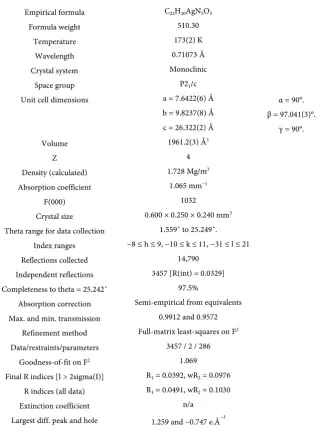
Table 2. Crystallographic data and structure refinement details of [Ag(N2C11H10)2]NO3. Empirical formula Formula weight Temperature Wavelength Crystal system Space group Unit cell dimensions
Volume Z Density (calculated) Absorption coefficient F(000) Crystal size Theta range for data collection
Index ranges Reflections collected Independent reflections Completeness to theta = 25.242˚
Absorption correction Max. and min. transmission
Refinement method Data/restraints/parameters
Goodness-of-fit on F2 Final R indices [I > 2sigma(I)]
R indices (all data) Extinction coefficient Largest diff. peak and hole
C22H20AgN5O3 510.30 173(2) K 0.71073 Å Monoclinic
P21/c a = 7.6422(6) Å b = 9.8237(8) Å c = 26.322(2) Å 1961.2(3) Å3
4 1.728 Mg/m3
1.065 mm−1 1032
0.600 × 0.250 × 0.240 mm3 1.559˚ to 25.249˚. −8 ≤ h ≤ 9, −10 ≤ k ≤ 11, −31 ≤ l ≤ 21
14,790 3457 [R(int) = 0.0329]
97.5%
Semi-empirical from equivalents 0.9912 and 0.9572 Full-matrix least-squares on F2
3457 / 2 / 286 1.069 R1 = 0.0392, wR2 = 0.0976 R1 = 0.0491, wR2 = 0.1030
n/a 1.259 and −0.747 e.Å−3
α = 90°. β = 97.041(3)°.
γ = 90°.
Table 3. Selected bond lengths and angles in the title compound.
Bonds Lengths (Å) Angles Values (˚)
Ag(1)–N(2) 2.194(3) N(2)–Ag(1)–N(4) 154.22(11)
Ag(1)–N(4) 2.127(3) C(11)–N(1)–N(2) 110.9(3)
C(1)–N(2)–Ag(1) 132.4(2) C(1)–N(2)–Ag(1) 121.9(2) N(1)–N(2)–Ag(1) 117.37(3)
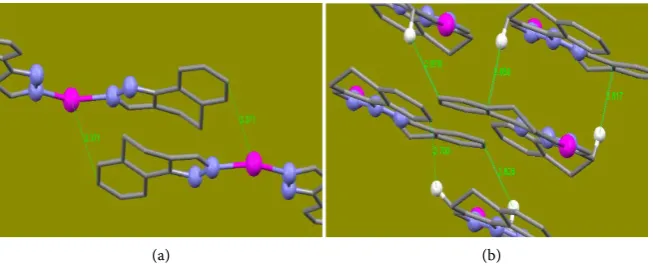
[image:6.595.207.539.561.662.2]hexaf-luoridoantimonate ([Ag(N2C5H8)2]SbF6) in which N2–Ag1–N2 angle is rather 176.54˚ [26]. Detailed analysis of the crystal packing of the salt [Ag(N2C11H10)2]NO3 reveals that the NO3− anion does not act as coordinated ligand, but rather is in-volved in hydrogen bonds N–H···O: 2.07Å and weak interactions: Ag···O: 3.0 Å (Figure 3(a) and Figure 3(b) and Table 4. In addition to these interactions, there are other non-covalent intermolecular interactions such as Ag···π: 3.4 Å and C–H···π: 2.8 Å as depicted in Figure 4(a) and Figure 4(b) involving the π–electron of cyclohexene ring and either silver metal or the hydrogen atom be-longing to the neighboring pyrazole.
The NO3
− anion is linked to the cation complex through electrostatic
interac-tions, intermolecular N–H···O and Ag···O interactions. The bulk structure is consolidated by N–H···O, C–H···π Ag···π and Ag···O intermolecular interactions, thus generating a helical crystalline network, as shown in Figure 5.
3.6. DFT Studies
[image:7.595.208.540.342.390.2]The DFT calculations were performed at the B3LYP level in the gas phase using
Table 4. Hydrogen bond lengths (Ǻ) and angles (˚) for the title compound.
D–H···A d(D–H) d(H···A) d(D···A) <(DHA)> N(3)–H(3N)···O(2)#1 0.916(18) 2.07(2) 2.973(4) 168(3) N(1)–H(1N)···O(2)#1 0.894(18) 2.07(2) 2.897(4) 154(4)
Symmetry transformations used to generate equivalent atoms: #1 –x + 1, y-1/2, −z + 1/2.
[image:7.595.212.538.414.544.2](a) (b)
Figure 3. (a) N–H···O (2.07Å) intermolecular hydrogen bonds; (b) weak Ag···O (3.0 Å) interactions.
(a) (b)
[image:7.595.211.538.585.718.2]Figure 5. Pseudo-helical crystalline network in [Ag(N2C11H10)2]NO3.
Figure 6. Optimized structure of [Ag(N2C11H10)2]NO3.
the LanL2DZ basis set, in order to understand the structural preferences of the atoms in the [Ag(N2C11H10)2]NO3 complex salt. The resulting optimized struc-ture is shown in Figure 6.
The π-electron system in the pyrazole unit and the benzene fraction of the li-gands observed in the experimental structure are well localized in the optimized structure. The reproducibility of the experimental geometry is quite satisfactory. A comparison of the experimental and theoretical geometric parameters of the compound is illustrated on Table 5.
[image:8.595.212.537.295.478.2]Table 5. Comparison between experimental and theoretical geometric parameters of [Ag(N2C11H10)2]NO3.
Bond Experimetal Length (Å) Theoretical Length (Å) Difference between Experimental and Theoretical Lengths (Å)
Ag1–N2 2.127 2.211 0.084
Ag1–N4 2.194 2.211 0.017
N1–N2 1.369 1.387 0.018
C11–N1 1.478 1.376 0.102
N2–C1 1.354 1.360 0.006
C1–C2 1.402 1.416 0.014
C2–C11 1.382 1.402 0.020
N4–C12 1.349 1.360 0.011
C12–C13 1.360 1.416 0.056
C13–C22 1.366 1.402 0.036
C22–N3 1.429 1.376 0.053
N3–N4 1.367 1.387 0.020
N5–O1 1.328 1.328 0.00
N5–O2 1.129 1.278 0.149
N5–O3 1.208 1.328 0.120
Table 6. Dihedral angles between some atomic planes in [Ag(N2C11H10)2]NO3.
Atoms Dihedral Angles (˚) Atoms Dihedral Angles (o)
Ag1–N2–N1–C11 176.46 C11–C2–C3–C4 30.32
Ag1–N2–C1–C2 −176.85 N1–N2–Ag1–N4 25.24
Ag1–N4–N3–C22 176.46 N2–Ag1–N4–N3 24.97
Ag1–N4–C12–C13 176.84 C1–N2–Ag1–N4 −158.19
N2–N1–C11–C2 0.40 N2–Ag1–N4–N3 −158.47
N2–C1–C2–C11 −0.25 N4–C12–C13–C22 −0.25
N1–C11–C2–C1 −0.09 N4–N3–C22–C13 0.40
N1–C11–C2–C3 178.40 N3–N4–C12–C13 0.48
N2–C1–C2–C3 −178.45 N3–C22–C13–C12 −0.09
[Ag(N2C11H10)2]NO3 in Table 7.
[image:9.595.207.540.419.590.2]ion, with some small contributions coming from the nitrogen atoms of the li-gands which are bonded to the metal center. Also, the orbitals of the ligand mo-lecules make the main contributions to the lowest unoccupied molecular orbitals (LUMOs) with small contributions from the orbitals of the central metal.
Table 7. Calculated IR vibrational frequencies (cm−1) of [Ag(N
2C11H10)2]NO3 complex salt
and their assignment.
Calculated Frequencies (cm−1) Vibrational Assignment 3707.1 (N–H)pyrazole stretching vibration 3279.2 (C–H)pyrazole stretching vibration 3230.3 (C–H)benzene stretching vibration 3114.4 (C–H)cyclohexane anti-symmetric stretching 1661.5 (C–C,C=C)cyclohexane,benzene anti-symmetric stretching 1501.0 (C–H)cyclohexane,benzene scissoring
1435.3 (C=C)pyrazole stretching
1377.6 (NO3−)uncoordinated anti-symmetric stretching 1324.1 (C–H)cyclohexane,benzene rocking 1095.7 (C=N, N–N)pyrazole symmetric stretching 1062.3 (C–C)cyclohexane twisting
1033.1 (C=C)benzene twisting
979.3 Ag–Npyrazole symmetric stretching
968.4 (C–H)pyrazole rocking
959.8 (NO3−)uncoordinated symmetric stretching
802.9 (C–H)benzene wagging
720.5 (NO3−)uncoordinated wagging 647.7 (NO3−)uncoordinated scissoring
574.1 (N–H)pyrazole rocking
434.1 (C–C)cyclohexane scissoring 183.4 Ag–Npyrazole anti-symmetric stretching
(a) (b)
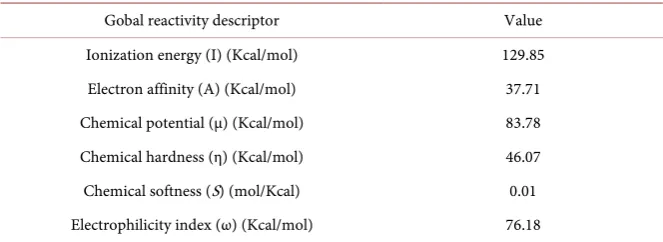
Table 8. Global reactivity descriptors for the title complex.
Gobal reactivity descriptor Value
Ionization energy (I) (Kcal/mol) 129.85 Electron affinity (A) (Kcal/mol) 37.71 Chemical potential (μ) (Kcal/mol) 83.78 Chemical hardness (η) (Kcal/mol) 46.07 Chemical softness (S) (mol/Kcal) 0.01 Electrophilicity index (ω) (Kcal/mol) 76.18
Some global reactivity descriptors of the complex salt obtained from theoreti-cal theoreti-calculations are summarized on Table 8.
4. Conclusions
The new complex salt, bis(4,5-dihydro-1H-benzo[g]indazole)silver(I) nitrate, [Ag(N2C11H10)2]NO3, has been synthesized and characterized. This compound presents an interesting two-dimensional pseudo-helical network based on the self-assembly of ionic units through coulombic and N–H···O, C–H···π, Ag···π and Ag···O intermolecular interactions. Thermal analysis reveals that the compound is stable up to ca. 210˚C. DFT results show some discrepancies between the X-ray and the optimized structures in terms of bond lengths and angles. The Ag+ cation and the NO3
− ion make the major contributions to HOMO, while the
C11H10N2 ligands make significant contributions to LUMO. However, the reac-tivity of this complex salt cannot be directly induced, but can be compared with the reactivity of other related complexes.
Preliminary observations from our laboratory promisingly suggest that a well-conceived and systematically conducted preparative procedure may be ap-plied generally to fabricate a whole range of homologous materials.
Acknowledgements
The authors are grateful to Prof E. Alvarez of Instituto de Investigaciones Qui-micas (IIQ)-Universidad de Sevilla (Spain) for X-ray facilities and to Prof C. Pet-tinari of the University of Camerino (Italy) for spectroscopic and Thermogravi-metric analyses facilities.
References
[1] Sultivan, T.J., Truglio, J.J., Boyne, M.E., Novichenok, P., Zhang, X., Stratton, C.F., Li, H.J., Kaur, T., Amin, A., Johnson, F., Stayden, R.A., Kisker, C. and Tonge, P.J. (2006) High Affinity InhA inhibitors with Activity Against Drug-Resistant Strains of Mycobacterium tuberculosis. ACS Chemical Biology, 1, 43-53.
https://doi.org/10.1021/cb0500042
[2] Prakash, O., Pundeer, R., Ranjan, P., Pannu, K., Dhingra, Y. and Aneja, K.R. (2009) Synthesis and Antibacterial Activity of 1,3-Diaryl-4-Cyanopyrazoles. Indian Journal of Chemistry, 48B, 563-568.
Przheval’skii, N.M., Rogelj, S. and Kornienko, A. (2007) Discovery and Investiga-tion of Antiproliferative and Apoptosis-Inducing Properties of New Heterocyclic Podophyllotoxin Analogues Accessible by a One-Step Multicomponent Synthesis.
Journal ofMedicinal Chemistry,50, 5183-5192.
https://doi.org/10.1021/jm070528f
[4] Soliman, R., Habib, N.S., Ashour, F.A. and El-Taiebi, M. (2001) Synthesis and An-timicrobial Activity of Novel Pyrazole, Pyrazoline, Pyrazolinone and Pyrazolidine-dione Derivatives of Benzimidazole. Bollettino Chimico Farmaceutico, 140, 140- 148.
[5] Liu, X.H., Cui, P., Song, B.A., Bhadury, P.S. Zhu, H.L. and Wang, S.F. (2008) Syn-thesis, Structure and Antibacterial Activity of Novel 1-(5-Substituted-3-substituted- 4,5-dihydropyrazol-1-yl)Ethanone Oxime Ester Derivatives. Bioorganic & Medici- nal Chemistry, 16, 4075-4082.
[6] Sener, A., Sener, M.K., Bildmci, I., Kasimogullari, R. and Akcamur, Y. (2002) Stu-dies on the Reactions of Cyclic Oxalyl Compounds with Hydrazines or Hydrazones II: Synthesis and Reactions of 4-Benzoyl-1-(3-nitrophenyl)-5-phenyl-1H-pyrazole- 3-carboxylic Acid. Journal of Heterocyclic Chemistry, 39, 869-875.
https://doi.org/10.1002/jhet.5570390503
[7] Menozzi, G., Mosti, L., Schenone, P., D’Amico, M., Falciani, M. and Filippelli, W. (1994) 1-Aryl-1H-pyrazole-5-acetic Acids with Anti-Inflammatory, Analgesic and Other Activities. Farmaco, 49, 115-119.
[8] Barszcz, B. (2005) Coordination Properties of Bidentate N,O Heterocyclic Alcohols and Aldehydes Towards Cu(II), Co(II), Zn(II) and Cd(II) Ions in the Solid State and Aqueous Solution. Coordination Chemistry Reviews, 249, 2259-2276.
[9] Zora, M., Pinar, A.N., Odabaşoğlu, M., Büyükgüngör, O. and Turgut, G. (2008) Synthesis of Ferrocenyl Pyrazoles by the Reaction of 3-Ferrocenylpropynal with Hydrazinium Salts. Journal of Organometallic Chemistry, 693, 145-314.
[10] Ngoune, J. (2008) New Hybrid Metal-Organic Materials Polyfunctional Containing, N-Donor Ligand. Ph.D. Thesis, University of Camerino, Camerino, Italy.
[11] Qian, J., Liu, Y., Zhu, J., Jiang, B. and Xu, Z. (2011) A Novel Synthesis of Fluori-nated Pyrazoles via Gold(I)-Catalyzed Tandem Aminofluorination of Alkynes in the Presence of Selectfluor. Organic Letters, 13, 4220-4223.
https://doi.org/10.1021/ol201555z
[12] Trofimenko, S. (1972) The Coordination Chemistry of Pyrazole-Derived Ligands.
Chemical Reviews, 72, 497-509. https://doi.org/10.1021/cr60279a003
[13] Ten-Hoedt, R.W., Driessen, W.L. and Verschoor, G. (1983) Structure of Hex-akis(pyrazole)nickel(II) Bis(tetrafluoroborate), [Ni(C3H4N2)6](BF4)2. Acta
Crystal-lographica, C39, 71-72.
[14] Casarin, M., Forrer, D., Garau, F., Pandolfo, L., Pettinari, C. and Vittadini, A. (2009) Tris(pyrazol-1-yl)borate and Tris(pyrazol-1-yl)methane: A DFT Study of Their Different Binding Capability toward Ag(I) and Cu(I) Cations. Inorganica Chimica Acta,362, 4358-4364.
[15] Santos, C., Gómez, M., Álvarez, E., Ngoune, J., Marchetti, F., Pettinari, R. and Pettinari, C. (2016) Group 9 and 10 Complexes with the Bidentate Di(1H-indazol-1-yl)methane and Di(2H-indazol-2-yl)methane Ligands: Synthesis and Structural Characteriza-tion. New Journal of Chemistry, 40, 5695-5703.
https://doi.org/10.1039/C5NJ03135D
[16] Rheingold, A.L., Ostrander, R.L., Haggerty, B.S. and Trofimenko, S. (1994) Homo- scorpionate (Tris(pyrazolyl)borate) Ligands Containing Tethered 3-Phenyl Groups.
[17] (2007) APEX2. Bruker AXS Inc., Madison, Wisconsin, USA.
[18] (2004) Bruker Advanced X-Ray Solutions. SAINT and SADABS Programs. Bruker AXS Inc., Madison, Wisconsin, USA.
[19] Burla, M.C., Camalli, M., Carrozzini, B., Cascarano, G.L., Giacovazzo, C., Polidori, G. and Spagna, R. (2003) SIR2002: The Program. Journal of Applied Crystallogra-phy, 36, 1103. https://doi.org/10.1107/S0021889803012585
[20] Sheldrick, G.M. (2015) Crystal Structure Refinement with SHELXL. Acta Crystallo-graphica, C71, 3-8.
[21] Amsterdam Density Functional (ADF) Version 2007.01. http://www.scm.com [22] Umadevi, P. and Lalitha, P. (2012) Synthesis and Antimicrobial Evaluation of Imino
Substituted 1, 3, 4 Oxa and Thiadiazoles. International Journal of Pharmacy and Pharmaceutical Sciences. 4, 523-527.
[23] Gunasekaran, S. and Anita, B. (2008) Spectral Investigation and Normal Coordinate Analysis of Piperazine. Indian Journal of Pure & Applied Physics, 46, 833-838. [24] Nakamoto K. (1997) Infrared Spectra of Inorganic and Coordination Compounds.
Wiley, New York.
[25] Baran, E.J. (2005) The Saccharinate Anion: A Versatile and Fascinating Ligand in Coordination Chemistry. Química Nova, 28, 326-328.
https://doi.org/10.1590/S0100-40422005000200025
[26] Crawford, D., Hofer, A.K., Edler, K.L. and Ferrence, G.M. (2011) Bis(3,5-dimethyl- 1H-pyrazole-κN2)silver(I) Hexafluoridoantimonate. Acta Crystallographica, E67,
Supplementary Material
Detailed crystallographic data in CIF format for this paper were deposited with the Cambridge Crystallographic Data Centre (CCDC-1547647). The data can be obtained free of charge at http://www.ccdc.cam.ac.uk/conts/retrieving.html [or from Cambridge Crystallographic Data Centre (CCDC), 12 Union Road, Cam-bridge CB2 IEZ, UK; fax: +44 (0) 1223-336033; e-mail: [email protected]].
Submit or recommend next manuscript to SCIRP and we will provide best service for you:
Accepting pre-submission inquiries through Email, Facebook, LinkedIn, Twitter, etc. A wide selection of journals (inclusive of 9 subjects, more than 200 journals)
Providing 24-hour high-quality service User-friendly online submission system Fair and swift peer-review system
Efficient typesetting and proofreading procedure
Display of the result of downloads and visits, as well as the number of cited articles Maximum dissemination of your research work
Submit your manuscript at: http://papersubmission.scirp.org/
![Table 1. Percentage of analyzed elements (C, H, N) in [Ag(N2C11H10)2]NO3.](https://thumb-us.123doks.com/thumbv2/123dok_us/7755297.710935/4.595.207.539.91.164/table-percentage-analyzed-elements-c-h-ag-no.webp)
![Figure 1. Thermogravimetric curve of [Ag(N2C11H10)2]NO3 under N2 atmosphere.](https://thumb-us.123doks.com/thumbv2/123dok_us/7755297.710935/5.595.75.540.170.415/figure-thermogravimetric-curve-ag-n-c-no-atmosphere.webp)
![Figure 5. Pseudo-helical crystalline network in [Ag(N2C11H10)2]NO3.](https://thumb-us.123doks.com/thumbv2/123dok_us/7755297.710935/8.595.212.537.295.478/figure-pseudo-helical-crystalline-network-in-ag-no.webp)
![Table 6. Dihedral angles between some atomic planes in [Ag(N2C11H10)2]NO3.](https://thumb-us.123doks.com/thumbv2/123dok_us/7755297.710935/9.595.208.539.104.388/table-dihedral-angles-atomic-planes-ag-n-no.webp)
![Table 7. Calculated IR vibrational frequencies (cm−1) of [Ag(N2C11H10)2]NO3 complex salt and their assignment](https://thumb-us.123doks.com/thumbv2/123dok_us/7755297.710935/10.595.208.539.174.574/table-calculated-ir-vibrational-frequencies-complex-salt-assignment.webp)