KNOWLEDGE MANAGEMENT IN PUBLIC SECTOR ORGANISATIONS:
DEVELOPING A PRACTICE FRAMEWORK FOR GHANA
EDWIN ASIAMAH ACHEAMPONG
A thesis submitted in partial fulfilment of the requirements of the
University of Bolton for the degree of Doctor of Philosophy
The Bolton Business School
The University of Bolton
i | P a g e
Abstract
Accomplishing much is not determined by the possession of splendid talents,
but the conscious performance of daily duties (Adaptation fromProphets & Kings by E.G. White) Knowledge Management emerged in the mid-1990s as a solution to the challenge of
managing intellectual assets in the post-industrial era widely known as knowledge economy; which is transforming every sector of the global economy – both private and public. However, the tendency of existing literature to convey Knowledge Management
(KM) theories and concepts, and indeed its practices, in predominantly private sector context has created a ‘gap’ and marginalised the transformational impact of this important
field. At the same time the slow rate, and, to a large extent, non-adoption of knowledge
management practices within the public sector, particularly in developing countries, is a
missed opportunity as long as the status quo is not improved.
This PhD research traces the emergence of the knowledge economy phenomenon,
explores knowledge management as an organisational strategy and focuses on how the
public sector in developing economies, especially Ghana, can adopt KM strategies and
techniques to enhance public administration and performance. More importantly, a KM
practice framework is developed encourage its institutionalisation.
Based on the interpretivist research paradigm and a multi-site case study design,
seventeen public sector organisations in Ghana and seven in the United Kingdom were
studied to collate and synthesize relevant organisational factors and conditions that
influence KM. Fifteen factors and conditions were found to provide rationale for KM and to
sustain its deployment as a strategic intervention in public sector organisations. These
factors and conditions were abstracted into four core categories to define a KM practice
framework for the sector.
Theoretically, this study is a significant contribution to public sector KM as the developed
framework provides context for the field in a new arena. For public administrators in
Ghana, it opens up pragmatic strategic options to grow intellectual capabilities to improve
efficiency in policy-making and service delivery. Practically, the study is a significant step towards institutionalising KM in Ghana as a direct response to development partners’ calls
for efficient public administration and meeting a major component of the New Public
Management agenda: public organisations becoming learning institutions.
ii | P a g e
Dedication
Render honour to whom honour is due (Romans 13:7)
This thesis is dedicated to the inspiring life of my pastor and friend:
Reverend Elliot Nana Yaw Lamptey (
Gospel Believers Chapel Int, Ghana)
iii | P a g e
Acknowledgement
Only when we have knelt before God, can we stand before men Pastor Andrews L. Ewoo
I thank the Almighty God for His care, benevolence and protection throughout this epic
academic journey. Being a Christian, my belief is that nothing gets well done without the
blessing of Jesus Christ. Very special thanks go to the joint-sponsors of this research,
University of Bolton (UK) and Ghana Revenue Authority (GRA), and all who directly
supported in diverse ways. My supervisor, Dr Kondal Reddy Kandadi, deserves my
unreserved gratitude. He has been the brain behind my aspirations and accomplishments.
I would always be indebted to my supervisor for his mentorship, guidance and confidence
in me. My second supervisor, Dr Zahra Salimi, is acknowledged for her support. To my
colleagues, I doff my hat for the nice times we shared and for your encouragement when
boredom and lethargy appeared to take hold.
Many thanks go to my dad, Mr Edwin Opoku-Acheampong, for spending hours and hours
to proof read my thesis. To Dr Nick Milton of Knoco Limited, UK, who connected me to Knowledge Managers in the UK public sector, I say a big ‘thank you’. To all my UK and
Ghana research participants, I acknowledge and express my heartfelt gratitude to you for
your candid and insightful opinions and views. This thesis embodies those opinions and
views, founded on your rich experiences and knowledge, both within the public sector and elsewhere, and which carry the ‘magic sceptre’ that can transform the Ghanaian public
sector.
My family, Christian friends, brothers and sisters who prayed for me are hereby
acknowledged. Your thoughts and hearts were with me throughout my academic sojourn
in the UK and so you deserve my unreserved thanks. I appreciate the patience of my
daughters: Nadia, Nancy and Frema, who took it easy without me for much of the three
years I was studying abroad. Finally I praise my dear wife Grace, for giving meaning to the saying: “behind every successful man, there is a virtuous woman”. She inspired joy and
iv | P a g e
Table of Contents
ABSTRACT ...I
DEDICATION ... II
ACKNOWLEDGEMENT ... III
TABLE OF CONTENTS ... IV
LIST OF TABLES ... VII
LIST OF FIGURES ... VIII
LIST OF ABBREVIATIONS ... IX
1 INTRODUCTION ... 1
1.1 CHAPTER PREVIEW ... 1
1.2 KNOWLEDGE MANAGEMENT IN THE PUBLIC SECTOR ... 2
1.3 MOTIVATION FOR THE STUDY ... 4
1.4 RESEARCH PROBLEM AND QUESTIONS ... 5
1.5 RESEARCH AIM AND OBJECTIVES ... 6
1.6 RESEARCH METHODOLOGY ... 7
1.7 RESEARCH CONTEXTS ... 8
1.8 OVERARCHING RESEARCH PROCESS ... 9
1.9 THESIS STRUCTURE ... 11
1.10 CHAPTER SUMMARY ... 12
2 LITERATURE REVIEW ... 13
2.1 INTRODUCTION ... 13
2.2 KNOWLEDGE ECONOMY:AGLOBAL CHALLENGE AND OPPORTUNITY ... 14
2.2.1 THE EMERGENCE OF THE KNOWLEDGE ECONOMY ... 14
2.2.2 THE WORLD BANK’S KNOWLEDGE ECONOMY FRAMEWORK ... 18
2.2.3 THE KNOWLEDGE ASSESSMENT METHODOLOGY (THE WORLD BANK) ... 23
2.2.4 TOWARDS A KNOWLEDGE-BASED ECONOMY: THE UNITED KINGDOM AND THE UNITED STATES 39 2.2.5 TOWARDS A KNOWLEDGE-BASED ECONOMY: THE EUROPEAN ECONOMIES ... 43
2.2.6 TOWARDS A KNOWLEDGE-BASED ECONOMY: COUNTRIES IN ASIA ... 45
2.2.7 TOWARDS A KNOWLEDGE-BASED ECONOMY: MIDDLE EAST COUNTRIES ... 47
2.2.8 TOWARDS A KNOWLEDGE-BASED ECONOMY: AFRICAN COUNTRIES ... 50
2.2.9 TOWARDS A KNOWLEDGE-BASED ECONOMY: GHANA ... 54
2.3 EXPLORINGKNOWLEDGEMANAGEMENTDISCIPLINE ... 59
2.3.1 PHILOSOPHICAL PERSPECTIVE ON KNOWLEDGE ... 59
2.3.2 KNOWLEDGE MANAGEMENT: A CONTEMPORARY MANAGEMENT PRACTICE AND DISCIPLINE ... 66
2.3.3 KNOWLEDGE MANAGEMENT PROCESSES... 71
2.4 KNOWLEDGEMANAGEMENTTHEORIESANDFRAMEWORKS ... 76
2.4.1 THEORY OF KNOWLEDGE CREATION ... 77
2.4.2 COMMUNITIES OF PRACTICE ... 80
v | P a g e
2.4.4 KNOWLEDGE FROM STORYTELLING ... 85
2.4.5 KNOWLEDGE MARKETS ... 87
2.4.6 THE DOUGHNUT MODEL OF KNOWLEDGE MANAGEMENT ... 88
2.4.7 STANKOSKY, CALABRESE AND BALDANZA’S KM FRAMEWORK ... 90
2.4.8 THE BCPI KM FRAMEWORK ... 92
2.5 KNOWLEDGEMANAGEMENTINTHEPUBLICSECTOR... 93
2.5.1 THE PUBLIC SECTOR VERSUS THE PRIVATE SECTOR ... 94
2.5.2 KNOWLEDGE MANAGEMENT IN THE PUBLIC SECTOR ... 96
2.6 KNOWLEDGEMANAGEMENTFORGHANA’SPSOS:ANECESSITY ... 99
2.6.1 MANAGING KNOWLEDGE IN GHANA’S PUBLIC SECTOR ORGANISATIONS ... 99
2.6.2 THE CHALLENGES AND THE OPPORTUNITIES ...101
2.6.3 A PUBLIC SECTOR-ORIENTED KNOWLEDGE MANAGEMENT FRAMEWORK FOR GHANA ...101
2.7 CHAPTERSUMMARY ... 105
3 METHODOLOGY ... 106
3.1 INTRODUCTION ... 106
3.2 RESEARCHPARADIGM ... 109
3.2.1 POSITIVISM ...113
3.2.2 INTERPRETIVISM ...115
3.2.3 CRITICAL THEORY ...118
3.2.4 OTHER PARADIGMS: POSTPOSITIVISM AND PRAGMATISM ...120
3.2.5 ADOPTED PARADIGM: INTERPRETIVIST PERSPECTIVE...121
3.3 RESEARCHMETHOD ... 122
3.3.1 RESEARCH APPROACH: QUALITATIVE STUDY ...122
3.3.1.1 QUALITATIVE RESEARCH ...123
3.3.1.2 QUANTITATIVE RESEARCH ...124
3.3.1.3 MIXED METHODS RESEARCH ...124
3.3.2 RESEARCH STRATEGY: MULTIPLE CASE STUDIES METHOD ...125
3.3.2.1 ETHNOGRAPHY ...125
3.3.2.2 ACTION RESEARCH ...126
3.3.2.3 GROUNDED THEORY ...128
3.3.2.4 CASE STUDY (CHOSEN METHOD) ...130
3.4 RESEARCHDESIGN ... 135
3.4.1 CASE SELECTION ...138
3.4.1.1 MAIN UNITS OF ANALYSES -CASES ...140
3.4.1.2 SUB-UNIT OF ANALYSIS ...142
3.4.2 DATA COLLECTION ...145
3.4.3 DATA ANALYSIS ...148
3.5 VALIDITY,RELIABILITYANDGENERALISABILITY ... 154
3.6 RESEARCHETHICS ... 156
3.7 CHAPTERSUMMARY ... 157
4 FINDINGS AND FRAMEWORK DEVELOPMENT ... 159
4.1 INTRODUCTION ... 159
4.1.1 UNITS OF ANALYSIS AND APPLICATION OF THE CODING PROCESS ...160
4.2 FINDINGSANDDISCUSSION ... 164
4.2.1 PRESENTATION OF FINDINGS: A SCHEMA...165
4.2.2 CORE CATEGORIES, FACTORS AND CONDITIONS ...168
4.2.1 EXPECTATION (C1) ...171
vi | P a g e
4.2.1.2 EVIDENCE-BASED POLICY-MAKING (F1) ...177
4.2.1.3 REFORMS (K2)...182
4.2.2 ENVIRONMENT (C2) ...189
4.2.2.1 SENIOR SPONSORSHIP (F2) ...194
4.2.2.2 COLLABORATION (K3) ...200
4.2.2.3 EVENTS (F3) ...207
4.2.2.4 POLICY AND POLITICS (K4,K5,K6) ...211
4.2.3 MEANS ...219
4.2.3.1STRATEGIC ALIGNMENT ...222
4.2.3.2KMSTRUCTURE ...227
4.2.3.3KMUNIVERSE ...234
4.2.3.4BUSINESS ACTIVITY ...245
4.2.4 INFRASTRUCTURE ...252
4.2.4.1 TECHNOLOGICAL INFRASTRUCTURE ...253
4.2.4.2 PHYSICAL INFRASTRUCTURE ...259
4.3 KNOWLEDGEMANAGEMENTFRAMEWORKFORPSOS INGHANA... 264
4.3.1 THE PROPOSED KM PRACTICE FRAMEWORK (2EMS): BUILDING BLOCKS ...265
4.3.2 THE PROPOSED FRAMEWORK AND PSOS IN GHANA ...268
4.3.3 THE PROPOSED FRAMEWORK: IMPLEMENTATION GUIDE ...272
4.3.3.1 PROPOSED KMPRACTICE FRAMEWORK:IMPLEMENTATION PHASES ...272
4.3.3.2 SUSTAINING INTEREST IN THE PILOT PROJECT ...276
4.3.3.3 KMMATURITY MODEL ...277
4.3.3.4 MEASURING KMRESULTS ...281
4.4 CHAPTERSUMMARY ... 282
5 CONCLUSIONS ... 283
5.1 INTRODUCTION ... 283
5.2 PURPOSEOFTHERESEARCHANDQUALITYASSURANCE ... 283
5.3 CONTRIBUTIONSTOKNOWLEDGE ... 289
5.3.1 THEORETICAL CONTRIBUTIONS ...290
5.3.2 PRACTICAL CONTRIBUTIONS ...295
5.4 LIMITATIONSOFTHERESEARCH ... 299
5.5 RECOMMENDATIONFORFUTURERESEARCHANDWORK ... 300
5.6 EPISTEMOLOGICALANDPERSONALREFLEXIVITY ... 301
5.7 CHAPTERSUMMARY ... 304
REFERENCES ... 305
vii | P a g e
List of Tables
Table 2.1 Typologies of Knowledge...53
Table 3.1 Overview of Main- and Sub-units of Analysis and Related Organisations ...119
Table 4.1 Application of grounded theory data collection techniques…………...163
Table 4.2 Core categories, intermediate categories, KM factors and KM conditions ………...169
Table 4.3 Expectation core category – substantiating codes ………...171
Table 4.4 Knowledge dispersion KM condition – substantiating codes ………...173
Table 4.5 Evidence-based policy-making – substantiating codes ………...178
Table 4.6 Reforms KM condition – substantiating codes …...182
Table 4.7 Culture intermediate category – substantiating codes ……….………...190
Table 4.8 Inertia intermediate category – substantiating codes ………...193
Table 4.9 Senior sponsorship KM factor – substantiating codes ………...195
Table 4.10 Difference between a community of practice and formal work group ……...201
Table 4.11 Collaboration KM condition – substantiating codes ………...202
Table 4.12 Events KM factor – substantiating codes ………….………...207
Table 4.13 Policy and politics – substantiating codes …...213
Table 4.14 Means core category – substantiating codes ………...220
Table 4.15 Strategic alignment – substantiating codes …...223
Table 4.16 KM structure – substantiating codes ……….………...228
Table 4.17 KM universe – substantiating codes ………...235
Table 4.18 Business activity – substantiating codes ...246
Table 4.19 Infrastructure core category – substantiating codes ……….………...254
Table 4.20 Technological infrastructure KM factor – substantiating codes …………...255
viii | P a g e
List of Figures
Figure 1.1 An overview of research process adopted ...8
Figure 2.1 Knowledge makes the difference: South Korea and Mexico ...15
Figure 2.2 KAM’s Knowledge Indexes – KEI and KI ...22
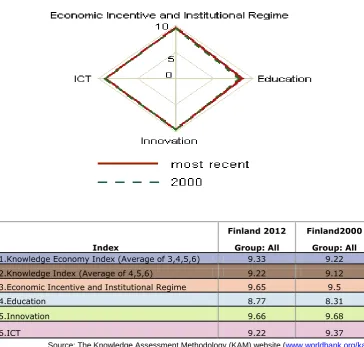
Figure 2.3 Finland – Knowledge Economy Index (2012 & 2000) ...24
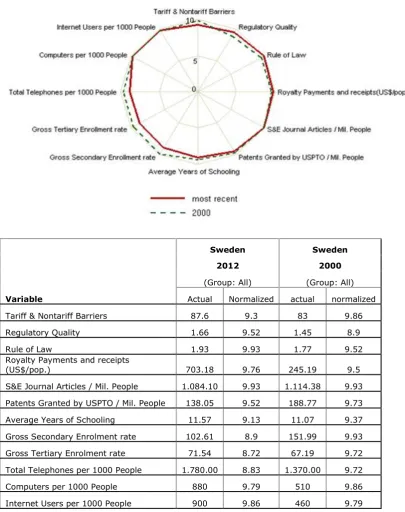
Figure 2.4 Sweden – Knowledge Economy Basic Scorecard (2012 & 2000) ...25
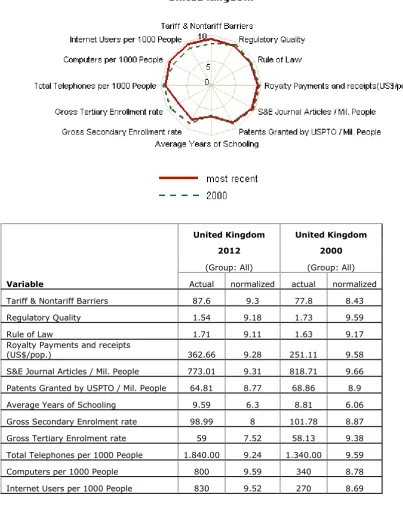
Figure 2.5 United Kingdom – Knowledge Economy Basic Scorecard (2012 & 2000) ...26
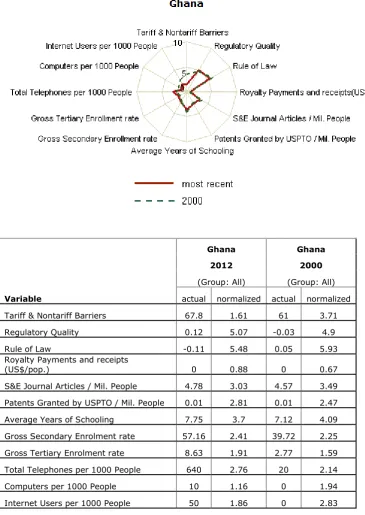
Figure 2.6 Ghana – Knowledge Economy Basic Scorecard (2012 & 2000) ...27
Figure 2.7 Ghana – Knowledge Economy Index (2012 & 2000) ...28
Figure 2.8 United Kingdom – Knowledge Economy Index (2012 & 2000) ...29
Figure 2.9 South Africa – Knowledge Economy Index (2012 & 2000) ...30
Figure 2.10 Tanzania – Knowledge Economy Index (2012 & 2000) ...31
Figure 2.11 Ghana and United Kingdom – Knowledge Economy Index (2012 & 2000) ...32
Figure 2.12 Knowledge Economy Index (MENA Countries) ...34
Figure 2.13 Four Modes of Knowledge Conversion ...68
Figure 2.14 How Communities of Practice Underpin Knowledge Processes ...71
Figure 2.15 The Doughnut Model of Knowledge Management ...77
Figure 2.16 Stankosky, Calabrese and Baldanza’s Knowledge Management Framework ...79
Figure 2.17 The BCPI Knowledge Management Framework ...80
Figure 3.1 Research Process Onions ...92
Figure 3.2 Research-Specific Multiple Case Study Design ...117
Figure 4.1 Presentation of findings: A schema ………...166
Figure 4.2 Public sector business activity and KM ………...246
Figure 4.3 The 2EMS KM practice framework ………...268
Figure 4.4 KM implementation phases …...274
Figure 4.5 KM maturity – stages ………...279
ix | P a g e
List of Abbreviations
2EMS - Expectation, Environment, Means and Support CoP - Community of Practice
K4D - Knowledge for Development
KAM - Knowledge Assessment Methodology
KE - Knowledge Economy
KI - Knowledge Index/Knowledge indexes
KIM - Knowledge and Information Management
KM - Knowledge Management
MDA - Ministry, Department and Agency
1 | P a g e
1 INTRODUCTION
To know what you know and what you do not know, that is true knowledge Kong Fu Zi
1.1 Chapter Preview
Chapter one gives the background of the research study. Among other
significant landmarks, it sets the thesis in context and justifies the significance
of the study. Knowledge management, a practice and discipline, spawned by
the challenges of managing knowledge in the global knowledge economy, is
introduced and discussed from the perspectives of both practitioners and
academics.
The varying degree of adoption of knowledge management as a strategic tool in
public sector organisations and their private counterparts is also examined in
this chapter. This dichotomy is essential as the current research seeks, in part,
to contribute to the relatively research-deprived area of public sector knowledge
management in developing economies. Knowledge work, reforms and other
pertinent features of the public sector are also discussed.
The concluding sections of the chapter detail the motivation for the study, the
problem statement, and the research goals and objectives. This is followed by
a preview of the research methodology and noteworthy portions highlighted.
The penultimate section sets the context of this thesis and in particular the
contexts in which the intended KM framework could be applied. The final
section outlines the structure of the thesis, providing a summary of each
2 | P a g e
1.2 Knowledge Management in the Public Sector
The public sector is a part of the state that deals with the ownership, production,
sale, provision, delivery and allocation of goods and services by and for the
government or its citizens. Also known as the state sector or the government
sector, the public sector can operate at the national, regional or local level.
Employees within the public sector or public servants (also known as civil
servants in some cases) are primarily concerned with the organisation and
implementation of government policies and programmes.
Public administration or management of the public sector is taking on some
features of the private business organisation as citizens, both within developed
and developing economies, are demanding efficient public services. Gone are
the days when the public sector was clothed in mundane and inept character
and it was acceptable; largely in the advanced countries with developing
countries following suit. Policies such as the Citizen’s Charter have been
introduced to make the public sector accountable and to gradually stem acts of
impunity within its set up.
Over the years, movements such as the New Public Management (NPM) have
sought to invigorate the public sector by introducing radical reforms. A more
recent regime is advocating reintegration, needs-based holism and digitization
changes in public administration (Dunleavy, Margetts, Bastow, and Tinkler 2005). The overall movement incorporating this shift is towards “digital-era governance” (DEG). The DEG involves reintegrating functions into the
governmental sphere, adopting holistic and needs-oriented structures, and
promoting digitization of administrative processes.
All these changes to public administration are informed in part by the knowledge
economy phenomenon which is globally acknowledged. Public and private
institutions are finding ways to develop strategies to optimize the use of their
resources, especially knowledge, which has become a source of lasting
competitive advantage (Nonaka, 1987 and 1994; Drucker, 1968; Toffler, 1990).
Both governments and businesses are compelled to exploit knowledge
3 | P a g e
The World Bank, acknowledging the potential positive impact of harnessing
knowledge resources, is organising policy workshops for countries to help them
transition into knowledge-based economies. Ghana, Tanzania and Senegal
benefited from the African series of the knowledge economy workshops in
2002.
According to the World Bank, the challenge for African countries is their inability
to create a favourable environment that nurtures knowledge creation and
sharing (World Bank, 2003). It is the argument of this thesis that public sector
knowledge management provides the opportunity for governments to meet this
challenge to an appreciable extent. Governments in developed economies,
including the United Kingdom, have embraced knowledge management
initiatives in various facets of public management with encouraging results (BSI,
2004).
Policy makers in developing countries, including Ghana, Tanzania and Uganda,
ought to explore knowledge management as an organisational practice within
their respective public sectors. This will no doubt be an immense contribution
towards their quest to become knowledge based.
Some studies have attempted to explore how private sector knowledge
management concepts and practices might contribute to public sector quality
improvement initiatives (Bate & Robert, 2002). That notwithstanding public
sector knowledge management has attracted only a few knowledge
management research and publications. The peculiar environment within
which public sector organisations operate does not make them easy adopters of
knowledge management strategies. The adoption rate, in the African context,
is worse, if not non-existent. Thus, this research may be one among just a few.
In the case of Ghana, the need for a mechanism to manage and enable re-use
of the vast knowledge resources scattered across public sector has been
highlighted by a consultative team from the World Bank as far back as 2002.
Given the relatively secure job environment, there is comparatively low
4 | P a g e
to be nurtured for a long time. But the absence of well-coordinated knowledge
succession plan means that retirees walk out with almost all their expertise.
With the sector expected to enhance its efficiency, re-engineer its service
delivery and ultimately, increase its productivity as a response to the global call
for improved public administration, a well thought-through knowledge
management practice framework or guidelines is what Ghana needs. If such a
framework is scalable, practical and flexible, and accorded the needed support,
the sector could realise the improved performance as it connects with internal
and external knowledge resources.
1.3 Motivation for the study
A number of issues, academic and national in character, coalesced to inspire
this study. The author’s many years of association with public sector
administration and growing interest in knowledge management theory and practices following a master’s degree in the subject area, have positioned him
to appreciate the gains to be derived from a well-oriented knowledge management programme for Ghana’s public sector. Ghana’s public sector has
benefitted from a number of interventions from its development partners which
has set the stage for capacity building within the sector including knowledge
management initiatives. More than that, the author is particularly challenged by
the calls within the field of knowledge management to explore avenues for
better application of knowledge management theories and concepts within the public sector. Another source of motivation has been the country’s
collaboration with the World Bank on its knowledge economy policy workshops
and conferences. In summary, the motivation for this study stems from:
A growing interest in knowledge management as a critical strategic initiative transforming every sector of the global economy;
5 | P a g e
countries in line with the recommendation in an earlier study – MSc. Dissertation project, Acheampong (2008);
A civic obligation to contribute to Ghana’s fledgling attempt to find a foothold within the global knowledge economy.
1.4 Research problem and questions
The public sector generates vast amounts of knowledge resources that
generally go untapped. There is absence of a conscious effort to harness this
high end resource. This thesis will explore how knowledge can be optimised
within public sector organisations in Ghana, in particular and in developing
economies, in general, by proposing enabling conditions and practices. The
three dimensions of the research problem are: Determining public sector
practices and procedures that can be leveraged by introducing knowledge
management techniques; determining how these practices can be leveraged
and benchmarking based on best practices within public organisations in the
United Kingdom (UK); and developing a KM practice framework for managing
enterprise knowledge within public sector organisations with specific focus on
Public sector organisations in Ghana.
In summary the research problem looks at:
“How to manage knowledge in public sector organisations in Ghana”.
In terms of the stated research problem, the thesis aims to answer the
following specific research questions:
1. What major factors and conditions (organisational, political, socio-cultural, economic, technological, etc.) promote Knowledge Management in public sector organisations?
6 | P a g e
3. What initiatives, strategies and measures should public sector organisations in Ghana take in order to introduce, cultivate and assimilate the identified factors and conditions to help manage enterprise knowledge effectively?
1.5 Research aim and objectives
The overall goal of the thesis is to systematically develop a KM Practice
Framework for managing knowledge in the Ghanaian public sector as a direct
response to the research problem and questions. To reach this broad goal of
the study, the objectives of the research will include the following:
1. To critically review literature on the various concepts, contexts and
frameworks of knowledge management;
2. To conduct an in-depth empirical study into latent knowledge management drivers and enablers within Ghana’s public sector
organisations;
3. To conduct an in-depth empirical study at selected public sector
organisations with established knowledge management programmes in
the United Kingdom with the view to understanding their Knowledge
Management strategy, processes, best practices and challenges;
4. To evaluate and synthesize the findings of the empirical study in the light
of contemporary KM literature to determine the factors and conditions
that would promote a sustainable knowledge culture in public sector
organisations in Ghana;
7 | P a g e
1.6 Research methodology
The research adopts the interpretivist paradigm as it focuses on gaining
in-depth understanding and exploring social phenomena regarding knowledge
management in developing and developed economies. Consequently, a
multiple case studies method is employed to broaden the scope of empirical
material to be collected. According to Saunders, et al. (2003), the interpretivist is not totally separated from the study. Saunders, et al (2002) and Yin (2009) characterise case study strategy as follows:
1. Involves an empirical investigation of a particular contemporary phenomenon within its real life context using multiple sources of evidence;
2. It is employed to gain a rich understanding of the context of the research and the process being enacted;
3. Data collection technique employed may be diverse. They may include questionnaires, interviews, observation and documentary analysis. Data from these sources must however converge in a triangulation fashion, and not as another result.
The adoption of multiple case studies is intended to enable the collection of
relevant data both within public sector organisations in Ghana and the United
Kingdom. For this study, the Ghanaian public sector is reckoned as a case and
the public sector of United Kingdom, another case. According to Yin (2009),
case studies are suitable for research studies with the aim of exploring a
phenomenon. It is also widely accepted that qualitative methodology is
applicable in knowledge management studies, information systems research
and related disciplines (Croasdell, 2002; Markus, 1997; and Myers, 1997)
The BCPI (Business focus, Culture, Processes and Infrastructure) Matrix, a
meta-level framework that comprehensively maps all relevant elements for
managing enterprise knowledge, was employed to fashion the data collection
instrument. This, together with documented discourse on public administration
and direct observation, formed the basis for the design of the semi-structured
8 | P a g e
There are a number of methods for analysing qualitative data. According to
Hussy and Hussey (1997), the grounded theory is becoming popular for
analysing qualitative data. Sekaran and Bougie (2010) and Locke (2001)
support this view, which involves generating the codes and categories
inductively from the data, in situations where there is no theory available.
Strauss and Corbin (1990) define grounded theory as a systematic set of
procedures to develop and inductively frame theory from data. Given its rigour
as a qualitative data analysis tool, the proposed research study will draw
various concepts and techniques from grounded theory for data analysis.
Chapter three gives a comprehensive overview of the research methodology
and justification for the methods, approaches and techniques employed in the
study.
1.7 Research contexts
Public sector knowledge management has been studied in a number of
contexts mainly in the advanced economies. The stark difference between the
public sectors of advanced economies and those of the developing world
necessitates providing a clear context within which the intended framework can
be applied. Following are some defined boundaries of the study.
Research position: Skill adaptation and knowledge management
discourse
The knowledge economy framework proposed by the World Bank is a
comprehensive and long-term strategy for transitioning into the
knowledge-based economy. The four constituent pillars: An Economic Incentive and
Institutional Regime, Education and Skilled Workers, An Effective Innovation
System and A Modern and Adequate Information Infrastructure (details
discussed in section 2.2.2) provide a holistic road map for governments to steer
their economies in a way that knowledge will be increasingly applied in every
9 | P a g e
pillars: Education and Skilled Labour Force. The intended framework will provide guidelines that will enable public servants to efficiently create and use
knowledge. It is also intended to further discussions within government circles
and academia towards Ghana’s quest to become a knowledge society. This
position is in line with the World Bank’s preliminary Knowledge Economy
Assessment of Ghana following the knowledge economy policy workshop in
2002, which recommended the creation of ‘forums’ to advance the knowledge
economy discourse in Ghana.
Applicability of the framework
The framework, as envisioned in this research, is for deploying knowledge
management as an organisational strategy in public sector organisations,
particularly in Ghana. Most of these organisations are non-profit making in
character and subvented by the Government. The limitations posed by these
traits and their peculiar organisational challenges are taken into consideration in
developing the framework. For this reason, application of the framework
outside the public sector may be uncertain. Private sector adoption may
therefore require some modification to the components of the framework. While
it may be possible to apply the framework within the public sector organisations
of other African countries, caution must be exercised where operational and
organisational differences exist.
1.8 Overarching Research Process
Figure 1.1 gives a schematic representation of the research process adopted
for this study. The process diagram has three segments which makes it easy to
understand. The first segment asks relevant questions that elucidate the
different stages of the research process. Activities carried out and important
elements of those activities are presented and explained in the other two other
10 | P a g e
Adapted from the International Development Research Council, Canada (2012)
http://www.idrc.ca/en/ev-56599-201-1-DO_TOPIC.html
11 | P a g e
1.9 Thesis Structure
This thesis is structured in five connected but distinct chapters encapsulating
the research processes adopted. Subsections 1.8.1 through 1.8.5 give brief
descriptions of the content of each chapter while figure 1.1 shows a simple
pictorial representation of the research process adopted.
Chapter 2: Literature review
This chapter critically reviews a wide range of literature based on knowledge
economy, as a phenomenon and knowledge management, as a practice and a
discipline. The aim is to present an exhaustive discussion of the tenets of the
knowledge economy and to appraise various knowledge management concepts
and theories as well as provide a theoretical basis for the study. The review, among other observations, notes the paucity of public sector knowledge
management discourse and draws attention to the call for intense research into
knowledge management adoption within public organisations.
More importantly, the concept of knowledge is explored and the meaning of
knowledge management orientated to suit the public sector. Furthermore,
theoretical underpinnings are provided for each of the research questions
presented in chapter one. The chapter concludes by reviewing the concepts of
knowledge economy and knowledge management in the Ghanaian context.
Chapter 3: Methodology
The chapter provides the overall methodology of the study. The research paradigm and methodologies for data collection and analysis are presented and
justification assigned for the choice of each. It also presents the considerations
for sample selection and short description of the case organisations. The
12 | P a g e
Chapter 4: Data analysis and framework development
This chapter presents the analysis of the findings of the study. The findings are
thoroughly discussed and their theoretical roots determined from knowledge
management literature. Informed by the political and socio-cultural traits of the
public sector, the findings are synthesized to develop a developing economy
knowledge management practice framework.
Chapter 5: Conclusion
The final chapter briefly presents an overview of the research aim and
objectives and how they were accomplished. The knowledge contributions of
the study and its practical and theoretical implications are analysed, discussed
and evaluated. The last chapter ends with recommendations for future research
and a personal reflection.
1.10 Chapter summary
The first chapter of this thesis presented a succinct background to the study
where the research context and the methodology which describes the research
approach and design have been clarified. The chapter also highlighted the aim
and objectives charted for the study. Explanation of the research design and the
13 | P a g e
2
LITERATURE REVIEW
The answers you get from literature depend on the questions you pose Margaret Atwood
2.1 Introduction
This chapter presents an in-depth discussion on knowledge economy and
traces attempts by both industrialized and developing countries to achieve
knowledge-based economy status. A definition of knowledge economy is
carefully crafted for this thesis; one that will not alienate developing countries,
especially those in Africa, from coming close to having anything to do with this
globally-transforming experience. The World Bank’s Knowledge-Economy
Index and Knowledge Assessment Methodology are reviewed to assess their
role in promoting knowledge consciousness in national development agenda
worldwide. The primary focus of this review is to track developments, both
historic and recent, in the field of knowledge management, on one hand, and
efforts by the World Bank and identifiable institutions to promote, and by
Governments to attain knowledge-based economies, on the other.
Furthermore, various philosophical perspectives on knowledge as well as the history of knowledge management gleaned from the extant literature on the
subject area are discussed. A range of knowledge management concepts and
frameworks are reviewed and their application in the public sector context
explored. An attempt is also made to establish the supporting role of
14 | P a g e
careful analysis of the recommendations of a World Bank Knowledge Economy
Policy Workshop for Ghana.
2.2 Knowledge Economy: A Global Challenge and Opportunity
2.2.1 The Emergence of the Knowledge Economy
Drucker (1968) introduced and popularized the term “knowledge economy” and
noted that businesses will have to convert themselves into organisations of
knowledge specialists to remain competitive, maybe, even to survive. It is
academically prudent to note that, Peter Drucker, a management theorist
credited Austrian-American economist Fritz Machlup and used the term in his
1968 book, The Age of Discontinuity. Nonaka (1987) puts it succinctly thus, “knowledge is a sure source of lasting competitive advantage in an economy where the only certainty is uncertainty”. In the same vein, Quintas (2002) posits
that to survive the pace of change resulting from globalisation, technological advancement and innovation, today’s organisations need to continually
regenerate and develop knowledge. Similarly, Savage (1996) argues that we
are in the Knowledge Age and wealth is based upon ownership of knowledge and the ability to use that knowledge to create and improve goods and services.
According to Houghton and Sheehan (2000), knowledge economy emerges from two forces “the rise in knowledge intensity of economic activities and increasing globalization of economic affairs”.
Indeed, the emergence of the knowledge economy has transformed the
business dynamics in the industrial world. Thus, in many global economies, the
conventional resources of competence are now replaced by knowledge
(Drucker, 1993). The World Bank in its development report (1998) notes that “for countries in the vanguard of the world economy, the balance between
knowledge and resources have shifted so far towards the former that
15 | P a g e
According to the World Bank (2005), the increasing importance of knowledge
creates both a challenge and an opportunity for developing countries (and
advanced economies). A challenge in that, to be competitive internationally,
countries must be able to participate in the knowledge-driven supply chains and
markets that dominate the world economy. But for those who prepare
themselves to face this challenge, the knowledge and information revolution can
contribute greatly to promoting economic growth and social development and to
reducing poverty.
The process to engendering a knowledge-driven economy is not a clear-cut
one. In this context, the World Bank observes that this course is not only about
shaping the reform agenda from the top. It is also about trial-and-error
experimentation with what works and what does not work in the economy
concerned and about how to take bottom-up initiatives to the scale. This
requires monitoring achievements and adjusting economic strategy to changing
conditions. Countries that decide to embrace and work towards becoming
knowledge economies are not left alone; the World Bank is committed to
working with such countries to devise concrete and practical initiatives to help
them realize their full potential in the global knowledge economy of the
twenty-first century.
It will be informative at this juncture to examine what the concept knowledge economy denotes by considering the different definitions put up in the literature. Synthesizing the numerous definitions, knowledge economy often refers to an
economy that creates, disseminates and uses knowledge to enhance its growth
and development. The concept is often taken to mean only high-technology
industries or information and communication technologies (ICTs). An
industry-based definition is not entirely satisfactory because knowledge economy applies
across all industries. The World Bank and the Work Foundation (A leading
provider of research-based analysis, knowledge exchange and policy advice in
the UK) acknowledge the inadequacy of such an industry-tied definition. The
Work Foundation however concedes that an industry-based approach has the
16 | P a g e
agreed definitions of knowledge-based industries. According to the World Bank
(2005), it would be appropriate to use the concept more broadly to cover how
any economy harnesses new and existing knowledge to improve the
productivity of agriculture, industry, and services and increase overall welfare.
The Work Foundation adopts the definitions developed by Erostat and the
Organisation for Economic Cooperation and Development (OECD), which
together, broadens the definition to include high to medium tech manufacturing
and communications, financial and business services, health, recreational and
sporting services, education and cultural services, and some travel services
(sea and air).
This thesis agrees with the broad definition of knowledge economy as it sends
the clearest signal that developing countries are not in any way unreceptive to
its tenets; that developing countries, despite the digital gap, can pursue
programmes and initiatives that would help harness existing knowledge while
tapping into the pool of global knowledge.
The global knowledge economy phenomenon is transforming every facet of the
world economy. In particular it is transforming the demands of the labour market
in economies worldwide. The World Bank observes that this is placing new
demands on citizens who need more skills and knowledge to function in their
day-to-day lives than can be acquired in formal education systems alone. In
this regard, the World Bank proposes the concept of lifelong learning as the
form of education for the knowledge economy…and it is as crucial in transition
and developing economies as it is in the developed world. More broadly the
World Bank identifies seven key elements of what can be called “knowledge revolution”:
1. Increased codification of knowledge and development of technologies. 2. Closer with science base; increased rate of innovation; shorter product life
cycles.
3. Increased importance of education and up-skilling of labour force and life-long learning.
17 | P a g e
5. Greater value addition now coming from investment in intangibles such as branding, marketing, distribution, and information management.
6. Innovation and productivity have become the major important components of competitiveness and GDP growth.
7. Increased globalization and competition.
The World Bank proposes that with the global scene fraught with constant
change and competition, the implication for participants is the need for constant
restructuring and upgrading. In a study conducted for the World Bank, Chen
and Dahlman (2005) presented the decomposition of South Korea’s economic
growth over four decades, which clearly highlights the contribution of knowledge, represented by total factor productivity (TFP), to the country’s economic miracle. They found out that in 1960, Korea’s real GDP per capita
was around US$1,110, and increased by eleven-fold to US$12,200 in 2003. Contrasting with the performance of Mexico, they found out that Mexico’s real
GDP per capita experienced a slightly more than two-fold increase, from
US$2,560 to US$5,800 over the same period. They projected that without the contribution of knowledge, Korea’s real GDP per capita in 2003 would still be below Mexico’s. With a TFP growth rate of three percent per annum, Mexico would attain South Korea’s 2003 real GDP per capita by 2020 (See Figure 2.1).
According to Kandadi (2006), this knowledge economy phenomenon which emphasizes knowledge as the bedrock of our socio-economic development has
created a colossal business challenge – “Knowledge Management”. The
challenge of managing knowledge is a complex one in developing economies
because of socio-economic, political and institutional factors. The succeeding
sections discuss the knowledge economy in the industrialized world, transitional
18 | P a g e
Figure 2.1: Knowledge makes the difference – South Korea and Mexico (Chen and Dahlman, 2003)
2.2.2 The World Bank’s Knowledge Economy Framework
Sections 2.2.2 and 2.2.3 present extracts from the work by Chen and Dahlman
(2005), which is meant to provide guidelines on the World Bank’s Knowledge
Economy framework and its knowledge economy bench-marking tool, the
Knowledge Assessment Methodology (KAM).
The World Bank has found that the successful transition to the Knowledge
Economy typically involves elements such as long-term investments in
education, developing innovation capability, modernizing the information
infrastructure, and having an economic environment that is conducive to market
transactions. These elements have been termed by the World Bank as the
pillars of the Knowledge Economy and together they constitute the Knowledge
Economy framework.
More specifically, the four pillars of the Knowledge Economy (KE) framework
19 | P a g e
a) An economic incentive and institutional regime that provide good economic policies and institutions that permit efficient mobilization and allocation of resources and stimulate creativity and incentives for the efficient creation, dissemination, and use of existing knowledge.
b) Educated and skilled workers who can continuously upgrade and adapt their skills to efficiently create and use knowledge.
c) An effective innovation system of firms, research centres, universities, consultants, and other organisations that can keep up with the knowledge revolution and tap into the growing stock of global knowledge and assimilate and adapt it to local needs.
d) A modern and adequate information infrastructure that can facilitate the effective communication, dissemination, and processing of information and knowledge.
The Knowledge Economy framework thus asserts that investments in the four
knowledge economy pillars are necessary for sustained creation, adoption,
adaptation and use of knowledge in domestic economic production, which will
consequently result in higher value added goods and services. This would tend
to increase the probability of economic success, and hence economic
development, in the current highly competitive and globalized world economy.
Educated and Skilled Labour Force
There is no doubt that a well-educated and skilled population is essential to the
efficient creation, acquisition, dissemination and utilization of relevant
knowledge, which tends to increase total factor productivity and hence economic growth. Basic education is necessary to increase peoples’ capacity to
learn and to use information. On the other hand, technical secondary-level
education, and higher education in engineering and scientific areas is
20 | P a g e
Regardless of the underlying model, it is a fairly robust finding that a country’s
human capital is almost always identified as an essential ingredient for
achieving growth. For example, Barro (1991), using cross-section data for 98
countries for the period 1960 to 1985 and the 1960 values of school enrolment
rates at the secondary and primary levels as proxies for initial human capital,
found that both school enrolment rates had statistically significant positive
effects on growth of per capita real GDP. Similarly, Cohen and Soto (2001),
using cross-country time-series data on educational attainment or average
years of school, finds statistically significant positive effects of education on
economic growth. Hanushek and Kimko (2000) take an alternative approach by
focusing on the effects of educational quality on economic growth. Using
international test scores as a proxy for the quality of educational systems, they
find that educational quality does exert positive effects on economic growth.
An Effective Innovation System
Economic theory indicates that technical progress is a major source of
productivity growth and an effective innovation system is important for such
technical advancement (Solow, 1957 and Romer, 1986, 1990). An innovation
system refers to the network of institutions, rules and procedures that influence
the way by which a country acquires, creates, disseminates and uses
knowledge. Institutions in the innovation system include universities, public and
private research centres and policy think tanks. Non-governmental
organisations and the government are also part of the innovation system to the
extent that they also produce new knowledge. An effective innovation system is
one that provides an environment that nurtures research and development
(R&D), which results in new goods, new processes and new knowledge, and
hence is a major source of technical progress. The OECD defines R&D to “comprise of creative work undertaken on a systemic basis in order to increase
21 | P a g e
Currently, the majority of technical knowledge is produced in the developed
countries: more than 70 percent of patenting and production of scientific and
technical papers are accredited to researchers in industrialized countries. The
disparity in the production of technical knowledge per capita between developed
and developing countries is even greater than the disparity in income. However,
it is noted that domestic technological innovation is not the sole source of
generation of technical knowledge. There are many ways for developing
countries to avoid reinventing the wheel and tap into, adopt and adapt technical
knowledge that was created in other developed countries. Therefore, a key element of a developing country’s innovation strategy is to find the best ways to
tap into the growing global knowledge base and to decide where and how to
deploy its domestic R&D capability.
An Adequate Information Infrastructure
Information and communications technologies (ICTs) infrastructure in an
economy refers to the accessibility, reliability and efficiency of computers,
phones, television and radio sets, and the various networks that link them. The
World Bank Group defines ICT to consist of hardware, software, networks, and
media for collection, storage, processing, transmission, and presentation of
information in the form of voice, data, text, and images. They range from the
telephone, radio and television to the Internet (World Bank, 2003a and 2003b).
ICTs are the backbone of the knowledge economy and in recent years have
been recognized as an effective tool for promoting economic growth and
sustainable development. With relatively low usage costs and the ability to
overcome distance, ICTs have revolutionized the transfer of information and
knowledge around the world. Over the past decade, there has been a series of
studies that show that both ICT production and ICT usage have contributed to
economic growth(Pilat and Lee, 2001; Jorgenson and Stiroh, 2000; Oliner and
Sichel, 2000; Whelan, 2000; and Schreyer, 2000). Information Communications
Technology (ICT)-producing sectors have experienced major technological
advancements, which have showed up as large gains in total factor productivity
22 | P a g e
ICT has resulted in capital deepening, and hence increases in labour
productivity. More importantly, various studies have produced empirical
evidence suggesting that substantial productivity gains have been experienced
from ICT usage. Some national studies point to the use of ICT as an important
factor in improved TFP growth; these include Council of Economic Advisors
(2000, 2001), Whelan (2000), Oliner and Sichel (2000), and Jorgenson and
Stiroh (2000).
One of the most obvious benefits associated with ICT usage is the increased
flow of information and knowledge. Because ICTs allow information to be
transmitted relatively inexpensively and efficiently (in terms of cost), ICT usage
tends to reduce uncertainty and transactions costs of participating in economic
transactions. This, in turn, tends to lead to an increase in the volume of
transactions leading to a higher level of output and productivity. Moreover, with
the increased flow of information, technologies can be acquired and adapted
more easily again leading to increased innovation and productivity.
Apart from increasing the supply of information and knowledge, ICTs are able to
overcome geographic boundaries. Therefore, international buyers and sellers
are increasingly able to share information, reduce uncertainty, reduce
transactions costs, and increase competitiveness across borders, all of which
result in a more efficient global marketplace. Also, production processes can be
outsourced, based on comparative advantage, across national boundaries
resulting in further global efficiency gains. Market access and coverage also
tend to expand, along with increased access to global supply chains.
A Conducive Economic and Institutional Regime
The final pillar of the knowledge economy framework, but by no means the
least, is the economic and institutional regime of the economy. The economic
and institutional regime of an economy needs to be such that economic agents
23 | P a g e
have well-grounded and transparent macroeconomic, competition and
regulatory policies.
A “knowledge-conducive” economic regime should be in general one that has
the minimal number of price distortions. For example, it should be open to
international trade and be free from various protectionist policies in order to
foster competition, which in turn will encourage entrepreneurship (Sachs and
Warner, 1995 and Bosworth and Collins, 2003). . Government expenditures
and budget deficits should be sustainable, and inflation should be stable and
low (Barro, 1991). Domestic prices should also be largely free from controls
and the exchange rate should be stable and reflect the true value of the
currency. The financial system should be one that is able to allocate resources
to sound investment opportunities and redeploy assets from failed enterprises
to more promising ones. (Levine et al. 2000).
Features of a favourable institutional regime include an effective, accountable
and corrupt-free government and a legal system that supports and enforces the
basic rules of commerce and protects property rights. Intellectual property rights
should be also protected and enforced, then researchers/scientists will have
less incentive to create new technological knowledge and even in the event that
knowledge is created, the lack of intellectual property rights protection will
greatly hamper dissemination of such new knowledge (Knack and Keefer, 1995
and Kaufmann et al. 2002, 2003).
2.2.3 The Knowledge Assessment Methodology (The World Bank)
The World Bank developed the Knowledge Assessment Methodology (KAM),
simple knowledge economy benchmarking tool, in order to help countries trying
to make a transition to the knowledge economy (Chen and Dahlman, 2005). Chen and Dahlman’s study looked at the KAM and World Bank Operations.
24 | P a g e
the knowledge economy, and identifies sectors or specific areas where
policymakers may need to focus more attention or future investment. The
cross-sectoral approach of the KAM allows a holistic view of the wide spectrum
of factors relevant to the knowledge economy, helping countries identify the
challenges and opportunities they face in making the transition to the
knowledge-based economy. Due to its usefulness in terms of transparency,
simplicity and versatility, the KAM is currently being widely engaged with both
internally and externally to the World Bank. Government officials, policy makers,
researchers, representatives of civil society, and the private sector are known to
use the KAM. Multilateral and bilateral aid agencies, research institutions,
consultants and others use the KAM for preliminary single or multi-country
knowledge economy assessments.
Countries that want to become knowledge-based need long-term strategies that
focus on developing the four knowledge economy pillars proposed by the World
Bank. These strategies, to ensure their undisturbed pursuit, must be enshrined in the countries’ national Development Plans. South Korea’s dramatic
performance towards becoming knowledge based is largely due to placing such strategies in the centre of the country’s national development agenda with
parallel blueprints prepared and pursued by the relevant government ministries
and departments. This should of course come on the backdrop of preliminary assessment of the country’s strengths and weaknesses and the development of
appropriate policies and investment plans.
The current KAM, 2012 edition, consists of 148 (up from 80 in 2005 edition)
structural and qualitative variables for 146 (up from 128 in 2005) countries to
measure their performance on the four knowledge economy pillars: Economic
incentive and Institutional Regime, Education, Innovation, and Information and
Communication Technologies. The countries and the nine regional groupings,
into which they are put, are ranked in ordinal scale. The variables are
normalized (because they span over different ranges of values) on a scale of 0
25 | P a g e
Knowledge Index (KI). The data on which the KAM is based are all published
by reputable institutions that are at the forefront of gathering and producing
country statistics that is reliable and internationally consistent. The data are
continuously updated and the country coverage is expanded whenever
possible. This led to the rise from 80 to 148 and 128 to 146 in the qualitative
variable and countries, respectively.
There is a distinction between the Knowledge Economy Index and the Knowledge Index. The KAM Knowledge Index (KI) measures a country’s ability
to generate, adopt and diffuse knowledge. Thus, it is indicative of the overall
potential of knowledge development in a stated economy. As noted, the KI is
the simple average of the normalized performance scores of a country or region
on the key variables in three Knowledge Economy Pillars – education and
human resources, the innovation system and information and communication
technology (ICT). The Knowledge Economy Index (KEI), on the other hand, is the most commonly cited of the KAM’s indexes. It is a broad measure of the
overall level of preparedness of a country or region for the knowledge economy,
as it takes into account whether the environment is conducive for knowledge to
be used effectively for economic development. Computation of the KEI is based
on the average of the normalized performance scores of a country or region on
all four pillars related to the knowledge economy. Figure 2.2 shows the
relationship between KAMs knowledge indexes.
The KAM which is available in six different display modes is able to provide assessments of a country or a region’s position in terms of Knowledge
Economy on:
A global scale, when compared to all 146 countries that are available in the KAM database;
A regional scale, when compared with countries in the same region;
The basis of human development, when compared with other countries in the same category of human development;
26 | P a g e
Figure 2.2: KAM’s Knowledge Indexes – KEI and KI (Chen and Dahlman, 2005)
The KAM display modes include:
1. Basic Scorecard 2. Custom Scorecard
3. Knowledge Economy Index (KEI) and Knowledge Index (KI) 4. Over time Comparison
5. Cross-country Comparison 6. World Map
The basic scorecard provides an overview of the performance of a specific
country or region in terms of all the four pillars of the Knowledge Economy. It
uses 12 key knowledge variables as proxies to benchmark countries on the
aforementioned Knowledge Economy pillars and derives their overall
Knowledge Economy and Knowledge Indexes. Thus, the basic scorecard can
be seen as a disaggregated representation of these indexes. The scorecard
also includes two performance variables making the total 14. The scorecard
27 | P a g e
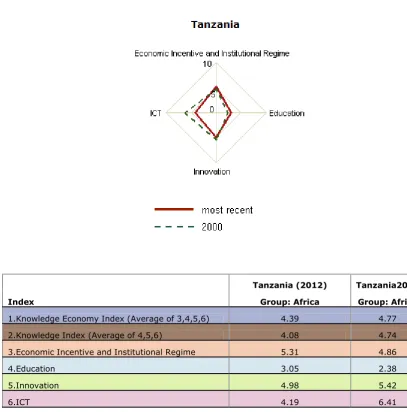
available year (in this case 2012). There are various ways available to illustrate
the KAM basic scorecard, which includes the spider, diamond, and bar charts.
Figures 2.3 to 2.11 show samples of each for selected countries, including
Sweden, Finland, United Kingdom, Ghana, South Africa and Tanzania. The
centre of the chart denotes the minimum normalized value of 0, while the outer
perimeter of the chart denotes the maximum normalized value of 10. Thus, a “bigger” or “fuller” spider chart implies that the country or region is better
positioned in terms of the knowledge economy. The tables below the charts
give the values of the indexes.
Usually users of the system are reminded that, because countries are ranked
on an ordinal scale, the KAM illustrates the relative performance of a country as compared to other countries in the KAM database. As such, when a country’s
performance in a specific variable is indicated to have declined, it could have occurred for two reasons. First, the country’s performance in that variable declined, resulting in lower values in absolute terms. Alternatively, the country’s
performance could have improved and resulted in large absolute values, but other countries experienced even larger improvements, leading to the country’s
ordinal ranking falling and resulting in a lower value in relative terms.
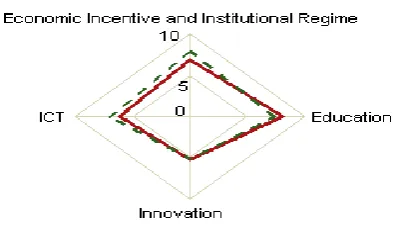
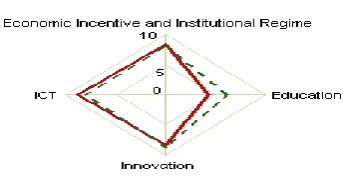
A cursory look at the performances of the countries displayed in figures 2.3 to
2.11 reveals that developed countries are at the high end of the knowledge indexes. For instance, Finland’s scores for Economic Incentive and Institutional
Regime and Innovation are each nearly at the maximum value of 10. This is in sharp contrast to Ghana’s average score of 5.5 for both variables. With the
exception of South African, the majority of African countries have a long way to
go to in the preparedness for the knowledge economy. It will indeed take a bold
step on the part of African Governments to systematically adopt and diffuse
28 | P a g e
Source: The Knowledge Assessment Methodology (KAM) website (www.worldbank.org/kam)
Figure 2.3: Finland – KEI 2012 and 2000; Normalization Group: All countries Index
Finland 2012 Finland2000
Group: All Group: All
1.Knowledge Economy Index (Average of 3,4,5,6) 9.33 9.22
2.Knowledge Index (Average of 4,5,6) 9.22 9.12
3.Economic Incentive and Institutional Regime 9.65 9.5
4.Education 8.77 8.31
5.Innovation 9.66 9.68
29 | P a g e Variable
Sweden Sweden
2012 2000
(Group: All) (Group: All)
Actual Normalized actual normalized
Tariff & Nontariff Barriers 87.6 9.3 83 9.86
Regulatory Quality 1.66 9.52 1.45 8.9
Rule of Law 1.93 9.93 1.77 9.52
Royalty Payments and receipts
(US$/pop.) 703.18 9.76 245.19 9.5
S&E Journal Articles / Mil. People 1.084.10 9.93 1.114.38 9.93
Patents Granted by USPTO / Mil. People 138.05 9.52 188.77 9.73
Average Years of Schooling 11.57 9.13 11.07 9.37
Gross Secondary Enrolment rate 102.61 8.9 151.99 9.93
Gross Tertiary Enrolment rate 71.54 8.72 67.19 9.72
Total Telephones per 1000 People 1.780.00 8.83 1.370.00 9.72
Computers per 1000 People 880 9.79 510 9.86
Internet Users per 1000 People 900 9.86 460 9.79
Source: The Knowledge Assessment Methodology (KAM) website (www.worldbank.org/kam)
30 | P a g e Variable
United Kingdom United Kingdom
2012 2000
(Group: All) (Group: All)
Actual normalized actual normalized
Tariff & Nontariff Barriers 87.6 9.3 77.8 8.43
Regulatory Quality 1.54 9.18 1.73 9.59
Rule of Law 1.71 9.11 1.63 9.17
Royalty Payments and receipts
(US$/pop.) 362.66 9.28 251.11 9.58
S&E Journal Articles / Mil. People 773.01 9.31 818.71 9.66
Patents Granted by USPTO / Mil. People 64.81 8.77 68.86 8.9
Average Years of Schooling 9.59 6.3 8.81 6.06
Gross Secondary Enrolment rate 98.99 8 101.78 8.87
Gross Tertiary Enrolment rate 59 7.52 58.13 9.38
Total Telephones per 1000 People 1.840.00 9.24 1.340.00 9.59
Computers per 1000 People 800 9.59 340 8.78
Internet Users per 1000 People 830 9.52 270 8.69
Source: The Knowledge Assessment Methodology (KAM) website (www.worldbank.org/kam)
Figure 2.5: United Kingdom – Basic Scorecard 2012 and 2000; Normalization Group: All
31 | P a g e Variable
Ghana Ghana
2012 2000
(Group: All) (Group: All)
actual normalized actual normalized
Tariff & Nontariff Barriers 67.8 1.61 61 3.71
Regulatory Quality 0.12 5.07 -0.03 4.9
Rule of Law -0.11 5.48 0.05 5.93
Royalty Payments and receipts
(US$/pop.) 0 0.88 0 0.67
<