REVIEW
Recombinant antibody production
evolves into multiple options aimed at yielding
reagents suitable for application-specific needs
Ario de Marco
*Abstract
Background: Antibodies have been a pillar of basic research, while their relevance in clinical diagnostics and therapy is constantly growing. Consequently, the production of both conventional and fragment antibodies constantly faces more demanding challenges for the improvement of their quantity and quality. The answer to such an increasing need has been the development of a wide array of formats and alternative production platforms. This review offers a critical comparison and evaluation of the different options to help the researchers interested in expressing recombi-nant antibodies in their choice.
Results: Rather than the compilation of an exhaustive list of the recent publications in the field, this review intendeds to analyze the development of the most innovative or fast-growing strategies. These have been illustrated with some significant examples and, when possible, compared with the existing alternatives. Space has also been given to those solutions that might represent interesting opportunities or that investigate critical aspects of the production optimi-zation but for which the available data as yet do not allow for a definitive judgment.
Conclusions: The take-home message is that there is a clear process of progressive diversification concerning the antibody expression platforms and an effort to yield directly application-adapted immune-reagents rather than generic naked antibodies that need further in vitro modification steps before becoming usable.
Keywords: Antibody fragments, Bacterial antibody display, Antibody-based fusion proteins, Neutralizing antibodies, scFv, VHH
© 2015 de Marco. This article is distributed under the terms of the Creative Commons Attribution 4.0 International License (http://creativecommons.org/licenses/by/4.0/), which permits unrestricted use, distribution, and reproduction in any medium, provided you give appropriate credit to the original author(s) and the source, provide a link to the Creative Commons license, and indicate if changes were made. The Creative Commons Public Domain Dedication waiver (http://creativecommons.org/ publicdomain/zero/1.0/) applies to the data made available in this article, unless otherwise stated.
Background
The worldwide therapeutic antibody market is esti-mated as over $50b/year, diagnostic market over $10b/ year, and research market accounts for $3b/year, whereas the average annual growth rate for all antibody applica-tions in the last 15 years is over 5 % and the recombi-nant antibody sector is one of the fastest growing. These numbers explain clearly the interest in all the biotech-nological innovations aimed at improving the antibody production process in terms of absolute yields, struc-tural stability and functional reliability of the final prod-uct. Specifically, the increasing attention dedicated to recombinant antibodies is due to the possibility of: (1)
performing straightforward engineering by means of sim-ple molecular biology techniques; (2) developing binders of variable formats and fused to different effectors and tags; (3) producing the final constructs inexpensively in microbial factories; (4) maintaining stable material clonality, the mandatory pre-requisite for result repro-ducibility [1]. This trend will probably accelerate in the foreseeable future because of the demanding structural features of the emerging antibody-based reagents such as Immunotoxins, Antibody Drug Conjugates (ADCs), Bispecific Antibodies, and Bispecific T cell Engager (BiTE) [2, 3]. Clearly, the great structural variability of the designed immune-reagents has its reason in the necessity to obtain effective reagents that are possibly also simple to use. At the same time, it implies the necessity of devel-oping customized expression and purification procedures
Open Access
*Correspondence: [email protected]
adapted to the construct specificities in order to assure sufficient yields. Such a complex context requires the capacity of comparing advantages and shortcomings of alternative platforms. This review aims at summarizing the recent trends, tries to evaluate the level of feasibility and reliability reached by the different methodologies, and will describe some recent innovative proposals.
Production of antibody fragments in prokaryotic systems
The conventional approach: expression in Escherichia coli (E. coli)
Escherichia coli still remains the most popular organism for recombinant protein expression and it still repre-sents the standard for the production of antibody frag-ments on a lab scale. There are objective advantages for this choice, such as its simplicity, the availability of a large amount of well-tested reagents (vectors, strains), and the enormous experience (protocols, common expertise) that the research community accumulated over the last 30 years using this specific bacterium. The negative side effects implicit in choosing E. coli-based expression systems are that this solution is often driven by consuetude rather than by rational considerations. This means that both innovative approaches that exploit E. coli and systems based on other organisms might be neglected despite their use do not always requires
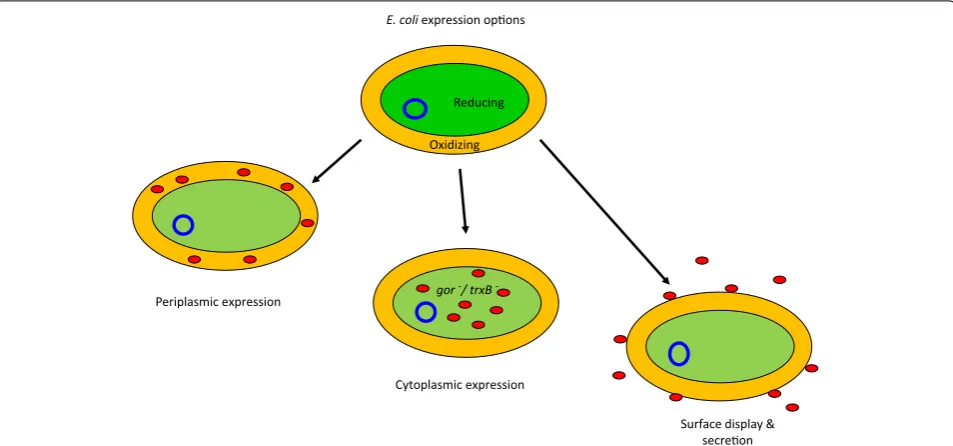
further competences or particular equipment. In the case of antibody fragments, the conventional approach is to express them as secreted constructs that accumulate in the E. coli periplasm because this is the sole bacterial compartment that provides the oxidizing conditions and the combination of specific chaperone and isomerase activities necessary for the formation of correct and sta-bilizing disulfide bonds (Fig. 1). This approach enables the production of large amounts of functional antibody fragments and also their fusions to large proteins such as alkaline phosphatase and rhizavidin [4, 5]. However, in some cases the yields can be very low due to impaired secretion in the presence of too elevated expression lev-els and because of limiting chaperone availability in the periplasm [6–8]. Oxidizing conditions can be repro-duced in the cytoplasm of mutant strains (Fig. 1) in which the thioredoxin and glutathione reducing path-ways are blocked (such as Origami and derivatives), whereas the cytoplasmic overexpression of the periplas-mic DsbC isomerase (such as in Shuffle T7 Express) can rearrange disulfide bonds involving incorrect cysteine residues. However, the published results obtained with these strains are contradictory [9, 10]. Although some groups claim successful production of functional anti-body fragments in their cytoplasm, when critically eval-uated, the results often indicate very low yields, while the biophysical characterization necessary to assess protein
Periplasmic expression
Cytoplasmic expression
Surface display & secre on E. coli expression op ons
Reducing
Oxidizing
gor-/ trxB
quality might be insufficient [11, 12]. In another case, the fusions between an anti-HER2 scFv and monomeric fluorescent proteins expressed in gor−/trxB− strain seem to be functional [13] but the SPR data are not compatible with a 1:1 binding and, consequently, cast some doubts that the immune-reagents form (also? active?) aggre-gates. Some other positive reports should be considered carefully because of the chosen models. It is known that a significant portion of VHHs can accumulate as func-tional binders even in the absence of disulfide bonds and that consequently they can be expressed as functional intrabodies in the reducing cytoplasm of bacteria (and even of eukaryotic cells). When such structurally robust VHHs are expressed in Shuffle T7 Express bacteria, the resulting yields are very high. However, the production improvement with respect to the “control” BL21(DE3) bacteria is negligible [14]. Unluckily, no disulfide-dependent nanobody has been tested for comparison in such an experiment to evaluate the strain effectiveness under more demanding conditions.
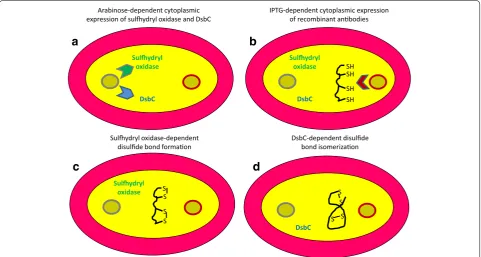
Recently, antibody fragments have been produced very efficiently in the cytoplasm of E. coli overexpress-ing sulfhydryl oxidase (SO) and DsbC [15, 16] (Fig. 2). The method seems suitable for both VHHs and scFvs but its major advantage is that it enables the accumula-tion of funcaccumula-tional immune-reagents with extremely more
complex structural needs. It is the case of reconstituted IgG-like macromolecules as well as of fusions between an antibody fragment and proteins that have different redox requirements to fold correctly. The approach enabled the yield of tens of mg of monodispersed IgG/L using Luria– Bertani (LB) bacterial medium without any attempt of culture optimization. When conventional (periplasmic) and SO/DsbC cytoplasmic cultures were compared using the same constructs, the cytoplasmic yields were always significantly (at least 10 times) higher. The immune-rea-gents accumulated in the cytoplasm had also superior specific functional activity, indicating that folding was correct even in the case of complex structures such as IgG-like antibodies. This accomplishment appears as a clear improvement in comparison to the initial reports, which indicated the feasibility of using E. coli for IgG production [17, 18].
Expression rate control is a key parameter in recom-binant production [6] and alternatives to the classical method based on lac promoter and its derivatives can contribute to higher antibody fragment yields. In the case of the pair formed by the Pm promoter and the ben-zoic acid-inducible XylS transcription activator [19], the direct evolution of XylS resulted in mutants that enabled ninefold higher yields of the tested scFv-phOx construct. Unfortunately, the paper does not report data describing
Sulydryl oxidase
DsbC
Sulydryl oxidase
DsbC
SH SH SH SH
Sulydryl oxidase SS
S S
DsbC
S S S S Arabinose-dependent cytoplasmic
expression of sulydryl oxidase and DsbC IPTG-dependent cytoplasmic expressionof recombinant anbodies
Sulydryl oxidase-dependent
disulfide bond formaon DsbC-dependent disulfidebond isomerizaon
b
a
d
c
the structural and functional features of the (over)-pro-duced immune-reagent.
The strategies used for increasing the solubility of recombinant proteins expressed in E. coli have preva-lently focused on conditions known for improving folding efficiency. Proteins such as isomerases and chaperones have been overexpressed, the bacterial growth has been performed at low temperatures and in the presence of osmolytes and alcohols known for stimulating heat-shock response, and even specific strains have been developed [7–9, 20]. By contrast, the optimization of medium com-position and fermentation conditions is often neglected in academia with the exception of labs performing more industrial-oriented R&D. However, significantly higher amounts of antibody fragments can be recovered when the physical–chemical culture conditions are improved, and this is possible even in the absence of sophisticated fermentation equipment. Cell density can be increased tenfold in standard Erlenmeyer flasks when bacteria are
grown using rich medium instead of LB [14] and the
yields can be further improved by exploiting LEX™ bio-reactors [21] or baffled flasks in combination with opti-mized shaking velocity [22].
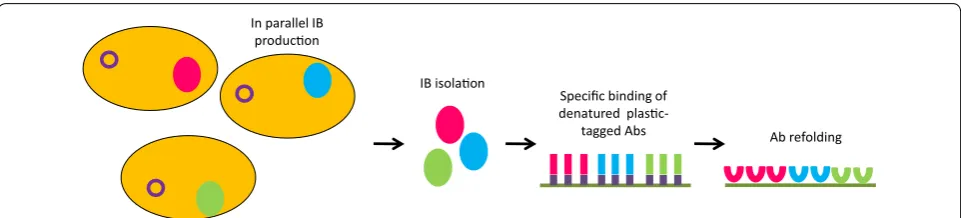
A completely different approach considers that func-tional recombinant antibodies can be obtained also by promoting first their accumulation in the inclusion bod-ies and then their refolding [23]. The idea is not new, but its implementation was significantly improved by the particularly effective strategy recently proposed by Kumada et al. [24]. These authors designed a high-den-sity microplate culture system for producing in paral-lel insoluble constructs of scFv fused with polystyrene binding peptides at the concentration of 1 mg/mL and recovered functional antibodies by solid-phase refold-ing (Fig. 3). The efficiency of the approach is probably due to the fact that, after inclusion body denaturation, the single polypeptides adhere separately onto plastic plate surfaces by means of the polystyrene-affinity tag.
This physical segregation reduces unproductive interac-tions among folding intermediates that can still expose hydrophobic patches. The method was validated succes-sively with Fab fragments and further developed using alternative tags suitable for alternative refolding proto-cols [25, 26]. Its limit is that refolding efficiency is very sequence-dependent.
In a recent contribution [27], the yields of two con-structs formed of the same scFv fused to the sequences corresponding to a toxin of either bacterial (Pseudomonas exotoxin A) or plant (saporin) origin were compared in E. coli and P. pastoris. Exotoxin A-scFv was apparently expressed better in bacteria, whereas saporin-scFv pro-duction was more successful in yeast. The authors’ con-clusions were that the toxin origin strongly influences the production of functional immune-reagents in evo-lutionary related or distant organisms. This would be an interesting hypothesis to assess thoroughly. However, the experimental data are difficult to interpret since the immune-toxins accumulated as inclusion bodies when expressed in bacteria and the reported yields correspond to the amounts of soluble protein after refolding. Conse-quently, the variable yields could be due to the differen-tial refolding efficiency rather than to specificities of the microbial factories. Furthermore, crucial experimental characterizations and descriptions necessary to evaluate the structural features of the immune-toxins are missing thus rendering final judgment impossible.
A very interesting development is represented by the attempt of obtaining homogeneous N-glycosylated recombinant antibodies in E. coli with the long-term aim of recovering the effector functions and tissue tar-geting specificity proper of IgG molecules [28]. The authors demonstrated that it is possible to achieve a homogenously glycosylated and degradation-resistant scFv by designing a glycosylation site in the linker region and using an E. coli strain in which the N-glycosylation
machinery of the ε-proteobacterium Campylobacter
In parallel IB producon
IB isolaon
Specific binding of denatured
plasc-tagged Abs Ab refolding
jejuni has been transferred [28]. The post-transcriptional modification significantly improved the scFv stability and solubility, while did not affect its binding capacity because glycosylation has a distal location with respect to the antibody paratope.
Escherichia coli extract has been successfully used also for the cell-free production of “knobs-into-holes” bispecific BiTE IgG antibodies [29]. The knobs-into-holes technology enables the pairing of complimentary antibody arms but the efficiency of the IgG reconstitu-tion is low when the two complimentary molecules are co-expressed in cells due to the usual variable accumu-lation rate of the two constructs. The cell-free approach overcomes this major drawback and results in high yields (several hundred mg/L) of functional antibodies that can be further improved by optimizing the reagent composi-tion [30].
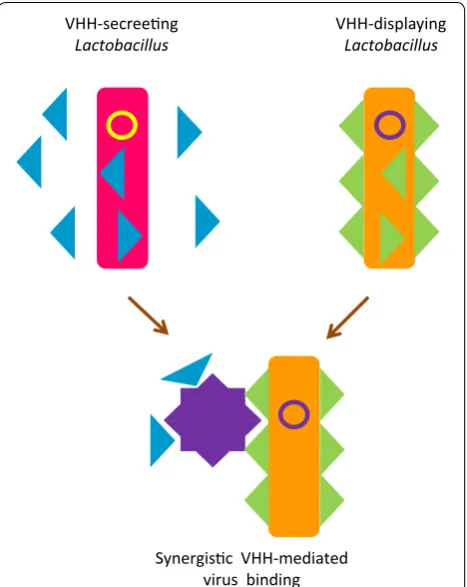
Alternative bacteria suitable for specific applications Lactobacillus was the first alternative to E. coli to be proposed with the aim of providing biosafe bacteria expressing anti-viral nanobodies (lactobodies) for oral treatments in mammalians [31] and optimized strains are now available [32]. The concept considers the isola-tion of neutralizing VHHs and their expression as either secreted or cell-wall-anchored antibodies. Animals fed with such recombinant bacteria resulted better protected against virus-induced gastroenteritis since the nanobod-ies were successfully delivered in situ by the lactobod-ies. Lately, it has been demonstrated that VHH dimers targeting two independent rotavirus epitopes and com-binations of soluble and displayed nanobodies blocking the same epitopes could further improve the treatment efficacy [33, 34] (Fig. 4). A similar philosophy led to the design of a system for the production of neutralizing scFvs in Bifidobacterium longum to use as a probiotic aliment [35]. The actual effectiveness of this approach was not demonstrated in vivo, but recombinant bacte-ria were able to express functional antibodies in the gut after intragastric administration, although the secretion efficiency apparently varied according to the antibody sequence. Although very promising as a vaccine comple-mentary treatment, the implementation of this approach into approved cure for animal and human diseases [36] will probably suffer from the general public refusal of exploiting recombinant organism technology. Or, maybe, its simplicity will convince of the contrary.
Exotic bacteria such as the psychrophilic Pseudoalte-romonas haloplanktis TAC125 have been proposed as an alternative to E. coli for VHH and scFv production [37, 38]. Although the choice of a microbial cell fac-tory working at low temperature is interesting because it might favor the proper folding of the recombinant
proteins, the practical advantages of this approach remain elusive, whereas some drawbacks should be con-sidered, e.g. higher energy costs for bacterial culture, limited availability of expression vectors with applica-tion-friendly tags. Much more convincing are the data published recently by Mizukami et al. [39] that illustrate the enormous potential of Brevibacillus choshinensis for expressing recombinant antibody fragments. Two VHHs were expressed using a secretion vector and accumu-lated in the culture medium at concentrations of hun-dreds of mg/L when grown in flasks and topped at 3 g/L when produced in fermenter. The extremely accurate biophysical characterization of the resulting nanobod-ies confirms that they were functional and unquestion-ably monodispersed. It will be very interesting to follow the development of this production platform based on the “Brevibacillus in vivo cloning (BIC)” technology [40, 41] to understand if the excellent quantitative and qualitative features obtained with these model VHHs will be confirmed by using nanobodies with variable propensity to aggregation. It seems that larger/more
VHH-secreeng
Lactobacillus VHH-displayingLactobacillus
Synergisc VHH-mediated virus binding
complex proteins such as scFvs cannot benefit as much as VHHs [40, 41] from this expression methodology. At the moment it is difficult to evaluate whether the observed limitation is intrinsic of the organism folding machinery or of still-to-be-optimized expression vectors and fermentation conditions. The available information is not sufficient to evaluate the possible advantages of expressing recombinant antibody fragments in Bacillus megaterium and Corynebacterium glutamicum [42, 43]. Also Pseudomonas putida KT2440 does not seem to be a superior alternative to E. coli in terms of productivity, but at least this strain already obtained the biosafety cer-tificate [44] and this may constitute a critical advantage for the preparation of therapeutic antibody fragments.
Simplified approaches: the opportunities offered by cell display
Antibodies are too often considered as reagents that must be first expressed and purified before being used. Further biotechnological steps such as their functionali-zation with appropriate molecules may be necessary to enable their final application, as for instance their use as capture binders on chip surfaces or their complexation to nanoparticles. However, there are examples—as in cases mentioned above [31, 33, 35]—showing that some of these tedious and expensive steps can be avoided by expressing recombinant antibodies as displayed rea-gents exposed on the surface of bacteria. The therapeutic application of attenuated strains of VHH-displaying Sal-monella typhimurium has been demonstrated recently [45]. The rationale behind the experiment is that several bacterial strains can contribute to tumor eradication in mouse models because they may induce anti-tumor immune-response after direct local injection. Bacteria show also a certain natural tropism for tumors but it is insufficient for effective targeted accumulation after sys-temic treatment. To improve their tumor-delivery speci-ficity, Salmonella has been engineered for displaying an anti-CD20 nanobody. Such engineered bacteria accumu-lated selectively in CD20-positive tumor xenografts when applied systematically in mice and were successfully used as a cargo to deliver an enzyme able to convert in situ pro-drugs into active compounds (Fig. 5). The efficient nanobody-mediated bacterial targeting resulted in a sig-nificant tumor rejection in vivo even in immune-compro-mised models [45]. A similar approach has been applied also to Lactobacillus plantarum to exploit it as a cargo to deliver cDNA to mammalian cells [46]. Specifically, lac-tobacilli were transformed to display a scFv selective for the dendritic cell marker receptor DEC-205. The result-ing lactobacilli were effectively internalized in vitro and in vivo by dendritic cells and transferred efficiently a GFP plasmid to them.
In a diagnostic context, whole E. coli displaying anti-nucleophosmin VHHs resulted very effective when exploited as an antigen-capture reagent to bind the sol-uble antigen on microarray surfaces [47]. Contrary to the conventional approach used for biosensor surface immune-functionalization that relies on the availability of purified antibodies, bacteria were first transformed with a vector enabling the display of anti-target VHHs, the nanobody recombinant expression was induced for few hours, and finally the bacteria were directly spotted on the microarray surface. The high density of nanobod-ies inserted outwards on the bacterial membrane (Fig. 6) enabled an extremely high and selective binding of the corresponding antigens with signal-to-noise values supe-rior to 103 [47].
Eukaryotic expression systems for antibody fragments
Yeasts as microbial cell factories
The idea of displaying antibodies on whole cells has been long used in yeast for panning antibody libraries but only recently it has been proposed to exploit antibody-displaying whole cells as ready-to-use reagents. Binders were first selected from a scFv pre-immune library in yeast display format and the recovered cells were directly lyophilized for storage [48]. They retained their initial activity and specificity and could be used for few weeks representing a cheap and fast alternative to purified anti-bodies for at least some immune-capture applications such as the identification of soluble and membrane-bound pathogen antigens.
Tumor cell
Transformed Salmonella
Pro-drug Displayed
Abs
Tumor biomarker
Acvang enzyme
Pichia pastoris is the workhorse yeast for conventional production of scFv-derived antibody fragments. The protocols for obtaining secreted constructs are stand-ardized and efficient [49–51] and most of the lately pro-posed improvements concern incremental features such as the length of the pre-induction glycerol feeding during fermentation, the codon usage, the optimization of the starting culture temperature, of the methanol concentra-tion, and of pH obtained by means of Design of Experi-ment approach [52–54].
Other yeasts are used as well for producing recombi-nant antibodies. In Saccaromyces cerevisiae, significant production increases (>100 folds) were obtained by a combination of strain engineering and the optimization of leader peptides for improving the secretion of
full-length recombinant IgG molecules [55], even though
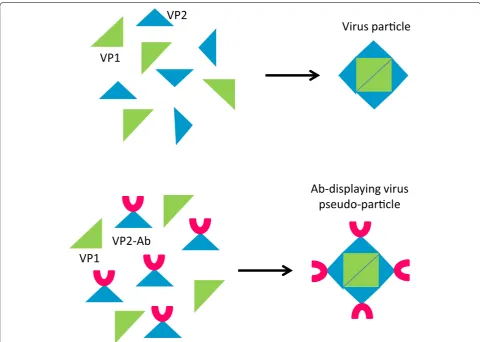
the absolute yields remained modest (in the range of 10 mg/L). The same yeast was exploited for producing pseudo-type virus-like particles that form when scFv-Fc constructs fused to hamster polyomavirus-derived VP2 protein are co-expressed with the complimentary
VP1 protein (Fig. 7). Such structures represent multi-valent antibody nanoparticles possessing strong anti-gen-binding and -neutralizing activities that effectively prevented mammalian cell lysis induced by vaginolysin [56]. Another approach considers the Saccaromyces dis-play of scFvs fused to non-self-cleaving Mxe GyrA intein for promoting the chemical functionalization of the anti-body fragment by exploiting the Expressed Protein Liga-tion methodology. First, a thiol-nucleophile is used to release the antibody fragment from the yeast surface. As a consequence, the antibody acquires a thioester group at the carboxy-terminal that becomes available for binding covalently any molecule with an amino-terminal cysteine [57]. In such a way, the authors incorporated azido groups and biotinylated peptides into an anti-EGFR scFv. The production of antibody fragments (scFv-GFP fusion) in the fission yeast Schizosaccharomyces pombe seems possible [58] but does not exemplify an apparent advan-tage over other yeast- and prokaryotic-based systems.
Despite the fact that P. pastoris is one of the most established organisms for the expression of recombinant
spong
angen binding
detecon washing
scFv and scFv-fusion proteins, only few reports describe the production of nanobodies in this yeast species. Since for many research labs yeast production might be
tech-nically more demanding than the golden standard E.
coli, the choice would become meaningful only when
specific advantages can be obtained. This evidence was missing in the first paper describing the production of a naked single-domain antibody in P. pastoris. Yields were comparable (10 mg/L) with those obtained with most of the VHHs expressed in bacteria [59]. The approach was more clearly justified in the work of Ji et al. [60] who used Pichia to express the IgG-like construct composed by an anti-TNF VHH fused with a human Fc. The authors found that it was more functionally active than the same construct expressed in the periplasm of E. coli. Never-theless, the exact reasons of the functional advantage remain unknown since the authors did not characterize the recombinant antibodies for their structural features. In terms of yields, these were lower (5 mg/L) in com-parison to what was obtained by Djender et al. [16] who
expressed comparable constructs in bacterial cytoplasm. S. cerevisiae offers an interesting alternative to Pichia, but despite some promising initial results [61], it has never become a popular expression systems for VHHs. Recently, an important contribution assessed the role of specific residues in the VHH sequences the optimization of which might contribute substantially to improve their final yields in S. cerevisiae [62]. Specifically, the authors identified that some amino acids close to and inside the J segment are critical for VHH folding and secretion in yeast because they are involved in the chaperone recruit-ment in the ER. Their presence compensates for the rec-ognition differences that exist between the mammalian and S. cerevisiae chaperone machineries and favor the VHH folding kinetics.
Any good reason for expressing recombinant antibodies in mammalian cells?
Mammalian cells represent the gold standard for produc-ing therapeutic antibodies but at the research lab level
VP2
VP1
VP2-Ab
VP1
Virus parcle
Ab-displaying virus
pseudo-parcle
other systems have been preferred. However, the mam-malian origin of VHH and scFv fragments suggests that it could be meaningful not only to produce them in yeast co-expressing mammalian chaperones [62], but directly in evolutionarily related organisms such as mamma-lian cells that should possess conserved secretion/fold-ing machineries. The resultsecretion/fold-ing antibodies are expected to gain the specific post-transcriptional modifications that enable the immune-activation and target recogni-tion mechanisms in mammalians. This would represent a clear advantage for evaluating the in vivo biological activity of antibodies conceived for therapeutic applica-tions. From this perspective, it would be very interest-ing to have access to comparative studies evaluatinterest-ing the binding characteristics, the biodistribution and pharma-cokinetic, the immunogenic and curative effects, and the production costs of recombinant antibodies expressed in different organisms. However, sufficient information is not available so far with only few reports of antibody fragments produced in mammalians, such as a VHH against GFP expressed in CHO cells and scFv-Fc frag-ments against Epstein Barr virus in HEK293 [63, 64]. It is difficult to infer from this lack of data if the scarce inter-est finds its reasons in technical, biological or economic considerations.
Filamentous fungi, insect‑based systems and further “niche” eukaryotic organisms
Trichoderma reesei and Aspergillus spp failed to achieve the leading role in the production of recombinant nano-bodies that was envisaged almost 15 years ago [61]. As suggested at that time, these expression systems should have been particularly effective for producing fusion pro-teins composed of antibody fragments linked to active enzymes such as oxidases and peroxidases that are struc-turally complex and consequently difficult to express cor-rectly in bacteria. However, the recent report describing the expression in Aspergillus of a nanobody-glucoamylase fusion [65] does not provide sufficient information con-cerning yields and glycosylation patterns to evaluate the robustness of the method. Probably, the lack of a ready-to-use platform for cloning and expression discouraged many researchers to test filamentous fungi as a microbial cell factory for antibody fragment production. Another niche expression system that has been occasionally used to express recombinant antibody fragments and recon-stituted IgG-like molecules is the Leishmania tarento-lae eukaryotic parasite [66, 67]. The putative advantages of this method should reside in its codon usage but the reported yields are very low and probably do not justify the investment necessary to set this platform in a lab already equipped for recombinant production in another organism.
Insect cells and larvae have been proposed as nano-body expression living biofactories [68, 69]. Specifically, Trichoplusia ni larvae have been transformed by means of the efficient Improved Baculovirus Expression Sys-tem to produce neutralizing nanobodies directed against diarrhea-inducing rotavirus A [69]. The characterization of the resulting VHHs indicated that they were functional but the shown data are too preliminary to assess the real benefit of this production approach in terms of simplic-ity, cost-efficiency, and antibody quality.
Exploiting plants for antibody production
venom [75]. Also in other cases the structural heteroge-neity of antibodies produced in plants does not appear to compromise significantly their functionality [72, 76–78], but it can probably complicate their acceptance as thera-peutics. Likely, the methodology still requires the opti-mization of the expression conditions and of the binder formats. Forcing the antibody fragment accumulation in specific sub-cellular compartments and the use of plant codons, specific promoters, fusion partners, and tags can increase the final yields of stable recombinant antibodies [79–82], although the optimal stabilizing combination seems to be rather antibody-specific, as exemplified in the case of the fusion of VHHs with different Fc domains [77].
Immunogenicity can be induced by proteins expressed in higher-plant due to the presence of some plant-specific sugar residues. The problem has been addressed by using RNA interfering technology to down-regulate glycosyla-tion. A more elegant and definitive alternative was the engineering of Nicotiana benthamiana and of the moss Physcomitrella patens to obtain fully human N -glyco-sylation [83, 84]. Furthermore, such moss is suitable for photobioreactor production of antibody fragments [85] as well as of therapeutic IgG antibodies with superior ADCC (antibody-dependent cell-mediated cytotoxicity) compared to the same constructs recovered from mam-malian cultures [86].
Also micro-algae can represent a valid antibody
fac-tory. The unicellular organism Chlamydomonas
rein-hardtii was able to express functional immunotoxins in both scFv- and IgG-like formats [87]. These large macro-molecules have very complex structures that are difficult to recover correctly folded in most of the recombinant expression systems and this evidence can justify the interest in this protein factory.
A meaningful line of research is aimed at developing transgenic crops able to produce antifungal recombi-nant antibodies that neutralize pathogens in vivo. The approach is not absolutely new, but its efficacy strongly profited from the late technological progresses. By using such a strategy, it was possible to develop crops tolerant to different phytopathogen infections such as Brassica napus resistant to anti-Sclerotinia sclerotiorum scFvs [88], Ciitrus tolerant to Citrus tristeza virus [89], and soybean resistant to the Fusarium virguliforme toxin-1 that induces the sudden death syndrome [90].
Neutralizing recombinant antibody fragment expression for direct therapeutic applications
In one of the previous sections we have seen how Lac-tobacilli overexpressing anti-viral antibody fragments can be directly used as an effective “therapeutic food”. It is possible because a relatively small volume of their
culture delivers enough functional antibodies to miti-gate the disease symptoms [31, 33]. Vegetal organisms can be exploited as factories for antibody production and for expressing those antibody fragments that can protect them from phytopathogens [88–90] but would a plant-based diet be able to provide therapeutic antibody doses sufficient to induce a beneficial effect in fed mammali-ans? There are promising results indicating the feasibility of such a smart development by which plant-producing recombinant antibodies might provide “functional food” with direct therapeutic effect. Transgenic rice has been engineered to accumulate neutralizing anti-rotavirus nanobodies in its seeds (MucoRiseARP1) [91]. The idea is that of protecting human populations against life-threat-ening diarrhea by feeding people with antibody-enriched seeds because rice is already part of their daily diet. Fol-lowing the engineering of plants to suppress the upload of endogenous storage proteins, the nanobodies accumu-lated in the seeds at sufficiently high concentrations (g/ kg of total weight and 11.9 % of total protein) to be effec-tive in vivo as a prophylactic medicament. Furthermore, neutralizing nanobodies are water-soluble, resistant to both boiling and long-term storage (at least 1 year), and do not rely on cold-chain transport and storage. These features render the mutant rice not a simple basic research proof-of-principle but a product that could be potentially adopted by final users. In animal model the results seem very promising since even immunodeficient mice fed with MucoRiseArp1 resulted significantly pro-tected against rotavirus infections. The strategy as well as the probable legal and cultural resistance is the same as described above for anti-virus neutralizing nanobod-ies expressed in Lactobacillus. It also reminds the logic that led to the development of the “Golden-rice” that was designed for providing a cheap source of beta-carotene to integrate the dietary Vitamin A shortage in rice-eating populations [92]. Hopefully they will not share the same tormented story. Another meaningful example of thera-peutic plant is given by the transgenic peas accumulating anti-Eimeria neutralizing scFvs in their seeds. Chickens fed with them showed significant mitigation against the parasite-induced coccidiosis [93].
suitable remedy is available. Another peculiar exploita-tion of VHH in vivo expression has been proposed by De Vooght et al. [95] for impairing the tsetse fly-dependent spreading of trypanosome parasites. The authors demon-strated that it was possible to stably infect the fly popu-lation with the genetically engineered bacterial symbiont Sodalis glossinidius expressing a strong anti-trypano-soma nanobody. The nanobodies were efficiently secreted by transformed bacteria in vitro [96] and in vivo [95] and such bacteria were transmitted—although not very efficiently—in the progeny and promoted the accumu-lation of the trypanolytic nanobodies in several tissues among which the midgut that is an obligatory environ-ment for the trypanosome developenviron-ment. The paper does not clearly demonstrate that is possible to select long-term paratransgenic tsetse populations in which the parasite transmission is impaired by the nanobody activ-ity. Nevertheless, it evidences the drawbacks that must be removed to achieve this goal, such as the preventive elimination of the wild type bacterial population to avoid competition with the recombinant bacteria and the selec-tion of nanobodies structurally resistant to the acidic and proteolytic conditions typical of midgut.
Another innovative development concerns the possi-bility to use plant-expressed antibodies for environmen-tal remediation and by such a way preventing pollution conditions that are critical for human health. Specifically, Barbi et al. [97] developed transgenic tobacco express-ing anti-microcystin-LR antibody fragments that are secreted and anchored to plasma membrane in leaf tis-sues. The membrane-retained antibodies were able to bind the microcystin initially present in hydroponic medium and formed stable complexes that could be elim-inated removing the leaves.
Recombinant antibody fragments as effective intrabodies VHHs are often stable in the absence of disulfide bonds [98–100]. This characteristic makes them valuable tools for cell biology studies [101] as well as candidates for therapeutic applications based on their expression and accumulation as intrabodies directly in the cytoplasm/ nucleus of the host cells. In this subcellular compart-ment they can neutralize the corresponding antigen and block its activity, as already demonstrated in the case of anti-viral VHHs [98, 99]. In the specific case of the anti-Rev VHH Nb190 that is able to suppress HIV-1 replica-tion, cells stably expressing the intrabody were protected against the virus-induced cytopathogenic effect [102].
Different strategies have been developed in order to select directly for functional recombinant intrabod-ies. A C-terminal GFP protein allowed for the fluores-cence-based light-microscopy screening of the clones that expressed folded nanobodies binding selected
using the same RNA pool and, in some cases, the same clone was recovered by both selection methods. The authors underline how important was having used mate-rial from immunized animals since somatic maturation would have provided clones of sufficient binding affinity for obtaining effective two-hybrid coupling. However, most of the selected clones had affinity in the nanomo-lar range, namely binding constants that can be normally recovered panning sufficiently large pre-immune librar-ies [107]. Consequently, these should be considered also for this application. The results recently obtained using cytoplasmic Retained Display [108] confirm that pre-immune libraries are suitable for direct intrabody recovery, in this specific case scFvs with fixed human framework and CDR1/CDR2, and which can tolerate CDR3 diversification.
Any help from in silico resources?
Antibody fragment final yields are clearly influenced by their propensity to misfold and aggregate. A first step for the selective screening of stable binders issued from phage display libraries can be achieved before starting the panning procedure by introducing a heating treatment of the phage population [109]. Since thermal stability and the capacity to refold into native structure inversely correlate with aggregation readiness, the heat-resistant clones are on average more stable than precipitated ones and can be purified by incubation at high temperatures [110]. Bioinformatics and protein modeling could fur-ther help in identifying critical residues able to improve the stability of the recombinant antibodies selected after panning. This approach should be considered, although it is difficult to identify a consensus about the hot spots even in the case of simple single-domain molecules such as the VH(H)s [111–113].
Conclusions
Protein complexity implies the necessity of identifying customized answers to the variable problems related to their production. In the case of antibody fragments, the yields of single binders can change dramatically due to minimal sequence variations. Consequently, one can-not expect to obtain a single optimal universal produc-tion method, but rather should be aware of different options suitable for improving the final results. Many of the publications reviewed in this work share a common aim—the production of application-specific immune-reagents rather than naked antibodies to use indiscrimi-nately—and complimentary strategies to accomplish it. Therefore, antibodies fragments are often already selected in vitro with the aim to recover clones possess-ing determined features such as epitope-specificity or neutralizing activity, then cloned as fusions with appro-priate effector proteins, and finally diversified expression systems are chosen for yielding application-specific func-tional molecules (Table 1). The overall production design largely varies in terms of complexity but it must provide reagents suitable for the actual final needs. On the one extreme of the scale, simplified systems such as antibody displaying cells that can be used without any purifica-tion step are suitable for some simple immune-detecpurifica-tion applications and their exploitation makes sense because of simplicity and low costs. On the other extreme, very sophisticated strategies have been successfully imple-mented for preventing pathogen aggression in vivo. In between, smart applications such as the development of immune-effectors and antibody-based functional food that work because the antibody fragments have been developed according to criteria that take carefully in account the in vivo physiological conditions in which they will operate.
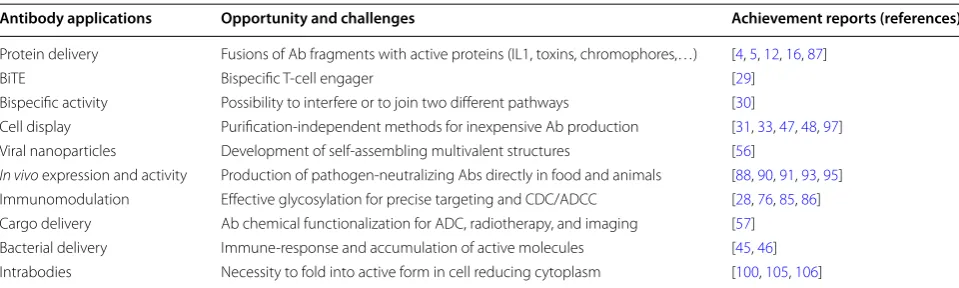
Table 1 Recombinant antibody production: hot topics and examples
Recombinant antibodies are currently used in multiple applications which require the production of large amounts of qualitatively well-defined reagents that need as few as possible post-purification steps before being ready for the final application. Major biotechnological needs and representative examples of meaningful strategies for their accomplishment are listed below
Antibody applications Opportunity and challenges Achievement reports (references)
Protein delivery Fusions of Ab fragments with active proteins (IL1, toxins, chromophores,…) [4, 5, 12, 16, 87]
BiTE Bispecific T-cell engager [29]
Bispecific activity Possibility to interfere or to join two different pathways [30]
Cell display Purification-independent methods for inexpensive Ab production [31, 33, 47, 48, 97]
Viral nanoparticles Development of self-assembling multivalent structures [56]
In vivo expression and activity Production of pathogen-neutralizing Abs directly in food and animals [88, 90, 91, 93, 95] Immunomodulation Effective glycosylation for precise targeting and CDC/ADCC [28, 76, 85, 86]
Cargo delivery Ab chemical functionalization for ADC, radiotherapy, and imaging [57]
Bacterial delivery Immune-response and accumulation of active molecules [45, 46]
Altogether, the picture looks optimistic because of the many published achievements. Nevertheless, the drawback of the present model for research production dissemination is its unbalance towards the exclusive pub-lication of positive results. The consequence is that one has access to success stories but knows very little about conditions that resulted in failures and that would be use-ful to know in order to avoid similar mistakes. Systematic comparisons based on combinatorial approaches [114] and benchmarking initiatives [115, 116] are extremely useful to evaluate methods, experimental sets or rea-gents but are still rare in the field of recombinant anti-body production [27, 60, 78, 86, 117]. Another observed limit is represented by the publication of papers in which controls and characterization data necessary to assess the reliability of the claimed conclusions are missing. For instance, data reporting yield improvement should be considered with some caution in the absence of con-trol results showing that the antibody functionality is not affected by the quantitative increase since absolute and functional yields might be not coincident. Unluck-ily, the presentation of a complete set of control data is rare and it is a pity because potentially good ideas remain
unfulfilled when reliable information is diluted in the presence of ambiguous results. Accordingly, methods presented without preliminary scientific reviewing, such as patent applications [118], are not discussed in this work. Probably, the community (authors, editors, fund-ing agencies) should take more seriously the necessity to request minimal standards of biophysical [119] and functional characterization of immune-reagents and to reward the attempts to improve this praxis [120].
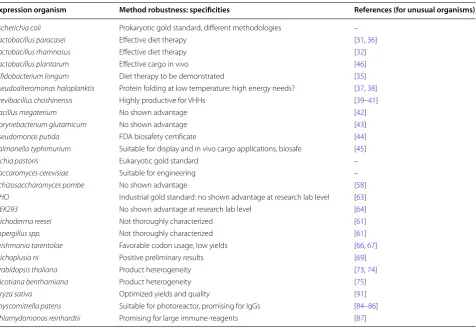
Summarizing and apart from “still-to-prove” options, the positive news is that new effective methodologies are available (Table 2). The actual limit resides in the fact that an up-to-date scientific work requires constantly increas-ing amount of skills (and sometimes new expensive equipment) for covering all the project steps optimally. The consequence is that in small labs some innovations might be slow to be implemented and some steps are consequently performed with sub-optimal techniques. As an example, the multifactorial statistical Design of Experiment methodology [121] would be beneficial in most of the works aimed at optimizing the production conditions and at characterizing the antibody binding features. However, despite the positive reports obtained
Table 2 Summary of the evaluated expression systems for recombinant antibody production
Expression organism Method robustness: specificities References (for unusual organisms)
Escherichia coli Prokaryotic gold standard, different methodologies –
Lactobacillus paracasei Effective diet therapy [31, 36]
Lactobacillus rhamnosus Effective diet therapy [32]
Lactobacillus plantarum Effective cargo in vivo [46]
Bifidobacterium longum Diet therapy to be demonstrated [35]
Pseudoalteromonas haloplanktis Protein folding at low temperature: high energy needs? [37, 38]
Brevibacillus choshinensis Highly productive for VHHs [39–41]
Bacillus megaterium No shown advantage [42]
Corynebacterium glutamicum No shown advantage [43]
Pseudomonas putida FDA biosafety certificate [44]
Salmonella typhimurium Suitable for display and in vivo cargo applications, biosafe [45]
Pichia pastoris Eukaryotic gold standard –
Saccaromyces cerevisiae Suitable for engineering –
Schizosaccharomyces pombe No shown advantage [58]
CHO Industrial gold standard: no shown advantage at research lab level [63]
HEK293 No shown advantage at research lab level [64]
Trichoderma reesei Not thoroughly characterized [61]
Aspergillus spp. Not thoroughly characterized [61]
Leishmania tarentolae Favorable codon usage, low yields [66, 67]
Trichoplusia ni Positive preliminary results [69]
Arabidopsis thaliana Product heterogeneity [73, 74]
Nicotiana benthamiana Product heterogeneity [75]
Oryza sativa Optimized yields and quality [91]
Physcomitrella patens Suitable for photoreactor, promising for IgGs [84–86]
also with antibodies [122–125], it is not largely used in academic labs because it requires a critical initial time investment for its setting. The same reasoning can be formulated for any specific expertise that participates to a project that—for instance—starts with the panning design to finish with a clinical application. The necessity for collaborations is evident but maybe the profession-als of the recombinant protein (antibody) production should think about what competences would maximally qualify their contribution to projects that become more and more multidisciplinary and that should avoid bot-tlenecks at any step of their development. Finally, it can be difficult to switch from E. coli to—let say—the moss Physcomitrella patens or the microalgae Chlamydomonas reinhardtii for producing high-quality immune-reagents but why not to consider this strategy if, in the long term, it can result more convenient than idle time investment in a more familiar platform with clear intrinsic limits?
Acknowledgements
The author wishes to thank Alicja Gruszka for her stimulating comments, the Creative Core AHA-MOMENT grant from Slovene Ministry of Economic Devel-opment and Technology as well as the European Fund for Regional Develop-ment—Cross-Border Cooperation Programme Italy-Slovenia 2007–2013, (Project PROTEO, Code N. CB166) for having supported this work with research funds.
Compliance with ethical guidelines
Competing interests
The authors declare that they have no competing interests.
Received: 19 July 2015 Accepted: 20 August 2015
References
1. Bradbury A, Plückthun A. Reproducibility: standardize antibodies used in research. Nature. 2015;518:27–9.
2. Kochuparambil ST, Litzow MR. Novel antibody therapy in acute lymphoblastic leukemia. Curr Hematol Malig Rep. 2014;9:165–73. 3. Kim CH, Axup JY, Lawson BR, Yun H, Tardif V, Choi SH, Zhou Q,
Dubrovska A, Biroc SL, Marsden R, Pinstaff J, Smider VV, Schultz PG. Bispecific small molecule-antibody conjugate targeting prostate can-cer. Proc Natl Acad Sci USA. 2013;110:17796–801.
4. Alvarenga LM, Muzard J, Ledreux A, Bernard C, Billiald P. Colorimetric engineered immunoprobe for the detection and quantification of microcystins. J Immunol Methods. 2014;406:124–30.
5. Liu JL, Zabetakis D, Walper SA, Goldman ER, Anderson GP. Biocon-jugates of rhizavidin with single domain antibodies as bifunctional immunoreagents. J Immunol Methods. 2014;411:37–42.
6. Schlegel S, Rujas E, Ytterberg AJ, Zubarev RA, Luirink J, de Gier J-W. Optimizing heterologous protein production in the periplasm of E. coli by regulating gene expression levels. Microb Cell Fact. 2013;12:24.
7. Ow DS, Lim DY, Nissom PM, Camattari A, Wong VV. Co-expression of Skp and FkpA chaperones improves cell viability and alters the global expression of stress response genes during scFvD1.3 production. Microb Cell Fact. 2010;9:22.
8. Sonoda H, Kumada Y, Katsuda T, Yamaji H. Effects of cytoplasmic and periplasmic chaperones on secretory production of single-chain Fv antibody in Escherichiacoli. J Biosci Bioeng. 2011;111:465–70.
9. de Marco A. Strategies for successful recombinant expression of disulfide bond-dependent proteins in Escherichia coli. Microb Cell Fact. 2009;8:26.
10. de Marco A. Recent contributions in the field of the recombinant expression of disulfide bonded protein in bacteria. Microb Cell Fact. 2012;11:129.
11. Mahgoub IO. Expression and characterization of a functional single-chain variable fragment (scFv) protein recognizing MCF7 breast cancer cells in E. coli cytoplasm. Biochem Genet. 2012;50:625–41.
12. Napathorn SC, Kuroki M, Kuroki M. High expression of fusion proteins consisting of a single-chain variable fragment antibody against a tumor-associated antigen and interleukin-2 in Escherichia coli. Antican-cer Res. 2014;34:3937–46.
13. Markiv A, Beatson R, Burchell J, Durvasula RV, Kang AS. Expression of recombinant multi-coloured fluorescent antibodies in gor−/trxB−E. coli
cytoplasm. BMC Biotechnol. 2011;11:117.
14. Zarschler K, Witecy S, Kapplusch F, Foerster C, Stephan H. High-yield production of functional soluble single-domain antibodies in the cytoplasm of Escherichia coli. Microb Cell Fact. 2013;12:97.
15. Veggiani G, de Marco A. Improved quantitative and qualitative produc-tion of single-domain intrabodies mediated by the co-expression of Erv1p sulfhydryl oxidase. Prot Expr Purif. 2011;79:111–4.
16. Djender S, Schneider A, Beugnet A, Crepin R, Even Desrumeaux K, Romani C, Moutel S, Perez F, de Marco A. Bacterial cytoplasm as an effective cell compartment for producing functional VHH-based affinity reagents and Camelidae IgG-like recombinant antibodies. Microb Cell Fact. 2014;13:140.
17. Simmons LC, Reilly D, Klimowski L, Raju S, Meng G, Sims P, Hong S, Shields RL, Damico LA, Rancatore P, Yansura DG. Expression of full-length immunoglobulins in Escherichia coli: rapid and efficient produc-tion of aglycosylated antibodies. J Immunol Methods. 2002;263:133–47. 18. Makino T, Skretas G, Kang T-H, Georgiou G. Comprehensive engineering
of Escherichia coli for enhanced expression of IgG antibodies. Metab Eng. 2011;13:241–51.
19. Aune TEV, Bakke I, Drabløs F, Lale R, Brautaset T, Valla S. Direct evolu-tion of the transcripevolu-tion factor Xlys for the development of improved expression systems. Microb Biotechnol. 2010;3:38–47.
20. Makino T, Skretas G, Georgiou G. Strain engineering for improved expression of recombinant proteins in bacteria. Microb Cell Fact. 2011;10:32.
21. Miethe S, Meyer T, Wöhl-Bruhn S, Frenzel A, Schirrmann T, Dübel S, Hust M. Production of single chain fragment variable (scFv) anti-bodies in Escherichia coli using the LEX™ bioreactor. J Biotechnol. 2013;163:105–11.
22. Ukkonen K, Veijola J, Vasala A, Neubauer P. Effect of culture medium. Host strain and oxygen transfer on recombinant Fab antibody fragment yield and leakage to medium in shaken E. coli cultures. Microb Cell Fact. 2013;12:73.
23. Bu D, Zhou Y, Tang J, Jing F, Zhang W. Expression and purification of a novel therapeutic single-chain variable fragment antibody against BNP from inclusion bodies of Escherichia coli. Protein Expr Purif. 2013;92:203–7.
24. Kumada Y, Takase Y, Sasaki E, Kishimoto M. High-throughput, high-level production of PS-tag-fused single-chain Fvs by microplate-based culture. J Biosci Bioeng. 2011;111:569–73.
25. Kumada Y, Ishikawa Y, Fujiwara Y, Takeda R, Miyamoto R, Niwa D, Momose S, Kang B, Kishimoto M. Efficient refolding and immobilization of PMMA-tag-fused single-chain Fv antibodies for sensitive immuno-logical detection on a PMMA plate. J Immunol Methods. 2014;411:1–10. 26. Kumada Y, Hamasaki K, Nakagawa A, Sasaki E, Shirai T, Okumura M,
Inoue M, Kishimoto M. Immobilization and functional reconstitution of antibody Fab fragment by solid-phase refolding. J Immunol Methods. 2013;400–401:70–7.
27. Della Cristina P, Castagna M, Lombardi A, Barison E, Tagliabue G, Ceriotti A, Koutris I, Di Leandro L, Giansanti F, Vago R, Ippoliti R, Flavell SU, Flavell DJ, Colombatti M, Fabbrini MS. Systematic comparison of single-chain Fv antibody-fusion toxin constructs containing Pseudomonas Exotoxin A or saporin produced in different microbial expression systems. Microb Cell Fact. 2015;14:19.
29. Xu Y, Lee J, Tran C, Heibeck TH, Wang WD, Yang J, Stafford RL, Steiner AR, Sato AK, Hallam TJ, Yin G. Production of bispecific antibodies in “knobs-into-holes” using a cell-free expression system. MAbs. 2015;7:231–42. 30. Cai Q, Hanson JA, Steiner AR, Tran C, Masikat MR, Chen R, Zawada JF, Sato AK, Hallam TJ, Yin G. A simplified and robust protocol for immu-noglobulin expression in Escherichia coli cell-free protein synthesis systems. Biotechnol Prog. 2015;31:823–31.
31. Pant N, Hultberg A, Zhao Y, Svensson L, Pan-Hammarstrom Q, Johansen K, Pouwels PH, Ruggeri FM, Hermans P, Frenken L, Boren T, Marcotte H, Hammarstrom L. Lactobacilli expressing variable domain of llama heavy-chain antibody fragments (lactobodies) confer protection against rotavirus-induced diarrhea. J Infect Dis. 2006;194:1580–8. 32. Álvarez B, Krogh-Andersen K, Tellgren-Roth C, Martínez N, Günaydın
G, Lin Y, Martín MC, Álvarez MA, Hammarström L, Marcotte H. An EPS-deficient mutant of Lactobacillus rhamnosus GG efficiently displays a protective llama antibody fragment against rotavirus on its surface. Appl Environ Microbiol. 2015;81:5784–93.
33. Pant N, Marcotte H, Hermans P, Bezemer S, Frenken L, Johansen K, Ham-marström L. Lactobacilli producing bispecific llama-derived anti-rota-virus proteins in vivo for rotaanti-rota-virus-induced diarrhea. Future Microbiol. 2011;6:383–93.
34. Günaydin G, Alvarez B, Lin Y, Hammarström L, Marcotte H. Co-expres-sion of anti-rotavirus proteins (llama VHH antibody fragments) in
Lactobacillus: development an functionality of vectors containing two expression cassettes in tandem. Plos One. 2014;9:e96409.
35. Shkoporov AN, Khokhlova EV, Savochkin KA, Kafarskaia LI, Efimov BA. Production of biologically active scFv and VHH antibody fragments in
Bifidobacterium longum. FEMS Microbiol Lett. 2015;362:fnv083. 36. Martin MC, Pant N, Ladero V, Günaydin G, Andersen KK, Alvarez B,
Mar-tínez N, Alvarez MA, Hammarström L, Marcotte H. Integrative expression system for delivery of antibody fragments by lactobacilli. Appl Environ Microbiol. 2011;77:2174–9.
37. Giuliani M, Parrilli E, Sannino F, Apuzzo G, Marino G, Tutino ML. Soluble recombinant protein production in Pseudoalteromonas haloplanktis
TAC125. Methods Mol Biol. 2015;1258:243–57.
38. Giuliani M, Parrilli E, Sannino F, Apuzzo G, Marino G, Tutino ML. Recombinant production of a single-chain antibody fragment in
Pseudoalteromonas haloplanktis TAC125. Appl Microbiol Biotechnol. 2014;98:4887–95.
39. Mizukami M, Tokunaga H, Onishi H, Ueno Y, Hanagata H, Miyazaki N, Kiyose N, Ito Y, Ishibashi M, Hagihara Y, Arakawa T, Miyauchi A, Tokunaga M. Highly efficient production of VHH antibody fragments in Brevibacil-lus choshinensis expression system. Protein Expr Purif. 2015;105:23–32. 40. Tokunaga M, Mizukami M, Yamasaki K, Tokunaga H, Onishi H, Hanagata
H, Ishibashi M, Miyauchi A, Tsumoto K, Arakawa T. Secretory production of single-chain antibody (scFv) in Brevibacillus choshinensis using novel fusion partner. Appl Microbiol Biotechnol. 2013;97:8569–80.
41. Onishi H, Mizukami M, Hanagata H, Tokunaga M, Arakawa T, Miyauchi A. Efficient production of anti-fluorescein and anti-lysozyme as single-chain anti-body fragments (scFv) by Brevibacillus expression system. Protein Expr Purif. 2013;91:184–91.
42. David F, Steinwand M, Hust M, Bohle K, Ross A, Dübel S, Franco-Lara E. Antibody production in Bacillus megaterium: strategies and physiologi-cal implications of sphysiologi-caling from microtiter plates to industrial bioreac-tors. Biotechnol J. 2011;6:1516–31.
43. Yim SS, An SJ, Choi JW, Ryu AJ, Jeong KJ. High-level secretory production of recombinant single-chain antibody fragment (scFv) in Corynebacterium glutamicum. Appl Microbiol Biotechnol. 2014;98:273–84.
44. Dammeyer T, Steinwand M, Krüger SC, Dübel S, Hust M, Timmis KN. Efficient production of soluble recombinant single chain Fv fragments by a Pseudomonas putida strain KT2440 cell factory. Microb Cell Fact. 2011;10:11.
45. Massa PE, Paniccia A, Monegal A, de Marco A, Rescigno M. Salmonella
engineered to express CD20-targeting antibodies and a drug-convert-ing enzyme can eradicate human lymphomas. Blood. 2013;122:705–14. 46. Michon C, Kuczkowska K, Langella P, Eijsink VG, Mathiesen G, Chatel
JM. Surface display of an anti-DEC-205 single chain Fv fragment in
Lactobacillus plantarum increases internalization and plasmid transfer to dendritic cells in vitro and in vivo. Microb Cell Fact. 2015;14:95.
47. De Marni M, Monegal A, Venturini S, Vinati S, Carbone R, de Marco A. Antibody purification-independent microarrays (PIM) by direct bacteria spotting on TiO2-treated slides. Methods. 2012;56:317–25.
48. Gray SA, Weigel KM, Ali IK, Lakey AA, Capalungan J, Domingo GJ, Cangelosi GA. Toward low-cost affinity reagents: lyophilized yeast-scFv probes specific for pathogen antigens. PLoS One. 2012;7:e32042. 49. Wang DD, Su MM, Sun Y, Huang SL, Wang J, Yan WQ. Expression,
purification and characterization of a human single-chain Fv antibody fragment fused with the Fc of an IgG1 targeting a rabies antigen in
Pichia pastoris. Protein Expr Purif. 2012;86:75–81.
50. Wan L, Zhu S, Zhu J, Yang H, Li S, Li Y, Cheng J, Lu X. Production and characterization of a CD25-specific scFv-Fc antibody secreted from
Pichia pastoris. Appl Microbiol Biotechnol. 2013;97:3855–63. 51. Anuleejun S, Palaga T, Katakura Y, Kuroki M, Kuroki M, Napathorn SC.
Optimal production of a fusion protein consisting of a single-chain variable fragment antibody against a tumor-associated antigen and interleukin-2 in fed-batch culture of Pichia pastoris. Anticancer Res. 2014;34:3925–35.
52. Khatri NK, Gocke D, Trentmann O, Neubauer P, Hoffmann F. Single-chain antibody fragment production in Pichia pastoris: benefits of prolonged pre-induction glycerol feeding. Biotechnol J. 2011;6:452–62.
53. Parker SA, Diaz IL, Anderson KA, Batt CA. Design, production, and characterization of a single-chain variable fragment (ScFv) derived from the prostate specific membrane antigen (PSMA) monoclonal antibody J591. Protein Expr Purif. 2013;89:136–45.
54. Jafari R, Sundström BE, Holm P. Optimization of production of the anti-keratin 8 single-chain Fv TS1-218 in Pichia pastoris using design of experiments. Microb Cell Fact. 2011;10:34.
55. Rakestraw JA, Sazinsky SL, Piatesi A, Antipov E, Wittrup KD. Directed evolution of a secretory leader for the improved expression of heterolo-gous proteins and full-length antibodies in Saccharomyces cerevisiae. Biotechnol Bioeng. 2009;103:1192–201.
56. Pleckaityte M, Zvirbliene A, Sezaite I, Gedvilaite A. Production in yeast of pseudotype virus-like particles harboring functionally active antibody fragments neutralizing the cytolytic activity of vaginolysin. Microb Cell Fact. 2011;10:109.
57. Marshall CJ, Grosskopf VA, Moehling TJ, Tillotson BJ, Wiepz GJ, Abbott NL, Raines RT, Shusta EV. An evolved Mxe GyrA intein for enhanced production of fusion proteins. ACS Chem Biol. 2015;10:527–38. 58. Naumann JM, Küttner G, Bureik M. Human 20α-hydroxysteroid dehydrogenase (AKR1C1)-dependent biotransformation with recombinant fission yeast Schizosaccharomyces pombe. J Biotechnol. 2010;150:161–70.
59. Rahbarizadeh F, Rasaee MJ, Forouzandeh M, Allameh AA. Over expres-sion of anti-MUC1 single-domain antibody fragments in the yeast
Pichia pastoris. Mol Immunol. 2006;43:426–35.
60. Ji X, Lu W, Zhou H, Han D, Yang L, Wu H, Li J, Liu H, Zhang J, Cao P, Zhang S. Covalently dimerized Camelidae antihuman TNFa single-domain antibodies expressed in yeast Pichia pastoris show superior neutralizing activity. Appl Microbiol Biotechnol. 2013;97:8547–58. 61. Joosten V, Lokman C, van den Hondel C, Punt PJ. The production of
antibody fragments and antibody fusion proteins by yeasts and fila-mentous fungi. Microb Cell Fact. 2003;2:1.
62. Gorlani A, Hulsik DL, Adams H, Vriend G, Hermans P, Verrips T. Antibody engineering reveals the important role of J segments in the produc-tion efficiency of llama single-domain antibodies in Saccharomyces cerevisiae. Protein Eng Del Sel. 2012;25:39–46.
63. Bazl MR, Rasaee MJ, Foruzandeh M, Rahimpour A, Kiani J, Rahbarizadeh F, Alirezapour B, Mohammadi M. Production of chimeric recombinant single domain antibody-green fluorescent fusion protein in Chinese hamster ovary cells. Hybridoma. 2007;26:1–9.
64. Jäger V, Büssow K, Wagner A, Weber S, Hust M, Frenzel A, Schirrmann T. High level transient production of recombinant antibodies and antibody fusion proteins in HEK293 cells. BMC Biotechnol. 2013;13:52. 65. Hisada H, Tsusumi H, Ishida H, Hata Y. High production of llama variable
heavy-chain antibody fragment (VHH) fused to various reader proteins by Aspergillus oryzae. Appl Microbiol Biotechnol. 2013;97:761–6. 66. Klatt S, Konthur Z. Secretory signal peptide modification for optimized
67. Jørgensen ML, Friis NA, Just J, Madsen P, Petersen SV, Kristensen P. Expression of single-chain variable fragments fused with the Fc-region of rabbit IgG in Leishmania tarentolae. Microb Cell Fact. 2014;13:9. 68. Kurasawa JH, Shestopal SA, Jha NK, Ovanesov MV, Lee TK, Sarafanov
AG. Insect cell-based expression and characterization of a single-chain variable antibody fragment directed against blood coagulation factor VIII. Protein Expr Purif. 2013;88:201–6.
69. Gomez-Sebastian S, Nuňez SC, Garaicoechea L, Alvarado C, Mozgovoj M, Lasa R, Kahl A, Wigdorovitz A, Parreňo V, Escribano JM. Rotavirus A-specific single-domain antibodies produced in baculovirus-infected insect larvae are protective in vivo. BMC Biotechnol. 2012;12:59. 70. Abe M, Yuki Y, Kurokawa S, Mejima M, Kuroda M, Park EJ, Scheller J,
Nakanishi U, Kiyono H. A rice-based soluble form of a murine TNF-specific llama variable domain of heavy-chain antibody suppresses collagen-induced arthritis in mice. J Biotechnol. 2014;175:45–52. 71. Buyel JF, Twyman RM, Fischer R. Extraction and downstream
process-ing of plant-derived recombinant proteins. Biotechnol Adv. 2015. pii: S0734-9750(15)00075-0.
72. Van Droogenbroeck B, Cao J, Stadlmann J, Altmann F, Colanesi S, Hillmer S, Robinson DG, Van Lerberge E, Terryn N, Van Montagu M, Liang M, Depicker A, De Jaeger G. Aberrant localization and underg-lycosylation of highly accumulating single-chain Fv-Fc antibodies in transgenic Arabidopsis seeds. Proc Natl Acad Sci USA. 2007;104:1430–5. 73. De Wilde K, De Buck S, Vanneste K, Depicker A. Recombinant antibody production in Arabidopsis seeds triggers an unfolded protein response. Plant Physiol. 2013;161:1021–33.
74. Cardoso FM, Ibañez LI, Van den Hoecke S, De Baets S, Smet A, Roose K, Schepens B, Descamps FJ, Fiers W, Muyldermans S, Depicker A, Saelens X. Single-domain antibodies targeting neuraminidase protect against an H5N1 influenza virus challenge. J Virol. 2014;88:8278–96. 75. Richard G, Meyers AJ, McLean MD, Arbabi-Ghahroudi M, MacKenzie R,
Hall JC. In vivo neutralization of α-cobratoxin with high-affinity llama single-domain antibodies (VHHs) and a VHH-Fc antibody. PlosOne. 2013;8:e69495.
76. Loos A, Van Droogenbroeck B, Hillmer S, Grass J, Pabst M, Castilho A, Kunert R, Liang M, Arcalis E, Robinson DG, Depicker A, Steinkellner H. Expression of antibody fragments with a controlled N-glycosylation pattern and induction of endoplasmic reticulum-derived vesicles in seeds of Arabidopsis. Plant Physiol. 2011;155:2036–48.
77. De Buck S, Nolf J, De Meyer T, Virdi V, De Wilde K, Van Lerberge E, Van Droogenbroeck B, Depicker A. Fusion of an Fc chain to a VHH boosts the accumulation levels in Arabidopsis seeds. Plant Biotechnol J. 2013;11:1006–16.
78. De Meyer T, Laukens B, Nolf J, Van Lerberge E, De Rycke R, Debeuckelaer A, De Buck S, Callewaert N, Depicker A. Comparison of VHH-Fc antibody production in Arabidopsis thaliana, Nicotiana benthamiana and Pichia pastoris. Plant Biotechnol J. 2015. doi:10.1111/pbi.12330.
79. Teh Y-HA, Kavannagh TA. High-level expression of Camelid nanobodies in Nicotiana benthaniana. Transgenic Res. 2010;19:575–86.
80. Lentz EM, Garaicoechea L, Alfano EF, Parreño V, Wigdorovitz A, Bravo-Almonacid FF. Translational fusion and redirection to thylakoid lumen as strategies to improve the accumulation of a camelid antibody frag-ment in transplastomic tobacco. Planta. 2012;236:703–14.
81. Winichayakul S, Scott RW, Roldan M, Hatier JH, Livingston S, Cook-son R, Curran AC, Roberts NJ. In vivo packaging of triacylglycerols enhances Arabidopsis leaf biomass and energy density. Plant Physiol. 2013;162:626–39.
82. Ritala A, Leelavathi S, Oksman-Caldentey KM, Reddy VS, Laukkanen ML. Recombinant barley-produced antibody for detection and immunopre-cipitation of the major bovine milk allergen, β-lactoglobulin. Transgenic Res. 2014;23:477–87.
83. Huether CM, Lienhart O, Baur A, Stemmer C, Gorr G, Reski R, Decker EL. Glyco-engineering of moss lacking plant specific sugar residues. Plant Biol. 2005;7:292–9.
84. Lai H, He J, Hurtado J, Stahnke J, Fuchs A, Mehlhop E, Gorlatov S, Loos A, Diamond MS, Chen Q. Structural and functional characterization of an anti-West Nile virus monoclonal antibody and its single-chain variant produced in glycoengineered plants. Plant Biotechnol J. 2014;12:1098–107.
85. Decker EL, Reski R. Glycoprotein production in moss bioreactors. Plant Cell Rep. 2012;31:453–60.
86. Schuster M, Jost W, Mudde GC, Wiederkum S, Schwager C, Janzek E, Altmann F, Stadlmann J, Stemmer C, Gorr G. In vivo glyco-engineered antibody with improved lytic potential produced by an innovative non-mammalian expression system. Biotechnol J. 2007;2:700–8.
87. Tran M, Henry RE, Siefker D, Van C, Newkirk G, Kim J, Bui J, Mayfield SP. Production of anti-cancer immunotoxins in algae: ribosome inactivat-ing proteins as fusion partners. Biotechnol Bioeng. 2013;110:2826–35. 88. Yajima W, Verma SS, Shah S, Rahman MH, Liang Y, Kav NN. Expression of anti-sclerotinia scFv in transgenic Brassica napus enhances tolerance against stem rot. N Biotechnol. 2010;27:816–21.
89. Cervera M, Esteban O, Gil M, Gorris MT, Martínez MC, Peña L, Cambra M. Transgenic expression in citrus of single-chain antibody fragments specific to
Citrus tristeza virus confers virus resistance. Transgenic Res. 2010;19:1001–15. 90. Brar HK, Bhattacharyya MK. Expression of a single-chain variable-frag-ment antibody against a Fusarium virguliforme toxin peptide enhances tolerance to sudden death syndrome in transgenic soybean plants. Mol Plant Microbe Interact. 2012;25:817–24.
91. Tokuhara D, Álvarez B, Mejima M, Hiroiwa T, Takahashi Y, Kurokawa S, Kuroda M, Oyama M, Kozuka-Hata H, Nochi T, Sagara H, Aladin F, Mar-cotte H, Frenken LG, Iturriza-Gómara M, Kiyono H, Hammarström L, Yuki Y. Rice-based oral antibody fragment prophylaxis and therapy against rotavirus infection. J Clin Invest. 2013;123:3829–38.
92. https://en.wikipedia.org/wiki/Golden_rice. Accessed 4 July 2015. 93. Zimmermann J, Saalbach I, Jahn D, Giersberg M, Haehnel S, Wedel J,
Macek J, Zoufal K, Glünder G, Falkenburg D, Kipriyanov SM. Antibody expressing pea seeds as fodder for prevention of gastrointestinal para-sitic infections in chickens. BMC Biotechnol. 2009;9:79.
94. Sheoran AS, Dimitriev IP, Kashentseva EA, Cohen O, Mukherjee J, Debatis M, Shearer J, Tremblay JM, Beamer G, Curiel DT, Shoemaker CB, Tzipori S. Adenovirus vector expressing Stx1/Stx2-neutralizing agent protects piglets infected with Escherichia coli O157:H7 against fatal systemic intoxication. Infection Immunity. 2015;83:286–91. 95. De Vooght L, Caljon G, De Ridder K, Van Den Abbeele J. Delivery of a
functional anti-trypanosome nanobody in different tsetse fly tissues via a bacterial symbiont, Sodalis glossinidius. Microb Cell Fact. 2014;13:156. 96. De Vooght L, Caljon G, Stijlemans B, De Beatselier P, Coosemans M, Van Den Abbeele J. Expression and extracellular release of a functional anti-trypanosome Nanobody® in Sodalis glossinidius, a bacterial symbiont of the tsetse fly. Microb Cell Fact. 2012;11:23.
97. Barbi T, Drake PM, Drever M, van Dolleweerd CJ, Porter AR, Ma JK. Generation of transgenic plants expressing plasma membrane-bound antibodies to the environmental pollutant microcystin-LR. Transgenic Res. 2011;20:701–7.
98. Serruys B, Van Houtte F, Verbrugghe P, Leroux-Roels G, Vanlandschoot P. Llama-derived single-domain intrabodies inhibit secretion of hepatitis B virions in mice. Hepatology. 2009;49:39–49.
99. Serruys B, Van Houtte F, Farhoudi-Moghadam A, Leroux-Roels G, Vanlandschoot P. Production, characterization and in vitro testing of HBcAg-specific VHH antibodies. J Gen Virol. 2010;91:643–52. 100. Matz J, Herate C, Bouchet J, Dusetti N, Gayet O, Baty D, Benichou S,
Chemes P. Selection of intracellular single-domain antibodies targeting the HIV-1 Vpr protein by cytoplasmic yeast two-hybrid system. PLoS One. 2014;9:e113729.
101. Newnham LE, Wright MJ, Holdsworth G, Kostarelos K, Robinson MK, Rabbitts TH, Lawson AD. Functional inhibition of β-catenin-mediated Wnt signaling by intracellular VHH antibodies. MAbs. 2015;7:180–91. 102. Boons E, Li G, Vanstreels E, Vercruysse T, Pannecouque C, Vandamme
A-M, Daelemans D. A stably expressed llama single-domain intrabody targeting Rev displays broad-spectrum anti-HIV activity. Antiviral Res. 2014;112:91–102.
103. Olichon A, Surey T. Selection of genetically encoded fluorescent single domain antibodies engineered for efficient expression in Escherichia coli. J Biol Chem. 2007;282:36314–20.
104. Mukhtar MM, Li S, Li W, Wan T, Mu Y, Wei W, Kang L, Rasool ST, Xiao Y, Zhu Y, Wu J. Single-chain intracellular antibodies inhibit influenza virus replication by disrupting interaction of proteins involved in viral replica-tion and transcripreplica-tion. Int J Biochem Cell Biol. 2009;41:554–60. 105. Fu X, Gao X, He S, Huang D, Zhang P, Wang X, Zhang R, Dang R, Yin S,