University of South Carolina
Scholar Commons
Theses and Dissertations
5-2017
Posttraumatic Growth Development: Core Belief
Disruption, Event Centrality, and Time Since
Trauma
Christopher A. CookUniversity of South Carolina
Follow this and additional works at:https://scholarcommons.sc.edu/etd
Part of theEducation Commons
This Open Access Dissertation is brought to you by Scholar Commons. It has been accepted for inclusion in Theses and Dissertations by an authorized administrator of Scholar Commons. For more information, please [email protected].
Recommended Citation
POSTTRAUMATIC GROWTH DEVELOPMENT:CORE BELIEF DISRUPTION,EVENT CENTRALITY, AND TIME SINCE TRAUMA
by
Christopher A. Cook
Bachelor of Theological Studies The King’s College, 2005
Master of Arts
Gordon-Conwell Theological Seminary, 2010
Master of Divinity
Gordon-Conwell Theological Seminary, 2010
Submitted in Partial Fulfillment of the Requirements
For the Degree of Doctor of Philosophy in
Counselor Education
College of Education
University of South Carolina
2017
Accepted by:
Ryan Carlson, Major Professor
Kathy Evans, Committee Member
Dodie Limburg, Committee Member
Robert Johnson, Committee Member
ii
iii DEDICATION
You have been my support when I needed strength, my encouragement when I
was weary, and my inspiration when I needed to be more than I was. I am a better
scholar, teacher, counselor, and man because of you – Heather.
Caspian, Cade, Haley – At least in part, I have done what I can to create
something better for you. I hope that my successes and my failures can be instrumental in
iv
ACKNOWLEDGEMENTS
There are so many people who contributed to my life in meaningful ways to make
the completion of this work possible. The lives and work of many of my professors,
instructors, teachers, and models impacted this project. A few of them were vital to its
success. Dr. Ryan Carlson – you were a support to me in many ways. You endured my
bad jokes, chose to believe in me when he could have easily let someone else do that
heavy lifting, held me to a high standard of scholarship, and modeled what it means to be
a professional in our field. I like to think through the course of this project you also
became a friend. Dr. Kathy Evans – you helped me to grow as a person and a scholar.
You forced me to continually wrestle with my personal and professional identity, and my
privileged status. Additionally, you did this with graciousness and humor, and in such a
way that has forever altered my life. Dr. Dodie Limberg and Dr. Robert Johnson – you
kept me honest. Knowing that I would be answering your questions ensured that I crossed
my t’s and dotted my i’s. Dr. Joshua Gold – you set a high standard for me in my
introductory work on this process, and taught me a few things about how valuable a fresh
perspective can be.
I also had colleagues along the way that left an imprint upon me and this project.
Kelly Breen Boyce – you were among the first voices I heard that helped me believe this
process was not only possible, but necessary for me. Maria Boccia – you gave me my
v
sources of encouragement and continual advocates for me. Bob Mayer, Alan Myatt, Don
Fairbairn, Kathy McDowell, Brent Burdick, and Tim Laniak – each of you spoke a word
in season that motivated me to push on at a crucial moment.
Finally, most importantly, the support offered by my friends and family has been
vast. Matt Shaw and Cal Queener – you shined a spotlight on my life, and didn’t let me
off the hook without turning my questions back on me. Thank you for that – it was good
for me, and it forced me to arrange my life in particular ways that facilitated success.
Erwin and Rosemary Cook – you didn’t get to see the end of this journey, but you were
so important on the road here. I miss you. Bart and Shirley Hellmuth – your example of
Christian love and family interaction has shaped my life for the better. Mom and Dad –
you have always encouraged me to be my best, to achieve beyond what I thought was
possible, and to care for those around me in the process. Heather – thank you for always
having my back, and for collaborating with me to make this possible while building a
strong family at the same time. I love you always.
To all who have helped, inspired, supported, and loved me along the way – it is
not enough, but it is what I can offer in return: thank you.
vi
ABSTRACT
Posttraumatic growth describes positive changes that individuals may experience in the
aftermath of traumatic events that have significantly disrupted their core beliefs about
themselves and their understanding of the world. Alternate models of posttraumatic
growth have challenged the conceptualization of posttraumatic growth as personality
change, in part due to lack of research that supports a relationship between the
development of posttraumatic growth and the amount of time since the traumatic
experience, and factors related to the development of posttraumatic growth. Recent
research on the role that event centrality plays in the development of posttraumatic
growth is promising (e.g., Johnson & Boals, 2014). This research study explores the
relationship between posttraumatic growth and time since traumatic experience by taking
event centrality and a related construct, core belief disruption, into consideration.
Differences in posttraumatic growth between individuals with high or low event
centrality and core belief disruption were compared. Differences in event centrality, core
belief disruption, and posttraumatic growth were compared based on the amount of time
since the traumatic experience for individuals who have experienced trauma in the past
vii
TABLE OF CONTENTS
DEDICATION ... iii
ACKNOWLEDGEMENTS ... iv
ABSTRACT ... vi
LIST OF TABLES ... viii
LIST OF ABBREVIATIONS ... ix
CHAPTER 1:INTRODUCTION ...1
CHAPTER 2:LITERATURE REVIEW ...31
CHAPTER 3:METHODOLOGY ...71
CHAPTER 4:RESULTS ...90
CHAPTER 5:APPLICATION ...105
REFERENCES ...125
APPENDIX ADEMOGRAPHIC INFORMATION REQUESTED ...146
APPENDIX BCENTRALITY OF EVENT SCALE ...148
APPENDIX CCORE BELIEFS INVENTORY ...150
APPENDIX DPOSTTRAUMATIC GROWTH INVENTORY ...152
APPENDIX EIRBAPPROVAL FORM ...154
viii LIST OF TABLES
TABLE 1.1VARIABLES AND ANALYSES ASSOCIATED WITH RESEARCH QUESTIONS ...15
TABLE 2.1CORRELATIONS BETWEEN PTGI AND DOMAIN MEASURES OF PTGBASED ON EVENT CENTRALITY ...57
TABLE 2.2CORRELATIONS BETWEEN PTGI AND CHANGE SCORES IN MEASURES OF
ACTUAL GROWTH ...66
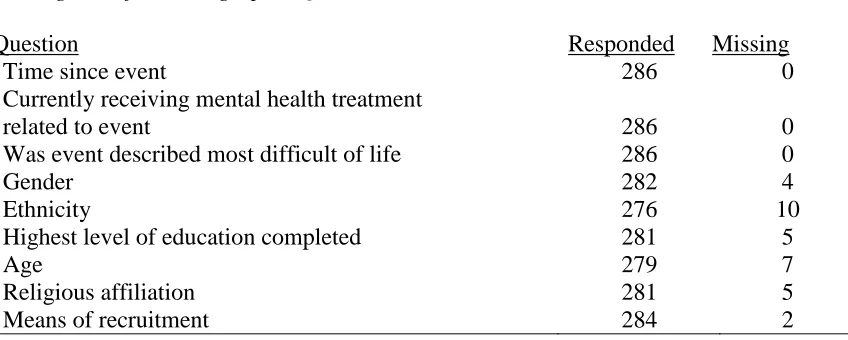
TABLE 4.1 MISSING DATA FOR DEMOGRAPHIC QUESTIONS ...93
TABLE 4.2FREQUENCY OF PARTICIPANT’S HIGHEST LEVEL OF EDUCATION COMPLETED ..97
TABLE 4.3DESCRIPTIVE STATISTICS FOR DEPENDENT VARIABLES ...98
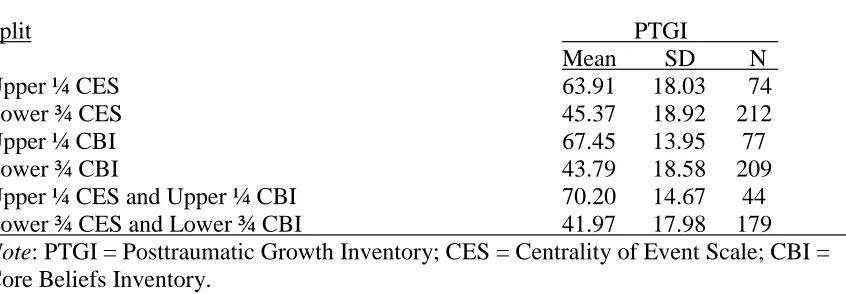
TABLE 4.4DESCRIPTIVE STATISTICS FOR PTGIBASED ON UPPER QUARTILE SPLIT OF CES AND CBI ...102
TABLE 4.5DESCRIPTIVE STATISTICS FOR PTGI,CES, AND CBIBASED ON TIME SINCE TRAUMATIC EVENT...103
ix
LIST OF ABBREVIATIONS
ANOVA ... Analysis of Variance
CBI ... Core Beliefs Inventory
CES ... Centrality of Event Scale
MANOVA... Multivariate Analysis of Variance
PTG ... Posttraumatic Growth
PTGI ... Posttraumatic Growth Inventory
1
CHAPTER 1INTRODUCTION
In 1991, Jerry Sittser’s van was hit by an oncoming car. The accident took the
lives of his mother, his wife, and his four-year-old daughter, leaving him a single father
of three young children who had just survived the same accident. Sittser wrote about that
catastrophic and traumatizing event, and his subsequent struggles with doubt, depression,
anger, and grief, “to show how it is possible to live in and be enlarged by loss, even as we
continue to experience it” (1995, pg. 10, emphasis mine). Sittser describes his experience
not as a unique event solely defined by loss, grief, and negative posttraumatic
symptomology, but as a normal and continuing life experience that includes growth and
positive change in the midst of heartache.
Most people will experience a traumatic event during the course of their lifetime,
such as incurring a significant injury, developing a serious illness, experiencing physical
or sexual violence, or suddenly losing a loved one (Bonanno, 2004; Simiola, Neilson,
Thompson, & Cook, 2015). Traumatic experiences produce a variety of human
responses, such as resilience, coping, pathology, recovery, and growth. Many who
experience difficult events and hardships in life are resilient to trauma, and are able to
continue to function normally with little life disruption due to their ability to adapt to the
situation and their resistance to the development of symptoms of Posttraumatic Stress
Disorder (PTSD; Levine, Laufer, Stein, Hamama-Raz, & Solomon, 2009; Tan, 2013).
Stratta et al. (2015) distinguish resilience, which they conceptualize as positive
2
coping, which describes management of internal or external challenges. Resilience can
also be described in terms of recovery. Specifically, resilience can refer to the process of
a return to the individual’s normal level of functioning following a period of
psychopathology in the aftermath of a traumatic event (Bonanno, 2004; Lepore &
Revenson, 2006). Not everyone is resilient, and coping is not always successful
(Campbell-Sills, Cohen, & Stein, 2006; Stratta et al., 2015). Between 2% and 8% of the
general population in the United States either are not resilient or fail to cope successfully,
and as a result respond pathologically to traumatic events with the development of PTSD
(Gill, Page, Sharps, & Campbell, 2008; Haagsma et al., 2012) or an adjustment disorder
(Lancaster, Kloep, Rodriguez, & Weston, 2013). These individuals experience symptoms
as a result of traumatic events that are highly disruptive to their normal functioning. The
level of disruption that people experience as a result of a traumatic event depends on a
variety of factors including the characteristics of the trauma itself (e.g., severity of the
event, suddenness of the event, etc.), environmental factors (such as the amount of social
support that the trauma survivor experiences or extended social networks), and personal
characteristics (how the individual perceives the event, cognitive functioning, etc.)
(Bonanno, 2004; Stratta et al., 2015). PTSD symptoms were found by Haagsma et al. to
be present at a rate between 5% and 39% more than one year after traumatic experiences
among major trauma patients (2012), while others are able to recover. Thus, individual
response to traumatic experience varies greatly. Some of these categories of response
overlap, such as the case of individuals who initially develop PTSD (pathology) but later
3
Posttraumatic growth (PTG) is distinct from recovery, resilience, and pathology
(Lepore & Revenson, 2006; Tedeschi & Calhoun, 2004). PTG describes the experience
of positive outcomes “in the aftermath of an extremely stressful event (traumatic event)”
(Zoellner & Maercker, 2006, p. 628) that are not part of a typical developmental process
or the result of smaller stressful events. It is the experience of a new benefit or something
positive that has been added to the individual’s life. While philosophers and religious
teachers have believed and taught for millennia that humans often experience positive
growth and change following difficult experiences, posttraumatic growth has only been
formally studied in the social sciences using that term since the mid-1990s (Calhoun &
Tedeschi, 2006). However, at least one theory of adaptive change goes back at least a
decade earlier (Taylor, 1983). Posttraumatic growth differs from resilience, coping, and
PTSD in that PTG describes the positive benefits an individual experiences as a result of
the trauma which are independent of the presence of PTSD or trauma-related
symptomology (Boals, Steward, & Schuettler, 2010; Groleau, Calhoun, Cann, &
Tedeschi, 2013). This is not to say that the traumatic experience itself is thought to be
good or positive. Rather the focus is on the positive factors that result from the process of
dealing with the traumatic experience. These positive effects are commonly categorized
into five domains of growth: new possibilities, relating to others, personal strength,
spiritual change, and appreciation for life (Calhoun & Tedeschi, 2006; Tedeschi &
Calhoun, 1996). While the process of posttraumatic growth development has been
conceptualized in several different ways (Calhoun & Tedeschi, 2006; Janoff-Bulman,
2006; Neimeyer, 2006), most models contain at least a few common key elements, as
4
1. After experiencing a traumatic event, many people think about that event in an
effort to understand it and make sense of it in the context of their lives. The pain
of the traumatic event itself is only part of the difficulty that is experienced –
survivors of trauma must also find a way to integrate their personal beliefs and
prior experiences with the traumatic experience in order for new perspectives on
life to take place and growth to occur. This process has been conceptualized as a
function of rumination and meaning-making (Calhoun & Tedeschi, 2006), where
individuals first experience intrusive rumination which then gives way to
intentional rumination through which meaningfulness emerges resulting in PTG.
2. Growth can be conceptualized through a narrative lens, in which trauma prompts
a disruption in the individual’s self-narrative that leads to meaning reconstruction
(Neimeyer, 2006).
3. Growth can also be described as the process of schema-change. Schemas are a
cognitive structures “which act as coherent concepts or naïve theories that render
the world manageable” (Fiske, 2004, p. 143). Schema are changed when people
experience trauma and, through cognitive processing, gain a sense of the event’s
significance for their lives. Growth occurs as a result (Janoff-Bulman, 2006).
Common to each of the perspectives is that engagement in cognitive processing following
a worldview disruption can result in found meaning or making sense of the traumatic
experience in such a way that growth results.
Problem Statement
The above models all conceptualize posttraumatic growth as a positive change in
5
Tedeschi, 2006; Jaywickreme & Blackie, 2014). However, several competing theories
have emerged that conceptualize PTG as something other than change in personality
(e.g., Jaywickreme & Blackie, 2014; Joseph & Linley, 2005; Zoellner & Maercker,
2006). Posttraumatic growth has been conceptualized as psychological well-being
(Joseph et al., 2012), adaptive coping (Taylor & Armor, 1996), meaning-making or
lesson-learning (Jaywickreme & Blackie, 2014), and as a combination of perceived
growth and actual growth (Frazier et al., 2009). This would indicate that while there
appears to be agreement that PTG represents a genuine, viable construct, there is
disagreement about how useful of a construct it is and what precisely is represented by
the construct of posttraumatic growth (Jaywickreme & Blackie, 2014). Little research has
been conducted on differences between varying models of PTG or how contributing
factors of PTG may support one model over others (e.g., Hallam & Morris, 2014), and at
least one researcher has commented on the need for a clearly defined, agreed upon
definition of PTG (Jaywickreme & Blackie, 2014). One function of the present state of
PTG research is a lack of understanding about how PTG develops. It is unclear when
change takes place in the process of PTG. Reported PTG immediately following
traumatic experience may be the result of adaptive coping (Taylor & Armor, 1996),
perceived change (Joseph et al., 2012), or a form of learning. Differences in PTG at
various points in time following the traumatic event could shed light on the
developmental process of PTG, and help clarify the various models of PTG. Previous
attempts to measure differences in PTG at time intervals following the traumatic
experience have yielded inconsistent results (e.g., Carboon, Anderson, Pollard, Szer &
6
examining the role of event centrality in PTG development has brought new promise to
the field (Johnson & Boals, 2014).
Therefore, to advance our understanding of posttraumatic growth and its
usefulness as a construct for helping individuals who have experienced trauma, additional
research is needed. Specifically, PTG research can benefit from studies that attempt to
support or refute specific models of PTG, studies that examine time as a component of
PTG development, and studies that examine the role that event centrality, and other
constructs of worldview disruption, play in the development of PTG. One way to do this
would be to measure the variables of the primary model of posttraumatic personality
change over time in the period immediately following a traumatic experience. Such a
study could examine core belief disruption, the event centrality of difficult life
experiences, and the relationship between these two predictors of posttraumatic growth
and time.
Social Significance
Difficult experiences are a natural part of life that most people will have to face:
chronic and terminal illness, the loss of a loved one, war, natural disasters, and accidental
injury all represent potentially traumatic events. These are all circumstances that have the
potential to be psychologically distressful and emotionally painful, but also can provide
an initiating context for posttraumatic growth (Milam, 2006; Paton, 2006; Rosner &
Powell, 2006; Stanton, Bower, & Low, 2006; Znoj, 2006). Although investigation into
the potential for growth following trauma is progressing, most research on the effects of
trauma focuses on negative outcomes (Calhoun & Tedeschi, 2006). It is important to
7
2004). A better understanding of PTG could potentially supplement the current treatment
of traumatic and difficult experiences. Treatment currently focuses primarily on reduction
of negative symptoms that arise from the experience of trauma or difficult experiences
(Zoellner & Maercker, 2006a). However, as PTG is better understood, a prognosis of
growth could become a norm for treatment. Currently there is reason for caution against
the expectation of growth for clients, as that expectation could minimize the severity of
traumatic experience, set clients up for failure, and cultivate further detrimental
symptoms if they do not experience growth (Calhoun & Tedeschi, 2006). However, if
expectations are managed and the growth process is better understood, treatment focus
could change.
Additionally, with further information about traumatic experience and PTG,
trauma and difficult life experiences can be normalized as a part of the human
experience, including the growth process (Zoellner & Maercker, 2006a). When the high
occurrence of traumatic experience in the United States is considered, any research that
can help clarify the process of growth and positive change has social significance
(Simiola, Neilson, Thompson, & Cook, 2015). Posttraumatic growth and posttraumatic
distress appear to have unique developmental processes even though they are each
initiated from the same event or series of events (Groleau, Calhoun, Cann, & Tedeschi,
2012). As the process of growth is better understood, clinicians and clients will be able to
better manage the aftermath of difficult experiences (Zoellner & Maercker, 2006a).
Finally, various fields of treatment of physical, medical, and psychological
problems can be assisted by continued research into posttraumatic growth. Doctors and
8
normal functioning (Milam, 2006; Stanton, Bower, & Low, 2006). Grief counselors can
assist their clients with loss (Znoj, 2006). Treatment for soldiers post-deployment can be
improved (Rosner & Powell, 2006). Disaster relief workers and first responders can assist
survivors with the implementation of psychological first aid (Paton, 2006).
Professional Significance
Continued research is needed to better understand what posttraumatic growth is,
the developmental process of PTG, and how it might be used clinically to help
individuals who have experienced diagnosable trauma or difficult life circumstances. It
may not always be possible to find clinical interventions to help facilitate PTG, and not
everyone experiences PTG (Calhoun & Tedeschi, 2013). Understanding factors that
influence PTG can help clinicians identify clients who might be ready to look at their
traumatic experiences from a growth perspective, and avoid unwarranted expectations of
growth in other clients (Calhoun & Tedeschi, 2013).
As there are several theories of what PTG represents (Jaywickreme & Blackie,
2014), research that helps distinguish which model is the best fit can guide future
research, allowing some factors to be left out of predictive models and helping to refine
our understanding of how PTG develops. Further research in the area of PTG can also
provide data that could potentially confirm and strengthen the associations between core
belief disruption, event centrality, meaning making, cognitive processing, and personality
change outcomes that are components of the most well established models (Calhoun &
Tedeschi, 2006; Janoff-Bulman, 2006), as well as provide a better understanding of the
process of “schema disruption” and growth following the traumatic event
9
Theoretical Foundation
Søren Kierkegaard, the father of existential philosophy, described conflict
between the difficult life experiences that individuals face and their worldview:
So it happens at times that a person believes that he has a world-view, but that
there is yet one particular phenomenon that is of such a nature that it baffles the
understanding, and that he explains differently and attempts to ignore in order not
to harbor the thought that this phenomenon might overflow the whole view, or
that his reflection does not possess enough courage and resolution to penetrate the
phenomenon with his world-view. (Kierkegaard, pg. 188)
Kierkegaard’s understanding of this conflict is remarkably similar to recent descriptions
of how traumatic experiences can threaten to subsume the worldview or sense of identity
held by people prior to their traumatic experience. Kierkegaard, and the existential
thinkers who followed him, wrote in reaction to a view of the world as a “closed,
coherent, intelligible system” (Blackburn, 2008, “Existentialism”) in which people would
ultimately find “comprehension within an all-embracing objective understanding of the
universe” (Baldwin, 2005, “Existentialism”, 2nd paragraph). Rather, existence is a
uniquely human experience that carries with it the responsibility of making sense of a
world that is ultimately absurd (Blackburn, 2008). Theorists such as Viktor Frankl, Rollo
May, and Irvin Yalom built their approaches to therapy on existential philosophy (Yalom,
1980). Existential thought can be seen clearly in the title of Frankl’s book, Man’s Search
for Meaning (1959), but Yalom developed a more comprehensive approach to
10
Yalom believed that psychological conflict flowed from the individual’s
confrontation with the given realities found in the world (1980). Awareness of the reality
of death and ultimate concerns provokes anxiety and the individual’s defenses are raised.
However, “occasionally, some jolting experience in life tears a rent in the curtain of
defenses and permits raw death anxiety to erupt into consciousness” (pg. 44). The crisis
and danger of that confrontation with death leads to personal change – inner change that
can only be seen as growth (Yalom, 1980). Existential theory in general, and Yalom’s
conceptualization specifically, provide a general framework upon which the following
theory of PTG is built.
Theory of Trauma and Posttraumatic Growth
Yalom conceptualized psychological conflict as a confrontation between the
world as the individual imagines it, and the realities of that world as experienced by the
individual (1980). Growth and change can occur when an individual who is confronted
with difficult realities of life is able to accept those realities and build a worldview that
takes those realities into consideration. Similarly, traumatic experiences are complicated
by the fact that in addition to the damaging experience of the trauma itself, the
individual’s worldview is often disrupted, forming an additional domain of the problem
that accompanies the pain of the traumatic experience. The event that is disruptive of the
individual’s worldview presents an inescapable counter example that conflicts with the
individual’s concept of the world and shatters that coherent view of self and the world
that was previously held (Janoff-Bulman, 2004; Jayawickreme & Blackie, 2014; Zoellner
& Maercker, 2006). The mental pictures that people have about themselves or the way
11
experiences (Janoff-Bulman, 2006). For example, when one thinks of the world
predominantly as a safe place, and then experiences a life-threatening injury or physical
harm in an attack by another, that image of the world as a safe place can cease to make
sense. In this way, traumatic experiences can be doubly disturbing because, beyond the
event itself causing psychological pain, the individual’s entire view of the world can
seem to be under attack. Trauma can shatter the foundation of an individual’s core beliefs
and greatly disrupt the individual’s functioning as a result (Calhoun & Tedeschi, 2006;
Janoff-Bulman, 2006). One of the goals of this study is to provide additional evidence
that confirms this theory of growth by exploring the relationships between core belief
disruption, event centrality, and PTG. In the following sections I discuss the constructs of
core belief disruption, event centrality, and posttraumatic growth.
Meaning Making and Event Centrality
Events that are vivid and highly accessible take a central place in the formation of
meaning and provide structure for how life narratives are formed (Berntsen & Rubin,
2006). Central life events are specific events that have a prominent place in the formation
of identity and life story. Events that hold this prominent place in identity development
are considered to have event centrality. Researchers have studied the centrality of both
positive and negative events as identity forming components (i.e., Berntsen & Rubin,
2006; Pillemer, 1998), but recent research has emerged that examines the event centrality
of negative events in the formation of positive change (e.g., Boals, Steward & Schuettler,
2010). PTG occurs when, as a result of core belief disruption due to traumatic
experiences, people are forced to wrestle with the conflict between their old schema and
(Janoff-12
Bulman, 2006). People try to make sense of their trauma by reconstructing a view of the
world that includes their traumatic experience (Howells, & Fletcher, 2015; Linley &
Joseph, 2011). This cognitive process often manifests as intrusive, unwanted rumination
that gradually shifts into deliberate rumination that includes a process of meaning making
(Taku, Cann, Tedeschi, & Calhoun, 2009). The most well-established models of PTG all
include some version of the meaning making process as an influencing factor in the
development of PTG (Zoellner and Maercker, 2006b). This cognitive processing often
results in the traumatic experiences becoming central to the survivor’s sense of personal
identity (Boals, Steward & Schuettler, 2010; Janoff-Bulman, 2006). In this way, the
traumatic events are conceptualized as central life events. Shattered assumptions, core
belief disruption, and event centrality are all components of the developmental structure
of growth that occurs in traumatic aftermath. Event centrality, defined as the degree to
which a traumatic event becomes central to the identity of an individual who experiences
it, has been demonstrated to be a predictive factor of PTG, with research indicating that
those who experience a high degree of event centrality are more likely to report PTG
(Boals, Steward, & Schuettler, 2010). One goal of this study is to provide confirmatory
evidence for this theory, and to understand how time since traumatic event may influence
the development of PTG.
Core Belief Disruption
As discussed in the previous sections, posttraumatic growth is more likely to
occur when the survivor’s beliefs are disrupted (Calhoun & Tedeschi, 2006).
Janoff-Bulman (1992) describes this disruption of beliefs as a shattered world: the set of
13
the traumatic experience. The challenge can be distressful, and can cause intrusive
thinking about the event or the individual’s life or beliefs. In theory, this intrusive
thinking is the mind’s effort to construct a new worldview or internal reality in light of
the traumatic experience that has challenged the individual’s core beliefs (Calhoun &
Tedeschi, 2006; Janoff-Bulman, 2006; Tedeschi & Calhoun, 2004). While the disruption
of core beliefs can add to the distress that individuals feel in the aftermath of trauma
(Calhoun & Tedeschi, 2006; Janoff-Bulman, 2006), that very same disruption of beliefs
can also be the impetus for growth because “it is the individual’s struggle with the new
reality in the aftermath of trauma that is crucial in determining the extent to which
posttraumatic growth occurs” (Tedeschi & Calhoun, 2004, p. 5). One question that
emerges from this theory of PTG is whether core belief disruption, which is a related
construct to event centrality, is also predictive of PTG in the same way that event
centrality is, and what differences exist between how event centrality and core belief
disruption are related to PTG outcomes. In theory, both event centrality and core belief
disruption can be described as part of the meaning making process that drives PTG
(Calhoun & Tedeschi, 2006; Calhoun & Tedeschi, 2013).
Purpose of Study
This study is designed to examine the above described theory of PTG. The
purpose of this study has several components. Posttraumatic growth is conceptualized as
personality change that develops when individuals face significant events that disrupt
their beliefs about themselves and their world and promote the internalization of the
traumatic event as a central event in identity formation (Boals et al., 2010; Calhoun &
14
model by focusing on the relationships between core belief disruption, event centrality,
time, and PTG. Core belief disruption could be conceptualized as the beginning point of
the developmental process, as in PTG theory it stands as the causal component that
triggers the cognitive process leading to PTG (Cann et al., 2010; Janoff-Bulman, 2006).
Likewise, event centrality could be conceptualized as an endpoint marker of the
developmental process because, theoretically, some amount of cognitive processing must
take place before the traumatic event is considered to be an event that is highly influential
to identity formation (Boals et al., 2010; Calhoun & Tedeschi, 2006). Therefore, the
overall purpose of the study is to examine differences in event centrality, core belief
disruption, and PTG at different time intervals following a traumatic event.
Research Questions and Hypothesis
In the light of the study’s purpose, I examined the following research questions:
Research Question 1
Do individuals who experience life difficulties as a central life event and
experience core belief disruption experience more PTG than those who do not experience
life difficulties as a central life event or core belief disruption (Table 1.1)?
Hypothesis 1a. Individuals who experience life difficulties as a central life event,
as measured by an upper quartile score on the Centrality of Event Scale (CES; Berntsen
& Rubin, 2006), will report greater PTG than those who do not report life difficulties as a
central life event, as measured by the Posttraumatic Growth Inventory (PTGI; Tedeschi
& Calhoun, 1996).
Hypothesis 1b. Individuals who experience core belief disruption as a result of
15
(CBI; Cann et al., 2010), will report greater PTG than those who do not report core belief
disruption, as measured by the PTGI (Tedeschi & Calhoun, 1996).
Table 1.1
Variables and Analyses Associated with Research Questions
Question IVs DVs Analysis
Question 1 Event Centrality (CESa), Posttraumatic Growth (PTGIb) ANOVA Core Belief Disruption (CBIa)
Question 2 Time since Trauma Event Centrality (CESb), MANOVA Core Belief Disruption (CBIb),
Posttraumatic Growth (PTGIb)
aCategorical variables of two groups, based on an upper quartile vs. lower three-quartiles
split of instrument score. bContinuous variables, based on instrument score.
Research Question 2
Are there differences in core belief disruption, event centrality, and posttraumatic
growth based on time since traumatic event (Table 1.1)?
Hypothesis 2. As time since difficult life experience increases, core belief
disruption, measured as a continuous variable on the CBI (Cann et al., 2010), will remain
stable, and event centrality, measured as a continuous variable on the CES (Berntsen &
Rubin, 2006), will increase. As time since trauma increases, posttraumatic growth, as
measured by the PTGI (Tedeschi & Calhoun, 1996), will also increase. Time since
traumatic experience will be measured in the following categories: less than two weeks
ago, between two weeks ago and eight weeks ago, between eight weeks ago and six
16 Research Design
This study uses a cross-sectional research design. As such, individuals were
invited to participate in research about PTG and were recruited to answer questions about
the most difficult life experience they have had in the past year. Participants were
recruited through email invitation to the study. Potential participant email lists were
compiled through my relationships with several organizations with which I am affiliated,
including current and past students at a graduate school in the southeastern United States
and a religious organization with which I am affiliated. Eligibility criteria were that
participants be over the age of 18 and have experienced what they would consider to be a
traumatic event or difficult life experience in the year prior to participation. These criteria
items were included on the participation invitation and the informed consent. Before
beginning data collection, IRB approval was obtained. Information about informed
consent was provided to potential participants, and participants were asked to complete
the Core Beliefs Inventory (CBI; Cann et al., 2010) the Centrality of Event Scale (CES;
Berntsen & Rubin, 2006), the Posttraumatic Growth Inventory (PTGI; Tedeschi &
Calhoun, 1996), and a collection of questions used to gather demographic information
(Appendix A).
Participants
In this study I recruited participants who are interested in participating in PTG
research, who report a difficult life experience in the year prior to participation. I targeted
participants with diverse educational backgrounds and diverse experiences of difficult life
17 Population
Most people will experience a traumatic event at some point in their lives
(Bonanno, 2004), and recent research has demonstrated that the type of trauma
experienced has little effect on growth (Shakespeare‐Finch & Barrington, 2012).
Therefore, the type of traumatic event experienced will not be a restriction on the
population. This study focused on the experience of adults, purposefully to the exclusion
of children and adolescents. Children and adolescents may not be the best candidates for
PTG because the growth process assumes that there are established cognitive schema that
are challenged by extreme difficulty (Tedeschi & Calhoun, 2004) and children and
adolescents are still experiencing significant cognitive development (i.e., schema
development). Adults of all ages were viable candidates for inclusion in this study. Older
adults might have a tendency to experience less PTG as they might tend to a) be less open
to new ways of conceptualizing difficulty, and b) might have already learned their life
lessons through difficult experiences (Tedeschi & Calhoun, 2004). Even so, adult
participants were not screened by age because no data exists to support a suitable cutoff
age for PTG development. Because previous research findings have indicated that PTG in
general (Ullman, 2014) and the PTG domains of relating to others and personal strength
specifically are negatively correlated with level of education (Grubaugh & Resick, 2007),
participants were recruited from a variety of educational backgrounds. Additionally,
psychological research in general suffers from an over-reliance on college student
participants, largely because college students are a readily available group for those
involved in psychological research at large universities (Heppner & Heppner, 2004), and
18
et al., 2015; Boals et al., 2010; Boals & Schuettler, 2011; Cann et al., 2010; Cann et al.,
2015; Johnson & Boals, 2015; Groleau et al., 2013; Lancaster et al., 2013; Lindstrom et
al., 2013; Schuettler & Boals, 2011; Su & Chen, 2015; Triplett et al., 2012) Thus, in an
effort to expand findings to the broader population, I did not recruit participants
exclusively via association with educational institutions. In particular, recruitment
targeted graduate-level students, graduate school alumni, and individuals from the
broader community that are likely to have diverse educational backgrounds.
Sampling Method
The sampling frame for this study consists of adults who agreed to participate in
research about how people respond to challenges in life. In participant recruitment for
this study I intentionally sought participants other than undergraduate university students.
I recruited participants without regard to the specific type of life difficulties that have
been experienced, because the type of trauma experienced and the presence of related
constructs appear to have little influence on the development of PTG (Shakespeare‐Finch
& Barrington, 2012; Tedeschi & Calhoun, 2004; Zoellner & Maercker, 2005).
I recruited participants from five primary avenues, with an expectation of
reaching a minimum of 2,925 potential participants. A detailed strategy for participant
recruitment is outlined in Chapter Three. An overview of that strategy follows. First, I
recruited participants through their connection to the graduate school that I work at. I
recruited students by requesting their participation in the classes that I teach, and by
collaborating with my colleagues to recruit students in my colleagues’ classes. Students
were given an opportunity in class to take the survey. Students and alumni who were not
19
participate. I also recruited staff members at the institution. Second, I recruited a
community sample of individuals who were members of or attendees of the church
denomination with which I am affiliated, via email invitation. Third, I planned to recruit
military families via two means. The first of these means is through a marriage
conference for military personnel and their spouses. I planned to attend the conference
and address the group to extend an invitation to participate in the research. The second
means of recruiting military personnel was via a mental health clinic. I planned to partner
with the founder of the clinic and staff members in the clinic to invite new patients to
participate in the research when they arrived for their first visit to the clinic. Fourth, by
partnering with colleagues who teach at various other universities, I recruited participants
by inviting students to participate. Finally, I partnered with participants at several local
mental health service providers from the community to recruit participants who were
involved in mental health group treatment. Participants had the option to either complete
a survey when I meet them in their groups or complete it at home via an online survey.
Of the 2,925 potential participants, at least 720 were anticipated to participate. This study
would reach sufficient power for data analysis if only 25% of those 720 who are
anticipated to participate actually participated.
This research design uses a convenience sample. Simple random sampling was
not a feasible option for this study due to the broad population under consideration, the
inability to predict a traumatic incident, and the time constraints that limit the scope of
20 Sample Size
Each of my research questions were analyzed with between group comparison
analyses. Wilson Van Voorhis and Morgan (2007) recommend a minimum of seven
participants per cell for measuring group differences, with cell sizes of 30 for 80% power.
Research question one needed a minimum of 120 participants according to this
calculation, given two independent variables with two categories each, and one
independent variable. For each independent variable, the two categories were based on a
¼ to ¾ split in the participant sample. Given a 30 participant minimum per cell, the total
sample size was calculated to be at least 120.
Research question two also required a minimum of 120 participants, as the design
calls for one independent variable with four categories, and two dependent variables.
Four categories of the dependent variable, with 30 participants per cell, requires a
minimum of 120 participants. However, a complicating factor was present in that the
categories for the independent variable is time since traumatic event. It was unknown in
advance of data collection how many participants would be in each category.
Additional sources provide greater context for the necessary sample size. Pallant
(2010) recommends a minimum of seven participants per cell, requiring a minimum of 28
participants. A power analysis was conducted using G*Power. An ANOVA (f = 0.25, α =
0.05, power = 0.80) with four groups requires 180 participants. This represents a wide
discrepancy in the number of participants required for this study. In view of these
recommendations and power analyses, I attempted to recruit a minimum of 200
21 Participant Selection
Participants who were eligible for this study must (a) be at least 18 years old, and
(b) consent to participate in the research study. I did not limit participant recruitment
based on gender, ethnicity, type of trauma experienced, type of traumatic symptoms, or
degree of traumatic symptoms. There is little to no evidence for type of traumatic
experience effecting PTG (Shakespeare‐Finch & Barrington, 2012). Trauma survivors
have reported growth benefits as early as two weeks after the traumatic event (i.e.,
Frazier, Conlon, & Glaser, 2001), and to remain for up to 13 years after the event
(Powell, Gilson, & Collin, 2012). This indicates that PTG has the potential to develop
very quickly. Thus, in this research I attempted to gather data as soon after the traumatic
experience as possible.
Instruments
Core Beliefs Inventory
The Core Beliefs Inventory (CBI; Cann et al., 2010) is a nine-item instrument that
was the first instrument designed to assess the degree to which an individual’s core
beliefs or assumptions are disrupted by a traumatic experience. The CBI measures core
belief disruption following a stressful life event, does not require the individual to have
experienced clinically defined trauma, and focuses on “religious and spiritual beliefs,
human nature, relationships with other people, meaning of life, and personal strengths
and weaknesses” (Cann et al., 2010, pg. 21). The CBI demonstrated good reliability
across three studies with alpha coefficients between 0.82 and 0.89. Additionally, the CBI
is related to posttraumatic growth (r = .57, p < .001) and moderately correlated with
22
p < .01). Moderate correlations are to be expected when examining disruptions of life
events, as some stressful events will challenge core beliefs, while others fit with existing
beliefs while still being stressful. Responses to each question are made on a six point
scale (0-5), with answers ranging from “not at all” to “a very great degree.” For the
purpose of this study, the CBI was used to measure the degree of core belief disruption
that participants have experienced as a result of their recent traumatic experience.
CBI items have been used as dichotomous variables, with item score responses
indicating that beliefs in the given area were disrupted “to a very small degree”
representing no core belief disruptions and items scored higher representing belief
disruption (LoSavio et al., 2011). This study used CBI scores as both continuous
variables and as categorical variables based on the upper quartile of response.
Centrality of Event Scale
The Centrality of Event Scale (CES, Berntsen & Rubin, 2006) is a 20-item scale
designed to “measure the extent to which a memory for a stressful event forms a
reference point for personal identity and for the attribution of meaning to other
experiences in a person’s life” (p. 220).The CES has high reliability (α = .94), and a
short-form made up of seven items (α = .88). In assessing for validity, significant
differences were found between individuals who felt intense fear, horror, or helplessness
as a result of their traumatic experience and those who did not, but no significant
differences were found between those who reported that the event involved actual or
threatened death or injury and those who did not. This indicates that the CES is sensitive
to the emotional response resulting from the traumatic event, and not simply the event
23
Posttraumatic Stress Disorder symptomology (r = .23, p < .01), both of which are to be
expected among people who have experience a stressful event that is a reference point for
identity formation. The Centrality of Event Scale has been used in recent research to
assess for the degree to which a traumatic experience has become a central event. This is
consistent with PTG theory that hypothesizes that traumatic events are most likely to
produce growth when they disrupt the individual’s personal narrative (Calhoun &
Tedeschi, 2006). For the purpose of this study, I used the CES as an instrument to
measure the degree to which the traumatic event that participants have experienced is a
formative event for the purpose of identity formation and understanding the world.
Calhoun and Tedeschi hypothesize that once a minimum threshold is reached, narrative
disruption may not predict for PTG. This study used the long form of the CES both as a
continuous variable and a categorical variable based on the upper quartile of response.
Posttraumatic Growth Inventory
The Posttraumatic Growth Inventory (PTGI, Tedeschi & Calhoun, 1996) is a
21-item scale with five subscales. The PTGI measures how successful people are in
“restructuring or strengthening their perceptions of self, others, and the meaning of
events” (p. 455). Changes have been found to occur in three broad categories: perception
of self, interpersonal relationships, and philosophy of life. The five subscales fall within
these three broad categories and include factors of New Possibilities, Relating to Others,
Personal Strength, Spiritual Change, and Appreciation for Life. Internal consistency of
the 21-item PTGI is acceptable (α = .90), and the five factors also demonstrate good
internal consistency (New Possibilities: α = .84, Relating to Others: α = .85, Personal
24
reliability is acceptable (r = .71). The PTGI was analyzed for construct, concurrent, and
discriminant validity. Individuals reporting greater severity of traumatic experience
reported significantly more PTG, which was to be expected. Posttraumatic growth is
expected to be related to some personality characteristics, such as optimism and
religiosity, which would be associated with people who tend to see the benefits of trauma,
and not correlated with social desirability, which would occur if posttraumatic growth
was a socially desirable feature that was not actually present. PTGI scores have a mild
negative correlation to social desirability (r = -.15, p < .01), and have low to moderate
correlations with optimism (r = .23, p < .01), religiosity (r = .25, p < .01), and the
personality traits of extroversion (r = .29, p < .01), and openness (r = .21, p < .01). The
PTGI has become the standard in the field of PTG research for retrospectively assessing
the presence and degree of PTG.
Data Analysis
Prior to analyzing data based on my research questions, I conducted a preliminary
analysis of the data to check assumptions such as the presence of outliers, normality,
linearity, homoscedasticity, multicollinearity of variables. Additionally, I conducted a
check for missing data, with appropriate steps taken to correct for missing data.
Analysis of Research Question 1
I analyzed research question one with a two-way multivariate analysis of variance
(MANOVA). Event centrality, as measured by the CES (Berntsen & Rubin, 2006) as a
dichotomous variable, and core belief disruption, as measured by the CBI (Cann et al.,
2010) as a dichotomous variable, were the independent variables for this research
25
(Tedeschi & Calhoun, 1996). This analysis examined mean differences in PTG scores
between individuals who report high event centrality and core belief disruption as
compared to those who do not report high event centrality and core belief disruption.
Analysis of Research Question 2
I analyzed research question two with a one-way multivariate analysis of variance
(MANOVA) to explore mean differences in core belief disruption and event centrality.
For research question two the independent variable was time since most difficult life
experience in the past year with the following categories: less than two weeks, between
two weeks and eight weeks, between eight weeks and six months, and between six
months and one year. The dependent variables were core belief disruption, as measured
by the CBI (Cann et al., 2010) as a continuous variable, event centrality, as measured by
the CES (Berntsen & Rubin, 2006) as a continuous variable, and posttraumatic growth, as
measured by the PTGI (Tedeschi & Calhoun, 1996).
Definition of Terms
Trauma
In this document, trauma is defined as any life event or situation that significantly
challenges the individual in a way that might require a response such as a change in
thinking or behavior as a way of handling the challenge. This definition is consistent with
a broader view of trauma that has been adopted in the PTG literature (i.e., Tedeschi and
Calhoun, 2004), that does not require a diagnosis of PTSD. Rather, trauma is self-defined
by the individual who experiences it. Terms that are used synonymously with trauma
26 Posttraumatic Growth
Posttraumatic growth is a term used to describe the positive results or benefits that
are sometimes experienced as a result of traumatic events (Zoellner & Maercker, 2006).
It has been described as perceived change (i.e. Zoellner, & Maercker, 2006),
psychological well-being (i.e. Joseph & Linley, 2008), and adaptive coping (i.e. Taylor,
1983) in addition to positive results and benefits.
Core Belief Disruption
Traumatic events often produce significant distress in the individuals who
experience them, such that their understanding of themselves or their world are disrupted,
creating the need to reorganize one’s worldview to accommodate the traumatic event.
This disruption of the survivor’s worldview is called core belief disruption (Cann et al.,
2010).
Event Centrality
“Highly accessible and vivid personal memories” help individuals form their
understanding of the world and themselves (Berntsen & Rubin, 2006; p. 1). Events that
have this formative effect on a person’s understanding of their life can be positive or
negative. These events have a place of centrality in the individual’s mind and serves an
organizational role for the building of the sense of self (Boals et al., 2010). This function
is referred to as event centrality.
Personality
The definition of personality varies greatly among personologists (Maddi, 1996).
Gordon Allport notoriously presented nearly fifty definitions for personality (1937),
27
definition of personality can be applied with any generality” (pg. 9). For the purposes of
this study, PTG as personality change is a description that distinguishes Calhoun &
Tedeschi’s (2006) theory from other conceptualizations of PTG (e.g., Taylor & Armor,
1996; Zoellner, & Maercker, 2006). Drawing from Maddi (1996), personality can be
defined as the set of relatively stable tendencies and characteristics of a people that help
account for psychological and behavioral differences and commonalities between
individuals that are not the result of temporary, current biological and social pressures. In
the context of this study in the area of PTG, personality changes are considered to be
changes in the individual’s tendencies or characteristics that are stable over time and
distinct from perceived change (i.e. Zoellner, & Maercker, 2006), psychological
well-being (i.e. Joseph & Linley, 2005), or adaptive coping (i.e. Taylor, 1983).
Limitations
The proposed research assumes that a personality change model of PTG is
accurate and that core belief disruption, event centrality, and time since traumatic
experience are elements of the process of PTG development (Calhoun and Tedeschi,
2006). Underlying philosophical assumptions are present. Existential theory provides a
philosophical base for research in this area. Existential theory assumes that meaning and
purpose are important components of life and provide adequate motivation that can spur
on psychological growth (Yalom, 1980).
A further assumption that was be examined in this study is that as individuals
experience life, they construct a paradigm or an assumptive world that is their foundation
28
2004, pg. 5). These paradigms are disrupted by traumatic events that are incongruent with
some component of the assumptive world (Janoff-Bulman, 1992).
This study assumes that a broad sample provides an accurate representation of the
diverse population who has traumatic experiences, given the prevalence of traumatic
experiences in American culture (Bonanno, 2004), and the similarity of outcomes relative
to PTG regardless of type of trauma (Shakespeare‐Finch & Barrington, 2012).
A significant limitation of this study is the absence of a baseline measurement of
the PTG domains prior to traumatic experience. It could be than any growth that is
observed represents a difference that is not associated with the traumatic experience, but
is a representation of personal differences or personality differences.
Many studies use specific groups as the target population, such as natural disaster
survivors (Zhou & Wu, 2015; Zhou, Wu, & Chen, 2015) or survivors of sexual abuse
(Frazier, Conlon, & Glaser, 2001). My study recruited members who have experienced
any kind of trauma in an effort support the overarching model of growth and expand
previous research to the general population. However, this limits application to specific
groups.
Questions have been raised about the validity and appropriateness of the most
commonly used method of measuring PTG (Joseph, Murphy, & Regel, 2012), the
Posttraumatic Growth Inventory (PTGI; Tedeschi & Calhoun, 1996). As Jayawickreme
and Blackie (2014) have pointed out, there are theoretical and observational problems
with using a retrospective, cross-sectional instrument to measure personality change. This
29
Contributing to the confusion about how PTG is defined and which model most
accurately represents PTG are problems with the way that PTG is measured.
Posttraumatic growth is purported to happen to individuals in the aftermath of difficult
experience, yet studies that attempt to examine the change process following traumatic
experiences through longitudinal research are rare, though they are often called for (e.g.,
Frazier et al., 2009; Jayawickreme & Blackie, 2014; Steger, Owens, & Park, 2015). This
represents a significant weakness in a body of research that is based on a theory of
personality change. The time limitation inherent to this research means that this weakness
in the literature was not addressed in this study.
Finally, some factors that may contribute to growth were not in view in this study.
Personality traits, such as optimism, may factor into PTG, but were not examined as
predictive factors here (Tedeschi & Calhoun, 2004).
Summary
Posttraumatic growth is a common experience for those who have encountered
difficult life experiences (Park & Lechner, 2006), yet much is still unknown. Difficulties
with longitudinal studies (Frazier et al., 2014) combined with a controversial instrument
as the most widely used form of measurement (Jayawickreme & Blackie, 2014) allows
room for doubt as to whether the current dominant model of PTG is predictive of growth
as personality change or something else. For the concept of PTG to be a useful construct
for counselors and educators, supportive research is vital. This research seeks to add to
that body of knowledge by testing the dominant model with a cross-sectional study that
takes time since event into consideration and recruits a broader participant population
30
therapists, and counselors will be able to add confirmatory evidence to the dominant
model of PTG as personality growth. Chapter two will review research and literature that
is relevant to the present study, with particular emphasis on outlining the dominant model
of PTG, examining competing theories of PTG, analyzing the difficulties inherent in PTG
research, and exploring factors related to the development of PTG. Chapter three will
provide a detailed description of the research design, research methods and statistical
analysis that will be used to conduct the present study. Chapter four will contain a
summary of the findings of this study, with a description of how those results related to
the research questions and proposed hypotheses. Chapter five will discuss the relevance
of the findings of this study to future research in the area of PTG and the relevance of
these findings to the field of posttraumatic research and education, clinical practice of
31
CHAPTER 2LITERATURE REVIEW
Introduction
As stated in chapter 1, the focus of this study is to explore a model of PTG as
personality change by examining the relationships between core belief disruption, event
centrality, and time since traumatic incident. The questions under consideration have to
do with testing a basic model of PTG, namely, that following a traumatic event, core
belief disruption and event centrality are useful constructs for predicting PTG and that
these constructs related to growth and to each other in a developmental process among
the broad population of people who have experienced life difficulties. This chapter
attempts to provide a rationale for these questions and the accompanying assumptions.
Purpose and Organization
First, in this chapter I will review various models of PTG, with a view toward
assessing similarities and distinctions between models. This review of the literature will
help provide a rationale for my research questions and the subsequent research design.
Second, I will review the state of current PTG research regarding the relationships
between core belief disruption, event centrality, and PTG. Third, I will review how
researchers have addressed the developmental process of PTG in the context of PTG as
personality change. Fourth, I will review PTG research methodology as it relates to
32 Relevant Research Search Strategy
I conducted a search of PsychInfo, using the search term PTG, for peer-review
articles that have been published since 2010. The research contains various theories of
PTG, which when explored resulted in a conceptualization of the basic model of PTG as
personality change. I cross-referenced these articles with the terms “belief disruption,”
“meaning,” “rumination,” “event centrality,” and similar terms. I conducted a review of
these articles with attention paid to the cited works in the reviewed articles. I reviewed
relevant research cited in the collected articles in addition to the articles that were found
in article database search. I omitted related constructs, such as Posttraumatic Stress
Disorder, resilience, and symptoms of traumatic experience, from the search and review
once it became clear that these were independent constructs that were unrelated to the
research interest of this study. Additionally, I selected key texts as a starting point for
exploring the concept of PTG, such as Foundations for Posttraumatic Growth: An
Expanded Framework, by Calhoun and Tedeschi (2006), and Janoff-Bulman’s books
Shattered Assumptions: Towards a New Psychology of Trauma (1992) and Schema
Change Perspectives on Posttraumatic Growth (2006).
Models of Posttraumatic Growth
Researchers have proposed several models of PTG and have also grouped these
models in a variety of ways (Cho, & Park, 2013; Jayawickreme & Blackie, 2014;
Zoellner & Maercker, 2006). A review of the models and their groupings reveals four
basic approaches to PTG. It must be acknowledged that these categories do not represent
clearly demarcated schools of thought in PTG research. Rather, they are categories
33
distinctions between models. Even between categories there is much overlap among the
various models of PTG.
Personality Change via Cognitive Processing
Janoff-Bulman (1992) began to examine what happened in the aftermath of
trauma and applied the concept of “schema change” to traumatic experience, arguing that
the assumptions people make about themselves and their world can become shattered by
traumatic experience. A “schema” is a “mental structure that represents organized
knowledge about a given concept or type of stimulus” (1992, pg. 28). Schema change
would take place when an individual’s fundamental assumptions about herself or her
world, assumptions about safety, security, competence, or self-assurance, for example,
are challenged by an event that contradicts that assumption (Janoff-Bulman, 2006).
Changes in fundamental assumptions can be likened to paradigm shifts in scientific
inquiry (Kuhn, 1962). New information that causes intense crisis can lead to very
different ways of viewing the world in a short amount of time (Janoff-Bulman, 2006).
Calhoun & Tedeschi (2004; 2006; Tedeschi & Calhoun, 2004) based their work
on Janoff-Bulman’s theory of shattered assumptions, developing the term “posttraumatic
growth,” and expanding the theory to include a process for change and specific domains
in which growth is thought to occur. Trauma represents a “seismic event,” which is an
event that provokes enough cognitive disruption for core beliefs about self and the world
to be challenged (Calhoun & Tedeschi, 2006). Emotional distress often accompanies the
process, particularly if the seismic event has been significant enough to challenge core
beliefs (Calhoun & Tedeschi, 2006; Tedeschi & Calhoun, 2004). Many factors are
34
the experience and the individual, the cognitive process that occurs in the aftermath of the
difficult life experience, social and relational influences, and the management of
distressful emotions are all factors (Calhoun & Tedeschi, 2006).
Two distinctive features of Calhoun & Tedeschi’s model are significant for this
study. First, growth is thought to be primarily a function of a specific cognitive process.
When an individual experiences a seismic event, fundamental assumptions about life are
shattered (Janoff-Bulmann, 1992) and the individuals’ core beliefs are disrupted
(Calhoun & Tedeschi, 2006). In the face of this cognitive disruption, many people begin
to ruminate about their experience and what it may mean for their lives. People often
initially experience this as an intrusive process that is distressful. In the growth process,
as time passes, the intrusive rumination is gradually replaced by deliberate rumination, in
which people think intentionally about how to integrate their previous beliefs and
assumptions with the new experience that conflicts with those core beliefs. In this
process, if the trauma survivor is able to find a way to make sense out of his seismic
event in a way that shifts his view of himself and his worldview, then growth can occur
(Calhoun & Tedeschi, 2006).
The second distinctive of Calhoun and Tedeschi’s model is that growth represents
genuine personal change (Tedeschi & Calhoun, 2004), which I and others call personality
change (Jayawickreme & Blackie, 2014), that occurs in different life domains (Calhoun
& Tedeschi, 2006). Three broad categories of growth are changes to perceptions of self,
changes in relating to others, and changes in philosophy of life. Changes in perceptions of
self include recognition of one’s inner strengths that were previously hidden, openness to
35
and accepting them. There is often changes in how people relate to others, including
increased compassion for the problems of other people, increased priority of interpersonal
relationships, a greater sense of connectedness with a community rather than isolation,
and a greater sense of intimacy and closeness with others. Changes in philosophy of life
are also common. Priorities may shift as a result, and a greater appreciation for life is
often experienced. Finding answers to existential questions often becomes more
important, and in a culture such as the United States, where religion and spirituality have
widespread importance, spiritual growth may result (Calhoun & Tedeschi, 2006). These
areas of growth are organized into five domains: new possibilities, relating to others,
personal strength, appreciation for life, and spiritual growth (Tedeschi & Calhoun, 1996).
Central to this model of PTG is the cognitive process composed of core belief disruption,
rumination, and meaning making, which leads to identity and worldview reconstruction
(Calhoun & Tedeschi, 2006).
Psychological Well-Being
Other models of PTG conceptualize growth not as change of personality, but
rather as a measure of current standing psychological well-being (Joseph & Linley, 2008;
Joseph, Murphy, and Regel, 2012). Psychological well-being has been understood a
variety of ways (Ryff, 1985), but in this conceptualization it includes “high levels of
autonomy, environmental mastery, positive relations with others, openness to personal
growth, purpose in life and self-acceptance” (Joseph et al., 2012, pg. 318). As with the
personality change model, growth is provoked by the shattered assumptions that
accompany traumatic experience (Janoff-Bulman, 1992; Joseph et al., 2012). However, in