---ABSTRACT--- Naldi presented a Markov chain model based analysis for the user’s behaviour in a simple scenario of two competitors. The model is applied to predict influence of both parameters (blocking probability and initial preference) on the traffic distribution between the operators. It is also shown that smaller blocking competitors can be benefited from call-by-call basis assumption. In this paper this criteria of Call-by-call attempt is converted into two call attempts and new mathematical results are derived. A comparative study between call-attempts is made with Naldi [1] expressions. It is found that, by two-call attempt model, the operator gains more traffic than one-two-call attempt.
Keywords: Blocking probability, Call-by-call basis, Internet Service Provider [operators], Internet access, Internet traffic, Markov chain model, Network congestion, Quality of service (QoS), Transition probability matrix, Users behavior.
--- Date of Submission: June 10, 2009 Revised: November 11, 2009 Accepted: November 30, 2009 ---
I. INTRODUCTION
user of internet services has a big proposition among all through out the world. These services are provided by operators (Internet Service Providers) by the help of wide area network in a region. A broad band connectivity is easier and few attempts one can achieve the call connection but dialup based connectivity often takes a large number of call attempts to be connected.
Markov Chain Model is a technique of exploring the transition behavior of a system. Naldi [1] has opened up the problem of internet traffic sharing evaluation. Shukla and Gadewal [2] have shown the application of Markov Chain model to the modelling of space division switches. In similar type of contribution Shukla and Gadewal et. al. [3] has provided the modelling approach for know-out switches. Shukla and Thakur [8] have predicated useful contribution for modelling of internet traffic sharing phenomena between two operators in competitive markets. Vern Paxson [16] has discussed the experiences with different measurement and analysis with Internet Traffic.
Shukla and Tiwari [15] have given a modelling approach for Internet Traffic in the presence of rest state.
Medhi [11],[12] has discussed the foundational aspects of Markov chains in the context of stochastic processes. Dorea and Rajas [18] have shown the application of Markov chain models in data analysis. Aggarwal and Kaur [14] have on reliability analysis of fault-tolerant in a multistage interconnection on computer networks. Yuan and lygevers [6] obtained the stochastic differential equations and proved the criteria of stabilization for Mrakovian switching.
Newby and Dagg [13] presented a maintenance policy for stochastically deteriorating systems, with the average cost criteria. Shukla, Pathak and Thakur [9] have shown the use of this kind of model based approach to explain and specify the behavior of internet traffic users. Shukla and Sarabh et. al. [7] have a using a markov model for analysis on some problem. Babikur Mohd. et.al [4] has shown the flow ased internet traffic classification for bandwidth optimization. Some other useful similar contributions are due to Perzen[10] and Agarwal [5].
The model of Naldi [1] is based on dial-up setup in which the user behaviours are assumed as following systems:
A Comparison of Methods for Internet Traffic
Sharing in Computer Network
Diwakar Shukla
Department of Mathematics and Statistics Sagar University, Sagar M.P. 470003, India.
Email: [email protected] Virendra Kumar Tiwari
Department of Computer Science & Applications Sagar University, Sagar M.P. 470003, India.
Email: [email protected] Sanjay Thakur
Department of Computer Science & Applications Sagar University, Sagar M.P. 470003, India.
Email: [email protected] Mohan Tiwari
Department of Physics & Electronics Sagar University, Sagar M.P. 470003, India.
Email: [email protected]
O1
A
O2 Z
1-L1
1-L2
L1
L2 1
1
L1PA
L2PA II. SYSTEM-I
(a) Suppose two operators O1 and O2 are in competition in the market.
(b) The user initially chooses one of the two operators (indicated as O1 and O2 ) with probability p and 1-p ( initial shares) respectively.
(c) The probability p can take into account all the factors that may lead the user to choose one of the two operators as his first choice, including the range of services it offers and past experience. (d) After each failed attempt the user has two choices:
he can either abandon (with probability pA) or switch to the other operator for a new attempt. (e) Switching between the two operators is performed
on a call-by-call basis and depends just on the latest attempts.
During the repeated call attempt process the blocking probability L1 and L2 (i.e. the probability that the call attempt through the operator O1 and O2 fails) and the probability of abandonment pA stay constant.
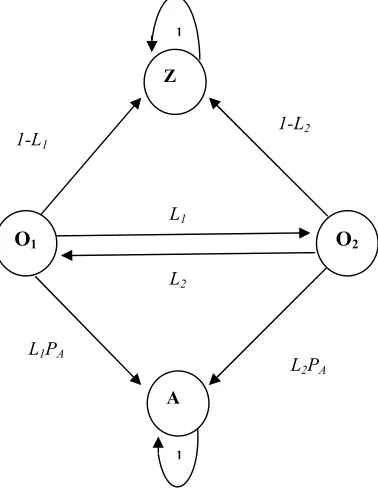
The transition diagram of a behaviour system-I is in Fig. 1 is listed here
Fig 1 (Transition diagram for system-I)
The limitation of system-I by Naldi [1] is the assumption of connecting attempts on call-by-call basis. If this assumption released a bit then we have another system definition for user’s behavior as described below.
III. SYSTEM-II
(a) The user initially chooses one of the two operators (indicated as O1 and O2) with probability p and 1-p (Initial shares) respectively.
(b) The probability p can take into account all the factors that may lead the user to choose one of the two operators as his first choice, including the range of services it offers and past experience. (c) After each failed attempt the user has two choices:
he can either abandon (with probability pA ) or switch to the other operator for a new attempt. (d) The switching between two operators is on two call
basis, which means if call attempt on O1 is failed then user is allowed to make one more call attempts with O1, if this also fails them user is to move to O2 for next attempts. Similar happens for operators O2. (e) During the repeated call attempt process the
blocking probability L1 and L2 (i.e. the probability that the call attempt through the operator O1 and O2 fails) and the probability of abandonment pA stay constant.
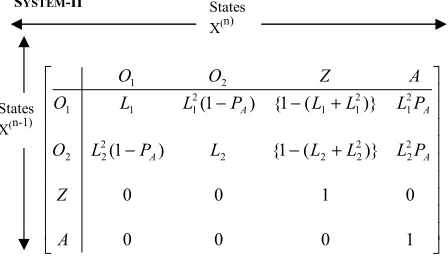
Fig 2 (Transition diagram for system-II) IV. USER’S CATEGORIZATION
Based on position of system in n attempts, one gets: (a) Faithful User (FU):
Who is faithful to ISP1 otherwise prefer for the rest state (RS) or abandoned but does not attempt for ISP2. The converse of same is for ISP2. A group of this kind is defined as faithful users for ISP1 {or ISP2.}.
(b) Partially Impatient User (PIU):
Who attempts between the two service providers only, ISP1 and ISP2, all the time until call completes or abandoned but never goes to RS.
Z
L1
)} (
1
{ 2
1 1 L
L +
− {1 ( 2)}
2 2 L L + −
) 1 ( 2
1 pA
L −
) 1 ( 2
2 pA
L −
A p L2
1
A p L2
2 O1
O2 L2
1 1
(c) Completely Impatient User (CIU):
User who attempts to ISP2 or goes to rest state RS in the (n+1)th attempt when was at ISP1 in the nth. Moreover, when was at ISP2, moves to either ISP1 or on RS in the next. The transition diagram of a behaviour system-II is in Fig. 2.
V. TRANSITION PROBABILITY MATRIX:
SYSTEM-I − − − − 1 0 0 0 0 1 0 0 1 0 ) 1 ( 1 ) 1 ( 0 2 2 2 2 1 1 1 1 2 1 A Z P L L P L O P L L P L O A Z O O A A A A
Fig 3 ( Transition probability matrix for system-I )
SYSTEM-II
+ − − + − − 1 0 0 0 0 1 0 0 )} ( 1 { ) 1 ( )} ( 1 { ) 1 ( 2 2 2 2 2 2 2 2 2 2 1 2 1 1 2 1 1 1 2 1 A Z P L L L L P L O P L L L P L L O A Z O O A A A A
Fig 4 ( Transition probability matrix for system-II ) Computation of probabilities under Markov chain model in system-I are the starting conditions (state distribution before the first call attempt) are
, 0 ] [ , 0 ] [ , 1 ] [ , ] [ ) 0 ( ) 0 ( 2 ) 0 ( 1 ) 0 ( = = = = − = = = = A X P Z X P P O X P P O X P
The state probabilities after the first attempt can be obtained by simple relationships:
− = = = = = = − − = = = = = = − − ), 1 ( ] | [ ] [ ] [ ), 1 ( ) 1 ( ] | [ ] [ ] [ 1 1 ) 0 ( 2 ) 1 ( 1 ) 0 ( 2 ) 1 ( 2 2 ) 0 ( 1 ) 1 ( 2 ) 0 ( 1 ) 1 ( A I System A I System p pL O X O X P O X P O X P p L p O X O X P O X P O X P
after unwrapping the recursions we obtain the general relationships,
for O1
−
−
=
=
−
=
=
− − −odd
n
p
L
L
L
p
O
X
P
even
n
p
L
L
p
O
X
P
n A n I System n n A n I System n),
1
.(
)
(
)
1
(
]
[
,
)
1
.(
)
(
]
[
1 2 1 2 1 ) ( 2 1 1 ) (for O2
− = = − − = = − − − odd n p L L pL O X P even n p L L p O X P n A n I System n n A n I System n , ) 1 .( ) ( ] [ , ) 1 .( ) ( ) 1 ( ] [ 1 2 1 1 2 ) ( 2 1 2 ) (
The details of transition probabilities, for n>0, are the system-II in attempts n=0,1,2,3,4,5,..., classified into four different categories A, B, C and D like :
The general expressions of probability of nth attempts for O 1 are:
Type A : when t=4n+1, ( e.g. t= 1,5,9,13,17,21,...); (n≥0)
[
]
[
(3 ) (2 )]
2 ) 3 ( 1 1 1 ) 1 4 (
)
1
(
n A n n II system for A np
L
pL
L
O
X
P
−
=
=
− +Type B : when t=4n+3, ( e.g. t= 3,7,11,15,19,23...); (n≥0)
[
]
[
(3 3) (2 1)]
2 ) 1 3 ( 1 1 ) 3 4 (
)
1
(
)
1
(
+ + + − +−
−
=
=
n A n n II system for B np
L
L
p
O
X
P
Type C : when t=4n, ( e.g. t= 0,4,8,12,16,20,...); (n>0)
[
]
[
(3 ) (2 )]
2 ) 3 ( 1 1 ) 4 (
)
1
(
n A n n II system for C np
L
pL
O
X
P
−
=
=
− States X(n-1)States X(n)
States X(n-1)
Type D : when t=4n+2, ( e.g. t= 2,6,10,14,18,22...); (n>0)
[
]
[
3( 1) (2 1)]
2 ) 3 ( 1 1 ) 2 4 (
)
1
(
)
1
(
+ + − +−
−
=
=
n A n n II system for D np
L
L
p
O
X
P
Same as for O2. VI. TRAFFIC SHARING
Traffic Sharing Difference between “Call-by-Call” and “Two-Call” basis contains following notations.
DC = Difference due to Call-by-call basis Naldi [1]. DT = Difference due to Two-call basis.
Using proposed model of both systems, the expressions for traffic sharing (when n→∞) under system-I are:
[
]
− − − − + − = = 2 2 1 2 1 1 1 ) 1 ( 1 ) 1 ( ) 1 ( { ) 1 ( A A C P L L P L P P L P D for operator O1[
]
− − − + − − = = 2 2 1 1 2 2 2 ) 1 ( 1 ) 1 ( ) 1 ( ) 1 ( A A C P L L P PL P L P D for operator O2Similar expression of traffic share under system-II are :
[
]
[
3 2]
2 3 1 3 1 3 1 2 3 2 3 1 1 2 1 1 1 1 ) 1 ( ) 1 ( ) 1 ( ) 1 ( ) 1 ( 1 ) 1 )}( ( 1 { A A A A T P L L P P PL P L P L L L L L P D − − + − − − − + + − = =
for operator O1
[
]
[
3 2]
2 3 1 3 2 3 2 2 3 2 3 1 2 2 2 2 2 2 ) 1 ( ) 1 ( ) 1 ( ) 1 ( ) 1 ( 1 ) 1 )}( ( 1 { A A A A T P L PL P L P P L P L L L L L P D − + − − − − − + + − = =
for operator O2
While comparing both systems I and II for only first operator O1, the numerical difference between traffic sharing is:
[
]
[
]
[
]
[
]
−
−
−
−
−
−
+
+
−
−
−
+
−
−
−
−
−
−
+
+
−
=
−
=
2 2 1 1 2 3 2 3 1 2 2 1 2 1 1 2 2 2 1 1 2 3 2 3 1 1 2 1 1 1 1)
1
(
1
)
1
{(
)
1
(
1
)
1
)}(
(
1
{
)
1
(
)
1
(
)
1
(
1
)
1
(
)
1
(
1
)
1
)}(
(
1
{
A A A A A C T ifferenceP
L
L
L
P
L
L
L
L
L
L
P
L
p
P
L
L
L
P
L
L
L
L
L
p
D
D
D
VII. SHARE LOSS
As per Naldi [1]and for system – I the share loss expression
∆PC1 , for O1 is:
(
)
[
]
[
]
{
[
] }
2 2 1 1 2 1 2 1 2 2 1 2 1 2 2 1 1 1 ) 1 ( 1 ) 1 )( 1 ( ) 2 ( 1 ) 1 ( ) 1 ( 1 ) 1 )( 1 ( ) 1 ( ) 1 ( 1 A A A A A A A C p L L p L L p L p L L p p L L L p p p L p L L p P p p − − − − − − − − + = − − − − + − − − − = − = ∆Under system – II (two – call basis) expression of share loss are:
(
)
{
}
{
}
[
3 2]
2 3 1 2 1 3 1 3 2 2 3 2 1 1 2 1 1 1
)
1
(
1
2
1
)
1
(
)
1
(
)
1
(
2
A A A Tp
L
L
L
L
p
L
p
p
L
L
L
pL
P
p
p
−
−
+
+
−
−
−
−
−
+
=
−
=
∆
VIII. SIMULATION STUDY
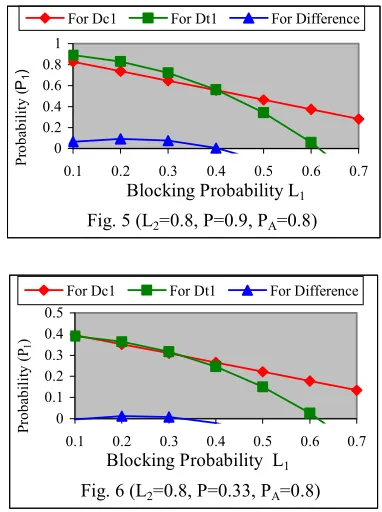
Fig. 5 to Fig. 6 are showing the graphical pattern of traffic sharing
P
1 of operator O1 when blocking probabilityL1 of O1 is very (keeping L2, p, pA is fixed) in shown in fig. 5. One can observe that in a system-II the traffic sharing goes down with a faster rate than system-I. After 50% call blocking the traffic share call blocking reaches to nearly at zero level. 0 0.2 0.4 0.6 0.8 1
0.1 0.2 0.3 0.4 0.5 0.6 0.7 For Dc1 For Dt1 For Difference
P
roba
bility (
P1
)
Fig. 5 (L2=0.8, P=0.9, PA=0.8) Blocking Probability L1
0 0.1 0.2 0.3 0.4 0.5
0.1 0.2 0.3 0.4 0.5 0.6 0.7 For Dc1 For Dt1 For Difference
Pr oba bilit y ( P1 )
Fig. 6 (L2=0.8, P=0.33, PA=0.8) Blocking Probability L1
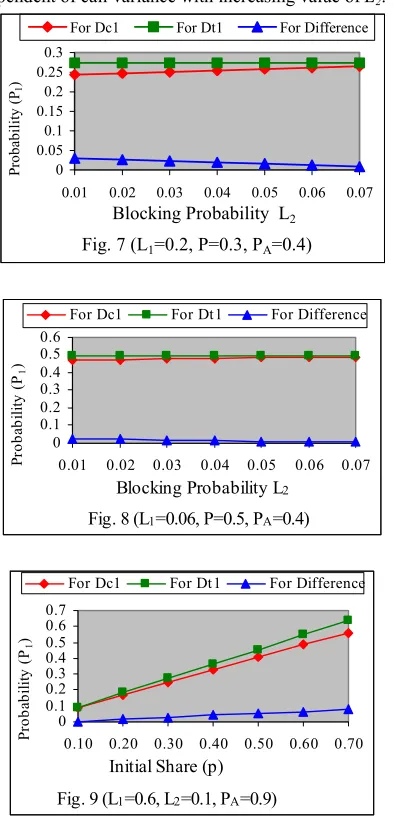
While comparing the blocking of opponent, with the increase of L2, the operator O1 gains the traffic with relatively slower rate. With reference Fig. 8 if the blocking of opponent is high over then the traffic share doesn’t change. In other way it is observed that the traffic share is independent of call variance with increasing value of L2.
0 0.05 0.1 0.15 0.2 0.25 0.3
0.01 0.02 0.03 0.04 0.05 0.06 0.07 For Dc1 For Dt1 For Difference
Pr
oba
bilit
y (
P1
)
Fig. 7 (L1=0.2, P=0.3, PA=0.4) Blocking Probability L2
0 0.1 0.2 0.3 0.4 0.5 0.6
0.01 0.02 0.03 0.04 0.05 0.06 0.07 For Dc1 For Dt1 For Difference
Pr
ob
ab
ili
ty
(
P1
)
Fig. 8 (L1=0.06, P=0.5, PA=0.4) Blocking Probability L2
0 0.1 0.2 0.3 0.4 0.5 0.6 0.7
0.10 0.20 0.30 0.40 0.50 0.60 0.70 For Dc1 For Dt1 For Difference
Pr
ob
ab
ilit
y
(
P1
)
Fig. 9 (L1=0.6, L2=0.1, PA=0.9) Initial Share (p)
The Fig. 9 shows the effect of initial market share p over both systems. If seems that system-II has little advantages over system-I when p is high.
IX. CONCLUDING REMARKS
Both the systems of user behavior have shown the little difference in traffic sharing because of call difference. The two call based system is not able to bear blocking more than 60 % for operator O1. The operant blocking, is high provides better traffic share in system-II than system-I for operator
O1. Moreover if initial traffic share is high the system-II reveals more gain in internet traffic than system-I.
The quality of service (QoS) provided by an ISP is a function of blocking probabilities (L1 and L2) faced by internet service providers due to congestion in the network. Higher level of blocking probability leads to lesser quality received by users. As per assumptions of the system, a user
is supposed to attempt for calls between ISP1 and ISP2 until connects or may take rest if fed-up due to attempt process. REFERENCES
[1] M. Naldi, Internet Access Traffic Sharing in A Multi-user Environment, Computer Networks, 38, 2002, 809-824.
[2] D. Shukla, S. Gadewar and R.K. Pathak, A Stochastic model for Space division switiches in Computer Networks, International Journal of Applied Mathematics and Computation, Elsevier Journals, 184(2), 2007, 235-269.
[3] D. Shukla and S. Gadewar, Stochastic model for cell movement in a Knockout Switch in computer networks, Journal of High Speed Network, 16(3), 2007,310-332. [4] Abuagla Babiker Mohd and Dr. Sulaiman bin Mohd
Nor, Towards a Flow-based Internet Traffic Classification for Bandwidth Optimization,
International Journal of Computer Science and Security (IJCSS), 3(2), 2009,146-153.
[5] Ankur Agarwal, System-Level Modeling of a Network-on-Chip, International Journal of Computer Science and Security (IJCSS), 3(3), 2009, 154-174.
[6] C. Yeian, and J. Lygeres, Stabilization of a class of stochastic differential equations with markovian switching, System and Control Letters, issue 9, 2005, 819-833.
[7] D. Shukla, Saurabh Jain, Rahul Singhai and R.K. Agarwal, A Markov Chain model for the analysis of Round Robin Scheduling Scheme, International Journal of Advanced Networking and Applications (IJANA), 01(01), 2009, 01-07.
[8] D. Shukla, Sanajy Thakur and Arvind Deshmukh, State Probability Analysis of Internet Traffic Sharing in Computer Network, Accepted in International Journal of Advanced Networking and Applications (IJANA),
2009.
[9] D. Shukla, R.K. Pathak and Sanjay Thakur, Analysis of Internet traffic distribution between two markets using a Markov chain model in computer networks,
Proceedings of National Conference on Network Security and Management (NCSM-07), 2007, 142-153. [10] Emanual Perzen, Stochastic Processes (Holden-Day,
Inc., San Francisco, and California, 1992).
[11] J. Medhi, Stochastic Models in queuing theory
(Academic Press Professional, Inc., San Diego, CA,
1991).
[12] J. Medhi, Stochastic Processes (Ed. 4, Wiley Eastern Limited (Fourth reprint), New Delhi, 1992).
[14] Rinkle Aggarwal and Dr. Lakhwinder Kaur, On Reliability Analysis of Fault-tolerant Multistage Interconnection Networks, International Journal of
Computer Science and Security (IJCSS), 2(4), 2008,
01-08.
[15] D. Shukla, Virendra Tiwari, M. Tiwari and Sanjay Thakur, Rest State Analysis in Internet Traffic Distribution in Multi-operator Environment, Research Journal of Management and Information Technology (GNIM's),01(01), 2009, 72-82.
[16] Vern Paxson, Experiences With Internet Traffic Measurement and Analysis, ICSI Center for Internet Research International Computer Science Institute and Lawrence Berkeley National Laboratory, 2004. [17] Internet traffic archive: http://ita.ee.lbl.gov/ html/
traces.html.
[18] C.C.Y Dorea, Cruz and J.A Rojas, Approximation results for non-homogeneous Markov chains and some applications, Sankhya, 66(2), 2004, 243-252.
Authors Biography
Dr. Diwakar Shukla is working as an Associate Professor in the Department of Mathematics and Statistics, Sagar University, Sagar, M.P. and having over 23 years experience of teaching to U.G. and P.G. classes. He obtained M.Sc.(Stat.), Ph.D.(Stat.), degree from Banaras Hindu University, Varanasi and served the Devi Ahilya University, Indore, M.P. as a Lecturer over nine years and obtained the degree of M. Tech. (Computer Science) from there. During Ph.D., he was junior and senior research fellow of CSIR, New Delhi qualifying through Fellowship Examination (NET) of 1983. Till now, he has published more than 75 research papers in national and international journals and participated in more than 35 seminars / conferences at national level. He is the recipient of MPCOST Young Scientist Award, ISAS Young Scientist Medal, UGC Career Award and UGC visiting fellow to Amerawati University, Maharashtra. He also worked as a selected Professor to the Lucknow University, Lucknow, U.P., for one year and visited abroad to Sydney (Australia) and Shanghai (China) for conference participation. He has supervised ten Ph.D. theses in Statistics and Computer Science both; and eight students are presently enrolled for their doctoral degree under his supervision. He is member of 10 learned bodies of Statistics and Computer Science both at national level. The area of research he works for are Sampling Theory, Graph Theory, Stochastic Modelling, Computer Network and Operating Systems.
Mr Virendra Tiwari has completed M.C.A. degree from Dr. H. S. Gour University, Sagar in 2005. He is presently working as Lecturer in the Department of Computer Science & Applications in the same University since 2005. He did his research in the field of Stochastic Modelling and Computer Networking. In this field, he has authored and co-authored 6 research papers
in National/International journals. His current research interest is to analyze the internet traffic sharing under various traffic analyses.
Dr. Sanjay Thakur has completed M.C.A. and Ph.D. (CS) degree from H.S. Gour University, Sagar in 2002 and 2009 respectively. He is presently working as a Lecturer in the Department of Computer Science & Applications in the same University since 2007. He did his doctoral work in the field of Computer Networking and Internet traffic sharing. He has authored and co-authored 10 research papers in National/International journals and conference proceedings. His current research interest is Stochastic Modeling of Switching System of Computer Network and Internet Traffic Sharing Analysis.