DAVID HESS SARR. Peroxidase Catalyzed Oxidation of Pentachlorophenol. (Under
the direction of Dr. Michael D. Aitken)
The oxidation of pentachlorophenol (PCP) by two peroxidase enzymes, horseradish
peroxidase (HRP) and Coprinus macrorhizus peroxidase (CMP) was studied. Oxidation
of PCP by HRP and CMP was found to produce p-tetrachlorobenzoquinone (p-chloranil)
and non-polar products. p-Chloranil was found to decompose to
trichlorohydroxy-benzoquinone and dichlorodihydroxytrichlorohydroxy-benzoquinone in aqueous solution. The rate of
decomposition increased as pH increased, and the rate increased by two orders of
magnitude when hydrogen peroxide was present in solution. Because hydrogen peroxide
is required for oxidation by peroxidase enzymes, the decomposition of p-chloranil
occurred rapidly in enzymatic reaction mixtures under certaui conditions.
The non-polar oxidation products were not specifically identified. These products
precipitate at pH 4 and can be removed from solution. PCP sorbs to the non-polar
products under acidic conditions, and can also be removed from solution by filtration.
The relative amount of the products formed in peroxidase catalyzed oxidation of PCP will
depend on the enzyme used and the reaction conditions.
Peroxidase Catalyzed Oxidation of Pentachlorophenol
Table of Contents
List of Tables iii
List of Figures iii
List of Abbreviations v
Chapter 1 Introduction 1
Enzymatic Transformations in the Soil Environment 4
Objectives and Scope of Research 7
Chapter 2 Background and Literature Review 8
Structure and Mechanism of HRP 8Coprinus macrorhizus Peroxidase 13
Coupling Reactions of Substrate Free Radicals 14
Transformation of PCP by Enzymes 21
Characteristics of p-Chloranil 26
Enzymatic Oxidation of Pollutants in Soil
or Groundwater Treatment 29
Considerations in the Use of Enzymes for
Remediation 32
Chapter 3
Chapter 4
Materials and Methods 36
Enzyme Supplies and Preparations
36Enzyme Assay and Reactions
36Product Isolation 38
HPLC Analysis 39
GC and GC/MS Analysis 40
UV/Visible Scanning 42
Other Analytical Methods 42
Reagents 43
Data Analysis 45
Toxicity Measurements 45
Results and Discussion
-46
Aqueous Chemistry of/»-Chloranil
46Table of Contents (continued)
Chapter 4
Chapter 5
Chapter 6
References
Results and Discussion
Enzymatic Reaction Products 71
Reaction Mixtures: Extent of PCP Removal 83
Reaction Kinetics and Stoichiometry 91
Implications of Observed Enzymatic Reactions 95
Summary and Conclusions 98
Future Research Needs 100
Appendices
Appendix A
Appendix B
Mass Spectra
Modelling of Rate Constants
LIST OF TABLES
Table 1 Uses of Pentachlorophenol
Table 2 Reported absorbance characteristics of/7-chloranil and its
decomposition products
Table 3 Estimated 530 nm extinction coefficients of/?-chloranil
decomposition products
Table 4 Estimated half lives of/?-chloranil and
trichlorohydroxybenzoquinone in aqueous solution
Table 5 Toxicity of PCP and its enzymatic reaction products
Table 6 Rate constants for inactivation of CMP in reaction mixtures
2 29 55 65 82 86
LIST OF FIGURES
Figure 1 The effect of PCP oxidation by HRP on toxicity 5
Figure 2 The structure of hemin 9
Figure 3 The distribution of the unpaired electron in the phenoxy radical 15
Figure 4 Products of HRP oxidation of p-cresol 17
Figure 5 Reported products of enzymatic and chemical oxidation of PCP 23
Figure 6 Proposed decomposition pathway of/?-chloranil 27
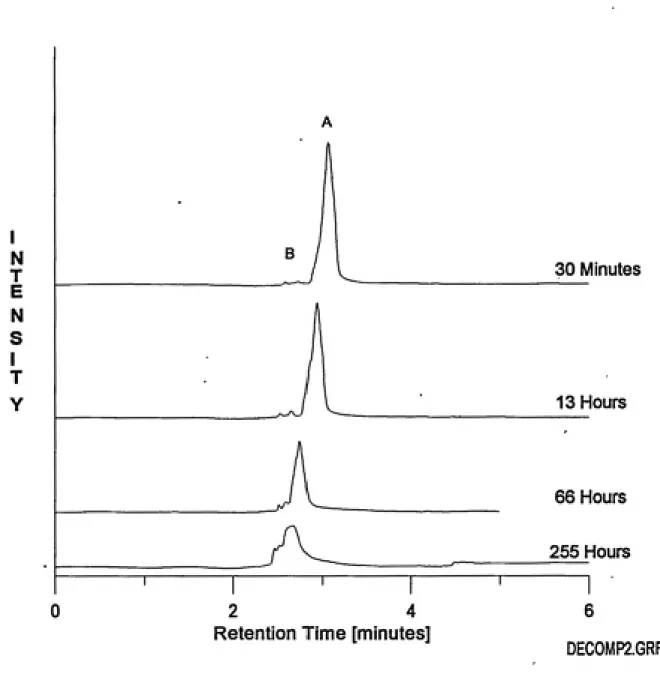
Figures The HPLC chromatogram of 30 uM/;'-chloranil and an aqueous 47
solution of/?-chloranil
Figure 9 The HPLC chromatogram of an aqueous solution of/7-chloranil 48
Figure 10 The correlation of purple color with HPLC peak area in 50
decomposing/»-chloranil solutions
Figure 11 Ultraviolet/visible absorption spectra of/?-chloranil and 51
decomposed/?-chloranil solutions
Figure 12 The increase in 530 nm absorbance of aqueous/^-chloranil solutions 53
Figure 13 The change in 530 nm absorbance in aqueous/?-chloranil solutions 54
Figure 14 HPLC chromatograms of auto and peroxide decomposed/^-chloranil 57
solutions
Figure 15 Consumption ofhydrogen peroxide by/^-chloranil 58
Figure 16 Production of chloride ion by the decomposition of p-chloranil 60
Figure 17 The rate constants of/?-chloranil decomposition as a function of 64
hydroxide ion concentration
Figure 18 The decline in 530 nm absorbance of peroxide decomposed/?- 66
chloranil solutions, variable pH
Figure 19 The decomposition rate constant k2,obs as a function of pH 68
Figure 20 The decline in 530 nm absorbance of peroxide decomposed/?- 69
chloranil solutions
Figure 21 The decomposition rate constant k2,obs as a function of hydrogen 70
peroxide concentrationFigure 22 HPLC chromatograms of pH 7 reaction mixtures, decomposed/?- 72
chloranil solutions, and chloranilic acid
Figure 23 Mass balance of pH 7 reaction mixtures 73
Figure 24 EffLC analysis of pH 4 and pH 7 reaction mixtures 75
Figure 25 Filtration of a pH 4 reaction mixture removes PCP 76
Figure 26 Filtration of a pH 4 solution of PCP and/?-chloranil 77
Figure 27 HPLC analysis of pH 7 reaction mixture before and after filtration 79
Figure 28 Proposed pathway of PCP oxidation by HRP and CMP 80
Figure 29 The effect of initial PCP concentration on PCP removal 84
Figure 30 The effect of additional enzyme and hydrogen peroxide on PCP 85
removal
Figure 31 Inactivation of CMP in reaction mixtures and controls 87
Figure 32 The effect of/?-chloranil on the standard peroxidase assay 89
Figure 33 The effect of incubation with/?-chloranil on PCP removal in CMP 90
reaction mixtures
ABTS 2,2'-azino-di(3-ethylbenzthiazoline-6-sulfonic acid), diammonium salt
CA Chloranilic acid (Dichlorodihydroxybenzoquinone)
CFR Code of Federal Regulations
CMP Coprinus macrorhizus Peroxidase
EPA Environmental Protection Agency
GC Gas Chromatography
GrC/MS Gas Chromatography/Mass Spectrometry
HPLC High Performance Liquid Chromatography
HRP Horseradish Peroxidase
PCP Pentachlorophenol
TCBQ p-Tetrachlorobenzoquinone (p-chloranil)
This research was conducted as part of a research program supported by the National
Institute of Environmental Health Sciences, Project No. P42ES05948. Partial support
was provided by the US EPA Office of Exploratory Research, Grant No. R-816914-01-0.
I would like to thank my advisor. Dr. Michael Aitken, for his constant support during this
project. His advice, guidance, and wilUngness to talk made this work possible. This work
also could not have been completed without the valuable advice and assistance of Phil
Heck. I would also like to thank others in the lab for their help and suggestions, in
Pentachlorophenol (PCP) was traditionally an effective, inexpensive, and readily available
biocide. PCP is toxic to a wide range of organisms, including microorganisms, plants,
invertebrates, and vertebrates, and it has been used to control bacteria, fungi, algae, plants,
insects, and moUusks. For a period of years during the 1960's and 1970's, PCP was the
second most heavily used pesticide in the United States. In 1974 52.4 million pounds of
PCP were produced in the US (CireUi, 1978). Currendy, PCP is still used extensively as a
wood preservative.
Human exposure to PCP is widespread. In a survey conducted in the United States
between 1976 and 1980, PCP was found in the urine of 71.6 % of the people sampled
(Kutz et al., 1992). Substantial negative health effects of chronic PCP exposure have not
been demonstrated in humans, but the US EPA has identified teratogenicity and
fetotoxicity as risk criteria of concem for PCP. Although PCP can be formed by in vivo
degradation of hexachlorobenzene and lindane, exposure to PCP itself is believed to be
the major source of PCP detected in humans.
PCP is an indiscriminate biocide which acts by uncoupling oxidative phosphorylation
(Chapman and Shumway, 1978). Because it is toxic to a wide range of organisms, PCP
has been used in a variety of applications (Table 1). This non-specific toxicity can have
serious effects if PCP is released into the environment. Releases of PCP to surface waters
TABLE 1
USES OF PENTACHLOROPHENOL
Algae and fungus control in cooling towers Slime and fungus control in photographic solutions
Paint preservative
Biocide in petroleum drilling mud
Insecticide for greenhouses and beehives Slime control for pulp and paper
Fumigant for the interiors of shipping vans
Fungicide in textiles
Mothproofing
Cable impregnation
Control of barnyard grass in rice paddies
Control of schistosomiasis
Preservative in soy sauce
References: Cirelli, 1978; Crosby, 1981; Hiatt et ai, 1960; Kobayashi, 1978; Seller, 1991
PCP has acid-base properties (pK^ = 4.7; Crosby, 1981), and can exist in either ionized or
non-ionized forms. The ionized form is soluble in water. The non-ionized form is soluble
in organic materials, including Upids, and accumulates in fats. PCP is persistent in the
environment, possibly due to an insufficient occurrence of PCP degrading organisms or
environmental conditions unsuitable for these organisms (Valo et al. 1985).
The uses of PCP have gradually been restricted due to its toxicity and persistence. The
use of PCP as an herbicide in rice paddies in Japan was restricted due to high fish toxicity
(Kobayashi, 1978). In Sweden, all uses of chlorophenols, including PCP, were banned in
1978 because of toxicity, health effects, and the production of dioxins during chlorophenol
production and incineration (Renberg et al., 1983). In Finland, the use of PCP for wood
preservation has been banned (Kitunen et al., 1987). The USEPA has suspended uses of
In the US, the use and disposal of PCP is regulated under several laws. The use of PCP is
regulated by the Federal Insecticide, Fungicide and Rodenticide Act. PCP has been
designated as a hazardous substance (40 CFR Part 116) and as a priority pollutant under
the Clean Water Act (40 CFR Part 401). Wastes and wastewaters containing PCP are
regulated under the Resource Conservation and Recovery Act (RCRA) and the Clean
Water Act. Most PCP wastes originate from the manufacture and formulation of PCP and
the appUcation of PCP to lumber. Wastes from the production or manufacturing use of
PCP (Waste Code F021), discarded unused formulations containing PCP (F027), and
bottom sludge from treating wood preserving wastewaters (KOOl) are all listed as
hazardous wastes (40 CFR Part 261). KOOl wastes will contain PCP if the plant used PCP formulations. Contaminated soil and ground water from the improper disposal of
these wastes are also classified as hazardous. PCP has also been proposed for addition to
the list of chemicals in the Toxicity Characteristic Leaching Procedure, a test which identifies characteristically hazardous wastes (Federal Register, 1986).
Although the manufacture of PCP has declined in recent years due to restrictions on its
use, PCP wastes continue to be generated. In 1986, the US EPA estimated that 427 wood
treatment plants in the United States could generate KOOl wastes (USEPA, 1989).
Operation of wood treatment plants has caused PCP contamination of soil and ground
water (Kitunen et al., 1987), and remediation of this contamination is a major source of
PCP wastes. Surface impoundments formerly used for waste treatment by a majority of
wood treatment plants (Hoos, 1978) are a frequent source of soil and groundwater
contamination (Ball, 1986). Removal and/or treatment of sludges and contaminated soils
in contamination (e.g. Folke et al., 1983). In a survey of ground water monitoring data from 479 waste disposal sites in the United States, PCP was detected in the groundwater
of 20% of the sites and was the 45th most common of the RCRA Appendix IX
compounds (Plumb, 1991).
Enzymatic Transformations in the Soil Environment
Significant quantities of PCP have been released to the environment. Once released, PCP is subject to biodegradation, sorption, volatilization, and other processes. The fate of PCP in aqueous systems has been studied (Pignatello et al., 1983). The fate of PCP in soils has
not been studied as extensively. It is important to determine how naturally occurring processes in soils might affect fate, transport, and toxicity of PCP.
PCP degrading bacteria and fungi have been isolated from soil (Mileski et al., 1988; Konishi and Inoue, 1972). Enzymes able to transform PCP, including peroxidases, have been isolated from various PCP oxidizing species (Mileski et al, 1988). However, the products formed by peroxidase catalyzed transformation of PCP have rarely been
identified. Microbial degradation of contaminants can result in minerahzation, but a single
enzyme typically catalyzes only one step in an overall reaction pathway. The
characteristics of reaction products must be evaluated. Horseradish peroxidase (HRP)
catalyzed oxidation of PCP can result in complete detoxification, but this change depends
o lO
o HI
Ci)
Controls
Reaction Mixtures (Measured)
Reaction Mixtures (Estimated)
1 1
-1 -1
60 —
40 —
20 —
(3) (3)
n —
•i -,ͣ; ;"~1
1
pH4
pH7
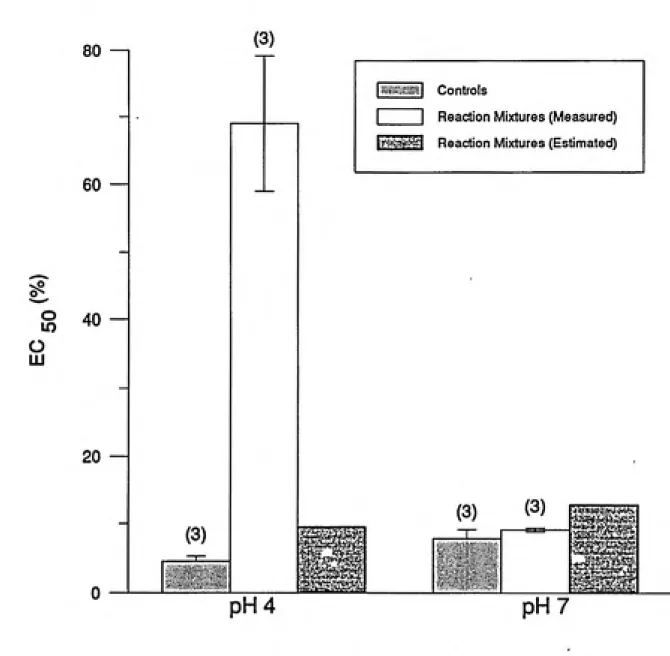
Figure 1. The effect of PCP oxidation by HRP on solution toxicity. Reaction mixture conditions: 50 uM PCP, 0.1 U/ml HRP, 65 uM hydrogen peroxide in 5 mM buffer. The number in parentheses is the number of samples tested, and the error bars represent one
standard deviation. Controls were 50 uM PCP solutions with no enzyme added.
Measured EC50 values are those determined by Microtox testing and are given in % by
volume of the reaction mixture. Estimated EC50 values are based on the residual PCP in
the reaction mixture, i.e. the expected EC50 value of a solution containing only the
1993; Svenson and Kaj, 1989).
Cellular enzymes are released to the soil by secretion, cell lysis, and other processes
(Bums, 1978) and constitute an "indigenous and persistent enzymatic capacity in soil"
(Nannipieri and BoUag, 1991). "Substantial amounts" of peroxidases have been extracted
from soil (Bartha and Bordeleau, 1969). Enzymes found bound in humus-enzyme
complexes include peroxidases (Serban and Nissenbaum, 1986) and laccase (Ruggiero and
Radogna, 1984). The humus-enzyme complex protects the enzyme against inactivation
(Ruggiero and Radogna, 1984). Thus active peroxidases exist in soil. Peroxidases have
been shown to oxidize PCP in clean aqueous solution, although the extent to which similar
activity may occur in soil is unknown. Enzymatic oxidation of phenols in the presence of
soil components may bind pollutants into a humic matrix, making pollutants unavailable to
biota and thereby reducing toxicity (BoUag, 1992). Enzymatic transformation will also
affect properties which dictate the mobility of compounds such as solubility and the
octanol:water partition coefficient.
Given that active peroxidases exist in soils and that several peroxidase enzymes have been
shown to transform PCP in vitro, the potential exists for oxidative transformation of PCP
in soils or groundwater. However, the effect of enzymes on pollutants in the natural
environment has not been studied extensively, and the transformation of PCP has not been
studied at all. Enzymatic transformation of PCP can affect its toxicity, biodegradability,
and transport, and therefore it is important to determine the products of transformation.
The rate of transformation is also important. The effects of natural components on the
aqueous solution (Chen, 1991; Massey, 1993). However, the major products of HRP
oxidation of PCP have not been identified. Therefore the focus of this research was to
characterize the major reaction products of HRP oxidation of PCP. Identification of the reaction products should also explain the aforementioned difference in toxicity between reactions catalyzed at pH 4 and those at pH 7. Coprinus macrorhizus peroxidase (CMP) is another peroxidase which may soon be available in large quantity at potentially low cost.
As a result, CMP may be suitable for large scale applications such as remediation.
Reaction products must be identified before CMP is used at a larger scale. This research therefore also investigated the products formed by CMP oxidation of PCP.
The behavior of the reaction products in aqueous solution was also examined. This behavior will determine the fate and transport of the products in the environment. Understanding the fate of products in water must occur before the behavior of the products can be studied in a mixed system of soil and water.
This section reviews existing literature on enzyme catalyzed oxidation of phenols in
aqueous solutions. The mechanism of peroxidase catalyzed reactions is discussed first.
Then previous work on the enzymatic oxidation of PCP is discussed, with a special focus
on the reaction products. Studies relevant to potential reactions of peroxidases in soil and
groundwater are reviewed as well.
Peroxidases are a class of enzymes which oxidize a variety of substrates using hydrogen
peroxide as an electron acceptor. Peroxidases are widely distributed among both plants
and animals (Gaspar et al, 1982) and they fill important physiologic roles such as the
formation of cell walls and lignin (Nakamura and Nozu, 1967). Saunders et al. (1964)
suggested that workers were "attracted to the study of peroxidase-catalyzed reactions
because of the brightly coloured compounds that are frequently produced during such
changes." While this may not be the reason for their popularity, peroxidase enzymes have
been widely studied. Horseradish peroxidase (HRP) is the most intensively studied of the
peroxidase enzymes (Dunford, 1991). Information on HRP, particularly its reaction
mechanism, can be applied to the study of other peroxidases (Andersen et al, 1991a), and
therefore it is worthwhile to examine HRP in more detail. Structure and mechanism of HRP
Almost all peroxidases contain hemin at the active site. Hemin (Fig. 2) is a complex of
porphyrin and iron (III). Four of the iron's six coordination sites are occupied by coplanar
HC Fe (lll)(^ CH
-N
N-HOOCCH2CH2 CH2CH2COOH
Figure 2. The stmcture of hemin, or ferriprotoporphyrin IX (l,3,5,8-tetramethyl-2,4,divinylporphine-6,6-dipropionic acid).
ligands, lie out of the plane of the porphyrin. In HRP, one axial ligand is occupied by a
'proximal' histidine residue of the apoprotein (Dunford, 1991). The final position is
available for binding with the electron accepting substrate, hydrogen peroxide. Inhibitors
such as cyanide or azide may also occupy the sixth ligand position.
The hemin is contained in a hydrophobic region of the apoprotein. This is also true of
several other enzymes, including ligninase and manganese peroxidase fi'om
Phanaerochaete chrysosporium, and catalase (Aitken, 1988). The chemistry of
hemoproteins is largely determined by the nature of the apoprotein; amino acids in the
active site are involved in determining the reactivity of the iron and in substrate binding
(Aitken, 1988). Several catalytically important amino acid residues in HRP have been
identified (Thanabale^ a/., 1987).
In the reaction of HRP, the original resting enzjme is oxidized by hydrogen peroxide and
then regenerated via two one electron reductions. The reaction mechanism of HRP has
been summarized by the following equations (Dunford, 1991).
(1) Peroxidase + H2O2 -> Compound I + H2O
(2) Compound I + AH2 -^ Compound II + AH*
(3) Compound II + AH2 -^ Peroxidase + AH* + H2O
In step (1), the hydrogen peroxide substrate binds to the hemin and transfers an oxygen
atom to the hemin. The binding of hydrogen peroxide and subsequent oxidation of HRP is
generally very rapid (Aitken, 1988). The electron donating substrate AH2 (or reducing
substrate refers to the electron donating substrate. The hydrogen peroxide substrate is
referred to by name.) One electron reductions of compounds I and II cause two one
electron oxidations of the substrate. Reactions of Compound I tend to be faster than the
reactions of Compound II (Hayashi and Yamazaki, 1979), and Compound II is considerably more stable than Compound I (Dunford and Stillman, 1976). The net
reaction described by Equations 1 through 3 is
(4) H2O2 + 2 AH2 ^ 2AH' + 2H2O
Thus, the HRP mediated reaction causes the oxidation of 2 molecules of the reducing
substrate AH2 to 2 molecules of the free radical AH* at the expense of hydrogen peroxide.
The free radicals may react further, as discussed below.
Another form of the peroxidase enzyme. Compound III, is formed by the reaction of hydrogen peroxide with Compound II or by the reaction of a large excess of hydrogen
peroxide with the native enzyme (Dunford and Stillman, 1976). Compound III is
relatively inactive. If a donor substrate is not present when there is an excess of hydrogen peroxide, the majority of HRP will be inactive Compound III (Chance et al, 1984). Thus
the relative amount of hydrogen peroxide and substrate is an important factor in any
peroxidase reaction. An excess of hydrogen peroxide will favor the formation of
Compound III.
HRP Compounds I and II can oxidize a variety of aromatic compounds and other electron
donating substrates (Dunford, 1982). However, the rate of oxidation will vary greatly,
and the rate will partly depend on how the substrate binds with HRP. Binding could occur
by coordination with the hemin iron, by specific binding to an amino acid in the
than direct coordination, and hydrophobic interaction is the least specific of the three. The
nature of the binding is important, because high affinity for the active site (i.e. high
specificity) can be expected to lead to higher rates of reaction. There will also be less
competition for the active site by other substrates. Some studies indicate that phenols
interact with a distal amino acid, donating a proton which is transferred to the hemin
(Dunford, 1991).
pH affects enzyme activity by determining the degree of protonation of amino acid
residues in the apoprotein. The reaction rates of HRP Compounds I and II increase with
decreasing pH (Hayashi and Yamazaki, 1979). pH is also important because only the
protonated form of phenols react with the enzyme. The ionized form is inactive. Since
pH affects both substrate and enzyme, determining optimum conditions for phenol
oxidation requires examining the effect of pH on both factors. In the case of PCP
(pKa=4.7), acidic conditions will be favorable as the relative amount of reactive PCP
increases. However, the effect of pH on the enzyme must also be considered.
Other enzymatic reactions may yield the same products as HRP mediated reactions.
Specifically, enzymes such as laccase which mediate one electron oxidations and produce
free radicals may be expected to form similar products. There are few known differences
between the oxidative reactions of laccase and peroxidase, except that they use different
oxidants (Schmidt and Joyce, 1980). In general, peroxidase mediated reactions abstract a
hydrogen from the substrate, and do not transfer oxygen to the substrate. Thus
peroxidase enzymes usually form different products than oxygenating enzymes such as
cj^ochrome P-450. However, HRP has been shown to oxygenate organosulfide and
Coprinus macrorhizus Peroxidase
Coprinus macrorhizus is an inkcap basidiomycete included in the common dung and
compost fungus C c/'werews (Baunsgaard e^a/., 1993). Coprinus macrorhizus peroxxdase (CMP) is an extracellular fungal peroxidase. Coprinus macrorhizus peroxidase is identical to Coprinus cinereus peroxidase (CiP), except for carbohydrate content (Kjalke et al,
1992), CMP is available in large quantities at potentially very low cost (Yemc, 1992), which makes it perhaps the only peroxidase suitable for large scale applications such as
wastewater treatment.
Like other peroxidases, CMP uses hydrogen peroxide as an electron acceptor and it is classified as an oxidoreductase. CMP contains one protohemin per molecule (Morita et al, 1988) and operates via the classic peroxidatic cycle (Andersen et al, 1991b). The structure of CMP has not been fully identified, but it is known to have an amino acid residue with a pKa of approximately 5.0 near the active site (Andersen et al, 1991a). Protonation of this residue reduces enzyme activity, since hydrogen peroxide reacts only with the basic form of CMP (Andersen et al, 1991b). Therefore acidic pH is not
favorable for CMP activity. The maximum rate of guaiacol oxidation occurs at pH 7.5-8.0 (Andersen ef a/., 1991b).
Although CMP shares only 18% of the conserved core structure with HRP, the two
enzymes have similar properties (Baunsgaard et al, 1993). The functional properties of CMP are similar to those of HRP, and the rate constants for binding of the native enzyme with hydrogen peroxide and oxidation of guaiacol are similar for both enzymes (Morita et al, 1988). Thus much of the existing information on HRP can be expected to apply to
Coupling Reactions of Substrate Free Radicals
The peroxidase reaction (Eq. 4) produces two fi'ee radicals. For phenolic substrates
(ArOH), the radical species will be a phenoxy radical (ArO»). Thus the reaction could be
rewritten for phenolic substrates as
(5) H202 + 2ArOH "^ )2ArO«+2H20
The unpaired electron in the phenoxy radical can be distributed through the aromatic ring
(Figure 3). The resonance stabilization makes phenoxy radicals more stable than other
radical species, but they are still very reactive. Free radicals undergo a variety of
reactions, including transfer, fragmentation, addition, and coupling (Aitken, 1988).
Phenoxy radicals tend to couple, as in (6).
(6) ArO«+ArO»^P(OH)2 '
P(0H)2 is a dihydroxy biphenyl, but the radicals may also couple via an ether bond. This
reaction is commonly referred to as oxidative coupling. The phenoxy radical is more
stable if the unpaired electron is in the ortho and para positions than if the electron is at
the oxygen. Thus the ortho and para positions are most reactive (Musso, 1967). Pairing
of the ortho and para positions of two radicals can result in six different arrangements. If
two of the three positions are filled by substituents, a single product can be isolated in high
yield (Musso, 1967). However, if, all three positions are blocked, coupling may not take
place. For example, the BHT free radical does not form a dimer because it has
substituents in both the ortho and the para positions (Valoti et al, 1989). PCP and other
phenols with substituents in the 2,4, and 6 positions may also be unlikely to form coupled
Figure 3. The distribution of the unpaired electron in the phenoxy radical. The radical is
Many types of phenols can be oxidized enzymatically. Both HRP and laccase mediate
oxidative coupling of halogenated phenols (Saunders and Stark, 1967; Bollag, 1992).
HRP oxidizes azo dyes (Pasti-Grigsby et al, 1992) and catalyzes the formation of
polymers from amino-substituted aromatics (Saunders et al, 1964). Laccase mediates
coupling of naphtholic compounds (Bollag et al, 1977). HRP oxidizes the antioxidant
food additive BHA to free radicals, which form a dimer coupling product (Valoti et al,
1989). Oxidative coupling of phenols is also important physiologically for several kinds of
organisms. Phenoxy radicals formed by enzymatic oxidation polymerize or bind to lignin
(Gaspar et al, 1982). Other oxidative coupling products include tannins, melanins,
pigments, antibiotics, and alkaloids (Brown, 1967; Scott, 1967). Oxidative coupling can
yield multiple products. HRP oxidation of/?-cresol produces a biphenyl, Pummerer's
ketone, and a terphenol, as shown in Figure 4 (Westerfield and Lowe, 1942; Chen et al,
1969).
Coupling products are not limited to two rings. HRP catalyzed oxidation of
2,4-dichlorophenol forms coupled products with up to four rings (Maloney et al, 1986).
Laccase mediated oxidation of 2-chlorophenol, 4-chlorophenol, and
4-chloro-2-methylphenol produces polymers containing between four and six aromatic units (Bollag
etal, 1977). Coupling may also yield undesirable products. Maloney e^ a/. (1986)
observed the formation of fliran and dioxin linkages during HRP catalyzed oxidation of
dichlorophenol. Oxidation of 2,4,5-trichlorophenol with HRP produced chlorinated
dibenzofurans and dibenzodioxins (Svenson etal, 1989). However, only 1 x 10'^ moles
of highly chlorinated dibenzofurans and dibenzodioxins were produced per mole of
OH OH
+
CH3 C H3
H3C Cn3
CO} - [^ ^ <QHO)
OH OH2,2' dihydroxy, 5,5' dimethyl biphenyl
OH OH
O' - o
CH3 CH3
CH,
OH
O^ \*^ -O'
Pummerer's ketone
H,C
'<OWQ
OH OH
Terphenol
The location of the free radicals produced by enzymatic oxidation is important in
determining subsequent reactions. If the free radicals diffuse from the active site of the enzyme into solution, they may freely react and bind with other free radicals, phenols, or aromatic compounds (Saunders et al, 1964). This would yield a variety of geometries and products. Alternately, the free radical may remain bound to the enzyme until it couples. This would likely form a single product. Banner et al. (1973) found only o,d-biphenol after HRP oxidation of phenol, and therefore believed that the free radical
remained bound. However, Sawahata and Neal (1982) found that HRP catalyzed
oxidation of phenol produced o,o'-biphenol,/?,/?'-biphenol, and diphenoquinone, and this
has been confirmed by others. The mixture of products indicates that the radical is released into solution and is able to couple in different orientations.
Coupling between like radicals is not the only possible reaction. Radicals may also add to the parent phenol or other phenols. Different combinations of the parent compounds,
phenoxy radicals, and radical coupling products can react, yielding several types of
reaction products:
• Radical-parent compound reactions:
(7) ArO • +ArOH -> Q(OH)
Oxidation of/?-cresol by HRP produces Pummerer's ketone when
the/?-methylphenoxy radical reacts with excess/?-cresol in solution (Hewson and Dunford,
1976). This product is different from the biphenyl produced by coupling of two methylphenoxy radicals (Figure 4).
• Radical-product reactions:
The oligomeric products of coupling reactions are typically phenols. Free radicals may also react with these oligomers, forming higher molecular weight oligomers.
• Product free radical coupling reactions:
(9) H202 + 2P(OH)2^^?L^2PO»+2H20
The oligomers formed in reactions (6), (7), or (8) may also be enzyme substrates. For example, the BHA dimer formed during HRP oxidation of BHA is also oxidized to a free radical by HRP (Valoti et al, 1986). The o,o'-biphenol and/7,p'-biphenol formed by HRP oxidation of phenol are actually better HRP substrates than phenol itself (Banner et al, 1973). The free radicals formed by enzymatic oxidation of the products (P0») may couple with other free radicals, the parent compound, or other products. HRP oxidation ofp-cresol produces a terphenol (Figure 4) when the
biphenol coupling product is itself oxidized to a free radical, and reacts with a methylphenoxy free radical (Westerfield and Lowe, 1942).
• Oxidation of phenoxy radicals
(10) ArO*^^^ArO+ ^°"' >Ar02+H +
One electron oxidation of phenoxy radicals generates a phenoxonium cation (ArO"*")
(Hammerich and Parker, 1984). In water, nucleophilic attack on the phenoxonium by a hydroxide ion will yield a quinone. This may be how/7-tetrachlorobenzoquinone (p-chloranil) is formed from PCP in reactions mediated by laccase (Konishi and Inoue, 1972) and lignin peroxidase (Hammel and Tardone, 1988). Similarly, oxidation of 2,4,6-trichlorophenol by HRP or by lignin peroxidase produces 2,6-dichlorobenzo-quinone (Saunders and Stark, 1967; Hammel and Tardone, 1988). The reactive ortho and para positions in these compounds are occupied by chlorine atoms. Thus the free
radicals formed in the initial enzymatic oxidation may be less reactive and more likely
• Reaction of phenoxy radicals with other phenolic compounds ("cross-coupling"). In the previous reactions, phenoxy radicals react with their parent compound or its
products. Radicals may also react with other phenols and free radicals in the system, forming hybrid oligomers containing several types of phenols. Several methods of binding are usually possible, and the products formed are heterogeneous and complex. Model humic acid precursors such as syringic acid are often used to promote coupling reactions, and are referred to as co-polymerizing agents (BoUag, 1992). The laccase mediated reaction of PCP and syringic acid produces a dimer, trimer, tetramer, and pentamer. 2,4-Dichlorophenol forms cross coupling products of various sizes with syringic acid, vanillic acid, vanillin, and orcinol (Bollag, 1992). Oxidation of a
solution of guaiacol and 4-chloroaniUne by HRP or laccase formed five co-oligomers (Simmons et al, 1989). The addition of 4-chloroaniline to guaiacol or guaiacol
oligomers may have been enzyme mediated, or it may have been non-enzymatic, involving the nucleophilic addition of the aniline to enzymatically generated quinones (Simmons e^ a/., 1989).
Co-polymerizing agents can be used to transform a phenol which is normally not
oxidized enzymatically. Laccase did not transform several aniline compounds
(4-chloroaniline, 3,4-di(4-chloroaniline, and 2,6-diethylaniline) unless model humics (vanillic acid, a-resorcylic acid, and P-resorcylic acid) were included in solution
(Bollag et al, 1983). Similarly, o-cresol and 2,4-dichlorophenol were detoxified by
laccase treatment only when syringic acid was present (Bollag et al, 1988).
It is apparent that oxidative coupling reactions can quickly become complicated,
types of phenoxy radicals, which may react with two different sets of parent compounds, radicals, and coupling products. The reactivity of free radicals with many different types of compounds can lead to a diversity of products. As the number of possible reactions grows, it becomes difficult to identify specific reaction pathways. High molecular weight oligomers can be formed by mechanisms such as (8) or (9). For example, the hexamers produced by oxidation of 4-chloro-2-methylphenol by laccase (Bollag et al, 1977) are
likely produced by a combination of the mechanisms described above.
All the coupling reactions described above involve a phenoxy radical. The rate of
production of the phenoxy radical is critical in determining the reaction product. The
relative concentrations of phenoxy radicals and parent compound influence the relative
rates of radical-radical reactions and radical-parent reactions. For example, oxidation of /7-cresol forms Pummerer's ketone (radical -/?-cresol coupling) and a biphenyl
(radical-radical coupling) (Hewson and Dunford, 1976). If/?-cresol is not in excess, then
formation of the biphenyl will be favored. Substrate concentration, enzyme concentration, hydrogen peroxide concentration, and pH can all affect the rate of production of phenoxy radicals, and therefore will affect the distribution of the reaction products (Heck and Aitken, 1992). In any experiment, the enzymatic reaction products observed are specific
to the reaction conditions of the experiment.
Transformation of PCP by Enzymes
Investigators have used HRP, laccase, ligninase, and several cellular extracts to oxidize
PCP. PCP may be diflBcult to oxidize because oxidative transformation of halogenated
organic compounds is generally more difficult as the degree of halogenation increases.
would not be expected. The decreased reactivity of pentachlorophenoxy radicals may give
them time to be oxidized to the quinone/?-chloranil.
PCP oxidation by HRP has been noted by several authors (Oberg and Paul, 1985; Dec and
Bollag, 1990; Chen, 1991) Optimum removal of PCP occurred at pH 5.5 (Dec and
BoUag, 1990) and no precipitate was observed (Chen, 1991). Maloney et al. (1986)
observed low removal of PCP (15 to 30% of a starting concentration of 380 uM) by HRP
at pH 6-7. However, the ten fold excess of hydrogen peroxide over PCP in the study may
have inactivated HRP and led to the low level of PCP removal. Ligninase has also been
found to remove PCP (Hammel and Tardone, 1988; Mileski et al, 1988; Aitken et al,
1989). Polyphenol oxidase and laccase from R. praticola do not oxidize PCP (Dec and
Bollag, 1990; Chen, 1991).
Konishi and Inoue (1972) found that the fungus Coriolus versicolor could reduce PCP
inhibition, and extracted a laccase apparently responsible for the reduced inhibition.
Incubation of PCP with the extracted laccase reportedly produced o- and/?-chloranil,
trichloro(pentachlorophenoxy)-1,4-benzoquinone, and
dichlorobis-(pentachlorophenoxy)-1,2-benzoquinone (see Figure 5). The location of the pentachlorophenoxy substituents in
the trimer is not clear. The authors indicated that the bi-aromatic compounds were
formed by coupling between PCP and the benzoquinone product at the reactive ortho
position. The methods used to identify these products are not known.
Peroxidase mediated oxidation of PCP may also generate small amounts of chlorinated
dioxin. Oxidation of PCP with lactoperoxidase or HRP produced up to 60 ug
octochloro-dibenzodioxin (OCDD) per gram of PCP oxidized (Oberg and Rappe, 1992). Peroxidases
and PCP have been implicated in the production of dioxins in a study which added
CI CI CI
2,3,4,5,6-pentachloro-4-pentachlorophenoxy-2,5-cyclohexadienone
CI
CI Xi
O CI
CI.
CL CI
cr CI 2
Trichloro-(pentachlorophenoxy)-1,4-benzoquinone
Dichloro-bis(pentachlorophenoxy)-1,2-benzoquinone
0 0 OH
Ck
/CI Ck
A
r°
""S
rl/CIcK
o
^Cl
cKCI
^Cl
cKOH
^Cl
p-Tetrachlorobenzoquinone o-Tetrachlorobenzoquinone Tetrachlorohydroquinone
(p-chloranil) (o-chioranii)
attributed to oxidation of PCP by an unspecified peroxidase system (Anon., 1992).
Purified ligninase from Phanaerochaete chrysosporium reportedly degrades PCP \.op-chloranil at pH 3 (Hammel and Tardone, 1988; Mileski et al, 1988). Unidentified enzymes isolated from P. Chrysosporium also oxidize PCP to/7-chloranil (Lin et al,
1990). Hammel and Tardone (1988) identified/7-chloranil based on matching mass spectra and HPLC peaks of authentic/?-chloranil with those of the products from a ligninase/PCP reaction mixture extracted after ten minutes. PCP oxidation appeared to form additional products based on increased absorbance around 250 nm. These additional products were not observed by GC/MS, possibly because the acetylation procedure used did not effectively derivatize these products (Hammel and Tardone, 1988). Other studies identified p-chloranil based on HPLC analysis of a reaction mixture extract (Mileski et al,
1988; Lin et al, 1990). These studies did not include a mass balance and did not employ other analytical techniques, and therefore the presence of other products can not be confirmed or denied.
Several intracellular enzymes have also been found to catalyze PCP oxidation. PCP
oxidizing enzymes have been extracted from three different pure cultures of PCP
degrading organisms (Rhodococcus, Flavobacterium, Arthrobacter). Cell extracts from
all three organisms transformed PCP to tetrachlorohydroquinone (TeCHQ, Fig. 5).
TeCHQ has been identified by GC/MS (Schenk e? a/., 1989; Uotilae/a/., 1991) and by HPLC (Xun and Orser, 1991). The purified enzyme from a strain of Arthrobacter
required NADPH and oxygen for activity, and released one chloride ion per PCP (Schenk et al, 1990). The purified enzyme from Flavobacterium required 2 moles NADPH and 1 mole oxygen to catalyze the conversion of 1 mole PCP to TeCHQ (Xun et al, 1992).
The Kjh for PCP was 30 uM and the Vmax was 16 umol min"l (mg protein"!). The
1991). A cellular extract from Rhodococcus chlorophenolicus also converted PCP to
TeCHQ (Uotila et al, 1991). PCP transformation by the cell extract was inhibited by
several cytochrome P-450 inhibitors and anoxic conditions. Based on these and other
tests, the authors suggested that a cytochrome P-450 type oxygenase was involved in the
para-hydroxylation (Uotila et al, 1991). In general, PCP oxidation by intracellular
enzymes does not form the same product as PCP oxidation by peroxidases and laccases.
Peroxidase enzymes mediate a one electron oxidation of PCP to pentachlorophenoxy
radicals. Several chemical methods can also oxidize PCP to pentachlorophenoxy radicals
(Musso, 1967). The results of these experiments may therefore help predict the products of peroxidase mediated oxidation of PCP. Treating PCP with nitric acid, trifluoroacetic
acid, and trifluoroacetic anhydride at -20° C produced pentachlorophenoxy radicals which
combined to form 2,3,4,5,6-pentachloro-4-pentachlorophenoxy-2,5-cyclohexadienone
(Fig. 5) (Reed, 1958; Chang, 1962). This reaction appears to be an oxidative coupling
reaction. The reaction product decomposed readily in a number of solvents (including hexane, methanol, and acetone) to yield PCP and other undetermined products. In the solvents, the product apparently first dissociated to pentachlorophenoxy radicals (Reed, 1958; Chang, 1962). These radicals could then react with the solvent (Reed, 1958) or be
oxidized further to/7-chloranil (Crosby, 1981).
As noted previously, enzymatic activity may reduce the toxicity of xenobiotic phenols. The fiinction of some enzymes may be to reduce the toxicity of compounds encountered by the organisms in the environment (BoUag et al, 1988). Enzymatic oxidation of PCP generally causes a decrease of toxicity, but there are exceptions. Oxidation of PCP by
purified peroxidase, laccase or tyrosinase reduced its toxicity to yeast (Lyr, 1963). The
laccase extracted from C. versicolor by Konishi and Inoue (1972) decreased PCP
toxicity as measured by the Microtox® assay, and residual PCP in the system was
apparently not toxic (Massey, 1993). However, oxidation by HRP at pH 7 did not reduce toxicity of a PCP reaction mixture (Massey, 1993). Similarly conflicting results have been
observed with photolysis of PCP. The toxicity of PCP to moUusks (Hiatt, 1960), seeds,
and fish (Munakata and Kuwahara, 1969) has been observed to decrease as a result of
PCP photolysis. However, the Microtox assay toxicity of a photolysed PCP solution did not decrease as the PCP concentration decreased, possibly due to the production of toxic products (Svenson and Kaj, 1989).
Characteristics of j?-chloranil
As noted in the previous section, several investigators have identified/7-chloranil as a
product of peroxidase oxidation of PCP. /?-Chloranil was formerly used as a pesticide
under the trade name Spergon, and is both fungicidal and algicidal (Zweig et al, 1969). /7-Chloranil is less toxic to fungi than PCP (Ruckdeschel and Renner, 1986). The
fungicidal activity of chloranil is reportedly caused by inhibition of sulfhydryl enzymes and
redox enzyme systems (Zweig ef a/., 1969). Chloranil also reportedly inactivates glutathione-S-transferase (vanOmmene^a/., 1989; Ploemenef a/., 1991). p-Chloranil
forms charge transfer complexes with several amino acids and proteins in moderately polar and polar solvents (Birks and Slifldn, 1963; Sliflfin, 1964).
Chloranil is not stable in water. Aqueous solutions of/^-chloranil gradually develop a purple color (Hammel and Tardone, 1988). Munakata and Kuwahara (1969) also noted the evolution of purple c in photolysed solutions of sodium pentachlorophenate, and found the purple color to be due to
dichlorodihydroxybenzoquinone (chloraniUc acid). Decomposition ofp-chloranil reportedly produces
Ck JL ^Cl
+ OH
Ck J< I ^1 CK X. ^OH
cr Y XI
o
cr Y^ XI
O"+ CI
cr Y CI
o
Ck A^ ^OH
o- o
CK J\ ^OH Ck >k ^OH
+ OH
cr Y c
o
CI
CI
+ CI
OH' >r CI
Figure 6. Proposed decomposition pathway of/?-tetrachlorobenzoquinone
acid in strongly basic solution (2 M NaOH). The authors proposed that decomposition
occurred by hydroxy addition and elimination of a chloride, with the second hydroxy added para to the first (Fig. 6). Bishop and Tong (1964) proposed a slightly different pathway, with the hydroxy added at the quinonic carbon in a reversible reaction.
Formation of the hydroxy adducts was promoted by the electronegative chloride groups.
Replacement of a chlorine by an hydroxy lowered the rate of adduct formation by a factor
of 500, slowing the second decomposition reaction (Bishop and Tong, 1964). Because the two decompositions proceed simultaneously, aged chloranil solutions will contain an
equilibrium mixture of all three compounds (Slifkin et al, 1967).
Trichlorohydroxybenzoquinone and chloranilic acid are both strong acids. Reported pK
values for the diprotic chloranilic acid range from 0.56 to 2.0 for pK^ and 2.42 to 3.22 for pK2 (Cortinez et al, 1973; Bode et al, 1966). A pK^ value of 1.05 has been reported for TriCHBQ (Beauchamp and Benoit, 1966). Reported values of absorption maxima and
extinction coefficients are shown in Table 2. Note that both TriCHBQ and chloranilic acid
have absorbance peaks in a visible region corresponding to a purple color. Extinction coefficients vary with pH and solvent because the ionized species of the compounds absorb differently. The spectrum of chloranilic acid is the sum of three forms - the neutral species (yellow), the mononegative species (dark violet), and the dinegative species (pale violet) (Slifkin et al, 1969), Thus the characteristic purple color of decomposing chloranil solutions may be due to the TriCHBQ anion, the mononegative chloranilic acid, and the
TABLE 2
REPORTED ABSORBANCE CHARACTERISTICS OFp-CHLORANIL AND ITS DECOMPOSITION PRODUCTS Compound Chloranil Peak absorbance. logs Solvent Reference
286nm, 4.25; 290 nm, 4.17
290 nm, 4.15
EthanoliHjO
Ethanol
Bishop and Tong
Andre and Weill
Trichlorohydroxy-benzoquinone
Chloranilic Acid
294 nm, 4.07
295 nm, 4.02; 535 nm, 3.2*
222 nm, 4.22; 295 nm, 4.09;
535 nm, 3.16
330nm, 4.10; 530 nm, 2.62
325 nm, 4.33; 535 nm, 1.5*
215nm, 4.15; 325 nm, 4.26;
535 nm, 2.59
Water Bishop and Tong Water, pH 3.8 Beauchamp & Benoit
Water Hancock et al.
EthanokHjO Bertolacini & Barney
Water, pH 3.8 Slifkin et al, 1969
Sublimed solid Cabbiness et al.
* These numbers are estimates based on graphs presented in the reference
Enzymatic Oxidation of Pollutants in Soil or Groundwater Treatment
Several researchers have proposed using purified enzymes to treat wastewaters and
contaminated soils. In addition to chemical transformation, the oligomeric products of
oxidative coupling reactions are often insoluble, and they can be completely removed from
solution. Studies of enzymatic oxidation of phenols have mostly used three enzymes
-HRP, laccase, and tyrosinase (polyphenol oxidase). Recently, pollutant oxidation by lignin
peroxidase and manganese peroxidase enzymes from P. chrysosporium has also been
studied. Tyrosinase does not operate via a free radical mechanism. Thus tyrosinase does
not form coupled products from phenol (Schwartz and Hutchinson, 1981). The
Klibanov et al, (1980) demonstrated that enzymes could be used to treat phenols. HRP
and hydrogen peroxide were added to aqueous solutions of phenols and anilines, and the
solutions were centrifuged to remove the precipitate of coupled products (Klibanov et al,
1980). 53 to 99.9 % of various mononuclear and binuclear phenols were removed after centrifugation. Cross-coupling reactions increased removal of some compounds. For
example, the removal of phenol could be increased fi"om 74.6% to 99.8% by adding an
equal mass of hydroxyquinoline in solution (Klibanov et al, 1980). A similar study
evaluated laccase (Shuttleworth and Bollag, 1986). The ability of laccase to remove 15
different phenolic compounds was highly variable. Methoxyphenols were easily removed,
but only small amounts of chlorinated phenols were removed. A precipitate was formed in
all cases where removal was greater than 25%. Cross-coupling reactions increased
removal of the target compound only in some instances. Adding syringic acid (1:1 molar
ratio) increased the removal of 2,4 dichlorophenol, but it did not increase the removal of phenol (Shuttleworth and Bollag, 1986). Ligninase from P. chrysosporium was able to oxidize several phenols, including PCP; the extent of removal depended strongly on the reaction conditions used. No precipitate was observed in these reactions (Aitken et al,
1989).
Industrial wastes treated by enzymatic techniques include coke plant flushing liquor
(Klibanov et al, 1983), desorption water from activated carbon (Nakamoto and Machida,
1992), triarylphosphate production wastewater (Atlow etal, 1984), and pulp mill eflfluent
(Davis and Burns, 1990). Other pollutants which are not transformed enzymatically may be removed by coprecipitation with the phenols, or adsorption on the precipitate
(Klibanov e? a/., 1983).
of chlorophenol, 2,4-dichlorophenol, and PCP. Treatment removed over 95% of 2-chlorophenol at concentrations from 0.01 to 1.0 mg/1. 2,4 di2-chlorophenol was removed to a similar extent. No precipitate was observed at these concentrations, and centrifiigation
did not improve removal (Maloney et al, 1986). While precipitates are invariably
produced in studies treating authentic industrial wastewaters, the lack of precipitate at low
substrate concentrations may be due to the reduced pollutant concentration. As discussed above, initial substrate concentration is one variable that affects the distribution of reaction products from enzymatic oxidation of phenols. Therefore existing studies on using
enzymes for waste treatment may not be relevant to treatment of contaminated
groundwater.
Some studies have been conducted of enzymatic reactions in soils, where sorption of
insoluble coupling products and cross-coupling reactions will be important. Oxidative coupling of phenols to soil components has been proposed as a means of immobilizing and detoxifying phenolic pollutants such as pesticide residues in soils (Shannon and Bartha, 1988; Ruggiero et al, 1989; Nannipieri and Bollag, 1991). Humic polymers in soil may
have up to 30% phenols by weight (Bollag and Loll, 1983), and phenols and aromatic
amines are often intermediates in pesticide degradation pathways. Enzymatic oxidation and cross-coupUng of phenols or aromatic amines with phenolic humic precursors in soils could bind the pollutants in a humic-like matrix. Enzymatic oxidative coupling activity is present in soil extracts (Suflita and Bollag, 1980), and thus this immobilization may be a naturally occurring process. Binding a pollutant to the soil will decrease leaching,
transport, and its availability to biota (Bollag, 1992). Although the pollutant could
become free at a later time, bound residues are apparently released very slowly, and are
As noted previously, cross-coupling has been demonstrated with laccase and model humic
acid precursors such as syringic acid and vanillin. HRP and laccase have also been shown
to immobilize pollutants in soils (Shannon and Bartha, 1988). Treatment with HRP and
humic acid hydrolysate reduced the amount of 4-methylphenol which could be extracted
from a soil column. The amount of extractable PCP and 4-chlorophenol were slightly
reduced. However, the amounts of extractable 4-chlorobenzoate and 2,6-dinitrocresol
were not reduced, indicating that these compounds were not coupled. Laccase treatment
also immobilized 4-methylphenol and 2,4-dichlorophenol (Shannon and Bartha, 1988).
HRP did not reduce the amount of leachable 3,3'-dichlorobenzidine (DCB) in soils (Berry
and Boyd, 1985). The addition of vanillic and ferullic acids did not increase
immobilization of DCB, indicating that cross-coupling did not occur (Berry and Boyd,
1985).
Considerations in the Use of Enzymes for Remediation
Enzymatic oxidation systems require an enzyme and an oxidant. The enzyme of interest
must be able to transform the pollutant of interest. However, a purified enzyme may not be necessary. Atlow et al, (1984) compared phenol removal by commercial tyrosinase
and a crude enzyme extract from mushrooms, and found that the extract was as effective
as commercial tyrosinase. The enzyme used will also dictate which oxidant will be
necessary for transformation.
The use of both enzyme and oxidant must be minimized while still meeting treatment
objectives. Minimizing the amount of enzyme added will reduce cost, but enough enzyme
must be added to ensure that reactions proceed to conclusion before the enzyme activity is
completely lost. Enzymes are catalysts, and ideally are not consumed in the reaction.
However, enzymes are inactivated and therefore catalyze a finite number of oxidations per
average of 10,000 phenol molecules before inactivation. There appear to be three major
mechanisms of enzyme inactivation - thermal denaturation, precipitation/sorption, and
suicide inactivation. The latter two processes are discussed below. For peroxidases,
peroxide dependent inactivation is a fourth inactivation mechanism. The formation of the
inactive HRP Compound III in the presence of excess hydrogen peroxide was discussed
above.
Several studies have found that enzymes sorb to oxidative coupling products. The
precipitate formed by HRP catalyzed oxidation of/7-cresol removed the enzyme from
solution by sorption (Westerfield and Lowe, 1942). HRP also sorbed to the precipitate
formed during phenol oxidation (Nakamoto and Machida, 1992). Initially, the sorbed
HRP remained active, but it gradually became inactive as it was enmeshed in the
precipitate (Nakamoto and Machida, 1992). Enzyme inactivation was reduced by adding gelatin or polyethylene glycol, which ostensibly occupied sorption sites on the precipitate and reduced sorption of enzyme (Nakamoto and Machida, 1992). Enzyme sorbed to the
precipitate formed during laccase treatment of artificial coal conversion wastewater was
still active (Davis and Burns, 1990). Thus enzyme which co-polymerizes or sorbs to the precipitating product is not necessarily inactivated. However, even if sorbed enzyme is
active, it may be unable to catalyze reactions in the aqueous phase, or the kinetics may be changed considerably.
The products of an enzymatic reaction may cause suicide inactivation. Reaction
intermediates inactivated HRP during oxidation of 4-chlorophenol (Siddique etal., 1993).
Enzymatic reaction products such as quinones can react with amino groups of an enzyme
the enzyme. Adding bovine serum albumin to a laccase reaction did increase phenol
removal (Shuttleworth and BoUag, 1986). Similarly, adding chitosan to a
tyrosinase-phenol system stabilized the tyrosinase, presumably due to the sorption of quinones onto
chitosan (Sun el al., 1992).
It is difficult to distinguish between sorptive and suicide inactivation, because they are
both caused by reaction products. However, it may not be necessary to know the exact
cause of inactivation to select a remedy. Adding gelatin to a reaction mixture (Nakamoto
and Machida, 1992) could be effective because it blocks sorption to the precipitate, or
because it reacts with quinones. Similarly, chitosan (Sun et al, 1992) could conceivably counter either inactivation mechanism.
Immobilization of enzymes can also reduce inactivation by thermal denaturation, and
immobilized enzymes have been used in pilot scale enzymatic treatment systems. Enzymes
immobilized in a membrane reactor were used to break down cyanide in food industry
wastewaters (Basheer et al, 1993). Another immobilized enzyme system has been proposed for the treatment of wastes containing organophosphate pesticides (Havens and
Rase, 1991). Laccase immobilized on silt loam soil or kaolinite was able to remove
2,4-dichlorophenol for more than 15 cycles and was more stable to proteases (Ruggiero et al,
1989). Tyrosinase immobilized on magnetite removed chlorophenols, cresols, and
methoxyphenols more quickly than free enzyme in solution (Wada et al, 1992). Davis
and Burns (1990) entrapped enzyme and enzyme-tyro sine co-polymers in alginate gel beads. Both techniques increased color removal by the enzymes, but it was not clear whether the entrapped enzymes retained activity, or whether the beads acted as a time-release source of enzyme. Siddique et al (1993) increased the maximum rate of phenol removal per unit enzyme by attaching HRP to soUd supports, and attributed this increase
35
the supports (Siddique et al., 1993). Immobilization is not always effective. Immobilizing
laccase on Celite (a diatomaceous earth packing material) did not increase enzyme stability
and did not prevent enzyme inactivation (Shuttleworth and Bollag, 1986). The
immobilization process may simulate the effects of enzyme-humus complexes - protection
of the enzyme against denaturation, proteases, and other factors while retaining enzyme
activity.
In a peroxidase reaction, excess hydrogen peroxide must be minimized to prevent
excessive inactivation. Aitken et al. (1989) minimized inactivation of ligninase by
controlling the rate of addition of hydrogen peroxide. However, the typical reason for
minimizing use of oxidant is the cost. The overall peroxidase reaction described by Eq.
(4) indicates that one mole of peroxide can theoretically oxidize two moles of substrate.
This has been shown to happen in practice. HRP removes two moles of PCP per mole of
peroxide consumed (Oberg and Paul, 1985) and two moles of phenol per mole peroxide
(Schwartz and Hutchinson, 1981). In a lactoperoxidase mediated reaction, one mole of
peroxide was consumed for every 2.5 moles of PCP oxidized (Oberg and Paul, 1985). A
stoichiometry of 1 mole per mole was found for lactoperoxidase oxidation of other
chlorophenols (Oberg and Paul, 1985). In a study involving several phenols and several
enzymes, the reaction stoichiometry varied from less than 1.0 to 3.0 moles of peroxide
consumed per phenol oxidized (Chen, 1991). Thus enzymatic techniques may use oxidant
efficiently. If peroxidases were to be used for soil or in situ groundwater treatment,
consumption of peroxide in non-enzymatic reactions would have to be considered. The
use of peroxide can be avoided by using enzymes such as laccase or tyrosinase which use
oxygen as a source of oxidizing power instead of hydrogen peroxide. However, only
laccases from certain sources are able to oxidize PCP. Laccase from C. versicolor
oxidizes PCP (Konishi and Inoue, 1972), but laccase from R. praticola does not (Dec and
Enzyme Supplies and Preparations
Purified horseradish peroxidase (Type Vni) was purchased from Sigma Chemical
Company (St. Louis, MO). Coprinus macrorhizus peroxidase was provided as a research
gift by Novo Nordisk A/S (Bagsvaerd, Denmark). Enzymes were not purified further
before use. The reinheitzahl number (R/Z, the ratio of A403 to A280)' a measure of hemin
to protein content or enzyme purity, was 2.5 for HRP and 0.4 for CMP. HRP stock
solutions were prepared by dissolving 5 mg powdered enzyme in 1 ml deionized water.
CMP was received as a liquid. Stock solutions were stored frozen until use. Enzyme preparations were thawed at room temperature immediately before use. Enzyme
solutions were prepared by dilution of the enzyme preparations on the day of use and were
placed in an ice bath during the experimental period to reduce thermal inactivation.
Enzyme concentrations in reaction mixtures were based on enzyme activity, not on a mass or molar basis. Therefore enzyme preparations were tested for activity before every use.
Enzyme Assay and Reactions
HRP and CMP catalytic activity were quantified with respect to oxidation of a standard substrate, ABTS (2,2'-azino-di(3-ethylbenzthiazoline-6-sulfonic acid), diammonium salt),
based on the method of Putter and Becker (1983). Enzyme activity was determining by measuring the appearance of the oxidation product (ABTS+), which absorbs strongly at
405 nm (8495 = 1.86 x 10"* M'^ cm-^). The assay reaction mixture contained 67mM
were diluted as necessary to ensure that the absorbance remained in the linear range (less
than 1.0 AU) during the course of the assay. Reactions were run at room temperature and
were started by adding hydrogen peroxide (0.83 mM final concentration). The initial rate of increase in absorbance at 405 nm was monitored. The rate of increase of A405
between 20 and 140 seconds [A.U./min.] was used as the basis of the calculation of
activity. A unit of catalytic activity is defined as the amount of enzyme required to form one micromole of product per minute. Enzyme preparation activity was generally
determined only once, unless indicated otherwise. This is also true for tests of activity in
reaction mixtures. In a series of assays which were conducted in triplicate, the coefficient of variation was 5%. Thus the activity assay was reproducible.
As noted above, enzyme preparations contained 5 mg enzyme/ml. Typically, dilution of
the HRP preparation to get a 0.1 U/ml reaction mixture resulted in an enzyme
concentration of -0.5 ug/ml. Assuming a molecular weight of 42,000 for HRP, this corresponds to an enzyme concentration of 12 nM.
The ABTS assay was also used to measure enzyme activity in reaction mixtures. In this case, the sample for the assay (an aliquot of the reaction mixture) would contain hydrogen peroxide and PCP. Since only 5 to 10 (xl of sample were added to the assay mixture,
carryover of PCP or hydrogen peroxide from the reaction mixture was minimal. In
addition, ABTS and hydrogen peroxide concentrations in the assay mixture were very high
and would swamp any peroxide or altemative substrate from the reaction mixture.
Batch reactions for PCP oxidations were carried out in 1 ml to 5 ml glass vials. 5 ml conical bottom glass vials were also used. Only batch reactions were conducted. All
reactions were conducted at room temperature, and in the dark. Reaction mixtures
enzyme. The specific buffer and the concentrations of PCP, enzyme and hydrogen peroxide used in any experiment are described in the text and in the captions of figures.
Reactions were started by adding hydrogen peroxide. Vials were mixed continuously by
placing them on a shaker table. Reactions for initial rate measurements were mixed using a triangular stirring vane. Reaction time was controlled by samphng and analyzing
reaction mixtures at the appropriate time, or by adding catalase (1 |J,g catalase / ml
mixture) to the reaction mixture to decompose the remaining hydrogen peroxide. At least
one blank was used for each test. This blank contained all components of the normal
reaction mixture except enzyme. In some cases, a second blank which contained all
components of the normal reaction mixture except hydrogen peroxide was included.
Reaction velocity for oxidation of PCP was determined by measuring PCP disappearance
in the first two minutes of a reaction. Reaction mixtures contained 5 mM buffer, 65 |iM
hydrogen peroxide, enzyme, and the tested amount of PCP. Reactions were started by the
addition of hydrogen peroxide, and were stopped after two minutes by the addition of
catalase. The change in PCP concentration between reaction mixtures and control
samples was evaluated, and then divided by the reaction time (2 minutes) to give the
velocity of PCP oxidation. In all cases, the change in PCP concentration over the 2
minute period was less than 6% of the initial concentration.
Product Isolation
Isolation of reaction products was accomplished by filtration, extraction, and/or HPLC
containing PCP indicated that PCP itself was not significantly removed from solution by
filtration.
Reaction mixtures and decomposing p-chloranil samples were extracted as follows.
Samples were acidified with hydrochloric acid to a pH ~ 1. An equal volume of hexane,
diethyl ether or methylene chloride was then added and the sample was vortex mixed for
30 seconds. The solution was then divided using a separatory funnel. The solvent phase
was collected and dried under a stream of nitrogen, and the solid re-dissolved in methanol
or hexane. Samples of authentic standards for comparative analysis were dissolved
directly into the final solvent.
HPLC Analvsis
High performance liquid chromatography (HPLC) analysis was used to determine PCP
concentrations and to separate and identify products in reaction mixtures. HPLC mobile
phases were dehvered by single or dual Kratos Spectroflow 400 solvent deUvery systems.
AU solvents were HPLC grade and were filtered through a a 0.45 um filter in an all-glass
vacuum filter system before use to remove dissolved gases. A flow rate of 1 ml/min was
used for all analyses. Samples were injected into a 25 |il closed loop injector. Reaction
mixtures and other solutions were injected directly into the HPLC without extraction. A
25 cm Supelcosil ™ LC-18, a 15 cm Waters C-18, or a 25 cm Supelco C-8 reverse phase
column was used for compound separation. A guard column was placed in front of all
analytical columns. A Waters Model 440 absorbance detector was used to monitor the
column effluent at 254 nm. Data from the detector were recorded and integrated by an
ISCO data management and system controller program (Version 2.4.5) using a dedicated
personal computer. For all quantitative analysis, the controller-drawn basehnes were
40
Methanol:water mobile phases of varying proportions were used for separation and
identification of reaction products. PCP concentrations were determined using a mobile
phase of 75:25:0.1 acetonitrile: water:phosphoric acid. The acidic mobile phase was
necessary to keep the pH of the mobile phase less than the pK^ of PCP, 4.7. PCP
retention time in the 15 cm C-18 column was approximately 180 seconds for a flow rate of
1 ml/min. For every set of PCP analyses, a minimum of two standards with known PCP
concentrations were used to determine a standard curve. The low pH of the acetontrile
mobile phase caused deterioration of the C-18 column over several months.
Trichlorohydroxybenzoquinone (TriCHBQ) and chloranUic acid concentrations were
determined using a 100 % water mobile phase and a 25 cm C-8 column. A calibration
curve for TriCHBQ (Fig. 7) was prepared by analysis of decomposed p-chloranil
solutions. Buffered solutions (pH 7) containing known concenttations of p-chloranil were
allowed to decompose for three hours before analysis. This provided sufficient time for
complete transformation of p-chloranil to TriCHBQ. A calibration curve for chloranilic
acid (Fig. 7) was developed by analysis of standards prepared by dilution of a
gravimetrically prepared solution of authentic chloranilic acid.
HPLC fractions were collected manually. Individual compounds were collected as they
eluted from the absorbance detector. There was only a 2 second lag time between the
detector and the effluent. Thus the fraction could be collected manually as the peak
appeared on the computer monitor.
GC and GC/MS Analvsis
• '
12000 —1
8000 —
t
* *
1
1
,+
*
.
3
^
4000 — *
+
*
(
r ' 1 ' 1 ' 1
) 10 20 30
Trichlorohydroxybenzoquinone Concentration
4>
a.
B
Q.
30000 —
-+
20000 —
-+
10000 —
t
\ ' 1
' 1 ' 1 ' 1 ' 120 40 60 80
Dichlorodihydroxybenzoquinone Concentration
100