Technology (IJRASET)
Online Attendance using PCA Based Image Face
Recognition
Prof P Parthasaradhy1, Susarla Venkata Prasad Ravi Teja2, Ravindra Changala3
1
Associate Director, 2M.Tech Scholar, 3PhD (CSE) Scholar & Assistant Professor
1
Guru Nanak Institutions Technical Campus, Hyderabad & 3K L University, Guntur
2, 3
Department of Information Technology, Guru Nanak Institutions Technical Campus, Hyderabad
Abstract: The manual taking of attendance leads to more man power, raw material finally time taking and control and security gets disturbed. Hence Biometric devices may recover this. Still we have an efficient and security constrains. This paper presents about the new way of taking the attendance of people in distinguished organizations or institutions with the concept of face reorganization using PCA (Principle Component Analysis) with Embedded Systems. For this application we are using the embed systems concepts by considering the different circuit boards and other peripherals and other software components. The techniques we used are illumination, Normalization and this may results an efficient system while having the head count in an organization or in an institution. This idea may give good results.
Key Words: PCA, Illumination, Pose, Normalization, Learning Process, Face detection, Face reorganization.
I. INTRODUCTION
Now-a-days taking attendance is an basic problem to maintain the head count of an institution or an organization in a particular session or in a particular day so for this I want to introduce the new way of taking the attendance i.e., calculation of the head count of an organization or an institution for this I want to want to combine the technologies like face detection, face recognition, in videos and images by the help of the ancient and the latest algorithms. Principal component analysis (PCA) is a mathematical procedure that uses an orthogonal transformation to convert a set of observations of possibly correlated variables into a set of values of linearly uncorrelated variables called principal components.
II. RELATED WORK
PCA means principal Component Analysis Algorithm The purpose of PCA is to reduce the large dimensionality of the data space (observed variables) to the smaller intrinsic dimensionality of feature space (independent variables), which are needed to describe the data economically. This is the case when there is a strong correlation between observed variables. The jobs which PCA can do are prediction, redundancy removal, feature extraction, data compression, etc. Because PCA is a known powerful technique which can do something in the linear domain, applications having linear models are suitable such as signal processing, image processing, system and control theory, communications, etc. The main idea of using PCA for face recognition is to express the large 1-D vector of pixels constructed from 2-D face image into the compact principal components of the feature space. This is called eigenspace projection. Eigen space is calculated by identifying the eigenvectors of the covariance matrix derived from a set of fingerprint images (vectors).
www.ijraset.com Volume 2 Issue XII, December 2014 ISSN: 2321-9653
International Journal for Research in Applied Science & Engineering
Technology (IJRASET)
©IJRASET 2014: All Rights are Reserved
127
III. CHALLENGES
There are two basic challenges in a detecting and recognizing faces:
A. Illumination problem
B. Pose problem
The illumination problem is illustrated in Fig3. Where the same face appears differently due to the change in lighting. More
specially, the changes induced by illumination could be larger than the differences between individuals, causing systems based on comparing images to misclassify the identity of the input image.
Fig1: SRC : “Implementing pca based image face recognition using openCV & beagle board
Technology (IJRASET)
Fig 3: SRC : “Implementing pca based image face recognition
The pose problem is illustrated in Fig4. Where the same face appears differently due to changes in viewing condition
Fig 3: SRC: “Implementing pca based image face recognition Implemented PCA algorithm outputs
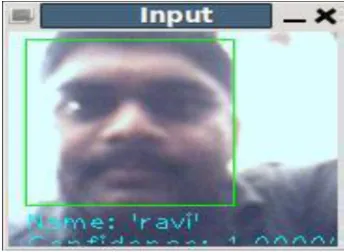
These are the output screens those are obtained for project “Implementing pca based image face recognition using open CV & beagle board”.
Fig 4: output screen
Fig5 : output screen
IV. PROPOSED WORK
Till now we had seen the part of the our actual application that was been taking about i.e., we will use this application face detection to get the presence of the person in the institution or an organization for a particular time that was to be as attended. We will adopt an efficient face recognition system that which will detect and recognize the people from this we will find the people those who are attend the session and who are not i.e., we will take the details of the people those who attend the session as in the form of a document, excel, etc formats and we can maintain them as the in the form of the databases.
[image:4.612.226.400.280.608.2]www.ijraset.com Volume 2 Issue XII, December 2014 ISSN: 2321-9653
International Journal for Research in Applied Science & Engineering
Technology (IJRASET)
©IJRASET 2014: All Rights are Reserved
129
S2: learn the system with the values that are required to perform the application.
S3: Perform the face recognition system application that for which the attended or not was required.
S4: the people who recognized by the system should be stored into the database as attend.
S5: We should arrange the data that was gathered as recognized should maintain in appropriate manner i.e., in a formatted document, sheet, etc.
S6: If person was not recognized by the system it says that the learning process was not done properly for that data so once the learning process should be should be done for that data.
S7: we can perform the application for the number of times required as per the sessions presented.
S8: Finally we should maintain the data when the application was performed without a mismatch.
VI. FLOW OF IMPLEMENTATION
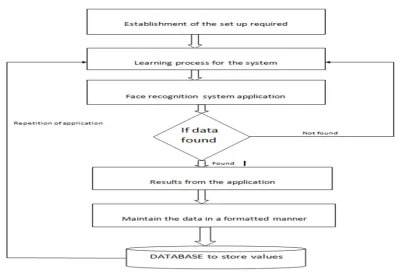
[image:5.612.111.507.332.606.2]The following diagram will explain the flow of execution of the information retrieval using the DEBS
Fig 3: flow of Implementation to online attendance
VII. SCOPE
Technology (IJRASET)
A. Merits
1) Less complex
2) Applicable to any kind of institutions and organizations
3) High efficiency
4) Robust
B. Demerits
1) Designed cost will have variation
2) Illumination an pose problem will vary as per the equipment
3) High resolution cameras are required
VIII. CONCLUSION
It is observed that giving efficient results using PCA Based Image Face Recognition techniques. At present we are working on the small databases to detect and recognize the people of an institution from the class room of students i.e., to mark attendance form them in different classes for a day. We also experienced in different aspects which are Designed cost will have variation, Illumination an pose problem will vary as per the equipment finally need High resolution cameras. We also want to extend it to implement the algorithm on the large and huge amount of database to provide the good and efficient attendance monitoring system for the organizations that are having more number of employees.
REFERENCES
[1]. Face Recognition “. Faculty of computer science and Engineering University Villanova
[2]. “Illumination Invariant Elastic Bunch Graph Matching for Efficient Face Recognition” Nikunj Kela, Ajitha Rattani, Palguni Gupta, IIT Karghpur
[3]. “Automatic Face Recognition System and Eigen Face Based Implementation “by Md.Shariful Islam Ferdous Department of computer science University BRAC. [4]. “Face Recognition: the Problem of Compensating for Changes in Illumination Direction” by Yael Adini, Yael Moses, Shimon Ullman IEEE Transactions on Pattern Analysis and Machine Intelligence.
[5]. Zhao, W. et al. "Face Recognition: A Literature Survey." ACM Computing Surveys, Vol. 35, No. 4, December 2003, pp. 399–458
[6]. M. Turk and A. Pentland (1991). "Face recognition using eigenfaces". Proc. IEEE Conference on Computer Vision and Pattern Recognition. pp. 586–591 [7]. JAFFE image database – "Coding Facial Expressions with Gabor Wavelets”, Michael J. Lyons, Shigeru Akamatsu, Miyuki Kamachi, Jiro Gyoba. [8]. "Video Indexing and Retrieval",Multimedia Technology for Applications, Sheu and Ismail editors.IEEE Press, 1998.
AUTHOR DETAILS
Prof. P. Parthasarathy received B.E in Electrical Engineering from Osmania University in the year 1982. He did his post-graduation from College of Engineering, Osmania University with specialization in Industrial Drives and Controls. He is having 14.5 years of experience in industry, 2 years of experience as consultant in machines manufacturing and 16 years of experience in teaching. He started a manufacturing industry and supplied the customized machines to ARM, ECIL, ARCI, Gujarath Telephone cables etc.He also guided many Projects in UG and P.G level. He worked in various reputated engineering institutions. He is also pursuing PhD. His research includes Embedded Systems, Power Electronics and Digital Signal Processing. He organized and published many Research Papers in various National & International Conferences and Journals. He joined in Guru Nanak Engineering College as a Professor and Head of the EEE department in the year 2003. Later, he has been elevated as Dean (SW), Vice-Principal and presently working as Associate director in School of Engineering & Technology, Guru Nanak Institutions Technical Campus, Hyderabad.
www.ijraset.com Volume 2 Issue XII, December 2014 ISSN: 2321-9653
International Journal for Research in Applied Science & Engineering
Technology (IJRASET)
©IJRASET 2014: All Rights are Reserved