Impact Factor: 5.515
G
AUSSIAN
P
ROBABILISTIC
N
ON
A
DDITIVE
E
NTROPY BASED
K
ERNEL
E
NTROPY
C
OMPONENT
A
NALYSIS WITH
S
CALE
I
NVARIANT
F
EATURE
T
RANSFORM FOR
F
ACE
R
ECOGNITION
Aruna Bhat
Department of Electrical Engineering, IIT Delhi, New Delhi, India [email protected]
Abstract: The paper presents a methodology to perform face recognition using a Gaussian Probabilistic Non Additive Entropy based Kernel Entropy Component Analysis with Scale Invariant Feature Transform. The proposed technique adds invariance towards Pose, Illumination and Expression (PIE) changes in the face. The conventionally used Renyi entropy has been replaced with a Gaussian non-additive entropy measure for better representation of information content in the non-extensive systems containing some degree of regularity or correlation. Scale Invariant Feature Transform being a texture based local feature detector and descriptor that transforms an image into a large collection of local feature vectors each of which is reasonably invariant to image translation, scaling, rotation, partial occlusion and illumination further aids in adding robustness to the system.
Keywords: SCALE INVARIANT FEATURE TRANSFORM, GAUSSIAN PROBABILISTIC NON ADDITIVE ENTROPY, KERNEL ENTROPY COMPONENT ANALYSIS,KERNEL PCA, RENYI ENTROPY
1.
I
NTRODUCTIONThe paper presents a methodology to perform face recognition using a Gaussian Probabilistic Non Additive Entropy based Kernel Entropy Component Analysis with Scale Invariant Feature Transform. The proposed technique adds invariance towards Pose, Illumination and Expression (PIE) changes in the face. The conventionally used Renyi entropy has been replaced with a Gaussian non-additive entropy measure for better representation of information content in the non-extensive systems containing some degree of regularity or correlation. Scale Invariant Feature Transform being a texture based local feature detector and descriptor that transforms an image into a large collection of local feature vectors each of which is reasonably invariant to image translation, scaling, rotation, partial occlusion and illumination further aids in adding robustness to the system.
Impact Factor: 5.515
Some algorithms have previously been proposed to cater to this issue. For instance PCA-SIFT and LDA-SIFT which instead of using smoothed weighted histograms, apply the Principal Components Analysis and Linear Discriminant Analysis respectively to the normalized gradient patch. The feature vector produced by PCA-SIFT is significantly smaller than the standard SIFT feature vector. Similar matching algorithms that are applicable over SIFT can also be used with PCA-SIFT. Also like SIFT, PCA-SIFT too makes use of the Euclidean distance to determine whether the two vectors correspond to the same key point in different images. In PCA-SIFT, the input vector is created by concatenating the horizontal and the vertical gradient maps for 41x41 patch centred to the key point, which has 2x39x39=3042 elements. Fewer components (nearly 20) are generated which thus results into faster matching. However as observed through various experiments the performance of these is not as high as SIFT would normally yield.
Therefore a different method is presented here which involves calculating the final SIFT feature vector by selecting and retaining only the best representatives from the 128 dimensional vector. Reducing the feature vector size by meticulously selecting the high information elements from the huge set of features not only makes the recognition process swift but also adds to the success rate. The recognition rate is improved with much less cost incurred and without loss of any crucial information that would be required for authentication.
Kernel Entropy Component Analysis (KECA) [3] performs the selection of principal component vectors based on the entropy information, rather than using only the magnitude of eigenvalues. Therefore, KECA is used in data transformation and to reduce the dimensional space. KECA conventionally displays structure relating to the Renyi entropy of the input space data set, evaluated through a kernel matrix using Parzen windowing. This is attained by projections onto a subset of entropy preserving Kernel PCA axes. Further the Gaussian non-additive entropy measure [4] is used in place of the usual Renyi Entropy [5].
The rest of this paper is organized as follows: Section 2 provides a detailed description of the proposed methodology. Experimental results have been elaborated in Section 3. Section 4 discusses the conclusion and the future scope.
2.
M
ETHODOLOGYThe methodology is mainly centered on KECA with the conventionally used Renyi entropy being replaced with the Gaussian non-additive entropy measure, useful for the representation of information content in the non-extensive systems containing some degree of regularity or correlation which makes it a better option than Renyi entropy in KECA.
The intent is to obtain the best principal component vectors which can be used for pattern projection to a lower dimensional space. The method extends from the notion of selecting the principal component vectors based on entropy information rather than being based only on the magnitude of Eigen values.
Impact Factor: 5.515
KECA is another spectral data transformation method extending from the concept of KPCA. It is useful as an alternative to KPCA in performing pattern de-noising. KECA is directly related to the Renyi entropy of the input space data set through a kernel based Renyi entropy estimate. The same is expressed through projections onto the principal axes of the feature space. The transformation done by KECA is based on the highest entropy preserving axes and reveals the structure related to the Renyi entropy of the input space data set.
In order to develop KECA, an estimator of the Renyi entropy may be expressed in terms of the spectral properties of a kernel matrix through a Parzen window for density estimation.
Let Φ be a non-linear mapping between the input space and the feature space. Also, let SK be a subspace spanned by all those "K" Kernel Principal Component Analysis axes which contribute most to the Renyi entropy estimate of the data. Then, K dimensional data transformation is performed by projecting Φ onto SK. For nonlinear mapping, any one of the existing classes of kernel functions like polynomial kernels, radial basis function kernels, sigmoid kernels or arc cosine kernels may be used.
The conventionally used Renyi entropy has been replaced with the Gaussian non-additive entropy in KECA and is evaluated for its usability in finding the best principal component vectors for reducing the dimensional space. Consequently, it is applied over SIFT thereby reducing the dimensionality without losing textural information. Like PCA-SIFT, the only step that we are altering in the conventional SIFT algorithm is the creation of the final descriptor. Instead of using smoothed weighted histograms, PCA or LDA, we use Gaussian non-additive entropy based KECA to retrieve a much more compact feature descriptor (< 50 components) which still contains all the crucial textural information.
SIFT is a texture based local feature detector and descriptor proposed. It has been widely used across various pattern recognition applications. SIFT transforms an image into a large collection of local feature vectors each of which is invariant to image translation, scaling, rotation, partial occlusion and illumination to some extent. This advantage clearly leads us to the usage of SIFT in designing robust recognition algorithms. SIFT can therefore also be used in making effective face recognition techniques that are invariant to different kinds of variations.
The SIFT algorithm identifies the scale invariant features using a filtering approach over various stages. The first stage involves detection of key locations in scale space. The key locations are the locations that are maxima or minima of a Difference of Gaussian (DoG) function.
Impact Factor: 5.515
Open source data sets [7]-[11] have been used to evaluate the performance of the proposed methodology.
Fig 1. Recognition Rate (GAR%) comparison.
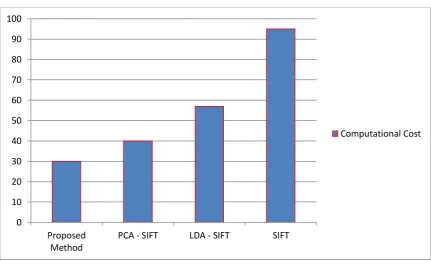
Fig 2. Comparison of the computational cost.
70 80 90 100
Proposed Method PCA - SIFT LDA - SIFT SIFT
Recognition Rate
0 10 20 30 40 50 60 70 80 90 100
Proposed Method
PCA - SIFT LDA - SIFT SIFT
Impact Factor: 5.515
The proposed methodology has been compared with the existing techniques for performance and computational cost incurred. The proposed method not only showcased better recognition rate but also incurred much lesser computational cost.
4.
C
ONCLUSIONS ANDF
UTURES
COPESIFT is well known robust feature descriptor that has been widely evaluated in the area of face recognition. However the large dimension of the feature vector generated by it is a major concern which hinders its applicability in practical scenarios. The proposed method not only makes the recognition process swift but also adds to the success rate. The recognition rate is improved with much less cost incurred and without loss of any crucial information that would be required for authentication.
Like SIFT, the proposed Gaussian non-additive entropy based KECA may also be integrated and evaluated with other feature detectors and descriptors to reduce their dimensions.
R
EFERENCES
[1]. Lowe, David G, (1999), "Object recognition from local scale-invariant features". Proceedings of the International Conference on Computer Vision 2. pp. 1150–1157. doi:10.1109/ICCV.1999.790410. [2]. David G. Lowe, (2004), Distinctive image features from scale-invariant key points. International
Journal of Computer Vision, 60, 2004.
[3]. R. Jenssen, “Kernel entropy component analysis”, IEEE Transactions on Pattern Analysis and Machine Intelligence, Volume. 32, No. 5, pp. 847-860, May, 2010.
[4]. Seba Susan and Madasu Hanmandlu, “A non-extensive entropy feature and its application to texture classification”, Neurocomputing, Volume. 120, pp. 214-225, 2013.
[5]. A. Renyi, “On measures of entropy and information”, Fourth Berkeley Symposium, Volume. 1, pp. 547-561,1961.
[6]. B. Schölkopf, A.J. Smola and K.R. Müller, “Nonlinear Component Analysis as a Kernel Eigenvalue Problem”, Neural Computation, Volume. 10, pp. 1299-1319, 1998.
[7]. P. J. Phillips, H. Moon, S. Rizvi and P. Rauss, “The FERET evaluation methodology for face recognition algorithms”, IEEE Transactions on Pattern Analysis and Machine Intelligence, Volume. 22, No. 10, pp. 1090-1104, 2000.
[8]. P.J. Phillips, H. Wechsler, J. Huang and P. Rauss, “The FERET database and evaluation procedure for face recognition algorithms”, Image Vision Computing, Volume. 16, No. 5, pp. 295-306, 1998. [9]. Yale Face Database B, http://cvc.yale.edu/projects/yalefacesB/yalefacesB.html, 2001.
[10]. Michael J. Lyons, Shigeru Akamatsu, Miyuki Kamachi and Jiro Gyoba, “JAFFE database, Coding Facial Expressions with Gabor Wavelets”, Proceedings. Third IEEE International Conference on Automatic Face and Gesture Recognition, Nara Japan, IEEE Computer Society, pp. 200-205, April 14 – 16, 1998.