How do nurses facilitate shared decision making in HIV care?
An exploratory study of UK nurses knowledge, perspective and
experience of facilitating shared decision making in clinical practice.
Michelle Croston, Manchester Metropolitan University, John McLuskey, Dr. Catrin Evans University of Nottingham
Abstract
Shared Decision Making (SDM) enables clinicians to promote self-management and to empower patients with long-term health conditions. Whilst it has been reported in other health conditions, there is little empirical research on the nature and practice of SDM in HIV care. This project aimed to explore current views and practices amongst UK HIV Nurses regarding SDM. A mixed methods study utilised focus groups and an online survey to identify opportunities, challenges and training needs. Nurses are supportive of SDM but face patient related, organisation and health system challenges to implement it, especially in supporting complex patients. SDM is an important aspect of nursing care for people living with HIV. Nurses need more training and resources to implement SDM effectively. In order to develop such training and resources to better understand SDM in relation to HIV care, there is a need for research on patient perspectives and experiences in this area.
Keywords: Shared decision making ,HIV, nurses
Within the UK there is currently an estimated 107, 000 people living with HIV (PHE 2015). Over the last three decades HIV care has undergone significant change to bring about improved diseases outcomes as a result of successful antiretroviral therapies. This has led to HIV being redefined as a long- term chronic health condition. Whilst the focus of HIV care may vary across the UK it is predominately consultant led, nurse delivered care (NHIVNA 2016).
As a result of these advances in HIV care, people living with HIV are required to make complex and multiple decisions about managing their condition (Bravo, Edwards, Rollnick, & Elwyn, 2010). Shared Decision Making (SDM) is increasingly advocated as the preferred model for engaging with patients in making choices about their care. A commonly used definition for SDM is provided by Coulter & Collins (2011, p. 2)
and preferred outcomes with the aim of reaching mutual
agreement on the best course of action… Shared decision-making explicitly recognises a patient’s right to make decisions about their care, ensuring they are fully informed about the options they face. This involves providing them with reliable evidence-based
information on the likely benefits and harms of interventions or actions, including any uncertainties and risks, eliciting their preferences and supporting implementation”
SDM is embraced as a key feature of recent National Health Service (NHS) policy whereby patients should be at the heart of all aspects of health-related decision making (Department of Health, 2012). Current UK healthcare policy encourages an increased focus on self-management; indeed, evidence suggests that poor health literacy contributes to suboptimal care, poorer health outcomes of affected
individuals and avoidable costs within health systems (Department of Health, 2012; Lee & Emmanuel, 2013). As such, the philosophy and practise of SDM is concerned with listening to patients’ wishes, informing and educating patients about different options, being sensitive to patients’ needs, and engaging in an on-going dialogue to develop mutually agreed appropriate treatment or care pathways (Coulter & Collins, 2011).
The process of developing SDM between patients and providers is considered particularly necessary to promote patient empowerment for the management of long term conditions. This approach to care has been well established in other disease areas (Friesen-Storms, Bours, van der Weijden, & Beurskens, 2014). A recent review by Stiggelbout et al (2015, p. 1173), suggests that there are 4 clear steps for SDM:
1. The professional informs the patient that a decision is to be made and that the patient’s opinion is important;
2. The professional explains the options and the pros and cons of each relevant option
3. The professional and patient discuss the patient’s preferences; the professional supports the patient in deliberation
4. The professional and patient discuss patient’s decisional role preference, make or defer the decision, and discuss possible follow-up.
their diagnosis to others; (ii) decisions about adherence to treatments; and (iii) decisions about sexual activity and parenthood (Bravo et al., 2010).
The need for patient empowerment and for patients to be involved in decisions about their healthcare is reflected in the British HIV Association (BHIVA) Standards of Care (BHIVA, 2012), particularly Standard 9 and 10. Standard 9 suggests that patients should be involved within their care and self-management as these approaches can ultimately lead to improvements in patients’ quality of life. Standard 10 states that “people living with HIV should be actively involved in decisions relating to their own care and treatment as they wish”.
The European AIDS Clinical Society (EACS) treatment guidelines also support a SDM approach (EACS, 2014). They advocate using a ‘WEMS’ technique (waiting 3 seconds, echoing, mirroring, summarising) to assess readiness to start treatment. This
technique is similar to motivational interviewing techniques. This recommendation goes someway in addressing SDM in relation to starting treatment, however, it does not address how patients are involved in decisions throughout the rest of their healthcare journey or for health issues other than treatment adherence.
Within the UK, other than the BHIVA (2012) Standards, there are no suggested guidelines or resources available to help healthcare practitioners facilitate SDM within HIV care. Likewise, whilst considerable research on SDM has been undertaken in other disease areas (Friesen-Storms et al., 2014; Legare, Ratte, Gravel, & Graham, 2008; Shay & Lafata, 2014; Truglio-Londrigan, Slyer, Singleton, & Worral, 2014), very little research has explored SDM specifically in relation to HIV care (Beach et al., 2015; Kumar et al., 2010; Laws et al., 2013).
The goal of this research therefore, was to deliver insights into SDM within HIV care in the UK, from a nursing perspective.
Study Aim and Objectives
The overall aim of research was to explore current views and practices amongst UK HIV nurses regarding SDM in order to identify training and support needs.
Specific study objectives were:
To explore what nurses understand by SDM
To explore perceived barriers/facilitators to SDM in HIV care
To identify specific training needs in relation to SDM in HIV care
To establish the most acceptable format for additional learning material or skills development in relation to this topic.
Methods
In order to undertake this exploratory research , a two part sequential mixed methods design was adopted (Creswell & Plano-Clark, 2007). The research is presented in two parts, reflecting two different phases of the research. Part One presents the results of a qualitative study, which used focus group discussions (FGDs) to explore HIV nurses’ views and practises around SDM. The results of this phase were then used to develop Part Two in which an on-line survey was sent to all members of the National HIV Nurses Association (NHIVNA)(n=258). The survey sought to identify knowledge, challenges, gaps and training needs in relation to SDM.
Ethics
Ethical approval for the research was granted by the University of Nottingham, Faculty of Medicine & Health Sciences Research Ethics Committee. Participation in both parts of the study was entirely voluntary. Participation in the focus groups required written consent. Response to the on-line survey was taken to imply consent. All participant contributions have been anonymised.
Part One: Qualitative Study
The qualitative study component comprised four focus group discussions with HIV nurses. These took place from February to April 2015. The focus groups were designed to elicit nurses’ views and experiences around SDM and to identify areas where SDM may be contested or where it may be particularly challenging (Barbour, 2007). The groups were designed to reflect experiences of nurses in different parts of the country, and were undertaken in four different geographical regions (North West, Midlands, London and the South East).
inclusion criteria were nurses who were Band 5 or above with HIV patient caseloads or working within HIV services. Fifteen nurses participated in the FGD. Ten of which were female and five were male .The length of time in the area of HIV care varied between 5-28 years, with an average length in current role being 10 years.
The focus groups were facilitated by the project research assistant and one member of the project advisory team. Each focus group was audio recorded and transcribed verbatim.
Data was analysed using a thematic analysis approach. Segments of the transcripts were coded according to their meanings (Richards, 2009). The codes were then grouped and further analysed into several core themes and associated sub-themes (Boyatzis, 1998; Bryman & Burgess, 1994). The project team worked together to develop and refine the emerging interpretations (Lincoln & Guba, 1985).
Part Two: On-line Survey
The themes from the qualitative study were used to inform the design of an on-line questionnaire which aimed to identify HIV nurses’ knowledge, practices and training needs in relation to SDM . The questionnaire was piloted with five nurses in one geographical region and then finalised.
An email with the link to the Shared Decision Making online survey was sent out to all NHIVNA members via the NHIVNA Secretariat. These were sent in early June 2015 and followed by two reminder emails.
The online survey was sent by email to NHIVNA’s membership (n=258 ). Sixty four responses were received, consitituting a response rate of 25%. The majority of the responses (37.5%) worked in specialist HIV departments. Thirteen nurses (20.3%) worked in genitourinary medicine and seven nurses (10.9%), worked in the community. The majority of the respondents (85.9%) worked in England, which reflects the demographics of the NHIVNA membership.
The approximate size of the HIV patient cohort in individuals’ work setting was almost even, with 34 nurses with a cohort of below 500 patients and 30 with a cohort of 501 patients or above.
All nurses who took part in the survey were NHS employed and experienced,
Findings from Part One: Qualitative Study
Themes
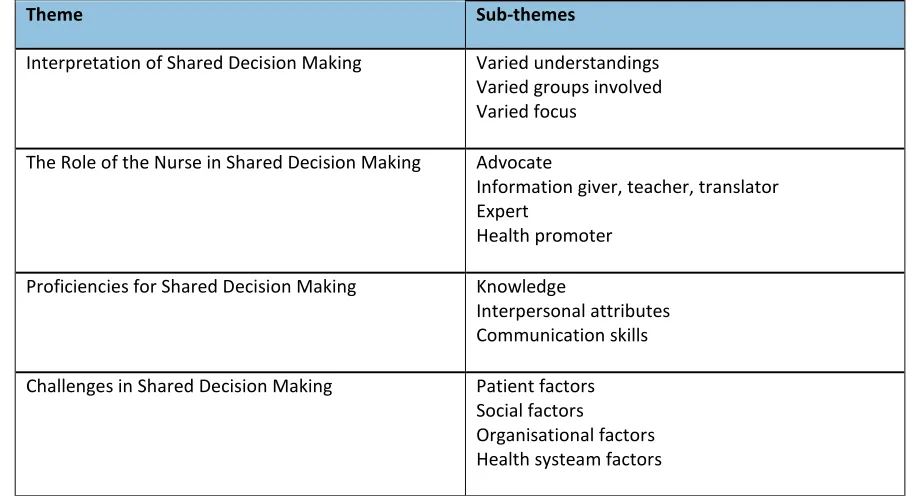
[image:6.595.77.533.222.470.2]Four major themes were identified and are outlined in Table 1. These are presented in turn below, with supporting quotations to illustrate key points.
Table 1: Qualitative Study Themes
Theme Sub-themes
Interpretation of Shared Decision Making Varied understandings Varied groups involved Varied focus
The Role of the Nurse in Shared Decision Making Advocate
Information giver, teacher, translator Expert
Health promoter
Proficiencies for Shared Decision Making Knowledge
Interpersonal attributes Communication skills
Challenges in Shared Decision Making Patient factors Social factors
Organisational factors Health systeam factors
Theme 1: Interpretation of Shared Decision Making
A key theme that emerged was the varied understanding that individuals had of shared decision making. There were two key distinctions. The first was SDM primarily as a consultative,information givingactivity:
“[Shared decision making is] Trying to check out how they feel about what you’ve said, how they feel about suggestions you’ve made for care. Whether they're comfortable with that, whether they're satisfied with that. Erm, and just making sure you get their feedback along the way really” (Nurse 2, Focus Group 1).
The second was a view of SDM more in terms ofpartnershipworking:
decisions supporting them in whatever decisions they make. So I see it more as a partnership” (Nurse 5, Focus Group 2).
All groups however, agreed that SDM was aprocess. Other differences in perceptions of SDM concernedwhothe decision making process involved. For example, in some cases, SDM was understood as a process of decision making primarily between practitioners and patients, whereas for others, SDM was
perceived more as a process of ‘shared care’, i.e. as a process of discussion amongst a Multi-Disciplinary Team (MDT) where decisions, outcomes and plans were then later fed back to the patient. Such MDT discussions were described as typically doctor-led.
“The decision, the consultant and doctors and teams meet, medical teams decide on what needs… what the patient needs to have.” (Nurse 2, Focus Group 3).
Another aspect of SDM concerned itsfocus. The majority of discussion on SDM referred to treatment options rather than other elements of HIV care. However, some of the groups noted that SDM could be applied to all aspects of care:
“Yes that is what I mean about the more holistic things isn’t it? And I mean we’re talking a lot about treatment but shared decision making isn’t just about treatment…for some people it is about how often they come to clinic, who it is they’re going to see” (Nurse 4, Focus Group 4).
Taking such a holistic approach to SDM meant that the process was still considered important even when it concerned a patient’s refusal to engage in care:
“…when a person actually refuses something it is still part of a choice, it is shared decision making so you cannot force the patient, you have to respect their decision… So it is good to respect both sides. I think in decision making that the patient has the right to say no and to say yes or to be involved in their care” (Nurse 3, Focus Group 4).
Typically, nurses described complex multi-faceted roles involving interactions with multiple stakeholders across multiple settings. Nurses identified 4 different functions within their roles that could support SDM.
The first was of ‘advocate’, speaking for the patient caught in the midst of a complex health system.
“You're an advocate aren’t you? As well, even though it’s their decision, you're there to advocate for them, so you're listening to their views so you then have to advocate for what they want” (Nurse 1, Focus Group 1).
Where decisions were being taken in the patients’ absence (for example, within a MDT meeting), nurses attempted to facilitate SDM by speaking up for what they thought the patient would want:
“I think we make sure for our patients that we shout up loud don’t we? If we’re not happy, if we think that the patient wouldn’t be happy about that or they have expressed that they’re not happy about that, we are prepared to shout up loud on behalf of that patient because they are not there at that meeting and talking about their health” (Nurse 2, Focus Group 4).
The second role function was that of ‘information-giver’ in order to empower patients to make choices:
“… to give them the knowledge so that they can make the decision of what would happen if you… if you made different decisions? If you decided to go on this treatment or that treatment or no treatment and so I think that is a big empowering… that we have got the information because they generally, they might not know. Like what would happen with all the different outcomes” (Nurse 4, Focus Group 2).
The complexity of information available however meant that providing information was not a straightforward activity but also encompassed an explicit teaching role – i.e. it was a nurses’ job not just to share information but to ensure that the patient had understood it:
them about how they are going to have that knowledge to make that shared decision… so it is very important that you be an informed professional as well as a teacher” (Nurse 3, Focus Group 4).
The teaching dimension of information giving however carried an implicit connotation that there was a ‘right’ answer to a particular choice. For example, nurses noted that a key part of their job was to achieve optimal clinical outcomes for their patients. Therefore, there was an implicit pressure to help support patients to make choices that would achieve (medically defined) positive outcomes. Nurses noted that when patients made choices that were contrary to the prescribed course of action, there was a temptation to feel that their teaching had not been adequate rather than that this outcome may also be an acceptable consequence of shared decision making. For example, one nurse stated:
“I personally don’t think I will ever feel I have given this person enough information if especially if they are still deciding not to take the medication” (Nurse 2, Focus Group 3).
Within the information-giving role, some nurses also noted that they acted as a ‘translator’ in order to make the relevant information as accessible as possible. This role was often described as having to translate information that had been provided to patients by other health professionals (particularly doctors) into terms that a patient would understand:
“Shared means shared to me…….the person who is having the treatment should have some say in what is actually happening, and often… they are not empowered or they are not spoken to in a language that is meaningful to them. They haven’t got enough information to make a clear decision sometimes and I think often doctors… and I am stereotyping, doctors as a big group but they explain in doctor language and think that they’re actually doing that when the person comes out of the room they say ‘I don’t know what they are on about you know’(Nurse 2, Focus Group 4).
“But where that patient had decided to not take treatment, well in the knowledge they will die, and that actually being the end result that they are after. That makes the doctors feel very
uncomfortable but again I think that is when the nurses come in, because the doctors are a bit like oh they don’t want care, but no that is not what they’re saying. They don’t want to continue on treatment and not wanting to continue on treatment and not wanting care are two very different things aren’t they? They still did want to be looked after and monitored but they did not want to take tablets and they wanted to die” (Nurse 5, Focus Group 4).
A third role function identified participants as ‘experts’, having access to specialist knowledge and expertise that gave them a privileged status in suggesting options for patients.
“Being able to engage patients is the heart of the process of decision making, and number one is being an expert in the field... to ensure that the patient has confidence…to give them all the information required to make this, you know decision” (Nurse 1, Focus Group 3).
Some nurses drew comparisons between their work and that of other experts, for example, a car mechanic. Implicit in this representation was the notion that, as experts, they were best placed to advise an optimal course of action for the patient:
“...in shared decision making because you know it is supposed to help the patient understand what there is to understand - but at the end of the day………..if I go to see a mechanic about my car, and they say it needs a new pump and I won’t say well I will just have a look myself and check that out will I? I will say OK so what am I… you know what choices have I got? I haven’t got a choice of… if I want to run this car I need that new pump so I could have the special one at £200 or I could have a slightly cheaper version, what do you think is the difference between these two? And I will just go yes or no won’t I”? (Nurse 1, Focus Group 4).
conflicted with this health promoter role, especially when patients acted in ways that were contrary to clinical guidelines or clinical advice:
“So our role as well as looking after the general care of the patient is to encourage them to be able to take that medication which we know works………..…Then we do have the pressures in the NHS now, I mean if you look at the standards of care for people living with HIV as well as long term chronic diseases, we have to avoid hospital admissions - so you find that in a way, this is at the back of your mind. You know what is best for the person and you really would like them to avoid being an inpatient and interrupting a lot of other things in their life” (Nurse 2, Focus Group 3).
Participants noted that all 4 role functions were crucially dependent on being able to develop trusting relationships with their patients, so that patients would recognise their expertise, follow their advice and feel able to express their views and concerns:
“What helps is when you trust that person and it is like… if they see a doctor, but then they come away and then talk to us and we have a different relationship with the patient so we can like validate that this doctor’s opinion is a good opinion, it is then… I think people feel like they are making more of an informed decision about it. That trusting relationship…you know, you can’t put a price on that because, you know cause they’ll actually open up and share things that they may not with someone else” (Nurse 1, Focus Group 4)
In sum, the role of the nurse in SDM was highly varied. In some cases, nurses sought to promote SDM by acting as patients’ advocate. In other situations, the nurses’ role in SDM was more ambiguous, particularly where nurses (as information givers, experts and promoters of health) felt that the optimal course of action was clear.
Theme 3: Proficiencies for Shared Decision Making
Generally, nurses felt that SDM was something that could not be taught but that developed with experience over time. A range of attributes and skills were identified that could facilitate SDM (described below), however, participants noted that
“I think you’ve got to start from the point of view of knowledge, so, you have to understand, every decision that that patient makes, what’s the impact on their care? And you’ve got be able to explain to them what that impact is, negative or
positive…otherwise, they can’t make informed choices. So you’ve got to have that strong confident knowledge. (Nurse 2, Focus Group 1).
In terms of attributes, nurses noted that SDM required them to be flexible,
perceptive, non-judgmental and understanding. These attributes were collectively referred to as ‘intuition’ – an ability to read between the lines, to assess non-verbal behaviour and to discern a clearer understanding of what a patient may be feeling:
“I think using your senses, all of your senses is quite important because sometimes what is coming out of a patients mouth isn’t often what they are feeling or they are thinking and by looking at them and listening to them, and sometimes touching them you can tell that actually that isn’t the route that they want to go down, that isn’t really what they’re feeling is their decision and I think using all of those skills eventually leads to quite good intuition and I think that often when professionals follow their intuition it is often the right thing for the patient” (Nurse 4, Focus Group 4).
Nurses’ holistic perspective was also mentioned as essential in facilitating SDM:
“I think from a nursing point of view it is looking at the whole person. Looking at all elements as well. That is a big skill actually isn’t it?” (Nurse 2, Focus Group 2).
Within all the focus groups, participants were unanimous that the key skill required for SDM was communication. In particular, participants identified listening as an essential skill for delivering patient centred care. In addition, it was important to check that patients had understood the nurse by reflecting back on the patients’ feelings.
open questions, the you know, the reflecting back on the patients feelings, the listening skills…..trying to understand um, the historical perspective for some patients as to their attitudes towards tablets in the first place. What it means to them. So it is the more advanced counselling skills” (Nurse 1, Focus Group 1).
Motivational interviewing was raised in each of the focus groups as an important communication technique. Nurses highlighted its perceived potential to improve the delivery of communication and care in HIV treatment:
“I think also, again I don’t know about the rest of you but maybe using a bit of motivational interviewing, just to see where patients are situated with that particular decision at the time. I’ve found that useful.” (Nurse 5, Focus Group 2).
However, although many participants felt that motivational interviewing was an essential skill to have, several noted that they themselves did not feel confident in using it:
“I would love to have training in motivational interviewing I think it would be beneficial for all of our team to have it, I know some people have but you know it is only just bits I have picked up whatever you know but I think it would be good for nurses to get trained in that” (Nurse 4, Focus Group 2).
In sum, participants noted that a combination of nursing knowledge, interpersonal attributes and communication skills were required to practise SDM.
Challenges in Shared Decision Making
There was much discussion in the groups about the difficulties of trying to accomplish SDM in practice. Four main challenges were identified by the
participants: patient factors, social factors, organisational factors and health system factors.
In terms of patient factors, participants noted that, with some patient groups, language barriers posed challenges for SDM, both in terms of lengthening the time required within a consultation and also the challenge of working with translators:
doesn’t think there’s a communication problem. She thinks that I understand her perfectly and she understands me so why do I need an interpreter? When I know that she’s missing a whole lot and I know that I'm struggling to completely understand everything that she’s saying.” (Nurse 2, Focus Group 1).
Participants talked at length about patients who were ‘complex’ or who had complex needs. These were often related to drug and alcohol problems, mental health
problems, social problems (e.g. homelessness or poverty) or medical problems (e.g. multiple co-morbidities). Nurses noted that SDM could be more difficult with such ‘complex’ patients. For example, in some cases, assessing patients’ capacity to make decisions could be difficult, especially in situations where patients had opted out of treatment, ceased treatment or chosen not to engage in care:
“If someone is an intravenous drug user or ex intravenous drug user, already has nowhere to live, chaotic lifestyle, there are problems associated with that and different kind of resources needed to associate and support that person in their decision making and also we don’t even know the capacity at the time when they are speaking with you, their capacity whether they understand, they appreciate what is going on and they want to cooperate with you” (Nurse 2, Focus Group 3).
In situations where patients had mental health or social problems, HIV was
sometimes not a priority for an individual, leading to poor adherence, risky behaviour or missed appointments:
“It is my experience as well because partly the demographics I see more of that kind of patient group who really struggle with many other issues in their lives that HIV and erm ceases to be a priority and they feel it is just like an encumbrance kind of and then I don’t know maybe partly as well because sometimes it is people are coming from difficult circumstances” (Nurse 2, Focus Group 3).
Although a number of nurses expressed their frustration in trying to engage with, and support, such patients, they noted that they nonetheless tried to adopt a patient-centred approach to care:
at don’t you. Yeah, absolutely…and it doesn’t matter whether its alcohol that’s their problem or whether its em, life style or whether it’s just their childhood or their personality. It doesn’t matter what it is that might be a barrier to good health care you just deal with whatever comes up” (Nurse 2, Focus Group 1).
Other patient-related factors included religious views and beliefs that suggested paths to healing that were contrary to medical advice. In these situations, nurses discussed how they tried to accept and respect patients’ choices:
“I mean you see it a lot with people who have got very strong religious beliefs don’t you? You know they can… it can be very challenging to help look after them in a way that is conducive to good health but that is part of their decision isn’t it? And that you know if they think that God is going to kill them or heal them, then we have to work with them and not against that and we have to follow a bit of a journey until they reach a place that they feel either they are going to carry on with that and not take medicines or they are going to take medicines” (Nurse 4, Focus Group 4).
However, nurses also described feeling frustrated or uncomfortable with some of the choices and behaviour of patients, especially when patients were seen to be taking risks or making poor or uninformed choices with regard to their care:
“…the other thing is the essence of why we went in to the
profession which we went in to, why we went in to nursing? You were challenged by that patient who says I choose not to get well, I choose to die, I choose not to take the medication. For me that is where the discomfort I think emanates from…But then how do we allow, how do we get over our own feelings of being like to borrow the word paternalistic and say you have to do this, you have… it is a difficult kind of area because we went in to nursing to make people better, to try and help them whether it is by personal care, doing the injections…… and then now you’re being challenged by the person’s decision to say actually I am not going to have this” (Nurse 2, Focus Group 3).
decided not to engage in treatment or HIV care, the nurses saw this as unnecessarily making the decision to die:
“They stop taking their tablets and then that can be quite a
challenge for health professionals who are thinking you’re going to die without these and yet ultimately the person feels they can’t do it and we’re thinking look it is simple, just put them in your mouth and take them but it isn’t that simple is it? I think the challenge for us as health care providers is saying if someone’s internal choices are different to ours, we can’t override that and therefore the shared collaboration is then you know what? I have to go with you on your journey, if you’re going to die I will still offer the best care that we have available” (Nurse 4, Focus Group 4).
In terms of social factors, all groups raised the issue and impact of stigma on SDM. Nurses described stigma as something that was still very much a part of HIV and was seen as a barrier to SDM, primarily because fear and stigma prevented patients from accepting or disclosing their diagnosis and engaging with treatment:
“Sadly, the stigma is still very much there and the issues around disclosure and sharing it with anybody is still a massive issue” (Nurse 2, Focus Group 1).
Stigma was described not only as a problem in terms of patient’s personal lives or reluctance to engage, but was also identified as a challenge in terms of the
treatment patients received from other healthcare professions. Nurses noted that patients were often referred back to the HIV department for the main part of their care, even if other departments should have been taking the lead. This was
attributed to ongoing stigma from other nurses and a lack of confidence amongst other professionals in managing HIV. Together, they posed challenges in terms of achieving a SDM approach within a shared care model:
“We offer some training to practice nurses and stuff and the ignorance that is still around is unbelievable. The nurses, just, I mean, I know from colleagues from like when I was district nursing, how their opinion of HIV, and these are
professionals….…So, with shared care, I think we are always going to have to work towards it and I think the stigma will be a
In terms of organisational factors, a key challenge was trying to engage with SDM under time constraints, for example, short consultation times, or managing very complex patients who required more time than usual. SDM was perceived as lengthening the time required for consultations, and that without providing additional time, SDM was difficult to implement in practice:
“Time, you’ve gotta have time, you’ve gotta give time to the patient. The more shared it is I think the longer the time that is needed to go through that process so I think time is a big factor in that you know appointments are a ticking clock aren’t they? You know you have got to get them through the clinic so I think time… our clinic at times you know I wouldn’t envy them sitting there that length of time so both from the professionals point of view but from the client, patients point of view time is a big factor” (Nurse 2, Focus Group 4)
Organisational factors also placed constraints on developing services that could be more flexible or accessible and would therefore enable better patient engagement and SDM. For example, it was suggested that the ability to work in the community or to provide late or early appointments, or to follow up non attendees was important but not always possible.
“With us in community, that’s what we tend to do, the nurses in the hospital might phone us and say such and such has DNA’d their appointment…and then you know, if they're known to us, we might try and get hold of them or we’ll just go round … on the off chance if you know it’s safe…In a clinic setting because of course when I was based in a clinic setting we didn’t have those kind of opportunities and that is why I feel such a privilege to be in the community setting at the moment” (Nurse 2, Focus Group 2)
Participants also identified several more macro-level health system related
challenges to SDM. One the major factors was that HIV care, like other areas of care, was being delivered in a context of local, national and international targets,
standards and guidelines. All departments were under pressure to achieve targets around testing, treatment initiation, treatment adherence and viral loads.
“So if you have got global goals and you are like 90/90/90 so it tells the whole world are going to get everyone tested, everyone on treatment, every undetectable and then HIV doesn’t spread anymore, it is the miracle fulfilled. And then we’re working with individuals in you know very personal ways and they are telling us very personal things…but we’re also trying to meet those targets. All I am motivated to do is get you on treatment or in a study or to come at every agreed interval. I think that is quite a challenge for nurses……Public Health England and all the people who we report to, we are judged against someone who fails and even by how many people in your clinic are undetectable - you know - you feel in the middle” (Nurse 2, Focus Group 3).
Similarly, nurses noted that budgetary considerations placed constraints on patient choice of treatment options. Hence, if patients wanted to switch their medication or choose not to opt for certain medication, this could be a problem for the nurses in delivering SDM:
“These are the choices, but the choices are constrained by the London Consortium or whatever deciding about you know, yes a patient can choose whether they go on or off treatment if they want to but there are some limitations………… Also, the fact that we’re using maybe slightly different drugs you know that someone saying I want that one pill, well it is actually well, we’re not
prescribing that one pill so much now we are prescribing it in two because it is cheaper”” (Nurse 1, Focus Group 3).
In conclusion, shared decision making was something that nurses felt they did on a day to day basis. Nonetheless, the issues raised within this section show that nurses face multiple interlinked challenges in enacting SDM in practice.
Findings from Phase 2: On-Line Survey
This section presents the findings from the online survey.These are categorised into 5 thematic areas, following the same themes arising from the qualitative study, but including one additional theme focusing on suggestions for education and training.
Interpretation of Shared Decision Making
(92.2%) selected “A collaborative process that allows patients and their healthcare providers to make health care decisions together”. The respondents were then asked to consider what they felt their role was in SDM.
Nurses Role in Shared Decision Making
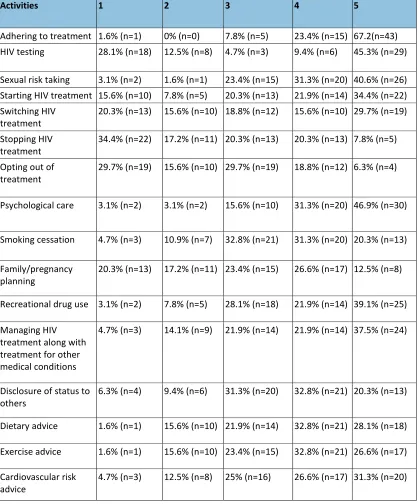
[image:19.595.90.508.236.740.2]Participants were asked to consider “In your day to day practice, in which activities do you most commonly undertake shared decision making with your client?”. A likert scale was used against pre determined critiera with 1 indicating ‘very rarely’ and 5 indicating ‘very common’(table 1).
Table 1: Common nursing activities where SDM takes place.
Activities 1 2 3 4 5
Adhering to treatment 1.6% (n=1) 0% (n=0) 7.8% (n=5) 23.4% (n=15) 67.2(n=43) HIV testing 28.1% (n=18) 12.5% (n=8) 4.7% (n=3) 9.4% (n=6) 45.3% (n=29)
Sexual risk taking 3.1% (n=2) 1.6% (n=1) 23.4% (n=15) 31.3% (n=20) 40.6% (n=26) Starting HIV treatment 15.6% (n=10) 7.8% (n=5) 20.3% (n=13) 21.9% (n=14) 34.4% (n=22) Switching HIV
treatment 20.3% (n=13) 15.6% (n=10) 18.8% (n=12) 15.6% (n=10) 29.7% (n=19) Stopping HIV
treatment 34.4% (n=22) 17.2% (n=11) 20.3% (n=13) 20.3% (n=13) 7.8% (n=5) Opting out of
treatment 29.7% (n=19) 15.6% (n=10) 29.7% (n=19) 18.8% (n=12) 6.3% (n=4)
Psychological care 3.1% (n=2) 3.1% (n=2) 15.6% (n=10) 31.3% (n=20) 46.9% (n=30)
Smoking cessation 4.7% (n=3) 10.9% (n=7) 32.8% (n=21) 31.3% (n=20) 20.3% (n=13)
Family/pregnancy
planning 20.3% (n=13) 17.2% (n=11) 23.4% (n=15) 26.6% (n=17) 12.5% (n=8)
Recreational drug use 3.1% (n=2) 7.8% (n=5) 28.1% (n=18) 21.9% (n=14) 39.1% (n=25)
Managing HIV treatment along with treatment for other medical conditions
4.7% (n=3) 14.1% (n=9) 21.9% (n=14) 21.9% (n=14) 37.5% (n=24)
Disclosure of status to
others 6.3% (n=4) 9.4% (n=6) 31.3% (n=20) 32.8% (n=21) 20.3% (n=13)
Dietary advice 1.6% (n=1) 15.6% (n=10) 21.9% (n=14) 32.8% (n=21) 28.1% (n=18)
Exercise advice 1.6% (n=1) 15.6% (n=10) 23.4% (n=15) 32.8% (n=21) 26.6% (n=17)
Cardiovascular risk
Alcohol consumption
advice 3.1% (n=2) 10.9% (n=7) 14.1% (n=9) 37.5% (n=24) 34.4% (n=22)
Nurses were asked in which activities shared decision making was commonly undertaken. The most common areas were around treatment adherence, HIV testing, psychological care and sexual risk taking. Again, the areas where SDM was least likely to be reported was in stopping, switching or opting out of treatment.
Nurses were asked about 8 different strategies that they might use to facilitate shared decision making. The most commonly used strategies were: signposting to other services, general discussion, drawing on their own professional knowledge and advocacy with other services or professionals.
Nurses were asked to select three options that would help them to implement shared decision making in their day to day care delivery. The top three choices were treatment decision aids (51.6%), more time with patients in consultations (51.6%) and more support from other professionals (48.4%). Several respondents (45.3%) noted that a greater range of educational resources for patients would be helpful. Almost half of the sample (46.9%) noted that better background knowledge would be useful, and 18 respondents (28.1%) felt that more training would help.
Confidence in Shared Decision Making
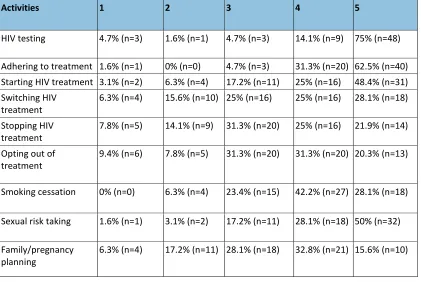
Participants were asked to rate on a scale of 1-5, to indicate how confident they felt in undertaking shared decision making in the following areas of care: (1= not
[image:20.595.89.510.491.773.2]confident at all, 5 = very confident) ( Table 2)
Table 2 : Activites where nurses feel most confident in using SDM
Activities 1 2 3 4 5
HIV testing 4.7% (n=3) 1.6% (n=1) 4.7% (n=3) 14.1% (n=9) 75% (n=48)
Adhering to treatment 1.6% (n=1) 0% (n=0) 4.7% (n=3) 31.3% (n=20) 62.5% (n=40) Starting HIV treatment 3.1% (n=2) 6.3% (n=4) 17.2% (n=11) 25% (n=16) 48.4% (n=31) Switching HIV
treatment
6.3% (n=4) 15.6% (n=10) 25% (n=16) 25% (n=16) 28.1% (n=18)
Stopping HIV treatment
7.8% (n=5) 14.1% (n=9) 31.3% (n=20) 25% (n=16) 21.9% (n=14)
Opting out of
treatment 9.4% (n=6) 7.8% (n=5) 31.3% (n=20) 31.3% (n=20) 20.3% (n=13)
Smoking cessation 0% (n=0) 6.3% (n=4) 23.4% (n=15) 42.2% (n=27) 28.1% (n=18)
Sexual risk taking 1.6% (n=1) 3.1% (n=2) 17.2% (n=11) 28.1% (n=18) 50% (n=32)
Family/pregnancy planning
Recreational drug use 3.1% (n=2) 9.4% (n=6) 31.3% (n=20) 39.1% (n=25) 17.2% (n=11)
Managing HIV treatment along with treatment for other medical conditions
3.1% (n=2) 9.4% (n=6) 31.3% (n=20) 35.9% (n=23) 20.3% (n=13)
Psychological care 1.6% (n=1) 4.7% (n=3) 18.8% (n=12) 42.2% (n=27) 32.8% (n=21)
Disclosure of status to
others 3.1% (n=2) 3.1% (n=2) 17.2% (n=11) 48.4% (n=31) 28.1% (n=18)
Dietary advice 1.6% (n=1) 1.6% (n=1) 29.7% (n=19) 39.1% (n=25) 28.1% (n=18)
Exercise advice 1.6% (n=1) 1.6% (n=1) 23.4% (n=15) 45.3% (n=29) 28.1% (n=18)
Cardiovascular risk
advice 1.6% (n=1) 3.1% (n=2) 20.3% (n=13) 43.8% (n=28) 31.3% (n=20)
Alcohol consumption
advice 0% (n=0) 4.7% (n=3) 10.9% (n=7) 50% (n=32) 34.4% (n=22)
Nurses were asked to scale how confident they felt in undertaking shared decision making in 17 different areas. Respondents were most confident in the areas of HIV testing and treatment adherence, but expressed high levels of confidence in most areas listed. Respondents were least confident in the areas of treatment cessation or treatment switching.
Challenges for Shared Decision Making
When asked how easy it was to practice shared decision making in their area of HIV, 35 nurses (54.7%), thought that it was easy or very easy ,27 nurses (42.2%) thought that it was moderately challenging and 2 nurses (3.1%) responded that it was very hard.
A selection of potential barriers to shared decision making were listed. Nurses were asked to select the top 3 barriers that had applied to their clinical roles. Two barriers were jointly ranked as most significant: “not enough consultation time” (45.3%) and “cultural issues/patient beliefs” (45.3%). The next most common barrier was
“patient doesn’t want to input into the process/patient wants me to make the decision” with 39% choosing this option.
When asked to consider the potential limitations of shared decision making, respondents were given 5 options to choose from. Forty one nurses (64%) felt “not everyone wants shared decision making” and 21 nurses (32.8%) said that “not everyone is good at shared decision making”.
Most nurses (85.9%) reported that they had not had any specific training on the topic of shared decision making. Six nurses (9.4%) stated that they had recieved specific training around SDM. This was reported to have been delivered as part of academic programmes of study for example, degree course, motivational
interviewing training or non-medical prescribing course.
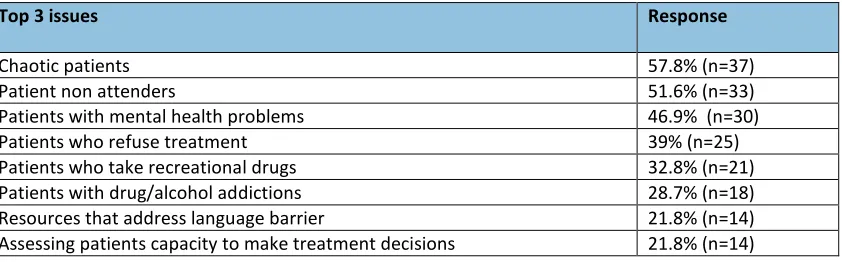
Nurses were asked to identify their top three situations from eight options in which they felt that greater knowledge/skills would help to enhance their ability to practise shared decision making. The top three responses all referred to patients with
[image:22.595.91.512.295.426.2]complex needs: “chaotic patients” (57.8%), “patient non attenders” (51.6%) and “patients with mental health problems” (46.9%).
Table 3: Situations where knowledge and skills in SDM would be enhance practice.
Top 3 issues Response
Chaotic patients 57.8% (n=37)
Patient non attenders 51.6% (n=33)
Patients with mental health problems 46.9% (n=30)
Patients who refuse treatment 39% (n=25)
Patients who take recreational drugs 32.8% (n=21) Patients with drug/alcohol addictions 28.7% (n=18) Resources that address language barrier 21.8% (n=14) Assessing patients capacity to make treatment decisions 21.8% (n=14)
Nurses were asked what resources they had accessed in order to improve their knowledge of shared decision making. The three most accessed resources were study days (54.7%), conference lectures (51.6%), and on line resources (43.8%).
Nurses were asked to select 3 facilitating factors that would enable them to
undertake shared decision making more effectively with their patients. The top three chosen were “greater knowledge of SDM process” (78.1%), “access to resources to aid SDM” (71.9%) and “practical training in SDM process including role playing” (56.2%).
In terms of training and education, nurses were asked their preferences for accessing further training and education on SDM. Respondents were given 8 choices and asked to rank each option with 1 being the first choice and 8 being the last choice. Most respondents chose e-learning as their first choice (39.7%). Twenty one nurses (35%) chose study days and 15 (26.3%) selected “short educational session run in-house”.
The two parts of this research study show that HIV nurses are highly supportive of SDM and strive to implement it in their day to day activities, 92% agreed with the statement that SDM is “a collaborative process that allows patients and providers to make health care decisions together”. Treatment adherence, HIV testing,
psychological care and sexual risk were the main areas where SDM was undertaken. These link closely to the main decision areas reported by patients (Bravo et al., 2010). However, the review of patient decision making by Bravo et al (2010) also highlighted ‘decisions about disclosure to others’ and ‘decisions about starting a family’ as a key issues for patients. SDM in these areas was reported much less frequently in our sample suggesting that nurses may feel less confident in these areas. It may also indicate that it would be useful to compare patient perspectives of SDM with that of professionals.
In spite of the apparent agreement in definition of SDM found in the quantitative data, the qualitative findings in this study highlight several nuances around how SDM is understood and practised. For many nurses in the group discussions, SDM was perceived as a broad issue of ‘involving the patient in care’ – rather than as a very specific process around specific decisions as recommended in the
literature/guidance in this area. Reflecting the holistic perspective of nursing, for many participants, SDM was about a decision ‘in context’ and a decision ‘within a relationship’ – and much less about the mechanics and steps of the actual decision making process which were more vaguely described. Indeed, the most commonly described strategies for SDM were ‘general discussion’ rather than following any specific framework, for example, the Ottawa Decision Framework (Legare et al., 2006). Hence, whilst the literature on SDM defines it as quite a narrow and specific phenomenon (Stiggelbout et al., 2015), nurses appeared to have a more inclusive but, arguably, hazy view of it. However, this may also reflect the fact that the majority of participants completing the questionnaire (86%) reported having received very little formal training on SDM .
Another issue that emerged from the qualitative data was that that nurses
articulated a collaborative, inclusive and team based understanding of SDM. Much of the discussion referred to nurses’ relationships with other health professionals and their role in representing the patient in discussions with other health professionals and within MDT meetings. In this way, nurses seemed to be acting indirectly as
facilitatorsof SDM, as well as directly engaging in SDM with patients themselves. This facilitation role was evident when nurses described themselves as ‘translating’ between doctors and patients to ensure that each understood the others’
(Lee & Emmanuel, 2013). In contrast, our study suggests that shared models of care and MDT meetings represent key sites for decision making and that nurses play an important role in advocating within these for greater patient involvement.
Finally, the study has also revealed that SDM can be challenging for nurses. Some of these challenges related to patients. Nurses experienced a tension in adopting a SDM approach with patients perceived to be complex, chaotic or who were making choices contrary to current guidelines. Likewise, the questionnaire data showed that nurses perceived some patients as not wanting to engage in SDM at all, preferring the nurses to advise them on what to do. The most significant challenge of all was posed by patients who wished to opt out of treatment altogether. The questionnaire data showed that nurses would appreciate greater training around SDM, with a specific focus on how to support these more complex patient scenarios. Other challenges around SDM were more structural - related to the changes that were occurring within the disease area, which required participants to adhere to national targets, guidelines and protocols, all of which served to inhibit patient choice and therefore limit the opportunity to engage in SDM in a meaningful way. Lastly, there were organisational challenges. Nurses noted that SDM required more time (which was often in short supply) and more resources. With regard to the latter, the questionnaire indicated that 72% of the respondents wanted greater access to resources to facilitate SDM and 52% said that treatment decision aids would help them to implement SDM. The need for more resources is also reflected as 12.5% said they ‘always used’ decision aids with patients.
Limitations of the Research
The research explored SDM from the perspective of the HIV nurse and did not take into consideration the views and perspectives of patients, or those of other health professionals involved in HIV care. As such, the interpretations offered here are limited to one professional perspective.
Key considerations
The issues raised by this research can be addressed in 3 ways:
(i) Education/Training for Professionals:There is a clear need for additional training to be provided for HIV nurses around SDM, with a specific focus on supporting challenging patient situations.
topics. This study has clearly identified a gap in availability of resources to support SDM.
(iii) Further Research:In order to inform the content of training or resources, it is important to understand the patient perspective of SDM. There is currently a lack of research on patient experiences of SDM in UK HIV care. Such research is required. Likewise, undertaking research on the views of other health professionals around SDM would help to provide a more comprehensive picture of current issues and challenges.
Conclusions
This study has demonstrated HIV nurses’ commitment to SDM. It has highlighted hitherto under-recognised elements of nurses’ role in SDM in terms of facilitating the process within a wider MDT. The study has also highlighted several patient-related, organisational and structural challenges to SDM. Finally, the study has identified a need for greater training for nurses around SDM and for the
development of decision support resources. As HIV augments itself within a chronic disease management model, developing skills in SDM is essential in order to
facilitate long term health outcomes.
Disclosures
The Authors report no real or perceived vested interest that relate to this article that could be constructed as a conflict of interest.
Acknowledgements
References
Barbour, R. (2007).Doing Focus Groups. London: Sage Publications.
Beach, M. C., Roter, D. L., Saha, S., Korthuis, P. T., Eggly, S., Cohn, J., . . . Wilson, I. B. (2015). Impact of a brief patient and provider intervention to improve the quality of communication about medication adherence among HIV patients.
BHIVA. (2012). Standards of Care for People Living with HIV. London: British HIV Association (BHIVA).
Boyatzis, R. (1998).Transforming qualitative data: thematic analysis and code development. London: Sage.
Bravo, P., Edwards, A., Rollnick, S., & Elwyn, G. (2010). Tough decisions faced by people living with HIV: a literature review of psycho-social problems.AIDS Rev, 12, 76-88.
Bryman, A., & Burgess, R. (1994).Analysing Qualitative Data. London: Routledge. Coulter, A., & Collins, A. (2011). Making shared decision making a reality: No decision
about me without me. London: The King's Fund.
Creswell, J., & Plano-Clark, V. (2007).Designing and Conducting Mixed Methods Research. Thousand Oaks, California: Sage.
Department of Health. (2012). No decision about me without me: Liberating the NHS. London: HMSO.
EACS. (2014). EACS Clinical Guidelines, Version 7.1. Brussels: European AIDS Clinical Society.
Friesen-Storms, J. H., Bours, G. J., van der Weijden, T., & Beurskens, A. J. (2014). Shared decision making in chronic care in the context of evidence based practice in nursing.Int J Nurs Stud. doi: 10.1016/j.ijnurstu.2014.06.012 Kumar, R., Korthuis, P. T., Saha, S., Chander, G., Sharp, V., Cohn, J., . . . Beach, M. C.
(2010). Decision-making role preferences among patients with HIV: associations with patient and provider characteristics and communication behaviors.J Gen Intern Med, 25(6), 517-523. doi: 10.1007/s11606-010-1275-3
Laws, M. B., Beach, M. C., Lee, Y., Rogers, W. H., Saha, S., Korthuis, P. T., . . . Wilson, I. B. (2013). Provider-patient adherence dialogue in HIV care: results of a multisite study.AIDS Behav, 17(1), 148-159. doi: 10.1007/s10461-012-0143-z Lee, O., & Emmanuel, E. (2013). Shared decision making to improve care and reduce
costs.New England Journal of Medicine, 368, 6-8.
Legare, F., O'Connor, A. M., Graham, I. D., Saucier, D., Cote, L., Blais, J., . . . Pare, L. (2006). Primary health care professionals' views on barriers and facilitators to the implementation of the Ottawa Decision Support Framework in practice.
Patient Educ Couns, 63(3), 380-390. doi: 10.1016/j.pec.2006.04.011 Legare, F., Ratte, S., Gravel, K., & Graham, I. D. (2008). Barriers and facilitators to
implementing shared decision-making in clinical practice: update of a
systematic review of health professionals' perceptions.Patient Education and Counseling, 73(3), 526-535. doi: 10.1016/j.pec.2008.07.018
Lincoln, Y., & Guba, E. (1985).Naturalistic Inquiry. California: Sage.
National HIV Nurses Association (2016) Advance practice nursing practice in HIV care: Guidelines for nurses, providers, and commisioners, London, NHIVNA. Public Health England (2015) New diagnosis, treatment and care in the UK:2015
report, London, Public Health England
Richards, L. (2009).Handling qualitative data: a practical guide. London: Sage Shay, L. A., & Lafata, J. E. (2014). Understanding patient perceptions of shared
decision making.Patient Education and Counseling, 96(3), 295-301. doi: http://dx.doi.org/10.1016/j.pec.2014.07.017
Stiggelbout, A. M., Pieterse, A. H., & De Haes, J. C. (2015). Shared decision making: Concepts, evidence, and practice.Patient Educ Couns, 98(10), 1172-1179. doi: 10.1016/j.pec.2015.06.022
Truglio-Londrigan, M., Slyer, J. T., Singleton, J. K., & Worral, P. S. (2014). A qualitative systematic review of internal and external influences on shared decision-making in all health care settings.JBI Database of Systematic Reviews & Implementation Reports, 12(5), 121-194. doi: