University
of
Cape
Town
An Evaluation of the Maturity Profile of the Performance Management System of
the Development Bank of Namibia
By
STUDENT: BERENIZE BIANCA TITUS
NCKBER001
SUBMITTED TO THE UNIVERSITY OF CAPE TOWN
In partial fulfilment of the requirements for the degree
Master of Philosophy in People Management
Faculty of Commerce
UNIVERSITY OF CAPE TOWN
26 October 2017
Supervisor: Associate Professor Dr Ines Meyer
Organizational Psychology Department, School of Management Sciences,
University of Cape Town
The copyright of this thesis vests in the author. No
quotation from it or information derived from it is to be
published without full acknowledgement of the source.
The thesis is to be used for private study or
non-commercial research purposes only.
Published by the University of Cape Town (UCT) in terms
of the non-exclusive license granted to UCT by the author.
Abstract
The objective of this study was to assess the appropriateness of the performance management system (PMS) introduced at the Development Bank of Namibia (the DBN) in 2013, and to identify potential strengths and areas of development. A review of performance management (PM) assessment models identified Jääskeläinen and Roitto’s (2015) PM maturity model as the most suitable assessment framework. The PM maturity questionnaire (administered to management), which Jääskeläinen and Roitto developed as part of the model, and the satisfaction survey (administered to employees), which were adapted from the latter, were used to collect quantitative and qualitative data from n = 21 management staff members (53.9% of the total management staff) and n = 21 employees (52.5% of all employees) at the DBN.
The results showed that overall the DBN’s PMS is mature, indicated by high maturity and high satisfaction ratings. Since both, the PM maturity and the satisfaction ratings, fell just above the cut-off value required for the PMS to be considered mature, it was evident, though, that while the PMS had definitive strengths, there were also areas of development. During the quantitative analysis, it was found that the strength of the PMS is the performance measurement practices. Both management and employees are satisfied with all the PM dimensions including performance measurement practices, information systems supporting the PMS, communication and commitment, planning and strategy and leadership and management. The areas in need of development were identified as the information systems supporting the PMS, communication and commitment, planning and strategy and leadership and management, both in terms of maturity rating by management and the satisfaction ratings by management and employees.
Based on the outcome of the study, it is recommended that capacity enhancement be applied to enable effective leadership, performance management, innovation and communication; the role of the business strategy office to be enhanced to formalise performance measures and to track targets; a review of the effectiveness of the performance reward system be performed and that an online, centralised and integrated PMS be implemented.
Table of Contents
Page 1. Introduction 7 1.1.Research Questions 8 2. Context 10 2.1.The DBN: Background 112.2.The DBN Performance Management Policy 11
2.3.Communication of the DBN Strategy 11
2.4.Other Interlinked Policies and Processes 12
2.5.Top Management Commitment 13
2.6.Leadership and Management Development 13
2.7.Performance Management Information Systems 14
2.8.Monitoring and Evaluation of the Implementation of PMS 15
2.9.Participative Development 15
2.10.Summary 15
3. Literature Review 17
3.1.Performance Management Systems (PMS): A Definition 17
3.2.Characteristics of Successful PMSs 18
3.3.Value of PM Maturity Models 19
3.4.Maturity Models 21
3.1. Academic Models 21
3.4.1.1. Performance Management Questionnaire 22 3.4.1.2. Framework for Auditing and Enhancing PMS 22 3.4.1.3. Performance Measurement Progression Map 23 3.4.1.4. Integrated Performance Measurement System Reference Model 23
3.4.1.5. Evaluation of Logistics PMS 24
3.4.1.6. PMS Review Framework 24
3.4.1.7. Wettstein and Kueng’s Performance Management
3.4.1.8. Improvement System Assessment Tool (ISAT) 27
3.4.1.9. Aho’s PM Maturity Model 28
3.4.1.10. Jääskeläinen and Roitto’s Performance Management
Maturity Model 29
3.2. Consultancy–based Models 30
3.3. Factors Considered in Selecting an Appropriate Maturity Model 32 3.4. Motivation for Choosing Jääskeläinen and Roitto’s Performance
Management Maturity Model as Basis for the DBN’s PMS Evaluation 32
3.5. Summary 34
4. Method 35
4.1.Research Design and Procedure 35
4.2.Ethical Considerations 35
4.1. Permission 36
4.2. Anonymity and Confidentiality 36
4.3. Sensitive Data 36 4.3.Participants 36 4.4.Instruments 37 4.1. Management Survey 37 4.2. Employee Satisfaction PMS 39 4.5.Data Analysis 39 4.1. Quantitative Data 39 4.2. Qualitative Data 40 4.6.Summary 40
5. Results and Discussion 41
5.1.The DBN’s Overall PMS Maturity Profile 41
5.2.Satisfaction Scores per PM Dimension 42
5.3.Analysis of PM Dimensions 45
5.1. Performance Management Practices 47
5.3.1.3. Summary 51
5.2. Information Systems 51
5.3.2.1. Maturity Level 51
5.3.2.2. Satisfaction Level 52
5.3.2.3. Summary 54
5.3. Communication and Commitment 54
5.3.3.1. Maturity Level 54
5.3.3.2. Satisfaction Level 55
5.3.3.3. Summary 56
5.4. Planning and Strategy 56
5.3.4.1. Maturity Level 57
5.3.4.2. Satisfaction Level 57
5.3.4.3. Summary 58
5.5. Leadership and Management 58
5.3.5.1. Maturity Level 58
5.3.5.2. Satisfaction Level 59
5.3.5.3. Summary 61
5.4.Consolidated Recommendations 61
5.1. Performance Measurement Practices 61
5.2. Information Systems 62
5.3. Communication and Commitment 63
5.4. Planning and Strategy 63
5.5. Leadership and Management 63
5.5.General Outcomes of the Study 63
5.6.Limitations of the Study 64
5.7.Recommended Improvements on the Assessment Tools 65
6. Conclusion 66
6.1.The DBN’s PMS Maturity Profile 66
6.2.The Areas of Strength 67
6.3.The Areas of Development 67
7. References 69
8. Appendices 75
Appendix A: The DBN Performance Management Policy Appendix B: The DBN Training and Development Policy
Appendix C: Performance Management System Maturity Assessment Questionnaire (Management)
Appendix D: Satisfaction Questionnaire (Employees) Appendix E: Frequency of Maturity Level Selection
List of Tables
Table 1. A Four-stage Maturity Model for Performance Measurement Systems
Table 2. Consultancy-Based Maturity Models
Table 3. Comparison of Satisfaction Scores between Management and Employees
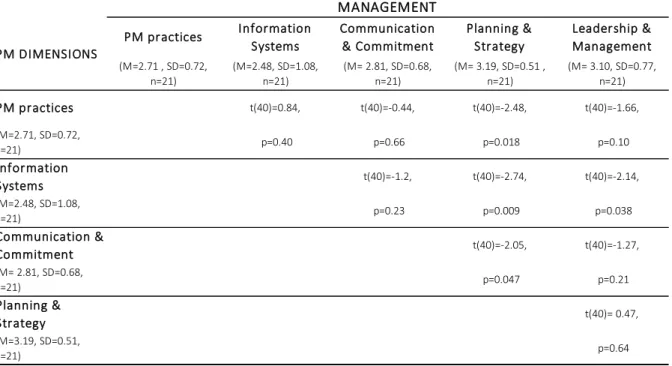
Table 4. Results of Paired-samples T-tests between respective PM dimensions for Management
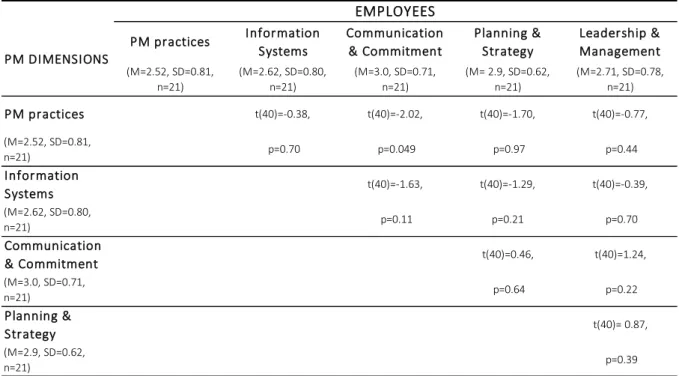
Table 5. Results of Paired-samples T-tests between respective PM dimensions for Employees
Table 6. Thematic Analysis of Responses by Management and Employees to Open-ended Questions
List of Figures
Figure 1. Jääskeläinen and Roitto’s (year) Performance Management Maturity Model
Figure 2. The DBN Performance Management Maturity Profile
Figure 3. Overall Satisfaction Scores per Performance Management Dimension for Management and Non-management Employees
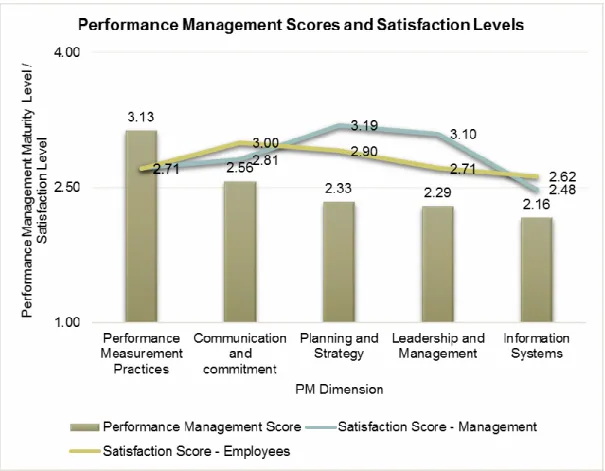
Figure 4. Summary of Performance Management Scores and Satisfaction Scores
Figure 5. Frequency at Which Management Selected Each Maturity Level Per Performance Management Dimension
1.
Introduction
The Development Bank of Namibia (DBN) is a development finance institution aimed at stimulating economic growth and social development in Namibia. The DBN commenced the implementation of its current performance management policy during 2013. The implementation phase extended over a period of three years, and now, upon full implementation, its performance management system (PMS) is ready for an evaluation of its design, structure, information systems, behavioural aspects related to performance management (PM) and its organisational fit. The DBN regards PM as an enabler of its strategic objectives and therefore regards it as imperative to ensure that the performance management system (PMS) is indeed fulfilling its purpose. An evaluation of the PMS can enable the DBN to identify any shortcomings of the system and to appropriately direct development interventions to enhance the PMS.
One way to conduct such an evaluation is through the use of maturity models. Maturity models are commonly used in business management practices such as information technology, knowledge management, new product development and supply chain management, and have also been used in the context of PM (Bititci, Garengo, Ates & Nudurupati, 2015). A maturity model is a “matrix of practices that define, for each organizational area the level of formality, sophistication and embeddedness of practices” (Bititci et al., 2015, p. 3065). Bititci et al. found that the use of maturity models in PMSs are valuable as it promotes organisational learning and enables the efficient and effective assessment of PM practices in organisations. Furthermore, maturity models of PM have developed over the years to include the evaluation of structural, technical, cultural and behavioural aspects of PMSs in organisations. The evaluation of these aspects through an appropriate maturity model framework thus allows for the determination of a maturity profile of an organisation’s PMS. A fundamental principle of maturity models is that high maturity levels are generally associated with better organisational performance (Bititci et al., 2015).
1.1.Research Questions
Using a maturity model to assess how well the DBN’s PMS is implemented could benefit the bank in improving its PMS. It is expected that the ripple effect of a mature PMS would result in the improvement of the organisational performance, and would subsequently have an impact on the growth of the Namibian economy. The following research questions are addressed in this research:
1. What is the maturity profile of the performance management system used by the DBN? 2. What are the areas of strength concerning the implementation of the DBN’s PMS? 3. What are the areas of development concerning the implementation of the DBN’s
performance management system?
In the chapters that follow, background information about the DBN and its PMS is provided (Chapter 2), a literature review of PM maturity models will be presented (Chapter 3), and the method of the study outlined (Chapter 4), followed by the results and discussion in Chapter 5, and lastly, the conclusion of the research study will be presented in Chapter 6.
2.
Context
According to Sorour (2012), the context in which performance management systems (PMSs) exist influences their effectiveness and outcomes. It is thus important to provide an overview of the context in which the Development Bank of Namibia (DBN) operates and in which the DBN’s performance management system (PMS) is embedded. Sorour (2012) identified the following factors that impact on the application and effectiveness of a PMS: the degree to which an organisation’s strategy is communicated to all staff members, interlinked policies and processes, top management commitment to the PMS, the extent to which continuous development of leadership and management capacity is effected, adequate performance management information systems, monitoring and evaluation of the implementation of the PMS, and participative development of the system. In this light, the context in which the DBN’s PMS is embedded is described in this chapter.
2.1.The DBN: Background
The government of the Republic of Namibia established the DBN in 2002 by an Act of Parliament which requires the DBN to be a catalyst for socio-economic development in Namibia by funding and enabling large-scale infrastructure development projects (Republic of Namibia, 2002). The DBN thus performs a significant role in the development of Namibia’s economy. The DBN regards PM as an enabler of its strategic objectives, which include meeting its funding targets and contributing to socio-economic development. During 2014, the DBN was instructed by government to redirect its strategic focus from servicing all types of development projects to focusing mainly on large-scale infrastructure development projects. As the DBN finds itself at a point of change in its strategic direction, it needs to ensure that its management practices, business processes and PMS are sophisticated enough to support and enable this change.
2.2.The DBN Performance Management Policy
The DBN performance management policy (Development Bank of Namibia, 2013) seeks to integrate PM with other key business processes, including strategic planning, performance measurement and monitoring, business intelligence, analysis and modelling, reporting and reviewing performance, and aligning people and culture. Additionally, its objective is to align individual, departmental and organisational goals, to identify required areas of employee development, and to create opportunities to discuss and plan employees’ career development.
The DBN regards the PMS as a strategic and integrated system to enable organisational success, by improving performance and developing the capabilities of teams and individuals in a systematic process (Development Bank of Namibia, 2013). Furthermore, it aims to stimulate superior performance of individuals in a team framework by communicating expectations, defining roles within a particular competence framework, and establishing achievable but ambitious targets. It is used as a monitoring and measuring tool and forms the foundation of the individual employee’s performance, the team’s performance and the organisation’s performance. Given its central role, it is imperative to optimise the effectiveness of the PMS through ongoing monitoring and periodic evaluation activities.
2.3.Communication of the DBN Strategy
The DBN’s strategy is communicated regularly by means of an annual welcoming address by the chief executive officer (CEO) to all staff, and announcements made in person regarding any major changes within the internal and external environment. Additionally, the DBN conducts quarterly information sessions for all employees (subsequent to board meetings) to brief employees on the progress made towards achieving annual targets, and to communicate relevant information about current happenings, initiatives, progress and achievements by individuals, departments and the organisation. An interactive approach to these meetings is encouraged, and questions and comments may be raised from and to all levels of the organisation. These meetings seek to empower employees to see the effect of their individual and team efforts on the organisational outputs.
2.4.Other Interlinked Policies and Processes
The DBN performance management policy approaches PM as an integrated process that interlinks strategic planning, performance measurement and monitoring, business intelligence, analytics and modelling, reporting and reviewing performance, and aligning people and culture into an integrated system (Development Bank of Namibia, 2013). In order to embed and reward a performance culture, the DBN remuneration strategy and guidelines (Development Bank of Namibia, 2013) outline the DBN’s approach in rewarding performance. It details the criteria for individual and organisation-wide performance requirements and the corresponding performance reward in the form of performance bonuses and/or performance-based increases.
The DBN training and development policy (Development Bank of Namibia, 2013) provides a framework for the identification and setting of development plans and provides an array of training and development opportunities, thereby furthering a learning and performance culture at the DBN. The performance evaluation process requires that competency gaps are assessed and related to training and development interventions. These identified gaps inform the next performance contract in terms of the individual development plan (IDP), which must be implemented appropriately. The progress in such development areas is then evaluated during the next performance evaluation. At the moment, the identification of the training needs are centered on the competency gaps of the individual with respects to the job requirements and does not focus on the strategy of the DBN and its future skills requirements.
Other interlinked policies include the recruitment and selection policy (Development Bank of Namibia, 2014), the on-boarding policy (Development Bank of Namibia, 2014) and the termination policy (Development Bank of Namibia, 2010). The objectives of these policies are to align talent with jobs appropriately, ensure that new employees obtain dedicated support to become productive at the DBN in the shortest possible time, and to obtain feedback from employees on the organisation before they exit the organisation. The outcomes of the application of the recruitment and selection policy should result in employing relevant and appropriate skills for the job, which should enable individual performance and enhance the
and procedures are aimed at ensuring a thorough induction into the organisation to understand the business and its functions, and to closely monitor the individual’s performance and progress during the first six months in order to intervene early during the employment to ensure optimum productivity. The exit process endeavours to detect flaws in the system as observed and experienced by the exiting employees, which could be obstacles to productivity, and to identify the reasons why people leave the organisation.
2.5.Top Management Commitment
During the implementation phase of the PMS the number of completed performance contracts and performance evaluations submitted as per the required deadlines increased. The best results were obtained during the February 2016 performance evaluations, when 94% of all performance evaluations were submitted on the deadline of 4 March 2016 (Development Bank of Namibia, 2016). This might indicate a steady improvement of top management commitment to the PMS.
2.6.Leadership and Management Development
The commitment of the DBN to management and leadership development is illustrated by its investment in the skills development of its management cadre and executive leadership through the implementation of relevant interventions since 2013. These interventions have been in the form of in-house management and leadership development programmes to ensure that the DBN has input into the design and quality of the programmes offered. In 2013 and 2014, a total of 31 executives and managers were trained through these programmes. Furthermore, the DBN enlisted the services of Systems Thinking Africa consultancy to facilitate interventions on transformational leadership during 2015, which trained a total of 28 executives and managers. These interventions looked at the roles and responsibilities of leadership and management in the organisation and addressed aspects of strategy and leadership, systems thinking, performance goal-setting, monitoring and coaching, and mentoring, among others.
2.7.Performance Management Information Systems
At the DBN, the PM cycle is divided into three phases: planning and contracting, feedback, and ongoing coaching and evaluation (Development Bank of Namibia, 2013). Currently, all three phases are done manually and recorded manually on spreadsheets – no integrated electronic performance management information system is in use. Integrated electronic performance management information systems can facilitate the PM process through goal-setting using a particular software system; such systems can integrate with the organisation’s operational system (SAP in this case) to collect performance data in order to facilitate the performance evaluation phase. Integrated electronic information systems give credibility to the PMS, as they prevent tampering with formulae and performance data, which is a common weakness on manual systems (reference).
The bulk of the organisation’s performance targets and measurements are based on financial data, which are maintained on the operational system, SAP. The non-financial targets and measurements – such as internal client satisfaction, external client satisfaction and 360 degree feedback – are set and measured manually. The client satisfaction assessments are done to provide an indication of level of sophistication of service delivery offered by the individual employees to both internal clients and external clients. The sources of these measurements are external client satisfaction surveys, internal client satisfaction surveys and 360 degree feedback questionnaires, which are administered biannually.
There have been informal complaints by employees, that the integration of information and the allocation of performance ratings often lack objectivity during performance evaluations. On average three complaints were addressed to the Head: Human Capital and Operations Support at the end of the performance evaluation process during the 2015 and 2016 financial periods. Furthermore, the executive committee raised concerns about the content of the survey instruments that were being used to measure non-financial performance (e.g. the 360 degree feedback) and requested that this be revised to ensure relevance, objectivity and value- add to the PMS.
2.8.Monitoring and Evaluation of the Implementation of PMS
Feedback on the current PMS is often directed to the Human Capital Department in an informal and ad hoc basis in the form of complaints. The monitoring and evaluation of the implementation of the PMS thus currently lacks a systematic and coordinated approach.
2.9.Participative Development
The PMS was designed by the Human Capital Department and approved by the executive management and board. During the development phase, a predominantly top-down approach was taken, with little participation from employees. This approach may have led to suboptimal buy-in and understanding of the PMS as a whole. The shop steward highlighted during a consultation in November 2015 several areas of the PMS in which mistrust and doubt existed among employees. These included: mistrust in the use of a rating scale for measurements, a concern that ratings are often based on subjective interpretation, and concerns that management may use the performance evaluation as a means to deny certain individuals performance bonus payments. These responses indicate the need for further education on PM and the inclusion of employees in the further development of the PMS. Furthermore, these remarks draw attention to the possibility that poor performance might not always be dealt with appropriately and decisively because managers do not want to be the cause of someone not receiving his/her performance bonus.
2.10. Summary
It was observed that the context in which the current PMS exists contains the following characteristics: The DBN exists in a dynamic environment and has embarked on a challenging new strategy, which requires a mature and sophisticated PMS to support the achievement of the strategic objectives. The PMS is based on the principles of integrating business processes such as strategic planning, performance measurement and monitoring, business intelligence, analysis and modelling, reporting and reviewing performance and aligning the people and culture and establishing interlinked policies on reward, capacity enhancement, alignment of talent and jobs, providing support and obtaining feedback from exiting employees, in order to
optimise the outcomes thereof. The DBN is committed to regular interactive communication to employees on the strategic objectives and performance. The DBN has invested substantially over the past four years to enhance the capacity of the leadership and management of the organisation. Although leadership with regards to the execution of the PM process has improved, the lack of an integrated information system to support the PM processes and the absence of employee participation in the ongoing development of the PMS and a systematic and coordinated approach to monitoring and evaluating the PMS are challenges to overcome. The brief assessment of the context in which the PMS is performed is an informal, non- systematic assessment of the possible factors that could have an influence on the effectiveness of the PMS. The objective in using a maturity model to assess the PMS is to ensure that a systematic and comprehensive evaluation of the performance system design, structure, relevant information systems, and behavioural and organisational cultural aspects within the organisation are duly considered and evaluated in an efficient manner.
3.
Literature Review
The purpose of this study is to evaluate the maturity profile of the performance management system (PMS) of the Development Bank of Namibia (DBN) in order to identify areas that may require improvement and to assist in developing appropriate interventions. In order to establish a shared understanding of what a PMS is, this chapter starts with a definition of PMS and then outlines the characteristics of successful PMSs. The value of performance management (PM) maturity models in evaluating PMSs is then outlined, and the PM maturity models identified in both the academic and consultancy/practitioner literature are critically reviewed. Based on the review of these PM maturity models, an appropriate model to serve as framework for this study is selected.
3.1.Performance Management Systems (PMS): A Definition
Wettstein and Kueng (2002, p. 115) define a PMS as “a system that tracks the performance of an organisation (or part thereof), supports internal and external communication of results, helps managers by supporting both tactical and strategic decision-making, and facilitates organisational learning”. Neely et al. (cited in Cocca & Alberti, 2010) refine this definition by specifying how the organisation’s performance is tracked, namely through metrics that are able to quantify the effectiveness and efficiency of actions taken. The organisation is able to make informed decisions based on this quantitative data. This indicates the fundamental role of PM data in tracking performance, strategic decision-making and action implementation. One can thus conclude that an appropriately designed and implemented PMS is an indispensable management tool to assist with organisational success.
According to Kennerley and Neely (2003), organisations need to ensure that their PMS continually evolves to reflect the context and objectives of the organisation. Furthermore, Kennerley and Neely state that PMSs consist of three interrelated elements: the individual measures that quantify the efficiency and effectiveness of individuals’ actions; a set of measures that combine to assess the performance of an organisation as a whole; and a supporting infrastructure that enables adequate data to be acquired, collated, sorted,
analysed, interpreted and disseminated. The evolution of a PMS with the aim to maintain its elements’ relevance and effectiveness takes place through reflection on these elements.
3.2.Characteristics of Successful PMSs
A literature review of the characteristics of successful PMSs showed that different authors identified different relevant factors. A summary of these is given below:
The PMS translates strategies into deliverable results (Gates, 1999; Ittner, Larcker & Randall, 2003; Mendibil & MacBryde, 2006).
The PMS includes a component that checks cause-and-effect relationships among measures (Lebas, 1995; Olsen et al., 2007).
The PMS enables an enterprise to plan, measure and control its performance (Maisel, 2001).
The PMS identifies the performance of the organisational entity as a whole (Lebas, 1995; Mohd Amir, Nik Ahmad & Sani Mohamad, 2010).
The PMS is exhaustive and non-redundant (Franceschini, Galetto, Maisano & Mastrogiacomo, 2007).
The PMS enables informed decisions to be made and actions to be taken (Neely, 1998; Otley, 1999).
The PMS detects deviations from strategy and tracks past achievement (Lebas, 1995).
The PMS is the design process for organisational success (Rompho & Boon-itt, 2012).
The PMS includes multidimensional performance measures (including measures pertaining to the financial, customer and internal business processes, learning and growth, and sustainability perspectives) (Tung, Baird & Schoch, 2011).
The PMS has top management support (Bititci et al., 2011; Mendibil & MacBryde, 2006; Tung et al., 2011).
According to Mendibil and MacBryde (2006):
The PMS includes a business process review to enhance the efficiency and effectiveness of the organisation.
The organisational culture has a strong performance orientation.
The PMS includes structured team-based performance measurement systems.
The PMS involves the systematic use of quality frameworks to facilitate performance planning and measurements.
Information technology supports the PMS.
Rompho and Boonitt (2012) suggest that questionnaires or checklists could be derived to assess the degree to which each of the success factors has been met in order to evaluate an organisation’s PMS. However, such checklists do not consider the sophistication of the characteristics of an organisation’s PMS. For example, consider an information system that supports the PMS – in one organisation it may be a highly sophisticated and efficient system, while in another organisation it is a system with limited functional utility that causes user dissatisfaction. The solution to enable a systematic and in-depth assessment of PMSs was found in the use of PM maturity models. The value of such PM maturity models will be outlined in the next section.
3.3.Value of PM Maturity Models
As outlined in the introduction, maturity models specify for each organisational practice what a formal or sophisticated (i.e. mature) practice would look like, what a not-yet-mature practice would look like and what a non-mature practice would look like (Bititci et al., 2015). The value of using PM maturity models as frameworks to understand the development and implementation level of PMSs in organisations has been demonstrated empirically by Bititci et al. They studied 12 European manufacturing companies. A number of experts were tasked to review the 12 companies using a standard business review format, and the research team used a maturity model to facilitate a self-assessment by the management staff of the same 12 companies. The results of the expert assessments and self-assessments were compared and a high level of congruence was found. Bititci et al. thus concluded that PM maturity models can easily be used in a facilitated mode or a self-assessment mode. This means that the assessment
can be conducted through the use of a consultant facilitating the assessment of the PMS, or management staff could self-assess the PMS used in their respective organisations. Furthermore, they determined that the self-assessment through PM maturity models can enhance and facilitate organisational learning, improve efficiency in the turnaround time for the outcomes of the assessment, and increase management buy-in for the results. In turn, they can improve the efficiency and frequency of organisational practice reviews, which reinforces organisational learning and continual development of managerial practices. Additionally, Bititci et al. observe that as executives are involved in assessing the system’s maturity – since it requires their critical assessment of organisational and business processes – it creates awareness of their own influence on the business processes, enlightening them on how the management practices are implemented in their own organisations, and enhances their engagement in further developing such processes.
Chelniciuc (2010) points out that specialists from the Office of the Government Commerce ( a United Kingdom Government Office) regard maturity models as essential tools in assessing organisations’ current capabilities and assisting organisations in implementing change and improvement in a structured way. According to Chelniciuc, organisations may benefit from the use of maturity models by gaining a better understanding of strengths and weaknesses, in order to initiate improvement; gaining recognition of service quality, in order to support proposals; justifying investments in process improvement; providing a roadmap for continual progression and improvement; and focusing on the system’s or organisation’s maturity rather than specific initiatives. In practice, key success factors to implement required changes successfully lie in being able to demonstrate the credibility and value addition of the change initiative, gaining buy-in and support from management, and obtaining the required investment of organisational resources. The self-assessment based on PM maturity models appears to facilitate such engagement with management to obtain their commitment.
It is for these reasons that the approach of conducting self-assessments using PM maturity models was deemed suitable to answer the research questions, and provided confidence that the study outcomes and recommendations would be beneficial to (and likely to be used in) the organisation. While research has shown that maturity models are linked with management
model to assess its overall strategy management, making this a familiar approach. The strategic management maturity model (SMMM) is used to assess the organisational strategic management performance (Arveson, Rohm, Perry, Hallbach, & DeCarlo, 2010). The SMMM entails the assessment of the organisation’s strategy management along eight different dimensions of strategic management: leadership, culture and values, strategic thinking and planning, alignment, performance measurement, PM, process improvement, and sustainability of strategic management. Based on this model, the maturity of the performance measurement system – which here refers to the degree to which end-users have fast, reliable access to relevant, high-quality data – and the PMS – which refers to the degree to which performance metrics are used in decision-making – ultimately impact on the overall level of maturity of the strategy management of the organisation.
In order to obtain the most benefit from employing a PM maturity model, an appropriate model had to be chosen. It is for this reason that an overview of published PM maturity models is provided in the next section.
3.4.Maturity Models
Several maturity models have been designed to evaluate PMSs. These models are described in academic literature and the consulting discipline. The prominent models found in academic literature are outlined below.
3.4.1. Academic Maturity Models
The earliest references to frameworks used for the assessment of PMSs do not determine maturity levels, but provide valuable information on the aspects of PMSs which are critical to assess. These frameworks include the performance management questionnaire, the framework for auditing and enhancing PMS, the performance measurement progression map, the integrated performance measurement system reference model, the evaluation of logistics PMS and the PMS review framework.
3.4.1.1. Performance Management Questionnaire
Dixon, Nanni and Vollman (cited in Cocca & Alberti, 2010) developed the performance management questionnaire (PMQ), which is an assortment of questions designed to assist managers in (a) determining to which extent the existing performance measures support improvement in three areas: quality of products and/or services, labour efficiency and machine efficiency, and (b) establishing an agenda for performance measure improvements. The purpose of the questionnaire is to audit the compatibility of the performance improvement aims and objectives with that of the organisation’s performance measures. The PMQ has been critiqued for the minimal time that management are involved during the audit phase (Bourne & Neely, 2003) and the lack of attention to the continuous improvement concept (Ghalayini & Noble, 1996), which could affect the credibility of the assessment and the buy-in by management when the results are communicated back to the organisation.
3.4.1.2. Framework for Auditing and Enhancing PMS
Medori and Steeple (2000) propose an integrated framework for auditing and enhancing PMSs, which consists of a six-stage process. The first stage consists of defining the company’s strategy and success factors. In the second stage, the success factors are matched with six defined competitive priorities (quality, cost, flexibility, time, delivery and future growth). During the third stage, the most suitable measurements of success are selected. The fourth stage sees the PMS audited to identify which existing measurements will be kept. During the fifth stage, the old and new measurements are implemented. In the sixth stage, periodic adjustments to the PMS are made.
The framework can be useful in the development of a new PMS, has an audit capability to examine an existing PMS, can identify obsolete measurements (false alarms) and core non- financial measurements that are not being measured (gaps), and can guide the implementation of new performance measurements. The framework was designed to assess the selection of measurements procedures, i.e. guidelines on the use of measurements, the implementation of measurements procedures, the audit capability, the congruency between the assessment of
methodology of assessment in a workbook approach. Although Medori and Steeple (2000) found the framework to be useful, easy to use as a self-assessment tool and able to create business awareness, it is difficult to relate an organisation’s strategy to the six competitive priorities required in the second phase, and the checklists used are at risk of becoming outdated over time due to the dynamic nature of performance measurement practices.
3.4.1.3. Performance Measurement Progression Map
Tangen (2004) proposes the Performance Measurement Progression Map (PMPM), which is formed as a flowchart and consists of nine steps separated into three phases. The first phase focuses on finding an appropriate and useful set of measures. The second phase entails an assessment of the design of performance measures, while the third phase involves the actual implementation of the new or amended performance measures. Although the PMPM offers a means to systematically evaluate PMSs and elaborates on the design of individual performance measures, the framework lacks detailed guidelines for application and it has not been tested empirically.
3.4.1.4. Integrated Performance Measurement System Reference Model
Bititci, Carrie and McDevitt (1997) identified integrity and deployment as key to an integrated PMS. They developed an audit method based on a reference model, called the Integrated Performance Measurement System Reference Model (reference), to assist organisations to verify whether or not their existing measurement systems display integrity and deployment of policy and strategy. The model integrates policy deployment, competitive criteria and benchmarking, process orientation, and normative planning. The value of this model and its practical application have not been empirically tested, which leaves its validity undetermined.
3.4.1.5. Evaluation of Logistics PMS
Caplice and Sheffi (1995) developed a set of six criteria for the evaluation of a PMS as a whole, but only focusing on logistic PMSs. Logistics refers to a complex set of activities which require a collection of metrics to adequately measure performance. The performance metrics should ideally be selected and maintained as a system, where the metrics complement and support each other, providing the decision-makers with a well-balanced picture of the logistics process. Based on their approach, a good system apply to all relevant constituencies and stakeholders (comprehensive); track those activities and indicators that influence future and current performance (causally oriented); include all pertinent activities, functions and departments along the process (horizontally integrated); translate the overall strategy of the firm to all decision-makers and ensure that they are connected to the proper reward system (vertically integrated); recognise and allow for trade-offs between the different dimensions of performance; be readily comprehensible by the decision-makers and provide a guide for action to be taken (useful). Caplice and Sheffi tested the application of the framework using case studies and deemed it useful in analysing PMSs.
3.4.1.6. PMS Review Framework
Najmi, Rigas and Fan (2005) designed a structured review framework to consider business performance and the efficiency and effectiveness of the PMS itself. A set of tools and techniques are included in the framework, which details the people representing different levels of the organisation, tools and expected outputs of each stage of the review process (i.e. ongoing review, periodic review and overall review). A review card was developed to provide a view of the major elements at a glance. Najmi, Rigas and Fan (2005) developed the framework based on sound theoretical and empirical research and deemed it to be useful to practitioners to apply and adapt according to their own situations.
In contrast to the frameworks described above maturity models provide the user with benchmarks against which to compare an organisation’s results. These benchmarks indicate particular maturity levels. The design of maturity models evolved over time concurrently with
profession was initially regarded as a warehouse for personnel data, but has moved to providing business consulting/business strategy partner services to an organisation. The PM maturity models thus initially concerned themselves with evaluating the design and structure of PMSs and evolved to include a consideration of the multiple dimensions of the context in which a PMS is found. These dimensions include reviews of management and responsibility in an organisation, communication within the organisation, methods and tools used to enable the PMS, the scale and scope of the PMS (Aho, 2012) and employee satisfaction with the system (Jääskeläinen & Roitto, 2015). The following PM maturity models were found in academic literature: Wettstein and Kueng’s PM maturity model, improvement system assessment tool (ISAT), Aho’s PM maturity model and Jääskeläinen and Roitto’s PM maturity model.
3.4.1.7. Wettstein and Kueng’s Performance Management Maturity Model
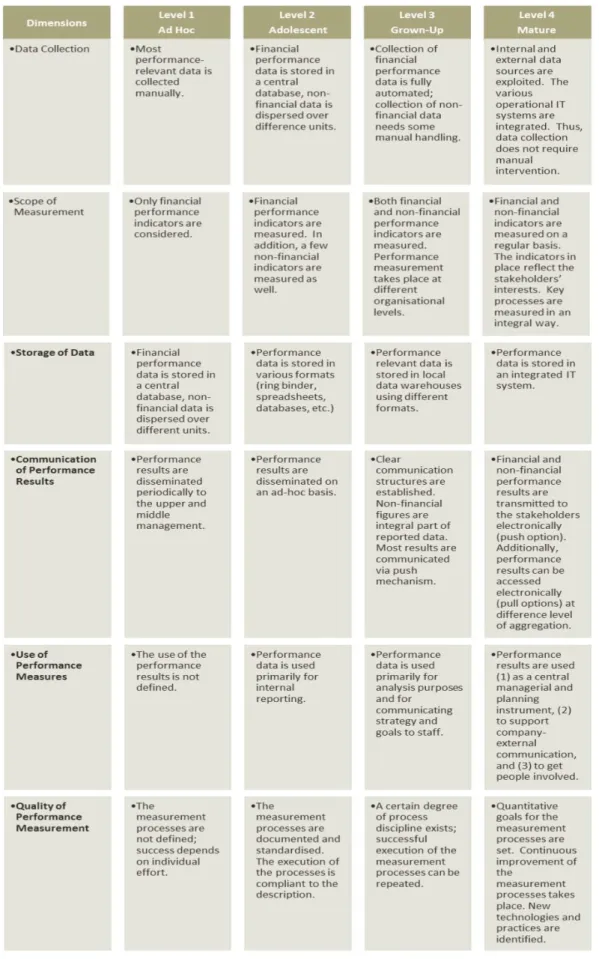
Wettstein and Kueng (2002) developed a maturity model for assessing existing business performance measurement systems. They propose that the five basic elements of a PMS are people, procedures, data, software and hardware. They suggest that PMS’s can be assessed according to six dimensions: scope of measurement, data collection, storage of data, communication of performance results, use of performance measures, and quality of performance measurement processes. The model takes into account the main tasks of a PMS, the underlying processes, the information technology used, and the people using the PMS. It proposes four levels of maturity: ad hoc, adolescent, grown-up and mature. An overview of the model is provided in Table 1.
Table 1. A Four-stage Maturity Model for Performance Measurement Systems (extracted from Wettstein & Kueng, 2002).
Although this model was designed based on the analysis of theoretical models (the Nolan model (Gibson & Nolan, 1974) and the Capability Maturity Model (Carnegie Mellon Software Institute, 2001) and empirical data (case studies), it still needs to be validated in terms of whether it can be used to determine improvement needs and possible economic benefits to an organisation (Wettstein & Kueng, 2002).
3.4.1.8. Improvement System Assessment Tool (ISAT)
Van Aken, Letens, Coleman, Farris and Van Goubergen (2005) designed the Improvement System Assessment Tool (ISAT) to assess the maturity and effectiveness of an organisation’s system for integrated improvement. The ISAT model comprises two types of assessment: improvement processes, and outputs and actual results achieved on measures. The assessment of the improvement process and its outputs includes assessing the need for change, the current situation, the setting of future direction, the improvement plans, the implementation plans, the performance review process and whether the infrastructure supports the change. Furthermore, the tool provides a structure for collecting data and assessing performance measurement systems, specifically by assessing the degree of alignment with other systems, tracking the implementation progress, evaluating the measurement system maturity and measuring current performance levels. The ISAT includes a set of descriptors of state-of-the- art practices and methods for each element that provides objective information and guidance to the assessor regarding the improvement of the PMS.
Van Aken et al. (2005) found that the ISAT offers a holistic yet detailed assessment of PMSs by assessing measurement system design quality, implementation and use – this provides useful and actionable feedback for leadership to enhance the maturity of the PMS. The ISAT can also be used to track progress in PMS effectiveness longitudinally.
3.4.1.9. Aho’s PM maturity model
Aho (2012) developed a model for assessing the maturity of a PMS in an organisation along five components: information, intangible assets, performance, strategy and business, and technology. These components are each subdivided into three subcomponents:
Information:
o Data and information quality
o Information production, distribution and availability
o Common structures and master data
Intangible assets: o Competencies o Organisational culture o Stakeholders Performance: o PM processes o Measurement monitoring
o Data and information analysis
Strategy and business:
o Business value
o Decision support
o Strategy and objectives
Technology:
o Business and technology alignment
o Application architecture
o Data warehouse architecture
Furthermore, the model considers the context in which the PMS exists and reviews the supporting components, such as communication, methods and tools, scale and scope, and management practices and ownership of responsibility. The following maturity levels were defined: initial (information silos and no common standards across the organisation), repeatable (the PMS’s value is understood by the organisation), defined (decision-making is
fact-based), managed (business becomes more analytical in key business areas), and optimised (PM has become a strategic tool for management).
The fundamental feature of this maturity model is the transformation of raw data into information and then into knowledge, which helps with the identification of inhibitors, challenges and pitfalls in the PMS – e.g. bad data quality, information incoherence and improper use of operational information systems. This model is unique in that it examines PMSs from an information and knowledge management point of view and it further extends PM research as it provides a deeper understanding of the underlying components of a PMS.
3.4.1.10. Jääskeläinen and Roitto’s Performance Management Maturity Model
Jääskeläinen and Roitto’s (2015) recently developed PM maturity model assesses the following variables of PM maturity, which they deem critical: performance measurement practices, the information system supporting performance measurement, communication and commitment, strategy and planning, leadership and management, and user satisfaction. The model proposes four maturity profiles: Dissatisfied/Low PM score, Dissatisfied/High PM score, Satisfied/Low PM score, and Satisfied/High PM score.
Jääskeläinen and Roitto (2015) derived the critical variables from existing literature and provided written criteria for each of the four different maturity levels. They created PMS maturity profiles from empirical data which they linked to indicators of satisfaction with the PMS components. This model is unique in that it utilises extensive survey data and quantitative methods to construct distinctive maturity profiles. Furthermore, it provides a balance between rigor and relevance that is desired in the design of scientific research. The authors regarded it as an easy-to-use tool that can be used in self-assessment, that it has good problem-solving power and that it works well as a basis for the development of the PMS. It highlights specific variables to concentrate on when better personnel satisfaction with PM is aspired to. Jääskeläinen and Roitto (2015) regarded it as a limitation that it was only tested in Finland and that the application of the model globally has not yet been demonstrated.
3.4.2. Consultancy-based Models
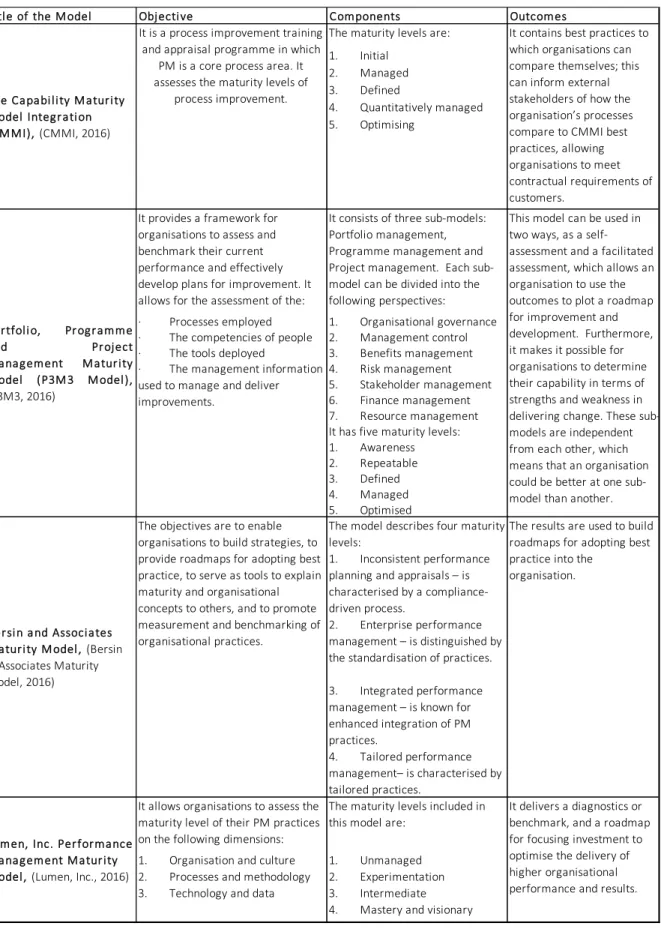
Due to the commercial nature of consulting, which includes the protection of proprietary information and the copyrighting of consultancy-based models, access to the theoretical and methodological underpinnings of the maturity models is often restricted. Due to the limited information available on models derived in the consulting discipline, it is also difficult to assess them on the basis of their theoretical underpinnings, empirical evidence and validity. PM maturity models that stem from the consulting discipline are thus often criticised because they are not always supported by empirical data or a sound theoretical basis (Jääskeläinen & Roitto, 2015). However, brief outlines on commercially available tools are provided in the Table 2: Consultancy-based Maturity Models.
Table 2. Consultancy-based Maturity Models
Title of the Model Objective Components Outcomes
The maturity levels are: 1. Initial
2. Managed 3. Defined
4. Quantitatively managed 5. Optimising
It provides a framework for organisations to assess and benchmark their current performance and effectively develop plans for improvement. It allows for the assessment of the:
It consists of three sub-models: Portfolio management, Programme management and Project management. Each sub-model can be divided into the following perspectives: · Processes employed 1. Organisational governance · The competencies of people 2. Management control · The tools deployed 3. Benefits management
4. Risk management 5. Stakeholder management 6. Finance management 7. Resource management It has five maturity levels: 1. Awareness 2. Repeatable 3. Defined 4. Managed 5. Optimised
The model describes four maturity levels:
1. Inconsistent performance planning and appraisals – is characterised by a compliance-driven process.
2. Enterprise performance management – is distinguished by the standardisation of practices. 3. Integrated performance management – is known for enhanced integration of PM practices.
4. Tailored performance management– is characterised by tailored practices.
It allows organisations to assess the maturity level of their PM practices on the following dimensions:
The maturity levels included in this model are:
1. Organisation and culture 1. Unmanaged 2. Processes and methodology 2. Experimentation 3. Technology and data 3. Intermediate
4. Mastery and visionary Lumen, Inc. Performance
Management Maturity Model, (Lumen, Inc., 2016)
It delivers a diagnostics or benchmark, and a roadmap for focusing investment to optimise the delivery of higher organisational performance and results. This model can be used in two ways, as a self-assessment and a facilitated assessment, which allows an organisation to use the outcomes to plot a roadmap for improvement and development. Furthermore, it makes it possible for organisations to determine their capability in terms of strengths and weakness in delivering change. These sub-models are independent from each other, which means that an organisation could be better at one sub-model than another. · The management information
used to manage and deliver improvements.
The Capability Maturity Model Integration (CMMI), (CMMI, 2016)
It is a process improvement training and appraisal programme in which
PM is a core process area. It assesses the maturity levels of
process improvement.
It contains best practices to which organisations can compare themselves; this can inform external stakeholders of how the organisation’s processes compare to CMMI best practices, allowing organisations to meet contractual requirements of customers. Portfolio, Programme and Project Management Maturity Model (P3M3 Model), (P3M3, 2016)
Bersin and Associates Maturity Model, (Bersin & Associates Maturity Model, 2016)
The objectives are to enable organisations to build strategies, to provide roadmaps for adopting best practice, to serve as tools to explain maturity and organisational concepts to others, and to promote measurement and benchmarking of organisational practices.
The results are used to build roadmaps for adopting best practice into the
3.4.3. Factors Considered In Selecting an Appropriate Maturity Model
When determining which PM maturity model would be most appropriate to use for the evaluation of the DBN’s PMS three factors were considered: it needed to have a sound balance between academic rigor and pragmatism, it had to be easy to apply as a self-assessment yet be comprehensive in its assessment, and its validity had to have been determined. In selecting a model that balances academic rigor and pragmatism, the objective is to capitalise on a model which has been scientifically developed by academic and research professionals while also being practically useful in the workplace. As the experiences with using assessment tools vary within organisations, it is important not to have excessively complicated methodology attached to the application of the model, yet this should not compromise obtaining a thorough assessment. Lastly, prudent business practice requires evidence of validity before introducing a tool to an organisation which is intended to guide decision-making by management.
The PM maturity model presented by Jääskeläinen and Roitto (2015) fulfils all the above requirements. The validity of the application of this model in another country other than Finland has not been demonstrated, thus there is uncertainty at this stage of whether the application of the model in the DBN context will be useful. Furthermore, the application of this tool in a different context (outside Finland) may add further value to the literature. The motivation for selecting this model is outlined in more detail below.
3.4.4. Motivation for Choosing Jääskeläinen and Roitto’s Performance Management Maturity Model as Basis for the DBN’s PMS Evaluation
Jääskeläinen and Roitto’s (2015) PM maturity model assesses the following critical variables of PM maturity:
performance measurement practices,
information systems supporting performance measurement,
communication of and commitment to the system,
leadership and management in implementing the PMS.
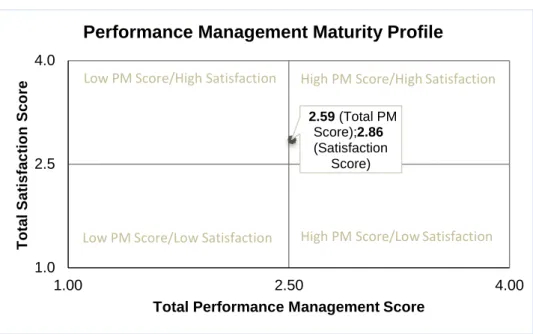
The assessment is complemented by evaluating the satisfaction of participants with the PM aspects. Maturity profiles are derived by matching the total PM score with the total satisfaction score. For each PM aspect assessed participants select one of four multiple choice answers, which each represent a particular maturity level. The overall PM maturity is derived from the maturity levels ascribed to each PM aspect. An overview of the four possible maturity levels a particular PMS can achieve is provided in Figure 1.
Figure 1. Jääskeläinen and Roitto’s (2015) Performance Management Maturity Levels
Jääskeläinen and Roitto (2015) maintain that this model is unique in that it is one of the first models that utilised extensive survey data and quantitative methods in the construction of distinctive maturity profiles. It is an easy-to-use tool that can be used for self-assessment and identifying problems, and works well as a basis for the development of an organisation’s PM. It highlights specific variables to focus on when better personnel satisfaction with PM is aspired to. When employees are satisfied with the PMS, i.e. knowledgeable of the purpose and process of the PMS, able to trust in the credibility and relevance of its various components and overall satisfied with the PMS and able to acknowledge the benefit to themselves and the organisation, it means that an organization can obtain employees buy-in, commitment and loyalty to the PMS which will enhance the effectiveness of the PMS in general. Furthermore, it was important to select a model that is relevant to the context in which the model would be applied. In this context, the PMS was new in its implementation, the level of understanding and knowledge of PMS were basic and the priority given to it by management were still in the
Satisfaction Extremely Satisfied Satisfied Dissatisfied Extremely Dissatisfied 0 100
Percentage of maximum maturity points
PERFORMANCE MANAGEMENT MATURITY MODEL BY Jääskeläinen & Roitto, 2015
Satisfied, Low PM Score Dissatisfied, Low PM Score Satisfied, High PM Score Dissatisfied, High PM Score 50
developing stages. Thus, the use of a simplistic model in terms of content and an easy-to-use tool in terms of methodology, such as the model by Jääskeläinen and Roitto (2015), were deemed appropriate. Most of the other models, such as the Framework for Auditing and Enhancing PMS, the Performance Measurement Progression Map and the Integrated Performance Measurement System Reference Model are quite sophisticated and complex in its application and would thus be more suitable for contexts where the understanding and knowledge of PMSs are more advanced, the level of PMS embeddedness more sophisticated and the priority given to the PMS are higher.
3.5.Summary
This chapter presented a literature review that defined PMSs, outlined the characteristics of successful PMSs, explained the value of PM maturity models, summarised a number of academic and consultancy-based maturity models, outlined the factors considered in selecting an appropriate maturity model, and offered a motivation for choosing the Jääskeläinen and Roitto (2015) maturity model to assess the DBN’s PM maturity.
4.
Method
The methodological approach used in this study is outlined in this chapter. The research design and procedure are described first; followed by ethical considerations such as permission, anonymity and confidentiality of the collected data. The study participants and instruments used are then described.
4.1.Research Design and Procedure
In this study, a descriptive design and a cross-sectional approach were used, as quantitative and qualitative data were collected from multiple individuals at a single point in time (Bryman, 2012). Data were obtained via two questionnaires, one for management employees and one for non-management employees at the DBN.
Care was taken to ensure that all participants were well informed about the purpose and the scope of the study, and their voluntary participation was encouraged by means of an announcement at a staff meeting and by providing a study brief in the introductory page of the questionnaire. The questionnaires were sent to the participants via an email invitation that provided a link to an online questionnaire created in the survey software Qualtrics. Using Qualtrics, which were set up to ensure participant anonymity, subsequent reminders were emailed to participants for a period of four weeks after the initial invitation to participate in the survey.
4.2.Ethical Considerations
4.2.1. Permission
A discussion was held with the DBN’s CEO to inform the company about the nature of the research project and to request permission to conduct the research project at the DBN. The CEO subsequently provided written permission for the research project to be conducted at the DBN. Lastly, the Commerce Faculty Ethics in Research Committee approved the study.
4.2.2. Anonymity and Confidentiality
The nature of the research question and research methodology did not require the tracking or identification of participants. Thus, in order to ensure anonymity of the participants, the questionnaires were distributed electronically and no information was requested by which an individual could be traced or identified.
4.2.3. Sensitive Data
The questions contained in the questionnaire were related to aspects of the PMS and were not regarded as sensitive data that could lead to harm. However, the data were treated as confidential and were only used for the purpose for which they were intended. The data were retrieved from Qualtrics and stored on the researcher’s laptop, who has access to the data by means of a password.
4.3.Participants
Invitations to participate in the research (each with a link to the appropriate survey) were sent to all 39 managers and all 40 general employees in the organisation. For the purposes of this research project, the term “management” includes all positions that have employees that report to them and in which employees have the responsibility for the planning and scheduling of work, accessing performance information, giving feedback to other employees, and evaluating the performance of other employees. These positions include executive management, middle management and supervisors. The response rates were 53.9% for management staff (n = 21) and 52.5% (n = 21) for general employees. In order to ensure anonymity due to the small workforce of the DBN and as it would not add further value to answering the research questions, no additional demographic information was sourced apart from the level of the employee (i.e. management/non- management).
4.4.Instruments
The PMS maturity assessment questionnaire designed by Jääskeläinen and Roitto (2015) was used as a basis to develop the questionnaires used in this study. This tool provided a way to assess the maturity level of the PMS in use at the DBN in terms of its design and structure, and management and employee satisfaction with it. Jääskeläinen and Roitto (2015) tested the PMS maturity assessment questionnaire in industry, and found that it provided a roadmap for how to improve the maturity profile of organisations’ PMSs.
4.4.1. Management Survey
The Jääskeläinen and Roitto (2015) original survey was administered to all management employees in the organisation (Appendix C). It is used to obtain both quantitative data – through 21 multiple-choice questions used to assess the maturity profile and five Likert-type questions assessing management staff’s satisfaction with the PMS – and qualitative data – through five open-ended questions. The multiple-choice questions cover the dimensions of performance measurement practices (six questions), information systems that support the PMS (three questions), communication and commitment (four questions), planning and strategy (four questions), and the execution of leadership and management responsibilities (four questions).
The multiple choice items allow the researcher to plot the maturity level of the PMS on the x- axis in Jääskeläinen and Roitto’s (2015) maturity model depicted in Figure 1 on page 33. There are four answer choices for each of the multiple choice items. For each item, the participant chooses the option that best describes his/her view. The first answer option (= 1) describes the most basic or undeveloped level of a PMS, and thus the lowest maturity level, while the fourth option (= 4) represents the highest level of sophistication or maturity. The participants received the following instruction: “Based on your experience and your observations with regards to the Performance Management System (PMS) used in the organisation, complete the questionnaire below. Select one option that best describe the situation at the Development Bank of Namibia. An option is regarded as applicable if the situation in the organisation meets all (not partially) the criteria mentioned in the option.” Participants were thus provided with
benchmarks against which to choose their answers, and they obtained a score between 1 and 4 for each item. The total PMS maturity score was determined by averaging the PM scores across all 21 items per participant and then averaging those scores across the number of participants.
The four answer options below are an example related to the item “use of information systems in the gathering of performance information”.
1. Performance measurement information is gathered manually when needed.
2. Performance measurement information is gathered manually to a large extent. Only financial
measurement information is gathered automatically.
3. Most of the performance measurement information is gathered with information systems which
enable the provision of real-time measurement information.
4. Performance measurement information is gathered automatically and stored centrally. The
most important information systems communicate which each other.
Jääskeläinen and Roitto (2015) argue that this response format means that each answer choice has a clear meaning, unlike in Likert scales, in which the meaning of a participant’s choice is not clear. Additionally, the description of what a system looks like at each maturity level presents best practices to the respondents at the time of completing the questionnaire, thereby raising awareness, enabling them to identify development areas and providing ways in which to improve in the development area. By providing written descriptions of what each answer option mean, make it possible for the respondents to complete the questionnaire independently, without the use of external consultants and prior knowledge of PM practices outside the organisation.
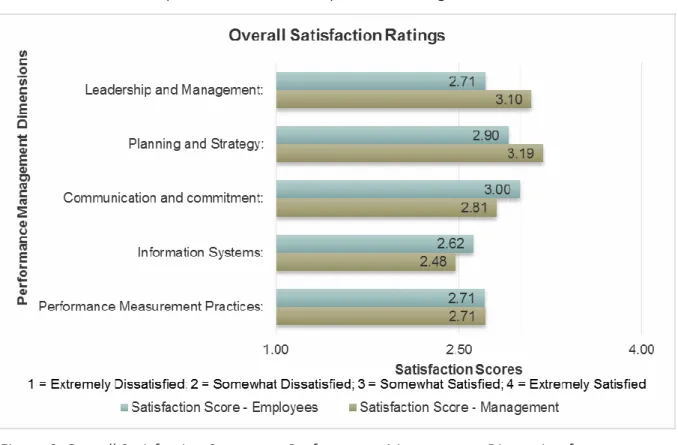
Each section containing the items on a particular PM dimension was followed by a Likert-type question and an open-ended question to assess the satisfaction levels with the particular PM dimension. A sample item is How satisfied are you with the performance measurement practices and systems in your organisation? Answers were coded from 1 (very dissatisfied) to 4 (very satisfied). The average satisfaction score for each PM dimension was determined by calculating the average satisfaction for across all the participants on the particular PM dimension.
The open ended, qualitative items in the questionnaire sought to provide in-depth information regarding the satisfaction of management with the PMS. They asked “Why are you satisfied or dissatisfied?”
To assess the appropriateness of the PMS maturity assessment questionnaire in this study, it was first administered to a manager and a general employee at the DBN, who reviewed and commented on it. Based on their feedback, technical jargon was amended and more descriptive terms or phrases were used.
The complete PMS maturity assessment questionnaire can be found in Appendix C.
4.4.2. Employee Satisfaction with PMS
As this exercise was a self-assessment by management of the maturity of the PMS employed by the organisation, the employees were not requested to assess the PMS by completing the survey containing the PM Maturity items. Employees were presented with the same ten satisfaction items (five Likert-type and five open-ended questions) as management staff. This enabled a comparison between the satisfaction ratings from management staff and those from the end-user, the employees. Such information was assumed valuable to identify possible additional areas of success and areas in need of development in the current PMS used by the DBN.
The complete employee questionnaire is provided in Appendix D.
4.5.Data Analysis
4.5.1. Quantitative Data
Descriptive data analysis was used to analyse the quantitative responses. As the assessment of the PM Maturity of DBN was conducted in the form of a self-assessment by management, the total PM maturity score and the management satisfaction score were used to plot the maturity