DARIUS MILHAUD IN THE UNITED STATES, 1940–71: TRANSATLANTIC CONSTRUCTIONS OF MUSICAL IDENTITY
Erin K. Maher
A dissertation submitted to the faculty at the University of North Carolina at Chapel Hill in partial fulfillment of the requirements for the degree of Doctor of Philosophy in the
Department of Music in the College of Arts and Sciences.
Chapel Hill 2016
iii
ABSTRACT
Erin K. Maher: Darius Milhaud in the United States, 1940–71: Transatlantic Constructions of Musical Identity
(Under the direction of Annegret Fauser)
When the French Jewish composer Darius Milhaud (1892–1974) fled his homeland with his wife and son at the time of the German invasion in 1940, this displacement marked the beginning of three decades of engagement with the musical culture and institutions of the United States. After seven years of wartime exile in Oakland, California, Darius and Madeleine Milhaud divided their time between Oakland and Paris, taking on a transatlantic existence that enabled them to assume distinct roles in U.S. musical life. Both during and after World War II, the composer taught on the faculty of Mills College, participated in intersecting musical networks, and continued to compose prolifically. He also continually renegotiated his identity as a composer—and as a Frenchman in the United States—in response to professional opportunities, personal
circumstances, and cultural shifts.
This dissertation presents the first in-depth study of Milhaud’s activity in the United States, interpreting the results of new archival research through frameworks of identity
iv
open-minded teacher, and when his neoclassical idiom began to fall out of favor, he attempted to exert continued authority by positioning himself as a mediator between the musical
establishment and the new avant-garde, connected to U.S. and French musical communities through his yearly travels. During this time, Madeleine Milhaud carried out her own creative activity, but also oriented her public image around that of her husband, whose postwar reputation was complicated by factors including age and disability. Through an exploration of one
v
ACKNOWLEDGMENTS
Despite the many hours I spent writing alone in my apartment or in the library, this dissertation was anything but a solitary endeavor. First and foremost, I thank my advisor, Annegret Fauser— under whose guidance I have done things I thought were far beyond me—for keeping me on track, for helping me to grow as a scholar and as a human being, and for believing in me more than I believe in myself. I also thank the other members of my committee: Tim Carter’s wide-ranging knowledge and attention to detail improved every piece of writing I sent him; Andrea Bohlman’s enthusiastic inquisitiveness pushed me to think beyond my scholarly comfort zone and to delight in doing so; Mark Katz and David Garcia have facilitated my development as a scholar not only as members of my dissertation committee, but also as, respectively, my Master’s thesis advisor and the Director of Graduate Studies.
Earlier in my graduate career, Brigid Cohen cultivated my interest in migration and transnationalism through her Fall 2011 seminar, “Music, Musicology, and Cross-Cultural Encounter,” and conversations with her shaped this dissertation in its beginning stages. Michael Figueroa joined the Chapel Hill music faculty at just the right moment to help me expand my understanding of how Milhaud fits into the broader world of Jewish music. I am indebted to many of my fellow graduate students, past and present, for commenting on my drafts,
vi
Megan Eagen, Kim Francis, Naomi Graber, Catherine Hughes, Maggie Kadel, Will Robin, Kristen Turner, Oren Vinogradov, Jennifer Walker, and Chris Wells.
I received financial support for this project from a number of sources. I began my
research as a James W. Pruett Fellow in Music at the Library of Congress in the summer of 2011. My parents generously covered the cost of dozens of train tickets in the summer of 2012 so that I could commute daily from their house outside Philadelphia to the New York Public Library for the Performing Arts. An Off-Campus Dissertation Research Fellowship from the Graduate School of the University of North Carolina at Chapel Hill, supplemented by a travel grant from the Carolina Center for Jewish Studies, enabled me to spend ample time at Mills College, where I not only did archival research, but also came to know the campus that Milhaud loved so much. My research in Paris and Basel was supported by the American Musicological Society’s M. Elizabeth C. Bartlet Fund for Research in France, the Kenan Graduate Student Activities Fund, and the Paul Sacher Stiftung. I am grateful for the assistance of the librarians and archivists in each of the institutions where I found material for this project, particularly Michèle Noirjean and Robert Piencikowski at the Paul Sacher Stiftung, Richard Boursy and Emily Ferrigno at Yale University, and Janice Braun and Karma Pippin at Mills College. While on campus in Chapel Hill, I held a teaching assistantship in the Department of Music, and my final year of writing was funded by an American Fellowship from AAUW.
vii
my roommate and friend, Jen Bauer, for being a music nerd with me. Before college, I learned from Rob Ross that composers are people too.
My friends outside musicology—some of whom have been listening to me talk about Milhaud for a decade or more—have cheered me on, kept me entertained, and answered questions about everything from French translation to California geography. They include Katelyn Browne, Julie Cramer, Zanna Fredland, Jessica Jackson, Aliyah Johnson, Rachael Linden, Rebecca Maxfield, Cassidy Percoco, Lydia Spielberg, and Leanna Yip. A special thanks goes to Kyra Davies, who never lets me forget that composers are hilarious.
Finally, I thank my family—my parents, Chris and Donna; my siblings, Brian and
viii
TABLE OF CONTENTS
LIST OF TABLES ... xi
LIST OF FIGURES ... xii
LIST OF ABBREVIATIONS ... xiii
NOTE ON TRANSCRIPTION AND TRANSLATION ... xiv
INTRODUCTION ... 1
Milhaud Sources and Scholarship ... 6
Composers and Biography ... 11
Biography as Historiographical Intervention ... 20
Milhaud and the United States before 1940 ... 27
Chapter Overview ... 35
CHAPTER ONE: A FRENCH COMPOSER IN EXILE (1940–44) ... 41
Aix-en-Provence, 1939–40 ... 43
From Aix to Oakland ... 52
Separation from France ... 60
Isolation and Community ... 74
ix
CHAPTER TWO: FORGING A NEW PATH (1944–47) ... 93
American Connections ... 101
Politics After the Liberation... 108
Symbolic Remigration ... 117
Returning to France... 126
CHAPTER THREE: THE EVOLUTION OF A JEWISH COMPOSER ... 136
“The Problem of Jewish Music” ... 141
Music for the Synagogue ... 153
Israel and California ... 165
A Jewish Composer on the World Stage ... 186
CHAPTER FOUR: MILHAUD AND MILLS COLLEGE ... 200
Milhaud and Mills ... 205
Teaching Americans ... 218
Mills as a Women’s College ... 226
Experimental Music at Mills ... 239
CHAPTER FIVE: MADELEINE MILHAUD ... 256
Madeleine Milhaud in France ... 261
A French Woman in Exile ... 268
Professional Activity ... 281
x
The Composer’s Widow ... 318
CHAPTER SIX: IDENTITY AFTER EXILE ... 323
Embodying International Exchange ... 328
The Disabled Composer ... 338
Status and Reception ... 350
Epilogue ... 369
xi
LIST OF TABLES
Table 0.1: Performances of Milhaud’s music by New York modern-music societies,
1923–31... 32 Table 5.1: One-act operas and other short works directed by Madeleine Milhaud at the
xii
LIST OF FIGURES
Figure 3.1: Marc Chagall, cover art for David, 1954 (Israeli Music Publications) ... 177
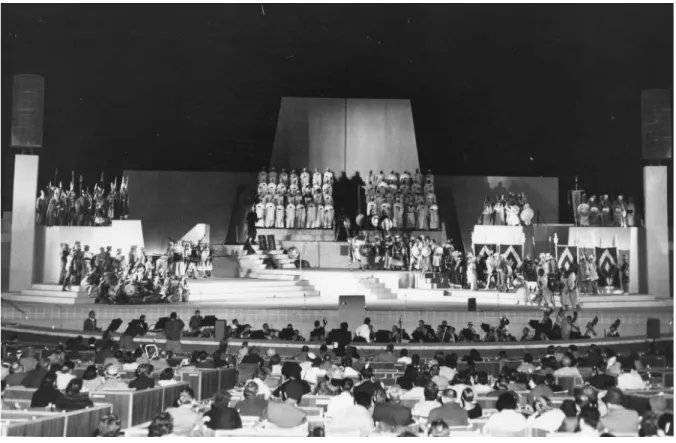
Figure 3.2: David at the Hollywood Bowl, September 1956 ... 183
Figure 3.3: New York Times, 19 October 1973, p. 51 (ProQuest Historical Newspapers) ... 197
Figure 4.1: Mills Performing Group concert program, 14 December 1970 ... 241
xiii
LIST OF ABBREVIATIONS
Published Sources
CWMM Nichols, Roger. Conversations with Madeleine Milhaud. London: Faber and Faber, 1996.
C-Collaer Collaer, Paul. Correspondance avec des amis musiciens. Edited by Robert Wangermée. Liège: Pierre Mardaga, 1996.
C-Hoppenot Milhaud, Madeleine, Darius Milhaud, Hélène Hoppenot, and Henri Hoppenot. Conversation: Correspondance 1918–1974, Complétée par des pages du Journal d’Hélène Hoppenot. Edited by Marie France Mousli. Paris: Gallimard, 2005.
C-Poulenc Poulenc, Francis. Correspondance 1910–1963. Edited by Myriam Chimènes. Paris: Fayard, 1994.
MVH Milhaud, Darius. Ma Vie heureuse. Paris: Belfond, 1973.
Archival Sources
Mills-DM, x.y.z Darius Milhaud Collection, Mills College (Oakland, California), Record Group x, Box y, Folder z
xiv
NOTE ON TRANSCRIPTION AND TRANSLATION
1
INTRODUCTION
The program notes for the Pittsburgh Symphony Orchestra’s May 1968 performance of Darius Milhaud’s Le Carnaval d’Aix (1926) included the following remarks on the seventy-five-year-old composer’s perceived connection between Aix-en-Provence, France—his hometown and the namesake of the piece on the program—and Oakland, California, the city that had become his second home.
Since the end of World War II, Milhaud has been dividing his time between Europe and America, composing and teaching. Milhaud told this writer, on a visit to his California home, the reasons for his attachment to the American West. “Here in California one feels like in the Provence. There are similar flowers, almond trees, evergreens, and a mild climate. Sometimes when I sit in my California garden, it seems as though I were in France.”1
Milhaud’s idyllic image of a city better known in 1968 for its racialized violence than for its trees and flowers reflects his seclusion on the campus of Mills College, where he lived and worked. It also represents the culmination of a process of creating coherence from a lifetime of international travel. (Three years later, when he retired to Geneva, Switzerland, he chose that location because it reminded him of Mills.) Seeing Provence in northern California meant that it was a place where he could feel at home; he had spoken in the 1930s of Aix as “the capital of an ideal Provence going from Constantinople to Rio de Janeiro,” and by 1968, the San Francisco Bay Area had become an extension of that imagined landscape.2
1 Frederick Dorian, “In the Serene Provence,” program notes for the Pittsburgh Symphony Orchestra, 17 and 19
May 1968, New York Public Library for the Performing Arts, Darius Milhaud clippings file.
2
2
Milhaud initially forged his identity as a composer in interwar Paris, first as a member of the modernist collective known as “Les Six,” then as someone trying to move beyond the
group’s reputation for superficiality. The recurring themes that accrued to his public image during that time included an ability and willingness to produce new compositions at a rapid pace, a short-lived fascination with jazz and Brazilian popular music that retained a permanent place in his reception, the use of a polytonal musical language, and a concept of “Mediterranean” or “Latin” identity that linked his Provençal Jewish heritage to his aspirations as a mainstream French composer and to his love of international travel.3 By 1968, close to the end of his sixty-year career, these themes and others had been reconfigured and reinterpreted—both by the composer himself and by colleagues and critics—in response to the personal, professional, and cultural changes of the past three decades. Prolificness and polytonality marked him as behind the times in the judgment of many; his association with jazz was strengthened by Dave Brubeck and other jazz musicians claiming him as an influential teacher; and through his self-defined Mediterranean identity, he asserted an affinity with landscapes and cultures from Jerusalem to San Francisco.
World War II was the catalyst for much of this change. Like a number of Jewish artists and intellectuals in France—a group that included not only native-born French citizens and long-established immigrants, but also those who had fled Nazi Germany for France during the
1930s—Milhaud had the resources and connections necessary to escape the German invasion in 1940. By taking advantage of established plans for a U.S. concert tour, he secured travel
documents for himself, his wife, and their ten-year-old son—unfortunately leaving behind his elderly parents—and departed France just a few days before the armistice of 22 June. Both
3
3
Darius and Madeleine Milhaud joined the faculty of Mills College, which already had a
distinguished music department and a summer French program that drew notable guest lecturers. Living in Oakland put the Milhauds several hundred miles away from the large and complex émigré community of Los Angeles, and much farther from New York, where many of their French compatriots had settled. The relative isolation of Oakland was in some ways
demoralizing, but it also enabled the couple both to create space for themselves in a smaller city and to engage with wartime politics in their own way. Self-identifying as an exiled Frenchman, Darius Milhaud aimed to “defend French culture” through his position as a well-known
composer, while Madeleine Milhaud did the same as a teacher of French and drama.
4
difference shaped the ways in which critics, friends, and the public interpreted his music as well as his status as a senior composer. The need to care for her husband changed Madeleine
Milhaud’s public image as well, as it led her to make “wife of the composer” her primary public identity. Adding summers at the Aspen Music Festival to their ongoing work at Mills, the couple developed reputations as pedagogues and enlarged their already-expansive network of friends and colleagues in the international world of concert music.
In addition to his participation in these intersecting networks and communities, Milhaud composed about half of his 433 numbered works—including all twelve of his symphonies for large orchestra—during and after World War II. However, this period, and especially his life in the United States, has been reduced in scholarship to little more than a coda to his activities in interwar Paris. The relative weight generally given to each period of Milhaud’s career is
exemplified by the “Life” section of the article on the composer in the second edition of the New Grove Dictionary of Music and Musicians (2001): following more than 1,600 words on his upbringing and early professional activity, the years after 1940 are encapsulated in a single 240-word paragraph.4 Milhaud also plays a significant role in a number of studies of music in
4
5
interwar Paris, but rarely makes more than a cameo appearance in scholarship on music after 1940, whether focused on France or on the United States.5
In the aggregate, the impression created by these conspicuous absences and abridgments is that Milhaud’s exile from France in 1940 put an end not only to the “interesting” part of his career, but also to his relevance to music history more broadly. Accepting this notion has troubling implications, as it—however inadvertently—perpetuates the silencing of a composer exiled as a direct result of Nazi ideology. Yet the causes and the consequences of this silencing reach far beyond one composer’s life and work, and counteracting it is not a simple matter of re-inserting Milhaud and his compositions into established music-historical narratives. Indeed, the minimization of Milhaud’s place in the history of music after 1940—and of that time period in his legacy as a composer—reflects a confluence of assumptions, priorities, and boundaries that have shaped the current state of musicological research.
This dissertation presents the first in-depth study of Milhaud's career in the United States. Through extensive research in U.S. and European archives, I trace his activity as a composer and teacher in the context of the ideologies of music, nation, religion, gender, disability, and politics that shaped the construction and reception of his identity in a variety of contexts. By
repositioning Milhaud’s 1940 exile as the beginning of a story, rather than as the end of one, this dissertation not only asserts a place for one composer in a particular musical and cultural
landscape, but also refocuses that landscape in a manner that draws attention to the ways in which scholars have constructed and framed it.
5
6
Milhaud Sources and Scholarship
The main biographical source on Darius Milhaud is still his memoirs, first published in 1949 as Notes sans musique (“Notes Without Music”) and expanded in 1973 as Ma Vie heureuse (“My Happy Life”).6 In 1964, he gave the manuscript of all but the last five chapters, which had not yet been written, to the Music Division of the Library of Congress, where I stumbled upon it in 2011 as an intern working in the basement.7 This manuscript consists of the notebooks in which he drafted the first edition of Notes sans musique, Madeleine Milhaud’s transcribed draft of two additional chapters that he dictated to her, and a typed version of those chapters with corrections in Darius Milhaud’s hand.8 In this study, I quote from the manuscript only when it provides information absent from the official text or when the time and place at which Milhaud wrote a given part of the text is significant. For example, the preface states that he began writing on the day of the liberation of Paris in 1944, and he completed the first draft shortly before returning to France in 1947. Otherwise, I quote from Ma Vie heureuse, using my own English translations. Even in this expanded edition, the narrative is weighted heavily toward Milhaud’s early life and the era of Les Six; the chapters added after 1949 are also noticeably more fragmented and diary-like. This imbalance in Milhaud’s own telling of his life story both reflects and perpetuates the central place of the early 1920s in his image as a composer. Two extended interviews with
6
There was also a 1962 edition that included several new chapters, but retained the title of Notes sans musique. The first English translation was published in 1953, with the translation of Ma Vie heureuse following in 1995. The only recent biography of Milhaud, by Micheline Ricavy and Robert Milhaud, does not include a significant amount of new information, and it largely reproduces the existing biographical narrative; Darius Milhaud: Un compositeur français humaniste: sa traversée du XXe siècle (Paris: Van de Velde, 2013).
7 My thanks to fellow intern Christa Bentley for spotting the case on the shelf and pointing it out to me.
8 The two additional chapters appear in the 1962 French and German editions of Notes sans musique as well as in
7
Madeleine Milhaud supplement Ma Vie heureuse and introduce her own perspective on her husband’s career and on their life together.9
In addition to Ma Vie heureuse, the primary-source material for this project includes correspondence, newspaper articles, printed and recorded interviews, and other documents. I am one of the first scholars to have had access to the Darius Milhaud Collection at the Paul Sacher Stiftung in Basel, Switzerland; these materials, which include correspondence, music
manuscripts, and unpublished writings, were transferred to the Sacher Stiftung following the death of Madeleine Milhaud in 2008. This collection is essential to every chapter of my dissertation; most notably, letters to Milhaud from friends in France during and immediately after the German occupation have greatly enriched my understanding of the symbolic importance the composer held for them and the practical aspects of preparing for his return. At the
Bibliothèque Nationale de France in Paris, Milhaud’s letters to the composer Henri Sauguet— numbering more than three hundred—document almost his entire career, with a gap between 1940 and 1944. Published correspondence collections of Francis Poulenc and Paul Collaer feature dozens of letters to, from, or about Milhaud from the period under discussion in this study, and even more from before 1940.10 Nearly three hundred of Darius and Madeleine Milhaud’s letters to their close friends Henri and Hélène Hoppenot were published in 2005, and this extraordinarily rich resource offers a level of factual detail and emotional complexity
9
Roger Nichols, Conversations with Madeleine Milhaud (London: Faber and Faber, 1996), hereafter CWMM; Madeleine Milhaud, Mon XXème siècle, edited by Mildred Clary (Paris: Bleu Nuit, 2002). For the latter interview, I use Clary’s own English translation, My Twentieth Century (Cleveland: Darius Milhaud Society, 2008). The two interviews cover much of the same material, but Clary’s is organized into a chronological narrative.
10
8
missing from Ma Vie heureuse and other published sources.11 However, the other half of the conversation is unfortunately missing, and there are a number of redactions in the text.
I have examined the entire Milhaud collection at Mills College, which includes
correspondence with Mills professors and administrators, press clippings, photographs, concert programs, music manuscripts, unpublished writings, recorded and transcribed interviews with both Darius and Madeleine Milhaud, and copies of the Darius Milhaud Society Newsletter. My sources also include letters and manuscripts in collections at the Library of Congress, the New York Public Library for the Performing Arts, Yale University, and the University of California, Berkeley. The more than three thousand newspaper articles I have collected for this project come from three main sources: ProQuest Historical Newspapers, the commercial database
NewspaperARCHIVE.com, and the extensive clippings file in the Mills College collection. Although I cite only a fraction of these articles, they have helped me to establish a chronology of Milhaud’s various activities in the United States.
Studies of Milhaud’s pre-exile career—which comprise nearly all of the scholarship on the composer—have informed my understanding of the person he was at the time of his arrival in the United States in 1940. Barbara L. Kelly has discussed Milhaud’s negotiation of French, Jewish, and Mediterranean identities in the first decades of his professional activity, drawing on his compositions and writings between 1912 and 1939.12 Her study, published in 2003,
11 Madeleine Milhaud, Darius Milhaud, Hélène Hoppenot, and Henri Hoppenot, Conversation: Correspondance
1918–1974, Complétée par des pages du Journal d’Hélène Hoppenot, ed. Marie France Mousli (Paris: Gallimard, 2005). In subsequent citations, I refer to this collection as C-Hoppenot. Henri Hoppenot was a French writer and diplomat; he and his wife befriended Milhaud in Rio de Janeiro in 1918—where he and Milhaud both worked for Paul Claudel, the French ambassador to Brazil—and he subsequently wrote the librettos for Milhaud’s three opéras-minute in 1927. Madeleine Milhaud became friends with the Hoppenots after her marriage to Darius Milhaud in 1925, and about twenty percent of the letters in this volume are written by her. During World War II, Henri Hoppenot served as the Vichy ambassador to Uruguay before defecting to the Free French in 1942 and taking up a new post in Washington, D.C.
9
represents a significant move away from the narrow focus on the early 1920s found in most earlier scholarship on Milhaud, and toward critical engagement with issues of personal and professional identity construction. Kelly’s most recent book, Music and Ultra-Modernism in France, situates Milhaud within intergenerational networks of composers and critics during the same time period.13 Louis K. Epstein’s analysis of Milhaud’s business correspondence from the 1930s reveals the experience and strategies the composer subsequently brought to the task of continuing his work in a new country, and he also documents Milhaud’s earlier U.S. concert tours.14 Jane F. Fulcher, Leslie A. Sprout, and Christopher Moore have discussed Milhaud’s involvement with French culture and politics in the interwar years within broader studies of that period.15 The 2014 essay collection Darius Milhaud: Compositeur et expérimentateur features contributions on a variety of topics, including compositional experimentation, Provençal identity, and stage and film music, mostly focusing on the interwar period.16
Much of the scholarly engagement with Milhaud’s career after 1940 appears in
dissertations focusing on individual aspects of his compositional output. Ralph Swickard’s 1973 survey of Milhaud’s symphonies incorporates the author’s first-hand observations about the composer’s U.S. reception, as well as information about the genesis of each work.17 In a dissertation on Milhaud’s ballets, Sandra Sedman Yang details the collaborative processes
13 Kelly, Music and Ultra-Modernism in France.
14
Epstein, “Toward a Theory of Patronage,” 260–331.
15 Jane F. Fulcher, The Composer as Intellectual: Music and Ideology in France 1914–1940 (New York: Oxford
University Press, 2005); Sprout, “Music for a ‘New Era’”; Moore, “Music in France and the Popular Front.”
16 Jacinthe Harbec and Marie-Noëlle Lavoie, eds., Darius Milhaud: Compositeur et expérimentateur (Paris: J. Vrin,
2014).
17
10
behind The Man from Midian, Jeux de printemps, and The Bells, all composed in the 1940s.18 Jeremy Drake’s study of Milhaud’s operas discusses Bolivar, written in exile but premiered in Paris, and David, which received a significant performance at the Hollywood Bowl in 1956.19
In a book chapter featuring exiled composers from multiple countries, Annegret Fauser shows that Milhaud’s French identity was central to his construction of a compositional career in the United States.20 By drawing attention to the distinct ways in which composers from Allied or Axis countries engaged with issues of national identity in exile, Fauser demonstrates that
scholarly frameworks assuming a German or Austrian subject—which are particularly common in musicology—cannot always apply comfortably to exiled individuals with other
backgrounds.21 Kimberly A. Francis’s study of Nadia Boulanger and Igor Stravinsky also addresses the issue of displacement from France and from French musical life—and, in the case of Boulanger, of remigration after the war—as does other scholarship on these two musicians.22 Other scholarship on exile and migration in the lives of twentieth-century European composers has shaped my approach to this dissertation. Sabine Feisst’s book on Arnold Schoenberg in the United States parallels this project in a number of ways, with discussions of teaching, the American music business, and the negotiation of multiple identities.23 Whereas Feisst was
18 Sandra Sedman Yang, “The Composer and Dance Collaboration in the Twentieth Century: Darius Milhaud’s
Ballets, 1919–1958” (PhD diss., University of California, Los Angeles, 1997).
19 Jeremy Drake, The Operas of Darius Milhaud (New York: Garland Publishing, 1989). This book is a reprint of a
dissertation completed in 1983.
20 Fauser, Sounds of War, 178–223. See also eadem, “Music for the Allies: Representations of Nationhood in the
United States during World War II,” in Crosscurrents: American and European Music in Interaction, 1900–2000, ed. Felix Meyer et al. (Woodbridge, UK: Boydell Press, 2014), 247–58.
21 For example, see Reinhold Brinkmann and Christoph Wolff, eds., Driven into Paradise: The Musical Migration
from Nazi Germany to the United States (Berkeley: University of California Press, 1999).
22
Kimberly A. Francis, Teaching Stravinsky: Nadia Boulanger and the Consecration of a Modernist Icon (New York: Oxford University Press, 2015), 109–63; Stephen Walsh, Stravinsky: The Second Exile: France and America, 1934–1971 (Berkeley: University of California Press, 2006); Jeanice Brooks, The Musical Work of Nadia
Boulanger: Performing Past and Future Between the Wars (New York: Cambridge University Press, 2013), 253–57.
11
writing against an “existing literature . . . fraught with misinformation and misunderstandings,” however, so little has been written on Milhaud’s U.S. career that I do not have as many
established myths to dispel.24 The concept of “symbolic remigration” in Joy H. Calico’s work on postwar European performances of Schoenberg’s A Survivor from Warsaw gives me a lens through which to view the return of Milhaud’s music to French concert programs and radio broadcasts in the period between the end of the German occupation in 1944 and the composer’s own return to France in 1947.25 Brigid Cohen’s study of Stefan Wolpe criticizes the limitations of an “exile” framework—particularly as it relates to nation-centered music historiography—and situates the composer within musical and artistic communities in a way that has influenced my perception of Milhaud’s U.S. activities, particularly his involvement with Mills College.26
Composers and Biography
Although this study is not a biography of Darius Milhaud in any comprehensive sense, my methodological framework owes much to recent reevaluations of biography in musicology, history, and the humanities more broadly.27 The shift away from “great man” paradigms of
24 Ibid., xi. For a revisionist study of another composer, Kurt Weill, whose exile has been interpreted in reductive
terms, see Naomi Graber, “Found in Translation: Kurt Weill on Broadway and in Hollywood, 1935–1939” (PhD diss., University of North Carolina at Chapel Hill, 2013).
25
Joy H. Calico, Arnold Schoenberg’s A Survivor from Warsaw in Postwar Europe (Berkeley: University of California Press, 2014). My understanding of musical life in Paris during and immediately after the German occupation is informed by scholarship including Myriam Chimènes, ed., La Vie musicale sous Vichy (Brussels: Complexe, 2001); Yannick Simon, Composer sous Vichy (Lyon: Symétrie, 2009); Myriam Chimènes and Yannick Simon, eds., La Musique à Paris sous l’Occupation (Paris: Fayard, 2013); Leslie A. Sprout, The Musical Legacy of Wartime France (Berkeley: University of California Press, 2013).
26 Brigid Cohen, Stefan Wolpe and the Avant-Garde Diaspora (New York: Cambridge University Press, 2012).
27
12
biography and toward a view of individual lives as multifaceted and socially constituted is especially vital in the case of composers of Western art music, who are—even now—too often seen through the distorting lens of traditional biography.28 My approach aligns with the
recommendations of Jolanta T. Pekacz, who argues that the ways in which we view the lives of individual musicians must move beyond older models of biography that aim for thematic consistency and a unified identity:
If, indeed, individuals cannot be separated from the social, cultural, and symbolic world in which they act, and no one ‘invents’ a self apart from cultural notions available in a particular cultural setting, then a biographer should not be looking for a single psychic conflict that ‘unlocks’ the subject’s life but, rather, for other factors: the evidence of a self that is performed to create an impression of coherence; an individual with multiple selves whose different manifestations reflect the passage of time and the demands and options of different settings; a variety of ways in which others seek to represent this individual.29
The practice of “traditional biography” against which Pekacz argues is rooted in
nineteenth-century conceptions of the artistic “genius” and of “art . . . as self-expression.”30 This outdated model has been thoroughly supplanted by several decades of scholarship in the
humanities on identity construction and artistic networks. For example, feminist historian Jo Burr Margadant writes on the paradigm shift of the “new biography”: “The subject of biography is no longer the coherent self but rather a self that is performed to create an impression of coherence or an individual with multiple selves whose different manifestations reflect the passage of time, the demands and options of different settings, or the varieties of ways that others seek to represent Muzicke Umetnosti, 2010), 3–27; Jo Burr Margadant, ed., The New Biography: Performing Femininity in
Nineteenth-Century France (Berkeley: University of California Press, 2000); Volker R. Berghahn and Simone Lässig, eds., Biography Between Structure and Agency: Central European Lives in International Historiography (New York: Berghahn Books, 2008); “AHR Roundtable: Historians and Biography,” American Historical Review 114, no. 3 (2009): 573–661; Barbara Caine, Biography and History (New York: Palgrave Macmillan, 2010).
28
Wiley, “Biography and the New Musicology.”
29
Pekacz, “Memory, History and Meaning,” 69.
13
that person.”31 Yet although this fundamental premise of “new biography” is now well-accepted, traditionalist thinking still holds sway in popular and scholarly understandings both of individual composers and of the generic figure of “the composer.” The image of a composer as an
autonomous creator is a powerful one, and alternative interpretive lenses must be taken up actively and intentionally in order to stop reinscribing the biographical tropes of the “great composer.”
Our perceptions of composers’ lives—and of why they may or may not be worthy of study—are bound up in enduring musicological ideologies of the musical work, music history, and the nature of creativity. Composer biography inevitably raises questions about the
relationship between one’s life and one’s creative output, but fitting one aspect to an already-distorted image of the other can be doubly misleading. The standard chronological “life and works” format for a biographical study assumes a certain parallel trajectory between the two, while also implying that the central reason for learning about a given composer’s life is to provide context for that composer’s music. The absence of biographical detail about Milhaud’s later life has indeed made it difficult to incorporate his post-1940 compositions into an
understanding of his output as a whole. In some recent studies, the titles of works take on outsized significance, standing in for information about the circumstances of their creation.32 Elsewhere, it seems as if his later works—that is, the entire second half of his catalog—can be
31 Jo Burr Margadant, “Introduction: Constructing Selves in Historical Perspective,” in The New Biography:
Performing Femininity in Nineteenth-Century France, ed. Jo Burr Margadant (Berkeley: University of California Press, 2000), 7.
32 See Deborah Mawer, “Positioning Milhaud's Late Chamber Music: Compositional ‘Full Circle’?” The Musical
14
invoked only as part of a narrative of decline.33 Yet the problem is not merely a lack of data, but also the basic assumption that a composer’s “life” and “work” are both thematically cohesive.
I argue that Milhaud’s exile disrupts the perceived arc of his life in a way that has confounded conventional “life and works” interpretations, but my purpose in this study is not to craft a revised biographical lens through which all of his music could be satisfyingly read. Rather, I use this rupture as an opportunity to reject the search for life/work coherence, and instead to explore other modes of biography and other reasons for taking interest in a composer’s life. With the exception of a chapter on Milhaud’s engagement with the changing concepts and institutions of Jewish music, this dissertation largely does not discuss specific compositions, which may seem at first to be capitulating to the often-invoked notion that Milhaud’s output is too large and unwieldy for anyone to discern which works are “important.” However, letting “the music itself” fade to the background allows a composer to be understood as more than a creator of musical compositions, which in turn relieves some of the pressure to create a biographical narrative that serves to explain a body of work.
I further contend that this work of rethinking individual composers’ lives and identities is a necessary part of our discipline’s collective effort to broaden the scope and focus of
musicology. The decentering of composers illuminates the complex networks of individuals, institutions, and cultural forces in which music is created and heard; we can no longer conceive of a given composition as the sole product of its composer’s mind, seemingly divorced from real-life circumstances.34 However, associating composer-centered study with a narrow and outdated
33 For example, see Christopher Palmer, “Darius Milhaud,” New Grove Dictionary of Music and Musicians, ed.
Stanley Sadie (London: Macmillan, 1980), vol. 12, 306.
34 Non-composer-centered studies that relate to various aspects of this dissertation include Leta E. Miller, Music and
15
view of creative production not only implies that there is nothing new to say about individual composers as people—thereby leaving us with the images that have already been formed by criticism and scholarship—but also continues to set composers apart from all other participants in musical communities. The life of a composer is as complex and interconnected as any other life; once this is fully taken into account, composers can be re-centered in individual studies without losing sight of the bigger picture, enabling more nuanced representations of particular composers to enter into the broader narrative.35
At the same time, it is also necessary to recognize and to interrogate the ways in which the unifying impulses of traditional biography have operated in the construction of a particular composer’s identity.36 Pekacz writes that one of the aims of traditional biography is to locate “a single psychic conflict that can ‘unlock’ the subject’s life and œuvre—a core personality that can be found if only one digs deep and long enough,” giving the examples of Bach’s religiosity and Chopin’s Polishness.37 In the case of Milhaud, the “core personality” most often identified— especially in Anglophone scholarship and criticism—is the one expressed in the first line of his memoirs: “I am a Frenchman of Provence and of the Israelite religion.”38 Even now, as Louis K. University Press, 2008); and Ralph P. Locke and Cyrilla Barr, eds., Cultivating Music in America: Women Patrons and Activists since 1860 (Berkeley: University of California Press, 1997).
35
For example, see Suzanne G. Cusick, Francesca Caccini at the Medici Court: Music and the Circulation of Power (Chicago: University of Chicago Press, 2009).
36 Scholars including Klára Móricz and David M. Schiller have addressed the ways in which the label of “Jewish
composer” overwhelmed public and critical perception of Ernest Bloch’s music, and S. Andrew Granade’s recent study of Harry Partch explores the American iconoclast’s self-presentation and reception as a “hobo composer.” Klára Móricz, Jewish Identities: Nationalism, Racism, and Utopianism in Twentieth-Century Music (Berkeley: University of California Press, 2008), 95–197; David M. Schiller, Bloch, Schoenberg, and Bernstein: Assimilating Jewish Music (New York: Oxford University Press, 2003), 12–73; S. Andrew Granade, Harry Partch, Hobo Composer (Rochester: University of Rochester Press, 2014).
37 Pekacz, “Memory, History and Meaning,” 67.
38 MVH, 7: “Je suis un Français de Provence et de religion israélite.” As I note in chapter 3, “et de religion israélite”
16
Epstein has stated, “most of the important scholarship on Milhaud begins by rehashing and expanding on the identity markers he offers in his autobiography.”39 I do not avoid this pattern, as this dissertation does devote considerable attention to issues of French and Jewish identity. However, exploring the new meanings of these identities in Milhaud’s life and career after 1940—which necessitates an understanding of identity as “multiple and mobile . . . constantly in the making in response to outside developments, based on cultural expectations rather than on any essential characteristics”—productively complicates what has become a well-worn trope.40
The contradiction inherent in the overuse of the “French, Jewish, Provençal” identity markers is that a sentence Milhaud wrote in San Francisco in 1944 is used primarily to explain his work and personality in France before 1940, which can give the false impression of identity as static and innate. Barbara L. Kelly’s Tradition and Style in the Works of Darius Milhaud 1912–1939 shines a necessary light on Milhaud’s efforts to construct and manage these identities in the first decades of his career, but many writers are not so careful. In the entry on Milhaud for the 1980 New Grove Dictionary of Music and Musicians, Christopher Palmer uses the sentence to explain the supposed decline in the composer’s music after 1940, drawing a familiar
connection between exile and a loss of creative power:
Certainly his best work was done by the outbreak of World War II. The distinct falling-off in quality (if not in quantity) perceptible thereafter may be attributable partly to increasing age and infirmity, professorial commitments and other extra-musical
impediments; but the real cause of the trouble was surely the war, which cut Milhaud off from his homeland and from one of the two prime sources of his inspiration. For he neatly isolated both mainsprings when he declared in the opening words of his autobiography “I am a Frenchman from Provence, and by religion a Jew.”41
39 Epstein, “Toward a Theory of Patronage,” 330. As examples, Epstein cites Paul Collaer, Darius Milhaud
(Geneva: Slatkine, 1982); Drake, The Operas of Darius Milhaud; and Kelly, Tradition and Style.
40
Jolanta T. Pekacz, “The Nation’s Property: Chopin’s Biography as a Cultural Discourse,” in Musical Biography: Towards New Paradigms, ed. Jolanta T. Pekacz (Aldershot, UK: Ashgate, 2006), 45.
17
Yet as Annegret Fauser has discussed, it was at a key moment in his exile—the day of the liberation of Paris—that Milhaud felt compelled to declare his identity in this way.42 And from his autobiography’s initial publication in 1949 to the present day, the sentence has taken on a life of its own, reproduced and invoked so many times as nearly to close off the possibility of not identifying this duality between nationality and religion as the “single psychic conflict” of the composer’s life.
A secondary “conflict,” often invoked but rarely discussed in any detail, is that of disability and illness. Never in good health, Milhaud was rejected for military service in World War I (which led to his two years of diplomatic duties in Brazil), and by the second half of the 1920s, still only in his mid-thirties, he had started to suffer chronic pain and periods of acute illness, eventually diagnosed as rheumatoid arthritis. Even between these episodes, his physical mobility gradually declined; in the 1930s, he sometimes walked with a cane, and by 1940, his condition—which could be exacerbated by emotional distress—affected his daily life enough that it became a factor in his family’s decision to leave France as quickly as possible after the invasion. After a protracted bout of ill health in 1944, he could no longer walk unassisted; from that point onward, he used a wheelchair most of the time, which marked him conspicuously as disabled. Biographical writing on people with disabilities is particularly susceptible to
problematic “grand narratives,” such as that of an artist overcoming or transcending physical limitations through creative work.43 Drawing on perspectives from disability studies, I reevaluate
42
Fauser, Sounds of War, 178.
43
18
the roles of disability in Milhaud’s professional activity and reception, showing how it intersected with other aspects of his identity.44
The emphasis in recent biographical studies on the self-fashioning and social construction of identity is rooted in the efforts of feminist biographers to develop alternatives to the “great man” model that enable women’s stories to be told more fully.45 These methods are now
commonly applied to male subjects as well—including those who might otherwise be depicted as “great men”—as historian and biographer Susan Ware writes:
The thrust of feminist biography several decades ago—focusing on the interplay between the personal and the political during a woman’s life—is starting to lose its freshness now that such an approach is so much more commonplace for men as well as women. Just as women’s lives (at least elite white women’s lives) are increasingly becoming more similar to men’s, the former chasm between how biographers write a woman’s life and how they write a man’s life has narrowed.46
This “narrowing” between approaches to male and female biographical subjects is central to the basic methodological framework of this dissertation, which has a secondary protagonist in Madeleine Milhaud. The wives of “great composers” have long been relegated in biography and scholarship to the passive role of the “muse,” depicted as inspiring the creativity of their
husbands but having no independent identity or accomplishments.47 Moving beyond this limiting
44 Studies of music and disability include Neil Lerner and Joseph N. Straus, eds., Sounding Off: Theorizing
Disability in Music (New York: Routledge, 2006); Blake Howe, “Music and the Embodiment of Disability” (PhD diss., City University of New York, 2010); Straus, Extraordinary Measures; Alex Lubet, Music, Disability, and Society (Philadelphia: Temple University Press, 2011); Blake Howe, Stephanie Jensen-Moulton, Neil Lerner, and Joseph N. Straus, eds., The Oxford Handbook of Music and Disability Studies (New York: Oxford University Press, 2015).
45 See Sara Alpern, Joyce Antler, Elisabeth Israels Perry, and Ingrid Winther Scobie, eds., The Challenge of
Feminist Biography: Writing the Lives of Modern American Women (Urbana: University of Illinois Press, 1992); Linda Wagner-Martin, Telling Women’s Lives: The New Biography (New Brunswick, NJ: Rutgers University Press, 1994); Margadant, “Introduction”; Susan Ware, “Writing Women’s Lives: One Historian’s Perspective,” The Journal of Interdisciplinary History 40, no. 3 (2010): 413–35; Caine, Biography and History, 105–11.
46 Ware, “Writing Women’s Lives,” 434.
47 Nancy B. Reich writes on Clara Wieck Schumann: “Until recently, the literature on Clara Schumann has
concentrated on presenting her as (1) a devoted wife and mother, (2) a ‘consecrated, loyal priestess,’ (3) a figure in a great romance with Robert Schumann, or (4) a party to a ‘passionate friendship’ with Brahms. In the Robert
19
archetype requires not only a feminist biographical perspective on the women in these
relationships—one that recognizes their agency and the complexities of their lives—but also a rejection of the tropes of the autonomous male genius.48
Madeleine Milhaud is explicitly connected to the concept of the “muse” through Darius Milhaud’s 1944 piano suite La Muse ménagère (“The Household Muse”), a musical depiction of the couple’s daily life together. Such a work illustrates that gendered constructions of creativity are not merely imposed on a historical subject’s life by biographers or critics invested in the idea of the “great composer,” but rather form part of the cultural fabric in which composers have interpreted their own lives and relationships. In the case of Madeleine Milhaud, her own agency in refashioning herself as “the composer’s wife” after 1940—and, after 1974, “the composer’s widow”—further complicates any attempt to draw a line between biography and autobiography. Just as Darius Milhaud’s Ma Vie heureuse presents a version of his life that has fundamentally shaped his enduring image as a composer, Madeleine Milhaud’s actions and words have
produced particular frames for interpreting his legacy and her own place in it. Her published and recorded interviews, which feature Darius Milhaud as the primary subject, can be read as what feminist historian Marilyn Yalom calls “female-authored life-writing containing both the story of another and the story of oneself,” allowing “the woman witness to enter into history as a writing subject.”49 In this dissertation, Madeleine Milhaud plays multiple roles: she is both a character in reproach.” Nancy B. Reich, “Clara Schumann,” in Women Making Music: The Western Art Tradition, 1150–1950, ed. Jane Bowers and Judith Tick (Urbana: University of Illinois Press, 1986), 253. See also Christopher Wiley, “Musical Biography and the Myth of the Muse,” in Critical Music Historiography: Probing Canons, Ideologies and Institutions, ed. Vesa Kurkela and Markus Mantere (Farnham: Ashgate, 2015), 251–61.
48 Studies of female partners of male artists include Whitney Chadwick and Isabelle de Courtivron, eds., Significant
Others: Creativity and Intimate Partnership (London: Thames and Hudson, 1993), and Ruth Butler, Hidden in the Shadow of the Master: The Model-Wives of Cézanne, Monet, and Rodin (New Haven: Yale University Press, 2008).
49
20
the narrative and a co-creator of it, both a source of information and a gatekeeper, both “the wife” and her own person. Unlike earlier generations of Milhaud scholars, I never met her or wrote to her, as I began this project in 2011, three years after her death at the age of 105.
Consequently, I have a somewhat different perspective on this subject, but one that still bears the influence of her narrative voice.
Biography as Historiographical Intervention
In the discipline of history, biography has often been situated in opposition to the social and structural histories that predominated during the Cold War.50 Some defenders of biography’s continued value have pointed to the potential for individual life stories to illustrate or encapsulate larger processes.51 While I agree with such arguments, I am more interested in biography’s ability to intervene in established narratives by throwing a spotlight on the implicit boundaries of nation, place, ideology, aesthetics, and “significance”—among many others—that determine and define the threads of our historiography.52 Labor historian and biographer Nick Salvatore recalls being told as a graduate student in the early 1970s that “biography is not history because the question of periodisation is a given, as biography is framed by the birth and death of the
50 Margadant, “Introduction,” 3–6; Simone Lässig, “Introduction: Biography in Modern History—Modern History in
Biography,” in Biography Between Structure and Agency: Central European Lives in International Historiography, ed. Volker R. Berghahn and Simone Lässig (New York: Berghahn Books, 2008), 1–4.
51 For example, see Robert I. Rotberg, “Biography and Historiography: Mutual Evidentiary and Interdisciplinary
Considerations,” The Journal of Interdisciplinary History 40, no. 3 (2010): 305–24.
52
21
subject.”53 Yet the apparent violation of historiography that occurs when one person’s life serves as the primary framework is precisely why such studies are both valuable and necessary.
An individual life crosses in and out of countless other stories, sometimes remaining just outside or behind written history, and interrogating the reasons for a subject’s absence from existing narratives is often revealing in more ways than one. Such an approach has been particularly vital to feminist musicology, as Jane Bowers and Judith Tick write in the
introduction to their pioneering 1986 volume Women Making Music: “The absence of women in the standard music histories is not due to their absence in the musical past. Rather, the questions so far asked by historians have tended to exclude them.”54 Jazz scholarship in the past two
decades, including Sherrie Tucker’s work on “all-girl” bands, has also engaged productively with these questions of historiography and representation.55 Brigid Cohen’s study of Stefan Wolpe—a composer whose “formidably dense cultural connections confound traditional narratives of modernism as a series of discrete styles and schools”—compellingly demonstrates the potential of individual stories to destabilize and reconfigure established narratives of groups or artistic movements.56
Milhaud’s transnational mobility is the most obvious and consequential way in which his life cuts through historiographical boundaries. As Cohen and others have argued, musicology’s ongoing reliance on national categories has limited the field’s ability to contend fully with—or
53 Nick Salvatore, “Biography and Social History: an Intimate Relationship,” Labour History 84 (November 2004):
187. Also quoted in David Nasaw, “AHR Roundtable: Historians and Biography: Introduction,” American Historical Review 114, no. 3 (2009): 573.
54 Jane Bowers and Judith Tick, “Introduction,” in Women Making Music: The Western Art Tradition, 1150–1950,
ed. Jane Bowers and Judith Tick (Urbana: University of Illinois Press, 1986), 3.
55 Sherrie Tucker, Swing Shift: “All-Girl” Bands of the 1940s (Durham: Duke University Press, 2000); Nichole T.
Rustin and Sherrie Tucker, eds., Big Ears: Listening for Gender in Jazz Studies (Durham: Duke University Press, 2008).
22
sometimes merely to recognize—the multifaceted effects of displacement on twentieth-century Western music.57 Milhaud ostensibly drops out of the history of “French music” in 1940, yet he never becomes part of the history of “American music,” except perhaps as a teacher of American musicians and as a “foreign” musical influence on such composers as Aaron Copland. Placing him at the center of a narrative therefore not only illustrates the limits of these overarching categories, but also reveals alternative ways of conceptualizing and framing musical histories.
Musicologists have been engaging with themes of exile and migration in the lives and music of twentieth-century European composers for several decades, yet until Annegret Fauser’s Sounds of War, Milhaud was scarcely mentioned in this scholarship. The chief reason for this absence is that with the notable exception of Igor Stravinsky, musicological work on World War II–era exile has focused almost entirely on individuals exiled from Germany and Austria, a lasting effect of its origins in the interdisciplinary field of Exilforschung.58 As a French Jew, Milhaud’s experience of exile differed in significant ways from French Catholics as well as from German Jews, groups that constituted much of his personal and professional U.S. network. While there is a small body of literature on the wartime French presence in the United States—focusing on writers and artists rather than on musicians, and centered principally in New York—these
57
Ibid., 12–22; Florian Scheding and Erik Levi, “Introduction,” in Music and Displacement: Diasporas, Mobilities, and Dislocations in Europe and Beyond, ed. Erik Levi and Florian Scheding (Lanham, MD: Scarecrow Press), 1–2.
58 The limitations and problematic assumptions of earlier exile scholarship have long been critiqued: for example,
see Reinhold Brinkmann, “Reading a Letter,” in Driven into Paradise: The Musical Migration from Nazi Germany to the United States, ed. Reinhold Brinkmann and Christoph Wolff (Berkeley: University of California Press, 1999), 3–20; Martin Jay, “The German Migration: Is There a Figure in the Carpet,” in Exiles and Emigrés: The Flight of European Artists from Hitler, ed. Stephanie Barron (Los Angeles County Museum of Art, 1997), 326–40. However, the focus only on migration “from Nazi Germany” goes largely unquestioned. For recent scholarship on individual composers—still all German or Austrian—that overturns the common interpretive framework of creative
23
studies largely overlook the specific concerns of French Jewish exiles.59 Jewish individuals such as Claude Lévi-Strauss and André Mauroisare part of these narratives, but this vital aspect of their exile is not given full weight, and the image that emerges is that of a group of privileged non-Jewish émigrés who would not have faced any particular danger had they remained in France.60 This is one reason why I use the term “exile” to characterize Milhaud’s 1940–47 displacement, despite recent scholarship highlighting the limitations of the concept or questioning its appropriateness for people whose fame and connections distinguished their experiences from those who arrived with little or no support network.61
The focus on New York in the scholarship on French exiles raises another issue that has contributed to Milhaud’s historiographical marginalization, that of geographically bounded communities. In interwar Paris, he was active in the cultural life of a large and complex artistic center, alongside numerous other musicians, writers, and artists who are also viewed as
historically significant; such studies as Roger Nichols’s The Harlequin Years illustrate the vibrancy of that environment and Milhaud’s place in it.62 Yet the composer’s displacement to Oakland separated him not only from Paris, but also from New York and Los Angeles, where
59 Colin W. Nettelbeck, Forever French: Exile in the United States (New York: Berg, 1991); Jeffrey Mehlman,
Émigré New York: French Intellectuals in Wartime Manhattan, 1940–1944 (Baltimore: Johns Hopkins University Press, 2000); Emmanuelle Loyer, Paris à New York: Intellectuels et artistes français en exil (1940–1947) (Paris: Bernard Grasset, 2005). The history of Jews in France has been addressed thoroughly by scholars; for example, see Nadia Malinovich, French and Jewish: Culture and the Politics of Identity in Early Twentieth-Century France (Oxford: Littman Library of Jewish Civilization, 2008).
60 For example, Jeffrey Mehlman draws a contrast between the French, whom he describes as “aristocrats or
notables of talent” who “arrived with no intention of staying,” and “the German intellectuals, mostly Jews, who felt they had nothing to return to.” Mehlman, Émigré New York, 2.
61
Cohen, Stefan Wolpe, 12–14; Feisst, Schoenberg’s New World, 46; Florian Scheding, “The Heterotopia and Nostalgia of Hanns Eisler” (paper presented at Hanns Eisler Today, University of North Carolina at Chapel Hill, 5 March 2016).
62 Roger Nichols, The Harlequin Years: Music in Paris, 1917–1929 (Berkeley: University of California Press,
24
greater numbers of exiled European artists settled. If Milhaud had found work in New York in 1940, he would likely figure more prominently in studies of the French exiles; likewise, had he gone to Hollywood, he might not be merely a peripheral character in the literature on the musical exile community in Los Angeles.63
Milhaud’s initial impression of life in Oakland was one of isolation; he was acutely aware of the vast distances that stood between him and most of the people he knew. But letting
isolation become the defining image of his exile would further reinforce a view of “center” and “periphery” in which the location and size of a community determines the significance of the people in it. The relative lack of prominent composers—whether émigré or U.S.-born—in the San Francisco Bay Area enabled Milhaud to have more of an influence on the region’s
developing musical culture than he would have had in Los Angeles as one of the many film composers there, and Oakland and the surrounding area also took on a special role in his life. Furthermore, he was not completely disconnected from his friends and associates elsewhere in the country, even if he seldom saw them in person, and these geographically dispersed networks also shaped his experience of exile.
Most of the French exile community returned to Europe permanently after the war, as the prospect of going back to a formerly occupied country such as France was quite different from what their German counterparts faced. Consequently, the standard narrative of this group does not extend past the 1940s. Emmanuelle Loyer’s Paris à New York devotes considerable attention to issues of remigration, and she does note that some people—such as Jacques Maritain—
63
25
maintained some degree of U.S. activity after the war, as Milhaud did, but the question of individual French identity in the postwar United States has gone essentially unexplored by scholars.64 I address this issue by examining the ways in which concepts of France and Frenchness played into Milhaud’s self-presentation, his perceived status as a composer, and interpretations of his music in the United States through the first decades of the Cold War.
Milhaud can be counted among the twentieth century’s most prominent Jewish
composers, and his self-identification as “un Français de Provence et de religion israélite” has ensured a recognized place for this aspect of his identity in his compositional legacy, but he rarely receives more than a brief mention in studies of Jewish art music.65 I argue that his
Provençal Jewish background makes him nearly invisible to historical narratives that privilege an exclusively Ashkenazi discourse of Eastern European cultural nationalism versus Central
European assimilated modernism, just as his own sense of separation from that discourse
influenced his strategy of emphasizing his claim to a mainstream French musical tradition in his early career. In a recent study, Israeli musicologist Assaf Shelleg aims to “decenter the Eastern European soundscape” by contextualizing its perceived authenticity, yet his description of assimilated European Jewish composers, “outsiders to their own traditions,” engaging in a “process of auto-exoticism” by drawing on that soundscape—or on imagined versions of it—still
64 Loyer, Paris à New York, 339–414. For studies addressing postwar Franco-American relations through the lens of
travel and interpersonal contact, see Christopher Endy, Cold War Holidays: American Tourism in France (Chapel Hill: University of North Carolina Press, 2004); and Whitney Walton, Internationalism, National Identities, and Study Abroad: France and the United States, 1890–1970 (Stanford: Stanford University Press, 2010), 109–93.
65 One exception is Philip V. Bohlman, The World Centre for Jewish Music in Palestine, 1936–1940: Jewish
26
excludes Milhaud, who located his Jewish roots not in the east, but in his native Provence, or, more broadly, in the Mediterranean.66 As I demonstrate, Milhaud later drew upon this
“Mediterranean” identity to connect to Israel, while changing concepts of Jewish identity and culture in the United States created a context in which he could present himself legibly as a “Jewish composer” without diminishing his status as a “French composer.”
Tracing the later life of a composer best known for his work in the early 1920s crosses chronological and aesthetic boundaries that may be even more entrenched in the historiography of twentieth-century music than boundaries of nation and place. Paul Griffiths writes: “It can be no surprise that 1945 represents a shift in music. The destruction, havoc, grief, and misery felt across the world—and the widespread hopes for a new social order, and therefore a new
culture—demanded not just reconstruction but an alternative paradigm.”67 Yet although the idea of a fundamental paradigm shift at the end of World War II was embraced by composers seeking a new path forward, accepting this artistic ideology at face value creates a distorted image of the postwar musical landscape by obscuring continuity and dismissing composers whose music no longer sounded “new.” Examining Milhaud’s reception and status through the 1960s reveals complexities that cannot be reduced to a narrative of increasing irrelevance. Furthermore, his strategies for navigating a changing musical culture—along with the ways in which others argued for or against his continued significance—present a striking opportunity to locate and interpret the place of the interwar avant-garde in the postwar avant-garde’s own concepts of modernist historiography, further confounding the notion of a complete rupture.
66
Assaf Shelleg, Jewish Contiguities and the Soundtrack of Israeli History (New York: Oxford University Press, 2014), 5.
27
Milhaud and the United States before 1940
The first known U.S. performance of one of Milhaud’s compositions took place in New York’s Aeolian Hall on 7 December 1914, when the Flonzaley Quartet featured two movements of what was then his only string quartet in one of its subscription concerts, alongside works by
Beethoven and Tchaikovsky. At that time, none of the events that would define Milhaud’s early career had yet occurred; still a Conservatoire student and little known even in France, he had not even met Francis Poulenc or Erik Satie. The review of the concert in the New York Tribune described the twenty-two-year-old composer:
Darius Milhaud is one of the younger French composers, who swear not by the gospel of Gounod and Massenet, but who follow the banner of Claude Debussy. In the two
movements of the Quartet, as revealed last night, Mr. Milhaud displayed the finesse and subtle nuances so beloved of all this school, and also more than its usual amount of vagueness and tortuous wanderings. Masculinity the composition did not have, but its esoteric meanings will no doubt be sought for by the faithful.68
The Flonzaley Quartet was a significant agent of transatlantic musical exchange in the early twentieth century. Based in New York and consisting of musicians from Belgium, Italy, and Switzerland, the group was financed by a Swiss-American banker, giving it an unusual degree of independence and mobility, and it toured Europe frequently, which gave the members an
ongoing connection to composers there.69 Earlier in 1914, it gave the first U.S. performances of Arnold Schoenberg’s String Quartet no. 1, and Igor Stravinsky offered his Three Pieces for
68 “Flonzaleys Give First Concert: Quartet by Milhaud, Disciple of Debussy, Is Feature of Programme,” New York
Tribune, 8 December 1914. On 10 December, the Flonzaley Quartet reprised Milhaud’s composition in Boston; three days after that, the work (now including all four movements) was performed by the Zoellner Quartet in New York.
69 Tully Potter, “The Concert Explosion and the Age of Recording,” in The Cambridge Companion to the String
28
String Quartet to the group that same year.70 Milhaud met the members of the quartet on a visit to Switzerland through the photographer and pianist Céline Lagouarde.71
Milhaud first visited the United States just over four years later, in January 1919. After two years in Brazil as the secretary to the French ambassador—his friend and artistic
collaborator Paul Claudel—his circuitous three-month voyage back to Paris involved stops in Washington, D.C., and New York City, where Claudel had diplomatic duties. Milhaud was fascinated by the Brazilian and Caribbean cities he saw en route, as he had been by his extended encounter with Rio de Janeiro, but found Washington “too ugly” even to photograph.72 During his week in New York, he saw a performance of Stravinsky’s ballet Petrushka, made the acquaintance of the composers Marion Bauer and Charles Griffes, arranged for the publishing company G. Schirmer to bring out an edition of his Poèmes d’amour, and reconnected with the members of the Flonzaley Quartet and with the pianist Artur Rubinstein.73
Another pianist, E. Robert Schmitz, soon became one of Milhaud’s most important advocates in the United States. The two men were already acquainted: in Paris before World War I, Schmitz and his wife (Germaine Bocandé Schmitz, also a pianist) had operated a concert
70 Stravinsky had already written a four-hand piano version of the first movement when the quartet’s second
violinist, Alfred Pochon, wrote to him in June 1914 to request a piece for the group’s upcoming tour. Stephen Walsh, Stravinsky: A Creative Spring: Russia and France, 1882–1934 (Berkeley: University of California Press, 1999), 238. Stravinsky’s 1920 Concertino was also composed for the Flonzaley Quartet.
71 MVH, 80. Milhaud does not give the date of this meeting, but it was at some point before his departure for Brazil
in 1917.
72 Darius Milhaud to Henri Hoppenot, 19 January 1919, C-Hoppenot, 20: “Je ne ferai pas de photos ici.
[Washington] est trop laid…” In MVH, 76–79, Milhaud describes observing a “voodoo rite” in Bahia, Brazil; attending a victory ball in Martinique and being driven around the island by the governor; listening to soldiers from Guadeloupe sing on board the ship; and recognizing the “continual contrast between American influences and the vestiges of Spanish colonization” (“contraste continuel entre l’influence américaine et les vestiges de la colonisation espagnole”) in the architecture and music of Puerto Rico, where he bought the güiro that features prominently in Le Bœuf sur le toit. He does not mention Washington at all.
73