ISSN: 1992-8645 www.jatit.org E-ISSN: 1817-3195
DESIGNING APPLICATION TO SUPPORT PROCESS AUDIT
USING PROCESS MINING
1ANGELINA PRIMA KURNIATI, 2GUNTUR PRABAWA KUSUMA, 2GEDE AGUNG ARY
WISUDIAWAN 1,3
School of Computing, Telkom University, Bandung, Indonesia 2
School of Applied Science, Telkom University, Bandung, Indonesia
E-mail: [email protected], [email protected],
3
ABSTRACT
Process audit is a mechanism that is frequently used by organizations to ensure the quality of their implemented processes. In auditing, auditors often conduct testing based on sample data taken randomly. The auditors can use computerized data sources, such as event logs which are automatically recorded in the information system. Event logs illustrates how business processes run in real process in the organization. This paper suggests the use of process mining in auditing business processes based on data from event logs stored in information systems. We propose the complete guide to use process mining in business process audit, from planning to the evaluation. We also design an application which implements process mining to support business process audit. This is expected to improve the quality of audit recommendations, because they are based on the overall data in the event logs.
Keywords: Process Audit, Process Mining, Event Logs, Application
1. INTRODUCTION
In this modern days, organizations run their business by implementing technologies to facilitate works. Most of the business processes within the organizations are managed by the information system, which increase the effectiveness and efficiency of the processes. This allows workers to focus on the content of work and delegate administrative responsibilities to the system.
One of the results is the event log, which is recorded automatically in the information system and describes the implementation of real business processes within the organization. The event logs illustrate sequence of processes, process execution times, resources carrying out the process, and other additional information needed to analyze the
implementation of the processes in the
organization.
Organizations can analyze processes
implementation through business process audit. This is also called process assessment in the other literatures, so those two terms are used interchangeably in this paper. Organizations can do their own assessment through internal audit or by engaging independent audit organizations as
external auditors. Process assessment is a mechanism that is frequently used by organizations to ensure the quality of their implemented processes.
While auditing, auditors often conduct testing based on sample data taken randomly. It is not favorable, because auditors can be missed important data to be tested because it is not taken as a sample. That is why, auditors should look for a way to choose representative samples, or even using all data available in test.
This paper suggesting a computer aided approach to analyze all data available in process audit. Objective of this research is design a software to implement process mining for supporting process audit. The data is event logs, and the process audit should be supported by process mining. The result of process mining should be able to be used as audit recommendations.
ISSN: 1992-8645 www.jatit.org E-ISSN: 1817-3195
2. THEORY
2.1 Process Assessment
Process assessment is an activity that can be performed either as part of a process improvement initiative or as part of a capability determination approach. Organizations can do this assessment internally or by engaging third party externally. Before doing the process assessment, organization should define the purpose, scope, constraints of the assessment, and any additional information that needs to be gathered.
[image:2.612.94.299.260.411.2]The assessment overview in ISO/IEC 15504-2 is illustrated in Figure 1.
Figure 1. Assessment Overview [1]
Based on Figure 1, assessment process needs inputs as:
a) Process Assessment Model, which is build
based on Process Reference Model and Measurement Framework
b) Initial Input
c) Roles and Responsibility
The assessment processes, as shown in Figure 1, are:
1) Initiation; identify the sponsor, purpose, scope
and additional information about the
assessment.
2) Planning the assessment; describe all activities
performed in conducting the assessment, resources needed, method of documenting the
information, and coordination with the
organizational unit being assessed.
3) Briefing; make sure that the assessment team
understands the assessment input, process and output.
4) Data collection; obtain and document an
understanding of the processes including purpose, inputs, outputs and work products, sufficient to enable and support the assessment.
5) Data validation; make sure that the data are
accurate and sufficiently cover the assessment scope.
6) Process attribute rating; assign for each process
attribute up to and including the highest capability level defined in the assessment scope.
7) Reporting the result; analyze and present the
results in a report.
And results in some core outputs as: date, identification of evidence, process profiles, and additional information.
2.2 Process Mining
Process mining is a research discipline that discover, monitor and improve real processes (not assumed processes) by extracting knowledge from event logs readily available in today’s systems [6, 7, 8]. Starting point for process mining is an event log, which contains information about the processes as they take place. All process mining techniques assume that it is possible to sequentially record events such that each event refers to an activity and is related to a particular case (process instance). Any information system using transactional systems such as ERP, CRM, B2B, SCM and WFM systems will offer this information in some form [8]. Event logs may store additional information about events, such as the resource (person or device) executing or initiating the activity, the timestamp of the event, or data elements recorded with the event (the size of an order) [7]. This process log is used to construct a process specification, which can models the behavior of users using the system.
ISSN: 1992-8645 www.jatit.org E-ISSN: 1817-3195
[image:3.612.95.296.157.291.2]timestamps in the event log to extend the model to show bottlenecks, service levels, throughput times, and frequencies. [7] Figure 2 describes the three types of process mining in terms of input and output.
Figure 2. Three types of process mining [7]
Despite the applicability of process mining, there are still important challenges that need to be addressed [7], among others are:
1. Finding, merging and cleaning event data
2. Dealing with complex event logs having
diverse characteristics
3. Creating representative benchmarks
4. Dealing with concept drift
5. Improving the representational bias used for
process discovery
6. Balancing between quality criteria such as
fitness, simplicity, precision, and
generalization
7. Cross-organizational mining
8. Providing operational support
9. Combining process mining with other types
of analysis
10. Improving usability for non-experts
11. Improving understandability for non-experts
In this research, important challenge is as mentioned in number 9 (Combining process mining with other types of analysis). The analysis needed in audit or process assessment is more than just based on transactional data in event logs, but should be combined with interview results, documentation review, and observation logs.
2.3 Process Mining for Audit
Some papers had documented efforts in implementing process mining in practical auditing/ process optimization in various case studies [9-19]. These papers show the awareness of implementing process mining for various purposes, including for
supporting audit and process optimization.
Especially from the organizational perspective,
process mining is proven to be useful for understanding and modelling business processes for further analysis and improvement.
Rafael Accorsi implemented process mining as a basis for security audits of business process and corresponding business process management systems [9]. The main finding of this research is that process discovery generally provides an adequate basis for various sorts of security analysis. However, three drawbacks exist: lack of tools to analyze the structures produces by process discovery algorithms, lack of support for several desirable structures relevant for security analysis, and missing precision issues regarding the structures for the most approaches.
W.M.P. van der Aalst et al [10] describe the application of process mining in one of the provincial offices of the Dutch National Public Works Department, responsible for the construction
and maintenance of the road and water
infrastructure. This research shows that the practical application of business process mining is already feasible using the techniques embedded in the ProM framework. The case study showed that it is worthwhile to combine different mining perspectives to reach a richer understanding of the process.
Fabio Bezerra et al [11] present how ProM tools can support anomaly detection in logs of PAIS (Process Aware Information System) [16-19]. PAIS illustrates a shift from data to process-oriented systems, which clearly separates business
process logic from application programs,
facilitating redesign and extension of process models. The presented anomaly detection approach is limited to the control-flow perspective. Data and
organizational perspectives should also be
considered to provide more accuracy, and require a more complex anomaly detection framework. The selection of an appropriate model needs the definition of a precise appropriateness metric. Another conclusion is that an automated solution might be implemented, for example, through the use of genetic algorithms.
ISSN: 1992-8645 www.jatit.org E-ISSN: 1817-3195
3. METHODOLOGY
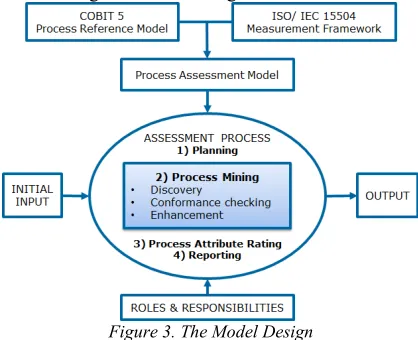
The model design used in this research is as mentioned in the previous research [11], which adopts COBIT 5 Process Reference Model and
ISO/IED 15504 Measurement Framework.
[image:4.612.89.298.196.366.2]Organization can implement their own process reference model and measurement framework. The model design is shown in Figure 3.
Figure 3. The Model Design
The COBIT 5 Process Reference Model (PRM) is used as a reference for the process, to define scope, purpose and outcomes of the process. The ISO/IEC 15504 Measurement Framework (MF) guides in defining capability levels, process attributes and the rating scale.
3.1 Initiation
Before doing the assessment process, organization should do the preparation in the initiation phase:
1) Identify the purpose of the assessment
2) Define the scope of the assessment (which
processes, and what are the constraints)
3) Identify any additional information that needs to
be gathered
4) Select the assessment participants, teams and
their roles.
5) Define assessment inputs and outputs.
The objective of the initiation phase is to ensure that there is a common understanding with the sponsor on the purpose and scope of the assessment, and to identify the individuals with the appropriate competencies to ensure a successful assessment. Including this phase is defining process reference and measurement framework to be used in the assessment process.
3.2 Planning
The next phase is planning the assessment process, which is done by describing all activities
performed in conducting the assessment.
Organization should secure the necessary resources to perform the assessment and determine the method of collecting, reviewing, validating and documenting the information required for the assessment. Coordinate assessment activities with the organizational unit being assessed.
By implementing process mining,
organization should define what processes will be assessed and how could the event logs support the process assessment. If an information system is available to do the process and the information system records all activities in the event logs, then organization can implement process mining.
3.3 Process mining
The main phase of the assessment process is process mining. Process mining should enable the auditors to automatically collect and validate data needed and suggesting audit recommendation based on the analysis result of process mining. Even if the information system records all event logs automatically, organization should aware on which part(s) of event logs should be analyzed. The easiest way to define is by identifying business questions to be answered by the implementation of process mining.
Next section of this paper will propose an application to be used to implement process mining in the audit process, as needed in this step.
3.4 Process Attribute Rating
For each process assessed, a rating is assigned for each process up to and including the highest capability level defined in the assessment scope. The rating is based on recommendations resulted in process mining phase. Use the defined set of assessment indicators in the Process Assessment Model to support the auditors’ judgment. Record the set of process ratings as the process profile.
3.5 Reporting
The results of the assessment are analyzed and presented in a report. The report also covers any key issues raised during the assessment, such as: observed areas of strength and weakness, and findings of high risk, i.e., magnitude of gap between assessed capability and desired/ required capability.
Auditors should also present the
ISSN: 1992-8645 www.jatit.org E-ISSN: 1817-3195
4. APPLICATION DESIGN
This is an application which is designed to support process audit which implements process mining. The users of this application are process auditors who would do substantive testing of a specific process implementation. The core input of this application are event logs, while the supporting input are reference process models. Event logs would be processed in process discovery, which results in the real process model. The reference process model will be used to be compered in conformance checking and enhancement steps.
The event logs used in this application will be preprocessed, which aims to create the correct format of the event logs, as needed in process discovery step. The core attributes which should be in the event logs are: case_id, event_id, timestamp, activity_id, and originator.
Process mining algorithms implemented in the process discovery step in this application are: alpha, alpha++, heuristics, multi-phase, and fuzzy miner. The user can also setting parameters related to each algorithm. After the process model is resulted, the process model will be compared to the reference model process. The results of the comparison is the difference of model processes, which will then be defined as the audit recommendations.
4.1 Input and Output
The input for this application are: event logs in minimum format of [case_id, event_id, timestamp, activity_id, originator]; and reference process model in PetriNet format.
While, the output of this application are:
- Preprocessed event logs, based on
preprocessing options chosen by the user. This preprocessed event log will then be used for the next steps.
- Real process model, as a result of process
discovery step, which is built based on the algorithm chosen by the user.
- Conformance value, which are precision, recall
and f-measure, which define the conformance of the real model process to the data in the event logs.
- Difference of real model process and reference
process model, as the result of enhancement
step. User can choose to repair or extent the
model process.
- Audit recommendations, as the final output of
the application, which is created based on the result of enhancement step.
4.2 System Overview
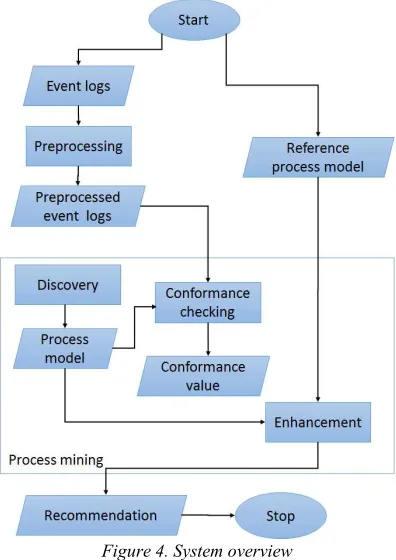
[image:5.612.319.517.140.420.2]Overview of the system implemented in the application is shown in Figure 4.
Figure 4. System overview
Steps implemented in the application, as shown in Figure 4, are as follow:
1) Preprocessing
User of the application can choose some preprocessing options to be implemented in the event logs, which are: cleaning,
aggregation, sampling, dimensionality
reduction, attribute selection, attribute creating, discretization, binerization, and variable transformation.
2) Process Discovery
Process discovery is a step to create a process model based on the event logs. In this step, user can choose one process mining algorithms, which are: Alpha, Alpha++, Heuristics, Multi-phase, and Fuzzy miner. The result of this step is called the real process model, as it represent the real implementation of the process in the event logs.
3) Conformance checking
ISSN: 1992-8645 www.jatit.org E-ISSN: 1817-3195
The results of this step are recall, precision, and f-measure value.
4) Enhancement
The idea of this step is to repair or extent the real process model based on additional information recorded in the event logs. Repair can be done to modify the model to represent the reality better, while extension is done to add a new perspectives to the process model.
In this application, enhancement is also done by comparing the real process model to the reference model, which represents the ideal process model based on organization’s standard operating procedures. The final result of this application is the audit recommendation which is obtained from the result of the enhancement step.
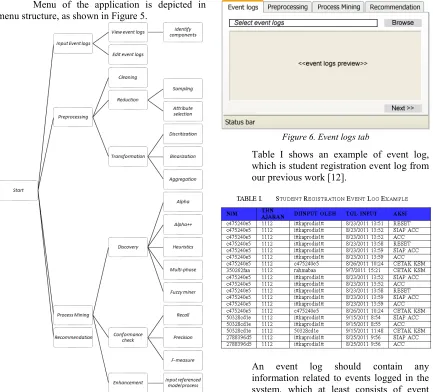
4.3 Menu structure
Menu of the application is depicted in menu structure, as shown in Figure 5.
Figure 5. Menu structure
Figure 5 shows that user can use this application through four main menus, which are: Input Event Logs, Preprocessing, Process Mining, and Recommendation. User should provide event logs and reference process model. The final result is a list of audit recommendations, which can be checked by the user.
4.4 Interface design
The user interface of this application is designed to enable users using this application easily. The general format of the user interface is a window-based tabbed interface. Four tabs represent the main menus, as follow:
1) Event logs
This tab enables users to input the event logs, view and choose components to be used in the next processes. Figure 6 shows the interface design of Event logs tab.
Figure 6. Event logs tab
Table I shows an example of event log, which is student registration event log from our previous work [12].
An event log should contain any
[image:6.612.93.526.325.717.2]ISSN: 1992-8645 www.jatit.org E-ISSN: 1817-3195
description, timestamp, and the actor information of the events.
2) Preprocessing
In this tab, user can select preprocessing methods to be done to the event logs. Application will show the result of preprocessing method selected. Figure 7 shows the design of Preprocessing tab.
Figure 7. Preprocesing tab
Preprocessing methods would range from cleaning, aggregation, sampling, variable transformation, dimensionality reduction, attribute subset selection, attribute creation, and discretization. User can select one or more methods to be implemented to the event log provided and preview the result directly.
3) Process mining
This tab consists of three submenu, which are: Discovery, Conform check, and Enhancement. Those submenus should be used sequentially.
User should finish the discovery step by choosing a process mining algorithm to be implemented to the event logs. Then, in the
conformance checking submenu, the
application shows the result of recall, precision, and f-measure of the process model.
The last submenu is enhancement, where user can choose to repair of extend the process model. The result of this step is process model which is marked in some points to be repaired or extended. Figure 8 shows the interface design of Process mining tab.
Figure 8. Process mining tab
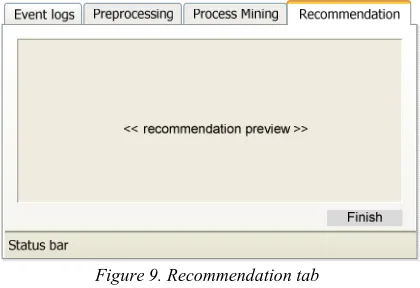
4) Recommendation
[image:7.612.314.524.341.485.2]In this tab, application shows a list of audit recommendation based on the result of the previous steps. User can choose one or more recommendations to be included in the printed report. Figure 9 shows the interface design of Recommendation tab.
Figure 9. Recommendation tab
The final result of the application is selected audit recommendations that can be printed in the audit report.
5. CONCLUSION
Based on the research, we can conclude that:
1) Auditors can use a specific application
software to support the audit process.
2) The auditors should provide event logs and
reference process model to be analyzed using the application. In return, the application will result in audit recommendations which can be used in the audit report.
ISSN: 1992-8645 www.jatit.org E-ISSN: 1817-3195
REFRENCES:
[1] ISO. “ISO/IEC 15504-2:2003 – Information
Technology – Process Assessment – Part 2: Performing and Assessment”. Last reviewed in 2009.
[2] ISACA. “COBIT 5- A Business Framework
for the Governance and Management of Enterprise IT”. Rolling Meadows, IL 60008 USA. 2012.
[3] ISACA. “ISACA’s COBIT Assessment
Programme (based on COBIT 5)”. Rolling Meadows, IL 60008 USA. 2014.
[4] ISACA. “COBIT 5- Introduction”. Rolling
Meadows, IL 60008 USA. 2012.
[5] ISACA. “Process Assessment Model (PAM):
Using COBIT 5”. Rolling Meadows, IL 60008 USA. 2013.
[6] WMP van der Aalst. ”Process Mining –
Discovery, Conformance and Enhancement of Business Processes”. Springer Heidelberg Dordrecht London New York. 2011.
[7] WMP van der Aalst, Arya Adriansyah, et al.
“Process Mining Manifesto”. F. Daniel et al. (Eds). Published with open access at Springerlink.com, BPM 2011 Workshops, Part I, KNBIP 99, pp. 169-194. 2012.
[8] WMP van der Aalst and A.J.M.M Weijters.
“Process Mining: Research Agenda”.
Department of Technology Management, Eindhoven University of Technology, The
Netherlands. Available online at
www.sciencedirect.com. Computers in
Industry 53 (2004) 231-244. Elsevier.
[9] Accorsi, Rafael, Thomas Stocker, and Günter
Müller. "On the exploitation of process mining for security audits: the process discovery case." Proceedings of the 28th Annual ACM Symposium on Applied Computing. ACM, 2013.
[10]WMP van der Aalst, H. Reijers, A. Weijters, B.
van Dongen, A. A. de Medeiros, M. Song, and H. Verbeek. “Business process mining: An
industrial application”. Inf. Syst.,
32(5):713{732, 2007.
[11]Kurniati, AP and Imelda Atastina.
“Implementing Process Mining to Improve COBIT 5 Assessment Program for Managing Operations (Case Study: a University Blog)”. Journal of Theoretical and Applied Information Technology (JATIT) Vol.72 No.2, 2015.
[12]Atastina, I., and A.P. Kurniati. “Student
Registration Process Eveluation using Process Mining”. Proceedings of ICDIM (International
Conference on Digital Information
![Figure 1. Assessment Overview [1]](https://thumb-us.123doks.com/thumbv2/123dok_us/8909891.958725/2.612.94.299.260.411/figure-assessment-overview.webp)
![Figure 2. Three types of process mining [7]](https://thumb-us.123doks.com/thumbv2/123dok_us/8909891.958725/3.612.95.296.157.291/figure-types-process-mining.webp)