Understanding, Measuring, and,
Invoking Mindfulness and
Mindlessness During
Human-Computer Interactions
Kiel Stuart Long
HighWire Center for Doctoral Training,
School of Computing and Communications,
Lancaster University, UK
This thesis is submitted in partial fulfilment of the requirements for the degree
of Doctor of Philosophy in Computer Science.
This thesis has not been submitted in support of an application for another
degree at this or any other university. It is the result of my own work and
includes nothing that is the outcome of work done in collaboration except
where specifically indicated.
It is with much support from many people that this thesis came to be.
My former educators Cenfyn Evans, Andre Ktori, Chris Bennewith and
Matthew Lovett; all played a large role in getting me here, thank you.
Thanks to Brigitta Zics for introducing me to philosophy of the mind and
telling me that a PhD was something I could do.
Thank you to my supervisors Paul Coulton and Jason Alexander for their
support and advice over the years.
Thanks is also given to my examiners Maria Angela Ferrario and Connor Linehan.
Huge thanks are also given to the people who have stood by and supported me, as
both colleagues and friends.
John Vines, your advice and support over the years has been incredible to say the
least and I certainly would not be where I am if not for you!
The NorSC crew Shaun, Tom, Gavin, and Ioannis, (and wider Newcastle HCI
community); thanks for the help and support throughout my time in Newcastle –
ALRIGHT ALRIGHT!
People of HighWire and Lancaster University, Gerasimos, Franco, Ben, Liz, Dave, Seb,
Ege, Oliver, Chris, Becci, Dhruv, Joe, Barney, Robb, … there are many more!!!! All of
you deserve thanks and a beer!
Though in particular Mr Rui!!! Storm-troopers of *research*! Thank you for those late
nights (early mornings?) working, many nights down the pub trying to sound smart,
and your sage advice and shoulder over the years!
This thesis also wouldn’t be possible without support of my family, so many thanks to
them also.
Abstract
This thesis questions how Mindfulness and Mindlessness might be understood, measured and invoked in relation to Human-Computer Interactions. Current designs of user interfaces often follow a design trend, drawing upon familiar layout and icons across a broad range of applications. Designers often try to make the interface easier to understand, familiar, and more intuitive. While the use of technologies that are familiar holds qualities such as low cognitive demand and ease of use; they hold within them an intrinsic problem. The familiarity and repetition in design qualities produces habitual response and reduces the facilities of reflection and contemplation upon the interaction. Subsequently this inhibits the discovery of novel solutions to challenges and / or formation of novel goals for the user of a technology.
The primary goal of this thesis is to provide (and justify) a definition of Mindfulness and Mindlessness that is suitable to be applied in the field of human-computer interaction; and clearly describe these experiential and behavioural phenomena of the user of interactive technology. These definitions draw upon related fields to better inform understanding through the application of their methods of evaluation and advancements in understanding. Resultantly an additional goal of this thesis is to pave way for future work in this area in providing insight to, and example of, methods for the measuring of Mindfulness and Mindlessness that are suited to the field of human-computer interaction and supported in the informing related work. Lastly, this thesis holds the goal of situating the work in related literature of how the states of Mindfulness and Mindlessness might be invoked and their effect upon human-computer interaction. More broadly, this thesis seeks to provide the framing of human-computer interaction and interface design through a lens of Mindfulness and Mindlessness as a means of better understanding and designing for the distinct qualities each holds.
These goals are achieved through three stages; first this body of work provides a pragmatic definition of Mindfulness and Mindlessness that can be applied to interactions with technologies. In doing so it overcomes the problematic qualities of directly applying previous definitions and facilitates further study of the phenomenon through empirical modalities founded in cognitive science. Second, this research provides the reporting of an exploratory study conducted, and findings for future works to build upon, in the analysis of Mindful and Mindless experiences during interactions with digital technologies. This is achieved through a neuro-phenomenological methodology, combining first person reporting alongside physiological measurement highlighting Mindful and Mindless interactions. Finally, this thesis provides insight to how the design of technologies can invoke Mindful and Mindless interactions and the consequences of these, followed by design considerations in the final conclusion.
Contents
Abstract 1
Introduction And Outline Of Thesis And Contributions 7
Methodology 13
SECTION ONE
16
1.0: Introduction To Mindfulness 17
1.1: Eastern Practices And Definitions Of Mindfulness 19
1.2: Clinical Applications And Empirical Measures Of Mindfulness 22
1.2.1: Measuring Mindfulness As A Transient State (Contextualised As Opposed To Trait) 24 1.2.2: Suitability Of Mindfulness State Measurements Towards Understanding, Defining And
Measuring Mindfulness And Mindlessness During Human-Computer Interaction 27 1.2.3: Appropriateness Of Mindfulness Measures In The Study Of Human-Computer Interaction 28
1.3: Developing A Definition Of Mindfulness And Mindlessness During Interaction. 31
1.3.1: Defining Mindfulness And Mindlessness For Human-Computer Interaction 33
1.3.2: Mindfulness
34
1.3.3: Mindlessness
36
1.4: Grounding Of Mindfulness And Mindlessness Definitions 38
1.5: Mindfulness And Consciousness 41
1.5.1: Consciousness And Scientific Inquiry 42
1.5.2: Mindfulness, Mindless And Between: Four Forms Of Consciousness 44
1.5.3: Reflective-Conscious (Mindful) 45
1.5.4: Conscious (Mindful) 46
1.5.5: Sub-Conscious (Mindless) 47
1.5.5: Non-Conscious (Mindless) 48
1.6: Phenomenology And Its Relevance To Understanding Mindfulness And
Mindlessness During Interaction With Technology 49
1.6.1: Heidegger And The Phenomenology Of Tools And Equipment 50
1.6.2: Heidegger On Functioning And Breakdown 50
1.6.3: Leont'ev On Functioning And Breakdown 56
1.6.4: Dewey On Functioning And Breakdown 59
1.7: Mindfulness And Functioning And Breakdown 62
1.7.1: Premature Cognitive Commitments And Functional Fixedness In Learning And Breakdown 64 1.7.2: Toward Understanding Design And Interaction Within Mindfulness And Mindlessness 67
1.8: Knowing What To Do - Affordance 69
1.8.1: Affordances And The Openness Of A Technology 70 1.8.2: Expanding Upon Forms Of Affordance: Cognitive, Physical, Sensory, And Functional 72 1.8.3: Affordance As Application Of Prior Knowledge: Familiarity Of Equipment 74
1.9: Understanding Of Affordances Through Mindfulness And Mindlessness -
Defining Tool And Equipment 77
1.9.1: Mindfulness: Of Tool
80
1.9.2: Mindlessness: Of Equipment
80
1.10: Tools And Equipment As Experience In Use 83
1.10.1: The Incorporation Of Tool And Equipment As States Of Mindfulness And Mindlessness 83
Equipmental-Transparency
83
Equipmental-Fixedness
84
Fluidic-Tool
84
Abstract-Tool
85
1.11: Understanding The Body In Mindfulness And Mindlessness 86
1.11.1: Neurophenomenology 86
1.11.2: Understanding Of Cognition And Mindlessness: 88 1.11.3: Biological Basis Of Cognition And Evolutionary Perspective Upon Conscious-Cognition 89 1.11.4: Complex Nervous Systems Allow Complex Cognition 91
1.11.5: Conscious-Cognition V’s Cognition 93
1.11.6: Streamlining Of Brain Activity - Development Of Specific Pathways 94
1.12: Cognition And Affordance 97
1.12.1: Minimising Competition For Cognitive Resources - Mental Schemas 98
1.12.2: Automaticity And Intuition 100
1.12.3: Adaptive Control Of Thought Theory - Automaticity As Skill Development And Enaction 102
1.12.4: Automatic Behaviours As Nested Actions 104
1.12.5: Global Workspace Theory 107
1.12.6: Empirical Evidence Toward Global Workspace As A Capacity Of The Central Nervous
System And Brain 109
1.12.7: Reporting On Automatic Actions - Implications For The Study Of Mindful Interactions 112
SECTION TWO
121
2.0: Introduction To Measuring Mindful And Mindless Interactions 122
2.0.1: Applying A Neurophenomenological Methodology 123
2.0.2: Limitations And Support 126
2.1: Study Design 130
2.1.1: Procedure 130
2.2: Study And Condition Design Grounding 133
2.2.1: Comparative Conditions Of Study Outline 133
2.2.2: Statements Informing Study And Condition Design 135
2.2.3: Points Of Unobtrusive Analysis 140
2.3: Comparative Conditions 142
2.4: Data Collation 150
2.4.1: Subjective Data 150
2.4.2: Objective Data 151
2.5: Results And Analysis – Interaction Metrics And Questionnaire 155
2.5.1: Interaction Metrics – Time To Answer 155
2.5.2: Interaction Metrics – Time To Answer (Pop-Up Stimulus) 156 2.5.3: Interaction Metrics – Time To Answer (Wrong Answers And Hesitations) 158
2.5.4: Questionnaire Data 160
2.6: Methods, Results And Analysis - Physiological Measurement 163
2.6.1: Previous Measurements Of Mindful States 163
2.6.2: Event Related Potentials – Measurement Of Brain Activity In Relation To Specific Events 167 2.6.3: Findings Of Cross Channel Average Power Of Brain Activity And Event Related Potentials 169 2.6.4: Pop-Up And Wrong Answer Alert Event Related Potential 173 2.6.5: Event Related Potential As Measurement In Mindful And Mindless States 176
2.7: Mental State Changes Across Prolonged Periods Of Time 178
2.7.1: Flow, Boredom, Engagement, Overload 178
2.7.2: Dynamic Complexity And Degrees Of Conscious Awareness 181
2.7.3: Pupil And Eye Gaze 183
2.8: Participant Qualitative Interview And Physiological Measurement Results And
Analysis 186
2.8.1: Participant Strategies To Augment Cognitive Load To Improve Performance 187 2.8.2: Recognition Of Mindlessness And Automatic Processes 189
2.9: Section 2 Discussion And Conclusion 204
2.9.1: Validation Of Guiding Statements 205
2.9.2: Participant Questionnaire 207
2.9.3: Participant Interview 207
2.9.4: Physiological Measurement – EEG, Gaze And Pupilometry 208 2.9.5: Limitations In Physiological Measurements 212
2.9.6: Future Work 213
2.9.7: Evaluating The Success Of The Exploratory Study 214
SECTION THREE
215
3.0: Human-Computer Interaction Design, Mindfulness And Mindlessness 216
3.1: How Things Become Mindless - The Vision Of Invisible Interactions And The
Counter 218
3.1.1 Designing For Transparency (Knowing) Or Reflectivity (Thinking) 220 3.1.2 Enhancing Reflection Through Augmenting Cognitive Load 222
3.2: Intuition And Metaphor As Design Attributes Of Mindless Interaction 226
3.2.1 Enhancing Reflection Through Augmenting Utility 229
3.3: Mindlessness From Repetition - Disappearing Through Design - Disappearing
Through Repetition And Homogenisation 233
3.3.1 Enhancing Reflection Through Augmenting Usability 235
3.4: Invisible And Everyware: Mindlessness As A Defensive Response To Information
Intense Environments
237
3.4.1 Enhancing Reflection Through Augmenting Efficacy 240
3.5: Framing Mindfulness Within Existing Human-Computer Interaction And Design
– Designing Beyond Functionality And Immersion 244
3.5.1 Enhancing Reflection Through Augmenting Immersion 246
3.6: Section 3 Discussion And Conclusion 247
3.6.1 Designing For Mindlessness 247
3.6.2 Designing For Mindfulness 249
SECTION FOUR
252
Conclusion
253
Invoking And Designing Mindfulness And Mindlessness
258
Final Reflection
264
5.0: Appendix
265
Appendix 1.1: Mindful Attention And Awareness Scale Questionnaire 265 Appendix 1.2: Toronto Mindfulness Scale Questionnaire 266 Appendix 1.3: State Mindfulness Scale Questionnaire 267 Appendix 1.4: Langer Mindfulness/Mindlessness Scale 268 Appendix 1.5 Codification Of Mindfulness And Mindlessness From Pre-Existing Definitions And
Framings 271
Appendix 2.1: Participant Information Sheet And Consent Form 273
Appendix 2.2: Condition Presentation Ordering 277
Appendix 2.3: Participant Questionnaire 279
Appendix 2.4: Brain Activity, EEG And QEEG 280
Appendix 2.5: Quantitative Questionnaire Data 285
Introduction And Outline Of Thesis and Contributions
The overarching research question of this thesis asks, how Mindfulness and Mindlessness can be understood, measured and invoked in relation to Human-Computer Interactions?
Mindfulness, in the context of this thesis, can be summarised as a broad reflective awareness that is receptive to new perspectives, new approaches, and context. Mindful interactions facilitate novelty in the goals and execution and so offer a broader range of outcomes and meaning generation, however they are slow in their steps, and are typically cognitively demanding. Mindlessness can be summarised as the reliance upon well-learned routines and behaviours and is low in cognitive demand and rapid in execution. However, Mindless interactions fail to develop novel meanings and solutions as they are performed as a well-learned script, intuitively or habitually (Langer, 1989).
The use of human-computer interaction in this thesis refers to a specific (human) use of digital technology(ies); following MacKenzie and Wajcman’s (1985) definition of technology as ensembles of technical artefacts, activities or processes, and practical knowledge. Interaction is here considered an action through use/behaviour of (or toward) a technology concerning a particular task, benefit, or goal, or (often bilateral) conveyance of meaning and information/knowledge. This occurs at an interface - the “bridge” between technology and its “user”, such as a mouse, touch-screen, or display.
The research question is developed in response to the on-going pursuit within human-computer interaction design of designing toward efficiency (Dillon, 2002). Goals for new designs and improvement on old seek to be more “intuitive”, familiar, less cognitively loading, fewer action steps or “clicks”, and thus faster. Such qualities are employed as a utility and exploit this feature as a Mindless attribute of a system. In the context of interaction used in this thesis, utility is understood to be a function, a use toward a particular benefit – specifically a conveyance of meaning and information. Though this is clearly a required attribute of any interface, this thesis proposes that utility might be augmented to provide benefits (in the right circumstance) that oppose traditional tropes of efficiency and facilitate understanding new meaning and information. However, there has been substantially less attention toward the development of interactions that challenge traditional notions of utility, those that instead encourage reflection, inquiry, novelty (in being
unfamiliar); and the benefits that such Mindful systems might promote.
development of appropriate schemas of meaning contextualized to the present interaction.
While considerably less common, there is growing support in movements that aim to encourage users of technologies to reconsider how they engage with technology that is often demanding, “invisible”, time centric and increasingly integrated into commonplace experiences. Interactive technologies designed to make people more “efficient” now encompass a broad spectrum of activities (such as assistive, social and entertainment roles) and are “…more or less continuously present as part of a designed environment” (p162, Hallnäs and Redström, 2001). In response Slow Technology advocates a readdressing of traditional interaction paradigms to encourage technology designed “…in a way that encourages people to reflect and think about it.” (p169, Hallnäs and Redström, 2001). As noted by Grosse-Hering et al. (2013) this does not specifically mean slowing interactions (with regards to time taken) but opening up interactions to promote ‘slowness’ on aspects of interaction that may be more meaningful for users and in doing so “…can be used to create more ‘Mindful’ interactions that stimulate positive user involvement” (p3431). Thus, the goals of slow technology encourage “reflection and moments of mental rest rather than efficiency in performance” (p161, Hallnäs and Redström, 2001); and as shall be highlighted through this thesis are highly sympathetic to Mindfulness. In a similar vein to the Slow Technology movement are positions that consider the felt experience of the user as central motivations of action and design. Such concepts hold that interactive experiences focusing on functionality (understood in traditional quantifiable metrics of efficiency) only activate limited capacities of the experience of the user. Such example is found within experience-centred design (Wright, Wallace and McCarthy, 2008; Wright and McCarthy, 2010; Hassenzahl 2011); that proposes while the functional attributes of interactive systems are of great importance, they should be supported through an understanding of the emotional values that people construct through interactions with other people and technology.
and Mindlessness might best be applied. This thesis argues for balanced consideration of both Mindful and Mindless interactions when designing interactive systems to understand and apply which may be most appropriate for a particular context.
The commonplace misgivings of understanding Mindlessness might stem from the widespread use of Mindfulness. Initially, and surprisingly considering the increase in popularity of ‘Mindfulness’ as a ‘solution’ and approach marketed to many varied audience, it became apparent that definitions of Mindfulness (and Mindlessness) are often lacking in their grounding and clarity of meaning. Many works keenly state they applied/explored a Mindful approach, quality, or values, yet are often are reliant upon definitions from fields such as a spiritual or clinical practice that further mystify this complex state and pay little justification to its use or meaning. This is not to say that states of Mindfulness or Mindlessness are unfathomable and beyond description, many have experienced and described moments of ‘running on autopilot’, actions as ‘habit’, or more simply put as acting Mindlessly. Likewise, many are also aware to (Mindful) moments of experience where things ‘click’, ‘connections are made’ and the ‘broader picture’ revealed.
Consequently, there are larger ‘problem spaces’ to be explored prior to formulation of specific context questions upon the topic of Mindfulness during human-computer interaction e.g. “How can Mindfulness alter interactions with social media and ‘Fake news’?”. As a result, care was given to avoid ignoring the wider complexities and problem space and sought to address the core challenge – principally; what are Mindfulness and Mindlessness and how might they be understood in broader human behaviours and actions through and with technologies; and furthermore, how might we measure and evaluate such qualities, and how might we implement features to invoke these qualities when interacting with digital technologies.
While Mindfulness and Mindlessness both hold beneficial and costly qualities less consideration is given to such user experiences in commonplace interaction design (Dillon, 2002). In providing a means in which designers and evaluations of interactive technologies can accommodate understandings of such qualities, opportunity to re-address the balance or appropriately design for such states is better facilitated.
How Can We Understand Mindfulness and Mindlessness During Human-Computer Interaction? As will be highlighted in Section 1, existing definitions of Mindfulness and Mindlessness are unsuitable in application to human-computer interaction research through holding ambiguity in definition, lack of suitability (i.e. referring to general dispositions), and failure to accommodate complementary and well-established research findings.
Addressing this the core of this thesis seeks to provide a pragmatic definition of these states grounded in broader disciplines incorporating philosophical, psychological and cognitive science perspectives; that can be applied toward the framing and understanding of interactions with digital technology. Resultantly a definition is provided that holds as a central tenet: a reduction of the ambiguity of the phenomena (and its facets) being discussed; ability to describe specific instances and qualities of interactions with technologies; incorporation and openness to understanding and knowledge from well-established related research domains; capacity to support research methods developed in well-established related research domains i.e. facilitates further enquiry into the phenomena described. In contribution from this the thesis provides:
• Justification upon why existing definitions of Mindfulness (and
Mindlessness) are problematic in their direct application to HCI research and design. (Chapter 1.1 – 1.3)
• Justification and support in the understanding and defining of Mindfulness
and Mindlessness grounded in philosophical and cognitive science perspectives providing basis for further future enquiry employing methods from well-established disciplines. (Chapter 1.4 – 1.12)
• A lexicon for describing differing conscious states in the context of Mindful and Mindless to clarify ambiguities of such phenomena (Chapter 1.5)
• Differentiations of technologies affordance availability in the context of Mindful and Mindless approaches through the definitions of Tool and Equipment; to clarify framings of interactions with technologies (Chapter 1.9) • Definitions of technologies affordance availability inclusive of the broader
experiential state of the agent operating the technology in the context of Mindful and Mindless approaches; to clarify framings of subjective experiences during interaction with technologies (Chapter 1.10)
And most significantly
• The encompassing understanding and definition of Mindfulness and
How Can We Measure Mindfulness and Mindlessness During Human-Computer Interaction? Building upon the above, Section 2 seeks to inform future work through the development of a method in which Mindfulness and Mindlessness might be empirically measured (through physiological measurement) and so bi-directional effects during interactions with technology are better understood.
This is achieved through the reporting of an exploratory study that provides novel direction for future work in the development of systems that might unobtrusively measure moments of Mindfulness and Mindlessness. Employing methods facilitated through the (previously described) definitions, a neurophenomenological approach is taken that draws upon first person accounts alongside physiological measures. This seeks to provide capacity to measure the defined states of Mindfulness and Mindlessness during interactions with technologies. Consequently this broader question directing the exploratory study, i.e. how can we measure Mindfulness and Mindlessness during human-computer interaction?, aims to provide; justification of the definitions and supporting literature (found in Section 1), descriptions of the successes and failures in methods of the measurement of Mindfulness and Mindlessness, and provide methods for further exploration in future work in this area.
In contribution from this line of questioning the thesis provides:
• Justification and support in the use of neurophenomenological methods (Chapter 2.0) and of the guiding statements informing study design derived from Section 1 (Chapter 2.9)
• The reporting of findings and methods from an exploratory study into the
measurement of Mindful and Mindless states. (Chapter 2.5 – 2.8)
• Insights to the user perspective upon Mindful and Mindless states during interaction, how they alter interaction, and how such states are experienced. (Chapter 2.8)
• Four modalities for further exploration in view of the physiological measurement of Mindful and Mindless states during interactions with technologies. (Chapter 2.9)
and reflectivity and those for ‘knowing’ providing transparent windows to information. This is achieved through highlighting some of the ways in which design choices can lead to Mindful and Mindless interactions and the consequences of such choices through understandings and example in HCI design.
In contribution from this line of questioning the thesis provides:
• Insight to how HCI design might invoke Mindful and Mindless engagements
with digital technologies. (Chapter 3.1 – 3.5)
• Insight toward how such states might be countered (Chapter 3.1 – 3.5) • Design considerations for facilitating Mindful and Mindless interactions with
Methodology
Through a pragmatist approach a research methodology is chosen that is best suited to purpose and aims of the research question. Tashakkori and Teddlie (p713, 2003) describe pragmatism as:
“… a deconstructive paradigm that debunks concepts such as ‘truth’ and ‘reality’ and focuses instead on ‘what works’ as the truth regarding the research questions under investigation. Pragmatism rejects the either/or choices associated with the paradigm wars, advocates for the use of mixed methods in research, and acknowledges that the values of the researcher play a large role in interpretations of results.”
A central tenet of a pragmatic approach is a commitment to the end-cause and practical outcomes as providing validity and value; i.e. an ideology or theory is considered to be true if it works to a satisfactory degree, the value of a theory is within the practical consequences of accepting it, and ideas which are unpractical are rejected. In the process of method selection, pragmatism advocates a mixed methods approach. Methods used in validation of a particular position are chosen not due to their epistemological implications or as an externally dictated methodology; but for the appropriateness of how well they fit and answer the research question. Consequently here, findings are given value with relationship to practical consequences e.g. contribution of knowledge that provides additional utility over previous understandings and can be verified through practical / well-established methods.
definition. Understandings from well-established domains are drawn upon to firstly inform these definitions, and secondly to facilitate practical application of methods of analysis from these fields. This understanding is achieved through drawing upon existing framings and methods in assessment of Mindfulness (detailed in their corresponding publications) to inform key themes for further exploration. The resulting background research of these key themes, through seminal texts and understandings that describe the facets of Mindfulness and Mindlessness, then informed the hypothesis of how such phenomena should be understood and defined.
The informing works of Section 1 additionally guided the exploratory study design and modalities of measurement (described in Chapters 2.0 to 2.5) in questioning “How Can We Measure Mindfulness and Mindlessness During Human-Computer Interaction?”. Through providing designers of interactive technologies understandings and methods in measuring Mindfulness and Mindlessness they will be better equipped to design support for each more suitably i.e. knowing when and where such states would be most effective. Consequently, the broader aim of the exploratory study is toward providing tools for the assessment of Mindful and Mindless states during human-computer interaction. While this broader goal remains for future work the exploratory study is intended to provide two utilities. Firstly, toward verifying the definitions developed in Section 1 and the facets described within and informing those; and secondly, expose methods that might be further refined (or those to be rejected) to achieve measurement of Mindfulness and Mindlessness during interactions with technologies. This is line of investigation was achieved through drawing upon a number of theoretical positioning’s informed by the previous findings (of Section 1) as points of contrast and comparison, and analysis (described in depth in Chapter 2.2.2). Secondly the exploratory study holds a neurophenomenological approach (described in Chapter 1.11.1 and Chapter 2.0.1) in its method. This neurophenomenological approach triangulated philosophical perspectives (highlighted in Section 1), knowledges gained through cognitive sciences (highlighted in Section 1), qualitative report (derived from first-person report) and quantitative measures (physiological measurement) (gained through the exploratory study – Section 2); in combination to inform richer understandings of the phenomena of Mindfulness and Mindlessness. Methods used in this exploratory study are described in greater detail in Chapter’s 2.0 to 2.5.
attributes invoking Mindful and Mindless interactions is developed through background research.
SECTION ONE
Understanding And Defining Mindfulness And Mindlessness During Interaction In the following section it will be highlighted that existing definitions of Mindfulness and Mindlessness are unsuitable in application to human-computer interaction research.
Consequently, this section sets out to provide a pragmatic definition of Mindfulness and Mindlessness that can be applied in the framing and understanding of interactions with digital technology. Resultantly here a definition is required that has the following qualities or utility:
• Reduce the ambiguity of the phenomena being discussed
• Can be applied to describe specific instances and qualities of interactions with technologies
• Incorporates, and supports further incorporation of, understanding and knowledges from well-established related research domains
• Draws upon well-established related domains for which research methods
have been developed and are transferable in application i.e. facilitates further enquiry into the phenomena described through established verifiable methods.
1.0.0: Introduction To Mindfulness
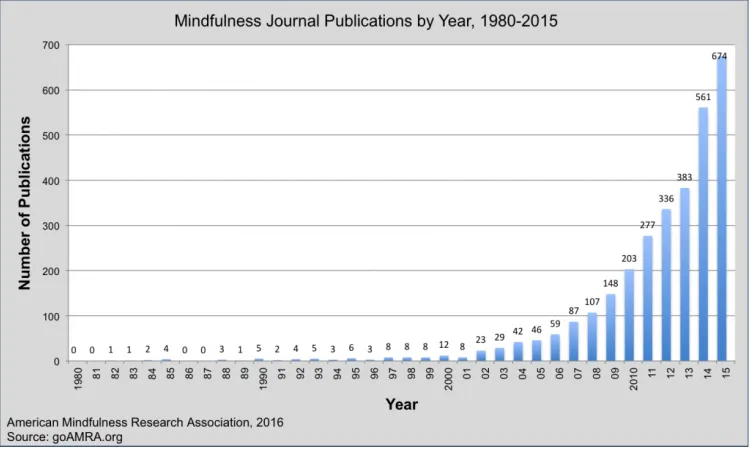
[image:20.595.119.495.177.402.2]Throughout recent years there has been growing interest and research into the concept of Mindfulness and its application in a variety of fields (Sauer et al, 2013; Brown, Ryan and Creswell, 2007a) (see figure 1.1).
Figure 1.1; Publications in journals on the topic of Mindfulness.1
Originating from ancient Buddhist, Hindu and Chinese philosophies; Mindfulness can now be broadly described as falling into two categories; Eastern, centred upon traditional Buddhist practice and as a general mental disposition (e.g. that of Kabat-Zinn (e.g. 2003)); and Western (e.g. Langer (1992)), concerning creativity and understanding as a task situated mental state (transient as opposed to general disposition) (Ie, Ngnoumen and Langer, 2014; Siegling and Petrides, 2014), and may ultimately be seen as an “information processing” (Sauer et al, 2013; Schramm and Hu, 2014).
Mindfulness is considered to be a complex process of human consciousness that may be described as the process of the mind to reflecting upon itself (a reflection upon subjective experience). Mindfulness has been described as a quality of mind (p20, Kuan, 2008), a particular form of attention and awareness (Kabat-Zinn, 2003) that can be cultivated during meditation (Kuan, 2008; Thera, 1962). Although being practiced as a central tenet of spiritual practice since the earliest Buddhist teachings (Gunaratana, 2002; Nhat Hanh, 2008; Nanamoli and Bodhi, 1995); Mindfulness is
increasingly practiced in western culture (Kabat-Zinn, 2003; Brown, Ryan and Creswell, 2007a) and has more recently been applied in fields such as psychology, neuroscience, healthcare and business leadership. Although there is ongoing debate that western approaches (neuroscience, psychology etc.) may be inappropriate and undermine further development in the field (Williams and Zinn, 2011; Kabat-Zinn 2003).
However, defining Mindfulness has lacked clarity and consistency (Bishop et. al., 2004; Grossman, 2008; Brown, Ryan and Creswell, 2007a; Chiesa, 2013); with understandings ranging from a simplification as “mere observing” (Sauer et al, 2013); to framing this state of experience as an undistracted awareness of the present developed from a knowing of the underlying process of our subjective experience as opposed to being in “automatic-pilot mode” (i.e. automaticity) (Hollis-Walker and Colosimo, 2011). Through the inconsistencies and mystification of definition (from Eastern approaches), existing seminal theories of mind, psychology and behaviour that may further explain particular qualities of Mindfulness and Mindlessness (and their origins) may be overlooked as considered insignificant for a particular study or application (Brown, Ryan and Creswell, 2007a). This attribute becomes problematic in defining this quality with agreement as a cross-disciplinary application and field of research; as noted by Bishop et. al.:
“There have been no systematic efforts to establish the defining criteria of its various components or to specify the implicated psychological processes, and general descriptions of Mindfulness have not been entirely consistent across investigators”
(Bishop et. al., 2004, P231).
As described, understandings of Mindfulness and Mindlessness have been developed through two ‘schools of thought’, Eastern and Western (Brown, Ryan and Creswell, 2007a; Hart, Ivtzan and Hart 2013; Ie, Ngnoumen and Langer, 2014). While these two schools share many similarities they differ through several core aspects. These differences primarily lie at their; construct, philosophy, target audience, interventions, measurement, and scope of application (Brown, Ryan and Creswell, 2007a; Hart, Ivtzan and Hart 2013). The lack of consistency in definition is further problematic as without consensus of unified attributes and selective utilisation of constituting elements, the importance of such elements and how they may be influenced is often manipulated/applied in favour of the intended application; as noted by Brown, Ryan and Creswell (2007a):
As the contribution of this thesis is of a cross-disciplinary grounding (with intended application to the field of human-computer interaction), the defining of Mindfulness (and Mindlessness) will primarily adopt a Western approach and understanding.
Western study and framing of Mindfulness approaches the topic from psychological and cognitive perspectives as states of experience and action. In doing so this approach seeks to describe Mindfulness as a naturally occurring phenomena that can be placed in opposition to Mindlessness and grounded within established theory and observable phenomena, such as automaticity and habit which may be understood as:
“…some cognitive process whose operation is not subject to conscious control”
(p165, Anderson, 1992)
In the context of this thesis (and in application to Human-Computer Interaction) a Western approach is most suitable as it facilitates defining Mindfulness and Mindlessness as grounded within well-established concepts that provide a broader understanding, systematic measurement and application. However, due to the number of validated empirical measures that originate in Eastern understandings (i.e. within clinical application), these will also be of consideration in understanding the core attributes and scope.
1.1.0: Eastern Practices And Definitions Of Mindfulness
While it will be demonstrated that Western perspectives of Mindfulness and Mindlessness are most appropriate in the context of HCI design it is additionally important to gain understanding of Eastern practices and definitions of such phenomena. This is due to the majority of previous applications and explorations of Mindfulness referring to the concepts origins in Buddhist practice. Similarly, equal can be said of Mindfulness and Mindless in clinical application, often drawing upon Eastern positions to guide and inform measures adapted to the context of inquiry and aims of application.
of experience.
Mindfulness can be (and has been) described in many differing ways such as Watts (1957, p53) “… a total clarity and presence of mind, actively passive, wherein events come and go like reflections in a mirror; nothing is reflected except what is”; Thera (1962, p32) who defines Mindfulness as “…the clear and single-minded awareness of what actually happens to us and in us at the successive moments of perception”; and Hanh (1976) as “keeping one’s consciousness alive to the present reality” (p11) and “…the miracle by which we master and restore ourselves” (p16).
Bodhi (1994) describes Mindfulness as a presence of mind and form of attention or awareness. Bodhi notes while all conscious experience involves a form of awareness, Mindfulness is framed as awareness that is “…applied at a special pitch”, a “bare attention” to the present moment and differs profoundly from our usual “mode” of consciousness (Bodhi, p70-, 1994). Bodhi further describes a Mindful state as open, quiet and alert; contemplating the present and refraining from drifting with distracting thoughts. Though it is broadly understood that we can summarise Eastern framings of Mindfulness as “The elements of mindfulness, namely awareness and nonjudgmental acceptance of one's moment-to-moment experience” (Keng et al., 2011). This Eastern framing of mindfulness is often associated and centralised toward the goal of a cessation of suffering (a central tenet of Buddhist practice and teachings). Grossman and Van Dam (2011) further summarise that Mindfulness encompasses several features including “open-hearted awareness of moment-to-moment perceptible experience”, “kindness, tolerance, patience and courage”, “An awareness markedly different from everyday modes of attention” (p221, Grossman and Van Dam, 2011).
These understandings have been further expanded upon to incorporate a more contemporary and commonly accepted notion of Mindfulness as a “paying attention on purpose, in the present moment, and non-judgmentally to the unfolding of experience moment by moment” (p145, Kabat-Zinn, 2003). Such terms, however, do not give full justification or reasonable depth of explanation to this complex quality of mind. Furthermore such definition suggest that Mindfulness is only present in entirety and of utmost importance to achieve over Mindlessness. This has resulted in confusion towards the weighting and value of the constituting elements (if stated) without agreement upon definition (Bishop et. al., 2004; Grossman, 2008; Brown, Ryan and Creswell, 2007a; Chiesa, 2013).
• Primarily; they lack a consistency in what Mindfulness specifically is and so often add confusion (through mystification) to this complex state.
• The definitions are often presented as part of a framework in spiritual practice and so directly applying such understandings towards HCI presents a potential for misinterpretation (i.e. religious/spiritual association) and misappropriation in how such interventions should be received (e.g. Potentially as a spiritual intervention).
• Such definitions give little insight into how and why such states occur (in terms of the underlying processes), and more broadly how they may be applied toward human-computer interaction.
• Finally; such understandings of Mindfulness and Mindlessness pose that Mindfulness should be of utmost importance with Mindlessness avoided. This position provides little insight or attention to why Mindlessness states may occur and how these may be beneficial.
Consequently, these definitions fail to satisfy the previously outlined qualities and utility necessary for a definition of Mindfulness and Mindlessness for human-computer interaction.
1.2.0: Clinical Applications And Empirical Measures
Of Mindfulness
Many clinical applications of Mindfulness exist and attempt to build upon and apply the previously described Eastern understandings of Mindfulness towards the treatment of psychological disorders. As noted by Keng et al. (2011), the qualities of Mindfulness “…are regarded as potentially effective antidotes against common forms of psychological distress…”. Examples that apply a Mindfulness-based intervention include: Mindfulness-Based Stress Reduction (MBSR; Kabat-Zinn, 2003), Dialectical Behavior Therapy (DBT; Linehan, 1993), Self-Mutilation / Suicidal Behavior Prevention (Linehan et al; 1991); and Mindfulness Based Cognitive Therapy (MBCT; Segal, Williams, and Teasdale, 2002); and have been applied by national health organisations (e.g. NHS2). Such applications in therapeutic practice have proven to withstand empirical testing of the beneficial results of Mindfulness training and show a novel method in treatment for enhancing psychological wellbeing e.g. Warren, Brown and Ryan (2003). Resulting from such studies (and their application in treatment) are a number of methods for the assessment of an individual’s Mindfulness (Sauer et al, 2013; Brown, Ryan and Creswell, 2007a); and supported as valid measures in cognitive behaviour therapy and psychological assessments (Haigh et al., 2010). Although these measurements/scales are proven to share commonalities, as during the validation of a methodology the tests are crosschecked to ensure consistency of results between tests (Baer et al, 2006; Siegling and Petrides, 2014); the assessments vary depending on the emphasis of the intended application (Haigh et al., 2010; Sauer et al, 2013; Brown, Ryan and Creswell, 2007a). Examples of such assessments include: Freiburg Mindfulness Inventory (Walach et al., 2006); Cognitive and Affective Mindfulness Scale–Revised, (Feldman et al., 2007); Five Facet Mindfulness Questionnaire (Baer et al., 2008); Philadelphia Mindfulness Scale (Cardaciotto et al., 2008); Southampton Mindfulness Questionnaire (Chadwick et al., 2008); Mindfulness Process Questionnaire (Erisman & Roemer, 2012). Such assessment measures are typically generalised in that they are not seeking reflection upon a specific task but rather a broader disposition on life, emotional aspects and sensory experience, and a broader life outlook than towards a specific task or time (though some consideration to present focus is questioned).
2
Although these previously described measurements contain sub-groupings into differing themes it is noted that sub-groupings alone (as individual tests) do not provide an accurate measurement of a person’s Mindfulness disposition and it is required that the whole test is accounted for in achieving consistency and validity of results (i.e. outcomes of the individual subgroups cross-test are not consistent, unlike outcomes of complete tests). Thus, the application of such measurements of Mindfulness necessitate the test be completed in full. While some elements of these measurements hold application towards the assessment of Mindfulness and Mindlessness during a human-computer interaction e.g. “I rush through activities without being really attentive to them” (FFMQ, Baer et al., 2006), large proportions of the measurements often refer to a broader disposition and emotional wellbeing e.g. “Even when I’m feeling terribly upset, I can find a way to put it into words” (FFMQ, Baer et al., 2006). As such measures are required to be presented in full for accuracy, their application towards HCI analysis would add confusion to participants in evaluating their interactions and would yield results of their general disposition of Mindfulness as opposed to the intended context (i.e. a specific interaction experience to be analysed). While such measurements provide argument that the concept of Mindfulness holds application beyond spiritual practice and can be empirically measured (Sauer et al, 2013), the application of these measurements is not suitable in the assessment of human-computer interactions as (similarly to previously discussed Eastern / spiritual framings):
• Such definitions lack a consistency in what Mindfulness specifically is (and its components) and so add confusion to this complex term and how it may be applied to human-computer interaction.
• The intended context of the measurements presents a potential for misinterpretation of intent when applied to evaluation and understanding of human-computer interaction.
• Such measurements assess a broader life disposition as opposed to a
context specific experience/interaction.
• The framings and measurements give little insight into how and why
such states occur, and how they may be applied toward human-computer interaction; and further pose that Mindfulness should be of utmost importance with Mindlessness avoided (due to its association with negative mental traits such as rumination, anxiety, worry, fear, anger etc.) and so provide little insight to why Mindless states occur and how these may be beneficial.
discussed, elate to broader dispositions, do not incorporate understanding and knowledges from well-established related research domains that might further understanding and investigation to the phenomena.
1.2.1: Measuring Mindfulness As A Transient State
(Contextualised As Opposed To Trait)
Some particular approaches toward understanding and framing Mindfulness hold within them a differentiating of awareness from attention (a position advocated in this thesis); and so, position Mindfulness as a behaviour and allow for broader perspectives from cognitive science inform the understanding. As will be highlighted in the following chapters such approach provides scope to not only understand Mindfulness and Mindlessness in ways applicable to human-computer interaction but validate such understandings through well-established methods developed in specific research domains found within cognitive science.
Brown and Ryan differentiate “awareness” as “the background “radar” of consciousness, continually monitoring the inner and outer environment.”, and “attention” as “process of focusing conscious awareness, providing heightened sensitivity to a limited range of experience ” (p822, Brown and Ryan, 2003), yet note that these processes are deeply intertwined. The distinction of Mindfulness from these two interrelated states presented by Brown and Ryan as:
“…attention and awareness are relatively constant features of normal functioning, mindfulness can be considered an enhanced attention to and awareness of current experience or present reality”
(p822, Brown and Ryan, 2003)
them). All of the events of driving require awareness (else there would be no responses) yet these events (during highway hypnosis) do not hold attention toward them. Some events, e.g. The car ahead suddenly braking; do call for attention and the driver holds a differing form of awareness; e.g. they can recall the event and describe it.
A truly Mindful state might be considered an enhanced form of this attention, rather than being responsive, as one that is concerted and consciously controlled and directed.
One clinical application of Mindfulness that positions the quality as a state like experience is the Mindful Attention Awareness Scale (MAAS) (Brown and Ryan, 2003) (See: Appendix 1.1). The Mindful Attention Awareness Scale proposes Mindfulness as an attribute of consciousness (discussed at length in chapter 1.5.0) that exists through an enhanced (attention to) awareness of what is happening in the present. Though this measure focuses on daily activities (as opposed to a specific task or instance) it does hold a closer focus upon actions and so is useful in understanding context specific moments of Mindfulness. Similarly, the Toronto Mindfulness scale (TMS) (Lau et al., 2006) (See: Appendix 1.2), later developed to the Toronto Mindfulness Scale - Trait Version (TMST) (Davis, Lau, & Cairns, 2009), was specifically directed towards assessment of Mindfulness as a state like experience in medicinal (psychological wellbeing) practice. The framing/defining of Mindfulness by Lau et al. (2006) is of two components, developed upon Bishop et al. (2004) and Hayes et al. (1999), as a “mode” or state like quality “that is maintained only when attention to experience is intentionally cultivated with an open, nonjudgmental orientation to experience” (p1447, Lau et al., 2006). The TMS holds the two qualities of Mindfulness as; an intentional self-regulation of attention, and as specific quality of awareness connecting all “objects” of sensation, thoughts and emotion. Closer still to the position adopted in this thesis, the State Mindfulness Scale measure (Tanay and Bernstein, 2013) (See: Appendix 1.3) is a development that seeks to address Mindfulness as “as a mental behavior, which is statelike, context dependent, and variable” (p1286) as opposed to a “trait” like. This is understood as a mental state of self-regulation of attention to immediate experience and orientating ones experiences towards curiosity, openness and acceptance; in addition to “incorporating objects of which one is Mindful and the quality of how one is Mindful of these objects.” (p1287, Tanay and Bernstein, 2013).
Bodner and Langer’s Mindfulness/Mindlessness scale (2001) (Appendix 1.4) provides a much stronger resonance in terms of the position taken and the validation of such position.
The Langer Mindfulness/Mindlessness scale (MMS) (Bodner and Langer, 2001) is a 21-point measurement of Mindfulness and Mindlessness. Eschewing from the Eastern understandings of Mindfulness, Langer’s (1989) application of Mindfulness is considered a Western approach; centring upon novelty seeking and producing, engagement, and, flexibility (Haigh et al., 2010), in understanding and task performance while being grounded in psychology. Bodner and Langer (2001) note that while assigning meaning to events and objects is a great achievement in cognitive development, repeated strengthening (repeated assignment of meaning) leads to an automatic process of association (a position discussed at length in Chapter 1.11, and Chapter 1.12). That is to say, if object X holds meaning Y, with repeated exposure to object ‘X correlating to meaning Y’ the process of meaning deduction becomes automatic and the correlation becomes dominant. While meaning remains “malleable” it is noted in the context of Mindfulness and Mindlessness that:
“Although one meaning of an object or event may be dominant for a particular situation, individuals do have the ability to consider alternative meanings for the same object or event. The cognitive state in which individuals unwittingly accept a rigid understanding of information has been called mindlessness. In contrast, when mindful, the individual actively draws novel distinctions and this increases awareness of alternative meanings.” (p1, Bodner and Langer, 2001).
Bodner and Langer (2001) liken a person acting in a Mindless state to a “robot” acting with “programmed routines” that determine thoughts, emotions and behaviours based on previously learned distinctions and associations. Bodner and Langer (p1, Bodner and Langer, 2001) further state that such routines are triggered by environmental cues and “run” to completion without conscious control or awareness i.e. without “mind” and so are called Mindlessness. Bodner and Langer (2001) construct validation of the Mindfulness/Mindlessness Scale though several theoretically associated constructs (Described in greater detail in Appendix 1.4): • Openness to experience (Digman,1990): A willingness to be open to experience
and likely engage with the surrounding environment in new ways. That is, a Mindful individual will be open to and seek unfamiliar and novel experiences. • Capacity to entertain multiple perspectives (Langer, 1997): A capacity to
individual enjoys and engages in “thinking” - “… a need to structure relevant situations in meaningful, integrated ways.” (p291, Cohen, Stotland and Wolfe, 1955)
• Thinking styles and general cognitive ability: Bodner and Langer (2001) state that a Mindful person should exhibit a “legislative-liberal” thinking style. Similarly, the should hold a “general cognitive ability” as “…a constellation of thinking abilities designed to cope with environmental complexity.” (p3, Bodner and Langer, 2001).
Langer’s understanding of Mindfulness and Mindlessness will be discussed at greater length in the following chapters as its positioning is of a central tenet and contribution to the definition of Mindfulness and Mindlessness during interactions with digital technologies.
1.2.2: Suitability Of Mindfulness State Measurements
Towards Understanding, Defining And Measuring
Mindfulness And Mindlessness During Human-Computer
Interaction
The intended application of this thesis is toward the understanding of Mindfulness/Mindlessness during interaction with technologies as opposed to a persons general disposition, and so positions approaching Mindfulness with specific focus upon this state as a transient experience of attentive awareness are better suited toward such understanding.
measurement to understanding human-computer interaction would still introduce a degree of confusion to the participant and reveal a broader life disposition e.g. “I forget a person’s name almost as soon as I’ve been told it for the first time”.
Likewise, TMS (Lau et al., 2006) and State Mindfulness Scale measure (Tanay and Bernstein, 2013), contain elements that may confuse participants when applied in the context of human-computer interaction e.g. “I was more concerned with being open to my experiences than controlling or changing them” (TMS, Lau et al., 2006). However, the State Mindfulness Scale measure (Tanay and Bernstein, 2013) adds further understanding of how Mindfulness can be framed “as a mental behavior, which is state like, context dependent, and variable” (p1286). This positioning is of particular use to this thesis as it specifies an orientation toward context and a specific task, as opposed to previously discussed measurements and framings that understand Mindfulness as a broader and general disposition.
The Mindfulness/Mindlessness scale (Bodner and Langer, 2001) provides the richest understanding of how Mindfulness might be understood and measured in relation to human-computer interaction. The measurement is framed and validated through several measures and theoretical positioning’s that are situated outside of research of Mindfulness (as a specific focus). This provides not only additional validation to the field of study but furthermore facilitates a broader understanding, justification and explanation of this complex state. Furthermore, the position of Bodner and Langer (p1, 2001) states that “…one meaning of an object or event may be dominant for a particular situation”, and that “Environmental cues trigger these behavioral routines”. In the context of HCI this may be understood as cues (from an interface) invoking dominant reactions where a user interacts in ridged and pre-learned understandings developed through repetition (and where meaning deduction has become automatic).
While the measurements for Mindful and Mindless states (above) is not directly applicable toward HCI analysis they do provide understandings that frame Mindfulness as a state like experience that is capable of change and reactionary to environmental stimulus and situations. This provides opportunity for adaptation toward a more suitable line of questioning that may be used in the assessment of peoples Mindful and Mindless states when interacting with technology.
1.2.3: Appropriateness Of Mindfulness Measures In The
Study Of Human-Computer Interaction.
inappropriate. As highlighted, such philosophies hold a degree of mysticism and thus interpretation toward them; with potential to leave the nature of study at risk of misinterpretation (between understanding user experience and understanding spirituality). Similarly, such framings of this complex state, though attempting to understand it, give little insight as to how or why such states occur. Furthermore, in the context of Buddhist spiritual practice, Mindfulness is promoted as the ideal state and disposition to maintain (over Mindlessness) with little insight to the beneficial qualities that a state of Mindlessness might hold. Perhaps most importantly to the aims of this thesis, such framings lack a consistency of what Mindfulness is with definitions varying between schools of thought and context of delivery.
Similarly, clinical applications and measurements of Mindfulness that are informed by such Eastern Buddhist philosophy again hold several key issues that invalidate them as a modality for HCI analysis. Inconsistencies in definition of Mindfulness between study (Brown, Ryan and Creswell, 2007a), presents a mixed notion of what aspects of Mindfulness are truly of question when viewing the broader spectrum of studies (i.e. the concept being tailored toward intended outcome). As with Eastern practice there is also little insight toward how and why such states might occur and possibility of how the opposite state (Mindlessness) may be of benefit.
As highlighted, some methods of Mindfulness assessment attempt to take findings from the field of cognitive science as a means of which to better understand and explain why such attributes of experience occur and how they may be influenced. Most appropriate to the context of this thesis are measurements that not only consider better understanding though support from related fields, but additionally consider the phenomena of Mindfulness and Mindlessness as state like experiences influenced by events, actions and environments. Such perspectives of Mindfulness as a state like quality influenced by our interactions and experience of our environment, may be summarised by Tanay and Bernstein (p1286, 2013) as “a mental behavior, which is state like, context dependent, and variable”, and highlighted by Bodner and Langer:
“Environmental cues trigger these behavioral routines and their programs run their course. Crucial to mindlessness is that these routine behaviors operate without conscious control or awareness (hence the name).”
(p1, Bodner and Langer, 2001)
1.3.0: Developing A Definition Of Mindfulness And
Mindlessness During Interaction.
It is recognised that “Mindfulness is not an easy concept to define” (Langer and Moldoveanu, 2000). While the concept in terms of Eastern and clinical understandings and constructs provides insight it has been noted that:
“…that literature’s characterization of mindfulness has not been clearly translated into contemporary research psychology. The psychological literature reveals considerable variance in descriptions of the nature of mindfulness on both theoretical and operational levels.”
(p214, Brown, Ryan and Creswell, 2007a).
Brown, Ryan and Creswell (2007a) further expand on this explaining the two primary reasons such variance has occurred, most significantly here being the result of “different clinical approaches” resulting in different definitions and operationalization’s that follow particular treatment perspectives and more significantly “the outcomes they seek to foster” (p215, Brown, Ryan and Creswell, 2007a). Brown, Ryan and Creswell (2007a) indicate that clinical applications and constructs of Mindfulness (and their measures) seek to facilitate the by-products of Mindfulness (e.g. self-control, emotion regulation, compassion) that, though may hold application within the field of human-computer interaction, are here beyond the scope of this thesis. While the utilisation of Mindfulness and its resulting properties has been tailored toward specific aims in clinical application (e.g. emotion regulation) it is noted there is a need for agreement so that this complex state may be further studied, as stated by Brown, Ryan and Creswell:
“There is a clear need for conceptual agreement on the meaning of mindfulness, not only to facilitate communication about the construct but, most pragmatically, to create a stable platform of basic and applied research in this still young area of investigation.”
(p214-215, Brown, Ryan and Creswell, 2007a)
Mikulas (2011) further simplifies this point by stating “…it is very important to be clearer on what we are talking about. And this clarity will significantly improve the effectiveness of our programs and the usefulness of our research.” (p1), “People can define mindfulness as they wish, but they should be very clear about what they are saying.” (p5); further highlighting the need for a conceptual agreement and clarity of the construct of Mindfulness.
specifically facilitate further inquiry and future incorporation of relational theories; as exemplified through validation of the construct of Mindfulness within the Langer Mindfulness/ Mindlessness Scale (Bodner and Langer, 2001). In doing so this seeks to not only clarify the concept definition within its application toward interaction; but expose how it may be further understood, analysed and applied in HCI design.
The shared themes, descriptions, and definitions of Mindfulness (and Mindlessness) from existing measurements and framings (Chapters 1.0, 1.1 and 1.2) was treated as a corpus of data. Descriptions and definitions that were deemed unsuitable and too ambiguous for applicability to human-computer interaction, e.g.
“…the miracle by which we master and restore ourselves” (p16, Hanh 1976), were rejected. Upon the remaining data, thematic analysis was conducted following Braun and Clarke (2006) at a sentence to paragraph level to summarize contents semantic and latent meaning. Lens was restricted toward the ways in which the authors specifically described/defined Mindfulness (and/or Mindlessness). For example, “Mindfulness can be viewed as a mode or state-like quality that is maintained only when attention to experience is intentionally cultivated with an open, nonjudgmental orientation to experience” (p1447, Lau et al., 2006); was coded as an openness to experience, and further categorised under the encompassing theme of Presence of “mind” (i.e. Conscious awareness of experience), as awareness of experience is a
central tenet in discussing the mind and consciousness. Similarly openness to
experience is also placed in the encompassing theme of Openness to novelty as such an orientation is assumed to hold a degree of rejection of predetermined mind-sets (and acceptance of novel mind-mind-sets). From this the following encompassing categories informed the further areas of investigation:
• Presence of “mind” (i.e. Conscious awareness of experience) (Chapter 1.5
and 1.12)
• Directed / controlled attention and / or awareness (Chapter 1.6 and 1.12)
• Contextualisation to present moment (Chapter 1.7)
• Openness to novelty (Chapter 1.12)
• Habit / repetition / automatic behaviour (Chapter 1.12 & 1.8)
• Cognitive state (Chapter 1.11)
(Sub categorisations can be found in Appendix 1.5)
It should be noted however that while the broader themes are here as distinct they inherently overlap and are deeply interconnected.
qualities existing as a habitual, repetitive or automatic behaviour. Both of which are understood as a state like experience.
1.3.1: Defining Mindfulness And Mindlessness For
Human-Computer Interaction
As previously discussed the direct application of existing measures and definitions of Mindfulness towards understanding human-computer interaction is not suitable; i.e. holds mystification and ambiguity, focused upon resulting properties intended for a clinical application addressing a broader “life” disposition.
The defining of Mindfulness (and Mindlessness) and its application holds importance for several reasons as noted by Brown and Cordon (though framed in relation to Mindfulness based interventions and behavioural science):
“The first concerns the basic scientific principle that a phenomenon can be studied only if it can be properly defined and measured.
Second, investigation of mindfulness creates opportunities to investigate the specific role of this quality in subjective experience and behavior through methodologies derived from basic science that can complement applied, intervention research.
Third and relatedly, it is assumed that the efficacy of mindfulness interventions is due, in large part, to the enhancement of mindful capacities through training; but only with clear definitions and operationalization’s of mindfulness can this claim be tested.
Fourth, and more fundamentally, the study of mindfulness can help to widen the window into the study of human consciousness and its modes of processing experience. In this way, the study of mindfulness can help to inform about the nature of consciousness, its fundamental role in human functioning, and how its processes can be refined to enhance that functioning.”
(p59, Brown and Cordon, 2009)