Context-theoretic Semantics for Natural Language: an Overview
Daoud Clarke University of Sussex Falmer, Brighton, UK [email protected]
Abstract
We present the context-theoretic frame-work, which provides a set of rules for the nature of composition of meaning based on the philosophy of meaning as context. Principally, in the framework the composi-tion of the meaning of words can be repre-sented as multiplication of their represen-tative vectors, where multiplication is dis-tributive with respect to the vector space.
We discuss the applicability of the frame-work to a range of techniques in natu-ral language processing, including subse-quence matching, the lexical entailment model of Dagan et al. (2005), vector-based representations of taxonomies, statistical parsing and the representation of uncer-tainty in logical semantics.
1 Introduction
Techniques such as latent semantic analysis (Deer-wester et al., 1990) and its variants have been very successful in representing the meanings of words as vectors, yet there is currently no theory of natural language semantics that explains how we should compose these representations: what should the representation of a phrase be, given the representation of the words in the phrase? In this paper we present such a theory, which is based on the philosophy of meaning as context, as epit-omised by the famous sayings of Wittgenstein (1953), “Meaning just is use” and Firth (1957), “You shall know a word by the company it keeps”. For the sake of brevity we shall present only a summary of our research, which is described in full in (Clarke, 2007), and we give a simplified version of the framework, which nevertheless suf-fices for the examples which follow.
We believe that the development of theories that can take vector representations of meaning beyond
the word level, to the phrasal and sentence lev-els and beyond are essential for vector based se-mantics to truly compete with logical sese-mantics, both in their academic standing and in application to real problems in natural language processing. Moreover the time is ripe for such a theory: never has there been such an abundance of immediately available textual data (in the form of the world-wide web) or cheap computing power to enable vector-based representations of meaning to be ob-tained. The need to organise and understand the new abundance of data makes these techniques all the more attractive since meanings are determined automatically and are thus more robust in compar-ison to hand-built representations of meaning. A guiding theory of vector based semantics would undoubtedly be invaluable in the application of these representations to problems in natural lan-guage processing.
The context-theoretic framework does not pro-vide a formula for how to compose meaning; rather it provides mathematical guidelines for the-ories of meaning. It describes the nature of the vector space in which meanings live, gives some restrictions on how meanings compose, and pro-vides us with a measure of the degree of entail-ment between strings for any impleentail-mentation of the framework.
The remainder of the paper is structured as fol-lows: in Section 2 we present the framework; in Section 3 we present applications of the frame-work:
• We describe subsequence matching (Section 3.1) and the lexical entailment model of (Da-gan et al., 2005) (Section 3.2), both of which have been applied to the task of recognising textual entailment.
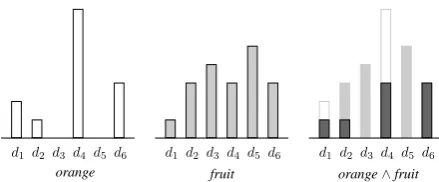
con-d1d2 d3 d4 d5 d6 d1 d2 d3 d4 d5 d6 d1 d2 d3 d4 d5 d6
[image:2.595.73.293.62.153.2]orange fruit orange∧fruit
Figure 1: Vector representations of two terms in a space L1(S)whereS = {d
1, d2, d3, d4, d5, d6} and their vector lattice meet (the darker shaded area).
structed in Section 3.3.
• We show how syntax can be represented within the framework in Section 3.4.
• We summarise our approach to representing uncertainty in logical semantics in Section 3.5.
2 Context-theoretic Framework
The context-theoretic framework is based on the idea that the vector representation of the meaning of a word is derived from the contexts in which it occurs. However it extends this idea to strings of any length: we assume there is some set S con-taining all the possible contexts associated with any string. A context theory is an implementa-tion of the context-theoretic framework; a key re-quirement for a context theory is a mapping from strings to vectors formed from the set of contexts. In vector based techniques, the set of contexts may be the set of possible dependency relations between words, or the set of documents in which strings may occur; in context-theoretic semantics however, the set of “contexts” can be any set. We continue to refer to it as a set of contexts since the intuition and philosophy which forms the basis for the framework derives from this idea; in practice the set may even consist of logical sentences describing the meanings of strings in model-theoretic terms.
An important aspect of vector-based techniques is measuring the frequency of occurrence of strings in each context. We model this in a gen-eral way as follows: let A be a set consisting of the words of the language under consideration. The first requirement of a context theory is a map-ping x 7→ xˆ from a string x ∈ A∗ to a vector
ˆ
x ∈ L1(S)+, where L1(S) means the set of all functions fromS to the real numbersRwhich are finite under theL1 norm,
kuk1 = X
s∈S
|u(s)|
and L1(S)+restricts this to functions to the non-negative real numbers, R+; these functions are called the positive elements of the vector space
L1(S). The requirement that theL1norm is finite, and that the map is only to positive elements re-flects the fact that the vectors are intended to repre-sent an estimate of relative frequency distributions of the strings over the contexts, since a frequency distribution will always satisfy these requirements. Note also that thel1norm of the context vector of a string is simply the sum of all its components and is thus proportional to its probability.
The set of functionsL1(S)is a vector space un-der the point-wise operations:
(αu)(s) = αu(s) (u+v)(s) = u(s) +v(s)
foru, v ∈L1(S)andα∈R, but it is also a lattice under the operations
(u∧v)(s) = min(u(s), v(s)) (u∨v)(s) = max(u(s), v(s)).
In fact it is a vector lattice or Riesz space (Alipran-tis and Burkinshaw, 1985) since it sa(Alipran-tisfies the fol-lowing relationships
if u≤v then αu≤αv if u≤v then u+w≤v+w,
whereα ∈R+and≤is the partial ordering asso-ciated with the lattice operations, defined byu≤v
ifu∧v=u.
Together with the l1 norm, the vector lattice defines an Abstract Lebesgue space (Abramovich and Aliprantis, 2002) a vector space incorporating all the properties of a measure space, and thus can also be thought of as defining a probability space, where∨and∧correspond to the union and inter-section of events in the σ algebra, and the norm corresponds to the (un-normalised) probability.
2.1 Distributional Generality
based on the concept of distributional generality (Weeds et al., 2004), a generalisation of the distri-butional hypothesis of Harris (1985), in which it is assumed that terms with a more general mean-ing will occur in a wider array of contexts, an idea later developed by Geffet and Dagan (2005). Weeds et al. (2004) also found that frequency played a large role in determining the direction of entailment, with the more general term often occurring more frequently. The partial ordering of the vector lattice encapsulates these properties sincexˆ≤yˆif and only ifyoccurs more frequently in all the contexts in whichxoccurs.
This partial ordering is a strict relationship, however, that is unlikely to exist between any two given vectors. Because of this, we define a degree of entailment
Ent(u, v) = ku∧vk1 kuk1
.
This value has the properties of a conditional prob-ability; in the case of u = ˆx and v = ˆy it is a measure of the degree to which the contexts string
xoccurs in are shared by the contexts stringy oc-curs in.
2.2 Multiplication
The map from strings to vectors already tells us ev-erything we need to know about the composition of words: given two wordsxandy, we have their individual context vectorsxˆand yˆ, and the mean-ing of the strmean-ing xy is represented by the vector c
xy. The question we address is what relationship should be imposed between the representation of the meanings of individual wordsxˆandyˆand the meaning of their compositionxyc. As it stands, we have little guidance on what maps from strings to context vectors are appropriate.
The first restriction we propose is that vector representations of meanings should be compos-able in their own right, without consideration of what words they originated from. In fact we place a strong requirement on the nature of tion on elements: we require that the multiplica-tion·on the vector space defines a lattice-ordered algebra. This means that multiplication is asso-ciative, distributive with respect to addition, and satisfies u·v ≥ 0if u ≥ 0 and v ≥ 0, i.e. the product of positive elements is also positive.
We argue that composition of context vectors needs to be compatible with concatenation of
words, i.e.
ˆ
x·yˆ=xy,c
i.e. the map from strings to context vectors defines a semigroup homomorphism. Then the require-ment that multiplication is associative can be seen to be a natural one since the homomorphism en-forces this requirement for context vectors. Sim-ilarly since all context vectors are positive their product in the algebra must also be positive, thus it is natural to extend this to all elements of the alge-bra. The requirement for distributivity is justified by our own model of meaning as context in text corpora, described in full elsewhere.
2.3 Context Theory
The above requirements give us all we need to de-fine a context theory.
Definition 1 (Context theory). hA, S,ˆ,· idefines a context theory if L1(S) is a lattice-ordered al-gebra under the multiplication defined by·andˆ
defines a semigroup homomorphism x 7→ xˆfrom
A∗ toL1(S)+.
3 Context Theories for Natural Language
In this section we describe applications of the context-theoretic framework to applications in computational linguistics and natural language processing. We shall commonly use a construc-tion in which there is a binary operaconstruc-tion ◦ on S
that makes it a semigroup. In this caseL1(S)is a lattice-ordered algebra with convolution as multi-plication:
(u·v)(r) = X s◦t=r
u(s)v(t)
forr, s, t ∈ S and u, v ∈ L1(S). We denote the unit basis element associated with an elementx∈ S by ex, that is ex(y) = 1if and only ify = x,
otherwiseex(y) = 0.
3.1 Subsequence Matching
A string x ∈ A∗ is called a “subsequence” of
y ∈ A∗ if each element of x occurs in y in the same order, but with the possibility of other ele-ments occurring in between, so for exampleabba
more subsequences they have in common the more similar they are assumed to be. This idea has been used successfully in text classification (Lodhi et al., 2002) and recognising textual entailment (Clarke, 2006).
We can describe such models using a context theory hA, A∗,ˆ,· i, where · is convolution in
L1(A∗)and
ˆ
x= (1/2|x|) X y∈Sub(x)
ey,
i.e. the context vector of a string is a weighted sum of its subsequences. Under this context theoryxˆ≤ ˆ
y, i.e.xcompletely entailsyifxis a subsequence ofy.
Many variations on this context theory are pos-sible, for example using more complex mappings toL1(A∗). The context theory can also be adapted to incorporate a measure of lexical overlap be-tween strings, an approach that, although simple, performs comparably to more complex techniques in tasks such as recognising textual entailment (Dagan et al., 2005)
3.2 Lexical Entailment Model
Glickman and Dagan (2005) define their own model of entailment and apply it to the task of recognising textual entailment. They estimate entailment between words based on occurrences in documents: they estimate a lexical entailment probability LEP(x, y) between two termsxand y
to be
LEP(x, y)≃ nx,y
ny
where ny and nx,y denote the number of
docu-ments that the word y occurs in and the wordsx
andyboth occur in respectively.
We can describe this using a context theory
hA, D,ˆ,· i, whereDis the set of documents, and
ˆ x(d) =
1 ifxoccurs in documentd
0 otherwise. .
In this case the estimate of LEP(x, y) coincides
with our own degree of entailmentEnt(x, y). There are many ways in which the multiplica-tion·can be defined onL1(D). The simplest one defines ed·ef =edifd = f andedef = 0
oth-erwise. The effect of multiplication of the context vectors of two strings is then set intersection:
(ˆx·yˆ)(d) =
1 ifxandyoccur in documentd 0 otherwise.
Model Accuracy CWS
[image:4.595.315.518.64.165.2]Dirichlet (106) 0.584 0.630 Dirichlet (107) 0.576 0.642 Bayer (MITRE) 0.586 0.617 Glickman (Bar Ilan) 0.586 0.572 Jijkoun (Amsterdam) 0.552 0.559 Newman (Dublin) 0.565 0.6
Table 1: Results obtained with our Latent Dirichlet projection model on the data from the first Recog-nising Textual Entailment Challenge for two doc-ument lengthsN = 106andN = 107 using a cut-off for the degree of entailment of 0.5 at which entailment was regarded as holding. CWS is the confidence weighted score — see (Dagan et al., 2005) for the definition.
Glickman and Dagan (2005) do not use this measure, possibly because the problem of data sparseness makes it useless for long strings. How-ever the measure they use can be viewed as an ap-proximation to this context theory.
We have also used this idea to determine en-tailment, using latent Dirichlet allocation to get around the problem of data sparseness. A model was built using a subset of around 380,000 docu-ments from the Gigaword corpus, and the model was evaluated on the dataset from the first Recog-nising Textual Entailment Challenge; the results are shown in Table 1. In order to use the model, a document length had to be chosen; it was found that very long documents yielded better perfor-mance at this task.
3.3 Representing Taxonomies
In this section we describe how the relationships described by a taxonomy, the collection of
is-a relis-ationships described by ontologies such is-as
WordNet (Fellbaum, 1989), can be embedded in the vector lattice structure that is crucial to the context-theoretic framework. This opens up the way to the possibility of new techniques that combine the vector-based representations of word meanings with the ontological ones, for example:
• Semantic smoothing could be applied to
benefits of vector based techniques and on-tologies to be combined.
• Automatic classification: representing the
taxonomy in a vector space may make it easier to look for relationships between the meanings in the taxonomy and meanings de-rived from vector based techniques such as latent semantic analysis, potentially aiding in classifying word meanings in a taxonomy.
• The new vector representation could lead to new measures of semantic distance, for ex-ample, the Lp norms can all be used to
measure distance between the vector rep-resentations of meanings in a taxonomy. Moreover, the vector-based representation al-lows ambiguity to be represented by adding the weighted representations of individual senses.
We assume that the is-a relation is a partial or-dering; this is true for many ontologies. We wish to incorporate the partial ordering of the taxonomy into the partial ordering of the vector lattice. We will make use of the following result relating to partial orders:
Definition 2 (Ideals). A lower set in a partially
ordered setS is a setT such that for allx, y∈S, ifx∈T andy≤xtheny ∈T.
The principal ideal generated by an elementxin a partially ordered setSis defined to be the lower sety(x) ={y∈S:y ≤x}.
Proposition 3 (Ideal Completion). If S is a par-tially ordered set, theny(·) can be considered as a function from S to the powerset2S. Under the
partial ordering defined by set inclusion, the set of lower sets form a complete lattice, and y(·) is a completion ofS, the ideal completion.
We are also concerned with the probability of concepts. This is an idea that has come about through the introduction of “distance measures” on taxonomies (Resnik, 1995). Since terms can be ascribed probabilities based on their frequen-cies of occurrence in corpora, the concepts they re-fer to can similarly be assigned probabilities. The probability of a concept is the probability of en-countering an instance of that concept in the cor-pus, that is, the probability that a term selected at random from the corpus has a meaning that is subsumed by that particular concept. This ensures
that more general concepts are given higher proba-bilities, for example if there is a most general con-cept (a top-most node in the taxonomy, which may correspond for example to “entity”) its probability will be one, since every term can be considered an instance of that concept.
We give a general definition based on this idea which does not require probabilities to be assigned based on corpus counts:
Definition 4 (Real Valued Taxonomy). A real
val-ued taxonomy is a finite set S of concepts with a partial ordering ≤and a positive real functionp
overS. The measure of a concept is then defined in terms ofpas
ˆ
p(x) = X y∈↓(x)
p(y).
The taxonomy is called probabilistic if P
x∈Sp(s) = 1. In this case pˆ refers to the
probability of a concept.
Thus in a probabilistic taxonomy, the function
pcorresponds to the probability that a term is ob-served whose meaning corresponds (in that con-text) to that concept. The function pˆdenotes the probability that a term is observed whose meaning in that context is subsumed by the concept.
Note that ifS has a top element I then in the probabilistic case, clearlypˆ(I) = 1. In studies of distance measures on ontologies, the concepts in
Soften correspond to senses of terms, in this case the function p represents the (normalised) proba-bility that a given term will occur with the sense indicated by the concept. The top-most concept often exists, and may be something with the mean-ing “entity”—intended to include the meanmean-ing of all concepts below it.
The most simple completion we consider is into the vector latticeL1(S), with basis elements{e
x :
x∈S}.
Proposition 5 (Ideal Vector Completion). Let S
be a probabilistic taxonomy with probability dis-tribution functionpthat is non-zero everywhere on
S. The functionψfromStoL1(S)defined by
ψ(x) = X y∈↓(x)
p(y)ey
is a completion of the partial ordering of S un-der the vector lattice orun-der of L1(S), satisfying
entity
organism
plant
grass
cereal
oat rice barley
tree
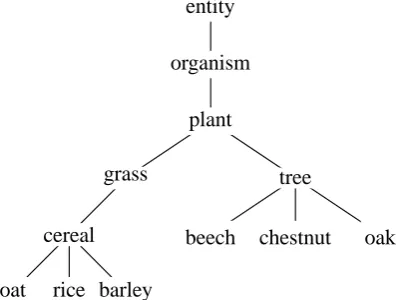
[image:6.595.87.288.73.223.2]beech chestnut oak
Figure 2: A small example taxonomy extracted from WordNet (Fellbaum, 1989).
Proof. The functionψis clearly order-preserving: if x ≤ y inS then since y(x) ⊆ y(y), neces-sarily ψ(x) ≤ ψ(y). Conversely, the only way that ψ(x) ≤ ψ(y)can be true is ify(x) ⊆ y(y)
sincepis non-zero everywhere. If this is the case, thenx ≤yby the nature of the ideal completion. Thusψis an order-embedding, and sinceL1(S)is a complete lattice, it is also a completion. Finally, note thatkψ(x)k1 =Py∈↓(x) p(y) = ˆp(x).
This completion allows us to represent concepts as elements within a vector lattice so that not only the partial ordering of the taxonomy is preserved, but the probability of concepts is also preserved as the size of the vector under theL1norm.
3.4 Representing Syntax
In this section we give a description link grammar (Sleator and Temperley, 1991) in terms of a con-text theory. Link grammar is a lexicalised syntac-tic formalism which describes properties of words in terms of links formed between them, and which is context-free in terms of its generative power; for the sake of brevity we omit the details, although a sample link grammar parse is show in Figure 3.
Our formulation of link grammar as a context theory makes use of a construction called a free inverse semigroup. Informally, the free inverse semigroup on a set S is formed from elements ofS and their inverses, S−1 = {s−1 : s ∈ S}, satisfying no other condition than those of an in-verse semigroup. Formally, the free inin-verse semi-group is defined in terms of a congruence rela-tion on(S∪S−1)∗specifying the inverse property and commutativity of idempotents — see (Munn,
they mashed their way through the thick mud
a d j
d o
m
s
Figure 3: A link grammar parse. Link types:
s: subject, o: object, m: modifying phrases,
a: adjective,j: preposition,d: determiner.
1974) for details. We denote the free inverse semi-group onSbyFIS(S).
Free inverse semigroups were shown by Munn (1974) to be equivalent to birooted word trees. A birooted word-tree on a setAis a directed acyclic graph whose edges are labelled by elements ofA
which does not contain any subgraphs of the form
• −→ •a ←− •a or• ←− •a −→ •a , together with two distinguished nodes, called the start node, 2
and finish node,◦.
An element in the free semigroupFIS(S)is de-noted as a sequencexd1
1 xd22. . . xdnn wherexi ∈ S
anddi ∈ {1,−1}.
We construct the birooted word tree by starting with a single node as the start node, and for eachi
from 1 ton:
• Determine if there is an edge labelledxi
leav-ing the current node ifdi = 1, or arriving at
the current node ifdi =−1.
• If so, follow this edge and make the resulting node the current node.
• If not, create a new node and join it with an edge labelledxi in the appropriate direction,
and make this node the current node.
The finish node is the current node after then iter-ations.
The product of two elementsxandyin the free inverse semigroup can be computed by finding the birooted word-tree ofxand that ofy, joining the graphs by equating the start node ofywith the fin-ish node ofx(and making it a normal node), and merging any other nodes and edges necessary to remove any subgraphs of the form•−→ •a ←− •a
[image:6.595.318.522.90.148.2]We can represent parses of sentences in link grammar by translating words to syntactic cate-gories in the free inverse semigroup. The parse shown earlier for “they mashed their way through the thick mud” can be represented in the inverse semigroup onS={s, m, o, d, j, a}as
ss−1modd−1o−1m−1jdaa−1d−1j−1
which has the following birooted word-tree (the words which the links derive from are shown in brackets):
s(they,mashed)
m(mashed,through)
o(mashed,way)
d(their,way)
j(through,mud)
d(the,mud)
a(thick,mud)
Let A be the set of words in the natural lan-guage under consideration, S be the set of link types. Then we can form a context theory
hA,FIS(S),ˆ,· iwhere·is multiplication defined by convolution onFIS(S), and a worda ∈ A is mapped to a probabilistic sumˆaof its link possible grammar representations (called disjuncts). Thus we have a context theory which maps a string x
to elements ofL1(FIS(S)); if there is a parse for this string then there will be some component of
ˆ
xwhich corresponds to an idempotent element of
FIS(S). Moreover we can interpret the magnitude of the component as the probability of that par-ticular parse, thus the context theory describes a probabilistic variation of link grammar.
3.5 Uncertainty in Logical Semantics
For the sake of brevity, we summarise our ap-proach to representing uncertainty in logical se-mantics, which is described in full elsewhere. Our aim is to be able to reason with probabilistic infor-mation about uncertainty in logical semantics. For example, in order to represent a natural language sentence as a logical statement, it is necessary to parse it, which may well be with a statistical parser. We may have hundreds of possible parses and logical representations of a sentence, and as-sociated probabilities. Alternatively, we may wish
to describe our uncertainty about word-sense dis-ambiguation in the representation. Incorporating such probabilistic information into the representa-tion of meaning may lead to more robust systems which are able to cope when one component fails. The basic principle we propose is to first repre-sent unambiguous logical statements as a context theory. Our uncertainty about the meaning of a sentence can then be represented as a probability distribution over logical statements, whether the uncertainty arises from parsing, word-sense dis-ambiguation or any other source. Incorporating this information is then straightforward: the rep-resentation of the sentence is the weighted sum of the representation of each possible meaning, where the weights are given by the probability dis-tribution.
Computing the degree of entailment using this approach is computationally challenging, however we have shown that it is possible to estimate the degree of entailment by computing a lower bound on this value by calculating pairwise degrees of entailment for each possible logical statement.
4 Related Work
Mitchell and Lapata (2008) proposed a framework for composing meaning that is extremely gen-eral in nature: there is no requirement for linear-ity in the composition function, although in prac-tice the authors do adopt this assumption. Indeed their “multiplicative models” require composition of two vectors to be a linear function of their ten-sor product; this is equivalent to our requirement of distributivity with respect to vector space addi-tion.
Various ways of composing vector based repre-sentations of meaning were investigated by Wid-dows (2008), including the tensor product and di-rect sum. Both of these are compatible with the context theoretic framework since they are dis-tributive with respect to the vector space addition. Clark et al. (2008) proposed a method of com-posing meaning that generalises Montague seman-tics; further work is required to determine how their method of composition relates to the context-theoretic framework.
5 Conclusion
We have given an introduction to the context-theoretic framework, which provides mathemat-ical guidelines on how vector-based representa-tions of meaning should be composed, how en-tailment should be determined between these rep-resentations, and how probabilistic information should be incorporated.
We have shown how the framework can be ap-plied to a wide range of problems in computational linguistics, including subsequence matching, vec-tor based representations of taxonomies and statis-tical parsing. The ideas we have presented here are only a fraction of those described in full in (Clarke, 2007), and we believe that even that is only the tip of the iceberg with regards to what it is possible to achieve with the framework.
Acknowledgments
I am very grateful to my supervisor David Weir for all his help in the development of these ideas, and to Rudi Lutz and the anonymous reviewers for many useful comments and suggestions.
References
Y. A. Abramovich and Charalambos D. Aliprantis. 2002. An Invitation to Operator Theory. American Mathematical Society.
Charalambos D. Aliprantis and Owen Burkinshaw. 1985. Positive Operators. Academic Press.
Stephen Clark, Bob Coecke, and Mehrnoosh Sadrzadeh. 2008. A compositional distribu-tional model of meaning. In Proceedings of
the Second Symposium on Quantum Interaction, Oxford, UK, pages 133–140.
Daoud Clarke. 2006. Meaning as context and subse-quence analysis for textual entailment. In
Proceed-ings of the Second PASCAL Recognising Textual En-tailment Challenge.
Daoud Clarke. 2007. Context-theoretic Semantics for Natural Language: an Algebraic Framework.
Ph.D. thesis, Department of Informatics, University of Sussex.
Ido Dagan, Oren Glickman, and Bernardo Magnini. 2005. The pascal recognising textual entailment challenge. In Proceedings of the PASCAL
Chal-lenges Workshop on Recognising Textual Entail-ment.
Scott Deerwester, Susan Dumais, George Furnas, Thomas Landauer, and Richard Harshman. 1990. Indexing by latent semantic analysis. Journal
of the American Society for Information Science,
41(6):391–407.
Katrin Erk and Sebastian Pado. 2008. A structured vector space model for word meaning in context. In
Proceedings of EMNLP.
Christaine Fellbaum, editor. 1989. WordNet: An
Elec-tronic Lexical Database. The MIT Press, Cam-bridge, Massachusetts.
John R. Firth. 1957. Modes of meaning. In Papers
in Linguistics 1934–1951. Oxford University Press,
London.
Maayan Geffet and Ido Dagan. 2005. The dis-tributional inclusion hypotheses and lexical entail-ment. In Proceedings of the 43rd Annual
Meet-ing of the Association for Computational LMeet-inguistics (ACL’05), University of Michigan.
Oren Glickman and Ido Dagan. 2005. A probabilis-tic setting and lexical cooccurrence model for tex-tual entailment. In ACL-05 Workshop on Empirical
Modeling of Semantic Equivalence and Entailment.
Zellig Harris. 1985. Distributional structure. In Jer-rold J. Katz, editor, The Philosophy of Linguistics, pages 26–47. Oxford University Press.
Huma Lodhi, Craig Saunders, John Shawe-Taylor, Nello Cristianini, and Chris Watkins. 2002. Text classification using string kernels. Journal of
Ma-chine Learning Research, 2:419–444.
Jeff Mitchell and Mirella Lapata. 2008. Vector-based models of semantic composition. In Proceedings
of ACL-08: HLT, pages 236–244, Columbus, Ohio,
June. Association for Computational Linguistics.
W. D. Munn. 1974. Free inverse semigroup.
Proceed-ings of the London Mathematical Society, 29:385–
404.
Philip Resnik. 1995. Using information content to evaluate semantic similarity in a taxonomy. In
IJ-CAI, pages 448–453.
Daniel D. Sleator and Davy Temperley. 1991. Pars-ing english with a link grammar. Technical Report CMU-CS-91-196, Department of Computer Sci-ence, Carnegie Mellon University.
Julie Weeds, David Weir, and Diana McCarthy. 2004. Characterising measures of lexical distributional similarity. In Proceedings of the 20th International
Conference of Computational Linguistics, COLING-2004, Geneva, Switzerland.
Dominic Widdows. 2008. Semantic vector products: Some initial investigations. In Proceedings of the
Second Symposium on Quantum Interaction, Ox-ford, UK.
Ludwig Wittgenstein. 1953. Philosophical
Investiga-tions. Macmillan, New York. G. Anscombe,