R E S E A R C H
Open Access
Energy-efficient proactive edge caching
with sleep scheduling for green networks
Haneul Ko
1,2, Jaewook Lee
3and Sangheon Pack
3*Abstract
Proactive content caching in small cells (SCs) (i.e., proactive edge caching) can significantly reduce energy consumption of networks. However, the sleep mode of SCs can make the cached contents in SCs unavailable. Therefore, a joint optimization of edge caching strategy and sleep scheduling should be conducted to maximize the effectiveness of edge caching. In this paper, we propose an energy-efficient proactive edge caching with sleep scheduling (E3CS) where the controller jointly adjusts the caching strategy and the sleep scheduling of SCs by considering the content popularity dynamics. To optimize the performance of E3CS (i.e., minimize the overall energy consumption), we formulate a Markov decision process (MDP) and the joint optimal policy on the caching strategy and sleep scheduling is obtained by a value iteration algorithm. Evaluation results demonstrate that E3CS with the optimal policy outperforms the comparison schemes in terms of the overall energy consumption.
Keywords: Content caching, Edge caching, Sleep scheduling, Energy, Markov decision process (MDP), Green networks
1 Introduction
Recent report [1] predicts that mobile data traffic will grow at a compound annual growth rate of 47% from 2016 to 2021. In addition, it shows that most Internet traffic is governed by content retrieval applications such as content sharing and video on demand (VOD) services. In these applications, users retrieve contents from a remote con-tent server, which causes a significant amount of traffic and energy consumption. To alleviate this problem, the content caching where contents are stored in intermediate nodes of networks has received a high attention by lots of network operators. By amplifying the caching efficiency, contents can be proactively stored on the network edge (e.g., small cells (SCs)) [2–5].1
Specifically, the energy consumption for content trans-mission over the backhaul link can be significantly reduced by means of proactive edge caching in SCs. Meanwhile, SCs usually use the sleep mode to reduce the maintenance energy needed to be active. However, it can make the cached contents in SCs (in the sleep mode) unavailable. In this case, the contents should be deliv-ered through the backhaul link from the remote content
*Correspondence:[email protected]
3School of Electrical Engineering, Korea University, Anam-ro 145, Seoul, Korea Full list of author information is available at the end of the article
server even though the contents are stored in SCs, which increases the energy consumption. Therefore, the caching strategy and sleep scheduling should be jointly adjusted to reduce the overall energy consumption. However, only few works consider simultaneously both the caching strategy and sleep scheduling [6,7].
The popularity of contents changes dynamically with temporal patterns [8]. Specifically, contents on micro-blogging platform such as Facebook and Twitter are very volatile, and they become popular and fade away in a matter of minutes. Moreover, their popularity can exhibit a variety of patterns [9]. Obviously, when the popular contents are cached, the utility of the cached contents (e.g., hit ratio) increases. Meanwhile, the content popu-larity dynamics have strong correlation between short-term popularity and long-short-term popularity, and thus, it can be well-estimated by several methods [10–15]. How-ever, most of existing cache systems are not designed by considering the content popularity dynamics, which is reasonable only when the cache churn time is small compared with the popularity dynamics.
2 Methods
In this paper, we propose an energy-efficient proactive edge caching with sleep scheduling (E3CS) where the
controller jointly adjusts the caching strategy and the sleep scheduling of SCs by considering the content popularity dynamics. Specifically, the controller does not command the sleep mode to SCs having high utility of the cached contents (e.g., popular contents) and caches proactively contents estimated to become popular in SCs to reduce the energy consumption for the content delivery. More-over, the controller commands the sleep mode to SCs with low utility of the cached contents (e.g., when there is no user in the coverage of SC). Then, the energy con-sumption to maintain the active mode of SCs can be diminished. To optimize the performance of E3CS (i.e., minimize the overall energy consumption), we formulate a Markov decision process (MDP) and the joint optimal policy on the caching strategy and sleep scheduling is obtained by a value iteration algorithm. Evaluation results demonstrate that E3CS with the optimal policy can reduce the overall energy consumption by up to 25%.
The contribution of this paper can be summarized as follows: (1) to the best of our knowledge, this is the first work to simultaneously optimize the caching strategy and sleep scheduling with the consideration of the content popularity dynamics and (2) we present and analyze eval-uation results under various environments, which provide guidelines for designing the edge caching system with high energy efficiency.
The remainder of this paper is organized as follows. Related works are summarized in Section 3 and E3CS is described in Section4. After that, the MDP model is developed in Section5and the evaluation results are given in Section6, and followed by the concluding remarks in Section7.
3 Related works
To improve the energy efficiency of networks by means of the content caching, there are several works in the literature [6,7,10–26].
To maximize the effectiveness of caching, sociality between users is exploited in [16, 17]. Nikolaou et al. [16] proposed two cache placement strategies that take advantage of known relationships between clients (e.g., social links) and the workload on the service. In a sim-ilar context, Wang et al. [17] analyzed the impact of social relationships on the performance of edge caching by means of a Markov chain. Meanwhile, Kakar et al. [18] introduced the concept of delivery time per bit and investigated cache-aided heterogeneous wireless net-works. Since the performance of the caching system can be improved when the coded contents are cached, some works focused on the coded contents and introduced appropriate caching schemes for these contents [19–21]. Maddah-Ali and Niesen [19] proposed a coded caching scheme to improve substantially the efficiency of content transmission over un-coded caching. Fadlallah et al. [20]
provided an overview of some caching-aided coded mul-ticast techniques and then discussed the potential of caching-aided coded multicast for improving bandwidth efficiency. Poularakis et al. [21] developed caching algo-rithms for layered encoding (i.e., scalable video coding (SVC)) to reduce the average video delivery time. In [22,23], it is assumed that the content popularity distri-bution is fixed, which follows a specific distridistri-bution (i.e., Zipf distribution). Specifically, Zhou et al. [22] designed a cache strategy called caching as a cluster where SCs can exchange contents with each other within the cluster of SCs, and a probabilistic solution was derived based on the content popularity distribution to reduce the average content delivery latency. Meanwhile, Krishnan et al. [23] studied the effect of retransmissions on the cache strat-egy for both static and mobile user scenarios with the fixed content popularity distribution and demonstrated that the cache strategy is very sensitive to the number of retransmissions. Since the content popularity is fluc-tuated, Muller et al. [24] suggested an algorithm which learns context-specific content popularity by regularly observing context information of users and updating the cached contents. However, these works did not take into account the effect of SCs’ sleep mode on the performance of the content caching.
Some works analyzed the energy efficiency of edge caching-enabled networks [25, 26]. Liu and Yang [25] derived a closed form of the energy efficiency and identi-fied key impacting factors to the energy efficiency. Simi-larly, Perabathini et al. [26] analyzed the energy efficiency and area power consumption based on stochastic geom-etry and provided the optimal transmission power to maximize the energy efficiency.
dependent on the size of data sets. To mitigate this prob-lem, He et al. [15] predicted the viewing probability of contents from the perspective of individuals by means of a discrete-time Markov chain.
Few works considered simultaneously both the caching strategy and the sleep scheduling [6,7]. Li et al. [6] con-structed the framework of edge caching with considering the interaction between caching and sleeping. Specifically, the content caching problem was formulated to maxi-mize the average hit rate with an energy consumption constraint. Meanwhile, Chiang et al. [7] investigated a multi-cell cooperation-based approach where a cooper-ative transmission and sleep mode operation are jointly performed to tackle inter-cell interference while reduc-ing energy dissipation. However, since these works did not consider the content popularity dynamics, the optimal performance of edge caching system cannot be achieved.
4 Energy-efficient proactive edge caching with
sleep scheduling (E3CS)
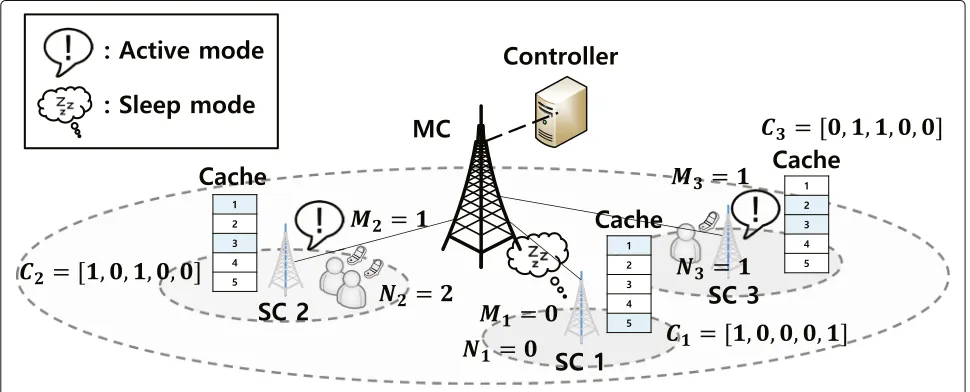
Figure1shows the system model in this paper. We con-sider a heterogenous networks where a macro cell (MC) overlays with several SCs which are connected to MC through an interface (e.g., X2 interface in LTE/LTE-A networks).
Two types of energy consumption are considered in our system model: (1) the energy consumption to deliver the contents and (2) the energy consumption to maintain the active mode of SCs. The energy consumption to deliver the contents can be reduced by the edge caching. When a cached content is requested, SC can provide it and thus the energy consumption owing to backhaul link transmis-sions can be reduced.2To improve this effect, the popular contents should be previously cached before when these
are requested. That is, contents should be proactively cached with the consideration of the content popularity dynamics (i.e., contents should be cached before those become popular).
Meanwhile, we assume that SCs in the active mode consume EA energy during the unit time τ. To reduce
this energy consumption, SCs can use the sleep mode. Since MC generally provides control messages to users, we assume that MC in our system model does not use the sleep mode. In the sleep mode, since most func-tions of SCs are turned off, the energy consumption in this mode can be negligible. However, the sleep mode makes the cached contents unavailable. Therefore, the contents should be delivered from the remote content server, which increases the energy consumption to deliver the contents. Especially when SC users in the sleep mode request excessively, huge energy can be consumed. There-fore, SCs use the sleep mode only when the utility of the cached contents is low (e.g., there is no user in the coverage of SC).
In E3CS, the controller at MC side jointly decides the caching strategy and conducts the sleep scheduling of SCs to minimize the overall energy consumption. For this, the controller maintains some information such as the con-tent popularity dynamics and the number of users (i.e., mobility profiles of users) in each SC. Note that the con-tent request frequency is dependent on the number of users in SCs. By using these information, the controller makes the policy table on the caching strategy and sleep scheduling and distributes the table to SCs. Basically, we assume that the library of candidate contents to be cached is not changed in a short-term scenario,3 and therefore, we can obtain the optimal policy in an offline manner. Since newly generated contents are generally not popular
at the first time, these contents do not need to be cached in SCs. Therefore, we believe that our caching scenario is reasonable. Meanwhile, when some parameters (e.g., content popularity) are changed or new contents become popular, a new policy table should be reconstructed by the controller to achieve better performance. Since the complexity of making a policy table is not negligible, too frequent reconstructions can be huge overhead to the controller. Therefore, an appropriate frequency should be determined to balance the tradeoff between the perfor-mance improvement and the overhead, which is one of our future works.4After receiving the policy table, SCs decide which contents are cached in their storages and whether to sleep or not by following the distributed policy table. To obtain the optimal policy table, we formulate MDP which will be elaborated in Section5. Since MC has higher com-putational power than SCs and the policy table is made by the controller at MC side, the MDP model can be applied to SCs without any high computation overhead in SCs.
5 Markov decision process (MDP)
To construct the optimal policy table on the caching strategy and sleep scheduling, we formulate an MDP model in this section. The MDP model represents a mathematical framework to model decision making in situations in which outcomes are partially random and partially under the control of the decision maker [27]. Therefore, the MDP model appears suitable for simulta-neously adjusting the cache strategy and sleep scheduling under the content popularity dynamics. The MDP model is constructed with five elements: (1) decision epoch, (2) action, (3) state, (4) transition probability, and (5) cost functions [28, 29]. Subsequently, we introduce the opti-mality equation and a value iteration algorithm to solve the equation. Important notations for the MDP model are summarized in Table1.
5.1 Decision epoch
Figure2shows the timing diagram for the MDP model. A sequenceT = {1, 2, 3,. . .}represents the time epochs when successive decisions are made.StandAtdenote the
state and the action chosen at the decision epocht ∈ T, respectively. τ represents the duration of each decision epoch.
5.2 State space
We define the state spaceSas
S=P×M×N×
NS
i
Ci (1)
wherePandMdenote the state spaces for representing the popularity of contents and the mode of SCs, respec-tively. In addition,Nmeans the state space for describing
Table 1Summary of notations
Notation Description
St State at the decision epocht
At Action chosen at the decision epocht τ Duration of each decision epoch
S State space
P State space for denoting the popularity of contents M State space for denoting the mode of SCs N State space for denoting the number of users in SCs Ci State space for denoting cached contents in SCi NS Number of SCs
NC Number of contents
MU Maximum number of users in one SC
A Action space
AM Action vector for deciding mode
AC Action vector for deciding whether each content is cached
at SCs
ξ Maximum number of contents which can be cached in SCs
EA Energy consumption of the active mode duringτ
NiR,j Expected number of requests for contentjin SCi λ Discount factor
the number of users in SCs. Moreover, Ci describes the
state space for representing cached contents of SC i. Meanwhile,NSis the number of SCs.
Pcan be represented as
P=
NC
j
Pj (2)
where NC is the number of contents. In addition, Pj
denotes the popularity of content j. That is, Pj =
{0, 1, 2,. . .,MP}whereMP is the maximum level of
con-tent popularity. Note that the concon-tent popularity can be quantized by a certain criterion (e.g., the popularity rank-ing).
Meanwhile,Mis described by
M=
NS
i
Mi (3)
whereMi denotes the mode of SCi. That is, if SCiis in
the sleep mode,Mi=0. Otherwise,Mi=1.
Ncan be denoted by
N=
NS
i
Ni (4)
where Ni denotes the number of users in SCi. That is,
Ni= {0, 1, 2,. . .,MU}whereMUis the maximum number
Fig. 2Timing diagram
On one hand,Cican be represented as
Ci= NC
j
cji (5)
where cji denotes whether the contentjis cached in SC
ior not. In other words, if the contentjis cached in SC
i, cji = 1. Otherwise,cji = 0. The element of Ci can be
represented by the vectorCi. For example, when the total
number of contents is 5 and the first and third contents are stored in SC 2,C2=[1, 0, 1, 0, 0] as shown in Fig.1.5
5.3 Action space
The action spaceAcan be described as
A=A1,A2,. . .,ANP,A
(6)
where NP,A means the total number of possible
combi-nations of actions.Akrepresents thekth possible
combi-nation of actions. At each decision epoch, the controller determines which SCs are in the sleep mode (i.e., con-ducts the sleep scheduling). In addition, the controller decides whether each content is cached at each SC (i.e., decides the cache strategy). Therefore, one of the vectors in the action vector set (i.e.,A) can be constructed by con-catenating two vectors: (1) the action vector for the sleep scheduling,AM and (2) the action vector for the cache
strategy,AC. That is,A =AM⊕ACwhere⊕means the
concatenation operation between two vectors. Moreover, ACcan be constructed by concatenatingNSvectors where
each vectorACi decides whether each content is cached at SCii.e.,AC=AC
1 ⊕AC2 ⊕. . .⊕ACNS
.
The controller commands each SC whether it goes in the sleep mode or not. Therefore,AMcan be represented
by
aM1,aM2,. . .,aMN
S
, whereaMi denotes the commanded mode (i.e., sleep or active mode) to SCi. That is, ifaMi =0, the controller commands the sleep mode to SCi. On the contrary,aMi =1 means that the controller commands SC
ito be active.
Meanwhile,ACi can be denoted asaCi,1,aCi,2,. . .,aCi,N
C
whereaCi,jrepresents whether SCitries to cache content
j. In other words,aCi,j = 1 means that SCitries to cache contentj(i.e., SCidownloads contentjfrom the content server), whereasaCi,j = 0 means that SCi does not try. Note that the number of contents can be cached is limited due to the constraint of the storage capacity of SCs. There-fore, the possible action vectorACi which can be chosen
is restricted. That is, whenκj denotes the size of content
j, only ACi with
j κj
aCi,j ≤ ξ where ξ is the maximum number of contents which can be cached in SCs can be chosen.
5.4 Transition probability
We can think that two type of actions (i.e., action for the sleep schedulingAM and action for the cache strat-egyAC) are chosen at each decision epoch. Then, cached content stateCand SC mode stateMare dependent on the chosen actionAC andAM, respectively. Meanwhile,
all states change independently with each other. There-fore, the transition probability from the current state,S= [P,M,N,C], to the next state,S =P,M,N,C, can be
The transition probability of each state can be derived as follows. Since the popularity of contents are varied
inde-pendently,PP|P=
the popularity of contentjat the next states, respectively. Meanwhile, P
Pj|Pj
can be obtained by various meth-ods such as statistic manner and model-based approach [10–15]. For example, by using shot noise model (SNM) [14],6the request rate can be modeled as a function of the time. Since the request rate at a certain time can represent the popularity at that time,PPj|Pj
can be defined. Since the modes of SCs are decided independently according to the elements in the chosen action vector
AM,PM|M=
resent the mode of SCi at the current and next states, respectively. SinceMiis decided byaMi (i.e., SCichanges its mode by following the command of the controller),
repre-Meanwhile,PN|Ncan be defined by means of a sta-tistical manner or a mathematical assumption (e.g., uni-form distribution and point Poisson process [30]). Note that PN|N means that the population distribution of SCs and the mobility of users can be reflected in this probability.
On the other hand, the contents stored in SC i are independently decided by the chosen action vectorACi .
Therefore,PC|C,AC=
Ci represent the cached contents in SCi at the current and next states, respectively. Meanwhile, whether con-tentjis stored in SCior not is decided according toaCi,j.
is derived as follows. If SC i does not have content j
and the controller decides that content j is stored at SCi i.e.,cji=0 andaCi,j=1, SC idownloads contentj
by requesting it to the content server. We assume that the download completion time for content j follows an exponential distribution with mean 1/μj.7Then, the
prob-ability that contentjis stored in SCiat the next state can be calculated byμjτ [31]. Meanwhile, when SCidoes not
have contentjand the controller decides that contentjis not stored at SCi
i.e.,cji =0 andaCi,j=0
, any state tran-sition does not occur. Therefore, the corresponding state transition probabilities can be derived as
Pcji|cji=0,aCi,j=1=
When the controller decides that content j is stored at SC i Thus, any state transition does not occur. Meanwhile, SCi can delete content jimmediately. Therefore, when the controller decides that content j is not stored at SC i i.e.,aCi,j=0, the next state for content j is 0
i.e.,cji=0 even though the current state for content
j is 1 i.e.,cji=1. Then, the corresponding transition probabilities can be described by
Pcji|cji=1,aCi,j=1=
To define the cost function, we consider the overall energy consumption. The overall energy consumption consists of (1) the energy consumption to deliver the contents, (2) the energy consumption to maintain the active mode of SCs, and (3) the energy consumption to change of the cached contents. Since one SC in the active mode consumesEA
energy duringτ, the energy consumption to maintain the
active mode of SCs can be calculated asEA NS
i δ
[Mi=1],
where δ[·] is a delta function to return 1 if the given condition (e.g., Mi = 0) is true. If the condition is not
true, a delta function returns 0. Meanwhile, the expected number of requests for content j in SC i at each deci-sion epoch,NRi,j, is proportional to its popularity and the number of users in SCi. That is,NRi,j can be calculated by αPjni where α is the coefficient parameter reflecting
the duration of decision epoch.8 When the content jis requested, if SCiis in the active mode and has contentj
in its storagei.e.,Mi=1 andcji=1
, SCican transport contentjto users. In this case, a small amount of deliv-ery energy consumptionEC,E is needed. On the contrary,
when SCiis in the sleep mode or it does not have con-tentjin its storage
i.e.,Mi=0 orcji=0
, the requested content should be delivered from the content server. Since the energy consumption to deliver the contents is gener-ally proportional to the distance between the source and the destination, a large amount of energy EC,C can be
assumed when the content is delivered from the content server. Meanwhile, when SC i tries to change its stored contenti.e.,aCi,j=0 andaCi,j=1 oraCi,j=1 andaCi,j=0, the energyESis needed.9To sum up, the cost function for
5.6 Optimality equation
To minimize the expected total cost and obtain the opti-mal policy, we choose the expected total discount cost optimality criterion [32, 33]. Let v(S) be the minimum expected total cost when the initial state isS. Then, we can describev(S)as
v(S)=min
π∈ v
π(S) (15)
wherevπ(S)is the expected total cost when the policyπ with an initial stateSis given.
The optimality equation is given by [28]
v(S)=min
whereλis a discount factor in the MDP model. A value of
λcloser to 1 gives more weight to future costs. The solu-tion of the optimality equasolu-tion corresponds to the mini-mum expected total cost and the optimal policy. To solve the optimality equation and to obtain the optimal policy,
δ∗, we use a value iteration algorithm, as shown in
Algo-rithm 1, which is one of the conventional algoAlgo-rithms to solve MDP problem, where|v| =min[v(S)] forS ∈ Sand
vk(S)is the expected total cost in the stepk. First, param-eters are initialized (line 1 in Algorithm 1). Then, the expected total cost in the stepkfor each state is computed (line 2 in Algorithm 1). After that, the algorithm deter-mines whether the iteration is sufficiently conducted or not based on the inequality|vk+1(S)−vk(S)|< (1−λ)/2λ (line 3 in Algorithm 1), where is a stopping criterion. If the iteration is not enough, the algorithm conducts an additional iteration. Otherwise, the algorithm computes the stationary optimal policy (line 4 in Algorithm 1).
Algorithm 1Value iteration algorithm.
1: Setv0(S) = 0 for each stateS. Specify >0, and set Otherwise, increasekby 1 and return to line 2. 4: For each stateS∈S, compute the stationary optimal
policy
Generally, each iteration in the value iteration algorithm is performed inO(|A||S|2) [34].10 Note the overall state
space and the action space are represented by (1) and (6), respectively. Therefore, the complexity of this algorithm
is decided by the number of contents, the number of SCs, the number of users, and the cache size. If these param-eters have large values (i.e., state and/or action space are large), the complexity cannot be neglected even though it is a polynomial function. Therefore, the controller makes a table to store the optimal policy, which can be pre-computed by the value iteration algorithm in an offline manner, and then distributes the table to SCs. This table includes the state and decision in each state. Then, SCs can decide whether to be in the sleep mode or not and which contents are stored according to the policy stored in the table.
6 Evaluation results
For performance evaluation, we compare the proposed algorithm, E3CS, with the following five schemes: (1) ADAP-SLEEP where SCs use the sleep mode only when the number of users in their area does not exceed δN
while the contents are cached by the MDP, (2) NO-SLEEP where SCs do not use the sleep mode while the con-tents are cached by the MDP, (3) ALL-SLEEP where SCs are always in the sleep mode,11 (4) HALF-SLEEP where half of SCs which are randomly selected are in the sleep mode are in the sleep mode whereas the others are in the active mode while the contents are cached by the MDP, and (5) POP-CACHE where the content is cached based on the current content popularity (not content popular-ity dynamics) while the mode of SCs are decided by the MDP. Note that, since this is the first work on the joint optimization of the caching strategy and sleep schedul-ing by considerschedul-ing the content popularity dynamics, we introduce simple comparison schemes to demonstrate the effectiveness of the propose scheme. The performance metric is the energy consumption ratio,ζ, based on the energy consumption of ALL-SLEEP. That is, the energy consumption of ALL-SLEEP is normalized as 1.
The default parameter settings are as follows. The num-ber of SCs,NS, and the total number of contents,NC, are
set to 25 and 100, respectively [35,36]. The cache size of SCs and the average content size are assumed by 1 GB and 500 MB, respectively [36]. In particular, the content size
κjis set to the value between 250 and 750 MB. Then, we
can assume that the maximum number of contents which can be cached in SCsξ is set to 2. Meanwhile, we assume that the link bandwidth between SC and the content server is 250 MB/s. Then, the average download comple-tion time, 1/μj, is set to the value between 1/3 and 1.
We assume that the content popularity is dynamically changed to show effectively the outperforming of the pro-posed scheme. The maximum number of users in one SC
MU is set to 5 [36]. The number of users in each SC is
uniform distribution. On the one hand, many users usually exist in 40% of SCs. Meanwhile, the energy consumption
EAof the active mode duringτ is 6.8W[37]. In addition,
delivery energy consumptions, EC,E andEC,C, are set to
0.13 and 4.2 W, respectively [37,38].12 The energy con-sumption to change contents,ES, is set to 1W[39].13On
the other hand,αandτ are set to 0.1 and 1, respectively. The discount factorλis set to 0.95. Meanwhile, we have set the x-axis values based on the real energy consumption in cellular systems [37,38].
6.1 Effect ofEA
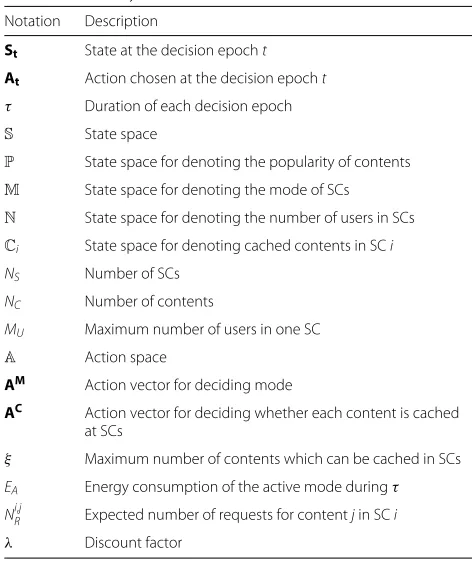
Figure3shows the effect of the energy consumption,EA,
for the active mode duringτ. From Fig.3, it can be found that the energy consumption ratio of E3CS is the low-est among the comparison schemes. This is because, in E3CS, caching strategy and sleep scheduling are jointly adjusted. In doing so, the case where the cached contents become unavailable due to the sleep mode of SCs rarely occurs. Specifically, E3CS considers the content popular-ity dynamics, and therefore, contents estimated to become popular are cached proactively in SCs. Therefore, theζ of E3CS is smaller than that of POP-CACHE. Note that, in POP-CACHE, the content is cached based on the current content popularity.
As shown in Fig.3, whenEAis smaller than 5, the energy
consumption of E3CS is comparable to that of NO-SLEEP. This is because the energy consumption for the active mode is not a dominant factor to reduce the overall energy consumption. Therefore, E3CS commands all SCs to be active to reduce the energy consumption for the content delivery.
Meanwhile, as EA increases, the energy consumption
to exploit contents cached in SCs also increases. Note that SCs should be in the active mode to use contents
Fig. 3Effect of the energy consumptionEAfor the active mode
duringτ
cached in SCs. Therefore, ζ of all schemes except ALL-SLEEP increases as EA increases. However, since E3CS
commands the sleep mode adaptively depending onEA
(i.e., E3CS frequently commands the sleep mode to more SCs whenEAis large), the energy consumption ratioζ of
E3CS increases slowly whenEAis over 6.
6.2 Effect ofEC,C
The effect of the energy consumptionEC,Cto retrieve
con-tents from the remote content server on ζ is shown in Fig.4. From Fig.4, it can be seen that E3CS operates adap-tively even whenEC,C is changed. SmallEC,C means that
contents can be retrieved from the remote content server without high energy consumption. In such case, E3CS commands the sleep mode to SCs to reduce the energy consumption for the active mode in SCs, and thus, theζ of E3CS is the same as that of ALL-SLEEP whenEC,C is
2. On the contrary, whenEC,C has larger value (i.e., when
EC,C is 5 ∼ 6), the energy consumption to retrieve
con-tents from the remote content server is more influential than the energy consumption for the active mode. As a results, E3CS does not command the sleep mode to most SCs, and thus, contents can be delivered from the network edge (i.e., SCs). Therefore, theζof E3CS is comparable to that of NO-SLEEP.
6.3 Effect ofEC,E
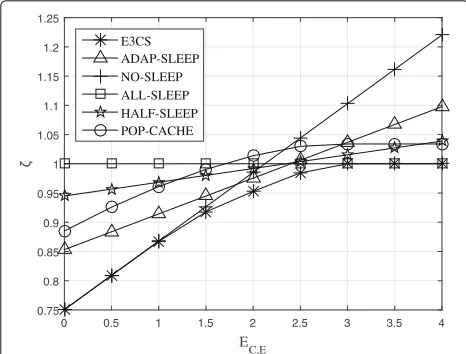
The effect of the energy consumptionEC,Eto deliver
con-tents from the network edge onζis shown in Fig.5. In this result,αis set to 0.25. WhenEC,Eis small (i.e.,EC,E < 1),
the ζ of E3CS is almost the same as that of NO-SLEEP. This is because, when EC,E is small, the energy saving
effect through the content delivery from the network edge is more influential than the energy consumption due to the active mode. In such a situation, SCs are always in
Fig. 4Effect of the energy consumptionEC,Cto retrieve contents
Fig. 5Effect of the energy consumptionEC,Eto deliver contents from
the network edge
the active mode to reduce the energy consumption for the content delivery. Meanwhile, asEC,E increases, E3CS
commands the sleep mode to some SCs. Especially when
EC,E is lager than 3, E3CS commands the sleep mode to
all SCs, and therefore, theζ of E3CS is the same as that of ALL-SLEEP. Meanwhile, since ADAP-SLEEP, NO-SLEEP, and HALF-SLEEP do not consider the energy consump-tion to deliver contents from the network edge, theirζ increases continuously regardless ofEC,E. Specifically, the
increasing rate of NO-SLEEP is the highest, because the contents are always retrieved from the network edge in this scheme.
6.4 Effect ofμ
Figure6shows the effect of the download rateμbetween the content server and SCs. Asμincrease,ζof all schemes
Fig. 6Effect of the download rateμbetween the content server and SCs
except ALL-SLEEP decreases. This can be explained as follows. Largeμrepresents that contents can be cached within short time. Then, the cached contents can be rapidly changed according to the popularity of contents, which means that the cached contents can be used more frequently. Consequently, the case where contents are delivered from the remote content server rarely occurs, and therefore, the overall energy consumption can be reduced. This result means that the bandwidth of back-haul link (i.e., the bandwidth between the content server and SCs) should be enhanced to reduce the energy con-sumption.
7 Conclusion
The sleep mode of small cells (SCs) can make the pop-ular contents unavailable. To prevent this situation, in this paper, we propose an energy efficient proactive edge caching with sleep scheduling (E3CS) where the con-troller jointly adjusts the caching strategy and the sleep scheduling of SCs with the consideration of the con-tent popularity dynamics. The joint optimal policy on the caching strategy and sleep scheduling minimizing the overall energy consumption is obtained by means of a Markov decision process (MDP). Evaluation results demonstrate that E3CS with the optimal policy reduces the overall energy consumption by up to 25% compared with other schemes. In addition, it can be also found that E3CS operates adaptively even when operating environ-ments (e.g., energy consumptions for the active mode and the content delivery) are changed. In our future work, we will extend the MDP model to consider content shar-ing among users by means of device-to-device (D2D) communications. Moreover, to reduce the complexity of the MDP model, we will reformulate another MDP model that has an implementation-friendly threshold structure, and then evaluate the model in more practical scenarios.
Endnotes
1Proactive content caching is demonstrated to further
boost the caching efficiency compared to reactive data caching [2–4].
2We assume that contents are cached in only SCs (not
cached in MC) to maximize the effectiveness of edge caching. Note that the formulation is conducted based on this assumption, which can be easily extended to consider the case where contents can be cached in MC.
3In a long-term scenario where the candidate contents
4It is hard to define a quantitative metric to denote how
frequently a new policy table should be reconstructed. Therefore, we conducted the qualitative analysis on the tradeoff between the performance improvement and the overhead depending on the frequency.
5Since all contents cannot be included in the state space
due to large scale of contents, only popular contents (which have higher probability to be cached in small cells) should be included in the state space.
6This model can describe the arrival process of
con-tent requests by the time instant at which the concon-tent is requested by an user, the average number of requests, and the popularity profile (i.e., how the request rate for the content evolves over time).
7Note that the download completion time is inverse
proportional to the size of content, κj. Moreover, the
bandwidth of the backhaul link and background traffic volume can affect the time.
8Note that as the duration of decision epoch increases,
the number of requests for contents during the duration of decision epoch naturally increases.
9Note that E
S is the average consumption during τ
when SCitries to change contents.
10When andλare set to 0.001 and 0.95, respectively,
the number of iterations to convergence is 65 which is not quite large. This means that the number of iterations is not a dominant factor to decide the whole running time of the value iteration algorithm.
11In ALL-SLEEP, since SCs are always in the sleep mode,
the contents needs not to be stored.
12E
C,Cis set based on the link energy consumption [38].
13Since the energy is rarely consumed to delete data, we
setESbased on the writing operation.
Abbreviations
D2D: Device to device; E3CS: Energy efficient proactive edge caching with sleep scheduling; MC: Macro cell; MDP: Markov decision process; SC: Small cell; VOD: Video on demand
Funding
This research was supported in part by National Research Foundation (NRF) of Korea Grant funded by the Korean Government (MSIP) (No.
2017R1E1A1A01073742) and in part by Institute for Information & communications Technology Promotion (IITP) grant funded by the Korea government (MSIT) (No. 2017-0-00195, Development of Core Technologies for Programmable Switch in Multi-Service Networks).
Authors’ contributions
All the authors contribute to the concept, the design and developments of the methodology, and the simulation results in this manuscript. All authors read and approved the final manuscript.
Competing interests
The authors declare that they have no competing interests.
Publisher’s Note
Springer Nature remains neutral with regard to jurisdictional claims in published maps and institutional affiliations.
Author details
1Smart Quantum Communication Research Center, Korea University, Anam-ro
145, Seoul, Korea.2Department of Electrical and Computer Engineering,
University of British Columbia, 2366 Main Mall, Vancouver, Canada.3School of
Electrical Engineering, Korea University, Anam-ro 145, Seoul, Korea.
Received: 7 February 2018 Accepted: 17 July 2018
References
1. Cisco System, Cisco Visual Networking Index: Global Mobile Data Traffic Forecast Update, 2016–2021 (2017).https://www.cisco.com/c/en/us/ solutions/collateral/service-provider/visual-networking-index-vni/ complete-white-paper-c11-481360.pdf
2. J Tadrous, A Eryilmaz, On optimal proactive caching for mobile networks with demand uncertainties. IEEE/ACM Trans. Netw.24(5), 2715–2727 (2016).https://doi.org/10.1109/TNET.2015.2478476
3. V Siris, X Vasilakos, G Polyzos, in2014 IEEE International Symposium on World of Wireless, Mobile and Multimedia Networks (WoWMoM). Efficient proactive caching for supporting seamless mobility, (2014)
4. S Shukla, A Abouzeid, in2017 IEEE International Conference on Computer Communications (INFOCOM). Proactive retention aware caching (IEEE, 2017).https://doi.org/10.1109/INFOCOM.2017.8057029
5. F Gabry, V Bioglio, I Land, On energy-efficient edge caching in heterogeneous networks. IEEE J. Sel. Areas Commun.34(12), 3288–3298 (2016).https://doi.org/10.1109/JSAC.2016.2611845
6. R Li, W Wang, A Huang, Z Zhang, in2016 International Conference on Wireless Communications & Signal Processing (WCSP). Content caching at sleeping-enabled base stations in heterogeneous networks (IEEE, 2016). https://doi.org/10.1109/WCSP.2016.7752641
7. Y Chiang, W Liao, in2016 IEEE International Conference on Computer Communications (INFOCOM). ENCORE: an energy-aware multicell cooperation in heterogeneous networks with content caching (IEEE, 2016).https://doi.org/10.1109/INFOCOM.2016.7524623
8. M Garetto, E Leonardi, S Traverso, in2015 IEEE International Conference on Computer Communications (INFOCOM). Efficient analysis of caching strategies under Dynamic content popularity (IEEE, 2015).https://doi.org/ 10.1109/INFOCOM.2015.7218613
9. R Crane, D Sornette, Robust dynamic classes revealed by measuring the response function of a social system. Proc. Natl. Acad. Sci. U. S. A.105(41), 15649–15653 (2008).https://doi.org/10.1073/pnas.0803685105 10. J Yang, J Leskovec, in2011 ACM International Conference on Web Search
and Data Minig (WSDM). Patterns of temporal variation in online media (ACM, 2011).https://doi.org/10.1145/1935826.1935863
11. Y Zhou, L Chen, C Yang, D Chiu, Video popularity dynamics and its implication for replication. IEEE Trans. Multimed.17(8), 1273–1285 (2015). https://doi.org/10.1109/TMM.2015.2447277
12. G Szabo, B Huberman, Predicting the popularity of online content. Commun. ACM.53(8), 80–88 (2010).https://doi.org/10.1145/1787234. 1787254
13. C Li, J Liu, S Ouyang, Characterizing and predicting the popularity of online videos. IEEE Access.4, 1630–1641 (2016).https://doi.org/10.1109/ ACCESS.2016.2552218
14. S Traverso, M Ahmed, M Garetto, P Giaccone, E Leonardi, S Niccolini, Temporal locality in today’s content caching: why it matters and how to model it. ACM SIGCOMM Comput. Commun. Rev.43(5), 5–12 (2013). https://doi.org/10.1145/2541468.2541470
15. S He, H Tian, X Lyu, Edge popularity prediction based on social-driven propagation dynamics. IEEE Commun. Lett.21(5), 1027–1030 (2017). https://doi.org/10.1109/LCOMM.2017.2655038
16. S Nikolaou, R Van Renesse, N Schiper, Proactive cache placement on cooperative client caches for online social networks. IEEE Trans. Parallel Distrib. Syst.27(4), 1174–1186 (2016).https://doi.org/10.1109/TPDS.2015. 2425398
18. J Kakar, S Gherekhloo, ZH Awan, A Sezgin, in2017 IEEE International Conference on Communications (ICC). Fundamental limits on latency in cloud- and cache-aided hetnets (IEEE, 2017).https://doi.org/10.1109/ICC. 2017.7996346
19. MA Maddah-Ali, U Niesen, Fundamental limits of caching. IEEE Trans. Inf. Theory.60(5), 2856–2867 (2014).https://doi.org/10.1109/TIT.2014. 2306938
20. Y Fadlallah, A Tulino, D Barone, G Vettigli, J Llorca, J Gorce, Coding for caching in 5G networks. IEEE Commun. Mag.55(2), 106–113 (2017). https://doi.org/10.1109/MCOM.2017.1600449CM
21. K Poularakis, G Iosifidis, A Argyriou, I Koutsopoulos, L Tassiulas, in2016 IEEE International Conference on Computer Communications (INFOCOM). Caching and operator cooperation policies for layered video content delivery (IEEE, 2016).https://doi.org/10.1109/INFOCOM.2016.7524427 22. Y Zhou, Z Zhao, R Li, H Zhang, Y Louet, Cooperation based probabilistic
caching strategy in clustered cellular networks. IEEE Commun. Lett.21(9), 2029–2032 (2017).https://doi.org/10.1109/LCOMM.2017.2717398 23. S Krishnan, M Afshang, H Dhillon, Effect of retransmissions on optimal
caching in cache-enabled small cell networks. IEEE Trans. Veh. Technol. 66(12), 11383–11387 (2017).https://doi.org/10.1109/TVT.2017.2721839 24. S Muller, O Atan, M Schaar, A Klein, Context-aware proactive content
caching with service differentiation in wireless networks. IEEE Trans. Wirel. Commun.16(2), 1024–1036 (2017).https://doi.org/10.1109/TWC.2016. 2636139
25. D Liu, C Yang, Energy efficiency of downlink networks with caching at base stations. IEEE J. Sel. Areas Commun.34(4), 907–922 (2016).https:// doi.org/10.1109/JSAC.2016.2549398
26. B Perabathini, E Bastug, M Kountouris, M Debbah, A Contey, in2015 IEEE International Conference on Communications (ICC) Workshop. Caching at the edge: a green perspective for 5G networks (IEEE, 2015).https://doi. org/10.1109/ICCW.2015.7247608
27. H Ko, G Lee, D Suh, S Pack, X Shen, An optimized and distributed data packet forwarding in LTE/LTE-A networks. IEEE Trans. Veh. Technol.65(5), 3462–3473 (2016).https://doi.org/10.1109/TVT.2015.2432152
28. M Puterman,Markov Decision Processes: Discrete Stochastic Dynamic Programming. (Wiley, Hoboken, 1994)
29. E Feinberg, A Shwartz,Handbook of Markov Decision Processes: Methods and Applications. (Kluwer Academic Publishers, The Netherlands, 2002) 30. S Singh, H Dhillon, J Andrews, Offloading in heterogeneous networks:
modeling, analysis, and design insights. IEEE Trans. Wirel. Commun.12(5), 2484–2497 (2013).https://doi.org/10.1109/TWC.2013.040413.121174 31. H Ko, J Lee, S Pack, MALM: mobility-aware location management scheme
in femto/macrocell networks. IEEE Trans. Mob. Comput.16(11), 3115–3125 (2017).https://doi.org/10.1109/TMC.2017.2690287 32. J Pan, W Zhang, in2012 IEEE Vehicular Technology Conference (VTC Fall). An
MDP-based handover decision algorithm in hierarchical LTE networks (IEEE, 2012).https://doi.org/10.1109/VTCFall.2012.6398908
33. H Tabrizi, G Farhadi, J Cioffi, in2011 IEEE Global Telecommunications Conference (GLOBECOM). A learning-based network selection method in heterogeneous wireless systems (IEEE, 2011).https://doi.org/10.1109/ GLOCOM.2011.6134269
34. M Littman, T Dean, L Kaelbling, in1995 International Conference on Uncertainty in Artificial Intelligence (UAI). On the complexity of solving markov decision problems (UAI, 1995).https://dl.acm.org/citation.cfm? id=2074203
35. M Chen, Y Hao, L Hu, K Huang, V Lau, Green and mobility-aware caching in 5G networks. IEEE Trans. Wirel. Commun.16(12), 8347–8361 (2017). https://doi.org/10.1109/TWC.2017.2760830
36. C Zhan, Z Wen, Content cache placement for scalable video in heterogeneous wireless network. IEEE Commun. Lett.21(12), 2714–2717 (2017).https://doi.org/10.1109/LCOMM.2017.2756033
37. S Zhang, N Zhang, S Zhou, J Gong, Z Niu, X Shen, Energy-aware traffic offloading for green heterogeneous networks. IEEE J. Sel. Areas Commun. 34(5), 1116–1129 (2016).https://doi.org/10.1109/JSAC.2016.2520244
38. A Bianco, R Mashayekhi, M Meo, in2016 IEEE International Conference on Communications (ICC). Energy consumption for data distribution in content delivery networks (IEEE, 2016).https://doi.org/10.1109/ICC.2016. 7511356