EMERGENCY CONTRACEPTIVE PILLS: KNOWLEDGE, ATTITUDES, AND PRACTICE PATTERNS AMONG CERTIFIED NURSE-MIDWIVES IN NORTH CAROLINA
Frances Estes Likis
A dissertation submitted to the faculty of the University of North Carolina at Chapel Hill in partial fulfillment of the requirements for the degree of Doctor of Public Health in the
Department of Maternal and Child Health, School of Public Health
Chapel Hill 2006
Approved by
Advisor: Ruth Petersen, MD, MPH Reader: Kathryn Andersen Clark, PhD
Reader: Anita Farel, DrPH Reader: David A. Grimes, MD Reader: Patricia A. Payne, CNM, MPH
iii ABSTRACT
FRANCES E. LIKIS: Emergency Contraceptive Pills: Knowledge, Attitudes, and Practice Patterns among Certified Nurse-Midwives in North Carolina
(Under the direction of Ruth Petersen)
Nearly half of the pregnancies in the United States each year are unintended, and emergency contraceptive pills (ECPs) have emerged as an important method for the prevention of unintended pregnancy. Despite the potential benefits of ECPs, they remain underused. The primary purpose of this study was to learn about ECP knowledge, attitudes, and practice patterns among certified nurse-midwives (CNMs) in North Carolina. The secondary purposes were to describe characteristics of CNMs practicing in North Carolina, and the contraceptive methods other than ECPs that they discuss with and prescribe for their patients. The study was conducted using a cross-sectional, confidential, self-administered mail questionnaire completed by 139 CNMs (73% response rate) in clinical practice in North Carolina.
contraception (4%). Half (50%) of the CNMs thought ECPs should be available over-the-counter. The majority of the CNMs discussed and prescribed ECPs (92%) though many did so only when the client requested. Over half (53%) of the CNMs identified one or more limitations to discussing ECPs. Attitudes toward ECPs and the frequency of ECP discussion and prescription were associated with accuracy of ECP knowledge.
v
ACKNOWLEDGEMENTS
Dr. Ruth Petersen’s guidance, enthusiasm, and encouragement from the beginning of this study through the dissertation process were essential to my completion of my doctoral degree. Her thoughtful questions and insightful suggestions enriched all aspects of
conducting and writing about this research. She was a pleasure to work with, and the positive energy she brought to every encounter we had was much appreciated. I could not have had a better dissertation committee chair, and she has my deepest gratitude for all of her help and support.
Dr. Kathryn Andersen Clark taught me not only the finer points of statistical analysis, but also how to weave together threads in the background, methods, results, and discussion sections to create seamless research reports. She reviewed numerous drafts and answered my many questions with endless patience, provided astute advice, and has a wonderful sense of humor that was always appreciated. I am deeply indebted to her and will strive to be as generous with my knowledge as she has been to me with hers.
Dr. Anita Farel was there for me when I needed assistance on several occasions during my doctoral studies, including being a member of my dissertation committee. She asked perceptive questions about my research, and her previous experience on doctoral committees was invaluable. I am especially grateful to her for urging me, in a gentle but needed way, to be ambitious with my final dissertation timeline.
I was fortunate and honored to have him as a member of my committee. He is a walking encyclopedia of the biomedical literature and always knew the exact reference I needed. He is incredibly generous in sharing his wisdom, which is sprinkled at all times with his fabulous sense of humor. His dedication to evidence-based, compassionate reproductive health care is admirable and inspiring, and he will always be one of my foremost role models.
Trish Payne has been integral to this research from its inception through being a co-investigator on the study to serving as a member of my dissertation committee. She is a matriarch of nurse-midwifery in North Carolina, and her insights into the profession in the state were invaluable. Much of the success in planning the study design and achieving the high response rate is attributable to her involvement.
Dr. Bert Peterson was generous in sharing his vast contraceptive expertise with me. He also gave me valuable advice about preparing research for journal publication. The
Department of Maternal and Child Health is fortunate to have him as Chair, and I thank him for being a member of my committee.
Jennifer Albright managed the study mailings flawlessly. Her expertise in survey design and implementation, and her attention to detail were major assets to this research. I
appreciate the assistance she provided and the knowledge she shared.
This study would not have been possible without the participation of the nurse-midwives in North Carolina. I appreciate the time and information they so generously gave in
vii
was particularly meaningful to me to have my research recognized by ARHP, as my initial interest in emergency contraception was developed as a member of their Emergency Contraception Train the Trainer Visiting Faculty.
Emily Bobrow has been my constant companion through this doctoral journey, and I would have most certainly lost my way without her. She cheered for me on the mountains, and she supported me through the valleys. She provided very useful feedback on my proposal and dissertation drafts, and impeccable entry of the study data. Her endless kindness and generosity mean more to me than she will ever know.
Linda Southern, Registrar of the Department of Maternal and Child Health, was the first person I had contact with when I applied for admission. She was helpful and kind during our initial conversation and that has been true of every interaction I have had with her since that time. I have had innumerable questions over the past few years, and she always either knew the answer or promptly found someone who did. Linda has been my guardian angel during my doctoral studies, and my ability to progress and succeed would truly not have been possible without her.
Dr. Sîan Curtis was my faculty advisor during the first two years of my doctoral studies, and I thank her for her assistance and guidance as I completed my course work. She also taught me a great deal about international family planning, and I appreciate her helping to expand my knowledge and perspective in this arena.
Dr. Kathie Hartmann was one of the finest teachers and mentors I encountered during my studies. I learned so much in the epidemiology course I took from her, and she
meetings, which were some of the most memorable events of my doctoral education. I also greatly appreciate her wise counsel and confidence in me when I was struggling with decisions about my educational and research paths.
I am very grateful to have received a Caroline H. and Thomas S. Royster, Jr., Fellowship from The Graduate School at the University of North Carolina at Chapel Hill. The fellowship was an extraordinarily generous source of financial support, and being in the Royster Society of Fellows gave me unique opportunities to meet students and faculty throughout the
university.
Tekoa King and Dr. Kerri Durnell Schuiling are not only two of my most important mentors and colleagues, but also my dear friends. Tekoa believed I was a writer long before I did, and she has taught me many important lessons about writing and editing. She also has incredible intuition about exactly when I need her to call or send a card or e-mail, and I am grateful that she is always there for me with kindness, support, and sage advice. Kerri has been the midwife for my doctoral education. She has encouraged me through the whole process, as good midwives do, from the labor of the course work through the transition of the dissertation to the celebration of completing the degree.
ix
laughing. Kathryn Osborne is an outstanding teacher and devoted advocate for women, and the dialogues we have shared have been crucial to my thinking about reproductive health care. I look forward to lighting candles for Debi, Amy, Robin, and Kathryn as they complete their doctoral degrees. Thank you also to Mickey Gillmor and Aggie Hoeger for assuming my work responsibilities when I was on leave to complete my dissertation. The FSMFN students have been some of my best teachers, and I owe a great deal of my expertise in women’s health to what I have learned from the thought-provoking questions they have asked.
My parents and stepparents, Katey and Ron Russell and Kenny and Lori Likis, have been supportive throughout my doctoral studies just as they have with so many aspects of my life. I am particularly grateful to my father, who read my dissertation in its entirety and provided very helpful writing and editing advice. My sister, Mary Foster, is always there when I need a listening ear, and she never fails to help me find the humor in life and to keep everything in perspective. I am fortunate to have the happiness and the youthful yet wise viewpoints my brothers, James and Ben Likis, bring to my life. I had no idea how much I would love my nieces, Katherine and Elizabeth Foster, who give me immeasurable joy and inspire me to work towards better reproductive health care for their generation. Thank you also to my grandparents, aunts, uncles, cousins, and favorite brother-in-law for their love and support.
xi
TABLE OF CONTENTS
LIST OF TABLES... xiv
LIST OF FIGURES ... xvi
LIST OF ABBREVIATIONS... xvii
INTRODUCTION ... 1
Specific Aims and Research Questions ... 2
Specific Aim 1... 2
Specific Aim 2... 2
Specific Aim 3... 3
Specific Aim 4... 3
Specific Aim 5... 4
Conceptual Model... 5
Significance ... 7
REVIEW OF THE LITERATURE ... 8
Unintended Pregnancy... 8
Emergency Contraceptive Pills... 10
History ... 10
Regimens ... 11
Effectiveness... 12
Mechanisms of Action... 12
Availability... 13
Advance Provision... 14
Nurse-Midwifery ... 14
Nurse-Midwifery in North Carolina... 15
Nurse-Midwifery and Emergency Contraception ... 16
Previous Research... 16
RESEARCH DESIGN AND METHODS ... 23
Participants ... 23
Measures ... 24
Procedures... 24
Human Subjects ... 26
Informed Consent ... 26
Linkages to Participants and Access to Participant Identities ... 27
Potential Risks and Benefits... 27
Inclusion of Women and Minorities... 28
Statistical Analysis... 28
Specific Aim 1... 30
Specific Aim 2... 30
Specific Aim 3... 31
Specific Aim 4... 32
xiii
Description of the Study Participants ... 34
Discussion and Provision of Contraceptive Methods... 35
Emergency Contraceptive Pill Knowledge... 36
Emergency Contraceptive Pill Attitudes ... 38
Emergency Contraceptive Pill Practice Patterns ... 39
DISCUSSION ... 59
Weekly Volume of Gynecologic Care... 59
Discussion and Provision of Contraceptive Methods... 59
Emergency Contraceptive Pill Knowledge... 60
Emergency Contraceptive Pill Attitudes ... 61
Emergency Contraceptive Pill Practice Patterns ... 62
Study Implications and Recommendations for Future Research... 63
Limitations of the Study ... 65
Conclusion ... 65
APPENDICES ... 67
Appendix A: Study Questionnaire... 67
Appendix B: Cover Letter ... 74
Appendix C: Study Information Sheet ... 77
LIST OF TABLES
Table 1. Participants and Designs of Previous Studies of Emergency Contraception
Knowledge, Attitudes, and Practices among Clinicians in the United States... 18
Table 2. Key Findings of Previous Studies of Emergency Contraception Knowledge, Attitudes, and Practices among Clinicians in the United States ... 20
Table 3. Participants’ Practice Characteristics, Midwifery Experience, and Weekly Volume of Gynecologic Care ... 43
Table 4. Contraceptive Methods Discussed and Prescribed or Provided (N=137) ... 44
Table 5. Self-Perceived Level of ECP Knowledge and Sources of ECP Education (N=136)45 Table 6. Accuracy of ECP Knowledge (N=136) ... 46
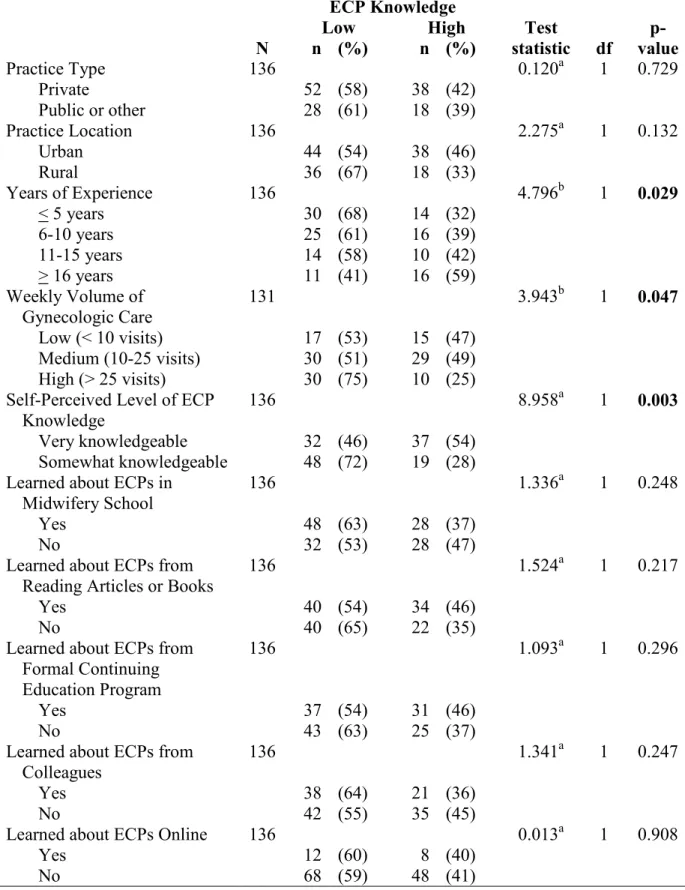
Table 7. Bivariate Analysis of Accuracy of ECP Knowledge and Practice Characteristics, Midwifery Experience, Weekly Volume of Gynecologic Care, Self-Perceived Level of ECP Knowledge, and Sources of ECP Education... 47
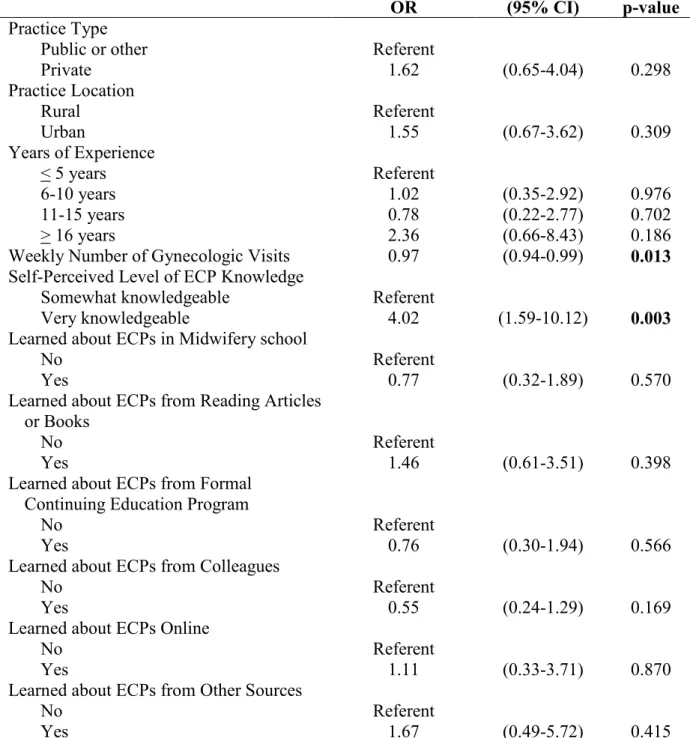
Table 8. Results of Logistic Regression Model of Accuracy of ECP Knowledge as a Function of Practice Characteristics, Midwifery Experience, Weekly Number of Gynecologic Visits, Self-Perceived Level of ECP Knowledge, and Sources of ECP Education (N=131) . 49 Table 9. Bivariate Analysis of Accuracy of ECP Knowledge and Attitudes toward ECPs... 50
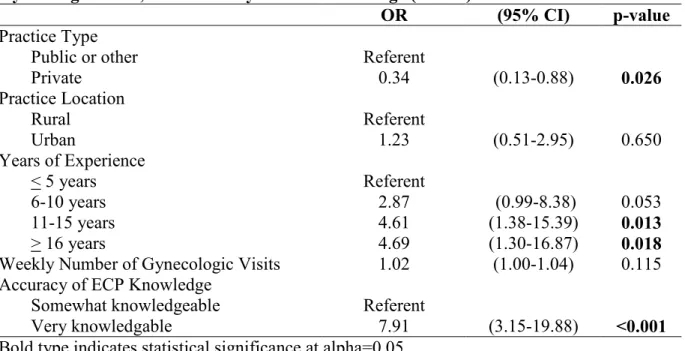
Table 10. Results of Logistic Regression Model of Attitude toward ECP Availability as a Function of Practice Characteristics, Midwifery Experience, Weekly Number of Gynecologic Visits, and Accuracy of ECP Knowledge (N=126) ... 51
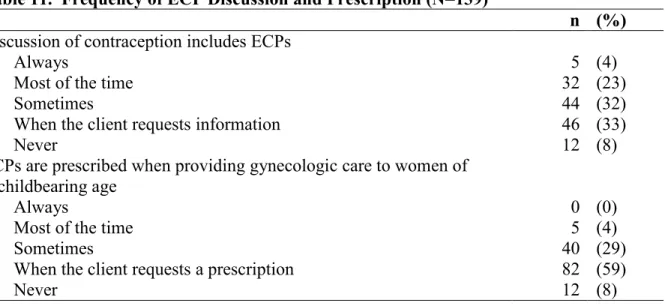
Table 11. Frequency of ECP Discussion and Prescription (N=139) ... 52
Table 12. Limitations to Discussion of ECPs (N=136) ... 53
Table 13. Estimated Availability of ECPs in Community Pharmacies (N=139)... 54
xv
Table 16. Bivariate Analysis of Prescription of ECPs and Practice Characteristics,
LIST OF FIGURES
xvii
LIST OF ABBREVIATIONS ACNM: American College of Nurse-Midwives
CHAPTER I INTRODUCTION
Nearly half of the pregnancies in the United States each year are unintended, and emergency contraceptive pills (ECPs) have emerged as an important method for the prevention of unintended pregnancy. Despite the potential benefits of ECPs, they remain underused. Certified nurse-midwives (CNMs) have the opportunity to increase women’s use of ECPs, but there has been minimal study of ECP knowledge, attitudes, and practice
patterns among CNMs. The primary purpose of this study was to learn about ECP
knowledge, attitudes, and practice patterns among CNMs in North Carolina, and the factors that influence their ECP knowledge, attitudes, and practice patterns. The secondary purposes were to describe characteristics of CNMs practicing in North Carolina, and the contraceptive methods other than ECPs that they discuss with and prescribe for their patients. This study was conducted using a cross-sectional, confidential, self-administered mail questionnaire completed by CNMs in clinical practice in North Carolina. Univariate, bivariate, and multivariable statistical analyses were conducted to investigate the research questions.
2 Specific Aims and Research Questions
Specific Aim 1
The first specific aim was to describe characteristics of CNMs practicing in North Carolina. These characteristics were used not only to learn more about the study participants, but also as variables hypothesized to be associated with ECP knowledge, attitudes, and practice patterns. The research questions for the first specific aim were:
Research Question 1.1: What are the types and locations of practices in which CNMs in North Carolina work?
Research Question 1.2: What are the other types of clinicians with whom CNMs in North Carolina practice?
Research Question 1.3: How experienced are CNMs in North Carolina?
Research Question 1.4: What is the weekly volume of gynecologic care that CNMs in North Carolina provide?
Specific Aim 2
The second specific aim was to describe the contraceptive methods other than ECPs that CNMs in North Carolina discuss with and prescribe or provide for their patients. This
information depicts a context of the contraceptive services CNMs in North Carolina offer, within which ECP practice patterns occur. The research questions for the second specific aim were:
Research Question 2.2: Which contraceptive methods do CNMs in North Carolina prescribe or provide for their patients?
Specific Aim 3
The third specific aim was to assess ECP knowledge among North Carolina CNMs. Both self-perceived ECP knowledge and an objective measurement of accuracy of ECP knowledge were evaluated. Assessment of knowledge is important for identifying education needs. Knowledge was also hypothesized as a factor influencing ECP attitudes and practice patterns. The research questions for the third specific aim were:
Research Question 3.1: What level of knowledge about ECPs do CNMs in North Carolina perceive that they have?
Research Question 3.2: What are North Carolina CNMs’ sources of ECP education? Research Question 3.3: How accurate is North Carolina CNMs’ knowledge about ECPs? Research Question 3.4: Does the accuracy of North Carolina CNMs’ ECP knowledge vary by
practice characteristics, midwifery experience, weekly volume of gynecologic care, self-perceived level of ECP knowledge, and/or sources of ECP education?
Specific Aim 4
4
Research Question 4.1: Do CNMs in North Carolina think ECPs encourage irresponsible behavior?
Research Question 4.2: Do CNMs in North Carolina think women will rely on ECPs as a regular form of contraception?
Research Question 4.3: Do CNMs in North Carolina think that ECPs should be available only by prescription, over-the-counter, or not all?
Research Question 4.4: Do North Carolina CNMs’ attitudes toward ECPs vary by accuracy of knowledge about ECPs?
Research Question 4.5: Does North Carolina CNMs’ attitude toward ECP availability vary by practice characteristics, midwifery experience, weekly volume of gynecologic care, and/or accuracy of ECP knowledge?
Specific Aim 5
The fifth specific aim was to assess ECP practice patterns among North Carolina CNMs. Practice patterns were defined as the frequency of discussion and the frequency of
prescription of ECPs, which directly influence women’s access to ECPs. The research questions for the fifth specific aim were
Research Question 5.1: How frequently do CNMs in North Carolina discuss and prescribe ECPs?
Research Question 5.2: What are the limitations to CNMs in North Carolina discussing ECPs?
Research Question 5.4: Does North Carolina CNMs’ discussion and prescription of ECPs vary by practice characteristics, midwifery experience, weekly volume of gynecologic care, accuracy of ECP knowledge, and/or attitudes toward ECPs?
Conceptual Model
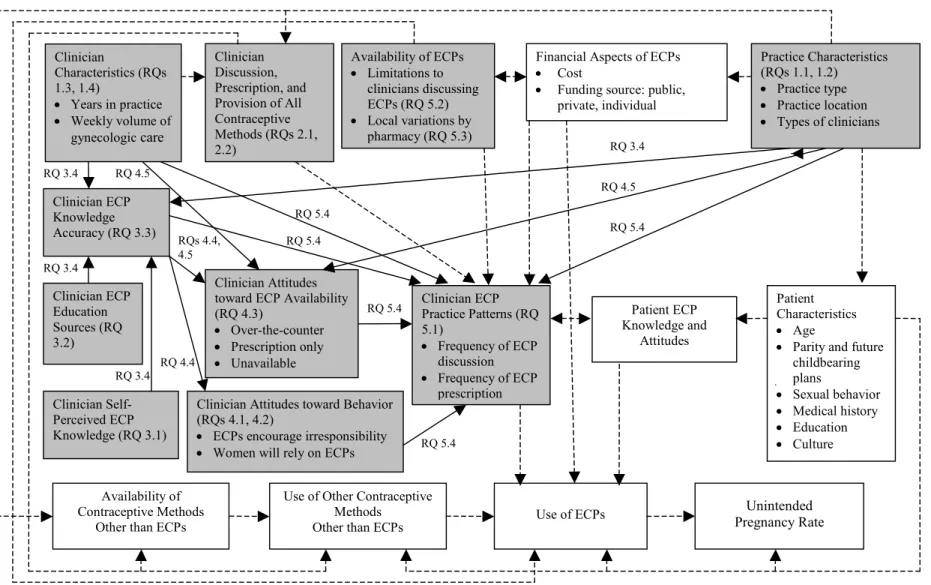
Figure 1. Conceptual Model
Clinician Attitudes toward Behavior (RQs 4.1, 4.2)
• ECPs encourage irresponsibility
• Women will rely on ECPs
Patient Characteristics
• Age
• Parity and future childbearing plans
• Sexual behavior
• Medical history
• Education
• Culture Availability of ECPs
• Limitations to clinicians discussing ECPs (RQ 5.2)
• Local variations by pharmacy (RQ 5.3)
Financial Aspects of ECPs
• Cost
• Funding source: public, private, individual
Practice Characteristics (RQs 1.1, 1.2)
• Practice type
• Practice location
• Types of clinicians
Patient ECP Knowledge and
Attitudes
Availability of Contraceptive Methods
Other than ECPs
Clinician ECP Practice Patterns (RQ 5.1)
• Frequency of ECP discussion
• Frequency of ECP prescription
ECP=emergency contraceptive pill
Clinicians in the current study will be limited to certified nurse-midwives Use of Other Contraceptive
Methods
Other than ECPs Use of ECPs
Unintended Pregnancy Rate
Clinician
Characteristics (RQs 1.3, 1.4)
• Years in practice
• Weekly volume of gynecologiccare
Clinician Discussion, Prescription, and Provision of All Contraceptive Methods (RQs 2.1, 2.2)
Current study: Gray boxes and solid lines
Outside scope of current study: White boxes and dashed lines Clinician ECP Education Sources (RQ 3.2) Clinician ECP Knowledge Accuracy (RQ 3.3)
RQ 5.4
Clinician Self-Perceived ECP Knowledge (RQ 3.1) RQ 3.4
Clinician Attitudes toward ECP Availability (RQ 4.3)
• Over-the-counter
• Prescription only
Significance
CHAPTER II
REVIEW OF THE LITERATURE
This chapter provides a review of literature relevant to the study. The purpose of ECPs is to prevent unintended pregnancy, and the prevalence, effects, and etiology of this problem are presented. Next, there is a discussion of ECP history, regimens, effectiveness,
mechanisms of action, safety, side effects, availability, and advance provision. This is followed by an overview of nurse-midwifery, as members of this profession are the focus of this study. The chapter concludes with a description of previous research about ECP
knowledge, attitudes, and practice patterns among clinicians.
Unintended Pregnancy
When the decision is made to continue an unintended pregnancy and parent, the consequences include potential adverse effects for children and their parents.2Unintended pregnancy is associated with later entry into prenatal care, a lower number of total prenatal visits, tobacco and alcohol use during pregnancy, low birthweight, preterm birth, infant mortality, child abuse, and insufficient resources for child development.2, 3 Unintended pregnancy precludes the opportunity to receive preconception care that may improve
pregnancy outcomes. The woman with an unintended pregnancy is at greater risk for physical abuse and depression. Couples experiencing unintended pregnancy are more likely to end their relationship, and they may forfeit their educational and professional aspirations.2
10 Emergency Contraceptive Pills
Ideally all pregnancies would be wanted and planned. The primary way to prevent unintended pregnancy is for couples to use contraception with every act of intercourse during which they do not want to get pregnant. Emergency contraception (EC) has emerged as an important method for the prevention of unintended pregnancy because perfect contraceptive use is unrealistic. EC prevents pregnancy after intercourse has occurred through the post-coital use of estrogen and/or progestin (as emergency contraceptive pills [ECPS]) or a copper intrauterine device. ECPs are used much more frequently for EC than the copper intrauterine device. EC has been proposed to have the potential to prevent half of the unintended
pregnancies in the United States, and EC is estimated to have prevented 51,000 abortions in this country in 2000.6, 7
History
In 1997, the Food and Drug Administration (FDA) published a notice in the Federal Register stating that“the Commissioner of Food and Drugs has concluded that certain
combined oral contraceptives containing ethinyl estradiol and norgestrel or levonorgestrel are safe and effective for use as postcoital emergency contraception, and requests submission of new drug applications for this use.”13 In this notice, the FDA “encouraged manufacturers to make this additional contraceptive option available.” The first dedicated ECP product in the United States that was labeled, packaged, and marketed specifically for EC was the
combined ECP Preven, which was approved by the FDA in 1998. The FDA approved Plan B, a progestin-only dedicated ECP product, in 1999.
ECPs have been called “morning after pills.” This name is a misnomer in that the window for ECPs is longer than the morning following unprotected intercourse. The word emergency is used to emphasize that EC is not an ongoing method of contraception.
Regimens
12
Effectiveness
ECPs are an effective contraceptive method. If 100 women have a single act of unprotected intercourse in the middle of their menstrual cycle, when the likelihood of conception is highest, eight would get pregnant. The number of pregnancies is reduced from eight with no contraception, to two with combined ECPs, to one with progestin-only ECPs. Therefore, the risk of pregnancy is decreased 75% with combined ECPs, and 88% with progestin-only ECPs.19-21
Mechanisms of Action
The mechanisms of action of ECPs are not completely understood, and ECPs may work through multiple mechanisms. The primary mechanism of action is preventing or delaying ovulation.22-24 Other potential mechanisms of action include alterations of the endometrium making it inhospitable to implantation of a fertilized egg, interference with corpus luteum function, thickening of the cervical mucus preventing sperm from reaching the ova, inhibition of fertilization, and altered tubal transport of the sperm, egg or embryo.25 ECPs cannot interrupt an implanted pregnancy, and there is no evidence to date that ECPs prevent pregnancy after fertilization has occurred.24, 26
Safety and Side Effects
pregnancy is more dangerous than a single use of ECPs, which could prevent pregnancy. Pregnancy is often cited as a contraindication not because ECPs will be harmful but because they will not be effective. ECPs will not adversely affect a pregnancy or fetus once
implantation has occured.26, 27 Side effects reported with ECPs include nausea, vomiting, dizziness, fatigue, weakness, headache, breast tenderness, abdominal pain, and menstrual irregularities.14, 21, 28, 29 The incidence of side effects is lower with progestin-only ECPs than combined ECPs.21
Availability
ECPs are currently available only by prescription in most of the United States, but pharmacists are able to dispense ECPs without a prescription in six states.30 In February 2001, the Center for Reproductive Law and Policy (now the Center for Reproductive Rights), on behalf of over 60 organizations, petitioned the FDA to switch ECPs from prescription to over-the-counter status.31 ECPs meet the criteria of the FDA for an over-the-counter product, and requiring a prescription presents a barrier to their use because women often need ECPs at times when health care providers are unavailable, such as in the evening or on a weekend.32 The ability of women to understand the information in a prototype over-the-counter label33 and to safely use ECPs with simulated over-the-counter provision28 have been demonstrated.
14
filed a lawsuit against the FDA in January 2005 alleging that the organization has violated the Administrative Procedures Act and the United States Constitution by denying women access to Plan B without a prescription and by failing to follow organizational procedures and statutory and regulatory mandates.34 As of March 2006, the FDA has still not made a decision about over-the-counter availability of ECPs.
Advance Provision
Providing ECPs or ECP prescriptions to women routinely, at encounters such as health maintenance gynecologic or contraceptive visits, has been suggested as a practice to ensure that women have access to ECPs when they need them. Women who receive ECPs or ECP prescriptions in advance are more likely to use ECPs than women who do not receive advance provision. Research indicates that advance provision does not lead to repeated ECP use, more frequent unprotected intercourse, or decreased use of regular contraception.35-41 However, the effectiveness of advance provision has been questioned by recent studies in the United States,42 Scotland43 and China,44 which found that advance provision of ECPs did not reduce pregnancy42 or abortion43, 44 rates.
Nurse-Midwifery
A certified nurse-midwife (CNM) “is an individual educated in the two disciplines of nursing and midwifery, who possesses evidence of certification according to the
requirements of the American College of Nurse-Midwives (ACNM).”45 There are
focusing particularly on common primary care issues, family planning and gynecologic needs of women, pregnancy, childbirth, the postpartum period and the care of the newborn.”45 According to ACNM membership surveys from 2000-2003, approximately 96% of CNMs who identify clinical midwifery practice as their primary employment responsibility provide gynecologic care.48 In a 2001 national survey, 94% of CNMs reported providing family planning services and 92% reported providing gynecologic or well woman care.49 Thus, nurse-midwifery care is not limited to pregnancy and birth, as is commonly believed by those outside of the profession. Despite the frequency with which it is provided, gynecologic care in nurse-midwifery practice has been a neglected study topic.
Nurse-Midwifery in North Carolina
16
site for this study because of the availability of a comprehensive and current list of CNMs in the state and previous high rates (55-80%) of participation in CNM mail surveys conducted in the state.52-55
Nurse-Midwifery and Emergency Contraception
A core competency of basic midwifery practice is “knowledge of the essentials of barrier, hormonal, mechanical, chemical, physiologic, and surgical conception control methods.”56 The ACNM was one of the organizations represented in the Citizens’ Petition supporting over-the-counter ECP availability that was sent to the FDA by Center for
Reproductive Law and Policy in 2001.31 The ACNM has the following position statement on emergency contraception:
While respecting the values and beliefs of the individual client and professional, ACNM supports removing barriers to the immediate availability of emergency contraception through: increased education for consumers and professionals, advance prescription of emergency contraceptive pills, direct pharmacy access, FDA approval of over-the-counter distribution, and insurance coverage for all prescriptive methods of
contraception. ACNM also opposes any laws or regulations that would prohibit CNMs from prescribing ECPs.57
Previous Research
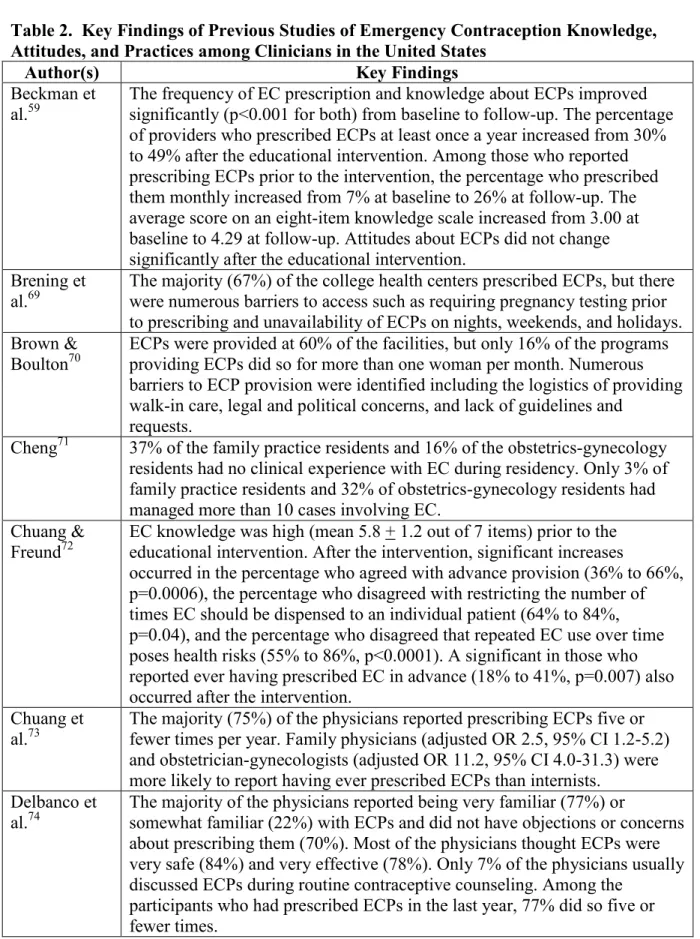
summarized in Table 1, and their key findings are presented in Table 2. Only five of these studies included CNMs, and among those studies four had 20 or fewer CNM participants.58-61 The one previous study that included only CNMs62 was specific to adolescent emergency contraception, and was conducted in 1998 prior to widespread availability of dedicated ECP products. Research about clinicians’ EC knowledge, attitudes, and practice patterns has also been conducted outside the United States,77-100 and a few of these studies included
18
Table 1. Participants and Designs of Previous Studies of Emergency Contraception Knowledge, Attitudes, and Practices among Clinicians in the United States
Author(s) Datea N Participants Design
Beckman et al.59
1996-1998b
102 Physicians (n=65), nurse practitioners (n=24), physician assistants (n=7), and CNMs (n=6) at a California health maintenance organization
Self-administered questionnaires prior to and one year after an educational program about EC
Brening et al.69
2001 139 National sample of university and college health centers
Mail survey Brown &
Boulton70
1996 53 Family planning coordinators at Michigan agencies receiving Title X funds
Mail survey Cheng71 1998 55 Final-year residents in
obstetrics-gynecology (n=25) and family practice (n=30) in Maryland
Mail survey
Chuang & Freund72
2002-2003b
56 Physicians (n=50), advanced practice nurses (n=8), physician assistants (n=2) in Massachusetts
Self-administered questionnaires prior to and six months after a lecture on EC
Chuang et al.73
2000 282 General internal medicine (n=86), family medicine (n=96), and obstetrics and gynecology physicians (n=100) in Massachusetts
Mail survey
Delbanco et al.74
1995 307 Nationally representative sample of obstetrician-gynecologists
Telephone survey Delbanco et
al.75 1997 754 Nationally representative sample of obstetrician-gynecologists (n=305), family physicians (n=236), and nurse practitioners and physician assistants (n=229)
Telephone survey
Gold et al.76 1994 167 Random national sample of physicians with adolescent health expertise (identified by membership in professional societies related to adolescent health), including pediatricians (n=112), obstetrician-gynecologists (n=38), and internal and family medicine physicians (n=37)
Telephone interviews
Grossman &
Grossman60 1993 294 Stratified national sample of obstetrician-gynecologists (n=114), family physicians (n=80), emergency physicians (n=61), nurse practitioners (n=3), physician assistants (n=3), CNMs (n=2) and other providers (n=4)
Mail survey
Karasz et al.78 2002 25 Physicians (n=24) and a nurse practitioner
(n=1) in New York Qualitative semistructured interviews Keshavarz et
al.79
2000 600 Emergency medicine physicians attending a national meeting
Self-administered questionnaire Kettyle &
Klima62
1998 146 Random national sample of CNMs Mail survey Kumar et al.61 NDc 495 Pharmacists (n=160), physicians (n=162,
includes obstetrician-gynecologists, family physicians, internists, emergency medicine physicians, and pediatricians), physician assistants (n=35), CNMs (n=19), and nurse practitioners (n=119) in Minnesota
Mail survey
McCarthy80 1999 358 National sample of university and college health centers
Mail survey Sherman et
al.58
1996 164 Physicians (n=104), nurse practitioners (n=32), physician assistants (n=19), and CNMs (n=9) in a health maintenance organization in California
Self-administered questionnaire Sills et al.81 1998 121 Pediatricians in the District of Columbia Mail survey Wallace et
al.82
2003 78 Attending physicians (n=43), resident physicians (n=20), nurses (n=13) in a Midwestern department of family medicine (n for provider types=76 due to missing data)
Mail survey
aThis is the year the study was conducted, not the date of publication bMultiple years due to baseline and follow-up surveys
20
Table 2. Key Findings of Previous Studies of Emergency Contraception Knowledge, Attitudes, and Practices among Clinicians in the United States
Author(s) Key Findings
Beckman et
al.59 The frequency of EC prescription and knowledge about ECPs improved significantly (p<0.001for both) from baseline to follow-up. The percentage of providers who prescribed ECPs at least once a year increased from 30% to 49% after the educational intervention. Among those who reported prescribing ECPs prior to the intervention, the percentage who prescribed them monthly increased from 7% at baseline to 26% at follow-up. The average score on an eight-item knowledge scale increased from 3.00 at baseline to 4.29 at follow-up. Attitudes about ECPs did not change significantly after the educational intervention.
Brening et
al.69 The majority (67%) of the college health centers prescribed ECPs, but there were numerous barriers to access such as requiring pregnancy testing prior to prescribing and unavailability of ECPs on nights, weekends, and holidays. Brown &
Boulton70 ECPs were provided at 60% of the facilities, but only 16% of the programs providing ECPs did so for more than one woman per month. Numerous barriers to ECP provision were identified including the logistics of providing walk-in care, legal and political concerns, and lack of guidelines and
requests.
Cheng71 37% of the family practice residents and 16% of the obstetrics-gynecology residents had no clinical experience with EC during residency. Only 3% of family practice residents and 32% of obstetrics-gynecology residents had managed more than 10 cases involving EC.
Chuang & Freund72
EC knowledge was high (mean 5.8 + 1.2 out of 7 items) prior to the educational intervention. After the intervention, significant increases
occurred in the percentage who agreed with advance provision (36% to 66%, p=0.0006), the percentage who disagreed with restricting the number of times EC should be dispensed to an individual patient (64% to 84%, p=0.04), and the percentage who disagreed that repeated EC use over time poses health risks (55% to 86%, p<0.0001). A significant in those who reported ever having prescribed EC in advance (18% to 41%, p=0.007) also occurred after the intervention.
Chuang et al.73
The majority (75%) of the physicians reported prescribing ECPs five or fewer times per year. Family physicians (adjusted OR 2.5, 95% CI 1.2-5.2) and obstetrician-gynecologists (adjusted OR 11.2, 95% CI 4.0-31.3) were more likely to report having ever prescribed ECPs than internists.
Delbanco et al.74
The majority of the physicians reported being very familiar (77%) or
somewhat familiar (22%) with ECPs and did not have objections or concerns about prescribing them (70%). Most of the physicians thought ECPs were very safe (84%) and very effective (78%). Only 7% of the physicians usually discussed ECPs during routine contraceptive counseling. Among the
Delbanco et
al.75 The majority of the providers (85% of obstetrician-gynecologists, 50% of family physicians, and 78% of nurse practitioners and physician assistants) had prescribed ECPs in the last year, but most (62% of
obstetrician-gynecologists, 43% of family physicians, 54% of nurse practitioners and physician assistants) had done so five or fewer times. More than 70% of the providers discussed ECPs in response to an emergency rather than as a routine part of contraceptive counseling. Advance provision of ECPs was reported by less than 10% of the providers. All of the providers considered ECPs safe and effective.
Gold et al.76 Attitudes toward ECPs were generally favorable although 77% of
participants did not think they should be available over-the-counter. Among the physicians who provided contraception, 80% prescribed ECPs. Among those who prescribed ECPs, 28% counseled about it at routine health visits, 41% at visits for contraception, and 16% at visits with adolescents who were not yet sexually active.
Golden et
al.77 Only 17% of the physicians counseled adolescents about the availability of EC. Most of the physicians could not identify any FDA-approved EC regimens and did not know the maximum time frame EC could be prescribed after unprotected intercourse. Over half of the physicians felt somewhat or very uncomfortable prescribing ECPs. The majority of the physicians would restrict the number of times they would prescribe ECPs for an individual patient (52%) and did not think or were unsure of whether ECPs should be available over the counter (80%).
Grossman & Grossman60
Approximately half of the participants had prescribed ECPs in the 12 months prior to the survey. The mean number of prescriptions in the past 12 months per respondent was 3.4, and the median was one. The majority of
respondents (90%) reported never or rarely speaking to their patients about EC.
Karasz et al.78 Most of the clinicians had sufficient knowledge to prescribe EC. Although the majority (44%) prescribed EC only when patients requested it rather than counseling routinely or offering advance provision, attitudes toward routine counseling were favorable. Serious reservations about advance provision of EC were expressed by 40% of the participants. The most frequently
expressed concern was that advance provision would increase rates of unprotected intercourse.
Keshavarz et
22 Kettyle &
Klima62 Most of the CNMs (58%) prescribed EC a few times a year. Use was restricted by policies such as requiring pregnancy tests and evaluation of menstrual timing before offering EC. CNMs with favorable attitudes toward EC tended to have less restrictive practice policies than those with less favorable attitudes. Practice type and location were not associated with the frequency of EC prescription.
Kumar et al.61 More physicians (61%) than nurse practitioners, physician assistants, and CNMs (44%) had ever prescribed ECPs, although nearly half (47%) of participants had some reluctance about prescribing ECPs. While the majority of participants agreed access to ECPs was constrained (43%) and
underutilized by patients (59%) and providers (54%), most disagreed with advance provision of ECPs at routine exams (47%) and over-the-counter availability of ECPs (74%).
McCarthy80 More than half (52%) of the student health centers offered ECPs, and
availability was associated with the geographic region and type of institution as well as the size and residency status (on-campus or commuter) of the student population. The majority of the health centers (73%) did not offer advance provision of ECPs.
Sherman et al.58
Nearly half (42%) of the providers had prescribed ECPs and most of the providers had positive attitudes toward providing ECP information and prescriptions. The majority of the providers did not know the time frame within which ECPs must be initiated after unprotected intercourse (65%). Sills et al.81 Less than one-quarter of the pediatricians had prescribed ECPs in the
previous 12 months (20%) or had counseled their patients about ECPs (24%). There was a significant association between the practice outcomes of prescribing and counseling about ECPs and knowledge of the timing of ECPs (OR 10.87, 95% CI 2.79-32.89 for prescribing; OR 3.73, 95% CI 1.38-10.33 for counseling) and FDA-labeling of ECPs (OR 4.98, 95% CI 1.58-16.71 for prescribing; OR 3.41, 95% CI 1.27-9.44 for counseling). Attitudes toward ECPs were not associated with the practice outcomes.
Wallace et al.82
Most of the participants had prescribed (74%) and reported familiarity with ECP indications (96%) and protocols (78%). Objective assessment revealed knowledge deficits, and ECP knowledge was significantly lower (p<0.001) among those who had not prescribed ECPs. Attitudes toward ECPs were generally favorable. Women’s lack of awareness about ECPs and
CHAPTER III
RESEARCH DESIGN AND METHODS
This study used a cross-sectional, confidential, self-administered mail questionnaire completed by CNMs in clinical practice in North Carolina to investigate the specific aims and research questions. The Principal Investigator for the study was Frances E. Likis. Patricia A. Payne and Ruth Petersen were the Co-Investigators, and Jennifer Albright was the Project Manager. This chapter describes the research design and methods. The participants,
measures, procedures, protection of human subjects, and statistical analysis are discussed.
Participants
24 Measures
A self-administered questionnaire (Appendix A) was sent to all potential participants. The questionnaire was developed by the Principal Investigator and Co-Investigators after a review of several previous surveys, most notably one survey by the Program for Appropriate Technology in Health (PATH), the Population Council of Mexico, and the Family Planning Association of Sri Lanka,83 and another survey by Wallace et al.82 The Project Manager, who has experience with and expertise in mail survey research, reviewed the questionnaire in the draft phase and provided helpful feedback. The questionnaire was designed to be completed in a brief period of time (10-20 minutes) to lessen the burden on participants and to maximize the response rate.
A pilot test of the questionnaire was conducted by asking five CNM colleagues of the Principal Investigator and one of the Co-Investigators (Patricia A. Payne) to complete the survey in November 2004. These CNMs lived outside of North Carolina, in order not to compromise the data collected for this study. These CNMs did not return their completed questionnaires but rather were asked after completing the survey if there were any questions that were unclear.84 Information gathered from these CNMs was useful in revising the questionnaire by clarifying some of the items. The CNMs were also asked how long it took them to complete the questionnaire. All reported that it took less than 20 minutes, as had been estimated.
Procedures
cover letter (Appendix B), study information sheet (Appendix C), and copy of the
questionnaire (Appendix A) with a postage-paid envelope for returning the survey. Several strategies that have been demonstrated to increase survey response rates85 were used in this study. The cover letter and study information sheet were printed on letterhead stationery. The cover letters included the mailing date, and the dates were revised on the follow-up mailings described below. The name, address, and salutation on the cover letters were personalized for each recipient, and each cover letter was handsigned.
Multiple contacts, which have also been shown to increase survey response rates,85 were made with potential participants. One week after the questionnaire was mailed, the CNMs were sent a postcard reminder about the study. The postcard requested that the questionnaire be completed and returned if the CNM had not done so already. The postcard included the telephone number and e-mail address of the Prinicipal Investigator with instructions to contact her if the CNM had not received a questionnaire.
Three weeks after the initial mailing, another cover letter, study information sheet, and questionnaire were sent to CNMs who did not respond to the initial mailing. The second time the survey was sent, a brightly colored label was placed across the sealed flap of the
envelope. This label indicated that this was the second request for the CNM to complete the questionnaire. The initial and follow-up mailings for the study were coordinated by the Project Manager.
26
participate. If so, their current address was confirmed and a new copy of the cover letter, study information sheet, and questionnaire were sent to them. These telephone contacts were made by the Principal Investigator and one of the Co-Investigators (Patricia A. Payne). The CNMs were not asked any questions during these telephone calls, as it was thought they would be too busy at work to talk for the length of time required to read the questionnaire aloud and record their responses. In addition, some of the survey items asked about sensitive information that the CNMs might not feel comfortable answering via telephone. Up to three attempts were made to reach any individual potential participant by phone.
Human Subjects
This study was approved by the Public Health Institutional Review Board of the University of North Carolina at Chapel Hill. The involvement of the participants was to complete the self-administered questionnaire. The data obtained and recorded from the participants were their completed questionnaires.
Informed Consent
Linkages to Participants and Access to Participant Identities
Each participant was randomly assigned an identification number unrelated to personal identifiers. The study identification number was used to track return of the surveys and identify participants for additional contacts (i.e., reminder postcards, follow-up mailings, and telephone calls). The list of the participant names, contact information, and study
identification numbers was kept in a separate, locked location from the questionnaires. The Principal Investigator, Co-Investigators, and Project Manager had exclusive access to this list.
Potential Risks and Benefits
The study posed minimal risk to breach of confidentiality. The separate storage of the list of participant information and questionnaires and the limitation of access to the
participant list were implemented to protect against this risk. In addition, participants’ names and contact information were not included when the data were entered electronically, and results were reported only in the aggregate in order to prevent deductive disclosure of participants.
There is a potential benefit to the midwifery profession and health professional
community from participants’ participation, as the study furthered understanding of clinician knowledge, attitudes, and practice patterns. Those who participated in the study could
28
Inclusion of Women and Minorities
There were no selection criteria for participants that imposed limitations by sex or gender and racial or ethnic group. The maximum number of male participants was one
because there was only one male CNM practicing in North Carolina at the time of the survey. This reflects national findings that 95.9% of ACNM members in 2003 were female.48 The participants were not asked to identify their racial/ethnic group. Minority groups were likely to be underrepresented because the national distribution of ACNM members indicates 88.8% were Caucasian in 2003.48 The low numbers of minority CNMs limit the usefulness of this information in the current study. In addition, sex, gender, race, and ethnicity were not thought to be meaningful variables for the purpose of the study.
Statistical Analysis
Quantitative analysis of the data was conducted with SPSS 13.0 (SPSS, Inc., Chicago, IL) and Stata 8.2 (StataCorp, College Station, TX) statistical packages. First, the data were examined for missing values. The maximum number of participants who did not answer any single question was 5. No missing values were imputed; rather analyses were conducted only with valid responses. The Nfor each analysis is noted in the presentation of the results. An alpha level of .05 was considered statistically significant.
single number. The mean was calculated for those who voluntarily responded with a range so that all responses would be a point estimate. The distribution of this continuous variable was then examined for outliers, normality, and possible cut-points of the data using percentiles and plots of the distributions (including histograms, stem and leaf plots, and box plots). All of the responses but two ranged from 0-80 visits per week; the responses identified as outliers were 240 and 250 visits per week. These two responses were thought to be errors as they would correspond with seeing 48-50 patients per day. After thorough discussion with colleagues, it was decided the outlying responses measured patients per month rather than per week. The two responses identified as outliers were recalculated as per week by dividing by four. The new value was verified with the responses of other CNMs within the same practice of the participants who had given the responses identified as outliers.
After the data were prepared, new categorical variables were created. First, the continuous variable for the number of women seen for gynecologic care weekly was
categorized as low (< 10 visits), medium (10-25 visits), or high (> 25 visits) volume. The cut-points were determined both by the distribution of the data and consideration of what
constituted meaningful categories. The categorical variable for gynecologic care was used in bivariate analyses, and the continuous variable was used in multivariable analyses.
30
Finally, variables with multiple response options were examined to see if the number of categories could be reduced by regrouping the categories in a meaningful way. The seven types of practice settings respondents identified were collapsed into two types: 1)
public/other (federally funded community health centers, health departments, other publicly funded clinics, university practices, and other) and 2) private (private practices and
freestanding birth centers). The seven categories of years practicing midwifery were collapsed into four categories (< 5 years, 6-10 years, 11-15 years, and > 16 years). The five categories for frequency of ECP discussion and prescription were collapsed into two categories: 1) never or only when the client requests and 2) sometimes, most of the time, or always. After these procedures were completed, the specific analyses for each specific aim, which are described below, were performed.
Specific Aim 1
Frequencies and percentages were calculated to describe characteristics of CNMs practicing in North Carolina. These characteristics include the types (private or public/other) and locations (rural or urban) of practices in which CNMs in North Carolina work, the other types of clinicians (e.g., physicians, nurse practitioners, physician assistants) with whom CNMs in North Carolina practice, the years of midwifery experience of CNMs in North Carolina, and the weekly volume of gynecologic care CNMs in North Carolina provide.
Specific Aim 2
patients. The analysis includes physiologic (e.g., fertility awareness-based methods), barrier (e.g., condoms), sterilization, hormonal (e.g., oral contraceptive pills) and intrauterine contraceptive methods.
Specific Aim 3
Univariate, bivariate, and multivariable analyses were used to assess ECP knowledge among North Carolina CNMs. First, frequencies and percentages were calculated for North Carolina CNMs’ self-perceived ECP knowledge, their sources of ECP education, their responses to questions about specific ECP knowledge, and the accuracy of their ECP
knowledge. Next, the bivariate relationships between the accuracy of ECP knowledge (low or high) and practice type, practice location, years of experience, weekly volume of gynecologic care (categorical variable), self-perceived level of ECP knowledge, and sources of ECP education were examined using Pearson’s chi-square test for the nominal independent variables with adequate cell sizes, Fisher’s exact test for the nominal independent variables with small cell sizes, and the linear chi-square test for the ordinal independent variables.87, 88 Finally, the multivariable relationships between the index of ECP knowledge accuracy and practice type, practice location, years of experience, weekly number of gynecologic visits (continuous variable), self-perceived level of ECP knowledge, and sources of ECP education were examined using logistic regression. The logistic regression methodology was
32
Specific Aim 4
Univariate, bivariate, and multivariable analyses were used to assess attitudes toward ECPs among North Carolina CNMs. First, frequencies and percentages were calculated for selected attitudes North Carolina CNMs have toward ECPs: (1) whether or not ECPs encourage irresponsible behavior; (2) whether or not women will rely on ECPs as a regular form of contraception; and (3) whether ECPs should be available over-the-counter, only by prescription, or not at all. Next, the bivariate relationships between these attitudes and the accuracy of ECP knowledge was examined using Pearson’s chi-square test and Fisher’s exact test for small cell sizes. Finally, the multivariable relationships between attitude toward over-the-counter or prescription only availability of ECPs and practice type, practice location, years of experience, weekly number of gynecologic visits (a continuous variable), and accuracy of ECP knowledge was examined using logistic regression. This analysis excluded CNMs who did not think ECPs should be available. The logistic regression methodology was appropriate due to the dichotomous dependent variable.87, 88
Specific Aim 5
CHAPTER IV RESULTS
This chapter presents the study results, beginning with a report of the response rate to the survey. The remainder of the chapter is organized according to the specific aims of the research.
Response Rate
The survey was mailed to 194 potential participants. During the telephone follow-up, four of the CNMs were determined not to have been practicing in North Carolina at the time of the survey and thus were ineligible to participate. This reduced the number of potential participants to 190. Two CNMs declined to participate, 49 CNMs did not return the survey, and 139 CNMs completed and returned surveys. Therefore the response rate was 73.2% (139/190). The response rate is within the range of the three previous mail surveys of CNMs in North Carolina that used the same inclusion criteria, CNMs approved to practice by the Midwifery Joint Committee, as the current study. Those surveys had response rates of 66%,54 68.3%,53 and 80%.52
Description of the Study Participants
obstetrician-gynecologists (80%) or other CNMs (74%) in the majority of the participants’ practice settings, and nearly half (48%) of the CNMs worked with nurse practitioners. Less than one-quarter of the CNMs worked with physician assistants (20%), family physicians (17%), or physicians in specialties other than family practice or obstetrics and gynecology (8%). Most (88%) of the CNMs identified obstetrician-gynecologists as their supervising physician. Family practice physicians (9%) and maternal-fetal medicine specialists (3%) were the supervising physicians of the remainder of the CNMs. Over half of the CNMs (61%) had been practicing midwifery for 10 or fewer years.
The number of women seen for gynecologic care by the CNMs each week ranged from 0 to 80 with a median of 15. The weekly volume of gynecologic care was categorized as low (< 10 visits), medium (10-25 visits), or high (> 25 visits) according to the number of women seen per week. The majority of CNMs (45%) had a medium weekly volume of gynecologic care while 25% had low volume and 30% had high volume.
Discussion and Provision of Contraceptive Methods
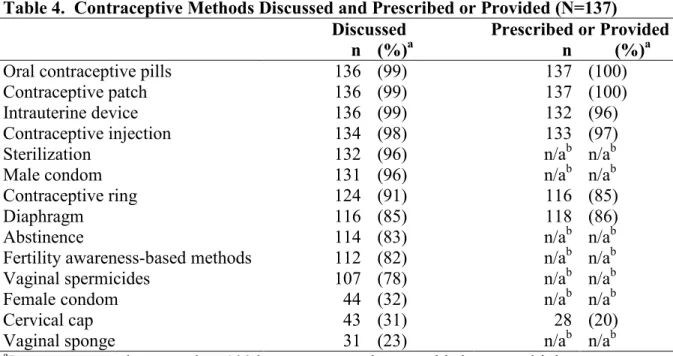
The second specific aim of the study was to describe the contraceptive methods other than ECPs that CNMs in North Carolina discuss with and prescribe or provide for their patients. The findings related to this specific aim are presented in Table 4. The CNMs most frequently discussed oral contraceptive pills (99%), the contraceptive patch (99%),
36
All of the CNMs prescribed or provided oral contraceptive pills and contraceptive patches. The contraceptive injection was prescribed or provided by 97% of CNMs, intrauterine devices by 96%, diaphragms by 86%, and the contraceptive ring by 85%. Cervical caps (20%) were the least frequently provided method.
Emergency Contraceptive Pill Knowledge
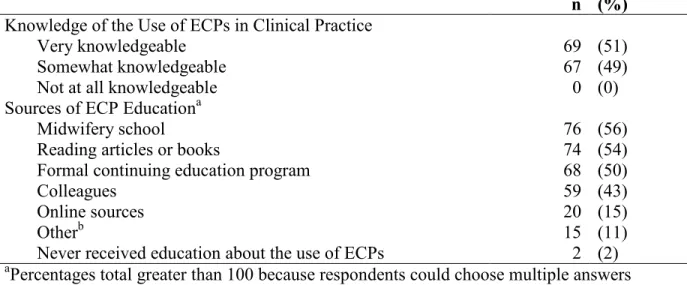
The third specific aim of the study was to assess ECP knowledge among North Carolina CNMs. Findings related to CNMs’ self-perceived level of ECP knowledge and sources of ECP education are presented in Table 5. All of the CNMs perceived that they were very (51%) or somewhat (49%) knowledgeable about the use of ECPs in clinical practice; none perceived that they were not at all knowledgeable. More than half of the CNMs (56%) had learned about ECPs in midwifery school. All of the CNMs with fewer than two years of midwifery experience (n=11) had learned about ECPs in midwifery school. The percentage of CNMs who had learned about ECPs in midwifery school decreased from 67% among those with 2-10 years to 34% among those with 11-20 years to 21% among those with more than 20 years of experience. Self-study of articles or books (54%), formal continuing education programs (50%), and colleagues (43%) were the other most frequently identified sources of ECP education. Only 2% of the midwives had never received any education about ECPs.
were less likely to know that ECPs are effective for preventing pregnancy (81%), have few contraindications (68%), and have no serious side effects (57%). The accuracy of the CNMs’ ECP knowledge was categorized according to the number of correct answers to the ECP questions as high (7 correct answers) or low (6 or fewer correct answers). More participants had low (59%), rather than high (41%), accuracy of ECP knowledge.
Bivariate analysis (Table 7) found that accuracy of ECP knowledge was significantly associated with years of midwifery experience (X2=4.796, p=0.029), weekly volume of gynecologic care (X2=3.943, p=0.047), and self-perceived level of ECP knowledge (X2=8.958,
p=0.003). In particular, the percentage of CNMs with high accuracy of ECP knowledge increased with years of experience from 32% among those with five or fewer years of experience to 39% among those with 6-10 years to 42% among those with 11-15 years to 59% among those with 16 or more years. A greater percentage of CNMs with a high weekly volume of gynecologic care (75%) had low accuracy of ECP knowledge than those CNMs with a low volume (53%) or medium volume (51%). More CNMs who perceived they were very knowledgeable about ECPs had high accuracy of ECP knowledge (54%) than those who perceived they were somewhat knowledgeable (28%). The relationships between accuracy of ECP knowledge and practice type, practice location, and sources of ECP education were not statistically significant.
38
CNMs who perceived they were somewhat knowledgeable. Midwifery experience was no longer statistically significantly associated with having high accuracy of ECP knowledge after adjusting for practice characteristics, weekly number of gynecologic visits, self-perceived level of ECP knowledge, and sources of ECP education.
Emergency Contraceptive Pill Attitudes
The fourth specific aim of the study was to assess attitudes toward ECPs among North Carolina CNMs. The minority of the CNMs agreed that ECPs encourage irresponsible behavior (12%) or that women will rely on ECPs as a regular form of contraception (4%). Half (50%) of the CNMs thought ECPs should be available over-the-counter, 47% thought they should be available only by prescription, and 3% did not think ECPs should be
available.
Bivariate analysis (Table 9) found that all three measured attitudes toward ECPs were associated with accuracy of ECP knowledge. In particular, low accuracy of ECP knowledge was associated with the attitudes that ECPs encourage irresponsible behavior (X2=12.693,
p<0.001), that women will rely on ECPs as a regular form of contraception (Fisher’s exact,
p=0.042), and that ECPs should be available by prescription only (X2=24.986, p<0.001).
Among those who thought ECPs should be available, multivariable analysis (Table 10)
found that the attitudes toward over-the-counter versus prescription only availability were
significantly associated with practice type, more years of experience, and accuracy of ECP
knowledge after controlling for practice location and weekly number of gynecologic visits.
CNMs in private practice had less than half the odds of favoring over-the-counter availability
than did CNMs in public or other types of practices. CNMs with 11 or more years of
did CNMs with 5 or fewer years of experience. CNMs with high accuracy of ECP knowledge
had more than seven times the odds of favoring over-the counter availability than did CNMs
with low accuracy of ECP knowledge.
Emergency Contraceptive Pill Practice Patterns
The fifth specific aim of the study was to assess ECP practice patterns among North Carolina CNMs. The frequency with which CNMs discussed and prescribed ECPs are presented in Table 11. ECPs were included in a discussion of contraception always by 4% of CNMs, most of the time by 23%, sometimes by 32%, when the client requests information by 33% and never by 8%. When providing gynecologic care to women of childbearing age, ECPs are prescribed always by none of the CNMs, most of the time by 4%, sometimes by 29%, when the client requests a prescription by 59%, and never by 8%.
40
contraceptive counseling); limited gynecologic care provided in practice; clients wish to avoid hormones; clients present too long after unprotected intercourse for ECPs to be
effective; clients have misinformation (think ECPs are an abortifacient); and ECPs are rarely requested or needed.
The CNMs were asked about the availability of ECPs in their community pharmacies (Table 13). The majority of the CNMs (43%) did not know how many pharmacies keep ECPs in stock. ECPs were estimated to be kept in stock in all pharmacies by 2% of the CNMs, most pharmacies by 30%, few pharmacies by 23%, and no pharmacies by 2%.
Bivariate analysis (Table 14) found that the frequency of ECP discussion was significantly associated with years of experience (X2=7.240, p=0.007), accuracy of ECP knowledge (X2=20.597, p<0.001), attitude toward ECPs encouraging irresponsible behavior (X2=7.760, p=0.005), and attitude toward over-the-counter versus prescription only
of contraception were not significantly associated bivariately with frequency of ECP discussion.
Multivariable analysis (Table 15) found significant associations only between frequency of ECP discussion and accuracy of ECP knowledge and attitude toward ECP availability after controlling for practice type, practice location, midwifery experience, weekly number of gynecologic visits, and attitudes toward ECPs encouraging irresponsible behavior and
women’s reliance on ECPs as a regular form of contraception. CNMs with high accuracy of ECP knowledge had over three times the odds of more frequent discussion of ECPs than CNMs with low accuracy of ECP knowledge. CNMs who favored over-the-counter
availability of ECPs had over five times the odds of more frequent discussion of ECPs than CNMs who believed ECPs should be available by prescription only.
Bivariate analysis (Table 16) found that the frequency of ECP prescription was significantly associated with practice type (X2=5.537, p=0.019), years of experience
42
Table 3. Participants’ Practice Characteristics, Midwifery Experience, and Weekly Volume of Gynecologic Care
N n (%)
Practice Type Private
Public or other
139 93 46 (67) (33) Practice Location
Urban (population > 50,000) Rural (population < 50,000)
139
83 56 (60) (40) Clinicians in Practice Settinga
Obstetricians-gynecologists Other CNMs
Nurse practitioners Physician assistants Family physicians
Physicians in other specialties
139 111 103 66 28 23 11 (80) (74) (48) (20) (17) (8) Primary Supervising/Collaborating Physician
Obstetrician-gynecologist Family physician Otherb 139 122 13 4 (88) (9) (3) Years Practicing Midwifery
< 5 years 6-10 years 11-15 years
> 16 years
139 44 41 24 30 (32) (29) (17) (22) Weekly Volume of Gynecologic Care
Low (< 10 visits) Medium (10-25 visits) High (> 25 visits)
44
Table 4. Contraceptive Methods Discussed and Prescribed or Provided (N=137)
Discussed Prescribed or Provided
n (%)a n (%)a
Oral contraceptive pills 136 (99) 137 (100)
Contraceptive patch 136 (99) 137 (100)
Intrauterine device 136 (99) 132 (96)
Contraceptive injection 134 (98) 133 (97)
Sterilization 132 (96) n/ab n/ab
Male condom 131 (96) n/ab n/ab
Contraceptive ring 124 (91) 116 (85)
Diaphragm 116 (85) 118 (86)
Abstinence 114 (83) n/ab n/ab
Fertility awareness-based methods 112 (82) n/ab n/ab
Vaginal spermicides 107 (78) n/ab n/ab
Female condom 44 (32) n/ab n/ab
Cervical cap 43 (31) 28 (20)
Vaginal sponge 31 (23) n/ab n/ab
Table 5. Self-Perceived Level of ECP Knowledge and Sources of ECP Education (N=136)
n (%) Knowledge of the Use of ECPs in Clinical Practice
Very knowledgeable Somewhat knowledgeable
Not at all knowledgeable
69 67 0
(51) (49) (0) Sources of ECP Educationa
Midwifery school
Reading articles or books
Formal continuing education program Colleagues
Online sources Otherb
Never received education about the use of ECPs
76 74 68 59 20 15 2
(56) (54) (50) (43) (15) (11) (2) aPercentages total greater than 100 because respondents could choose multiple answers bOther sources identified included conferences (n=6), Planned Parenthood (3), nurse
46 Table 6. Accuracy of ECP Knowledge (N=136)
n (%) Agree with Correct Information about ECPsa
Can be managed by the woman without the man’s participation Easy to use
Provide an option when no contraception was used Do not protect against sexually transmitted infections Effective for preventing pregnancy
Few contraindications No serious side effects
126 124 123 120 110 93 77 (93) (91) (90) (88) (81) (68) (57) Number of Correct Answers to ECP Knowledge Questions
1 2 3 4 5 6 7 5 3 8 10 21 34 56 (4) (2) (5) (8) (15) (25) (41) Index of Accurate ECP Knowledge
Low (6 or fewer correct answers) High (7 correct answers)
80 56
Table 7. Bivariate Analysis of Accuracy of ECP Knowledge and Practice
Characteristics, Midwifery Experience, Weekly Volume of Gynecologic Care, Self-Perceived Level of ECP Knowledge, and Sources of ECP Education
ECP Knowledge
Low High Test p-
N n (%) n (%) statistic df value
Practice Type Private
Public or other
136 52
28 (58) (61) 3818 (42) (39)
0.120a 1 0.729
Practice Location Urban Rural 136 44 36 (54) (67) 38 18 (46) (33)
2.275a 1 0.132
Years of Experience < 5 years 6-10 years 11-15 years > 16 years
136 30 25 14 11 (68) (61) (58) (41) 14 16 10 16 (32) (39) (42) (59)
4.796b 1 0.029
Weekly Volume of Gynecologic Care
Low (< 10 visits) Medium (10-25 visits) High (> 25 visits)
131 17 30 30 (53) (51) (75) 15 29 10 (47) (49) (25)
3.943b 1 0.047
Self-Perceived Level of ECP Knowledge
Very knowledgeable Somewhat knowledgeable
136 32
48 (46) (72) 3719 (54) (28)
8.958a 1 0.003
Learned about ECPs in Midwifery School
Yes No 136 48 32 (63) (53) 28 28 (37) (47)
1.336a 1 0.248
Learned about ECPs from Reading Articles or Books
Yes No 136 40 40 (54) (65) 34 22 (46) (35)
1.524a 1 0.217
Learned about ECPs from Formal Continuing Education Program
Yes No
136
37
43 (54) (63) 3125 (46) (37)
1.093a 1 0.296
Learned about ECPs from Colleagues
Yes
136
38 (64) 21 (36)