ROLE OF RODENT VOCALIZATIONS IN COCAINE-INDUCED MATERNAL NEGLECT
Thomas Merryfield Jarrett
A dissertation submitted to the faculty of the University of North Carolina at Chapel Hill in partial fulfillment of the requirements for the degree of Doctor of Philosophy in the Curriculum of Neurobiology.
Chapel Hill 2013
ii © 2013
iii
ABSTRACT
THOMAS MERRYFIELD JARRETT: Role of Rodent Vocalizations in Cocaine-Induced Maternal Neglect
(Under the direction of Josephine M. Johns)
A greater incidence of maternal neglect, problems with mother-infant bonding, child abuse, and placement in foster homes has been correlated with maternal cocaine use during pregnancy compared to mothers with no gestational cocaine use. Infants exposed to cocaine during pregnancy show many signs, particularly early in the postnatal period, of poor state control including: irregular crying behavior, and extreme state liability. To date little evidence has been published of how cocaine decreases both maternal perception of infant care needs and infant elicitation of maternal response. Using an animal model of cocaine-induced maternal neglect the aim of this dissertation is to: 1) record and quantify differences following prenatal cocaine exposure in infant rat vocalizations, a known stimulus of rodent maternal behavior; 2) test whether gestational cocaine treatment decreases maternal
iv
that choose to spend less time in close proximity to recordings of prenatal cocaine-exposed infant rat vocalizations. Ultimately these data provide justification for continued work to explore the separate and interactive factors influencing maternal behavior and within this theoretical framework to drive development of both
v
ACKNOWLEDGEMENTS
Those acknowledged here are in no way an exhaustive list of all the people who have been necessary to complete this dissertation. To all those named and unnamed I am truly grateful for your contributions scientific and non-scientific. My PhD advisor Dr. Josephine Johns' involvement has been so necessary it has bordered on sufficiency. “Dr. J” you have been my advisor in some intellectual, academic, and/or professional capacity for more than nine years and my PhD
adviser for the last four. You have been central to my success as an undergraduate, medical, and graduate student. I am not sure how to say thank you for the tour de force you have been in so many of my endeavors as a student and a person.
Aside from Dr. Johns, my committee members Drs. Joyce Besheer, Clyde Hodge, Sheryl Moy, and Donita Robinson have also been central to the successful completion of this body of work. Drs. CJ Malanga and Sandy Zeskind have
vi
Many dissertation acknowledgements draw a line between two groups of people co-workers, the group of people that has been central to the intellectual development of the author, and family and friends, the group of people central to the author's personal development. Several I need to acknowledge have a foot in each camp my grandfather Ivan Jarrett, D.Sc.; father David Jarrett, PhD, MBBS; and mother Victoria Soltis-Jarrett, PhD, PMHNP-BC. You have been the frequent voice of both scientific reason and human compassion in all of my intellectual and
personal trials and tribulations, including this doctoral thesis. I am not just blessed to have a family rich in love and scientific expertise I have been blessed with more than one family. My parents Shirley and John Barraclough have also been a constant source of morale from across the Pacific Ocean during my PhD training. Though I have been fortunate to have many parents I almost went through life without a single sibling. Benjamin Jarrett, you are my brother and you were worth the sixteen year wait you have been a frequent buoyant force on my spirits during my PhD training.
vii
Department. You six have been professional role models, scientific sounding boards, and steadfast friends through the entirety of this dissertation.
viii
TABLE OF CONTENTS
ABSTRACT ... iii
ACKNOWLEDGEMENTS ... v
TABLE OF CONTENTS ... viii
LIST OF TABLES ... xii
LIST OF FIGURES ... xiii
LIST OF ABBREVIATIONS ... xiv
CHAPTER 1. INTRODUCTION ... 1
1.1. HUMAN DRUG USE AND MATERNAL NEGLECT ... 1
1.2. ANIMAL MODELS AND CAUSES OF CHILD MALTREATMENT ... 2
1.3. COCAINE: A RODENT DAM-PUP DYAD TORATAGEN ... 4
1.4. DISSERTATION SPECIFIC AIMS ... 5
CHAPTER 2. PRENATAL COCAINE EXPOSURE: EFFECTS ON ACCOUSTIC CHARACTERISTICS OF ISOLATION INDUCED PUP VOCALIZATIONS ... 7
2.1. INTRODUCTION ... 7
2.1.1. Cocaine’s Effect on the Mother-Infant Interaction ... 7
2.1.2. Pup Vocalizations as Stimuli of Maternal Behavior ... 8
2.1.3. Prenatal Cocaine Exposure Affects Pup Vocalizations ... 11
2.1.4. Chapter 2 Specific Aims ... 12
2.2. METHODS ... 13
2.2.1. Subjects ... 13
2.2.2. Treatment ... 14
ix
2.2.4. Pup Ultrasonic Vocalizations Analysis ... 18
2.2.5. Statistical Analysis ... 19
2.3. RESULTS ... 22
2.3.1. Gestational Effects ... 22
2.3.2. Vocalization Recording Subject Effects ... 23
2.3.3. Recorded Vocalization Acoustic Characteristic Effects ... 23
2.4. DISCUSSION ... 26
2.4.1. Cocaine Exposure Decreases Vocalization Variability ... 26
2.4.2. Literature Impact: Cocaine-Induced Vocalization Changes ... 27
2.4.3. Experimental Limitations ... 29
2.4.4. Future Directions ... 31
CHAPTER 3. GESTATIONAL COCAINE TREATMENT: EFFECTS ON DAM PROXIMITY PREFERENCE FOR COCAINE-EXPOSED PUP VOCALIZATIONS ... 33
3.1. INTRODUCTION ... 33
3.1.1. Measuring Preference-Like and Aversion Behavior ... 33
3.1.2. Cocaine and Maternal Preference-Like Behavior ... 34
3.1.3. Chapter 3 Specific Aims ... 36
3.2. METHODS ... 37
3.2.1. Subjects ... 37
3.2.2. Treatment ... 38
3.2.3. Dam Proximity Preference-Like Behavior Testing ... 39
3.2.4. Proximity Preference-Like Behavior Quantification ... 50
3.2.5. Statistical Analysis ... 51
x
3.3.1. Gestational Effects ... 53
3.3.2. Choice Behavior Apparatus Validation Effects ... 54
3.3.3. Choice Behavior Effects ... 54
3.4. DISCUSSION ... 57
3.4.1. Cocaine Decreases Choice for PCE Pup Vocalizations ... 57
3.4.2. Literature Impact: PCE Pup USV Decrease Maternal Choice ... 60
3.4.3. Experimental Limitations ... 62
3.4.4. Future Directions ... 65
CHAPTER 4. GESTATIONAL COCAINE TREATMENT: EFFECTS ON CFOS, FOSB, AND OXYTOCIN EXPRESSION IN NEURONAL NETWORKS REGULATING RODENT MATERNAL BEHAVIOR ... 67
4.1. INTRODUCTION ... 67
4.1.1. Cocaine and Neuroendocrine Control of Maternal Behavior ... 67
4.1.2. Cocaine, Maternal Behavior, and Early Immediate Genes ... 68
4.1.3. Chapter 4 Specific Aims ... 69
4.2. METHODS ... 71
4.2.1. Subjects ... 71
4.2.2. Treatment ... 72
4.2.3. Early Immediate Gene Protein Expression Stimulation ... 72
4.2.4. Tissue Fixation and Sectioning ... 77
4.2.5. Immunohistochemistry ... 78
4.2.6. Visualization and Analysis of Immunoprecipitation ... 79
4.2.7. Statistical Analysis ... 80
xi
4.3.1. Gestational Effects ... 81
4.3.2. Effects on Proteins of Interest by Region of Interest on PPD 5 ... 82
4.4. DISCUSSION ... 90
4.4.1. Cocaine and Maternal Stimulus Decrease MPOA Oxytocin ... 90
4.4.2. Reinforced: MPOA Central to Neglect Mechanisms ... 92
4.4.3. Experimental Limitations ... 93
4.4.4. Future Directions ... 94
CHAPTER 5. GENERAL DISCUSSION ... 95
5.1. AN INTERGRATED DISCUSSION OF CHAPTER FINDINGS ... 95
5.2. FRAMEWORK: COCAINE AND MOTHER-INFANT DYADS ... 98
5.3. COCAINE ALTERS MATERNAL ENVIRONMENT ... 99
5.4. SUMMARY ... 101
xii
LIST OF TABLES
Table 1: Pup Vocalization Variables Measured ... 20
Table 2: Vocalization Recording Subject Characteristics ... 22
Table 3: Litter Gestational Data for Vocalization Recording Subjects ... 22
Table 4: Means of Spectral Pup Vocalization Measures ... 24
Table 5: Means of Temporal Pup Vocalization Measures ... 24
Table 6: Means of Structural Pup Vocalization Measures ... 25
Table 7: Table of Preference Task Playback File Characteristics ... 47
Table 8: Gestational Data for USV Preference Task Subjects ... 53
Table 9: Means of Preference-Like Behaviors Measured ... 59
Table 10: Brain Regions Studied and Proteins Assayed by Region ... 70
Table 11: Litter Gestational Data for Immunohistochemistry Subjects ... 81
Table 12: Counts/field of cFos Expression by Region of Interest ... 83
Table 13: Counts/field of FosB Expression by Region of Interest ... 83
xiii
LIST OF FIGURES
Figure 1: The Pup USV Recording Apparatus. ... 14
Figure 2: Ultrasonic Vocalization Measures Schematic ... 16
Figure 3: Explanation of Harmonic and Amplitude ... 17
Figure 4: Pictorial Representations of USV Waveform Categories. ... 18
Figure 5: Male PCE Pups Exhibit Decreased Frequency in Vocalizations ... 23
Figure 6: PCE Decreases Pup Vocalization Variability ... 26
Figure 7: USV Playback Choice Behavior Apparatus ... 41
Figure 8: USV Playback File Construction ... 48
Figure 9: No Baseline Choice Behavior Apparatus Side-Bias Found ... 55
Figure 10: Cocaine Treatment Decreases Choice for PCE Pup USV ... 56
Figure 11: Choice Effects in Control Pup USV Chamber ... 57
Figure 12: cFos Effects of Apparatus Condition ... 82
Figure 13: In MPOA Cocaine and Stimulus Interact to Decrease Oxytocin ... 85
Figure 14: Cocaine Disrupts Apparatus Condition Dependent cFos Effect ... 87
xiv
LIST OF ABBREVIATIONS
CC Chronic Cocaine 13
DAB 3,3'-Diaminobenzidine 78
GD Gestational Day 13
IEG Immediate Early Gene 68
MPOA Medial Preoptic Area 36
NAc Nucleus Accumbens 68
NAc-Core NAc Core Subdivision 79
NAc-Shell NAc Shell Subdivision 79
PBS Phosphate Buffered Saline 77
PND Postnatal Day 10
PPD Postpartum Day 37
PVN Paraventricular Nucleus of the Hypothalamus 67
PVN-Magno PVN Magnocellular Subdivision 86
PVN-Parvo PVN Parvocellular Subdivision 88
S2 Somatosensory Cortex S2 Subdivision 69
SEM Standard Error of the Mean 20
TC Temperature Change 18
TE End Temperature 16
TP Metal Plate Temperature 16
TS Start Temperature 16
UN Untreated 12
xv
CHAPTER 1. INTRODUCTION
1.1. HUMAN DRUG USE AND MATERNAL NEGLECT
A greater incidence of maternal neglect (Kelley, Walsh, & Thompson, 1992), problems with mother-infant bonding (Burns, Chethik, Burns, & Clark, 1991), child abuse (Murphy et al., 1991) and placement in foster homes (Leventhal et al., 1997; Nair et al., 1997) has been correlated with maternal cocaine use during pregnancy. In the early 1990s, nationwide more than 45,000 pregnant women reported cocaine use (Mathias, 1995), underscoring the need for research on the effects of cocaine use on maternal-infant interactions. Cocaine-using mothers are less responsive towards their infants (Mayes et al., 1997), and express more hostility during interactions (Light et al., 2000). Observational clinical studies have begun to examine neurobiological factors thought to be important for human maternal response (Light et al., 2000, 2004; Schuetze, Zeskind, & Eiden, 2003).
2
(Delaney-Black et al., 1998), and to abuse drugs themselves in later life (Jantzen, Ball, Leventhal, & Schottenfeld, 1998).
There is a dynamic interplay between biological vulnerabilities of the child and postnatal factors like quality of mother-infant interactions (Zuckerman & Brown, 1993). Infants prenatally exposed to cocaine are more excitable (Bendersky & Lewis, 1998; Karmel & Gardner, 1996), show poor state regulation (Regalado, Schechtman, Del Angel, & Bean, 1995), and exhibit altered physiological responses to stimulation (Jacobson, Jacobson, Sokol, Martier, & Chiodo, 1996). These infants may be less capable of eliciting optimal maternal care as their behavioral and physiological characteristics induce stress or even aversion in mothers. Caretakers find high risk infants, such as premature or low birth weight babies, physically unattractive and emit disturbing, high pitched, and arrhythmic cries, leaving them more susceptible to neglect (Belsky, 1993; Brunk & Henggeler, 1984). Specific characteristics of infant-produced stimuli and developmental attributes of cocaine-exposed babies could negatively impact maternal behavior and are poorly
understood.
1.2. ANIMAL MODELS AND CAUSES OF CHILD MALTREATMENT
Animal models of neglect or abuse that have isolated specific factors, like maternal substance abuse, have identified causative agents of specific types of domestic violence and child neglect. In a study that standardized genetic
3
4
1.3. COCAINE: A RODENT DAM-PUP DYAD TORATAGEN
A significant body of literature shows that a variety of gestational cocaine treatment regiments: acute (Johns, Nelson, et al., 1998; Johns, Noonan, et al., 1994), intermittent (Johns et al., 2005), and chronic (Johns et al., 2005; Johns, Noonan, et al., 1994) disrupt the rat maternal response to offspring in the initial post-partum period. In these studies of maternal response the most frequently disrupted part of the dam-pup interaction is pup licking, retrieval and pup nursing behaviors. Moreover, licking, nursing and time spent in the nest with pups are most frequently disrupted by moderate to high daily doses of cocaine (15-30 mg/kg).
5
stimuli with maternal drug use as factors in drug-related maternal neglect, but also a detectable alteration in some aspect of pup stimuli to which all mothers alike
respond more negatively (Johns et al., 2005). Specific pup-produced stimuli that are considered important for eliciting care from rodent mothers in the early postpartum period include: odors (Lévy, Keller, & Poindron, 2004), body temperature (Adels & Leon, 1986; Stern, 1986; Woodside & Jans, 1988), and vocalizations (Brunelli, Shair, & Hofer, 1994; D’Amato, Scalera, Sarli, & Moles, 2005; Farrell & Alberts, 2002a; Noirot, 1972). It would be important to determine which pup-produced stimuli are altered by prenatal cocaine exposure and how in turn these specific stimuli affect maternal behavioral neurobiology.
1.4. DISSERTATION SPECIFIC AIMS
The specific aims of this dissertation are designed to determine 1)
6
neurobiology of proteins important in regulating the dam-pup interaction.
CHAPTER 2. PRENATAL COCAINE EXPOSURE: EFFECTS ON ACCOUSTIC CHARACTERISTICS OF ISOLATION INDUCED PUP VOCALIZATIONS
2.1. INTRODUCTION
2.1.1. Cocaine’s Effect on the Mother-Infant Interaction
8
maternal care and how interpretation of offspring stimuli by cocaine-treated mothers influence maternal behavior.
2.1.2. Pup Vocalizations as Stimuli of Maternal Behavior
9
dams, they were not able to show that these hyperthermic dams had normal thermal sensitivity. Thus, these dams may not have perceived their hyperthermic state or the need to leave the nest to cool off.
Rat vocalizations, particularly in adults, are believed to be a major method of intra-species communication (Brudzynski, 2005; Brunelli et al., 1994). High rates of pup vocalization are associated with maternal response (Brunelli et al., 1994; Farrell & Alberts, 2002a; Zimmerberg, Kim, Davidson, & Rosenthal, 2003) and in at least one case vocalizations have been shown to elicit maternal consumption of pup excretions (Brouette-Lahlou, Vernet-Maury, & Vigouroux, 1992). The temporal, spectral, and acoustic structure of vocalizations vary greatly with age and sex (Bowers, Perez-Pouchoulen, Edwards, & McCarthy, 2013; Kleese & Hull, 1980; Naito & Tonoue, 1987). At all ages animal vocalizations have a much greater range of fundamental frequency than human vocalizations. Rats from birth can produce vocalizations from 20 Hz to 100,000 Hz and, as soon as orientation to a stimulus can be assessed, appear to orientate to vocalizations from 20-100,000 Hz (Noirot, 1972). Commonly in the literature animal vocalizations higher than 20,000 Hz are
designated as ultrasonic vocalizations (USV) in reference to the upper limit of human auditory perception range (20 Hz to 20,000 Hz).
10
known as laryngeal braking that it appears improbable that these vocalizations provide for much two-way communication between dam and pups. Vocalizations appear to become less an unintended consequence of laryngeal braking and more of a learned bi-directional dam pup communication modality between postnatal day (PND) 8 and 10 (Blumberg & Sokoloff, 2001). Though early in the postnatal period USV are unlikely to be socially intended, increases in their frequency does provide a rodent mother with a stimulus that indicates when a pup needs care (Wöhr et al., 2008) making them relevant to pup survival. Outside of increasing rate of
vocalizations (Brunelli et al., 1994; Farrell & Alberts, 2002a; Zimmerberg et al., 2003) and increases in frequency or pitch of vocalizations (Wöhr et al., 2008) having a role in increasing maternal response, little is known about how specific acoustic
characteristics of rodent vocalizations influence maternal response. A recent review of human and rodent literature assessing the value of vocalizations as a
neurobehavioral assessment for neglect of susceptible infants has identified from the human infant cry potential acoustic characteristics that could be important in
regulating rodent maternal response but these characteristics are poorly studied to date (Zeskind et al., 2011). Many of these acoustic characteristics are outlined in
11
2.1.3. Prenatal Cocaine Exposure Affects Pup Vocalizations
Early reports in peer-reviewed literature were not of PCE but examined instead acute postnatal cocaine treatment of rat pups and focused on temporal measures of USV. In these reports rat pups were given intraperitoneal injections of cocaine, which increased isolation-induced USV number in a dose dependent manner (Kehoe & Boylan, 1992). Subsequent publications have assessed the
effects of PCE, a more translational exposure model, and have added some spectral and even one case of acoustic structure analysis. None of the experiments using PCE paradigms reported cocaine increased USV number, some showed no effect (Barron, Segar, Yahr, Baseheart, & Willford, 2000; Goodwin, Moody, & Spear, 1993), and some show that PCE decreased vocalization number (Cox et al., 2012; Hahn, Benno, Schanz, & Phadia, 2000).
There are two known peer-reviewed reports and one report submitted for publication that assessed alterations in acoustic structure following PCE or postnatal cocaine exposure. At PND 14 using neonatal administration of intraperitoneal
cocaine (PND 4-10), an administration paradigm meant to simulate human 3rd
trimester PCE, no effects of PCE on acoustic structure were found but these authors did find an effect of neonatal alcohol administration in a separate prenatal exposures group run concurrently to PCE group (Barron & Gilbertson, 2005). A recently
12
et al., 2013). Considering the limited nature of the literature on PCE induced
alterations on vocalization characteristics, it is not surprising the literature relating to the interaction of PCE and pup sex on USV characteristics consists of one report. This report found a treatment effect of PCE but not an effect of sex or an interaction of PCE and sex (Cox et al., 2012).
2.1.4. Chapter 2 Specific Aims
13
2.2. METHODS
2.2.1. Subjects
Group housed Sprague-Dawley nulliparous female rats (200-250 grams, Charles River, Raleigh, NC) were kept on a 12 hour:12 hour reverse light cycle (0900 hours lights off) for one week and then single housed with a sexually active male until conception was noted by the presence of a vaginal plug and/or sperm in a vaginal smear. The morning conception was noted was designated gestational day (GD) zero. On GD 0, females were randomly assigned to chronic cocaine (CC), or UN groups until each group contained fifteen GD 0 subjects. From GD 0 to GD 7 females were single housed in a reverse light cycle room and from GD 8 to
parturition females were housed in a room with a 12 hour:12 hour normal light cycle (0900 lights on), a procedure that results in majority of females delivering in the normal daylight hours (Mayer & Rosenblatt, 1998). The calendar day on which delivery occurred was completed on was designated PND 1. Following parturition female rats are referred to as dams, a term utilized in the literature to differentiate maternal female rats from all other post-pubertal females. On PND 1 measures of gestational health for each dam and litter were collected before litters were culled to 5 male and 5 female pups and returned to their biological dam. Measures of
14
Figure 1: The Pup USV Recording Apparatus.
The subject is placed in the subject basket inside the double-walled glass chamber on a metal plate. The walls of the chamber are filled with temperature-controlled water (23°C), which actively regulates the internal temperature of the chamber. Forced humidified air is pumped into the chamber throughout testing. Ambient temperatures were measured using room based digital thermometer.
on PND 3 and PND 5. All procedures were completed under federal and institutional animal care and use committee guidelines to ensure the humane treatment of
laboratory animals.
2.2.2. Treatment
CC-treated females received twice daily subcutaneous injections of 15 mg/kg of cocaine hydrochloride (total of 30 mg/kg daily dose, calculated as free base, dissolved in 0.9% normal saline such that injection volume was 0.1 ml/g of subject body weight, Sigma Chemical Company, St. Louis, MO). Considering doses lower than 30 mg/kg do not significantly decrease multiple measures of maternal behavior during both the onset and maintenance periods of maternal behavior (Nelson et al., 1998), a dose of 30
15
Zimmerman, Li, & Pedersen, 1997) and the maintenance of maternal behavior (Johns et al., 2005). All injections were delivered twice daily on GD 1 to GD 20 at approximately 0800 and 1600 hours. To combat cocaine’s direct cytotoxic effects (Bruckner, Jiang, Ho, & Levy, 1982) and reduce cocaine-induced skin lesions at the injection site, the rear flank used as the injection site was alternated every injection. If a lesion appeared, then fur was clipped around the lesion and cleaned daily with both Betadine solution and topical antibacterial ointment (Polymycin-Bacitracin-Neomycin, E. Fougera & Co., Melville, NY). To our knowledge the ability of these wound care measures to reduce lesion severity have never been directly tested but have been used in numerous studies (Jarrett, McMurray, Walker, & Johns, 2006; Johns et al., 2005, 2007, 2010; McMurray, Cox, et al., 2008; McMurray, Joyner, et al., 2008) and subjectively rated to reduce lesion severity. UN-treated females were never injected or handled to apply cocaine-induced skin lesion care products but were weighed daily to control for the effects of handling. When in the animal quarters all females at all times had free access to water and food (Purina Lab Diets Rat Chow, St. Louis, MO).
2.2.3. Pup Ultrasonic Vocalizations Recording
2.2.3.1. Vocalization Recording Apparatus
16
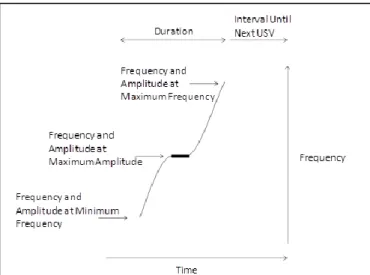
Figure 2: Ultrasonic Vocalization Measures Schematic Shows temporal and spectral acoustic measures assessed for each individual vocalization. Measures of central tendency and variance were subsequently calculated from individual measures from every vocalization recorded in a wav file. Figure used with permission (Cox, 2012).
National Instruments data acquisition device (USB-9211A) which sampled plate temperatures once per second. All hardware and timing was controlled through LabView 2009 software.
The metal plate temperature (TP) was measured by using
Chromel-Constantan (T-Type) thermocouples directly attached to the metal plate inside the subject basket where a pup rested during USV recording. The temperature of each pup’s head was collected at two time points using an infrared thermometer (Fischer
Scientific, Model 15-077-966, Pittsburgh, PA). The first time point was before the top of the USV recording apparatus was put on, designated start temperature (TS); the
second was after the top of the USV recording apparatus had been removed at end of vocalization recording period, designated end temperature (TE). The difference
between TS and TE was measured to assess for treatment differences in heat loss
17
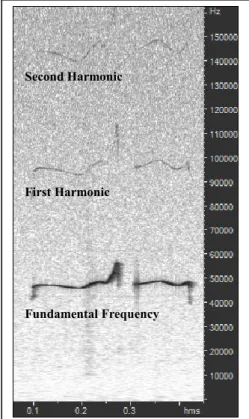
Figure 3: Explanation of Harmonic and Amplitude
Fundamental Frequency First Harmonic Second Harmonic
This is an example of a two harmonic vocalization. Louder sounds are denoted as darker wave forms. Figure used with permission (McMurray, 2011). USV recording equipment included model CM16/CMPA40-5V microphones (Avisoft Bioacoustics, Berlin, Germany) interfaced with a desktop computer using an instrumentation recorder (National Instruments, Model PCI-6132, Austin, TX) taking 14 bit samples of microphone voltage at 1 million
samples per second. Such high bit samples were obtained at such high frequency to ensure high fidelity recording up to 100 kHz, a threshold
significantly higher than the expected fundamental frequency range of 40-80 kHz for rat pup isolation-induced vocalizations (McMurray, 2011). The microphones used have a flat frequency response across the anticipated recording frequency range. The amplifier built into these microphones was calibrated across trials using a method developed during the time frame these vocalization recordings were acquired and recently published (McMurray & Hubbard, 2013). The same National Instruments control and monitoring software (Labview 2009,
Austin, TX) that initiated and terminated TP recordings also began and ended
18
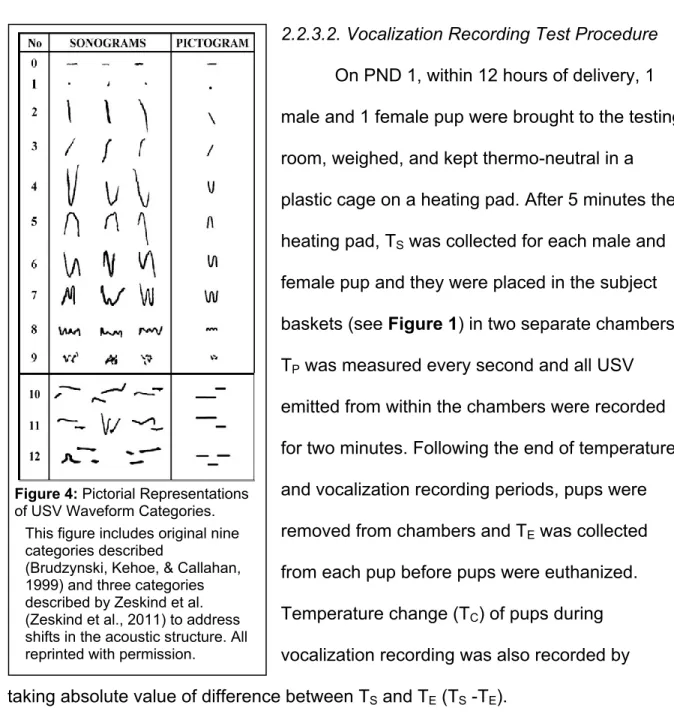
Figure 4: Pictorial Representations of USV Waveform Categories.
This figure includes original nine categories described
(Brudzynski, Kehoe, & Callahan, 1999) and three categories described by Zeskind et al. (Zeskind et al., 2011) to address shifts in the acoustic structure. All reprinted with permission.
2.2.3.2. Vocalization Recording Test Procedure
On PND 1, within 12 hours of delivery, 1 male and 1 female pup were brought to the testing room, weighed, and kept thermo-neutral in a plastic cage on a heating pad. After 5 minutes the heating pad, TS was collected for each male and
female pup and they were placed in the subject baskets (see Figure 1) in two separate chambers. TP was measured every second and all USV
emitted from within the chambers were recorded for two minutes. Following the end of temperature and vocalization recording periods, pups were removed from chambers and TE was collected
from each pup before pups were euthanized. Temperature change (TC) of pups during
vocalization recording was also recorded by taking absolute value of difference between TS and TE (TS -TE).
2.2.4. Pup Ultrasonic Vocalizations Analysis
19
Software Suite (MSL, KayPENTAX, Inc, Montvale, NJ) by experienced researchers blinded to treatment group and experimental manipulation or the recorded pups. Temporal measures collected included: number of USVs emitted, mean duration of USVs, and mean inter-vocalization interval. Spectral measures assayed included: amplitude at maximum frequency (see Figure 2), amplitude at minimum frequency, frequency at maximum amplitude, frequency at minimum amplitude, mean frequency (pitch), mean amplitude (loudness-see Figure 3), standard deviation of frequency found in fundamental frequency, and standard deviation of amplitude found in fundamental frequency. Acoustic structure measures assayed included two calculated variables: waveform simplicity was the sum of all vocalizations in a recording that were of USV Waveform Complexity Scale category zero to five, and waveform complexity was the sum of all vocalizations in a recording that were of USV Waveform Complexity Scale category six to twelve (see Figure 4 for details of USV Waveform Complexity Scale). All measures were collected from the full two minutes each wav file of vocalizations recordings lasted. Units of measure and precise definitions of all variables measured are detailed in Error! Reference ource not found..
2.2.5. Statistical Analysis
2.2.5.1. Dam Gestational Data Comparisons
20
gestational variables collected). All variables used a ratio scale and their measurement
was independent of the other nine. Unless otherwise stated, all reported values for
Table 1: Pup Vocalization Variables Measured
Infant Rat Vocalization Characteristic Measured* MeasureUnit of Definition
Temporal Measures:
Number of Vocalizations counts
The number of vocalizations detectable above background noise in first 2 minutes of a subject's vocalization recording file.
Average Vocalization Duration seconds
The duration of each vocalization counted was measured and summed before being divided by the number of vocalizations in each subject's vocalization recording file.
Average Intervocalization Interval seconds
The duration between the end of one vocalization and the start of the next was measured and summed before being divided by the number of vocalizations in each subject's vocalization recording file.
Spectral Measures:
Average Maximum Amplitude decibelsrelative
The loudness from each vocalization recorded was measured and summed before being divided by the number of vocalizations in each subject's vocalization recording file.
Average Amplitude at Maximum Frequency decibelsrelative
The loudness at the maximum pitch from each vocalization recorded was measured and summed before being divided by the number of vocalizations in each subject's
vocalization recording file.
Average Standard Deviation of Amplitude relative decibels
The variance in the loudness from each vocalization was measured, calculated, and summed. The sum of these variances was then divided by the number of vocalizations in each subject's vocalization recording file.
Average Frequency at Maximum Amplitude hertz
The pitch at the maximum loudness from each vocalization recorded was measured and summed before being divided by the number of vocalizations in each subject's
vocalization recording file.
Average Minimum Frequency hertz
The lowest pitch from each vocalization recorded was measured and summed before being divided by the number of vocalizations in each subject's vocalization recording file.
Average Maximum Frequency hertz
The highest pitch from each vocalization recorded was measured and summed before being divided by the number of vocalizations in each subject's vocalization recording file.
Average Standard Deviation of Frequency hertz
The variance in the pitch from each vocalization was measured, calculated, and summed. The sum of these variances was then divided by the number of vocalizations in each subject's vocalization recording file.
Acoustic Structure:
Number of Brudzynski Category 0-5 Vocalizations counts The number of vocalizations with a 0-5 categorization on the Brudzynski Waveform Categorization Scale.
Number of Brudzynski Category 6-12 Vocalizations counts The number of vocalizations with a 6-12 categorization on the Brudzynski Waveform Categorization Scale.
* All vocalization variables were measured from the fundamental frequency when
21
variables are arithmetic mean followed by the standard error of the mean (SEM). A one-tailed student t-test with an alpha level of p < 0.05 was considered appropriate as previous studies (Johns et al., 2005; Johns, Noonan, et al., 1994; McMurray, Joyner, et al., 2008) show gestational cocaine treatment sometimes decreases but never increases measures of gestational health examined.
2.2.5.2. Recorded Subject Weight and Temperature Comparisons
A two-way analysis of variance (ANOVA) for the factors: 1) prenatal exposure (CC-exposed or UN-exposed) and 2) sex (male or female) were used to examine six variables known to influence rat pup vocalization characteristics (see Methods
2.2.3.2 Vocalization Recording Test Procedure for details of variables collected). All variables were measured on a ratio scale and their measurement was independent of one another. Since no factor in this two-way ANOVA had more than two levels, Tukey HSD post hoc tests were only utilized when interaction of the two factors was significant.
2.2.5.3. Recorded Pup Vocalization Characteristic Comparisons
22
Table 3: Litter Gestational Data for Vocalization Recording Subjects
Cocaine (n=14) 123±6 *** 20.6±0.2 78±5 62±2 31±4
Untreated (n=13) 151±5 20.92±0.08 85±6 64±1 36±2
Treatment Group Dam Gestational Weight Gain (g)
Gestational Length (days) Litter Birth Weight (g) Culled Litter Weight (g) Litter Postpartum Weight Gain (g)
Note: Presented values are means ± SEM. Asterisks indicate statically significant difference from other group (*** p <0.001).
no factor in this two-way ANOVA had more than two levels, Tukey HSD post hoc tests were only utilized when an interaction of the two factors was significant.
2.3. RESULTS
2.3.1. Gestational Effects
Gestational data are detailed in Table 3. There were statistically significant differences in dam gestational weight gain [t(25)= -3.48, p < .001], with CC-treated dams gaining less weight over gestation than UN-treated dams. There were no statistically significant differences between treatment groups in gestational length,
number of pups in a litter, male/female pup ratio in un-culled litter, culled litter
Table 2: Vocalization Recording Subject Characteristics
Cocaine (n=21) 6.6±0.3 29.9±0.5 29.0±0.6 1.1±0.2 22.2±0.1
Untreated (n=23) 6.5±0.2 29.8±0.3 29.0±0.2 0.9±0.1 22.1±0.1
Exposure Group Subject Weight (g) Test Temperature Change (°C) Subject Pre-Test Temperature (°C) Chamber Plate Temperature (°C) Subject Post-Test Temperature (°C)
23
Figure 5: Male PCE Pups Exhibit Decreased Frequency in Vocalizations
Jarrett et al. Unpublished data. * p<0.05
0 10000 20000 30000 40000 50000 60000 70000
CC-Females CC-Males UN-Females UN-Males
Freq ue nc y (H z)
Frequency at Maximum Amplitude
*
*
0 10000 20000 30000 40000 50000 60000 70000CC-Females CC-Males UN-Females UN-Males
Fr
equency
(
Hz)
Minimum Fundemental Frequency
*
A. B.
(A) Cocaine-exposed males (CC-Males) demonstrated significantly lower frequency at the point of maximum amplitude in their vocalizations compared to cocaine-exposed females (CC-Females) and un-exposed males (UN-Males). (B) Additionally CC-Males exhibited significantly lower frequencies at the minimum frequency found in the fundamental frequency of their vocalizations. All bars in graphs are group means. Error bars are SEM. weight, litter birth weight, dam weight at conception, or individual pup weight gain from PND 1 to PND 5.
2.3.2. Vocalization Recording Subject Effects
No interaction of prenatal exposure and sex, main effect of prenatal exposure, or main effect of sex was identified in vocalization recording subject measures
tested. See Table 2 for data by prenatal exposure.
2.3.3. Recorded Vocalization Acoustic Characteristic Effects
24
Table 4: Means of Spectral Pup Vocalization Measures
Mean SEM Mean SEM Mean SEM Mean SEM Mean SEM Mean SEM Mean SEM
Cocaine (n=21) 41 2 41 1 0.56 0.03 52 2 49 2 53 2 0.56 0.03
Female (n=10) 41 2 41 2 0.56 0.05 56 4 54 4 57 4 0.56 0.05
Male (n=11) 42 2 42 2 0.57 0.03 48 1 46 1 50 1 0.57 0.03
Untreated (n=23) 38 2 38 2 0.67 0.04 54 2 51 2 58 3 0.67 0.04
Female (n=12) 38 3 38 3 0.67 0.07 52 2 49 2 58 5 0.67 0.07
Male (n=11) 38 3 38 3 0.67 0.04 56 3 52 3 57 3 0.67 0.04
Average Standard Deviation of Frequency (kHz) Average Amplitude at Maximum Frequency (dB) Average Standard Deviation of Amplitude (dB) Exposure Group Average Maximum Amplitude (dB) Average Frequency at Maximum Amplitude (kHz) Average Minimum Frequency (kHz) Average Maximum Frequency (kHz)
Mean, SEM, and sample size (n=) for all significant and non-significant group comparison for spectral vocalization measures collected are reported above by prenatal exposure and sex. See text under appropriate heading for F statistics for statistically significant differences.
Table 5: Means of Temporal Pup Vocalization Measures
Mean SEM Mean SEM Mean SEM
Cocaine (n=21) 70 20 0.050 0.006 8 3
Female (n=10) 50 20 0.05 0.01 13 5
Male (n=11) 90 30 0.050 0.007 3 1
Untreated (n=23) 30 10 0.050 0.007 8 2
Female (n=12) 30 10 0.05 0.01 8 4
Male (n=11) 40 20 0.05 0.01 8 3
Number of USV (counts) Average Vocalization Duration (s) Average Inter-vocalization Interval (s) Exposure Group
Mean, SEM, and sample size (n=) for all significant and non-significant group comparison for temporal vocalization measures collected are reported above by prenatal exposure and sex. See text under appropriate heading for F statistics for statistically significant differences.
comparisons for all prenatal exposure groups and sex are reported in tables for spectral vocalization characteristic measures, temporal vocalization measures, and for structural vocalization measures (see Table 4, Table 5, and Table 6
respectively).
2.3.3.1 Interaction of Prenatal Cocaine Exposure and Sex
Two statistically significant interactions of prenatal exposure and subject sex are shown in
Figure 5 A. The interaction of drug exposure and sex were statistically significant for frequency at maximum amplitude [F(3,40)=4.77, p<0.05], with CC-exposed male pups having a lower
CC-25
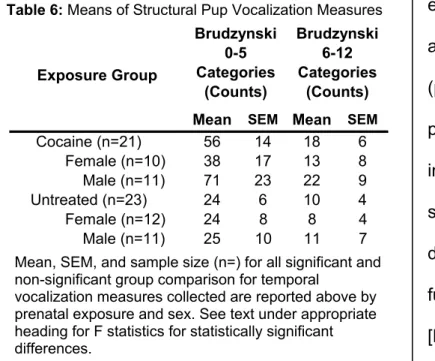
Table 6: Means of Structural Pup Vocalization Measures
Mean SEM Mean SEM
Cocaine (n=21) 56 14 18 6 Female (n=10) 38 17 13 8 Male (n=11) 71 23 22 9 Untreated (n=23) 24 6 10 4 Female (n=12) 24 8 8 4 Male (n=11) 25 10 11 7
Exposure Group Brudzynski 0-5 Categories (Counts) Brudzynski 6-12 Categories (Counts)
Mean, SEM, and sample size (n=) for all significant and non-significant group comparison for temporal
vocalization measures collected are reported above by prenatal exposure and sex. See text under appropriate heading for F statistics for statistically significant differences.
exposed females (p<0.05) and UN-exposed males (p≤0.05). Additionally, prenatal exposure and sex interacted to induce a statistically significant difference in minimum fundamental frequency [F(3,40)=4.71, p<0.05] (see
Figure 5 B) such that exposed male pups had a lower minimum fundamental frequency compared to CC-exposed female pups (p<0.05). All remaining prenatal exposure and sex interactions were statistically non-significant.
2.3.3.2. Main Effect of Prenatal Cocaine Exposure
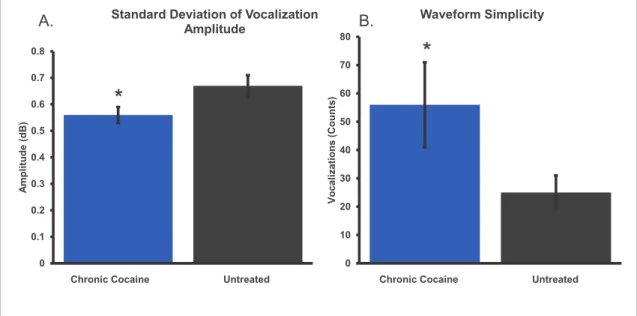
On PND 1 there was a main effect of prenatal exposure on the standard deviation of amplitude in the fundamental frequency [F(1,42)=4.27, p<0.05], with CC-exposed pups having significantly lower variation in the amplitude of
26
prenatal exposure identified in the temporal, spectral or acoustic structure characteristics analyzed.
2.3.3.3. Main Effect of Sex
No main effects of sex were identified in vocalization characteristics measured.
2.4. DISCUSSION
2.4.1. Cocaine Exposure Decreases Vocalization Variability
These experiments showed that PCE significantly altered the spectral and acoustic structure of PND 1 pup isolation-induce USV when compared to a UN prenatal exposure group (UN-exposed). The majority of our hypotheses were
Figure 6: PCE Decreases Pup Vocalization Variability
Jarrett et al. Unpublished data. * p<0.05
0 10 20 30 40 50 60 70 80 V oc ali zati on s (C ou nts) Waveform Simplicity
*
Chronic Cocaine Untreated
0 0.1 0.2 0.3 0.4 0.5 0.6 0.7 0.8 A mpl it ud e (dB )
Standard Deviation of Vocalization Amplitude
*
Chronic Cocaine Untreated
A. B.
(A) Cocaine-exposed (Chronic Cocaine) PND 1 pups showed a significantly decreased standard deviation in amplitudes found in their vocalizations compared to un-exposed (Untreated) pups. (B) In keeping with a decrease in vocalization complexity cocaine-exposed pup vocalizations show an increase in number of simple vocalizations as
27
supported: 1) PCE altered vocalization characteristics on more than one temporal, spectral, and/or acoustic structure characteristic (decreased standard deviation of amplitude, increased vocalization waveform simplicity) and 2) PCE affected both female and male pups but prenatal exposure more severely altered the vocalizations of male PCE pups than female pups (decreased frequency at maximum amplitude, decreased minimum fundamental frequency). Though these exciting results
represent some of the first published reports of effects of cocaine on newborn animal vocalization characteristics since 2005 (Barron & Gilbertson, 2005), we did not find universal support for our stated hypotheses as we did not find that PCE induced any changes in temporal measures of vocalizations, particularly an increased number of vocalizations. Though we did find an increase in number of simple vocalizations following PCE we did not find a concomitant decrease in complex vocalizations following PCE, making it harder to support our hypothesis that PCE would decrease complexity of vocalizations. Even with these caveats, our characterization of new PCE-induced changes in vocalizations may increase interest in vocalization as a measure of developmental change in preclinical models of prenatal drug exposure.
2.4.2. Literature Impact: Cocaine-Induced Vocalization Changes
28
vocalizations with PCE, though in opposite direction of our stated hypothesis, adds to the building literature (see 2.1.3. Prenatal Cocaine Exposure Affects Pup
Vocalizations) that PCE does not increase newborn rat vocalization number but acute cocaine treatment does.
The PCE-induced increase in the number of USV with a simple waveform and decreases in the standard deviation of amplitude of vocalizations on PND 1
presented here (see 2.3.3.2. Main Effect of Prenatal Cocaine Exposure or Figure 6) constitute the first known reports of cocaine-induced decreases in variability of newborn animal vocalizations. The implications of these waveform changes are not yet fully understood. The finding presented here of a decrease in the standard deviation of amplitude of vocalizations on PND 1 replicates a similar report for
vocalizations recorded from PND 2 pups during a maternal proximity preference task (Cox, 2012). Collectively, these reports suggest that a decrease in the standard deviation of amplitude of vocalizations could be a robust change found in PCE pup vocalizations in the very early postnatal period.
29
frequently found in infants with a history of prenatal insult(s) and more frequently elicit a visceral response from care givers (Zeskind & Lester, 1978). Literature is mixed as to whether PCE decreases hyperphonation in humans (Corwin, Lester, & Sepkoski, 1992; Lester, Corwin, & Sepkoski, 1991) or decreases measures of fundamental frequency in rat vocalizations (Cox, 2012; McMurray et al., 2013) like we found in the studies reported here. These mixed results highlight the importance of continued study in both humans and animals of the frequency shifts in
vocalizations of PCE infants and the value of such measures as non-invasive screening and treatment effectiveness scales for neurobiological pathophysiology associated with prenatal insults including PCE.
Data presented in Figure 5 also represent additions to the literature of sex-specific PCE effects showing spectral vocalization characteristics of male pups are more severely affected by PCE than those of female pups. It is well established that PCE affects male offspring behavior disproportionally to female offspring in the animal prenatal drug exposure literature (Spear et al., 2002). These vocalization effects specific to males might be related to other behavioral alterations evident in males at various ages following PCE and could prove to be an interesting area of future research.
2.4.3. Experimental Limitations
30
In various behavioral tests, a chronic saline (CS) exposed control group has been used whose dams are matched for food consumption to the CC exposed group and are injected daily to control for injection stress. Though these comparisons groups attempt to control for injection stress and anorectic effect of chronic cocaine
administration, they are not always successful in preventing gestational weight gain differences (Johns et al., 2005; McMurray, Cox, et al., 2008) and they induce an established confound of significant prenatal stress from food deprivation and food hoarding in pair-fed CS groups (Spear et al., 2002). For these reasons we chose not to include a CS group in the present study as our purpose was to establish if CC exposure resulted in differences in vocalizations that could be used in subsequent research. Nonetheless, future studies should include stress control groups to elucidate the full nature of changes resulting from prenatal cocaine exposure.
31
accounted for by differences in body temperature and body weight. In both these reports the authors have elected to use analysis models that adjust for subject sex, body weight, and body temperature.
Understanding the translational value of a 15-30 mg/kg subcutaneous dose in rats to typical human cocaine using mothers is challenging. The available peer-reviewed literature is incomplete at best and requires much extrapolation and interpretation to offer even a rudimentary assessment of the translational value of rodent subcutaneous cocaine treatment models. Historically, comparisons
accounting for mass differences between rats and humans were used and it was argued that a 30 mg/kg daily subcutaneous dose to a pregnant rat was equivalent of a 150 pound woman consuming a gram of intranasal cocaine daily (Nelson et al., 1998). As more is learned about how different individuals and species absorb, distribute, and metabolize a given amount of drug it becomes questionable to justify a model’s dosing regimen as translational based on a simple mass correction calculation. Of equal importance to understanding the translational value of this behavioral teratological model of PCE is the fact that human women that use cocaine during pregnancy are rarely exclusively cocaine users, they are polydrug users (Frank et al., 1988; Mayes et al., 1997). Thus the development of a gestational polydrug model from this gestational cocaine treatment model could be informative.
2.4.4. Future Directions
32
complexity of vocalizations in the early postnatal period, a time point essential to the establishment of maternal behaviors necessary for the survival of offspring. In
CHAPTER 3. GESTATIONAL COCAINE TREATMENT: EFFECTS ON DAM PROXIMITY PREFERENCE FOR COCAINE-EXPOSED PUP VOCALIZATIONS
3.1. INTRODUCTION
3.1.1. Measuring Preference-Like and Aversion Behavior
Animal preference-like behavior tasks were first reported in the 1950's with tasks relating to satiety (Seward, Levy, & Handlon, 1953) and an apparatus consisting of a start chamber, a neutral or "no-choice" chamber, and two or more "choice" chambers connected to the neutral choice chamber. Choice chambers contained some sort of apparatus to confine an "incentive" for which experimenters were interested in assessing choice. Lastly, doors between chambers were
34
choice behavior and more a measure of a subject group's learning and memory capacity.
With time more naturalistic choice behavior tasks were developed which required less training before testing in choice apparatus and were less likely to be confounded by training effects. Major improvements in the development of more naturalistic choice apparatuses were evident by the late 1970's when both approach (preference-like behavior) and retreat (aversion-like behavior) from a stimulus were measured as well as frequency, duration and latency of first approach (Bateson & Jaeckel, 1979). In the 1980's and 1990’s it became mainstream for choice behavior tasks, like many animal behavior tasks, to have a measure of not just reliability (Bolivar & Brown, 1995; Wöhr & Schwarting, 2007; Zimmerberg et al., 2003) Reliability is how repeatable and consistent a measure of a subject or group of subjects in a specific apparatus is, but also validity, or whether measure
experimenter is measuring is measuring biological phenomenon of interest .
3.1.2. Cocaine and Maternal Preference-Like Behavior
3.1.2.1. The Study of Maternal Preference-Like Behavior in Animals
From the study of choice behavior in gravid or postpartum animals we know that maternal choice is regulated by both maternal and offspring experience, their neurobiology, the stimuli of maternal behavior mothers and offspring exhibit, and the response both parties display to stimuli of maternal behavior. A female rat’s
35
dams progress through the postpartum period, preference for pups over pieces of PVC piping diminishes (Wansaw, Pereira, & Morrell, 2008). Pups will engage in odor-guided huddling if the odor used is associated with a female who has
previously nursed said pups (Kojima & Alberts, 2009). Jimpy pups, a mouse model system of a sex linked CNS dys-myelination syndrome, produce fewer USV than normal littermates but are retrieved by dam before normal littermates 78%-100% of the time during a standard maternal retrieval test (Bolivar & Brown, 1995).
3.1.2.2. Cocaine's Effect on Maternal Preference-Like Behavior
As described above, maternal preference-like behavior, or the study of choice behavior in gravid or postpartum animals, is well studied by many research groups around the world; however, the effects of cocaine on maternal preference-like behavior have not been widely studied. There are several important findings from the few experiments on cocaine and pup preference behavior including that dams show pup preference in early postpartum period (before PPD 8) compared to cocaine preference later (PPD 10 & PPD 16) in the postpartum period (Mattson, Williams, Rosenblatt, & Morrell, 2001). Regardless of whether motivation to seek cocaine or pups at PPD 10 is stronger there was no measurable difference in level of maternal behavior exhibited by any dam at this time (Mattson, Williams,
36
preferred pups over cocaine on PPD 8, however more dams overall still preferred pups than cocaine on PPD 8 (Seip & Morrell, 2007). Most recently it was determined that a normal functioning medial preoptic area (MPOA) is necessary for maternal preference of pups over cocaine on PPD 8 (Pereira & Morrell, 2010).
3.1.3. Chapter 3 Specific Aims
37
3.2. METHODS
3.2.1. Subjects
38
3.2.2. Treatment
3.2.2.1. Drugs:
CC-treated females received twice daily subcutaneous injections of 15 mg/kg of cocaine hydrochloride (total of 30 mg/kg daily dose, calculated as free base, dissolved in 0.9% normal saline such that injection volume was 0.1 ml/g of subject body weight, Sigma Chemical Company, St. Louis, MO). A dose of 30 mg/kg was chosen as this is the lowest chronic dose known to consistently, significantly, and broadly decrease the onset (Johns, Noonan, et al., 1994, 1997; Nelson et al., 1998) and the maintenance of maternal behavior (Johns et al., 2005). CS-treated females received twice daily subcutaneous injections of 0.9% normal saline at 2 ml/kg. All injections were delivered twice daily on GD 1 to GD 20 at approximately 0800 and 1600 hours. To combat cocaine’s direct cytotoxic effects (Bruckner et al., 1982) and reduce cocaine-induced skin lesions (Jarrett et al., 2006; Johns et al., 2005, 2007, 2010; McMurray, Cox, et al., 2008; McMurray, Joyner, et al., 2008) at the injection site the rear flank used as the injection site was alternated every injection. If a lesion appeared, then fur was clipped around the lesion and cleaned daily with both
Betadine solution and topical antibacterial ointment
39
3.2.2.2. Food and Water Access:
CC, CS and UN-treated females had free access to water and food (Purina Lab Diets Rat Chow, St. Louis, MO) at all times for this study. A non-pair-fed paradigm was chosen for this study, which is a departure from several previous reports (Johns et al., 2005; McMurray, Joyner, et al., 2008). Historically, CS-treated females were pair-fed GD 1 to GD 7 such that CS-treated females were fed only as much on a particular gestation day as the average amount eaten by a CC-treated female on the same gestation day. This procedure attempted to control for the anorectic effects of cocaine noted previously, but was not as severe a feeding restriction paradigm as previous studies have employed (Johns, Noonan, et al., 1994, 1997) which can produce a confound of food hoarding during gestation by CS pair-fed females. Daily food consumption for CC, CS, and UN dams from GD1-GD 20 was recorded to allow for assessment of food consumption as a possible factor in final analyses of data. Thus, the CS-treated females were largely a control for stress of injection.
3.2.3. Dam Proximity Preference-Like Behavior Testing
3.2.3.1 Behavior Testing Room Suite Specifications
40
were placed while their dam was being separated from her pups and/or while the dam was in the proximity preference-like behavior apparatus in the preference testing room. Computers used for recording vocalization and digital video data and playing back pre-recorded vocalization data were also located in the holding room. The preference testing room was connected to the holding room and measured 2.4m X 2.4m X 2.4 m and in addition to doors and windows to interior hallway it also had a window to the exterior. Both rooms were temperature controlled and their ambient temperature on habituation and test days was 22.4° C ± 2.1 °C SEM. Both rooms had overhead incandescent lighting systems instead of commercial grade fluorescents to reduce environmental noise in the ultrasonic frequency range and allow for capture of high contrast digital video images of subjects during testing.
3.2.3.2. Choice Behavior Testing Apparatus
The Plexiglas proximity preference-like behavior apparatus is shown in detail in Figure 7. The box (80 cm x 22 cm x 60 cm) was divided with two partial walls each 32.5 cm from ends of the box subdividing the apparatus into a left choice, right choice, and center (neutral) chamber. Attached to the center chamber was a start chamber (20 cm x 15 cm x 15 cm) with a remotely operated over-head door between the start and center chambers. The dam was placed in the start chamber
41
in the vocalization playback files, a capability researches found useful during
validation studies of this novel apparatus and one which can be used for secondary analysis of primary data resulting from these experiments. Once a dam entered the center chamber from the start chamber, the overhead door was promptly shut, preventing re-entry of dam into start chamber for duration of test.
At the end of left and right choice chambers was an enclosure housing a
microphone capable of recording frequencies from 20 Hz to 100 kHz, a stimulus pup
Figure 7: USV Playback Choice Behavior Apparatus
42
confinement enclosure, and speaker systems capable of emitting high fidelity recordings of rat pup USV. The exterior of the sides and base of apparatus components (except for start chamber) were covered in matte black construction paper to limit visual stimuli of subjects to those within the apparatus and to reduce reflections picked up by digital video acquisition equipment utilized to record movements of subjects within the apparatus. The exterior sides of start chamber were not covered in matte black construction paper to increase the intensity of ambient light in this chamber relative to left choice, center, and right choice chambers and to provide a modest motivational stimulus for subjects to promptly leave the start chamber when the overhead door to the center compartment was opened.
3.2.3.3. Vocalization Recording Apparatus
The microphone system capable of recording 20 Hz to 100 kHz frequencies placed at each end of the left and right choice chambers consisted of two separate Avisoft CM16/CMPA40-5V adjustable-gain microphone systems (Avisoft
Bioacoustics; Berlin, Germany) connected to a desktop computer through a National Instruments PCI-6132 digital to analogue converter (National Instruments, Austin, TX) allowing for audio input at 1 MS/s with 14-bit resolution. Using National
43
Each morning choice behavior tests were scheduled, the gain setting of the microphones in left and right choice chambers were standardized using the
calibration unit for recording transducers and a previously validated and reported calibration protocol (McMurray & Hubbard, 2013).
3.2.3.4. Vocalization Playback Apparatus
The speaker system used to play back high fidelity USV recordings were two ScanSpeak ultrasonic adjustable-gain speaker systems (Avisoft Bioaccoustics; Berlin, Germany). A speaker was located at each end of the left and right choice chambers and connected to the same desktop computer through a National Instruments PCI-6731 analogue output card. National Instruments LabVIEW 2009 SP2 software (National Instruments, Austin, TX) was used for control of playback system. This program signaled the start of USV playback by turning on start light and start tone (noted in 3.2.3.2. Choice Behavior Testing Apparatus) and then by playing back two separate pre-recorded wav files into the left and right choice chambers.
A separate LabVIEW 2011 program was run on a separate computer from the one running the LabVIEW 2009 SP2 program running playback system. This
LabVIEW 2011 program reported separate, real time voltage recordings at the microphones in the left and right choice chambers. With this real time voltage program running on one computer and the playback program on other computer playing back a constant 42 kHz tone gain adjustment of left and right choice
44
readings from LabVIEW 2011 program read 0.8 ± 0.1 V for both microphones. A real time voltage reading of 0.8 ± 0.1 V had been previously shown in pilot experiments to result in sounds being emitted in left or right choice chamber with enough intensity to be detectable in the center chamber but not in the opposite choice chamber from which speaker emitting sound was located.
3.2.3.5. Choice Behavior Digital Video Acquisition Apparatus
Behavioral tests were visually recorded with a JVC GR-AX970 analog video camera (JVC, Long Beach, California) with a s-video output to a ADS Technology LL5-USBAV-700 analog to digital video convert (ADS Technology, Cerritos, California). The analog to digital video converter was connected to a dedicated desktop computer running the digital video acquisition and editing software suite Ulead VideoStudio v5.0 (Corel Corporation, Ottawa, Canada).
A shift from video tape based technology to digital video file technology was necessary for efficient processing of behavioral data through automated subject tracking methods utilized (see 3.2.4.1. Automated Subject Tracking System).
3.2.3.6. Choice Behavior Apparatus Validation Procedures
45
Validation of the maternal proximity preference-like behavior was performed by placing a nulliparous female (prior to co-habitation with a sexual active male) into maternal proximity preference-like behavior box for three separate trials of ten minutes on two sequential days immediately prior to cohabitation with a sexually active male. Order of trials was randomized using a 3-sided dice. Conditions of the three trials were: a) both left and right-choice chambers were empty, b) either the left or right-choice chamber contained fruit loops in the stimulus confinement enclosure while the other chamber was empty, and c) either the left or right-choice chamber contained a non-biological UN-exposed pup in the stimulus confinement enclosure while the other chamber was empty. Following conception, gestation, and parturition, the same female, now a dam, performed these same three trials. The duration of time spent in contact with the stimulus confinement enclosure in left or right, total time in left or right, and total time in center chambers were recorded for all trials. No difference in day of testing during virgin trials were identified, thus data from these two days were averaged together. Data from postpartum trials on PPD1 and PPD3 were compared to independently and as an averaged value to average of virgin trials. The validation procedure for this choice behavior test apparatus was repeated three times with three females.
46
made. Emissions from the tone emitter were of a known: frequency
(42016.8067±0.0005 Hz), intensity (0.904±0.002 volts), tone duration (1.000±0.001 s), and inter-tone interval (1.000±0.001 s). The wav file of above recording was assessed three times using Adobe Audition v1.5 (Adobe Systems, Inc. San Jose, California) for tone frequency, intensity, duration, and inter-tone interval. The
arithmetic mean of these measures from the three assessments of recorded wav file were within plus or minus of the SEM of values reported for the constant tone emitter referenced above (McMurray & Hubbard, 2013). Playback of high fidelity ultrasonic tones were tested by playing back the same wav file used above to asses high-fidelity recording capability through calibrated playback system (see 3.2.3.4.
Vocalization Playback Apparatus) and simultaneously recording what the speakers played back. The frequency, intensity, duration, and inter-tone interval found in original wav file and recording of playback of original wav file were measured three times for each file. Means and SEM of all measures were calculated separately for all three trials of each wav file and were found to differ from one another by less than the SEM of either file.
3.2.3.7. Selection and Production of USV Playback Files
Two USV recordings from PND 1 rat pups (1 PCE and 1 UN) previously analyzed were selected for playback (see Chapter 2). Playback files from only recordings of male not female pups were selected as PCE males exhibited
47
Table 7: Table of Preference Task Playback File Characteristics
Frequency at Maximum Amplitude (kHz) Minimum Frequency (kHz) Maximum Frequency (kHz) Standard Deviation of Amplitude (dB) Number of Simple USV (Brudzynski 0-5) Cocaine
Group (n=11) 52±2 49±2 53±2 0.56±0.03 60±20
File Used (n=1) 49 45 50 0.566 20
Untreated
Group (n=11) 54±2 51±2 58±3 0.67±0.04 25±6
File Used (n=1) 58 56 59 0.858 10
Exposure Group
Note: Presented values are means ± SEM for group statistics. Group values are for male pups only. Spectral and acoustic structure measures presented in this table are only subset of measures taken from these files. The presented measures are those found to exhibit statistically significant main effects of prenatal exposure or prenatal by sex interactions.
controls (see Figure 5). The selected PCE and control files were chosen on two criteria: 1) the files needed to differ from one another and 2) the differences needed to be in the same direction and in the same measures of spectral and acoustic structure previously shown to be affected by PCE (see Figure 6 and Figure 5).
Table 7 reports the values for select spectral and acoustic structural measures in prenatal exposure groups for all males and also for the specific male-subject files used to create the PCE and control USV playback files used in these studies.
Once PCE and control USV playback files had been identified, these two files were modified using Adobe Audition v1.5 to remove background noise and to edit files into files of an appropriate length and similar overall structure. From both files a 5-second clip containing the greatest number of vocalizations from each file was repeated six times for a total of thirty seconds of looped presentation. After the thirty second loop, each original two minute file was played back uninterrupted and
UN-48
Exposed/control USV that were each six and a half minutes long (see Figure 8). The first thirty second looping clip served as a means to ensure test dams were exposed to both PCE and control USV when they were in the center chamber of the proximity preference-like behavior apparatus having just exited the start chamber at the
beginning of the test (see Figure 8 for graphical representation of PCE and UN-exposed/Control playback files).
3.2.3.8. Habituation and Baseline Choice Behavior Testing Procedures
On GD 16 and GD 17 all dams were transported from the animal quarters to holding room of the behavior testing suite before being returned to animal quarters for travel habituation. On GD 19 all females were again transported to the behavior
Figure 8: USV Playback File Construction Cocaine Playback File
Untreated Playback File
30 s 2 min 2 min 2 min
30 s 2 min 2 min 2 min
49
testing suite holding room and then exposed to the preference testing room, the proximity preference apparatus, the start light, the start tone, and white noise played from speakers in right and left choice chambers. Specifically, subjects were exposed to the preference testing room for twenty minutes in their home cage then moved to start chamber of proximity preference apparatus. Here they were exposed to the start tone, the start light and the opening and closing of start/center chamber door. After entering the center chamber, subjects were given six minutes and thirty
seconds of free exploration of the left, right, and center chambers while background noise played from the speaker systems in the left and right choice chambers. This habituation procedure is the identical test procedure described below in 3.2.3.9. PPD 1 and PPD 3 USV Choice Behavior Testing Procedures, except that subjects were exposed to background noise during habituation and to pre-recorded vocalizations of CC-exposed and UN-exposed PND1 pups during test sessions.
3.2.3.9. PPD 1 and PPD 3 USV Choice Behavior Testing Procedures
On PPD 1 each dam was isolated from pups and left in her home cage for twenty minutes in the preference testing room. While separated from the dam, pups were kept in the holding room on a heating pad in a sound attenuating cubicle to reduce dam exposure to USV from her separated pups. Custom LabVIEW
vocalization playback software program, digital video recording system, and custom LabVIEW vocalization recording software program were all readied during the