RESEARCH
Characterization and optimization
of endogenous lipid accumulation in
Chlorella
vulgaris
SDEC-3M ability to rapidly accumulate
lipid for reversing nightly lipid loss
Feng Qi
1,2,5, Haiyan Pei
2,3*, Ruimin Mu
1,5, Guixia Ma
1, Daoji Wu
1and Qiang Han
4Abstract
Background: During inevitable light/dark cycle, lipid productivity of outdoor microalgae photoautotrophic cultiva-tion is lowered by nightly biomass and lipid loss. To minimize, or even reverse the nightly lipid loss, it was expected that lipid accumulation would not cease, even if at night. Without relying on photosynthesis and organic matter in media, endogenous lipid accumulation that consumes energy and carbon sources derived from cells themselves, namely endogenous accumulation, is the only way for lipid production. The main aims of the present study was to characteristic endogenously accumulated lipid, confirm feasibility to reverse nightly lipid loss, and determine optimal conditions and its quality suitability for biodiesel feedstock production under stress conditions.
Results: Chlorella vulgaris SDEC-3M ability to rapidly accumulated lipid under stress conditions was cultivated for 12 h in darkness, and the effects of various conditions on lipid accumulation and biomass loss were analyzed. Under non-stress conditions, lipid contents dropped. Under certain stress conditions, conversely, the lipid contents were substantially improved so that net nightly endogenous lipid accumulation was observed. Under the optimal condi-tions (aeration mode with 0.10 vvm and 15% CO2, 5–10 mg L−1 of NO3−-N, 30–35 °C, approximate 2500 mg L−1 of biomass), the lipid content was doubled and increased lipid was approximately 180 mg L−1. Among stress condi-tions, N-deficiency had the most significant effect on endogenous lipid accumulation, and the optimum results were characterized under relatively low-N concentrations. Higher consistency between loss in carbohydrate and gain in lipid confirmed accumulated lipid endogenously conversed from carbohydrate. Based on the analyses of fatty acids profiles and prediction of kinematic viscosity, specific gravity, cloud point, cetane number and iodine value, it was confirmed that the quality of lipid obtained under optimal conditions complied with biodiesel quality standards. Conclusion: Via triggering endogenous lipid accumulation by stress conditions, even in darkness, SDEC-3M can synthe-size enough lipid suitable for biodiesel feedstock. It implies that the lipid accumulation phase in two-phase strategy can be scheduled at night, and following biomass production stage in light, which should be a solution to improve the lipid yield and quality of large-scale outdoor photoautotrophic microalgae cultivation for biodiesel production.
Keywords: Nightly lipid loss, Endogenous lipid accumulation, Microalgae, Light-NR/dark-ND process, Biodiesel
© The Author(s) 2019. This article is distributed under the terms of the Creative Commons Attribution 4.0 International License (http://creat iveco mmons .org/licen ses/by/4.0/), which permits unrestricted use, distribution, and reproduction in any medium, provided you give appropriate credit to the original author(s) and the source, provide a link to the Creative Commons license, and indicate if changes were made. The Creative Commons Public Domain Dedication waiver (http://creat iveco mmons .org/ publi cdoma in/zero/1.0/) applies to the data made available in this article, unless otherwise stated.
Open Access
*Correspondence: [email protected]
3 School of Environmental Science and Engineering, Shandong University, Qingdao 266237, China
Background
Concerns about limited fossil fuel reserves and climatic change have greatly aroused the interest of researchers for alternative energy sources. In this context, algae-based biodiesel becomes a focus due to its renewable and environment friendly properties [1–5]. Profiting from free carbon source from CO2 and free energy
source for sunlight, little contamination, and its carbon neutrality, outdoor photoautotrophic cultivation has always been the main stream for microalgae biodiesel production [6–8]. However, light/dark cycle is an issue that must be considered in microalgal outdoor culture. Because photosynthesis is suspended and respiration keeps going at night, nightly biomass loss, and there-fore, lipid loss become unavoidable [9–11]. Further-more, the lipid accumulation was also delayed due to the imbalance of the metabolites related to lipid bio-synthesis during light/dark cycle [7]. As a result, up to 35% loss in biomass [9] and 26% loss in triglyceride (TAG) [12] were observed in some microalgaes during darkness, which dramatically lowered the lipid produc-tivity. For the purpose of low-cost algae-based biodiesel production, minimization and even reversal of nightly lipid loss in cells is necessary [13, 14]. Although a light-autotrophic/dark-heterotrophic cyclic cultivation was proposed to prevent nightly biomass from loss [10], it risks possible contamination, high cost of carbon source, and uncontrollable concentrations of organic substrates. Other researchers attempted to reduce the nightly biomass and lipid loss through optimizing cul-tivation conditions, such as controlling daytime and nighttime temperatures or avoiding mixing at night [9–
11]. However, the attempts could not completely pre-vent any lipid loss.
Exposed to stress conditions, microalgae can be induced to accumulate lipid for biodiesel industry [5, 13–
15]. The strategy has an associated problem that inhibits cell growth to decrease biomass [14]. The most feasible strategy to overcome this bottleneck is two-stage strategy, with a biomass production stage under suitable growth conditions, followed by a lipid accumulation stage under stress conditions [1, 16–19]. As the most common stress conditions used in the two-stage strategy [1, 20], N-defi-ciency caused by a medium excluding nitrogen or con-taining little nitrogen [12, 14, 19, 21] can induce cellular carbon flux is changed to lipid synthesis instead of carbo-hydrate and proteins [22], which drastically increases the lipid content in microalgae. It is hypothesized that induc-tion by stress condiinduc-tions accompanies with night, when the growth of microalgae is always ceased, can minimize, and even reverse the negative effect of nighttime on the lipid accumulation. Based on this hypothesis, a batch process comprising a light/dark cycle in cooperation with
an N-rich/N-deficient cycle (light-NR/dark-ND) process modified two-stage strategy [19].
There are three key issues to be solved for a design of light-NR/dark-ND process. First, without relying on photosynthesis and organic matter in media, lipid syn-thesis in darkness consumes or reserves energy and car-bon sources derived only from cells themselves, namely endogenous lipid accumulation. In the reported over-whelming studies, lipid content elevated by N-deficiency was observed in light, while the phenomenon was found in darkness only by a few researchers [7, 9, 20]. Thus, the feasibility of nightly endogenous lipid accumulation should be confirmed. Second, for most of the microalgae species, the obvious effects of lipid accumulation were usually observed within 2–6 days [21, 23]. For coordi-nating with light/dark cycle, however, noticeable endog-enous lipid accumulation should occur just during about 12-h darkness. Fortunately, it was found that the lipid content of Chlorella was rapidly elevated only during 12 h N-deficiency, merely in light [19, 20]. Such rapid elevation of lipid content in microalgae cells occuring during darkness should be determined. The lipid accu-mulation can be improved by optimizing several culti-vation conditions, such as temperature, light intensity, nutrient concentration and so on [5]. Thus, optimal con-ditions should also be determined. Carbon and energy sources of accumulated lipid should also be examined. Finally, Shekh et al. [18] found that stress-induced lipids were not suitable as biodiesel feedstocks, but some con-trary findings were subsequently reported [16, 19, 24]. Thus, to confirm the suitability as feedstocks for biodiesel production, the quality of the endogenously accumulated lipid should be characterized via its fuel properties, such as kinematic viscosity (KV), specific gravity (SG), cloud point (CP), cetane number (CN), iodine value (IV). In view of the difficulty of direct measurements in smaller scale cultivation, the fuel properties were often indi-rectly determined. For example, based on the equations deduced by Hoekman et al. [21], these fuel properties can be predicted to be evaluated by fatty acid profiles that were relatively easy to measure [25, 26].
In the present study, as a model microalgal strain, C. vulgaris SDEC-3M was cultivated for 12 h in darkness. Effects of the different conditions, such as blending mode, CO2 level, aeration rate, NO3−-N concentration,
tempera-ture and initial biomass concentration, lipid content, and lipid accumulation were characterized. The effect of differ-ent NO3−-N concentrations on carbohydrate content was
also characterized. Based on these results, the feasibility of endogenous microalgal lipid accumulation in darkness and potential of lipid production under optimal cultivation conditions were confirmed, and its rough pathway was preliminary determined. Through fatty acid profile analy-sis, further, several properties of biodiesel derived from SDEC-3M were estimated to analyze their standard -com-pliance as biodiesel feedstocks. These findings provided new insight into design the light-NR/dark-ND process for enhancing microalgal lipid production during light/dark cycle, which was inevitable in outdoor cultivation.
Methods
Microalgae, culture medium, and aeration
As a potential CO2 biofixation and biofuel production
candidate, C. vulgaris SDEC-3M was obtained from Shandong Provincial Engineering Centre on Environ-mental Science and Technology (SDEC) [27]. Seven modified SE media were used (denoted SE1 to SE7). Each 1 L of medium contained 75 mg of K2HPO4∙3H2O,
75 mg of MgSO4∙7H2O, 25 mg of CaCl2∙2H2O, 175 mg of
KH2PO4, 25 mg of NaCl, 5 mg of FeCl3∙6H2O, 1 mL of
A5 solution, 1 mL of Fe-EDTA, and 958 mL of deionized
water. Each 1 L of A5 solution contained 2.86 g of H3BO3,
1.81 g of MnC12∙4H2O, 0.22 g of ZnSO4∙4H2O, 79 mg of
CuSO4∙5H2O, and 39 mg of (NH)6Mo7O24∙4H2O. Each 1 L
of Fe-EDTA solution contained 10 g of Na2EDTA, 0.81 g
of FeCl3∙6H2O, and 500 mL of 0.1 M HCl. Additionally,
into each 1 L of SE2, SE4, SE5, SE6, and SE7 media were added 12.50, 31.25, 62.50, 125.00, and 250.00 mg NaNO3,
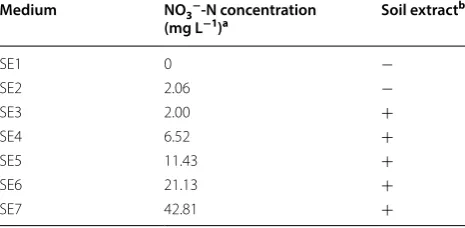
respectively. Further, 40 mL of soil extract, which was supernatant filtered from boiled soil solution, was added to SE3, SE4, SE5, SE6, and SE7 media. The monitored val-ues of NO3−-N concentration, and absence or presence of
soil extract in the seven fresh media are shown in Table 1. Aeration was carried out by air or by mixtures of air and CO2 in different proportions that were prepared in
industrial cylinders. The flow rates were adjusted by gas flow meters (Sevenstar, China).
Pre‑cultivation and re‑suspension
Diluted to initial optical densities at wavelength 686 nm (OD686) of 0.35 cm−1 (biomass concentration of
approx-imately 90 mg L−1) with fresh SE7 medium,
SDEC-3M was inoculated in photobioreactors (ID, 120 mm; height, 300 mm; working volume, 2.5 L) [19, 28]. The
photobioreactors were placed in a phytotron at 25 ± 1 °C
under continuous 67.5 μmol m−2 s−1 illumination
pro-vided by six 40 W fluorescent daylight lamps on a panel. 15% CO2 (v/v) was bubbled into each photobioreactor
through two 0.5 inch air stone diffusers at a flow rate of 0.008 vvm (volume gas per volume culture per minute). The microalgae with 11.56% of lipid content and 42.58% of carbohydrates content were harvested after 4 days’ pre-culturing. The cultures were centrifuged into microalgal pellets at 4000 rpm and −3 °C for 10 min. The microalgal
pellets were washed to desalinate them and centrifuged into microalgal pellets again. Finally, the microalgal pel-lets washed were resuspended with the specific medium mentioned above, to regenerate culture suspension.
Cultivation
Aside from a small portion retained as a control, most microalgae culture suspension regenerated was trans-ferred into a 500 mL gas-washing bottle for “aeration” cultivation or sealed glass bottle with a lid for “standing” (i.e. quiescent) or “shaking” cultivation. These bottles were then covered with black cloth to protect from light in a constant temperature incubator for standing or aera-tion cultivaaera-tion, or a shaking incubator for shaking culti-vation at 130 rpm for 12 h in darkness.
To study the effect of blending mode, the microal-gae were cultivated in standing mode without shake or aeration, shaking mode at 130 rpm, and aeration mode with 0.10 vvm of air, respectively, and all at 25 °C in SE3 medium. To study the effect of CO2 level, the microalgal
broths were aerated with 0.10 vvm of air (approximately 0.04% CO2), and mixtures containing 1%, 5%, 15%, and
25% CO2, respectively, all at 25 °C in SE3 medium. To
study the effect of aeration rate, the microalgae broths were aerated at 0, 0.04, 0.06, 0.10, 0.20 and 0.32 vvm with a mixture containing 15% CO2, respectively, Table 1 NO3−-N concentrations and absence or presence
of soil extract in the fresh media used in the present study
a Monitoring data, NO
3−-N from NaNO3 or nitrate in soil extract
b “−” represents media without soil extract, and “+” represents media with soil
extract
Medium NO3−‑N concentration
(mg L−1)a Soil extract
b
SE1 0 −
SE2 2.06 −
SE3 2.00 +
SE4 6.52 +
SE5 11.43 +
SE6 21.13 +
likewise at 25 °C in SE3 medium. To study the effect of NO3−-N concentration and presence of soil extract in
the medium, the microalgae were resuspended with the seven media, respectively, cultivated at 25 °C, and aer-ated at 0.10 vvm with a mixture containing 15% CO2.
To study the effect of temperature, the microalgae were respectively cultivated at 10, 15, 20, 25, 30, 35 and 40 °C, in SE4 medium, and aerated at 0.10 vvm with a mixture containing 15% CO2. The above experiments
were all low-density cultivation. To study the effect of biomass concentration, the microalgae were respec-tively cultivated with 701.2 (low-density, LD), 1461.5 (mid-density, MD), 2434.6 (high-density, HD) and 4869.2 (super-high-density, SD) mg L−1 of initial
bio-mass concentration, in SE4 medium, at 30 °C, and aer-ated at 0.10 vvm with a mixture containing 15% CO2.
The initial lipid contents were determined as approxi-mately 11.7%. All treatments were triplicate.
Measurement methodology
The retained microalgae culture suspensions were centrifuged to form microalgal pellets at 4000 rpm at
− 3 °C for 10 min, as well as broths following 12 h
dark-ness. Before centrifugation, the broths were sampled for cell observation using a microscope (CX31, Olym-pus, Japan), for determination of dissolved oxygen (DO) by an HQ-30D probe (Hach, USA) and pH by PHS-3C pH meter (Leici, shanghai, China). The pellets were then washed twice with distilled water to desalinate, dried, weighed, and ground into powder [24]. Biomass concentration (mg L−1) was obtained by comparing the
dry biomass to the effective broth volume. Microalgal lipids were extracted by a chloroform/methanol (2:1, v/v) mixture, and their contents were estimated gravi-metrically according to the previous report [24]. The total carbohydrate content of the microalgae was meas-ured by the phenol–sulfuric acid method [29].
Fatty acid profiles
The fatty acid profiles of the microalgae powder were analyzed by two steps including preparation of fatty acids methyl ester (FAME) and Gas Chromatography– Mass Spectrometry analysis (GC–MS) [24]. The samples were microalgae harvested before dark cultivation and after N-rich or N-deficient dark cultivation. Firstly, a one-step extraction transesterification method [30] with minor modification was employed to prepare FAME, which was carefully collected and analyzed with GC–MS (Trace GC-DSQII, Thermo Fisher). The compounds were identified by reference to the NIST Mass Spectral Data-base and quantified by the area normalization method.
Important properties
The loss in the biomass concentration for 12 h in dark-ness (loss in biomass) was calculated in percentage via Eq. 1:
where XI (mg L−1) and XF (mg L−1) are the initial and
final biomass concentrations in the broths cultivated for 12 h in darkness, respectively.
The percentage of gain in lipid content for 12 h in dark-ness (gain in lipid content) was calculated via Eq. 2:
where LI (%) and LF (%) are initial and final lipid contents
in cells cultivated for 12 h in darkness.
The percentage of loss in carbohydrate content for 12 h in darkness (loss in carbohydrate content) was calculated via Eq. 3:
where CI (%) and CF (%) are initial and final carbohydrate
contents in cells cultivated for 12 h in darkness.
The net lipid accumulation defined as variation of lipid concentrations for 12 h in darkness was calculated via Eq. 4:
where XI×LI (mg L−1) and XF×LF (mg L−1) are initial
and final lipid concentrations in photobioreactor for 12 h in darkness.
The gain in lipid concentration defined as variation percentage of lipid concentrations during 12 h darkness was calculated via Eq. 5:
Based on the equations deduced by Hoekman et al. [21], the biodiesel properties were predicted as follows:
Average degree of unsaturation (ADU) of microalgal oil was computed from fatty acid profiles via Eq. 6.
where Yi is the mass fraction of each fatty acid
constitu-ent i, and M is the number of carbon–carbon double bonds in each fatty acid molecule.
The relationships between biodiesel ADU and other critical fuel properties, namely kinematic viscosity (KV, mm2 s−1 at 40 °C), specific gravity (SG, kg L−1), cloud
point (CP, °C), cetane number (CN) and iodine value (IV, gI2/100 g), are shown in Eqs. 7–11 [24, 25]:
(1)
Loss in biomass(%) = (XI−XF) ×100/XI
(2)
Gain in lipid content(%) = (LF−LI) ×100/LI
(3)
Loss in carbohydrate content(%) = (CI−CF)×100/CI
(4)
Lipid accumulation
mg L−1 =X
F×LF−XI×LI
(5) Gain in lipid concentration(%)
= (XF×LF−XI×LI) ×100/XI×LI
(6)
where y1, y2, y3, y4 and y5 are KV, SG, CP, CN and IV,
respectively, and x is biodiesel ADU.
Statistical analysis
The respective differences between losses in biomass, gains in lipid content, amounts of lipid accumulation, and fatty acid compositions were assessed using one-way analysis of variance (ANOVA). A difference was consid-ered statistically significant when p < 0.05 according to Duncan’s tests.
Results
Effect of blending mode
Table 2 showed the percentage changes of the bio-mass concentration and lipid content, lipid accumula-tion in SDEC-3M, and dissolved oxygen in the broths in response to different blending modes during 12 h dark-ness. Both loss in biomass and gain in lipid content in SDEC-3M obtained in the aeration mode were much higher than those in other two modes. Further, because the gain in lipid content was much higher than the bio-mass loss, lipids were accumulated in the shaking and aeration modes, and the highest lipid accumulation of 31.20 ± 6.59 mg L−1 was obtained in the aeration mode.
Due to the closed cultivation, the standing mode meant no mixing and oxygenizing, while the shaking mode was supplied with mixing but no oxygenizing. Due to absence of mixing in the standing mode, most microalgae cells in
(7) y1= −0.6316x+5.2065 R2= 0.6704
(8)
y2= 0.0055x+ 0.8726 R2= 0.6644
(9) y3= −13.356x+19.994 R2= 0.6809
(10) y4= −6.6684x+62.876 R2= 0.8049
(11) y5=74.373x+12.71 R2= 0.9484
the bottom of flasks precipitated and few suspended cells were observed in broths after 12 h darkness. As a result of no oxygenizing, almost zero DO was recorded in the broths for the shaking mode (Table 2). In aeration mode the two functions occurred simultaneously. The results show that mixing and oxygenizing, through which cells could receive nutrients and oxygen, are both necessary for cell activity and lipid accumulation, but significance analysis showed that the latter is much more important. In darkness, thus, aeration is essential to accumulate lipid in SDEC-3M.
Effect of CO2 level
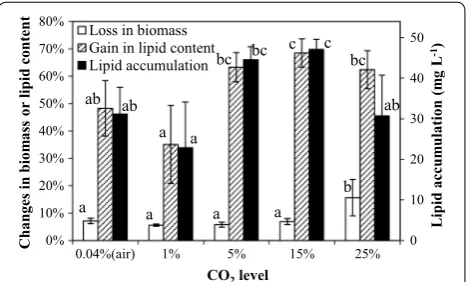
Figure 1 showed the percentage changed in the biomass concentration and lipid content, and lipid accumulation in SDEC-3M in response to different CO2 levels during
12 h darkness. No significant differences were observed between losses in biomass under 0.04% CO2 (air), 1%
CO2, 5% CO2, or 15% CO2, while these were significantly
lower than the losses occurring under 25% CO2. Some
dead cell walls were observed in broths aerated with 25% CO2, but were scarce in other treatments. This indicated
that the reason causing increase of biomass loss was not more active respiration but more death and autolysis of some microalgae cells. This could imply that the toler-ance of SDEC-3M to CO2 above 15% was poorer.
The observation that higher lipid contents were obtained under higher CO2 level was consistent with the
reported findings under continuous illumination or light/ dark cycles [20]. It showed that a high CO2 level
stimu-lated lipid accumulation in microalgae in both light and darkness. High CO2 level is considered a stress condition
to promote lipid accumulation for some algae species
Table 2 Loss in biomass, gain in lipid content and lipid accumulation in SDEC-3M, and dissolved oxygen in broths in response to different blending modes during 12 h darkness
Each entry indicates the mean ± S.D., n= 3, measured from three independent
cultures. Data in the same row followed by different letters are significantly
different by Duncan’s test (p < 0.05)
Parameter Blending mode
Standing Shaking Aeration
Loss in biomass (%) 0.64 ± 0.14a 1.64 ± 0.13a 7.14 ± 0.98b
Gain in lipid content (%) 0.57 ± 0.90a 8.17 ± 2.22a 48.25 ± 10.14b
Lipid accumulation
(mg L−1) −0.07 ± 0.62
a 5.30 ± 1.79a 31.20 ± 6.59b
Dissolved oxygen (mg L−1) 1.67 ± 0.15 0.03 ± 0.06 6.83 ± 0.06
a a a a b
ab a
bc c bc
ab a
bc c
ab
0 10 20 30 40 50
0% 10% 20% 30% 40% 50% 60% 70% 80%
0.04%(air) 1% 5% 15% 25%
Lipid
accu
mu
lation
(m
g
L
-1)
Changes in
biom
ass
or
lipid conten
t
CO2level
Loss in biomass Gain in lipid content Lipid accumulation
Fig. 1 Loss in biomass, gain in lipid content and lipid accumulation in SDEC-3M in response to different CO2 levels during 12 h darkness.
[3, 31]. The other possible explanation is that lower O2
partial pressure in higher CO2 mixtures lowers the DO in
the broths, which is lethal to algal cells [1] and eventually decreases the lipid content in microalgae cells [32].
No significant differences were found between gains in lipid content under 5%, 15%, and 25% CO2. It indicated
that the effect of the CO2 level could be neglected when
above 5%. Moreover, it was observed that gain in lipid content with air was higher than that under 1% CO2. A
possible reason is that SDEC-3M is a high-CO2-requiring
(HCR) mutant [27], for which low CO2 level (as in air) is
a stress condition that also stimulates lipid accumulation in cells. Thus, high gain in lipid content and low loss in biomass coexisted under 5 to 15% CO2, which is
opti-mal for lipid production (no significant difference). The highest lipid accumulation of 47.13 ± 2.47 mg L−1 was
obtained with 15% CO2. Effect of aeration rate
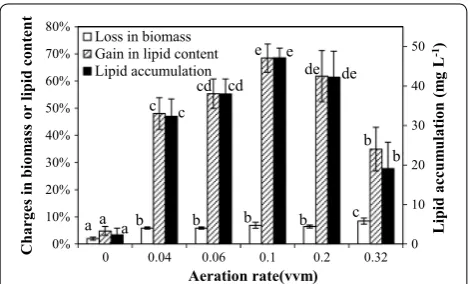
Figure 2 showed the percentage changed in the biomass concentration and lipid content, and lipid accumula-tion in SDEC-3M in response to different aeraaccumula-tion rates during 12 h darkness. No significant differences were observed between loss in biomass at different aeration rates, except at ‘no aeration’ and 0.32 vvm aeration. A possible reason is that the ‘no aeration’ condition inhib-ited cells’ respiratory activity with an absence of mixing and oxygenation (“Effect of blending mode” in section), while the higher aeration rate of 0.32 vvm might damage microalgal cells due to intense turbulence [28].
A moderate aeration rate of 0.10 vvm resulted in the maximum lipid content, implying that a moderate aera-tion rate favors lipid accumulaaera-tion in darkness. Similar
results were also observed in darkness [20] or in light [28, 33] in previous research. This could be considered as a reason that both inefficient mixing at low aeration rate that limits microalgal uptake of nutrients and the dam-age at high aeration rate to the cells by intense turbulence each inhibits the metabolism of lipid synthesis [28].
Because of the slight difference of loss in biomass at dif-ferent aeration rates, lipid accumulation depended more on gain in lipid content. This result was also confirmed through the same results by performing ANOVA on gain in lipid content and lipid accumulation (Fig. 2). Therefore, the highest lipid accumulation of 47.13 ± 2.47 mg L−1
was obtained at 0.10 vvm, with significantly higher gain in lipid content. Generally, the moderate aeration rate of 0.10 vvm was the optimal condition.
Effect of NO3−‑N concentration and soil extract in media
Figure 3 showed the percentage changed in the biomass concentration, lipid content and carbohydrate content, and lipid accumulation in SDEC-3M in response to dif-ferent media during 12 h darkness. Loss in biomass fluc-tuated in the range of 4–8% in different media. It show that the short-term effect of NO3−-N concentrations and
soil extract on biomass loss in darkness is limited. Even in darkness, as Fig. 3 shows, the loss of lipid con-tents were reversed from − 6.66 ± 3.22% under N-defi-ciency to 82.86 ± 5.05% under N-rich condition, so that net nightly lipid accumulation was achieved. Significant higher gains in lipid contents and lipid accumulations were obtained under relatively low NO3−-N
concentra-tions (in SE2, SE3, and SE4 medium), rather than under
a ab b b b c c cd e de b a c cd e de b 0 10 20 30 40 50 0% 10% 20% 30% 40% 50% 60% 70% 80%
0 0.04 0.06 0.1 0.2 0.32
Lipid accu mu lation (m g L -1)
Charges in biom
ass
or lipid conten
t
Aeration rate(vvm) Loss in biomass
Gain in lipid content Lipid accumulation
Fig. 2 Loss in biomass, gain in lipid content and lipid accumulation in SDEC-3M in response to different aeration rates during 12 h darkness. Each entry indicates the mean ± S.D., n= 3, measured from three independent cultures. Data for the same type of parameter (with the same shading) followed by different letters are significantly different by Duncan’s test (p < 0.05)
a b b c ab ab c
b c c d b a a c e f f d b a c d d d c b a -20 0 20 40 60 -30% -15% 0% 15% 30% 45% 60% 75% 90%
SE1 SE2 SE3 SE4 SE5 SE6 SE7
Lipid accu mu lation (m g L-1)
Charges in biom
ass,
lipid or
carbohydatate conten
t
Media
Loss in biomass Gain in lipid content Loss in carbohydrate content Lipid accumulation
Fig. 3 Loss in biomass, gain in lipid content, loss in carbohydrate content and lipid accumulation in SDEC-3M in response to different media during 12 h darkness. The NO3−-N concentrations and
completely N-free conditions (in SE1 medium). Although it is well known that large amount of lipids can be accu-mulated in microalgae under N-deficiency [34], the relatively low nitrogen concentration could be more favorable to lipid accumulation in some microalgae spe-cies, which were reported by some previous researchers [20, 35, 36]. Our findings confirm that the conclusion is also valid for endogenous lipid accumulation by micro-algae cultivated in darkness. These phenomena may be caused by the reason that nitrogen level should be low enough to trigger the metabolism towards lipid in cells [37], and not to suspending the synthesis of the vital enzymes related to lipid synthesis [19]. As the results showed, relatively low amounts of nitrogen, such as 5 to 10 mg L−1 NO
3−-N, is optimal, and the highest gain in
lipid content of 82.86 ± 5.05% and greatest lipid accu-mulation of 54.49 ± 4.21 mg L−1 were obtained in SE4
medium with 6.52 mg L−1 NO 3−-N.
As Fig. 3 shows, carbohydrate contents in SDEC-3M in seven media declined in varying degrees. Interestingly, in media with more or less nitrogen, loss in carbohydrate content was significantly lessened, and gain in lipid con-tent and lipid accumulation had the same trend, even though the former was not like the latter two showing negative values in N-rich media. The highest loss in car-bohydrate content of 60.47 ± 1.74% was found in SE4, in which highest gain in lipid content and lipid accumula-tion were obtained.
Besides nitrogen, some other ingredients were added to the media with the soil extract. To investigate the possi-ble interference of these ingredients, the results obtained in SE3 medium with added soil extract but without additional NaNO3 were compared with those for SE2
medium with equivalent NO3−-N. The attained lipid
con-tent of 68.47 ± 5.18% in SE3 medium was slightly higher than that of 62.14 ± 2.72% in SE2 medium, but there were no significant differences between them (p > 0.05). The same trend was observed between lipid accumulations in SE2 medium and SE3 medium. The results show that the positive effects of other ingredients in soil extract on lipid accumulation were not significant, compared with the effect of nitrogen.
Effect of temperature
Figure 4 showed the percentage changed in the biomass concentration and lipid content, and lipid accumula-tion in SDEC-3M in response to different temperatures imposed while culturing for 12 h in darkness. The bio-mass loss increased as temperature increased, and the highest loss was 22.21 ± 4.71% at 40 °C, when a few dead cells walls were observed in the broths. It indicated that the SDEC-3M cells were more active at higher tempera-tures, but are not tolerant to temperatures beyond 40 °C.
Whether in low temperatures range (10–20 °C) or high temperatures range (25–40 °C), gain in lipid con-tent slightly rose with increasing temperatures, while between those two ranges it dramatically increased from 49.14 ± 3.37% (20 °C) to 85.26 ± 5.11% (25 °C), which yields a statistically significant difference. In 25 to 40 °C, the lipid contents doubled. Thus, the highest lipid accu-mulation of 60.32 ± 5.03 and 60.25 ± 9.14 mg L−1 was
obtained at 30 and 35 °C (no significant difference), even though losses in biomass were up to 12.48 ± 0.73% and 15.94 ± 0.82%. Due to higher loss in biomass, lipid accu-mulation was lower at the highest temperature (40 °C).
Previous studies confirmed that the effect of nutri-ent limitation on lipid contnutri-ent in cells is more significant than the effect of temperature stress [2, 15]. In the present study, although gains in lipid content were improved from 33.76 ± 4.06% to 103.59 ± 11.02% through adjusting tem-perature, by comparison, as the more dominant contribu-tion, N- deficiency reversed the loss of lipid contents under N-rich condition (from − 6.66 ± 3.22% to 82.86 ± 5.05%). However, it is important to find a wide temperature range suitable for lipid production, after all it is difficult to con-trol temperature in outdoor cultivation [1, 38]. The evi-dence that the lipid contents in SDEC-3M were greatly increased across a wide range of ‘high’ temperatures sug-gests it is an outstanding candidate for lipid production.
Effect of biomass concentration
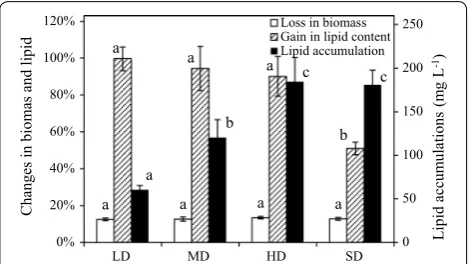
Figure 5 showed the percentage changed in the biomass concentration and lipid content, and lipid accumulation in SDEC-3M in response to initial biomass concentration for 12 h in darkness. No significant differences of losses
a a ab b c
d e
a ab
b c
d d d
a a
a
bc c c
b
0 10 20 30 40 50 60 70 80
0% 20% 40% 60% 80% 100% 120%
10 15 20 25 30 35 40
Lipid accumulation (mg
L
-1)
Charges in biomass or lipid conten
t
Temperature (ºC) Loss in biomass
Gain in lipid content Lipid accumulation
in biomass were observed between in different density cultivation. This indicated that the proportion of biomass loss was scarcely affected by the cultivation density.
As Fig. 5 shows, gain in lipid content significantly declined when biomass concentration was over 2500 mg L−1 (SD). Based on higher initial biomass
concentration, however, the higher lipid accumula-tions of approximate 180 mg L−1 were both obtained
in HD and SD cultivation, without significant differ-ences between them. The lipid accumulations in SD and HD were obtained by 13.40% or 12.79% of loss in biomass and 90.14% or 50.97% of gain in lipid content, respectively. Therefore, in terms of gain in lipid con-centration. 31.66 ± 2.98% in SD was considerably lower than 64.66 ± 9.64% in HD. Obviously, higher cultivation
density can increase lipid production efficiency of bio-reactor, but will be counteracted by decline of lipid content when the cultivation density was higher than 2500 mg L−1. Microalgae biomass concentrations
gen-erally remain at 2 to 8 g L−1 in closed photoautotrophic
systems [6]. Thus, the optimal biomass concentration (approximately 2500 mg L−1) is maintained by
promot-ing microalgal growth rate in daytime and optimizpromot-ing medium renewal rate is a key in outdoor cultivation.
Fatty acid profiles
Table 3 showed the fatty acid profiles of lipid in SDEC-3M before and after N-rich (SE7 medium) and N- defi-cient (in SE4 medium) 12 h dark cultivation. C16–C18 fatty acids (16:0, 16:1, 16:2, 18:0, 18:1, 18:2 and 18:3) suitable for biodiesel production [24, 39] were all higher than 95% and 16:0 was the most prevalent constituent in the three samples, followed by 18:1 and 18:2. ANOVA showed that 18:1 underwent statistically significantly increased, 16:0 and 18:3 underwent statistically signifi-cant decreased, and 18:2 and non-C16/C18 fatty acids (other) exhibited no statistically significant change under both conditions, while 16:1 and 18:0 changed more dur-ing N-deficient cultivation than they did durdur-ing N-rich cultivation. The results that the significant effect of nutri-ent limitation on fatty acid profiles were also found in some previous studies [18, 22, 40].
Discussion
Feasibility of nightly endogenous lipid accumulation
Under the photoautotrophic mode, the management of the stress conditions, especially N-deficiency are com-mon strategies for improving lipid accumulation [5, 13,
16, 20, 41]. In the present study, similar results occurring
a a a a
a a
a
b
a
b
c c
0 50 100 150 200 250
0% 20% 40% 60% 80% 100% 120%
LD MD HD SD
Li
pid accu
mu
lations
(m
g
L
-1)
Changes in biomas and lipi
d Loss in biomassGain in lipid content Lipid accumulation
Fig. 5 Loss in biomass, gain in lipid content and lipid accumulation in SDEC-3M in low, medium, high and super-high-density cultivation (presented as LD, MD, HD and SD) during 12 h darkness. Each entry indicates the mean ± S.D., n= 3, measured from three independent cultures. Data for the same type of parameter (with the same shading) followed by s are significantly different by Duncan’s test (p < 0.05)
Table 3 Fatty acid profiles of lipids derived from SDEC-3M samples before and after 12 h N-rich or N-deficient cultivation in darkness
Each entry indicates the mean ± S.D., n= 3, measured from three independent cultures. Data in the same row followed by different letters are significantly different by
Duncan’s test (p < 0.05)
Lipid number Relative prevalence
Before cultivation After N‑rich cultivation After N‑deficient cultivation
16:0 47.84 ± 1.52%b 43.23 ± 1.47%a 43.20 ± 1.21%a
16:1 1.80 ± 0.88%b 0.54 ± 0.35%a 0.95 ± 0.41%ab
16:2 3.62 ± 0.66%b 4.97 ± 0.30%c 2.57 ± 0.55%a
18:0 1.16 ± 1.16%a 1.24 ± 1.24%a 2.48 ± 2.48%b
18:1 8.11 ± 1.35%a 18.75 ± 2.67%b 20.02 ± 1.04%b
18:2 19.59 ± 1.43%a 19.08 ± 2.78%a 18.22 ± 0.66%a
18:3 13.72 ± 0.87%b 8.78 ± 0.18%a 8.67 ± 0.92%a
at night confirm the feasibility of nightly endogenous lipid accumulation. Due to no carbon source and energy source supplied by photosynthesis or organic matter in media, triggering endogenous lipid accumulation should be the only one way to minimize, even reverse nightly lipid loss caused by light/dark cycle. In consideration of growth ceasing in darkness, growth inhibition caused by stress conditions is disappeared at night. Based on these, the light-NR/dark-ND process can eliminates the nega-tive effects of nighttime on lipid production, and then increases lipid productivity.
Pathway of nightly endogenous lipid accumulation
It is observed that carbon and energy fixed by photosyn-thesis are shifted from starch synphotosyn-thesis to lipid synphotosyn-thesis under stress conditions, which pathway and mechanism are largely clearer [33, 37, 42, 43]. Relative to photosyn-thetic lipid accumulation, few nightly endogenous lipid accumulation in microalgae cells have been researched. The dramatic improvement of lipid content [20] and a conversion from sugar to lipids [41] in Chlorella were observed under N-deficiency and darkness. In present study, it is found that loss in carbohydrate content had the same trend as gain in lipid content in media with different nitrogen concentrations, and their maximum value were both obtained under relatively low nitrogen concentrations. Considering that the nightly respiration of microalgae cells is mainly supported by starch, rather than lipid [44] and abundant carbohydrates in SDEC-3M accumulating under N-rich conditions (more than 40% of biomass), the results confirm that the energy sources and carbon sources used for lipid accumulation are from car-bohydrates. However, the detailed knowledge of endog-enous pathway from carbohydrates to lipid is limited, which forces us to test microalgal strains one by one. Hence, it is necessary to clarify the pathway and mecha-nism of nightly endogenous lipid accumulation.
Optimal conditions and maximum yield of nightly endogenous lipid accumulation
After one condition after another compared, the opti-mal condition for more lipid accumulation are followed: aeration mode, moderate aeration rate (0.10 vvm), higher CO2 level (15%), relatively low NO3−-N
concentra-tions (5–10 mg L−1), higher temperature (30–35 °C) and
higher density cultivation (approximate 2500 mg L−1).
These results do not show that more unfavorable condi-tions are, the more lipid microalgal can be accumulated. The reasons should be that too severe conditions lead to cell death and suspension of lipid synthesis. Under opti-mal conditions, over 180 mg L−1 was accumulated
dur-ing 12 h darkness, with 13.40% of loss in biomass, 90.14% of gain in lipid content and 64.66% of gain in lipid con-centration. The result exceed lipid productivities of the most promising oleaginous microalgae under photoauto-trophic culturing [2, 16, 28, 38, 40, 45], although nightly biomass loss is still inevitable. The result shows the great potential of SDEC-3M and light-NR/dark-ND batch pro-cess in application for biodiesel production.
Biodiesel performance derived from nightly endogenous lipid
Whether lipid in SDEC-3M are commercial feedstocks for biodiesel production depends on not only lipid yield, but also lipid quality. In many studies, the biodiesel per-formances were analyzed by properties derived by fatty acid profiles [18, 19, 24, 25]. According to Eqs. 7 to 11, biodiesel ADU and five other critical fuel properties (KV, SG, CP, CN and IV), can be directly or indirectly calcu-lated from fatty acid profiles. As shown in Table 4, due to the change in fatty acid profiles, AUD, SG and IV decreased, whereas KV, CP, and CN rose during 12 h dark cultivation. All changes were more significant under N-deficient conditions. Because CN, IV, and CP relate to combustion performance, oxidation stability, and low temperature performance of biodiesel, respectively, while
Table 4 Six fuel properties of biodiesel—ADU, KV, SG, CP, CN and IV—derived from SDEC-3M samples before and after 12 h N-deficient or N-rich cultivation in darkness, and their standards in China, the USA, and Europe
Each entry indicates the mean ± S.D., n= 3, which was measured from three independent cultures
Biodiesel property Empirical estimation Standard value [19]
Before cultivation After N‑rich cultivation After N‑deficient
cultivation CN (GB/T20828) USA (ASTMD6751) Europe (EN14214)
KV 40 °C (mm2 s−1) 4.56 ± 0.02 4.59 ± 0.02 4.62 ± 0.02 4.39 to 4.95 1.9 to 6.0 1.9 to 6.0
SG (kg L−1) 0.8782 ± 0.0002 0.8779 ± 0.0002 0.8777 ± 0.0002 0.875 to 0.880 0.82 to 0.90 0.87 to 0.89
CP (°C) 6.41 ± 0.47 7.03 ± 0.49 7.69 ± 0.41 2.83 to 14.66 Report Report
CN 56.09 ± 0.23 56.4 ± 0.25 56.73 ± 0.21 54.31 to 59.29 min 49 min 47
IV (gI2/100 g) 88.37 ± 2.6 84.9 ± 2.75 81.24 ± 2.29 42.41 to 108.27 – –
KV and SG affect emission levels and combustion per-formance [4, 19, 24, 39], the combustion performance, oxidation stability, and exhaust emission levels of bio-diesel would be improved, but the low temperature per-formance would worsen following 12 h dark cultivation, which would be more obvious under N-deficient condi-tions. Despite those changes, the biodiesel properties of all three samples still complied with the three most com-mon biodiesel quality standards, including GB/T 20828 in China, ASTM D6751 in the USA, and EN 14214 in Europe (Table 4). The results indicate that endogenously accumulated lipid in darkness by SDEC-3M as biodiesel feedstocks are feasibility.
Conclusions
In the present study, C. vulgaris SDEC-3M was cultivated for 12 h in darkness. Under non-stress conditions, lipid contents dropped, which caused more than 10 mg L−1 of
lipid loss, together with biomass loss. However, endog-enous lipid accumulation triggered by stress conditions drastically increased lipid content. Based on the lipid content gain overwhelming the biomass loss, lipid loss was minimized, and even reversed. Under optimal condi-tions (aeration mode, moderate aeration rate, higher CO2
level, relatively low NO3−-N concentrations, higher
tem-perature and higher density cultivation), the lipid content was elevated by 90.14% and proximately 180 mg L−1 net
accumulated lipid (approximately 65% increment based on initial lipid concentration) was obtained. The esti-mated properties complied with biodiesel standards. It indicated that lipids from SDEC-3M were suitable feed-stocks for biodiesels. These findings determining the feasibility and optimal conditions of endogenous lipid accumulation in SDEC-3M in darkness, are the prelimi-nary effort to commercialize the light-NR/dark-ND pro-cess for microalgal biodiesel production.
Abbreviations
Light-NR/dark-ND process: a process combining a light/dark cycle in coopera-tion with an N-rich/N-deficient cycle; SDEC: Shandong Provincial Engineer-ing Centre on Environmental Science and Technology; UV: ultraviolet; DO: dissolved oxygen; LD: low-density; MD: mid-density; HD: high-density; SD: super-high density; FAME: fatty acids methyl ester; GC-MS: Gas Chromatog-raphy–Mass Spectrometry analysis; ADU: average degree of unsaturation; KV: kinematic viscosity; SG: specific gravity; CP: cloud point; CN: cetane number; IV: iodine value; Eqs: equations; ANOVA: one-way analysis of variance; S.D.: standard deviation.
Acknowledgements
We are grateful for the financial assistance for this investigation provided by National Science Fund for Excellent Young Scholars (51322811), National Key Research and Development planning of China (2017YFF0209903), Shandong Province Water Conservancy research and Technology Extension Project (SDSLKY201812), University Science and Technology Project of Shandong Province (J16LD06) and the Innovation Team of the Co-Innovation Center for Green Building of Shandong Province in Shandong Jianzhu University. We are indebted to Shandong Provincial Engineering Centre on Environmental
Science and Technology and Prof. Pei for providing us the microalgal strain (SDEC-3M).
Authors’ contributions
FQ and HP designed the research; HP was in charge of experiments; FQ, GM and QH performed research; FQ, GM and RM analyzed the data; HP and DW provided technical support; FQ wrote the manuscript; PH polished and revised the Manuscript. PH and WD made a final proof of data presented. All authors read and approved the final manuscript.
Funding
This work was funded by National Science Fund for Excellent Young Scholars (51322811), Natural Foundation of Shandong Province (ZR2019MEE104), Shandong Province Water Conservancy research and Technology Extension Project (SDSLKY201812), National Key Research and Development planning of China (2017YFF0209903) and University Science and Technology Project of Shandong Province (J16LD06).
Availability of data and materials
All data generated or analyzed during the present study are included in this published article.
Ethics approval and consent to participate
Not applicable.
Consent for publication
All authors consent to the publication of the manuscript in Biotechnology for Biofuels. All authors have approved the manuscript to be published.
Competing interests
The authors declare that they have no competing interests.
Author details
1 School of Municipal and Environmental Engineering, Shandong Jianzhu University, Jinan 250101, China. 2 Shandong Provincial Engineering Centre on Environmental Science and Technology, Jinan 250061, China. 3 School of Environmental Science and Engineering, Shandong University, Qing-dao 266237, China. 4 Jinan Urban Construction Group Co., Ltd, Jinan 250031, China. 5 Shandong Co-innovation Center of Green Building, Jinan 250101, China.
Received: 13 January 2019 Accepted: 9 June 2019
References
1. Suali E, Sarbatly R. Conversion of microalgae to biofuel. Renew Sustain Energy Rev. 2012;16(6):4316–42.
2. Ördög V, Stirk WA, Bálint P, Aremu AO, Okem A, Lovász C, Molnár Z, Staden JV. Effect of temperature and nitrogen concentration on lipid produc-tivity and fatty acid composition in three Chlorella strains. Algal Res. 2016;16:141–9.
3. Tripathi R, Singh J, Thakur IS. Characterization of microalga Scenedesmus sp. ISTGA1 for potential CO2 sequestration and biodiesel production. Renew Energy. 2015;74:774–81.
4. Chisti Y. Biodiesel from microalgae. Biotechnol Adv. 2007;25(3):294–306. 5. Chia SR, Ong HC, Chew KW, Show PL, Phang SM, Ling TC, Nagarajan D,
Lee DJ, Chang JS. Sustainable approaches for algae utilisation in bioen-ergy production. Renew Enbioen-ergy. 2018;129:838–52.
6. Zhu J, Rong J, Zong B. Factors in mass cultivation of microalgae for bio-diesel. Chin J Catal. 2013;34(1):80–100.
7. Kato Y, Fujihara Y, Vavricka CJ, Chang JS, Hasunuma T, Kondo A. Light/dark cycling causes delayed lipid accumulation and increased photoperiod-based biomass yield by altering metabolic flux in oleaginous Chla-mydomonas sp. Biotechnol Biofuels. 2019;12:39.
8. Sharma YC, Singh V. Microalgal biodiesel: a possible solution for India’s energy security. Renew Sust Energy Rev. 2017;2016(67):72–88. 9. Han F, Wang W, Li Y, Shen G, Wan M, Wang J. Changes of biomass, lipid
Chlorella pyrenoidosa in response to different temperature. Biores Technol. 2013;132:182–9.
10. Ogbonna JC, Tanaka H. Night biomass loss and changes in biochemical composition of cells during light/dark cyclic culture of Chlorella pyrenoi-dosa. J Ferment Bioeng. 1996;82(6):558–64.
11. Wan M, Zhang J, Hou D, Fan J, Li Y, Huang J, Wang J. The effect of temperature on cell growth and astaxanthin accumulation of Haema-tococcus pluvialis during a light-dark cyclic cultivation. Biores Technol. 2014;167:276–83.
12. Taleb A, Legrand J, Takache H, Taha S, Pruvost J. Investigation of lipid production by nitrogen-starved Parachlorella kessleri under continuous illumination and day/night cycles for biodiesel application. J Appl Phycol. 2017;30(2):761–72.
13. Yang L, Chen J, Qin S, Zeng M, Jiang Y, Hu L, Xiao P, Hao W, Hu Z, Lei A, et al. Growth and lipid accumulation by different nutrients in the micro-alga Chlamydomonas reinhardtii. Biotechnol Biofuels. 2018;11:40. 14. Huete-Ortega M, Okurowska K, Kapoore RV, Johnson MP, Gilmour DJ,
Vaidyanathan S. Effect of ammonium and high light intensity on the accumulation of lipids in Nannochloropsis oceanica (CCAP 849/10) and Phaeodactylum tricornutum (CCAP 1055/1). Biotechnol Biofuels. 2018;11:60.
15. Roleda MY, Slocombe SP, Leakey RJ, Day JG, Bell EM, Stanley MS. Effects of temperature and nutrient regimes on biomass and lipid production by six oleaginous microalgae in batch culture employing a two-phase cultivation strategy. Biores Technol. 2013;129:439–49.
16. Zhu S, Wang Y, Shang C, Wang Z, Xu J, Yuan Z. Characterization of lipid and fatty acids composition of Chlorella zofingiensis in response to nitro-gen starvation. J Biosci Bioeng. 2015;120(2):205–9.
17. Han F, Pei H, Hu W, Zhang S, Han L, Ma G. The feasibility of ultrasonic stimulation on microalgae for efficient lipid accumulation at the end of the logarithmic phase. Algal Res. 2016;16:189–94.
18. Shekh AY, Shrivastava P, Krishnamurthi K, Mudliar SN, Devi SS, Kanade GS, Lokhande SK, Chakrabarti T. Stress-induced lipids are unsuitable as a direct biodiesel feedstock: a case study with Chlorella pyrenoidosa. Biores Technol. 2013;138:382–6.
19. Qi F, Pei H, Ma G, Zhang S, Mu R. Improving productivity and quality of biodiesel from Chlorella vulgaris SDEC-3M through customized process designs. Energy Convers Manage. 2016;129:100–7.
20. Mujtaba G, Choi W, Lee CG, Lee K. Lipid production by Chlorella vulgaris after a shift from nutrient-rich to nitrogen starvation conditions. Biores Technol. 2012;123:279–83.
21. Matich EK, Ghafari M, Camgoz E, Caliskan E, Pfeifer BA, Haznedaroglu BZ, Atilla-Gokcumen GE. Time-series lipidomic analysis of the oleaginous green microalga species Ettlia oleoabundans under nutrient stress. Bio-technol Biofuels. 2018;11:29.
22. Katiyar R, Bharti RK, Gurjar BR, Kumar A, Biswas S, Pruthi V. Utilization of de-oiled algal biomass for enhancing vehicular quality biodiesel produc-tion from Chlorella sp. in mixotrophic cultivation systems. Renew Energy. 2018;122:80–8.
23. Sun XM, Ren LJ, Bi ZQ, Ji XJ, Zhao QY, Jiang L, Huang H. Development of a cooperative two-factor adaptive-evolution method to enhance lipid pro-duction and prevent lipid peroxidation in Schizochytrium sp. Biotechnol Biofuels. 2018;11:65.
24. Song M, Pei H, Hu W, Ma G. Evaluation of the potential of 10 microalgal strains for biodiesel production. Biores Technol. 2013;141:245–51. 25. Hoekman SK, Broch A, Robbins C, Ceniceros E, Natarajan M. Review of
biodiesel composition, properties, and specifications. Renew Sustain Energy Rev. 2012;16(1):143–69.
26. Francisco ÉC, Neves DB, Jacob-Lopes E, Franco TT. Microalgae as feedstock for biodiesel production: carbon dioxide sequestration, lipid production and biofuel quality. J Chem Technol Biotechnol. 2010;85(3):395–403.
27. Qi F, Pei H, Hu W, Mu R, Zhang S. Characterization of a microalgal mutant for CO2 biofixation and biofuel production. Energy Convers Manage. 2016;122:344–9.
28. Han F, Pei H, Hu W, Song M, Ma G, Pei R. Optimization and lipid produc-tion enhancement of microalgae culture by efficiently changing the conditions along with the growth-state. Energy Convers Manage. 2015;90:315–22.
29. DuBois M, Gilles KA, Hamilton JK, Rebers PA, Smith F. Colorometric method for determination of sugars and related substances. Anal Chem. 1956;28:350–6.
30. Indarti E, Majid MIA, Hashim R, Chong A. Direct FAME synthesis for rapid total lipid analysis from fish oil and cod liver oil. J Food Compos Anal. 2005;18(2–3):161–70.
31. Huang Y, Cheng J, Lu H, He Y, Zhou J, Cen K. Transcriptome and key genes expression related to carbon fixation pathways in Chlorella PY-ZU1 cells and their growth under high concentrations of CO2. Biotechnol Biofuels. 2017;10:181.
32. Ota M, Kato Y, Watanabe M, Sato Y, Smith RL Jr, Rosello-Sastre R, Posten C, Inomata H. Effects of nitrate and oxygen on photoautotrophic lipid pro-duction from Chlorococcum littorale. Biores Technol. 2011;102(3):3286–92. 33. Song M, Pei H, Hu W, Han F, Ji Y, Ma G, Han L. Growth and lipid accumula-tion properties of microalgal Phaeodactylum tricornutum under different gas liquid ratios. Biores Technol. 2014;165:31–7.
34. Rohit MV, Mohan SV. Tropho-metabolic transition during Chlorella sp. cultivation on synthesis of biodiesel. Renew Energy. 2016;98:84–91. 35. Illman AM, Scragg AH, Shales SW. Increase in Chlorella strains calorific
values when grown in low nitrogen medium. Enzyme Microb Technol. 2000;27(8):631–5.
36. Rodolfi L, Chini Zittelli G, Bassi N, Padovani G, Biondi N, Bonini G, Tredici MR. Microalgae for oil: strain selection, induction of lipid synthesis and outdoor mass cultivation in a low-cost photobioreactor. Biotechnol Bioeng. 2009;102(1):100–12.
37. Bellou S, Baeshen MN, Elazzazy AM, Aggeli D, Sayegh F, Aggelis G. Micro-algal lipids biochemistry and biotechnological perspectives. Biotechnol Adv. 2014;32(8):1476–93.
38. Řezanka T, Nedbalová L, Lukavský J, Střížek A, Sigler K. Pilot cultiva-tion of the green alga Monoraphidium sp. producing a high content of polyunsaturated fatty acids in a low-temperature environment. Algal Res. 2017;22:160–5.
39. Knothe G. Improving biodiesel fuel properties by modifying fatty ester composition. Energy Environ Sci. 2009;2(7):759–66.
40. Chen Y, Xu T, Kapoore RV, Xu C, Vaidyanathan S. Influence of nutrient sta-tus on the accumulation of biomass and lipid in Nannochloropsis salina and Dunaliella salina. Energy Convers Manage. 2015;106:61–72. 41. Bellou S, Aggelis G. Biochemical activities in Chlorella sp. and
Nannochlo-ropsis salina during lipid and sugar synthesis in a lab-scale open pond simulating reactor. J Biotechnol. 2012;164(2):318–29.
42. Tan KW, Lee YK. The dilemma for lipid productivity in green microalgae: importance of substrate provision in improving oil yield without sacrific-ing growth. Biotechnol Biofuels. 2016;9(1):255.
43. Jia J, Han D, Gerken HG, Li Y, Sommerfeld M, Hu Q, Xu J. Molecular mecha-nisms for photosynthetic carbon partitioning into storage neutral lipids in Nannochloropsis oceanica under nitrogen-depletion conditions. Algal Res. 2015;7:66–77.
44. de Winter L, Cabanelas ITD, Martens DE, Wijffels RH, Barbosa MJ. The influ-ence of day/night cycles on biomass yield and composition of Neochloris oleoabundans. Biotechnol Biofuels. 2017;10:104.
45. Calixto CD, da Silva Santana JK, Tibúrcio VP, de Pontes LdFBL, da Costa Sassi CF, da Conceição MM, Sassi R. Productivity and fuel quality parameters of lipids obtained from 12 species of microalgae from the northeastern region of Brazil. Renew Energy. 2018;115:1144–52.
Publisher’s Note