University of Bradford eThesis
This thesis is hosted in
Bradford Scholars
– The University of Bradford Open Access
repository. Visit the repository for full metadata or to contact the repository team
© University of Bradford. This work is licenced for reuse under a
Creative Commons
Performance Analysis and Modelling of
Spectrum Handoff Schemes in Cognitive
Radio Networks
Modelling and Analysis of Spectrum Handoff Decision
Schemes in Cognitive Radio Networks using the
Queuing Theory and Simulation for Licensed and
Unlicensed Spectrum Bands
Salah Mohammed Bashir ZAHED
A thesis submitted for the degree of Doctor of
Philosophy
School of Electrical Engineering and Computer Science
ABSTRACT
i
A
BSTRACTRecently, wireless access has become an essential part of modern society. Consequently, the demand for new wireless applications and services, as well as the number of wireless users, are gradually increasing. Given that this amount of expansion is eventually controlled by the available radio frequency spectrum, government regulatory agencies have recently adopted a strict approach to the licensing of limited amounts of spectrum to different entities (e.g., public safety, military, service providers, unlicensed devices, and TV). All of them possess exclusive transmissions to their assigned frequency channels. A new study on spectrum efficiency revealed big geographic and temporal variations in spectrum utilisation, ranging from 15-85% in the bands below 3GHz. These variations were less at frequencies above this figure. Recently, the Cognitive Radio (CR) has risen as an encouraging piece of technology to improve spectrum efficiency and to solve the problem of spectrum scarcity. This is because CR allows the secondary (unlicensed) users to occupy unused licensed spectrum bands temporarily, given that the interference of the primary (licensed) users is prohibited or minimised.
In this thesis, various spectrum handoff management schemes have been proposed in order to improve the performance evaluation for CR networks. The proposed spectrum handoff schemes use the Opportunistic Spectrum Access (OSA) concept to utilise available spectrum bands. The handoff Secondary Users (SUs) have a higher priority to occupy available spectrum channels in the licensed and unlicensed spectrum bands without interfering with the legacy spectrum owner, i.e.
ABSTRACT
ii
primary users (PUs). However, existing spectrum handoff management schemes in CR networks do not provide high transmission opportunities for handoff secondary users to utilise the available radio spectrum resources. The first part of this thesis addresses the issue of spectrum handoff management in a licensed spectrum band environment. In this case, both reactive and proactive spectrum handoff schemes are proposed. Queuing theory or/and simulation experiments have been used to evaluate the performance of the proposed schemes and compare them with other existing schemes. Handoff delay has mainly been used to investigate the impact of successive handoff operations on the performance of the proposed CR networks. Implemented models have shown an improvement in the adopted performance measures. According to the achieved results, the improvement of the proposed, prioritised handoff schemes in some cases is approximately 75% when compared with existing schemes.
On the other hand, the second part of this research proposed a prioritised spectrum handoff scheme in a heterogeneous spectrum environment, which is composed of a pool of licensed and unlicensed spectrum channels. In general, the availability of substantial numbers of the licensed spectrum channels is the key benefit of using this type of radio spectrum channel. Whereas, accessing with equal rights for all types of users is the main advantage of using unlicensed spectrum channels. In this respect, no transmission interruptions occur once a user obtains a channel. In addition, the proposed schemes use only the unlicensed spectrum channels as their backup channels. This enables the user to resume interrupted transmission in the case of the spectrum handoff operation (mainly; due to the
ABSTRACT
iii
appearance of the primary users), and thus facilitates a SUs communication. The proposed principle is investigated using a retrial queuing theory as well as extensive simulation experiments, and is compared with another non-prioritised scheme which do not give any preference to handoff SUs over new SUs. The results indicate that the proposed model has improved on current average handoff delay.
This thesis contributes to knowledge by further enhancing the efficient utilisation of available radio spectrum resources and therefore subsequently provides an improvement in the spectrum capacity for wireless cognitive radio networks.
Keywords: Cognitive radio networks, Spectrum handoff, Handoff delay, Queuing
ACKNOWLEDGEMENTS
iv
A
CKNOWLEDGEMENTSI would like to express my sincere gratitude and appreciation to my PhD advisors, Professor Irfan Awan, and Doctor Andrea Cullen for their support during my study. I am also very grateful to Professor Khairi Hamdi and my colleague Abdulaziz Aljohani for their scientific advice and knowledge and many insightful discussions and suggestions.
I would like also to thank my friends and colleagues for their support and encouragement when it was most needed.
I dedicate this thesis to
my family, my wife, and my beloved children
for their patience, encouragement, commitment and unconditional
LIST OF AUTHOR’S PUBLICATIONS
v
L
IST OFA
UTHOR’
SP
UBLICATIONSJournals:
S. Zahed, I. Awan, and A. Cullen, "Analytical modeling for spectrum handoff decision in cognitive radio networks," Simulation Modelling Practice and Theory,
vol. 38, pp. 98-114, 2013.
S. Zahed, I. Awan, A. Cullen, A. Aljohani, “Performance Evaluation of Cognitive Radio Networks under Heterogenous Spectrum Bands”. Submitted to IEEE Transaction on Parallel and Distributed Systems.
Conferences:
S. Zahed, I. Awan, and M. Geyong, "Performance Evaluation of Secondary Users in Cognitive Radio Networks," in 27 th UKPEW, Bradford, UK, 2011, pp. 340-343.
S. Zahed, I. Awan, and M. Geyong, "Prioritized Proactive Scheme for Spectrum Handoff Decision in Cognitive Radio Networks," presented at the 7th International Conference on Broadband and Wireless Computing, Communication and Applications (BWCCA 2012), University of Victoria, Victoria, Canada, 2012. S. Zahed, I. Awan, A. Cullen, “Performance Evaluation of Cognitive Radio Networks under Common Handoff Queue”, Seventh International Open Conference HET-NETs 2013 (IFIP), Ilkely, Bradford, UK, 2013. (work in progress).
S. Zahed, I. Awan, A. Cullen, “Performance Evaluation of Cognitive Radio Networks under Reactive-Decision Spectrum Handoff Scheme”, Seventh
LIST OF AUTHOR’S PUBLICATIONS
vi
International Open Conference HET-NETs 2013 (IFIP), Ilkely, Bradford, UK, 2013. (work in progress).
Salah Zahed, Irfan Awan, Andrea Cullen, M. Younas, “Performance Evaluation of Cognitive Radio Networks under License and Unlicensed Spectrum Bands”, submitted to the 28th IEEE International Conference on Advanced
Information Networking and Applications (AINA-2014)
TABLE OF CONTENTS
vii
TABLE OF CONTENETS
ABSTRACT ... I ACKNOWLEDGEMENTS ... IV LIST OF AUTHOR’S PUBLICATIONS ... V
LIST OF FIGURES ... XII LIST OF TABLES ... XV LIST OF ABBREVIATIONS ... XVI
CHAPTER 1. ... 1
INTRODUCTION ... 1
1.1 Motivation ... 3
1.2 Research Goals and Objectives ... 4
1.3 Contributions ... 4 1.4 Thesis Organisation ... 5 1.5 Methodology ... 7 Queuing Theory ... 8 1.5.1 Priority Queues ... 8 1.5.2 1.5.2.1 Preemptive Priority Queues ... 9
1.5.2.2 Non-preemptive Priority Queues ... 9
1.5.2.3 Retrial Queues ... 9 Service Completion ... 10 1.5.3 1.5.3.1 Resume Transmission ... 10 1.5.3.2 Repeat Transmission ... 10 1.5.3.3 Drop Transmission ... 10 CHAPTER 2. ... 11
TABLE OF CONTENTS
viii
RADIO SPECTRUM & COGNITIVE RADIO NETWORKS ... 11
2.1 Introduction ... 11
2.2 Dynamic Spectrum Access (DSA) ... 12
Dynamic Exclusive Use Model ... 12
2.2.1 Open Sharing Model (Spectrum Commons)... 13
2.2.2 Hierarchical Access Model ... 13
2.2.3 2.3 Radio Spectrum ... 15
Licensed Spectrum for Exclusive Use ... 15
2.3.1 Licensed Spectrum for Shared Use ... 15
2.3.2 Unlicensed Bands ... 16
2.3.3 2.4 Cognitive Radio: Overview ... 16
2.5 Software-Defined Radio (SDR) ... 17
2.6 Cognitive Radio (CR) ... 18
2.7 Cognitive Cycle (CC) ... 18
2.8 Main Challenges of Cognitive Radio Technology ... 20
2.9 Cognitive Radio Network Architecture ... 21
2.10 Related Work ... 28
CHAPTER 3. ... 41
SPECTRUM HANDOFF MODELLING UNDER LICENCED SPECTRUM ENVIRONMENT ... 41
3.1 Introduction ... 41
Switching and Non-switching Spectrum Handoff ... 42 3.1.1
TABLE OF CONTENTS
ix
3.2 Spectrum Decision Handoff Modelling ... 43
3.3 Proposed Spectrum Handoff Model ... 44
System Model ... 44
3.3.1 Examples for Various Spectrum Handoff Decision Schemes ... 48
3.3.2 3.3.2.1 Non-switching-handoff Spectrum Decision Scheme ... 49
3.3.2.2 Switching-handoff Spectrum Decision Scheme ... 50
3.3.2.3 Random-handoff Spectrum Decision Scheme ... 51
3.3.2.4 Reactive-handoff Spectrum Decision Scheme ... 52
3.4 Spectrum Handoff Analytical Modelling ... 54
New Switching-handoff Model ... 57
3.4.1 Random Handoff Model ... 63
3.4.2 3.5 Simulation and Numerical Results ... 64
Simulation Setup... 65 3.5.1 Performance Calculations ... 66 3.5.2 Numerical Results... 67 3.5.3 3.6 Summary ... 78 CHAPTER 4. ... 79
NON SENSING-BASED SPECTRUM HANDOFF MODELLING ... 79
4.1 Introduction ... 79
4.2 Proposed Spectrum Handoff ... 80
4.3 System Model ... 82
4.4 Spectrum Handoff Decision ... 84
TABLE OF CONTENTS x 4.6 Performance Calculations... 86 4.7 Results ... 87 4.8 Summary ... 94 CHAPTER 5. ... 95
SPECTRUM HANDOFF MODEL UNDER SHARED HANDOFF-QUEUE ... 95 5.1 Introduction ... 95 5.2 System Model ... 96 5.3 Experiments Setup ... 99 5.4 Performance Calculations... 99 5.5 Results ... 101 5.6 Summary ... 106 CHAPTER 6. ... 107
MODELLING OF COGNITIVE RADIO NETWORKS UNDER HETEROGENEOUS SPECTRUM ENVIRONMENT ... 107
6.1 Introduction ... 107
Dynamic Spectrum Access (DSA) and Spectrum Handoff ... 107
6.1.1 Users Priority ... 107
6.1.2 6.2 Spectrum Handoff Modelling in a Heterogeneous Spectrum Environment ... 109
6.3 Proposed Spectrum Handoff Model ... 110
System Model ... 110 6.3.1
TABLE OF CONTENTS
xi
6.4 Spectrum Handoff Analysis in a Heterogeneous Spectrum Environment ... 115
Scenario 1: Single Licensed and Unlicensed Channels (N1=1, N2=1) ... 118
6.4.1 6.4.1.1 Non-prioritised Spectrum Handoff Scheme ... 121
6.4.1.2 Prioritised Spectrum Handoff Scheme ... 124
Scenario 2: Multi-licensed and Multi-unlicensed Channels (N1 = n1, N2 = n2) . 124 6.4.2 6.5 Simulation Experiments and Numerical Results ... 125
Performance Calculations ... 126
6.5.1 Scenario1: (N1 = 1, N2 = 1) ... 126
6.5.2 6.5.2.1 Non-prioritised Spectrum Handoff Scheme ... 127
6.5.2.2 Prioritised Spectrum Handoff Scheme ... 130
Scenario 2: (N1=n1, N2=n2) ... 136
6.5.3 6.6 Summary ... 141
CHAPTER 7. ... 142
CONCLUSIONS AND FUTURE WORK ... 142
7.1 Conclusions ... 143
7.2 Future Work ... 146
LIST OF FIGURES
xii
L
IST OFF
IGURESFigure 1.1: Spectrum hole concept [5]. ... 2
Figure 2.1: Dynamic spectrum access approaches [22]. ... 14
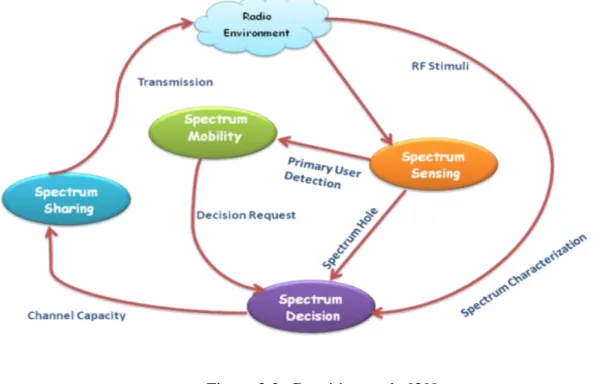
Figure 2.2: Cognitive cycle [39]... 19
Figure 2.3: Cognitive radio network architecture [5]. ... 23
Figure 2.4: Spectrum handoff decision in CRNs. ... 29
Figure 2.5: Spectrum handoff bands in CRNs... 31
Figure 3.1: Handoff process in CRNs. ... 42
Figure 3.2: Time slot structure of the secondary networks. ... 45
Figure 3.3: Proposed CR network scenario. ... 46
Figure 3.4: Proposed (PRP) M/G/1 queuing network model where n denotes nthinterruption. ... 47
Figure 3.5: Non-switching handoff process. ... 50
Figure 3.6: Switching-handoff process. ... 52
Figure 3.7: Non-switching handoff scheme. ... 67
Figure 3.8: Old switching-handoff scheme. ... 68
Figure 3.9: New switching-handoff scheme. ... 68
Figure 3.10: Old random-handoff scheme... 69
Figure 3.11: New random-handoff scheme. ... 69
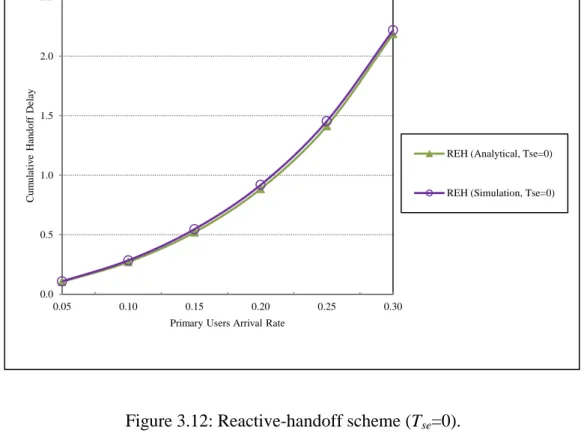
Figure 3.12: Reactive-handoff scheme (Tse=0). ... 70
Figure 3.13: Reactive-handoff scheme (Tse=0.7). ... 70
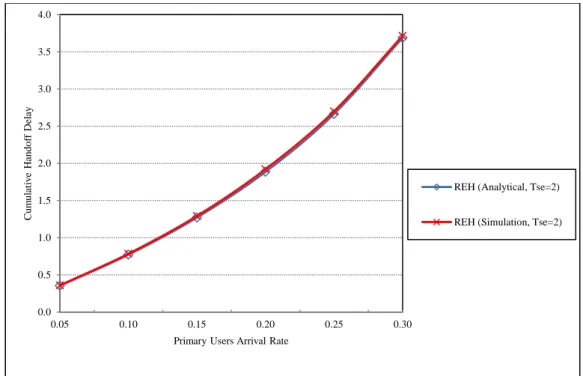
Figure 3.14: Reactive-handoff scheme (Tse=2). ... 71
Figure 3.15: Reactive-handoff scheme with different values of Tse. ... 72
Figure 3.16: Comparison between old and new switching-handoff schemes. ... 72
Figure 3.17: Comparison between old and new random-handoff schemes. ... 73
Figure 3.18: Comparison of reactive scheme for different values of sensing delay with new proactive schemes. ... 74
LIST OF FIGURES
xiii
Figure 3.19: Performance of various handoff schemes. ... 75
Figure 3.20: Effect of SUs service rate on the cumulative handoff delay. ... 76
Figure 3.21: Effect of PUs service rate on the cumulative handoff delay. ... 77
Figure 3.22: Admission region. ... 77
Figure 4.1: Centralised entity with database service [93]. ... 83
Figure 4.2: Proposed CRN network (where n denotes nthinterruption). ... 83
Figure 4.3: Comparison of new and old reactive handoff schemes ... 89
Figure 4.4: Comparison of various new handoff schemes. ... 91
Figure 4.5: Comparison of new reactive-handoff scheme and other old schemes. ... 91
Figure 4.6: Comparison of new reactive-handoff scheme and non-switching handoff scheme. ... 93
Figure 5.1: Shared-queue (SQ) spectrum handoff model (where n denotes nthinterruption). ... 97
Figure 5.2: Comparison between non-switching and SQ handoff schemes. ... 101
Figure 5.3: Comparison between switching and SQ handoff schemes... 102
Figure 5.4: Comparison between random and SQ handoff schemes. ... 103
Figure 5.5: Comparison between reactive handoff schemes. ... 104
Figure 5.6: Comparison between shared-queue scheme with other implemented schemes. ... 105
Figure 6.1: Proposed heterogenous CR network. ... 111
Figure 6.2: Proposed cognitive radio queuing network modeloperating in a mixed wireless channels (where n = 1). ... 112
Figure 6.3: First network part: M/M/C queue with preemptive resume priority disciplines (n = 1). .. 117
Figure 6.4: Second network part: M/M/C retrial queue withtwo input arrivals and two retrial rates (n = 1). ... 117
Figure 6.5: First network part: M/M/1 queue with preemptive resume priority disciplines (n = 1). ... 119
Figure 6.6: Second network part: M/M/1 retrial queue withtwo input arrivals and two retrial rates (n = 1). ... 123
Figure 6.7: Average handoff delay for handoff SUs with ( ). ... 128
Figure 6.8: Average waiting delay for new SUs with ( ). ... 128
5, 5
5, 5
LIST OF FIGURES
xiv
Figure 6.9: Average waiting delay with ( ). ... 129
Figure 6.10: Average handoff delay for a range of equal retrial rates. ... 130
Figure 6.11: Simulation results for average waiting delays ( ). ... 131
Figure 6.12: Simulation results for average waiting delays ( ). ... 132
Figure 6.13: Simulation results for marginal delays ( ). ... 132
Figure 6.14: Effect of SUs retrial rates on the handoff delay (Simulation results). ... 133
Figure 6.15: Simulation results for marginal and aggregate delay (𝒱𝜶=10, 𝒱𝜷=5). ... 134
Figure 6.16: Simulation results for marginal and aggregate delay (𝒱𝜶=15, 𝒱𝜷=5). ... 135
Figure 6.17: Simulation results for marginal and aggregate delay ( ). ... 135
Figure 6.18: Effect of SUs retrial rates on the average aggregate waiting delay. ... 136
Figure 6.19: Average handoff delay. ... 139
Figure 6.20: Average handoff delay. ... 140
Figure 6.21: Average handoff delay. ... 140
5, 5
10, 5
15, 5
20, 5
20, 5
LIST OF TABLES
xv
L
IST OFT
ABLESTable 3.1: Implemented handoff models. ... 64
Table 3.2: Simulation parameters. ... 65
Table 4.1: Simulation parameters and symbols. ... 86
Table 5.1 Implemented handoff models. ... 100
Table 5.2 Simulation parameters. ... 100
Table 6.1: Simulation parameters for first scenario. ... 127
Table 6.2: Simulation parameters for second scenario. ... 138
LIST OF ABBREVIATIONS
xvi
L
IST OFA
BBREVIATIONSCC Cognition Cycle
CCC Common Control Channel
CH Channel
CR Cognitive Radio
CRN Cognitive Radio Network
CSMA Carrier Sense Multiple Access
DECT Digital Enhanced Cordless Telecommunication
DSA Dynamic Spectrum Access
FCC Federal Communication Commission
FCFS First Come First Serve
FSA Fixed Spectrum Access
GSM Global System for Mobile Communications
HOL Head of line
IEEE Institute of Electrical and Electronic Engineers
ISM Industrial, Scientific and Medical
LIST OF ABBREVIATIONS
xvii MATLAB Matrix Laboratory
NSWH Non-switching Handoff
OSA Opportunistic Spectrum Access
Ofcom Office of Communications
PCA Priority Contention Access
PRP Preemptive Resume Priority
PU Primary User
QoS Quality of Service
RAH-NEW Random Handoff-New
RAH-OLD Random Handoff-Old
REH-NEW Reactive Handoff-New
REH-OLD Reactive Handoff-Old
REH-SQ Reactive Handoff-Shared Queue
RF Radio Frequency
SDR Software Defined radio
SPTF Spectrum Policy Task Force
LIST OF ABBREVIATIONS
xviii SU Secondary User
SWH-NEW Switching Handoff-New
TV Television
UMTS Universal Mobile Telecommunication System
UNII Unlicensed National Information Infrastructure
WLAN Wireless Local Area Network
XG Next Generation
CHAPTER1.-INTRODUCTION
1
Chapter 1.
I
NTRODUCTIONWireless communication has become extremely important in modern society, with many of our activities implying some kind of wireless access. As a consequence, the number of wireless users, standards, applications and services, are steadily increasing given that most of the limited available radio spectrum resources have been allocated well and can constrain this growth [1]. Also, this amount of expansion is eventually controlled by the available radio frequency spectrum; government regulatory agencies have adopted, until recently, a strictapproach to the licensing of limited amounts of spectrum to different entities (e.g., public safety, military, service providers, analogue cellular telephony, and TV), all of them possess exclusive transmissions to their assigned frequency channels. By using this strict approach, the main access method of a radio spectrum resource is based on a fixed spectrum allocation basis, called Fixed Spectrum Access (FSA). The Federal Communication Commission (FCC) published a report prepared by the Spectrum Policy Task Force (SPTF) [2], which proved that most of the dedicated (licensed) spectrum experience low utilisation efficiency, such as those allocated to a TV or analogue cellular telephony, which are underutilised. The study revealed big geographic and temporal changes in spectrum utilisation, ranging from 15-85% in the bands below 3GHz, while ranging lower than this at higher frequencies [3]. These temporally unused spectrums, called spectrum holes or white spaces, are illustrated in Figure 1.1. These spectrum holes are sometimes called “virtual
CHAPTER1.-INTRODUCTION
2
channels”, which are logical channels built over the spectrum holes of the licensed PU channels [4].
Figure 1.1: Spectrum hole concept [5].
Due to this, new regulations are required to utilise the existing spectrum bands more efficiently. There are two solutions for the regulator to overcome this problem. The first solution is to expand or increase the spectrum for the unlicensed bands. However, practically, this solution is not easy to apply and would take a long time for the regulators to implement on the ground. The second solution is to give permission to the unlicensed wireless networks to use the unutilised licensed spectrum bands (white spaces) opportunistically; as a result, the overall utilisation would increase. The latter solution is called Opportunistic Spectrum Access (OSA). To realise the concept of OSA, the state of the art “cognitive radio” [6, 7] is developed as a promising piece of technology which is expected to be the main element of future wireless communication networks. Cognitive radio technology allows the unlicensed (secondary) users to utilise the unused spectrum without any harmful interference to the licensed (primary) users’ transmissions. In the case of the
CHAPTER1.-INTRODUCTION
3
primary users appearing in the bands occupied by the secondary users, the secondary users have to empty the bands and look for new bands to complete the transmissions.
Motivation
1.1
Even though there are several advantages of using cognitive radio networks, such as increasing the spectrum utilisation of wireless networks, there are still some challenges which have not yet been comprehensively discussed:
Firstly, although cognitive radio networks are planned to operate over a heterogeneous spectrum environment, which is comprised of licensed and unlicensed spectrum bands, only some of the research has been carried out in such an environment as merging licensed and unlicensed spectrum bands for transmission increases the spectrum utilisation of cognitive radio wireless networks. Instead, most of the research has been done in only the licensed band of the spectrum.
Secondly, although spectrum utilisation will be improved when considering CRNs, the effect of multiple and sudden appearances of the PUs in the licensed spectrum band have not yet been explored broadly. In order to mitigate and compensate the adverse effects of spectrum handoff, handoff secondary users should be provided with a higher priority over uninterrupted secondary (new) users in utilising the available spectrum band.
The aforementioned challenges motivated us to: develop innovative spectrum handoff schemes in order to improve the performance of the secondary users in terms of their handoff delay, which is one of the main themes of our research as well.
CHAPTER1.-INTRODUCTION
4
Research Goals and Objectives
1.2
The main goals of this thesis are given below:
To develop proactive-decision spectrum handoff schemes in CRNs which operate under the licensed spectrum band.
To develop a reactive-decision spectrum handoff scheme in CRNs that operates under the licensed spectrum band.
To develop a shared queue spectrum handoff scheme in CRNs that operates under the licensed spectrum band.
To develop a spectrum handoff scheme in CRNs that operates under a heterogeneous spectrum environment, consisting of the licensed and unlicensed spectrum bands.
These goals are to be evaluated according to the following steps:
To implement a simulation platform.
Calculate performance measures for the proposed models.
Validate simulation results using the results achieved from the analytical model whenever it is provided.
Contributions
1.3
The contributions of this thesis are listed as follows:
The implementation of novel proactive-decision spectrum handoff schemes (random and switching schemes) to evaluate the performance of the proposed
CHAPTER1.-INTRODUCTION
5
cognitive radio network using the Preemptive Resume Priority (PRP) M/G/1 queuing network model.
The implementation of a spectrum handoff scheme based on instantaneous queue length in order to investigate the performance of the proposed cognitive radio network using the Preemptive Resume Priority (PRP) M/M/1 queuing network model. The new provided scheme is categorised under a reactive-decision handoff approach.
The implementation of a reactive-decision spectrum handoff scheme to investigate the performance of cognitive radio networks under common handoff queues using the Preemptive Resume Priority (PRP) M/M/1 queuing network model.
The development of a novel spectrum handoff scheme so as to evaluate the performance of the proposed cognitive radio network under a heterogeneous spectrum environment with single-licensed and single-unlicensed spectrum channels (N1=1, N2=1), and multi-licensed and multi-unlicensed spectrum
channels (N1=n1, N2=n2). The proposed CRN is modeled using the Preemptive
Resume Priority (PRP) M/M/C queuing network model for the licensed band and the M/M/C retrial queuing network model for the unlicensed band.
Thesis Organisation
1.4
This thesis is organised according to the following plane,
Chapter 2 presents background regarding the regulations of the radio
CHAPTER1.-INTRODUCTION
6
provides an overview of the state of the art “cognitive radio”, which includes a software-defined-radio, key challenges of cognitive radio technology and cognitive radio network architecture.
Chapter 3 presents a novel random and switching spectrum handoff decision
schemes. The two provided schemes are categorised under the proactive-decision handoff approach. Also, illustrated examples are presented and an extensive and comprehensive comparison study is established between the new and other existing – generated - spectrum handoff schemes, such as the old corresponding schemes. Achieved simulations results are validated using the corresponding analytical models and are analysed by the queuing theory.
Chapter 4 proposes a reactive-decision spectrum handoff scheme. The model
assumes a central controller that provides handoff users with the information regarding the states of the secondary users’ queues for each wireless channel, namely, the instantaneous queue length. Then, this information is used as the key factor in determining the spectrum handoff decision. Simulation results obtained from the developed scheme are compared with another existing generated sensing-based scheme as well as with other developed schemes in Chapter 3.
Chapter 5 introduces another reactive-decision spectrum handoff scheme. The
developed model provides handoff secondary users from all channels with a shared queue, instead of a separate queue, for each channel. To investigate the performance of the implemented model, a simulation study is conducted to compare the
CHAPTER1.-INTRODUCTION
7
developed scheme and some other spectrum handoff schemes implemented in Chapter 3 and Chapter 4.
Chapter 6 presents a novel prioritised spectrum handoff scheme in a
heterogeneous spectrum environment, composed of unlicensed and licensed spectrum bands. Two scenarios can be considered: licensed and single-unlicensed spectrum channels (N1=1, N2=1), and multi-licensed and multi-unlicensed
spectrum channels (N1=n1, N2=n2). The proposed model is decomposed into two
main parts in order to facilitate the methodical analysis. Simulation results are validated using the queuing theory whenever it is possible.
Chapter 7 completes the thesis and provides conclusions that are related to
every chapter. Additionally, this chapter indicates any future work of interest.
Methodology
1.5
The prediction of real world behaviour can be achieved either by simulating the system or by the use of theoretical analysis. The queuing theory, besides simulation experiments, is considered to be from the main standard methodologies in the telecommunications, computer science, and computer engineering. Theoretical analysis approach seems to be cheaper and faster solution, whereas, simulation approach can be used when the mathematical model of the system is very complex. However, simulation approach is an expensive and time consuming solution. In this thesis both approaches are used to analyse the proposed models. For the simulation approach, the discrete event simulator MATrix LABoratory (MATLAB) package tool is used to analyse the delay performance measures, such as the handoff delay,
CHAPTER1.-INTRODUCTION
8
the cumulative handoff delay, the total service time, and several others. Recently, MATLAB has been widely used in simulating and analysing communication networks and it gives good approximations for exponentially distributions traffic. For the theoretical analysis approach, the well-known queuing theory is used to model the corresponding proposed models. The following subsections will provide us with some ideas regarding the theoretical analysis approach, which is relevant to this topic.
Queuing Theory 1.5.1
The queuing theory [8, 9] has been used since the early 1900s to analyse communication systems. Models based-on the queuing theory have achieved relatively high accuracy at a low cost. But, despite the simplicity of its idea (the users arrive, request for service, and wait in a buffer until getting the service, or otherwise leave the system), the subject has a considerable amount of complexity and subtlety [10].
Priority Queues 1.5.2
In queuing systems, some users are provided with special treatment. Systems which provide such treatment are called priority queuing systems. In these systems, there are at least two types of users: low-priority users and high-priority users. The high-priority users are always given a higher priority over the low-priority users in utilising the system resources, such as the spectrum channels. Two categories of priority queues are identified here: Preemptive priority queues and non-preemptive priority queues [11].
CHAPTER1.-INTRODUCTION
9
1.5.2.1 Preemptive Priority Queues
In preemptive priority queues, newly arriving high-priority users interrupt the transmissions of the low-priority users receiving service, and then start transmitting their data immediately. The interrupted users join the low priority queue. According to the disciplines of this queue, a low-priority user can only transmit its data when there are no high-priority users in the queue at the time [11] .
1.5.2.2 Non-preemptive Priority Queues
In non-preemptive priority queues, the newly arriving users do not interrupt the user in service, regardless of their type. Instead, they wait until the user in the service finishes its transmission. This type of priority queues is sometimes denoted as a head-of-line (HOL) priority queue [12].
1.5.2.3 Retrial Queues
Queuing systems with returning customers are denoted by retrial queues. In many telecommunications, computers, and telephony switching networks, newly arrived users which find the service facility busy enter the orbit (also, called the retrial group), and retries in getting the service after a random amount of time in a random order. The retrial queuing theory is used to model such systems theoretically which have retrial phenomenon [13-15]. The orbit is an invisible buffer which is not possible to be observed [16]. Typical examples of such systems which have retrial phenomenon are random access protocols [17], such as Carrier Sense Multiple
CHAPTER1.-INTRODUCTION
10
Access (CSMA) which is used mainly in getting access to the unlicensed spectrum bands.
Service Completion 1.5.3
In the preemptive priority queues mentioned above, the completion of the interrupted transmissions can be carried out in various ways; resuming the transmission, repeating the transmission, or sometimes dropping the transmission.
1.5.3.1 Resume Transmission
In this case, interrupted transmissions are not retransmitted again [18] if the interrupted process does not result in any loss. Instead, the interrupted transmission will be retransmitted from the instance of interruption [18].
1.5.3.2 Repeat Transmission
In the repeated transmission service, the interrupted transmission should be totally retransmitted [18].
1.5.3.3 Drop Transmission
In this type of service, interrupted transmissions will be dropped and will not be transmitted any more.
CHAPTER 2.–RESEARCH BACKGROUND
11
Chapter 2.
RADIO SPECTRUM & COGNITIVE RADIO NETWORKS
Introduction
2.1
The precious radio spectrum and its exploit are firmly controlled by governments in most world countries. Also, regulatory bodies, such as Ofcom in the UK and FCC in the USA, enforce the spectrum allocation paradigm “command-and-control”. Most existing wireless devices and networks follow the legacy fixed spectrum access (FSA) policy in order to use the radio spectrum, in which the spectrum bands are licensed to being devoted (primary) services and users, such as cellular networks, TVs, and vehicular ad hoc networks. However, in these systems, only the primary users can operate in the assigned spectrum. On the other hand, the other systems are not allowed to use this spectrum, even when it is idle.
Although the issue of interference among different devices and networks can be efficiently controlled and coordinated by using FSA, this policy still causes significant spectrum underutilisation, as reported in [19]. The growth of new wireless services and applications along with diverse network architectures (such as heterogeneous networks) has been adversely affected by the inefficiency of the radio spectrum [19]. As a consequence, new flexible and dynamic spectrum regulations should be introduced in order to overcome this issue.
CHAPTER 2.–RESEARCH BACKGROUND
12
Dynamic Spectrum Access (DSA)
2.2
As mentioned above, the spectrum access policies of today are static. On the other hand, dynamic spectrum access techniques propose that a radio system can adapt to the available spectrum bands dynamically, and use them with limited rights [20]. As a consequence, dynamic spectrum access can overcome the problem of fixed spectrum assignment. The general DSA approaches are explained in Figure 2.1. DSA can be classified into three main models: dynamic exclusive use, open sharing (also denoted by commons), and hierarchical access [21]. The following subsections give an idea for each type of these models.
Dynamic Exclusive Use Model 2.2.1
In such models, an exclusive use of the licensed spectrum is allocated dynamically among possible licensees (users or providers). Radio regulation bodies often govern this kind of DSA models. This model is categorised into the types Spectrum property rights, and Dynamic spectrum allocation;
Spectrum property rights: In this type, spectrum owners are allowed to sell and trade the spectrum and use it through any technology they want.
Dynamic spectrum allocation: This type improves spectrum efficiency through dynamic spectrum assignment for more than just the service. It exploits the spatial and temporal traffic statistics (demands) of different services. In other words, the spectrum is allocated exclusively to specific services at a given time and a given area.
CHAPTER 2.–RESEARCH BACKGROUND
13
Open Sharing Model (Spectrum Commons) 2.2.2
In this DSA type, the spectrum is open for use and share for different users. The main idea here is that users compete to share the spectrum with equal rights.
Hierarchical Access Model 2.2.3
This type of DSA relies on the hierarchical access structure of the radio spectrum. Two types of users are identified here: secondary users and primary users. Also, the licensed spectrum is open for the secondary users to use. The hierarchical access model is categorised into two types: spectrum underlay and spectrum overlay. The main features which discriminate each type are explained in Section 2.9. The spectrum overlay approach is sometimes called OSA.
The hierarchical access model is the most compatible model, with legacy wireless systems and current policies of spectrum management. It is possible to use this model without any modifications to the spectrum regulations. In this thesis, only the hierarchical access model is considered, in particular, the spectrum overlay approach, in which secondary users utilise spectrum holes in an opportunistic manner.
The main property of OSA is that it opens the licensed spectrum bands for usage by the secondary users, without interfering or negotiating with the primary users. The spectrum allocation paradigm (OSA) is introduced and is motivated by:
The limitation of the available radio spectrums for transmission,
CHAPTER 2.–RESEARCH BACKGROUND
14
Figure 2.1: Dynamic spectrum access approaches [22].
The spectrum underutilisation.
These three factors give the opportunity for more and more unlicensed (secondary) users to share or reuse the licensed frequency band, without interfering with the transmission of the incumbent licensed (primary) users (e.g., TVs, cellular phones, radars, and microphones). Secondary users (e.g., Wi-Fi, ZigBee, and Bluetooth) occupying the licensed spectrum should vacate the spectrum when required by the spectrum owner [1], [23], [24]. This state of the art trend is called the “Cognitive Radio”,[25], [26] and is defined in the following subsections. However, the cognitive radio requires new wireless technologies, architectures, and algorithms to make it feasible in practice.
As a consequence, properties of the neXt Generation (XG) wireless networks would have to be much more cognitive than recent networks by introducing the learning elements in the networks. This ability will allow the networks to monitor
CHAPTER 2.–RESEARCH BACKGROUND
15
the users’ traffic and mobility, and signal the core network to act on adjustment for the utilisation of spectrum and switching components [27].
Radio Spectrum
2.3
The electromagnetic spectrum part, which is used for transmitting data, voice, and video, is called the “radio spectrum”. The radio spectrum includes frequencies from 3 kHz to 300 GHz and is systematised by national and international organisations, which are generally denoted as “regulators” [28]. In general, the regulation of radio spectrums can be distinguished into three categories [2], [28]: Licensed spectrums, which is used for exclusive usage and for shared or common usage, and unlicensed spectrums. Further explanations about these types will be provided in the following subsections.
Licensed Spectrum for Exclusive Use 2.3.1
In this case, within a particular geographical area, license users have exclusive and transferable rights to use a particular assigned spectrum band, with elastic use rights that are ruled mainly by technical rules to protect communications from interference. An example of a licensed spectrum for exclusive usage is spectrum bands for the Universal Mobile Telecommunication System (UMTS) in Europe.
Licensed Spectrum for Shared Use 2.3.2
This type is denoted as the “command-and-control” model. This model is the older model, in which licensee users obtain a spectrum band to use under specific conditions. Changing the uses of the spectrum is a deliberative process which needs
CHAPTER 2.–RESEARCH BACKGROUND
16
revision and prospects of the public. Spectrum bands assigned to Digital Enhanced Cordless Telecommunication (DECT) provide us with an example of this type of licensed spectrum sharing.
Unlicensed Bands 2.3.3
To be precise, there are two main unlicensed spectrum bands which are the industrial, scientific and medical (ISM) bands [29], and the Unlicensed National Information Infrastructure (U-NII) band [30]. The allocated radio spectrum bands for unlicensed usage are small compared with the spectrum bands allocated to the licensed usage. Spectrum access to unlicensed spectrum bands is open and all users have equal priority to utilise free spectrum bands. To avoid interference amongst the spectrum, users have to follow certain technical rules (called etiquettes) before starting communication process.
Cognitive Radio: Overview
2.4
The exploration of the cognitive radio trend involves an interdisciplinary effort from different technical areas, including: communications engineering, the networking, spectrum policies, adaptive systems and learning, signal processing, the information theory, the game /cooperative theory, economics and social sciences.
Although there have been many advances in the cognitive radio trend with respect to enabling DSA networks, further study is required to make DSA a feasible spectrum allocation paradigm in CRNs. Major existing studies on cognitive radios cover:
CHAPTER 2.–RESEARCH BACKGROUND
17
Spectrum policy alternatives and system models Spectrum sensing algorithms
Cognitive radio architecture and software abstractions
Cognitive algorithms for adaptation and resource management DSA technology and algorithms
Protocol architectures for CRNs Network security for CRNs
Cooperative wireless communications Cognitive medium access control (MAC) Cognitive networking and the Internet
Game theory for cognitive radio networks [31] Physical layer aspects
Some of research focuses on the implementation of CRs which require no changes in existing networks (infrastructures) [32]. Other research suggests more than a single radio for each secondary user, or they assume secondary users have a wide band spectrum sensing [33], [34]. The following subsections introduce some basic and vital aspects and definitions related to the cognitive radio.
Software-Defined Radio (SDR)
2.5
Fortunately, the rapid evolution of microelectronics has enabled the development of software-defined-radio (SDR) technology, where the baseband digital processing is completely achieved in software. This technology allows to adapt to operating parameters (e.g., transmit power, carrier frequency, coding
CHAPTER 2.–RESEARCH BACKGROUND
18
scheme and modulation strategy), based on learning from previous events and current inputs to the system. This will give opportunities to unlicensed users to access the licensed spectrum without interfering with the primary users [6].
Cognitive Radio (CR)
2.6
The cognitive radio built on SDRis introduced as the enabling technology for dynamic spectrum access. Cognitive radio was first introduced by Joseph Mitola in 1999 [25], [26]. It is defined as “an intelligent wireless communication system that is aware of its surrounding environment (i.e., outside world), and uses the methodology of understanding-by-building to learn from the environment, and adapt its internal states to statistical variations in the incoming RF stimuli by making corresponding changes in certain operating parameters (e.g., transmit-power, carrier-frequency, and modulation strategy) in real-time” [6]. Cognitive radio will provide us with “highly reliable communications whenever and wherever needed” [6] with “efficient utilisation of the radio spectrum” [6] via heterogeneous wireless architectures. This can be done by letting secondary users (SUs) temporarily utilise the primary users’ (PUs) unused licensed spectrum bands [35-38].
Cognitive Cycle (CC)
2.7
In cognitive radio networks, secondary users should perform the four spectrum-awareness operations which form the cognitive cycle: spectrum sensing, spectrum decision, spectrum sharing, and spectrum mobility. These operations (sometimes called steps) are illustrated in
CHAPTER 2.–RESEARCH BACKGROUND
19
Figure 2.2, and are discussed in detail in the Section 2.9. In general, secondary users should sense the surroundings whenever they have data to transmit, and characterise available (empty) spectrum bands in terms of radio environment local observations (i.e., interference, received signal strength) and the primary users’ statistical behaviors. To characterise spectrum bands in terms of the primary users’ statistical behaviors, prior information regarding the activity of the primary users is needed, such as their arrival and service processes. This can be achieved by long-term observations of the licensed spectrum band. This can help in the decision making step in order to select the best spectrum bands which satisfy the secondary users’ QoS. Moreover, multiple secondary users should share available spectrum bands in order to avoid collisions. In case the primary users return to their licensed bands, secondary users occupying those bands should perform spectrum mobility and empty the occupied bands immediately, and then search for other unused bands.
CHAPTER 2.–RESEARCH BACKGROUND
20
Main Challenges of Cognitive Radio Technology
2.8
The two main aspects of cognitive radio are:
Cognitive capability: Because of the high variation in the available spectrum and the diversity of applications that can be used by CR technology, CR users must be able to:
o Identify and detect which parts of the spectrum are available at a specific time and location through real time interaction with the surrounding environment (spectrum wideband sensing)
o Choose the appropriate band for transmission (spectrum decision)
o Share access processing with other CR users (spectrum sharing)
o Vacate the spectrum when a primary user appears in the selected band (spectrum mobility)
These network capabilities can be realised by spectrum management functions (see Section 2.9).
Re-configurability: CR users must have the following abilities:
o They must be able to operate on different systems with different protocols in a wideband frequency range supported by its hardware design. Using this capability, the best networks and channels can be selected and then CR users are able to reconfigure themselves to be compatible with the new environment.
CHAPTER 2.–RESEARCH BACKGROUND
21
o They must be able to control the transmission power, for example, transmitting power control can be used to control the power level dynamically, which reduces the emitted power to allow greater sharing of the spectrum when a higher power level is not necessary.
o They must be able to adapt to the modulation scheme in order to improve spectrum access process.
o They must be able to frequency agility, which means the ability of the CR user can change its transmission frequency.
Cognitive Radio Network Architecture
2.9
The heterogeneity of cognitive radio networks provides us with high reliable wireless communication whenever and wherever needed with efficient utilisation of the radio spectrum. The main features of the CR network architecture are illustrated in Figure 2.3 and can be explained as shown below.
Network Construction: Two types of networks are identified. The CR network and the primary network.
o The primary network (also called the licensed network) is an existing network in which the primary users have a certain licensed spectrum band to use. If the primary network has an infrastructure, then the primary users’ transmissions are controlled by the primary Base Station (BS) within the transmission range of the same base station. As primary users have the
CHAPTER 2.–RESEARCH BACKGROUND
22
highest priority in spectrum access, the transmissions of unlicensed users will not disturb the transmission of the primary users.
o The CR network can also be referred to as the unlicensed network, the secondary network, or the dynamic spectrum access network. The CR network does not have the authority to use the intended spectrum band. As a consequence, in order to share the unused licensed spectrum bands without interfering with the primary users’ transmissions, additional functionalities are needed for CR users. Also, secondary networks can have infrastructure (such as base station in a cellular network or an access point in a wireless local area network (WLAN) that support single hop communications to CR users or infrastructureless (Ad hoc) networks as shown in Figure 2.3. Moreover, secondary networks may be provided with spectrum brokers to distribute the spectrum between other CR networks [40]. The brokers may lease the spectrum according to some conditions such as the maximum transmission power and the spatial region where the spectrum will be used [41].
The Heterogeneous Spectrum Environment: CR users have the ability to access both licensed and unlicensed bands of the spectrum [36, 42, 43]. This can be achieved by using wideband access technology. As a consequence, two types of spectrum access are identified here: licensed band access and unlicensed band access. The primary network is principally operated using the licensed band, therefore CR networks should identify the unused spectrum bands in such cases. But, if primary users return back to their spectrum, CR users should immediately
CHAPTER 2.–RESEARCH BACKGROUND
23
empty the spectrum band and resume their transmission in another spectrum band or at another opportunity. On the other hand, CR users have the same rights to use the unlicensed bands in the absence of the primary users. However, spectrum sharing techniques are required for the secondary users to compete for the unlicensed spectrum bands.
Figure 2.3: Cognitive radio network architecture [5].
The Heterogeneous Network Access: CR users can access the available spectrum bands by three different ways, as shown in Figure 2.3. The first access method is CR network access, in which CR users communicate with each other through their base station using both licensed and unlicensed spectrum bands. In the second access method, which is CR ad hoc access, the communication between CR users is done in an ad hoc manner using both licensed and
CHAPTER 2.–RESEARCH BACKGROUND
24
unlicensed spectrum bands. Finally, the last access method is primary network access; in this type, CR users can access the primary base station through the licensed spectrum band.
Spectrum Management Outlines: the coexistence of CR networks (CRNs) with primary networks as well as a variety of QoS requirements which can create big challenges. Therefore, sophisticated spectrum management functions are required for CRNs besides some design issues, such as CRNs should avoid interference with primary networks. Also, CRNs should support QoS-aware communication in order to select the best spectrum band, taking into consideration the heterogeneous and dynamic spectrum environment. Another issue is that spectrum mobility in CRNs should be performed with seamless communication. In order to address such challenging issues, the main features of spectrum management in CRNs should cover the four steps [44], shown in Figure 2.2.
o The first step is spectrum sensing in which secondary users should observe the available spectrum bands and identify spectrum holes by performing wideband spectrum sensing. Also, characteristics and statistics of available spectrum bands should be carefully monitored and captured in this step. Moreover, spectrum sensing should be performed periodically to detect primary users and protect them from any interference.
o The second step is spectrum decision. After identifying the available spectrum bands, CR users need to decide which band to choose according to the targeted QoS. Characterisation of the available spectrum bands according
CHAPTER 2.–RESEARCH BACKGROUND
25
to the primary users’ activity and radio environment is an essential issue [44]. Also, prior information regarding the users’ activity is needed here which can be provided and updated periodically by a centralised database [45], such as channels and queues status. When a CR user desires to transmit data, it request needed information regarding available channels’ characteristics from the base station, based on those information it selects appropriate channel for transmission.
o The third step is spectrum sharing. It is possible for multiple CR users to try to access the same spectrum bands at the same time, which would cause disturbances and collisions to their transmissions. Therefore, spectrum sharing should coordinate the transmissions to limit collisions between multiple CR users, and provide the ability to share the unused spectrum opportunistically between multiple CR users without interfering with the primary network. An important issue should be considered in this step, which is transmitter-receiver handshaking; when a spectrum band is determined for transmission, the transmitter should inform the receiver regarding the selected spectrum band by exchanging RTS/CTS messages through a dedicated control channel. First the transmitter sends an RTS message to the receiver. The RTS message containing the determined band for transmission. When the receiver respond by the CTS message, then the transmission will be continued using the determined spectrum band.
Spectrum sharing can be achieved horizontally or vertically. If all users have the same priority to access the spectrum band (for example, accessing the
CHAPTER 2.–RESEARCH BACKGROUND
26
unlicensed spectrum bands such as ISM bands), then this type of spectrum sharing is called “horizontal spectrum sharing”. On the other hand, if one user (i.e., the spectrum owner) has a higher authority to use the spectrum band (for example, accessing the licensed spectrum bands such as TV broadcasting and Global System for Mobile Communication (GSM) bands), then this type of spectrum sharing is called “vertical spectrum sharing”. Moreover, spectrums can be shared on the basis of time domain, space domain, frequency domain, power domain, or a mixture of these domains. Transmission opportunities are obtained from the time domain, space domain, frequency domain, or a mixture of these domains, which are denoted as spectrum holes, or white spaces, whereas they are denoted as gray spaces in the power domain [6].
Also, spectrum sharing can be classified in terms of access technology into two main classes: overlay spectrum sharing, and underlay spectrum sharing. In the former type, CR users can only utilise spectrum bands that have not been used by the primary users, as a consequence, this can minimise the interference to the primary users. Many techniques can be used to realise this approach, such as Time Division Multiple Access (TDMA) and Frequency Division Multiple Access (FDMA). On the other hand, the other type of spectrum sharing permits CR users to transmit with a high power in the time domain, space domain, frequency domain, or any mixture of these domains, but without exceeding the interference tolerance limit to the primary users. In this case, primary users consider the transmission of CR users as a noise. Underlay spectrum sharing can utilise the spectrum better but increase in
CHAPTER 2.–RESEARCH BACKGROUND
27
complexity. In this thesis, we only consider the overlay spectrum sharing class to utilise the available spectrum bands opportunistically.
Furthermore, spectrum sharing can be classified according to the access mode, hence two access mode types are identified: contention-free and contention-based. In the first type, the access to the spectrum is based on the time slots which construct the frames, whereas in the second type, CR users compete randomly to access the spectrum band. The carrier sense multiple access (CSMA) mechanism is an example of this type of access mode. Finally, spectrum sharing can be classified from the point of architecture, in this case two types are considered: centralised and distributed architecture. In the centralised architecture, a centralised entity (i.e., the base station) controls spectrum allocation (selecting a proper band based on the required QoS) and spectrum access. On the other hand, in the distributed architecture, each CR user performs spectrum allocation and accesses the spectrum individually. This solution can be employed where infrastructure construction is not desirable.
o The fourth and last step is spectrum mobility. With respect to spectrum mobility, if a primary user is detected in the specific spectrum band in use, CR users should vacate the band immediately and resume their transmission in another unoccupied band. The management of spectrum mobility ensures fast and smooth spectrum transition in the handoff process. This can lead to minimum QoS degradation for CR users. Therefore, spectrum mobility requires a handoff mechanism to detect the primary users and to switch to
CHAPTER 2.–RESEARCH BACKGROUND
28
another spectrum band with minimum service degradation. Another possibility is to wait until primary users finish their transmission and then to continue transmission in the same band. Spectrum handoff (mobility) has received less attention from the research community in comparison to the other functionalities [36, 46]. In general, spectrum handoff approaches can be classified, from the point of view of decision timing for choosing the goal channel for next spectrum handoffs, into two major groups: proactive-decision spectrum handoffs and reactive-proactive-decision spectrum handoffs [47, 48], as shown in Figure 2.4. The next chapters will discuss these approaches in detail and propose some spectrum handoff schemes in cognitive radio networks in order to address the issues of spectrum mobility.
Related Work
2.10
Spectrum handoff happens when a PU appears in a spectrum band which is already occupied by an SU. Little work has been done on spectrum handoffs in comparison to the functionalities of cognitive radio networks, such as spectrum sensing, spectrum management, and spectrum sharing [36, 46].
The main properties of the proactive and the reactive spectrum handoff approaches mentioned above are:
In the proactive-decision spectrum handoffs type, such as [49-56], SUs prepare goal channels for spectrum handoffs before they start their transmission, after periodically monitoring all the channels to collect information about channel
CHAPTER 2.–RESEARCH BACKGROUND
29
statistics and decide the appropriate set of goal channels for future spectrum handoffs, based on long-term observation results.
Figure 2.4: Spectrum handoff decision in CRNs.
For reactive-decision spectrum handoffs [35, 57-61], the interrupted secondary user searches for goal channels in an ‘on-demand’ way (mostly by instantaneous wideband sensing) after the interruption process occurs [61, 62]. Following this search, the interrupted transmission can be resumed on one of the goal channels.
However, each type has its advantages and disadvantages. For example, proactive-decision spectrum handoff schemes do not waste time on sensing as instantaneous wideband sensing is not required in this type, thus results decreased in the total service time [63] and of course handoff delay. However, the problem here is that the pre-selected goal channel(s) may no longer be accessible when interruption events occur. On the other hand, even though reactive-decision handoff schemes waste time on sensing for free channels, sensed results are more accurate and reliable. The problem here, this type needs handshaking time to reach agreement on
Spectrum Handoff Decision Mechanisms Proactive-Decision Spectrum Handoff Reactive-Decision Spectrum Handoff
CHAPTER 2.–RESEARCH BACKGROUND
30
the target channel between sender and receiver. In [48], a comparative study between the two types is provided.
In the following paragraphs, we will give an idea regarding the existing work in spectrum handoff with the concept of OSA. In such models, secondary users access the available wireless channels opportunistically. In general, when primary users appear in the licensed channels, the spectrum handoff procedure is initiated and the on-going transmission of the secondary users is paused until operating or when another channel becomes available for resuming the interrupted transmission, otherwise, interrupted transmissions will be queued or dropped.
Available spectrum bands for data transmissions compose of licensed spectrum bands and unlicensed spectrum bands as shown in Figure 2.5. According to [36, 42, 43], secondary users in future networks can access and operate on both the spectrum bands. However, most of the existing spectrum handoff schemes with OSA do not investigate into the performance of secondary users in a heterogeneous spectrum environment. This means that the existing models do not take into consideration that secondary users can operate on both of the spectrum band environments. In other words, they ignore the possibility of unlicensed bands to become available after some time and hence can be used for transmission.
In this research, an extensive study has been conducted to explore the existing spectrum handoff modelswith OSA from the point of view of the following features:
CHAPTER 2.–RESEARCH BACKGROUND
31
Figure 2.5: Spectrum handoff bands in CRNs.
The spectrum handoff process: In the context of our research, handoff was mainly triggered by the arrival of the PUs which found their licensed bands occupied by unlicensed users [64] (which is different from handoff in [65]} which assumes handoff can happen before PUs arrival). In this case, the unlicensed users should immediately initiate the spectrum handoff procedure and empty the spectrum band for the licensed user and move to another idle band.
Spectrum handoff decision timing: Selecting a target channel for spectrum handoff can be executed either proactively or reactively according to the adopted handoff scheme.
The priority of the handoff secondary users: SUs can be served according to the arrival time, i.e. FCFS basis. On the other hand, it is possible to provide interrupted secondary users with a higher priority over new secondary users to utilise available spectrum channels in order to mitigate the adverse effect of the interruption/handoff process, and meanwhile improve the quality of service.
Spectrum Usage Bands for Secondary Users Licsensed Spectrum Bands Unlicsensed Spectrum Bands
CHAPTER 2.–RESEARCH BACKGROUND
32
Operating the spectrum environment: As it is known, available spectrum bands for wireless communications consist of licensed spectrum bands and unlicensed spectrum bands. As mentioned earlier, XG wireless networks should allow the unlicensed users to utilise both types of spectrum bands.
In this section, an overview regarding existing spectrum handoff models in cognitive radio networks has been provided from the above mentioned points of view. Our extensive conducted survey classifies the existing spectrum handoff models based on the spectrum operating environment. Therefore, two main groups are identified: Licensed spectrum band models and Heterogeneous spectrum band models.
Licensed spectrum band models: In this type of operating spectrum
environments, only licensed channels can be used by either the primary users as operating channels, or by the secondary users as operating channels or as target channels in the case of spectrum handoff. Some examples of this type are [59], [52], [64], [58], [66], [53] and its extension [56], [67], [61, 62], [68], [69], [70], [71], [72], and [47].
A reactive-decision spectrum handoff scheme was presented in [59]. The proposed scheme selects the target channel for spectrum handoff based on on-demand wideband sensing after primary users return to their licensed bands. The characteristics of the spectrum usage behaviour between the primary users and the secondary users are modelled using a preemptive resume priority (PRP) M/G/1 queuing network model. The channel utilisation and transmission latency of SU
![Figure 1.1: Spectrum hole concept [5].](https://thumb-us.123doks.com/thumbv2/123dok_us/8999136.2797716/22.892.265.690.250.474/figure-spectrum-hole-concept.webp)
![Figure 2.1: Dynamic spectrum access approaches [22].](https://thumb-us.123doks.com/thumbv2/123dok_us/8999136.2797716/34.892.175.781.125.377/figure-dynamic-spectrum-access-approaches.webp)
![Figure 2.3: Cognitive radio network architecture [5].](https://thumb-us.123doks.com/thumbv2/123dok_us/8999136.2797716/43.892.207.780.336.742/figure-cognitive-radio-network-architecture.webp)