Original Article
Low tidal volume with PEEP and recruitment expedite
the recovery of pulmonary function
Xin Pi1,2, Yinghua Cui1, Changsong Wang1, Lei Guo1, Bo Sun1, Jinghui Shi1, Ziwei Lin1, Nana Zhao1, Weiwei
Wang1, Songbin Fu2, Enyou Li1
1Department of Anesthesiology, The First Affiliated Hospital of Harbin Medical University, Harbin, China; 2Labora
-tory of Medical Genetics, Harbin Medical University, Harbin, China
Received November 25, 2014; Accepted October 16, 2015; Epub November 1, 2015; Published November 15, 2015
Abstract: The potentially harmful effects of short-term mechanical ventilation during surgery have been examined in recent years. An optimal strategy for mechanical ventilation of patients during non-laparoscopic abdominal sur-gery must be devised. A total of 63 patients undergoing elective open abdominal sursur-gery with more than 2 h of ventilation time were selected for this randomized, open-label, clinical study. They were divided into three ventila-tion groups: high volume of 9 ml/kg IBW (ideal body weight) with ZEEP (zero end-expiratory pressure); low volume of 7 ml/kg IBW with 8 cm H2O PEEP (positive end expiratory pressure); and low volume of 7 ml/kg IBW with 8 cm H2O PEEP and recruitment. Intraoperative PaO2/FiO2 ratio and pulmonary compliance and postoperative pulmonary
function were measured. There were no significant differences in intraoperative PaO2/FiO2 ratio among the three groups (P=0.31). The pulmonary compliance of three groups showed different changes over time (group effect
over time P=0.0006). There were no significant differences in FEV1 or FVC among the three groups (P=0.32 and 0.09, respectively), but both of these measurements showed different changes over time (group effect over time
P<0.001). On the first postoperative day, the low volume with high PEEP and recruitment group had significantly higher FEV1 than the other two groups (mean ± SD): 1.52±0.37 versus 0.95±0.38 (P<0.001) and 1.52±0.37 versus
0.95±0.34 (P<0.001), respectively. Low tidal volume with PEEP and recruitment showed advantages in maintaining the pulmonary compliance and expediting the recovery of the 1st postoperative day’s pulmonary function in patients undergoing non-laparoscopic abdominal surgery.
Keywords: Ventilation strategy, PaO2/FIO2 ratio, pulmonary compliance, pulmonary function
Introduction
There are more than 230 million patients who require general anesthesia and mechanical ventilation to undergo major surgery each year [1]. More than 30% of thoracic or abdominal surgery patients experience postoperative pul-monary complications [2]. The potentially harm-ful effects of short-term mechanical ventilation during surgery have been examined in recent years [3].
Mechanical ventilation can cause so-called ventilator-induced lung injury, which continually opens and closes atelectatic lung parts, dis-tending the alveoli of the aerated lung tissue [4]. Fortunately, this injury can be lessened with low tidal volumes and high positive end expira-tory pressure (PEEP) in critically ill patients with
acute respiratory distress syndrome (ARDS) [5].
pulmonary compliance are also important eval-uative indicators. Partial pressure of oxygen/ fraction of inspiration oxygen (PaO2/FiO2 ratio)
has been used in a large number of experimen-tal studies, to quantify pulmonary gas exchange [10, 11] and to predict mortality during the early postoperative period after esophagecto-my [12]. Research in animals and patients has
confirmed that dynamic compliance could
detect the onset of alveolar collapse and over-distention with greater sensitivity than PaO2 changes and functional residual capacity[13, 14].
In our study, three primary ventilation strate-gies--high volume with ZEEP, low volume with 8 cm H2O PEEP, and low volume with 8 cm H2O PEEP and recruitment--were used to determine
the influence of different ventilation strategies
on three patient variables: intraoperative PaO2/ FiO2 ratio, intraoperative pulmonary compli-ance and postoperative pulmonary function. Methods
The present experiments were conducted in
accordance with the Declaration of Helsinki.
The protocol in this study was approved by the Ethics Committee of Harbin Medical University (No. 201314), and written informed consent was obtained from the patients prior to study enrollment.
Inclusion and exclusion criteria
The patients were screened and randomized by the clinical anesthesia service of our regional university hospital--the 1st Affiliated Hospital of
Harbin Medical University, China-from patients planned to undergo abdominal major surgery under general anesthesia between March 2013 and June 2014.
Patients were included if they met the following conditions: their age was at least 60 years old; they were scheduled to undergo non-laparo-scopic abdominal elective major surgery under general anesthesia and mechanical ventilation; their ventilation time was expected to last more than 2 h; and they did not have other serious systemic complications except for the digestive system. Patients were excluded if their body mass index (BMI) was greater than 35 kg/m2,
they were receiving systemic corticosteroid therapy, intractable shock was considered, they had experienced acute lung injury or acute
respiratory distress syndrome before surgery; they had received mechanical ventilation within the two previous weeks, their surgery was an emergency, their hemodynamic stability was not persistent, they were predicted to require prolonged mechanical ventilation post opera-tion, they had any neuromuscular diseases or they had contraindications for positioning of an epidural catheter.
Standard procedures
The patients were pre-medicated with an intra-venous injection of midazolam 0.05 mg/kg. Before the patients underwent general anes-thesia, epidural, radial arterial and central venous catheters were inserted, an epidural
catheter was placed at level T7-T12, and fluid
infusion was administered at 10-15 ml/(kg·h) during surgery to stabilize hemodynamics. All of the patients received routine anesthesia according to protocol, including intravenous
sufentanil (0.25-0.5 μg/kg) and propofol (1-2
mg/kg) at induction; thereafter, anesthesia
was maintained with sevoflurane to maintain a
bispectral index (BIS) of 40-60; analgesia was provided with ropivacaine 0.5% (3-5) ml/h con-tinuous infusion though the epidural catheter and a singleintravenousinjection of sufentanil 5 µg. The patients were intubated four minutes after administration of cisatracurium (0.03 mg/kg); cisatracurium was administered every 30 min, and the last administration occurred at least 30 min before the end of surgical sutur-ing. All of the patients were pre-oxygenated to attain FiO2 greater than 0.85, and FiO2 was then maintained at approximately 0.5 during the whole anesthesia procedure with tracheal intubation. Routine intraoperative monitoring included invasive blood pressure, electrocardi-ography, pulse oximetry, end-tidal fraction of carbon dioxide (PETCO2), BIS and dynamic
pres-sure-volume curve (Datex Ohmeda S/5 Avance;
GE Healthcare, Helsinki, Finland).
Ventilation protocol
Randomization was performed with a comput-er-generated assignment sequence, and the results were inserted into the envelopes of dif-ferent groups, which were then sealed to pre-vent revealing the allocations. The subjects were randomly divided into three groups: high volume with ZEEP group; the low volume with 8 cm H2O PEEP group; and the low volume with 8 cm H2O PEEP and recruitment group. High vol-ume ventilation was a tidal volvol-ume of 9 ml/kg IBW and ZEEP and an inspiratory to expiratory ratio of 1:2; low volume ventilation was 7 ml/kg IBW and 8 cm H2O PEEP and an inspiratory to expiratory ratio of 1:1. All of the parameters were set by the same type of anesthesia
machine (Drager Fa-bius GS, Lubeck, Germany).
We changed plates to maintain PETCO2 at between 30 and 40 mmHg. IBW was calculated according to the following formulas: Men: 50 + 0.91 (height [cm] -152.4); or Women: 45.5 + 0.91 (height [cm] -152.4) [15].
Recruitment maneuvers were performed in vol-ume-controlled ventilation every 30 min during tracheal intubation according to the standard as follows: the respiratory rate was 6 breaths/ min, the inspiratory to expiratory ratio was 3:1, and PEEP was 8 cm H2O. The tidal volume was increased 4 ml/kg IBW once gradually until pla-teau pressure of 30 cm H2O was achieved three times [16].
Measurements
A D-lite sensor was used to measure the follow -ing variables every 15 min: tidal volume, PEEP, peak pressure, plateau pressure, airway resis-tance (Raw), and respiratory system dynamic compliance. Samples for arterial blood gases were drawn when the patients entered the operating room, 2 h after ventilation, 10 min after extubation, and when the patients left the operating room. Before and after surgery (on postoperative days 1, 3, 5 and 7), forced
expi-ratory volume in 1 second (FEV1) and forced vital capacity (FVC) were obtained at the
bedside using a portable spirometer (Master-Screen GE, Care Fusion, America). The patient sat vertically at the bedside and breathed using the mouth though the tube while pinching his or her nose. Then, he or she was asked to inhale as deeply and exhale as forcefully and quickly as possible. We repeated the process 3-5
times to ensure that the highest value was only slightly better than the second highest value [9].
Postoperative observations
The following observations were acquired post-operatively: duration of hospitalization, postop-erative pulmonary complications, acute heart failure, primary postoperative intensive care unit (ICU) admission, and in-hospital death. Postoperative pulmonary complications includ-ed dyspnea, pneumonia, pneumothorax, respi-ratory distress and chronic respirespi-ratory failure. All of the observations were diagnosed by the pneumology department or the ICU attending physicians.
Statistical analysis
The data are presented as the means ± SDs,
medians and quartiles or percentages on an intention-to-treat basis. Comparisons of nor-mally distributed variables were performed
with one-way ANOVA, whereas non-parametric
test was used for abnormal distributed vari-ables, chi-square test was used for enumera-tion data. The vital outcome variables were
tested with repeated measures ANOVA (group
effects), while a mixed-effects model was used
for the FEV1 and FVC data. All of the tests were two tailed, and statistical significance was
accepted at P<0.05. All of the statistical analy-ses were performed with SAS software, version 9.13 (sequence retrieval system).
Results
A total of 66 patients were included and ran-domized into three groups, but 3 patients dropped out because of the use of laparoscopy during surgery. Finally, the number of patients in the high volume with ZEEP group was 22, the number in the low volume with PEEP group was 20, and the number in the low volume with PEEP and recruitment group was 21. One patient in the high volume group was extubated
in the ICU on the first postoperative day, so
Intraoperative respiratory observation
Owing to the different mechanical ventilator
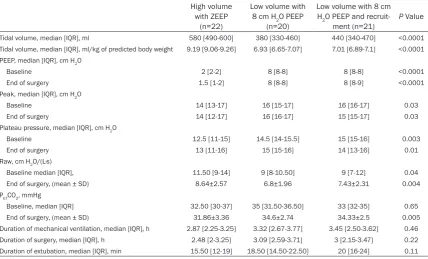
[image:4.629.99.532.93.374.2]were significant. Peak pressure, plateau pres -sure and PETCO2 were higher in the groups with low volume, and Raw was higher in the group Table 1. Baseline characteristics
High volume with
ZEEP (n=22) cm HLow volume with 8 2O PEEP (n=20)
Low volume with 8 cm H2O
PEEP and recruitment (n=21) P Value
Age, (mean ± SD), yr 67.41±5.13 66.10±5.46 69.67±8.37 0.21
Sex, M/F 15/7 10/10 13/8 0.48
Height, median [IQR], cm 168 [158-171] 162.5 [157-169] 166 [155-171] 0.55
Body weight, kg
Actual, (mean ± SD) 64.89±12.70 58.86±11.78 59.95±8.59 0.18
Predicted, median [IQR] 64.2 [54.24-66.93] 56.94 [49.69-65.11] 62.38 [47.87-66.93] 0.48
BMI, (mean ± SD), kg/m2 23.62±4.08 22.10±3.47 22.35±3.23 0.35 Preoperative risk index, n (%)
Risk class 1 2 (9.09) 1 (5) 1 (4.76) 0.12
Risk class 2 11 (50) 9 (45) 5 (23.81)
Risk class 3 8 (36.36) 10 (50) 13 (61.90)
Risk class 4 1 (4.55) 0 (0) 2 (9.52)
Coexisting condition, n (%)
Current smoking 7 (31.82) 7 (35) 4 (19.05) 0.48
Chronic obstructive pulmonary disease 4 (18.18) 5 (25) 4 (19.05) 0.86
Asthma 0 (0) 1 (5) 0 (0) 0.32
Type of surgery, n (%)
Gastrectomy 2 (9.09) 8 (40) 6 (28.57) 0.34
Pancreaticoduodenectomy 1 (4.55) 1 (5) 1 (4.76)
Colorectal resection 14 (63.64) 9 (45) 10 (47.62)
Other procedure 5 (22.73) 2 (10) 4 (19.05)
IQR = interquartile range.
Table 2. Intraoperative data
High volume with ZEEP
(n=22)
Low volume with 8 cm H2O PEEP
(n=20)
Low volume with 8 cm H2O PEEP and
recruit-ment (n=21)
P Value
Tidal volume, median [IQR], ml 580 [490-600] 380 [330-460] 440 [340-470] <0.0001
Tidal volume, median [IQR], ml/kg of predicted body weight 9.19 [9.06-9.26] 6.93 [6.65-7.07] 7.01 [6.89-7.1] <0.0001 PEEP, median [IQR], cm H2O
Baseline 2 [2-2] 8 [8-8] 8 [8-8] <0.0001
End of surgery 1.5 [1-2] 8 [8-8] 8 [8-9] <0.0001
Peak, median [IQR], cm H2O
Baseline 14 [13-17] 16 [15-17] 16 [16-17] 0.03
End of surgery 14 [12-17] 16 [16-17] 15 [15-17] 0.03
Plateau pressure, median [IQR], cm H2O
Baseline 12.5 [11-15] 14.5 [14-15.5] 15 [15-16] 0.003
End of surgery 13 [11-16] 15 [15-16] 14 [13-16] 0.01
Raw, cm H2O/(L·s)
Baseline median [IQR], 11.50 [9-14] 9 [8-10.50] 9 [7-12] 0.04
End of surgery, (mean ± SD) 8.64±2.57 6.8±1.96 7.43±2.31 0.004
PETCO2, mmHg
Baseline, median [IQR] 32.50 [30-37] 35 [31.50-36.50] 33 [32-35] 0.65
End of surgery, (mean ± SD) 31.86±3.36 34.6±2.74 34.33±2.5 0.005
Duration of mechanical ventilation, median [IQR], h 2.87 [2.25-3.25] 3.32 [2.67-3.77] 3.45 [2.50-3.62] 0.46
Duration of surgery, median [IQR], h 2.48 [2-3.25] 3.09 [2.59-3.71] 3 [2.15-3.47] 0.22
Duration of extubation, median [IQR], min 15.50 [12-19] 18.50 [14.50-22.50] 20 [16-24] 0.11
[image:4.629.102.531.415.674.2]significant differences in the times of ventila -tion, surgery and extubation among the three groups (Table 2).
Arterial blood gas analysis
There were no significant differences among
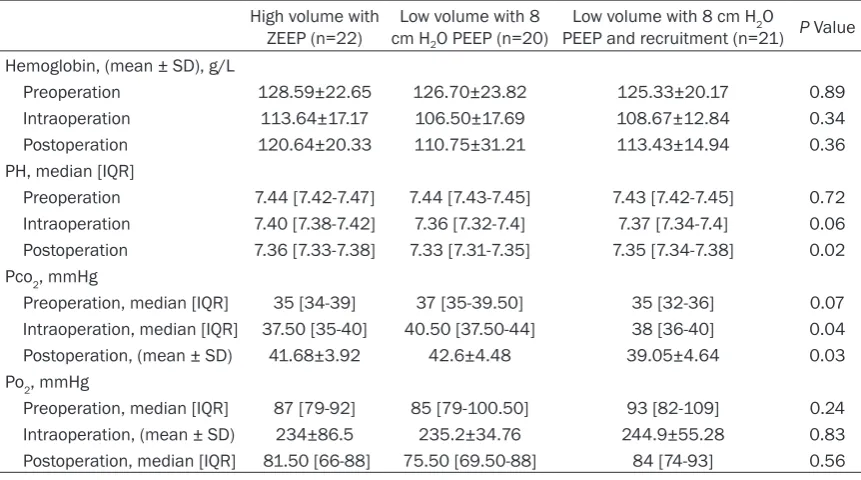
the three groups before surgery. While intraop-erative partial pressure of carbon dioxide (Pco2), postoperative PH and Pco2 were signifi -cantly different (P<0.05), intraoperative and
postoperative hemoglobin and PaO2 showed no signifi -cant differences (Table 3).
There were no significant
differences in intraopera-tive PaO2/FiO2 ratio or dif-ferent changes over time among the three groups (P=0.31, and group effect over time P=0.14). At 2 h after ventilation, the PaO2/ FiO2 ratios of the th-
ree groups were 382.21± 88.03, 450.10±70.29 and 442.08±93.46, respective
[image:5.629.99.530.92.332.2]-ly. The values were signifi -cantly greater in the two groups with low volume compared with the high volume group (P<0.05), but Table 3. Intraoperative artery blood gas analysis
High volume with
ZEEP (n=22) cm HLow volume with 8 2O PEEP (n=20)
Low volume with 8 cm H2O
PEEP and recruitment (n=21) P Value
Hemoglobin, (mean ± SD), g/L
Preoperation 128.59±22.65 126.70±23.82 125.33±20.17 0.89
Intraoperation 113.64±17.17 106.50±17.69 108.67±12.84 0.34
Postoperation 120.64±20.33 110.75±31.21 113.43±14.94 0.36
PH, median [IQR]
Preoperation 7.44 [7.42-7.47] 7.44 [7.43-7.45] 7.43 [7.42-7.45] 0.72 Intraoperation 7.40 [7.38-7.42] 7.36 [7.32-7.4] 7.37 [7.34-7.4] 0.06 Postoperation 7.36 [7.33-7.38] 7.33 [7.31-7.35] 7.35 [7.34-7.38] 0.02 Pco2, mmHg
Preoperation, median [IQR] 35 [34-39] 37 [35-39.50] 35 [32-36] 0.07 Intraoperation, median [IQR] 37.50 [35-40] 40.50 [37.50-44] 38 [36-40] 0.04
Postoperation, (mean ± SD) 41.68±3.92 42.6±4.48 39.05±4.64 0.03
Po2, mmHg
Preoperation, median [IQR] 87 [79-92] 85 [79-100.50] 93 [82-109] 0.24
Intraoperation, (mean ± SD) 234±86.5 235.2±34.76 244.9±55.28 0.83
Postoperation, median [IQR] 81.50 [66-88] 75.50 [69.50-88] 84 [74-93] 0.56
IQR = interquartile range.
Figure 1. Pre-, intra- and postoperative PaO2/FiO2 ratio in three groups. *P<0.05
vevsus High volume with ZEEP group intra-operation.
there was no significant difference between
the two low volume groups (Figure 1; P=0.76). Dynamic pulmonary compliance
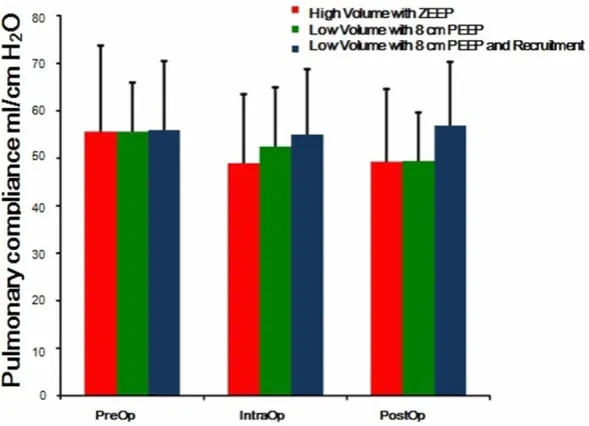
[image:5.629.101.391.363.560.2]the original level. However, compliance in the other two groups decreased over time.
Spirometry
There were no significant differences in FEV1 or FVC among the three groups (P=0.32 and 0.09, respectively), but both values underwent changes over time (group effect over time P<0.001). On postoperative day 1, FEV1 in the
low volume with PEEP and recruitment group
was significantly higher than in the other two groups (mean ± SD): 1.52±0.37 versus
0.95±0.38 (P<0.001) and 1.52±0.37 versus
0.95±0.34 (P<0.001), respectively (Figure 3).
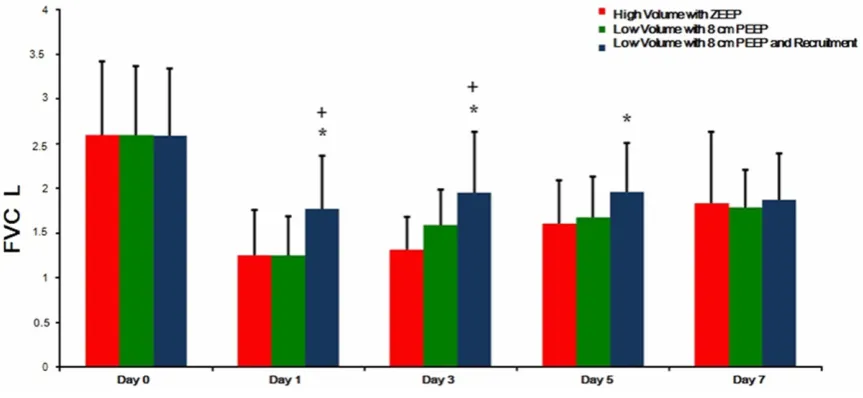
The values of FVC on postoperative day1 in the three groups were 1.25±0.51, 1.25±0.44 and 1.77±0.6, respectively; the value in the low vol -ume with PEEP and recruitment group was
sig-nificantly higher than in the other two groups
(P<0.05). The values of FVC on postoperative day3 in the three groups were 1.31±0.37, 1.58±0.4 and 1.95±0.68, and the value in the
low volume with PEEP and recruitment group
was significantly higher than in the other two
groups (Figure 4; P<0.05). There were no
sig-nificant differences between the high volume
with ZEEP group and the low volume with PEEP
group in FEV1 or FVC with simple effects.
Postoperative observation
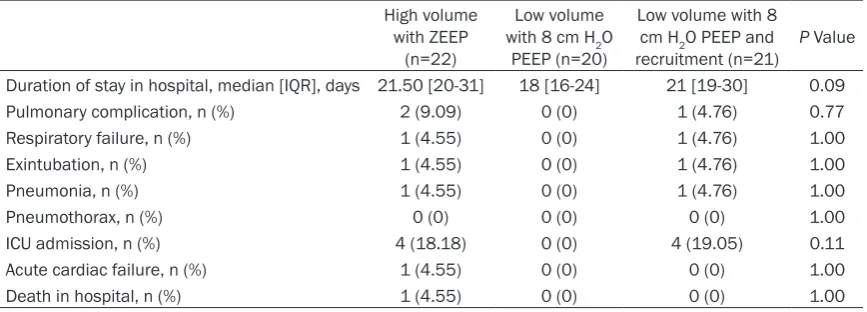
The results for length of hospital stay, postop-erative pulmonary complications, primary
post-and in-hospital deaths sh-
owed no significant differ -ences among the three groups (Table 4).
Discussion
The low volume groups, with tidal volumes of 7 ml/ kg IBW, showed some advantages during surgery regarding the PaO2/FiO2 ratio and pulmonary com-pliance, compared with the high volume group, with a tidal volume of 9 ml/kg IBW. The low volume with PEEP and recruitment gr- oup recovered the best over time with regard to
[image:6.629.100.395.80.293.2]postoperative FEV1 and FVC.
Figure 2. Pre-, intra- and postoperative Pulmonary compliance in three groups.
Group effect over time P<0.001. The individual comparisons show no statistical
significance.
High tidal volume is one of the factors that induced ventilator-associated lung injury in healthy patients [17]. It led to overdistention, alveolar rupture and barotrauma. Nevertheless, low tidal volume can cause atelectasis, hypox-emia[18] and pulmonary inflammation [19].
However, it can be prevented by the incorpora-tion of PEEP, and the alveoli can be stabilized with PEEP greater than 5 cm H2O. In another study, PEEP was found to decreasing the death rate of patients whose PaO2/FiO2 ratios were less than 200 mmHg [20]. In our study, at 2 hours after ventilation, the PaO2/FiO2 ratio was
significantly higher in the groups with low vol
-ume, but there was no significant difference
between the two low tidal volume groups. It seemed that PEEP might play a more important role in enhancing the intraoperative PaO2/FiO2 ratio than in recruitment. The strategy of low tidal volume, with PEEP and recruitment or not, might be better for the PaO2/FiO2 ratio during
abdominal surgery.
pul-lung compliance. Previous randomized,
con-trolled trials have already discussed the influ -ence of ventilation settings, and their
conclu-sions conflicted because recruitment was sel -dom applied in them [5, 23, 24]. In our study, during anesthesia, pulmonary compliance in the low volume with PEEP and recruitment group remained the same, while in the high volume and low volume with PEEP groups, it
decreased over time. This finding indicated
that PEEP combined with recruitment could stop pulmonary compliance from decreasing.
Because recruitment can increase the expan-sion of small airways and enhance the stability of the alveoli, it can successfully increase patients’ lung compliance.
[image:7.629.99.532.79.278.2]Rothen [25] noted that sustained inspiratory pressure of more than 40 cm H2O was needed to reverse fully anesthesia-induced atelectasis in healthy patients. However, research has shown that recruitment can directly overdis-tend aerated alveoli, paradoxically resulting in increased ventilation-induced lung injury [26,
Figure 3. FEV1 in three groups pre-operation, on postoperative day 1, 3, 5 and 7. Group effect over time P<0.001, *P<0.05 vevsus High volume with ZEEP group on postoperative day 1, + P<0.05 vevsus Low volume with 8 cm H2O PEEP group on postoperative day 1.
[image:7.629.99.531.337.536.2]27]. We paid attention to and controlled these parameters to within safe ranges. Our patients in this study did not have severe diseases of the respiratory system, and we did not detect any severe intraoperative complications in any of them.
Postoperative pulmonary function in abdominal surgery patients was restricted by decreased lung compliance, pain of incision, diaphragmat-ic dysfunction and ventilator muscle activity in an animal experiment [28]. Some research has reported that pain could decrease indices of pulmonary function [29, 30]. To eliminate inde-terminate factors, each patient received an epi-dural tube for three days after surgery to keep
the VAS score for pain ≤3. In our study, FEV1 and FVC underwent different changes over time among the three groups. FEV1 and FVC in
the low volume with PEEP and recruitment
group were significantly higher than in the other
groups on postoperative day 1, in accordance with the changes in pulmonary compliance over
time. There were no significant differences
between the high volume with ZEEP group and the low volume with PEEP group. Treschan [16] indicated that impaired lung function after major abdominal surgery was not improved by low tidal volume ventilation. It is particularly worth mentioning that recruitment maneuvers were excluded from the strategy of W. Kaisers. His results supported our outcomes as well. In future studies, we will increase the simple size and conduct research in patients with severe diseases of the respiratory system. Conclusion
Low tidal volume with PEEP and recruitment,
wed its advantages in maintaining the intraop-erative pulmonary compliance and in expedit-ing the recovery of the 1st postoperative day’s
pulmonary function in patients who underwent major non-laparoscopic abdominal surgery.
Disclosure of conflict of interest
None.
Address correspondence to: Dr. Enyou Li, Depart-ment of Anesthesiology, The First Affiliated
Hospi-tal of Harbin Medical University, No 23 Youzheng
Str, Nangang District, Harbin 150001, Heilongjiang,
China. E-mail: [email protected]
References
[1] Weiser TG, Regenbogen SE, Thompson KD,
Haynes AB, Lipsitz SR, Berry WR, Gawande AA. An estimation of the global volume of surgery: a modelling strategy based on available data. Lancet 2008; 372: 139-144.
[2] Khuri SF, Henderson WG. DePalma RG, Mosca C, Healey NA, Kumbhani DJ. Determinants of
long-term survival after major surgery and the adverse effect of postoperative complications. Ann Surg 2005; 242: 326-341.
[3] Schultz MJ, Haitsma JJ, Slutsky AS, Gajic O. What tidal volumes should be used in patients without acute lung injury? Anesthesiology 2007; 106: 1226-1231.
[4] Serpa Neto A, Hemmes SN, de Abreu MG, Pelosi P, Schultz MJ. Protocol for stematic re-view and individual patient data meta-analysis
of benefit of so-called lung-protective ventila -tion settings in patients under general anes-thesia for surgery. Syst Rev 2014; 3: 2. [5] Brower RG, Lanken PN, Maclntyre N, Matthay
MA, Morris A, Ancukiewicz M, Schoenfeld D,
[image:8.629.98.532.93.249.2]Thompson BT. Higher versus Lower Positive Table 4. Postoperative observation
High volume with ZEEP
(n=22)
Low volume with 8 cm H2O
PEEP (n=20)
Low volume with 8 cm H2O PEEP and
recruitment (n=21) P Value
Duration of stay in hospital, median [IQR], days 21.50 [20-31] 18 [16-24] 21 [19-30] 0.09
Pulmonary complication, n (%) 2 (9.09) 0 (0) 1 (4.76) 0.77
Respiratory failure, n (%) 1 (4.55) 0 (0) 1 (4.76) 1.00
Exintubation, n (%) 1 (4.55) 0 (0) 1 (4.76) 1.00
Pneumonia, n (%) 1 (4.55) 0 (0) 1 (4.76) 1.00
Pneumothorax, n (%) 0 (0) 0 (0) 0 (0) 1.00
ICU admission, n (%) 4 (18.18) 0 (0) 4 (19.05) 0.11
Acute cardiac failure, n (%) 1 (4.55) 0 (0) 0 (0) 1.00
Death in hospital, n (%) 1 (4.55) 0 (0) 0 (0) 1.00
acute respiratory distress syndrome. N Engl J med 2004; 351: 327-336.
[6] Futier E, Constantin JM, Jaber S. Protective lung ventilation in operating room: a system-atic review. Minerva Anestesioi 2014; 80: 726-735.
[7] Chalhoub V, Yazigi A, Sleilaty G, Haddad F,
Noun R, Madi-Jebara S, Yazbeck P. Effect of vi-tal capacity manoeuvres on arterial oxygen-ation in morbidly obese patients undergoing open bariatric surgery. Eur J Anaesthesiol 2007; 24: 283-288.
[8] Futier E, Constantin JM, Paugam-Burtz C, Pascal J, Eurin M, Neuschwander A, Marret E, Beaussier M, Gutton C, Lefrant JY, Allaouchiche
B, Verzilli D, Leone M, De Jong A, Bazin JE,
Pereira B, Jaber S. A trial of intraoperative low-tidal-volume ventilation in abdominal surgery. N Engl J Med 2013; 369: 428-437.
[9] Severgnini P, Selmo G, Lanza C, Chiesa A,
Frigerio A, Bacuzzi A, Dionigi G, Novario F,
Gregoretti C, de Abreu MG, Schultz MJ, Jaber S, Futier E, Chiaranda M, Pelosi P. Protective mechanical ventilation during general anes-thesia for open abdominal surgery improves postoperative pulmonary function. Anesthe- siology 2013; 118: 1307-1321.
[10] Amato MB, Barbas CS, Medeiros DM, Schettino Gde P, Lorenzi Filho G, Kairalla RA, Deheinzelin D, Morais C, Fernandes Ede O, Takagaki TY. Beneficial effects of the “open lung approach”
with low distending pressures in acute respira-tory distress syndrome. A prospective random-ized study on mechanical ventilation. Am J Respir Crit Care Med 1995; 152: 1835-1846. [11] Piccinni P, Dan M, Barbacini S, Carraro R, Lieta
E, Marafon S, Zamperetti N, Brendolan A,
D'Intini V, Tetta C, Bellomo R. Ronco C. Early isovolaemic haemofiltration in oliguric patients
with septic shock. Intensive Care Med 2006; 32: 80-86.
[12] SzakmánT, Márton S, Molnár Z. Procalcitonin and PaO2/FiO2 ratio as predictors of mortality in the early postoperative period after esopha-gectomy. Magy Seb 2002; 55: 16-23.
[13] Suarez-Sipmann F, Bohm SH, Tusman G, Pesch T, Thamm O, Reissmann H, Reske A, Mag- nusson A, Hedenstierna G. Use of dynamic compliance for open lung positive end-expira-tory pressure titration in an experimental study. Crit Care Med 2007; 18: 214-221. [14] Maisch S, Reissmann H, Fuellekrug B, Weis-
mann D, Rutkowski T, Tusman G, Bohm SH.
Compliance and dead space fraction indicate an optimal level of positive end-expiratory pressure after recruitment in anesthetized pa-tients. Anesth Analg 2008; 18: 175-181. [15] Ventilation with lower tidal volumes as com
-pared with traditional tidal volumes for acute
lung injury and the acute respiratory distress
syndrome. The Acute Respiratory Distress
Syndrome Network. N Engl J Med 2000; 342: 1301-1308.
[16] Treschan TA, Kaisers W, Schaefer MS, Bastin
B, Schmalz U, Wania V, Eisenberger CF, Saleh
A, Weiss M, Schmitz A, Kienbaum P, Sessler
DL, Pannen B, Beiderlinden M. Ventilation with
low tidal volumes during upper abdominal sur-gery does not improve postoperative lung func-tion. Br J Anaesth 2012; 109: 263-271. [17] Gajic O, Dara SI, Mendez JL, Adesanya AO,
Festic E, Caples SM, Rana R, St Sanver JL,
Lymp JF, Afessa B, Hubmayr RD.
Ventilator-associated lung injury in patients without acute lung injury at the onset of mechanical ventilation. Crit Care Med 2003; 32: 1817-1824.
[18] Hickling KG, Henderson SJ, Jackson R. Low mortality associated with low volume pressure limited ventilation with permissive hypercap-nia in severe adult respiratory distress syn-drome. Intensive Care Med 1990; 16: 372-377.
[19] Chu EK, Whitehead T, Slutsky AS. Effects of cy-clic opening and closing at low- and high-vol-ume ventilation on bronchoalveolar lavage cy-tokines. Crit Care Med 2004; 32: 168-174. [20] Briel M, Meade M, Mercat A, Brower RG, Talmor
D, Walter SD, Slutsky AS, Pullenayegum E, Zhou Q, Cook D, Brochard L, Richard JC,
Lamontagne F, Bhatnagar N, Stewart TE, Guyatt G. Higher vs lower positive end-expira-tory pressure in patients with acute lung injury and acute respiratory distress syndrome: sys-tematic review and meta-analysis. JAMA 2010; 303: 865-873.
[21] Macklin MT, Macklin CC. Malignant interstitial emphysema of the lungs and mediastinum as an important occult complication in many re-spiratory diseases and other conditions: an in-terpretation of the clinical literature in the light of laboratory experiment. Med 1944; 23: 281-358.
[22] Slutsky AS, Ranieri VM. Ventilator-Induced
Lung Injury. N Engl J Med 2013; 369: 2126-2136.
[23] Futier E, Constantin JM, Pelosi P, Chanques G, Massone A, Petit A, Kwiatkowski F, Bazin JE, Jaber S. Noninvasive ventilation and alveolar recruitment maneuver improve respiratory function during and after intubation of mor-bidly obese patients: a randomized controlled study. Anesthesiology 2011; 114: 1354-1363. [24] Wolthuis EK, Choi G, Dessing MC, Bresser P,
Lutter R, Dzoljic M, van der Poll T, Vroom MB,
in-flammation in patients without preexisting
lung injury. Anesthesiology 2008; 108: 46-54. [25] Rothen HU, Sporre B, Englberg G, Rothen HU,
Sporre B, Engberg G, Wegenius G, Hedenstierna G. Reexpansion of atelectasis during general anaesthesia may have a prolonged effect. Acta Anaesthesiol Scand 1995; 39: 118-125. [26] Fan E, Wilcox ME, Brower RG, Steawart TE,
Mehta S, Lapinsky SE, Meade MO, Ferguson
ND. Recruitment maneuvers for acute lung in -jury: a systematic review. Am J Respir Crit Care Med 2008; 178: 1156-1163.
[27] Lapinsky SE, Mehta S. Bench-to-bedside re-view: recruitment and recruiting maneuvers. Crit Care 2005; 9: 60-65.
[28] Dureuil B, Cantineau JP, Desmonts JM. Effects
of upper or lower abdominal surgery on dia-phragmatic function. Br J Anaesth 1987; 59: 1230-1235.
[29] Michelet P, Guervilly C, Hélaine A, Avaro JP,
Blayac D, Gaillat F, Dantin T, Thomas P, Kerbaul
F. Adding ketamine to morphine for patient-controlled analgesia after thoracic surgery:
in-fluence on morphine consumption, respiratory
function, and nocturnal desaturation. Br J Anaesth 2007; 99: 396-403.
[30] Josepha C, Gaillata F, Duponqa R, Lieven R,
Baumstarckc K, Thomasd P, Penot-Ragone C,