
and Complex Adaptive Systems. (Under the direction of Dr. Paul Bitting.)
Implementation of Professional Learning Communities (PLC), as described by DuFour (2006), has depended upon a balance between teacher buy-in and administrative fiat. The tension between the “bottom-up” character of the former and the “top-down” character of the latter presents a leadership challenge: meeting students’ learning needs requires
decentralized, shared decision-making on the part of the teachers who work directly with individual students, while those same teachers are subordinates in a hierarchy that centralizes authority at the top of the organization chart. PLC literature lacked a theoretical model that reconciled these seemingly disparate roles. The Literature Review introduced Complex Adaptive Systems (CAS) modeling, and noted some prima facie similarities between Professional Learning Communities and Complex Adaptive Systems. The study’s central purpose was to explore whether those similarities, those links, were strong enough to
teacher buy-in could be enhanced if Professional Learning Communities are viewed as belonging to a larger class of activities that are observed in other fields, some of which are described in the study. Implications for further study include using CAS modeling as a means of determining the degree to which Professional Learning Communities are being
by Eric Johnson
A dissertation submitted to the Graduate Faculty of North Carolina State University
in partial fulfillment of the requirements for the degree of
Doctor of Education
Educational Administration and Supervision
Raleigh, North Carolina 2013
APPROVED BY:
_______________________________ ______________________________
Dr. Paul Bitting Dr. Peter Hessling
Committee Chair
________________________________ ________________________________
DEDICATION
BIOGRAPHY
ACKNOWLEDGMENTS
TABLE OF CONTENTS
LIST OF FIGURES ... vii
CHAPTER 1: Exploring Possible Links between Professional Learning Communities and Complex Adaptive Systems ...1
Professional Learning Communities and Responding to Students’ Needs ...3
Statement of the Problem ...6
Organization of This Study ...9
Summary ...10
Definitions...11
CHAPTER 2: Methodology ...12
Design of Study ...12
Potential Significance ...14
Framework and General Research Questions ...16
Design and Methodology: Overall Approach and Rationale ...17
Data gathering. ...17
Validity and reliability. ...18
Researcher bias and assumptions. ...18
Personal biography. ...22
Ethics and political considerations. ...25
Methodology Summary ...26
CHAPTER 3: Professional Learning Communities ...27
Historical and Theoretical Context of Professional Learning Communities ...31
The relations of the accountability movement and Professional Learning Communities .37 Professional Learning Communities: “bottom-up” vs. “top-down” ...41
Schools as Organizations ...43
Gap in the Literature ...49
Summary of PLC Literature ...50
CHAPTER 4: Complex Adaptive Systems ...55
The Edge of Chaos. ...56
Implications for Leadership ...56
Open Systems...58
Self-organization ...59
Synergism. ...60
CAS Modeling. ...61
Self-organization through self-feedback. ...63
Gap in the Literature. ...67
CHAPTER 5: Comparing Professional Learning Communities and Complex Adaptive
Systems ...72
Defining Professional Learning Communities ...72
“An ongoing process” ...72
“Work collaboratively in recurring cycles of collective inquiry and action research” 72 “To achieve better results for the students they serve”. ...73
Defining Complex Adaptive Systems ...74
Examples of Complex Adaptive Systems ...75
Potential Links between Professional Learning Communities and Complex Adaptive Systems ...77
“Community” and “A whole comprised of a large number of parts” ...77
“Recurring cycles of collective inquiry and action research” and “Each [part] behaves according to some rule or force that relates it interactively to other parts” ...78
“A focus on learning” and “In responding in parallel to their own local contexts, the parts can, without explicit inter-part co-ordination or any one of them having a global view, cause the system as a whole to display emergent patterns at the global level” 78 “Collective inquiry into best practices” and “The emergence of orderly phenomena and phenomena and properties of the whole that cannot be predicted from properties of parts” ...80
Other CAS Definitions and Their Relation to PLC Practices ...82
“The Essential Questions” and “Simple rules” ...84
“Recurring cycles” and “Inherent order” ...84
“A collaborative culture” and “A system of systems” ...84
“A commitment to continuous improvement” and “Co-evolution" ...86
Summary of Findings ...87
Limitations of the Findings ...89
“Schools” vs. “Professional Learning Communities” ...89
“Collective intentionality” vs. “Open-endedness” ...90
Summary of Conclusions ...92
CHAPTER 6: Implications of Findings ...93
Teacher Buy-In ...93
The Role of Leadership ...97
Implications for Leadership ...99
Autonomous agents ...101
Communication mechanism ...102
Driving principle ...102
Balance between order and chaos ...104
Changing context ...104
Conclusions ...105
Implications for Further Study ...106
LIST OF FIGURES
Figure 1: Student-teacher interactions in a professional learning community ...40
Figure 2: Senge’s model of organizational learning ...48
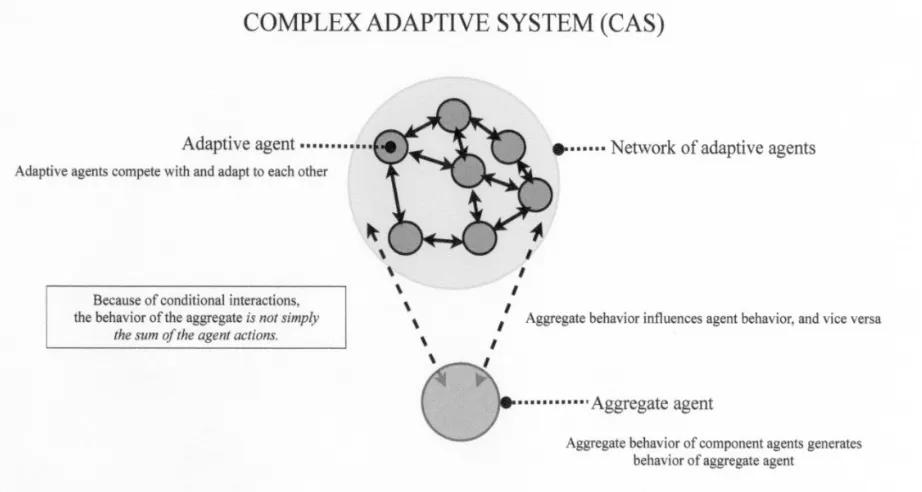
Figure 3: Holland’s model of complex adaptive systems ...52
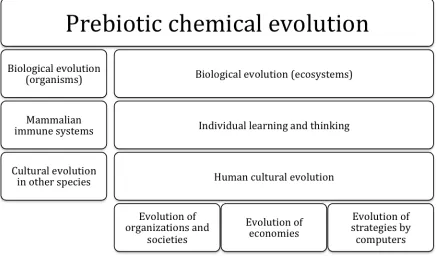
Figure 4: Gell-Mann schema for complex adaptive systems’ development in nature ...75
CHAPTER 1: Exploring Possible Links between Professional Learning Communities and Complex Adaptive Systems
The term “Professional Learning Community” (PLC) has become so ubiquitous in North Carolina education that it is no longer capitalized as a proper noun in the statewide teacher evaluation instrument. A central theme of this instrument is the degree to which teachers apply knowledge gleaned from their Professional Learning Communities to guide their instructional practices. Despite the extensive effort that has been invested in the dissemination and implementation of Professional Learning Communities, it has been pointed out that they still suffer from flawed implementation. DuFour (2004), a primary architect of the PLC concept in schools, says that the term is “in vogue, [has come to
describe] every imaginable combination of individuals with an interest in education [and has fallen in danger] of losing all meaning” (p. 6).
Given the prominence of Professional Learning Communities in the dialogue
may provide a basis for better understanding Professional Learning Communities overall. The PLC concept lacks an identified framework to connect it to anything other than itself: the literature (DuFour & Eaker, 1998; Hord & Sommers, 2008; Mullen, 2010; Stoll, 2006) essentially points to instances where PLC implementation was concurrent with increases in school performance with scant specific connection between the PLC behaviors on the part of school personnel and improvements in student performance.
It should be pointed out that there are aspects of PLC practices that have been identified as contributing positively to successful school practices. Teacher satisfaction has been shown to increase with the implementation of Professional Learning Communities (Ackerman, 2011; Martin, 2011), and the information-sharing that is part of PLC best practices also equips teachers with a greater variety of tools for addressing the increasingly complex demands of the modern public school classroom (Benceti, 2009; Bruce, Esmonde,
Ross, Dookie, & Beatty, 2010; DiNardo, 2010). Attributing academic success to these factors
carries intuitive appeal, and can be borne out by studies showing that increased teacher satisfaction and positive school culture positively affects student achievement.
What is missing from this literature, though, is an identified means for connecting PLC practices to phenomena other than themselves. If Professional Learning Communities in fact follow a theoretical model that also describes other, analogous types of organizational behavior, perhaps that model can be applied to Professional Learning Communities as well.
Holvoet, 2004; Holland, 2006). Professional Learning Communities, with their
responsiveness to individual students’ needs, represent organizational behavior that is driven by localized, as opposed to centralized, decision-making. For schools, decision-making occurs on a daily basis on the individual teacher level but is driven by the PLC framework for decision-making. As the totality of a school’s teaching staff responds to their localized conditions (their students’ learning needs), those decisions cumulatively comprise the totality of the school’s response to their students. A school’s success is not based upon a single leader’s decisions, but upon the myriad simultaneous, individual decisions made throughout the school.
While other school-based organizational concepts function under the aegis of “Professional Learning Communities” (e.g. Clauset, 2008), the PLC concept in North Carolina is based upon concepts developed by DuFour (2004) and Hord (Hord & Sommers, 2008). Significant training and education has been committed to explaining this means of focusing teachers’ energies upon student learning, a component of which is establishing “buy-in” amongst teachers. Strategies for creating this buy-in have been rooted in
testimonials of PLC success and intuitive reasoning, but have not been linked to a specific process that functions outside of the Professional Learning Communities themselves. Professional Learning Communities and Responding to Students’ Needs
teachers with three main questions: “What do we want students to learn? How do we know if they have learned it? How do we respond if students master/struggle with the material?” (DuFour & Eaker, 1998). These questions seem on their surface to be relatively
straightforward. However, within these questions and the format within which they are addressed lie some critical assumptions that align with the changes in the ways in which teachers and schools are held accountable for their students’ performance.
In the Professional Learning Communities model, the teachers first meet in groups, typically organized by grade level, subject area, or any other parameter that logically allows them to compare data and observations about student learning. This is important, for it represents a shift from the teacher culture that was based on individual teachers performing their duties in relative isolation from one another. Under collective accountability
frameworks, teachers’ effectiveness levels are equalized across classrooms: in order to be considered part of a successful team or school, each teacher must have a vested interest in their colleagues’ success, for their own success could be negated by a lower performing peer. In the model in which teachers operated in relative isolation from one another, an implicit competition between teachers was established: based on teacher performance, some classes were preferable to others.
it comes to successfully differentiating instruction to meet the needs of all students, and coordinating a curriculum so that meaningful connections can be made between subjects.
As will be shown in greater detail in the Literature Review of this study, PLC methodologies, and strategies for disseminating them and managing them for school administrators, are plentiful. These methodologies and strategies come with testimonials from various professionals (DuFour & Eaker, 1998; Hord & Sommers, 2008; Mullen, 2010;
Stoll, 2006) regarding the effectiveness of Professional Learning Communities when they have been implemented with fidelity to the design put forth by DuFour. However, a component of their literature is lacking. For all of the testimonials regarding PLC effectiveness, and for all of their intuitive appeal, they lack a theoretical framework for explaining what makes them work so well, or for connecting their effectiveness to other effective practices. As will be shown in Chapter 2, PLC leadership contains this gap, and thereby leaves unanswered some fundamental questions regarding the nature and role of educational leadership within such a model.
Statement of the Problem
If this study establishes congruence between Professional Learning Communities and Complex Adaptive Systems, then it can be demonstrated why Professional Learning
Communities may work, for they would belong to a larger class of phenomena occurring outside of schools. If Professional Learning Communities indeed belong to such a broader category, their implementation can be justified for reasons that include a pattern of teacher satisfaction and some correlation between PLC implementation and school success. The likelihood of teacher “buy-in” to Professional Learning Communities may be positively affected if the implementation is justified by the inclusion of Professional Learning
Communities with other entities that have demonstrated adaptability to changing conditions while maintaining coherence and resilience over time. In short, such an internal framework may enhance the effectiveness of the implementation of Professional Learning Communities, and enhance their sustainability as well. Fusarelli (2002) indicated that the challenges of system reform provide obstacles to creating a coherent conceptualization of policies that adapt to change:
The knowledge of schools as loosely coupled organizations does not equip
Exploring the connections between Professional Learning Communities and Complex Adaptive Systems is a potential means by which the apparent theoretical dissonance
described by Fusarelli may be resolved through a focus on the microsystems that embody the interactions that take place as part of and as a result of Professional Learning Communities practices.
Without such an internal theoretical model, Professional Learning Communities essentially depend upon top-down, hierarchical decision-making for their implementation. A theoretical model for Professional Learning Communities would therefore not only be useful for developing concepts and strategies for leading PLC organizations, but could provide concepts and strategies for participating in them as well. In developing a theoretical
framework that has equal utility on various levels of an organization, the seeming paradox of leading a “leaderless” organization may move a step closer to resolution.
development, as well as permitting greater autonomy and decision-making for teachers” (p. 13).
Teacher autonomy raises the question of the role of the principal in determining how a school responds to students’ needs. Carmichael (1982) questioned whether the role of the principal should be reconceptualized from that of “omnicompetence” to a position in which his or her competence is equivalent to everyone else's within the organization. Kleine-Kracht (1993) suggested that school administrators, along with teachers, be learners, “questioning, investigating, and seeking solutions…[where] there is no longer a hierarchy of who knows more than someone else, but rather a need for everyone to contribute.” (p. 393)
The kind of organization that Kleine-Kracht suggests decentralizes the organizational decision-making of a school, shifting its focus from the authority of the principal to all members of the staff. The question remains, then, of whose role it is to determine such critical features of an organization as its shared vision and values, or other nuts-and-bolts features such as fiscal and human resources decisions. From these ideas and the strategies suggested by Professional Learning Communities, a central question arises: How can the hierarchical, top-down nature of formal organizations be reconciled with the flattened organizational metaphors suggested by Hord, Carmichael, Kleine-Kracht, and DuFour?
hierarchical modes, but does not provide a theoretical framework for conceptualizing a reconciliation of those modes.
This study introduces Complex Adaptive Systems as a potential model for creating such a theoretical framework. However, such a framework is only applicable if Professional Learning Communities can be classified as Complex Adaptive Systems. The central question being addressed in this study, then, is, “Are Professional Learning Communities Complex Adaptive Systems?”
Organization of This Study
This study provides unique design challenges. Foremost is the placement and role of the Literature Review. In what might be called a “typical” research design, the literature is reviewed to establish a basis for a study: gaps in the literature are defined, previous research designs are examined, and a possible course of data-gathering action can, in part, be
discovered within a Literature Review. In this study, however, the literature is the data, so the Literature Review, in part, becomes a review of its own material.
Review that focuses on Professional Learning Communities, including their historical context; Chapter 4, a Literature Review that focuses on Complex Adaptive Systems, including descriptions of activities that can be included under their aegis; Chapter 5, which compares terms, concepts, and activities of Professional Learning Communities and Complex Adaptive Systems and draws conclusions regarding whether those terms, concepts, and activities can be considered parts of a continuum of similar phenomena; and Chapter 6, which discusses the implications of this study and its findings, particularly as they relate to PLC implementation and leadership within public schools.
Summary
Definitions
Professional Learning Community:
A PLC is composed of collaborative teams whose members work interdependently to achieve common goals linked to the purpose of learning for all . . . collaboration represents a systematic process in which teachers work together interdependently in order to impact their classroom practice in ways that will lead to better results for their students, for their team, and for their school. (DuFour, 1998)
Essential Questions of Professional Learning Communities:
“What do we want students to learn? How do we know if they have learned it? How do we respond if students master/struggle with the material?” (DuFour, 1998) Complex Adaptive System:
CHAPTER 2: Methodology Design of Study
This research examines a gap in the literature related to leadership of Professional Learning Communities. Professional Learning Communities provide a significant body of anecdotal and intuitively appealing reasons for incorporating them into a school’s culture and practices and similarly anecdotal and appealing explanations for how such organizations may be led. However, these practices are not connected to a theoretical framework that may explain how PLC leadership “works.” Such a framework, if there were one applicable to PLC leadership, would connect PLC leadership to other organizational behaviors that occur under similar conditions requiring fine-grained, diverse responsiveness to change.
Making such a connection is important to PLC practices and may have wider implications for other educational leadership practices; it may form a basis for connecting PLC practices to other domains of group functioning. PLC leadership focuses on “buy-in” from staff (Fullan, 2000), and provides techniques for enhancing that process. In other words, that “buy-in” is based upon the recognition of Professional Learning Communities’ practices as they have already occurred in other locales and at other times, defining their future success by their past success (e.g., PLC practices will work because they have worked). Such an a posteriori approach to establishing a communal commitment to Professional Learning
However, if it can be shown that Professional Learning Communities are similar to other entities that are working to achieve analogous objectives, then it may be possible to establish some more robust a priori bases for establishing Professional Learning
Communities within a given organization. In such a case, it may be possible for school leadership not to depend solely upon a line of reasoning that implicitly posits that
“Professional Learning Communities worked elsewhere, so they should work here,” but to reason more broadly that “Professional Learning Communities belong to a continuum of other social and natural systems that have achieved objectives similar to our own.” It is through such a connection that the “buy-in” aspect of establishing successful Professional Learning Communities may be enhanced, and may become a practice that has implications for other educational leadership practices that fall outside the scope of this study.
Kelle (2005) raised a valid concern for the role of the researcher in such a study, for it is possible that a researcher may impose too great a degree of subjective bias upon such work, “forcing” the categories into artificial relationships. This is a legitimate concern for this study, as it is based upon a set of assumptions that are intuitively appealing. However, it should be noted that for these connections to retain generalizable and research-based
By necessity, then, developing that underpinning depends upon data- and evidence-gathering that may “induce” a theory. This data will be comprised of primary PLC leadership literature as developed by Richard DuFour and Rebecca DuFour, and primary texts outlining the central tenets of Complex Adaptive Systems, as by Gell-Mann (1994), Holland (1992), Kauffman (1995), Prigogine and Stengers (1997), and others.
Potential Significance
This research is significant on its surface because few studies have used Complex Adaptive Systems as a model for school functioning, and to date none have examined
Professional Learning Communities through this framework. The true significance, however, is that making the connection between Professional and CAS lays the groundwork for the creation of a theoretical model that is currently lacking in PLC implementation. Without such a model, Professional Learning Communities are being implemented on a limited theoretical framework of the effects that collaboration has on teacher effectiveness. Such a framework does not fully encompass the function of Professional Learning Communities, nor connect that functioning to the aspect of school climate that is critical to effective PLC
implementation. By establishing congruence between Professional Learning Communities and CAS, it can be demonstrated why Professional Learning Communities may work, for they belong to a larger class of phenomena occurring outside of the PLC context, or even the context of schools as a whole.
staff members: “Focusing on changing the culture is one of the most powerful strategies for converting people to the cause of improvement, because most people are powerfully
influenced by the culture in which they work” (p. 173). It is recommended that PLC implementation incorporate three major elements: first, presentation of research-based evidence indicating that teachers work more effectively when they collaborate; second, presentation of anecdotal data indicating that Professional Learning Communities increase the effectiveness of districts and schools that adopt them; and third, having school personnel identify their needs, and then showing how the PLC model can help address those needs. These approaches are specifically based upon Gardner’s (2004) strategies for changing people’s thinking regarding PLC implementation, as DuFour et al. note:
1. Reason: Appealing to rational thinking and decision-making.
2. Research: Building shared knowledge of the research base supporting a position.
3. Resonance: Connecting to the person’s intuition so that the proposal “feels right.”
4. Representational Re-descriptions: Changing the way the information is presented (for example, using stories or analogies instead of data).
5. Resources and Reward: Providing people with incentives to embrace an idea. 6. Real-World Events: Presenting the real-world examples of where the idea has
Of the strategies listed above, this study will be addressing Research, Resonance, Representational Re-descriptions, and Real-World Events in exploring the connections between Professional Learning Communities and CAS.
Another benefit of developing such a framework is that it equalizes the knowledge base across strata of a school’s hierarchy: it is equally and mutually beneficial for the teachers and administration of a school to understand Professional Learning Communities within the CAS framework. As such hierarchies tend to run counter to the “bottom-up” organization of CAS, and as teachers are considered leaders within their organization, it is important that the organization be provided the tools for conceptualizing such forms of distributed leadership. By providing a commonly-held theoretical framework, the unity of purpose inherent in Professional Learning Communities can be supported by a theoretical framework that anchors that unity to a model that is structurally simple yet open-ended in its outcomes. In other words, the model recapitulates the phenomenon it describes.
Framework and General Research Questions
The study will analyze PLC literature through the lens of CAS modeling. Analogical connections will be drawn between terms and concepts, and they will be presented within a textual format and with summarizing charts that will make the connections easier to
visualize. The general research questions being explored are:
• Are those similarities strong enough to include Professional Learning Communities under the term “Complex Adaptive Systems”?
Beyond the actual research questions and the conclusions that can be drawn from them would be a discussion of the implications of the conceptual and practical utility of these findings, especially as they relate to leadership of schools that implement the PLC model.
Design and Methodology: Overall Approach and Rationale
The overall approach of this research will be to draw comparisons between PLC implementation and CAS theories. All of the analysis will be textual. The rationale for this approach is based upon the needs that the study addresses. From a textual standpoint, the Literature Review of both Complex Adaptive Systems and Professional Learning
Communities demonstrates that a mutual gap exists between the two fields. This gap can be closed if it can be demonstrated that Professional Learning Communities are indeed
manifestations of Complex Adaptive Systems.
Data gathering. The texts associated with Professional Learning Communities and Complex Adaptive Systems that will be analyzed in Chapters 3 and 4 will serve as the “raw data” for this study. The texts will form the basis for the connections between the theories, and the recommended practices of Professional Learning Communities will be those
Validity and reliability. While the theory-building will take place according to the interrelated phases described in the sections above, other steps need to be taken to establish and maintain qualitative research validity and reliability (Glaser & Strauss, 1967; Strauss & Corbin, 1990): both construct validity, which is enhanced by establishing clearly specified operational procedures, and internal validity, which is enhanced by establishing causal relationships where certain conditions lead to other conditions. The internal validity of the study will depend upon the degree to which the processes of conceptualization,
categorization and drawing propositions about the data can be determined to be “true” within this procedural framework.
The external validity of the study will be determined by the extent to which its finding could be generalized to a broader body of theory and professional practice. The reliability of the study will be dependent upon the degree to which the operations of the study, such as the data collection and analysis, can be repeated with the same results. A key component to creating a “formal, retrievable database” will be to follow a process of coding that will be conducive to such repeatability. Strauss and Corbin (1990) refer to it as “the operations by which data are broken down, conceptualized, and put back together in new ways. It is the central process by which theories are built from data.” (p. 57)
reveals potential assumptions, and therefore biases, on the part of the researcher. Foremost of these is the bias toward finding an answer that is a part of the question. In other words, the reasoning behind the study is potentially circular and its proposal is moot, for it approaches the problem with a solution already formulated --- i.e., the connection already exists, or the study does not need to be pursued. This bias will be averted through a process of self-reflection and self-revelation that would lay bare potential biases, as another “data-source” that would offset the tautological, self-fulfilling prophecy concern that may be raised with such a study, regardless of its findings. Every effort, therefore, will be made to infuse this awareness in the data collection, analysis and findings of the study.
Communities may be provided a theoretical framework that offers a basis for the leadership approaches associated with them.
While this approach will create an empirical basis for connecting PLC practices to the theoretical framework based in a CAS approach, there is an element of this connection that may be neglected, perhaps for its “non-empirical” nature. English (2008) references John Dewey’s conception of the distinction between leadership as knowledge and leadership as art, stating:
. . . practice is about performance, and practice is not likely to be improved with more the same kind of science (more precise definition) we have historically employed. Improved application begins by placing it within Dewey’s “artistic structures” concept where the integrity, subtlety, and the true forceful impact of leadership reside. (p. 16)
This is to say that, while educational research has a legitimate basis in empirical, “definition-based” frameworks, its practical application may suffer if its basis is entirely within that realm. English goes on to say:
because of how we have chosen to define or view it, we should stop using methods and models that leave us perpetually ignorant and unable to adequately grasp what expert practitioners who are supremely artful performers really do. (p. 17)
This perspective may appear to undermine the legitimacy of this study. However, it is a perspective I share in that despite this work encompassing a multi-disciplinary approach to connecting theory and practice, it does not purport to provide the complete explanation of the phenomenon of leadership within a Professional Learning Community or any other school setting.
In that regard, another bias that may pervade this study is the belief on the researcher’s part that the study will be inherently limited in its capacity to explain what “happens” within organizations as they relate to leadership practices. This is not to say, however, that the research or its findings are not believed to be useful; indeed, as the connections are fleshed out, the theoretical framework linking Complex Adaptive Systems and Professional Learning Communities may prove to be very useful.
Personal biography. Applying a theoretical lens to a body of data inherently reveals characteristics of the researcher. To the end of illuminating potential researcher biases, this brief biography will provide a glimpse of the experiences that have informed my research perspective.
The most basic features of the biography are the facts: I was born in New Jersey in 1966 and lived there until departing for college in 1984. I attended public school until eighth grade, then attended the Delbarton School, a Catholic secondary school for boys. There I played prodigious amounts of tennis with some success. Conversely, I did scant schoolwork with little success. I was accepted to Guilford College with an unofficial understanding that I would play tennis there, but I quickly dropped it upon arrival. I majored in Psychology.
I listen to a broad variety of music. Some aspects of my listening, and my thinking about my listening, will also inform my perspective: the collective improvisation of jazz is an ongoing obsession, especially when the lines of composition and improvisation are blurred; Brian Eno’s early “ambient” recordings depended upon accidents and non-intentionality, yet produced results that sound “composed;” and in Frank Zappa’s “conceptual continuity,” all parts of his multi-faceted musical universe fit with a meta-level work, as if all his works were part of a single work.
There are many, many other performers whom I could mention as influences, but to avoid musician name-dropping excess, I mention those above as holding some more direct relevance to my attraction to Complex Adaptive Systems. Jazz provides a medium of interaction that allows its actors (the musicians) to create a unified statement from their disparate contributions in the (occasional) absence of a centralized decision-making leader. Eno provides a medium in which elements can appear “composed,” even in the absence of a “composition,” where the interactions of the sounds are randomized, yet generate a sense of order and even emotional depth. Zappa showed not only how a body of creative work can appear to be a single piece, but that each smaller piece of that whole is reflective of the whole. Each of these ideas has strong resonance with Complex Adaptive Systems, and should therefore be considered factors that would lead me to have an affinity for Complex Adaptive Systems.
My work life has followed what I believe is an atypical path for a school
capacities in state-run psychiatric facilities for adolescents. During that time, I earned my degrees in Literature and Education Leadership. My teaching experience took place at the Whitaker School in Butner, NC, where I taught all core subjects to 13-17 year olds with serious emotional and behavioral disorders.
My administrative career began as an assistant principal at a middle school in
Durham, NC. The following years were chaotic, as one principal resigned without notice, and the school was left in a leadership vacuum for months. When a new principal was hired, she fought cancer twice, and then fought complications of a bone marrow transplant, all while attempting to maintain some leadership capacity over the school. After an extended medical leave, she eventually retired, and I was named principal of the school.
Many destructive factors converged to make that experience a calamity. During the last part of the former principal’s tenure, and throughout mine, Professional Learning Communities were being implemented at my school and throughout the district. In the case of my school, it was clear what happens when change is too abrupt, when it is too drastic, and when it happens without feedback mechanisms: the result is chaos. Organizational learning could not occur, and systems for such learning could not be established. Failure was rampant.
learning and upon teacher satisfaction. Last year, after rigorous PLC implementation, the school, which is the largest in the district, was also its top performer, having met all of its federal Adequate Yearly Progress goals as well as local standards for High Proficiency (designated as a North Carolina School of Distinction, with more than 80 percent of students demonstrating proficiency on Reading, Math, and Science), and High Growth (at least 60 percent of students demonstrating a year’s worth of growth within a year) (North Carolina Department of Public Instruction, 2011). To begin this school year, the principal and I made presentations to other district principals about the implementation of Professional Learning Communities at the school. I have since become an Assistant Principal in a different school district.
Ethics and political considerations. My professional circumstances could raise some questions regarding my application of a theoretical “lens” to PLC literature. It is possible, for example, that a perception on my part that the disappointment I felt toward the district hierarchy would motivate my affinity for such non-hierarchical theories and
processes as Complex Adaptive Systems. In that regard, I believe it is important that the previous biographical section was included, for CAS-like phenomena have been attractive to me since my formative years.
A larger ethical concern that I am finding worth pursuing with this study is the potential alignment that can be established between traditional leadership hierarchy and “bottom-up” structures and processes such as Complex Adaptive Systems. If such an
supported from a theoretical standpoint, as can the idea that leading a collaborative culture at a school can enhance that school’s learning environment.
Methodology Summary
The methodology described in this chapter supports the research questions posed in this study, for it supports filling the mutual gaps in PLC literature and CAS literature. Applying the theoretical lens of Complex Adaptive Systems fills the gap in the PLC literature. As CAS theory can bring PLC practices into sharper focus, it can become
CHAPTER 3: Professional Learning Communities
Professional Learning Communities “hold considerable promise” (p.1) as a means by which schools may build their capacity for continuous improvement (Stoll, Bolam,
McMahon, Wallace, & Thomas, 2006). This promise is based on the assertion that under conditions of change and complexity, the communal approach to enhancing student learning will have a greater likelihood for success than a dependence upon individual teachers’ thoughts and actions.
There is no universal definition of Professional Learning Communities, yet there are consistencies in the concepts used to describe them. Stoll et al. (2006) summarized a variety of definitions as:
. . . a group of people sharing and critically interrogating their practice in an ongoing, reflective, collaborative, inclusive, learning-oriented, growth-promoting way (Mitchell & Sackney, 2000; Toole & Louis, 2002); operating as a collective enterprise (King & Newmann, 2001). (p. 223)
DuFour and Eaker (1998) apply these principles more specifically to the educational environment with the version of Professional Learning Communities that they define:
to become more effective in helping all students learn, the adults in the organization must also be continuously learning. (p. 3)
This PLC definition, which focuses on student learning, embodies two critical and
interlocking shifts in thinking. The first demonstrates a shift in perspective from teaching to learning. This shift is critical, as the focus on student learning manifests itself within the performance of each student within a teacher’s classroom, therefore removing the direct control of this domain’s outcomes from the teacher to the students. In other words, the teacher may have control over their own teaching, but that teaching may not have the intended effects over their students’ learning; by shifting the emphasis to students’ learning, the locus of control over the outcomes is dispersed in as many directions as there are
students.
The second of DuFour and Eaker’s (1998) statements is also critical, as it includes teachers as learners, not so much as “co-learners” of instructional material, as could
sometimes be referenced in a facilitative instructional approach. The “teacher-as-learner,” as referenced in this context, is a necessary posture for teachers to assume if they are indeed to be committed to continuous improvement, and to the learning of all their students, as they would function in a context of continuous flux and adjustment:
order to impact their classroom practice in ways that will lead to better results for their students, for their team, and for their school. (p.3)
In this definition, focusing on collaborative culture, it is again seen how the locus of a teacher’s control over desired outcomes has been externalized, so that, in this schema, their students’ learning is affected not only by the individual teacher’s ability to evoke learning within their students, but by that teacher’s ability to meaningfully collaborate with his or her colleagues as well. This dispersion differs from that indicated in the first domain, for in this case the teacher has some direct influence over the desired outcome of collaborating with their colleagues. However, it should be noted, as it is by DuFour (2004), that “. . .
collaboration does not lead to improved results unless people are focused on the right issues. Collaboration is a means to an end, not the end itself” (p. 3). The outcome, therefore, is not collaboration, but student learning.
Collective inquiry into best practices and current reality also forms a basis for DuFour’s (2004) description of Professional Learning Communities:
Collective inquiry enables team members to develop new skills and capabilities that in turn lead to new experiences and awareness. Gradually, this heightened awareness transforms into fundamental shifts in attitudes, beliefs, and habits which, over time, transform the culture of the school . . . Members of a professional learning
community are expected to work and learn together. (p. 4)
order to operate in a manner relevant to modern organizations, must take its cues from other organizational structures and cultures. DuFour and Eaker (1998) specifically reference fields such as health care and the legal profession to this end:
Working together to build shared knowledge on the best way to achieve goals and meet the needs of clients is exactly what professionals in any field are expected to do, whether it is curing the patient, winning the lawsuit, or helping all students learn. (p.4)
DuFour and Eaker also identify three other domains of Professional Learning Communities, which do not necessarily embody their definition, but represent essential components of their formation and functioning:
• Action Orientation: Learning by Doing: “. . . the most powerful learning occurs in a context of taking action, and [members of Professional Learning Communities] value engagement and experience as the most valuable teachers. In fact, the very reason that teachers work together in teams and engage in collective inquiry is to serve as catalysts for action.” (p.4)
• A Commitment to Continuous Improvement: “Inherent to a PLC are a
persistent disquiet with the status quo and a constant search for a better way to achieve goals and accomplish the purpose of the organization . . . The goal is not simply to learn a new strategy, but instead to create conditions for
are viewed not as tasks to be accomplished or projects to be completed but as ways of conducting day-to-day business.” (p.5)
• Results Orientation: “. . . members of a PLC realize that all of their efforts in these areas . . . must be assessed on the basis of results rather than intentions.” (p.5)
The combined impetus of these three quotations solidifies the design and intention of Professional Learning Communities to manifest themselves in action rather than
collaboration for collaboration’s sake. While that stance may seem self-evidently important, it is critical to recognize that Professional Learning Communities interact with their milieu, and constantly assess their effects upon their students’ learning. This is achieved through the use of common assessments that measure whether or to what degree students have mastered their material.
Historical and Theoretical Context of Professional Learning Communities
Talbert (1993) brought forth the notion of teachers working within “professional communities:”
…teachers’ responses to today’s students and notions of good teaching practice are heavily mediated by the character of the professional communities in which they work…schools differed strikingly from one another in the strength of their
professional communities – reporting clear differences, even within the same districts, in levels of collegiality, faculty innovativeness, and learning opportunities as
perceived by teachers. (p. 8)
Hord (1997) used the term “PLC” to describe these concepts, though conceptually they were not as fully formed as later iterations:
In a PLC, the unifying principle asserts that we have not fulfilled our purpose until all students have learned at high levels. Once the principle is truly embraced, the need for significant change becomes evident. (p. 29)
Seashore, Anderson, and Reidel (2003) further expanded the concept by connecting it with a formalized process by which such a culture is established by systematic means:
inside in affecting school restructuring, teacher’s professional development, and student learning. (p. 3)
The systematic means by which such a culture may be established has been characterized by the framework which followed (DuFour, 2004), with four Essential Questions being posed by teachers and administrators forming the basis for this process:
• What is it we want all students to learn?
• How will we know if each student has mastered the essential learning?
• How will we respond when a student experiences initial difficulty in learning? • How will we deepen the learning for students who have already mastered the
essential knowledge and skills?
While not necessarily new, the concept, and particularly the implementation, of Professional Learning Communities were systematized by the works of DuFour (2004). This
implementation will be discussed in the next section. PLC Implementation
Fullan and St. Germain (2006) observed that “terms travel easily . . . but the meaning of the underlying concepts does not” (p.67). One of the obstacles to PLC implementation is an inadequate internalization of the concepts described above, and an inadequate belief in the need to embrace these concepts. This difficulty arises not only at the individual level, but also at the collective level:
Perhaps it is more accurate to say that educators do not have school cultures, but rather that school cultures have them. Teachers and administrators are typically so immersed in their traditional ways of doing things that they find it difficult to step outside of those traditions to examine conventional practices from a fresh, critical perspective. (p.8)
Anecdotally, my own experience as a school administrator introducing and implementing professional learning communities to a school for the first time very closely followed this characterization. Teachers and administrators in that particular situation believed that the culture of the school was eternally imposed, rather than self-created. With such thinking, the school was stuck in a cycle of self-defeat that initially made PLC implementation impossible. The Essential Questions were met with answers such as, “It’s the parents’ fault,” “These kids don’t care,” and “We already have too many meetings.”
In response to Fullan’s sentiment regarding the difficulty that meanings of concepts have in “traveling”, then, DuFour and Eaker (1998) identify a school’s culture as the medium in which the necessary self-examination may occur. A school’s culture, in this schema, is therefore critical to establishing the need or desire for school change, as well as maintaining that change, as DuFour says, “forever” (DuFour & Eaker, 1998, p. 5).
The schema that DuFour and Eaker (1998) propose asserts that change is not only necessary, but necessarily permanent: participating in Professional Learning Communities requires an acceptance of the assumptions underlying the maxim that change is the only constant. Embracing such a long-term commitment to constant change and perpetual learning requires a compelling argument that implementing Professional Learning Communities will benefit students and teachers, i.e., that both students’ academic performance and teachers’ professional satisfaction will improve, with these factors reinforcing one another. DuFour et al. (2006) present such an argument, framed by a 2001 statement by Jim Collins: “‘Good is the enemy of great.’ ‘Good’ organizational performance can cause complacency and inertia instead of inspiring the pursuit of continuous improvement essential to greatness” (p. 7). At the heart of PLC values is the sentiment that “good” is simply not “good enough.”
to achieve such a state for schools: “The model offers a tangible, realistic, compelling vision of what schools might become. We hope to bring the PLC concept to life in ways that resonate with educators because, after all, ‘It just makes sense.’ [italics added]” (p. 7). The final line of that quotation reveals a key assumption of PLC implementation, one that provides the basic gap in understanding that drives this study. The authors do not expand their rationalization, “It just makes sense,” beyond an assumption that it is self-evidently true. Indeed, it may very well be true that many educators will find sense in PLC theories and practices. However, the question remains regarding what about the implementation “makes sense.” Part of the sense-making objective of this study is to determine whether there is a systematic way to “make sense” of the PLC practice, and by doing so provide a theoretical framework for what is otherwise a practice that is untethered to any such framework.
The authors provide some means by which schools may assess the need for change, and those assessments are quite naturally (given their design to help schools implement Professional Learning Communities) structured to demonstrate to schools the ways in which they could benefit from Professional Learning Communities, more than whether they could benefit from PLC implementation. Without a means of identifying what “makes sense” about Professional Learning Communities, it would appear that the “culture of continuous
The relations of the accountability movement and Professional Learning Communities. By being held accountable for results that they only vicariously produce, school officials are placed in a predicament, for they are held publicly accountable for circumstances over which they ultimately have very little direct control. They may influence these outcomes, but determining them is beyond their purview. Control over the results resides with the students. This asymmetry provides the basis for developing an approach to education that values influencing the behavior of its constituents as much as delivering a curriculum.
Schools’ formal accountability has more to do with systemic standards, which are set by centralized decisions at the federal level, as with NCLB, or the state level, as with North Carolina’s ABC’s. In the formal accountability model, the principal is responsible for the school’s performance as a whole; the principal may persuade teachers, through basic supervisory methods, that their job security is dependent upon meeting the principal’s
expectations, which may include having their students perform well on tests, but the principal is not equipped to formally hold a teacher accountable to their students’ standardized test performance as the sole measure of their job performance. The principal is relegated to using abstract tools such as persuasion, establishing positive school climate and culture, and what is generally termed “leadership” to ensure that curriculum delivery can be favorably reflected in students’ test performance.
immediate control over their subordinates’ actions, or where production outcomes may be influenced by forces or events that are beyond the control of an organization. Public schools’ accountability, however, differs from other organizations’ accountability in several important ways. First, the participation of their stakeholders is compulsory. Schools do not have the option of not educating those students, or not measuring their performance. Second, outside of not achieving the intrinsic rewards of academic or personal success, the consequences for the students and their families for not meeting academic standards are minimal. Grade retention is a possible consequence, but this practice is falling out of favor due to the effects that retaining a student has upon the rest of their academic career. In its most basic and perhaps cynical interpretation, parents’ and students’ only obligation to schools is to be physically present until their compulsory attendance age passes.
The third component of this difference in accountability is the inherent nature of the product for which schools are being held accountable: performance on standardized test measures. The tests are designed to measure student learning. The North Carolina assessments contain a relatively small fraction of pure knowledge questions, with the majority being questions that reflect students’ abilities to perform “higher-order” thinking tasks with the information that is presented. By demonstrating an ability to use information in this way, the presumption is that students are demonstrating that they have learned the
of student learning is that educators are contending with forces outside their control: social and individual differences account for broad variations in students’ capacity for learning and willingness to perform to high academic standards.
This accountability seems simple: schools exist in order for learning to occur; public schools are funded by public dollars; the public should have some evidence that schools are doing what they are designed to do, and standardized testing of all eligible students is a means by which educational processes are translated into performance numbers that can be understood and evaluated by policy-makers. The seeming simplicity of this accountability model, however, is corrupted by its interaction with some of the elements mentioned earlier, i.e., that the schools, and especially the principals, are only indirectly responsible for that for which they are being held accountable.
This tension played out at the school I led, where, with the shift to becoming accountable for student learning, the teachers faced a dissonance between two conceptual streams: the necessity for internal change and the changelessness of the external
circumstances (poverty and generational academic failure) affecting the school. For many, the dissonance proved overwhelming. The emotional climate of the school was toxic: during that first year, two teacher s were fired in separate incidents of choking students with their bare hands. Attrition was high, though in the end it may have been a useful factor in shifting the staff’s otherwise immovable perspective.
its disastrous potential is indicative of the disconnection between what is being measured and who is held accountable for those measurements. Naturally, the reason the majority of
students engage in the process to the best of their abilities is that they have their own systems of accountability: parental and peer approval, further academic ambitions, intrinsic
reinforcement for success. The point, however, is not whether students choose to engage in the process appropriately or not. The issue at hand is the position into which schools are placed by the accountability model, and the response a school formulates to it. That response occurs in the interactions amongst the individuals involved in the educational organization: the students, the teachers, and the administration. These interactions are the “micro” level of the organizational functioning, the “bottom” of the hierarchy of decision-making, furthest removed from the “top” of that hierarchy, yet the domain in which the most decisions take place.
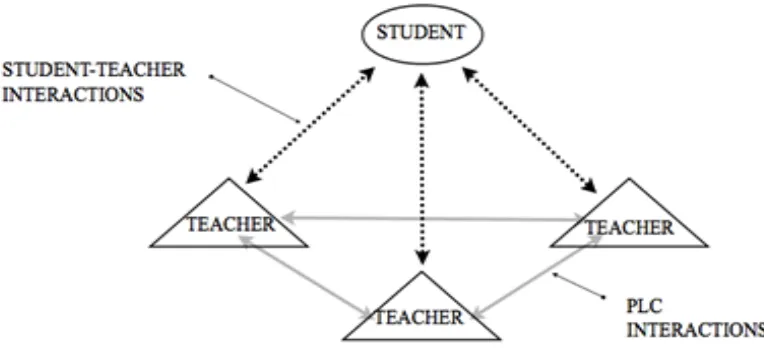
Figure 1 below can schematically represent these relations:
In the figure above, it can be seen that while the student may be interacting with any
individual teacher (represented by the broken lines), that student will also be interacting with the network of relations that occur within a well-functioning Professional Learning
Community. This model of interaction is an example of the “bottom-up” metaphor that characterizes Professional Learning Communities, where the “top” of an organizational structure is represented in a pyramidal formation. In such a formation, the “top” interactions are fewer in number, though they may have wide-ranging effects through a larger number of interactions further “down” in the organization. In this example, the interaction of a teacher and student involves the agency of two parties, but that interaction is reflective of the interaction of three parties.
The student, while interacting directly with a teacher, could also be affected by that teacher’s interactions with the other teachers; embedded within that student’s interaction with the teacher are the effects of the teacher’s interaction with the other two teachers, so that, in essence, the student is interacting with three teachers. In a Professional Learning
Community, these interactions are distinguished from typical social interactions in that they are structured around the Essential Questions regarding the curriculum and the student’s mastery of it.
Professional Learning Communities: “bottom-up” vs. “top-down.” DuFour (2004) acknowledges a central internal conflict with leading a PLC effort: that, despite what may be the appearance of a Professional Learning Community being a “bottom-up”
the larger, meta-systemic goals), it is inevitably presented as a “top-down” (centralized, hierarchical decision-making) initiative:
The idea of bottom-up reform is great, but it is unrealistic to assume that one day a group of educators gathered together in the faculty lounge will suddenly re-examine the basic assumptions, beliefs, and practices that constitute the culture of their school. Major change almost never happens from the bottom (Evans, 1996) . . . School leaders cannot passively wait for substantive change to “bubble up.” (p. 191) The role of the administrator or other centralized educational decision maker is clear: consistently support their organization through the adoption of PLC initiatives, and provide the appropriate pressures to ensure that the organization is indeed implementing Professional Learning Communities with the proper fidelity. This conflict between the “inherently
positive” aspect of centralized “support” and “intrinsically negative” aspect of administrative “pressure” is reconciled through an approach that is guided by necessity:
In this passage, it can be seen that all members of a Professional Learning Community of any size will be operating in a domain of countervailing conceptual
frameworks: “top-down vs. bottom-up,” and “pressure vs. support.” DuFour (2004) presented a means of conceptualizing the basic currents that run through a PLC implementation.
However, what is lacking in their explanation is a means of reconciling these frameworks for PLC members with a theoretical basis more persuasive than “It just makes sense.”
Schools as Organizations
Another countervailing conceptual system within Professional Learning Communities is the divide between individual and organizational learning. As Leithwood, Aitken, and Jantzi (2006) propose, the qualitative difference between the two can be explained:
Whereas organizational learning always includes individual learning, considerable amounts of individual learning can take place without any organizational learning; organizational learning is not simply the sum of each member’s learning. Unlike individuals, organizations do not have brains. They do, however, have “cognitive systems” that permit perception, understanding, storage, and retrieval of information. (p.12)
Somewhere between individuals and organizations, a qualitative shift occurs, wherein the organization acquires the characteristics of an “individual” through the collective interactions of its constituent individuals.
out that such processes are not necessarily interdependent, as changes in understanding do not necessarily result in changes in behavior, and changes in behavior do not necessarily result in changes in understanding. However, if the changes in understanding, or especially the changes in behavior, are extreme and the environment is turbulent, “the organization lose[s] its sense of direction and stimulates such complex feedback that it becomes impossible to learn from the experience” (Leithwood et al., 2006).
If organizational learning is to take place, one of the roles of leadership, then, is to calibrate the amount and kind of change that the organization is to absorb. Too many
simultaneous changes can overload an organization’s capacity to process such change. Such overload would obviously overwhelm its capacity to engage in the “continuous
improvement” prescribed by PLC practices. Leadership’s calibration of change, in both initial and ongoing PLC implementation, must strike a balance between change and inertia. As was discussed above, this balance is achieved through a carefully modulated balance between bottom-up support and top-down pressure.
challenged. In such an environment of “challenged” culture, continuous improvement may occur as organizational assumptions are destabilized.
Leithwood et al. (2006) further cite Argyris and Schon’s (1978) assertion of yet another level of learning, in which “organizational members, together, reflect on the
processes by which they become informed and how these processes might be improved -- a form of collective metacognition” (p. 28). This “collective metacognition” recapitulates the idea that, despite not having a centralized brain characteristic of an individual, an
organization may still exhibit the characteristics of an individual with a centralized brain. In the constructivist view, an individual’s capacity for learning depends upon “a process of sense-making in which information from the environment is first perceived, then encoded, interpreted, stored, and/or retrieved for application to some problem” (p. 28). Leithwood et al. point out that analogous “cognitive” structures exist within organizations to support their organizational learning:
beliefs. Stories and those implicit norms, values, beliefs, and assumptions making up the organization's culture may also serve this executive function. (p.29)
This passage draws parallels between personal functions (needs, goals, aspirations, and values) and collective functions (mission statements, organizational goals, plans, value statements, etc.). These aspects are coordinated by a centralized “executive function.” The choice of term “function” is significant, for it implies a process rather than a specific location in time or space. Hence, the source of the executive function is dispersed: its constancy is a construct shared by the functions mentioned earlier. This construct takes the form of formal organizational patterns, as demonstrated by hierarchical organization charts, or it may be embedded in the more fluid forms of interaction amongst its constituents.
In a context with such fluidity, the organization would cease to exist as such if it did not have structures that maintained some constancy of its functions over time. Such
structures are a critical form and function of organizational learning; they will provide some insights into how organizations may engage in constant improvement, and ultimately into the functions of Professional Learning Communities and how they are led. Leithwood et al. (2006) cite Levitt and March’s (1988) assertion that:
Organizational learning centers on organizational routines based primarily on interpretations of past events. These routines, adapted incrementally in response to feedback about how well they accomplish outcomes, include the norms, rules,
for individuals: that is to search through the contents of long-term memory for previously stored knowledge capable of making sense of perceived information from the environment. (Leithwood et al., 2006, p. 29)
In this passage it can be seen how analogous structures function on both the individual and collective levels. Yet it should be remembered that the structures on the collective level are comprised of the structures on the individual level; that is to say, an organization does not exist without its constituent parts, comprised of individuals. For this reason, it may not be accurate to refer to the structures as analogous, as they are interdependent: the individual and the organization interpenetrate and define one another.
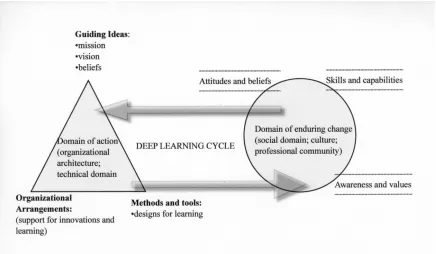
Senge (2000) developed a schematic representation of organizational learning that is represented by three corners of a triangle, which, much like a three-legged stool, would collapse if all three corners were not fully represented. The corner elements are Guiding Ideas, or the “explicit statements of the principles and values that the organization should stand for, and its purpose and direction” (p. 328); Methods and Tools, or “the means by which organizational member can be led to the broad imperatives of new ways to think and behave within their organization”; and Organizational Arrangements, or “the means by which a school system makes resources available” (p.330). In explaining the importance of the coordinated and simultaneous presence of these elements, Senge also highlights the central importance of organizational cultural change in eliciting behavioral change within the
climate that draws forth new attitudes, beliefs, skills, capabilities, awareness and values” (p.331). According to Senge, the underlying structure of an organization’s interactions with itself is the basis for its change, as illustrated in Figure 2 below (Senge, 2000, p. 334):
Figure 2: Senge’s model of organizational learning.
As can be seen from the diagram, this dynamic exists in a state of constant feedback between the two domains, where a change in one domain will create changes in the other, and vice versa. Each domain informs the other: conceptually, both domains coexist, distinct and parallel from one another, but in reality they interpenetrate one another, existing
Gap in the Literature
This Literature Review has shown that while PLC literature contains some elements of what it characterizes as a conceptual framework, this framework does not offer a theory for why Professional Learning Communities work. While the conceptual framework provides a means by which teachers and administrators can think about how to implement
Professional Learning Communities, it misses a valuable component in not explaining the mechanisms that govern Professional Learning Communities’ effects upon school culture, organizational learning, and the congruence between teaching within a PLC framework and the context of accountability under which schools currently operate.
Summary of PLC Literature
CHAPTER 4: Complex Adaptive Systems
Complex Adaptive Systems (CAS) have a broad and varied body of literature that is represented in a comparably broad variety of fields of academics and practice. As will be seen in this chapter, a central concept associated with Complex Adaptive Systems is that of “emergence,” or observed properties or behaviors of a collective entity that cannot be
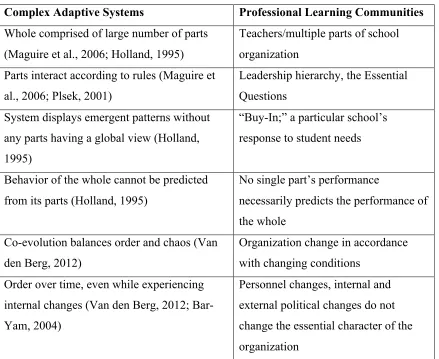
explained by the behaviors or properties of its parts (Bar-Yam, 2004, p. 15). The definition of Complex Adaptive Systems is being developed as its theoretical base is growing; however, this study will use a definition provided by Maguire, McKelvey, Mirabeau, and Oztas (2006) as a working definition:
A complex [adaptive] system is a whole comprised of a large number of parts, each of which behaves according to some rule or force that relates it interactively to other parts. In responding in parallel to their own local contexts, the parts can, without explicit inter-part co-ordination or any one of them having a global view, cause the system as a whole to display emergent patterns at the global level – the emergence of orderly phenomena and properties of the whole that cannot be predicted from
properties of parts. (p. 167)
![Standardised uptake values of 2 deoxy 2 [18F]fluoro d glucose using PET/CT in normal cats](data:image/gif;base64,R0lGODlhAQABAIAAAP///wAAACH5BAEAAAAALAAAAAABAAEAAAICRAEAOw==)