R E S E A R C H
Open Access
Fast convergent average consensus of
multiagent systems based on community
detection algorithm
Xinlei Feng
1,2*and Xiaoli Yang
3*Correspondence: [email protected] 1College of Mathematics and
Information Science, Leshan Normal University, Leshan, China
2Department of Math/Stat, Georgia
State University, Atlanta, USA Full list of author information is available at the end of the article
Abstract
In this paper, we consider fast convergent average consensus based on community detection algorithm. Generally, we know that a small network can have a faster convergence speed than a big one at the same condition. So we divide a multiagent network into several small networks. Firstly, let every small network reach own consensus, and then entire network reach the average consensus. Based on this idea, we present FCWAC Algorithm. For the FCWAC Algorithm, we obtain the results on the average consensus of first-, second-, and high-order continuous-time multiagent systems. Finally, simulation examples illustrate our theoretical results.
Keywords: Consensus; Multiagent systems; Community detection algorithm; Continuous-time system
1 Introduction
In the last twenty years the distributed consensus problem of multiagent systems has at-tracted extensive interest of many scholars, owing to many its important practical ap-plications, such as satellite configuration, unmanned aerial vehicle formation, and so on. The distributed consensus (we refer to it asconsensusin this paper) means that agents in a communication network reach a common state by exchanging information with their neighbor agents.
In fact the consensus problem has already received attention in management science and statistics since the 1960s. Borkar and Varaiya [1] and Tsitsiklis [2] wrote some pio-neering works on distributed computation of systems and control theory. Specifically, for the first time, Vicsek et al. [3] presented an analysis of the alignment problem based on a model about flocking, which was a milestone in development of the consensus theory of multiagent systems. A classical consensus model of continuous-time multiagent systems was presented by Olfati-Saber and Murray [4]. Subsequently, many scholars began to study consensus from first-order to second-order or even high-order multi-gent systems [5–17]. In 2018, the consensus problem of multiagent systems is still a hot area of research. Many scholars obtained a lot of significant results. For example, Lin et al. [18] consid-ered a distributed consensus algorithm for the second-order multiagent systems with non-convex velocity and control input constraints, which is introduced based on the union of the communication graphs has directed spanning trees among each time interval of
tain bounded length in the presence of arbitrarily bounded communication delays. Xu et al. [19] obtained the output consensus problem of discrete-time heterogeneous linear multiagent systems with switching topology and time delays by introducing a distributed predictor-based controller. Wu et al. [20] discussed the leader-following consensus prob-lem of high-order multiagent systems via a novel distributed event-triggered communica-tion protocol based on state estimates of neighboring agents, which can greatly reduce the communication load of multiagent networks. Zhang et al. [21] considered the distributed optimal cooperative control for continuous-time nonlinear multiagent systems (MASs) with completely unknown dynamics via adaptive dynamic programming (ADP) technol-ogy, which introduces predesigned extra compensators. A novel online iterative scheme was also proposed, which runs based on the data sampled from the augmented system and the gradient of the value function. Neural networks were employed to implement the algorithm, which yields approximated optimal consensus protocols. Rehan et al. [22] con-sidered a distributed consensus controller design approach for one-sided Lipschitz non-linear multiagents by employing relative state feedback. The proposed consensus control approach is less conservative for robustness against disturbances owing to its ability to handle amplitude-bounded disturbances and due to the relaxation of a balanced commu-nication topology.
For multiagent systems, especially for those having a complicated network, improving their convergence speed is a very significant work. At present, two major approaches to improve the convergence speed to consensus are optimizing the weight of the commu-nication topology [5–7, 12] and incorporating memory into the distributed algorithms [8–10], respectively. For multiagent systems, the algebraic connectivity or spectral radius of the communication topology determines their convergence speed. Therefore, we can improve the convergence speed to consensus by optimizing the weight of the communica-tion topology. For example, Zhu et al. [12] obtained that the maximum convergence speed of multiagent systems with double-integrator dynamics can be achieved by choosing suit-able gains in a periodic consensus protocol. Meanwhile, Aysal et al. [9] presented a linear local iterative protocol, which can obtain asymptotically distributed average consensus by using a linear predictor to predict subsequent states of agents. For the first time Oreshkin et al. [10] presented a theoretical demonstration, which, by adding a local predictor in distributed average consensus protocol, can effectively improve the convergence speed of multiagent systems.
However, the methods mentioned are limited when applied to high-order systems. So accelerating the consensus convergence of high-order multiagent systems is very difficult. Either it is difficult to extract the roots of a high-order equation, or there no effective methods to process a high-order equation.
However, Zhang et al. [23] presented a new community detection algorithm to accelerate consensus convergence by introducing a local modularity into the algorithm in [24–26]. The main idea of [23], which introduces the new community detection algorithm, is, firstly, dividing the entire communication topology graph of a multiagent system into several lay-ers of connected subgraphs, where every subgraph is seen as a community and, secondly, letting all communities to reach group consensus in every layer; finally, the hierarchical groups reach the final consensus of a multiagent system.
sys-tems. Therefore, due to these shortcomings, we present average consensus of first-order systems based on community detection algorithm and also consider the average consensus of second- and high-order systems based on community detection algorithm.
The remainder part of this paper is organized as follows. In Sect.2, we describe pre-liminary definitions and results. In Sect.3, we present FCWAC Algorithm based on the community detection algorithm [23] and consider average consensus of first-order multia-gent systems according to the FCWAC Algorithm. In Sect.4, we consider average consen-sus of second- and high-order mult-agent systems according to the FCWAC Algorithm. Moreover, in Sect.5, we present numerical examples to illustrate our theoretical results. Conclusions are drawn in Sect.6.
2 Preliminaries
A directed graph (digraph)G= (V,E) consists of a set of nodesV={1, . . . ,n}and a set of edgesE=V×V. A pair (i,j) is an edge ofGif and only if (i,j) is an arc from nodeito nodejofG. Likewise, agentjis called a neighbor of agenti. The set of all neighbors of agentiis written asNi(t). Suppose that there existnnodes in a graphG. The adjacency
matrixA∈Rn×nofGis defined asa
ij= 1 if (i,j)∈Eandaij= 0 otherwise. If a graph has
the property that (i,j)∈Eimplies (j,i)∈E, then it is said to be undirected. The Laplacian matrixL∈Rn×nis defined asl
ii=
j=iaijandlij= –aijfori=j. Meanwhile, a matrixL
is called symmetric if its corresponding undirected graph has symmetric weights, that is,
aij=aji. In a directed graph, a directed path is a sequence of edges (v1,v2), (v2,v3), . . . , where
vi∈V. A directed graph has a directed spanning tree if at least one node has a directed
path to all other nodes. A strongly connected graph means that each node has a directed path to all other nodes. In this paper, for convenience, we suppose that the weight of all edges is 1 and graphs are undirected.
The community detection algorithm can be referred to the following idea based on [23]: The agent with the highest degree of importance will be selected as the cluster point of community in each iteration; the agent included in community neighbor set and making the largest increase for local module degree should be contained in community; next, the neighbor set and local modularity of community are further updated. The new community is formed until the local modularity does not increase or neighbor set is null.
Lemma 2.1([4]) (i)All the eigenvalues of the Laplacian matrix L have nonnegative real parts; (ii)Zero is an eigenvalue of L with1n(where1nis the n×1column vector of all ones)
as the corresponding right eigenvector.Furthermore,zero is a simple eigenvalue of L if and only if the graph G has a directed spanning tree.
3 The average consensus of first-order multiagent systems with FCWAC Algorithm
To obtain fast average consensus, we present FCWAC Algorithm. We will provide it fur-ther.
3.1 Fast convergent weighted average consensus algorithm—FCWAC Algorithm
The first step: according to the community detection algorithm [23], we divide the com-munication topology network into several communities.
The third step: let every community be an agent. Finally, the new system reaches the weighted average consensus.
According to the FCWAC Algorithm, multiagent systems can reach average consensus. We will further analyze the reason in Remark3.1.
3.2 The weighted average consensus of first-order multiagent systems
Letmdenote the number of agents,ndenote the number of communities, andnidenote
the number of agents in the communityi= 1, 2, . . . ,n. We provide the following dynamics equations:
wix˙i(t) =ui(t), i= 1, 2, . . . ,n, (1)
wherexi(t) andui(t) denote the position and control input of agenti, respectively. The
consensus protocolui(t) is given as
ui(t) =
j∈Ni aij
xj(t) –xi(t)
, (2)
whereaij≥0,W=Diag(w1,w2, . . . ,wn),wi=nmi,ni= 0.
Furthermore, these equations can be rewritten in the vector form:
˙
x(t) = –W–1Lx(t). (3)
For the multiagent system (3), we have the following result.
Theorem 3.1 Let G be a strongly connected graph.Then under protocol(2)system(1) (every community is seen as an agent)can reach the weighted average consensus,and
x(t) = 1n
1T nW
1T nW1
x(0),
where1nis the vector of all ones.
Proof In terms of Lemma2.1,Lhas a simple zero eigenvalue. Because all the diagonal entries ofWare positive,Wis also an invertible matrix. For the Laplacian matrixL, all the Getschgorin disks lie at the right region of they-axis of the rectangular plane coordinate system. Thus all the eigenvalues ofLare positive except 0. Next, let us multiply the matrix
LbyW–1from the left side ofL. Thus these Getschgorin disks still lie at the right region
of they-axis. So the eigenvalues ofW–1Lare also positive except 0. Moreover,W–1Lalso has a simple zero eigenvalue. Thus system (3) is asymptotically stable. Obviously, we can obtain that 1nis a right eigenvector ofW–1Lcorresponding to the zero eigenvalue, and
1T
nWis a left eigenvector ofW–1Lcorresponding to the zero eigenvalue.
Meanwhile,W–1Lcan be rewritten as the Jordan canonical formSJS–1, whereJ is the
Jordan block matrix with its eigenvalues being the diagonal entries. For the columns ofS,
sk,k= 1, . . . ,n, can be chosen to be the right eigenvectors or generalized right eigenvectors
associated with eigenvalues ofW–1L. Similarly,hTk,k= 1, . . . ,n, which are the rows ofS–1
left eigenvectors associated with eigenvalues ofW–1L. Furthermore, we chooses
nW1 as the eigenvectors corresponding to the zero eigenvalue.
So we have
Remark3.1 In terms of the third step of our FCWAC Algorithm, every community is con-sidered as an agent (the subsystem formed by one single community has already reached consensus, and every agent in the same community has the same state). Therefore we have
niagents with the same state in the communityi. Due towi=nmi,i= 1, 2, . . . ,n, we can
eas-ily obtain 1TnW
1TnW1x(0) = 1
T
nx(0), wherex(0) is the initial condition of agents in the third
step of the FCWAC Algorithm, andx(0) is the initial condition of the second step in the FCWAC Algorithm. Therefore our algorithm can indeed reach average consensus.
4 The average consensus of second- and high-order multiagent systems using the FCWAC Algorithm
For the average consensus of second- and high-order systems, we still use our FCWAC algorithm to process it. The weighted consensus of second-order multiagent systems is considered in the following section.
4.1 The average consensus of second-order multiagent systems using the FCWAC Algorithm
Similarly, letmstill denote the number of agents,ndenote the number of communities, andnidenote the number of agents in the communityi= 1, 2, . . . ,n. We present the
fol-lowing dynamics equations:
wix˙i(t) =vi(t), i= 1, 2, . . . ,n, (4)
wiv˙i(t) =ui(t), i= 1, 2, . . . ,n, (5)
wherexi(t),vi(t), andui(t) denote the position, velocity, and control input of agenti,
re-spectively. The consensus protocolui(t) is given as
Furthermore, these equations can be rewritten in the vector form:
˙
x(t)
v(t) =Φ
x(t)
v(t) , (7)
whereΦ= ( 0 W–1
–W–1L–W–1L).
For system (6), we have the following result.
Theorem 4.1 Let G be a strongly connected graph.If(8)has only real roots or all the nonreal complex roots of(8)have negative real parts,then,under protocol(6),system(7) (every community is seen as an agent)can reach the weighted average consensus given by
x(t)
v(t) =
⎛ ⎜ ⎝1n
1TnW
1T
nW1x(0) +t1n
1TnW
1T nW1v(0)
1n 1
T nW
1TnW1v(0)
⎞ ⎟ ⎠.
Proof According to the characteristic equation
0 W–1
–W–1L –W–1L
x(t)
v(t) =λ
x(t)
v(t) , we get
W–1LW–1+λW–1L+λ2In
Wx(t) = 0.
To obtain the eigenvalues ofΦ, we only need to solve
L+λLW+λ2W2= 0.
Further, we only need to solve
L(In+λW) +λ2W2= 0. (8)
Ifλ∈Randλ> 0, then we get
(In+λW)TL(In+λW) +λ2W2=(In+λW)TL(In+λW) +λ2(In+λW)TW2= 0.
So|L(In+λW) +λ2W2| = 0. Furthermore, we can get that the real eigenvalues ofΦ are
not positive.
From (8) we can also obtain that 0 is an eigenvalue ofΦ and its algebraic multiplicity is 2.
If (8) has nonreal complex roots or negative real roots and if all nonreal complex eigen-values of (8) have negative real parts, then we can prove that e system (7) can reach con-sensus, which will be proved in the following paragraph.
Furthermore, Φ can also be written as the Jordan canonical form SJS–1, where the columns ofS, denoted bysk,k= 1, . . . , 2n, can be chosen to be the right eigenvectors or
the rows ofS–1and satisfyhT
ksk= 1,hTksl= 0 (k=l), can be chosen to be the left
eigenvec-tors or generalized left eigenveceigenvec-tors ofΦ, andJis the Jordan block matrix with its eigen-values being the diagonal entries. We get thats1= (10n),s2= (10n) are the right eigenvectors
or the generalized right eigenvectors,hT
1 =1T 1
are the left eigenvectors or the generalized left eigenvectors corresponding to the Jordan block (0 10 0). Thus we obtain
average consensus can be obtained.
Remark4.1 According to our FCWAC Algorithm, the second-order multiagent system can reach the average consensus. The reason is similar to the explanation in Remark3.1.
4.2 Fast average consensus of high-order multiagent systems
In the following part, we consider a high-order weighted dynamical consensus of multia-gent system.
Letmdenote the number of agents,ndenote the number of communities, andnidenote
Furthermore, we can rewritten these equations as follows:
Finally, they can be rewritten as
˙
For high-order multiagent systems, similarly, we have the following theorem.
Theorem 4.2 Let G be a strongly connected graph.IfΨ has only real eigenvalues or all the nonreal complex eigenvalues ofΨ have negative real parts,then,under protocol(6),system
(11) (every community is seen as an agent)can reach the weighted average consensus given by
Remark4.2 According to our FCWAC Algorithm, the high-order multiagent system still can reach average consensus.
5 Simulation
In this section, we present two simulation examples to illustrate our consensus protocols. In the following examples, we consider a multiagent system consisting of 20 agents with topology in Fig.1and initial conditionx(0) = (0.2, 0.3, 0.5, 0.7, 0.9, 1.1, 1.3, 1.5, 1.7, 1.8, 2.1, 2.3, 2.5, 3.1, 3.2, 3.3, 3.4, 3.6, 3.7, 3.9)T. For comparison, we choose the same topology graph
Figure 1Topology graph
respectively. In the third step of the FCWAC Algorithm, the weighted Laplacian matrix is equal to
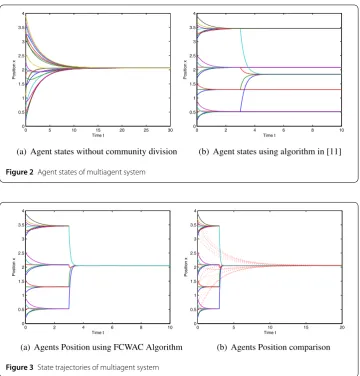
Figure 2Agent states of multiagent system
Figure 3State trajectories of multiagent system
detection algorithm in [23]. Obviously, from Fig.2(b) we can find that the multiagent sys-tem do not obtain average consensus.
Figure3(a) is the state trajectory of the multiagent system using the FCWAC Algorithm. We can find that the multiagent system obtains faster convergence speed than it is in the case without division community and indeed reaches the average consensus. Figure3(b) is a comparison figure of state trajectory between using the FCWAC Algorithm and without division community case. Moreover, we can find that our FCWAC Algorithm has faster convergence speed than the community detection algorithm in [23]. We also find that the final states of the agents verify the correctness of Theorem3.1.
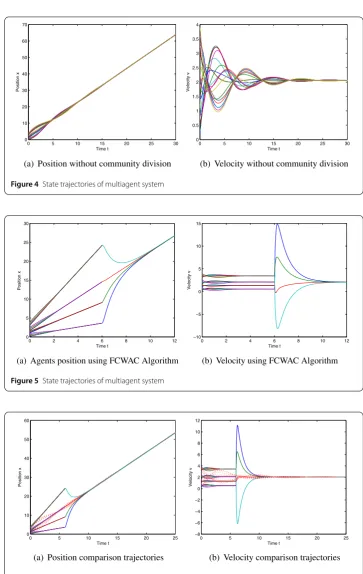
Figure 4State trajectories of multiagent system
Figure 5State trajectories of multiagent system
Figure 6State trajectories of multiagent system
6 Conclusion
noticed that our idea can also solve the average consensus problem, which divides the communication topology into several layers of community. Finally, we use numerical ex-amples to illustrate our theoretical results.
Acknowledgements
The authors are grateful to editors and reviewers for their valuable suggestions.
Funding
This work is part supported by China Scholarship council (2014085151114), Scientific Research Fund of Sichuan Provincial Education Department (16ZA0304), and Research Project of Leshan Normal University (Z1514).
Competing interests
The authors declare that they have no competing interests.
Authors’ contributions
The authors declare that the study was realized in collaboration with the same responsibility. All authors read and approved the final manuscript.
Author details
1College of Mathematics and Information Science, Leshan Normal University, Leshan, China.2Department of Math/Stat,
Georgia State University, Atlanta, USA.3College of the Special Education, Leshan Normal University, Leshan, China.
Publisher’s Note
Springer Nature remains neutral with regard to jurisdictional claims in published maps and institutional affiliations.
Received: 18 June 2018 Accepted: 21 November 2018 References
1. Borkar, V., Varaiya, P.: Asymptotic agreement in distributed estimation. IEEE Trans. Autom. Control27(3), 650–655 (1982)
2. Tsitsiklis, J.: Problems in decentralized decision making and computation. Dissertation, Massachusetts Institute of Technology (1984)
3. Vicsek, T., Cziroo, A., Ben-Jacob, E., Cohen, I., Shochet, O.: Novel type of phase transition in a system of self-driven particles. Phys. Rev. Lett.75(6), 1226–1229 (1995)
4. Olfati-Saber, R., Murray, R.: Consensus problems in the networks of agents with switching topology and time delays. IEEE Trans. Autom. Control49(9), 1520–1533 (2004)
5. Xiao, L., Boyd, S.: Fast linear iterations for distributed averaging. Syst. Control Lett.53(1), 65–78 (2004)
6. Xiao, L., Boyd, S., Kim, S.J.: Distributed average consensus with least-mean-square deviation. J. Parallel Distrib. Comput.
67(1), 33–46 (2007)
7. Kokiopoulou, E., Frossard, P.: Polynomial filtering for fast convergence in distributed consensus. IEEE Trans. Signal Process.57(1), 342–354 (2009)
8. Li, J., Xu, S., Chu, Y., Wang, H.: Distributed average consensus control in networks of agents using outdated states. IET Control Theory Appl.4(5), 746–758 (2010)
9. Aysal, T., Oreshkin, B., Coates, M.: Accelerated distributed average consensus via localized node state prediction. IEEE Trans. Signal Process.57(4), 1563–1576 (2009)
10. Oreshkin, B., Coates, M., Rabbat, M.: Optimization and analysis of distributed averaging with short node memory. IEEE Trans. Signal Process.58(5), 2850–2865 (2010)
11. Lin, P., Jia, Y.: Average consensus in networks of multi-agents with both switching topology and coupling time-delay. Physica A387, 303–313 (2008)
12. Zhu, J., Tian, Y., Kuang, J.: On the general consensus protocol of multi-agent systems with double integrator dynamics. Linear Algebra Appl.431, 701–715 (2009)
13. Ren, W.: Collective motion from consensus with Cartesian coordinate coupling. Part II: double-integrator dynamics. In: Proceedings of the 47th IEEE Conference on Decision and Control, Mexico, pp. 1012–1017 (2008)
14. Su, H., Wang, X.: Second-order consensus of multiple agents with coupling delay. In: Proceedings of the 7th World Congress on Intelligent Control and Automation, pp. 7181–7186. IEEE, Chongqing (2008)
15. Zhang, W., Zeng, D., Qu, S.: Dynamic feedback consensus control of a class of high-order multi-agent systems. IET Control Theory Appl.4(10), 2219–2222 (2010)
16. Rezaee, H., Abdollahi, F.: Discrete-time consensus strategy for a class of high-order linear multiagent systems under stochastic communication topologies. J. Franklin Inst.354, 3690–3705 (2017)
17. Huang, J., Fang, H., Dou, L., Chen, J.: An overview of distributed high-order multi-agent coordination. IEEE/CAA J. Autom. Sin.1(1), 1–9 (2014)
18. Lin, P., Ren, W., Yang, C., Gui, W.: Distributed consensus of second-order multiagent systems with nonconvex velocity and control input constraints. IEEE Trans. Autom. Control63(4), 1171–1176 (2018)
19. Xu, X., Liu, L., Feng, G.: Consensus of discrete-time linear multiagent systems with communication, input and output delays. IEEE Trans. Autom. Control63(2), 492–497 (2018)
20. Wu, Z., Xu, Y., Lu, R., Wu, Y., Huang, T.: Event-triggered control for consensus of multiagent systems with fixed/switching topologies. IEEE Trans. Syst. Man Cybern. Syst.48(10), 1736–1746 (2018)
22. Rehan, M., Jameel, A., Ahn, C.: Distributed consensus control of one-sided Lipschitz nonlinear multiagent systems. IEEE Trans. Syst. Man Cybern. Syst.48(10), 1297–1308 (2018)
23. Zhang, B., Chang, D., Li, Z., Ma, D.: On convergence rate for multi-agent consensus: a community detection algorithm. In: 32nd Youth Academic Annual Conference of Chinese Association of Automation, pp. 72–77. IEEE, Hefei (2017) 24. Asmi, K., Lotfi, D., Marraki, M.: An approach based on the clustering coefficient for the community detection in social
networks. In: International Conference on Security of Smart Cities, vol. 61, pp. 1–8. IEEE, Paris (2016)
25. Epstein, M., Lynch, K., Johansson, K., Murray, R.: Using hierarchical decomposition to speed up average consensus. In: Proceedings of International Federation of Automatic Control (IFAC) World Congress, pp. 612–618. IFEE, Seoul (2008) 26. Li, X., Xi, Y.: Hierarchically decomposing multi-agent system to accelerate group consensus. In: Proceedings of Asian