ISSN: 1992-8645 www.jatit.org E-ISSN: 1817-3195
312
HETEROGENEOUS CROWD-SOURCING AND DATA
FUSION MODEL FOR DISASTER MANAGEMENT
SERVICES
GAURAV TRIPATHI1 AND DHANANJAY SINGH1
1
Senior Research Engineer, Bharat Electronics Limited, Ghaziabad, India
2*
Department of Electronics Engineering, Hankuk University of Foreign Studies, Yongin, South Korea *Corresponding E-mail: [email protected]
ABSTRACT
In the present study of heterogeneous crowd sourcing is a novel field which shall bring marked improvement in the field of decision support system. At this point of time, the world is evolving technologically and thus we have started emphasizing on human brains as a specific physical sensors as far sensing capabilities are concerned. There are many human beings who are actually Subject Matters Experts (SME). We need to tap this potential of human brain and make them as sensors for our decision support system. Thus transforming the humans in to sensors is a new concept of getting data attributes which shall help in decision support system. With humans evolving and being utilized as a sensor the concept of crowd sourcing has evolved and the focus has now been shifted to new paradigm of crowd sensing (C-SENSE) of events along with the traditional sensors. This paper presents a conceptual communication mechanism for heterogeneous crowd sourcing which is fusion a of hierarchical-IMS (ID-mapping server) and data fusion model to support hand-in-hand for disaster management’s services.
Keywords:Crowd sourcing, Data Fusion, Heterogeneous sensors, ID-Mapping Server
1. INTRODUCTION
We are fast transforming technologically and we are losing vital natural resources at the cost of development. We are facing numerous calamities in which thousands of precious human lives are lost. The latest have been in India where a whole pilgrimage center has been wiped off and huge losses have been estimated [1].This is the ideal type of scenario where we want an early warning system or more so a disaster management system. For any such system we must have a decision support system [5] [6] which can warn us of the eventual losses and most importantly save human lives.
There are several researchers have tried to some technological solutions for all such places. For example, we can easily deploy some sensors to give us important attributes such as temperature, wind pressure, rainfall estimate etc. [23]. We must understand that when a disaster happens we cannot estimate the evolving situation on a real time basis. In a disaster there is an every possibility of losing our vital sensor resources too. Since these sensors are scarce and cannot be present everywhere and
any time so we need an alternate sensing system. Thus in that case, crowdsourcing human sensing data can be an alternate solution [4]. The concept of crowdsourcing comes in where human acts like sensors and they sent us data which can be used in a defined data fusion model [13]. Human beings have five senses but the primarily used are observation and hearing. Thus by observing the situation human beings can give us whatever information they are exposed to a Hybrid Fusion Centre (HFC). This HFC can receive all the information from the actual sensors as well as human sensors. By human sensors we mean to say that each human being who is a part of crowdsourcing will have some digital device through which the person can give us the actual observations. With the advancement of technology smart mobile devices have become handy and cheap and are in range of almost each human being. These mobile devices now have cameras, temperature sensors, pressure sensors, vibration sensors etc.
ISSN: 1992-8645 www.jatit.org E-ISSN: 1817-3195
313 applications have been made available which are more pervasive in nature, location aware as well as some are even context aware [2]. Using these devices more people are able to participate in crowdsourcing sensing and application systems [3-6] in a wide series of application such as weather sensing, noise level, air quality, traffic conditions, etc. But there are several problems in such a system. The number of volunteers, the mobility model followed by each individual will be different. Availability of such volunteers, cost management, visits to actual site for live information, the information format in which the human shall send the desired information, and of course the safety of participating humans in critical disasters.
There would be various ways to solve these problems such as:
• To design a direction map to show the participants direction up to destined destination.
• We can get the mobility traces of individual if we can develop certain mobility models of individual [7].
• There has to be way of creating ways of developing volunteers for such sensing programme.
• We can deliver the participants their actual required presence in the respected affected area based on their performance in such a programme.
In this paper we are focussing on the part of human participation mechanism as well as finding the gaps where our sensors are not deployed due to various constraints like terrain weather, costs, maintenance etc. Thus our problem as one such dimension of plugging the gap of lack of physical sensors as stated in. We can have samples of such volunteers whose credibility of information can have statistical values which can be used for credibility purposes. We present a novel way of deriving the data fusion [8-13] attributes by using the Hierarchical-IMS fusion model which has various levels of processing and refining the data. Thus the primary aim of object identification is achieved but also the process can be used for process refinement itself. The second contribution can be described in terms of developing mobility process for the volunteers as well as the report format for specific scenarios for specific disaster types. Thus well prepared report format will solve the major hurdle of human sensing of sending some random terms for description of the situation. The hierarchical-IMS and data fusion technologies are combining the human sensing as well as various other sensors. Finally, the proposed method of
collection of data from human sensors as well as fusion method for creating information from raw data that the human sensors are delivering. This information can be further fused for decision making with the actual sensors present at the site, if any. For statistical testing as samples of such volunteers and their credibility of information can analysis with the help of expectation maximisation [10] or detection estimation [11] algorithms.
In future, we are planning to analysis fuzzy inferences in a statistical term which can be more understanding for human being. And then there is another problem of credibility of human reports.
In this context, the remaining of this paper is organized as follows. Section II presents basic concepts of CROWD-SENSE and introduces the crowd sourcing initiatives considered in this work. Section III introduces the hierarchical-IMS model. More specifically subsection introduces IMS purpose, describing its basic elements and networks control approach. Section IV presents discerption scenario and introduces human mobility model with its basic information. Finally, the Section V concludes the final remark of paper.
2. C-SENSE: HETEROGENEOUS CROWD
SOURCING
ISSN: 1992-8645 www.jatit.org E-ISSN: 1817-3195
314
Fig.1. A Simple Scenario Of Heterogeneous.
2.1 Random Participants
The most common model that can be used in such CROWD-SENSE scenario can be random selection of participants. The area under disaster surveillance may be identified first hand. We must also identify the people living in and around these areas. From this database of human population, we can select randomly people who can participate in our CROWD-SENSE based inference system. These people can be provided some digital device in which these people can send Free Messages (FM) to our Hybrid Fusion Centre. Now here the real issues of interpreting the messages shall come up. Let’s say the scenario can be of prediction of flood. The water level is rising fast and can cross the danger mark of that area any time in future. Hence, we have to consider what type of people has participated in our crowd sourcing system. There can be so many divisions regarding the human samples that we have collected such as:
1) People in age brackets of young, middle age, old can be classified (age factor).
2) Number of males as compared to females can also be classified.
3) Overall education factor will also determine the outcome of the system. More the number of illiterate the lesser the chance of getting sensible replies.
4) There will be people who shall be disinterested in all this process.
5) The free messages that they shall send will have words from their own languages. Such as we need to arrange suitable language interface for local people so each and an individual will have their own interpretation of the scenario in his choice of words.
6) There can be many applications which can support multi lingual formats and have interface with English format for meaningful understanding of the situation.
7) Multiple meaning could be derived from the same word so we need ontological assistance of interpreting these words to make meaningful senses. The problem can be more focussed by using specific domain knowledge of the respective process for which the inference mechanism is being sought.
8) It is also to be debated where long sentences of human inference should be sought or only specific words or more precisely only binary input of concluding whether the scenario for which information is sought is actually present or absent.
9) The safety of crowd is of utmost importance. Human lives cannot be sacrificed for impactful disaster information.
2.2 Trained Participants
In this scenario, crowd participating has been trained previously in a demo form. They can be pre informed about the disaster operation and easily follow the format of the reporting procedure. Therefore, we must have to trained each and every human being shall be trained for fuzzy logic information delivering which actually suits human mind [21]. There shall be a Disaster Report Format (DRF) which shall be used for getting the list of keywords as an input for each type of disasters. Keywords for accident will be different from the keywords of floods and also earthquakes. These keywords shall be compiled beforehand in to making the system respond to specific DRF procedures. This specific report will have more inferential potential based on its keywords and usage of fuzzy logic which can mimic human reasoning well. Thus trained participants can be very helpful to create a series of virtual sensors in comparison to actual and physical sensors.
3. HIERARCHICAL ID-MAPPING AND
DATA FUSION MODEL
ISSN: 1992-8645 www.jatit.org E-ISSN: 1817-3195
[image:4.612.91.298.74.269.2]315
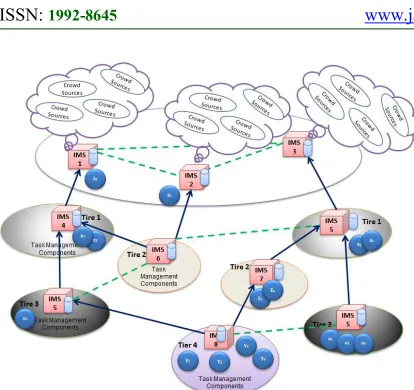
Fig.2. IP-Mapping And Data Fusion Model.
Fig. 2 shows the hierarchical ID-mapping and data fusion model where each tier has a specific role for identification of objects to overall process refinement of the system. In our sense this is known as IMS. When we are talking about virtual sensors like crowds, they will also form the sensor reports to the IMS system. The CROWD-SENSE system will utilize this model by using sensors as well as crowd for sensing the events, person, or thing for a better situational awareness. At the top tier, these systems must combine crowd sources data with varying temporal, spatial, spectral and radiometric characteristics. For example in a battlefield scenario, to detect an isolated object at a specific location and classifying it as a soldier or tank and even identifying it specifically as a commercial or war ship is all covered under an object assessment lower tier-3 or 4 and IMS server would be verify/assessment a situation that can use priory information to indicate army head-office such as the number found and location would further indicate unit size, if not the exact unit, and possibly the unit’s disposition such as movement to contact. The impact assessment could use this information then indicate that the route and firing detected by acoustic sensors may not have been an attack directly but a camouflage. Each IMS has a huge possibility of data management system and these management systems include virtual sensors known as crowd-sourced data. Human life is precious, it has to be saved. Even while assessing and monitoring crowds, it is the duty of operator at the hybrid fusion centre, to move around the crowds in and out of the system. More experienced participants will be utilized for areas which shall have more anomalies in the system. The areas where the inferences are less constructive, those
areas shall have better participating and trained crowds for our reports formation.
3.1 Surveillance and Sensor Relationships
In any event of importance it is highly imperative to know about the situations beforehand. We can only attack the problem with our solution if we have known about the problems beforehand or in real time basis. This issue is resolved with the approach of surveillance. Surveillance is continuously watching, analysing and report information about a specific disaster affected area. To effectively gain surveillance we need sensors. Most common sensors include cameras, sound sensors, pressure, temperature sensors etc. It is known that these actual or physical sensors cannot be deployed everywhere and anywhere. These sensors have their limitations.
ISSN: 1992-8645 www.jatit.org E-ISSN: 1817-3195
316
Fig.3. Surveillance Sensors for Battlefield system.
The complexity of the problem can easily understand by the fact that there is a presence of heterogeneous sensors as well as there is a presence of heterogeneous age group of crowds with different upbringings
4. DISASTER MANAGEMENT SCENARIO
We believe that in order to achieve the vision of a future CROWD-SENSE fully suited to future needs, several aspects needs to be focused. For example the scenario of disaster management in which there is a train accident in an area where our sensors are minimal and real time information of the causalities and rescue operations is being hampered by the bad weather. We assume that there are minimal vision sensors which are sending a hazy picture of the incident at night. However, in this case the participating crowd comes in to play and decides to send the Disaster Report Format (DRF), if possible, or just a text message using mobile applications. We are assuming that the DRF format which is being used by the participants otherwise at the Hybrid Fusion Centre (HFC) and then we convert the textual messages in to DRF format and use it in heterogeneous fusion. The participants shall send us the report of wind speed, wind direction, temperature, humidity, rain fall, number of passengers evacuated, saved, killed, injured and their respective addresses. This communication medium shall make use of sensor and any communication mediums. For example suppose we have received a random reports and redundant reports of the same matter. So first these reports shall be processed and can be depicted on a graph. The data fusion will try to aggregate the results and shall remove the duplicates as per Hierarchical ID-mapping model in respective IMS tier of data fusion. Each such sample shall be collected by the HFC which means that a particular location can be accessed and information can be known. Although, the descriptive language may be in multiple languages but we are assuming that this
is one language in which we shall receive the descriptions of the developing situations.
Fig.4. A functional structure of human mobility model.
We need to convert the information from data collected over a period of time of humans to mobility models. In future we can take the concept from opportunistic networks [7] where we find difficulties in finding the wireless information carrier. These models shall be known as Human Mobility Models (HMM) [17]. As we know HMM are an important tool of profiling human movements and in this case of any disaster, they may be contacted for becoming virtual sensors for the HFC. Several research works has been done in human mobility analyses which have been captured by real life mobility traces by academic experts and Internet communities [18-21]. Fig.4 describes beautifully what we want to achieve for HMM development in due course of time. This will resolve our participating and training issues but the consent of human being traced will be important. Therefore, in the real time collection of data is vital for preparation of mobility models and subsequently forwarding to dedicated route or ad-hoc networks has explored and examined in details. In the HMM, we can well understand how we can create genuine people for crowdsourcing. It is imperative that this process when repeated from time to time can help to train the participants in the system.
5. PERFORMANCE AND FINAL REMARKS
ISSN: 1992-8645 www.jatit.org E-ISSN: 1817-3195
317 resources using local participants. There is several challenge of using superior fusion system which must provide support for multi-sensor data fusion where human beings or their aggregates can be considered as virtually one sensor. We have experimented that how well can be sensors fused with crowd sourced data. The problem of false inputs, ambiguous inputs, redundant information and then to take a decision based on the fusion process is an important task in future. The goal of the system is to enhance the decision support system using various communication technologies like WiFi, Cellular, satellite and GPS etc. an efficient hybrid data fusion. In general each one of the human beings has the potential to understand the evolving situation. Fusion of human virtual sensors with actual sensors and integrate it and process it in a timely manner should be the ultimate aim of the future work. The CROWD-SENSE would be bringing public private partnership to enhance the quality of life and widen economic opportunities over the networks. Thus, it would be increasing effectiveness of business processes and enabling cross-sector of smart infrastructures in industry. The HMM based schemes are improving human-centered and sensor networks regulatory. The use of sensor oriented hierarchical ID-mapping model is very useful for disaster monitoring applications.
Finally, we analysis the hierarchal networks performance with respect to topology alternating cycle. As the alternating time is shorter and shorter, the performance gap becomes smaller and smaller. In a rapidly dynamic topology, crowd frequently change and thus, the portion of crowd’s roles diminishes. We interpret that mobility or unstable link quality, which contributes to changing an intrinsic crowd network topology, minimizes dependencies of specific person. Even though we examine this interpretation, we observe that crowd-detouring maintains the best performance among the strategies. Conclusively, it is beneficial to accommodate a crowd-detouring strategy to fully utilize available network resources and to minimize undesirable impact of a specific people to an entire crowd network. Along with load balancing capability of crowd-detouring, we review previous works which deal with the vulnerability of crowds and its impact to an entire crowd networks.
In this paper, we have mainly focused heterogeneous crowd based on reliable cloud networks especially for disaster management’s services such as safety of drivers while driving on highways roads. This system is going to support various services such as economy, traffic. Further, it
would be easier for other services. Crowd soursing mechanism system would act as an alert eye for the travelers. Hence, cloud computing provides a highly scalable and on demand computing platform to end-to-end user with high elasticity and availability of services.
ACKNOWLEDGEMENT:
This work was supported by Hankuk University of Foreign Studies research fund of 2015.
REFRENCES:
[1] https://en.wikipedia.org/wiki/Kedarnath accessed by September 29, 2014.
[2] Aggarwal, C. C. and T. Abdelzaher, “Integrating Sensors and Social Networks,” in Social Network Data Analysis, Ed. by C. Aggarawal, Springer, 2011.
[3] List of Crowdsourcing Projects, http://en.wikipedia.org/wiki/List_of_crowdsour cing_projects accessed by September, 2014. [4] http://www.biomedcentral.com/content/pdf/14
76-072X-10-67.pdf accessed by September, 2014.
[5] Web Technologies for Public and Environment Health Surveillance and Crisis Management: Trend, OGC Standards and Application Examples,” International Journal on Health Geographic’s, pp 1-67, 2011.
[6] Saenz, A. “Japan’s Nuclear Woes Give Rise to Crowd-Sourced Radiation Maps in Asia” http://singularityhub.com accessed by September, 2014.
[7] Liu J. et al. “Fusing Human Sensor and Physical Sensor Data,” presented at Workshop on Resilient ICT for Management of Mega Disasters (RITMAN 2012), December 2012. [8] Xing G., R. Tan B., et al., “Data Fusion
Improves the Coverage of Wireless Sensor Networks,” Proceedings of MibiCom, 2009. [9] Gupta, M. R. and Y. Chen, “Theory and use of
EM algorithm,” Foundation and Trends in Signal Processing, Vol. 4, No. 2, 2010.
[10]Moustakides, G. V., et al., “Joint detection and estimation: optimum tests and applications,” IEEE Transactions on Information Theory, Vol 58, No. 7, July 2012.
[11]White, Jr., F.E., Data Fusion Lexicon, Joint Directors of Laboratories, Technical Panel for C3, Data Fusion Sub-Panel, Naval Ocean Systems Center, San Diego, 1987.
ISSN: 1992-8645 www.jatit.org E-ISSN: 1817-3195
318 [13]Z. Alliance, “Zigbee specification,” tech. rep.,
http://www.zigbee.org, 2007.
[14]N. Kushalnagar, G. Montenegro, and C. Schumacher, “IPv6 over Low-Power Wireless Personal Area Networks (6LoWPANs): Overview, Assumptions, Problem Statement, and Goals.” RFC 4919, Aug. 2007.
[15]M. C. Gonzalez, C. A. Hidalgo, and A.-L. Barabasi, “Understanding Individual Human Mobility Patterns,” Nature, vol. 453, 2008, pp. 779–82.
[16]C. Song et al., “Modeling the Scaling Properties of Human Mobility,” Nature Physics, vol. 6, 2010, pp. 818–23.
[17] P. Hui et al., “Pocket Switched Networks and Human Mobility in Conference Environments,” Proc. 2005 ACM SIGCOMM Wksp. Delay-Tolerant Net., 2005, pp. 244–51. [18] D. Brockmann, L. Hufnagel, and T. Geisel,
“The Scaling Laws of Human Travel,” Nature, vol. 439, 2006, pp. 462–65.
[19]Zadeh, L. A. et al. “Fuzzy Sets, Fuzzy Logic, Fuzzy Systems”, World Scientific Press, 1996. [20]Singh, D., "Developing an architecture:
Scalability, mobility, control, and isolation on future internet services," Advances in Computing, Communications and Informatics (ICACCI), 2013 International Conference on , vol., no., pp.1873-1877, 22-25 Aug. 2013 [21]Singh D., Tripathi G., Jara A.,"A Survey of