Theses and Dissertations
2014
Nurse educators' use of technical simulators in nursing
Nurse educators' use of technical simulators in nursing
preparation
preparation
Janet BaghoomianFollow this and additional works at: https://digitalcommons.pepperdine.edu/etd
Recommended Citation Recommended Citation
Baghoomian, Janet, "Nurse educators' use of technical simulators in nursing preparation" (2014). Theses and Dissertations. 444.
https://digitalcommons.pepperdine.edu/etd/444
This Dissertation is brought to you for free and open access by Pepperdine Digital Commons. It has been accepted for inclusion in Theses and Dissertations by an authorized administrator of Pepperdine Digital Commons. For more information, please contact [email protected] , [email protected].
Pepperdine University
The Graduate School of Education and Psychology
NURSE EDUCATORS’ USE OF TECHNICAL SIMULATORS IN NURSING PREPARATION
A dissertation submitted in partial satisfaction of the requirements for the degree
Doctor of Education in Organizational Leadership
by
Janet Baghoomian June, 2014
Janet Baghoomian
Under the guidance of a Faculty Committee and approved by its members, has been submitted to and accepted by the Graduate Faculty in partial fulfillment of the
requirements for the degree of
DOCTOR OF EDUCATION
Doctoral Committee:
Diana B. Hiatt-Michael, Ed.D., Chairperson June Schmieder-Ramirez, Ph.D.
Fereshteh Amin, Ed.D. Rebecca Otten, RN, Ed.D.
© Copyright by Janet Baghoomian (2014) All Rights Reserved
Page
LIST OF TABLES... vii
LIST OF FIQURES... ix
DEDICATION ... .x
ACKNOWLEDGEMENTS ... xi
VITA ...xiii
ABSTRACT ...xiv
Chapter 1: Problem and Purpose... 1
Statement of the Problem... 2
Statement of Purpose... 4
Research Questions... 5
Theoretical Basis of Study... 5
Significance of the Study... 9
Key Definitions ... 12
Key Assumptions... 14
Limitations of the Study ... 15
Summary ... 15
Chapter 2: Review of Literature ... 16
Historical Background of Nursing Simulators ... 16
Types of Simulators and Applications in Nursing Education ... 19
Types of Simulation... 22
Simulation Scenarios... 23
The Benefits of Using Simulators ... 26
Theoretical Frameworks... 29
Kolb’s Learning Styles... 35
Simulation as a Teaching Strategy in Nursing Education ... 39
Simulation Challenges for Nurse Educators... 46
Nurse Educator Perception of Simulators ... 48
Roles of Nursing Educators... 51
Why Simulation Training is Important... 54
Nurse Educator Perceptions of High-fidelity Simulators... 55
Nurse Student Perceptions on Simulation-based Training... 58
Nursing Schools Consider Curriculum Redesign ... 63
Page
Nursing Student Requirements ... 66
Simulation Helps Resolve Concerns About Patient Safety ... 70
Simulation Helps Ameliorate Recent Nursing Faculty Shortage ... 72
Summary ... 74
Chapter 3: Methodology... 76
Researcher’s Qualifications... 76
Population and Sample ... 77
Research Design... 78
Survey Development ... 78
Pilot Study ... 79
Validity of Survey... 80
Reliability ... 81
Data Collection Procedures... 82
Protection of Human Subjects... 84
Data Analysis ... 85
Summary ... 86
Chapter 4: Data Analysis and Findings... 87
Overview... 87
Analysis of Data ... 87
Demographic Findings for the Nurse Educators ... 88
Survey Findings for Research Question 1: Nurse Educators’ Perceptions of Using Different Types of Simulators in Clinical Settings ... 92
Survey Findings for Research Question 2: Students’ Perceptions Using Different Types of Simulators in Clinical Settings... 101
Additional Findings From Student Survey Data ... 109
Summary ... 111
Chapter 5: Summary, Conclusions, Recommendations ... 112
Restatement of Problem... 112
Summary of Purpose... 113
Research Design... 113
Major Findings of the Study... 114
Conclusions... 117
Recommendations for Practical Application... 124
Summary ... 127
Recommendations for Future Study... 127
Conclusion... 128
Page
APPENDIX A: Permission Request for Nursing Directors ... 148
APPENDIX B: Protocol for Survey Data Collection... 149
APPENDIX C: Nurse Educators’ Survey... 152
APPENDIX D: Students’ Survey ... 155
APPENDIX E: Matrix of Research Questions ... 157
APPENDIX F: IRB Approval Letter for Research... 164
APPENDIX G: Certificate of Completion of IRB Training... 166
APPENDIX H: Letters to Participating Colleges and Universities From Dissertation Chairperson... 167
LIST OF TABLES
Page
Table 1. Elements of Rogers’s Diffusion Theory... 6
Table 2. Five Steps of Rogers’s Adoption Process... 6
Table 3. Adopter Categories by Rogers... 7
Table 4. Intrinsic Characteristics of Innovation ... 8
Table 5. Simulation Scenario ...25
Table 6. Advantages and Disadvantages of Simulators ...28
Table 7. Kolb’s Four Learning Styles ...36
Table 8. Seven Categories of Challenges to Using Simulation...47
Table 9. RN Employment in Health Care ...68
Table 10. Characteristics of RNs and Nurse Educators in the United States ...69
Table 11. Number of Nurse Educators and Students at Each Site ...77
Table 12. Descriptive Statistics Pertaining to the Educator’s Years of Experience as an Educator and Using Simulators ...88
Table 13. Frequency Counts for Selected Variables from Educator Dataset...89
Table 14. Educator’s Responses to the Types of Simulators Used in Their School ...90
Table 15. Educator’s Responses to the Educational Levels of their Students...91
Table 16. Educator’s Role as an Instructor with Simulation-Based Training ...92
Table 17. Educator’s Answers About Which Situations Simulators are Used...93
Table 18. Educator’s Answers about Goals for Simulator Use ...95
Table 19. Educator’s Perceptions of Challenges Related to the Use of Simulators ...96
Table 20. Educator’s Major Concerns Related to the Use of Simulators ...97
Page Table 22. Educator’s Perceptions of the Benefits of Using High-Fidelity Simulators ....99 Table 23. Educator’s Reasons for Selecting High-Fidelity Simulators ... 100 Table 24. Educator’s Perceptions of Steps They Think Nursing Schools Should
Take to Improve Patient Safety ... 101 Table 25. Frequency Counts for Selected Variables from the Student Dataset... 102 Table 26. Student Responses for Which Training Situations They Used and Which
Types of Simulator... 104 Table 27. Student Perceptions for Challenges Experienced During Simulation
Practice ... 105 Table 28. Student Perceptions for Self-Improvement Experienced After Simulation
Exercises ... 106 Table 29. Student Perceptions of Learning Benefits from Using a Simulator ... 107 Table 30. Student Perceptions of Their Role During Simulator Practice ... 108
LIST OF FIQURES
Page
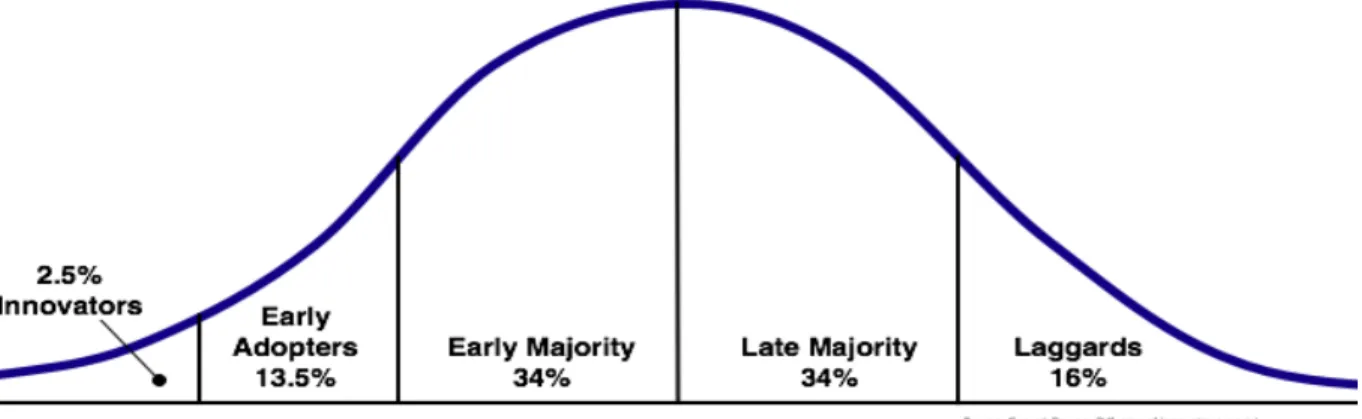
Figure 1. Types of adopters on the adoption curve... 8
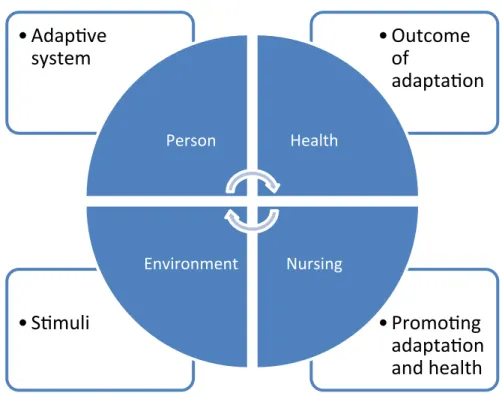
Figure 2. Roy’s Adaptation Model ... 31
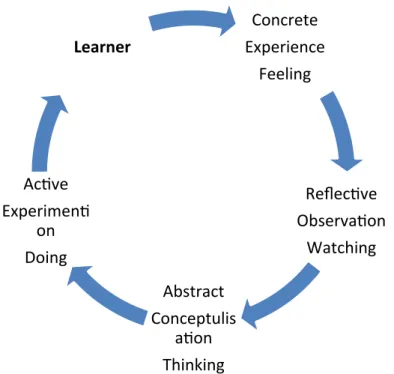
Figure 3. Kolb’s Learning Cycle ... 34
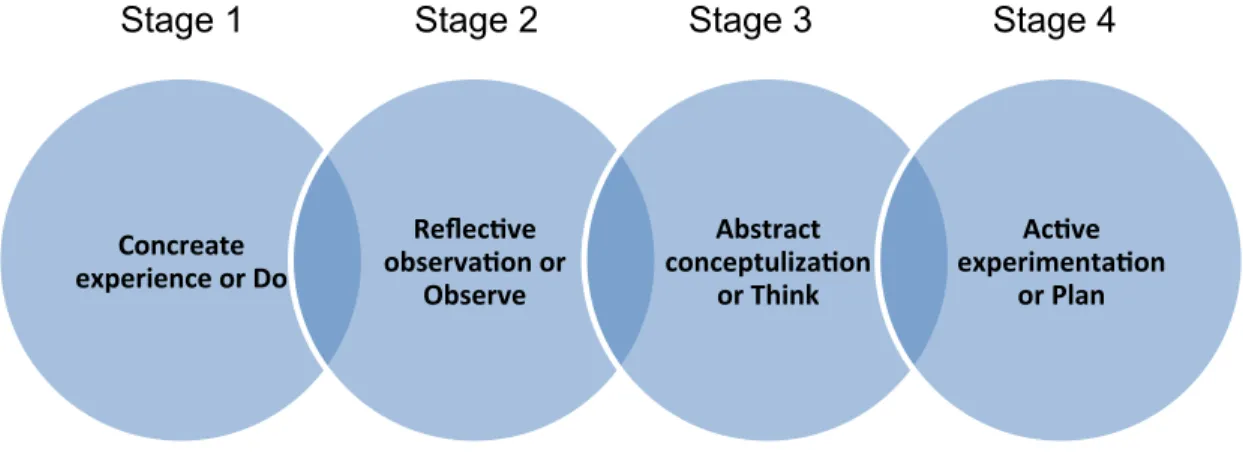
Figure 4. Four Stages of the Experiential Learning Theory ... 35
Figure 5. Kolb’s Experiential Learning Cycle ... 37
DEDICATION
I dedicate my dissertation to my parents Samuel and Margret Baghoomian for their constant love, prayer, and support in this endeavor. They motivated and
encouraged me to reach my educational goals and become a lifelong learner that they can be proud of me. Thank you for believing in me. I love you both very dearly.
ACKNOWLEDGEMENTS
First, I thank the Almighty God for giving me courage and strength to reach my educational dreams. I praise you and thank you for your wisdom and understanding that you said in your word, “knowledge is power and without knowledge people perish.” I pray that I use this knowledge not only to serve you, but also be a witness and help others to share what I learned. I love you with all my heart, my being, my soul, and my strength.
Second, I would like to thank my Chairperson, Dr. Hiatt-Michael Diana, who journeyed with me through this process, which I will never forget. She has been my coach, mentor, and guide to the end to complete my journey. I am so grateful for her wisdom, understanding, knowledge, and professionalism. She devoted endless hours reading my draft papers to give me feedback, and redirected me when things were unclear to me. Thank you for all your time dedicated to me. I love you, and I bless you for your hard work.
Next, I would like to thank my precious committee members, Dr. June
Schmieder-Ramirez, Dr. Fereshteh Amin, and Dr. Rebecca Otten, for their support and guidance throughout this journey. I cannot find words to express my gratitude. Thank you for your time and being on my committee. Special thanks to Dr. Otten, who
assisted me to conduct a pilot study at Fullerton. Also she was one of the expert panels in finalizing the survey questions. Barbara Doyer, coordinator of the simulation lab at Fullerton, and Christina Lee, nursing faculty at Moore Park were also the expert panels for my survey questions. Thank you for your comments and suggestions. Special thanks to Dr. Tom Granoff for my data analysis at the end of my journey. Also, I would
like to thank the school administration personnel, Christie Dailo, who has an answer to every question, keeps Pepperdine running 24/7, and kept us updated throughout this journey. Also, I would like to thank Regina Meister for guiding us through several sessions how to write a good dissertation paper. Also, thanks to my editor, Ardell Broadbent, for her excellent work.
Finally, I would like to thank schools, West College, State University, Bridge College, and Coast University allowing me to conduct my research at their schools. My appreciation goes to all nurse educators and students who participated in my research. May God bless you all.
VITA EDUCATION
Pepperdine University
Doctorate in Education: Organizational Leadership, May 2014 University of Phoenix
Master of Science in Nursing/Education, October 2006 University of La Verne
Master of Science in Business Administration, May 2004 Master of Science in Health Administration, May 2003 Bachelor of Science in Health Administration, June 2002 Glendale Community College
Associate Degree in Registered Nursing, December 1986
PRESENT EMPLOYMENT
2012-present: Part-time faculty at Westwood College, teaching health and business 2013-present: Online nursing faculty at Stanbridge College, teaching RN-BSN program 2013-present: Leadership Empowerment Charter (LEC) consulting agency: Director for workshops and training
PREVIOUS WORK EXPERIENCE
Providence Health Services: Level III-NICU RN, Charge and transport nurse, 1988-1996 Providence Health Services: Neonatal clinical & competency fair instructor, 1998-2006 Care-Nex Health Services: Neonatal Case Manager, 2006-2009
Cal State University: Nursing instructor for RN-BSN program, 2007-2008
ABSTRACT
Simulators ranging from low- to high-fidelity are used by nurse educators to train
student nurses. The usefulness of the high-fidelity simulators expose student nurses to clinical situations has been debated for many years. Few nursing schools have
embraced the use of high technology simulators in teaching and learning. The purpose of this study was to (a) determine how different types of simulators are used to train student nurses and to (b) examine educator and student perceptions regarding the use of simulators in clinical practice. Two surveys were developed to examine the
perceptions of nurse educators and nursing students in 4 training sites. A total of 26 nurse educators and 296 nursing students participated in the study.
The data from the surveys identified their perceptions on the function, benefits, limitations, challenges, and concerns regarding simulator use in clinical settings.
Findings from this study indicated that (a) nurse educators were significantly more likely to use low-fidelity simulators (84.6%) than medium- or high-fidelity simulators and (b) they have utilized simulators for all size classes between 35 to 50 students. The
greatest challenge reported by educators regarding simulator use (61.5%) was the need for ongoing training and education and technical support with high-fidelity simulators.
The majority of the students in their first or second year of nursing education reported high satisfaction for experiences using simulators, such as teamwork and collaboration (78.7%) and increase in skill competency (77.7%). Nursing students
(69.3%) experienced some anxiety working with simulators, especially using high-fidelity simulators.
A critical recommendation stated by nurse educators was an expressed request that the administration provide for (a) initial and ongoing training on simulators and technical support and (b) time to prepare scenarios or funds to purchase scenarios that include use of high-fidelity simulators. An important recommendation for students was to include orientation to and practice in the simulation lab at the beginning of the nursing program, moving from low-fidelity to high-fidelity simulators throughout the program to reduce their anxiety using high-fidelity simulators.
Chapter 1: Problem and Purpose
Technological changes in the healthcare industry are occurring at an unprecedented rate (Bremner, Aduddell, Bennett, & VanGeest, 2006; Cato, 2011; Habel, 2011; Murray, Grant, Howarth, & Leigh, 2008). Advances in noninvasive treatments, the increase of sophisticated surgical procedures and equipment, and introduction of health-management information systems continue to drive up healthcare costs. In recent years, nursing schools have faced economic and political forces that create tremendous pressure to control costs, yet ensure safety and provide quality care with a proof of excellence through evidence-based outcomes (Habel, 2011; Kohn, Grant, Howarth, & Leigh, 2000; Nehring, 2008). These forces drive instructional changes in nursing education. Nurse educators are required to acquire technological knowledge and skills needed to develop new teaching strategies for providing safe and effective care. Approximately, 48,000 to 98,000 patients die each year due to
preventable errors and lack of competent care from health professionals in U.S. hospitals (American Association of Colleges of Nursing [AACN], 2012a; AACN, 2008; Campbell & Daley, 2013; Cato, 2011). In its struggle to meet the regulatory
requirements of the Joint Commission standards, the health care is turning to technology to improve clinical, financial, and operational outcomes (Cato, 2011). Technology is used in modern healthcare practice to improve delivery and patient outcomes (Nehring, 2008; Scalese et al., 2008). In recent years, medical schools have utilized high-tech simulators for educational purposes, but the majority of nursing
schools have not yet implemented these simulation techniques (Campbell & Daley, 2013; Decker Sportsman, Puetz, & Billings, 2008; King, Moseley, Hindenlang, & Kuritz,
2008; Nehring, 2008; Nehring & Lashley, 2004), perhaps because many nursing educators fail to recognize how simulation technology could be used to provide instruction in assessment and delivery practices (Murray et al., 2008).
Nurse educators are challenged how to teach nursing students to prioritize care and think critically in their practice (Kowslski & Louis, 2000; Lasater, 2007; Parker & Myrick, 2008). Teaching with high-tech simulators could provide an alternative to traditional teaching approaches that emphasize exposure to realistic clinical situations they might not otherwise experience in a practicum setting (Hermann, 2007; Ziv, Ben-David, & Ziv, 2005). The aim of utilizing simulators is to imitate the process of dealing with real patients. However, because simulator practice poses no direct risk to real patients, there is room for error. Educators can develop clinical tasks, control situations, and create scenarios that allow hands-on training of both student nurses and nurse educators (Bremner et al., 2006; Murray et al., 2008; Schoening, Sittner, & Todd, 2006). Statement of the Problem
Nurse educators and clinicians need advanced technologies such as simulation tools to enhance their effectiveness as practitioners (Alinier, Gordon, Harwood, & Hunt, 2003; Tan & Payton, 2010). The emphasis on simulation requires nurse educators to focus on the integration and application of competency skills, knowledge, and critical thinking (Campbell & Daley, 2013; Nehring, 2008; Seropian, Brown, Gavilanes, & Driggers, 2004). Technological changes are rapidly occurring in healthcare settings; however, some nursing schools have not been developing educational approaches and curricula to incorporate those changes. Nurse educators must keep up with those changes to ensure a well-trained and well-educated nurse force for the future.
Using simulators in nursing education is costly. Today’s nursing educational schools are under tight financial constraints and have to justify the purchase and use of expensive simulators (Rogers, 2007). Low-fidelity simulators that have been used to train nurses for 50 years are now being replaced with medium- to high-fidelity
simulators. The average cost of a high-fidelity simulator is between $120,000 to
$200,000, while a medium-fidelity simulator costs around $80,000 to $100,000, dollars, and a low-fidelity simulator between $5,000 to $25,000 dollars (Laerdal Medical, 2013; McIntosh, 2006). The cost to develop a dedicated simulation center for nurse training may run $750,000 to $1,000,000 (Laerdal Medical, 2013; Nehring, 2010). Nursing administrators in universities and hospitals need data from nurse educators and their students on the benefits and challenges they may experience as a consequence of using different grades of simulators.
In addition, nursing schools administrators need information to make wise decisions in the expenditure of funds. Simulator tools and processes have been developed for student nurse training. Introducing computerized simulators in nursing education has the potential to better prepare students for the stresses they will face in caring for patients in today’s healthcare environment. Simulation in classroom settings allows the learner to function in an environment that duplicates real-world clinical activities (Bremner et al, 2006; Elfrink, Kirkpatrick, Nininger, & Schubert, 2010; Gaba & DeAnda, 1988; Johnson, Zerwic, & Theis, 2006). However, introducing such simulators could be stressful for nursing educators, especially if they have neither used them nor have been properly trained to use them. Nurse educators must learn how to apply use of simulation tools in their training for improving patient safety and effectiveness in
clinical care (Medly & Horne, 2005). Student nurses can practice with simulators in a learning environment that is forgiving of making mistakes that could otherwise harm real-life patients.
Statement of Purpose
The purpose of this study was to determine (a) how different types of simulators were used in nursing schools by nurse educators to train student nurses, and (b) the perceptions of nurse educators and students regarding the use of simulators in a clinical setting. These answers could help examine why high-fidelity simulators have not yet been embraced by nurse educators or students.
Nursing schools have long utilized simulators in the form of models of anatomic parts and manikins as clinical teaching tools. Current interest in computerized
simulators has grown because it is believed these simulators could help nurse
educators teach student nurses how to provide quality care while minimizing mistakes (Schiavenatro, 2009; Shearer & Davidhizar, 2003). Ongoing development of nursing competence is essential to promoting patient safety. Computerized simulators could facilitate a variety of activities to support competence in practice during nursing education and help spur the development and implementation of innovative nursing educational programs. Nurse educators could also benefit from using the simulation programs, which could help them become more future-oriented, stay connected to clinical practice, and remain current in education trends. The goal of this study was to determine whether nurse educators’ simulation tools help prepare nursing students to deliver safe and effective patient care.
Research Questions
The following are research questions within the context of the study.
1. What are nurse educators’ perceptions of using simulators to train student nurses in a clinical setting?
2. What are student nurses’ perceptions of using simulators to receive training for practice in a clinical setting?
Theoretical Basis of Study
This study employs diffusion of innovation theory to assess how nurse educators are adopting medium- and high-fidelity simulators into their teaching. Everett Rogers’s diffusion of innovations theory (Rogers, 2003) is viewed as one of the pioneer theories concerning technology adoption and was used to guide this study. Rogers noted that it is difficult for any new practice or idea to be widely adopted (Rogers, 2003). A common problem is how to speed up the rate of diffusion of an innovation in an organization and individuals. When nursing schools implement high-tech or innovative practices, they could face major challenges in the adoption and sustaining of those innovations if they involve major changes in thinking and behavior. Rogers (1962, 2003) described diffusion as a “process in which an innovation is communicated through channels over time among the members of a social system” (p. 5). Diffusion refers to a “social change that allows alteration in the function or structure of a social system” (p. 5). Social
change occurs when new ideas are invented, diffused, adopted, or rejected. The diffusion of innovation theory involves four major elements: the innovation,
Table 1
Elements of Rogers’s Diffusion Theory
Element Definition
Innovation Perceived as new idea or object by an individual Communication
channels Messages are sent from one person to another
Time The length of time required for the innovation-decision process; the rate of speed at which the innovation is adopted by members of a social system
Social system A group of people who are engaged in problem solving to accomplish a common goal
Note. The elements of Rogers’ diffusion theory. Adapted from Rogers’s diffusion theory, 2003.
Rogers (2004) suggested that diffusion of an innovation occurs through a five-step process. There are a series of communication channels among the members of a social system to make decisions over a period of time in this process. The innovation-decision process describes the steps taken by organizations as they decide whether to adopt an innovation (see Table 2).
Table 2
Five Steps of Rogers’s Adoption Process
Stage Process definition
Knowledge The person is exposed to an innovation with no prior knowledge and shows no interest to find out information about the innovation
Persuasion The person shows interest and seeks information about the innovation.
Decision The person learns about the advantages and disadvantages of the innovation and will decide to reject or adopt; the most difficult stage. Implementation The person determines the use of the innovation for a situation and
may seek more information.
Confirmation The person makes the final decision to use the innovation and the group will confirm the decision.
Note. Five steps of Rogers’s adaptation process. Adapted from Rogers, 1962 diffusion theory.
Rogers (1962, 2004) defined the rate of adoption and measured the length of time required for members of a social system to adopt the innovation. He further explained that people who adopt an innovation first require a shorter adoption period compared to late adopters. He categorized five types of adopters in his theory: innovators, early adopters, early majority, late majority, and laggards (see Table 3; Figure 1).
Table 3
Adopter Categories by Rogers
Adopter
category Description
Innovators Innovators are first to adopt something new. They are usually young, risk-takers, have social interaction with other innovators, and take financial risks adopting technologies.
Early adopters These people are usually young with high education levels, higher social status levels, and they have the highest degree of leadership. Early majority People in this category have social status and communicate with
early adopters but are unlikely to hold leadership positions. Late majority In this category individuals adopt an innovation only after the
majority of people have already adopted it. They are skeptical, have low social status, and few financial resources.
Laggards People in this category are the last to adopt an innovation; they tend to be advanced in age, focus on tradition, and have low social
status.
Note. From Rogers’s adopter categories. Based on “Rogers’s adopter categories,” by Rogers, 1962.
Rogers described several intrinsic characteristics of an innovation that influence an individual’s decision to reject or adopt it. These characteristics are: relative
advantage, compatibility, complexity or simplicity, trialability, and observability (see Table 4).
Figure 1. Types of adopters on the adoption curve. Based on “Types of Adopters,” by E. M. Rogers, 1983, Diffusion of Innovation (3rd ed.), p. 247. Copyright 1983 by the
Free Press. Table 4
Intrinsic Characteristics of Innovation
Intrinsic characteristics
Definition
Relative advantage
How much improvement has been made to an innovation, compared to previous generations of the item or process? Compatibility How easily can the innovation be assimilated into an individual’s
life? Complexity or
simplicity
If an innovation is perceived as complicated, not user-friendly, and difficult to use, it is unlikely to be adopted
Trialability How the innovation can be tried. If a user tries it, the person will be more likely to adopt it.
Observability How visible the innovation is to other people. When an innovation is visible and allows communication among social groups, personal networks and peer interactions will create more negative or positive reactions
Note. Based on Rogers’s diffusion theory, 1962.
Rogers explained that throughout organizations, leaders play a major role in communication of information about an innovation. Leaders have the most influence on the decision-making process of late adopters. The authoritarian decision-makers with
high positions of power stand behind an innovation and break through any opposition (Rogers, 2003). These leaders are known as change agents who are connected within the network or held in high esteem by employees. When a change agent decides to adopt or reject a technology, his or her employees will likely follow suit.
The diffusion of innovations model can be seen in many nursing schools and healthcare organizations. Examples include adopting a new computer or simulator system in clinical practice settings. Although rarely seen in hospitals a few decades ago, today computers are necessary tools for nursing departments. Use of certain computer programs have proven to help organizations cope with the demands of the environment, reduce ineffective behaviors, while enhancing effective behaviors and driving down overall costs.
Significance of the Study
The significance of this study was to provide a critically needed assessment of the adoption of simulators in the classroom by nurse educators and students. Results have practical, theoretical, and methodological significance for education programs in nursing and healthcare.
Practical significance. This study provides information to administrators of nursing schools, nursing associations, hospitals, and vendors. It has the potential to inform them regarding how nurse educators and student nurses utilize simulators in their learning environment. Information can also be used to guide leaders to make cost effective decisions in selection of simulators for instructional use. In addition, the study provides information on nurse educators’ concerns regarding challenges that occur
when using different types of simulators for instruction. This information will guide leaders regarding appropriate professional training opportunities for nurse educators.
Student nurses’ concerns regarding perceived benefits from working with simulators have also been addressed. A survey was administered to students with questions regarding level of education, experience with simulators in practice settings, challenges experienced with simulators, benefits from use of simulators, and their roles in simulation practice. The survey results defined perceived benefits of using each type of simulator, which will assist nursing administrators and nurse educators to evaluate simulation learning outcomes and the effectiveness of using each simulator by
integrating experience with knowledge.
This simulation method can transform curricular planning from a traditional to a new paradigm with greater flexibility. In addition, simulators do not behave
unpredictably as might a real patient. Instead, they provide a standardized clinical experience. Other professions incorporated simulation technology in their training programs, such as flight simulators for pilots, war games, and combat training for military. Skills are improved by placing trainees in life-like situations and providing feedback about their reactions to simulated conditions. This not only enhances the development of trainees’ skills, but also creates collaborative work environments among team members that can potentially help foster a safety culture.
Simulation techniques can be adopted for use in training nurses in surgery, maternity, technical, procedural, and life-support skills necessary in a critical care unit or emergency room. Simulation can be especially beneficial for improving educational outcomes in multiple domains. Utilizing human simulators can increase students’
self-confidence and minimize anxiety in the patient care setting. Students can practice psychomotor skills and implement interventions under the supervision of nurse
educators so they feel more competent when assigned to care for a patient. Working in a small group with simulators can provide students with a variety of experiences, roles, and opportunity for repeating practice skills and enhancing work proficiency.
Methodological significance. An assessment of the nursing programs and nurse educators was developed to identify teaching approaches for training student nurses to practice with real patients. This allowed for the identification of (a) how the nursing curriculum could be modified and (b) where new teaching methods for
improving competency skills.
Theoretical significance. This study applies Rogers’s (2003) diffusion of innovation theory, which has not been used in nursing research and practice. The findings from this study enhance the utilization of theoretical frameworks by nurse educators. The rationale for using Rogers’s theoretical model are: (a) individual ability to adopt an innovation depends on adopter’s awareness, interest, evaluation, trial, and adoption; (b) importance of communication among adopters from early to majority adopters, only through face-to-face communication before individuals decide to adopt; and (c) qualities necessary to spread innovations. Instead of focusing on individuals, focus should be how innovation is perceived, valued, and is consistent with past experiences. Of importance is to understand (a) the degree and rapidity to which the nursing profession as a culture adopts innovations and (b) to what degree are ideas that are simple and easy to understand adopted, versus ideas that require development of new learning skills and understanding (Rogers, 2003).
Key Definitions
• Needs assessment: A systemic process used for addressing needs, education, training, or improvement in learning. It is a tool to clarify problems and identify solutions or interventions. A needs assessment could take the form of a survey, interviews, or group meetings to determine which actions or decisions would be the most effective and efficient for achieving the desired outcomes (Krautscheid & Burton, 2003).
• Nurse educator: A registered nurse with at least a master’s degree in nursing who is also a teacher. Nurse educators work as faculty members part-time or full-time in nursing schools, hospitals, and community colleges sharing
knowledge and skills to prepare student nurses for effective practice. A nurse educator spends time teaching in the classroom or in the clinical skills lab, handling administrative work, coaching and mentoring students, and keeping up with current nursing knowledge (AACN, 2008). A nurse educator may also be called a preceptor or a clinical supervisor (Mead, Hopkins, & Wilson, 2011). • Simulation: Simulation in health care is a set of techniques that often involves
technology, but not always. It can be used for purposes of education,
assessments, training, or research for real-world practices. Its goal is to replicate reality (Tan & Payton, 2010).
• Fidelity: This term describes the accuracy level of the simulation being used and how well a simulator reproduces the state and behavior of a real-world object, feature, or condition. Fidelity can be defined as low, moderate (medium), or high (Eddington, 2011).
• Low-fidelity simulators: These types of simulators are less expensive and easier to use and transport. Typically, low-fidelity simulators help demonstrate
psychomotor skills and do not provide learners with the feeling of working in real-life clinical settings. Examples of low-fidelity simulators are models of anatomic parts with no feedback devices, such as an arm that allows nursing students to practice I.V. insertion techniques (The Staff Educator, 2009).
• Medium-fidelity simulators: These simulators may include a model of full or partial body and can make some use of computer programming. They allow learners to practice intubation, listen for breath sounds, and feel pulses.
However, these models do not show any movement when a student is listening to breath sounds or performing other techniques. The medium-fidelity simulators replicate psychomotor skills, but they lack the realism of real-life patient
scenarios (National League for Nursing, 2009).
• High-fidelity simulators: These are also referred to as human patient simulators (HPS). This is the most sophisticated type of simulator, including a computerized manikin that feels realistic to the learner. The simulator allows nurse educators to implement a variety of scenarios, and the students’ actions in those situations can be videotaped and played back later for debriefing and further instruction. HPS allow learners to develop knowledge and skills to apply in a realistic clinical situation as they participate within a clinical setting without harming a live patient. The HPS manikins are capable of duplicating realistic physiologic responses, such as heart sounds, respirations, pulses, and pupil reaction. Additionally, the
HPS is capable of communicating with students by responding verbally to their interventions (Weaver, 2011).
Key Assumptions
This study takes place under the following assumptions:
1. There is a need to bridge the gap between nursing education and practice. 2. Simulation techniques facilitate learning similar to real-world experiences and
problems.
3. Nurse educators possess knowledge regarding the simulation techniques in their practice.
4. Working with simulators increases nurse educator and student competency levels.
5. Working with simulators can boost student confidence and reduce student anxiety levels in the clinical setting.
6. Nurse educators will honestly report their perceptions of utilizing simulator technology as a teaching method.
7. Nurse educators will honestly report their level of knowledge and familiarity with use of simulator technologies as a teaching method.
8. Use of simulators will improve students’ competency skills.
9. Simulators help students develop critical thinking skills needed to meet the challenges of the work environment to solve problems.
Limitations of the Study
Limitations for this study include the following:
1. Participation is restricted to nurse educators employed in nursing schools located in the State of California. Therefore, findings may not be generalized to the experiences of nursing programs outside this region.
2. The findings of this study are limited to sites that possess simulators.
3. Lack of unfamiliarity with some survey items may evoke anxiety and/or prompt false reporting, which may threaten validity of findings.
4. Participants may hesitate to report personal feelings and experiences with simulators, thereby threatening validity of findings.
Summary
Utilization of simulators in health care educational settings is a new instructional technique. The rationale for using simulators is to enhance learning and to promote critical thinking skills necessary for effective decision-making and practice in the clinical environment. The rate at which simulators have been adopted by nurse educators, nursing students, and nursing programs is variable. This study uses Rogers’s diffusion of innovation theory to describe how nurse educators and students are adopting
different types of simulators into their teaching and learning. Nurse educators’ and students’ perceptions regarding the adaption of simulators within selected nursing schools were further explored.
Chapter 2: Review of Literature
Despite the shortage of experienced nurses, nursing educators, and clinical sites for student practice, healthcare facilities are demanding that nurse educators find a better way to prepare student nurses for the real world of nursing. However, our broken economy no longer can support costly orientation and training programs for nurses. Nurses, however, are still expected to deliver safe patient care and work independently (Campbell & Daley 2013; Nehring 2008; National League for Nursing, 2005), The challenge is to find innovative, cost-effective, and efficient teaching methods that will prepare student nurses to practice safe and effective care.
This chapter provides a review of literature related to the problems in nursing education and suggested solutions. It begins with a review of literature related to the historical background of use of simulators in nursing schools and how it evolved with advancing technology, then moves to provide an introduction to different types of simulators and their effectiveness in teaching and learning, looks at challenges that nurse educators encounter, and considers how simulation technique as a teaching modality could contribute to patient safety and well-being. This overview shows why nursing education needs a powerful instructional tool and how high-fidelity simulators could be incorporated successfully into the curriculum.
Historical Background of Nursing Simulators
The initial development of simulators was for use in the aviation industry. The first aircraft simulator was built in 1929 by Edwin Link for training pilots and helping them maintain their skills in the event of emergency (Doyle, 2011; Wong, 2004). In the nursing field, a simulator was developed in the early 1900s, with the Chase manikin,
which was created by a physician’s wife, Mrs. Martha Chase, who was making cloth dolls for children. Lauder Sutherland, a superintendent and principal of the Hartford Hospital Training School, saw the cloth doll and requested a larger doll to be made for student nurses to practice basic nursing skills. Mrs. Chase made the doll and sent it to the hospital as a training tool (Eddington, 2011; Nehring, 2010; Nickerson & Polland, 2010). In 1969, the first anesthesia stimulator (SIM1) concept was described by Denson and Abrahamson and was developed so that healthcare workers could learn how to intubate patients and administer anesthesia. The SIM1 was a manikin that consisted of airway, upper torso, and arms only. Because of its high cost, further development was abandoned and its practical use was limited. In the mid-1980s, with the explosion of technology, computerized versions were developed, such as sleeper
and body simulators, as well as the Anesthesia Simulator Consultant (ASC). These simulators were inexpensive, flexible, and could display the representation of the real patient on the screen. The sleeper and body models were used for pharmacy and physiological purposes, and ASC for crisis management in anesthesia.
In 1994, a model in the aviation industry was developed, called LOFT (Line Oriented Flight Training), in which all aspects of flight are simulated and practiced. In the medical field, TOMS (Team Oriented Medical Simulation) was developed at the University of Basel to help train professional teams to perform during critical events (Wong, 2004). Along the way, modern simulators were developed for risk-management needs, training for nuclear power production, the military, and a variety of other
Gaba, 2004). Simulation programs and techniques were used in different fields for performance optimization, testing, training, education, safety engineering, and gaming.
The healthcare industry adapted technology simulators for procedural skills enhancement that did not compromise patient safety. Simulators for nursing education and training are not new; however, use of high-technology simulators is a recent
development. In nursing education, information technology (IT), is referred to as
nursing informatics, which is a term related to computer science (Cato, 2011; Wilson, 2011). It is considered a specialty that integrates computer science, information
science, and nursing science to help nurses manage and communicate in their practice. The first healthcare simulators were simple models of human body parts; today’s models have been developed to help healthcare professionals learn the anatomy, physiology, and musculoskeletal system. Healthcare simulators are
developed to teach diagnostic procedures and treatment procedures, allowing students to practice blood draws, starting I.V. lines, and inserting catheters. Simulators can also be used to develop special skills, such as critical thinking and decision-making.
Currently, simulators are used in research into new treatments, therapies, and early diagnosis in medicine (Fraenkel & Wallen, 2003; Neamson & Wiker, 2005).
The Harvey manikin was one of the earliest medical simulators used in training of health care professionals. It was developed by Dr. Michael Gordon in 1968 at the
University of Miami and was used to teach all levels of medical education to medical students and residents. For beginners, Harvey could be used to teach the technique involved in blood pressure measurement, while senior level students could use Harvey to learn to recognize a heart murmur, diagnose cardiac issues, and palpate the carotid
and jugular veins and arteries. Harvey, which cost around $100,000, allowed medical professionals to practice on the teaching tool instead of on a patient volunteer. The current version of the Harvey simulator can simulate six different breath sounds, nine cardiac auscultation areas, and 12 digital impulses; in addition, its heart beat intensity is changeable, which allows a trainee to listen to the sounds with a stethoscope, palpate the pulses, and perform electrocardiography (Gordon, 1997).
Types of Simulators and Applications in Nursing Education
The contemporary nurse requires skills in technology to promote optimal performance. The opportunity to train with simulators ensures early competency with technology in the nursing field. Simulators attempt to replicate characteristics of the real world. These devices are designed for demonstrating procedures, solving problems, and promoting critical thinking and decision-making skills (Gaba, 2004; Jeffries, 2005). The current use of simulators and simulation experiences will be discussed in this section.
• Low-fidelity simulators: Low-fidelity, such as a foam intramuscular injection simulator, can be used to instruct nurses in psychomotor tasks. However, they are often static and lack realism (Eddington, 2011; Nehring, 2010).
• Moderate-fidelity simulators: This type can allow students to practice skills such as listening to breath sounds, detecting a heart murmur, and palpating pulses. These simulators are more realistic than low-fidelity models but still lack certain realistic characteristics. For example, these simulators would show no chest movement as a student listens to breath sounds (Eddington, 2011; Nehring 2010).
• High-fidelity simulators: These high-tech simulators are computerized, full-body manikins that produce the most realistic patient-interaction experiences. The simulator is instructor driven and can demonstrate the characteristics of life-like situations (Eddington, 2011; Nehring, 2010).
• Part-task and procedural trainers: These simulators replicate a part of the body or environment. Simulators of human body parts are used to teach students the basic psychomotor skills. Very simple part-task trainers include I.V. arms for drawing blood or inserting I.V. catheters and intubation manikins. This type of tool is inexpensive, and it is utilized by all nursing schools.
• Complex task trainers: This type of tool is useful in a clinical environment where the instructor cannot fully see as the student is assessing the patient. For
example, in a pelvic exam, it is difficult for the instructor to see if the student is doing a thorough exam. Therefore sensors are applied to provide feedback to the student. This type of simulator is expensive (Nehring, 2010).
• Screen-based computer simulators. The most complex of these types of simulators present a virtual reality in which the organs exist only in a virtual computer world and are presented on a two-dimensional screen. This is appropriate for procedures such as minimally invasive surgeries (Benner, Hooper-Kyriakidis, & Stannard, 1999; Nehring, 2010; Tan & Payton, 2010). These virtual reality practices can offer opportunities for learners to practice surgical skills procedures, such as central line insertion, via computer-based training (Galloway, 2009).
• Manikin-based simulation (human patient simulators): This is one of the most recent advances in technology models for nursing education. The Human Patient Simulator was developed by Medical Education Technologies
Incorporated (METI) and SimMan by Laerdal. The devices are computerized whole-body manikins of different ages (infant, child, adult) to meet the
educational needs of students at all levels. The METI HPS models are used for physiological and pharmacological purposes, allowing the simulator to act like a live patient. It initiates response, including verbal communication with the learner during the simulation exercise. The SimMan from Laerdal operates using
personal computer software. It displays patient physiologic parameters on monitor screen. The vital signs can be seen not only in the manikin, but the data can also be presented from electronic monitors. The manikin allows practice of procedures such as pulmonary resuscitation, intubation, chest tube placement, and can respond to other interventions, even medications. The manikin also provides a voice-link and speaker so that an instructor can talk to students who are participating in the procedure. These simulators are very appealing to educators because they can contribute high degrees of realism (fidelity) to scenarios (Campbell & Daley, 2013).
Simulators are costly, which needs to be considered with purchasing. The average cost of a high-fidelity simulator is ranges between $120,000 to $200,000; a medium-fidelity simulator between $80,000 to $100,000, and low-fidelity about $5,000 to $25,000 (Laerdal Medical, 2013; McIntosh, 2006). Establishing a simulation center with simulators can be up to $1 million, depending on the space and the type of clinical
equipment to be used. Fixed costs for maintaining and training faculty per year have been found to cost between $360,000 and $425,000 (McIntosh, 2006). The number of simulation centers worldwide has increased since 1994.
Types of Simulation
Tan and Payton (2010) have defined simulation in health care as a “set of techniques, not a technology, for replicating sufficient aspects of the clinical world for particular purposes of education, training, performance assessment, or research. Simulations can be used as a replacement for real-world clinical activities or as a supplement” (p. 351). Further, Gaba (2004) describes that a simulator is a device that replicates a real patient and interacts with the learner. Specific ways simulation is used through scenarios in clinical settings include the following:
Simulated patients. Nurse educators can utilize simulated patients in teaching to perform physical assessments, procedures, document patient history, and
communicate. The instructor will assess the student’s performance and provide
feedback. Performance of student nurses can be risky and disturbing to a real patient, but no risks are involved with simulated patients. Students become aware of their competency skills and improve their clinical weaknesses. Additionally, simulated
patients are more readily available for practice than real patients. The disadvantages of teaching with simulated patients can be cost and being forced to schedule actors
(Jeffries, 2005).
Full mission simulation. This simulation usually involves a team. The process begins when a case scenario is given by the educator; students perform the task, and a debriefing session provides a review of the situation and the performances. An
example would be when an emergency scenario is created and carried out in a
replicated emergency room (Beaubien & Baker, 2004). The manikin allows practice of procedures such as pulmonary resuscitation, intubation, and can respond to other interventions, even medications. These simulators are very appealing to educators because they can contribute high degrees of realism to scenarios (Campbell & Daley, 2013).
Integrated simulators. This model is instructor driven with combination of low-, medium-, and high-fidelity simulations (Eddington, 2011). The ultimate goal of
simulation is that the learners incorporate what is learned from simulation exercises and apply the learning to real world situations.
Role playing. This involves acting out an event or situation to achieve fidelity. According to Aldrich (2005), fidelity in a clinical situation would help the learner to take actions as they would in a real-life situation or to see a situation from another person’s point of view. Role playing allows students to practice communication skills, which often can be videotaped so they can later critique their performance (Nehring, 2010).
Simulation Scenarios
Each simulation is presented in three parts: (a) preparation, (b) scenario, and (c) debriefing (Campbell & Daley, 2013; Elsevier, 2011).
Step 1: Preparation. In this step, detailed outlines are created by educators to help guide students through the simulation experience. The following items can be included:
• Staging instructions, in which educators walk through the set up needed for each scenario, such as equipment and supplies, medications, lab collection supplies,
and reference materials (lab book, normal lab values), and what must be done to prepare the simulator to reflect the scenario
• Algorithm quick card, describes actions in each phase • A performance checklist
• RN-to-RN report on patient • A patient response guide • Role-playing tools
• An observer evaluation rubric
Step 2: Initiating the scenario. Each simulation scenario is presented with clear instructions for initiating experience with clear description of different physiological phases (phase I: introduction; phase II: experience; phase III: outcomes).
Step 3: Debriefing. This is the most important step in simulation experience, when students reflect on their perceptions and experiences of simulation, educators analyze students’ performances and provide feedback, and students and educators collaborate and communicate with each other. After discussion, nurse educators identify areas that are needed for further review and direct students toward resources based on their individual needs so they can improve (Elsevier, 2011).
Simulation scenario with a case study. This scenario is designed to simulate an unstable obstetrical patient with placenta previa. As a case study, the following are teach-and-assess skills involved in caring for this patient and recognizing the possible implications of placenta previa (see Table 5). Julie Jones is a 25-year-old mother, gravid 2, para 1 (G2, P1), at 37 weeks gestation. She wakes up at midnight thinking she wet the bed, and then she discovers that her bed was fully covered in bright red
blood. Her husband called the doctor who directed him to take Julie to the hospital immediately. She was admitted to the labor and delivery unit with diagnosis of placenta previa. Her medical history is that her past pregnancy was uneventful, and she had a baby girl 2600 grams at birth. This current pregnancy was uneventful up until this time. Table 5
Simulation Scenario
No. Question example and response categories
1. Recognition and assessment of the sign and symptoms of placenta previa a) Assess for hemorrhaging
b) Assess for changes in cognition, and for confusion and lethargy c) Assess vital signs
d) Assess for knowledge deficit related to placenta previa
2. Initiate interdisciplinary collaboration in hospital setting
a) Report any changes in patient’s condition to the physician b) Implement new orders from physician
c) Document findings on nursing flow sheets
3. Select appropriate intervention for this patient a) Start an IV
b) Monitor vital signs frequently
c) Offer consent form for patient to sign, or to be signed by significant person d) Administer medication
e) Prepare for cesarean section
4. Observe closely and monitor therapeutic response to interventions (outcomes) a) Monitor amount of blood loss
b) Monitor mentally alertness and orientation c) Monitor vital signs till patient is stable
Note. Based on Kansas State Board of Nursing. (2009). From simulation scenario library. Retrieved from the public domain www.ksbn.org
For care of this patient, answer the following questions: • What would be your first assessment?
• What would be your first question to ask? • What you would not do?
• After documenting your assessment, proceed with patient care. The Benefits of Using Simulators
For patient safety and for the sake of good quality care, nurse educators must stay informed about new technology and use their knowledge, skills, and critical thinking to teach the same skills to their students. According to Nehring (2010), skills
assessment requires measure of competence. Today’s students have grown up with technology. They prefer to learn with computers, teamwork, experiential, goal-oriented activities, and the chance to be active learners. Simulation scenarios allow students to take an active role in their education and get involved in different situations.
The ability for medical personnel to take actions prudently in an unexpected situation is one of the most critical factors to creating a positive outcome in a medical emergency. That ability the person is not born with, but rather skills are learned and developed with time, practice, training, and repetition. Today, with technology
advancement, new and better methods are created for teaching student nurses how to practice medicine and reinforce best practices. Some of the most exciting innovations in healthcare come from the field of medical simulation.
There are many reasons why simulators can be powerful learning tools. One of the most important benefits is that learners can be allowed to make errors with
make an error while working with a real patient, a nurse educator must intervene to protect the patient. But with simulators, students can learn from their own mistakes, which sometimes provide the most memorable lessons (Gaba, 2004).
Because the potential for nursing students to make errors is high, simulator-based training decreases the potential risk of injury or harm to the patient or to the learner. Obviously, the risk is lowered because student nurses are not getting their initial practice of particular techniques on real patients. Benefits extend into the future practice because nurses who have been trained well with simulators are less likely to make mistakes when working with real patients because they have been able to practice a technique repeatedly.
Simulation also provides opportunities for nurse educators to teach techniques that are not possible or appropriate to demonstrate with real patients. Simulated scenarios or events can be created to stimulate discussion and foster teamwork and collaboration in ways that are not possible in real-life settings. The techniques and the critical-thinking skills learned during these simulated settings can be invaluable to nurses when they face similar problems in the real world (Issenberg, McGaghie, Petrusa, Gordon, & Scalese, 2005).
Simulators are also adaptable for multiple learning strategies (Issenberg et al., 2005). When the learning environment is controlled as it is in simulator-based training, students can participate and choose the approach that best fits the situation and their skills, which allows them to build self-confidence (Gaba, 2004; Simpson, 2002).
Far more experiential learning opportunities are available through simulated settings than are available in classroom instruction alone. Therefore, simulators can
play a huge role in helping student nurses transform theoretical knowledge into practical knowledge (Weller, 2004).
Although simulators and simulation centers are expensive and require a large initial investment, simulator-based training may help nursing training programs overcome faculty and preceptor shortages and lack of clinical sites (see Table 6). Table 6
Advantages and Disadvantages of Simulators
Advantages Disadvantages
• Flexible, easy, unlimited access • Useful to develop skills in
decision-making, critical thinking, delegation, and knowledge acquisition
• Easy access
• Good for lower-level nursing students
• Good for procedural and repetitive practice
• Good for communication skills training
• Useful for evaluation and feedback • Occurs on schedule
• Safe for patients
• Sessions can be videotaped • Instruction is learner-focused, not
teacher-focused
• Costly
• Depends on availability of instructors and operators
• Limits realistic human interactions • Not real
• Students may not take the practice seriously
• The faculty requires preparation time for the sessions
Note. Advantages and disadvantages of simulators. Based on Issenberg et al., 2005. Understanding the benefits of simulators could help hospitals justify the cost of simulation centers. Simulation-based training offers great potential to reduce health-care costs by reducing the risks of harming patients and also by reducing staffing costs, because training time can be decreased and turnover of faculty can be reduced if
nurses feel better trained to handle their jobs (McIntosh, 2006). According to an Institute of Medicine (IOM) report titled, “To Err Is Human: Building a Safer Health System,” preventable adverse events are a leading cause of death in the United States, and the use of simulation-based training could help reduce those numbers (IOM, 2010). Theoretical Frameworks
Different theoretical frameworks have been used in nursing practice as a framework to conceptualize a plan of care and promote a safe-practice philosophy for the entire healthcare and educational community. In this section, Roy’s and Kolb’s theories are discussed and their impact in nursing practice and education described.
Roy’s adaptation model. This study also utilizes Roy’s (1976) theoretical model to consider how adaptation occurs in nursing education and practice, particularly when nurses respond positively to environmental changes. Roy’s model aims to promote personal and environmental transformations. Understanding the process explained by the model helps nurses to prioritize care and challenges them to develop knowledge that will help them cope better in their workplaces. Roy believes the environment affects a person’s behavior (Roy, 1999), and her model (1980) shows how those four concepts—person, health, environment, and nursing—are closely linked.
• Person (adaptive system): A person is a bio-psycho-social creature who constantly interacts with the changing environment. There are internal and external changes within every environment, and each person must maintain his or her integrity while continuously adapting. Hence, the person becomes a holistic system. Environmental stimulus can challenge a person’s adaptation or influence a person to adapt positively in a situation (Roy, 1999). Nurses’
adaptive systems will affect how they respond to the workplace environment, which, in turn, will affect their health and their ability to perform their jobs. • Health (outcome of adaptation): Roy (1980) defines health as a state of being
and becoming integrated and a whole person. A person needs to be able to meet the goals of survival, growth, reproduction, and mastery. Adaptive responses positively affect the health of a person. Healthy educators will be better able to cope with a stressful environment.
• Environment (stimuli): The environment affects the behavior of people. The aim of educators is to alter, decrease, or remove the internal and external stimuli of the environment as appropriate for the situation. Learning how to remove or adjust stimuli within an educational environment can help a person learn how to similarly adjust stimuli in the workplace so that they can better cope in a stressful work environment (Roy, 1999). This knowledge can lead to a more positive adaptive behavior and improve health and workplace performance.
• Nursing (promoting adaptation and health): The nurse’s adaptive level
determines whether a positive response to stimuli will be elicited. Nurses aim to promote health in all life processes, including their own working environment. Therefore, nurses and educators must take actions in their work and make adjustments that can help them adapt in healthy ways. The goal of nursing is to promote positive adaptation (Roy, 1976).
Figure 2. Roy’s adaptation model. Based on “Roy’s Adaptation Theory,” by C. Roy, 1976, Nursing Outlook, 24(11), p. 690.
Roy’s adaptation model has been used for over 30 years in nursing practice (see Figure 2). This model has been used as a framework to conceptualize plan of care; create intervention; provide patient assessment, care plans, documentation, and training tools for learners; foster involvement of the people affected by change; and promote a safe-practice philosophy for the entire healthcare and educational
community. To apply Roy’s adaptation model to nursing practice, the nurse works collaboratively with others to address issues they encounter in health promotion (Senesac, 2010).
Both Rogers’s and Roy’s models focus on adaptation to environmental demands. Individuals can adapt to environmental stimuli both from both outside and inside the social system, which can influence individuals to respond. Prior behaviors and stimuli influence the diffusion process, and an integrated social system implies a continuous
•
Promo'ng
adapta'on
and health
•
S'muli
•
Outcome
of
adapta'on
•
Adap've
system
Person Health Nursing Environmentprocess of change. The innovation-decision process uses communication channels to integrate the innovation into the social system, which roughly parallels the nursing process and has a goal of successful adaptation of the innovation. According to the Institute of Medicine (IOM, 2010) many medical innovations are developed in the United States, but not all are adopted.
Kolb’s Experiential learning theory. Kolb’s experiential theory of learning offers an appropriate framework for simulation learning activities that combines
perception, cognition, experience, and behavior. Kolb (1984) believes “learning is the process whereby knowledge is created through the transformation of experience” (p. 38). The term experiential is used to differentiate his theory from cognitive and
behavioral learning theories. His theory is called experiential because of its origins in the experiential works of Dewey, Lewin, and Piaget on learning and development (Kolb, 1984).
Experiential learning theory emerged from “a set of assumptions that ideas are formed and re-formed through experience, and learning is described as a process in which concepts are derived from and modified by experience” (Kolb, 1984, p. 41).
Six characteristics of experiential learning are:
• Learning is best conceived as a process, not an outcome • Learning is a continuous process grounded in experience • Learning is a holistic process of adaptation to the world
• Learning involves transactions between the person and environment • Learning is the process of creating knowledge
In the experiential learning model, the learner continually chooses which set of learning skills to use in a specific learning situation. Some learners perceive new
information through experiencing the concrete; others tend to perceive through symbolic presentation or abstract conceptualization, analyzing, planning, and thinking about rather than using sensation as a guide. In transforming an experience, some learners carefully watch others who are involved in the experience, while others to choose to jump in and start doing things. The watchers observe, and the doers get involved in active experimentation. Because of the demands of our present environment and our past experiences, we choose which way to learn (Kolb, 1984, 1999; Kolb, Osland, & Rubin 1995).
Kolb’s experiential learning theory presents a cycle with four elements: 1. Concrete experience
2. Reflective observation 3. Abstract conceptualization 4. Active experimentation
This cycle starts with an experience that the learners had, followed by reflecting on that experience. Then the learners may conceptualize and draw conclusions about what they observed and experienced, leading to actions in which the learners
experiment with different cognitive and affective behaviors (Kolb, 1984, 1976). Depending on the environment, the learners can enter the cycle at any point if they practice all four modes.
Figure 3. Kolb’s learning cycle. Based on “Kolb’s Experiential Learning Theory,” by D. A. Kolb, 1976, The Learning Style Inventory: Technical Manual. Copyright 1976 by McBer.
Kolb’s experiential learning theory. In recent years, experiential learning has become firmly established in nursing curricula. It is a kind of learning that results from experience, by getting involved, rather than listening to lectures or reading. The active involvement of the students is the key characteristic of this form of learning.
David Kolb (1984) developed an experiential learning model based on earlier work by John Dewey and Kurt Levin (see Figure 3). Kolb believes that “learning is the process whereby knowledge is created through the transformation of experience” (p. 38). His theory consists of four stages. An individual may begin at any stage, but follow in the sequence (see Figure 4).
Concrete Experience Feeling Reflec've Observa'on Watching Abstract Conceptulis a'on Thinking Ac've Experimen' on Doing Learner