Structuring construction project
management processes
- A case study of a Swedish house developer
Master of Science Thesis in the Master’s Programme, Design and Construction Project Management
SEBASTIAN AHLSTRÖM
MIKAELA WALLO
Department of Civil and Environmental Engineering Division of Construction Management
CHALMERS UNIVERSITY OF TECHNOLOGY Göteborg, Sweden, 2015
MASTER’S THESIS 2015:5
Structuring construction project management processes
- A case study of a Swedish house developerMaster of Science Thesis in the Master’s Programme, Design and Construction Project Management
SEBASTIAN AHLSTRÖM
MIKAELA WALLO
Department of Civil and Environmental Engineering
Division of Construction Management CHALMERS UNIVERSITY OF TECHNOLOGY
Structuring construction project management processes - A case study of a Swedish house developer
Master of Science Thesis in the Master’s Programme, Design and Construction Project Management
SEBASTIAN AHLSTRÖM MIKAELA WALLO
© SEBASTIAN AHLSTRÖM AND MIKAELA WALLO, 2015
Examensarbete / Institutionen för bygg- och miljöteknik, Chalmers tekniska högskola2015:5
Department of Civil and Environmental Engineering
Division of Construction Management Chalmers University of Technology SE-412 96 Göteborg
Sweden
Telephone: + 46 (0)31-772 1000
Chalmers Reproservice Göteborg, Sweden 2015
Structuring construction project management processes - A case study of a Swedish house developer
Master of Science Thesis in the Master’s Programme, Design and Construction Project Management
SEBASTIAN AHLSTRÖM & MIKAELA WALLO Department of Civil and Environmental Engineering
Division of Construction Management Chalmers University of Technology
ABSTRACT
Project managers in construction are working in a complex environment with many processes ongoing simultaneously in several projects. Although, there are a few developed tools supporting their management position and the project managers therefore have to rely on experience and expertise gathered throughout their career. The main purpose with this study is to study the possibility to develop a structured operation system for project managers within a construction company, while simultaneously consider their attitudes towards such change, and furthermore explore their needs for better support functions regarding the process of their work.
An interview based case study has been carried out where seven project managers have been interviewed in the case company. The case company is a house developer focused on development and production of residential buildings and residential areas, which has over several years, gradually standardized its project development process. However, the project manager’s role within the company is still considerably free, which is due to the complexity of implementing a structured framework. Interviews were performed in order to gather the project manager’s view upon their role, the operation system at the case company, and their view upon a reconstruction of the operation system with a developed supporting tool. The interviews were further complemented with a shorter exercise that intended to provide the study with focus areas when developing the operation system.
The study shows that the administrative work sometimes distracts the managers from performing their core activity of managing the project process. The interviewed managers as well as the literature are promoting an optimization of handling administrational work. This would free up more time for the managers to be spent on the creative part of their job. The result from the study indicates a positive view upon today’s well-functioning governing tools, i.e. stage-gates. Further a coherent view among the managers is the potential of aligning all members in the organization by introducing assisting tools. Therefore, a general conclusion is that a new assisting tool for the managers in the operation system should provide a bird’s eye view over the projects as well as providing the managers with a responsibility distribution scheme, which will be part of the alignment of the organization.
Key words: Project Management, Standardization, Freedom and innovation, Construction industry, Process-orientation
Strukturerade processer inom projektledning
En fallstudie utfört i ett svenskt husbyggnadsföretag
Examensarbete inom Design and Construction Project Management
SEBASTIAN AHLSTRÖM OCH MIKAELA WALLO Institutionen för bygg- och miljöteknik
Avdelningen för Construction Management Chalmers tekniska högskola
SAMMANFATTNING
Syftet med denna studie har varit att undersöka möjligheten att utveckla strukturerade stödfunktioner för projektledare inom nybyggnadsverksamhet, och samtidigt beakta deras attityd gällande en sådan utveckling. Vidare har detta arbetet undersökt projektledares behov av bättre stödfunktioner gällande deras arbetsform, där risken för att utveckla stödfunktioner som projektledare inte vill ta sig an samtidigt har beaktats. Detta arbete har genomförts med hjälp av en kvalitativ studie där sju projektledare i ett studerat företag, JM, har intervjuats. JM, är en bostadsutvecklare och bostadsproducent som under de senaste åren gradvis har strukturerat deras processer för att leverera projekt på ett mer effektivt sätt. Fram tills nu har företaget avvaktat med att utveckla sådana stödfunktioner på grund av projektledarrollens komplexa natur.
För att bilda sig en uppfattning om projektledarens roll samt vilka utvecklingsmöjligheter som finns gällande det studerade företagets verksamhetssystem så har en litteraturstudie genomförts där fokus har varit projektledarrollen, standardisering, frihet och innovation samt process baserad verksamhetsutveckling. Detta har bidragit till en större förståelse för hur en framtida utveckling av verksamhetssystemet innehållande stöd och verktyg för projektledare skulle kunna utföras. Intervjuerna utfördes med syftet att samla kunskap kring vad projektledarna anser om sin roll, hur deras uppfattning gällande det existerande verksamhetssystemet ser ut samt hur projekteldarnas åsikter angående en framtida utveckling av befintlig struktur ser ut.
Resultaten från denna studie tyder på att det administrativa arbetet distraherar projektledarna att utföra deras kärnverksamhet där fokus är att leda projektet framåt. Projektledarnas uppfattning överensstämmer med vad som redovisas i litteraturen om att ett verksamhetssystem skall fungera som ett hjälpmedel i vad som ska genomföras snarare än en strikt vägledande process i hur arbetet skall utföras. Genom att underlätta det administrativa arbetet för projektledarna, exempelvis genom att introducera en biträdande projektledare, så kan istället tid och kunskap läggas på de mer kreativa delarna i projektet, vilket även skulle öka motivationen hos projektledarna. Vidare så indikerar resultaten från intervjuerna en positiv syn på det i företaget väl utvecklade grind-systemet, och är högt uppskattat genom projektutvecklingen. Baserat på intervjuerna och på litteraturstudien framträder en tydlig slutsats, nämligen vikten av att ett nytt verktyg blir ett hjälpmedel i projektutvecklingen genom att tillföra en visuellt överskådlig tidslinje över projektet, samt att det bidrar med att klargöra ansvarsfördelningen mellan medarbetarna då de ska arbeta på ett mer enhetligt sätt.
Nyckelord: Projektledning, Standardisering, Frihet och innovation, Byggindustri, Process-orientering
Contents
ABSTRACT I SAMMANFATTNING II CONTENTS III ACKNOWLEDGEMENTS V INTRODUCTION 1Purpose of the study 1
Research questions 2 Method 2 Delimitations 2 Thesis outline 2 THEORETICAL FRAMEWORK 3 Project management 3
Project Management standards internationally 4
The definition of a Project manager 4
The project manager’s role within construction 5 Project management responsibilities according to CMAA and PMI 7
Standardization 10
The history of standardization within construction 10
Process standardization - Stage-Gate model 10
Knowledge transfer as standardizing 13
Positive and negative perception of standardization 14
Innovation and freedom 14
Process based business development 16
METHOD 17 Data collection 17 Interviews 17 Data analysis 19 RESULTS/FINDINGS 21 The case of JM 21
Structured project development 21
Project development phases at JM 22
The role of the Project manager at JM 23
Results from the interviews 23
The project management role at JM 23
The project managers’ responsibilities at JM 25 Perception of operational systems by the project managers 29
Possible development of JMs operational system 31 Knowledge transfer between project managers at JM 34
Interview assignment 36
DISCUSSION 39
Research question 1 39
Research question 2 42
Research question 3 44
Reflections over the method 46
CONCLUSIONS AND RECOMMENDATIONS 47
Conclusions 47
Recommendations 49
Proposals for future studies 51
Acknowledgements
This master thesis of 30 ECTS has been performed during the fall of 2014 at the Department of Civil and Environmental Engineering at Chalmers University of Technology. The work has been accomplished in collaboration with one of the leading developers of housing and residential areas in the Nordic region, JM Bostad Sverige, Region West. The work started in September 2014 and was finished in January 2015. First and foremost we would like to thank our supervisor Per-Erik Josephson at Chalmers University of Technology, who has been involved in the thesis from the start. He has supported and challenged us throughout the process, and been engaged in our work and contributed with his knowledge and thoughts. Furthermore, we would also like to thank our supervisors at JM, Andreas Kandre and Joakim Gralen. They have been a good support throughout our work, and they are also the ones to thank for the resources that JM have invested in this thesis. We are grateful for the office space that gave us the opportunity to get to know the staff and access to organizational resources.
Furthermore, we would like to thank all of the interviewed project managers at JM, who have contributed with their time, thoughts, experiences and knowledge. The interviews have been of great importance for the results of this master thesis, and for this, we are very grateful.
To us this thesis represents the end of our five years at Chalmers University of Technology and we are thankful that all of you wanted to be a part of it.
Göteborg January 2015
Introduction
The construction industry is facing numerous of uncertainties in every project and there is a general understanding that the proclaimed uniqueness has contributed to that the construction process often is described as inefficient (Polesie et al., 2009). However, the uniqueness of projects are not solely related to the product but also related to the processes and the organizational structure (Polesie et al., 2009). This has led to that construction firms tries to find efficient ways to structure the process in order to avoid the perception of dealing with unique projects and furthermore provide them with a competitive edge (Polesie et al., 2009). Companies have begun to develop their operational systems in order to better follow the company's activities. One important purpose of having an operational system is that all employees in the same field of expertise will work with the same templates and standards (Östlind, 2014). Reducing uncertainties in construction projects in combination with increased reliability and continuity of the construction processes will favor the customer value and satisfaction (Gadde and Håkansson, 2001; Samuelsson, 2006). This is further supported by Polesie (2013) who argues that process-oriented activities, structured planning and operational sequences that have been learnt through experience is the most effective process for reducing waste and increase customer value. He further argues that top managers often advocate standards in order to increase efficiency. However, implementing standards in construction can be difficult and may result in confronting obstacles. An example of this is brought up in Polesie et al. (2009) where he state ”construction firms implements modern management principles that site managers are expected to accept without considering their need for individuality”. Polesie et al. (2009) mentions that project managers often perceive standardization negatively, where a common perspective among managers is that standardization erode the freedom of choosing their own methods of running projects. However, Polesie et al. (2009) showed that the already existing standardization in construction projects was perceived as sufficient according to the managers. They argued that the existing governmental rules and regulations, procurement methods, designated teams and standardized forms altogether put enough constraints on the managerial role. Nevertheless, introducing a more structured process of working with supporting functions/tools is interesting from an organizational point of view. Therefore it is of interest to perform further studies on the possibility to implement a more structured process for performing the project manager’s activities in larger construction firms without negatively influencing the project manager role.
Purpose of the study
The purpose with this study is to research the possibility to structure activities for project managers within construction firms, while simultaneously consider their attitude towards such change. Interviews with seven project managers within similar projects in different regions will be performed in order to map the project manager's role within a studied construction company, and to furthermore explore their need for better support functions/tools regarding the process of their work. The aim of this study is to present recommendations regarding the development of a structured model/support function for the project manager role within construction. The model will facilitate learning and be provided as a tool for project managers operating within organizations.
Research questions
This thesis thus focuses on analyzing and discussing the following research questions:
How do project managers perceive process oriented activities or other structured working methods considering their need for freedom / individuality and creativity?
How applicable/needed is a structured model/support function for the project manager´s role within construction regarding their working routines?
How can such model/tool be framed and used?
Method
In order to examine what the work of project managers consist of, interviews with project managers from different regions within the case company were carried out. Moreover, during the interviews, a shorter quantitative exercise was performed. Further, in order to explore the subject of structured processes from project managers’ viewpoint, a literature review was conducted before the interviews were carried out. The literature review looks further into the following subjects: the role of the project manager, standardization, innovation and freedom, and process based business development. In the end of the report, results from the interviews are analyzed with the findings from the literature as a framework, which form the discussion. The discussion is the foundation for the conclusions and recommendations, where the conclusions are trying to answer the thesis´ research questions and the recommendations are aimed to provide the studied company with suggestions for further development of their operation system. Last but not least, the authors suggest further studies.
Delimitations
This thesis only focuses on the project manager role within construction companies, where the project manager’s role is to have the overall responsibility for a project’s entire implementation, as well as budget responsibility and accountability. The thesis is based on a case study of a Swedish house developer and the concluding recommendations are therefore suited thereafter.
Thesis outline
This thesis consists of seven chapters. The first chapter is an introduction to the thesis, while the second chapter provides a frame of reference, which covers previous research within the areas of project management, the project manager’s perceived freedom and creativity within the role, process orientation and standardization. The third chapter describes the methodology that has been used in this thesis and present how the work has been carried out. The fourth chapter presents the studied company and the results from the interviews with project managers. The results from chapter four forms the base for the discussion, which is presented in chapter five. Chapter six concludes the master thesis and presents recommendations to the studied company, as well as suggest proposal of further areas to be studied.
Theoretical Framework
This chapter consists of the literature review which presents the theoretical framework that has been used in order to understand and analyze the results collected from the preformed interviews. In order to introduce a theoretical framework to the subject of a structured model/support function for the role of a project manager within construction, this chapter is divided into four parts. The first part defines and introduces the concept of project management and the role of project managers within construction. To be able to connect project management to standardization/process-orientation the second part presents the concept of standardization. Furthermore, the concept of freedom and innovation is presented in the third part where there is an interest in investigating the possibility to implement structured activities in larger construction firms without negatively influence the project manager role. Last but not least, the fourth part presents the concept of process orientation.
Project management
Construction projects have been ‘managed’ since ancient times (Winch, 2010). According to Maylor (2010), major influence on modern project management can be identified as origin from the 1950s. This since there was no generally accepted methods or recognized processes before this time. Furthermore, according to McKeon (2012), the recognition of the project manager role in large-scale projects appeared during the 1970s, which later continued in the 1980s as “a formalized mean to manage large-scale engineering and construction projects”. In the 1990s there was a development of standards for the project management process, where the Project Management Institute (PMI) was leading the development and published their Body of Knowledge (Maylor, 2010). Moreover, in the beginning of 2000 there was a widespread need for developing project management with focus on the strategic role of projects, where the project managers became integrators in this new approach (Maylor, 2010). This meant that the project managers were responsible for integrating the required resources, knowledge and processes, from the projects beginning to the end.
There are many existing definitions of project management in the literature, and in this thesis three of them have been studied. According to the Project Management Institute’s Body of Knowledge, project management is:
“The application of knowledge, skills, tools and techniques to project activities to meet project requirements. Project management is accomplished through the application and integration of the project management process of initiating, planning,
executing, monitoring and controlling, and closing” (PMBoK Guide, 2004). Winch (2010) on the other hand defines the role in fewer words:
“Essentially an organizational innovation - the identification of a team responsible for ensuring the effective delivery of the project mission for the client”. Whereas ISO 21500 (2014) emphasize the processes:
“The application of methods, tools, techniques and competences to a project. Project management includes the integration of the various phases of the project life cycle.
Although the definitions have been developed over time, the PMBoK Guide is still the most accepted definition regarding project management. Moreover, the definition from the PMBok Guide is also the definition that best describes the role of the project manager at the case company that has been studied, and this definition is therefore used throughout this thesis.
Project Management standards internationally
There exist many large transnational organizations that have developed standards for project managers. One of them is the Project Management Institute (PMI) which was formed in North America in 1969 at Georgia Institute of Technology (Slinger and Broderick, 2008). The organization was developed as a non-profit organization with the objective to “foster recognition of the need for professionalism in project management; provide a forum for the free exchange of project management problems, solutions and applications.” (Chumas and Hartman, 1975). Furthermore, PMI have produced its own standard, the Project Management Body of Knowledge (PMBoK), which is the most commonly used standard throughout the world (Hällgren et al., 2012). Moreover, another organization that has produced its own standards is the Construction Management Association of America (CMAA), which was formed in 1982. CMAA published their own Body of Knowledge which attempts to define the standards and practices of the construction management profession (CMAA Foundation, 2014).
Nevertheless, companies are not legally obligated to follow any of these standards, however they are being used by many organizations as a minimum requirement for bidding and hiring. Therefore the PMBoK is often used as best practice and influencing education, practice and research (Hällgren et al., 2012). However, Hällgren et al. (2012) does question the use of one specific standardized model that has been built for all project managers within various businesses. Where they reason that a generic standard focusing on the project manager role can never be thorough where only the easiest things to deal with can be included and the more challenging tasks are dealt with in abstract ways. PMI do however work with a constant improvement of their standards in order to make them more comprehensive. International Organization for Standardization published ISO 21500 in 2012 and it is published as a standard for project managers internationally (PMI, 2012). This standard is based upon the standards formulized within PMBoK. The standards provide generic guidance, explaining core principles and what constitute good practice in project management (ISO, 2014).
The definition of a Project manager
There exists many definitions regarding project management, but how can a project manager be defined more specifically? According to Bolden (2004), it was Zaleznik in 1977 that began the trend to make sense of the question ‘what is leadership and what is management?’ He presented leaders as “an artist, who uses creativity and intuition to navigate his or her way through chaos”, and managers as “a problem solver who is dependent on rationality and control”. However, Kotter (1990) distinguish between leadership and management by stating that “leaders establish direction by creating a vision and a strategy for achieving the vision”, while “managers do not develop visions, they develop plans”. Nonetheless, another common differentiation made by Cadle and Yeates (2004) between leaders and managers is the opinion that “leaders focus on doing the right things while managers
focus on doing things right”. Furthermore, Cadle and Yeates (2004) assert that “managers belong to the organization and see themselves as conservators, bringing certainty into a disordered environment”. Moreover Kotter (1990) also concluded that management is about coping with complexity and he further proposed that good management brings about a degree of stability and consistency to organizational processes and goals (Bolden et al., 2011).
Today, people are generally recruited into management rather than leadership positions within organizations. (Bolden et al., 2011). According to Clegg et al (2008), the tasks that managers do are supposed to contribute to achieving the organizational goals. Moreover he states that “managing signifies being in charge of something, being responsible for its smooth running and its rational conduct, handling and controlling it as if it were a well-oiled machine”. He further states that common management activities are interpreting, understanding, communicating, leading, empowering as well as explaining, a manager is in other words “a person who manages to shape and express directions, in writing and in speech” (Clegg et al., 2008).
The project manager’s role within construction
According to Jaworski (2006), the project manager is seen as a key player in the construction industry, and people are often struck by the complexity of a project manager’s job, and the fact that they are involved in almost every detail of a project (McKeon, 2012). This is further supported by Jaworski (2006), who states that a project manager is a person that acts throughout the whole processes. Moreover, Gould and Joyce (2011) states that the primary responsibility of the project manager is to configure the project team, schedule the job, and set up a cost-control system. Sommerville (2010) further states that the function of a project manager includes communicating, planning, organizing, coordinating, controlling, motivating and forecasting.
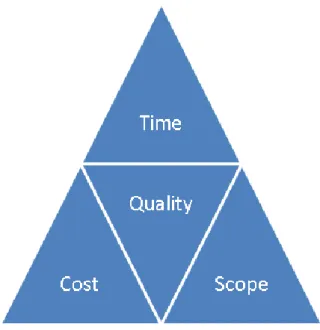
Although the project manager’s role in the construction process may vary from company to company and from project to project, the key project management responsibilities includes the following activities according to the Project Management Institute’s Body of Knowledge (PMBoK, 2004): Identifying requirements, establishing clear and achievable objectives; balancing the competing demands for quality, scope, time and cost; and adapting the specifications, plans, and approach to the different concerns and expectations of the various stakeholders. McKeon (2012), further support the above activities, where stated that the key responsibilities within project management is creating clear and attainable project objectives, building the project requirements, and managing the triple constraint for projects, which is cost, time, and scope (McKeon, 2012). Project managers often talk of the triple constraint, which is also referred to as the iron triangle, see Figure 1, when managing competing project requirements (PMBoK Guide, 2004). Each side of the triangle represents a constraint, and one side of the triangle cannot be changed without affecting the others (Maylor, 2010). The time constraint refers to the amount of time available to complete a project, the cost constraint refers to the budgeted amount available for the project and the scope constraint refers to what must be done to produce the project’s end result. The discipline of project management is about providing the tools and techniques that enable the project team to organize their work in order to meet these constraints.
Figure 1 The iron triangle (after Maylor, 2010).
According to McKeon (2012), the project manager is the glue that holds the job together. However, being a project manager requires a lot of different skills. A project manager does not only manage the project team, but also leads the team by leading by example as well as gaining trust and respect through motivating, coordinating and maintaining morale (Sommerville, 2010). Nevertheless, they must also possess and utilize a range of other relevant skills while leading the team to successfully deliver the project. The project manager must therefore be able to recognize what skills are required and apply them accordingly, to suit their current project role requirements. Furthermore, the practice of project management is constantly changing to meet the business demand as well as responding to new and innovative technologies (McKeon, 2012). Moreover, managing any construction project requires talent in the art of building and maintaining strong relationships and the specialized skills that can only be gained from experience (Jaworski, 2006). However, according to Sommerville (2010), in a project context, each project is normally seen as unique and therefore the project manager must recognize what skills are required and apply them accordingly. Furthermore, according to Winch (2010), the problem with managing construction projects is the lack of information required for decision-making. In order to keep the project rolling, decisions have to be made before all information required for the decision is available. Decision-making in construction is therefore about robust decisions, rather than optimal decisions.
Nevertheless, like every other profession, project management in construction has its share of workforce issues. According to McKeon (2012), the most current among them is a lack of trained and experienced project managers to fill the growing void caused by increased numbers of construction projects as well as the need to replace those people who are retiring. Last but not least, the project manager is given responsibility for the overall task. However, this does not remove responsibility from everyone involved for ensuring that all the actions are undertaken effectively, efficiently and on time (Radosavljevic & Bennett, 2012).
Project management responsibilities according to CMAA and
PMI
According to McKeon (2012), the Construction Management Association of America (CMAA) performed a study in 2006 that resulted in ten core competencies for project managers. The study consisted of a survey where project managers “were asked to rank 120 common project responsibilities according to both their importance in construction management work as well as the frequency in which the respondent actually engaged in these activities”. Of the 120 common projects responsibilities, the following ten broad areas fell within the top ten:
Project management planning
In project management planning the project team is composed and the project’s basic purposes, goals and criteria of performances are determined. The project manager should define the project requirements as part of the project management plan, which should include the project scope, budget and schedule.
Cost management
Cost management involves planning, estimating, budgeting, and controlling costs so that the project can be completed within the approved budget. It consists of cost estimation, cost budgeting, and cost control. The project manager provides ongoing cost management in order to make sure that the budget is being followed.
Time management
Time management is the processes required to accomplish completion of the project on time. The responsibilities related to time management consist of ensuring that the project team develops a project plan as well as a schedule to both plan and monitor time on the project.
Quality management
Quality management is crucial to any successful project, and it is the project manager's job to make sure that quality is inherent of his or her basic service. Quality management is assuring that the project will satisfy the objectives for which it was undertaken.
Contract administration
If there is a dispute during a job, the contract usually serves as the arbitrator. Therefore one of the most important aspects of being a project manager is the administration of contracts, since the contracts detail all parties’ tasks and responsibilities.
Safety management
Safety management should be a collaborative effort. However, project safety should beconsidered a process that is elevated above other issues and resolved in a timely manner.
Program management
Program management may be considered an expansion of traditional construction project management services.
Sustainability
Sustainability is here to stay, and project managers are in the forefront of the movement. The project manager's main job is to establishsustainability goals and objectives. The project manager should also establish and regularly review sustainability goals and standards.
Risk management
The goal of risk management is to understand the risks involved in the project and mitigate and manage them, if possible. A risk management plan should be developed and include risk identification, risk analysis and risk management.
Building information modeling
Since the Building information modeling technology is evolving, the project manager must always remain up to date with building information modeling. The Project Management Institute (PMI) on the other hand, has divided the project management responsibilities into different knowledge areas. The PMBoK Guide have recognized 47 processes that fell into ten knowledge areas that were frequently reoccurring in their typical projects. The knowledge areas that have been developed from both PMI and CMAA are in many areas similar, although some of them distinguished from each other. Below follows a description of the ten knowledge areas that have been defined in the PMBoK Guide.
Project Integration Management
The processes and activities that are needed in order to identify, define, combine, unify, and coordinate the various processes and activities within the project management process groups.
Project Scope Management
Scope management is about ensuring that the project includes all the work required, in order to complete the project successfully.
Project Time Management
Same as in CMAA.
Project Cost Management
Same as in CMAA.
Project Quality Management
Same as in CMAA.
Project Human Resource Management
Human resource management is about organizing, manage, and lead the project team. If a project manager can´t manage and develop a team, he or she will have a very hard time delivering a successful project.
Project Communications Management
Being an effective communicator is essential to being an effective project manager, since the majority of a project manager's time is spent communicating, both orally and written. Communication management is
required in order to ensure timely and appropriate planning, as well as the ultimate disposition of project information.
Project Risk Management
Same as in CMAA.
Project Procurement Management
Procurement management is necessary in order to purchase or acquire products, services, or results needed from outside the project team.
Project Stakeholder Management
Stakeholder management requires an identification of all people or organizations that is impacted by the project. Furthermore it consists of analyzing stakeholder expectations and impact on the project.
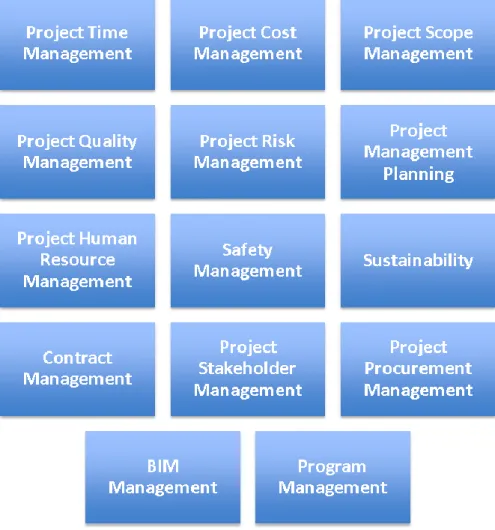
Figure 2 shows the knowledge areas within project management according to CMAA and PMI and is not organized into any specific order.
Figure 2 Knowledge areas within project management according to PMI & CMAA.
Standardization
In order to increase the efficiency within organizations, many companies focus their development on standardizing processes and procedures as well as material parts in the assembly line. The focus of the report is to study a company that is already moving towards a structured project development and it is therefore important to study the concept of standardization. The chapter does also conclude some basics around knowledge transfer, which is related to standardization.
The history of standardization within construction
Improving the construction industry has been on the topic for a long time. Edum-Fotwe et al. (2004) mentions three reports that received extensive attention within the UK construction industry. They brought technological and managerial innovation into the construction business. These reports were the Emmerson report in 1962, Latham report 1994 and Rethinking construction by Egan in 1998. They all focus on the improvement of the construction industry, the latter ones i.e. Latham report and Rethinking construction specifically emphasize that the industry should learn from the manufacturing industry (Cooper et al., 2004). Altogether they have contributed to an innovative new agenda within construction (Edum-Fotwe et al., 2004). They further mentioned, that the expected level of performance improvement the construction industry aim for is demonstrated through standardization of processes and components within the manufacturing sector. Therefore a focus on standardization can be seen as a key factor for improving the industry.
Alistair and Isack (2001) define standardization accordingly “Standardization is the extensive use of processes or procedures, products or components, in which there is regularity, repetition and a record of successful practice”. This thesis will focus on the processes and procedures exclusively related to the construction project manager role. Santos (2002) argues that the main focus of standards should be to limit problems occurring in the processes. Therefore, the standards should be designed with previously identified problems in mind. This will limit the waste occurring throughout the process. In order to further define what a standard should comprise Santos (2002) list properties that were originally formed by Imai (1997):
They should represent the best, easiest and safest way to do an activity.
They provide a method for managing knowledge through the preservation of “know-how” and expertise: with standardisation and the institutionalization of its content, the know-how stays in the company regardless of the comings and goings of employees.
They can be used as a reference to evaluate performance.
They provide a basis for both maintenance and improvement activities.
They provide a basis for training, auditing and diagnosis.
Process standardization - Stage-Gate model
The concept of standardization was formed in the 80s within New Product Development (NPD), where the stage-gate model was introduced (Gudmundsson et al., 2004). This tool is presented by Winch (2010) as the most valuable management tool for managing the project life cycle. In particular with its focus on the earlier stage, briefing and design, where it provides the manager with a structured flow of
information towards a potential perfect state in the future. The model is designed for projects where technical development work is applied and the product is visibly different from previous products (Cooper, 2011). In this report NPD is viewed as the development of construction projects, which share many characteristics with product development. The model is based on dividing the development process up in stages where certain documentation is required in order to proceed into the next stage (Cooper, 1995). Cooper further emphasizes the importance of not cutting corners, the gates are supposed to ensure that quality is achieved and each stage is their own process that should be completed. Winch (2010) confirms this and stresses the importance of pre-defined criteria for each gate. The criteria for each gate should consist of the questions who, what and when. Examples of questions could be:
Who should be involved in each review?
What criteria need to be met for the project to go on to the next phase?
When should the reviews be held?
The answer to these questions will vary throughout the project life cycle (Winch, 2010). Moreover, Winch explains that there are some further questions that need to be addressed during each stage-gate review:
Is the project still on course to deliver the project mission?
Is the project process well managed?
Are the tasks for the next phase of the project clearly defined?
Cooper (1995) describes the stages to be the area of improvement, where a standardized process for each stage will support an optimization of the overall process, which will ensure that the project is delivered on time to the market (Cooper, 1995). Gudmundsson et al. (2004) explains that in recent years, some of the focus has shifted over to the product itself. Where standardizing parts, modules and interfaces is the main focus, which is also recognized by Wheelwright and Clark (1994). Although, all researchers do not share this view, as an example, Mital et al. (2014) describes a shift from the product over to the process, from stable institutions to temporary systems and from static organizations and technologies to flexible ones. This thesis focus on project processes rather than parts, modules and interfaces and therefore the literature studies will be focused on process improvements. Wheelwright and Clark (1994) who promotes a focus on parts do however mention the importance to focus resources correctly in the project development phase. An example is where a company initialized too many projects and never made sure to allocate their resources correctly. This resulted in failure to complete some of the projects on time, which brings light to the managerial responsibility in NPD.
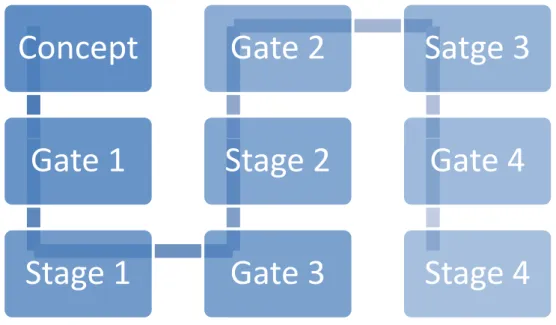
Figure 3 Stage-gate model (Cooper, 2011)
The stage-gate model is currently used in many companies and therefore of interest for further exploration. Maylor (2010) describes the stage-gate process as necessary and a fundamental discipline. The gates are developed in order to have control over the process where the project should be evaluated in the end of each stage. A decision on further activity is taken when all necessary documentation is provided, where either the project should proceed (Go), request for more information (Recycle) or stop the project (Kill or Hold) (Cooper, 2011). The gates may differ between projects and not all projects have to follow the customary procedure e.g. projects delivering to a contract are not likely to be stopped when problems arise (Maylor, 2010).
The gates are structured similar for all phases and consists of three main functions: deliverables, criteria and outputs. The deliverables are the information the project leader must bring to the decision point, and is the result from completed activities. Criteria refer to the set criteria, which the project is being judged against, does the project align with the business strategy and does it meet environmental, health and safety goals set by the company. Outputs consists of the decision (Go, Recycle or Kill or Hold), action plan for next stage and a list of deliverables together with a time plan for the next stage (Cooper, 2011). The decision whether to proceed or not is taken by the so-called gatekeepers, who is a predefined team for each gate. Gatekeepers usually consist of the leadership team of the business (Cooper, 2011). Cooper has developed the stage-gate model over the years, and are now more embracing where the five-stage model have been complemented with a next generation concept. Cooper (2014) introduced The Triple A System, which is suited for the more rapid business of today, it supports an earlier start where the stage-gate model can be introduced even if the product is less than 50 per-cent defined. This development changed the focus from financial go/kill criteria to more strategic criteria and therefore the model have become a better tool for the development team instead of only a financial lever (Cooper, 2014).
Concept
Gate 1
Stage 1
Gate 3
Stage 2
Gate 2
Satge 3
Gate 4
Stage 4
Knowledge transfer as standardizing
Something that has been on the topic for a long time is the use of existing process-oriented models and philosophies from the manufacturing industry in construction (Bresnen and Marshall, 2001). Brensen and Marshall do however list several obstacles that obstruct a clean-cut implementation of tested processes. First, the most frequently referred to is ‘each project is different’ which takes away the repetitive routine, which many processes thrive upon within the manufacturing industry. This further affects the benchmarking process where key performance indicators are not matching previous or future projects. Secondly, the fact that construction projects consist of a huge amount of different components and that projects is facing a cumulative nature makes it hard to disaggregate the processes and relate to specific management processes. Third, the project-based nature prevents knowledge transfer between projects where limited time and resources are accessible for cross-fertilization between on-going projects (Bresnen and Marshall, 2001). Further they argue that proficient mechanisms for knowledge transfer are scarce in many companies and lessons learned from one project to another are not commonly seen in the construction industry.
The amount of tacit knowledge within the business does not ease the transfer through documentation, which is presented as a proficient way to share knowledge (Bresnen and Marshall, 2001). They further recognize the complication with a changing team in each project where sub-contractors in particular change, with the result that the knowledge transferred between projects are significantly reduced. However, the trend is to strive for more partnering contracts where long-term cooperation can flourish a knowledge transferring thinking and in the long run benefit the organization (Segil et al., 2003). Brensen and Marshall (2001) do bring up the difficulties with such partnering where changing the existing culture proves to be challenging.
Lee (2000) points out that the willingness of people to share tacit knowledge depends on whether their organization is a sharing organization or not. This is pointed out in the article as the single most critical success factor for knowledge management. However, Shokri-Ghasabeh and Chileshe (2014) identified further obstacles for implementing a knowledge sharing system and the three most important according to their report are lack of employee time, lack of resources and lack of clear guidelines. Based on several empirical studies, a major part of the knowledge is tacit (Wah, 1999; Lee, 2000). Ungan (2006) argues that the most challenging part of transferring knowledge is obtaining the tacit knowledge from participants’ minds and transmit the knowledge into documentation. Ungan (2006) suggest that companies should focus on documenting the best practice of each process in order to communicate it to all employees. Lee (2000) further describes that 90 percent of the knowledge is embedded and synthesized in the employee’s heads.
Tacit knowledge can be divided into four categories, declarative (know-about), procedural (know-how), causal (know-why), conditional (know-when), and relational (know-with) (Alavi and Leidner, 2001). Procedural knowledge in combination with information is the two most important aspects to transfer knowledge between employees when a process is being standardized (Ungan, 2006). Ungan further states “The more knowledge is documentable the more likely it can be standardized”. Transfer know-how into documentation is often an issue in contrast to information, which is quite easy to transfer into documentation. However, knowledge does not
necessary need to be communicated through written documents, where pictures, sketches and photographs likewise can facilitate understanding (Santos, 2002). These methods of communicating processes can further ease the objective to show co-workers the know-how processes.
Positive and negative perception of standardization
According to a qualitative study performed on 59 construction clients’ representatives, the perception of the word ‘Standardization’ varied, where a major part of the interviewed clients’ were descriptive, less than one in four were supportive and the rest of the interviewees were clearly negative (Alistair and Isack, 2001). Project managers who have a negative attitude towards standardization often consider increased standardization as a further erosion of their freedom to run projects their own way (Polesie, 2012). Polesie et al. (2009) further showed that a major part of the project managers do not consider some of the already implemented standards as standardization e.g. standard arrangement for material storage, standard documents describing the stages of project delivery as well as document handling. These were perceived as easements that reduced the burden of the manager role. However, these actions are according to literature part of the standardization concept and lean principles (Polesie et al., 2009).
Standardization is not easily implemented and is facing many difficulties, where Santos (2002) explains that implementation processes often fail due to poor participation from the employees. He claims that the lack of teamwork between top management and workers on site is the main reason for failure. Polesie et al. (2009) strengthen this view where they acknowledge that site managers do not want top management to be involved in their work unless they ask for help. They further conclude that the managers are not unwilling to change but that they want to evolve the processes from own experience. Polesie et al. (2009), therefore argue for a bottom-up approach. Alistair and Isack (2001) emphasize that all parties involved in the project process gain benefits from standardization, employees understand better from whom things are needed and when they are needed. This ultimately leads to fewer claims and consequently less unplanned costs.
Another view presented by Alistair and Isack (2001) is that the clients´ need to take on the responsibility to lobby for an increased standardization in their project. The industry is according to their study willing to use or at least increase the use of standardized processes and products. However, there are still 20% of the client’s representatives who definitely not intend to increase the use of standardization (Alistair and Isack, 2001).
Innovation and freedom
Introducing standards within the construction industry often encounter resistance, where the project managers perceive that their freedom becomes more limited. The managers argue that there is a need for freedom in order to perform their tasks, this is due to that managers face projects of different kind and each project is unique (Winch, 2010; Josephson and Saukkoriipi, 2007). Nevertheless, in order to discuss the perception of freedom, there is a need for a definition of what freedom is for project managers. Polesie (2011) refers to Sandoff and Widell (2009), where they argue that freedom is connected to the concept of hedonism. Hedonism origins from the Greek word “hedone” which describes the feeling of enjoyment, pleasure and delight
(Sandoff and Widell, 2009). The standpoint of how to define freedom in this report is based upon Sandoff and Widell’s work and will hereafter be referred to as:
“Where there is compassion for work and if pleasure is sought for in contrast to pain, as well as if individuals are allowed to take on responsibility, they will perceive a
feeling of freedom”.
Depending on the degree of freedom and autonomy a manager possesses, it contributes to the perception of the susceptibility to change. High degree of freedom encourages the manager to deal with the problem on his or her own (Krause, 2004). Further, Krause claims that granting a higher degree of freedom and autonomy motivates the manager to generate ideas, experiment with these, which in the end can result in better ways of performing their tasks. Polesie (2013) strengthens this point of view from the empirical study, which showed that managers who are allowed individual differences perceive their role to be free. However, entrusting the project manager with too much responsibility and especially in combination with low support constraints them in their work and the perception of freedom is reduced (Polesie, 2013). Something that is often forgotten is that standards is formulated by the organization as a best practice and all angles should therefore been carefully considered. They should promote the most effective way of performing a task, at least from the perspective of the people who drew up the plan (Kondo, 2000). However as Kondo further argues, one single standard in most cases can not represent the most efficient way of working for all employees e.g. forcing a left-handed to obey the standards formulated for right-handed is obviously not optimal (Kondo, 2000). Therefore, standards should not always be controlling, they should rather be seen as guidelines. Another issue brought up by Sandoff and Widell (2009) is the concern that managers who feel free at work might be more difficult to manage. When intruding their perceived freedom by standardizing a process they are in charge of, they tend to be reluctant (Sandoff and Widell, 2009).
Kondo (2000) brings up three items that standards usually consist of and their effect on freedom is discussed below, the following list is cited from his work:
1. Aim of the work;
2. Constraints on carrying out the work;
3. Means and methods to be employed in carrying out the work.
Freedom depends a lot on item two and three which limit the employees perceived freedom and are therefore of more interest. Item (2) is more dependent on rules and regulations while (3) are decided internally by the organization and therefore easier to process. Constraints in item (2) can according to Polesie (2013) increase the perceived freedom by managers. Where the managers’ can focus on their important tasks instead of controlling and supervise the performance of other players. Kondo emphasize the importance of item (3) and divides it into two types: first one is training and manuals for beginners and the second one is work standards which provides experienced workers with tips and tricks as well as know-how information (Kondo, 2000). These two types of standardizations should be used as guidance according to Kondo (2000) and not as strict standards of how to perform the work. He further states that innovative creativity is indispensable for motivation and that freedom inspires the employee to be innovative. However, standards should be the minimum requirement of how to work and superior managers should encourage and assist their subordinates to improve and surpass these standards in order to perform even better (Kondo, 2000).
Process based business development
According to Radosavljevic & Bennett (2012), project management requires: “A coordination of a complex interplay of people, materials, components, tools, equipment and machines subject to variable performance in environments likely to interfere with planned progress. This in turn requires effective communication and efficient systems to organize the flow of the documents that provide the information
needed by everyone involved in the construction project”.
It has been stated by Ljungberg and Larsson (2012) that almost every professional organization conducts some form of business development. They further claim that a process-oriented approach has been proved to be a feasible, promising and perhaps also a necessary way. The concept of processes is at a general level easy to understand and to assimilate. However, in order to achieve success and to move from words to action, it requires attentive work, as well as new knowledge and skills (Ljungberg & Larsson, 2012).
“A process view – that is, looking at work in end-to-end terms – is important because cost, delays, errors, and inflexibility come from the connections between pieces of work rather than from the individual work piece themselves. To achieve levels of cost,
productivity, quality, service and cycle-time reduction required today, you need to look at work horizontally... we can’t overlay high-performance processes on a
functional organization.”- Ljungberg & Larsson (2012)
The best way to describe the process and to present the purpose of the process, as well as the structure and the appearance is to draw maps. By describing the company’s business by using a process map, the company can in an easily understandable way explain how the organization's various parts are related to each other and how they interact to create value for customers (Ljungberg & Larsson, 2012). The reality of which the organizations today operate in is complex, and many organizations have allowed their processes to become increasingly "overgrown". Working methods and procedures that once were quite logical, have after time been corrected and adjusted in order to adapt to the ever-changing conditions. These corrections are however often based on an internal and function-defined perspective that in many cases leads to that the operation no longer can be regarded as especially logically designed. Some routines and working methods may therefore only be consider as rational only from the perspective of a small part of the business. However, activities that are carried out within only a small part of the business will in turn affect activities in many other parts of the organization. Unless everyone understands the connection between the different activities, problems can arise. Furthermore, it is often only with process mapping that the relations between the activities of the various departments and functions can be discovered and fully understood. The complexity of processes often lead to that few individuals within an organization has a full understanding of how the processes within the organization looks like. Employees may have a good idea of their own small part of the business, but few can see the big picture. When the processes become visible, it is easier for each employee to see how their work fits into the big picture. The map can also be intellectually helpful for those who work in the process. The visualization of how their work fits into the process facilitates the understanding of the process of thinking in general. Persons who were previously sceptical of the process concept are often reversed when they see how this approach can be applied concretely to their everyday work (Ljungberg & Larsson, 2012).
Method
According to Bryman (2011), it is important to be familiar with the field of research. Therefore a literature review was conducted in the beginning of the thesis in order to develop a deeper understanding of the subject as well as to find out what is already known about the research field. The theoretical framework for this thesis has been divided in four categories, and the first subject that was addressed was the role of the project manager. The aim was to find out what project management is according to the literature, as well as what the role of the project manager consists of. The second addressed subject was standardization, where the aim was to investigate the concept of standardization as well as the concept of standardization in the construction industry. Furthermore, the subject of innovation and freedom was examined, this was done in order to find out the importance of innovation and freedom as well as how this is connected to project management and how this can be affected by standardization. Additionally, process based business development were studied in order to understand the studied organization as well as providing guidance of how to structure an operation system.
Data collection
For this thesis a qualitative study was chosen in order to establish a deeper understanding of the project manager's role and their opinions regarding process-orientated work-procedures. In qualitative research, interviews are commonly used in order to collect data. Therefore, semi-structured interviews with project managers were conducted within three regions of the case company in order to collect qualitative data. When performing qualitative interviews, there is a great interest in the interviewees’ point of view. In order to acquire a more rigorous understanding, a semi-structured open-ended approach with follow up questions are preferred in order to encourage interviewees to further articulate their thoughts on the subject (Bryman and Bell, 2011). Furthermore, in semi-structured interviews, the researcher has a list of questions or fairly specific topics to cover, but the interviewee has a great deal of leeway in how to reply and the interviews tend to be rather flexible (Bryman, 2012). Moreover, multiple interviewees with managers executing the same task provide the report with a phenomenographic research approach, where the role is reviewed from several individuals’ perspective (Åkerlind, 2005). Åkerlind (2005) further describe that a phenomenographic approach is when exploring the range of meanings within a studied group, with a focus on the group opinion instead of each individual´s perspective. The number of interviewees for a qualitative study varies between each study but as a guideline, Kvale (2014) recommend between 15 ± 10 interviews in order to reach a satisfying result. He do however emphasize that most studies use too many interviews and that the right amount is when the next interviewee will not contribute further to the research (Kvale, 2014).
Interviews
The project managers that participated during the interviews in our thesis were partly chosen by the case company who recommended nine available managers of which we randomly picked seven. This approach was chosen since the amount of time available for the project managers varied and in order to solve the logistics with travels, the managers in Stockholm were booked without any prior knowledge of their years within the company. Since there was more flexibility regarding time when interviews were performed with the project managers located in Gothenburg, the interviewees
were chosen by us. The questions were sent to the interviewees in advance, in order for the project managers to be able to prepare themselves before the interview. This was done in order to give the managers a chance to read through the questions beforehand, which intended to prepare them and result in better thought through answers. The interview study started with a pilot interview that was intended to provide an opportunity to observe how the interviewee interpreted the questions as well as providing us with more confidence prior to the actual interviews. After the pilot interview, the interview guide was evaluated and revised in order to make it better and more suitable for the remaining interviews.
The interviews varied between 45-70minutes in length, and during the interviews one of us took notes while the other acted as the interview leader. Furthermore, all interviews were recorded after permission from the interviewees, and notes was taken both during and after the interviews, as recommended by Bryman (2012). The interviews were carried out in Swedish due to the nature that all participants had Swedish as their mother tongue, which leads to richer responses and a more limited risk for misinterpretations. In this study, all interviews were held during a short time period. Kvale (2014) argues that this have both benefits and consequences where the interviewers develop their knowledge throughout the process. If the interviews are done over a long period, the latter interviews often tend to be performed with a higher knowledge base and therefore not correlate well with earlier performed interviews. It also complicates the process of comparing the interviews in the academic process (Kvale, 2014). However, Kvale (2014) also brought up the benefits of gathering more qualitative data when the interviewer have time to analyse each interview before proceeding to the next. One other important aspects regarding the performance of the interviews is that the interviewers avoided using the words standardization and freedom in order to avoid biased answers from the project managers, which was recommended by Polesie et al. (2009). Instead questions concerning the interviewer's perceived need to do things their own way and how much company involvement they wanted were in focus. Furthermore, the answers are presented anonymously in this thesis, which intended to increase the chance of receiving more open answers from the interviewees. Although, this decision also has negative aspects since the respondents do not receive the same appreciation for their time and effort (Kvale, 2014).
The semi-structured interviews performed in this study are based upon questions similar to those that Kvale formulated, where he divides interview questions up in to nine types (Kvale, 2014). The nine question types are shortly described below:
1. Introducing questions - Show an interest in the interviewee
2. Follow-up questions - Getting the interviewee to elaborate his or her answers 3. Probing questions - Follow up questions to confirm statements
4. Specifying questions - What reaction did the interviewee have in a given situation
5. Direct questions - Short questions with yes or no answer, used in the end of the interview
6. Indirect questions - Ask about what people in general think about a situation 7. Structuring questions - Changing of subject
8. Silence - Give the interviewee time to reflect and think for a moment
9. Interpreting questions - Make a statement that the interviewee have to take a stand point on
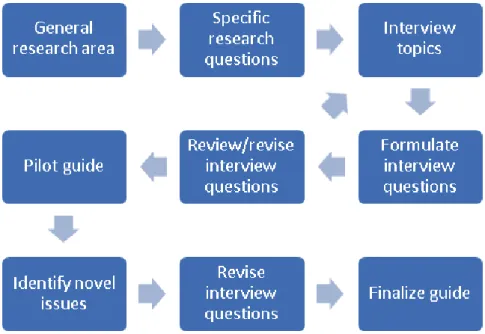
Furthermore, the following guide that is presented in Figure 4 developed by Bryman (2012), have been used in this thesis regarding how to formulate interview questions.
Figure 4 Guide of how to formulate interview questions (after Bryman, 2012). Moreover, during the interviews, the project managers were asked to perform a shorter quantitative assignment where the managers were asked to rank 15 different responsibility areas. These fifteen responsibility areas have been established for the role of a project manager according to PMI and CMAA, which has previously been presented in the literature review, see figure 2. First the managers were asked to rank from one to five how they perceive the support they get from the existing operation system regarding each of the different responsibility areas, where one was considered low support and five was considered to be good support. Secondly, the managers were asked to rank from one to five how important they perceive a further development of a support function regarding each of the different responsibility areas, where one was considered to be not of importance and five was considered to be of great importance.
Data analysis
As mentioned earlier, all of the preformed interviews were recorded. During the data analysis, the interviewers listen through all of the recorded material and wrote down the context from the answers provided during the interviews. The texts were later translated from Swedish into English. The interviews were then comprised into one document where each question had their own title and the context of each interview was compared to the others. The text was analysed where the project manager’s answers were compared to each other in order to find similarities and differences. Moreover, the result from the quantitative assignment was analysed. When the result from the interviews as well as the quantitative assignment was done, the discussion/reflection began, were the result was analysed together with the previous preformed literature review. Last but not least, a conclusion was made regarding the research questions that were stated in the beginning of the report, which further resulted in recommendations to the studied company.