STUDY ON SUCCESS FACTORS TO ENHANCE CUSTOMER
TRUST FOR MOBILE COMMERCE IN SMALL AND
MEDIUM-SIZED TOURISM ENTERPRISES (SMTEs) – A
CONCEPTUAL MODEL
1
SALEH ALQATAN, 1DALBIRSINGH, 1KAMSURIAHAHMAD
1 School of Computer Science, Faculty of Information Science and Technology, Universiti Kebangsaan
Malaysia, Bangi, 43650 Selangor, Malaysia
E-mail: [email protected],[email protected], [email protected]
ABSTRACT
Even though mobile technologies and wireless communication are growing at a very rapid phase all over the world, still the development of mobile commerce is hindered by a lot of aspects. Researchers all over the world are actively studying on this domain to understand the factors that affect the adoption of commerce. A lot of studies have recognized that ‘trust’ is an crucial factor that impacts the adoption of M-commerce in a lot of domains, including the Small and Medium-sized Tourism Enterprises (SMTEs). Nevertheless it is not an easy task to make the customers to trust M-commerce for various reasons. Hence, based on previous studies, this paper has identified the factors that influence the customer’s trust of M-commerce adoption in SMTEs. Based on the above statement, this study has proposed hypothetical model for the purpose of studying trust and its precursors such as Familiarity with M-commerce and calculation-based trust, towards the adoption of M-commerce in SMTEs.
Keywords: Consumer Trust, Developing Countries (DC), Mobile Commerce (M-commerce), Small And
Medium-Sized Tourism Enterprises (SMTEs), Trust Model
1. INTRODUCTION
Generally trust or trustworthiness is a vital aspect in a lot of financial activities, which could engage unwanted partiality activities. Even though the idea of trust has been studied in various fields, their viewpoints on it will vary; however some general prospects can be found. Trust includes two participants: trustor and trustee. The process of building trust might involve some risks, which are inevitable. The trustors believe that the trustee will not deceive their risk-assuming behavior [52]. In a earlier research, trust has been perceived or defined in different ways, therefore the literatures on trust are reasonably widespread; nevertheless, frequently there is a lack of accord and focus of effort, even within a specific field, but scholars from all the discipline have acknowledged the value of trust [51] [78]. Based on cross-disciplinary collection of scholarly articles, [68] have defined trust as “a psychological state comprising the intention to accept vulnerability based upon positive expectations of the intentions or behavior of another”.
According to [24], the significance of trust lies in communicating with people, who are inexorably independent and not completely predictable, blended with an instinctive necessitate comprehending the actions of others, and providing people with a vast complexity. The unfeasibility of being in charge of others activities or even just completely realizing their motive makes this complexity so astounding that it can actually restrain intentions to perform a lot of behaviors. As people have to constantly cooperate on such impulsive situations, they use various approaches for minimizing this devastating complexity. Devoid of the approaches that minimize complexity, people could not cooperate with others more than once, and perhaps would not like to cooperate. Trust is one of the prominent and effectual complexity reduction methods; therefore it is a crucial aspect in relations [47], especially in the case of relations that are not completely controlled by rules and regulations [22].
M-commerce. Trusting intentions (TI) specifies the compliance of an individual to depend on the M-vendor. [5] has stated that it is probable that an individual to have a trusting belief in somebody but refrain from depending on their actions. Trusting beliefs and intentions vary from person to person but they are cross situational, where on will trust the other in various contexts [40].
According to [51] [62] [34], in online environment the contemplated trust, allows customers to wantonly become exposed to web retailers based on the characteristics of the retailers. Trust is significant because it enables customers to avoid the views of hesitation and peril and involve in “trust-related behaviours” with vendors, such as sharing personal information or purchasing online [51]. Trust issue is primarily significant to the people who are unable to assure that the information acquired from different sources is always reliable [1]. Theoretically, there are many viewpoints of trust:’
1.1 Trust in ICT
According to [4], small businesses probably evade ICT into their business strategy, if the organizations seem it difficult. Despite the need of augmented customer trust in electronic business and information exchange [37], the lack of trust in new technologies by SMEs is one of major constraints for adoption of ICTs [59]. The small and medium businesses are slower than large business organizations in adopting the new ICTs. However whether small or big, trust is an essential aspect are necessary among business partners [64].
According to [4], ICT is capable of improving information and knowledge management in a firm and augment the pace and dependability of communication for both, business-to-business (B2B) and business-to-consumer (B2C) transactions. Apart from this, they have also elucidated the facilities provided by ICT, through which a firm can transmit real-time information and construct closer association with dealers or business associates and clients. Trust is the enduring and steady primary element to promote the application of cooperation. Business organizations particularly SME cooperate with each other due to the globalization market and tailored needs, which needs more flexibility. However, by improving the use of ICT, the process of adoption is eased [9]. Nevertheless, the SMEs which have endowed in ICT systems were not successful in implementing and maintaining these systems effectively [4].
According to [70], the ICT applications and their infrastructure development are not been replicated as
a strategic tool in small and medium-sized enterprises especially in tourism sector. The reason for this is from the following:
The immature ICT field of a
country.
The massive investment needed for implementing necessary ICT applications in the business of tourism.
Lack of trust and knowledge about ICT and not considering the benefit.
The lack of trust in other capabilities of SMEs’ is a stern impediment to cooperation and, hence, to the adoption of ICT- based solutions; the social factors supporting the relational and communication interfaces between SMEs are the major obstruction to the increase of SCM strategies: a methodical use of ICT for business is a direct effect of trust and cooperation between SMEs [23].
Trust in the financial system is a very significant element in the context of contemporary business, particularly in e-business, where value is created through impersonal, arms-length transactions [49].
1.2 Trust in E-commerce
Due to the uncertainty and incomplete information of the products, trust is considered as a significant aspect online transactions and e-commerce. Even though online communications generates new prospects for activists, however it might also create challenges for the development of trust. In setting, where individual identities are hard to confirm and actions cannot be easily authorized, text-based information might be inadequate for the development of the trust [69].
According to [83], the trust is a significant aspect affecting the behavior of consumer and it determines the accomplishment of technologies adoption such as e-commerce. In addition, trust in electronic commerce as the prejudiced prospect which the customers consider that an online transaction with a web retailer will fulfill their needs and desires [76]. Researchers have found that the lack of trust as one of the fundamental reasons for consumers’ skepticism in terms of electronic commerce [7].
transactions [55]. Nevertheless, trust of the accessible services and ease of use are the obstacles to comprehensive use of e-commerce by tourists. The trust of vendors and transactions is a very imperative subject in e-commerce and e-service backgrounds [88].
In E-commerce and M-commerce, trust has been an important factor in affecting consumers’ behavior to accept and adopt a specific technology, especially when it comes to situation of uncertain environments. A lot of studies have pragmatically trust investigated as important motivating factor for the adoption of e-commerce [67]. The purpose of trust in Internet and mobile commerce is more complicated than brick and mortar, as the relationships of trust is present among: the clients, the sellers and Internet provider. As the clients, the sellers will not have personal interactions they only will interact only through the Internet or mobile site. Goods and well organized sites can offer valid credit about the seller. Therefore, the triumph of mobile commerce pivots on the readiness of customers to accept a novel technology and involve in activities using systems and devices that are different from what they were using before [10]. Therefore trust is considered as significant aspect in the adoption of M-commerce technology in SMTEs.
1.3 Trust In M-Commerce And Its Adoption In
Small And Medium-Sized Tourism
Enterprises (Smtes)
In an implicit background, it is very hard to build trust in e-commerce and as well as M-commerce even though it is a crucial factor for the adoption. There are strong recommendations to examine trust as driving factor in the area of mobile commerce [53] [87]. According to [62], trust minimizes behavioral ambiguity associated with the activities of the Web vendor. Trust also makes the consumers to perceive some control over the probable vague operations; this
perception makes them to engage in on-line transactions. Compared with E-commerce, M-commerce is more exposed to risk of insecurity. So, the factor of trust is relatively more important in M-commerce. The growth of mobile commerce technology in generally and particularly, in Small and Medium-sized Tourism Enterprises (SMTEs) is related with understanding how trust can be built on a mobile commerce [41].
As the mobile commerce is still in the budding stage, only very limited choice of products is available. As discussed earlier, trust is a significant factor that affects the proposed use of mobile commerce more than e- commerce [10]. Despite the potentiality of mobile commerce technology in SMTEs, trust is considered as a major obstacle in the adoption of this technology and its development. For tourists, the devices of mobile phone are more convenient and efficient for "anytime online shopping", it has other properties and characteristics that prevent the improvement of trust. In the near future, M-commerce is expected to be an alternative technology for the desktop computers such as laptop and Personal computer (PC). Moreover, the development of mobile technologies and innovative mobile phones make new kinds of m-commerce service possible. Nevertheless, the adoption of these services is not happening in a greater pace, rather it is sluggish; the lack of trust in M-commerce might be a significant factor for this slowness [31].
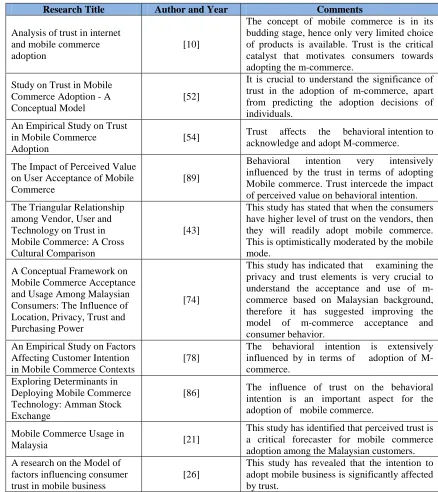
Table 1: The Impact Of Trust On M-Commerce Adoption In The Existing Literature
Based on literature review, it is very much evident that trust is major factor to accept and adopt the M-commerce. The importance of trust and its vital role of technology adoption are continuously increasing. In spite of a lot of the existing studies that have explained the impact of trust in the adoption of Mobile commerce (M-commerce), the studies that have investigated the impact of trust in the adoption of M-commerce in tourism enterprises are still very few. Furthermore, the number of studies investigating
the impact of mobile commerce on the performance of SMTEs is very limited, particularly in developing countries [19] [65]. Consequently, trust is also at the heart of the growth of M-commerce in SMTEs [53]. This study aims to help fill this gap.
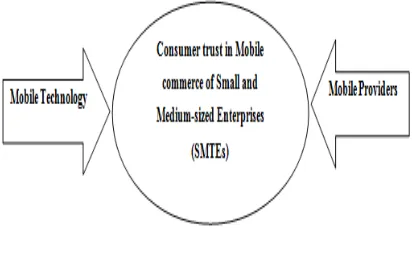
Furthermore, trust is considered as a crucial factor in commercial relationships [57]. In various areas, such as Small and Medium-sized Tourism Enterprises (SMTEs), trust plays important role to decision making. Trust in mobile commerce of can
Research Title Author and Year Comments
Analysis of trust in internet and mobile commerce adoption
[10]
The concept of mobile commerce is in its budding stage, hence only very limited choice of products is available. Trust is the critical catalyst that motivates consumers towards adopting the m-commerce.
Study on Trust in Mobile Commerce Adoption - A Conceptual Model
[52]
It is crucial to understand the significance of trust in the adoption of m-commerce, apart from predicting the adoption decisions of individuals.
An Empirical Study on Trust in Mobile Commerce Adoption
[54] Trust affects the behavioral intention to acknowledge and adopt M-commerce.
The Impact of Perceived Value on User Acceptance of Mobile Commerce
[89]
Behavioral intention very intensively influenced by the trust in terms of adopting Mobile commerce. Trust intercede the impact of perceived value on behavioral intention. The Triangular Relationship
among Vendor, User and Technology on Trust in Mobile Commerce: A Cross Cultural Comparison
[43]
This study has stated that when the consumers have higher level of trust on the vendors, then they will readily adopt mobile commerce. This is optimistically moderated by the mobile mode.
A Conceptual Framework on Mobile Commerce Acceptance and Usage Among Malaysian Consumers: The Influence of Location, Privacy, Trust and Purchasing Power
[74]
This study has indicated that examining the privacy and trust elements is very crucial to understand the acceptance and use of m-commerce based on Malaysian background, therefore it has suggested improving the model of m-commerce acceptance and consumer behavior.
An Empirical Study on Factors Affecting Customer Intention in Mobile Commerce Contexts
[78]
The behavioral intention is extensively influenced by in terms of adoption of M-commerce.
Exploring Determinants in Deploying Mobile Commerce Technology: Amman Stock Exchange
[86] The influence of trust on the behavioral intention is an important aspect for the adoption of mobile commerce.
Mobile Commerce Usage in
Malaysia [21]
This study has identified that perceived trust is a critical forecaster for mobile commerce adoption among the Malaysian customers. A research on the Model of
factors influencing consumer trust in mobile business
[26]
be classified into two categories: (1) trusting the mobile technology and (2) trusting in mobile service providers as shown in Figure 1.
Figure 1: Components of Customer Trust in M-commerce of SMTEs
Trust in technology readdresses to technological etiquettes, operational standards, controlling strategies, and payment methods [87]. However, it is crucial to outdo the technological hitches for the purpose of making people to trust the mobile technology. Mobile application and device designers have to concentrate more on the designing aspects to improve usability and facilitate customers to carry out business transactions effortlessly and efficiently, without forfeiting mobility and flexibility. Moreover the powerful security measures are also very important for the success of m-commerce such as encryption, digital certificates, private and public keys [54].
Building trust in mobile providers is also more difficult and challenging. In order to build trust in an industry, which is unfamiliar to potential consumers, it must publish required information, cultivate interest, and motivate potential purchasers by making them to believe that their needs will be met through the usage of mobile commerce [72]. In m-commerce, the provider plays a distinct and important role in the relationship between consumer and providers. However, only a few of studies have investigated users’ trust with respect to application services of smart-phone. Furthermore, the studies in terms of relationship between motivational factors and trust are very limited [11]. Lack of trust in new technologies by SMEs heavily obstructs the adoption of M-commerce [59]. It is noteworthy that small and medium businesses are slower in adopting m-commerce as compared with large industries [10]. Therefore, there is a need to further researches to identify the factors that influence customers trust to
accept and adopt the M-commerce technology in SMTEs.
2.FACTORS ANALYSIS THAT INFLUENCE
OF TRUST IN MOBILE COMMERCE
The trust as a concept is taken from various fields, it is considered as a phenomenon associated with a particular understanding of risks areas on individual level. In spite of that the process of building the trust of the individual is a dynamic where it involves various and multiple steps, some researchers believe that trust is a concept of multi-level variables and influenced by some factors as well as the kind of relationships between these factors whether some of internal relationships that are static and some of external relationships that will change over the time [2]. So, trust is complex phenomenon in adoption of m-commerce in small and medium-sized tourism enterprises. Due to researches on trust in mobile commerce is relatively a new topic, especially SMTEs.
Trust has been positively recognized to influence the behavioral intentions of individuals to purchase the services and products as well as do their business by using mobile devices. Consequently, understanding the factors that influence the trusting beliefs in an M-commerce environment in SMTEs is of considerable necessary and important to researchers. A lot of factors have effect on trust [25] [10] [73] divide antecedent trust factors into the following categories:
Knowledge-based trust is the
confidence that acquire the individuals through experience and expertise over time.
Institutional-based trust indicates to
relationships with formal societal structures, based on standards and rules of enterprises that surrounding individual's behavior and trusting beliefs.
The calculative –based trust
assumes that individuals build their trust based on rational evaluation of the results of the actions of other parties.
Cognitive-based trust examines
how information collected through interaction is used to adjust an individual’s trusting beliefs.
Personality-based trust relates to personal
This study focused on main four factors which affect customers’ trust in M-commerce in SMTEs:
A. Familiarity with M-commerce
The link between familiarity and trust is a well accepted topic in psychology, sociology and computer science [42]. Familiarity is an understanding, which is often based on previous interactions, experiences, and learning of what, why, where and when others do what they do [47]. It is noteworthy that trust is significant factor, which induces customers involve in commercial transactions [28]. Increased Familiarity means a better understanding of the transaction process with the M-commerce; this augments the trust of clients. In case of tourism industries the mobile commerce applications enable users to buy and sell products on the move. The familiarity of using mobile devices also acts as a catalyst to induce trust for using mobile commerce [10].
It is significant to understand the factors that motivate the customers to employ mobile commerce, especially in case of developing countries, because the increasing demand of mobile devices has created potential market for mobile commerce. As mentioned above, the familiarity of using mobile phones has created a positive ambience for mobile commerce [75]. Nonetheless, not much focus has been give in the literature in terms of studying how familiarity influences trust in m-commerce in specific industry such as tourism of developing countries in technological and hypothetical perspectives [46]. However, the customers who are not familiar with mobile devices pose a threat to restrict the expansion of mobile commerce market. In contrast the familiarity of using mobile devices gives green light for mobile commerce. Therefore, familiarity of tourists with mobile commerce services will influence tourists trust in the adoption of this technology in SMTEs of developing countries.
B. Calculative-based trust
According to [6], the calculative-based trust is the basic motivation for the participation of online transaction, where two strangers meet randomly. Calculative-based trust is a phase, where all the prospective interactions between two individuals are evaluated as an autonomous value-based transaction. If the communication is assessed as advantageous to the trustors, they will involve in the interaction with the trustee. All the interactions are calculated to establish its prospective value and if a constructive result is forecasted, the trust level incrementally raises depending on the on the apparent enormity of
the transaction. However if the interaction is negative, the trust relationship proportionally weakens with the level of infringement.
Comprehending the calculative-based trust can help instituting and upholding trust relationship among buyers and sellers in the commercial process. The concept of calculative-based is getting very popular due to its impact [39]. However, the theoretical foundation has received little attention. In m-commerce shopping, especially in developing countries, customers can be made to trust enterprises such as tourism sectors, by making them to believe that, these enterprises will never breach their promises, the services and products offered will be in line with the expectations of customers, the enterprises will never give any misleading or false information, the information provided are authentic and up-to-date and the services are more reliable [77]. Therefore, calculative-based trust will influence tourist’s trust in the adoption of this technology in SMTEs of developing countries.
C. Structural assurance
Structural assurance means consumer projections of success, due to safety nets as legal recourse, guarantees, and regulations that exist in the context. It indicates that structures such as guarantees and regulations are intact to encourage success in M-commerce in SMTEs of developing countries. An effectual means to enhance institution-based trust is providing structural assurance. The measures play a very significant role in influencing the trust of an individual, when information about the counterpart is not whole [30] [26]. Structural assurances might also improve trust viewpoints and readiness to trust. Providing systems, more than the needs and promoting security and guarantees will advocate reliability and goodwill [56].
D.Compatibility
Compatibility is defined as “the degree to which an innovation is perceived as consistent with the existing values, past experiences and needs of potential adopters” [66]. The perceived compatibility of an innovation has an encouraging impact on the adoption of the innovation [79]. High compatibility will lead to preferable adoption. Furthermore, Internet users, who believe that using mobile commerce is well-matched with their principles and jobs, tend to adopt these kinds of services.
The apparent affinity of mobile commerce service might augment the trust of customers and thus, improve their intent in using M-commerce, particularly in developing countries [30]. The compatibility comprises the extent, to which the novelty influences the reliability of consumer behavior [12]. However, in terms of tourism sector the mobile commerce is more probably compatible with the precedent mind-set of customers, especially when they have some experience in using Internet through their mobile devices. Therefore, customers with pessimistic thoughts towards the mobile technology might feel intricate to trust and use the mobile commerce services provided by SMEs. Therefore, compatibility will influence tourists trust in the adoption of M-commerce in SMTEs of Developing countries.
E. Propensity to trust
An individual’s propensity to trust influences the impact of the trust antecedents: “the propensity to trust is a personality trait that moderates the effect of trustworthiness attributes on the formation of trust” [38]. The individuals who have a high propensity to trust, they will be less likely to fear and anxiety in the exchange of personal information because they believe that others are inherently trustworthy and good intentions [35]. Propensity to trust represents the willingness of individuals to grant their trust to specific firm [50]. It is one of the important factors that directly influence on consumers trust and thus their behavior to purchase [3]. However, when a consumer has had experience, propensity to trust will not be an important factor [82].
[image:7.612.88.529.550.712.2]The propensity of individuals to use their mobile phones and then to use them for mobile commerce gives some basic evidences, which could be produced as part of society profiles to which service venders could respond. However, it is crucial to gain the customers trust for making them to adopt mobile commerce in developing countries [26]. Nevertheless, people diverge in their inclination towards trust [30]. A lot studies have identified that inclination towards trust has direct influence on the formation of trust on m-commerce. In SMEs, the customer’s with strong inclination towards trust more probably trust a service after evaluating that service. Therefore, inclination to trust will influence tourists trust in the adoption of M-commerce in SMTEs in developing countries.
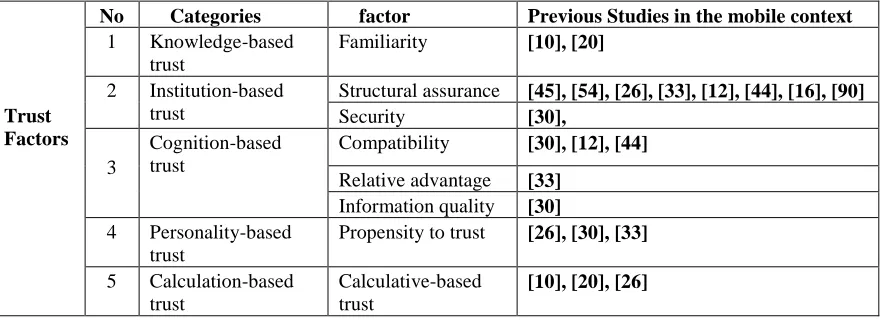
Table 2: Explains The Most Important Factors That Played A Vital Role Of Trust In The Customer Intention And That Supported In Previous Studies In The Mobile Context
.
Trust Factors
No Categories factor Previous Studies in the mobile context
1 Knowledge-based trust
Familiarity [10], [20]
2 Institution-based trust
Structural assurance [45], [54], [26], [33], [12], [44], [16], [90]
Security [30],
3
Cognition-based trust
Compatibility [30], [12], [44]
Relative advantage [33]
Information quality [30]
4 Personality-based trust
Propensity to trust [26], [30], [33]
5 Calculation-based trust
Calculative-based trust
Table two above shows the factors that have a significant impact on the trust and had been supported in a lot of previous studies in the mobile environment such as: Familiarity with M-commerce, Calculation-based, Structural assurance, Compatibility and Propensity to trust. However, no study has been conducted to investigate the impact of these factors in the adoption of M-commerce technology in Small and medium-sized Tourism Enterprises (SMTEs), especially in developing countries. Nevertheless this study aims to full this gap.
Security is a crucial factor that affects individuals to buy online. Generally most of the consumers are reluctant to involve in online financial operations such as selling and buying as they fear that their personal and financial details might be stolen by hackers and other cyber criminals [71]. From a consumer’s perspective, the perceived security may be defined as “the subjective probability with which
consumers believe that their personal information (private and monetary) will not be viewed, stored, and manipulated during transit and storage by inappropriate parties in a manner consistent with their confident expectations” [60].
Trust is the basis of most of the financial transactions, which includes the operations of selling and buying products and services and is built on the basis of a multitude of factors such as, the individual’s perception of the security of the payment system via mobile phones. Studies show that users’ perception of control is an important element of gaining trust in the transaction [15]. In spite of the security concerns, the trust factor very much influences the adoption of technology in various fields such as, E-commerce. However, there is a lack of studies that have examined the impact of security in the adoption of M-commerce, particularly in SMTEs.
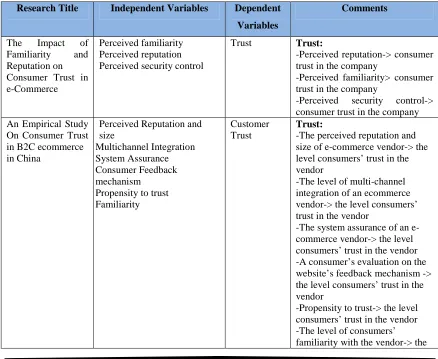
The Table 3: Shows Some Of The Studies That Have Investigated The Impact Of Security On Trust In Various Field Associated With A Mobile Commerce Such As E-Commerce, Online Shopping And Online Trust.
Furthermore, The Table Shows The Other Factors That Have Influenced The Trust Attribute.
Research Title Independent Variables Dependent
Variables
Comments
The Impact of Familiarity and Reputation on Consumer Trust in e-Commerce
Perceived familiarity Perceived reputation Perceived security control
Trust Trust:
-Perceived reputation-> consumer trust in the company
-Perceived familiarity> consumer trust in the company
-Perceived security control-> consumer trust in the company An Empirical Study
On Consumer Trust in B2C ecommerce in China
Perceived Reputation and size
Multichannel Integration System Assurance Consumer Feedback mechanism
Propensity to trust Familiarity
Customer Trust
Trust:
-The perceived reputation and size of e-commerce vendor-> the level consumers’ trust in the vendor
-The level of multi-channel integration of an ecommerce vendor-> the level consumers’ trust in the vendor
-The system assurance of an e-commerce vendor-> the level consumers’ trust in the vendor -A consumer’s evaluation on the website’s feedback mechanism -> the level consumers’ trust in the vendor
[image:8.612.86.524.385.744.2]level consumers’ trust in the vendor
Dominant Factors for Online Trust
Propensity to trust Familiarity Brand Reputation Website Quality Customer Service Perceived Security Perceived Privacy Third-Party Assurance
Online trust Trust:
-Propensity to trust-> online trust -Familiarity-> online trust -Brand-> online trust -Reputation-> online trust -Website Quality-> online trust -Customer Service-> online trust -Perceived Security-> online trust
-Perceived Privacy-> online trust -Third-Party Assurance-> online trust
The development of initial trust in an online company by new customers
Perceived willingness to customize
Perceived Reputation Perceived Size Perceived Usefulness Perceived Ease of Use Perceived Security Control Trust Propensity
Initial Trust in Company
Hypotheses not supported:
Trust Propensity-> initial trust
Trust:
-Perceived willingness to Customize -> initial trust -Perceived Reputation-> initial trust
-Perceived Size-> initial trust -Perceived Usefulness-> initial trust
-Perceived Ease of Use-> initial trust
-Perceived Security Control-> initial trust
Factors Influencing Iranian Consumers’ Trust in Internet Shopping
Perceived reputation Perceived size
Perceived trustworthiness of the Internet merchant
Perceived privacy
Perceived security Perceived risks and
benefits
Consumer Trust in Internet Shopping
Mediator: Propensity to trust
Hypotheses not supported:
perceived size -> consumer trust
Trust:
-P
erceived reputation -> consumer trust-Perceived trustworthiness of Internet Merchant -> consumer trust
-The perceived security-> consumer trust
-The perceived privacy-> consumer trust
-Perceived risk-> consumer trust -Perceived benefits-> consumer trust
The Effect of Consumer Privacy Empowerment on Trust and Privacy Concerns in E-Commerce
Privacy concern Familiarity
Privacy empowerment
Trust Trust:
-Familiarity-> trust
-Perceived privacy empowerment -> trust
-Increased privacy concerns negatively -> trust
A Study of Consumer Trust in Internet Shopping And the Moderating Effect of Risk in
Perceived Service quality Perceived Website quality
Trust in Internet Shopping-> Purchase Intention
Hypotheses supported: -Trust -> purchase intention Trust:
Mainland China
Mediator: Risk Aversion
trust
Note:
Moderating effect of risk aversion was supported
Factors Affecting Customer's Trends for Reservation Foreign Hotels via Internet in Iran
Perceived Enjoyment of technology
Perceived Usefulness Perceived security Perceived Privacy
Trust-> Online Buy
Familiarity with online Transactions-> Online Buy
Hypotheses supported:
-Familiarity with online transactions-> Online Buy
Hypotheses not supported:
-Company size -> trust -Perceived ease of use -> trust Good reputation of the company -> trust
Trust:
-Perceived Usefulness -> trust -Perceived Enjoyment of technology -> trust
-Perceived security -> trust -Perceived Privacy -> trust A trust-based
consumer decision-making model in electronic
commerce: The role of trust, perceived risk,
and their antecedents
Information quality Perceived privacy protection Perceived security protection Positive reputation
Familiarity
Consumer disposition to trust
Trust-> intention -> online purchase
Hypotheses supported:
Trust-> intention -> online purchase
Hypotheses not supported:
Presence of a third party seal-> trust
Trust:
Information quality-> trust Perceived privacy protection-> trust
Perceived security protection-> trust
Positive reputation-> trust Familiarity-> trust
Consumer disposition to trust-> trust
A lot of previous researches highlighted trust to be an important and vital factor in the acceptance and usage of E- commerce. However, insofar this factor has not been addressed as a key issue in the development and success of m-commerce in generally, particularly SMTEs [74]. Previous studies have identified many factors that have influenced trust in online transaction. Most of them have focused on the perceived security. It is worth mentioning that the security is seemingly important in mobile commerce rather than the e-commerce environment, because due to the weak links it becomes easy for the intruders to snoop into financial information in mobile commerce environment. Of late most of the portable devices such as note books, smart phones do not have the similar facilities as the mobile phones such as: smart cards to enhance security, roaming to stay connected on the move, therefore the mobile devices are limited in their use in wireless
environments. The possibility of merging these technologies for a specific setting depends on the security protocols. It is very imperative that the lack of security is one of the biggest obstacles, which stops consumers from adopting mobile commerce. However a lot studies have focused on the security factor in ‘wired’ network environments, but only few have dealt with wireless network environment [28].
3. RESEARCH HYPOTHESES AND MODEL
Hypothesis 1: Trust will positively influence on
behavioral intentions to use M-commerce in SMTEs.
Hypothesis 2: Structural Assurance will
Hypothesis 3: Calculation-based cognition will
positively influence on consumer trust to use M-commerce in SMTEs.
Hypothesis 4: Compatibility will positively
influence on consumer trust to use M-commerce in SMTEs.
Hypothesis 5: Propensity to trust will positively
influence on consumer trust to use M-commerce in SMTEs.
Hypothesis 6: Security will positively influence
on consumer trust to use M-commerce in SMTEs.
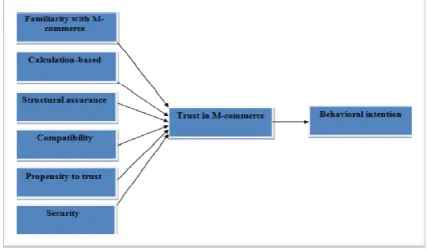
Based on previous literatures on m-commerce and e-commerce, our paper proposed a comprehensive
[image:11.612.92.519.282.533.2]trust model for mobile commerce in SMTEs, with the hope that such a model will be valuable for researchers interested in m-commerce adoption researches. Figure 2 presents the research model. Structural assurance, Calculation-based trust, cognition-based trust, Compatibility, Propensity to trust and Security are proposed to affect trust. This paper proposed a model by involving trust as a direct indicator to individual’s intention. The theoretical model proposed in this paper is intended to clarify the factors that influence the adoption of mobile commerce in SMTEs. More specifically, the relationship among trust and other factors are hypothesized.
Figure 2: Proposed Trust Model
Based on the revised unified theory of acceptance and use of technology (UTAUT) model [53], this study has developed and empirically validates a research model that extends the UTAUT by integrating trust model in an adoption of M-commerce technology in SMTEs of Developing Countries (DC). These constructs help to explain, why customers are willing to adopt M-commerce, despite the inherent risks related to the mobile transactions. The proposed M-commerce model increases our understanding of M-service utilization by integrating perceived trust into a parsimonious adoption model
.
4.CONCLUSION
M-commerce users in SMTEs of developing countries. To begin with, it is vital to improve the technologies and the features of service providers to increase trust of customers and their intention to adopt M-commerce. Fundamentally by discussing the pattern of online trust and the characteristics of mobile commerce trust, this study attempts to hypothetically authenticate the factors that persuade the trust of consumers towards mobile commerce service in Small and Medium-sized Tourism Enterprises (SMTEs) of developing countries .
Based on the mammoth growth of the global mobile technology, it is very much evident that sooner or later the M-commerce will become one of the vital platforms for organizations to carry out their business transactions, moreover the concept of getting services ‘on the move’ will also fancy the consumers to adopt the technology. However, in case of developing countries, there are some hindrances, which might obstruct them to cope up with the developed nations. Especially there are very small numbers of SMTEs that provide M-commerce services. It is unfortunate that, most of the developing countries have not realized the significance of M-commerce, therefore it is very substantial to enable to organizations to understand the importance and design the M-commerce applications based on the needs of the respective countries. As it is obvious that M-commerce is a division of e-commerce, this research applies the identical approach developed for Internet commerce. The study implies ‘trust’ as the crucial factor, which will motivate the users to adopt and use M-commerce, particularly in SMTEs of developing countries.
This study has hypothetically recognized the influencing aspects of customer’s trust, in terms of adopting M-commerce in SMTEs of developing countries; however, not much focus has been given by the previous researchers so far in this field. Hence this study urges the research community to continuously study the factors that influence the customer trust towards the adoption of M-commerce. Furthermore it is important to integrate the proposed trust model and other theoretical models on user acceptance of technology such as Unified Theory of Acceptance and Use of Technology (UTAUT) in future researches, to gain better understanding about the behavior and intention of using mobile commerce in SMTEs of developing countries.
REFRENCES:
[1] H. R. D. Abadi, S. N. A. Hafshejani, F. K. Zadeh, "Considering Factors That Affect Users’ Online Purchase Intentions With Using Structural Equation Modeling" Interdisciplinary
journal of contemporary research in business (IJCRB), vol. 3, 2011.
[2] F. a.-A. Aghdaie, S. Fathi, A. Piraman, "Factors affecting the attitude of trust in Internet purchasing from the perspective of consumer,"
Interdisciplinary journal of contemporary research in business (IJCRB), vol. 3, 2011.
[3] S. A. Aghdaie, S. Fathi, A. Piraman, "An Analysis of Factors Affecting the Consumer’s Attitude of Trust and their Impact on Internet Purchasing Behavior," International Journal of
Business and Social Science, vol. 2, 2011.
[4] S. S. Alam, M. Noor, M. Kamal, "ICT Adoption in Small and Medium Enterprises: an Empirical Evidence of Service Sectors in Malaysia,"
International Journal of Business and Management, vol. 4, p. P112, 2009.
[5] B. A. Alsajjan, "The Relative Importance Of Trust Intentions And Trust Beliefs In Internet Banking Adoption," International Review of
Business Research Papers, vol. 5, pp. 257-272,
2009.
[6] M. Anandarajan and C. Simmers, Personal web
usage in the workplace: a guide to effective human resources management: Information
Science Publishing, 2003.
[7] C. Ayo, J. Adewoye, A. Oni, "Business-to-consumer e-commerce in Nigeria: Prospects and challenges," African Journal of Business
Management, vol. 5, pp. 5109-5117, 2011.
[8] Y. Bao, Y. Li, X. Meng, Y. Liu, W. Wang, "An Empirical Study on Consumer Trust in B2C e-Commerce in China," 2011, pp. 1-4.
[9] L. Caby-Guillet, S. Crave, S. Ladame, "How ICT can facilitate trust inside networks of SME: the role of Professional Virtual Communities," 2006.
[10] D. Y. Cho, H. J. Kwon, H. Y. Lee, "Analysis of trust in internet and mobile commerce adoption," 2007, pp. 50-50.
[11] H. Choi, Y.J. Choi, K.M. Kim, "The Understanding of Building Trust Model on Smartphone Application: Focusing on Users’ Motivation," 2012, pp. 13-20.
[13] k.-c. chung, S.S. Tan, A. ShakJin, "Determinants of behavioural intent to adopt M-commerce among the YGeneration in Kazakhsta," 2011.
[14] S. E. Colesca, "Increasing e-trust: A solution to minimize risk in e-government adoption,"
Journal of applied quantitative methods, vol. 4,
pp. 31-44, 2009.
[15] U. Cyril, G. G. G. G. Eze, J. Ademu , S. A. Tella ,"Modelling User Trust and Mobile Payment Adoption: A Conceptual Framework,"
Communications, vol. 3, 2008.
[16] R. Davis, L. Sajtos, A. A. Chaudhri, "Do Consumers Trust Mobile Service Advertising?,"
Contemporary Management Research, vol. 7,
pp. 245-270, 2011.
[17] F. S. Djahantighi and E. Fakar, "Factors Affecting Customer's Trends for Reservation Foreign Hotels via Internet in Iran,"
International Bulletin of Business
Administration, 2010.
[18] H. R. Dolatabadi and H. Ebrahimi, “ Factors influencing Iranian consumers’ trust in Internet shopping”. European Journal of Social Sciences, vol. 16(2). pp. 307-31, 2010.
[19] J. Donner and M. X. Escobari, "A review of evidence on mobile use by micro and small enterprises in developing countries," Journal of
International Development, vol. 22, pp.
641-658, 2010.
[20] Y. Du and J. Zhao, "An empirical study of end-user trust in a web information system," 2009, pp. 561-564.
[21] U. C. Ez, M. A. T. b. M. Y. Ten, Y.-S. Poon, "Mobile Commerce Usage in Malaysia" presented at the International Conference on Social Science and Humanity, 2011.
[22] F. Fukuyama, Trust: The social virtues and the
creation of prosperity: Free Pr, 1996.
[23] G. Fulantelli and M. Allegra, "Small company attitude towards ICT based solutions: some key-elements to improve it," Educational Technology & Society, vol. 6, pp. 45-49, 2003.
[24] D. Gefen, "E-commerce: the role of familiarity and trust," OMEGA-OXFORD-PERGAMON
PRESS-, vol. 28, pp. 725-737, 2000.
[25] D. Gefen, E. Karahanna, D. W. Straub, "Trust and TAM in online shopping: An integrated model," MIS Quarterly, pp. 51-90, 2003. [26] Y. Guangming and M. Yuzhong, "A research on
the model of factors influencing consumer trust in mobile business," 2011, pp. 1-5.
[27] R. Gururajan, "New financial transaction security concerns in mobile commerce," International Relations and Security Network, 2002.
[28] R. Gururajan, “A Discussion on Security Risks in Mobile COMMERCE," e-Business Review, vol. 7, pp. 9-39, 2006.
[29] C. J. Hsu, "Dominant factors for online trust," 2008, pp. 165-172.
[30] L. Jia-bao and L. Yao-bin, "The factors impact consumers' initial trust in mobile service: An empirical study in China," 2009, pp. 1262-1268. [31] J. Joubert and J. P. Van Belle, "The importance of trust and risk in M-commerce: A South African perspective," 2009, pp. 10-12.
[32] D. J. Kim, D. L. Ferrin, H. R. Rao, "A trust-based consumer decision-making model in electronic commerce: The role of trust, perceived risk, and their antecedents," Decision
support systems, vol. 44, pp. 544-564, 2008.
[33] G. Kim, B. S. Shin, H. G. Lee, "Understanding dynamics between initial trust and usage intentions of mobile banking," Information
Systems Journal, vol. 19, pp. 283-311, 2009.
[34] C. Koo and Y. Wati, "Toward an Understanding of the Mediating Role of" Trust" in Mobile Banking Service: An Empirical Test of Indonesia Case," Journal of Universal Computer Science, vol. 16, pp. 1801-1824,
2010.
[35] M. Korzaan, N. Brooks, T. Greer, "Demystifying Personality and Privacy: An Empirical Investigation into Antecedents of Concerns for Information Privacy," Journal of
Behavioral Studies in Business, vol. 1, pp. 1-17,
2009.
[36] M. Koufaris and W. Hampton-Sosa, "The development of initial trust in an online company by new customers," Information &
management, vol. 41, pp. 377-397, 2004.
[37] V. Kraeva, "Internet Technologies In The Bulgarian Tourist Enterprises–State, Prerequisites And Perspectives," Encontros
Científicos-Tourism & Management Studies,
vol. 1, pp. 114-123, 2011.
[38] M. K. O. Lee and E. Turban, "A trust model for consumer internet shopping," International
Journal of Electronic Commerce, vol. 6, pp.
75-92, 2001.
[39] S. Y. T. Lee and Z. Meng, "Calculative-Based Trust And Social Welfare " 2004.
realities," Academy of management review, pp. 438-458, 1998.
[41] Y. M. Li and Y. S. Yeh, "Increasing trust in mobile commerce through design aesthetics,"
Computers in Human Behavior, vol. 26, pp.
673-684, 2010.
[42] Z. Li and M. Li, "Research on influencing factors of consumer initial trust based on mobile commerce," 2008, pp. 263-267.
[43] T. Lie, W. Fang, P.A. Pavlou, "The Triangular Relationship among Vendor, User and Technology on Trust in Mobile Commerce: A Cross Cultural Comparison," ed, 2010.
[44] J. Lin, Y. Lu, B. Wang, S. Wu, "Initial trust and adoption of mobile brokerage service,"
International Journal of Mobile
Communications, vol. 9, pp. 124-143, 2011.
[45] Z. Liu, Q. Min, S. Ji, "An Empirical Study on Mobile Banking Adoption: The Role of Trust," 2009, pp. 7-13.
[46] P. B. Lowry, T. Roberts, B. E. Caine, "The effect of familiar logos on trust of websites designed for small user interfaces," 2005, pp. 22-27.
[47] N. Luhmann, "Trust and Power Chichester,"
United Kingdom: John Wiley and Sons, Inc,
1979.
[48] D. Mao, "A Study of Consumer Trust in Internet Shopping And the Moderating Effect of Risk Aversion in Mainland China," Hong Kong Baptist University Hong Kong, 2010.
[49] C. A. Martinez and C. Williams, "National institutions, entrepreneurship and global ICT adoption: a cross-country test of competing theories," Journal Of Electronic Commerce
Research, vol. 11, pp. 73-91, 2010.
[50] R. C. Mayer, J. H. Davis, F. D. Schoorman, "An integrative model of organizational trust,"
Academy of management review, pp. 709-734,
1995.
[51] D. H. McKnight, V. Choudhury, C. Kacmar, "Developing and validating trust measures for e-commerce: An integrative typology,"
Information systems research, vol. 13, pp.
334-359, 2002.
[52] D. Meng, Q. Min, Y. Li, "Study on Trust in Mobile Commerce Adoption-A Conceptual Model," 2008, pp. 246-249.
[53] Q. Min, S. Ji, G. Qu, "Mobile commerce user acceptance study in China: a revised UTAUT model," Tsinghua Science & Technology, vol. 13, pp. 257-264, 2008.
[54] Q. Min, D. Meng, Q. Zhong, "An empirical study on trust in mobile commerce adoption," 2008, pp. 659-664.
[55] S. V. Motlaq, F. Ghodsi, M. Kazemi, T. V. Motla, M. V. Motlaq, "The Estimation of Customer’s Electronic Trust (E-Trust) Toward Airline E-Ticketing in Iran using the Technology Acceptance Model (TAM)," Middle
Eastern Finance and Economics, 2012.
[56] G. B. Murphy and A. A. Blessinger, "Perceptions of no-name recognition business to consumer e-commerce trustworthiness: the effectiveness of potential influence tactics," The
Journal of High Technology Management Research, vol. 14, pp. 71-92, 2003.
[57] F. F. H. Nah and S. Davis, "HCI research issues in e-commerce," Journal of Electronic Commerce Research, vol. 3, pp. 98-113, 2002.
[58] M. Nilashi, M. Fathian, M. R. Gholamian, O. bin Ibrahim, "Propose a Model for Customer Purchase Decision in B2C Websites Using Adaptive Neuro-Fuzzy Inference System,"
International Journal of Business Research and Management (IJBRM), vol. 2, p. 1, 2011.
[59] H. Ongori, "Role of information communication technologies adoption in SMES: evidence from Botswana," 2009.
[60] P. Pavlou, "Integrating trust in electronic commerce with the technology acceptance model: model development and validation," pp. 816-82, 2001.
[61] P. A. Pavlou and D. Gefen, "Building effective online marketplaces with institution-based trust," Information systems research, vol. 15, pp. 37-59, 2004.
[62] P. A. Pavlou, "Consumer acceptance of electronic commerce: Integrating trust and risk with the technology acceptance model,"
International Journal of Electronic Commerce,
vol. 7, pp. 101-134, 2003.
[63] W. S. Pittsburg, "Examining mediators of structural assurance constructs in business- to- consumer E-commerce," Issues in Information
Systems, 2009.
[64] B. Plaza, C. Galvez-Galvez, A. Gonzalez-Flores, "Orchestrating innovation networks in e-tourism: A case study," African Journal of
Business Management, vol. 5, pp. 464-480,
2011.
Electronic Journal of Information Systems in Developing Countries, vol. 46, 2011.
[66] E. M. Rogers, Diffusion of innovations: Free Pr, 1995.
[67] I. Roudsar and J. Malaysia, "Application of AHP and K-Means Clustering for Ranking and Classifying Customer Trust in M-commerce,"
Australian Journal of Basic and Applied Sciences, vol. 5, pp. 1441-1457, 2011.
[68] D. M. Rousseau, S. B. Sitkin, R. S. Burt, C. Camerer, "Not so different after all: A cross-discipline view of trust," Academy of management review, vol. 23, pp. 393-404, 1998.
[69] S. Ryan, "Initial trust formation in an online social action network," Contesting Citizenship
and Civil Society in a Divided World, Ryerson University and York University Toronto, Canada, 2004.
[70] B. Seng, "The Introduction of ICT for Sustainable Development of the Tourism Industry in Cambodia," Seoul National University; Technology Management, Economics, and Policy Program (TEMEP)2012. [71] M. S. Shahibi and A. P. D. Z. AB, "Security Factor and Trust in E-Commerce Transactions,"
Australian Journal of Basic and Applied Sciences, vol. 5, pp. 2028-2033, 2011.
[72] K. Siau and Z. Shen, "Building customer trust in mobile commerce," Communications of the
ACM, vol. 46, pp. 91-94, 2003.
[73] J. K. Sinclaire, J. C. Simon, R. B. Wilkes, "A Prediction Model for Initial Trust Formation in Electronic Commerce," International Business
Research, vol. 3, p. P17, 2010.
[74] J. Sreenivasan and M. N. M. Noor, "A conceptual framework on mobile commerce acceptance and usage among Malaysian consumers: the influence of location, privacy, trust and purchasing power," WSEAS Transactions on Information Science and Applications, vol. 7, pp. 661-670, 2010.
[75] C. Standing, P. Mcmanus, S. Standing, H. Karjaluoto, "Values and M-Services Adoption," 2006.
[76] D. W. Stewart, P. Pavlou, S. Ward, "Media influences on marketing communications,"
Media effects: Advances in theory and research,
pp. 353-396, 2002.
[77] T. Sun and G. Wu, "Trait Predictors of Online Impulsive Buying Tendency: A Hierarchical Approach," The Journal of Marketing Theory
and Practice, vol. 19, pp. 337-346, 2011.
[78] L. Tan and L. Wu, "An Empirical Study on Factors Affecting Customer Intention in Mobile Commerce Contexts," 2010, pp. 310-313. [79] M. Tan and T. S. H. Teo, "Factors influencing
the adoption of Internet banking," Journal of the
AIS, vol. 1, p. 5, 2000.
[80] T. P. Van Dyke, V. Midha, H. Nemati, "The Effect of Consumer Privacy Empowerment on Trust and Privacy Concerns in E‐Commerce,"
Electronic Markets, vol. 17, pp. 68-81, 2007.
[81] R. Walczuch and H. Lundgren, "Psychological antecedents of institution-based consumer trust in e-retailing," Information & management, vol. 42, pp. 159-177, 2004.
[82] C. C. Wang, C. A. Chen, J. C. Jiang, "The impact of knowledge and trust on e-consumers’ online shopping activities: an empirical study,"
Journal of computers, vol. 4, pp. 11-18, 2009.
[83] T. T. Wei, G. Marthandan, A. Y. L. Chong, K. B. Ooi, S. Arumugam, "What drives Malaysian m-commerce adoption? An empirical analysis,"
Industrial Management & Data Systems, vol.
109, pp. 370-388, 2009.
[84] J. H. Wu and S. C. Wang, "What drives mobile commerce?: An empirical evaluation of the revised technology acceptance model,"
Information & management, vol. 42, pp.
719-729, 2005.
[85] G. Yao and Q. Li, "The Impact of Familiarity and Reputation on Consumer Trust in E-Commerce," 2008, pp. 1-5.
[86] S. G. Yaseen and S. Zayed, "Exploring determinants in deploying mobile commerce technology: Amman stock exchange," 2010, pp. 612-620.
[87] T. Zarmpou, V. Saprikis, M. Vlachopoulou, G. Singh, "Investigating the Influential Factors towards Mobile Services Adoption in Greece," 2010.
[88] H. Zhang, Y. Wang, X. Zhang, "Transaction Similarity-Based Contextual Trust Evaluation in E-Commerce and E-Service Environments," 2011, pp. 500-507.
[89] T. Zhou, "The Impact of Perceived Value on User Acceptance of Mobile Commerce," 2008, pp. 237-240.