International Journal of Emerging Technology and Advanced Engineering
Website: www.ijetae.com (ISSN 2250-2459,ISO 9001:2008 Certified Journal, Volume 3, Issue 5, May 2013)
127
Real Time Iris Tracking & Blink Detection for Hands free
Cursor Control
Ajay Wakhare
1, Anil Kardile
2, Rahul Nikam
3, Mohit Dighe
41,2,3,4 Department of Computer Engineering, University of Pune
Abstract—This paper proposes a technique to develop a non-intrusive interface of providing non-contact head and eye based control of computer systems for people with motor difficulties. Such an interface used to replace a traditional interface like a normal mouse thus helping the severely disabled to use the computer just as a normal individual would. It makes use of human iris tracking and blink detection for this purpose. Considering fairly constant lighting conditions, a modified Hough Transform is used to track the iris at real time. Accurate head and iris tracking results are obtained at a processing rate of 30 frames per second (fps) in more than 90% cases with a low false positive blink detection rate of 0.01%. This is achieved under varying lighting conditions for people of different ethnicity, with and without wearing glasses.
Keywords—Eye tracking, Iris Tracking, Blink Detection, Cursor movement
I. INTRODUCTION
Today, the mouse and keyboard are the main interfaces for communicating information and commands to the computer. The use of these traditional based human-computer interfaces demand good manual dexterity and refined motor control. However, there are many people, who due to their physical disabilities unable to use the mouse and the keyboard, and therefore are totally restricted in their attempt to use the computer as a physically normal individual would. Due to their immobility, head movements as a means to control the mouse may be infeasible. Speech controlled systems may also fail in situations when the individual does not have the ability to speak, or the environment is to much noisy. In such situations, unique movement can be presented as an elective, alternate solution. There has been several new technologies in recent years that allow appliances to sense the user's pupil movement and expressions.
International Journal of Emerging Technology and Advanced Engineering
Website: www.ijetae.com (ISSN 2250-2459,ISO 9001:2008 Certified Journal, Volume 3, Issue 5, May 2013)
[image:2.612.53.286.97.411.2]128
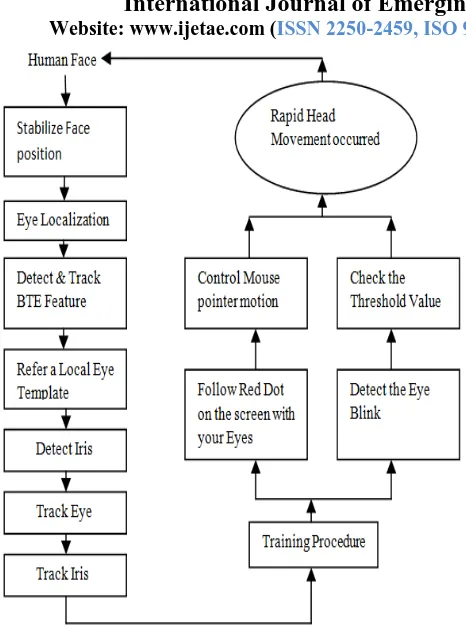
Figure 1: Overview of proposed Algorithm
II. PROCESSES
The proposed algorithm is starting initialized on detecting a human face and proceed further using the USB camera feed, under satisfactory illumination. When the position of the user is needs to be sufficiently constant, the system for detecting and analyzing blinks and mouse movements is initialized by the user itself, depending on the involuntary blink of the user. This stage is followed by extraction of the Between-The-Eyes (BTE) feature and the detection and tracking of the iris of the eye. A local-haar cascade classifier of the open eye is used for the subsequent tracking of the eye. On performing the training procedure required for each session, scores based on variance projection as well as the relative positions of the iris are analyzed and interpreted to perform the various mouse functions accordingly. This analysis is performed at each frame. A block diagram depicting the main stages of the algorithm is shown in Figure 1.
A. Face Detection & Tracking
Face Detection and Tracking It is assumed that a frontal face is initially detected and tracked using an appropriate procedure.
The prototype `I-Mouse' uses the face detection procedure built into EmguCV based on Haar-like feature classifiers.
B. Eye Localization
Once the face of the user is detected and stabilized, it is necessary to locate the user eyes in front of camera with the help of haar-like features classifier eye document.
Figure 2.1: Eye Localization Process
A recursive labelling procedure is then applied to the up-per half of the image (considering the eyes to be present in the upper half of the head region) to recover the number of connected components in that region. Since the users, due to paralysis are relatively still, this procedure yields only a few connected components, with the ideal number being two (the left eye and the right eye). In case other movement in the face region has occurred, producing an unusually large area of the components, the system discards the current bi-nary image and waits to process the next involuntary blink in order to maintain efficiency and accuracy in locating the eyes.
Each labelled component can be thought of as a possible match for the user's left or right eye. The filtering of an un-likely eye is done based on the width to height ratio and the area of each component. For example, if the width to height ratio is very small, or the area is very large, the component is unlikely to be the user's eye. From the components that pass this test the largest component (in effect, the eye that is more clearly visible) is selected. Thus either the right eye region or the left eye region is localized, since tracking the iris of both the eyes would lead to unnecessary real-time processing and redundant information. The appropriate `R', `G' or `B' channel of the eye can be extracted based on the colour of the iris so as to obtain maximum contrast between the iris and the sclera.
C. BTE Feature Detection & Tracking
[image:2.612.325.565.216.281.2]International Journal of Emerging Technology and Advanced Engineering
Website: www.ijetae.com (ISSN 2250-2459,ISO 9001:2008 Certified Journal, Volume 3, Issue 5, May 2013)
129
Figure 2.2: Between the Eye Feature (BTE)
A feature that is unique and robust should be selected as a reference point for tracking to compensate for minor head movements
.
These facial features could be point features (eye corners), edge features (lip contours) or texture features (skin color). However, the feature should be large and clear enough to be tracked with minimum error. For this, the Between-the-Eyes (BTE) feature is chosen [9] since it is unique on one face, visible under pose variation, and fairly stable despite possible change of facial expressions. It has a relatively bright part at the nose-bridge and relatively dark parts at the eyes like wedges on both sides.D. Iris Detection & Tracking
Although methods using deformable templates and Active Appearance Models have been developed in recent years for iris tracking in visible light, they require high resolution cameras and are very computationally intensive.
[image:3.612.331.559.367.437.2]
a b
Figure 2.3: (a) The eye region. (b) The corresponding edge image after gray scale conversion.
The Iris can be accurately detected and tracked at real time using a modified form of the Hough Transform. The Circular Hough Transform (CHT) takes advantage of the fact that a human iris is circular in shape [13, 10, 12]. It allows discovering shapes from image edges. The edges in an image can be found using the Canny, Sobel or Morphological operations. On performing unsharp masking, the canny detector is applied, since it produces a more precise, inner edge with lesser noise.
A circular mask of the same size as the radius is used to compute the average intensity of the pixels within the circular area. The lower the intensity, the higher is the probability that the iris is located. To avoid shrinking towards the smallest radius feature that could be the pupil, the largest radius feature that lies within a fixed range of the lowest average intensity is selected as the iris.
Applying this process on each frame results in accurate iris tracking independent of the previous frame. When standard weighted Circular Hough Transform is used to detect the iris, the eyelids and eyelashes often affect the final result. Thus the Hough transform is modified to extract the iris centre and radius, which can reduce the effect of the eyelids and eyelashes.
E. The Local eye template
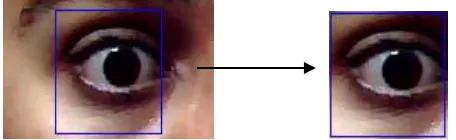
The eye region located is fairly larger than the actual eye. Thus the user should be allowed limited head motion as long as the eye remains within this region. When the user is required to look at the centre of the screen as a part of the training procedure, an eye template is extracted based on the iris position and size. The details and need of this training procedure will be outlined later. This eye template is typically smaller than the eye region and allows the user some freedom to move around slightly. It serves to restrict the region of the eye image that is searched in order to detect the iris or evaluate a blink, thus reducing errors and unnecessary processing.
Figure 2.4: Eye region when the user looks at the centre of the screen and the reduced local eye template.
Here, the local eye template can be matched with the user eyes when comes in front of the camera. The file which can be used as a reference is haar-cascade file of the eye. The system matched the human eye and ready to detect & track the movement as per the user moves his own face in front of the camera.
F. Blink Detection
[image:3.612.68.271.403.476.2]International Journal of Emerging Technology and Advanced Engineering
Website: www.ijetae.com (ISSN 2250-2459,ISO 9001:2008 Certified Journal, Volume 3, Issue 5, May 2013)
130 G. Mapping the vectors to the screen for gaze estimation
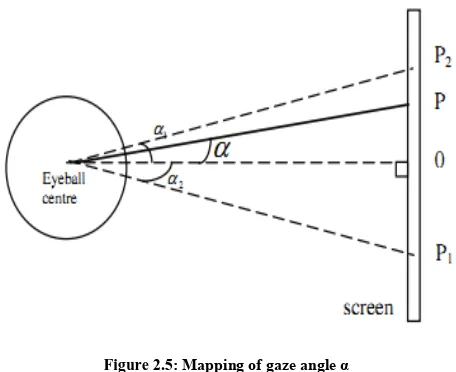
[image:4.612.55.283.225.411.2]The training procedure to find the iris-BTE vectors is necessary since the deflection of the iris to gaze at the extremes of the computer screen varies on each run depending on the position of the user, the distance of the user from the screen and the zoom factor of the webcam. The distance of the iris centre from the BTE feature is captured and mapped to fixed positions on the screen.
Figure 2.5: Mapping of gaze angle α to a point P on the screen
This method is fast, easy, and adaptive. Here the gaze angles can conveniently map to coordinates on the screen to control the position of the mouse pointer. As Shown in the figure.6[5]. Mapping angle α is used to map at the point p on the screen of the monitor, so it’s become easy for the system to easily review the mapping points and as per that the further tracking will done. The gaze vector mapping is very necessary as the system point of view in the real time image processing. It’s an important task in this project to manage the mapping points as per the location.
III. EXPERIMENTS AND RESULTS
The prototype ‘I-mouse’ is developed and successfully tested on Windows XP sp3 PC with Intel core2duo, 2.8 GHz processor and 2 GB RAM. Video is captured by the low resolution webcam with capturing rate of 30 frames per second. Visual c#.net language and the EmguCV as the wrapper of the OpenCV for .net is used in the system development.
Tests were conducted to gauge the accuracy and usability of the low resolution camera as an input device. In order to test the effectiveness of the modified circular Hough transform as a means to perform iris tracking, the users were asked to gaze in different directions, the tracker being displayed on each frame.
All the processed frames were saved and examined individually as runs of approximately 300 frames at a time. It was found that out of 1538 frames, 18 frames showed a deviation from the iris while tracking resulting in an accuracy of 98.82%.
The results can be summarized as follows:
For Mouse motion-
Total gaze directions analyzed: 120
[image:4.612.325.562.252.440.2]Efficiency of mouse pointer response to gaze directions found to be as follows:
Figure 3: Real time eye localization and Iris tracking through USB camera
Right: 80.0%
Left: 73.3 %
Top: 86.7 %
Bottom: 93.3 %
Overall efficiency of mouse pointer response to gaze estimation: 83.33%. The system gives an overall accuracy of 87.4 % when considering the overall blink system measures.
In addition, other experiments were also conducted to determine the fitness of the system under varying circum-stances, such as alternative camera placements, lighting conditions, distance to the camera and people in the vicinity. The system showed good results under bright artificial light and sun light.
IV. CONCLUSION
International Journal of Emerging Technology and Advanced Engineering
Website: www.ijetae.com (ISSN 2250-2459,ISO 9001:2008 Certified Journal, Volume 3, Issue 5, May 2013)
131 It also makes an attempt to suggest novel ideas for accurate cognitive computer control, which can be developed further to produce an ideal state-of-the-art interface. The use of such an assistive technology by differently abled people would definitely help them to communicate, play games, browse the internet, learn and live a better life, without being completely dependent on someone else.
V. FUTURE WORK
It can further be improved by enhancing the current techniques to include illumination invariant blink detection through the eye blink such as, right-click or Left-click , which is also tolerant to strong reflections due to spectacles. Procedures can be incorporated to allow considerable head movement or changes in depth. With a view to providing a complete mouse interface solution, future work aims to provide an easy means to perform the scrolling function, selection of text and drag-drop operations. In addition, further optimization, tuning and enhancement of the approaches are necessary to improve the overall accuracy of operations.
REFERENCES
[1] Report on new approaches to eye tracking. COGAIN Communication by Gaze Interaction, 2006.
[2] D. S. C. Alan L. Yuille and P. W. Hallinan. Feature extraction from faces using deformable templates. 1991.
[3] S. R.V. Bhaskar, Foo Tun Keat. Blink detection and eye tracking for eye localization. National University of Singapore, Singapore, Indian Institute of Science, Bangalore, 2004.
[4] M. Chau and M. Betke. Real time eye tracking and blink detection with usb cameras. Boston University Boston, MA 02215, USA.
[5] S. M. Djamel Merad, Stephanie Metz. Eye gaze estimation from a video. February 2009.
[6] D. W. Hansen and Q. Ji. In the eye of the beholder: A survey of models for eyes and gaze. IEEE, January 2009.
[7] M. I. P. C. Ioana Bacivarov. Statistical models of appearance for eye tracking and eye-blink detection and measurement. August 2008. [8] J. Y. Jie Zhu. Subpixel eye gaze tracking. Interactive Systems
Laboratory, Carnegie Mellon University, Pittsburgh, PA 15213 USA.
[9] S. Kawato and N. Tetsutani. Detection and tracking of eyes for gaze-camera control. 2004.
[10] M. A. Klaus D. Toennies, Frank Behrens. Feasibility of hough-transform-based iris localisation for real-time-application. University of Magdeburg, Germany, 2001.
[11] J. G. G. R. B. Kristen Grauman, Margrit Betke. Communication via eye blinks - detection and duration analysis in real time. 2001. [12] Y. Nawaz and S. Sircar. Real time eye tracking and blink detection
using low resolution web cam. 2005.
[13] S. J. K. Pedersen. Circular hough transform. Aalborg University, Vision, Graphics, and Interactive Systems, November 1991. [14] R. Stiefelhagen and J. Yang. Gaze tracking for multimodal
human-computer interaction. University of Karlsruhe - Germany, Carnegie Mellon University -USA.
[15] F. Z. T. Morris, P.Blenkhorn. Blink detection for real-time eye tracking. 2002.
[16] A. B. Violeta Ivanova Uzunova. An eyelids and eye corners detection and tracking method for rapid iris tracking. University of Magdeburg, ISG, August 2005.
[17] Z. Xu and P. Shi. A robust and accurate method for pupil features extraction. Institute of image processing and pattern recognition, Shanghai Jiao Tong University, Shanghai 200030, P.R.China. [18] T. K. Ying-li Tian and J. F. Cohn. Eye-state action unit detection by