A FRAMEWORK FOR AN ADAPTABLE AND
PERSONALISED E-LEARNING SYSTEM BASED ON
FREE WEB RESOURCES
Eiman Aeiad
Thesis Submitted in Partial Fulfilment of the Requirements of
the Degree of Doctor of Philosophy
School of Computing, Science and Engineering
University of Salford, UK
I
Table of Contents
Acknowledgments... X
List of Publications ... XI
Abstract ... XIII
Chapter 1 : Introduction ... 1
1.1 Introduction and Motivation... 1
1.2 Rationale... 2
1.3 Research Question ... 3
1.4 Aim and Objectives ... 4
1.5 Research Contribution ... 5
1.6 Limitations of the Current Research ... 6
1.7 Phases of the Research ... 6
1.8 Thesis Organisation ... 8
Chapter 2 : Natural Language Processing and Knowledge Engineering Background ... 10
2.1 An Overview of Natural Language Processing ... 10
2.1.1 Natural Language Processing Tasks ... 11
2.1.1.1 Tokenisation ... 11
2.1.1.2 Part of Speech Tagging... 11
2.1.1.3 Lemmatisation ... 12
2.1.1.4 Named Entity Recognition ... 13
2.1.1.5 Machine Translation ... 14
2.1.1.6 Co-reference Resolution ... 14
2.1.2 Natural Language Processing Tools ... 15
2.1.2.1 OpenNLP ... 15
II
2.1.2.3 GATE... 16
2.1.2.4 Stanford CoreNLP ... 17
2.1.3 Natural Language Processing Resources ... 19
2.1.3.1 Machine-Readable Dictionaries ... 19
2.1.3.2 Thesaurus ... 20
2.1.3.3 Ontologies ... 20
2.2 Information Retrieval and Information Extraction... 21
2.2.1 Information Retrieval Tasks ... 23
2.2.1.1 Indexing ... 24
2.2.1.2 Similarity Measures ... 26
2.2.1.2.1 Cosine Similarity ... 27
2.2.1.2.2 The Jaccrad Coefficient ... 28
2.2.1.2.3 Euclidean Distance... 29
2.2.1.2.4 The Dice Coefficient ... 29
2.3 Summary ... 30
Chapter 3 : A Review of the Development of E-learning Systems ... 32
3.1 Introduction ... 32
3.2 Learning Theories ... 32
3.2.1 Behaviourism ... 32
3.2.2 Cognitivism ... 33
3.2.3 Constructivism ... 34
3.2.4 Conclusion and Discussion ... 35
3.3 E-learning ... 36
3.4 Adaptive Systems ... 39
III
3.6 Adaptive Hypermedia System ... 42
3.7 Methods of Adaptation in AHS ... 42
3.8 Learning Style ... 43
3.8.1 Kolb Learning Style ... 44
3.8.2 Felder-Silverman Learning Style ... 45
3.8.3 VARK Learning Style ... 47
3.8.4 Learning Styles Assessment for the APELS System ... 48
3.9 Related Work... 50
3.10 Summary ... 55
Chapter 4 : A Framework for an Adaptable and Personalised E-Learning System... 58
4.1 Introduction ... 58
4.2 System Architecture ... 59
4.3 The Learner Model ... 60
4.3.1 Personal Information ... 60
4.3.2 Prior Knowledge ... 61
4.3.3 Learning Style ... 61
4.3.4 Content Preference ... 62
4.4 The Knowledge Extraction Model ... 63
4.4.1 Relevance Phase ... 64
4.4.1.1 Fetching ... 64
4.4.1.2 HTML2XHML ... 65
4.4.1.3 Elements and Attribute Values Extraction ... 66
4.4.1.4 Ontology ... 68
4.4.1.5 OWL Concepts Extraction ... 71
IV
4.4.2 The Ranking Phase ... 74
4.4.2.1 Categorising Learning Outcomes Statements ... 75
4.4.2.1.1 Bloom’s Taxonomy ... 75
4.4.2.1.2 Nouns and Verbs Extractor ... 77
4.4.2.2 Content Validation Against Learning Outcomes ... 80
4.4.2.2.1 The Crawler ... 81
4.4.2.2.2 Dependency Structure ... 82
4.4.2.2.3 Normalisation (Stemming) ... 85
4.4.2.2.4 PoS Tagging ... 86
4.5 Content Delivery Model ... 86
4.5.1 The Planner ... 86
4.5.2 The Adaptation Process ... 88
4.6 Summary ... 92
Chapter 5 : Case Study and Implementation... 93
5.1 Introduction ... 93
5.2 Background and History... 93
5.3 Overview of the Body of Knowledge ... 95
5.4 Structure of the Body of Knowledge... 96
5.4.1 Knowledge Areas ... 98
5.4.2 Knowledge Units ... 98
5.4.3 Required Learning Hours ... 99
5.4.4 Learning Outcomes ... 99
5.4.4.1 Familiarity Task ... 99
5.4.4.2 Usage Task ... 100
V
5.5 System Implementation ... 100
5.5.1 Relevance Phase ... 101
5.5.1.1 Domain Knowledge Construction ... 101
5.5.1.2 Ontology Validation ... 104
5.5.1.2.1 Term Extraction ... 105
5.5.1.2.1 Terms to Concepts or Classes Matching ... 105
5.5.1.3 The Matching Process ... 107
5.5.1.4 Implementation ... 108
5.5.2 The Ranking Phase ... 112
5.5.2.1 Familiarity Rules ... 113
5.5.2.2 Usage Rules ... 117
5.5.2.3 Assessment Rules ... 119
5.5.2.4 Implementation ... 120
5.6 Summary ... 127
Chapter 6 : Evaluation Methodology ... 128
6.1 Introduction ... 128
6.2 APELS System Evaluation... 130
6.3 Participants Background and Experience ... 131
6.4 APELS System Training Overview and Background ... 133
6.5 Methodology and Data Collection ... 134
6.5.1 Experiment 1 to Test Hypothesis H1 ... 134
6.5.1.1 Create an Account ... 134
6.5.1.2 Identify Initial Learning Style ... 136
6.5.1.3 Create a Sample Learning Module ... 137
VI
6.6 Analysis of the Experiments Results ... 141
6.6.1 Experiment 1 ... 141
6.6.2 Experiment 2 ... 143
6.6.3 General Discussion about the APELS System ... 148
6.7 Summary ... 151
Chapter 7 Conclusions and Future Work ... 153
7.1 Introduction ... 153
7.2 Review of the Research Objectives ... 153
7.3 Future Work ... 158
Reference ... 161
Appendix ... 183
Appendix A: The set of pattern syntax of instance keywords in C++ language ... 183
Appendix B: Learning outcomes in ACM/IEEE 2013 are defined into three tasks: Familiarity, Usage and Assessment ... 184
VII
List of Figures
Figure 1-1 Knowledge extraction based on students’ constrains... 4
Figure 1-2 Phases of the research ... 8
Figure 2-1 Information retrieval processes (Croft, 1993) ... 24
Figure 2-2 Angle between documents a and b ... 27
Figure 2-3 Two sets with Jaccard similarity 4/9 ... 28
Figure 3-1 The structure of an adaptive system (Brusilovsky and Maybury, 2002) ... 40
Figure 3-2 Components of an ITS (Brusilovskiy, 1994) ... 41
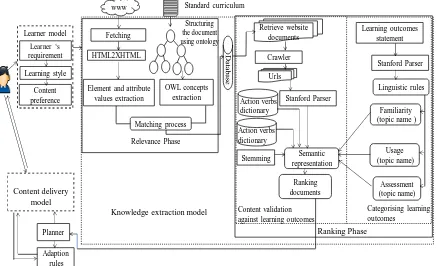
Figure 4-1 System architecture ... 59
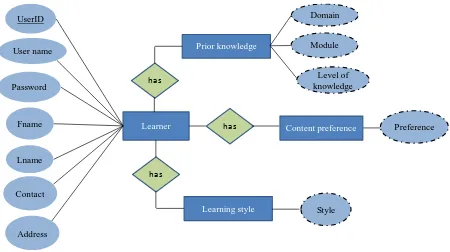
Figure 4-2 Entity-Relation Diagram (ERD) representation of learner model ... 60
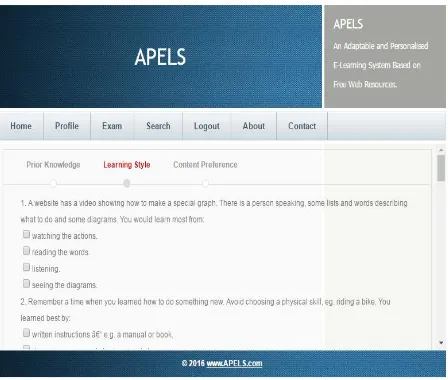
Figure 4-3 Sample questions of the VARK learning model implemented in APELS ... 62
Figure 4-4 Content preference selection algorithm ... 63
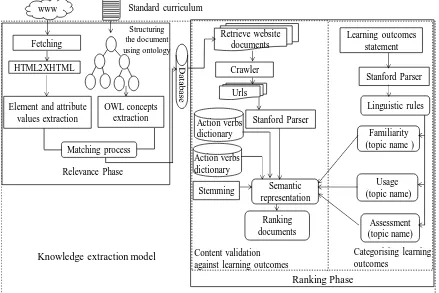
Figure 4-5 The knowledge extraction model ... 64
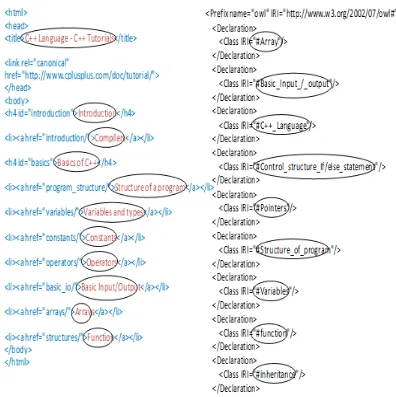
Figure 4-6 XHTML document and its associated tree structure ... 67
Figure 4-7 XHTML elements and attribute values extraction algorithm ... 68
Figure 4-8 Example of subset of ontology ... 69
Figure 4-9 OWL concepts extraction algorithm ... 71
Figure 4-10 The similarity measure algorithm ... 73
Figure 4-11 OWL concepts and XHTML values extraction ... 74
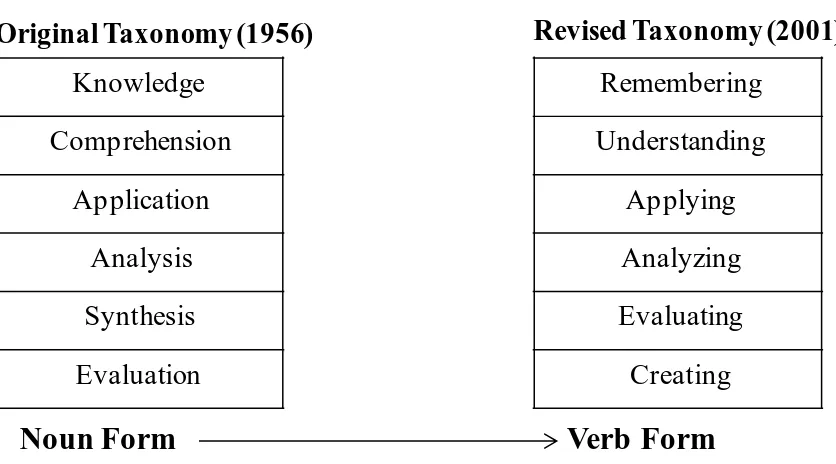
Figure 4-12 Differences between Bloom’s original taxonomy and the 2001 revised one ... 77
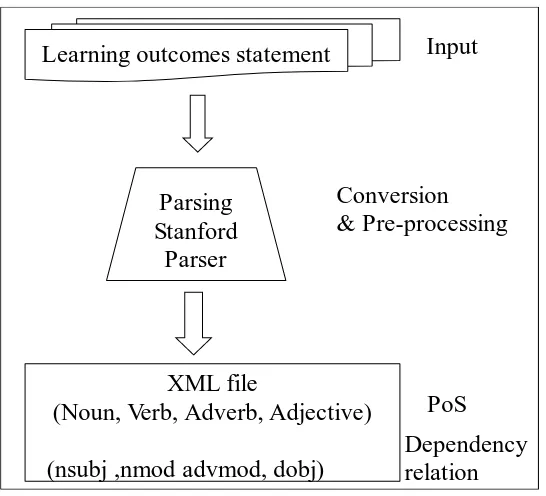
Figure 4-13 Stanford CoreNLP ... 78
Figure 4-14 XML format generated by Stanford CoreNLP... 79
Figure 4-15 Crawler process in APELS... 82
VIII
Figure 4-17 The dependency structure as a tree for the sentence (Bell, based in Los Angeles,
makes and distributes electronic, computer and building products) ... 83
Figure 4-18 Action verb, topic name and their relationship extraction algorithm ... 85
Figure 4-19 Module specifications for the fundamental programming module ... 88
Figure 4-20 Content and learning style adaption algorithm ... 91
Figure 5-1 Body of knowledge for computer science curriculum (Sahami et al., 2013) ... 97
Figure 5-2 Classes and subclasses in the Protégé editor ... 102
Figure 5-3 The percentage of total match algorithm ... 106
Figure 5-4 The percentage of number of matches in APELS, CS, and ACM-CSS ... 106
Figure 5-5 Components used in the APELS architecture ... 108
Figure 5-6 The similarity of OWL concepts to www.cplusplus.com/doc/tutorial ... 111
Figure 5-7 Example of key phrases extraction ... 114
Figure 5-8 The Bloom’s taxonomy action verbs in ACM/IEEE Computing curriculum ... 115
Figure 5-9 Example of key phrases extraction using dependency relation (Familiarity) ... 115
Figure 5-10 Example of key phrases extraction using dependency relation (Usage) ... 117
IX
List of Table
Table 3-1 Learning styles assessment (Peter et al., 2008) ... 50
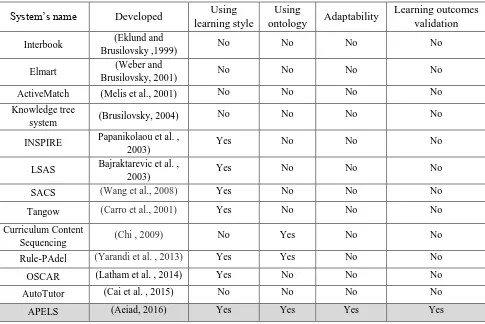
Table 3-2 A comparison of some E-learning systems ... 57
Table 4-1 Set of action verbs associated with the intended cognitive levels of the Bloom’s
original taxonomy (Bloom, 1956)... 76
Table 4-2 A set of action verbs associated with the intended cognitive level of the revised
Bloom’s taxonomy (Anderson et al., 2001) ... 77
Table 4-3 Rules to assess learning outcomes statement using Bloom’s taxonomy ... 80
Table 5-1 The matching similarity for fundamental programming concepts to OWL file .... 110
Table 5-2 The matching similarities for algorithms & data structure to OWL file ... 112
Table 5-3 Rules used to identify Familiarity, Usage, and Assessment tasks ... 119
Table 5-4 Results of keywords and key phrases extraction that satisfy Familiarity for the
learning outcome “Define and describe variable” ... 121
Table 5-5 Results of keywords and key phrases extraction that satisfy Familiarity learning
outcome “Discuss the importance of algorithms in the problem-solving process” ... 122
Table 5-6 Results of keywords and key phrases extraction that satisfy Usage learning
outcome “Write program that use and implement function” ... 124
Table 5-7 Results of keywords and key phrases extraction that satisfy Usage learning
outcome “Write program that use and implement array” ... 125
Table 5-8 Results of keywords and key phrases extraction that satisfy Assessment learning
X
Acknowledgments
Firstly, I would like to express my sincere gratitude to my supervisor Prof. Farid Meziane for
the continuous support throughout my PhD, for his patience, motivation, and immense
knowledge. His guidance helped me through all the time of the research and the writing process
of this thesis. I could not have imagined having a better advisor and mentor for my PhD study.
Similar great gratitude goes to all the experts who were willing to participate in the study and
gave their valuable feedback. A special thanks to my family. Words cannot express how
grateful I am to my parents who raised me with a love of science and supported me in all my
pursuits. I pass all my success to my father’s soul, and deeply appreciate my mother sacrifices
that she has made on my behalf. Thanks to my brothers and sisters, your prayers and support
for me was what sustained me this far. I owe thanks to my friends and colleagues for their
support and unconditional help whenever I needed. At the end, I would like to express
tremendous appreciation to my beloved wife for her continuous and unfailing love, support and
understanding during my pursuit of PhD degree that made the completion of thesis possible.
You were always around at times I thought that it is impossible to continue, you helped me to
keep things in perspective. I appreciate my little girls Mayar and Menatallah for abiding my
ignorance and the patience they showed during my thesis writing and hard times throughout
my PhD. Words would never say how grateful I am to both of you. I consider myself the
luckiest in the world to have such a lovely and caring family, standing beside me with their
XI
List of Publications
The following papers have been published as part of this research. Parts of the papers have
been included in the thesis.
Aeiad, E. and Meziane, F (2014), An Adaptable and Personalized E-learning System Based On Freely Available Resources on the WWW, UK Poster Abstract Research Showcase College of Science and Technology MediaCity UK, Wednesday 18th June 2014. University of Salford.
Eiman Aeiad and Farid Meziane (2015), An Adaptable and Personalised E-Learning System Based on Free Web Resources, in Biemann, C., Handschuh, S., Freitas, A., Meziane, F.,
Métais, E. (Eds.), Natural Language Processing and Information Systems, Proceedings 20th
International Conference on Applications of Natural Language to Information Systems, NLDB 2015, Passau, Germany, June 17-19, Springer.
Eiman Aeiad and Farid Meziane (2016), Validating the Learning Outcomes of an E-Learning System Using NLP, in E. Métais, F. Meziane, M. Saraee, V. Sugumaran and S. Vadera (editors), Natural Language Processing and Information Systems, Proceedings of the 21st International Conference on Applications of Natural Language to Information Systems, NLDB 2016, Salford, UK, June 22-24, LNCS 9612 Springer, pp: 292-300.
XII
List of Abbreviations
ACM Association for Computing Machinery
AHS Adaptive Hypermedia System
AI Artificial Intelligent
APELS Adaptable and Personalised E-learning System
BoK Body of Knowledge
CS Computer Science
HTML Hypertext Markup Language
IEEE Institute for Electrical and Electronic Engineers
IE Information Extraction
IR Information Retrieval
IRS Information Retrieval System
ITS Intelligent Tutoring System
KAs Knowledge Areas
KUs Knowledge Units
LMS Learning Management System
LSI Learning Style Inventory
NLP Natural Language Process
OWL Ontology Web Language
PHP Hypertext Preprocessor
PoS Part of Speech
NER Named Entity Recognition
VARK Visual Auditory Read/write Kinaesthetic
XML EXtensible Mark-up Language
XIII
Abstract
An adaptable and personalised E-learning system (APELS) architecture is developed to provide
a framework for the development of comprehensive learning environments for learners who
cannot follow a conventional programme of study. The system extracts information from freely
available resources on the Web taking into consideration the learners' background and
requirements to design modules and a planner system to organise the extracted learning
material to facilitate the learning process. The process is supported by the development of an
ontology to optimise and support the information extraction process. Additionally, natural
language processing techniques are utilised to evaluate a topic's content against a set of learning
outcomes as defined by standard curricula. An application in the computer science field is used
to illustrate the working mechanisms of the proposed framework and its evaluation based on
the ACM/IEEE Computing Curriculum.
A variety of models are developed and techniques used to support the adaptability and
personalisation features of APELS. First, a learner’s model was designed by incorporating
students’ details, students’ requirements and the domain they wish to study into the system. In
addition, learning style theories were adopted as a way of identifying and categorising the
individuals, to improve their on-line learning experience and applying it to the learner’s model.
Secondly, the knowledge extraction model is responsible for the extraction of the learning
resources from the Web that would satisfy the learners’ needs and learning outcomes. To
support this process, an ontology was developed to retrieve the relevant information as per
users’ needs. In addition, it transforms HTML documents to XHTML to provide the
information in an accessible format and easier for extraction and comparison purposes.
Moreover, a matching process was implemented to compute the similarity measure between
XIV
extracted from the websites. The website with the highest similarity score is selected as the
best matching website that satisfies the learners’ request.
A further step is required to evaluate whether the content extracted by the system is the
appropriate learning material of the subject. For this purpose, the learning outcome validation
process is added to ensure that the content of the selected websites will enable the appropriate
learning based to the learning outcomes set by standard curricula. Finally, the information
extracted by the system will be passed to a Planner model that will structure the content into
lectures, tutorials and workshops based on some predefined learning constraints.
The APELS system provides a novel addition to the field of adaptive E-learning systems by
providing more personalized learning material to each user in a time-efficient way saving
his/her time looking for the right course from the hugely available resources on the Web or
going through the large number of websites and links returned by traditional search engines.
The APELS system will adapt better to the learner’s style based on feedback and assessment
once the learning process is initiated by the learner. The APELS system is expected to develop
1
Chapter 1
: Introduction
1.1 Introduction and Motivation
Learning is greatly influenced by the development of Information and Communication
Technologies (ICTs) and advanced digital media. Learning using these new media is referred
to as E-learning. It allows access to education to those who find it difficult to be physically
present in the traditional classroom based learning (Uhomoibhi, 2006) or complement it.
The education process is usually referred to as the knowledge transfer process in which classes,
lectures or workshops are conducted by the instructor to transfer the information and
knowledge to the apprentice (Sloman, 2001). In today’s era, the way education is delivered has
changed with the use of new multimedia means like videos and audios making it captivating
and alluring (Stotz et al., 2017, Yarkova et al., 2017). Although these advanced techniques are
attractive, the learning process held in the class setup in which learners are taught by educators
through dialogues seems to be the preferred-instructional approach. In this approach, the
process of education is held through face to face interaction and is restricted only to the learners
present in the classroom. With this approach, it becomes difficult for students who live in
far-flung areas or working to be physically in the class and attend, as a result, they struggle to
follow and complete their education. These problems are handled commonly through the
introduction of E-learning. This technique helps learners to study at any time and place. People
who are not able to take out time from their regular routines can easily get an education through
E-learning (Yieke, 2005).
Oblinger and Hawkins (Oblinger and Hawkins, 2005) stated that the number of adult learners
is increasing and E-learning is a worthy choice for these people to carry out family duties, work
and education equally. The flexible nature of E-learning helps them to complete their courses
easily. Other than flexibility, there are lots of other advantages which E-learning offers
2
(Cantoni et al., 2004). In addition, various interaction media offered by E-learning systems aid
in developing interest groups where members can learn from each other through participation
in discussions, different points of view, understanding new concepts and learning from each
other’s mistakes (Cantoni et al., 2004).
Education is perceived by each individual as per his/her own needs, specific learning ways and
interests. Personalisation has that trait because of which it could be considered as the innate
feature of learning. Learners can have an easy approach to the material available on
E-learning platforms at any time and any place and can show the completion of particular tasks
and learning outcomes, but it is not guaranteed that the easy approach to teaching material can
result in effective learning and education outcomes (Henderson et al., 2009). Currently, the
E-learning platforms do not offer personalised E-learning options to learners as identical content
and practices are available for all users. The term personalisation is defined as introducing the
learning knowledge to various learners based on the evaluation of their skills, knowledge and
learning priorities (Bittencourt et al., 2008). The main objective of personalised learning
approaches is to customise the teaching according to the specific skills and needs of the learner.
Certain barriers like location, time etc. to access the education are eradicated by the
personalised learning approach (Sampson and Karagiannidis, 2010).
1.2 Rationale
Nowadays, various E-learning systems have been used by many people all over the world.
However, the high diversity of learners on the Internet poses new challenges to the traditional
“one-size-fits-all” learning model, in which a single set of learning resources is provided to all
learners (Li and Chang, 2005). As a result of this, the Adaptive and Personalised E-learning
System (APELS) will be introduced to extend the current understanding and use of
conventional E-learning resources, by using freely available resources on the Web to design
3
universities that may not have the resources and the expertise to develop learning resources
and anyone who wishes to learn a specific filed. At this stage, the academic learning that is
conducted via APELS is based on resources available freely on the Web and does not require
the involvement of field experts. The APELS system will enable users to design their own
learning material based on internationally recognised curricula and contents. Using standard
search engines to find learning material that is suitable for individual learners is time
consuming and may not lead to a suitable outcome. The major contribution of this research is
therefore the development of an intelligent system to support online course design based solely
on freely available resources on the Web.
Furthermore, the APELS system will address three main issues. The first issue is the
identification of the learner’s requirements, such as learning style and field of interest. The user
can then specify a particular model to allow the system to provide the exact information
required. The second issue is structuring the knowledge domain of a pre-selected area using an
ontology, in order to extract relevant learning resources from the Web. Furthermore, defining
the major similarity between the learning outcomes as defined by standard curricula and the
content extracted from relevant websites, to enable the appropriate learning of the subject will
be addressed by this system. The last issue to be addressed is the ability of the APELS system
to adapt and modify the content and learning style based on the interactions of the users with
the system over a period of time. In addition, the information extracted by the system will be
passed to a Planner model to structure the content into lectures/tutorials and workshops based
on some predefined constraints such as time.
1.3 Research Question
Is it possible to provide personalised learning material with the content automatically extracted
from freely available resources on the Web to an individual learner according to his/her
4
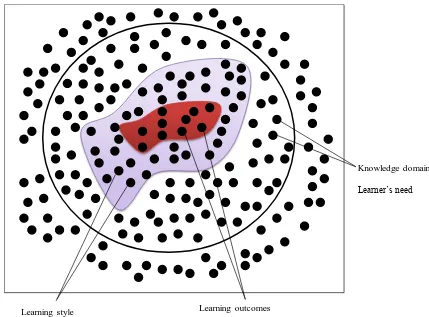
illustrated in Figure 1-1. APELS will select learning material from an enormous number of
freely available resources on the Web (dots in Figure 1-1) according to student’s constraints,
which are the student’s need, learning style and learning outcomes for the chosen knowledge
[image:19.595.104.533.178.495.2]domain.
Figure 1-1 Knowledge extraction based on students’ constrains
1.4 Aim and Objectives
The project aim, concerns the development of an intelligent system to support online course
design based solely on the information extracted from available resources on the Web. The
overall architecture of the system will be designed to allow the application of the system to
various educational fields.
The objectives of the research will include:
1. Review the existing work on automatic knowledge extraction from the Web.
2. Review the current platforms of E-learning systems.
Knowledge domain Learner’s need
5
3. Review learning styles and their use in curriculum design.
4. Design the architecture of the Adaptable and Personalised E-learning System (APELS).
5. Implement the proposed architecture using a specific field of learning with a well-defined
curriculum content.
6. Integrate the components of the APELS system and produce a computer based system that
can be used by the learners.
7. Evaluate the proposed system by experts from the field and education.
8. Evaluate the experience learned during design and implementation of the APELS system,
and discus future improvements.
1.5 Research Contribution
Through the analysis, design, creation and evaluation of the APELS system, this research has
provided novel contributions to the E-learning area and the computer science field.
In the E-learning area the contributions can be summarised as follows:
• APELS defines the major similarities between the learning outcomes as specified by the
standard curricula and the content of the extracted websites to enable the appropriate
learning of the subject.
• APELS provides a very important addition to the world of adaptive learning as it enables
the portability of the system to other domains by reusing the same architecture and rules
without changing the system but by only replacing the ontology.
• APELS can be used by individual learners as well as educational institutions that may
lack the expertise to develop learning resources cost-effectively; the academic learning
that is conducted via APELS is based on resources available freely on the Web and does
6
• APELS enables users to design their own learning material based on internationally
recognised curricula and contents, which will be presented in their preferred learning style
making learning a more interesting and enjoyable experience.
In the computer science field:
• A new linguistic method was developed to evaluate the learning material of a particular
module against a set of pre-defined learning outcomes, based on determining the linguistic
patterns in NLP.
• Adaptability as an important intelligence feature was considered in APELS. The system
can adapt and modify the content and the learning styles based on the interactions of the
users with the system over a period of time. This is based on calculating a satisfaction
score that is fed back to the system.
1.6 Limitations of the Current Research
Throughout this project there have been a number of limitations that could be summarised as
follows:
1. Given the strict duration of the PhD program it was not possible to evaluate the APELS
system with real learners during a substantial period of the time that will allow the
evaluation of their learning experience and the full adaptability mechanism of the system.
2. The system will need a continuous updating of the synonyms of the concepts in the domain
ontology and this is not automatic in the current version of the system.
3. Expanding the system to include other media learning resources such as video and audio
files as the current version of the system considers only text based resources.
1.7 Phases of the Research
The purpose of this thesis is to provide a comprehensive intelligent organisation of materials
available on the Web based on student’s constraints which are student’s need, learning style
7
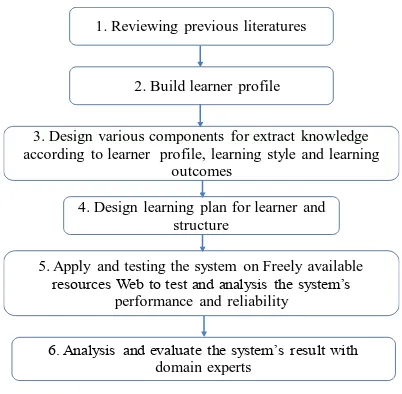
The first phase, is concerned with the review and analysis of a number of diverse approaches
in implementing personalised E-learning systems in order to present the differences between
these systems and highlight the shortcomings of the existing models.
The second phase, concerns the design of the interface in order to identify learners’
requirements such as learner’s background and learner’s need. Also, the system uses the VARK
learner model in order to identify the learner’s learning style. Then, the system introduces two
ways of presenting the content for the learner to choose from according to their preferences.
The third phase, concerns the information extraction approach, which is used to extract learning
resources from the Web that are suitable for the learner. This approach is based on an ontology
in order to retrieve relevant information as per user request. In addition, it transforms HTML
document to XHTML to provide the information in a friendly accessible format and easier for
extraction and comparison. Moreover, a matching process will be implemented to search for
websites that have the highest probability of satisfying the learners requirements. After the
matching process, a further step is required to evaluate the content against a set of learning
outcome as defined by standard curricula.
In the fourth phase, the information extracted by the system will be passed to a Planner that
will structure it into lectures/tutorials and workshops based on some predefined learning times.
The fifth phase, concerns the validation of the designed courses with standard curriculum with
computer science as the learning domain will be performed.
8
Figure 1-2 Phases of the research
1.8 Thesis Organisation
The remaining of the thesis is organised as follows:
Chapter 2 reviews and provides the background of the natural language processing (NLP)
field, its applications and knowledge resources. In addition, it presents the information
extraction and information retrieval techniques.
Chapter 3 reviews the background and design of E-learning systems, and how they develop
into adaptive E-learning systems. Furthermore, it presents an overview of learning theory and
learning style. Finally, the chapter reviews some related works by outlining different methods
that are used in personalised E-learning systems and their evaluation.
1. Reviewing previous literatures
4. Design learning plan for learner and
structure
2. Build learner profile
3. Design various components for extract knowledge
according to learner profile, learning style and learning
outcomes
5. Apply and testing the system on Freely available
resources Web to test and analysis the system’s
performance and reliability
9
Chapter 4 describes the architecture of the APELS system which is based on three main
models that will form the main components of the system. Firstly, it presents the learner’s
model which contains all the needed information about the learner. Secondly, it introduces the
information extraction model that is used to extract learning resources from the Web. Finally,
the chapter presents the content of the delivery model that generates and structures the learning
plan for the module including the content.
Chapter 5 illustrates the working mechanism of the APELS system, how it would be used in
practice including implementation of its rules and approaches using the ACM/IEEE Computer
Society Computer Science Curriculum as case study.
Chapter 6 discusses the system evaluation to test the research hypothesis from the perspectives
of experts. It describes the setting of the experiment, which includes various phases such as
testing the system usability, evaluating the quality of the produced content, and general
discussion.
Chapter 7 presents the conclusion, including reflection on the extent to which the research
10
Chapter 2
: Natural Language Processing and Knowledge
Engineering Background
This chapter introduces the natural language processing (NLP) field, its applications and
knowledge resources that are used for developing the APELS system. Furthermore, it reviews
the NLP tools that have been selected and used for this research and justifies the motivational
reasons behind choosing such techniques. In addition, the chapter gives an overview of
information retrieval and information extraction processes focusing on the important tasks of
information retrieval, which are used throughout this research.
2.1 An Overview of Natural Language Processing
Natural Language (NL) is known for its ambiguity and openness to many and different
interpretations. This is due to lexical ambiguities, such as words written in the same way but
having different meanings or grammatical as verbs phrases modifying different parts of a
sentence. Moreover, the interpretation of natural language statements often depends on the
context. The Internet is a very rich source of information that is exploited and used by many
applications and users. This information is often expressed in NL and referred to in the
literature as unstructured data. Examples of such unstructured data is made available in online
sources such as news articles, blogs, social media and surveys all presented as dynamic or static
webpages. To exploit this plethora of unstructured data, tools that are able to analyse,
disambiguate and process NL resources are needed (Manning and Schütze, 1999, Jackson and
Moulinier, 2007, Jurafsky and Martin, 2009, Collobert et al., 2011). Some of these tools are
attempting to transform the unstructured data into a structured one as they are much easier to
process.
In addition, the interactions that occur between NL and computers are analysed through Natural
11
al., 2003). This utilises software together with the most advanced systems for linguistic pattern
analysis, in order to generate and determine vital rules that are evident in specific texts. For
instance, NLP demonstrates fixed rules of grammar that show how sentences are constructed.
This is achieved by applying a group of NLP tasks usually supported by tools.
2.1.1 Natural Language Processing Tasks
The linguistic analysis of different grammatical structures that are referred to as parts of speech
(PoS), grammatical structure, or semantic information are the basis for NLP tasks and these are
used for processing unstructured texts. As a result, the texts become structured, as relevant
features are extracted from parts of the text, and these individual parts are then used to detail
syntactic information (Manning and Schütze, 1999, Jackson and Moulinier, 2007, Jurafsky and
Martin, 2009, Collobert et al., 2011).The main NLP tasks include tokenisation (Webster and
Kit, 1992), part of speech (PoS) tagging (Brill, 1992), lemmatisation (Porter, 1980), named
entity recognition (NER) (Jurafsky and Martin, 2009), machine translation (MT) (Manning et
al., 2014), and co-reference resolution (Stoyanov and Eisner, 2012). These tasks are introduced
in the following subsections.
2.1.1.1 Tokenisation
Tokenisation is a common process in NLP tasks, in which a source text is initially split into
smaller units or tokens for subsequent processing and analysis (Webster and Kit, 1992). For
instance, documents are broken into paragraphs, paragraphs into sentences, and sentences into
individual tokens. Tokens can be words, symbols, numbers, punctuation or the space token. In
addition, during the tokenisation process, word boundaries are detected. The ending point of a
word and the beginning of the next word is referred to as word boundaries.
2.1.1.2 Part of Speech Tagging
Part of Speech Tagging (PoS) provides a syntactic analysis for each word in the text (e.g.
12
has been widely advocated by many researchers to be one of the main tasks in syntactic text
analysis, as it is useful for linguistic analysis and is commonly undertaken on texts that are
tokenised (Brill, 1992, Hepple, 2000). Moreover, the linguistic features of each word as
extracted by a PoS tagger are useful for automatic keyword and key phrases extraction. For
instance, Hulth (2003) used a supervised learning system for keyword extraction from
abstracts, using a combination of lexical and syntactic features. According to Hulth, keyword
extraction from abstracts is more widely applicable than from full texts, since many documents
on the Internet are not available as full-texts, but only as abstracts. In her work, adding
linguistic knowledge such as part of speech improved keywords extraction and the experiment
of this work showed that the accuracy of the system almost doubled by adding linguistic
knowledge to the term representation. Furthermore, an improved keyword extraction method
(Extended TF) was proposed by Hong and Zhen (2012). They utilised linguistic features of
keywords like word frequency, part of speech, syntactical function of words, and the position
where the word appears and word’s morphology. On the basis of the characteristics of each
feature, weights were ascribed to different features and the Super Vector Machine (SVM)
model was utilised to optimize the results of key words extraction.
2.1.1.3 Lemmatisation
Lemmatisation (morphological analysis), is the process of analysing the structure of the word
in order to identify its root such as is, are → be, bicycles, bicycle’s, bicycles’ → bicycle. For
grammatical reasons, different documents and texts will use different forms of the words.
Therefore, Lemmatization would be useful when searching for a specific form of a word to
return all the documents that contains the other structures that are derived from the same root
13
2.1.1.4 Named Entity Recognition
Named Entity Recognition (NER) is the task of identifying certain types of named expressions
in unstructured text and classify them into a predefined set of categories. These expressions
can be personal and geographic named expressions, as well as temporal and numeric ones.
NER systems may utilises heuristic rules that rely on the syntactic structures of the surrounding
context. NER is a crucial constituent of many NLP applications (Jurafsky and Martin, 2009).
Examples of these applications include Machine Translation, Text Summarization, Opinion
Mining, and Semantic Web Searching (Benajiba et al., 2009).
Several studies have been applied to NER to identify important entities. For example, Ek et al.
(2011) developed an approach for a NER system to recognize named entities for short text
messages (SMS) in Swedish that runs on a mobile platform. Moreover, Jiang et al. (2010)
examined the use of Hidden Markov Model (HMM) to extract named entities related to events
or activities from SMS messages in Chinese. In addition, Polifroni et al. (2010) proposed an
approach that employs logistic regression to recognize name, location, date, and time entities
from spoken or typed messages. They built a corpus from transcribed utterances of English
SMS messages from real users in a laboratory setting. The problem of identifying proper names
is not straight forward for some languages. For example, it is particularly difficult for Arabic,
since names in the Arabic language do not start with capital letters like in English. Therefore,
Abuleil (2004) presented an approach to extract names from text by building a database and
graphs to represent the words that might form a name and the relationships between them.
Similarly, Zayed and El-Beltagy (2015) proposed an approach that adopts a rule-based model
combined with a statistical model. The statistical model is based on association rules and is
built by employing unsupervised learning of context patterns that indicate the presence of a
14
2.1.1.5 Machine Translation
Machine Translation (MT) is the task of automatically converting one natural language text
into another, preserving the meaning of the input text, and producing fluent text in the output
language (Manning et al., 2014). While machine translation is one of the oldest subfields of
artificial intelligence research, the recent shift towards large-scale empirical techniques has led
to very significant improvements in translation quality. MT implements various approaches
that determine the rules of linguistics that interpret a text’s words linguistically through the
process of analysis on all the different linguistic features via two main approaches: rule-based
and statistical Machine Translation. The rule-based approach utilises rules and structures of the
grammar, together with dictionaries in order to ascertain linguistic information that
consequently creates the target language from the source language. Comparatively, the
statistical approach develops translations via the process of advancing previously translated
large text corpora that translates texts which are similar or original (Locke and Booth, 1955,
Hutchins, 2007).
2.1.1.6 Co-reference Resolution
Co-reference resolution is the task of finding all expressions in a text that refer to the same
entity. For instance, “Mark went to the school yesterday, he was on a holiday for three days”,
the word “he” and “Mark” in the given sentence refer to the same person and the task of
reference is to link these two words. There are many open source tools available for
co-reference resolution that explore entities and tacitly assume a correspondence between them in
the text such as the GuiTAR system (Poesio and Kabadjov, 2004), BART (Versley et al., 2008),
JAVARAP (Qiu et al., 2004), and the Reconcile system (Stoyanov et al., 2010). For example,
Reconcile is the most common co-reference resolution system, which can be run on a piece of
plain text to produce annotated co-reference resolution (Stoyanov et al., 2010). It employs
15
NLP tasks such as sentence splitting, tokenisation, and PoS tagging in the OpenNLP tool
(Baldridge, 2005) and Stanford named entity recognition (Manning et al., 2014) to facilitate
rapid creation of co-reference resolution systems.
2.1.2 Natural Language Processing Tools
NLP is the computational technique for analysing and representing naturally occurring texts at
one or more levels of linguistic analysis for the purpose of achieving human-like language
processing for a range of tasks or applications (Liddy, 2001). Most NLP tools are influenced
by relatively newer areas such as Machine Learning, Computational Statistics and Cognitive
Science, in order to perform annotations on words and terminologies to identify real world
objects, and their relationships in the text (Madnani and Dorr, 2010). There are many open
source tools available for NLP for semantic annotation of textual documents such as OpenNLP
(Baldridge, 2005), NLTK (Loper and Bird, 2002), GATE (Cunningham et al., 2002), and
Stanford CoreNLP (Manning et al., 2014). In the following paragraphs, some of these NLP
tools are described in more detail.
2.1.2.1 OpenNLP
The OpenNLP tool is a free toolkit, which creates textual linguistic annotations that are based
on maximum entropy use of statistical models (Baldridge, 2005). It integrates many NLP tasks
including tokenization, sentence segmentation, PoS tagging, NER, chunking and co-reference
resolution.
The OpenNLP toolkit has been used in different studies and domains. For example, the
OpenNLP system was used for the development of a biomedical corpus for performing noun
phrase chunking (NP) by Kang et al. (2011). Separately, an approach in relation to named entity
detection in an SMS corpus in the Swedish language was described by Ek et al. (2011). They
used the OpenNLP toolkit to annotate the SMS corpus through applying part-of-speech (PoS)
16
is provided as a full package, making it hard to use it in our system if only few components are
needed.
2.1.2.2 NLTK
The Natural Language Toolkit (NLTK) is a Python package for natural language processing
(Loper and Bird, 2002). NLTK provides and enables interfaces for the purpose of text
processing, linguistic structure analysis and the access to large corpora collections. NLTK
includes libraries and programs of NLP components such as tokenization, PoS tagging, parsing,
chunking, semantic analysis, classification and clustering.
Many researchers have utilised NLTK in the process of analysing natural language and
knowledge extraction. For example, Mckenzie et al. (2010) introduced a novel application for
information extraction by extracting data from helicopter maintenance records to populate a
database. They used NLTK to implement a partial parsing of text by way of hierarchical
chunking of the text. Additionally, Stoyanchev et al. (2008) developed a question answering
system that employed the NLTK toolkit in order to analyse questions linguistically. Moreover,
Sætre (2006) presented an approach used to find biological relevant information on protein
interactions from the internet. This was developed using NLTK components that include data
selection, tokenization, PoS tagging and stemming. The fact that NLTK (Loper and Bird, 2002)
is an open source package implemented in Python is the main disadvantage in this tool. That is
because Python is not powerful enough for most standard NLP tasks despite having most of
the functionality needed to perform simple NLP tasks (Madnani, 2007).
2.1.2.3 GATE
The General Architecture for Text Engineering (GATE) (Bontcheva et al., 2004, Cunningham
et al., 2009) architecture is implemented in Java and developed at the University of Sheffield
for processing natural language is a publicly available system.(Gosling et al., 2005). It is an
17
them for semantic annotation. The GATE architecture is developed in the IE component set
called ANNIE (A Nearly-New Information Extraction). ANNIE contains a set of processing
resources that apply algorithms for extracting information from unstructured text. Various
major processing resources presented by the ANNIE plug-in are: English tokenizer, Gazetteer,
sentence splitter, part-of-speech (PoS) tagger, named entity (NE) transducer, Java Annotations
Pattern Engine (JAPE) transducer, and orthographic co-reference (Cunningham et al., 2009).
The advantages of using the GATE architecture have been showed by a number of different
researches. An idea developed by Feilmayr et al. (2009) that a rule/ontology-based IE system
can be used for analysing tourism websites and extracting structured data from accommodation
webpages based on the use of the GATE system. An ontology-based IE system for the business
domain based on the use of the standard and adapted processing resources from GATE was
created by Saggion et al. (2007). Joshi et al. (2012), used the GATE for IE which shows the
advantages of using social networking sites like twitter in the marketing domain. A domain
specific NER for classifying named entities in Twitter posts from buyers and sellers was also
created in this study. Accordingly, these posts (a collection of tweets) are analysed and
processed by using the GATE components (e.g. English Tokenizer, Sentence Splitter,
PoS-tagger, Gazetteer and NE transducer) so that data is acquired for farmers and merchants for
giving them useful ideas. However, the main drawback of the GATE tool (Bontcheva et al.,
2004, Cunningham et al., 2009) is that it can only be used as a full package, therefore, it is not
suitable for our system as only some components of it are needed to be implemented in APELS.
2.1.2.4 Stanford CoreNLP
The Stanford CoreNLP is an open source toolkit that is composed of a set of NLP tools that are
used for processing English texts (Manning et al., 2014). It can give the base forms of words,
their parts of speech, whether they are names of companies, people, etc., normalize dates, times,
18
dependencies, indicate which noun phrases refer to the same entities, indicate sentiment, extract
particular or open-class relations between mentions, etc.
Stanford CoreNLP is designed to be highly flexible and extensible. With a single option you
can change which tools should be enabled and which should be disabled. It is very easy to
apply a bunch of linguistic analysis tools to a piece of text.
Stanford CoreNLP integrates many of Stanford’s NLP tools, including the part-of-speech
(PoS) tagger, the named entity recognizer (NER), the parser, the coreference resolution system,
sentiment analysis, bootstrapped pattern learning and the open information extraction tools.
Moreover, an annotator pipeline can include additional custom or third-party annotators.
CoreNLP’s analyses provide the foundational building blocks for higher-level and
domain-specific text understanding applications.
A variety of studies have actually used the Stanford CoreNLP tool. For instance, Ahmed et al.
(2009) proposed the BioEve system to extract the Bio-Molecular events from Text. They used
Stanford parser a simple tool to provide typed-dependency relationships between these words
in form the dependency parse. In addition, Poria et al. (2014) developed an algorithm to exploit
the relationship between words and obtained the semantic relationship between words based
on dependency parsing. The Stanford Chunker component is used as the first step in the
algorithm to chunk the input text. Moreover, Trupti and Deshmukh (2013) presented an
approach for building an ontology from heterogeneous text documents using the Stanford
CoreNLP parser. They parsed the text file using Stanford parser, which generates XML file
that tags words as noun, verbs, adjectives, pronouns etc. Then OWL ontology, which contains
classes and concepts, is generated by converting identified PoS words in XML file. Likewise,
Siddharthan (2011) presented a system for text regeneration tasks such as text simplification,
style modification or paraphrase. The system applied transformation rules specified in XML
19
Pal et al. (2010) introduced a system to automatically classify the semantic relations between
nominals. The system achieves its best performance using lexical features such as
nominalization of WordNet and syntactic information such as dependency relations of Stanford
Dependency Parser. Likewise, Kern et al. (2010) built a Word Sense Induction and
Discrimination (WSID) system that exploits the syntactic and semantic features based on the
results of a natural language parser component. They applied the Stanford Parser in order to
provide a context-free phrase structure grammar representation and a list of grammatical
relations (typed dependencies) of a given sentence. Moreover, Uryupina (2010) presented
Corry – a system for co-reference resolution in English. He relied on the Stanford NLP toolkit
for extracting named entities and parse trees for each sentence. The Corry system has shown
the best performance level among four well-known co-reference resolution systems. Finally,
Berend and Farkas (2010) introduced a novel approach which includes a set of features for the
supervised learning in order to extract key phrases from scientific papers. They applied
syntactic tagging using the Stanford parser on each sentence. Taken together, Stanford
CoreNLP has been widely and effectively used tool for text processing, information extraction,
therefore, it was implemented in our system for the same purpose.
2.1.3 Natural Language Processing Resources
The huge quantities of textual information and the need for NLP resources require the
investigation into the utility of linguistic knowledge from available resources. The most
common knowledge resources are described in the following subsections.
2.1.3.1 Machine-Readable Dictionaries
A Machine-readable dictionary is commonly used in NLP in order to provide helpful
information, such as word meaning, grammatical word categories and relations (Manning and
20
WordNet lexicon (Miller et al., 1990, Fellbaum, 1998) and the Longman Dictionary of
Contemporary English (LDOCE) (Mayor, 2009).
2.1.3.2 Thesaurus
A thesaurus enables the definition of information that relates to the correlation between words,
which produce synonyms (same meanings), as well as antonyms (opposing meanings)
(Kilgarriff and Yallop, 2000). Moreover, a thesaurus also provides the overall word meaning.
One example of a thesaurus that has been used in the NLP field on many occasions comes in
the form of the Roget's International Thesaurus (Roget, 1911).
2.1.3.3 Ontologies
An ontology is composed of a set of concepts within a specific domain and the relationships
between these concepts in order to extract knowledge (Gruber, 1995). In addition, ontologies
are used in AI and NLP mainly in the domain of intelligent information integration (Seng and
Kong, 2009), cooperative information systems (Ouksel and Sheth, 1999), information retrieval
and extraction (Müller et al., 2004), and database management systems (Necib and Freytag,
2003, Snae and Brueckner, 2007).
Ontologies have a vital part in the process of information retrieval. The data belonging to a
document has closely linked to the concepts of ontology. If the users agree upon the
conceptualization of the ontologies, then the retrieval process would benefit better. The
traditional information retrieval systems had to invent strategies that would semantically
improve the queries and use similarity measures to match documents since the initiation of the
ontology’s (Saruladha, 2012). According to Lee et al. (1993), it is necessary to utilise domain
knowledge and semantic similarity measures to efficiently match the queries and the
documents in the information retrieval domain.
The content of data in traditional information retrieval techniques was made up using a lot of
21
the words and neither did it show the meaning of the words which caused for the retrieval data
to be less accurate. The users found it hard to show their data need as the intent of the user is
less understood by the system. So, to make the information retrieval system better, it is essential
that external domain knowledge is required to augment the keyword based queries (Müller et
al., 2004).
2.2 Information Retrieval and Information Extraction
Information Retrieval (IR) is the task of retrieving documents to help a user find the right
answer (Goker and Davies, 2009) . IR presents a comparison of terms from the query, alongside
index terms that are evident from the documents. Indeed, the most well-known IR applications
in data retrieval are web search engines (e.g. Google). Google asks the user to provide a query
with some words that are expected to occur in the relevant documents. Then the document list
can be ordered according to how many times each search word occurs, how close the different
search words are clustered in the document and so on.
Information Extraction (IE) is the task of automatically extracting knowledge from text. IE
systems utilised NLP tasks to analyse unstructured text in order to extract information about
pre-specified types of events, entities or relationships. IE has been used in some studies to
identify names of proteins in biological documents (Fukuda et al., 1998), to extract medical
information (Hahn et al., 2002) , and to ascertain information of businesses from webpages
(Sung and Chang, 2004). Named Entity Recognition (NER) is known as the principle generic
task in the process of IE, as well as the task of template elements and identifying co-references
(Appelt, 1999, Moens, 2006). Furthermore, various IE systems are concerned with learning
linguistic patterns or extracting rules automatically from training examples such as AutoSlog
(Riloff, 1996) , RAPIER (Mooney, 1999), and CRYSTAL (Soderland et al., 1995).
Various IE systems are available for keywords extraction such as automatic indexing, text
22
tracking, information visualization, report generation, and web searches (Bracewell et al.,
2005). There are several methods for Automatic Keyword Extraction and these can be divided
into four categories: statistical methods, machine learning methods, linguistic methods and
other methods.
Statistical methods: These methods are based on statistical features derived from text such as
term frequency, inverse document frequency and position of a keyword. For instance, Cohen
(1995) developed a model to represent index terms from text. It does not utilise any stop list,
stemmer, or any language and domain specific component, allowing for easy application in any
language or domain with slight modification. The model uses n-gram counts, which results in
a function similar and more general than a stemmer. Moreover, Herrera and Pury (2008)
addressed the problem of finding and ranking the relevant words of a document by using
statistical information referring to the spatial use of the words.
Machine learning methods: These methods employ the extracted keywords from training
documents to train a model and then apply the model to find keywords from new documents.
These methods include Naive Bayes and Support Vector Machine. For instance, Uzun (2005)
applied a naive Bayesian classifier, utilizing features such as the TFxIDF score, distance of the
word from the beginning of the text, paragraph and the sentence to identify keywords in the
text. It has been assumed that keyword features are normally distributed and independent.
Linguistic methods: These methods utilise linguistic features of the words mainly sentences
and documents. The linguistic methods include lexical analysis, syntactic analysis, discourse
analysis and so on. For instance, Hulth (2003) utilised linguistic knowledge (i.e., PoS tags) to
identify candidate sets of nouns or phrases. Potential PoS patterns were utilised to identify
candidate phrases from the text. It was shown that, employing a PoS tag as a feature in
candidate selection results in a considerable improvement in the key phrase extraction.
23
phrase from the corpus. These keywords are defined based on their linguistic features (PoS).
Moreover, Ercan and Cicekli (2007) used semantic word features based on lexical chains of
words to determine important keywords in the document.
Other methods: Other methods about keyword extraction essentially combine the methods
mentioned above or utilise some heuristic knowledge in the task of keyword extraction, such
as their position, length, layout feature of words, HTML tags around the words, etc. For
instance, Krulwich and Burkey (1996) employed heuristics for extracting key phrases from a
corpus. The heuristics are syntactic ones, such as italicization, the presence of phrases in section
headers and the use of acronyms. Additionally, the key phrase or keywords can be extracted
from text by finding the relationships between them using dependencies. For instance, Poria
et al. (2014) proposed a Concept Net-based semantic parser as a tool based on dependency
between phrases, which has been used to extract concepts from heterogeneous texts with high
accuracy. Similarly, Gelfand et al. (1998) proposed a method based on the Semantic Relation
Graph to extract concepts from a whole document. They used the relationship between words,
extracted on a lexical database to form concepts.
2.2.1 Information Retrieval Tasks
Informtion Retrieval (IR) deals with the problem of finding and presenting documents of
unstructured data that satisfy an information need (query) from within collections of documents
(Manning et al., 2008). A user information need, also referred to as query, must be ‘translated’
in order for an IR system to process it and retrieve information relevant to its topic. This
‘translation’ is usually made by extracting a set of keywords that summarise the description of
an information need. The information can be presented in such a way that facilitates the user
to find the documents that s/he is interested in.
IR is the process by which a collection of data is represented, stored, and searched for the
24
This process involves various stages initiated with representing data and ending with returning
relevant information to the user. The intermediate stage includes filtering, searching, matching
and ranking operations. The main objective of IR system is to find relevant information or a
document that satisfies user information needs. To achieve this objective, IR systems usually
implement the following two main processes (Indexing and Matching) as shown in Figure 2-1
(Croft, 1993). First, the information need (query) and the document will undergo query
formulation or indexing respectively. The formulated query and the indexed document will be
matched to find the similarities and the matched information will be retrieved.
Figure 2-1 Information retrieval processes (Croft, 1993)
2.2.1.1 Indexing
The purpose of indexing is to optimize speed and performance in finding relevant documents
for a search query. The index is built from the information stored with the data and the method
by which the information is indexed. The process of indexing consists of the following set of
stages:
1. Collecting the documents to be indexed.
2. Tokenize the documents and turn them into sets of tokens.
3. Eliminating all special characters from documents like “\ “,” #”, “$“, “% “and stop words
such as “a”, “and”,” or”, “the”, “of” that appears many times in documents. For humans
25
it comes to text processing these words only make the process slow and take space.
Furthermore, in text processing will be less precise since these words affect the weighting
of words and their occurrence is taken into account in the similarity measure.
4. Stemming is an important step in many of the Information Retrieval (IR) and Natural
Language Processing (NLP) tasks. The procedure of eliminating the prefixes or suffixes
from words is called stemming. In terms of information retrieval, stemming is used to
conflate word forms to avoid mismatches that may hinder the recalling process. For
example, while looking for a document “How to write”, if the user issues the query
“writing” there will be no match with the title but if the query is stemmed, such that
“writing” becomes “write”, then the retrieval of this specific document will be triumphant.
In many languages, stemming is imperative for the retrieval performance. Stemming is an
absolute essential for the retrieval performance in many different languages like in Hebrew,
stemming increases the number of documents retrieved by between 10 and 50 times
(Krovetz, 1993). There are less drastic results for stemming in English but still it has proved
to give betterment to retrieval process (Krovetz, 1993, Hull, 1996, Harman, 1991). Porter
(1980) was the one who gave the most widely cited stemming algorithm. The Porter
stemmer applies a set of rules to iteratively remove suffixes from a word until none of the
rules apply.
5. In IR systems, the user’s information need is represented by a query formulation. With a
Web search engine for instance, the user is presented with a simple interface where he
inputs some words stating his request for information. The IR system is expected to return
an ordered list of documents, where the most relevant to the query should be on top. In
order to match the query with the indexed terms of documents, the query is also represented
26
6. The Vector Space Model, also called term vector model is a mathematical model for
representing text documents as vectors of identifiers, like terms or tokens (Salton et al.,
1975). The term depends on what is being compared to but are normally single words,
keywords, phrases or sentences. The query
q
and documentd
are represented as anm-dimensional vectors, where each dimension corresponds to a distinct term and m is the total
number of terms used in the collection of documents and query.
𝑑𝑖 = (𝑤1,𝑖 , 𝑤2,𝑖 , … , 𝑤𝑡,𝑖 ) (2.1)
𝑞𝑖 = (𝑤1,𝑞 , 𝑤2,𝑞 , … , 𝑤𝑛,𝑞) (2.2)
The document vector 𝒅𝒊is represented by equation (2.1) where 𝒘𝒊 is the weight that refers
to the number of occurrences of the term t in the document d. If a document d does not
contain term the 𝒕𝒊 then the weight 𝒘𝒊 is set to zero.
2.2.1.2 Similarity Measures
Measuring similarities between words, sentences, paragraphs and documents is an important
role in various applications such as information retrieval, document clustering, word-sense
disambiguation, automatic essay scoring, short answer grading, machine translation and text
summarization (Gomaa and Fahmy, 2013).
The comparison of the query against the document representations is called the matching or
similarity process. The matching process usually results in a ranked list of documents in search
of the information they need. Ranked retrieval will hopefully put the relevant documents
towards the top of the ranked list, minimising the time the user has to invest in reading the
documents.
Moreover, the similarity between the documents and the query is often calculated using a
distance metric, such as the Jaccard similarity, or the cosine function of the angles between the
two vectors. The documents are ranked on the basis of this similarity measure, and the list is