University of South Carolina
Scholar Commons
Theses and Dissertations
2015
Building Capacity for Advocacy for Local Food
Systems Change: An Ethnographic Study
Documenting the Process of Change in South
Carolina Communities
Casey Denise Childers University of South Carolina
Follow this and additional works at:https://scholarcommons.sc.edu/etd
Part of theHealth and Physical Education Commons
This Open Access Dissertation is brought to you by Scholar Commons. It has been accepted for inclusion in Theses and Dissertations by an authorized administrator of Scholar Commons. For more information, please [email protected].
Recommended Citation
BUILDING CAPACITY FOR ADVOCACY FOR LOCAL FOOD SYSTEMS CHANGE
:
A
N ETHNOGRAPHIC STUDY DOCUMENTING THE PROCESS OF CHANGE IN SOUTHCAROLINA COMMUNITIES
by
Casey Denise Childers
Bachelor of Science
Appalachian State University, 2003
Master of Arts University of Georgia, 2010
Submitted in Partial Fulfillment of the Requirements
For the Degree of Doctor of Philosophy in
Health Promotion, Education, and Behavior
Norman J. Arnold School of Public Health
University of South Carolina
2015
Accepted by:
Sonya Jones, Major Professor
James Thrasher, Committee Member
Brooke Weberling-McKeever, Committee Member
Pippen Whitaker, Committee Member
ii
iii
A
CKNOWLEDGEMENTSI would like to dedicate this work first and foremost to my committee members,
who have guided me greatly throughout this process while allowing me the intellectual
freedom to pursue innovative research ideas. Particularly, many thanks to Dr. Sonya
Jones for her mentorship and guidance over the last four years and for allowing me to
work with such a great team on the COPASCities project. I also want to thank the
research community groups that opened up their minds and meetings to me to allow me
to do this work. Last but not least, I want to thank my family and friends for surrounding
iv
A
BSTRACTThe Guide to Community Preventive Services currently does not have sufficient
evidence to recommend any nutrition strategies for obesity prevention. Nonetheless, food
systems changes are recommended for childhood obesity prevention by the C.D.C.,
U.S.D.A., and many thought-leading organizations. Creating healthy food communities
will require physical and social environmental changes. Community-based groups need
to build their capacity to frame community health issues as physical and social
environmental issues. This research partnered with community-based groups to build
their capacity for advocacy by using media framing research and strategic
communications training. Specifically we: 1) conducted a media content about food
systems, childhood obesity and the link between them; 2) increased community-based
groups’ understanding of collective action framing and the social determinants of health
through planning an issues campaign; and 3) provided research, tools, facilitation, and
technical assistance to community based groups as they planned issue campaigns. In our
first manuscript, we described the process of increasing the advocacy capacity of a
community-based group using the tenets of collective action framing theory; described a
media content analysis and how we applied to practice through communications
trainings; and finally, how one community group grappled with re-framing food systems
change issues. In our second manuscript, we described the process of raising the
consciousness of a food system advocacy group, how we facilitated the definition of
v
T
ABLE OFC
ONTENTSACKNOWLEDGEMENTS ... iii
ABSTRACT ... iv
LIST OF TABLES ... vi
LIST OF FIGURES ... vii
LIST OF ABBREVIATIONS ... viii
CHAPTER 1: INTRODUCTION ...1
CHAPTER 2 BACKGROUND AND SIGNIFICANCE ...4
CHAPTER 3: RESEARCH DESIGN AND METHODS ...31
CHAPTER 4: MANUSCRIPTS ...68
CHAPTER 5:CONCLUSIONS ...140
REFERENCES ...148
APPENDIX A–S.C. MEDIA CODING ANALYSIS OF CHILDHOOD OBESITY ...165
APPENDIX B–TOOLS AND RESOURCES ...195
vi
L
IST OFT
ABLESTable 2.1 Variants of Frames and Framing Strategies ...26
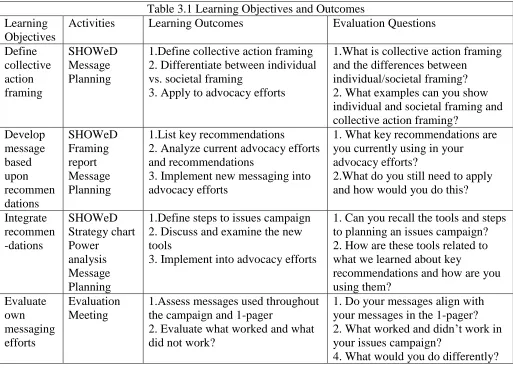
Table 3.1 Learning Objectives and Outcomes ...51
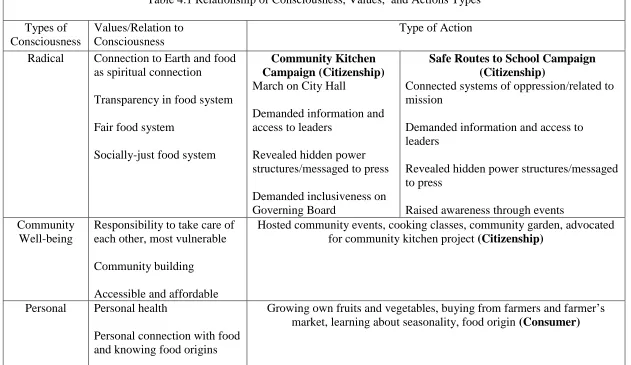
Table 4.1 Relationship of Consciousness, Values, and Action Types ...132
vii
L
IST OFF
IGURESFigure 2.1 Consequences of the Current Food System ...9
Figure 3.1 Conceptual Framework ...40
Figure 4.1 Timeline of M.F.A. Events ...95
viii
L
IST OFA
BBREVIATIONSCenter ... Center for Research on Nutrition and Health Disparities
COPASCities ... Childhood Obesity Prevention in South Carolina Communities
CDC ... Center for Disease Control and Prevention
G.M.O. ... Genetically Modified Organism
M.F.A. ... Midlands Food Alliance
P.A.R. ... Participatory Action Research
R.W.J. Foundation ...Robert Wood Johnson Foundation
S.C. ... South Carolina
S.D.O.H……….Social Determinants of Health
S.N.A.P………Supplemental Nutrition Assistance Program
T.O.H………The Organic Helpers
U.S.D.A. ... United State Department of Agriculture
U.S.C………...University of South Carolina
1
CHAPTER
1
I
NTRODUCTIONThe Guide to Community Preventive Services currently does not have sufficient
evidence to recommend any nutrition strategies for childhood obesity prevention (Guide
to Community Preventive Services, 2014). The World Health Organization (W.H.O.),
Center for Disease Control and Prevention (C.D.C.), and leaders in public health research
recommend focusing on policy, systems and environmental changes that support healthy
weight in childhood as the most promising public health approach to childhood obesity
prevention (Brennan, Castro, Brownson, Claus & Orleans, 2011; Koplan, Liverman &
Kraak, 2005; Marmot, Friel, Bell, Houweling & Taylor, 2008; Swinburn, 2009;
Wilkinson & Marmot, 2011; People, 2011).
To date, community-based trials have been effective at reducing the prevalence of
obesity. Each of these trials has in two common strategies: community engagement and
capacity-building (Economos et al. 2007; Sanigorski, Bell & Kremer, Cuttler &
Swinburn, 2008; Taylor et al., 2007). None of the trials described what capacity building
or engagement strategies were used in detail. In this study, we provided rich detail about
the process of engaging those groups within communities at greatest risk of childhood
obesity to build their capacity to re-frame the debate around childhood obesity.
The research described in this dissertation is part of a study (Childhood Obesity
2
capacity of community leaders to create food systems change. COPASCities has worked
in partnership with communities to identify capacity building needs, promote community
organizing as the approach for food systems change, and document the process of change
through ethnography. In this dissertation, I described the communications needs and
capacity building efforts of community partners using collective action framing theory.
To create systems-level changes, effective community advocates for childhood obesity
prevention need to be able to assign responsibility for obesity on a food system that
promotes high-energy consumption, lack of corporate and community responsibility for
food accessibility and affordability, and social policies that discourage the production of
low-energy dense foods in regional and local distribution systems (Gollust, Lantz, &
Ubel, 2009; Freudenberg, Bradley, & Serrano, 2009; Dorfman, Wallack & Woodruff,
2003; Kim & Willis, 2007).
The intended impact of the research was to build the capacity of two
community-based groups to advocate, through social action, for healthier and more sustainable foods
that will be more accessible and affordable, leading to healthier communities. By using
collective action framing, community-based groups can learn to communicate what the
problem is, why it matters, and build consensus about the solution in concrete terms that
will create the change that is needed (Dorfman, 2003; Lakoff, 2008). The research’s
central hypothesis was if the advocacy capacity of community-based groups is built,
community stakeholders would be able to re-frame the debates surrounding childhood
obesity as physical and social environmental issues, not individual lifestyle issues; and
become better advocates for the changes needed to their local food system. The
3
1. Evaluate the current South Carolina (S.C.) media environment and public opinion
about food systems and childhood obesity and provide framing reports to
community-based groups
1.1. Complete a media coding analysis of newspapers, television outlets, and
advocacy groups, including social media outlets, as well as a literature review about best
practices and recommendations
1.2. Develop a collective action and social determinants of health framing report
deliverable to community-based groups to guide the messaging in advocacy efforts
2. Catalyze and describe the process through which communities re-frame the debate
from the individual level to the physical and social environmental changes needed to their
local food system
2.1 Build capacity to advocate for food systems changes using the framing research
report, tools, training, and facilitation throughout the advocacy campaign planning
4
CHAPTER 2
B
ACKGROUND AND SIGNIFICANCEEpidemiological Background
Childhood obesity prevalence rates have grown. In the United States, 17% of
children ages 2-19 are obese (Ogden, Carroll, Kit & Flegal, 2014). In S.C., 15.2% of
children ages 2-5 are overweight and 12.8% are obese (SCYRBS, 2011). Of the S.C.
adolescents in grades 9-12, 15% were overweight and 16.7% were obese (SCYRBS,
2011). The cost of medical expenses related to obesity in S.C. was $1.06 billion in 2003
(Finkelstein, 2004). An estimated $1.2 billion dollars was spent due to obesity in S.C. in
2009, with a projected increase to $5.3 billion dollars in 2018. If the rising trajectory of
obesity prevalence could be stopped, S.C. could save $858 per adult in 2018, a total of $3
billion(Finkelstein, 2004). Life expectancies for the current generation of children are
shorter than their parents if the obesity rates continue as researched (Olshansky et al.,
2005). Obese children are more likely to become obese adults (Serdula et al., 1993) and
having an obese parent increases the risk of children being overweight or obese (Garn et
al. 1976; Whitaker, Wright, Pepe, Seidel & Dietz, 1997).
Some populations have higher obesity rates than others. Obesity rates increased
10% for American children between the ages of 10- to 17-years-old between 2003 to
2007. However, the obesity rates for lower-income children increased by 23% during the
5
being obese than children from higher income households. (Singh, Siahpush & Kogan,
2010). Residents of rural areas and lower socioeconomic statuses are more likely to be
obese (Patterson,Moore, Probst & Shinogle, 2004; Baker, Schootman, Barnidge & Kelly,
2006). In addition to lower-income people having the same individual-level challenges
around obesity as higher-income people (e.g. diet and sedentary behavior), lower-income
people also have additional physical and social environmental challenges to being
healthy. These include an unhealthy food environment (Zenk, 2005; Beaulac, 2009); a
lack of safe, walkable neighborhoods and opportunities to be active (Sallis & Glanz,
2009); cycles of food deprivation and overeating due to lack of resources to buy food
(Olson, Bove & Miller, 2007); and high, chronic levels of stress (Block, He & Zaslavsky,
Block, Ding & Ayanian, 2009).
The Current Food System
The community food system has an impact on obesity rates and may help explain
the disparities between populations (Sallis & Glanz, 2006). For example, food deserts are
in poorer areas, where there is little access to healthy foods (Beaulac, Kristjansson, &
Cummins, 2009; Cummins, 2007; Wrigley, 2002; Zenk, Schulz, Israel, James, Bao &
Wilson, 2005). Food deserts are a combination of physical and social environmental
factors in lower-income neighborhoods that affect residents’ access to healthy foods and
fresh fruits and vegetables, such as a lack of grocery stores and an abundance of
convenience stores and fast food restaurants (Sallis & Glanz, 2006; Morland, Wing, Diez
Roux & Poole, 2005; Beaulac et al., 2009; Block, & Kouba, 2006). Effects of a food
desert are further compounded by access issues such as lack of transportation to grocery
6
The R.W.J. Foundation, the C.D.C., and other leading health organizations and
advocacy groups recommend food systems changes as a promising childhood obesity
prevention strategy (Sobush et al., et al., 2009; National Policy, 2011; Action for Healthy
Kids, 2011; R.W.J. Foundation, 2011; Marmot et al., 2010). These organizations support
a list of recommended food systems strategies (Brennan et al., 2011) including
establishing more farmers’ markets, increasing the number of grocery stores in food
deserts that provide healthy, affordable foods, (Story, Kaphingst, Robinson-O'Brien &
Glanz, 2007) and regulations on food marketing to children and the food industry
(Swinburn et al., 2011).
Major food system changes and inequalities have occurred over time due to
technological advances, economic and social changes, and food and agricultural policies
(Story et al., 2007). Technological advances and new farming practices to eradicate
hunger have increased the abundance of food and may have more of an impact on obesity
rates than subsidies (Rickard, Okrent, & Alston, 2013). Additionally, social changes such
as lower wages and less time to cook, has created a food system based on cheap price and
high convenience (Story, et al. 2007).Nutrition policies implemented after World War II
had the goals of increasing production and efficiently of the food system. However, there
are currently few subsidies to produce fruits and vegetables that are nutrient-dense, with
most subsidies earmarked for soybean and corn crops, used to produce caloric-dense food
(Story et al., 2007). Reforms for agriculture policies are to increase access to local food
production through federally-funded programs, increase healthy food options to those on
7
diversified crops (Grandi & Franck, 2012), while reducing the prices through subsidizing
healthier food (Wendt & Todd, 2011).
While these nutrition policies were intended to provide income support for
farmers and fight hunger, it has created a food system where food production, processing,
and marketing is consolidated. Four companies in the United States process 85% of beef
and one company controls 40% of the milk supply (Food & Water Watch, 2010). In
2001, 95% of U.S. food is processed and marketed by agribusiness (Hendrickson,
Heffernan, W. D., Howard, & Heffernan, J. B., 2001). In the United States, 10 food
companies control over half of all food sales, with 75% of sales being processed foods
(Stuckle & Nestle, 2012). Global capitalism has created a society where food production
and consumption has sped up and space has been compressed, so that distance of space
masks the centralization of control of the food system (Hendrickson & Heffernan, 2002).
We define these few large actors who control production, processing, and
marketing in the food system as “Big Food.” These companies and corporate interests
gained power and have been able to maintain it through a variety of strategies. Big Food
includes global food and beverage companies, seed companies, and grocery store chains
that control global food chains (Stuckle & Nestle, 2012). Currently Big Food controls the
various stages of the food system. Big Food favors a food system that is globally-based
and is run by a few corporate interests that are looking at profit, not the well-being of
society (Hendrickson & Heffernan, 2002). Big Food has gained power by shortening the
time between production and consumption. “This reorganization of time and space
indicates a great deal of power on the part of just a few actors that are able to benefit
8
between public/private entities has been blurred, with fewer people involved in the food
system decision making process. Thus Big Food maintains power within the global food
system (Hendrickson & Heffernan, 2002).
The current food system controlled by Big Food has consequences. Only 2% of
the current U.S. food system represents food that is defined as healthy, fair, green, and
affordable according to food system advocacy groups (Khanna, 2012).Advocates for
food system changes say: “It is almost impossible for the typical American to get a meal
that doesn’t involve real threats to health and to the environment, as well as labor
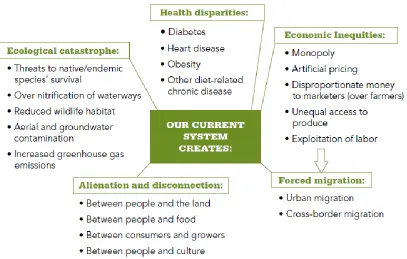
exploitation,” (Khanna, 2012). In addition to the health-related consequences of the
current food system, other consequences include economic inequalities such as fair trade
and wages, poor working conditions, forced migration (Maloni & Brown, 2006; Martin,
1991); ecological catastrophe including manure disposal, soil and water damage,
deforestation (Fox, 1997); and alienation and disconnection between the between people,
food and farmers (Wells, Gradwell & Yoder, 1999). The global food system is failing to
nourish people, with 1 billion hungry and 2 billion overweight, reflecting both sides of
malnutrition (Patel, 2008). Figure 2.1 below illustrates the consequences of our current
food system (Khanna, 2012).
9
Figure 2.1 Consequences of the Current Food System
Big Food’s Power within the Food System
Big Food has power within the food system by being a consolidated, concentrated
entity, with a very narrow focus on profits (Henrickson & Heffernan, 2002, Moschini &
Lapan, 1997, Lesser, 1999); privatizing safety standards (Henson & Reardon, 2005,
Opara & Mazaud, 2001, Regattieri, Gamberi, & Manzini, 2007); ensuring influence over
governmental entities (Stuckler & Nestle, 2012, Henrickson & Heffernan, 2002 Brownell
& Warner, 2009); engineering food to be addictive (Moss, 2013), as well as launching
successful marketing to children (Harris, Pomeranz, Lobstein & Brownell, 2009).
As Big Food becomes more concentrated and consolidated, access to capital and
energy is only given a few companies whose interest is maximizing profits, making it a
10
Big Food’s most recent growth is concentrated in developing countries, where people’s
diets are switching from traditional foods to processed foods (Stuckler & Nestle 2012).
Research and developments in agriculture have greatly advanced the field, but intellectual
property rights, such as seed patents, have contributed to further concentrating the food
system into the hands of a few corporate entities (Moschini & Lapan, 1997). Intellectual
property rights, for example, has allowed for Monsanto to control a vast share of the seed
market (Lesser, 1999).
Private food safety and quality standards that favor industrialized standards over
local standards have emerged as the dominant form of food system regulation. This is
because of weakness in the public food safety regulatory institutions (Henson & Reardon,
2005). Since food systems are more global, the blanket privatization of standards favors
industrialized standards over local or regional standards in developing countries and has
the potential to further marginalize these markets (Henson & Reardon, 2005). As the
food system becomes more global, it becomes less transparent, creating problems with
traceability (Opara & Mazaud, 2001). Little is known about the origins of food. As
people become more concerned about food safety, animal welfare, and the ecological and
sustainability of their food system, the global food system chains fail to make food origin
transparent (Opara,& Mazaud, 2001). This is a safety concern when a food-borne illness
breaks out. It is hard to trace the origin because rarely there are samples of the original
food left to test and it is difficult to know at what stage of processing was the food
contaminated (Regattieri, Gamberi, & Manzini, 2007).
Big Food has an influence on governments and non-governmental entities setting
11
several ways. Economic power has translated into political power (Henrickson &
Heffernan, 2002). Currently, the food industry is promoting “self-regulation” in an effort
to curb efforts for governmental regulation. For example, the American Beverage
Association voluntarily reduced sales of traditional carbonated soft drinks in schools in
2006. However, sports drinks were not part of this regulation and had surpassed
traditional soft drink sales in growth, making this “self-regulation” favorable to the
companies (Brownell & Warner, 2009). The food industry continues to control the
regulators by making large donations to politicians; hiring lobbying firms to block
governmental regulation at the federal, state, and local levels; encouraging relationships
and appointments within governmental agencies, such as the Federal Food and Drug
Administration; funding consumer groups and professional organizations; and pressuring
United States officials who are involved with international agencies (i.e. World Health
Organization) to push industry-friendly policies (Brownell & Warner, 2009).
Big Food has also engineered food to make people hungrier and more addicted to
processed food, as well as pre-packaged for convenience. For more than 30 years, Big
Food companies have hired food engineers to make processed food to have “product
optimization” or a bliss point, where the complex formulas encourage overconsumption,
can make people hungrier, and addictive (Moss, 2013). Additionally, Big Food
companies continue to fight over the “stomach share” of America and have targeted
factors in their distribution, packaging, and marketing related to food choice, such as
demographics, time pressures, convenience food, and income (Freshlogic, 2010). Food is
12
from home (Story et al., 2007); therefore, encouraging more consumption of
pre-packaged food processed by Big Food companies.
Part of the tactics for increasing Big Food’s stomach share has been through food
marketing that targets children. Food marketing has a significant impact on children, with
channels expanding into markets that children are highly exposed to, such as video
games, the internet, and in product placements (Harris, Pomeranz, Lobstein & Brownell,
2009). Children in the United States view about 5,500 food advertising messages a year
for high-calorie, low-nutrient products (Harris, Pomeranz, Lobstein & Brownell, 2009).
Currently, the argument against regulating food marketing toward children is personal
freedom, a free market with protected speech, along with an industry promise to
self-regulate (Harris, Pomeranz, Lobstein & Brownell, 2009).
Re-localizing the Food System
A local food system is not inherently better than global food systems, but can be
when it promotes ecological sustainability for farmers and consumers, social justice,
better nutrition, food security, and freshness and quality (Born & Purcell, 2006; Hinrichs,
2003). Localizing food systems can represent discrete socio-economic, cultural and
environmental shifts promoting social justice. Local food systems that are economically
viable to local farmers and consumers and that are ecologically sound can promote social
equity and democracy for all community members (Feenstra, 1997). However, these
directions are amplified when the interests of the producer and consumer are further
melded together (Hinrichs, 2003). Supporting local food systems promotes sustainability,
13
2010). A local food system can promote diversity, can be culturally nourishing while
being communicative and participatory (Kloppenburg, Lezberg, De Master, Stevenson &
Hendrickson, 2007). A local food system can promote “..the environmental, social,
spiritual, and economic well-being of the community,” (Feenstra, 1997). Macias (2008)
found that local agricultural production that emphasized social inclusion had an effect on
the equitable access to healthy food, with more knowledge gained about the natural
world, concluding that local food systems that promote social inclusion could help reduce
access disparities between classes.
In order to work toward a healthy, sustainable local food system, it must be
defined first. The Healthy, Sustainable Food System Collaboration is comprised of a
variety of organizations, such as Academy of Nutrition and Dietetics, American Nurses
Association, American Planning Association, and American Public Health Association.
The collaborative defines a healthy, sustainable local food system as having the following
principles: health promoting in that it supports the health of all farmers, workers, and
eaters; sustainable in that it regenerates natural resources and does not compromise the
ability to meet future food and nutrition needs; resilient in that thrives as it faces
challenges; diverse in size and scale, culture, and choice; fair and just conditions for
farmers, workers and eaters with equitable access to healthy foods; economically
balanced from the local to the global scales for all stakeholders; is transparent in that
knowledge about the food system is known and it empowers farmers, workers, and eaters
to actively participate in decision making (W.K. Kellogg Foundation Healthy,
Sustainable Food System Collaboration, 2010). Trusting relationships within the local
14
opportunities must occur within the contexts of daily lives, where people have time
restrictions, since the current global food system is based upon speeding up time
(Hendrickson & Heffernan, 2002).
“To succeed, these movements must organize where the dominant system is vulnerable – by making ecologically sound decisions, by relying on time and management rather than capital, and by building authentic trusting relationships that are embedded in community,” (Hendrickson & Heffernan, 2002).
Some communities are organizing and finding solutions to food system issues.
One solution is creating a local community food system, with closer connections between
producers, processors, and consumers. Consumers are educated about local food system
issues such as seasonality, to make that connection between space and time that has been
lost in the global food system and to encourage a safer, more culturally-appropriate,
nutritionally-adequate, more sustainable, and just food system for all (Hamm & Bellows,
2003; Allen, 1999; Hendrickson & Heffernan, 2002). Another solution is to include food
systems consideration in urban planning to ensure improved interconnectedness between
food systems and land use, housing, transportation, environment, and the economy
(Pothukuchi & Kaufman, 2000). Some communities are also adopting food sovereignty
policies. This policy framework is guided by seven principles: food is a basic human
right, genuine farming reform, protecting natural resources, reorganizing the food trade,
social peace, ending globalized hunger, and democratic control (Pimbert, 2008). Other
cities, such as San Francisco, are passing local ordinances regulating food marketing to
15
Strategies to Build Communities’ Capacity to Change the Food System
Several strategies to build communities’ capacity to change the food system were
identified through an in-depth literature review. Strategies included: 1. using community
engagement and capacity building, 2. applying framing theory, specifically collective
action framing, to messaging during issue campaigns for change, 3. various strategic
communications recommendations, and 4. incorporating values in messaging. These
strategies were applied to practice.
Community engagement and capacity-building strategies may be a sustainable,
long-term approach to food system changes as a childhood obesity prevention strategy
(Jones, 2011). Three studies that used community engagement and capacity-building
strategies reduced the prevalence of obesity in their communities (Jones, 2011;
Economos et al., 2007; Sanigorski et al., 2008; Taylor et al., 2007). Currently, evidence
of food systems strategies as a childhood obesity prevention strategy is limited. For more
impactful results, childhood obesity researchers should adopt a practice-based evidence
model with research taking place in community-based settings in the local context
(McDonald & Viehbeck, 2007; Brownson, Chriqui, & Stamatakis, 2009; Jones, 2011;
Swinburn, 2009; Marmot, 2004).
Applying framing theory to practice, specifically collective action framing, may be a way
to create more impactful messages during issue campaigns to create change. Framing
theory describes the process by which people develop conceptualization or re-orientation
of an issue, with the premise that an issue can be viewed from a variety of perspectives
16
used in tobacco reform, as evidenced by campaigns promoting smoke-free environments
(Schwartz & Brownell, 2007; Adler & Stewart, 2009; Flegal et al., 2012).
Community-based groups must communicate what the problem is, why it matters, and build
consensus about the solution in concrete terms that will create the change that is needed
(Dorfman, 2003; Lakoff, 2008). Using collective action framing is a way to do this. Local
community-based issue campaigns are recommended due to more manageable scope of
activities; (Freudenberg et al., 2009) therefore, framing analyses that are local or regional
may be more effective because they can reflect cultural or contextual particularities
unique to a region.
Furthermore, other strategic communications recommendations from the literature
includes framing the food system as an environmental agent that causes childhood
obesity (Schwartz & Brownell, 2009; Alder & Stewart, 2009), educating people about the
food system in concrete terms, not just an abstract system, in order to lead to campaigns
for policy and program changes (Feenstra, 1997), and communicating values during issue
campaigns (Lakoff, 2008). Using a two-sided approach for messaging by acknowledging
individual responsibility while highlighting the physical and social factors that make
eating healthy difficult, for example, in a food desert, may be an effective frame
(Niederdeppe, Bu, Borah, Kindig & Robert, 2008). Also, highlighting local, grassroots food programs and empowering parents to advocate for environmental changes to protect
children may also be effective strategies(Schwartz & Brownell, 2007).
Community-based groups need to be able to communicate core values behind the physical and social
environmental changes needed for a healthier food system (Lakoff, 2006; Lakoff, 2008;
17
The purpose of this research was to apply these recommendations to practice by
conducting a media content analysis about food systems, childhood obesity and the link
between them; increasing community-based groups’ understanding of collective action
framing and the social determinants of health through planning an advocacy campaign;
and providing research, tools, facilitation, and technical assistance to community-based
groups as they implement and evaluate advocacy plans (Marmot & Bell, 2010;
Freudenberg et al., 2009; Dorfman, 2003; Kim & Willis, 2007; Schwartz & Brownell,
2007). This research sought to advance agriculturally- and nutritionally-based
community-based groups’ advocacy skills. Using a multidisciplinary approach, this
research developed citizen engagement that promoted the improvement of the local food
system, community vitality, and public well-being. The link between social justice, social
determinants of health, and public health advocacy was explored.
Public Health Advocacy and Linking Social Justice and Social Determinants of Health
Avoidable health inequalities exist because of the circumstances into which
people are born, live, work, grow, and age. These circumstances are created by unjust
systems shaped by political, social, and economic forces (Marmot et al., 2008). Social
determinants of health are measured by social gradients in health within countries and
health outcomes of the poor that are caused by an unequal distribution of power, income,
goods, and services. This unequal distribution is visible and manifests through: access or
lack thereof to quality, affordable health care; poor living conditions, such as unclean
water; education inequalities; and neighborhood safety. “This unequal distribution of
18
of a toxic combination of poor social policies and programmers, unfair economic
arrangements, and bad politics,” (Marmot et al., 2008).
The W.H.O. makes recommendations to address the health equity gap. These are:
1. improve the quality and conditions of daily life, 2. tackle the unequal distribution of
power, money, and resources through political empowerment, 3 include the
disenfranchised in advocacy efforts, 4. measure the problems that produce the health
equity gap, then evaluate the effectiveness of the actions used to address problems, 5.
expand the knowledge base, and 6. develop a workforce trained in the social determinants
of health, while raising awareness of the social determinants of health (Marmot, 2008).
Through this research work, we aimed to improve people’s quality of life by: 1. building
the capacity of and empowering historically-disenfranchised people to advocate for food
systems change, 2. increase access to quality, affordable, local,
environmentally-sustainable agricultural systems that provides healthy food, 3. understand advocacy
efforts that demand the community-, organizational-, and policy-level changes to increase
food access.
In order for the public health field to advance to physical and social
environmental solutions, public health advocates must redefine issues in order to reveal
and challenge power structures through collective action (Beauchamp, 1976). Market
justice promotes the dominant paradigm of the powerful, including governmental
entities and corporation interests. The market is an institution of the dominant paradigm
of the powerful and reflects the interests of the powerful (Beauchamp, 1976). Its
community-19
level, organizational-level, and policy-level changes are made that impact the social
determinants of health (Beauchamp, 1976).
“The central problems remain the injustice of a market ethic that unfairly protects majorities and powerful interests from their fair share of the burdens of prevention, and of convincing the public that the task of protecting the public’s health lies categorically beyond the norms of market-justice. This means that the function of each different redefinition of a specific problem must be to raise the common and recurrent issue of justice by exposing the aggressive and powerful structures implicated in all instances of preventable death and disability, and further to point to the necessity for collective measures to confront and resist these structures,” (Beauchamp, 1976, p. 523).
Market justice and social justice shape public opinion and dialogue (Beauchamp,
1976). Market justice often promotes individual and personal responsibility and
self-determination(Dorfman et al., 2005). Social justice is the core component in advocating
for the community-, organizational-, and policy-level changes needed to impact the social
determinants of health. Social justice values must be at the core of public opinion to
garner the support needed to make policy-level changes by counteracting market justice
influences(Dorfman et al., 2005).For example, the United Nations has declared that
having a right to food is a human right.
“For the Special Rapporteur, the right to food is the right to have regular, permanent and unrestricted access, either directly or by means of financial purchases, to quantitatively and qualitatively adequate and sufficient food corresponding to the cultural traditions of the people to which the consumer belongs, and which ensure a physical and mental, individual and collective, fulfilling and dignified life free of fear,” (United Nations Human Rights, 2014).
Using framing strategies, public health advocacy groups can re-frame the debate
20
justice values. Communities advocating for food system change can alter the
conversation from market justice to social justice. For example, the successful Kansas
City Food Circle challenged the logic of industrialization, making it known that the
current food system was unhealthy, unjust, unethical, and economically unviable for
communities, and taking away their right to know where their food originated. Therefore,
they challenged the market justice paradigm and turned the food system into a social
justice issue (Hendrickson & Heffernan, 2002).
Framing
A frame organizes reality, provides meaning to events and political issues, and
impacts opinion formation(Chong & Druckman, 2007a). Framing is often defined in
relation to a specific issue or event and can provide insight into media biases and cultural
shifts (Chong & Druckman, 2007a). Politicians use framing to emphasize certain aspects
of a policy or issue while making a connection to certain values that will resonate with
their constituents (Chong & Druckman, 2007a). Framing research studies how the
communication of elites (e.g. politicians, media outlets, advocates) influences publics’
frames (Chong & Druckman, 2007a). For example, it was important to understand how
politicians were framing the movement to implement more stringent seat belt laws in the
1980s, as this was communicated to the media, which influenced public opinion. If public
health advocates wanted to move public opinion, they had to move the public opinion
from the personal freedom frame to a safety issue to protect children, thus moving public
21
Framing efforts work through meditational and moderational processes.
Meditational processes work only when a frame is stored in memory and is available and
retrievable. When a frame can be applied consciously or unconsciously, it increases the
effect on opinion according to the strength and relevance of the memory (Eagly &
Chaiken, 1993). For example, if public health advocates could get the public to remember
the protection of children frame, a value held widely by the public through raising
awareness about how many children’s’ deaths by car accidents occurred the prior year,
the protection of children frame could be stored in the memory and retrieved easily. A
frame is considered effective when individuals are motivated to weigh the competing
considerations(Druckman & Holmes, 2004)and consciously evaluate the opposing
considerations (Stapel, Koomen & Zeelenberg 1998). Therefore, a frame can make new
beliefs available on an issue, accessible, and strong in individuals’ evaluations (Chong &
Druckman, 2007a).
Moderators such as values limit framing effects (Chong & Druckman, 2007a).
Conflicting research about knowledge level and framing effects stem from a failure to
control for prior attitudes, which result from knowledge. Strength of the frame, such as
credible sources, frames that evoke culturally-accepted values and norms, are also
moderating factors(Chong & Druckman, 2007a; Druckman, 2001). When a frame is new,
opposing sides may try to evoke the core values of the target audience (Sniderman &
Theriault, 2004) For example, the personal freedom value is historically strong in
America, as this frame provided a counter-frame to implementing laws and policies in the
seat belt, drunk driving, and tobacco social movements (Schmid et al., 1995). Raising
22
resistance to social movements, such as the personal freedom value, and evoking other
core values in counter-framing, such as protecting children, is a key element in
influencing media coverage and politicians, as well as swaying public opinion (Lakoff,
2006; Lakoff, 2008; McDonald & Viehbeck, 2007; Young, 2001).
What is Collective Action Framing?
The social movement field is a multidisciplinary approach to understanding why
and how collective action occurs in society. The social movement field has drawn from
the framing literature and collective action framing organizes thinking about how social
change happens (Benford, 2000). Collective action framing is an element studied in
social movements and can be a catalyst for understanding different perspectives and
arguments for and against the changes for which community-based groups advocate
(Benford, 2000). Collective action framing is an integral component in understanding
social movements. Collective action frames are action-oriented toward solutions and
involve an interactive, iterative process (Snow & Benford, 1988; Gamson, 1992).
Collective action frames can shape and change cultural definitions of beliefs to be more
inclusive of minority beliefs, allowing for emerging frames to further advance a social
movement.
Collective action frames lead to mobilization because they define an issue, build
consensus around an issue, assign blame for the issue (e.g. diagnostic framing or causes),
defines what actions need to take place ( e.g. prognostic framing or solutions) with a call
23
When diagnostic, prognostic, and motivational framing combine, successful social
movements are more likely.
Diagnostic framing allows for assignment of blame and provides targets for
change. Diagnostic framing includes the injustice frame as it defines the actions of
authority as unjust (Fireman, Gamson, Rytina & Taylor 1977). In Kim & Willis’ (2007)
nationwide media content analysis of obesity, diagnostic framing or causes included
individual-level and societal-level causes of obesity. At the individual level, these causes
included lifestyle, behaviors, and genetic conditions, such as poor adult role models, and
diet and sedentary behavior. Societal level causes or responsibility for obesity prevention
included references to the food industry, social stratification (e.g. socioeconomic factors,
racism), schools, and community organization or disorganization, such as an
automobile-oriented society (e.g., drive-thru stores and restaurants, big-box stores), unsafe
communities (crime, traffic, accident), and limited opportunities for outdoor activities.
Prognostic framing involves communicating strategies or plans to resolve the
issue, building consensus and mobilizing action (Benford & Snow, 2000). The
prognostic frame is heavily reliant on the diagnostic frame and can be a source of
contention within a social movement (Benford & Snow, 2000). Differences in opinions
on solutions among movement stakeholders can lead to the communication of different
solutions (Benford & Snow, 2000). Solutions to these individual-level and societal-level
causes of obesity were coded as well during the media content analysis (Kim & Willis,
24
Lastly, motivational framing engages collective action and an agreed upon
vocabulary of severity and urgency emerges from the social movement (Benford, 1993).
Motivational framing is conceptually aligned with providing the audience with
mobilizing information so that they can get involved with the social movement.
Mobilizing information, “…presents the audience with a means to act on existing ideas
and motivations, (McKeever, 2013). In a news story, motivational information might
include names, phone numbers, websites, times and dates of meetings, titles of
documents, and more, websites, times and date (McKeever, 2013). Mobilizing
information is a key component in empowering the audience and encouraging
engagement (McKeever, 2013; Lemert, 1984).
Specifically related to childhood obesity and food systems change, motivational
framing can lead to talking about the consequences of childhood obesity, such as a higher
morbidity and mortality rate and rising economic and health costs to provide a sense of
urgency. However, consequences of programs and policies, such as giving up personal
freedom when policies such as soda serving size campaigns emerge as well and provide
possible counter-frames those community-based groups may encounter.
Understanding strong frames and how collective action framing can combat
entrenched, dominant, oppositional frames is vital to a successful social movement.
Collective action frames are often in competition with counter-frames produced or
maintained by movement opposition, with most of these frames being strong and
entrenched in the dominant ideology. Since strong frames are entrenched with dominant
ideology, they are able to align with the public’s view of the world and use the public’s
25
“..intellectually or morally superior arguments. They can be built around
exaggerations…Strong frames often rest on symbols…links to partisanship and ideology,
and may be effective in shaping opinions through heuristics rather than direct information
about…policy,” (Chong & Druckman, 2007b). Collective action frames may introduce
cognitive dissonance into people’s understanding of the world to combat these dominant,
entrenched frames.
The credibility of the frame is a factor in how much it resonates, impacting
community-based advocacy groups’ ability to message effectively. Frame consistency,
empirical creditability, or the fit between events in society and the frame, and the
creditability of the activists communicating the social movement frames, all factor into
the credibility of the frame. Salience is a factor in mobilization. (Benford & Snow, 2000).
A frame will be salient to an audience if the values and beliefs in the frame line up with
the values and beliefs of the audience. If the frames are consistent with the everyday life
experiences of the audience, it will have experiential commensurability (Benford &
Snow, 2000). Also, the stories highlighted by the frames that are culturally resonating or
have a high narrative fidelity will have a higher salience with target audiences (Snow &
Benford, 1988).
Collective action frames have processes and strategies that can be used to
make a frame more resonant with the audience. Collective action frames are generated
through articulation and amplification. Reality and events need to be highlighted or
amplified and then unified and articulated by social movement activists(Benford &
Snow, 2000). Amplification is particularly useful when the target audience is exceedingly
26
contradict the dominant paradigm values (Benford & Snow, 2000). Then, collective
action frames can be aligned with other frames through the frame alignment process.
Frame bridging, frame amplification, frame extension, and frame transformation are four
frame alignment processes (Benford & Snow, 2000). Frame extension involves extending
the benefits of the movement beyond the primary interests and targets of the movement to
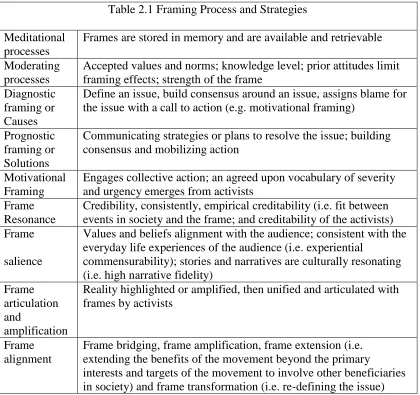
involve other beneficiaries in society. The concepts presented in the table below (Table
2.1) guided the training and message planning tool designed for the community-based
groups.
Table 2.1 Framing Process and Strategies
Meditational processes
Frames are stored in memory and are available and retrievable
Moderating processes
Accepted values and norms; knowledge level; prior attitudes limit framing effects; strength of the frame
Diagnostic framing or Causes
Define an issue, build consensus around an issue, assigns blame for the issue with a call to action (e.g. motivational framing)
Prognostic framing or Solutions
Communicating strategies or plans to resolve the issue; building consensus and mobilizing action
Motivational Framing
Engages collective action; an agreed upon vocabulary of severity and urgency emerges from activists
Frame Resonance
Credibility, consistently, empirical creditability (i.e. fit between events in society and the frame; and creditability of the activists) Frame
salience
Values and beliefs alignment with the audience; consistent with the everyday life experiences of the audience (i.e. experiential
commensurability); stories and narratives are culturally resonating (i.e. high narrative fidelity)
Frame articulation and
amplification
Reality highlighted or amplified, then unified and articulated with frames by activists
Frame alignment
Frame bridging, frame amplification, frame extension (i.e. extending the benefits of the movement beyond the primary
27
How Can We Frame Childhood Obesity and the Food System to Create Change?
Public health advocates and community-based groups need to be able to: 1.
communicate the core values and beliefs behind the change they are asking for in order to
be able to combat strong frames embedded in the dominant paradigm, 2. develop the
framing skills needed to bring awareness to the problem and solution that resonate within
their contexts, 3. use strategic communications recommendations to re-frame the
argument, 4. make the story a landscape view that provides an in-depth understanding of
the physical and social environmental links between food systems and obesity, 5. use
community organizing and collective action framing to become a powerful, unified voice,
and 6. become trusted sources of information in partnership with the media.
Values are a key component in effective advocacy work, but are often missing
(Dorfman, 2003; Lakoff, 2008). Values must be discussed, agreed upon by the
community-based groups and communicated through advocacy work. Community-based
groups may be expressing minority values in their communities during issue campaigns.
Community-based groups may need to use external framing of these values, meaning the
public portrayal of the issue and values must resonate with external targets (Shiffman &
Smith, 2007). Values of fairness, responsibility, equality, and equity should be
communicated (R.W.J. Foundation, 2011). One recommendation is to re-frame according
to one’s personal or social identity (Slater, 2006). Understanding the defining the values
of the audience is also a key component to successfully re-framing an issue.
Next, developing the framing skills needed to bring awareness to the problem and
solution that resonate within the community-based group contexts and anticipating
28
are communicated, the problem should be clearly defined, along with explanation on why
it matters (Dorfman, 2003; Lakoff, 2008). Next, details about policy and strategy for
achieving change in concrete terms is communicated (Dorfman, 2003; Lakoff, 2008).
Framing the food system as an environmental agent that causes childhood obesity
(Schwartz & Brownell, 2009; Alder & Stewart, 2009) and violates basic human rights
may provide a powerful argument for food systems change. When the issue becomes that
of risk (involuntary, universal and environmental and knowingly created risk), especially
when created by the food industry, the more likely there will be public support physical
and social environmental interventions (Lawrence, 2004). Educating people about the
food system, then developing messaging blaming the food system in concrete terms, as
an environmental causal agent to childhood obesity, could lead to campaigns for policy
and program changes.
Another strategic communication recommendation is the “healthy environment by
default” frame when advocating for food system change. This frame could also be an
effective counter-frame to the personal freedom frame evoked when advocating for food
system change. This frame communicates that individuals are responsible for engaging in
health-promoting behavior, but should only be held accountable when they have the
adequate resources to do so (Alder & Stewart, 2009). Using this two-sided approach for
messaging by acknowledging individual responsibility while highlighting the physical
and social factors that make eating healthy difficult, for example in a food desert, may be
29
parents to advocate for environmental changes to protect children(Schwartz & Brownell,
2007).
Community-based groups should try to make the story a landscape view that
provides an in-depth understanding of the physical and social environmental links
between food systems and obesity, not simply a portrait view that keeps the blame at the
individual level (Dorfman, 2003). Episodic and thematic framing may be a way to
conceptualize the landscape and portrait view. Episodic framing is event-oriented and can
take the form of a case study. It can take on a more concrete form, sometimes through a
narrative about a person or event (Iyengar, 1994) and could be conceptually aligned with
the portrait view. Thematic framing is a more general and abstract frame of an issue
focusing on outcomes or conditions and could be conceptually aligned with the landscape
view. For example, political debates on legislation surrounding the Farm Bill would be
thematic. Interviewing a farmer about how the changes in the Farm Bill will affect him is
episodic.
Reframing messages in a more thematic way could help move the picture from
the portrait to the landscape view. News coverage is rarely only episodic or thematic and
has elements of both. However, television news, because of restraints such as segment
time, television is more often episodic in nature (Iyengar, 1994). Viewers were more
likely to attribute societal level responsibility to an issue when it is presented more as
thematic, and more likely to attribute individual-level responsibility to an issue when
episodic (Iyengar, 1994, Iyengar 2005). This is because the problems or issues presented
30
political, and economic issues (Kim & Willis, 2007). Therefore, it is important for
advocates to message in the thematic frame.
Using community organizing techniques, along with collective action framing,
may resolve some of this discrepancy in the theoretical underpinnings of media
advocacy. One criticism of media advocacy is that it theoretically assumes that
politicians will be engaged and interested in the needs of a marginalized, disenfranchised
group. It also assumes that these groups are already organized and have a unified voice
(Gibson, 2010). Organizing and creating a unified voice through community organizing
could build the advocacy capacity of community groups.
As community-based groups become a unified voice and sources of information
for the media, they will influence the frame by highlighting or withholding information
about the issue and become sponsors of a certain frame (Zoch & Molleda, 2006). A
community group must create a storyline around the issue (Zoch & Molleda, 2006) and
can use elements of collective action in order to effectively communicate. Ways to
become sources of information and to influence the media’s framing of an issue is to
know about media routines, the media organization, and timing while building
interpersonal relationships; understand message construction and news values; and
providing good research while grasping the current state of the field by knowing
31
CHAPTER
3
RESEARCH
D
ESIGN ANDM
ETHODSPreliminary Studies
Previous work and coursework completed in the student’s master’s program at the
University of Georgia in the Grady School of Journalism and Mass Communications
added to her experience for this dissertation. In working with the Institute on Human
Development and Disability, the student applied her communication and advocacy skills.
The Children’s Freedom Initiative partnered with the Georgia Department of Family and
Children’s Services Region Five Adoptions Unit to increase adoptions of children with
disabilities. Through a needs assessment, formative research, epidemiological data, and
theoretical support, a three-pronged marketing plan was developed for the unit. The
student also started developing a website for distant learning training activities for foster
parents and social workers.
While earning her Ph.D. at the University of South Carolina (U.S.C.) the student
took coursework that gave her the skills necessary to complete this dissertation.
Currently, the student is a graduate assistant on the COPASCities project. This
dissertation built upon work completed for this project. COPASCities is a 5-year
U.S.D.A. project that seeks to: 1. build the capacity of community leaders to change the
food system in S.C. and 2. better understand how leaders change food systems while
32
completed for the COPASCities project, including a formative media coding analysis
from January 2013-April 2014. The student has also modeled community organizing
techniques to community partners through door knocking, implementing visioning
training, and food summit organizing.
Additionally, the student convened a multidisciplinary committee with expertise
in the social work, journalism and communications, and public health fields. Dr. Pippin
Whitaker is an associate professor in the College of Social Work at U.S.C. specializing in
empowering populations while bringing an equity and human rights perspective to her
work. Dr. Brooke Weberling-McKeever is an associate professor in the School of
Journalism and Mass Communication specializing in advocacy and health
communications while mobilizing publics and increasing stakeholder input. Dr. Jim
Thrasher is an associate professor in the Arnold School of Public Health. His work
focuses on media and policy interventions in the areas of tobacco and obesity. Both Drs.
Weberling-McKeever and Thrasher have experience in conducting framing analysis and
applying them to practice.
Dr. Sonya Jones is an associate professor in the Arnold School of Public Health,
director for the Center for Research on Nutrition and Health Disparities, and chair of the
student’s dissertation committee. She specializes in community-engaged research with
food insecure populations, nutrition policy analysis, and nutrition-related health
33 Conceptual framework
This research study used several theories and concepts. The socioecological
perspective (McLeroy et al., Bibeau, Steckler & Glanz, 1988), social determinants of
health (Marmot et al., 2008), and social stratification theory (Solar & Irwin, 2007)
guided the conceptual framework. Pedagogy of the Oppressed and Participatory Action
Research (P.A.R) methods, as well as community organizing techniques, informed tools,
trainings, and facilitation to encourage social action and a challenge to power.
Socioecological perspective describes how multiple levels of society influences
health behavior (McLeroy et al., 1988) and captures the structural factors influencing the
policy and systems environment of global food systems. For example, the socioecological
perspective can inform how fresh, local fruits and vegetable availability in an area, as
well as community norms about preparing and cooking food, can impact eating patterns
and behaviors (Winch, 2012).
The social determinants of health are the complex, overlapping social and
economic structures, including physical and social environmental factors that are
responsible for most health inequities (Marmot et al., 2008). Examples of physical
environmental factors of the food system include the availability and accessibility of
fresh, affordable, healthy food (e.g. food deserts) and the sustainability of a food system
(Martinez, 2012). An example of a social environmental factor of the food system is
cultural or community norms, such as shopping at direct-to-consumer retail locations of
small, local farmers or joining a community supported agriculture organization
34
systems leads to an overall more equitable food system, including increased availability,
affordability, and accessibility, leading to better eating habits and reduced prevalence of
childhood obesity.
Social stratification theory explains power differentials between groups (Solar &
Irwin, 2007). Health disparities are a result of systematic power differentials among
historically-disenfranchised groups (i.e. working poor, Blacks, poor single mothers)
based upon the simultaneous intersection of gender, race, class, ability, and sexuality
(Moss, 2002; Inhorn & Whittle, 2001; Weber, 2006). Health disparities are often thought
of as social justice issues, as everyone does not have the same access to a policy and
systems environment that is healthy (Solar & Irwin, 2007). Public health advocates
interested in targeting health disparities should advocate for better policy and systems
environments, which address issues of oppression resulting from social stratification by
gender, race, class, ability and sexuality; not simply individual-level interventions
(Becker, 1986; Nyswander, 1967).
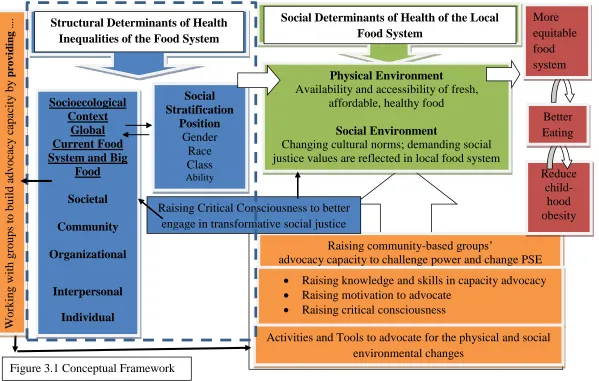
The conceptual framework, adapted in part from the Commission of the Social
Determinants of Health framework, contends that structural determinants of health
disparities within the global food system are the result of the interplay between
socioecological context and social stratification. These structural mechanisms are rooted
in institutions and generate, reinforce, and define individual socioeconomic position
within hierarchies of power and access to resources (Solar & Irwin, 2007). The social
determinants of the local food systems are a part of the structural determinants of health
of the global food system at the community level within the socioecological context.
35
system, therefore, the activities and tools developed as part of this research are geared
toward changing the social determinants of health of the local food system.
The Pedagogy of the Oppressed states that human encounters reflect the
domination of the oppressed through gender, race, class, religious beliefs, political
affiliation, national origin, age, and size (Torres, 2007). Marginalized people are further
oppressed through a culture of silence as a direct effect of domination, where they are
submerged into their reality, without being able to achieve critical awareness or response
(Freire, 2000).
The Pedagogy of the Oppressed asks people to expand their perception of the
world and illuminate the causes and consequences of human suffering. Transformative
social justice takes place when people examine the systems- and organizational-level,
rules, regulations, and their own traditions and customs that reflect human interest such
as wealth, power, and prestige, in order to understand how inequality is systematically
replicated (Torres, 2007). This requires the examination of both individual and social
conscious and developing critical consciousness. Therefore, transformative social justice
occurs when hierarchies and inequalities are explored through in-depth social analysis.
This includes understanding the past to understand the current conditions and social
behavior (Torres, 2007).
P.A.R. methods draw from the Pedagogy of the Oppressed in that it incorporates
Freire’s praxis (Baum, MacDougall & Smith, 2006). This praxis combines reflection and
36
along with transformative power, is central to P.A.R. methods (Baum, MacDougall &
Smith, 2006).
By using community organizing techniques to engage marginalized populations
within the food system, we are ensuring that the local food system changes that occur are
transparent and inclusive for all. This not only has implications on food access, but the
fairness and justice of the local food system. The process of critical consciousness and
breaking the culture of silence is a catalyst for transformative social justice of the food
system. Developing critical consciousness may help the oppressed see other systems that
are reproducing inequality and they may develop skills needed to target these systems.
Transparency will further reveal the disconnect people have with their food and the
consequences of their local food system.
By using message training, incorporating critical consciousness through P.A.R.
methods and community organizing techniques, social justice values may emerge through
advocacy efforts. Activities and trainings incorporate conscious raising techniques, such
as photovoice (Carlson, Engebretson, & Chamberlain, 2006). Raising critical
consciousness affects the way community members understand the interaction between
socioecological systems and social stratification, creating their physical and social
environments. This gives a better understanding of context and place and encourages
community members to engage in transformative social change in food systems, as well
as with other social issues.
This research used community organizing tools that incorporates tactics to raise
37
example, asking SHOWeD questions during a photovoice project encourages
communities to create their own narrative about social issues and identify solutions for
local food system change (Minkler, Wallerstein,& Wilson, 1997). SHOWeD stands for
the following questions: 1. what do you see here?, 2. what is really happening here?, 3.
how does this relate to our lives?, 4. why does this situation exist?, 5. what can we do
about it? (Wang & Burris, 1997).
This research also used community organizing tools that incorporated tactics to
challenge power. However, understanding how power is operating in their context, as
well as the costs of challenging power, was explored in the ethnographic questions.
There is a substantial power differential between community-based groups and Big Food
corporations. However, the groups can navigate this power differential by believing in
their own agency to make changes at the community level (Henrickson & Heffernan,
2012). For example, the Kansas City Food Circle believed that by making the food
system more just and democratic at a local level and understanding the weaknesses of the
current food system, they had opportunities to change and challenge the current food
system at a local level (Henrickson & Heffernan, 2012).
Changing the environment on the policy and systems environment level revealed
and challenged power inequalities (Beauchamp, 1976; Solar & Irwin, 2007) and required
using the collective action framework to re-define issues, as well as mobilizing
communities (Marmot & Bell, 2010; Freudenberg et al., 2009; Dorfman, 2003). Altering
relations to power includes building strong organizations, changing laws and regulations,
and electing people who support the cause (Bobo, Kendall & Max, 2001). The