TEXTING TO INCREASE THE IMPACT OF PARENTING (TIIP) PROGRAM: EXAMINING THE EFFECTS ON PARENT ENGAGEMENT IN THE INCREDIBLE
YEARS® BASIC PRESCHOOL PARENTING PROGRAM
Melissa A. McWilliams
A dissertation submitted to the faculty at the University of North Carolina at Chapel Hill in partial fulfillment of the requirements for the degree of Doctor of Philosophy in the Department
of School Psychology in the School of Education.
Chapel Hill 2020
Approved by: Steve Knotek
Stephanie Shepard Umaschi Gregory Cizek
Xue Rong
ii ©2020
iii ABSTRACT
Melissa A. McWilliams: Texting to Increase the Impact of Parenting (TIIP) Program: Examining the Effects on Parent Engagement in the Incredible Years® BASIC Preschool Parenting Program
(Under the direction of Steve Knotek)
Approximately 20% of children in the United States are affected by mental, emotional, and behavioral health problems that interfere with their daily functioning and educational attainment (Bitsko et al., 2016; CDC, 2013; Robinson et al., 2017; Shepard & Dickstein, 2009). Without timely and appropriate treatment, the disadvantages related to these issues can
compound over time and result in poor outcomes, such as peer relationship difficulties, academic underachievement, substance use, juvenile delinquency, and health problems (e.g., Baker, Grant, & Morlock, 2008; Chacko et al., 2016; McGilloway et al., 2012; Surgeon General, 2014).
Therefore, helping families access and engage in high-quality services, such as parent training programs, becomes a paramount concern. Unfortunately, many risk factors associated with childhood mental, emotional, and behavioral health (e.g., poor parenting practices) also affect parents’ ability to engage in treatment, which can impede treatment effectiveness.
The present study investigates the effects of a text message supplement in enhancing parents’ engagement in the Incredible Years® (IY) BASIC Preschool parent training program. Specifically, the Texting to Increase the Impact of Parenting (TIIIP) Program was developed to reflect the IY curriculum and was administered in a randomized controlled trial to two
iv
provided ratings of their stress and their perceived barriers to treatment in order to empirically examine common theories of parent engagement.
Correlational analyses support theories of parent engagement that suggest higher levels of stress and barriers to treatment are negatively related to parents’ engagement in treatment.
Results from multivariate analysis of variance (MANOVA) tests revealed that the TIIP Program significantly increased parents’ behavioral engagement but did not impact parents’ attitudinal engagement. Qualitative data also provided information about parents’ subjective experience with the TIIP Program, including that the text messages were helpful, encouraging, and fun. The results of this study are discussed regarding the importance of incorporating technological supplements targeting parent engagement into parent training programs. Limitations and proposed future directions for research are discussed.
v
ACKNOWLEDGEMENTS
Obtaining a Ph.D. and completing a dissertation are processes marked with constant challenges that promote immense personal and academic growth and perseverance. While this journey is often considered an independent undertaking, I would never have been able to accomplish all that I have without the guidance of my committee members and faculty, help from my friends, and unending support from my family.
First, I am very grateful for the funding from the American Psychological Association of Graduate Students (APAGS) Psychological Science Research Grant, without which this
dissertation may not have been possible.
I would like to thank my committee members, Steve Knotek, Stephanie Shepard Umaschi, Gregory Cizek, Xue Rong, and Marisa Marraccini for their support and guidance in completing this study. Your support, advice, and assistance were invaluable to the final success of this research project.
A special thank you goes to my colleague and friend, Emily Holding. Thank you for the opportunity to create and collaborate with you on this project. We shared a lot of long days and late nights developing this project, problem-solving obstacles we never anticipated, supporting each other in our endeavors, and, of course, eating delicious snacks. I am so proud of us!
A heartfelt thanks also goes to my close friends. You not only gave me support when I needed it, but also kindly listened to my stress-filled complaints and worries.
vi
vii
TABLE OF CONTENTS
LIST OF TABLES ... xii
LIST OF FIGURES ... xiv
CHAPTER I: Introduction ... 1
Definition of Terms... 5
CHAPTER II: Review of the Literature ... 7
Parent Training Programs ... 7
The Incredible Years®. ... 10
Parent Engagement ... 11
Barriers to treatment. ... 13
A conceptual framework for parent engagement ... 15
Strategies to address barriers and improve parent engagement ... 16
Technology and parent engagement ... 19
Gaps in the parent engagement literature ... 21
Study Rationale ... 22
Research questions and hypotheses ... 23
CHAPTER III: Methods ... 26
viii
Needs... 27
Fit ... 27
Resource availability ... 27
Readiness for replication... 28
Capacity to implement ... 28
Challenges ... 29
Overall summary ... 29
Ethical Considerations ... 30
Research Design... 30
Recruitment Efforts ... 31
Participants ... 32
Sample Size Considerations ... 34
Measures ... 34
Demographics questionnaire ... 35
Incredible Years® Weekly Log ... 35
Parent satisfaction questionnaires ... 36
Barriers to Treatment Participation Scale ... 37
Parenting Stress Index... 38
TIIP Questionnaire ... 39
ix
Analytic Strategy ... 41
Quantitative analyses ... 41
Qualitative analyses ... 44
Data integration ... 44
Exploratory analyses ... 45
CHAPTER IV: Results ... 47
Descriptive Statistics ... 47
Behavioral engagement ... 47
Attitudinal engagement ... 47
Parenting stress ... 48
Barriers to treatment ... 48
Research Question 1: Relationship between Parent Engagement, Barriers to Treatment, and Parent Stress ... 50
Relationship among behavioral engagement variables ... 51
Relationship among attitudinal engagement variables. ... 51
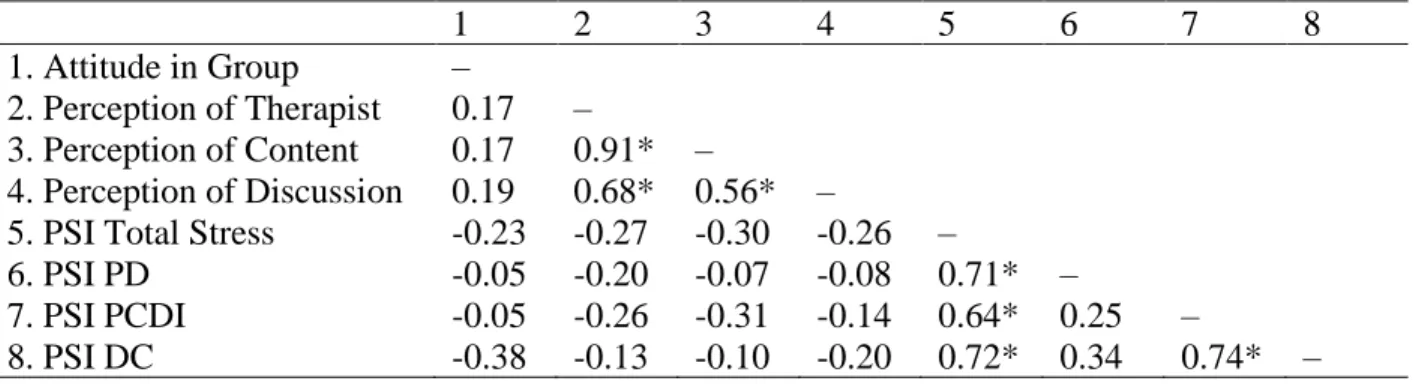
Relationship between behavioral and attitudinal engagement variables ... 53
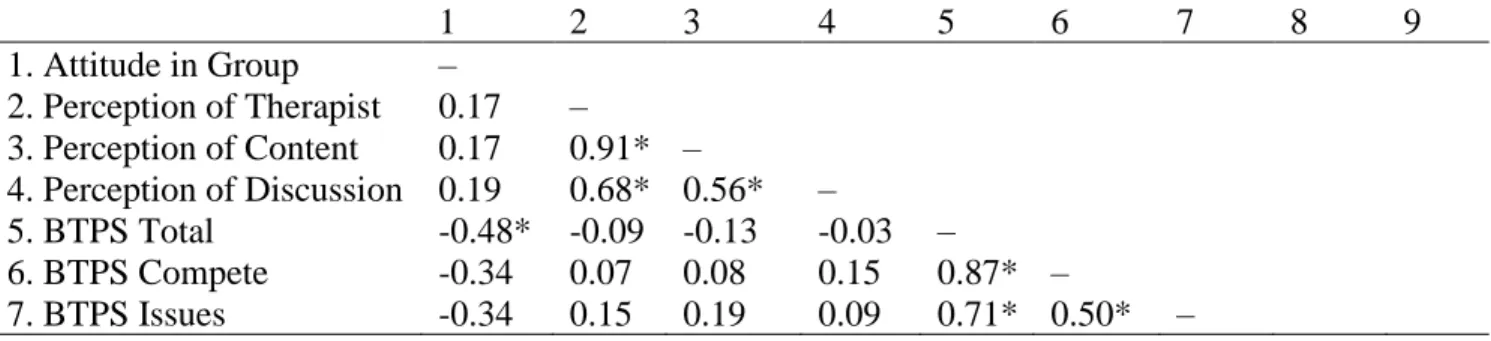
Relationship between behavioral engagement, parenting stress, and barriers to treatment ... 54
x
Research Question 2a: Behavioral Engagement ... 57
Research Questions 3a: Attitudinal Engagement ... 58
Exploratory Analyses ... 58
Examining differences in parenting stress between pre-test and post-test ... 58
Examining differences in parenting stress between experimental and control conditions at pre-test and post-test. ... 59
Examining differences in barriers to treatment between pre-test and post-test .... 59
Examining differences in barriers to treatment between experimental and control conditions at pre-test and post-test. ... 60
TIIP Program Satisfaction... 61
CHAPTER V: Discussion ... 64
Interpretations of Results ... 65
Behavioral engagement ... 65
Attitudinal engagement ... 66
Parenting stress ... 67
Barriers to treatment ... 68
Relationships between parent engagement variables. ... 69
Relationship between parent engagement variables and parenting stress. ... 71
Relationship between parent engagement variables and barriers to treatment. .... 72
xi
Clinical implications ... 74
Limitations and Future Directions of Research ... 75
Recommendations and Conclusion ... 79
APPENDIX A: TIIP Questionnaire ... 83
xii
LIST OF TABLES
Table 1. Sample Demographics ... 33
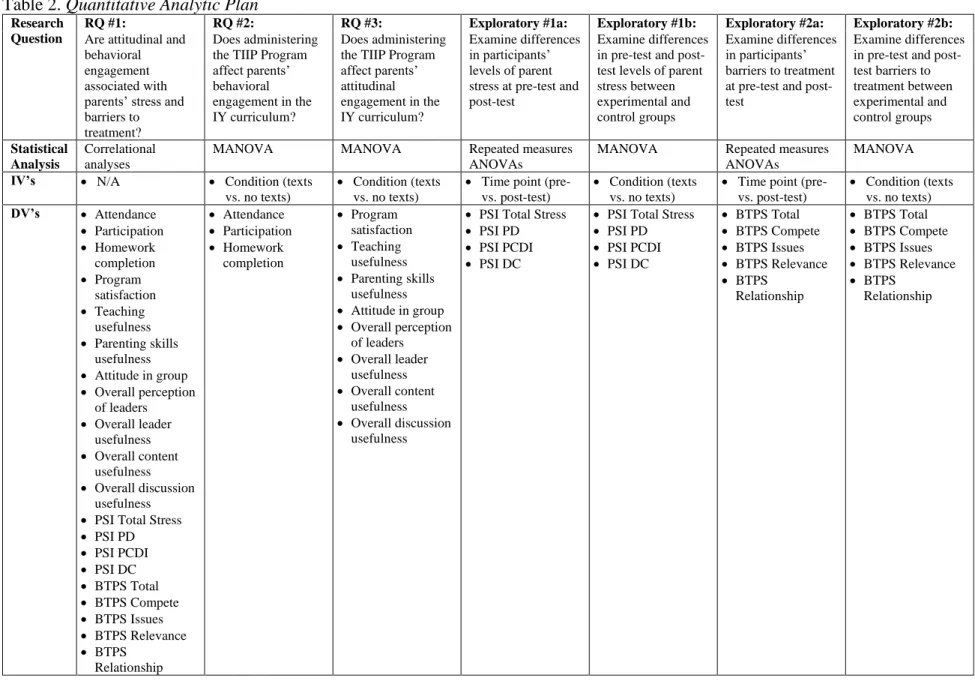
Table 2. Quantitative Analytic Plan... 43
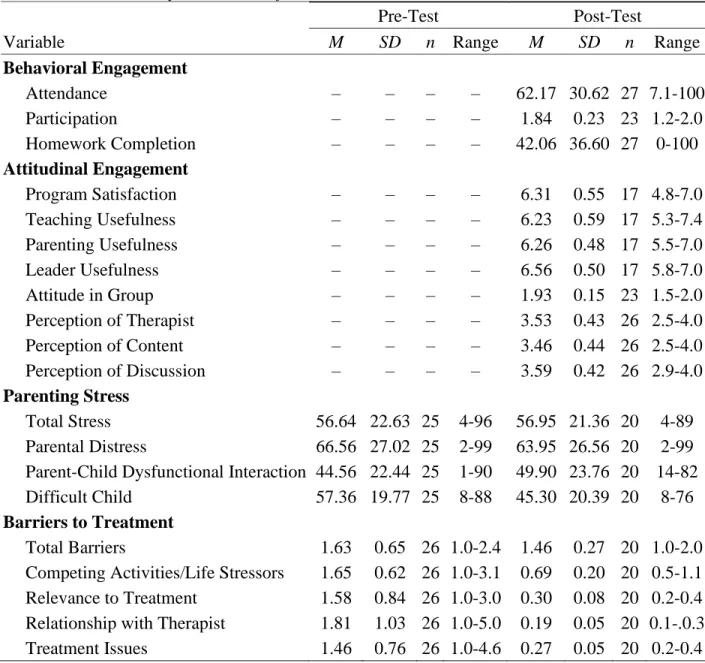
Table 3. Overall Descriptive Statistics for Outcome Measures ... 50
Table 4. Correlations Among Behavioral Engagement Variables ... 51
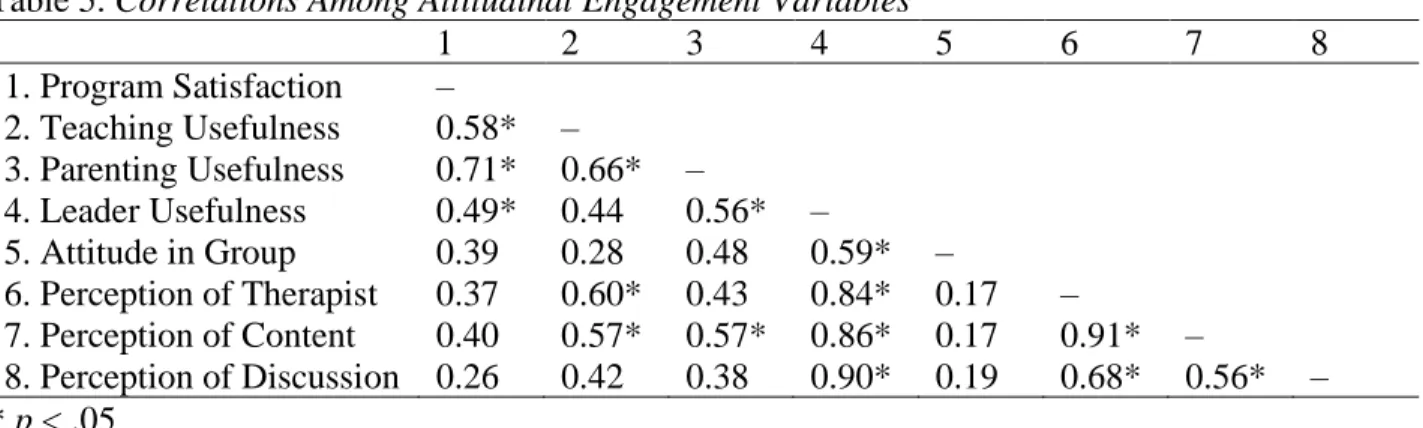
Table 5. Correlations Among Attitudinal Engagement Variables ... 52
Table 6. Correlations Among Behavioral Engagement and Attitudinal Engagement Variables from the IY Satisfaction Questionnaire ... 53
Table 7. Correlations Among Behavioral Engagement and Attitudinal Engagement Variables from the IY Weekly Logs ... 53
Table 8. Correlations Among Behavioral Engagement and Parent Stress Variables ... 54
Table 9. Correlations Among Behavioral Engagement and Barriers to Treatment Variables .... 54
Table 10. Correlations Among Attitudinal Engagement Variables from IY Satisfaction Questionnaire and Parent Stress Variables ... 55
Table 11. Correlations Among Attitudinal Engagement Variables from IY Weekly Logs and Parent Stress Variables... 55
Table 12. Correlations Among Attitudinal Engagement Variables from IY Satisfaction Questionnaire and Barriers to Treatment Variables ... 56
Table 13. Correlations Among Attitudinal Engagement Variables from IY Weekly Logs and Barriers to Treatment Variables ... 56
xiii
Table 15. Change in Parenting Stress from Pre- to Post-Test ... 59
Table 16. Change in Barriers to Treatment from Pre- to Post-Test ... 60
xiv
LIST OF FIGURES
Figure 1. Diagram for the Experimental Mixed Methods Design for TIIP ... 31
1
CHAPTER I: Introduction
A total of 13% - 20% of children aged three through 17-years live with mental and emotional health problems in the United States (CDC, 2013). Approximately 15% of children aged two through eight years are diagnosed with a mental, behavioral, or developmental disorder that interferes with their educational attainment and daily functioning (Bitsko et al., 2016;
Robinson et al., 2017). For example, according to recent research conducted by the CDC between 2005-2011, approximately 6.8% of children are diagnosed with attention deficit hyperactivity disorder, 3.5% of children are diagnosed with behavioral or conduct problems, 3.0% of children are diagnosed with an anxiety disorder, and 2.1% of children are diagnosed with depression (Perou et al., 2013). These significant disruptions in social, emotional, and behavioral functioning are often demonstrated at an early age. For example, serious behavioral difficulties are identified in approximately 12% of preschoolers in the general population and up to 30% in low income samples (Shepard & Dickstein, 2009). Without timely and appropriate treatment, the developmental disadvantages related to these mental health issues can compound overtime, resulting in poor outcomes for these children (Baker, Grant, & Morlock, 2008).
2
different. These disorders are associated with both short- and long-term adverse effects for the child, family, and society (Chacko et al., 2016; McGilloway et al., 2012; O’Neill, McGilloway, Donnelly, Bywater, & Kelly, 2013). Specifically, they are predictive of several childhood difficulties including, poor educational achievement, antisocial behavior, and peer rejection, and often set the stage for a poor trajectory into adolescence and adulthood (Chacko et al., 2016; McGilloway et al., 2012). Long-term negative effects include academic failure, substance use and abuse, juvenile delinquency and criminal behavior, poor employment prospects, and poor mental health (Chacko et al., 2016; McGilloway et al., 2012; O’Neill et al, 2013).
Due to the detrimental outcomes associated with childhood disruptive behavior problems, it is important to identify and understand the risk factors associated with their development. Research on the causes of early childhood behavior problems has identified a number of
precipitating risk factors. O’Neill et al. (2013) summarizes these risk factors as “socioeconomic factors, such as family poverty and deprived neighbourhoods, parental characteristics, such as low education and mental illness, and family relationships, such as abuse and inconsistent or neglectful parenting” (p. 85). Evidence suggests, however, that family relationships and parenting style are particularly influential in the development of child behavior problems (Brotman, Gouley, Chesir-Teran, Dennis, Klein, & Shrout, 2005; McGilloway et al., 2012; O’Neill et al., 2013; Shepard & Dickstein, 2009).
A foundational tenet is that children’s behavioral, social, and emotional development is dependent on the quality of their interactions with their parents or caregivers (herein referred to as parents) (Feng, Shaw, Skuban, & Lane, 2007). As previously mentioned, early family
Webster-3
Stratton, 2003; O’Neill et al., 2013; Shepard & Dickstein, 2009). In fact, poor parent-child relationships, poor family-management, and harsh, erratic, or neglectful parenting practices rate as some of the most significant causes of childhood behavioral and emotional problems
(Brotman et al., 2005; Dumas, 1989; Shephard & Dickstein, 2009; Webster-Stratton & Reid, 2010; McGilloway et al., 2012; O’Neill et al., 2013). Researchers have found that parents of children with severe behavior problems report higher rates of negative parenting (e.g., criticism, harshness, physical punishment) compared to parents of children without severe behavior problems (Brotman et al., 2005). These parents may be unable to provide an environment that is conducive to promoting appropriate behavior regulation and social-emotional competence for their children (Reyno & McGrath, 2006; Shepard & Dickstein, 2009). As a result, children may learn, develop, and establish problem behaviors due to their parents’ poor modeling behavior and lack, or inconsistently use, of key parenting skills to curb their child’s disruptive behavior
patterns (Hartman et al., 2003; Hutchings et al., 2007).
These parenting risk factors are compounded for families of lower socioeconomic status who are susceptible to high-stress environments, making them particularly vulnerable and at-risk for problems in parenting and, consequently, parent-child relationships. Exposure to adversity and stressors such as poverty and lack of safety and stability in the home environment can negatively affect parent behavior and child development (Robinson et al., 2017). Families of low socioeconomic status tend to have fewer resources, face greater obstacles, and have lesser
4
parenting. Poor emotional wellbeing coupled with depleted energy and focus affects parents’ ability to engage in positive parenting practices. As such, these parents often resort to using more harsh parenting styles and disciplinary practices compared to parents of higher socioeconomic statuses (Lerner et al., 2002). Resulting misunderstandings and conflicts within these parent-child relationships further exacerbate parents’ original stress levels and perpetuate the cycle. Taken together, these risk factors highlight the need to support parents, create supportive communities for parents and families, and increase access to high-quality care for families with children who have mental and behavioral health disorders.
High-quality mental and behavioral health services can only be effective for families if they are reliably accessed and utilized. Unfortunately, many of the risk factors associated with poor parenting practices also affect parents’ ability to engage in treatment, which can impede the treatment program’s effectiveness. For example, low socioeconomic status, single parent status, and familial stress predict lower levels of treatment engagement and early termination of services (Chacko, Wymbs, Rajwan, Wymbs, & Feirsen, 2017; Gopalan, Goldstein, Klingenstein, Sicher, Blake, & McKay, 2010; Ingoldsby, 2010; Nix, Bierman, & McMahon, 2009; Staudt, 2007). Families with these characteristics often face various logistical barriers such as lack of
transportation to get to treatment, lack of childcare, and insufficient time to consistently dedicate to treatment sessions (Gopalan et al., 2010). These barriers can not only directly impact parents’ ability to attend and engage in treatment, but they may also contribute to or even compound their stress. As such, it is critical to create and study various interventions designed to increase parent engagement in order to, subsequently, enhance treatment effectiveness.
The present study sought to expand the literature on parent training programs by
5
the incorporation of a text message coaching supplement into an evidence-based parenting program in an attempt to target a main challenge associated with them, parent engagement. Descriptive and comparative analyses were conducted to explore how the technological
supplement effected parents’ engagement in the treatment. Additionally, qualitative and mixed methods analyses were conducted to provide valuable information on parents’ subjective experience with the supplement. Findings from this pilot study provide notable additions to the parent training and parent engagement literature. For example, embedding qualitative data in a randomized control trial (RCT) in a mixed methods approach provided an enriched
understanding of parents’ personal views and experiences of using a technological supplement, such as the TIIP Program, to enhance evidence-based parent training programs (Creswell & Clark, 2017). Additionally, findings suggest that this add-on intervention may serve as a high-impact, low-cost, and acceptable supplement for existing parenting programs that does not add additional burden to clinicians, yet increases parent engagement in treatment–a key predictive factor for treatment outcomes.
Definition of Terms
The following terms are defined to help the reader understand the context of each term in this study.
Barriers to treatment: Personal, social, and systemic stressors that interfere with
treatment engagement, increase the risk of dropping out of treatment, and obstruct the provision of high-quality services (Kazdin, Holland, Crowley, & Breton, 1997; Staudt, 2007).
6
(ADHD), Oppositional Defiant Disorder (ODD), and Conduct Disorder (CD) (Chacko et al., 2016).
Engagement: An ongoing and dynamic process that consists of behaviors (e.g., attendance, participation, homework completion) and an attitudinal component (i.e., the emotional investment in and commitment to treatment) that supports treatment retention and completion (Staudt, 2007).
Parent training programs: Evidence-based, group intervention programs designed to support parents in developing effective behavior management strategies to enhance the parent-child relationship, reduce parent-children’s problematic behavior, and increase parent-children’s social-emotional competence and adaptive functioning (Shepard & Dickstein, 2009; Webster-Stratton, Reid, & Hammond, 2004).
Parent-child relationship: The unique bond shared between a parent and child developed over time that fosters the physical, emotional, and social development of the child as well as their overall behavior and functioning. Poor parent-child relationship quality is often accompanied by low rates of positive interaction and involvement with the child and high rates of harsh and coercive discipline and parenting practices (Shepard & Dickstein, 2009; Webster-Stratton & Reid, 2010).
7
CHAPTER II: Review of the Literature
Childhood mental and behavioral health problems can substantially affect children, families, and communities. According to Bitsko et al. (2016), children with mental and
behavioral health problems require more services than children without these issues, resulting in greater stress and financial burden for both families and communities. Individual families may experience stress directly related to the daily challenges associated with their child’s disorder and affording quality care. Communities may experience stress due to having to provide additional services and supports for these children and families (Bitsko et al., 2016). Disruptive behavior disorders are the most common referral for youth psychiatric treatment and are often the most chronic and challenging conditions to treat, requiring extensive psychological, educational, and, for older youth, legal and correctional support (Chacko et al., 2016). Unfortunately, only
approximately 20% of children and adolescents with behavioral problems are able to receive appropriate mental health services due to issues surrounding treatment access (Robinson et al., 2017). Therefore, it is important to establish, research, and promote cost-effective treatments for early childhood behavior disorders to change these youths’ trajectory and circumvent the
compounding individual, familial, and community challenges associated with severe behavioral problems.
Parent Training Programs
8
Early relationships and parenting styles influence child development. These dynamics can either mitigate adverse environmental factors or can serve as risk factors themselves when the parent-child relationship is poor and the parenting style is harsh and erratic. Numerous studies have found that poor parent-child relationships, poor family-management, and harsh, erratic, or negative parenting practices (e.g., criticism, harshness, physical punishment) are some of the most significant predictors of childhood behavioral and emotional problems (Brotman et al., 2005; Dumas, 1989; Hartman et al., 2003; Shephard & Dickstein, 2009; Webster-Stratton & Reid, 2010; McGilloway et al., 2012; O’Neill et al., 2013).
The risk factors associated with internalizing and externalizing behavior problems
underscore the importance of family-based interventions that focus on improving parenting skills and the parent-child relationship. This type of intervention offers an effective and economically efficient way to not only manage children’s disruptive behaviors but also derail negative
developmental trajectories before their behaviors become more resistant to treatment (O’Neill et al., 2013; Piquero, Farrington, Welsh, Tremblay, & Jennings, 2009; Shepard & Dickstein, 2009). Evidence-based parenting programs have been identified as an effective early intervention strategy to reduce oppositional and aggressive child behavior and improve parenting
9
demands and (2) providing parents with more effective behavior management strategies to target the child’s presenting behavior problem, increase their adaptive functioning, and promote
healthy psychosocial development (Hartman et al., 2003; Kaminski & Claussen, 2017; Letarte, Normandeau, & Allard, 2010; Shepard & Dickstein, 2009; Webster-Stratton, Reid, & Hammond, 2004). Bolstering these protective factors can reduce and even ameliorate the impact of adverse circumstances, allowing children to reach or return to a healthy trajectory (Robinson et al., 2017).
The content covered in many parent training programs are often based on principles of social learning theory (Bandura, 1977), which posits that people learn by observing, imitating, and modeling others (Gardner & Leijten, 2017; Kaminski & Claussen, 2017). For example, a common parenting skill discussed in these parent training programs is positive reinforcement. This concept often involves parents attending to their child's desirable behavior while ignoring their child's undesirable behavior in order to increase socially acceptable behaviors and decrease aggressive and oppositional behaviors. This strategy assumes that the behaviors that are given the most attention will be the ones to increase and persist. Other common behavior management and relationship-enhancing strategies include providing clear expectations, limit setting, using effective consequences, positive attention, engaging in joint activities, and using effective
10
overall psychosocial health and functioning of the family (McGilloway et al., 2012). Moreover, the group format is cost-effective, de-stigmatizes therapy, and affords parents the opportunity to build their support system by having them meet and socialize with others who are enduring similar challenges (Kaminski & Claussen, 2017).
The Incredible Years®. The Incredible Years® (IY) BASIC parenting program is a well-established and researched parent training program that has been identified as an effective early intervention for children with severe behavior problems (Lees & Ronan, 2008; Leijten et al., 2015; McGilloway et al., 2012; Menting et al., 2013; Reid, Webster-Stratton, & Hammond, 2007; Webster-Stratton, Gaspar, & Seabra-Santos, 2012; Webster-Stratton, Reid, & Hammond, 2004). Developed in Seattle by Carolyn Webster-Stratton, Ph.D., IY is a 16-week, group-based prevention/intervention parent training program aimed at improving parent and child behaviors (Gardner & Leijten, 2017; Levac, McCay, Merka, & Reddon-D’Arcy, 2008). It uses a
11
parent-child interactions and child outcomes (e.g., reduced conduct problems, improved social competence) (Levac et al., 2008; Webster-Stratton et al., 2012; Webster-Stratton & Reid, 2010; Webster-Stratton et al., 2004). Most of the evidence for IY is based on RCTs comparing the IY program to wait-list controls (Gardner & Leijten, 2017). Despite IY's strong evidentiary support, however, a pervasive problem among child and family mental health services, including IY and especially among families with a child with disruptive behavior problems, is early dropout (Lees & Ronan, 2008). Research aimed at creating and analyzing innovative interventions to prevent early termination can support program effectiveness and ensure that parents receive the adequate treatment necessary for optimal gains.
Parent Engagement
12
Parent engagement can be divided into two primary components, the behavioral domain and the attitudinal domain. The behavioral domain consists of tasks performed by parents that are considered necessary to implement the treatment and attain desired outcomes (Gopalan et al., 2010; Staudt, 2007). These behaviors include attendance, participation (e.g., talking about
feelings and experiences; practicing new skills), and adherence to treatment (e.g., homework completion) (Gopalan et al., 2010; Hock et al., 2015; Staudt, 2007). Collectively, these behaviors are related to expending efforts both inside and outside of sessions to acquire new skills and make progress toward goals (Gopalan et al., 2010). The attitudinal domain consists of the emotional investment in and commitment to treatment (Gopalan et al., 2010). This includes parents’ perceptions of treatment relevance, utility, and worthwhileness, as well as treatment expectations (Gopalan et al., 2010; Hock et al., 2015; Staudt, 2007). Often times, parents will not enroll or engage in treatment unless they perceive its benefits to outweigh its costs (Staudt, 2007).
The distinction between the behavioral and attitudinal components of parent engagement is important, as some parents who physically attend mental health treatment do so without ever fully investing or engaging in the service (Gopalan et al., 2010). This can be particularly true for families who were mandated by a judge or child protective caseworker to attend and complete treatment. These parents may be more inclined to attend treatment solely to comply with external demands rather than to reap potential benefits from the program (Staudt, 2007). This is troubling because treatment outcomes cannot be realized without actively engaging in the program, and attendance alone does not constitute engagement (Staudt, 2007). Conversely, parents who exhibit a more positive attitude toward treatment tend to be more inclined to attend sessions and
13
revealed a negative relationship between perceived barriers to treatment and session attendance and service use (Staudt, 2007).
Barriers to treatment. As previously mentioned, childhood disruptive behavior problems are associated with a high degree of impairment and are one of the most common reasons for referral to child mental health clinics (Chacko et al., 2016; Gopalan et al., 2010). These difficulties are compounded by erratic and often negative parenting styles that have been shown to exacerbate child behavior problems (Gopalan et al., 2010). Therefore, it is important for these families to get connected with and engage in effective interventions and supports. However, evidence-based parenting programs can only be effective for communities if they are available and easily accessible to parents. Ingoldsby (2010) indicated that “anywhere from 20 to 80% of families drop out prematurely, with many receiving less than half of the prescribed intervention” (p. 629). In particular, studies examining community-based parenting programs tend to yield small effect sizes and have more difficulty with parent engagement compared to their well-controlled efficacy trial counterparts (Shepard, Armstrong, Silver, Berger, & Seifer, 2012). These programs typically have fewer parents enroll and, of those parents, "few are exposed to sufficient dosage due to inconsistent attendance, poor program compliance, and premature dropout" (Shepard et al., 2012, p. 194).
14
for treatment, expectations for therapy, and poor therapeutic alliance) and ethnocultural beliefs and attitudes (e.g., families should work through problems on their own) impact service use and engagement beyond logistical barriers (Gopalan et al., 2010).
Empirical evidence suggests that some families face additional personal and social stressors that can interfere with treatment engagement (Staudt, 2007). For example,
characteristics such as socioeconomic disadvantage, family stress, poor parental mental health, and single-parent status are associated with low levels of parent engagement in and dropout from treatment (Chacko et al., 2017; Gopalan et al., 2010; Ingoldsby, 2010; Nix et al., 2009; Staudt, 2007). These parents often experience various concrete and contextual barriers that not only contribute to their stress but also directly compete with and impede their ability to attend and actively participate in treatment (e.g., stressful family circumstances, unpleasant life events, parental depression, low social support, neighborhood violence) (Chacko et al., 2017; Gopalan et al, 2010; Ingoldsby, 2010; Nix et al., 2009). These barriers often result in inconsistent attendance and premature termination of treatment (Gopalan et al., 2010).
15
specific need for or want help. This characteristic becomes an important obstacle as there is a strong relationship between acknowledging problems, perceiving a need for help, and attending and engaging in treatment (Staudt, 2007).
Similarly, research has found that parents’ attitude toward treatment and their perceived relevance of the service are associated with attendance and engagement (Chacko et al., 2017; Ingoldsby, 2010; Staudt, 2007). Positive attitudes toward the utility of treatment as well as toward the treatment itself are consistently related to higher levels of treatment acceptability, retention, and improved treatment outcomes, while more negative attitudes about treatment relevance and utility are associated with poor attendance and early termination (Ingoldsby, 2010; Staudt, 2007). Attendance issues due to negative attitude toward treatment can result in further complications for parent engagement since combatting negative perceptions of treatment relevance largely depends on attendance and experience with treatment. In fact, Chacko et al. (2017) found that parents who never attended the parenting program or dropped out early endorsed treatment relevance as a barrier more often than parents who completed the training. Taken together, these findings suggest that early efforts to engage and motivate parents is key for treatment compliance.
A conceptual framework for parent engagement. Staudt (2007) posited a theoretical framework that integrates the literature on parent engagement and barriers to treatment. This framework was established in an attempt to conceptualize the pathway by which client attitudes and behaviors are influenced by engagement interventions and to enable researchers to
16
(Ingoldsby, 2010; Staudt, 2007). Staudt (2007) suggests that clinician behaviors and specific elements of the treatment directed toward addressing these engagement and barrier factors can positively influence parents’ attitudes toward treatment. Parents’ more positive attitude
subsequently influences their behavior (i.e., attendance, participation, homework completion). This framework emphasizes the attitudinal component of engagement as the primary component and posits that it is required for meaningful behavioral engagement. Staudt (2007) notes,
however, that the attitudinal component is not sufficient on its own because the behavioral component is required in order for the treatment to be delivered. Therefore, successful treatment implementation and outcome attainment is dependent on the presence of both the attitudinal and the behavioral components of engagement (Staudt, 2007). Considering Staudt’s (2007) pathway for engagement starts with clinician behaviors and treatment elements, it is important to target both parental and clinical behaviors as well as treatment factors when adopting interventions to enhance parent engagement. The question remains, however, about which clinician behaviors and treatment factors can be effectively targeted in order to impact attitude toward treatment and, subsequently, parent engagement behaviors.
Strategies to address barriers and improve parent engagement. Attaining and maintaining parent engagement in services can be challenging, even if the parent was initially motivated to seek out mental health services. Researchers and clinicians have designed several interventions and strategies in an attempt to circumvent obstacles and promote parent
17
enrollment or sustained participation because they do not address the full range of factors related to parent engagement (Ingoldsby, 2010; Shepard et al., 2012). Other common recommended strategies include scheduling in-person intakes, problem-solving parent concerns and perceived barriers prior to and during the course of treatment, and appointment reminders (Gopalan et al., 2010; Ingoldsby, 2010). Despite researchers’ attempts to understand parent experiences with
treatment in order to determine which aspects predict successful engagement, formal RCTs to test theories and identify predictors of engagement are limited (Chacko, Wymbs, Chimiklis, Wymbs, & Pelham, 2012; Ingoldsby, 2010).
According to Ingoldsby (2010), RCTs examining parent engagement conducted over the last few decades have focused on seven general engagement approaches: “appointment
reminders; brief initial engagement discussions; family systems engagement methods; structural or other adaptations to program delivery; financial incentives; enhanced family support; and motivational interviewing” (p. 640). The most effective approaches involved the clinician actively addressing engagement issues with parents throughout the intervention (Ingoldsby, 2010). For example, providing appointment reminders is a commonly used and simple strategy that is often incorporated into engagement initiatives. Watt and colleagues (2007) found that telephone reminders for individual outpatient therapy sessions for children with conduct problems led to greater engagement for families (as cited in Ingoldsby, 2010).
18
data-driven feedback; (3) setting goals; and (4) developing an action plan. It is a brief
intervention that has been shown to “reduce parent depression, change parents’ beliefs about their child’s behavior, improve parent involvement and increase follow-through on referral recommendations” (Shepard et al., 2012, p. 198). Their pilot study delivering the FCU in conjunction with IY showed initial promise in enhancing enrollment, attendance, and
participation quality. Shepard et al. (2012) reported preliminary results that approximately 53% of parents receiving this intervention enrolled and participated in IY, compared to 33% in the control condition.
19
Some treatment programs also elect to create initiatives that incorporate several strategies to address multiple factors and barriers related to engagement. In a clinical trial of enhancements to improve engagement to parent training, Chacko and colleagues (2008; 2009) developed a comprehensive approach that included strategies related to the format, delivery, and content of a group-based parenting program (as cited in Chacko et al., 2012). They created the Strategies to Enhance Positive Parenting (STEPP) program to support single-mothers of youth with Attention-Deficit Hyperactivity Disorder (ADHD). Their enhancement strategies sought to address
cognitions, attributions, motivation, barriers, social support, and parenting behaviors related to engagement throughout the program (Chacko et al., 2012). Specifically, the program
incorporated a pre-intervention intake that addressed parents’ maladaptive cognitions and expectations, a problem-solving component, subgroup formats, and child motivational
enhancements during the intervention (Chacko et al., 2012). The authors found that the STEPP program significantly improved attendance, homework completion, and child and parenting outcomes with large effect sizes (> .70; Chacko et al., 2012).
Technology and parent engagement. Bigelow, Carta, and Lefever (2008) proposed that it is not enough to simply target behavioral domains of parent engagement (e.g., attendance), as that does not guarantee that parents will incorporate new knowledge and skills in to their lives outside the program nor maintain them after the intervention ends. Therefore, parenting
20
in an attempt to integrate purposeful mental health practice into a client’s daily life. Preliminary research has used technology to increase medication adherence, prompt clients to complete their homework, and guide clients through different techniques as they practice skills independently (Hunkeler et al., 2000; Kuhn et al., 2014). For example, de Costa et al. (2012) found that patients with HIV/AIDS who received text message reminders increased their adherence to anti-retroviral medication therapies compared to patients who did not receive text message reminders.
Moreover, the patients receiving the text messages reported that they believed the reminders aided them in treatment adherence and compliance (de Costa et al., 2012).
21
incorporating technological components into interventions to enhance program outcomes is promising. More research is needed, however, to understand how these types of interventions impact parent engagement in treatment.
Gaps in the parent engagement literature. Several critical gaps exist in parent engagement literature. First, most of the research examining enhancements to parent training programs have not targeted specific populations who are at-risk for poor parent engagement. It is important to examine these types of enhancements among programs targeting families in which there is a higher risk for poor engagement (e.g., low socioeconomic status, single parents, etc.) to be able to understand how to improve their engagement and ensure they receive the treatment they need (Chacko et al., 2012). Second, examining parent engagement in group-based parent training programs tends to be more understudied than individually-based parent programs (Chacko et al., 2012). Group-based programs offer an efficient and cost-effect method for providing necessary services to families. Due to their fixed format, however, group-based programs tend to have unique challenges to engaging parents compared to individually-based programs (Chacko et al., 2012). Therefore, understanding these challenges and how to enhance group-based programs to increase parent engagement, especially among high-risk groups (e.g., low socioeconomic status, single parents, etc.), is critical. Third, most studies examining parent engagement focus on early engagement (i.e., 5-8 sessions) and do no assess for long-term
22
most studies on parent engagement have not specifically targeted engagement between parent training sessions. Implementation of behavioral parenting skills at home, such as homework, is often variable (Chacko et al., 2012). As such, developing and examining methods to improve ongoing engagement outside of group sessions could not only add to the literature, but also affect overall parent attitudinal and behavioral engagement throughout an intervention.
Study Rationale
Parent training programs aim to change parents’ behaviors by teaching them to utilize more positive parenting practices in order to improve the children’s behavior problems and the parent-child relationship. These programs are not effective, however, unless parents are actively engaged in treatment and receive the adequate dose required to experience positive benefits (Ingoldsby, 2010). Although there are theoretical models that attempt to capture parent
engagement and the factors associated with it, formal research on parent engagement throughout group-based parenting programs targeted for at-risk families is limited. Moreover, there is a limited understanding of how researchers and clinicians can capitalize on technology to support and enhance parent engagement inside and outside of treatment sessions.
This research project sought to address some of the gaps and concerns noted in the parent training and engagement literature by examining the effectiveness and feasibility of
23
incorporating TIIP into IY increases attitudinal (e.g., attitude toward treatment, perception of treatment utility) and behavioral (e.g., attendance, homework completion, participation)
components of parent engagement throughout the parent training program. It was hypothesized that receiving prompts about positive parenting practices between sessions would increase parents’ engagement in the program by continuing to provide psychoeducation and encourage them to utilize their skills at home. The study focused on community-based IY groups for low-income populations, as this population has been found to be particularly at-risk for difficulties with treatment engagement and premature dropout. The ultimate goal of this study was to investigate whether the provision of text message supplements provides a high-impact, low-cost treatment enhancement for existing parenting programs that improve parent engagement and encourage parents to utilize new skills more accurately and more frequently without burdening clinicians.
Research questions and hypotheses. As previously mentioned, this study examined the effects of the TIIP Program on parents’ engagement in IY, an evidence-based parent training program. This study aimed to answer the following questions:
24
• Research Question 2a: Does administering the TIIP Program affect parents’ behavioral engagement in the IY curriculum during the parenting program as measured by parent attendance, homework completion, and participation in group? Hypothesis: Parents who receive the TIIP Program will have greater rates of behavioral engagement as measured by the IY Weekly Log (Webster-Stratton, 2013) compared to parents who do not receive the supplement.
• Research Question 2b: Do parents’ subjective experiences with the TIIP Program, as measured by the TIIP Questionnaire, explain any differences in parent behavioral engagement as measured by parent attendance, homework completion, and participation in group? Hypothesis: Parents who provide positive feedback about the TIIP Program and report that it supported their engagement in IY will have higher ratings of behavioral engagement as measured by the IY Weekly Log compared to two groups of parents: (1) those who participate in TIIP and provide negative feedback or report that it did not support their engagement in IY and (2) those who do not receive the supplement. • Research Question 3a: Does administering the TIIP Program affect parents’ attitudinal
engagement in the IY curriculum during the parenting program as measured by ratings of parent satisfaction and attitude toward and openness to group content? Hypothesis: Parents who receive the TIIP Program will have more positive ratings of attitudinal engagement as measured by the IY Weekly Log, IY Parent Weekly Evaluation (The Incredible Years®, 2013b), and IY Parent Satisfaction Questionnaire (The Incredible Years®, 2013c) compared to parents who do not receive the supplement.
25
engagement as measured by ratings of parent satisfaction and attitude toward and
openness to group content? Hypothesis: Parents who provide positive feedback about the TIIP Program and report that it supports their engagement in IY will have higher ratings of attitudinal engagement as measured by the IY Weekly Log, IY Parent Weekly
Evaluation, and IY Parent Satisfaction Questionnaire compared to two groups of parents: (1) those participating in the TIIP Program who provide negative feedback or report that it did not support their engagement in IY and (2) those who do not receive the
26
CHAPTER III: Methods Initial Usability and Feasibility Testing
Initial interviews with two IY experts (Dr. Carolyn Webster-Stratton, founder of the Incredible Years® series; Dr. Desiree Murray, Scientist and Associate Director of Research at Frank Porter Graham Child Development Institute) and two individuals who oversee the implementation of IY in community agencies (Dr. Kim McCombs-Thornton, Research and Evaluation Director at The North Carolina Partnership for Children; Ms. Stephanie Pavlis, Director of Implementation Support at Prevent Child Abuse North Carolina) regarding the logistics of IY program implementation were conducted prior to the development of the TIIP Program. The Hexagon Discussion and Analysis Tool from the AI Hub, which is an intervention development evaluation tool, was used during these interviews. Dr. Webster-Stratton and Dr. Murray provided suggestions regarding how to ensure the alignment of the TIIP Program with IY, while Dr. McCombs-Thornton and Ms. Pavlis provided valuable information regarding implementation of evidence-based programs in community-based settings.
The Hexagon tool was originally developed to help states, districts, and schools
27
Needs. The needs factor refers to the needs of agencies and encompasses concerns related to how well the program or practice might meet identified needs (Blase et al., 2013). Based on the interviews, the TIIP Program appeared likely help to address key barriers to treatment by targeting parent engagement in the program. Although each agency provides a specialized coach for the IY parent groups to support group management (e.g., how to eliminate barriers, how to engage parents, assess goodness of fit), sustained parent engagement continues to be a challenge for most groups. The interviewees expressed that the innovation could enhance parent
engagement, especially among parents who have an affinity for technology, and ultimately strengthen outcomes for parents and children.
Fit. The fit factor refers to how well the innovation fits with current initiatives, priorities, structures and supports, and community values (Blase et al., 2013). The creators of the TIIP Program attended a formal IY Group Parent Leader Training to gain a better understanding of the content and process of IY parent groups. As such, the supplement was designed to align with the IY parenting program offered at the potential agencies in North Carolina. Specifically, it incorporates the concepts and skills addressed throughout the intervention. Collectively, the interviewees indicated that the innovation would likely support and enhance IY by adding an additional means for targeting and supporting parent engagement between group sessions. For example, interviewees gave feedback that parents who orient to technology could feel as though the text message prompts are an additional support that bolster what they do outside group. The interviewees further indicated that they believe the community agencies would be open to the study, especially since parent engagement remains a critical component of successful treatment.
28
(Blase et al., 2013). For the immediate study, the researchers will provide the TIIP Program to enrolled IY parent groups. It is expected that an automated text messaging software such as Red Oxygen will be used to support implementation. Future iterations would require group facilitator or community agency involvement. As the supplement was already created and packaged, group facilitators or agencies could easily adopt the program for future groups. The only training that would be required to accomplish this would be around any automated text messaging software they may choose to use. While software is recommended, it is not required for implementation of the TIIP Program.
Readiness for replication. Readiness refers to the readiness of the site to implement the program, including expert assistance available, exemplars available for observation, and how well the program is operationalized (Blase et al., 2013). The interviewees reported that the TIIP Program aligns well with the IY program and reflects other technological interventions currently being implemented by some of the agencies. For example, many agencies are supporting the implementation of ReadyRosie, which is a mobile technology that promotes school readiness by enhancing two-way communication between parents and schools. During initial conversations, the interviewees had several questions regarding the TIIP Program’s core features and the range of materials that were involved during the study. These questions and concerns were addressed in the development of the study. With regard to buy-in, the interviewees indicated that each agency would need to be contacted separately to discuss how they foresee the program integrating into their respective programs.
29
supplement into future groups. IY group facilitators already have the content knowledge and skills addressed in the TIIP Program’s text message prompts. The interviewees noted some initial concern with overburdening group facilitators as they are already calling parent participants between sessions, but they appeared relieved to know that the text message prompts would come created, packaged, and ready for future use. Further, they commented that incorporating this supplement could not only enhance parent engagement, but also strengthen relationship between the parent and group facilitator.
Challenges. Key challenges for implementing the TIIP text message supplement are related to the logistics and planning of the intervention. For example, families who enroll in IY parent programs in North Carolina tend to be socioeconomically disadvantaged. The
interviewees noted this could become a challenge if these families did not have consistent access to cell phones with texting plans. Together with the researchers, they generated alternative options to broadcast TIIP Program content such as email, Facebook, and Twitter to circumvent this obstacle should it arise. Another challenge was obtaining sufficient funds for implementing this innovation, as it would benefit from the use of an automated texting software and payments for parents to complete extra measures. One interviewee indicated, however, that there was a possibility she would have extra funds to support this project among affiliated sites. The researchers obtained a small research grant to fund parts of the study including the automated texting software, which enhanced the rigor of the present study.
30
Ph.D., and Dr. Stephanie Shepard Umaschi, Ph.D., reviewed and provided feedback on the text message prompts to ensure appropriate alignment and fit with the IY curriculum.
Ethical Considerations
All participant data were kept confidential and anonymous. As part of the informed consent process, participants were notified of their rights, risks, and potential benefits of participating in the study. Completed survey data were stored securely with all personal identifying information omitted (e.g., name, phone number, child name). This study was approved by the University of North Carolina at Chapel Hill Institutional Review Board (IRB) (Study# 18-1892).
Research Design
This study used a mixed methods concurrent experimental design (Creswell & Clark, 2017; Tashakkori & Teddlie, 2003). According to Creswell and Clark (2017), this design reflects an integration of both quantitative and qualitative data in an experiment or intervention trial. Specifically, one dataset provides a supportive, secondary role for the primary data set,
combining the strengths of both data sources (Creswell & Clark, 2017). For the present study, the qualitative strand was embedded into the larger quantitative study (see Figure 1). As such, the notation of this study can be written as QUAN (+ qual). This study’s methods were planned around a quantitative RCT for testing whether a technological coaching supplement, the TIIP Program, had a significant impact on parent engagement in the IY parent training program. The qualitative strand, therefore, played a supplemental role to examine issues of process and implementation of the intervention as well as to explain variations in outcomes. This design enabled the research team to target and answer different research questions related to
31
by employing this design, the research team was able to gain insight into the feasibility and acceptability of implementing the TIIP Program in community-based settings, providing insight into parents’ engagement in the IY program and a more holistic understanding of the TIIP Program’s impact on parent engagement, parenting, and evidence-based parenting programs.
Figure 1. Diagram for the Experimental Mixed Methods Design for TIIP Recruitment Efforts
The current pilot study used a combination of both purposive and convenience sampling (Teddlie & Yu, 2007). Researchers had the opportunity to collaborate with up to 25 IY-Network member sites across 42 of North Carolina’s 100 counties that offer community-based IY BASIC parent groups. These sites are funded by Smart Start, the North Carolina Division of Social Services (DSS), and local funding sources that seek to provide families with evidence-based resources. Historically, the parents that enroll in these IY groups are low-income parents of preschool- and school-aged children who have externalizing and internalizing problem
behaviors. Based on typical group enrollment (at least 10 parents per group), it was expected that the study could recruit up to approximately 250 parents if all 25 sites offer the IY BASIC
32
North Carolina agencies offering the IY BASIC Preschool Parenting Program were contacted directly by the researchers to offer participation in the study. Recruitment efforts were supported by stakeholders in Smart Start, who agreed to disseminate a TIIP flyer to agencies to provide them with information about the study. Inclusion criteria for agency participation
included English-speaking groups in North Carolina conducted in the spring of 2019 that use the IY BASIC Preschool curriculum. These inclusion criteria were chosen due to the IY curriculum of interest and due to the accessibility of IY groups to the researcher. After extensive recruitment efforts, two agencies volunteered to participate in the study. Each agency offered one IY group including a total of 27 participants in the spring of 2019, which were randomly assigned to the experimental or waitlist control condition.
Participants
A total of 27 parents enrolled in the study: 14 parents participated in the experimental condition and 13 parents participated in the control condition. Of the enrolled parents, 20 completed all study procedures within their respective IY group: 12 in the experimental
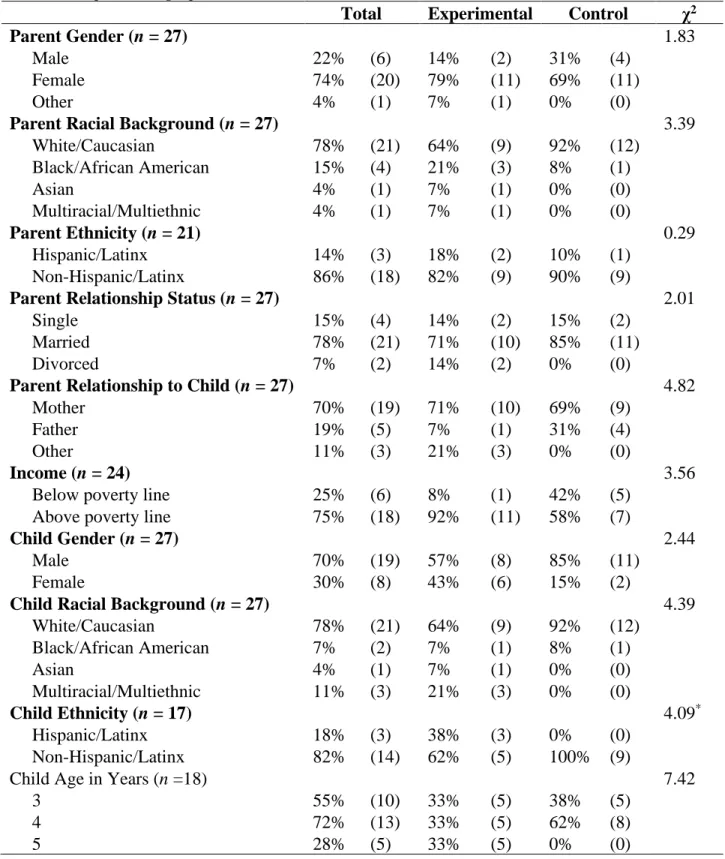
condition and eight in the control condition. Group leaders did not provide the researchers with comprehensive information on attrition. One of the reasons group leaders offered to account for attrition was that a couple of the participants had moved out of the state during the IY program; no other reasons were noted. Overall, participants predominately identified as female (74%), white (78%), and non-Hispanic (86%). Nineteen participants identified as the target child’s mother, five identified as the target child’s father, and three identified as having another
33
exception of child ethnicity, which indicated significantly more children in the intervention group identified as Hispanic/Latinx.
Table 1. Sample Demographics
Total Experimental Control χ2
Parent Gender (n = 27) 1.83
Male 22% (6) 14% (2) 31% (4)
Female 74% (20) 79% (11) 69% (11)
Other 4% (1) 7% (1) 0% (0)
Parent Racial Background (n = 27) 3.39
White/Caucasian 78% (21) 64% (9) 92% (12)
Black/African American 15% (4) 21% (3) 8% (1)
Asian 4% (1) 7% (1) 0% (0)
Multiracial/Multiethnic 4% (1) 7% (1) 0% (0)
Parent Ethnicity (n = 21) 0.29
Hispanic/Latinx 14% (3) 18% (2) 10% (1)
Non-Hispanic/Latinx 86% (18) 82% (9) 90% (9)
Parent Relationship Status (n = 27) 2.01
Single 15% (4) 14% (2) 15% (2)
Married 78% (21) 71% (10) 85% (11)
Divorced 7% (2) 14% (2) 0% (0)
Parent Relationship to Child (n = 27) 4.82
Mother 70% (19) 71% (10) 69% (9)
Father 19% (5) 7% (1) 31% (4)
Other 11% (3) 21% (3) 0% (0)
Income (n = 24) 3.56
Below poverty line 25% (6) 8% (1) 42% (5) Above poverty line 75% (18) 92% (11) 58% (7)
Child Gender (n = 27) 2.44
Male 70% (19) 57% (8) 85% (11)
Female 30% (8) 43% (6) 15% (2)
Child Racial Background (n = 27) 4.39
White/Caucasian 78% (21) 64% (9) 92% (12)
Black/African American 7% (2) 7% (1) 8% (1)
Asian 4% (1) 7% (1) 0% (0)
Multiracial/Multiethnic 11% (3) 21% (3) 0% (0)
Child Ethnicity (n = 17) 4.09*
Hispanic/Latinx 18% (3) 38% (3) 0% (0)
Non-Hispanic/Latinx 82% (14) 62% (5) 100% (9)
Child Age in Years (n =18) 7.42
3 55% (10) 33% (5) 38% (5)
4 72% (13) 33% (5) 62% (8)
34
Note: Frequencies are depicted in parenthesis beside the percentages; *p < .05.
Sample Size Considerations.Power was computed using Stata 15 (StataCorp, 2017). The target effect size (d = 0.7) was based on findings from a recent study, reporting a large effect size from a similar intervention using enhanced parent training program on improved parent engagement (Chacko et al., 2012). Estimated intraclass correlation coefficients (ICCs) were selected based on a nested study that examined the foster parent and foster youth
engagement in treatment (Dorsey, Pullmann, Berliner, Koschmann, McKay, & Deblinger, 2014). The authors calculated ICCs at the therapist and agency levels (.0001-.0009) for all major
outcomes. Using the conventional alpha of .05 and power estimate of .8, a minimum total sample size of 70 parents (7 parents per cluster, 10 clusters total) was calculated in order to achieve the desired effect size based on several power analyses. Based on the number of IY groups that agreed to participate in the study and the total number of parents from those groups that enrolled in and subsequently completed the study (i.e., 20 parents), this study did not meet the minimum sample size requirements to make power and is considered a pilot study to establish parameter estimates for a future, fully powered study.
Measures
35
and barriers to treatment at pre-intervention and post-intervention, as well as a questionnaire regarding their experience with the TIIP Program at post-intervention.
Demographics questionnaire. As part of the IY program, parent participants are also already required to complete a short demographics questionnaire. This questionnaire is organized in a multiple choice format and collects the following information pertaining to the parents’ demographic information: gender (i.e., male, female, other), race (i.e., African American/Black, While, Asian, American Indian/Alaska Native, Native Hawaiian/Pacific Islander, two or more), ethnicity (i.e., Hispanic/Latino, not Hispanic/Latino), relationship status (i.e., married, single, separated, divorced, widowed), and their relationship to the target child (i.e., mother, father, other relative, other). The measure also addresses the following demographic characteristics of the target child: age, gender (i.e., male, female), race (i.e., African American/Black, While, Asian, American Indian/Alaska Native, Native Hawaiian/Pacific Islander, two or more), and ethnicity (i.e., Hispanic/Latino, not Hispanic/Latino). Lastly, the demographics questionnaire collects information regarding the family’s annual income (i.e., < $12,000, $12,000-$24,999, $25,000-$44,999, $45,000-$59,999, $60,000-$74,999, $75,000 or >), primary language spoken in the home (i.e.., English, Spanish, other), and the number and ages of all the children in the home. Using family income and size of the household, the researcher calculated whether family income fell above or below national poverty lines.
Incredible Years® Weekly Log. The IY Weekly Log (Webster-Stratton, 2013) was used to collect data on attitudinal and behavioral components of parent engagement. Group facilitators completed the IY Weekly Log to track attendance, level of participation, attitude in group,
36
converted to percentages for comparison across participants within and across parenting groups. With regard to participation and attitude, group leaders rated the participants after each session using a 0-2 Likert scale. With regard to perceived helpfulness of content, discussion, and group leaders, group leaders transferred parents’ ratings from the IY Parent Weekly Evaluation to the IY Weekly Log for each session using a 1-4 Likert scale. For the purposes of this study, each of these ratings were averaged across 16 weeks for a total score, similar to previous studies using similar measures (Nix et al., 2009). Higher scores indicate more attentive, positive, and
appropriate engagement. Given these rating scales are typically not used for research purposes, formal reliability and validity analyses have not been conducted. In terms of construct validity, however, the creators of the program created the IY Weekly Log to correspond to components of each session. Regarding reliability across raters, the group leaders completing the IY Weekly Log
forms have undergone the same training and certification process to be able to implement IY. Parent satisfaction questionnaires. Parent satisfaction and attitudes toward the IY curriculum were collected through the IY Parent Weekly Evaluation (The Incredible Years®, 2013b) and the IY Final Parent Satisfaction Questionnaire (The Incredible Years®, 2013c). The
37
reliability for each of its subscale (Cronbach’s alpha ranging from 0.92 to 0.95; The Incredible Years®, 2013a) and, although there is no information available on the reliability and validity of the IY Parent Weekly Evaluations as it is not typically used in a research capacity, agencies use it for progress monitoring and tracking program implementation. For the current study, Cronbach’s alpha was adequate for both the IY Final Parent Satisfaction Questionnaire (=.94) and the IY Parent Weekly Evaluations (=.98), supporting the internal consistency of each measure among
the participants’ responses for these questionnaires.
Barriers to Treatment Participation Scale. Expected and actual barriers to treatment were assessed using the Barriers to Treatment Participation Scale – Expectancies (BTPS-exp; Nanninga et al., 2016) and the Barriers to Treatment Participation Scale (BTPS; Kazdin et al., 1997), respectively. The BTPS was originally developed to measure actual barriers experienced during treatment to explain dropout. It was developed as a result of focus group discussions with therapists who were asked to reflect on clients who prematurely terminated treatment and
38
validity and good internal consistency (Cronbach's alpha of 0.86 for the BTPS; 0.85 for the BTPS-exp; Nanninga et al., 2016). Reliability and validity for the BTPS-exp was established in a study examining Dutch parents’ expectations of barriers to psychosocial care for children and adolescents (Nanninga et al., 2016). As intended, the BTPS-exp was completed by parent participants prior to treatment while the BTPS was completed post-treatment. Internal reliability analyses were conducted after data collection for the current sample. Cronbach’s alpha was adequate for both the BTPS-exp measure (=.96) and the BTPS measure (=.85), supporting the internal consistency of each measure among the participants’ responses for these questionnaires.
Parenting Stress Index. The Parenting Stress Index Short Form (PSI-SF; Abidin, 2012) was used to collect information regarding parents’ level of stress related to being a parent. It is a 36-item, self-report screening and triage measure that assesses three major domains (Parental Distress, Parent-Child Dysfunctional Interaction, Difficult Child) of stress than can lead to problems in child and parent behavior. The Parental Distress (PD) subscale examines the extent to which parents are experiencing stress in their role as parents (e.g., sense of competence, familial conflict, restrictions on life). The Parent-Child Dysfunctional Interaction (PCDI) subscale measures the extent to which parents believe that their child does not meet their expectations or that they are not satisfied with their interactions (e.g., feels the child is a disappointment, feels rejected by the child, has not bonded with the child). The Difficult Child (DC) subscale examines parents’ perceptions on how easy or difficult their child is. These three subscales combine to form a Total Stress scale, which reflects all of the stresses parents may be experiencing. Based on the normed sample, high scores are those at or above the 85th percentile. The PSI-SF has demonstrated strong reliability (Cronbach’s =.78 to .88) and convergent
39
symptoms, maternal parenting practices, and child behavior. In the current study, the PSI-SF was completed by parents at pre-intervention and post-intervention. Internal reliability analyses were conducted after data collection for the current sample. The Cronbach’s alpha for the PSI-SF was adequate at pre-test (= .93) and post-test (= .90), indicating good internal consistency among
the participants responses for these questionnaires.
TIIP Questionnaire. A post-treatment questionnaire was developed to gather additional quantitative and qualitative information regarding parent experiences with the TIIP supplement (see Appendix A). Specifically, the TIIP questionnaire examines the type and amount of new parenting skills utilized between sessions, parent perceptions of how impactful the text messages were on their engagement (e.g., utilization of new skills, homework completion, attendance, participation), and overall parent satisfaction with the supplement (e.g., likes, dislikes, concerns). Information about the type and amount of new parenting skills used and parents’ perception of how impactful the text messages were in their engagement were collected quantitatively through multiple-choice questions. Information about parents’ overall satisfaction with TIIP were
collected qualitatively through open-ended questions. These measures were reviewed by a leading psychometrics expert, Dr. Gregory Cizek.
Procedure
40
offered the opportunity to receive the TIIP Program after study completion, as preliminary data analyses indicated that the treatment is not harmful.
Figure 2. Illustration of Study Conditions
The TIIP supplement offered additional support in the form of daily text message prompts to further extend the intervention beyond the parenting group in order to enhance treatment engagement. These text messages focused on reviewing IY concepts discussed in group, prompted parents to utilize new skills at home between sessions, and reminded parents of group sessions. The text message prompts were administered in a standardized order designed to align with IY group content. In order to account for any divergence from the standard curriculum (e.g., a group spending extra time on a given week’s content), extra prompts were created for the first 10 weeks of the IY program. The extra prompts ensured that parents were receiving texts that mirrored the content the group was covering each week. To help this process be successful, the researchers regularly communicated with group facilitators about their progression through the material and whether various aspects of the IY program were completed (e.g., coaching calls, buddy calls). Per IY’s usual protocol, group facilitators were asked to complete the IY Weekly Log and parents were asked to complete the Parent Weekly Evaluations after each IY session. As described previously, all parent participants are also required to complete a demographics
questionnaire as part of the IY program. Additionally, at the first IY session, parents were asked Total Sample
(N= 27; K= 2)
IY + TIIP (n= 14; k= 1)