Development of KBES with Hazard Controlling Factors and Measures for
Contracting Health and Safety Risk in Oil and Gas Drilling Process: A
Conceptual Action Plan
Muhammad Mujtaba Asad , Razali Bin Hassan
Faculty of Technical and Vocational Education, Universiti Tun Hussein Onn Malaysia, Parit Raja Batu Pahat, Johor,Malaysia.
Qadir Mehmood Soomro
HSE Training Manager, Saudi Aramco Total Refinery and Petrochemical Technip Saudi Arabia – TPSA
Director ,OSHTC - Occupational Safety and Health Training & Consultancy Pakistan.
Fahad Sherwani
Faculty of Electrical and Electronics Engineering, Universiti Tun Hussein Onn Malaysia, Parit Raja Batu Pahat, Johor,Malaysia.
E-Mail: [email protected], [email protected]
Abstarct
In this study, a conceptual framework is presented for development and implementation of an open source knowledge based expert system with novel controlling factors and measures for reducing work place risks and hazards in drilling process at oil and gas industries by using LabVIEW and MySQL software. Execution of this knowledge based expert system is to assist and facilitate the safety engineers and drilling crew to manage the safety protocols according to the health and safety acts and regulations in both domains (on and offshore) and prevent the injuries in hazardous work environments of oil and gas industries because fatality rates are highest during drilling process, which demands increased efforts for improved safety plans at drilling sites. As discussed in this conceptual framework, respondent for the data collection for proposed system will be randomly selected health and safety experts and drilling crew of major onshore and offshore oil and gas industries from Malaysia (Petronas), Saudi Arabia (Saudi Aramco) and Pakistan (OGDCL). This conceptual framework will explain about the research methodology that consists of Preliminary and Post research analysis for analyzing the effectiveness and performance of the proposed expert system based on controlling factors. Expected Outcome of this study is to implement this proposed conceptual framework for identifying the major controlling factors of accident prevention and effectiveness of proposed expert system for safety training activities in drilling process.
Keywords: Health and Safety, Hazard, Drilling Process, Knowledge Base, Expert System,Oil and Gas Industries
1. Introduction
The oil and gas industry plays an important role in driving the global economy because of its consumption as basic fuel ranging from household to wide spread industries. The utilization of oil and gas has a long and interesting history crossing an enormous number of years. Advancement of oil and gas has evolved over time and its various uses have likewise extended and turned into an essential part of today's worldwide economy. The use of oil inevitably supplanted coal as the world's essential wellspring of mechanical and industrial power in the early twentieth century. The methods and procedures involved in producing and dispersing oil and gas are very unpredictable and critical, and require state-of-the-art technologies (Blackley, 2014). One of the major and most important processes in oil and gas industry is an oil well drilling process. This is the process in which an oil well is bored in the earth that is designed to bring petroleum oil hydrocarbons to the surface.
Every time, safety experts and drillers have to face new and uncertain hazardous situations during drilling process. Hence, appropriate decision making with in such circumstances is complicated and challenging (Kassotice, 2015).There are some software tools that exist for helping the safety officers and drillers regarding work place safety but they are not updated and efficient systems as per international safety rules and regulation for decision making during drilling process and vestibule training of drilling crew (Lincoln, 2013).
The focus of this study is to develop and implement an open source knowledge based expert system and to identify the controlling factors for reducing work place risks and hazards in drilling process for on and offshore oil and gas industries in Malaysia, Saudi Arabia and Pakistan. Selections of these three proposed countries are due to the variety of risk and hazards with NEBOSH and NIOSH safety standards. Execution of this knowledge based expert system is to assist and facilitate the safety engineers and drilling crew to manage the safety protocols according to the health and safety acts and regulations in both domains and prevent the injuries in hazardous work environments of oil and gas industries. The novelty of this open ended source knowledge base expert system is the ability to be implemented and executed in both on and offshore oil and gas proposed industries by implying novel controlling factors and measures for reducing hazards and risk in drilling process while being an open ended source.
1.1 Background of Problem
Over the last five years, an average of nearly 70 people had died and 2500 have suffered major injuries annually as a result of various incidents in oil and gas drilling process due to several underlying causes related to insufficient accident prevention planning and safety training activities (Garrido, 2014). These workers also had high prevalence of exposure to physical and chemical hazards during drilling operation. Such risks and hazards can be controlled by analyzing the underlying cause of accident (Blackley, 2014).Therefore, it can be established that there are many factors which are still needed to be identified and focused upon (Ronen, 2012).Along with the identification of related factors, it is also inevitable to develop innovative strategies and approaches to minimize the chance of calamities (Brittingham, 2014).
On the other hand, periodic emergency training of drilling crew poses a significant role in the overall reduction of loss in case of an accident (Gonzales, 2013). The trained work force can facilitate the industry to operate more productively while avoiding any risks related to them (Soader, 2014). This process, however, takes long time and costs more to the industry which is intended to produce high profits. During times of high demand, new workers are brought into drilling industry, and these are workers may not have relevant training cause critical injuries and deaths," said Ryan Hill, head of the Center for Disease Control and Prevention's (NIOSH, 2014).During America’s drilling and fracking frenzy from 2008 to 2012 oil-field deaths reached 545, with Texas’ 216 reported fatalities, leading the nation. Pennsylvania and North Dakota are also recording dramatic increase in worker deaths during oil and gas extraction process, according to updated workplace fatality figures recently released by the Bureau of Labor Statistics (Garrido, 2014). Form previous studies many health and safety analyst have said that this rapid increase in the number of oil and gas worker deaths is largely due to the neglecting hazard preventing safety factors and deficiency of effective and planned health and safety training activities of drilling personals (Kassotice, 2015).
accident (Hays, 2015). This advance training may lead the drillers to respond efficiently in case of an incident as it happens in the field (Abimbola, 2014).
Knowledge based expert system (KBES) based on novel factors in combination with the training capabilities can be a vital solution in order to cater this issue (Yang, 2015). Decision support systems and experts systems are widely and efficiently used in oil and gas sector for calculating annual revenue, environmental and climate prediction, hazard reorganization at site (Akram, 2014).These expert systems are also employed in some area of drilling operation in world’s renowned oil and gas industries like maintenance, electric work, and vibration calculation but have been reported insufficient in terms of performance and competence due to limited database and hazard identification methods (Akram, 2014).Expert systems that already exist in the drilling industry are of closed nature. It means that only the vendor that provides the KBES can update and modify their system. These vendors usually also are paid to organize workshops to brief about their system accordingly. Such training workshops are not prioritized because they cost large amounts of financial investments to the organizations (Witter, 2014). Consequently, the training activities are not arranged periodically. The training practices even then are not arranged at the field which makes it hard for the learner to experience the real challenges. On the contrary, open source experts systems can be employed along with the existing systems to train and teach the drilling crew on site within their respective sections. Due to the openness of the system, it is very convenient for the on-site manager or supervisor to modify and update the system at his own disposal and according to desired setting. This advantage can help the work force to become familiarize with the related risks and hazards at a better level (Ronconi, 2015). These systems can also be installed for and made accessible to the drillers so that they can acquire any piece of information on their own while the supervisor is not present on field (Saad, 2014).
1.2 Problem Statement
Drilling process is the most important process in oil and gas industries while being hazardous and challenging (Haster, 2014). High fatality rates among oil and gas drilling crew has been reported for more than a decade, because of lack of health and safety awareness of drilling process (Manan, 2014). In the years 2007–2012, the occupational fatality rate of the oil and gas drilling industry was 2.5 times higher than the construction industry and 7 times higher than general industry (Bureau of Labor Statistic 2012). This industry’s fatal injury rate is correlated with fluctuations of industry activity, as measured by the number of active drilling rigs (Baker Hughes Incorporated, 2010; Bureau of Labor Statistics, 2009; Mode and Conway, 2008; National Institute for Occupational Safety and Health, 2014). Fatality rates are highest during drilling process, which demands increased efforts for improved safety strategies at drilling rigs (Mulloy, 2014).Many of the workers that survive in such disastrous incidents are vulnerable to other health concerns. These health effects include dizziness, headaches, drowsiness, nausea and vomiting as well as dermatitis and deep skin tissues infections from repeated skin contact with the drilling fluids (Kassotice, 2015). Some of the mildly refined base oils have also been associated with cancer, as a result of the aromatic compounds in the oil mists (CDC, 2013). According to Saudi Aramco Oil Refinery statistical analysis from year 2008-2013, the highest rate of critical injuries were reported in drilling process (Garrido, 2014).
Firstly, there are many factors involved in high rate of drilling fatalities and critical accidents and injuries (Macdonald, 2014). Due to the rapid change in environment, drillers and safety engineers have to face new challenges every day regarding health and safety, for this reason there is a need to identify new controlling measures and factors for reducing work place risk and hazards in off and onshore oil and gas industries in an effective manner (Saad, 2014). Improved occupational health and safety surveillance will help to capture the effectiveness of injury and illness prevention interventions (Mulloy, 2014).
(Newman, 2014). For the elimination of variety of hazards and risks in drilling operation, there is a sheer industrial need of an efficient and intelligent expert system for safety training of off and onshore drilling personnel with updated knowledge and hazard controlling factors according to international safety rules, regulation and protocols (Akram, 2014). Health and safety expert system can also be used for academic purpose in universities and training centers to train workers for safe drilling operation as per industrial demand of oil and gas (Witter & Tenney, 2014).
It is intended to tackle the aforementioned issues by identifying new controlling factors for reducing workplace risk and hazards in drilling process at on and off shore oil and gas industries. An open ended knowledge based expert system based on those identified factors is proposed in this study to facilitate the prevention and reduction of accidents at drilling sites. The proposed system can also be employed at drilling sites to enhance health and safety drilling training activities.
1.3 Proposed Objectives
The main purpose of this study is to develop and implement a knowledge based expert system for reducing the workplace risk and hazards in offshore and onshore oil and gas industries in drilling process in Malaysia, Saudi Arabia and Pakistan. Main objectives of this study are:
• To identify the major controlling factors for reducing the workplace risk and hazards in drilling process at onshore and offshore oil and gas industries to assist and facilitate the health and safety officers and drillers.
• To develop an open source knowledge based expert system by utilizing the identified controlling factors for accident prevention and safety training activities for reducing workplace risk and hazards in on and off shore drilling process.
• To analyze the impact of proposed open source knowledge base expert system based on hazard controlling factors for accident prevention at onshore and offshore drilling process. • To evaluate the effectiveness of hazard controlling factors of proposed open source
knowledge base expert system for accident prevention and safety training activities in drilling process at onshore and offshore oil and gas industries.
• To assess the performance of drilling crew for vestibule safety training activities by utilizing proposed open source knowledge based expert system based on hazard controlling factors.
1.4 Research Questions
The main purpose of this study is to seek answers of the following research questions:
• What are the controlling factors for reducing workplace risks and hazards in drilling process for accident prevention and safety training activities at onshore and offshore oil and gas industries?
• How can these controlling factors contribute to decrease the workplace risks and hazards in drilling process for accident prevention and safety training activities at onshore and offshore oil and gas industries?
• How proficient is this open source knowledge based expert system for accident prevention and safety training activities based on hazard controlling factors to contract the workplace risk and hazards in drilling process at onshore and offshore oil and gas industries?
• What is the impact of the proposed open source knowledge based expert system depending upon hazard controlling factors for accident prevention at onshore and offshore drilling process at oil and gas industries?
• What is the safety performance of drilling crew after vestibule training activities provided through the proposed open source knowledge based expert system?
1.5 Approach of Research
In order to attain the goal of this proposed study, a mixed method by utilizing both, questionnaires and focus group interviews will be used. The target population of this research consists of 03 oil and gas industries from Malaysia, Saudi Arabia and Pakistan with respondents including Drilling crew, Safety officers. The survey questionnaire design will include measurement level based items. Accordingly, questions for focus group interviews will establish based on the findings from the questionnaire results. In this study, sequential explanatory research design will be used, where the quantitative and qualitative data analysis are analyzed separately (Creswell & Plano, 2007). Upon completion of data analysis from both the quantitative and qualitative methods, researcher can easily indicate the similarities and difference in both results.
2. Proposed Conceptual Framework
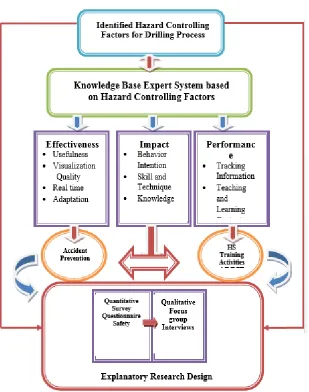
Conceptual framework is adopted and modified from Conde & Lonsdel (2005) climate hazard impact assessment. ADDIE model of planning and training strategies will be used for the development of this open source expert system with accident prevention and training activities for reducing work place risk and hazards in drilling process for oil and gas industries. Conceptual framework of this study is shown in Figure 1. According to the conceptual framework of Conde & Lonsdel (2005), the impacts of support system and hazard controlling factors are measurable outcomes and are typically modulated by changes (Conde & Lonsdel ,2005).
Figure 1: Proposed Conceptual Framework
3. Proposed Methodology
Figure 2. Block Diagram of Proposed System
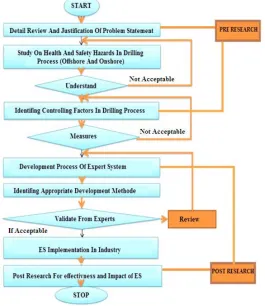
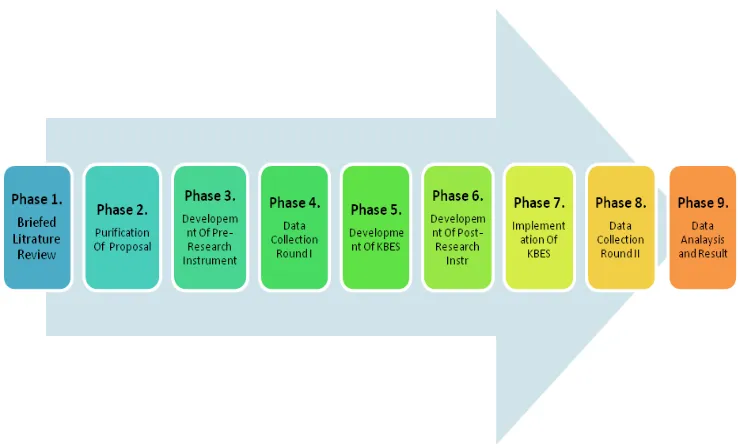
In this study mix method research approach will be used to answer proposed research questions. The Comprehensive preliminary and post research planning of this study is shown in the flow chart as depicted in Figure 3. It shows the flows and methods that will be used for finding and analyzing data regarding the project related.
Plenty of preparation should be done to produce a best quality of research study in order to ensure all plans can be done in an orderly and systematic manner. To implement this study, various parts need to be observed in terms of study design, respondents, data sources, and study instruments, flow of research, structural operations and data analysis.
Figure 3. Methodology Flow Chart
USER INTERFACE
LabVIEW
INFRENCE ENGINE
QUERY/OPINION Onshore and Offshore Drilling
Data Base Connectivity Tool
Kit
KNOWLEDGE BASE MySQL
Opinion will base on Health and safety experts Knowledge
Data base of Petronas,OGDCL,Sau
[image:7.595.168.433.446.752.2]3.1 Sampling
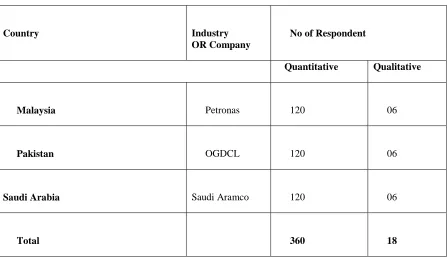
[image:8.595.76.523.305.563.2]The research samples of this research study will be a group of health and safety experts and drilling crew of major onshore and offshore oil and gas industries from Malaysia (Petronas), Saudi Arabia (Saudi Aramco) and Pakistan (OGDCL). These three countries and industries are chosen for data collection because of the variety of environmental aspects and different international safety act and regulation bodies like NIOSH and NEBOSH. Explanatory mix method approach will be adopted for this study to achieve the research objectives, for quantitative study 120 respondents will be chosen for answering the preliminary and post research questionnaires for evaluating the performance and effectiveness of proposed expert system for reducing workplace risk in drilling process from drilling crew of each industry. And for Quantitative study from each industry group of 06 Health and safety expert respondents will be selected for focus group interview for the identification of hazard controlling factors and the technical assessment of proposed system as shown in Table 1.
Table 1: Proposed Respondent
Country Industry
OR Company
No of Respondent
Quantitative Qualitative
Malaysia Petronas 120 06
Pakistan OGDCL 120 06
Saudi Arabia Saudi Aramco 120 06
Total 360 18
3.2 Study Instrument
factors. Research questionnaire development phases from Frazer (2000) will be adopted for both questionnaires development and Rubric assessment tool which will be used for the validation of questionnaire.
4. Proposed Expert System Development Methodology
In this study, expert system development methodology is adapted and modified from Yasser Abdulhamid (1997) as shown in Figure 4. According to the proposed method, in this study knowledge based expert system development activities will go through different stages, these stages are: requirements specification, design, development, and testing. The approach which will be applied for system development is a combination of rapid prototyping and incremental approach. Rapid prototyping will be used to reach an agreement on the initial set of the system requirements by adding a better user interface and more explanation. It will then be incrementally developed and tested for maturity.
Figure 4: Expert System Development Process
• Requirements Specification
The initial step in acquiring knowledge for an expert system is to characterize the important aspects of the problem (Yasser, 1997). This involves identifying the participants, problem characteristics, resources, and goals. In this proposed system, knowledge will be acquired from experienced health and safety officers and drilling crew members that are experts in drilling safety procedures for reducing workplace risk and hazards. After selecting the domain experts, this study can proceed toward identifying the hazard controlling factors in on and offshore drilling process. This stage will involve an informal exchange of views on various aspects of the problem and issues which will be briefly discussed in research design of proposed study. The objective of this stage is to support knowledge structure so that the development of the knowledge base part of system may begin.
• Designing Stage
In this study designing involves mapping the acquired knowledge from the previous stage into the representational structure associated with the tool chosen (Mosa, 2013). The designing
Development and Tools
Testing Requirement Specification
Designing
GUI
Inference Engine
stage is based on the internal functionality and gathered knowledge data base of proposed expert system. The proposed system design will be divided in three parts and all of them are interconnected with each other.
• Graphical User Interface • Inference Engine
• Knowledge Base
• Graphical User Interface
The graphical user interface (GUI) is a main element of an expert system that must provide a simple and efficient interaction between the user and the system (Proppper, 2012). In this proposed expert system, there will be two way interactions. In the user-expert system interaction, the user (Drilling crew) will ask queries and problems to the expert system(based on Health and safety experts) as an input data (Al-Yami, 2013). In the system-user interaction, the system will provide the most appropriate solution of user problem according to the knowledge base of the system as an output result.
• Inference Engine
The inference engine is the core processing component of the expert system (Mosa, 2013). Proposed expert system will be mainly consisting on knowledge base and an inference engine. The knowledge base store facts and knowledge through experts from oil and gas industries. The inference engines of system will apply logical rules like (IF-Else) to the knowledge base and deduce relative information accordingly (Kahlon, 2014). It will be responsible for gathering the information from the user, by asking various questions and applying it wherever necessary (Spiegelhalter, 2013). It seeks information and relationships from the knowledge base and to provide answers, predictions and suggestions the way a human expert would.
• Knowledge Base
In proposed system knowledge base is a part of expert system which holds all the information and knowledge of the system. It contains facts and rules about the task domain (Laudon, 2002). Task domain is the area of expertise that the expert system is designed to work within (Altunkaynak, 2014). In proposed expert system, knowledge base will be divided in two parts. First one will be the knowledge base of expert opinion for accident prevention and training activities, and the second knowledge base for international health and safety rules in on and off shore drilling process.
5. Development and Tools
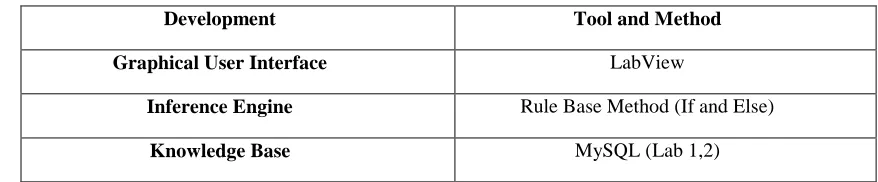
natural knowledge representation and deal with incomplete and uncertain knowledge (Spiegelhalter, 2013). LabView software will be use for the development of user interface of the system and will be connected with the knowledge base of the system by calling data base connectivity tool kit function in LabView software. The Graphical user interface of the system will be used for input which contains user Origin, Query and Domain(Offshore/Onshore/Both),Output will based on the experts opinion and recommendations as per required drilling domain.
Table 2: Expert System Development Tools
Development Tool and Method
Graphical User Interface LabView
Inference Engine Rule Base Method (If and Else)
Knowledge Base MySQL (Lab 1,2)
• Testing
The last stage, testing, involves finding and fixing any errors and omissions (Kahlon, 2014). It will cover the verification of individual relationships, validation of program performance and evaluation of the utility of the software package through post research phase. Testing guides reformulation of concepts, redesign of representations and other refinements. In this study testing will be performed at proposed oil and gas industries during post research.
6. Flow of Research
It is aimed to divide this research study in seven major phases as depicted in the flowchart Figure 4:
• Development of Preliminary research instrument (Based on literature review).
• Data Collection Round I (For Justification of problem statement and hazard controlling factors identification from health and safety experts).
• Development of KBES (Tool and Technique depends upon brief literature review).
• Development of post research Instrument for evaluation and testing of KBES in proposed industries.
• Implementation of proposed KBES in proposed industries.
• Data Collection Round II (After implementation of KBES post research instrument will use to evaluate the performance of proposed KBES.
Figure 5. Flow of Research
7. Expected Results
The expected outcome of this proposed research is to develop and implement an open source knowledge based expert system and identifying the major controlling factors of accident prevention and effectiveness of proposed expert system for safety training activities in drilling process for reducing work place risks and hazards for on and offshore oil and gas industries in Malaysia, Saudi Arabia and Pakistan. Execution of this knowledge based expert system is to assist and facilitate the safety engineers plus drilling crew to manage the safety protocols according to international health and safety regulations in both domains and prevent the injuries in hazardous work environments of oil and gas industries. The novelty and significance of this Knowledge based expert system is that, it will be able to implemented and executed in both on and offshore oil and gas proposed industries by novel controlling factors and measures for reducing hazards and risk in drilling process while as an open ended source.
8 Conclusion
This conceptual framework discusses the significance of hazard controlling factors for reducing work place risk and hazards in drilling process in off and onshore oil and gas industries. Respondents of this study based on conceptual framework will be the randomly selected health and safety experts, drilling crew, safety officers from major onshore and offshore oil and gas industries from Malaysia, Saudi Arabia and Pakistan. For the development of expert system LabVIEW and MySQL software’s will be used and for data analysis SPSS 20 software will be used for descriptive and inferential statistical techniques and Nvivo will used for qualitative research.
References
Akram, N. A., Isa, D., Rajkumar, R., & Lee, L. H. (2014). Active incremental Support Vector Machine for oil and gas pipeline defects prediction system using long range ultrasonic transducers. Ultrasonics, 54(6), 1534-1544.
Al-Yami, A. S. H., & Schubert, J. (2013). U.S. Patent Application 13/827,794.
Altunkaynak, A. (2014). Predicting water level fluctuations in Lake Michigan-Huron using wavelet-expert system methods. Water resources management28(8), 2293-2314.
Blackley, D. J., Retzer, K. D., Hubler, W. G., Hill, R. D., & Laney, A. S. (2014). Injury rates on new and old technology oil and gas rigs operated by the largest United States onshore drilling contractor. American journal of industrial medicine, 57(10), 1188-1192.
Brittingham, M. C., Maloney, K. O., Farag, A. M., Harper, D. D., & Bowen, Z. H. (2014). Ecological risks of shale oil and gas development to wildlife, aquatic resources and their habitats. Environmental science & technology, 48(19), 11034-11047.
Bureau of Labor Statistics. (2012). Census of Fatal Occupational Injuries.Washington, DC: United States Department of Labor.
Bureau of Labor Statistics. (2009). Census of Fatal Occupational Injuries.Restricted Data under NIOSH.
Baker Hughes Incorporated. (2010). Rotary Rig Count. Houston, TX:Baker Hughes Incorporated.
Conde, C., Lonsdale, K., Nyong, A., & Aguilar, I. (2005). Engaging stakeholders in the adaptation process. Adaptation policy frameworks for climate change: Developing strategies, policies and measures, 47-66.
Centers for Disease Control and Prevention. (2013). Fatal injuries in offshore oil and gas operations-United States, 2003-2010. MMWR. Morbidity and mortality weekly report, 62(16), 301
Centner, T. J. (2013). Oversight of shale gas production in the United States and the disclosure of toxic substances. Resources Policy, 38(3), 233-240.
Frazer, L & Lawley, MA (2000), Questionnaire design & administration: A practical guide,
John Wiley & Sons Australia, Brisbane.
Garrido Cruz, R. A., Muqeem, M. A., Alghuryafi, A. M., Duran, R. C., Hadj-Moussa, A., Mazouz, C. M.& Aloudat, R. (2014). Combining Managed Pressure Drilling and Advanced Surface Gas Detection Systems Enables Early Formation Evaluation
Gonzalez, V., & Ysolda, P. (2013). Bayesian Networks and Geographical Information Systems for Environmental Risk Assessment for Oil and Gas Site Development (Doctoral dissertation).
Hester, S. E., Merrill, L. D., & Lloyd, C. R. (2014). U.S. Patent No. 20,140,353,252. Washington, DC: U.S. Patent and Trademark Office.
Kassotis, C. D., Lin, C. H., Tillitt, D., & Nagel, S. C. (2015). THR-294: Endocrine Disrupting Activity of Oil and Gas Operation Chemicals and Health Outcomes Following Gestational Exposure in Mice.
Kahlon, K. S. (2014). An embedded fuzzy expert system for adaptive WFQ scheduling of IEEE 802.16 networks. Expert Systems with Applications41(16), 7621-7629.
Kassotis, C. D., Lin, C. H., Tillitt, D., & Nagel, S. C. (2015). THR-294: Endocrine Disrupting Activity of Oil and Gas Operation Chemicals and Health Outcomes Following Gestational Exposure in Mice.
Lincoln, J. M., O'Connor, M. B., Retzer, K. D., Hill, R. D., Teske, T. D., Woodward, C. C& Conway, G. A. (2013). Occupational fatalities in Alaska: two decades of progress, 1990-1999 and 2000-2009. Journal of safety research, 44, 105-110.
MOU, editor. Washington, DC: UnitedStates Department of Labor.
Mannan, M. S., Mentzer, R. A., Rocha-Valadez, T., & Mims, A. (2014). Offshore Drilling Risk indicators have varying impact on mitigation. Oil & Gas Journal, 112(5), 64-69. Mode NA, Conway G. 2008. Fatalites among oil and gas extractionworkers —United States
2003 –2006(16)429 –431.
Macdonald, I. I., John, T., & Macdonald III, J. T. (2014). U.S. Patent No. 20,140,371,485. Washington, DC: U.S. Patent and Trademark Office.
Mulloy, K. B. (2014). Occupational health and safety considerations in oil and gas extraction operations. The Bridge, 44(3).
Newman, L. S. (2014). Oil and gas drilling industry: Health and safety training challenges. Journal of industrial hazards.
National Institute for Occupational Safety and Health (2014), NIOSH Cincinnati, OH:
Department of Health and Human Services
Popper, M., & Gyärfäš, F. (2012). Rated in our diagnostic expert system CODEX. Their principles. Medical Informatics Europe 85: Proceedings, Helsinki, Finland August 25– 29, 1985, 25, 163.
Ronen, S., Rokkan, A., Bouraly, R., Valsvik, G., Larson, L., Ostensvig, E. & Swanson, M. (2012). Imaging shallow gas drilling hazards under three Forties oil field platforms using ocean-bottom nodes. The Leading Edge, 31(4), 465-469.
Ronconi, R. A., Allard, K. A., & Taylor, P. D. (2015). Bird interactions with offshore oil and gas platforms: Review of impacts and monitoring techniques.Journal of environmental management, 147, 34-45.
Saad, S., Mohamed Udin, Z., & Hasnan, N. (2014). Dynamic Supply Chain Capabilities: A Case Study in Oil and Gas Industry. International Journal of Supply Chain Management, 3(2).
Soeder, D. J., Sharma, S., Pekney, N., Hopkinson, L., Dilmore, R., Kutchko, B., ... & Capo, R. (2014). An approach for assessing engineering risk from shale gas wells in the United States. International Journal of Coal Geology,126, 4-19.
Spiegelhalter, D. J., Franklin, R. C., & Bull, K. (2013). Assessment, criticism and improvement of imprecise subjective probabilities for a medical expert system. arXiv preprint arXiv:1304.1529.
Tan, C., Wahidin, L. S., & Khalil, S. N. (2014). An Architecture Framework of Design for Assemble Expert System.
Witter, R. Z., Tenney, L., Clark, S., & Newman, L. S. (2014). Occupational exposures in the oil and gas extraction industry: state of the science and research recommendations. American journal of industrial medicine.