Do accelerated, work-‐based programmes
enhance student learning?
An action research study
Thomas Richard Berry
Doctor of Education (Creative and Media)
awarded by Bournemouth University
October 2018
This copy of the thesis has been supplied on condition that anyone who consults it is understood to recognise that its copyright rests with its author and due
acknowledgement must always be made of the use of any material contained in, or derived from, this thesis.
Abstract
Flexible learning has been an important part of Government policy for over 20 years. Often connected to economic performance, the driver is improved productivity. This study critically evaluates the development and delivery of two flexible learning programmes -‐ BA (Hons) Advertising (WBL) and BA (Hons) Public Relations (WBL). These were developed as part of a HEFCE Catalyst-‐funded project ‘Towards Higher Apprenticeships’ led by the Sector Skills Council for the creative industries and a consortium of five universities. The study aims to improve practice and inform the literature on the design and delivery of flexible programmes. Research questions critically evaluated the participants’ experiences, nature of learning and outcomes. The research addresses gaps in the literature in relation to student, staff and employer perspectives and outcomes in the coproduction of accelerated, work-‐ based learning programmes.
Using an interpretive philosophy, the study employed an action research approach, that is, the study is primarily intended to inform practice within a specific social situation, the findings of which may be transferable. Documentary analyses, interviews and field notes were analysed inductively. The research participants included the research author who also headed the project for the lead institution, students, academic staff, employers and the Sector Skills Council (SSC).
The findings of the research suggest that the active, multi-‐modal learning opportunities offered by accelerated, work-‐based learning programmes can
facilitate the attainment of planned and emergent outcomes cultivating the creation of capital, building communities of practice and contributing to the productivity that is a key driver in government higher education and skills policy. However, the research suggests that the foundation for such programmes requires: an innovative institution, where teams have existing strong industry links and an employability focus, particularly in industries with a clear skills shortage; a reachable target audience with raised awareness of the benefits of such programmes; and an active Sector Skills Council to raise awareness, particularly amongst small to medium-‐sized businesses, and to act as an umbrella organisation. Employers engaged in such programmes should be prepared to devote sufficient resources.
This research, through adopting an action learning approach, has been able to develop a conceptual framework which, whilst focused around accelerated work-‐ based learning, has the potential to be equally applicable to other forms of work based learning such as apprenticeships.
Table of Contents
Abstract iii Acknowledgments 1 Outline Structure 21.0 Context of the Study 4 1.1 Background – the Development of Accelerated Work-‐based
Programmes within Higher Education 4
1.2 Research Focus – The Project 8
1.3 Research Aim and Objectives 9
1.3.1 Research Questions
1.4 Potential of this Research 12
1.5 University Context 12 1.6 Policy Context 14 1.6.1 Productivity 1.6.2 Flexibility 1.6.3 Skills 1.6.4 Apprenticeships 1.6.5 Accelerated Learning 1.7 Summary 34 2.0 Literature Review 35 2.1 Introduction 35
2.2 Modes of Learning 35
2.3 Work-‐based and Experiential Learning 39
2.4 Flexible Pedagogies 48
2.4.1 Facilitative
2.4.2 Constructive and Reflective 2.4.3 Standards
2.5 Capital Creation 54
2.5.1 Social capital 2.5.2 Habitus
2.5.2 Communities of Practice
2.6 Summary 64
2.6.1 Modes of Learning
2.6.2 Work-‐based and Experiential Learning 2.6.3 Flexible Pedagogies
2.6.4 Capital Creation
2.6.5 Implications for Research Philosophy 3.0 Methodology 69 3.1 Introduction 69 3.2 Action Research 71 3.3 Research Design 77 3.4 Philosophy 79 3.5 Interpretivism 80
3.6 Research Methods 83 3.6.1 Primary Research
3.6.2 Selecting the Participants 3.6.3 Data Collection -‐ Interviews 3.6.4 Primary Data Analysis
3.6.5 Secondary Research -‐ exploring and analysing the broader issues and documents
3.6.6 Secondary Data Collection 3.6.7 Secondary Data Analysis
3.7 Ethical Considerations 109
3.8 Trustworthiness and Authenticity 112
3.9 Limitations 115
3.10 Summary 115
4.0 Findings: Description, Analysis and Synthesis 117
4.1 Introduction 117
4.2 RQ1: What is the experience of all partners within
accelerated, work-‐based degree programmes? 117
4.2.1 Habitus 4.2.2 Practice 4.2.3 Field 4.2.4 Summary
4.3 RQ2: What is the nature of learning within
accelerated work-‐based degree programmes? 142
4.3.1 Modes of Learning 4.3.2 Pedagogy
4.3.3 Roles 4.3.4 Scaffolding 4.3.5 Outcomes 4.3.6 Summary
4.4 RQ3: In what ways can we design accelerated, work-‐based degree programmes to deliver benefits
to employers, students and universities? 162
4.4.1 Partnerships 4.4.2 Approval 4.4.3 Promotion
4.4.4 Structuring the Curriculum 4.4.5 Foundation
4.4.6 Summary
5.0 Conclusions 185
5.1 Contribution to knowledge 185
5.1.1 Aim of Study
5.1.2 RQ1: What is the experience of all partners within accelerated, work-‐based degree programmes? 5.1.3 RQ2: What is the nature of learning within accelerated work-‐based degree programmes? 5.1.4 RQ3: In what ways can we design accelerated, work-‐based degree programmes to deliver benefits to employers, students and universities?
5.2 Implications for Practice 202 5.2.1 Programme Level 5.2.2 University Level 5.2.3 For Employers 5.2.4 Policy Level 5.2.5 Summary 5.3 Limitations 213 5.4 Self-‐reflection 216 5.5 Future research 219 5.6 Summary 220 6.0 References 224 7.0 Appendices 235
7.1 Table of data sources. 235
7.2 Participant Information Sheet 238
7.3 Consent Form 240
List of Figures
Figure 1: Context of the Study. 7
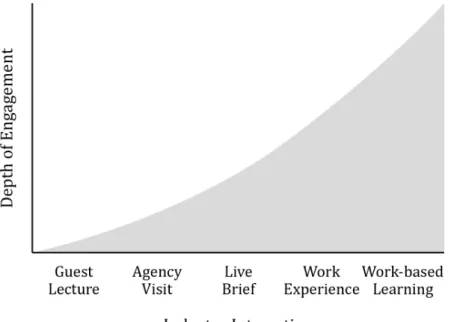
Figure 2: Programme Development and Delivery Timeline. 34 Figure 3. The Learner and his Environment (Scheer, 2011). 38 Figure 4: Student Industry Interaction Continuum (Berry, 2018). 42 Figure 5a: Career Trajectories adapted from McLeod, et al., 2011. 59 Figure 5b: Career Trajectories adapted from McLeod, et al., 2011. 60 Figure 6: Capital Creation through Work-‐based Learning. 63 Figure 7: 6-‐Stage Action Research Spiral – adapted from O’Leary (2004). 76 Figure 8: Data Analysis in Qualitative Research (Creswell, 2009, p185). 92 Figure 9: Accelerated/Work-‐based Learning and Traditional Route Grades. 161 Figure 10: Capital Creation through Communities of Practice. 188
Figure 11: Conceptual Framework (Berry, 2018). 191
List of Tables
Table 1: Role of Apprenticeships (adapted from Hancock, 2013, p.6). 22 Table 2: Accelerated Student Characteristics (adapted from
Outram, 2011, p20). 30
Table 3: Accelerated Learning (adapted from Pollard et. al., 2017, p.5). 31 Table 4: Expansive Learning (adapted from Engeström in Malloch, 2011). 37 Table 5: Boud, Cohen and Walker (1993) in Brennan and Little (1996, p.42). 44 Table 6: Work-‐based Learning (Boud and Solomon, 2001, p.5). 46 Table 7: Comparison of work-‐based learning and structured learning
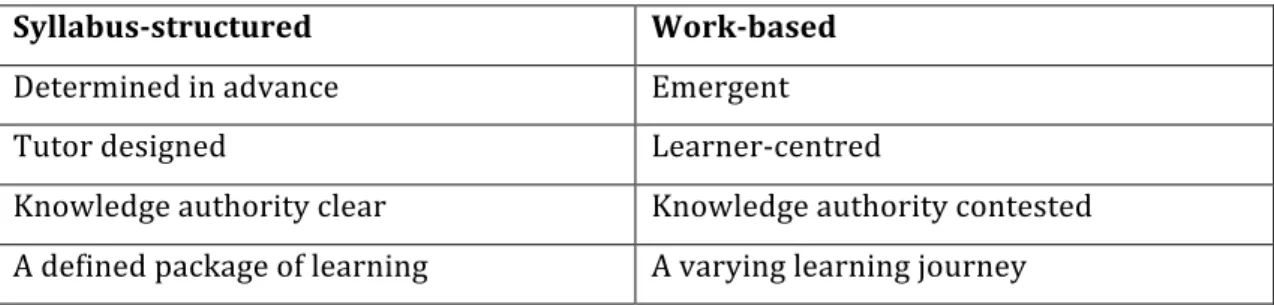
(Hammersley et al., 2013). 48
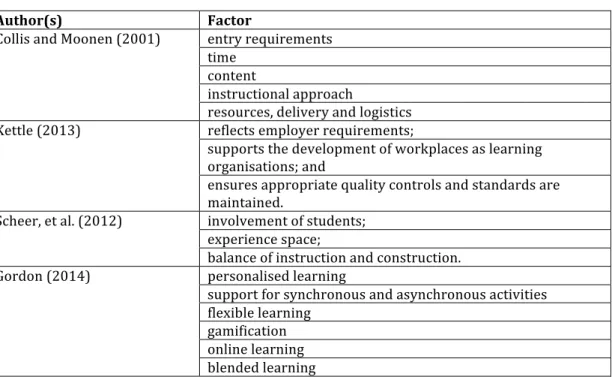
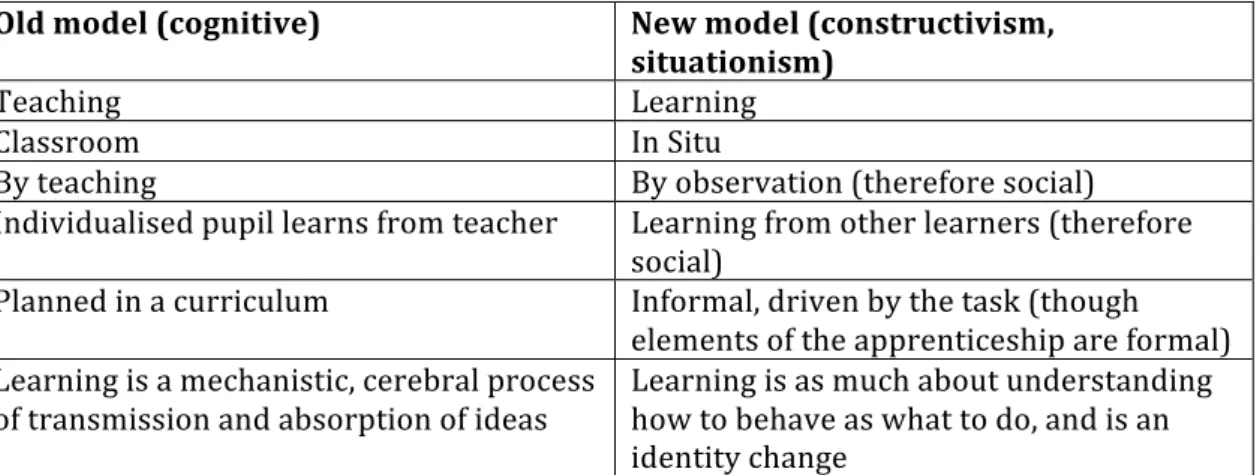
Table 8: Flexible pedagogies for workplace learning. 52 Table 9: The new model of learning proposed in Situated Learning
(Lave and Wenger, 1991). 58
Table 10: Communities of Practice (McLeod, et al., 2011, p.116) 58
Table 11: Schedule for Data Collection. 85
Table 12: List of Participants 90
Table 14: Document Analysis Coding Template 97 Table 15: Textual analysis (Hammersley and Atkinson, 1995,
in Silverman, 2015, p.286). 108
Table 16: Trustworthiness in Qualitative Research
(Lincoln and Guba, 1985, p.301-‐327). 114
Table 17: Categories and codes relating to RQ1. 118 Table 18: Categories and codes relating to RQ2. 142 Table 19: Anticipated Benefits by Participant Group (document 1). 157 Table 20: Categories and codes relating to RQ3. 163 Table 21: Opportunities and demands of accelerated, work-‐based learning. 185
Table 22: Implications for Partners. 202
Acknowledgments
I would like to thank my supervisors, Dr. Sue Eccles and Dr. Fiona Cownie along with the wider team at CEMP who have had a great deal of patience and have provided essential support and advice throughout the taught stages and the writing up process. Without their guidance the path would have been impossible to navigate. I would also like to thank the students, employers and academic staff who have given of themselves wholeheartedly in making themselves available for interviews and engaging with the research study. My colleagues and line manager have enabled me carry out this research and without their goodwill and understanding it would have been difficult to find the time. Finally I would like to thank my wife, Sue and
daughter Lucie who have allowed me to find the time, provided feedback and helped
Outline Structure
Chapter 1.0 Context of the Study
This chapter provides the reader with background information on the development and delivery of accelerated, work-‐based learning programmes within the context of higher education policy. The study analyses ways that students, course team and employers can work together and some of the implications for learning in these situations. The focus for the research is discussed and justified, the overall research aim and individual research questions are explained with reference to gaps in research and the potential for the study to add value.
Chapter 2.0 Literature Review
This chapter develops themes in literature relating to the design of accelerated, work-‐based programmes including modes of learning, flexible pedagogies, facilitating learning, communities of practice, constructive learning, reflective practice and capital creation. It goes on to cover the nature of learning within accelerated, work-‐based programmes including definitions of work-‐based learning, the continuum of industry interaction, learning from experience, typologies of work-‐ based learning, partnerships for learning and co-‐production. Concepts relating to student experience are explored through Bourdieu and other models of social capital related to communities of practice, career trajectories from the pre-‐ periphery into the periphery of practice. Finally, implications for the research methodology are discussed.
Chapter 3.0 Methodology
This chapter discusses the philosophical approach and justifies the action research strategy and methods to be adopted in the empirical research for the study. In addition, the piloting of the research methodology and research methods is outlined and the approach to data analysis is explained. Limitations and ethical aspects of the study are discussed.
Chapter 4.0 Findings: Description, Analysis and Synthesis
This chapter reports on the findings of the action research study. In the first instance, the policy framework is discussed including transferable skills and vocational skills and the apprenticeship agenda. It goes on to consider each of the research questions analysing and synthesising the literature and empirical research data drawn from interviews with participants from the stakeholders in the
programmes together with a discussion of reflexive aspects within research where the principal investigator is also a participant.
Chapter 5.0 Conclusions
This chapter revisits the overall aim of the study and the findings are related to the individual research questions covering themes including: the foundations for flexible, WBL programmes; multi-‐modal learning; and outcomes including capital creation, leading to productivity. The conclusions from this research are related to the contribution to knowledge and implications for practice at programme and university level but also for employers and policy level. The limitations of this work are discussed and the potential for future research is outlined.
1.0 Context of the Study
1.1 Background – the Development of Accelerated Work-‐based Programmes within Higher Education
This research study sets out to contribute to knowledge in the development and implementation of combined accelerated and work-‐based learning programmes for undergraduate students and informs policy in this area of flexible approaches to higher education. It addresses gaps in the educational research literature in three areas: firstly, there are very few studies of flexible courses or apprenticeships that triangulate the student, staff and employer perspectives; secondly, studies on apprenticeships often focus on the employer or provider, whereas studies on accelerated courses have focused on students and staff; and, thirdly, even fewer studies have been conducted into flexible courses that also incorporate work-‐based learning.
This thesis presents the processes and outcomes of an action research project
centred on flexible (accelerated, WBL) pilot programmes (“how, where, when, and at what pace learning occurs” Outram, 2011, p.7) covering two creative industries degrees, BA (Hons) Advertising (WBL) and BA (Hons) Public Relations (WBL). Zeni (1998, p.12) defines action research as drawing “on the qualitative methods and multiple perspectives of educational ethnography”. Indeed, in the early stages of the research the study was considered as an ethnographic or auto-‐ethnographic study but the intention to inform teaching practice influenced the methodology.
One of the key drivers for the development of the project was ‘fusion’ which the Sector Skills Council (SSC) has defined as follows (Creative Skillset, 2013, p.8):
“The individual: One should support individuals to develop a range of skills – possibly focused on a core specialism – that allows them to explore and exploit their potential fully. This might lead one to develop a series of specific interventions – courses or modules such as: Coding for Artists; The
Entrepreneurial Programmer; Cinematography for the FX Technician; Wordpress for the Textiles Designer.
The ‘firm’: One should support SMEs to take advantage of new workflows and markets arising from the disruptive impact of digital technology. This might lead one to host jams, hacks and creative conferences bringing together SMEs from different sectors/industries: preparing fertile ground for serendipity, connections and idea generation.
The industry: One should look to foster and inject new skills into established but – perhaps – decreasingly relevant industries so that they can be agile enough to develop new business models to protect traditional market positions and break into new ones. This might lead one to work in tandem with professional bodies and industry associations to inspire fresh thinking at management level whilst aiding recruitment and partnership
opportunities to import or bolt on capabilities to existing businesses.” This ‘mission’ intended to drive the development of a skilled workforce by co-‐ producing learning and knowledge-‐creation to the benefit of all partners. It
recognises the interdependence of all partners and the social aspects as well as the planned curriculum.
The HEFCE-‐funded project was a very tangible way for the Sector Skills Council to engage with industry and higher education to foster the adoption of fused
approaches. These concepts also link to the emergence of digital clusters which was presented in a research project called The Brighton Fuse (2013), a survey of 500 organisations and 77 entrepreneurs, that found regional clusters of companies combining creative art and technology were integrating to mutual benefit in a similar way to Silicon Valley.
“The research identifies a new category of high growth firms within this cluster, that are ‘fusing’ and ‘superfusing’ to create an extraordinary competitive edge.” (Sapsed and Nightingale, 2013, p.1).
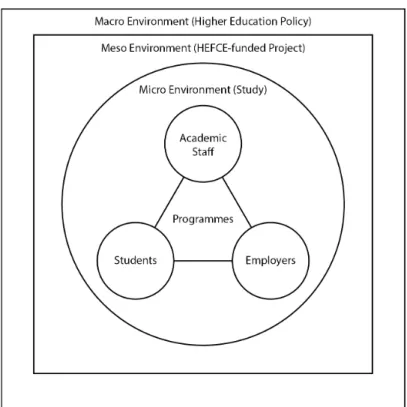
The macro environment for the study is influenced by government policy on skills and learning that has emerged over the last 20 years or so, this in turn has directed funding and other resources towards a number of initiatives intended to implement this policy. One of these projects forms the meso environment for this study. Led by the SSC, a HEFCE-‐funded project was intended to promote the development of flexible courses in conjunction with industry with the aim of developing higher or degree apprenticeships and to trial new accelerated modes of delivery where higher education works closely with industry, thereby drawing together two of the most significant strands of policy in this area, flexible learning and work-‐based learning. The programmes that form the micro-‐environment within which the study is situated are two pilot accelerated, work-‐based learning degree programmes, BA (Hons) Advertising (WBL) and BA (Hons) Public Relations (WBL) (WBL represents work-‐based learning to differentiate these programmes from the standard delivery which run alongside and share many aspects of the programmes), offered by a university on the south coast of England. The aim of the project was to trial new accelerated modes of delivery collaboratively with industry. The aim of the study was to understand the opportunities and demands associated with programme development, delivery and experiences of participants in accelerated, work-‐based learning. The participants in the study were students, employers and academic staff engaged in developing, delivering and participating in the programmes.
The relationship between the macro environment (Higher Education Policy), the meso environment (HEFCE Catalyst-‐funded Project instigated by the Sector Skills Council in partnership with a consortium of universities led by the institution within which this study was carried out) and the micro-‐environment of the programmes (the action), the study (the research) and the three participant groups of students, academic staff (including the primary investigator) and employers are shown diagrammatically in Figure 1 below. Throughout the thesis the two degree courses -‐ BA (Hons) Advertising (WBL) and BA (Hons) Public Relations (WBL) -‐ are referred to as ‘the programmes’, the wider collaborative project within which the
programmes were developed will be referred to as ‘the project’ and the research study for which this thesis is written is called ‘the study’.
Figure 1: Context of the Study
Since 1997, government policy has consistently strengthened the link between education and productivity to focus on human capital.
“This thrust towards a human capital version of higher education was based on the assumption that good though higher education was, its students were inadequately prepared for the workplace and were unable to put into
practice what they had learned at university.” (Light, in Boud and Solomon, 2001, p.205).
This was reinforced in the 2003 Higher Education White Paper and incorporated into the 2006-‐11 HEFCE Strategic Plan, challenging higher education institutions to provide more flexible delivery, reaching out to widen participation and encourage partnerships with industry in collaborative knowledge creation.
Since 1992 a number of programmes were sponsored by government to test and develop flexible learning in higher education, these included: Accelerated and Intensive Routes into HE, 1992-‐1995; Extended Academic Year, 1995-‐1998; and, Flexible Learning Pilots 2005-‐2010). The Flexible Learning Pathfinder (FLP)
programmes were developed in eight institutions. The intention of policy was to provide flexible methods for “certain types of student” and to “locate flexible learning development within wider institutional strategic developments” (Outram, 2011) but the pathfinder projects also identified barriers including:
funding and fees, institutional working practices and processes structured around traditional provision. Though work-‐based and accelerated pedagogies are becoming more common, Kettle (2013, p.32) suggests, “the pedagogies deployed for work-‐based learning have been well-‐articulated but the effectiveness of approaches requires more evaluation”. Recently, the government White Paper Success as a Knowledge Economy: Teaching Excellence, Social Mobility and Student Choice challenged higher education institutions (HEIs), finding that “Courses are inflexible, based on the traditional three-‐year undergraduate model, with insufficient innovation and provision of two-‐year degrees and degree apprenticeships (p.8).” The findings of this study will inform this debate and contribute to the community of practice. 1.2 Research Focus – The Project
Taking an interpretive stance, this action research study was centred on two pilot accelerated programmes incorporating up to 48-‐weeks of work-‐based learning. The HEFCE Catalyst Fund supported the development project which extended across a number of university partners, facilitated by the SSC for the creative industries.
“The fund commits up to £30 million in annual funding. This money aims to drive innovation in the HE sector, enhance excellence and efficiency in HE, and support innovative solutions… Funded projects will normally be collaborative, bringing together support from other partners including business, universities and colleges, and other public agencies.” (HEFCE, 2018).
The SSC for the creative industries instigated the project:
“in response to government discussions… about the need for universities to move away from traditional degrees, find other ways that people can engage
with higher education and to see if there was a market for apprenticeships that involve degree study”. (SSC Meeting 1.1 ).
Because the SSC couldn’t apply directly to HEFCE for funding, the official lead for the project was the University where the study took place, along with a consortium of four other universities offering a range of programmes at level 6 and 7 in disciplines in the creative industries. The over-‐arching qualifications were known as a Higher Level Apprenticeships at this stage.
In terms of governance, the project had a steering group led by a senior member of staff from the lead institution and the deputy director of the SSC along with senior people at the other universities in the consortium. They were joined by
representatives from Guild HE and the National Centre for Universities and Business. “The people who did all the writing, teaching and negotiation with employers” (SSC 1.1) sat as a working group. Both groups met a total of four times during the project, June and November 2014; and March and June 2015.
Whilst the project itself would be evaluated against HEFCE and institutional criteria, it provided a further opportunity for additional research around, in particular, the experiences of students, academics and agency staff in the roll-‐out of this ‘new way’ of teaching and learning.
1.3 Research Aim and Objectives
Collis and Moonen's (2004) Dimensions of Flexibility model covers time, content, entry requirements, instructional approach/resources, delivery and logistics in a continuum from fixed to flexible and can be used to position programmes. The rationale for the study is to apply the lessons learned from the earlier FLP programmes and understand more about the tensions between university and industry in developing flexible (in this case accelerated and blended) work-‐based learning pedagogies as part of a HEFCE Catalyst-‐funded project working with the Sector Skills Council (SSC) for the creative industries. The Exploring Higher Apprenticeships in Higher Education programme was intended to develop and
is for employers and HEIs to work together to position apprenticeships with degree awards embedded as a sought after alternative to traditional degree models”
(Creative Skillset, 2013, p2). Within the joint bid document developed by the SSC and the University partners, five specific recommendations were taken forward from the FLPs: the need for a publicity campaign targeting applicants, their families, employers and professional bodies; allow HEIs to charge for credits rather than years; the need for organisational change; concerns about acceptance of accelerated degrees in the European Higher Education area; and, work with external bodies to facilitate sustainable strategic change. (Creative Skillset, 2013, p21). The ambition to develop HLAs was tempered by the changing environment and government policy, resulting in only one HEI attempting to validate a Degree Apprenticeship in which case the development of an employer-‐led standard took an additional 18-‐months and became one of the first apprenticeships developed under the new standards. The action research approach was intended to provide opportunities to refine practice, based on emerging findings during the course of the two-‐year pilot. An adapted action research spiral provided the framework for the study, comprising the six terms of the delivery of the three levels of the programmes. The participants in the study included the principal investigator, students, alumni and industry partners, constituting a community of enquiry. An interpretive approach is justified through the ontological and epistemological positions that suggest a qualitative ethnographic methodology, developing narratives through documentary analysis semi-‐structured interviews, observations and field notes.
The theoretical framework of the study covered government policy on
apprenticeships and vocational skills, accelerated learning, work-‐based learning, flexible pedagogies, social capital, communities of practice, the development and implementation of work-‐based learning and the flexible pedagogies highlighted some of the challenges and advantages of such approaches. The literature relating to early career practice in advertising and public relations was helpful in developing the approaches for interviewing the student participants, in particular the use of the life history method to help identify changes in habitus over time through the
acquisition of (for example) appropriate cultural capital relative to the field of practice.
The research aim is to investigate how student learning might be enhanced through combined accelerated, work-‐based learning. This addresses a gap in the literature in that there are very few studies of flexible courses or apprenticeships that triangulate the student, staff and employer perspectives.
“Much research is currently being undertaken into the effectiveness of apprenticeships, but much of this research seems to focus on either
employers or providers rather than on the triangulation of all three parties – the employers, the providers and the learners.” (University Vocational Awards Council, 2007).
Studies on work-‐based, accelerated courses have rarely focused on the employer (McCaig et al 2007 focusing on quality perspectives being the exception).
“Unfortunately, the lack of the employer perspective is notable in the literature on accelerated degrees, and where primary research has been undertaken this has tended to focus on students and HE staff rather than gather feedback from employers and their attitudes to and acceptance or otherwise of accelerated degrees.” (Pollard, et al., 2017, p.61).
Finally, the attainment of students is considered as a quantitative measure in a largely qualitative study as an overall comparator with students studying the traditional route of the same courses.
“There is a scarcity of literature that captures the benefits of accelerated study, and particularly of robust studies of the effectiveness of accelerated degrees that make comparisons between the outcomes of students on accelerated programmes compared with those on traditional programmes.” (Pollard, et al., 2017, p.65)
1.3.1 Research Questions
RQ 1: What is the experience of all partners within accelerated, work-‐based degree programmes?
RQ 2: What is the nature of learning within accelerated work-‐based degree programmes?
RQ 3: In what ways can we design accelerated, work-‐based degree programmes to deliver benefits to employers, students and universities?
1.4 Potential of this Research
The domain of accelerated and work-‐based learning is lacking critical investigation, particularly in the areas highlighted as gaps. The study is intended to add value is a number of ways, in particular insights into employer and staff perspectives in working in partnership with a university in developing and co-‐producing accelerated, work-‐based learning programme; also, the student perspectives in experiencing a course of this kind combining higher education and industry practice. The literature review draws together educational research into accelerated and work-‐based learning the associated flexible pedagogies and social capital studies in related fields. The empirical research provides insights into the design and
development of flexible curricula, the nature of learning within such a context and the student experience of balancing academic study and industry practice as they negotiate their way through the programmes. This will be of benefit to academic staff engaged in developing and delivering such programmes within the school, the university of study, the partner universities in the project and may provide insights transferable to those engaged in similar projects.
1.5 University Context
The context for the study is a post-‐92 university (former polytechnic or central institution, initially without research degree awarding powers) on the South coast of England with a widening participation focus. Currently, the University reports that 97.7% of students studying their first degree come from state schools, 15.4% of students are from low participation neighbourhoods, 21% are non-‐white in origin
and 30% are over 21 at entry to the University (University Access Agreement, 2018-‐ 19). The University mission is:
““We are dedicated to the pursuit of excellent university education that enables learners from all backgrounds to become enterprising citizens and responsible leaders, while also promoting economic and social prosperity for the communities we serve”.
(University Access Agreement, 2018-‐19).
Known for offering a range of creative industries courses, when the sector skills council was looking for a lead partner the university offered the potential for strong and pro-‐active leadership founded on a well-‐established partnership with a range of courses accredited across the creative industries.
Looking back to the start of the project it is clear to see how the opportunity to work with industry under the guidance of the sector skills council was a logical extension of the collaborative approach adopted by the faculty committed to real world learning together with industry partners.
During the course of the project the university went through a series of
reorganisations. Firstly, the faculty structure that drew together all of the provision for the creative industries was broken up into smaller schools as part of a major restructuring and realignment and then within 12 months the structure was further adjusted to create a larger school offering courses across business and
communications. During the course of these changes the strategic direction of the academic department within which the project was situated shifted to reflect changing priorities. Where the faculty had driven forward the project as part of a wider initiative to deepen engagement with the creative industries, employers and the sector skills council, the new school’s centre of gravity shifted more towards business. Where the faculty was interested in rolling out accelerated courses more widely, the new school was more focused on stabilising the business course
portfolio. So for the school the pilot project became a more marginal piece of work. This had implications for the project team and also for the scope of the project.
Originally it might have helped test and develop accelerated provision more widely across the faculty but as is discussed elsewhere the promotion and communication required in order to raise awareness of such programmes is essential in gaining traction. Without such an investment of resources any university would struggle to establish such programmes. However, the recent emergence of degree
apprenticeships offers the opportunity to apply some of the lessons learned during the study in the design and delivery of programmes .
1.6 Policy Context
The literature relating to the context of the study encompasses policy-‐related literature including White Papers and reports/reviews published by Department of Education and Skills reports, United Kingdom Commission for Employment and Skills (UKCES), Department for Business Innovation and Skills (BIS), Council for Industry and Higher Education (CIHE), Higher Education Academy (HEA) and Her Majesty’s Stationery Office (HMSO) covering flexible learning in general, accelerated learning, skills development, work-‐based learning and widening participation. This literature helps define the wider environmental context of the study and helps explain institutional and skills council strategies.
1.6.1 Productivity
Over the last 20 years there have been many reports sponsored by government investigating the relationship between skills, training and work experience (Sims and Woodrow, 1996; Wlodowski, 2003; McCaig, et al., 2007; Lee and Horsfall, 2007; HEFCE, 2011; Outram, 2011; Tallantyre, 2013; Huxley et. al, 2017). In this the link between higher education and preparing students to contribute to the economy was made, the need to for higher education to “align to the economic needs of the
contemporary nation state… a human capital vision of higher education… based on the assumption that… students were inadequately prepared for the workplace…” (Boud and Solomon, 2001, p.205).
1.6.2 Flexibility
Another theme that has consistently been developed through government policy is the need for universities to provide more flexible courses and modes of delivery. The Minister of State for Universities, Science, Research and Innovation, Jo Johnson reinforced the need for accelerated courses in his speech at Reform in July 2017 and at the Universities United Kingdom (UUK) Annual Conference in September 2017 highlighting that the cost for students taking accelerated courses should be lower through lower fees and loans, that it accelerated them into the world of work and that they are more likely to repay a greater proportion of their loans back reducing cost to government too. It will be interesting to see how this agenda is further promoted through the new Office for Students. He also announced that universities would be able to potentially charge a higher fee under powers in the Higher
Education and Research Act 2017 for an accelerated course as an incentive to increase what he found to be a limited number of courses across a narrow range of fields.
“The focus should continue to be on undergraduate provision that differs from the ‘standard offer’ of an honours degree completed in three years through full-‐time study.” (HEFCE, 2011).
However, having directed universities to focus on providing a wider variety of degree formats to a wider participation audience has had limited impact.
“We want to see more programmes that are taken flexibly and part-‐time and that a learner can access with ease alongside their other commitments. We also wish to see more programmes, such as foundation and fast-‐track
degrees, that can be completed full-‐time in two years. The underlying theme is providing for diversity. Over the next spending review period, we will want some shift away from full-‐time three-‐year places and towards a wider variety of provision. I would like you to assess current trends in demand; to lead a debate on how diverse provision can be encouraged; and to give me initial advice by Summer 2010.” (HEFCE, 2011).
1.6.3 Skills
Dearing (1997) who first identified key skills “we believe that four skills are key to the future success of graduates whatever they intend to do in later life. These four are: communication skills; numeracy; the use of information technology; learning how to learn”. In particular the skill of learning how to learn is important in the context of work-‐based and other experiential learning opportunities and to continue to “manage their own learning, and recognise that the process continues throughout life” (Dearing, 1997, 9.18), this “met-‐competence” is also identified by Raelin (2000) as being a defining feature of WBL. Dearing goes on to suggest that progress files (Dearing, 1997, recommendation 20) would be one tool that could facilitate this. Dearing also identified the importance of “some exposure of the student to the wider world as part of a programme of study” (Dearing, 1997, 9.26) that he explained would be of particular relevance to graduates “employed in small and medium sized enterprises” (Dearing, 1997, p.28).
In defining his suggestion for key skills, Dearing also considered frameworks suggested by the Council for Industry and Higher Education:
• Continuous learning
• Behavioural and interpersonal skills • Problem identification and solving
• Information appreciation and management
• Communication
• General awareness
and the Centre for Research into Quality:
• Intellect
• Knowledge
• Willingness to learn
• Self-‐management and motivation • Inter-‐personal skills
• team working
• communication
(Dearing, 1997, s9.15)
These elements hint towards the different types of situations within which learning or skills development may occur, many of which require an inquiring and active approach on behalf of the learner.
The need for a broad range of characteristics, qualities and dispositions perhaps explains the fact that many students may struggle to make the transition from academic study to the field of work. This may be exacerbated because the student has possibly been participating in a broadly acquisitive model of learning where they are focused on achieving their individual grade (notwithstanding that group work forms a part of many assessments). Bennett, Dunne and Carre observed that “…graduates experience a culture shock because they are seldom prepared for the change from working competitively as an individual to working as a member of a cooperating team.” (2000, p.18). Another aspect they identified that is perhaps a little intangible is “a feel for the market, what’s going on in the world” (2000, p.100). Critics of such an emphasis on skills ask “does closer alignment with student
employability and skills needs have to be at the expense of the academic experience? More specifically, is student employability simply about having up-‐to-‐date technical skills?” (Phippen, 2010).
Dearing had identified that “for many employers and graduates, work experience makes a real difference, complementing traditional academic skills with a basic understanding of work… the graduate recruitment problem most often mentioned by employers. (1997, 9.29). He goes on to report that “many institutions devote a great deal of effort to identifying such opportunities… this particularly so when the work is treated as a structured part of a programme, and its progress is moderated by both the employer and the institution”. (1997, 9.31).
The role that sector skills councils (SSCs) might play in the development of vocational skills is clearly laid out by Leitch (2006) who saw best practice in
“Australia and the Netherlands”, defined the following priorities “taking the lead role in developing occupational standards, approving vocational qualifications; taking the lead role in collating and communicating sectoral labour market data; raising employer engagement, demand and investment; and considering collective employer action to address specific sector skills needs.”(Leitch, 2006).
He also identified that providers must be “more responsive to employers” and learners” needs… providing training in ways that suit them” (Leitch, 2006), necessitating the reform of qualifications, funding and delivery in response to demand. All of which can be traced through to the accelerated and work-‐based courses that are the focus for this research.
Preceding Leitch, the role that SSCs might play was taken up by the Department for Education and Skills “A key means of raising our game on skills is through the Sector Skills Council network… The Councils will be a major new voice for employers and employees in each major sector of the economy.” The strategic driver for this was “raising productivity in each sector, the skills needed for international
competitiveness, and how employers might work together… to invest in the necessary skills”. (DES, 2003, p.14). A different angle is considered by Spilsbury, Giles and Campbell (2010) “It seems clear that there is a significant positive
relationship between product market strategy and the skill levels of the workforce in the UK, with the higher the product market strategy the higher the average skill level required from the workforce. Product market strategies drive skill use, and it therefore follows that to increase skills used in the workplace, there is a need to drive companies up the product market value chain.” (Spilsbury, Giles and Campbell, 2010, p.8). They go on to challenge “providers need to be responsive to on-‐going developments in the labour market so that provision and learners skill acquisition is well aligned to labour market needs and varying consumers” (employers and
learners) demands”. (Spilsbury, Giles and Campbell, 2010, p.8). This demonstrates the environment within which the project was created, setting out Government policy in relation to the role of SSCs in moving the skills agenda forward with
employers and for providers to be responsive to this. This provides a key driver for the project of productivity but the study will consider the wider benefits for all partners in terms of learning and outcomes.
Recent reports prepared by the SSC suggest that high achieving agencies, often gathered in clusters, are looking for T-‐skills in their graduates.
“The vertical stroke of the “T” represents the deep, specific skills an individual has in their specialism; the horizontal denotes the broad
understanding of the whole process involved in their sector, as well as some of the core competencies, or soft skills, needed for success.” (Creative Skillset, n.d., p.15).
That is, a high degree of digital and/or creative skills supported by well-‐developed and transferable soft skills. Interestingly, Waller and Hingorani (2009, p.18) found persuasion to be a “business attribute” rather than a skill, more native than
teachable (p.18) suggesting that students” self-‐awareness may be as important as taught skills. They also suggest that the key soft skill is oral presentation, which is supported by Lowry and Xie (2008) who used WordStat to analyse the content of entry level Advertising and Marketing recruitment adverts, “no matter how many new technologies enter the workplace, some traditional, basic skills remain critical” (p.23). So awareness of the combination of attributes and soft skills that employers value could be important for students developing their social capital in building and presenting their professional profile.
The advertising education literature identifies soft skills as being crucial for success: critical thinking (anticipating issues, uncovering insights, evaluating/articulating solutions, offering rationales); interpersonal communication (understanding others, communicating in the right manner, influencing others, building relationships, teamworking); presentation skills (public speaking, tactics, overview, storytelling, emotion); persuasion (through critical thinking and presentation). In terms of hard skills, which are those needed in contemporary advertising practice? Beachboard and Weidman (2013) researched small integrated marketing communications
agencies and found that: writing is “the most needed and least available” in the industry; awareness of cost; research skills; HTML coding; Adobe Creative Suite skills; and overall for educators to consult with industry as students” future employers (p.33). Of course, it is not only creative software that is constantly
updating but also the way students access this software (increasingly online and on-‐ demand) and the possibilities for search and collaboration (Google Hangouts for example). This provides a framework for curriculum development for a specialist-‐ advertising course and also the mode of delivery. Providing students with
opportunities to develop relevant industry skills may contribute to the development of social capital, potentially enabling the student to find their place in the field more readily.
To summarise, regardless of party, governments have consistently attempted to create a policy framework to influence the provision of training and work
experience opportunities in order to help develop the skills required to drive the economy forward. In particular, the role universities have in this and the need to offer more flexible approaches and to work with employers more closely. Dearing identified key skills and sector skills councils have taken the composition of
appropriate vocational skills forward. This focus on skills for employability has been seen by some as being detrimental to the wider academic role for universities. An emerging and key strategy of this and the last government is the role
apprenticeships might play in both offering alternative routes to degree-‐level qualifications and challenging employers to take the skills agenda forward. 1.6.4 Apprenticeships
Though the study is concerned with accelerated, work-‐based learning, the wider project was initially positioned as moving towards apprenticeships. During the project-‐planning phase the Government changed the structure for the development of apprenticeships from provider-‐driven frameworks to employer-‐led standards. If this had not been the case it is likely that the partner institutions in the project may have been more likely to develop apprenticeship programmes rather than flexible learning programmes. Nevertheless the apprenticeship agenda has an increasingly
important bearing on the study as Government policy on apprenticeships has developed and matured.
The Richard Review of 2012 identified a number of recommendations for
apprenticeships. The cover of the report features some illustrations of ‘traditional’ apprenticeship trades such as painter/decorator, mechanic and baker but also a computer mouse – presumably representing computing/digital roles. When analysing the implementation of this report into government policy it is clear that some aspects have been taken forward more completely than others, particularly the fundamental shift in responsibility for developing standards to the employer (the previous frameworks were provider-‐led). An important factor is the
communication of apprenticeships to raise awareness for employers, potential apprentices and their influencers. One of the recommendations suggests,
“Government, through its own communication channels and careers advice services, should ensure that information about apprenticeships and their benefits is
effectively and widely disseminated” and that “More effort should be made to ensure that schools and teachers, parents and all those who inform and guide young people have a better understanding of what a high quality apprenticeship can offer”
(Richard, 2012, p.19).
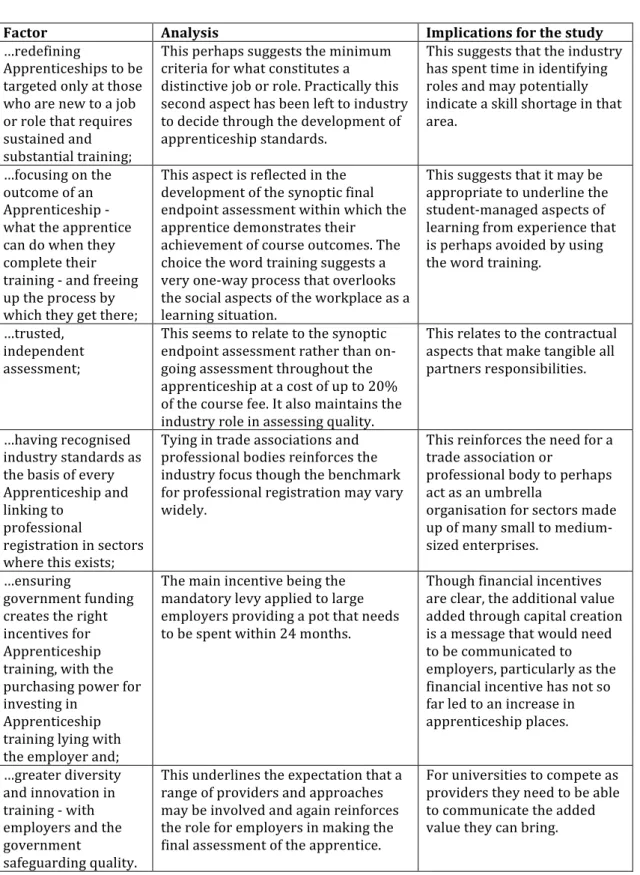
However, by the time Matthew Hancock produced the The Future of Apprenticeships in England: Implementation Plan in October 2013 these important dissemination and publicity aspects are only briefly discussed and even then, stating that “Much highly effective activity aimed at promoting Apprenticeships to employers and potential apprentices is already undertaken by organisations such as NAS, education and training providers and employer bodies. We support this but, in the context of the Apprenticeship reforms, more needs to be done, further “employers have an equally important role to play” (Hancock, 2013, p.21). The role of apprenticeships is
discussed along with details of how the new standards were to be implemented and how funding reform was to be carried out. When Richard is referred to directly, the following aspects are included: