Ana Cristina Henriques Cardoso
Collectiv
e Action and Infor
mation and Communication
Tec
hnologies: The Case of Consensus Mo
vements
Escola de Engenharia
Ana Cristina Henriques Cardoso
Collective Action and Information and
Communication Technologies: The Case of
Consensus Movements
Tese de Doutoramento
Programa Doutoral em Tecnologias e Sistemas de Informação
Trabalho efectuado sob a orientação de
Professor Doutor João Alvaro Carvalho
Professora Doutora Marie-Claude Boudreau
Ana Cristina Henriques Cardoso
Collective Action and Information and
Communication Technologies: The Case of
Consensus Movements
Atualmente, as tecnologias de informação e comunicação (TIC) são utilizadas em difer-entes facetas da vida humana. Para além da aplicação destas tecnologias em contextos relacionados com o trabalho, cada vez mais as TIC estão implicadas em interações sociais e em formas informais de organização. Por exemplo, uma considerável parte da socializa-ção ocorre em contextos electrónicos e, frequentemente, pessoas com interesses comuns coordenam ações de grupo através de diferentes plataformas electrónicas, tais como sites de redes sociais, forums de discussão em grupo, e sites de comunidades virtuais.
A existência de pessoas que se organizam informalmente para desenvolver interesses comuns ou para colaborar em atividades em prol de uma comunidade ou de um grupo não é uma coisa rara nem nova. Na verdade, isso é essencialmente ação coletiva – entendida como atividade intencional e coordenada de indivíduos com interesse na provisão de bens comuns, ou seja, bens que geram benefícios coletivos para uma comunidade ou um grupo independentemente das contribuições individuais dos seus membros. A ação coletiva é um fenómeno que tem sido investigado por várias áreas científicas, nomeadamente econo-mia, sociologia, ciência política, e ciências da comunicação. Apesar de os fundamentos teóricos deste fenómeno estarem já bem estabelecidos, as implicações do actual contexto tecnológico para a organização de ação coletiva não são ainda bem conhecidas.
A fim de estreitar esta lacuna de conhecimento, esta tese investiga o entrelaçamento da organização de ação coletiva com as TIC. O trabalho empírico consiste em estudos de caso de dois movimentos cívicos que organizaram ações coletivas de âmbito consensual, em Portugal e na Estónia, e explica de que forma a organização dessas ações foi facilitada ou dificultada pela utilização destas tecnologias. Os resultados desta tese desvendam sete dimensões de ação coletiva estreitamente entrelaçadas com a utilização das TIC, e desenredam o papel facilitador ou constrangedor destas tecnologias em cada uma dessas dimensões. Esta investigação também enfatiza a agência dos organizadores de ação coletiva e a utilização das TIC como amplificadores de capacidades e de intenções humanas. Estes resultados permitem compreender melhor o papel das TIC nos processos de mudança social que são organizados online e portanto contribuem para a literatura sobre sociedade de informação e consequências societais das TIC.
Palavras-chave: ação coletiva, tecnologias de informação e comunicação, organizar online, colaboração em massa, movimentos cívicos.
The use of information and communication technologies (ICTs) currently permeates different facets of human lives. Beyond the application of these technologies in work-related contexts, ICTs are increasingly supporting social interactions and facilitating informal ways of organizing. For example, a significant part of sociality is nowadays enjoyed through social media, and people with common interests often assemble and coordinate group action through different ICT platforms (e.g. social networking sites, community websites).
People organizing informally to further common interests or to collaborate on commu-nal goals is not something unusual or even new. In fact, that is the essence of collective action – understood as coordinated action undertaken by individuals who have a shared interest in the provision of common goods, that is, goods that yield collective benefits to all members of a community irrespective of their individual contributions. Collec-tive action is a phenomenon that has drawn scholarship from various scientific areas, namely economics, political science, sociology, and, more recently, communication stud-ies. Although the theoretical underpinnings of collective action are well established, the implications of the contemporary technological mediated context for the organizing of collective action are not well understood.
In order to narrow this knowledge gap, this thesis examines the entwinement of ICTs with collective action organizing. Through the study of two cases of civic movements that organized consensual collective action, this research explains how this kind of organizing is facilitated and hindered by the use of ICTs. The results of this thesis unveil seven dimensions of collective action closely entwined with the use of ICTs and extricate the constraining and facilitating role of ICTs within each of these dimensions. This research also underscores the agency of organizers of collective action and the instrumental role of ICTs, which worked as an amplifier of human forces and intents. These findings constitute an improved understanding of ICTs’ role in the process of organizing online for societal change and thus contribute to the literature about the information society and societal impacts of ICTs.
Keywords: collective action, information and communication technologies, organizing online, mass collaboration, civic movements.
I thank the financial support of Fundação Para a Ciência e Tecnologia through the schol-arship SFRH/BD/60838/2009. I am also thankful to AMO Portugal and to Let’s Do It, for taking interest in my work, and especially to all the interviewees who took part in this research, for sharing with me their experiences and viewpoints. Any recommendations or opinions expressed in this thesis belong of course to the author solely, and do not necessarily reflect the views of any of these organizations.
I am indebted to many people who helped me getting through this intellectual journey. This thesis would not have been possible without the input, attention, and care of great mentors. I thank Professor João Álvaro Carvalho for his thoughtful advice and trust, and I thank Professor Marie-Claude Boudreau for her stimulating guidance and continuous encouragement. I sincerely thank them for allowing me a great degree of freedom in pursuing my research interests and for accommodating the challenges of my nomadic family life. I will always cherish their concern for my personal and professional well-being, and look forward to future collaborations. I also thank Professor Rick Watson for helping me finding a direction and for his valuable suggestions.
A special thanks is due to another exceptional mentor. Professor Maria de Fátima Gonçalves had an instrumental role in my career change and has been a caring friend and continuous source of encouragement. I think that I would not have embarked on this journey if she hadn’t been there in the very beginning.
During the course of this work I was fortunate to participate in doctoral consortia, workshops, and conferences where I received constructive feedback and encouragement. I thank the faculty of MCIS 2011 Doctoral Consortium, especially Professors Detmar Straub and Redouane El Amrani, for a warm welcoming into the AIS community. I am thankful to Professor Walter Fernandez for his critical input about methodology at the Grounded Theory Methodology Workshop (ICIS 2011), and to Professor Magda Hercheui and Dr. Elena Pavan for literature suggestions at the IFIP Human Choice and Computers International Conference 2012. I am also grateful to Professors Jannis Kallinikos and Margunn Aanestad, who provided valuable comments and stimulation at the ECIS 2013 Doctoral Consortium.
Furthermore, I found myself ‘at home’ in different places while I was working on this thesis. I thank the Department of Information Systems at University of Minho for the various kind of support provided in the past years and, in particular, the administrative staff for helping me navigate all the bureaucratic matters. I am also indebted to Professor Teo Hock Hai and the Department of Information Systems at the National University of Singapore for hosting me intermittently from 2011 to 2013, and to the Department of Management Information Systems at The University of Georgia for welcoming me in the Fall of 2012 for an exchange stay.
I offer a heartfelt thanks to friends and relatives who made this journey a more pleasant one. I am eternally thankful to Maria Isabel Pereira and to Maria José Pereira for helping with family moves and transitions and, most importantly, for their love and
friendship, and Latex. I thank fellow Phd students at the Academic Writing Club for companionship and peer pressure. I am also thankful to my parents for the sacrifices they made in order for me to beat the odds of getting a higher education degree, and to my sister for listening and for understanding.
Lastly, but not less importantly, I am blessed with a very supportive husband, Fran-cisco, who I thank for constantly pushing me away from my comfort zone and for dreaming an exciting future for our family. I know I am a happier person today thanks to all we have been through since we first met, and I look forward to our future adventures – wherever that will take us.
List of Tables v
List of Figures vii
1 Introduction 1 1.1 Background . . . 2 1.2 Research Objective . . . 4 1.3 Research Approach . . . 5 1.4 Relevance . . . 6 1.5 Thesis Outline . . . 7
2 Collective Action and Information and Communication Technologies 11 2.1 Introduction . . . 12
2.2 The Nature of Collective Action . . . 16
2.3 Collective Action Phenomena . . . 19
2.4 Collective Action Theories . . . 29
2.5 Effects of ICTs on Collective Action . . . 35
2.5.1 Impacts at the Individual Level . . . 38
2.5.2 Impacts at the Organizational Level . . . 40
2.5.3 Impacts at the Societal Level . . . 42
2.5.4 ICTs and Collective Action Organizing . . . 46
2.6 Frameworks on ICTs and Collective Action . . . 48
2.6.1 Connective Action Logic . . . 49
2.6.2 Mechanisms of Internet-based Collaboration . . . 53
2.6.3 Collective Action Space . . . 57
2.7 Research Opportunities . . . 62
2.8 Summary . . . 64
3 Research Design 67 3.1 Research Questions . . . 68
3.2 Generic Approach and Rationale . . . 70
3.3 Research Sites . . . 76
3.4 Data Collection . . . 81
3.4.2 Interviews . . . 84
3.5 Data Analysis . . . 94
3.6 Summary . . . 97
4 Case Reports 99 4.1 Let’s Do It . . . 100
4.2 Project Let’s Cleanup Portugal . . . 107
4.3 ICTs in Use . . . 114
4.4 Summary . . . 117
5 Cross-case Analysis 119 5.1 Organizational Structure . . . 119
5.2 Organizing Collective Action . . . 139
5.3 Use of ICTs . . . 153 5.3.1 Seven Dimensions . . . 154 5.3.2 LDI Case . . . 172 5.3.3 PLP Case . . . 176 5.4 Summary . . . 184 6 Discussion 187 6.1 The Constitution and Structuring of Movements . . . 188
6.2 Strengths of Successful Civic Movements . . . 192
6.3 Operations and Activities of Movements . . . 198
6.4 Human Agency . . . 201
7 Conclusions 205 7.1 Lessons Learned . . . 205
7.2 Contributions . . . 207
7.3 Limitations and Future Work . . . 208
7.4 Concluding Remarks . . . 210
References 213
Appendices 235
A Concepts matrix 237
B List of selected bibliographic references 239
C Code book (literature review) 243
D Invitation sent to participants 247
E Informed consent form 249
G Interview guide 257
H Transcription protocol 261
I Example of memos 265
J Code book (selective coding) 271
K Categories with codes and frequencies 275
2.1 Working steps for literature survey. . . 13
2.2 Results of literature search . . . 14
2.3 Diversity of scholarship about collective action phenomena . . . 20
2.4 Collective action phenomena and theoretical approaches. . . 30
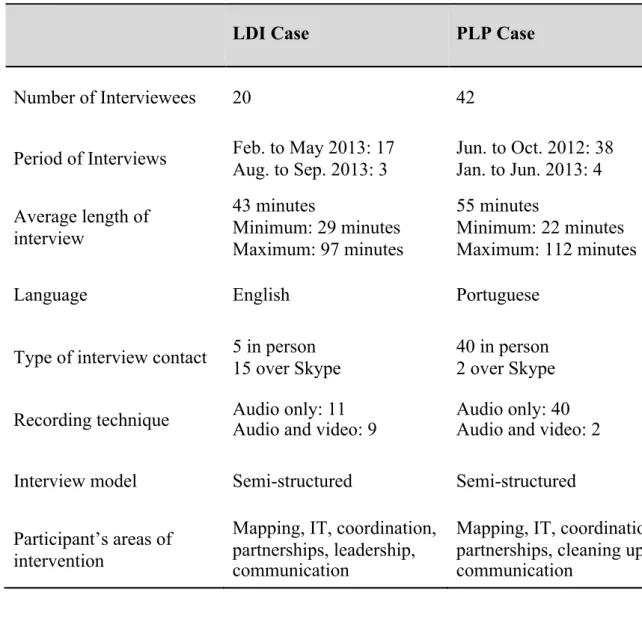
3.1 Overview of interviews dataset . . . 88
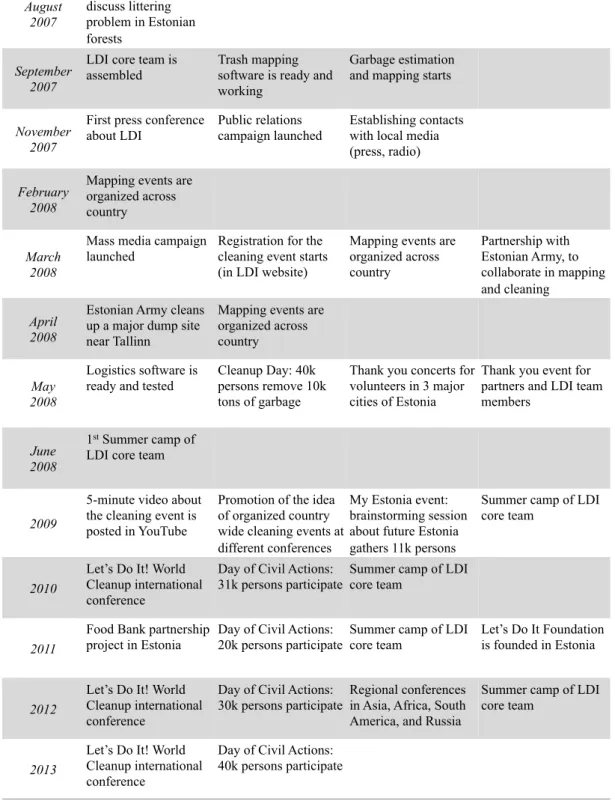
4.1 Time-ordered list of events in LDI case . . . 105
4.2 Time-ordered list of events in PLP case . . . 112
4.3 Number of interview segments about the use of ICTs . . . 115
5.1 Cross-case analysis: internal communication . . . 146
5.2 Cross-case analysis: external communication . . . 149
5.3 Illustration of codes related to communication . . . 157
5.4 Illustration of codes related to connectivity . . . 160
5.5 Illustration of codes related to coordination . . . 163
5.6 Illustration of codes related to entry and exit capability . . . 165
5.7 Illustration of codes related to individual participation (prefix hindered) . 167 5.8 Illustration of codes related to individual participation (prefix facilitated) 168 5.9 Illustration of codes related to legitimacy . . . 170
5.10 Illustration of codes related to organizing costs . . . 172
2.1 Basic types of goods. Adapted from Ostrom (2005) . . . 17
2.2 Effects of ICTs on collective action . . . 45
2.3 Basic tenets of connective action framework . . . 51
2.4 Mechanisms of internet-based collective action . . . 55
2.5 Collective action space . . . 60
3.1 Research approach . . . 71
5.1 Organizational structure of Teeme Ära . . . 121
5.2 Organizational structure of LDI global movement . . . 126
5.3 Organizational structure of Project Let’s Cleanup Portugal . . . 129
5.4 Organizational structure of AMO Portugal . . . 137
5.5 Cross case analysis: sequence of activities in organized cleaning events . . 141
A.1 Concepts matrix . . . 238 D.1 Newsletter emailed by AMO Portugal to PLP volunteers about the study 248
Acronyms
CAN Connective Action Networks CPR Common Pool Resources
CMC Computer Mediated Communication
ICT(s) Information and Communication Technology(ies) LDI Let’s Do It
PLP Project Let’s Cleanup Portugal QDA Qualitative Data Analysis SaaS Software as a Service
Introduction
This thesis is about how people organize informally, with the support of information and communication technologies (ICTs), to collaborate on civic actions aiming at collective goals. Remarkably, some of these civic actions attain a high degree of legitimacy and support from various quadrants of society, and achieve results with various order effects. Nowadays, when we look closely at these informal groups, we see that the functioning and sometimes even the constitution of these informal collectives is intertwined with the appropriation and use of various ICTs. To date, research has not however thoroughly explain the role of ICTs in these civic initiatives. Hence, the aim of this thesis is to examine how the use of ICTs facilitates (or not) the informal organizing of these civic actions.
This introductory chapter consists of five sections, organized as follows. Section 1.1 establishes the context for this study. Next, section 1.2 states the aim of the research. This is followed by an explanation of the research approach (section 1.3), and a discussion of potential contributions in section 1.4. The last section provides an overview of the thesis structure.
1.1
Background
Ever since the dawn of humanity, people have banded together to collaborate in the realization of collective goals that cannot be achieved individually. Often, people associate with others to cooperate in the production of private goods or services that are tradeable and can be sold for a profit – this is what business associates do. Yet, people also work together in the production of common goods that, by their very own nature, cannot be privately owned and are not meant for trade. The acting together for the provision of these common goods is, in essence, what collective action is about. Examples include interest groups seeking benefits, voluntary associations administering common resources, and social movements’ striving for civil rights (Oberschall, 2001).
People collaborating on collective goals usually are banded in formal organizations, either for profit or non-profit. Yet, people also associate informally in structures such as hobby groups, neighborhood clubs, and grassroots movements of citizens. These informal groups of people nowadays leverage information and communication technologies (ICTs) for coordinating and organizing their group activities and supporting their functioning. Examples are interest groups organized through social media platforms like MeetUp, Ning, or Facebook; grassroots social movements constituted in internet websites and social media, such as Los Indignados, or The Occupy; and also communities of programmers revolving around open source software projects hosted in group-owned repositories or in platforms such as GitHub or SourceFourge.
The research documented in this thesis focuses on the entwinement of ICTs with collective action, particularly on the role of ICTs in the organizing of this kind of action. Since a broad array of phenomena can be categorized under the umbrella of collective action, additional clarifications are necessary to narrow the context of this research. As such, this research looks at the organizing of collective action by consensus movements.
Consensus movements, as portrayed in this research, are grassroots civic movements1 that can be defined as collectives of ordinary people that attempt to promote change in society, acting with some degree of organization and temporal continuity, and pursuing their collective objectives through repertoires of action other than protesting or contestation (Snow et al., 2004; Turner and Killian, 1964).
TheArab Spring,Los Indignados, andThe Occupy are civic movements that came into prominence recently. However, these movements engage in conflict-oriented collective action and adopt repertoires of action that are contentious, such as protests, boycotts, or demonstrations. Conversely, consensus movements’ collective action mobilizes partici-pants for cooperative solutions that achieve a high degree of popular and institutional support and that “do not imply redistribution of power nor alterations in social structure, but focus instead in service delivery, self-help, personal and community empowerment” (Della Porta and Diani, 2006, p.23). Examples are the anti-poverty movement (of which
Band Aid and Live Aid concerts have been part), and the global movement for a cleaner planet “Let’s Do It! World”, which is studied in this thesis.
Another useful clarification is the concept information and communication technolo-gies. In general terms, this concept refers to the combination of computation and telecommunications for the purposes of storage, retrieval, processing and dissemination of information. The use of this term has burgeoned since the massification of internet use, and nowadays is perhaps more prominent than the term ‘information technology’ itself. Actually, information technology is often seen as an imprecise term that encompasses both the activities involved in the design and in the use of devices that gather, transmit, or process digital information, including digital and cable television, flash memory de-vices, digital cameras and photocopiers, and the application of computer based systems to the storage, retrieval, processing, and dissemination of data (Keary, 2003, p. 868-869).
1Grassroots is a term used to refer to “ordinary people as the main body of an organization’s membership” (Grassroots, 2010)
1.2
Research Objective
Collective action encompasses diverse empirical phenomena and has drawn interest from different scientific areas. For example, collective action phenomena such as the provi-sion of public goods (e.g. lighthouses, street signage) and the management of common resources (e.g. river basins) have been studied by economists and political scientists. Likewise, the activities of interest groups, unions, and other forms of organized group action have been investigated by sociologists and political scientists. To a great extent, research has established that formal organizations are necessary for collective action suc-cess because organizations can empower individuals as collectivities, act on their behalf, and organize their contributions (Olson, 1965).
Yet, the centrality of formal organizations for collective action success has recently been questioned (Bimber et al., 2012). Many contemporary instances of collective action lack the formal organizational structure deemed necessary for coordinated action, and emerge instead as the result of the enhanced agency of individual entrepreneurs or small groups of organizers who leverage different ICTs (both ready-to-use and custom developed software) to organize individual participation and coordinate shared actions (Bennett and Segerberg, 2012). Moreover, traditional organizations have also embraced these technologies and adapted their repertoires of action to create additional opportunities and contexts to engage members and specially non-members in their collective actions. As a result, collective action nowadays takes place in a context where diverse organizational structures (e.g. formal organizations, individual entrepreneurs, informal groups) co-exist and sometimes even collaborate. Overall, this transformation means that, currently, the “fundamental solution to the challenges of collective action is not organization, but
organizing” (emphasis added), as Bimber et al. (2012, p.5) argue.
However, there is a limited understanding of the role of ICTs in collective action organizing. Particularly, we know little about how grassroots civic movements use ICTs
to support the realization of their collective goals. Since these informal groupings are potential prominent players in civil society, it is important that we understand how they function and evolve. Hence, the aim of this research is to explain how collective action organizing is facilitated or hindered by the use of ICTs. In particular, the focus of this thesis is the organizing of consensual collective action by grassroots civic movements.
Thus, this thesis inquires about the experiences of people who organize and participate in consensual collective action in the current technological context. I am primarily interested in ICTs as part of organizers’ toolkit and as part of the environment in which participants engage in collective action. This means that this research will not focus on how specific ICTs (e.g. social networking sites) are used for collective action or on how organizers make decisions as to use certain ICTs in lieu of others. Instead, my interest lies in ascertaining the ways in which the use of ICTs interferes, positively or negatively, with the organizing of collective action.
1.3
Research Approach
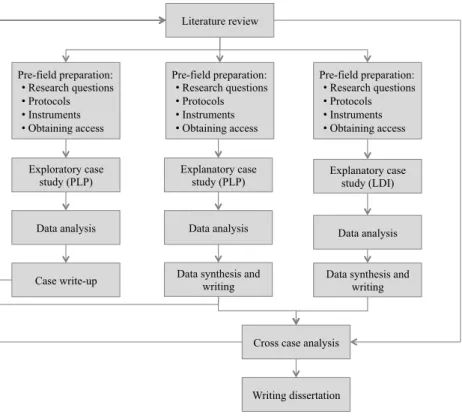
The overarching research approach selected to address the aforementioned objective is multiple interpretive in-depth case study (Klein and Myers, 1999; Walsham, 1995). The case study methodology is well suited for examining phenomena that can only be observed in naturalistic settings, as the one this research addresses. Moreover, interpretive research is not set out to test theories but aims at building an understanding of a phenomenon in its social context (Walsham, 2006), which is in line with the aim of this research.
The cases examined in this thesis are the civic movements Let’s Do It! (LDI), from Estonia, and Project Let’s Cleanup Portugal (PLP). These civic movements organized collective action events that mobilized thousands of people in their respective countries to tackle environmental and social problems insufficiently addressed by the existing policies and governing structures. The collective action event that draw more contributions in
both countries was the first-organized cleaning event, a national cleaning day in which people came together to remove tons of litter illegally dumped in forests (more details in chapter 4). The organizing of this event is thoroughly scrutinized in this thesis with respect to ICTs in use.
Both LDI and PLP combine characteristics of social movements and social entrepreneur-ship. On the one hand, these movements – just like social entrepreneurs – implement solutions to neglected societal problems which bring about positive value spillovers (San-tos, 2012). On the other hand, PLP and LDI use tactics that are typically found in social movements repertoires (e.g. mass mobilization, campaigns). However, unlike conflict-oriented movements, PLP and LDI mobilize people for an experience in the actual doing together of whatever people would like to see changed in their community. Organizers prefer this empowered approach to the typical oppositional stance of social movements that usually involves blaming and confronting the establishment in an attempt to change the prevailing policies (McCarthy and Wolfson, 1992).
In my view, this amalgamation of characteristics results in a quite unique kind of consensus movement wherein power struggles are set aside, in favor of a more constructive approach, which in fact involves cooperating with other stakeholders of the collective problem being addressed, including the governing elites. As such, PLP and LDI do not fit neatly in Lofland’s depiction of consensus movements as “timid politics”, “derailed dissent”, or “disguised rebellions of timid rebels” (Lofland, 1993, p.52) but, I argue, represent instead a novel variation of this phenomenon and therefore their study has revelatory potential.
1.4
Relevance
In order to thoroughly examine the role of ICTs in the organizing of collective action by consensus movements, this research looks at different perspectives: the emergence
of collective action groups; the underlying organizational structures; and the way these movements operate. The main result of this study is the identification of the dimensions of collective action organizing that entwine with the use of ICTs and the conceptualization of the different ways ICTs facilitated or hindered the organizing of collective action. This thesis also provides a nuanced view of ICTs as organizing agents of collective action, and a survey of the characteristics of organizational structures best poised to succeed in mass-mobilization for collective action.
These results are relevant to collective action scholarship in general, and to social movements research in particular. Because this research examines two cases of consensus movements, a phenomenon that has hitherto received little attention, the results of these thesis contribute to this literature niche. Nonetheless, the understanding of the mechanisms and dynamics of consensual collective action supported by ICTs is also useful knowledge for the study of other types of collective action, including conflictual group action.
In terms of practical relevance, the results of this thesis are useful for organizers of collective action, especially those that do not have a technological background (e.g. managers of civic organizations). The understanding of the ways the use of ICTs may enhance or constrain their agency can certainly contribute to the development of policies and practices that better work for them instead of working against them. In addition, the results of this thesis may be relevant for the design of systems that support collective action (e.g. Shaw et al. (2014); Zhang et al. (2014)) because this research improves the understanding of how ICTs are used and appropriated in real collective action situations.
1.5
Thesis Outline
This thesis consists of seven chapters organized as follows. Chapter 1 (the current chapter) introduces the reader to the research discussed in this thesis. This overview
consists of the context of the study, the motivation for the research, the strategy of inquiry adopted, and the potential impact of the research. This first chapter terminates with a synopsis of the thesis structure.
Chapter 2 provides the theoretical underpinnings of the current study. In the first part, I conceptualize the phenomenon of collective action and present different collective action theories. This is followed by a discussion of the impacts of use of ICTs on col-lective action organizing and its implications at individual, organizational, and societal levels of analysis. The subsequent section explores three different theoretical perspectives about collective action in the ICT mediated context: Bennett and Segerberg’s logic of connective action (2013) is about different patterns of participation and organization in contemporary contentious politics (a form of collective action); Lev-On and Hardin’s
mechanisms of internet-based collaboration (2007) concerns with identifying the compo-nents that make internet-based collective action viable; and Bimber et al.’s collective action space (2012) conceptualizes the experience of collective action within formal or-ganizations. In the final part of chapter 2, I identify research gaps in the literature and outline the research questions this thesis aims to answer.
Chapter 3 deals with the research design. The first part recalls the research ques-tions and explains the research approach selected to addressed them. Next, section 3.3 introduces the research sites, and sections 3.4 and 3.5 explain the methods and techniques used for data collection and data analysis, respectively. The last portion of the chapter provides a summary of the key aspects discussed in it.
Chapter 4provides a detailed description of the empirical cases studied in this thesis. This chapter includes a narrative of case Let’s Do It (section 4.1) and a narrative of case Project Let’s Cleanup Portugal (section 4.2), in which I provide a thorough account of the cases’ facts for the time period analyzed (2008-2013). Section 4.3 complements the previous sections with an explanation of the technological systems used in both cases.
The last section of this chapter is a summary of chapter’s main aspects.
The analysis of case data and presentation of results is the matter ofchapter 5. First, I examine how the organizational structure of Let’s Do It and Project Let’s Cleanup Portugal evolved over time. The following section compares the communication practices of both cases, and section 5.3 scrutinizes their use of ICTs in collective action organizing. A summary of chapter’s key points is provided in section 5.4.
Following the presentation of results, chapter 6provides a critical discussion of case findings. Next, chapter 7explains the implications of findings for theory and practice, outlines the limitations of this research, and proposes a number of possible avenues for future research.
Collective Action and Information
and Communication Technologies
The purpose of this chapter is to review the literature relevant to the characterization of the phenomenon under study, which is the entwinement of information and commu-nication technologies (ICTs) with collective action. The chapter is organized as follows: section 2.1 outlines the scope of the literature survey and the working steps used to produce the literature synthesis herewith; section 2.2 explains what is collective action, and section 2.3 summarizes the contributions of different scientific areas to augmenting the comprehension of collective action phenomena. The subsequent section discusses collective action theories, and is followed by section 2.5 about the impacts of ICTs on collective action at the individual, organizational, and societal levels of analysis, and also the implications for collective action organizing. Next, section 2.6 examines three different theoretical frameworks on collective action and ICTs. The chapter concludes with the identification of relevant research opportunities in section 2.7, and a summary of key points in section 2.8.
2.1
Introduction
The literature on collective action is extensive because collective action phenomena have been the object of interest of several different scientific areas, namely economic sciences, sociology, political sciences and, more recently, communication. Although in the following chapters I underscore the central issues in the literature, it is out of the scope of a thesis chapter to review completely the scholarship pertaining to all of these areas of study. Hence, the focus of this review is the topic studied in this thesis, which is conceptualized as the entwinement of information and communication technologies with collective action.
This survey of the literature followed, with some adaptations, the working steps outlined in Vom Brocke et al. (2009) framework and Wolfswinkel et al. (2011) five-stage approach, as explained next and depicted in table 2.1. In this table, the steps actually adopted from each framework are highlighted in bold font type.
The first step was the formulation of the topic under review. In this step, my goal was to define clearly the topic of this review and exclude related phenomena. For that reason, this step involved extensive reading and summarizing of literature about related topics, namely virtual organizations, online communities and, in a incipient phase of this research, also persuasive technology and green information systems. Although Vom Brocke et al. (2009, p. 7) suggest that prior to phase 2 reviewers ought to define the “appropriate
scope and flavour of the review”, I skipped this step because the scope of this review is already bounded by the fact that the resulting synthesis of literature is meant for a chapter of a doctoral thesis.
The second step consisted of the literature search, and corresponds to the collapsing of stages 1 and 2 of Wolfswinkel et al. (2011) approach, which are roughly equivalent to phase 3 of Vom Brocke et al. (2009) framework. In this step, I made decisions about appropriate sources (academic journals and books), keywords and search terms,
Vom Brocke et al (2009) Wolfswinkel et al (2011) Working steps actually used
1. Establishing a review scope
1. Identification of relevance criteria, fields of research, appropriate sources, and search terms
1. Conceptualization of the topic under investigation
2. Conceptualization of the topic under
investigation
2. Literature search 2. Literature search
3. Literature search 3. Refinement of literature sample 3. Refinement of literature sample
4. Examination and
synthesis of literature 4. Coding of literature 4. Coding of literature 5. Definition of a research
agenda 5. Representation and structuring of content 5. Representation and structuring of content !
Table 2.1: Working steps for literature survey.
and criteria for including or excluding a source. For the search of citable documents, I considered the following search terms and databases:
1. Search terms: collective action AND (information technolog* OR information system* OR information and communication technolog*);
2. Database selection: EBSCOHost, supplemented with Google Scholar;
As to the criteria for including or excluding a document, given that the topic of the review spans different areas of study, I accepted journal articles originating in any area insofar as the topic of the article (assessed by reading the title and abstract) was relevant to the review. Moreover, the appropriate time frame considered was articles published within the last two decades, but this criterion was relaxed for backward citation tracking. Table 2.2 shows the number of hits obtained in EBSCO database for the different search terms
I used and the number of articles I included for further examination in the following step.
Search terms Hits Incl.
collective action AND information system* IN ALL FIELDS 76 18
collective action IN ABSTRACT AND information system* IN ALL
TEXT 71 10
collective action AND information technolog* IN ALL FIELDS 77 17
collective action AND information and communication technolog* IN
ALL FIELDS 40 4
Total 264 49
!
Table 2.2: Results of literature search
In the third step, I selected the relevant sources to be included in this literature review. I adapted this step in the following way: instead of filling a table with the reasons for selecting each paper as the authors suggest, I found it more useful to fill in a basic concepts matrix (see appendix A) similarly to what Webster and Watson (2002) recommend. Moreover, I also identified additional articles through backward citation tracking. From the resulting sample of 54 articles (49 obtained from direct search, plus 6 from citation tracking), 11 were discarded in this step because either the paper did not discuss any ICTs, or the research outcomes were not relevant for my topic. Appendix B lists the bibliographic references of the remainder 43 articles included in the final sample.
In step 4, articles were more closely examined in terms of definition of terms, research outcomes, gaps of investigation, and calls for research. As suggested by Wolfswinkel et al. (2011), documents were coded using qualitative data analysis software, and codes were
later sorted by similarity in order to identify focal themes to be used as a conceptual schema and organize the writing of the literature review. This was a challenge because of articles originating in different disciplines and thus lacking transversal anchor points.
Nevertheless, I found that the consideration of levels of analysis, as suggested by Webster and Watson (2002), was helpful for the conceptual framing of this literature synthesis and hence the individual, organizational, and societal dimensions of the use of ICTs on collective action were examined hereto. The coding book that resulted from the examination of documents is shown in appendix C.
The last step consisted of presenting findings in the form of a review document. Arguably, the advantage of Wolfswinkel et al. (2011) approach is that when the analytical stage is completed, writing takes less effort because much of the thinking about organizing the content is done when coding and sorting codes. However, after I started writing, I had to revisit the coding because I had difficulties in finding a logical thread to structure the content. Later, I found that the problem was that I had not integrated the insights I had from reading several books and from my previous knowledge about collective action with the sample of articles I had systematically examined. Therefore, in the last step I did use the outline of the code book (appendix C) to help me section the review chapter but, to a great extent, I devised it based on my own mental schema of the knowledge about the topic.
Even though following a systematic approach to preparing a literature review was fruitful, there was also some improvisation and chance in the process that I cannot accurately map and integrate into the working steps used, especially in the last step. Looking at the whole process retrospectively, I can emphasize the following aspects: firstly, the coding of literature (step 4) was specially effective in getting a structured overview of the topic, and personally I found it superior to a concepts matrix; secondly, writing is a creative endeavor and consequently there is a high variability in the final result; and lastly, the process of surveying the literature hinges on researchers’ tacit knowledge and therefore is difficult to document exhaustively.
and Vom Brocke et al. (2009) advocate introduces more structure in the process of surveying literature, the writing of a review article is well beyond following a list of steps. Ultimately, the main challenge is how to create a well-crafted document that is interesting to read and goes beyond summarizing the literature to providing new insights about a research topic. Thus, I agree with Boell and Cecez-Kecmanovic (2015) in that there are advantages of systematic reviews but there should be also space for a more critical engagement with the literature in order to produce diverse and original perspectives about a certain topic.
2.2
The Nature of Collective Action
Collective action is concerned with the situation of groups pursuing a collective interest outside the marketplace (Olson, 1965) and is generally understood as intentional, coor-dinated actions undertaken by individuals or groups who have a shared interest in the provision of a collective good (Marwell and Oliver, 1993). A collective good is one which is characterized by difficult or unfeasible excludability – meaning that it is difficult to prevent those who have not contributed to its provision from reaping its benefits, as for example a clean city park (Hardin, 1982).
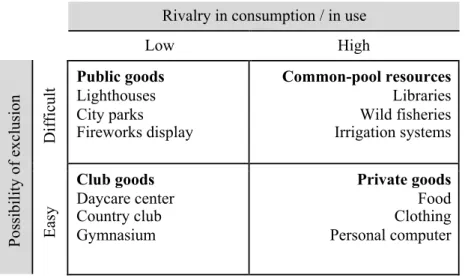
Different types of goods and services are considered in the literature. Figure 2.1 depicts a taxonomy with four basic types of goods, depending on their different degrees of excludability and subtractability (or rivalry in consumption / in use). Collective goods, such as public goods and common-pool resources, are characterized by difficult excludability (top two cells of the matrix). However, some authors, as for example Olson (1965) and Della Porta and Diani (2006), consider that club goods are also collective goods. The reason for that is that a club good is non-excludable for club members and, in such circumstances, it is identical to a public good.
Rivalry in consumption / in use Low High P os si bi li ty of e xc lus ion D if fi cul
t Public goods Lighthouses City parks Fireworks display Common-pool resources Libraries Wild fisheries Irrigation systems Easy Club goods Daycare center Country club Gymnasium Private goods Food Clothing Personal computer !
Figure 2.1: Basic types of goods. Adapted from Ostrom (2005)
of such goods does not subtract the enjoyment of others: that is the case of public goods; whereas others, known as common-pool resources, are both rivalrous and difficult to exclude others from fruition (Ostrom, 2005). In contrast, private goods and club goods do not have problems of excludability and can be provided by individual action (Ostrom, 2005). In fact “only where common purposes or collective goods are concerned
is organization or group action ever indispensable” (Olson, 1965, p.16).
Because exclusion is difficult, collective action is problematic. Indeed, a group inter-ested in providing collective goods faces a potential collective action problem. A collective action problem, or social dilemma, is a situation where a conflict exists between individ-ual rationality and group optimal outcomes (Poteete et al., 2010; Kollock, 1998). In other words, a conflict arises because the independent choices made by individuals are not in the best interest of the group. This creates the possibility for free-riding, (also known as social loafing in sociology and social psychology), which means that when interests are shared, rational individuals tend to prefer to let others bear the cost of providing the collective goods that will benefit everyone (Olson, 1965). Free riders are then those people that do not contribute to the collective action but enjoy its benefits as everyone
else.
Collective action problems are ubiquitous in social life. For example, collective goods1
such as city parks or street lighting are usually provided by the public sector because there are not enough incentives for individuals or private organizations to produce them since the benefits from its provision spillover to others that have not contributed to it. Another example is that of an industry with a vertical employment contract; in such case, the employment conditions and benefits negotiated by the unions will affect all the workers of that industry, even those that are not unionized.
However, there is no single type of collective action problem that can be analyzed by a set of one-size-fits-all theoretical propositions, as Oliver and Marwell (2001, p.308) contend (emphasis in original): “It is clear that most social scientists have finally moved away from trying to develop the theory of collective action to recognizing that there are many different issues and many different kinds of collective action and that one can shade into another depending upon the structural characteristics of the situation.”
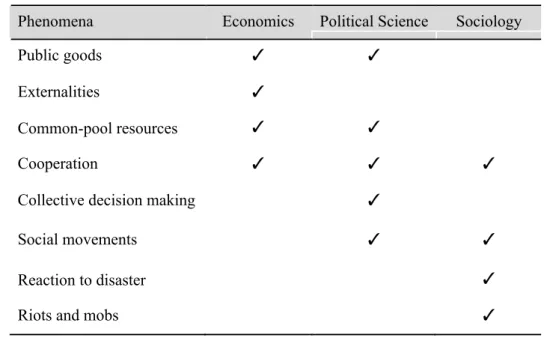
Perhaps this explains the variety of scholarship that has addressed this phenomenon. For example, research in economics has addressed collective action phenomena such as the provision of public goods, externalities, and the management of common pool resources. Research in political science has also been concerned with common pool resources, with how collective decisions are made, and the emergence of social movements. Research in sociology has looked into social movements, riots and mobs, and collective reaction to disaster situations. The phenomenon of cooperation, as broad as it is, has also interested researchers from these three scientific areas, and also from computer science, biology, mathematics, psychology, and physics.
In addition, collective action theory has been found to be suitable to explain certain phenomena in information systems and management areas. Examples include the
devel-1I use the term collective goodsin a broad sense to include both tangible and intangible goods. The latter are an abstract class of “goods” that are usually perceived as common benefits or common welfare.
opment and diffusion of technical standards (Markus et al., 2006; Zhao et al., 2011), the adoption of interorganizational systems (Steinfield et al., 2005; Monge et al., 1998), the diffusion of interactive media (Markus, 1987), the contribution to electronic networks of practice (Wasko and Faraj, 2005; Wasko and Teigland, 2004; Wasko et al., 2004), the model of innovation of open source software software (Von Hippel and Von Krogh, 2003), and models of institutional change (Hargrave and Van de Ven, 2006).
Collective action is about individuals cooperating in the pursuit of their joint wel-fare (Ostrom, 1990). The possibility of that joint welwel-fare is usually not enough to get individuals to act collectively, and therefore collective action is problematic. In order to understand what makes collective action happen, the next section examines different collective action phenomena and theories of collective action.
2.3
Collective Action Phenomena
Diverse empirical phenomena, abstracted as collective action, have drawn interest from different scientific areas, as table 2.3 shows. This section describes the main collective action phenomena studied in economics, political science, and sociology, and discusses some of the analytic approaches that have been advanced in order to improve the under-standing of collective action.
Public goods
Public goods are a special type of goods that have the properties of non-excludability and non-rivalry of consumption, which means that it is difficult or unfeasible to exclude individuals from its consumption and that consumption does not reduce availability for others. A classic example of public good is street signage: no individual can be excluded from its benefits and, when one enjoys it, others can still fully enjoy it as well. Because of these characteristics, the production of public goods is problematic.
Phenomena Economics Political Science Sociology
Public goods ✓ ✓
Externalities ✓
Common-pool resources ✓ ✓
Cooperation ✓ ✓ ✓
Collective decision making ✓
Social movements ✓ ✓
Reaction to disaster ✓
Riots and mobs ✓
!
Table 2.3: Diversity of scholarship about collective action phenomena
Public goods theory basically states that public goods will be under provisioned by the market and hence they require the state to intervene in order to efficiently allocate these goods and overcome this market failure (Samuelson, 1954, 1967). State intervention could be replaced with collective action; however, the public sector is arguably more efficient in organizing the necessary resources for the provision of these goods and acting in representation of collectives, given that rational individuals tend to free ride.
Externalities
Externalities are spillover effects, either positive or negative, experienced by someone not directly involved in what has caused it to happen (Pigou, 1932). Positive externalities are benefits accrued to someone who did not participated in what caused it; for example, vaccination provides benefits also to the unvaccinated because it reduces their possibility of getting infected with that disease. Negative externalities are costs that affect a party who did not contribute to the decision that caused that cost, as for example the costs that air pollution caused by industrial activity inflict to society.
The Coase theorem (Coase, 1960) posits that it is possible to find an efficient solution to an externality problem without state intervention, if the transaction costs2 are suffi-ciently low. For example, those affected by air pollution borne to industrial activity could collectively bargain with polluter the obligation to repair or indemnify the environmental damage caused. However, in many cases this is not practical because it is very difficult to assess the real value of damage caused and the costs of organizing collectively are often high.
Common pool resources
Common pool resources (CPR) are quasi public goods in that they share the property of non-excludability but they are rivalrous in consumption. In other words, it is not possible to exclude individuals from the consumption of a CPR but its consumption reduces the availability of the resource for others in the group. Examples include fisheries, groundwater basins, grazing lands, and mainframe computers (Ostrom, 1990). At a general level, the governance of CPR is a problem of organizing, that is, how to move from independent action to coordinating strategies that will maximize the common benefits of the group.
Common pool resources theory identifies the conditions that enable individuals to overcome self-interest and engage in collective action to successfully govern these re-sources (Poteete et al., 2010; Ostrom, 1990). The theory suggests that institutions, at multiple levels, will, under certain circumstances, find policies that increase the levels of cooperation and compliance to successfully govern CPR. Particularly, collective action will occur in institutional settings where the following structural features are found: exis-tence of reliable, highly frequent communication among participants; known reputation of participants; existence of entry and exit capability; high marginal return and long
2Transaction costs are, in general terms, the costs of making a transaction and typically include: the cost of surveying the market, the cost of bargaining with vendor, and the cost of enforcing the terms of the contract with vendor.
time horizon for those who participate; and clearly defined sanction mechanisms for non compliance.
Cooperation
Cooperation occurs when two or more agents (individuals, groups, organizations, coun-tries) act in a way that is beneficial for their mutual welfare (Diekmann and Lindenberg, 2001). Despite rational choice theory depicting human behavior as narrowly rational and self-interested, cooperation happens everywhere. For example, numerous studies conducted across different cultures found an interesting pattern: only 30 per cent of individuals consistently behave selfishly, whereas at least 50 per cent consistently behave cooperatively (Benkler, 2011b). Moreover, individuals tend to cooperate conditionally, in a way that has been depicted as tit-for-tat: an individual cooperates as long as others also cooperate, and if others defect he will also defect (Axelrod, 2006).
Game theory, in general terms, is the study of how rational decision makers interact in situations of cooperation and conflict (Von Neumann and Morgenstern, 1944). The theory translates collective action dilemmas into formal mathematical models (depicted as games) and provides the analytical tools to solve these games. A very popular game named Prisoner’s Dilemma has been used to analyze cooperation and also the contribution of individuals to public goods, and the management of common resources such as fisheries and irrigation systems (Poteete et al., 2010).
Benkler (2011a) identified several elements of successful cooperative systems, and named them ‘design levers’. Insofar as some of these levers can be wired and switched, either naturally or artificially, in the situations requiring cooperation, it is expectable that cooperation will occur. Examples of these levers include:
• Framing of the situation: people are more likely to act selfishly in a business like situation than in a situation that is framed as prosocial or service to the community;
• Visibility of behavior: people behave more cooperatively when they know that their behavior will be visible to others;
• Communication: in many cases the ability to communicate and coordinate with others is enough to get people to act together for a common goal;
• Social capital: due to peer pressure, we tend to cooperate more when we are around others that also cooperate;
• Solidarity with group: humans have the capacity to feel solidarity with others and to feel part of a community, and hence many are willing to sacrifice individual well being for the collective benefit of community;
• Reciprocity and reputation: direct and indirect reciprocity can sustain cooperation, especially when coupled with reputation mechanisms;
• Providing information: information that humanizes the situation requiring cooper-ation will nudge people into coopercooper-ation;
• Modularity of contribution: breaking the work needed to achieve a collective goal into small independent modules encourages cooperation because contributions will be less burdensome for individuals.
Collective decision making
Collective decision making, or public choice, relates to the behavior of political agents and aims at understanding how these agents make decisions that affect them collectively (Hardin, 1982). Collective decisions are not made by the voters themselves, but by the politicians elected to represent them, and that is problematic because decisions often do not achieve an efficient collective outcome. On the one hand, legislators who seek reelection have strong incentives to support programs that provide benefits to their constituency, irrespective of the impact of such programs at the national level. On the
other hand, small, homogeneous groups tend to be more effective suppliers of political pressure than larger groups, who have more difficulty in organizing for collective action. Consequently, representative democracy often leads to the “tyranny of minority interests” at the expense of collective welfare (Mueller, 2003). This public choice theory reasoning explains, for example, why in some industries a small group of entrepreneurs are able to obtain government subsidies at the expense of the larger group of consumers.
Another example comes from the behavior of the electorate itself. Voting can be seen as a collective action problem, when considering the angle of the electorate that supports a certain candidate. The benefits of voting are collective but the costs of doing it are individual and the marginal impact of voting is negligible. Yet, many individuals choose to vote and bear the individual costs of doing it, rather than free-riding (abstaining). Public choice reasoning actually suggests low voter participation because it assumes that political agents are rational. In reality, most election’s turnout are not that low and in this case it is collective action that needs to be explained (rather than collective inaction). Voting behavior is explained by normative motivations like valuing doing the right thing which, in certain cultures, affect pro-social behaviors and cooperation (Hardin, 1982).
Social movements
Social movements are a non-institutional form of collective action with some degree of organization and temporal continuity that aims at producing change (Snow et al., 2004). Movements are different from campaigns: whereas movements are sets of interrelated ac-tions oriented toward social change, collective campaigns are sets of smaller, less complex actions that are oriented towards more specific social goals (Oliver, 1989). Social actors engaged in movements’ collective action “are involved in conflictual relations with clearly identified opponents; are linked by dense informal networks; and share a distinct collec-tive identity”, (Della Porta and Diani, 2006, p. 20). Examples of movements in modern times include the labor movement, feminism movement, environmental movement, peace
movements, ethnic and nationalist movements, and religious movements.
This definition of social movements pertains to the most well-studied type of citizen’s movements: the conflict movement. However, citizen movements’ collective action does not always have a conflictual nature. Not seldom, citizens mobilize on solidarity issues, as for example human rights, pro-peace, and hunger-aid movements. In these cases the movement’s action finds no organized opposition in the attempt to bring change to the social structures and existing policies and hence is called consensus movement (Della Porta and Diani, 2006). Consensus movements are social mobilizations that enjoy broad attitudinal support, both institutional and from population, and encounter little or no organized opposition (McCarthy and Wolfson, 1992; Schwartz and Paul, 1992). Movement members often claim that their undertakings are nonpolitical, educational, nonpartisan, or humanitarian (Lofland, 1993). Consensus movements have certain pe-culiarities that are not found in social conflict movements’ (Schwartz and Paul, 1992; McCarthy and Wolfson, 1992) and which are emphasized next:
• Consensus movements organize themselves around the cooptation of human and material resources, that is, they mobilize civic and state infrastructural resources, rally constituents from existing networks of relations (e.g. civic associations, church groups, local clubs), and enjoy generous media coverage;
• Consensus movements attract people who favor a nonpolitical and noncontroversial approach to activism, and often do not require heavy commitment or intense association from members.
These structural characteristics create strategic rigidity and thus limit the movement’s ability to adopt new goals and tactics. Also, consensus movements have difficulties in sus-taining the membership they initially attract, and when consensus declines, cooptability also declines, especially for the infrastructure and media coverage. Hence, Schwartz and Paul (1992) argue that the virtues of consensus movements actually work against them.
Particularly, the broad support that consensus movements enjoy bring confidence in the legitimacy and future of the movement and often these movements struggle to convince ordinary people to join or to contribute as most people tend to think their contribution is not necessary or will not alter the outcome of the movement’s activities.
There is scant scholarship on consensus movements; perhaps because, unlike social conflict movements, consensus movements usually do not produce massive mobilization or bring significant societal change. Nonetheless, pundits agree that the investigation of instances of consensual collective action is beneficial for better understanding social movements and mobilization, and that social conflict movements scholarship is also relevant for consensus movements (McCarthy and Wolfson, 1992; Della Porta and Diani, 2006). Different theories have attempted to explain mobilization for collective action by social movements. The following perspectives are among the most well-known.
• Classical theories: Early scholarship on social movements was concerned with the interpretation of social conflict. In Europe, scholars drew on the Marxist theory as an explanation for social transformation, and thus argued that societal conflicts were shaped by the dynamics of class relations (Della Porta and Diani, 2006). In the United States, however, collective action was seen as crisis behavior that originated on feelings of deprivation or aggression resulting from frustrated expectations or negative comparisons between groups (Gurr, 1970; Della Porta and Diani, 2006).
• Resource mobilization theory: This theory posits that mobilization for collective action requires the acquisition of varied resources that hinge on supply and demand laws and are appropriated through social movement organizations (McCarthy and Zald, 1977). Mobilization for a collective action is thus contingent of the availability of material and non-material resources at a certain moment, and these resources also define the tactical choices for action and the social and political consequences of collective action (Della Porta and Diani, 2006).
• Political process theory: This theory posits that collective action is explained by changes in the political opportunity structure. Social movements’ collective action is opportunistic and emerges or increases in the presence of an opportunity set created by the political context. Variables such as the degree of openness of political system, degree of electoral stability, availability of influential allies, and existence of conflicts among the elites explain the rising of contentious collective action (Della Porta and Diani, 2006). Moreover, the action repertoires evolve across protest waves in response to shifting opportunity structures, in a process designated as tactical innovation. Thus, peaks of protest occur around tactical innovations introduced by newly mobilizing movements, which surprise the political regime and then diffuse easily due to its novelty and success. However, tactical innovations offer a temporary advantage to challengers because movement opponents develop counter-tactics in reaction to the innovation introduced in order to reinstate the previous order (McAdam, 1983).
• Interpretive frames: The origin of the framing perspective is the constructionist principle that the meanings of objects, events or experiences are interpretive pro-cesses. Social movement activists and participants engage in ‘framing’, that is they interpret certain conditions and events in ways that are intended to mobilize support and to demobilize opposition for a certain collective action (Snow and Ben-ford, 1988; Snow, 2004). The outcomes of the framing process are collective action frames. This kind of symbolic elaboration succeeds in motivating individuals for action, when there is frame alignment. That is, when frames connect with identity and link individual spheres with the collective experience. Moreover, the uncertain outcomes and individual costs of collective action are devalued if participants are convinced of the legitimacy and opportunity of the collective action (Della Porta and Diani, 2006).
• New social movements: The mobilization of resources seems to lose centrality in contemporary forms of mobilization (Buechler, 1995; Hannigan, 1985; Pichardo, 1997). Contemporary explanations of mobilization for collective action moved away from availability of resources and collective grief issues into more individualized and identity-based issues of contention originated in the civic sphere such as minorities’ rights, environmentalism, and anti-globalization causes (Castells, 1983; Habermas, 1981; Touraine, 1985; Melucci, 1980).
Reaction to disaster
Disasters are uncontrolled events, concentrated in time and space, that disrupt the social structure and the fulfillment of the essential functions of society (Fischer, 1998). Recent examples are earthquakes in Philippines (2012) and Haiti (2010), and the hurricane Katrina (2005). When facing a natural or human-caused disaster, individuals usually are first concerned with theirs and their significant ones’ safety, but they also experience a heightened community spirit and tend to cooperate extraordinarily. Most often, commu-nities and societies coordinate resources and quickly organize collective action in order to assist those affected by the disaster (Miller, 2000). As such, scholars have found that the communication infrastructure is a critical requirement for collective action in the aftermath of disaster situations (Comfort and Haase, 2006; Thelwall and Stuart, 2007). Given the unpredictability and high variability of contexts that exist in disaster situations, scholars agree that it is unlikely that a grand theory of disaster management will appear (Koehler, 1996). Nevertheless, chaos theory has been found to provide some empirical support to the study of emergent organizing in disaster response situations (Drabek and McEntire, 2003; Koehler, 1996). Moreover, a structural theory of emergence has also been developed, which explains how domains, tasks, resources, and capacities are combined to originate different types of emergent organizations – ranging from organized collective behavior to formal organizations (Bosworth and Kreps, 1986).
Riots and mobs
Rioting is a defiant and non-routine form of collective action that involves a group of people assembled with the goal of disrupting the social order using violent means (Useem, 1998). Breakdown theory explains the existence of riots by pointing that these events occur when “the mechanisms of social control falter or everyday routines are disrupted” and extreme violence emerges out of polarizing events or conflicts (Useem, 1998, p. 233). Mobs are also a non-routine form of collective action that consist of a crowd of people acting in a concerted manner. However, mobs do not always resort to violent behavior; they assemble for peaceful or non-violent purposes too. For example, in 2001 more than one million of Filipinos converged to a central location in Manila, all wearing black clothes, with the purpose of showing their discontentment with the halting of the impeachment trial of President Estrada, who eventually resigned as the outcome of this public demonstration. Another example is the critical mass moving events, in which cyclists, in certain cities around the world, assemble once a month and coordinate a collective ride around the city in order to gather public support for cycling-friendly cities (Rheingold, 2002).
2.4
Collective Action Theories
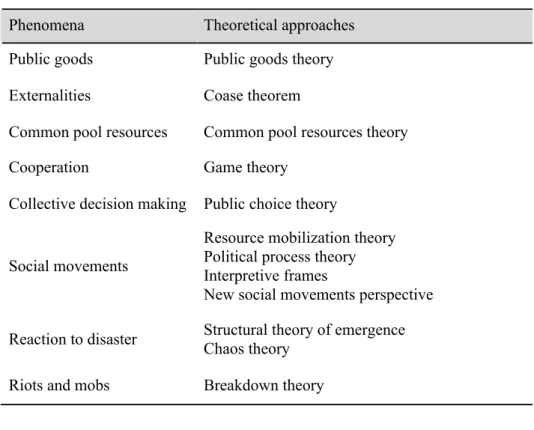
The previous section examined some of the most prominent phenomena of collective action and the analytical approaches that have been been used to make sense of them. Table 2.4 summarizes the key points discussed heretofore. This section covers theories of collective action in broad terms; that is, theories that are general enough to explain phenomena from different scientific areas. These theories are: the traditional theory of collective action, and the critical mass theory of collective action.
Phenomena Theoretical approaches
Public goods Public goods theory
Externalities Coase theorem
Common pool resources Common pool resources theory
Cooperation Game theory
Collective decision making Public choice theory
Social movements
Resource mobilization theory Political process theory Interpretive frames
New social movements perspective Reaction to disaster Structural theory of emergence Chaos theory
Riots and mobs Breakdown theory
!
Table 2.4: Collective action phenomena and theoretical approaches. Traditional theory of collective action
Collective action, as articulated by Olson (1965), is concerned with the logic underlying groups’ action, particularly the provision of collective goods by political interest groups, as for example unions, professional associations, and industry or agriculture lobbies. The theory challenged the commonly held assumption that the existence of a potential benefit (the collective good) for a group is itself sufficient to generate collective action to optimally achieve that benefit, and posited that:
• A group of people, whatever its size, has difficulties in providing a collective good efficiently because rational individuals tend to free ride;
• Group size caveat: smaller groups are privileged and presumably will succeed in collective action, yet they tend to provide a suboptimal amount of the collective good; larger groups will often fail to provide any amount at all and hence remain
latent;
• Heterogeneity of interests caveat: the group member with the highest interest in the collective good will tend to contribute a bigger share to its provision, whereas the other members will tend to free ride;
• The necessary conditions for the optimal provision of a collective good are: the shar-ing of the marginal costs and the marginal benefits in exactly the same proportion for each member.
• Selective incentives (economic and social incentives) are necessary to induce con-tributions from the members of latent groups; social incentives, such as social sanctions and social rewards, usually operate better in smaller groups because members can have face to face contact.
The theory of collective action à la Olson has been criticized in respect to its as-sumptions about the advantages of smaller groups (Oliver and Marwell, 1988; Hardin, 1982). According to Oliver and Marwell (1988, p.6), group size is not determinant of successful collective action, what matters is whether there is some “social mechanism that connects enough people who have the appropriate interests and resources to act collectively”. Hence, resources and social organization are key to collective action, not group size.
More recently, the group size assumption has again been disputed, but this time in relation to the costs of organizing collective action. Arguably, organizing collective action is more costly for a large group but, with information and communication technologies, it may not to be. Evolving information and communication technologies reduce the costs of sending information to many people and hence eliminate the communication disadvantages of large groups, which need not remain latent. Moreover, ICTs augment individual capacities for monitoring and for the imposition of social incentives that earlier