University of Warwick institutional repository: http://go.warwick.ac.uk/wrap
A Thesis Submitted for the Degree of PhD at the University of Warwick
http://go.warwick.ac.uk/wrap/51619
This thesis is made available online and is protected by original copyright. Please scroll down to view the document itself.
Density functional theory investigations
of surface structure and surface stress in
adsorbate layers on Cu, Pd and Ir surfaces
by
Matthew Kevin Bradley
Thesis
submitted to the University of Warwick
for the degree of
Doctor of Philosophy
Department of Physics
Contents
List of Figures v
List of Tables viii
Acknowledgments ix
Declarations x
Abstract xi
Abbreviations xiii
1 Introduction 1
1.1 Surface structure and the role of density functional theory . . . . 1
1.2 Thesis overview . . . 2
2 Theory of adsorbate systems and investigative methods 4 2.1 Physical phenomena at surfaces . . . 4
2.1.1 Surface free energy . . . 4
2.1.2 Surface relaxation . . . 6
2.1.3 Molecular adsorption . . . 7
2.1.4 Surface stress . . . 8
2.1.5 Surface reconstruction . . . 9
2.2 Structure determination . . . 10
3 Density functional theory: Formal theory and application 12 3.1 Fundamental theory . . . 12
3.1.1 Hohenberg-Kohn Theorem . . . 13
3.1.2 Kohn-Sham approximations . . . 14
3.1.3 Solving the Kohn-Sham equations . . . 15
3.2 Plane-wave pseudopotential method . . . 21
3.2.1 Introduction to CASTEP . . . 21
3.2.2 Basis sets . . . 22
3.2.3 Supercell approximation . . . 24
3.2.4 Pseudopotentials . . . 26
3.2.5 Brouillion zone integration . . . 27
3.3 Application to surface structure investigations . . . 29
3.3.1 Geometry optimisation . . . 29
3.3.2 Adsorption energy and surface free energy . . . 31
3.3.3 Surface stress . . . 32
3.3.4 Core level shifts . . . 34
3.3.5 Tersoff-Hamann approximation . . . 35
4 Furan adsorption and decomposition on Pd(111) 36 4.1 Introduction . . . 36
4.2 Previous work . . . 37
4.3 Computational details . . . 39
4.4 Furan adsorption structure . . . 43
4.4.1 Preferred adsorption sites . . . 43
4.4.2 Bonding nature . . . 46
4.4.3 Compatibility with PhD results . . . 46
4.4.4 Comparison to thiophene adsorption . . . 51
4.5 Decomposition products . . . 52
4.5.1 C3H3 structural search . . . 53
4.5.2 Influence of coadsorption . . . 55
4.5.3 C 1s CLS: theory and experiment . . . 56
4.5.4 Compatibility with PhD data . . . 58
4.5.5 Discussion . . . 61
4.5.6 Plausibility of other species . . . 62
4.6 Conclusions . . . 64
5 Long-range ordered adsorbate structures on Cu(110) 65 5.1 (5x2) methoxy reconstruction . . . 65
5.1.1 Introduction . . . 65
5.1.2 Previous structural work . . . 66
5.1.5 The Cu(110) (5×2)pg-methoxy structure . . . 73
5.1.5.1 Long range structural information . . . 73
5.1.5.2 DFT results . . . 75
5.1.6 Compatibility with experimental data . . . 78
5.1.6.1 STM images . . . 78
5.1.6.2 Further PhD and XPD analysis . . . 82
5.1.7 Discussion . . . 82
5.2 Cytosine adsorption structure . . . 83
5.2.1 Introduction . . . 83
5.2.2 Previous work . . . 85
5.2.3 Computational details . . . 87
5.2.4 Isolated cytosine . . . 87
5.2.5 Intermolecular interactions . . . 90
5.2.6 Long-Range ordering . . . 91
5.2.6.1 Symmetry considerations . . . 92
5.2.6.2 (6×6) cytosine structure . . . 93
5.3 Conclusions . . . 96
6 Surface stress changes in the Ir(001)-H system 98 6.1 Introduction . . . 98
6.2 Computational details . . . 100
6.3 Results . . . 101
6.3.1 Clean surface reconstructions . . . 101
6.3.2 H-induced reconstruction . . . 105
6.4 Conclusions . . . 109
7 Methanethiolate adsorption on Cu(100) and Cu(111) 110 7.1 Introduction . . . 110
7.2 Computational details . . . 113
7.3 Adsorption on Cu(100) . . . 114
7.3.1 Previous work . . . 114
7.3.2 (2×2) models . . . 115
7.3.3 c(6×2) phase . . . 118
7.3.3.1 Buckled c(6×2) model . . . 118
7.3.3.2 Missing row model . . . 119
7.3.3.3 STM images . . . 120
7.4 Adsorption structure on Cu(111) . . . 125
7.4.1 Previous work . . . 125
7.4.2 Adsorption on clean Cu(111) . . . 126
7.4.3 Overlayer models . . . 127
7.4.3.1 Structural optimisations . . . 128
7.4.3.2 STM images . . . 131
7.4.3.3 MEIS reevaluation . . . 133
7.5 Conclusions . . . 136
8 Concluding remarks 137
List of Figures
2.1 Low index surfaces of the fcc lattice. . . 5
3.1 Energy convergence with respect to kinetic energy cutoff for two polymorphs of bulk MnSb. . . 24 3.2 Supercell construction for a clean fcc(111) surface. . . 25 3.3 Schematic representation of a pseudopotential. . . 26 3.4 Convergence of the total energy and bulk atomic spacing with
re-spect to the size of a uniform Monkhorst-Pack k-point mesh. . . . 29
4.1 Schematic diagram of the furan dissociation reaction on Pd(111). 37 4.2 Top views of two alternative adsorption geometries of the
half-benzene conformer of C3H3 on Pd(111) derived from an
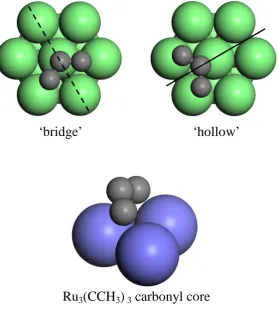
experi-mental PhD investigation and a schematic of the three C atoms of the CCH3 ligands in the organometallic complex (µ-H)Ru3(µ3-η3
-CMeCMeCMe)(CO)9. . . 39
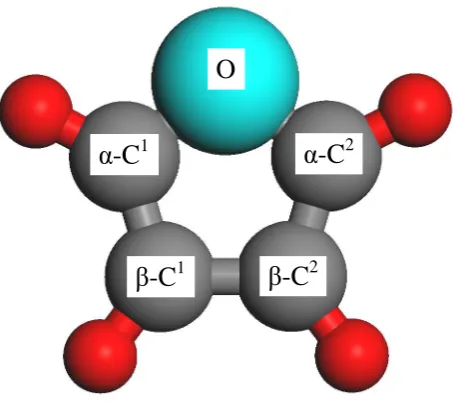
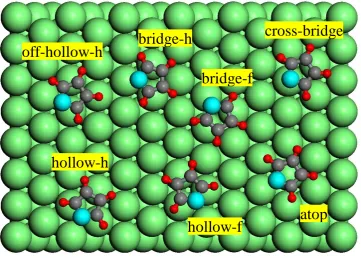
4.3 Schematic diagram of the furan molecule showing the labelling convention for the constituent atoms used in the text. . . 40 4.4 Starting models used in exploring the optimal structure of furan
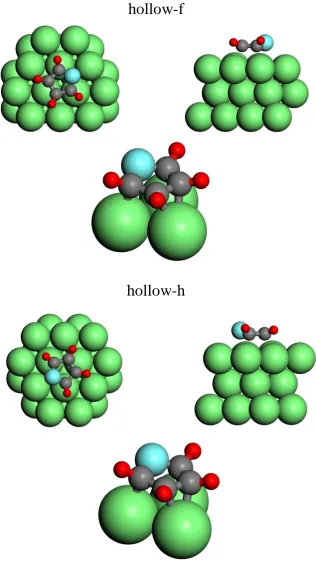
on Pd(111). . . 42 4.5 Schematic diagrams of the two optimised hollow-site models for
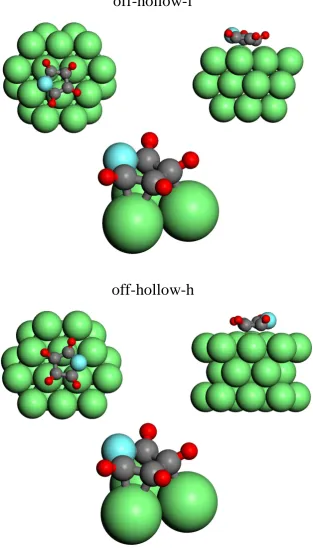
furan on Pd(111). . . 47 4.6 Schematic diagrams of the two optimised off-hollow-site models for
furan on Pd(111). . . 48 4.7 Plan view of the Pd(111) surface showing the different optimised
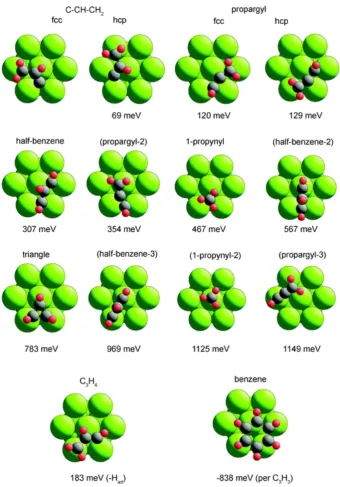
molecular configurations and adsorption geometries found in the DFT calculations for C3H3, together with those of a C3H4 species,
and of benzene. . . 54
5.2 The two lowest-energy optimised (2×2) 0.25 ML structures of methoxy on Cu(110) obtained in the present DFT calculations. . . 73 5.3 Plan view of the structure of the Cu(110) (5×2)-methoxy
adsorp-tion structure proposed on the basis of previous DFT calculaadsorp-tions. 74 5.4 Plan view of the two mixed-short-bridge models of the Cu(110)
(5×2)-methoxy adsorption structure proposed here on the basis of new DFT calculations. . . 77 5.5 A simulated STM image of the Cu(110) (5×2) methoxy surface
obtained from the DFT calculations based on the model of Figure 5.4(a) along side an experimental image. . . 79 5.6 Schematic diagram showing a large-area plan view of the
ener-getically preferred double-short-bridge site model of the (5× 2)-methoxy structure coexisting with the (2×1)-O added-row phase. 80 5.7 STM image showing coexisting (2×1)-O and (5×2)-methoxy
re-gions on a Cu(110) surface. . . 81 5.8 Molecular structure of cytosine showing the labelling convention
for the different constituent atoms. . . 84 5.9 Schematic diagram of the local structure of adsorbed cytosine on
Cu(110). . . 85 5.10 Two possible adsorption bonding configurations of cytosine-derived
species on Cu(110). . . 86 5.11 Three modified-(3×1) adsorption models for cytosine on Cu(110)
tested in the DFT calculations. . . 91 5.12 Three of the (6×2) adsorption models for cytosine on Cu(110)
tested in the DFT calculations to explore the relative energies of different packing arrangements in a (6×6) structure. . . 94 5.13 Two possible (6×6)pgg ordered structures of cytosine on Cu(110)
based on the local adsorption site of the molecule found in this study that may be energetically favorable. . . 95
6.1 Schematic diagram of the Ir(001) clean surface models discussed in the text, showing the definition of azimuthal directions used. . 99 6.2 Convergence of surface stress with respect to k-point mesh for an
unrelaxed Ir(001)(1×1) slab. . . 101 6.3 Schematic side views of the Ir(001)(5×1) clean surface models
6.4 Schematic diagram of the (5×1)-AR surface structure with a num-ber of sites for H adsorption labelled. . . 106
7.1 Schematic diagrams of p(2×2) and c(2×2) atomic adsorbate struc-tures on the fcc(100) surface. . . 111 7.2 Schematic diagram of the pseudo square overlayer found to satisfy
MEIS data for methanethiolate on Cu(111). . . 113 7.3 Schematic diagrams of lowest energy p(2×2) and c(2×2) adsorbate
structures of methanethiolate on Cu(100). . . 117 7.4 Top and side views of one of the starting models considered when
searching for a stable rumpled c(2×2) structure for thiolate ad-sorption on Cu(100). . . 118 7.5 The energetically preferred optimised missing row model for the
c(6×2) phase of thiolate adsorption on Cu(100). . . 120 7.6 Simulated and experimental STM images of the c(6×2)
reconstruc-tion on Cu(100). . . 121 7.7 Cu adatom adsorption models for the c(6×2) reconstruction of
methanethiolate adsorption on Cu(100). . . 124 7.8 Schematic diagrams of the lowest energy p(2×2) and (√3×√3)R30◦
adsorbate structures for methanethiolate adsorption on Cu(111). . 127 7.9 Schematic diagrams of the lowest surface energy Cu adatom
over-layer adsorbate structures found for methanethiolate on Cu(111) incorporating 8 - 12 Cu adatoms. . . 129 7.10 Simulated STM images of the two lowest surface energy overlayer
models, and a real STM image, of methanethiolate adsorption on Cu(111). . . 132 7.11 Histograms of the lateral shifts of Cu adatoms in the overlayer
{first substrate} layer from 3-fold hollow {bulk continuation} sites for the low energy overlayer structures shown in Figure 7.2. . . 134 7.12 Comparison of experimental MEIS spectra with simulated spectra
List of Tables
3.1 Chemisorption bondlengths of a deprotonated glycine species on Cu(111). . . 21 3.2 DFT calculated bulk lattice parameters for the fcc metals relevant
to the investigations discussed in later chapters. . . 21 4.1 Comparison of the interatomic bond lengths and bond angles of gas
phase furan obtained from previous experimental and theoretical results with the present DFT calculations. . . 41 4.2 Comparison of the adsorption energies for furan in the optimised
versions of the structural models illustrated in Figure 4.4. . . 44 4.3 Optimised adsorbate–substrate structural parameter values for the
hollow-h and off-hollow-h structural models of furan on Pd(111) obtained in this study compared with the previous experimental and theoretical results. . . 50 4.4 Comparison of the experimental and theoretically-computed values
of the C 1s photoelectron binding energy CLS values for the C atoms in the C3H3 (or C3H4) species adsorbed on Pd(111), relative
to that from coadsorbed CO. . . 57 4.5 Summary of the results of the simulations of the PhD modulation
spectra for the minimum-energy structures for C3H3 on Pd(111)
identified in the DFT calculations. . . 60
5.1 Summary of the results for the optimised structures found in DFT calculations for different adsorption sites and reconstruction mod-els of methoxy adsorbed on Cu(110) in a (2×2) unit mesh. . . 72 5.2 Comparison of the results for the optimised structures found in
5.3 Optimised values of the structural parameters obtained from the previous PhD analysis for chemisorbed cytosine on Cu(110) and some of the present DFT calculations. . . 89
6.1 Calculated surface energy and surface stress values for clean double sided slabs of varying thickness for three different Ir(001) surface phases. . . 102 6.2 Adsorption energies, surface energies and surface stress values
cal-culated for various H adsorption structures on the Ir(001)(5× 1)-AR surface. . . 107
7.1 Selected energetic, surface stress and structural parameters for var-ious phases of methanethiolate adsorption on Cu(100). . . 116 7.2 Surface energies of the most energetically favourable Cu adatom
model found for each value of the Cu adatom and thiolate coverage explored for the c(6×2) phase of methanethiolate adsorption on Cu(100). . . 125 7.3 Adsorption energy, surface energy change due to adsorption, and
selected structural parameters for methanethiolate adsorbed on the unreconstructed Cu(111) surface. . . 127 7.4 Surface energy change due to adsorption and the difference in
Acknowledgements
First and foremost my sincerest thanks go to Prof. Phil Woodruff both for accepting my application and for guiding me through my PhD. Your ability and willingness to transmit your extensive knowledge has been incredibly beneficial to my learning and your open door attitude has transformed an intimidating figure into someone that I feel comfortable expressing my own opinions to. I can’t envisage a better mentor, thankyou Phil.
I am similarly grateful for the support of Dr. Jim Robinson, not only in setting up and maintaining the group’s computational resources but also on a technical level. Having you there to answer the questions I have had (however basic they may have been) has been invaluable, thankyou Jim.
I would also like to thank all of the colleagues I have had during the last three and a half years. Two of whom I would like to give special thanks to are David Duncan and Daniel Sheppard. Although I’ve had to put up with the incessant bellowing voice of David for three and a half years, it has been a small price to pay for his helpful attitude, our successful collaborations, and the good times we have spent together, many of which involved a cold beverage or three. Sitting opposite to Dan in the office has led to countless enlightening conversations and has meant that I have always had someone there, both to bounce ideas off and provide support.
Thanks must also go to the other people with whom I have collaborated with directly. Although I have only met Dagmar Kriekemeyer Lorenzo a few times, several publications have resulted from our collaborations, so to her I am very grateful. Additionally, a thankyou goes to Dr. Gavin Bell and Prof. Chris McConville who have provided an environment in which addi-tional collaborative publications have resulted. In this respect, I am grateful for the inclusion of my work in a recent publication by Liam Fishwick and also for my collaborations with Chris Burrows, Ian Maskery and Jim Aldous.
Lastly, I have to thank my family, Frank, Alma and Douglas for their continued support throughout my years of education and the girl to whom I am betrothed, Shi Ying, for remaining by my side, in spite of my unorthodox working patterns.
Declarations
This thesis is submitted to the University of Warwick in partial fulfillment of the requirements for the degree of Doctor of Philosophy. It contains an account of the work carried out by myself in the Department of Physics at Warwick University, under the supervision of Prof. D. P. Woodruff and Dr. J. Robinson, during the period from October 2008 to June 2012. No part of this thesis has been previously submitted to this or any other institution.
Several articles based on this research have been published or are in preparation:
• M. K. Bradley, J. Robinson, and D. P. Woodruff, ‘The structure and bonding of furan on Pd(111)’,Surf. Sci., 2010,604, 920.
• M. K. Bradley, D. K. Lorenzo, W. Unterberger, D. Duncan, T. Lerotholi, J. Robinson, and D. P. Woodruff, ‘Methoxy Species on Cu(110): Understanding the Local Structure of a Key Catalytic Reaction Intermediate’,Phys. Rev. Lett., 2010,105, 086101.
• D. C. Jackson, D. A. Duncan, W. Unterberger, T. J. Lerotholi, D. K. Lorenzo, M. K. Bradley and D. P. Woodruff, ‘Structure of Cytosine on Cu(110): a Scanned-Energy Mode Pho-toelectron Diffraction Study’,J. Phys. Chem. C, 2010,114, 15454.
• M. K. Bradley, D. A. Duncan, J. Robinson and D. P. Woodruff, ‘The structure of furan reaction products on Pd(111)’,Phys. Chem. Chem. Phys., 2011,13, 7975.
• D. Kreikemeyer Lorenzo, M. K. Bradley, W. Unterberger, D. A. Duncan, T. J. Lerotholi, J. Robinson and D. P. Woodruff, ‘The structure of methoxy species on Cu(110): A combined photoelectron diffraction and density functional theory determination’,Surf. Sci., 2011, 605, 193.
• M. K. Bradley, D. P. Woodruff and J. Robinson, ‘Surface stress changes in the Ir(001)/H system: Density functional theory study’,Phys. Rev. B, 2011,84, 075438.
Parts of this work have also been presented at four national and international conferences from 2009 to 2011.
Abstract
An introduction to surface structure and plane wave density functional theory (DFT) is pre-sented along with theoretical studies of seven adsorbate systems.
A new energetically favourable structure of low symmetry is found for furan on Pd(111) that is entirely consistent with previous experimental findings from scanned-energy mode pho-toelectron diffraction (PhD). In addition, it is found that the C3H3 decomposition product of
furan on the same surface is likely to be adsorbed in a propargyle conformation (CH-C-CH2)
although some cooccupation of the molecule in a half benzene conformation (CH-CH-CH) is also possible.
Methoxy is found to adsorb at local short bridge sites only on Cu(110), occupying locations both above the clean surface and above pairs of surface Cu adatoms. Simulated scanning tunneling microscope (STM) images of the (5×2) reconstruction are found to be in qualitative agreement with previous images recorded experimentally. The experimentally determined local structure of cytosine on the same surface is confirmed and models are proposed for the (6×6) reconstruction.
An increased tensile surface stress is found to be associated with the Ir(001)(1×1) →
Ir(001)(5×1)-hex phase transition, thus confirming that the reconstruction is not a conse-quence of the large surface stress of bulk terminated Ir(001). In contrast, H adsorption on Ir(001) (5×1)-hex does lead to a reduction of the surface stress in the range 1.76-2.06 Nm−1
for a H coverage range 0.6-0.8 ML in excellent agreement with the experimentally-determined value of 1.7 Nm−1.
Abbreviations
B3LYP Becke three-parameter Lee-Yang-Parr functional
BFGS Broyden-Fletcher-Goldfarb-Shanno geometry optimisation CASTEP Cambridge Serial Total Energy Package
CLS core level shift
DFT density functional theory
DM density mixing DMDS dimethyl disulphide
EDFT ensemble density functional theory
fcc face-centred cubic
GGA generalised gradient approximation hcp hexagonal close-packed
HREELS high-resolution electron energy loss spectroscopy
LDA local density approximation
LEED low energy electron diffraction LEIS low energy ion scattering
LITD laser-induced thermal desorption
MEIS medium energy ion scattering
ML monolayer
NIXSW normal-incidence X-ray standing waves
PAW projector augmented wave
PBE Perdew-Burke-Ernzerhof functional
PhD scanned-energy mode photoelectron diffraction
PW91 Perdew-Wang 1991 functional
RPBE revised Perdew-Burke-Ernzerhof functional
SAM self-assembled monolayer
SCF self-consistent field
SEXAFS surface extended X-ray absorption fine structure STM scanning tunneling microscopy
SXPS soft X-ray photoelectron spectroscopy
SXRD surface X-ray diffraction
TPD temperature-programmed desorption
UHV ultra-high vacuum
UPS ultraviolet photoelectron spectroscopy XPD X-ray photoelectron diffraction
Chapter 1
Introduction
1.1
Surface structure and the role of density
functional theory
The surface of a material is inherently interesting since its physical properties are considerably different to those of the bulk and it is the only part of a material which may interact directly with external matter. Moreover, detailed knowledge of the structure of the surface is of paramount importance in understanding many of its chemical, as well as electronic, properties. Following the advent of quanti-tative surface specific structural probes around 40 years ago [1], beginning with low energy electron diffraction (LEED), surface structure has therefore grown into a field of research in its own right with a large number of scientists devoting their careers to understanding the nuances of the vast array of attainable stable surfaces.
Low-index single crystal surfaces are the simplest of all conceivable surfaces of a material due to their small periodic surface mesh and high symmetry. It is for this reason that these surfaces are often used as models to understand more complex systems. Even given this apparent simplicity however, introduction of adsorbate species significantly increases the complexity of the structure of the surface in most cases, generally increasing the size of the periodic mesh and in many cases destroying the periodicity of the surface entirely. It is this class of system, involving the interaction of a surface and external species, which is relevant to surface specific processes such as heterogeneous catalysis and is thus of great industrial, as well as scientific, interest.
suc-cessful in their own right, often allowing the determination of adsorbate-substrate bondlengths to within hundredths of an Ångstrom, the availability of inexpen-sive computing resources in recent years has allowed them to be complemented by sophisticated first principles calculations, namely density functional theory (DFT). Such calculations are now routinely carried out and are generally suc-cessful in finding the correct, experimentally determined adsorption site as the lowest energy model. Furthermore, DFT calculations provide a method to ex-plore aspects of the surface which are not available, or are difficult to determine, experimentally. One such aspect is that of surface stress (for which there are no experimental methods capable of determining the absolute magnitude) which is known to have implications concerning surface processes such as surface recon-struction and epitaxial growth [4, 5], magnetism [5], adsorption [6] and surface alloying and segregation [7].
1.2
Thesis overview
This thesis provides an account of work conducted in the Department of Physics at the University of Warwick during the period from October 2008 to June 2012 and is arranged as follows. Chapter 2 focuses on physical attributes and pro-cesses specific to surfaces with emphasis given to those related to structure, stress and adsorption. Some useful surface specific quantities are also defined and ex-perimental determination methods are highlighted where applicable. Chapter 3 begins with an introduction to the underlying theory of DFT and highlights the approximations made when using the theory. Following this is a discussion of the plane-wave pseudopotential methodology employed by the Cambridge Se-rial Total Energy Package (CASTEP) code, a common theme throughout this section being the necessity to ensure that calculations are properly converged. Finally, application of plane-wave pseudopotential calculations are discussed in the context of studies of surface structure and surface stress.
Chapters 4-7 comprise the results of several DFT investigations of surface structure and surface stress that have now been published, or are soon to be pub-lished, in the open literature. In chapter 4 a new low-energy model is discovered for furan on Pd(111) [8] and structural models are proposed and compared with experimental scanned-energy mode photoelectron diffraction (PhD) data analysis for the C3H3 species [9], one of the decomposition products of furan, on the same
Chapter 2
Theory of adsorbate systems and
investigative methods
2.1
Physical phenomena at surfaces
Several well defined physical phenomena occur at a substrate - vacuum interface which do not occur in the bulk of a material. In particular, the influence of the vacuum typically leads to surface structural relaxations and the introduction of surface stress or, in some cases, total surface reconstruction. Additionally, the electronic structure is modified leading to the emergence of states that are confined to the surface region, which may impact significantly on the surface prop-erties (e.g. topological insulators). In the presence of foreign species, the surface may accommodate adsorption and reaction processes (heterogeneous catalysis), the details of which are, in general, very sensitive to the composition and struc-ture of the surface. A fundamental knowledge of basic surface phenomena is thus a necessary prerequisite for understanding adsorbate systems and predicting the behavior of the surface in the presence of external species.
2.1.1
Surface free energy
The fact that a crystal is stable is an indication that its total energy is lower than that of the sum of its constituent atoms in isolation. Formally therefore, the surface free energy, γ, defined by Gibbs [14] must be positive for a clean surface, where the reversible work,dw, needed to cleave a new surface of areadA
dw=γdA. (2.1) The surface free energy thus provides a direct measure of the stability of an exposed surface.
In the case of face-centred cubic (fcc) transition metal surfaces, which are the subject of this thesis, it has been shown using a theoretical modified embedded-atom method that the (111) (see Figure 2.1) surface is the most stable in all cases [15]. Furthermore, this study found that the surface energy increases linearly with the angleθhkl of the surface plane to the (111) plane. It should be noted however
that at large angles, ∼θhkl ≥40◦, this approximation breaks down such that for
some fcc transition metals the surface energy of the (001) surface (θ001 = 54.7◦)
is lower than the that of the (110) surface (θ110 = 35.3◦). Qualitatively, this
effect can be attributed to the greater atomic roughness, and corresponding larger surface area, found in the outermost layer of the (110) surface compared to the (001) surface (see Figure 2.1).
(111)
(001)
(110)
[001]
[110]
[110]
[121]
[101]
[110]
Figure 2.1: Low index surfaces of the fcc lattice. Surface layer atomic density decreases from left to right. Note that two inequivalent hollow sites exist on the (111) surface, the face-centred cubic (directly above third layer substrate atoms fcc) and hexagonal closepacked (directly above second layer substrate atoms -hcp) site.
pendant drop method [17], the drop weight method [17] and Lenard’s wire frame method [18]. Of course, for most metals these methods require that the measure-ment is taken far above room temperature. Just below the melting point, where the crystal maintains a constant volume under uniaxial tension, the method of zero creep can be used [19]. In this case, multiple thin wires are loaded with in-cremented weights and their length change upon heating is measured. The mass, m, which leads to zero strain at high temperature is used to determine the surface energy,
γ = mg
πr, (2.2)
where g is the acceleration due to gravity and r is the radius of the wire. The only measurements of surface energy on solids at low temperature have come from cleavage experiments [20]. In this case a force is applied to a pre split sample and the length of the resulting crack is related to the surface energy by
γ = 6F
2L2
Ew2t3 (2.3)
where F is the force applied, L is the length of the resulting crack, E is the Young’s modulus for the appropriate orientation and the beam width and thickness are given by w and t respectively.
The same quantity is also routinely extracted from DFT calculations for the ground state, even for relatively complex crystals (see section 3.3.2).
2.1.2
Surface relaxation
The potential experienced by atoms in the surface region of a material is different to that experienced by atoms in the bulk due to the different local environment. This will, in general, induce changes in the atomic structure of the surface region which act to reduce the surface free energy (equation 2.1) of the system.
the surface in question and the sign of the relaxation is often found to alternate with consecutive layers while gradually being damped out. A typical example is that of Al(110) where LEED measurements have determined surface relaxations of -8.6 %, +5.0 % and -1.6 % for the first three atomic layers [22]. This effect has been linked with oscillations that occur in the electron charge density in the near surface region (Friedel oscillations [23]) [1]. However, theoretical calcula-tions which do not include this effect have been found to reproduce the observed alternating-sign relaxations [24].
While a description based on the spilling of valence charge into the vacuum is appropriate for the surfaces of metals, surface relaxations found in semiconducting materials vary to a greater degree; in general, these surfaces relax in such a way as to reduce the number of dangling bonds arising from surface layer atoms lacking some of the bonding partners of bulk atoms [25]. For instance, one surface layer atom may exhibit an inward relaxation and donate its unpaired electron to another atom which consequently relaxes outwards. Such behavior is typical for the (110) surface of many III-V semiconductors, e.g. GaP [26], where the (1×1) surface periodicity is conserved.
2.1.3
Molecular adsorption
A continuum of adsorption sites exists at a surface and a species may, in prin-ciple, be adsorbed at any location. However, many molecules are preferentially adsorbed at or near to high symmetry sites on the surface, and particularly so if the adsorbate has symmetry commensurate with the substrate. It is for this rea-son, along with its industrial prevalence (particularly in chemical manufacturing [27]), that CO has been the most studied molecular adsorbate and is often used as a model system to trial new techniques, both theoretical and experimental.
The strength of a bound state created by adsorption of a foreign species may be quantified by the adsorption energy,Ea, which is defined as the amount of work
dependent. Furthermore, multiple adsorption sites may exist which have similar associated adsorption energies, leading to possible co-occupation of sites, or the potential energy profile may be such that energy barriers from one adsorption site to another are small with respect to the kinetic energy of the adsorbed species, thus allowing them to ‘hop’ rapidly between sites or even move freely over the surface. In either case, experimental determination of the preferred adsorption site(s) using current techniques becomes challenging. If a species does adsorb at well defined locations, long-range well-ordered structural phases may be formed which can be detected by well-established experimental techniques (e.g. LEED). It is these well-ordered phases that have been most extensively studied, in part because many of the available surface structure probes require that the surface has long-range order (see section 2.2).
2.1.4
Surface stress
Unlike the energy-lowering relaxations of atoms in the direction perpendicular to the surface, which allow the perpendicular stress component of a crystal to reduce to zero, the lateral atomic periodicity is constrained by the underlying bulk crystal. Therefore, atoms at a clean unreconstructed metal surface cannot relax towards each other and the surface is necessarily under tensile (positive) stress. Such surface stress is related to the surface free energy by the Shuttleworth equation [28]
σij =
1
A dAγ
dij
=γδij+
∂γ ∂ij
(2.4)
where δij is the Kronecker delta, ij is an elastic strain tensor element and
the surface stress component, σij, is a second rank tensor element that relates
the work associated with the variation in γA, the total excess free energy of the surface, to the applied strain dij.
For transition metals, DFT calculations have determined that the hierarchy of surface stress magnitude for the low-index surfaces varies from case to case and is strongly dependent on the surface relaxation [29]; the reduced sp electron density found in the surface layer relative to the bulk is reversed with increasing inward relaxation of the outermost atomic layer such that the surface becomes more bulk-like and surface stress reduces.
rather small and often ignored in experimental structure determination studies, it may significantly influence the surface stress (e.g. adsorption of H on Ir(001)-AR investigated in chapter 6). In simple cases, surface stress changes due to atomic adsorption at low coverage, where the surface stress changes linearly with coverage [30], can usually be qualitatively explained by the relative electronegativity of the adsorbing species and the substrate on which adsorption is taking place; electronegative {electropositive} adsorbates lead to a reduction {increase} of the valence charge in the region between surface layer atoms resulting in a reduction {increase} of the surface stress [31]. In the case of H (electropositive) and O (electronegative) on Pt(111) however, adsorption of either species has been found to reduce the surface stress showing that even atomic adsorbates do not always follow this trend [32]. At higher coverage, inter-adsorbate interactions become significant and surface stress changes are strongly dependent on the exact nature of these interactions.
In contrast to the case of surface relaxations, there is no experimental method currently available that can be used to determine the absolute surface stress of a single-crystal surface. There are some reported measurements of the change in surface stress associated with a surface reconstruction however, particularly for adsorbate-induced reconstructions. These experiments exploit the slight bending of a thin crystal beam that occurs when the surface stresses on the two opposite faces are different. A variety of methods have been used to measure such changes in the crystal curvature associated with adsorption, which must be on one face of the crystal only (e.g. [33]). The limited amount of experimental data of this kind has been supplemented by theoretical calculations, with early examples of results for clean metal surfaces and adsorption upon them being reported by Needs and Mansfield [34] and by Feibelman [35]; a review of most of this earlier work was been provided by Haiss [36].
2.1.5
Surface reconstruction
Si(111) [37], and can usually be explained qualitatively by the tendency to reduce the number of dangling bonds exposed by the cleavage [25], clean surface recon-structions are comparatively rare for transition metals. Notable exceptions occur in the (001) and (110) surfaces of the 5d transition metals of Ir, Pt and Au; the (001) surface reconstructs to form a one-layer quasi-hexagonal overlayer structure incorporating a 20% increase in atomic density of the surface layer [38–40] while the (110) surface reconstructs to form a ‘missing row’ structure whereby every other row of atoms is removed, thus exposing narrow pseudo (111) faces [41]. The preference of the (001) surfaces of the 5d transition metals to reconstruct was originally thought to be a consequence of the particularly large surface stress of the clean surface which arises as a result of strong relativistic effects. However, recent DFT calculations have reported that the surface stress is actuallyincreased
by the reconstruction (see chapter 6) [13].
Rather than preferentially coordinating directly to an existing surface, ad-sorption may instead instigate a surface reconstruction. Examples of structures resulting from this process include the (5×2) overlayer formed by methoxy on Cu(110) (see section 5.1) and the pseudo-square overlayer formed by methanethi-olate on Cu(111) (see section 7.4), both of which are discussed in detail in sub-sequent chapters.
2.2
Structure determination
Although this thesis comprises primarily the results and analysis of theoretical simulations of surfaces, it is of paramount importance that such studies are com-pared with experiment where possible. Indeed in many cases, and particularly so as ever more complex surface structures are investigated, it is the combined results from experimental and theoretical investigative methods that are used to provide the necessary information to conclusively determine the precise structure of a surface. While DFT has emerged as the preferred theoretical tool for surface structure investigations, a relatively large number of experimental surface struc-ture probes are widely used, but may be classified by two broad categories:
as scanned-energy mode photoelectron diffraction (PhD) [43, 44] and near edge X-ray absorption fine structure (NEXAFS) [45] which require local order only.
2. Methods based on the scattering of ions: Typically H+or He+ions are used for the techniques of low (LEIS) or medium (MEIS) energy ion scattering where the deBroglie wavelength of these ions is much smaller than interatomic distances. In this case, multiple scattering simulations based on classical two-body elastic collisions suffices to elucidate surface structure.
While such investigative methods provide direct structural information, the pri-marily composition-determination tool of X-ray photoelectron spectroscopy (XPS) also deserves attention since comparison of core level shifts (CLS) arising from different local atomic environments can, in some circumstances, provide useful structural information (see section 3.3.4). In addition, imaging tools, and par-ticularly STM, which utilises electrons quantum tunneling from the sample to a conducting tip, provide valuable insight into surface processes and can often aid structure determination. Comprehensive reviews of modern techniques of sur-face science can be found in the publications by Woodruff and Delchar [3] and Vickerman and Gilmore [2].
Chapter 3
Density functional theory:
Formal theory and application
3.1
Fundamental theory
In principle the Schr¨odinger equation, ˆHΨ = EΨ, where ˆH is the Hamiltonian operator which acts on the total wavefunction Ψ, and E is the total energy of the system, provides a precise quantum-mechanical description of the physical behavior of the universe. In the case of N electrons interacting with static nuclei, Ψ = Ψ (r1,r2, ...,rN), following the Born-Oppenheimer approximation [47], the
time-independent Hamiltonian neglecting electron spin may be expressed
ˆ
H =−~
2
2m
N
X
i=1
∇2
i + N
X
i=1
V (ri) + N
X
i=1
X
j<i
U(ri,rj) (3.1)
where the three terms define the kinetic energy the electrons, the interaction of the electrons with the nuclei and the electron-electron interactions respec-tively. Prohibitive computational demand arises, however, when trying to solve the Schr¨odinger Eequation for a multi-electron system since the electron-electron interaction term of the Hamiltonian is inherently 3N-dimensional.
re-finements of, and additions to the implementation of the theory both to reduce computation time and to solve a wider spectrum of problems, DFT has emerged as a prominent tool for calculating properties of interest of collections of atoms. This has resulted in the application of DFT in an ever-expanding range of fields including heterogeneous catalysis, optics, electronics, medical physics and plasma physics and has been used to improve understanding of the physical properties of nanotubes, quantum dots, artificial molecules and superconductors but to name a few.
The importance of DFT in the scientific community has been such that Walter Kohn was awarded, with John Pople, the Nobel Prize in Chemistry in 1998 “for his development of the density-functional theory”. A further demonstration of the widespread influence of DFT can be seen with the impact of the seminal journal articles by Walter Kohn and Lu Jeu Sham [48] and by Pierre Hohenberg and Walter Kohn [49] which, as of 2003, were comfortably the two Physical Review publications with the most internal citations in the journal’s 110 year history [50].
3.1.1
Hohenberg-Kohn Theorem
The underlying theory of DFT was published in 1964 by Pierre Hohenberg and Walter Kohn [49] and comprises two simple postulates:
1. The ground-state energy, E0, from Schro¨dinger’s equation is a unique
func-tional of the electron density.
2. The electron density that minimises the energy of the overall functional is the true electron density corresponding to the full solution of the Schro¨dinger equa-tion: E0[n]≤ E[n].
While the exact form of this electron density functional is not known, by using an approximation to it, the Hohenberg-Kohn postulates nevertheless provide a method to recast the 3N-dimensional Schr¨odinger equation to a much simpler equation which depends on just 3 spatial variables and may therefore be used to reliably calculate ground state material properties that would otherwise be unobtainable.
calculation of such properties is therefore less reliable [51].
3.1.2
Kohn-Sham approximations
The total energy density functionalE[n] introduced in section 3.1.1 may be split into a summation of terms analogously to Schr¨odinger’s equation:
E[n] =T [n] +Vext[n] +Vee[n] (3.2)
where T[n] is the kinetic energy of the electrons, Vext[n] is the interaction
with the external potential and Vee[n] is the electron-electron interaction. For a
system of interacting atoms, Vext[n] is simply the Coulomb interaction between
the atomic nuclei and the electrons:
Vext[n(r)] =
Z (N X
i=1
v(ri)
)
n(r)dr (3.3) with the external potential
v(ri) =
X
α
Zα
|ri−Rα|
(3.4)
where the summation runs over all ion cores, α, and Zα is the charge on the
ion core at Rα.
A classical approximation to Vee[n] can be obtained from the Hartree energy
of the system:
VH[n(r)] =
1 2
Z n(r)n(r0)
|r−r0| drdr 0
. (3.5)
Furthermore, an approximation for T[n] can be found by considering the kinetic energy of a non-interacting system of electrons which reproduce the true ground state density. The N electrons are then described by a single determinant wavefunction in N orbitals [49],
Ψ = √1
N!det [ψ1ψ2...ψN] (3.6) with density
n(r) =
N
X
i=1
|ψi(r)|
2
(3.7)
ˆ
h:
ˆ
hψi =
−1
2∇
2 +v
ef f(r)
ψi =iψi (3.8)
and the Kohn-Sham effective potential vef f (r) is given by
vef f (r) =
δE[n]
δn(r). (3.9) This simplified system has the kinetic energy
Ts[(ψi)] =−
1 2
N
X
i=1
Z
ψi∗∇2ψidr. (3.10)
Hence, an approximation to the kinetic energy may be computed using a manageable finite number of terms N and the total energy density functional (equation 3.2) can be re-written
E[n] =Ts[(ψi)] +Vext[n(r)] +VH[n(r)] +Exc[n] (3.11)
where the exchange-correlation energy Exc[n] is defined as the difference
be-tween the true energy functional and the energy functional of the known compo-nents. This essentially comprises the energy contributions arising from the effects of electron exchange and correlation, which must be approximated (see section 3.1.4). Inserting equation 3.11 into equation 3.9 and differentiating gives
vef f (r) =−
X
α
Zα
|ri−Rα|
+
Z n(r0)
|ri−r0α|
dr+ δExc[n]
δn(r) (3.12) where all terms are exact apart from the unknown functional Exc.
3.1.3
Solving the Kohn-Sham equations
Since the effective potentialvef f used to construct the single-electron Hamiltonian
ˆ
hdepends on the electron densityn(r) (see equation 3.12), which in turn depends on the eigenfunctions of the Kohn-Sham equations ψi (see equation 3.7), the
Kohn-Sham equations (equation 3.8) must be solved self-consistently using an iterative ‘self-consistent field’ (SCF) procedure.
of the matrix size and the number of elements in such a matrix is equal to the square of the number of basis functions used to describe the wavefunctions. Since calculations quickly become prohibitively expensive and, for a converged basis set consisting of 10000-100000 functions such as is typical for a plane wave basis-set (see section 3.2.2) fewer than 1% of the eigenvalues are typically occupied, it is preferable to resort to iterative optimisation methods, in which it is only the occupied eigenstates that need be included in the calculations. These calculations rely on carefully choosing search directions using algorithms such as steepest descent and conjugate gradients, and scale quadratically with the number of bands. A comprehensive review of iterative methods for ab initio calculations can be found in the publication by Payne, Teter, Allan, Arias and Joannopoulos [52].
There are two commonly employed classes of algorithm used to solve the Kohn-Sham equations:
1. Ensemble DFT (EDFT) [53]: The density is updated whenever the wavefunc-tions or occupancies are changed and the change is only accepted if the total energy is lowered by it. Thus the method is fully variational and hence very robust, although it is also rather slow since each density reconstruction requires a Fourier transform into real space.
2. Density mixing (DM) [54]: The density is reconstructed only once per SCF cycle and is thus non-variational. Under this regime, SCF cycles using the exact density found in the previous iteration, using equation 3.7, tend to overshoot the true minimum energy location causing an effect known as ‘charge sloshing’. Thus, the new density must be mixed with the density found in previous SCF cycles. Such mixing is typically performed using the algorithms of Pulay [55] or Broyden [56] which may be tuned for efficiency and are substantially more robust than linearly mixing with the density found in the previous iteration.
DM for metallic systems, it is necessary to apply a density smearing scheme (e.g. Gaussian, Fermi-Dirac, Methfessel-Paxton [57]) to the Fermi surface such that it is smeared over a finite energy width; such treatment provides a smooth con-tinuous transition between occupation of an orbital when its energy is changed relative to other orbitals. This can be equated to introducing a finite temperature in the system (exactly in the case of Fermi-Dirac smearing) and the total energy is increased accordingly, leading to non-zero occupation of several bands lying above the Fermi energy, thus necessitating the inclusion of more electronic bands in the calculation. At the same time however, introducing a finite smearing to the Fermi surface means that the solutions of the Kohn-Sham equations are no longer the ground state. Indeed, to first order, the value of the free energy, E −T S, where T is temperature and S is entropy, is reduced by the same amount. Thus the ground state energy may be recovered:
E0 =E−0.5T S. (3.13)
Since this calculation of the entropical contribution is not exact, however, there is a trade off between the simpler convergence of using a large degree of density smearing and the possible source of error this introduces in the calculated total energy.
Independent of the algorithms used to determine the ground state, the iter-ative process is ceased when either the total energy change or maximum ionic force change found for consecutive iterations drops below a specified tolerance. Ionic forces are found for each structural parameterxj of the entire structure,x,
using the Hellmann-Feynman theorem [58, 59]:
Fxj = ∂E ∂xj
=
Z
ψ∗(x)∂ ˆ
Hx
∂xj
ψ(x)dr (3.14) where j = 1,2, ..., n. These may then be atomically resolved to find the total force, F, acting on each ion.
3.1.4
Exchange-correlation functionals
A large number of approximations to the exchange-correlation energy functional have been devised with the aim of accurately representing the true functional. The first and simplest class of these is the local density approximation (LDA),
ELDA
xc = ExcLDA[n], which allows for a formulation based upon that found for a
known exactly for jellium [60]:
ExLDA[n] =
Z
n(r)LDAx (r)dr=−3
4
3
π
13 Z
n(r)43dr (3.15) where the exchange-correlation energy functional has been decomposed into exchange and correlation components such that Exc = Ex +Ec and x is the
exchange energy density. The true analytical expression for the correlation energy functional is only known for the high [61] and low [62] density limits of jellium. However, quantum Monte Carlo simulations have provided accurate values for the correlation energy for a range of intermediate densities [63]. Thus, a number of parameterisations ofELDA
c have been devised which interpolate from these values
while maintaining the correct asymptotic behavior (e.g. Vosko-Wilk-Nusair [64] and Perdew-Zunger [65]).
Although any real system involving atomic nuclei clearly has a very different electron density profile to that of jellium, LDA calculations often yield remark-ably good agreement with experiment for many observable parameters, and par-ticularly for those relating to simple metals and well-behaved covalent systems [66]. It has long been understood, however, that such calculations systematically overestimate molecular bond energies and the cohesive energy of solids [67].
A higher level approximation to Exc[n] can be made by also considering the
local gradient of the electron density. Functionals that adopt this approach are classified as generalised gradient approximation (GGA) functionals: EGGA
xc =
ExcGGAhn, ~∇ni. Since there are many ways in which the gradient of the electron density may be incorporated into a formulation of EGGA
xc
h
n, ~∇ni, a large number of functionals have been devised, some of which are fullyab initiowhile others are highly parameterised using large data sets. Ultimately however, the usefulness of a particular functional is gauged by the accuracy of results obtained using it and its transferability to a wide range of problems. In this respect, two of the most commonly used GGA functionals are the Perdew-Wang 1991 (PW91) [68] and Perdew-Burke-Ernzerhof (PBE) [69] functionals, the articles introducing both are to be found in the top 10 cited physics publications since 1898 according to the online journal citation database, Institute of Scientific Information (ISI) Web of Knowledge [70].
These particular GGA functionals have the form
ExGGA[n] =
Z
and differ only in the choice of local exchange enhancement factor Fx. The
PBE exchange functional enhancement factor has a much simpler form than that of the PW91 functional and can be expressed
FxP BE(s) = 1 +κ− κ
1 +µs2/κ (3.17)
where s(r) is the reduced density gradient,
s(r) = |∇n(r)| 2 (3π2)13 n(r)
4 3
, (3.18)
µ and κ are constants and κ = 0.804 is chosen such that the Lieb-Oxford bound [71]
Ex(n)≥Exc(n)≥ −1.679
Z
n(r)43 dr, (3.19) a universal property of the Coulomb interaction, is automatically satisfied. In addition to these, revised versions of the PBE functional have become popu-lar more recently since authors claim that they provide a systematic improvement to atomisation energies and chemisorption energies. These include ErevP BE
xc [72],
which is identical to the PBE functional apart from a change to κ = 1.245 and
ExcRP BE [73] which incorporates the improved features of the revPBE functional in a modified PBE functional where
FxRP BE(s) = 1 +κ1−e1−µs2/κ (3.20) with κ = 0.804, thus still satisfying the Lieb-Oxford bound.
Further refinement to the functional may be made by incorporating terms which include second derivatives of the electron density gradient or by using the exact exchange energy, the non-local nature of which increases computational requirements substantially, and particularly so for calculations involving non-local basis sets such as those used in the plane-wave pseudopotential method [51] (see section 3.2). Functionals following such prescriptions are known as meta-GGA and hyper-meta-GGA functionals respectively. Much research continues in this area, particularly in developing screened hyper-GGA functionals in which the exact exchange is only incorporated in a short-range component of the exchange interaction [51].
and exchange interaction, and DFT-D [75] which includes an empirical correction for the lack of a description of van der Waals forces within standard DFT methods. Selecting a functional for a particular study is a difficult task since there are so many available. However, for chemisorption of atoms and molecules on tran-sition metal substrates, the revised Perdew-Burke-Ernzerhof (RPBE) functional has proved to be particularly successful at obtaining accurate energetics [73], albeit with bondlengths typically overestimated by ∼1-2 % [76]. This exchange-correlation functional has thus been the preferred choice for the majority of the work presented in this thesis and is the one which has been used for all calcula-tions in subsequent chapters unless stated otherwise.
Table 3.1 shows the resulting chemisorption bondlengths, using a variety of exchange-correlation functionals, for a deprotonated glycine molecule (glycinate - NH2CH2COO) adsorbed on Cu(111) in a stable tridentate conformation with
the N and both O atoms coordinated to the surface. As is typically the case, the variation in reaction energy, Ea∗, (defined in the table) and bondlengths clearly illustrate the overbinding tendency of the LDA relative to the GGA function-als, with ERP BE being the least strongly binding. In fact, the negative number
reported for Ea∗ using the RPBE functional indicates that there is an energetic preference for glycine to be dissociated from the surface rather than being ad-sorbed as deprotonated glycine in this adsorption site with gaseous H2. In this
case, the inclusion of DFT-D to the PW91 calculation increases the reaction en-ergy but has little effect on the bondlengths. While this increased reaction enen-ergy is to be expected for DFT-D calculations, the sensitivity of the structure to this inclusion is highly system dependent. Table 3.2, which shows calculated lattice parameters of the bulk fcc transition metals relevant to the DFT investigations presented in this thesis, demonstrates the similar functional dependence of the bulk lattice parameter, RPBE being the most weakly, and LDA the most strongly, binding. In any case, a surface structure found using a DFT calculation may be, and often is in practice, scaled to the experimental bulk lattice parameter prior to comparing with the results of an experimental surface structure determination.
exchange-Table 3.1: Chemisorption bondlengths of deprotonated glycine on Cu(111) ad-sorbed in a stable tridentate conformation with the N atom adad-sorbed in an atop location and the two O atoms atop (Oa) and off-atop (Ooa) respectively. The
reaction energy, Ea∗, is defined as the energy difference between the sum of the energy of the surface with adsorbed deprotonated glycine with half of a gas phase H2 molecule and the sum of the energy of the clean surface with a gas phase
glycine molecule. A greater value for Ereac indicates a more stable adsorption
structure.
Exc Ereac (meV) Oa-Cu (Å) Ooa-Cu (Å) N-Cu (Å)
LDA 838 2.11 2.05 2.10
PW91 267 2.19 2.10 2.19
PW91+DFT-D 914 2.19 2.13 2.17
RPBE -205 2.23 2.14 2.28
Table 3.2: A selection of DFT calculated bulk lattice parameters for the three fcc metals relevant to the investigations discussed in later chapters, using a variety of common functionals.
Material LDA (Å) PW91 (Å) PBE (Å) RPBE (Å) Experiment (Å)
Pd 3.842 3.909 - 3.922 3.8822±0.0010 (77 K) [77]
Cu 3.519 3.630 3.626 3.654 3.6146 (298 K) [78]
Ir - - - 3.906 3.8392 (298 K) [78]
correlation functionals. So far though, the method has not been widely adopted by the scientific community.
3.2
Plane-wave pseudopotential method
The plane-wave pseudopotential method is particularly well suited to studies of surface structure; expansion of wave functions in terms of plane waves (sec-tion 3.2.2) lends itself nicely to the periodic nature of a surface and the use of pseudopotentials (section 3.2.4) allows a radical reduction of the computational burden of calculations while still maintaining good energetic and structural ac-curacy. The method is therefore a common choice for surface investigations and is implemented in many DFT codes.
3.2.1
Introduction to CASTEP
Cam-bridge which has subsequently been developed by members of the TCM group and others around the UK. The code is capable of performing parallelised DFT cal-culations using the plane-wave pseudopotential method that scale with the cube of the number of atoms in the asyptotic limit. The code also contains several modules designed to allow calculation of a wide range of properties of collections of atoms. As a result, CASTEP has been used successfully for a large number of studies, involving a myriad of systems in an ever-expanding range of scientific disciplines.
The CASTEP calculations that have provided the results presented in this thesis have been conducted on several high-performance computing clusters at the University of Warwick in both the Surface, Interface and Thin Film Group and the Centre for Scientific Computing. Many of the results have been analysed using either Accelrys Materials Studio [81] or X-window Crystalline Structures and Densities (Xcrysden) [82], both of which provide a wide range of visualisation and, in the case of Materials Studio, analysis tools.
3.2.2
Basis sets
As alluded to in section 3.1.3, in order to solve the Kohn-Sham equations the single-electron wavefunctions must be expressed numerically using a convenient basis set. In this respect, two classes of functions can be used. Functions which are localised in space, e.g. Bessel functions, can accurately represent electronic wavefunctions using a relatively small basis set. As such, many DFT codes incor-porate these, and particularly those which are primarily concerned with calcula-tions involving free molecules, where the total wavefunction is itself localised. In contrast, for the study of periodic systems one can utilise Bloch’s theorem:
φk(r) =eik·ruk(r) (3.21)
which provides the form of solutions to Schr¨odinger’s equation for a periodic structure. The periodic function uk(r) may then be conveniently expanded in
terms of plane waves of varying frequency:
uk(r) =
X
G
cGeiG·r (3.22)
where the sum is taken over all G=m1b1+m2b2+m3b3 for integer values of
mi, where bi are the reciprocal lattice vectors of the unit cell and cG are the
Combining equations 3.21 and 3.22 gives
φk(r) =
X
G
ck+Gei(k+G)r (3.23)
which are solutions to Schr¨odinger’s equation with kinetic energy
E = ~
2
2m|k+G|
2
. (3.24)
Since it is the lower energy plane waves which are the most physically impor-tant, the summed series in equation 3.23 is truncated at a value Gcut which is
defined by the kinetic energy cutoff:
Ecut = ~
2
2mG
2
cut. (3.25)
Thus the infinite series (equation 3.23) is reduced to
φk(r) =
X
|k+G|<Gcut
ck+Gei(k+G)r. (3.26)
Since calculations scale linearly with the number of plane waves, and hence with E
3 2
cut, it is desirable to use as small a cutoff as possible. Careful convergence
testing must be used though to ensure that Ecut is large enough to allow the
accurate calculation of parameters of interest. The total energy is a particularly useful measure of convergence of Ecut because the gradient dE/dEcut is always
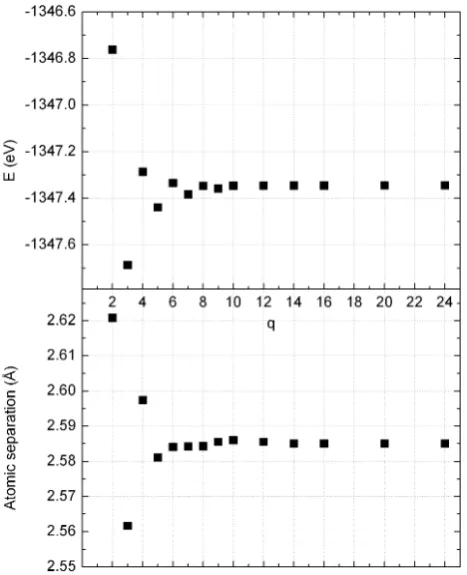
less than or equal to zero and has a relatively smooth convergence to the value found at Ecut → ∞ (see upper panel of Figure 3.1).
One important caveat of DFT calculations is that, largely owing to the use of pseudopotentials (see section 3.2.4), absolute total energies are meaningless from a physical perspective and it is onlyrelative energies of different structures which are of general interest and may be compared with experiment. Since errors in relative energies are typically an order of magnitude smaller than those of abso-lute energies when converging with respect to Ecut, it is therefore not necessary
to achieve good absolute convergence of the total energy. This more rapid con-vergence of relative energy is, however, dependent on the similarity of the local environment of the atoms in the models to be compared, particularly for those with the hardest valence electronic potentials.
An example of such convergence is demonstrated in Figure 3.1. The upper panel shows the energy convergence with respect to Ecut for two polymorphs of
Figure 3.1: Upper panel: Energy convergence with respect to kinetic energy cut-off,Ecut, for two polymorphs of bulk MnSb using the PW91 exchange-correlation
functional [68] and ultrasoft pseudopotentials (see section 3.2.4). Lower panel: Convergence of the relative energy of the polymorphs Edif f =Ezincblende−ENiAs
with respect to Ecut.
energies. In this case the energy difference of the polymorphs is converged to within 5 meV at Ecut = 250 eV whereas, at the same value of Ecut, the absolute
energy is only converged to ∼50 meV. For the majority of DFT investigations, a good balance between accuracy and expediency is achieved when convergence of relative energies is ∼1-2 meV.
3.2.3
Supercell approximation
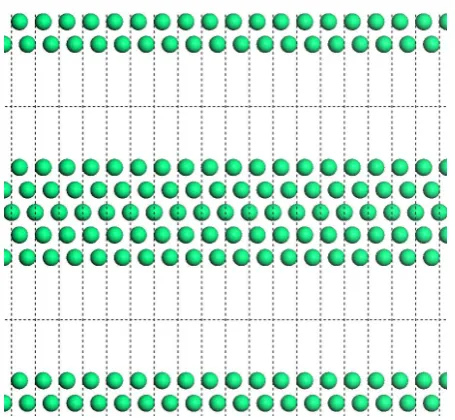
[image:40.595.195.426.114.401.2]required size of such a vacuum gap is system dependent and should be determined prior to the calculation of any surface properties. Once determined, all supercell dimensions are fixed for the duration of subsequent calculations, with lateral parameters constrained to be commensurate with the bulk lattice parameter(s).
Figure 3.2: Supercell construction for a clean fcc(111) surface. Each surface slab comprises 5 atomic layers and is separated from adjacent slabs by a vacuum spacer. The dotted lines indicate the boundary of the supercells.
The number of atomic layers required in each slab to accurately simulate a surface is also system dependent, but typically 3-7 layers are adequate. In addition, the bottom 1-3 layers are constrained to the bulk atomic spacing to achieve a more bulk-like structure towards the bottom of the slab where it would otherwise be affected by surface relaxation mechanisms (see section 2.1.2), which in this case would be entirely unrealistic.
[image:41.595.207.435.181.391.2]Finally, in order to simulate an isolated species (i.e. in the gas phase), which is necessary if one wishes to determine the adsorption energy (see section 3.3.2), a supercell must be used which is large in all 3 spacial dimensions, thus minimising all external interaction.
3.2.4
Pseudopotentials
rc r
Ψ
V
Ψpseudo
Vpseudo
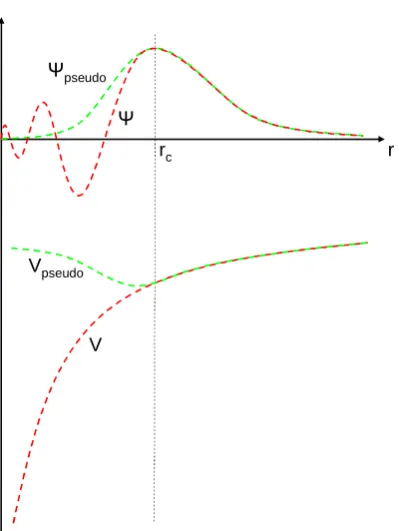
Figure 3.3: Schematic representation of a pseudopotential. The pseudopotential, Vpseudo, and pseudo wavefunction, Ψpseudo, are identical to that of an all-electron
calculation beyond the cutoff radius, rc.
Since it is only the valence electrons of an atom that are involved in molecular bonding, it is not necessary to optimise the core electron wavefunctions. Instead, in the interest of efficiency, the ‘frozen core’ approximation is used, thus ren-dering all of these non-bonding core electrons inaccessible. The pseudopotential construction then allows the remaining ‘valence’ electrons to be smoothed within a specified core region, r < rc, where the wavefunction is strongly varying (see
Figure 3.2.4). Beyond this region however, the wavefunction is, by construction, identical to that determined by an all-electron calculation, which is used as a ref-erence state. rcis carefully chosen such that, at reasonable bonding distances, the
[image:42.595.225.425.203.469.2]Such an approximation still allows good accuracy in calculations involving inter-atomic bonding while significantly reducing the necessary kinetic energy cutoff (see equation 3.25).
Several schemes have been devised to generate atomic pseudopotentials but they can be classified into two major groups. Pseudopotentials which maintain the original total charge within the core region are known as ‘norm-conserving’ pseudopotentials and, while being much softer than the true electronic wave-function, are still considered to be relatively hard. A further reduction in the necessary kinetic energy cutoff can be made by relaxing this norm-conservation constraint. Pseudopotentials constructed without this constraint are known as ultrasoft pseudopotentials and can be generated in such a way as to be accurate using, in most cases, a much smaller kinetic energy cutoff. Such treatment allows for computationally feasible studies of larger systems than would otherwise be possible and has thus been the preferred choice in many structural investigations involving, in some cases, several hundred atoms. Included with the CASTEP distribution (see section 3.2.1) are several sets of pseudopotentials, to be used in conjunction with most of the commonly used exchange-correlation functionals (see section 3.1.4), which have been well tested for accuracy and transferability across an array of physically plausible local environments.
3.2.5
Brouillion zone integration
Since the band structure of a periodic collection of atoms is dispersive, it is necessary to integrate the Kohn-Sham eigenvalues across the whole Brillouin Zone in order to calculate the electron density:
n(r,r0) =
Z
BZ
Qr,r0(k)dk (3.27)
where
Qr,r0(k) =
X
v
ψ∗v(k,r0)ψv(k,r). (3.28)
However, the electronic bands are slowly-varying continuous functions, so these integrals can be replaced by summation over a limited number of discrete points in reciprocal space. The number of such k-points required to accurately determine the total energy is dependent on several factors:
![Fig ur e 3 .1 : Uppe r pa ne l: E ne r g yc o nv e r g e nc e w it h r e s pe c t t o k ine t ic e ne r g yo ff ,f unc t io na l [6 8 ] a nd ult r a s o f t ps e udo po t e nt ia ls ( s e eC o nv e r g e nc e o f t he r e la t iv e e ne r g yw it h r e s pe](https://thumb-us.123doks.com/thumbv2/123dok_us/9645545.466765/40.595.195.426.114.401/fig-uppe-ine-ne-unc-ult-udo.webp)