5
AN APPLICATION MODEL OF QUALITY
MANAGEMENT SYSTEM
IN A CONSTRUCTION PROJECT
Maizan Baba
Mat Naim Abdullah
Wan Yusof Wan Mahmood
Saidin Misnan
INTRODUCTION
THE OBJECTIVE
The main inquiry in this research is how the concept of QMS can be implemented expediently and effectively in the construction project in this country. Thus, this study aims to develop an application model of QMS for the construction project team during the construction phase in effectively implementing QMS in a construction project.
THE METHODOLOGY AND SCOPE OF THE RESEARCH
This research was conducted as a pilot study that being part of the full research study for the same subject. It was carried out under the co-operation between the researchers from UTM and the Kuala Lumpur International Airport Berhad (KLIAB) who was the project manager for the prestigious and mega Kuala Lumpur International Airport (KLIA) project. Therefore the research favoured the case study approach as the principal source of information. Five components of a case study design include study’s questions, propositions (if any), unit(s) of analysis, the logic linking the data to the proposition and the criteria for interpreting the findings [3] (Yin, 1994). The second component is not actually relevant as the nature of the topic is the subject of “exploration”. However according to Yin (1994), the exploration type of study still requires some purposes that substituting the propositions which are more relevant to study the inter-organizational relationship. The five components were determined through several methods which were categorised under three distinct phases as follows;
1. Preliminary investigation
2. Theory development (detailed literature review)
The followings describe in detail the above phases:
PRELIMINARY INVESTIGATION
The research work started by conducting a preliminary investigation on the case project. This phase was important for familiarising with the researched case, observing the working environment and building relationship with the project personnel. The main objectives were to explore the possibilities of doing research on the subject and to refine the area of concerns. This had enabled the researcher to decide on the specific area to be studied in tandem with the accessibility and availability of the required information, taking into account with the limitation of the existed information. For instance, the sources of data collection were limited to interview and archival technique i.e. content analysis of the quality records as the case project was physically completed and at the final stage of handing over. The first component of case study design i.e. research question was also first developed during this phase.
THEORY DEVELOPMENT
temporary project-based environment led to the conclusion of the needs to develop a model of quality system that can deal with the dynamic situation and irregular organisation form of construction project management [4,5,6,7,8,9]
The research then identified ten ISO 9000 critical elements being part of Project Quality Plan (PQP) in implementing QMS in construction phase [10,11,12,13,14]. The ten elements were management responsibility, quality system, contract review, document and data control, process control, inspection and testing, control of quality records, internal quality audits, training and statistical techniques. Almost all the elements were interrelated and therefore some of them can be categorised under one activity. From these elements eight main activities in implementing QMS in construction phase had been developed. They were management responsibility, quality planning, resources management, process control, inspection and testing, quality recording, auditing and data analysis and report. These main activities of QMS implementation at construction phase were also the units of analysis of the case subject where they became the guideline for the researcher to explore the detail activities when conducting the case study. This phase also enabled the researcher to design appropriate questionnaire for the interviewing session.
CASE STUDY
months to complete this construction project. Another factor to constantly bear in mind is the fact that this construction project involves more than 25 thousands employees from over 51 nationalities. Cross-culture interactions such as contradicting work culture and barrier in language used posed many unavoidable problems at the same time. The above conditions supported the reason for selecting this project as a case subject.
The main sources of data collection were from content analysis of quality records and interviewing the key personnel of the project. A series of interview was the primary source of data where the process of implementing the QMS was discovered. As a secondary source, companies document such as PQP and quality records were used to supplement and verification the data obtained from the interviews. The result was a demonstrable coincidence between the findings of the literature review and their occurrence in construction works. Qualitative data obtained from the case study was analysed using systems analysis of IDEF techniques, which resulted in an application model for effectively implementing QMS at the construction phase.
to depict a system, which is so complex to present, multidimensional, and involves a number of processes intertwined with each other. There are16 IDEF methods i.e. IDEF0, 1, 1X, 2, 3, 4, 5, 6, 7, 8, 9, 10,11,12,13 and 14. In practice three IDEF methods form core of IDEF use in the field. They are IDEF0, IDEF3 and IDEF1X. IDEF0 is for functional modelling, IDEF3 is for process modelling and IDEF1X is for data modelling [17]. These three IDEF members will be explained below.
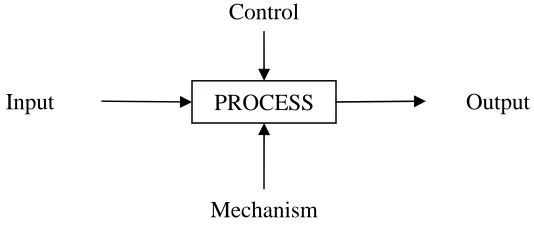
Figure 5.1: The general graphic presentation of IDEF modelling tools
IDEF1X is a method for designing relational databases with a syntax designed to support the semantic constructs necessary in developing a conceptual schema [18]. It is an extension of IDEF1 that deals with the information modelling. This kind of tool is suitable to depict a structure of relational system i.e. in modelling the estimating process where data is inter-related between one activity to another activity and is not the best method to be used if the target system is not a relational system such as an object-oriented system.
IDEF0 on the other hand is used to model the function of the business or its systems. The original structured analysis communication goal for IDEF0 is to be an effective tool in detailing the system activities for function modelling [19]. This has been proven and is also the primary strength of IDEF0. In IDEF0, the user will model what controls, who performs and what objects
PROCESS
Mechanism
Output Input
or data is consumed and produced by the activities of a function. The relationships between the business functions are then depicted. The description of the activities of the function can be easily refined into greater detail until the model is as descriptive as necessary for the decision-making task at hand. However, the description of the final model will be so concise that it will usually understandable by the domain experts or the people that involved the modelling works from the beginning. In addition, due to its main goal that is to depict the function of a system into greater detail causing the description to be as concise as it can, abstraction away from timing, sequencing and decision logic is inevitable. Such abstraction contributes to comprehension difficulties among readers outside the domain. This particular problem has been addressed by the IDEF3 method.
IDEF3 Process Description Capture Method captures the workflow of the business processes by showing the task sequence performed by an organization. IDEF3 can decompose the business processes into logic detail and describe different scenarios for performing the same business functions. In detail, IDEF3 descriptions can:
• record the raw data resulting from fact-finding interviews in systems analysis activities
• determine the impact of an organization’s information resource on the major operation scenarios of an enterprise • document the decision procedures affecting the states and
life cycle of critical shared data, particularly manufacturing, engineering and maintenance product definition data
• manage data configuration and change control policy definition
• make system design and design trade-off analysis • provide simulation model generation [20]
research as it is the most appropriate tool to describe the process of implementing the QMS in a construction project.
THE APPLICATION MODEL
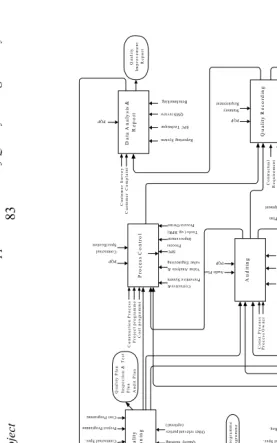
The application model as shown in Figure 5.2 shows all the elements of IDEF3; where, the process is represented by the box, the factors that are listed at the top of the box are constraints and those at the bottom are mechanisms, those at the left hand side of the box are the input and those emerge out of the box are the outputs. Having this model one can easily understand the complete system and the environment in which it works, respective procedures and respective involvement of the parties. The model is described in terms of its major constituent processes as follows; respective input, controls, mechanism and the output are also listed. The model together with a set of guidelines forms a framework for the Malaysian construction industry to implement QMS in construction project specifically at the construction phase.
MANAGEMENT RESPONSIBILITY (ENTITY TYPE: PROCESS)
Input: customer requirement capture, contractual requirement, company capability information.
Mechanism: Company management, company QMS, project coordination meeting.
Constraints: statutory requirement, contractual specification and standards, company quality manual.
the implementation including employee training, monitoring and until the final auditing, the management has a greater responsibility without which the success of the programme is quixotic. The key input for this process as stated above shows that at the earlier stage of the project the management focuses all its efforts in incorporating the customer’s requirements, which is available in many forms including briefing and contractual requirements. This in turn is compared with the capability of the organization as to whether the organizational resources are capable to undertake the activities to achieve the client’s requirements. The company QMS becomes the key path to achieve the end goal and that throughout the project several coordination meetings are organized by the management to develop plans and solutions, review progress and facilitate the functioning of the whole QMS programme. The key output of this process is project programme and cost programme established in tune with the project quality plan. This together with the other outputs including the service of the management, suggestions and other tangible contributions become input to both the processes quality planning and resources management.
GUIDELINES – MANAGEMENT RESPONSIBILITY
• Capture and define the client’s requirements in order to establish quality policy
• Ensure that all levels of management and staff understand the quality policy
• Cross-refer the procedures within the text of the quality manual
• Define the responsibilities and authority using suitable methods
• Periodically review the quality system and policy whether it fulfils the intended objective
• Αrrange for and implement training for those who are lack proper understanding and skills
QUALITY PLANNING (ENTITY TYPE: PROCESS)
Input: experience from past projects, project scope, consultant service scope, contractual requirements, quality requirement, and resource availability.
Mechanism: project team management, quality meeting, other relevant parties (e.g. consultants).
Constraints: quality standards, company quality manual, contractual specifications, project programme, cost programme.
plan, inspection and test plan and audit plan. The content of the PQP not only dictates the quality system required of the project concerned but also it incorporates the scope and expectations of the project and the project control mechanism. The out of this process becomes input for most of the other processes including process control, inspection and testing and auditing.
GUIDELINES – QUALITY PLANNING
• Ensure that all relevant parties including consultants if any required are included in the task of planning quality for the project
• Establish and define the purpose of the quality system
• In the plan, minimize the effort required to amend copies of documents
• If required, set up a quality system development team, as it will give a sense of ownership to the team so that the team can produce an effective plan
An App
lica
tion
Model o
f Quality Managem
ent S ystem in Construc tion Proje ct 83 M a na g e m e nt Re s p Q u a lit y P la nni ng R e s our c e s M a na g e m e nt P roc e s s C ont ro l Da ta An a ly s is & R e por t In s p ect io n & Te st in g Qu a li ty R e c o rd in g C u s to m er R e qu ir em en t Ca p tu r e C o nt r a c tua l R e q C o mpa n y ca pa bi li ty In fo rm a ti o n Co ntr act Sp ec. & Stan da rd s Co mp an y Qu ali ty M anua l P r oj e c t P ro g ra mme Co s t P r o g ra m m e Sta tut ory R eq uir em en t Com pan y Q MS Co mpa ny Mg mt Pro je ct Co -ord in ati on meet iin g Quali ty Stan da rd s Co mpa ny Q. manua ls Con tract ua l Sp ec. Proj ec t Pro gra mm e Cost Pro gra mm e E x per ie n c e f r om p a s t pr oj e c t Pr o je c t Sc o p e C o n s u ll tan t S e rv ice S c op e C o nt ra c tua l R e q u ir e m e n t Q u a lit y R e q u ir e m e n t R e s o ur c e A v a ila b ilit y Pro je ct Team Mg mt Qu alit y Meet ing Oth er re le va nt pa rtie s (op tio na l) Qu a li ty P la n Au d it P la n In sp e c ti o n & T e st Pl a n C o m p a n y C a p a b ilit y inf o . Re s o u r c e r e q . & a v a ila b ilit y P r oj e c t P ro g ra mme Co s t P r o g r a m m e Qua lit y Pl an Con trac tu al S pec . Sta tu tor y R eq. Skil l de velo pmen t Recru itm ent & ava ila bil ity Mu lti-ta sk ing Pro je ct M ana ger C o n s tr u c ti on P roce s s P roj ec t pr o g ra m m e C o s t pr o g r a mme PQP Con tract ua l Sp ecifi catio n Correct ive & Pre ve nti ve Sy ste m Va lue An aly sis & va lue E ng in eerin g SPC Proc es s Im pro vem ent Too ls ( e g. BP R) Pro ce ss Ow ne r A udi ti ng Aud it Pl an PQP Co n s t. P ro c e s s P r o c e ss O w n e r Au diti ng Te chni qu e NCR Syst em Qua lit y Au dito r In spe cti on & Te st P la n Manu fa ctu re r E qu ipm ent Manu al Con tract Sp ec. Sta nda rds In p u t/ ra w m a te r ia l In -p ro c e ss O u tp u t/f in a l p r o d uc ts Recei vin g Test In -p ro cess Test Fin is h Prod uc t Te st PQP Cu s to m e r S u rv e y Cu s to m e r Co m p la in t Re po rti ng Sy ste m SPC T ec hn iq ue QMS re view Be nchm arki ng Qu a li ty Im p r o v e m e n t Re p o r t PQP Sta tu tory Re quir emen t Co n tr a c tu a l Re q u ir e m e n t Filin g Sy ste m Do cum en tat io n S yst em Chec k L ist SPC Figure 5. 2: An a ppl ic ati on m
Input: company capability information, resources requirement and availability, project programme, cost programme.
Mechanism: skill development, recruitment and availability, multi-tasking, project manager.
Constraints: quality plan, contractual specification, statutory requirement.
GUIDELINES – RESOURCES MANAGEMENT
x Ensure that resources are analysed in advance onto its availability, skills and capability
x Establish programmes to develop the multi-skill of the labour resource
x Ensure that resources are properly trained to undertake the
respective tasks in the project
PROCESS CONTROL (ENTITY TYPE: PROCESS)
Input: construction process, project programme, cost programme, cost programme.
Mechanism: corrective and preventive system, value analysis and value engineering, Statistical Process Control (SPC), process improvement tools, process owners.
Constraints: PQP, contractual specification.
become one of the major inputs for effectively controlling the process. The data or the information obtained from both the on-going processes and the analysis of the past data should be recorded for future use.
GUIDELINES – PROCESS CONTROL
x Ensure that the work is carried out at controlled conditions
x Define the process specification and workmanship standards to be achieved
x In-process monitoring and in-process inspection and test are key to control the process
x All processes should be capable of performing the task for which they are designed.
x Train and qualify site/construction workers with special and
specific skills
AUDITING (ENTITY TYPE: PROCESS)
Input: Construction process, process owner.
Mechanism: auditing technique, NCR (Non-Conformance Report) system, quality auditor.
Constraints: audit plan and PQP
other elements, the construction process itself has to be audited for its performance output and non-conformance. This requires the process owner to be involved in the auditing process. Audit plan and PQP will form the norms for systematically undertaking auditing. The data collected from the audit and the results obtained from the analysis will be used by several other processes for improvement including the process controlling, inspection and testing. Finally, all the information including the report is recorded for future use.
GUIDELINES – AUDITING
x Ensure that the auditing process is directed towards the process and performance improvement
x Ensure that the auditing process does not intend to punish the parties for failure
x Publicise the audit results so that everyone is aware of the overall outcome of the project
x Do not rely much on external consultants for quality audit and ensure that audit is performed internally for process improvement
INSPECTION AND TESTING (ENTITY TYPE: PROCESS)
Input: in-process, output/final products, input/raw materials.
Mechanism: check list, receiving test, in-process test, finished product test, SPC.
Constraints: inspection and test plan, manufacturer equipment manual, contractual specifications and standards.
source for the deployment of the equipment and infrastructure required for undertaking testing activity. Both the input (raw materials) and the output including final products and services are tested for conformance and requirements. Apart from this, the on-going process is continuously checked for its performance, which is called in-process inspection. Audited data on past processes formed the input as a reference for the inspection. Contractual specifications, inspection and test plan control the inspection and testing activity to ensure that testing are not unnecessarily performed and are done right towards the overall objective of the project. All data and results obtained through this process are recorded for future use.
GUIDELINES – INSPECTION AND TESTING
x Define the criteria for acceptance of goods
x Prepare procedures for inspecting and testing incoming goods
x Document inspections and tests
x Provide a means for improving the inspections and tests and for identifying those responsible for carrying them out
x Define what is to be inspected at each stage and the inspection and test equipments to be used
QUALITY RECORDING (ENTITY TYPE: PROCESS)
Input: contractual requirement
Mechanism: filing system and documentation system
Constraints: PQP, statutory requirement
maintained for future retrieval. The filing system and documentation system forms the main base for recording the data. However, while recording the data, the appropriate protocol as stated in the PQP and other statutory requirements must be adopted.
GUIDELINES – QUALITY RECORDING
x Identify and decide on all quality records that are required to be documented
x Provide submission and collection instructions in relevant
procedures
x Records should be filed in sequence
x Maintain the registers listing the records in numerical order
x Proper conditions of storage should be ensured to prevent loss
x Proper records disposal system should be maintained
x Security of quality records should be ensured
x Establish numbering, dating and revision status conventions
x Users should participate in the documentation planning process
x Provide labelled binders for range of documents
x Invalid and obsolete documents should be promptly removed
x Establish standard ways for identifying obsolete documents
x Document custodians should be provided with stamps for the
receipt of records and issuance of the same
x Create a formal change request mechanism for initiating changes to controlled documents
DATA ANALYSIS AND REPORTING (ENTITY TYPE: PROCESS)
Input: customer survey, customer compliant.
Constraints: PQP.
Process Description: Through the PQP implementation, there are a number of stages where respective data need to be collected and analysed; for instance, resources analysis, process control, inspection and testing and so on. All data need to be analysed appropriately using the right approach and techniques. Finally, the results of the analysis should be reported to the right department or the authority. Several techniques including SPC and benchmarking can be used. One of the major objectives of this analysis is to assess the overall performance of the PQP implementation system, which can be effectively performed by reviewing the QMS collectively by having all relevant data from respective sources. PQP should have set the norms to undertake this process. Properly established reporting system should be able to channelise the documents to respective people and authority. The results of the analysis will form the basis for the overall improvement of the programme.
GUIDELINES – DATA ANALYSIS AND REPORTING
x Periodically conduct survey amongst customers to assess their expectations and complaints and use the data in the overall assessment of the performance
x Establish clearly the source and sink of the results and reports that emerge out of the analysis
x Publicise the overall performance result
x Take corrective actions formulate future improvement strategy immediately once discrepancies are identified from the analysis
CONCLUSION
processes, the inputs, mechanisms, constraints and outputs of each individual process are clearly illustrated.
REFERENCES
Berita Harian. 2001. ISO 9000 sebelum laksana projek kerajaan, March, 13th. CIDB News, ISO 9000 D-I-Y Scheme, Issue 3 September 2000, CIDB Malaysia,
Kuala Lumpur.
Yin, R.K., 1984. Case Study Research: Design and Methods, SAGE Publications, Inc., USA.
Low, S.P. and Goh, K.H. 1994. Construction quality assurance: problems of implementation at infancy stage in Singapore. International Journal of Quality & Reliability Management, Vol. 11 No. 1, pp 22-37
Oakland, J.S. and Aldridge, A.J. 1995. Quality management in civil and structural engineering consulting. International Journal of Quality & Reliability Management, Vol. 12 No. 3, pp 32-48
Giles, R. 1997. ISO 9000 perspective for construction industry in the UK. Training for Quality, Vol. 5 No. 4, pp 178-181
Low, S.P. and Hennie, F.O. 1997. The effective maintenance of quality management systems in the construction industry. International Journal of Quality & Reliability Management, Vol. 14 No. 8, pp 768-790
Abdulaziz A.B. and Tawfiq, H.A. 1999. ISO 9000 quality standards in construction. Journal of Management in Engineering, Nov/Dec, pp 41-45 Barrett, P. 2000. Systems and relationships for construction quality.
International Journal of Quality & Reliability Management, Vol. 17 No. 4/5, pp 377-392
Lee, N.C. and Yeoh, S.C.1996. ISO 9002 in the Malaysian construction industry, guide and implementation, McGraw-Hill Book Co., Malaysia. Thorpe B., Sumner P. and Duncan J. (1996). Quality Assurance in Construction,
2nd edition. England: Gower Publishing Ltd.
Peplow-Warren Sdn. Bhd. 1999. Project Quality Plan – Design. Not Published. Gosselin, P. 1994. Quality plan for a building site – a must. Quality Management in Building and Construction: Proceedings of Eureka Conference, Hamar/Lillehammer, June, pp 224-232
Construction: Proceedings of Eureka Conference, Hamar/Lillehammer,
June, pp 220-223
Colquhoun, G., Baines, R. and Crossley, R. 1993. A state of the art review of IDEF0. International journal of computer integrated manufacturing, Vol. 6, No. 4, pp. 252-264
http://www.fend.es/members/reports/idefo/introb.html
http://www.government.popkin.com/methods/idef.hm