Abstractive Multi-document Summarization by Partial Tree Extraction,
Recombination and Linearization
Litton J Kurisinkel IIIT-H, Hyderabad
Yue Zhang SUTD, Singapore yue [email protected]
Vasudeva Varma IIIT-H, Hyderabad [email protected]
Abstract
Existing work for abstractive multi-document summarization utilise existing phrase structures directly extracted from input documents to generate summary sentences. These methods can suf-fer from lack of consistence and coher-ence in merging phrases. We introduce a novel approach for abstractive multi-document summarization through partial dependency tree extraction, recombination and linearization. The method entrusts the summarizer to generate its own topi-cally coherent sequential structures from scratch for effective communication. Re-sults on TAC 2011, DUC- 2004 and 2005 show that our system gives competitive results compared with state-of-the-art ab-stractive summarization approaches in the literature. We also achieve competitive re-sults in linguistic quality assessed by hu-man evaluators.
1 Introduction
Multi-document summarization generates a tex-tual summary from a corpus of documents deal-ing with a set of related topics. An optimum generated summary should encompass the most relevant and topically diverse content, which can represent the input corpus in stipulated summary space. Extractive multi-document summarization approaches pick out a subset of sentences to con-stitute the summary, which can be noisy and inco-herent, as all the portions of a sentence may not be relevant for summary generation (Lin and Bilmes,
2011).
An abstractive multi-document summarizer, in contrast, infers the most relevant information and generates summary sentences exhibiting
coher-ence and fluency. There has been relatively little existing work on abstractive multi-document sum-marization. Bing et al.(2015) merge phrases that are extracted from input documents into a coher-ent summary. Banerjee et al.(2015) utilize multi-sentence compression for summarization. Both of the above approaches rely on sequential arrange-ment of phrasal or subsentential structures existing in the input corpus to generate summary. How-ever, an ideal abstractive multi-document summa-rizer should enjoy the freedom to exhibit its own writing style and to generate the sentences from scratch.
We build a model to this end by leveraging syn-tactic dependencies. Input for our model is the set of syntactic dependency trees obtained by parsing sentences in the corpus to be summarized. Rel-evant and noise pruned partial tree structures are extracted from the set of dependency trees and dif-ferent subsets of maximally relevant partial depen-dency structures are identified. Partial trees in dif-ferent subsets are linearized to generate individ-ual summary sentences. In this work, we utilize transition-based syntactic linearization approach proposed byPuduppully et al.(2016) to linearize a combination of partial trees and to generate a noise free summary sentence. The combinability of a set of partial trees to form a full dependency tree of a valid sentence is estimated using a generative model of syntactic dependency trees (Zhang et al.,
2016). As a result, the model is allowed to exhibit its own learnt writing style while generating sum-mary sentences.
The summaries generated by our system are evaluated on the DUC 2004, DUC 2007 and TAC 2011 muti-document summarization data-sets. In addition, we relied on human evaluation to evalu-ate factual accuracy and linguistic quality of gen-erated summary sentences. To our knowledge this is the first work on multi-document
tive summarization with syntactic dependency trees, which entrust the summarization model to generate summary sentences without exploiting any kind of subsentential or phrasal sequential structures originally present in the input corpus. Our code is released athttps://bitbucket. org/litton_kurisinkel/tree_sum
2 Related Work
Text summarization can be achieved using ex-tractive (Takamura and Okumura, 2009;Lin and Bilmes, 2011;Wang et al., 2008) and abstractive methods (Bing et al., 2015; Li, 2015). Extrac-tive summarization has the advantage of output fluency due to direct use of human-written texts. However, extractive summarization cannot ensure a noise free and coherent summary. It can also re-sult in a wrong inference to the reader due to out of context sentence usage. In contrast, abstractive summarization techniques can generate a noise-free summary out of most relevant information in the input corpus.
A subset of previous extractive summarization approaches utilized parsed sentence structures to execute noise pruning while extracting content for summary (Morita et al., 2013; Berg-Kirkpatrick et al., 2011). As a first step towards abstracting content for summary generation, sentence com-pression techniques were introduced (Lin, 2003;
Zajic et al.,2006;Martins and Smith,2009; Wood-send and Lapata, 2010; Almeida and Martins,
2013), but these techniques can merely prune noise, and cannot combine related facts from dif-ferent sentences to generate new ones. ( Baner-jee et al., 2015) suggests a better way of doing sentence compression without harming linguistic quality.
Recent work attempts to solve the problem of abstractive multi-document summarization (Bing et al., 2015;Li, 2015), claiming that the method has the advantage of generating new sentences.
Bing et al. (2015) extracts relevant noun phrases and verb phrases and recombines them to generate new sentences whileLi (2015) system make use of semantic link network on basic semantic units (BSUs) to generate summary. Neither of these methods employ a learnt model to generate sum-mary sentences. Instead, they make use sequen-tial structures in the source text itself to construct the summary sentences.Cheng and Lapata(2016) propose a fully data driven approach using
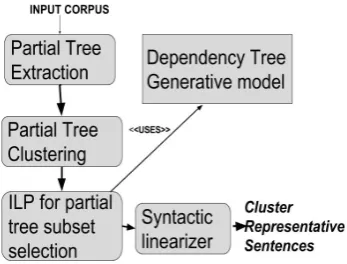
neu-Figure 1: Overall approach
ral network for single document summarization by extracting words. They have treated highlighted text in news articles consisting of very short bul-leted lines on the web as summary of the corre-sponding article.
A major challenge of using a fully data driven approach for multi-document abstractive summa-rization using neural network is the expensive task of creating dataset which can be used to jointly model extraction of relevant content and genera-tion good quality summary sentences. But multi-document abstractive summarization becomes an achievable task, by disintegrating the extraction of knowledge granules from the input corpus and us-ing a separate language generation model trained in a sophisticated dataset which can take a sub-set of extracted knowledge granules and gener-ate a summary sentence of high linguistic quality. To this end, we leverage partial tree linearization (Zhang, 2013) synthesizing summaries from ex-tracted treelets.
3 Approach
The overall approach (Figure 1) for abstractive multi-document summarization detailed in the current work starts with extracting the most rel-evant set of partial trees of varying sizes from the set of all syntactic dependency trees in the corpus using maximum density sub-graph cut algorithm (Su et al.,2008). In parallel, generative model for syntactic dependency trees is trained (Zhang et al.,
a dataset, consisting of dependency trees of tences in Penn-tree bank and corresponding sen-tence.
The set of extracted partial dependency trees are clustered to ensure topical diversity. We identify a subset of partial trees from each cluster, which can be linearized to a single sentence which represents the cluster in the final summary. Integer linear pro-gramming is used for locating the most accurate subset of partial trees out of which representative sentence can be generated.
The objective function consists of linear com-ponents for maximising total relevance and to-tal combinabilityof the subset of partial trees se-lected. total combinabilityis measured using the generative modelZhang et al.(2016). Here we try to jointly model the human summarizers method of collecting relevant knowledge granules and de-ciding the combinable set of information. Clus-ter representative sentence are generated using the linearization model of Puduppully et al. (2016) from the subset of partial trees identified earlier. The following sections explain how the system achieves each one of the tasks listed above in de-tail.
3.1 Extracting Relevant Partial Trees
For each dependency tree in the input corpus, there is a subtree rooted at every node. Each subtree do not necessarily contain extractable information to generate a summary. The method used to create a noise pruned subset of subtrees containing cogniz-able information from the set of all subtrees in the corpus can be split into two steps.
• Identify the roots of valid subtrees contain-ing cognizable information in all the syntac-tic dependency trees in the input corpus.
• Prune the identified subtrees so that it con-tains nodes relevant for generating summary.
3.1.1 Identify Subtree Roots
The level of granularity at which syntactic ele-ments chosen to generate summary sentence con-siderably decides factual accuracy of a generated sentence. As extracted set of subtrees are basic building units for summary sentence generation, the structure of subtrees extracted should be suit-able for generating factually correct summary sen-tences with respect to the corpus to be summa-rized. We observe that a node containingsubject
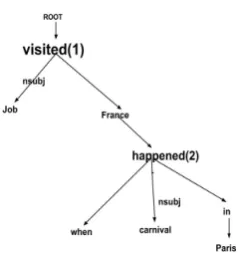
Figure 2: Marking relevant subtree roots
relationship with its child node is a valid candi-date. Consequently any node in a dependency tree sharing dependency relations such asnsubj, csubj, nsubjpass or xsubj with any of its child node is treated as the root node of a subtree which contains extractable and cognizable information. In Figure
2, for example, subtrees rooted at words visited
andhappenedare valid subtrees to contribute for summary generation as per the linguistic criteria discussed above.
3.1.2 Pruning Subtrees
Identified subtrees are dissected out from their original dependency trees after pruning away their noisy portions which are irrelevant for summary generation. Su et al. (2008) introduced a dy-namic programming approach to find a length-constrained maximum-density subtree containing the root r, from a tree rooted at r for which weight and length is preset for all edges. The density of a tree T is defined as follows.
density= P
eEW(e) P
eELen(e) (1) where E is the set of all edges in T, W(e)is the weight of edgeeandLen(e)is the length of edgee. The constraint on length implies that total length of all edges in the resultant maximum density sub-tree should be between lower bound L and upper bound U which are taken arguments by the algo-rithm. We leverage multi density subtree extrac-tion algorithm for dissecting out a noise pruned subtree from an identified valid subtree in a depen-dency tree after setting values for edge weights, edge lengths,LandU.
weight depends on the frequency of bigram con-stituted by words on either side of the dependency edge(Dbigram). We set the weight of edgeeas,
W(e) = log(1 +depthfd(ebigram)2 ), (2)
wherefdbigramis the frequency of theDbigramof
ein the corpus anddepth(e)is the depth of depen-dent node of e in the tree. Summary should prefer general information over context specific informa-tion. The specificity of the information contained increases with depth in dependency tree and the denominator term in Equation2penalizes deeper edges.
The length of the edge is set as the size of the word in the dependent node in bytes so that length of all edges in the tree equals the total size of all words in the tree. Length constraintUis the total length of all edges in the tree and Lis calculated as follows
L=α∗tanh(β∗twe−σ)∗T L,
where twe is the total weight of all edges in the subtree, T Lis the total length of all edges in the subtree and σ, α and β are constants optimized empirically. σ sets the universal upper bound for all subtrees minimum length whileαandβset the slope and position of tanh curve. The value of L ensures that subtrees containing more relevant in-formation are pruned lesser. We enforce a rule to retain the tree nodes to maintain grammaticality while pruning. If the grammatical relation point-ing to a node from its parent is nsubj, csubj, nsub-jpass, xsubj, aux, xcomp, pobj, acomp, dobj, case, det, poss, possessive, auxpass, ccomp, neg, expl, cop, prt, mwe, pcomp, iobj, number, quantmod, predet, dep or mark, then the node cannot be re-moved without also removing its parent to main-tain grammatical and factual correctness.
For the rest of this paper, we refer to a noise-pruned subtree extracted out of a dependency tree as apartial tree. The partial trees pruned out of subtrees sharing anscestor-descendant relationship may contain overlapping information (eg: subtrees rooted at ‘visited’ and ‘happened’ in Figure 2). So ancestor-descendant relationship between cor-responding partial trees is recorded to avoid redun-dant information during summary sentence gener-ation.
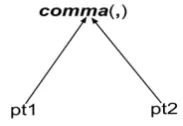
Figure 3: Combine(pt1,pt2)
3.2 Estimation of Combinability of Partial trees using Generative Model of Dependency Trees
During the final stage of summary sentence gener-ation, each of the summary sentence is generated from a precisely identified subset of relevant par-tial trees. To arrive at such a precise subset, along with information regarding topical relevance, due consideration should be given to the combinability of partial trees in the subset to form a full depen-dency tree of a valid sentence w.r.t to the syntactic and semantic information contained in them. As a primitive measure upon which total combinability of a set of partial trees can be built upon, we esti-mate the combinability of any two partial trees to form whole or a part of a valid dependency tree as follows
DepT ree→Combine(pt1, pt2) (3)
C(pt1, pt2)→Pdepgen(DepT ree), (4) where Combine(pt1, pt2) combines two partial trees pt1 and pt2 as represented in Figure 3 by adding a dummy root containing ‘,’ with ‘comma’ as the dependency relation of edges andpt1comes beforept2in breadth first order.C(pt1, pt2)is the
Combinabilityof any two partial trees andPdepgen represents a generative distribution of syntactic dependency trees trained with a large set of de-pendency trees. Combine(pt1, pt2) need not ex-actly represent a substep in the final process of combination and linearization of a set of selected partial trees to generate a summary sentence. But Pdepgen(DepT ree) acts as an indicative measure on how muchpt1andpt2can together participate in the construction of a full-dependency tree of a valid sentence with respect to the syntactic and se-mantic information contained in them.
3.2.1 LearningPdepgen
Short-Term Memory (TreeLSTM), a neural network model based on LSTM, which is designed to pre-dict a tree rather than a linear sequence. They define probability of a sentence as the generation probability of its dependency tree. Under the as-sumption that each wordwin a dependency tree is only conditioned on its dependency path, the prob-ability of a sentenceSgiven its dependency treeT
is:
P(S|T) = Y wBF S(T)\ROOT
P(w|D(w)) (5)
where D(w) is the dependency path of w and how dependency path for each node is identified is de-tailed in the paper Zhang et al. (2016) and each word w is visited according to its breadth-first search order (BFS(T)).P(S|T)can be restated as a generative probability Pdepgen(T0) where T0 is a restricted syntactic dependency tree structure in which, for all nodes, left and right dependants and breadth first order of its children are fixed. As the above mentioned structural restrictions can be fixed in parameter for partial trees forCombinein Equation 3, we can directly use TreeLSTM net-work to estimatePdepgenin Equation4.
The sentence dataset shared by Zhang et al.
(2016) is parsed using Standford parser for train-ing a TreeLSTM network. The negative log prob-ability values produced by the network is normal-ized for partial tree pairs in the corpus.
3.3 Syntactic Linearization
We make use of the syntactic linearization model proposed byPuduppully et al. (2016) to linearize the input set of partial trees. Puduppully et al.
(2016) andLiu et al. (2015) propose a transition-based word ordering model, which takes a bag of words, together with optional POS and depen-dency arcs on a subset of input words, yields a sen-tence together with its dependency parse tree that conforms to input syntactic constraints (Zhang,
2013). The system is flexible with respect to in-put constraints, performing abstract word ordering when no constraints are given, but gives increas-ingly confined outputs when more POS and de-pendency relations are specified. We retrain their model1using autoparsed data obtained using
Stan-ford Dependency Parser.
1https://github.com/SUTDNLP/ZGen
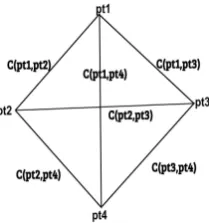
Figure 4: Cluster graph of partial trees
3.4 Clustering for Topical Diversity
To ensure topical diversity we apply K-means clustering in the set of partial trees with an aim of generating a sentence from each of the cluster as a topical representative of the respective clus-ter. Cosine similarity betweenDbigramfrequency vectors of partial trees is treated as the similarity metric during clustering. Number of clusters (K) is decided using the relation,
K =bq∗ShannonEntc (6) whereShannonEntis the Shannon entropy of uni-gram distribution of the corpus andqis a constant.
3.5 Generating Cluster Representative Sentence
Our system generates a single sentence from each of the partial tree clusters identified as described in section3.4to represent the cluster in final sum-mary. Here we search for a subset of partial trees from each cluster which maximise the total rel-evanceandtotal combinabilityof the partial trees in the selected subset. Relevance of a partial tree is defined as the total weight of all dependency edges calculated using the Equation2.
A data structure which searchably organizes the relevance and combination probabilities of partial trees belonging to a cluster is essential for formu-lating the partial tree subset selection as an integer linear programming problem. For this purpose we visualize the entire partial tree information orga-nized in acluster graph (CG)as shown in Figure
4in whichnodesrepresent partial trees, andedge weights represent the combination probability of partial trees represented by the edge nodes calcu-lated using the Equation4. Anedge existsbetween two nodes if the partial trees at the nodes contain mention about same named entity.
objective function which takes a binary indicator vector representing a sub-graph of cluster graph as argument.
where λ is a constant, R(i) is the relevance of partial tree at node i,W({i,j})is the weight of the
ancestor(i)indicator variable that represents a par-tial tree that is extracted from a ancestor subtree of the subtree from which i is extracted (Explained in section3.1).size(i)is the total size of all words in subtree i and MaxLenis the maximum size of a sentence in the input corpus.
The constraints C1 andC2 ensure that an edge will be present if and only if the corresponding edge nodes in CG are present in the input vector, while C3 ensures that the input vector represents a subgraph ofCG. The constraintC4keeps an up-per bound on the size of sentence that is generated from a single cluster, whileC5ensures that partial trees with overlapping information are not present together in the selected subset of partial trees in a cluster.
The set of partial trees represented by the nodes of the subgraph that maximizes the objective func-tion in Equafunc-tion 7 functions as the syntactic in-gredients to generate the cluster’s representative sentence. A selected subset of partial trees are linearized using the transition based syntactic lin-earization model detailed in Section3.3to gener-ate cluster representative sentence.
4 Experiments
We evaluate our method using the test sets of DUC 2004, DUC-2007 and TAC-2011. In particular, the set of attributes of the summary including con-tent coverage of summaries and linguistic quality and factuality of newly generated summary sen-tences are evaluated. The content coverage is eval-uated using ROUGE (Lin,2004) and we relied on human evaluation for evaluating linguistic quality and factuality.
4.1 Data
DUC 2004, DUC-2007 and TAC-2011 consist of several corpora, each of them consisting of 10 doc-uments and four model summaries for those 10 documents. We have tuned our development pa-rameters using DUC 2003 dataset.
4.2 Settings
The values ofα,β,σ,qandλare tuned on the de-velopment set for optimum content coverage and sentence quality. In order to objectively evaluate a summary sentence generated by linearizing a set of partial trees, we need a human written reference sentence of high linguistic quality which is written after carefully understanding the information con-tained in selected partial trees. As it is timecon-suming to create such reference sentences for each of the combination constituted by the possible val-ues ofα,β,σ,qandλ, we choose to separate pa-rameter tuning for optimal content coverage and sentence quality. Optimal values ofα,β,σ andq
contributes prominently for better content cover-age while that ofλcontributes for better sentence quality as it weights combinability of partial trees. In Subsections4.2.1and4.2.2we explain how we tune different development parameters for optimal content coverage and sentence quality.
4.2.1 Tuningα,β,σandqfor maximum content coverage
System DUC 2004 DUC 2007 TAC 2011
Metric R-1 R-2 R-SU4 R-1 R-2 R-SU4 R-2 R-SU4
CompAbsum (Banerjee et al.,2015) - 0.120 0.148 - - - -
-PhraseAbSum (Bing et al.,2015) - - - 0.117 0.147
Semantic (Li,2015) - - - 0.421 0.110 0.150 -
-WordCoverage(Dbigram) 0.382 0.096 0.113 - - - -
-PartTreeAbSum(ours) 0.439 0.120 0.140 0.431 0.109 0.150 0.113 0.141 Table 1: Comparison with state of the art
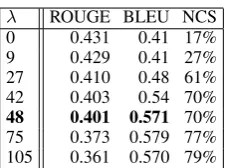
λ ROUGE BLEU NCS 0 0.431 0.41 17% 9 0.429 0.41 27% 27 0.410 0.48 61% 42 0.403 0.54 70%
48 0.401 0.571 70% 75 0.373 0.579 77% 105 0.361 0.570 79%
Table 2: Optimizingλfor better topical coverage sentence quality
4.2.2 Tuningλfor optimum content coverage and sentence quality
The values ofα,β,σandqare preset to the opti-mum values identified in the section above. The value of λ is varied from 0 to 100 with an in-crement of 3 and set partial trees to form each of the summary sentences for all corpora in DUC 2003 is identified. We asked a human annotator to write a linear sentence out of each of the selected partial trees sets without using new words which are not present in partial tree nodes in the set and the BLEU score of generated summary sentences with respect to the human written sentences is es-timated. For each value ofλwe estimate the aver-age ROUGE-1 and BLEU for the generated sum-maries and summary sentences respectively. The value at which total value of average BLEU and ROUGE-1 scores is maximum is set as the value of λ during testing. Table 2 reports BLEU and ROUGE-1 for different values ofλ. Column NCS in the Table 2 represents the percentage of com-plex sentences generated by linearizing more than one partial tree.
4.3 Final Results 4.3.1 Content coverage
While evaluating the relevant content coverage of abstractive summarization system, we also have to evidently substantiate the effectiveness of noise pruning done using multi density partial tree ex-traction algorithm. For this purpose we have created extractive summarizer using maximum weighted word coverage algorithmTakamura and
Okumura(2009), which tries to extract sentences containing maximum weightedDbigrams in their dependency trees.
Table 1 shows the results on DUC-2004, DUC-2007, TAC-2011 along with previous ap-proaches. In the table R-1,R-2 and R-SU4 represents 1, 2 and ROUGE-SU4 (skip-bigrams with unigrams), respectively.
WordCoverage(Dbigram) summarizer using max-imum weighted word coverage algorithm repre-sents the word coverage algorithm usingDbigram weights whilePartTreeAbSumabstractive summa-rization approach detailed in the paper. Results on DUC-2004 shows that noise-pruning using max-imum weighted partial tree extraction was effec-tive in terms of better content coverage. Despite rephrasing content in many contexts, PartTreeAb-Sum shows results comparable with previous ap-proaches. CompAbsum (Banerjee et al.,2015) de-mands high syntactic overlap between source sen-tences to recombine and generate new sensen-tences, otherwise resembles an extractive summarization system. Our system shows better ROUGE-1 and equal ROUGE-2 values in DUC-2004 test set. PhraseAbSum (Bing et al., 2015) which extracts phrases from the corpus and phrases can enjoy lower granularity in terms of information content when compared to partial trees by compromising topical coherence in summary sentence genera-tion. Still our results are comparable with that of PhraseAbSum in TAC 2011. Our results show competitiveness with Semantic (Li, 2015) which generate summary content from a corpus level se-mantic network utilizing linear structures smaller than a partial tree and does not employ explicit means to ensure gramaticality.
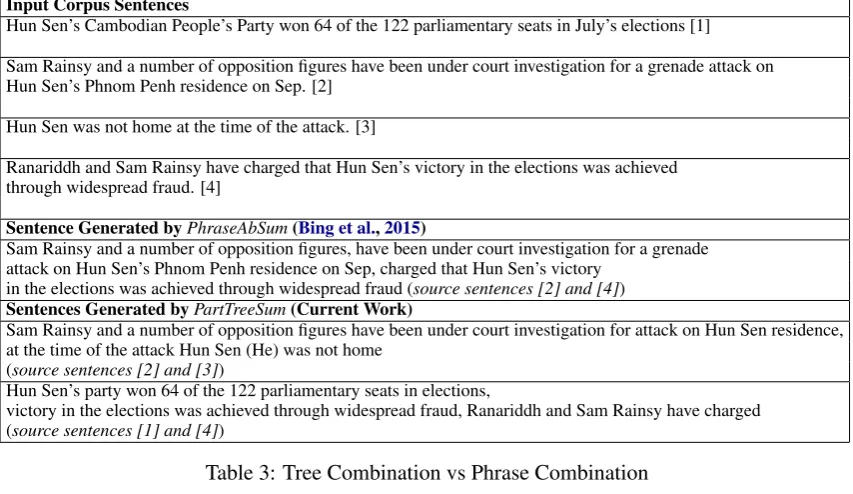
Input Corpus Sentences
Hun Sen’s Cambodian People’s Party won 64 of the 122 parliamentary seats in July’s elections [1] Sam Rainsy and a number of opposition figures have been under court investigation for a grenade attack on Hun Sen’s Phnom Penh residence on Sep. [2]
Hun Sen was not home at the time of the attack. [3]
Ranariddh and Sam Rainsy have charged that Hun Sen’s victory in the elections was achieved through widespread fraud. [4]
Sentence Generated byPhraseAbSum(Bing et al.,2015)
Sam Rainsy and a number of opposition figures, have been under court investigation for a grenade attack on Hun Sen’s Phnom Penh residence on Sep, charged that Hun Sen’s victory
in the elections was achieved through widespread fraud (source sentences [2] and [4])
Sentences Generated byPartTreeSum(Current Work)
Sam Rainsy and a number of opposition figures have been under court investigation for attack on Hun Sen residence, at the time of the attack Hun Sen (He) was not home
(source sentences [2] and [3])
Hun Sen’s party won 64 of the 122 parliamentary seats in elections,
victory in the elections was achieved through widespread fraud, Ranariddh and Sam Rainsy have charged (source sentences [1] and [4])
Table 3: Tree Combination vs Phrase Combination
LQ FA Human Summary 4.5 4.3 PartTreeSum(WC) 2.1 2.32 PartTreeSum 3.15 3.09
Table 4: Human Evaluation on sentence quality
of grammaticality and readability, and factual ac-curacy refers to how much the information con-veyed by the generated summary sentences are true with respect to what is contained in the input corpus. For this purpose we employed 4 manual evaluators who are post-graduate students in En-glish literature. 10 random corpora were chosen for manual evaluation and we asked the evaluators to read the documents in each corpus and rate cor-responding summary sentences for their linguistic quality and factual accuracy.
For each corpus the summaries participated in manual evaluation include a randomly chosen hu-man summary for corpus, current approach for ab-stractive summarization (PartTreeSum), the cur-rent approach without combinability measure by settingλto 0 (PartTreeSum(WC)). Human evalu-ation results shown in Table4proves that linguis-tic quality and factual accuracy have considerably increased with the introduction of combinability measure.
4.4 Discussions
Tree combination vs phrase combination: Ta-ble 3 contains the fours input corpus sentences in one test example and sentences generated by
PhraseAbSum (Bing et al.,2015) and the current work (PartTreeSum), PhraseAbSum could gener-ate only one sentence respectively, due to the hard constraint for verb phrases to coincidentally share same noun phrase in source sentences and the sen-tence exhibit poor topical coherence. In contrast,
PartTreeSumis flexible to generate more sentences and the Combinablity component in Equation 7
ensures that generated summary sentence contain topically related content. The original content is rephrased when required as observed in the sec-ond half of generated sentences. In Table 3, the summary sentences generated byPartTreeSumare more topically coherent compared to those gener-ated byPhraseAbSum.
Error analysis : We have analysed the low-rated sentences from human evaluators with their cor-responding set of partial trees. Though the par-tial trees contained information which can be com-bined in a single complex sentence, text aggre-gation during linearization should be more effec-tive to improve the quality of sentences. For fu-ture work we plan to construct a neural genera-tion model, which can aggregate and generate a sentence from a set of partial trees while main-taining factual accuracy with respect to the input documents. Also there should be a means to treat quotes separately apart from normal sentences.
5 Conclusion
trees to represent knowledge granules, and gen-erating summary sentences using combinable granules utilizing syntactic linearization. Com-pared to existing methods for the task, our method has the advantages of generating new sequential sentential structures by rephrasing information if required as decided by the linearization model. On standard evaluation of using ROUGE metric and human evaluation for qualitative aspects of summary, this method showed competitive accuracies to the state-of-the-art methods for multi-document summarization.
Acknowledgements
We thank Ratish Puduppally, Zhiyang Teng and the three anonymous reviewers for conver-sations and feedback on earlier drafts. We thank Raghuram Vadapally and Faraaz Nadeem for their creative suggestions.
References
Miguel B Almeida and Andre FT Martins. 2013. Fast and robust compressive summarization with dual de-composition and multi-task learning. In ACL (1). pages 196–206.
Siddhartha Banerjee, Prasenjit Mitra, and Kazunari Sugiyama. 2015. Multi-document abstractive sum-marization using ilp based multi-sentence compres-sion. InProceedings of the 24th International Con-ference on Artificial Intelligence. AAAI Press, pages 1208–1214.
Taylor Berg-Kirkpatrick, Dan Gillick, and Dan Klein. 2011. Jointly learning to extract and compress. In
Proceedings of the 49th Annual Meeting of the Asso-ciation for Computational Linguistics: Human
Lan-guage Technologies-Volume 1. Association for
Com-putational Linguistics, pages 481–490.
Lidong Bing, Piji Li, Yi Liao, Wai Lam, Weiwei Guo, and Rebecca J Passonneau. 2015. Abstractive multi-document summarization via phrase selection and merging. arXiv preprint arXiv:1506.01597. Jianpeng Cheng and Mirella Lapata. 2016. Neural
summarization by extracting sentences and words.
arXiv preprint arXiv:1603.07252.
Wei Li. 2015. Abstractive multi-document summariza-tion with semantic informasummariza-tion extracsummariza-tion. In Pro-ceedings of the 2015 Conference on Empirical
Meth-ods in Natural Language Processing. pages 1908–
1913.
Chin-Yew Lin. 2003. Improving summarization per-formance by sentence compression: a pilot study.
In Proceedings of the sixth international
work-shop on Information retrieval with Asian
languages-Volume 11. Association for Computational
Linguis-tics, pages 1–8.
Chin-Yew Lin. 2004. Rouge: A package for auto-matic evaluation of summaries. InText summariza-tion branches out: Proceedings of the ACL-04 work-shop. Barcelona, Spain, volume 8.
Hui Lin and Jeff Bilmes. 2011. A class of submodu-lar functions for document summarization. In Pro-ceedings of the 49th Annual Meeting of the Asso-ciation for Computational Linguistics: Human
Lan-guage Technologies-Volume 1. Association for
Com-putational Linguistics, pages 510–520.
Yijia Liu, Yue Zhang, Wanxiang Che, and Bing Qin. 2015. Transition-based syntactic
lineariza-tion. In NAACL HLT 2015, The 2015
Con-ference of the North American Chapter of the Association for Computational Linguistics: Hu-man Language Technologies, Denver, Colorado,
USA, May 31 - June 5, 2015. pages 113–122.
http://aclweb.org/anthology/N/N15/N15-1012.pdf. Andr´e FT Martins and Noah A Smith. 2009.
Summa-rization with a joint model for sentence extraction and compression. InProceedings of the Workshop on Integer Linear Programming for Natural
Lan-gauge Processing. Association for Computational
Linguistics, pages 1–9.
Hajime Morita, Ryohei Sasano, Hiroya Takamura, and Manabu Okumura. 2013. Subtree extractive sum-marization via submodular maximization. InACL (1). Citeseer, pages 1023–1032.
Ratish Puduppully, Yue Zhang, and Manish Shrivas-tava. 2016. Transition-based syntactic linearization with lookahead features. InProceedings of NAACL-HLT. pages 488–493.
Hsin-Hao Su, Chin Lung Lu, and Chuan Yi Tang. 2008. An improved algorithm for finding a length-constrained maximum-density subtree in a tree.
In-formation Processing Letters109(2):161–164.
Hiroya Takamura and Manabu Okumura. 2009. Text summarization model based on maximum coverage problem and its variant. InProceedings of the 12th Conference of the European Chapter of the Associa-tion for ComputaAssocia-tional Linguistics. Association for Computational Linguistics, pages 781–789.
Dingding Wang, Tao Li, Shenghuo Zhu, and Chris Ding. 2008. Multi-document summarization via sentence-level semantic analysis and symmetric ma-trix factorization. In Proceedings of the 31st an-nual international ACM SIGIR conference on
Re-search and development in information retrieval.
ACM, pages 307–314.
Computational Linguistics. Association for Compu-tational Linguistics, pages 565–574.
David M Zajic, Bonnie Dorr, Jimmy Lin, and Richard Schwartz. 2006. Sentence compression as a compo-nent of a multi-document summarization system. In
Proceedings of the 2006 Document Understanding
Workshop, New York.
Xingxing Zhang, Liang Lu, and Mirella Lapata. 2016. Top-down tree long short-term memory networks.
arXiv preprint arXiv:1511.00060pages 0–5.