Clinical Pharmacology: Advances and Applications
Dove
press
O r i g i n A l r e s e A r C h
open access to scientific and medical research
Open Access Full Text Article
An exploratory, randomized, parallel-group,
open-label, relative bioavailability study with an
additional two-period crossover food-effect study
exploring the pharmacokinetics of two novel
formulations of pexmetinib (ArrY-614)
lance A Wollenberg1
Donald T Corson2,3
Courtney A nugent1
Farran l Peterson1
Ann M Ptaszynski1
Alisha Arrigo2,3
Coralee g Mannila2,3
Kevin s litwiler1
stacie J Bell1,4
1Array BioPharma, Boulder, 2Array BioPharma, longmont,
CO, 3Avista Pharma solutions,
longmont, CO, 4Mallinckrodt
Pharmaceuticals, ellicott City, MD, UsA
Correspondence: lance A Wollenberg Array BioPharma, 3200 Walnut street, Boulder, CO 80301, UsA
Tel +1 303 386 1264 Fax +1 303 381 6652
email lance.wollenberg@arraybiopharma. com
Background: Pexmetinib (ARRY-614) is a dual inhibitor of p38 mitogen-activated protein kinase and Tie2 signaling pathways implicated in the pathogenesis of myelodysplastic syndromes. Previous clinical experience in a Phase I dose-escalation study of myelodysplastic syndrome patients using pexmetinib administered as neat powder-in-capsule (PIC) exhibited high vari-ability in pharmacokinetics and excessive pill burden, prompting an effort to improve the formulation of pexmetinib.
Methods: A relative bioavailability assessment encompassed three parallel treatment cohorts of unique subjects comparing the two new formulations (12 subjects per cohort), a liquid oral suspension (LOS) and liquid-filled capsule (LFC) and the current clinical PIC formulation (six subjects) in a fasted state. The food-effect assessment was conducted as a crossover of the LOS and LFC formulations administered under fed and fasted conditions. Subjects were divided into two groups of equal size to evaluate potential period effects on the food-effect assessment.
Results: The geometric mean values of the total plasma exposures based upon area-under-the-curve to the last quantifiable sample (AUClast) of pexmetinib were approximately four- and twofold higher after administration of the LFC and LOS formulations, respectively, than after the PIC formulation, when the formulations were administered in the fasted state. When the LFC formulation was administered in the fed state, pexmetinib AUClast decreased by ,5% compared with the fasted state. After administration of the LOS formulation in the fed state, pexmetinib AUClast was 34% greater than observed in the fasted state.
Conclusion: These results suggest that the LFC formulation of pexmetinib may achieve greater exposures with lower doses due to the greater bioavailability compared to the PIC, and remain unaffected by coadministration with food.
Keywords: pexmetinib, myelodysplastic syndromes, liquid-filled capsule, bioavailability, food-effect, formulation
Introduction
Pexmetinib (ARRY-614) is an orally bioavailable inhibitor of p38 mitogen-activated protein kinases with additional activity against kinases that are suspected of having a role in malignant disease, such as the endothelial tyrosine kinase receptor, Tie2 (TEK). Currently, pexmetinib is in clinical development for the treatment of patients with myelodysplastic syndromes (MDS), a heterogeneous group of clonal stem cell disorders
of the bone marrow.1 MDS are generally characterized by ineffective hematopoiesis that
Clinical Pharmacology: Advances and Applications downloaded from https://www.dovepress.com/ by 118.70.13.36 on 21-Aug-2020
For personal use only.
Number of times this article has been viewed
This article was published in the following Dove Press journal: Clinical Pharmacology: Advances and Applications
Dovepress
Wollenberg et al
leads to hematologic cell dysfunction, abnormal development of blood and bone marrow, and an increased propensity for
progression to acute myeloid leukemia.2 The activity of a p38
inhibitor in the treatment of MDS is thought to occur through two distinct mechanisms: inhibition of myelosuppressive
cytokine production in the bone marrow microenvironment3
and inhibition of apoptotic signaling in hematopoietic
progenitor cells.4 Inhibition of the p38 pathway in patients
with MDS has previously demonstrated clinical activity in
a Phase I clinical setting,5 further supporting the validity of
this approach in the treatment of MDS. The role of Tie2 in MDS is less well defined; however, increased expression of the endogenous Tie2 ligand, angiopoietin-1, has been shown
to be correlated with poor prognosis in MDS.6 Additionally,
decreased levels of angiopoietin-2, a natural antagonist of Tie2, have been associated with a decreased survival benefit
for patients with acute myeloid leukemia,7 a condition closely
related to MDS. As a result, inhibition of the Tie2 signaling pathway is hypothesized to provide additional clinical benefit for this patient population.
A first-in-human study conducted in healthy subjects evaluated the pharmacokinetics (PK), safety, and pharma-codynamics of powder-in-capsule (PIC) freebase pexmetinib delivered as either a single dose (25–400 mg) or multiple doses over 14 days (50–400 mg) administered once daily
(QD).8 Ex vivo stimulation of cytokine production in this
population was inhibited following administration of
pexme-tinib PIC in both a time- and dose-dependent manner.8 Based
on these findings, a Phase I dose-escalation trial was
initi-ated using a 3+3 design in patients with MDS. Dose cohorts
evaluating QD doses ranging from 400 mg to 1,200 mg and BID doses of 200 mg and 300 mg were included.
Neat PIC pexmetinib used in the Phase I dose-escalation trial was associated with high variability in the PK param-eters between patients, largely attributed to variability
in absorption.8 High lipophilicity (6.8 ClogP) and low
aqueous solubility across the physiological pH range of
1–8 (,10 µg/mL) likely contribute to the observed variability
in exposure. Additionally, PIC pexmetinib was manufactured at a dose strength of 100 mg, resulting in a substantial pill burden as the dose increased and impacted the dose that could be administered in the Phase I dose-escalation clini-cal trial. The high pill burden abrogated the dose-esclini-calation sequence, with 1,200 mg QD being the maximum admin-istered dose, resulting in a failure to reach a maximum tolerated dose. Manufacture of higher dose strengths of PIC pexmetinib was not possible due to a low bulk density of neat pexmetinib powder, further spurring the desire to explore
new formulation strategies. Additionally, a food-effect arm built into the dose-escalation clinical trial in MDS patients exploring the effect of food on the administration of 400 mg PIC pexmetinib indicated a decrease in pexmetinib exposure when co-administered with food, warranting investigation of potential food-effect with the exploratory formulations.
In an effort to minimize the variability in the disposition of pexmetinib, improve manufacturability, explore the effect of food on disposition, and reduce pill burden, two novel for-mulations, a liquid oral suspension (LOS) and a liquid-filled capsule (LFC), both containing micronized hydrochloric acid (HCl) salt drug substance, were manufactured. Here, the results of a relative bioavailability study conducted in healthy subjects to compare the PK of the PIC with the novel formulations are reported. Additionally, a food-effect component was included in the study to evaluate the admin-istration of exploratory formulations of pexmetinib under fed and fasting conditions.
Methods
study design
An exploratory, open-label study evaluated PK, relative bioavailability, potential food-effect, and safety of single oral doses of 400 mg pexmetinib administered as two novel formulations in the fasted and fed state to healthy adult subjects. The new formulations were a LFC and a LOS that were compounded at the clinical research unit (CRU). The study was designed with three parallel treatment cohorts of unique subjects for the evaluation of the two new formulations (12 subjects per cohort) in fed and fasted states. For subjects in the fed and fasted arms, the washout period between fed and fasted treatments was 7 days. A third cohort of PIC pex-metinib, administered under fasted conditions (six subjects, 400 mg), was included as a reference. A tabular description of the design of the study is provided in Table 1.
Prior to study start-up, the study protocol, informed consent form, and printed subject information materials were reviewed and approved by the IntegReview Ethical Review
Table 1 Treatment cohorts and periods Cohort Formulation
(dose)
Group N Period 1 (Day 1)
Period 2 (Day 8)
1 lFC (400 mg) 1 6 Fasted Fed
2 6 Fed Fasted
2 lOs (400 mg) 1 6 Fasted Fed
2 6 Fed Fasted
3 PiC (400 mg) 1 6 Fasted n/A
Abbreviations: LFC, liquid-filled capsule; LOS, liquid oral suspension; PIC, powder-in-capsule; N/A, not applicable.
Clinical Pharmacology: Advances and Applications downloaded from https://www.dovepress.com/ by 118.70.13.36 on 21-Aug-2020
Dovepress Pharmacokinetics of a liquid-filled capsule formulation of pexmetinib
Board (Austin, TX), the CRU’s institutional review board. All subjects were required to provide the written informed consent form prior to study screening. The single-center study described here was conducted at the Pharmaceutical Product Development Phase I clinic (Austin, TX).
Key inclusion criteria for participation in the study included healthy males or females between the ages of
18 years and 60 years, body mass index between 18 kg/m2 and
32 kg/m2, and total body weight between 50 kg and 113.6 kg.
Females had to be of nonchildbearing potential or have documented bilateral oophorectomy, and/or hysterectomy. Subjects were excluded from the study for any clinically significant gastrointestinal diseases or other conditions that could affect drug absorption, as well as for screening liver function tests, serum creatinine, and hemoglobin or hematocrit levels outside the normal range. Subjects were also excluded from the study if they were treated with an investigational drug within the past 30 days; prescription medication within the past 28 days; or over-the-counter medication, vitamins, antacids, and dietary and herbal supplements within the past 14 days prior to the first date of the study drug administration. Subjects were also excluded for consumption of grapefruit or grapefruit juice within the past 7 days or tobacco or nicotine-containing products within the past 14 days, or if they had tested positive for alcohol or illicit substances during screening. Subjects abstained from strenuous exercise (eg, heavy lifting, weight training, and aerobic activity) for 48 hours before each blood collection for clinical laboratory tests.
Compounding
Pexmetinib was supplied to the CRU as both a manufactured drug product (PIC) and a micronized HCl salt drug substance. The manufactured PIC drug product contained neat, amor-phous pexmetinib freebase at a dose strength of 100 mg contained in a white, opaque, size “0”, hard gelatin capsule. No additional formulating ingredients were used. The HCl salt drug substance was provided in bulk by Array BioPharma (Boulder, CO, USA). The on-site pharmacy compounded the LFC and LOS formulations. The compounded LFC formula-tion consisted of pexmetinib HCl salt drug substance (200 mg
active) suspended in vitamin E d-alpha tocopheryl
polyethyl-ene glycol 1000 succinate (TPGS), Labrafac WL Lipophile 1349, and butylated hydroxytoluene contained in a white, opaque, size “00” hard gelatin capsule. The compounded LOS formulation consisted of the pexmetinib HCl salt drug
substance suspended in SyrSpend® SF (Fagron Group BV,
Rotterdam, the Netherlands) and water for sterile irrigation.
Dose administration
An oral dose of 400 mg was selected for evaluation in this clinical study, based upon the PK and safety data observed to that point in time for pexmetinib in healthy subjects and the MDS patient population in Phase I studies. Additional data from nonclinical toxicology, nonclinical PK, and in vitro formulation data were also considered. For both the PIC and LFC, on Day 1 (Cohorts 1 and 3) and Day 8 (Cohort 1 only), subjects received LFC (Cohort 1) or PIC (Cohort 3) of
pex-metinib with 240 mL (±10 mL) water (ambient temperature).
Subjects swallowed the study drug whole and did not chew the capsules (four PICs or two LFCs) before swallowing. For the LOS, on Days 1 and 8 (Cohort 2), subjects consumed 60 mL of LOS, followed by two rinse-and-drink cycles with
30 mL (±5 mL) water, followed by consumption of 120 mL
(±10 mL) water (ambient temperature). The study drug
was administered under the supervision of site personnel, and the oral cavity of each subject was examined follow-ing drug administration to ensure that the study drug was swallowed.
Food-effect conditions
For treatments administered in a fasted state, subjects received the study drug after an overnight fast of at least 8 hours. Water was permitted until 1 hour before the study drug administration. Food and water were not permitted for 4 hours following the study drug administration.
For treatments administered in a fed state, subjects fasted overnight for at least 8 hours, after which a standard high-fat meal, which was slightly modified from Food and
Drug Administration guidance,9 consisting of 985 calories
(153 calories from protein, 257 calories from carbohydrates, and 571 calories from fat) was provided. The high-fat meal consisted of three eggs scrambled in two teaspoons of but-ter, 1½ pork sausage links, 4 oz of hash brown potatoes, two slices of white toast spread with two teaspoons of butter, and 8 fl oz of whole milk. The entire meal was consumed within 30 minutes. The study drug was administered 30 minutes after completion of the meal. After completion of the study meal, food and water were not permitted for 4 hours following the study drug administration.
PK samples
Blood samples for the determination of plasma concentra-tions of pexmetinib were collected before dosing and at 0.5 hours, 1 hour, 2 hours, 3 hours, 4 hours, 6 hours, 8 hours, 12 hours, 16 hours, 24 hours, and 48 hours after dosing on Day 1 (all cohorts) and Day 8 (LFC and LOS cohorts).
Clinical Pharmacology: Advances and Applications downloaded from https://www.dovepress.com/ by 118.70.13.36 on 21-Aug-2020
Dovepress
Wollenberg et al
PK blood samples (3 mL) were collected into Vacutainers®
(Beckton, Dickinson and Company, Franklin Lakes, NJ, USA) containing dipotassium salt of ethylenediaminetetraa-cetic acid. Within 30 minutes of collection, blood samples were centrifuged and plasma was transferred to cryovials and
stored at −20°C until analysis.
Bioanalytical methodology
Plasma concentrations of pexmetinib were determined using a validated liquid chromatography method with tandem mass spectrometric detection. Mobile phase was delivered by a Shi-madzu SCL-10A controller with LC-10AD pump (ShiShi-madzu, Columbia, MD, USA). Analysis of the eluent was conducted by an Applied Biosciences Sciex API 5000 (Applied Biosys-tems Sciex, Ontario, CA, USA) mass spectrometer operating in the positive ion model. Ions were monitored by selected reaction monitoring observing the mass transitions (m/z) of 557.2–256.1 for pexmetinib. Internal standards used in the
analysis were stable labeled analogs (d4) of the parent
com-pound and were synthesized at Array BioPharma (Boulder, CO, USA). Mass transitions (m/z) monitored for the internal standard were 561.2–230.2.
Stationary phase for the chromatographic separation
was an YMC octadecylsilane column (2.1×100 mm, 5 µm
particle size) (Waters, Milford, MA, USA). Mobile phase for the chromatographic separation was a gradient combina-tion consisting of a 0.1% formic acid in water (v/v) and an acetonitrile:methanol (50:50) (v/v) (organic phase) mixture. Upon analyte injection, mobile phase consisted of 60% organic phase and was increased to 70% over a period of 2 minutes. Mobile phase containing 70% organic phase was flowed through the column for a total of 1 minute and was immediately decreased to 60% organic phase over the course of 6 seconds beginning 3 minutes after analyte injection. The 60% organic phase containing mobile phase was held until the end of the run, 4 minutes after analyte injection.
The range of quantitation was 0.5–500 ng/mL for pexmetinib. Quality control standards used in method valida-tion were used to determine assay accuracy and precision. Assay validation indicated a range of intra-assay accuracy
from −2.3% to 8.0% and a precision from 1.2% to 4.2% and
interassay accuracy ranging from 2.5% to 7.3% and preci-sion from 0.0% to 4.7% for pexmetinib. Acquisition of liquid chromatography method with tandem mass spectrometry data and integration of chromatographic peaks of pexmetinib and its respective internal standards were conducted using
Analyst® software (version 1.4.2; Applied Biosystems Sciex,
Ontario, CA, USA).
PK data analysis
The plasma concentration–time data for pexmetinib were
analyzed by noncompartmental analysis using Phoenix®
WinNonlin® software (version 6.1; Certara, Cary, NC, USA).
Actual sampling times and nominal dose were used for PK calculations. For the calculation of AUC, a linear-up, log-down method was utilized. For calculation of PK parameters, values below the limit of quantitation before the first quan-tifiable concentration were set to zero. All below the limit of quantitation values occurring after the first quantifiable concentration were considered as missing and were excluded from the analysis. For the estimation of PK parameters requiring terminal phase extrapolation (ie, the area under
the curve extrapolated to infinity [AUCinf] and elimination
half-life [t1/2]), the following criteria were used to determine
if extrapolation of terminal PK concentration–time points was appropriate: at least three terminal PK time points exclusive
of peak concentration (Cmax) and a coefficient of
determi-nation (R2) of those terminal points used in the
extrapola-tion $0.8. If these criteria were not met, these subject PK
parameter values were not included in the calculation of the appropriate parameter statistics.
statistical analysis
To determine the relative bioavailability of the novel
for-mulations compared to PIC pexmetinib, plasma Cmax and
the area under the curve to the last quantifiable time point
(AUClast) values for pexmetinib were log transformed and
evaluated with an analysis of variance model with treatment serving as the fixed effect and subject as a random effect. The PIC formulation of pexmetinib served as the reference for the other test formulations. Model outputs were used to
calculate geometric mean Cmax and AUClast values for each
formulation. Point estimates and 90% confidence intervals (CIs) for differences on the log scale were exponentiated to obtain estimates for ratios of geometric means and 90% CI of the ratios on the original scale. Contrast statements were
per-formed to compare mean values of Cmax and AUClast between
each of the test formulations and the reference formulation. A likelihood ratio test was performed to test the homogeneity of variance between the treatment formulations in the fasted
state for Cmax and AUClast parameters. Comparison of
time-to-peak exposure (Tmax) values was based on the nonparametric
methods. The Wilcoxon signed rank (pexmetinib LFC and LOS fed compared with fasted) or Wilcoxon rank sum test (pexmetinib LFC fasted and LOS fasted compared with PIC
formulation) was performed on the median Tmax parameter
values for this analysis.
Clinical Pharmacology: Advances and Applications downloaded from https://www.dovepress.com/ by 118.70.13.36 on 21-Aug-2020
Dovepress Pharmacokinetics of a liquid-filled capsule formulation of pexmetinib
To determine the effect of food on the exposure of pexmetinib, 90% CIs were computed on the ratio of the
geometric least squares means of log-transformed Cmax and
AUClast values for pexmetinib for the LOS and LFC study
cohorts using an analysis of variance model with treatment, fed status, treatment by fed status interaction, sequence and period as fixed effects and subject as a random effect (SAS PROC MIXED) (SAS Institute Inc., Cary, NC, USA). The
geometric mean ratios for Cmax, and AUClast 90% CI are
presented in the later sections, where appropriate.
safety assessments
Adverse events, physical examination findings, vital sign measurements, electrocardiograph (ECG) readings, and clini-cal laboratory data were reviewed and summarized to evalu-ate the safety profile of pexmetinib in healthy subjects.
Results
subject demographics and disposition
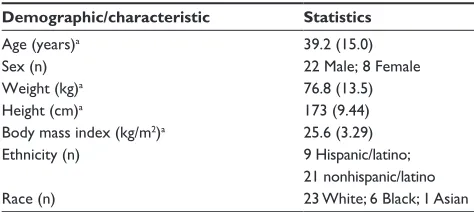
A total of 30 healthy subjects were enrolled in this relative bioavailability study of pexmetinib. The majority of subjects were white males with a mean age of 39.2 years. A broad age range was investigated to encompass older subjects, which would better reflect the elderly MDS population. Summary demographics for all the 30 subjects are listed in Table 2. All subjects completed the study procedures with the exception of one subject in the LOS cohort (Cohort 2) who discontinued due to a family emergency. This subject received the LOS under fasting conditions but did not progress to the fed arm of the study, reducing the number of evaluable subjects in that cohort.relative bioavailability of three
formulations under fasted conditions
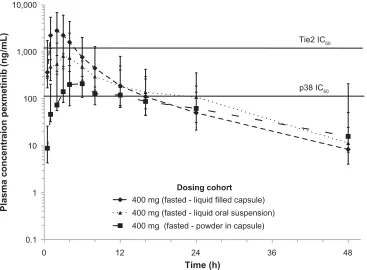
After dose administration, plasma concentrations of pexme-tinib peaked at a median of 2–4 hours for all treatments in the fasted state. Overall, the extent and rate of absorption weredifferent among the three different formulations, with the LFC formulation appearing to have a greater rate and extent of absorption than the LOS and PIC in the fasted state. The
LFC exhibited the shortest median Tmax (2 hours) implying
a more rapid absorption of pexmetinib when compared to
the median Tmax of the LOS (3 hours) and PIC (3.5 hours).
In general, mean plasma concentrations of pexmetinib
decreased to ,10% of the mean peak plasma concentrations
by 48 hours after dosing. Geometric mean concentration–time profiles for pexmetinib for each formulation administered are shown in Figure 1.
In the fasted state, pexmetinib t1/2 values were similar
between the LOS and LFC, with mean observed t1/2 values
at ∼9 hours. However, the mean t1/2 of the PIC formulation
was .50% greater (14.2 hours) than that of either the LOS or
the LFC. The ratio of average Cmax to the estimated QD
regi-men average trough concentration (C24 h) for pexmetinib was
60.2, 9.54, and 5.97 in the fasted state for LFC formulation, LOS formulation, and the PIC, respectively. A summary of the PK parameters calculated during this study is provided in Table 3.
The relative bioavailability based on AUClast revealed that
the systemic exposure of LFC and LOS formulations were greater than the PIC formulation. The ratios of the geometric
means and associated 90% CI values of AUClast for
pexme-tinib, when administered as the LFC and LOS formulations versus the PIC formulation, were 3.85 (2.63–5.66) and 2.26 (1.54–3.31), respectively. The ratios of the geometric means
and associated 90% CI values of Cmax were 8.12 (5.76–11.45)
and 2.80 (1.99–3.95), respectively.
An intrasubject variability test could not be performed for the parallel design portion of the current study. Therefore, a likelihood ratio test was performed to evaluate the homo-geneity of variance between the treatment formulations. The
test results for PK parameters (AUClast and Cmax) showed
that the individual residual variances were not sufficiently different between the two test formulations as compared with the PIC formulation in the fasted state (LFC versus PIC formulation and LOS versus PIC formulation) to reject
the homoscedastic model (P.0.05). A reduction in the
geometric percent coefficient of variation (CV%) values of
exposure metrics (AUClast and Cmax) for the novel
formula-tions compared to the PIC was observed. Geometric CV%
of AUClast and Cmax for the LFC formulations in the fasted
state were 37.4% and 31.1%, respectively, compared with 50.1% and 59.6%, respectively, for the LOS in the fasted state and 60.1% and 49.6%, respectively, for the PIC formulation (in the fasted state).
Table 2 summary of demographics and baseline characteristics Demographic/characteristic Statistics
Age (years)a 39.2 (15.0)
sex (n) 22 Male; 8 Female
Weight (kg)a 76.8 (13.5)
height (cm)a 173 (9.44)
Body mass index (kg/m2)a 25.6 (3.29)
ethnicity (n) 9 Hispanic/latino;
21 nonhispanic/latino
race (n) 23 White; 6 Black; 1 Asian
Note: aDemographic characteristics are presented as arithmetic mean (standard
deviation).
Clinical Pharmacology: Advances and Applications downloaded from https://www.dovepress.com/ by 118.70.13.36 on 21-Aug-2020
Dovepress
Wollenberg et al
Food-effect assessment
of the lFC and lOs
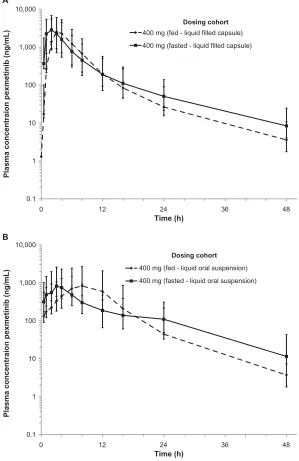
With the novel formulations of pexmetinib, a less rapid increase in pexmetinib plasma concentration was observed in the fed state, as compared to the fasted state. Overall, the extent and rate of absorption were different among the novel formulations, with the LFC formulation appearing to have a greater rate and extent of absorption than the LOS
formulation under a fed state. The median Tmax was 3 hours
after administration of the LFC formulation and 8 hours after administration of the LOS formulation in the fed state. The
ratio of average Cmax/C24 h values was 110 and 35.2 in the
fed state for the LFC and LOS formulations, respectively. The geometric mean concentration–time profiles for each formulation administered with and without food for com-parison are shown in Figure 1, for both the LFC (Figure 2A) and LOS (Figure 2B).
A slight delay in Tmax after administration of the LFC
with food was noted. Comparison of the median Tmax under
fed and fasted conditions was statistically different (P,0.05)
when pexmetinib was administered as a LFC and LOS, when
coadministered with food. The shift in median Tmax observed
when the LOS (5-hour shift for pexmetinib) was
coadmin-istered with food was greater than the shift in median Tmax
0.1 1 10 100 1,000 10,000
0 12 24 36 48
P
la
sm
a
co
n
ce
n
tr
aion pe
xmetinib
(ng
/mL)
Time (h)
400 mg (fasted - liquid filled capsule) 400 mg (fasted - liquid oral suspension) 400 mg (fasted - powder in capsule)
Dosing cohort
Tie2 IC50
p38 IC50
Figure 1 Fasted concentration-time profile of pexmetinib represented in semi-logarithmic scale. The in vitro half maximal inhibitory concentration (IC50) of ArrY-614 for
both p38 and Tie2 is included for reference (solid line). Points represent geometric mean values and error bars ± 1 geometric standard deviation.
Table 3 summary of fed and fasted plasma PK parameters of ArrY-614
Parameter LFC LOS PIC
Fasted (n=12) Fed (n=12) Fasted (n=12) Fed (n=11) Fasted (n=6) AUCinf (h ⋅ µg/ml)a 15.0 (37.2) 15.2 (31.8)d 9.46 (46.4)e 11.4 (39.4)f 4.22 (71.9)g
AUClast (h ⋅ µg/ml)a 14.8 (37.4) 14.4 (34.8) 8.67 (50.1) 11.6 (53.6) 3.84 (60.1)
Cmax (µg/ml)a 3.01 (31.1) 2.88 (30.4) 1.04 (59.6) 1.55 (35.1) 0.370 (49.6)
Tmax (h)b 2.00 (1.00–3.00) 3.00 (1.00–4.00) 3.00 (1.00–6.02) 8.00 (3.17–16.0) 3.50 (2.00–12.00)
t1/2 (h)a,c 8.50 (28.8) 6.53 (9.95)d 8.93 (34.7)e 5.72 (12.5)f 14.2 (20.5)g
C24 h (µg/ml)a 0.050 (60.3) 0.026 (108) 0.109 (64.8) 0.044 (229) 0.062 (78.5)
Notes: Terminal phase parameters (AUCinf, Kel, t1/2) were not estimated in some subjects due to a failure to meet predefined criteria for retaining parameters from
extrapolated terminal phase. number of subjects who had acceptable estimation of terminal phase is: aPresented as geometric mean (geometric coefficient of variation [%]);
bpresented as median (range); cpresented as arithmetic mean (coefficient of variation [%]); dn=11; en=10; fn=9; gn=5.
Abbreviations: PK, pharmacokinetics; LFC, liquid-filled capsule; LOS, liquid oral suspension; PIC, powder-in-capsule; AUCinf, area under the curve extrapolated to infinity;
AUClast, area under the curve to the last quantifiable sample; Cmax, peak concentration; Tmax, time-to-peak exposure; h, hours; t1/2, elimination half-life; C24 h, estimated QD
Clinical Pharmacology: Advances and Applications downloaded from https://www.dovepress.com/ by 118.70.13.36 on 21-Aug-2020
Dovepress Pharmacokinetics of a liquid-filled capsule formulation of pexmetinib
observed (1 hour shift for pexmetinib) for the LFC when coadministered with food.
In the fed state, both the Cmax and AUClast of pexmetinib
after administration of the LFC formulation decreased ,∼5%
compared with the fasted state, as depicted by the fed/fasted ratios of the geometric means and associated 90% CIs for
AUClast and Cmax (0.97 [0.90–1.06] and 0.96 [0.83–1.11]),
respectively. However, after administration of the LOS in the fed state, there was a statistically significant increase
in AUClast (34%) and Cmax (50%) compared with the fasted
state, as depicted by the ratios of the geometric means and
associated 90% CI for AUClast and Cmax (1.34 [1.23–1.47]
and 1.50 [1.29–1.74]), respectively.
safety
No clinically significant abnormalities were reported for clinical laboratory test results, vital sign measurements, physical examination findings, or ECG results. With the exception of decreases in the mean heart rate after dosing in the fasted state, no other apparent treatment-related trends were observed in ECG results. No apparent treatment-related trends were observed in clinical laboratory test 0.1
1 10 100 1,000 10,000
0 12 24 36 48
Plasma concentraion pexmetinib (ng/mL)
Time (h)
400 mg (fed - liquid filled capsule) 400 mg (fasted - liquid filled capsule)
Dosing cohort
0.1 1 10 100 1,000 10,000
0 12 24 36 48
Plasma concentraion pexmetinib (ng/mL)
Time (h)
400 mg (fed - liquid oral suspension) 400 mg (fasted - liquid oral suspension)
Dosing cohort
A
B
Figure 2 Concentration-time profile of pexmetinib comparing exposure in both fed and fasted states for both the LFC (A) and lOs (B) represented in semi-logarithmic scale. Points represent geometric mean values and error bars ± 1 geometric standard deviation.
Abbreviations: LOS, liquid oral suspension; LFC, and liquid-filled capsule.
Clinical Pharmacology: Advances and Applications downloaded from https://www.dovepress.com/ by 118.70.13.36 on 21-Aug-2020
Dovepress
Wollenberg et al
results, vital sign measurements, and physical examination findings.
Discussion
The dual p38/Tie2 inhibitor pexmetinib is in clinical develop-ment as a potential treatdevelop-ment for patients with MDS. Initial Phase I clinical trials of pexmetinib were conducted with PIC and have been characterized by high inter- and intrasubject
variability.8 A maximum tolerated dose was not established
in a dose-escalation study in patients with MDS due to high pill burden. As a result of these two observations, a change in the oral dosage form from the initial clinical PIC formulation was explored in order to improve the manufacturability of the drug product, reduce pill burden, and potentially reduce the intersubject variability in pexmetinib exposure. The LOS formulation was designed to mimic a well-performing immediate release tablet that effectively wetted and dispersed pexmetinib in vivo. The LFC formulation was designed to increase the aqueous solubility of pexmetinib in vivo through the use of surfactants. The present study was designed to evaluate single-dose plasma PK properties in healthy sub-jects of these two novel formulations of pexmetinib and their relative bioavailability compared to PIC. A food-effect study arm built into the Phase I clinical study of patients with MDS indicated a significant reduction in exposure when pexmetinib PIC was administered with food (unpublished data), thus the effect of food on exposure of the novel formulations as well as safety and tolerability were assessed.
The increase in exposure of the LFC, compared to the PIC administered at the same dose, suggests that this formulation would improve the bioavailability for engagement of both
with p38 as well as Tie2 in vitro IC50 values, compared to
the PIC (Figure 1). The LFC demonstrated an approximate
fourfold increase and twofold increase in AUClast and Cmax,
respectively, when compared to that of the PIC administered at the same dose. A reduction in the geometric CV% from 60.1% to 37.4% was observed when comparing the
variabil-ity of AUClast of the PIC to the LFC, respectively. A similar
reduction in geometric CV% from 49.6% to 31.1% was
observed when comparing the variability of Cmax between
the PIC and LFC, respectively. Conclusions regarding these
differences were limited by the low number of subjects (n=6)
in the PIC control arm, relative to the LFC experimental arm
(N=12). The reduction in variability was largely attributed
to the rapid, consistent absorption facilitated by the LFC formulation, where in vitro dissolution testing indicated the solubility of the drug substance in an aqueous environment was greatly increased in the liquid capsule formulation versus
the PIC (unpublished data). The PIC free base drug substance was characterized by poor solubility, which manifested in a protracted absorption phase and likely resulted in the greater variability associated with the PIC administration. Moreover, the decreased in vitro dissolution of the PIC formulation relative to the LFC formulations would suggest that the absorption kinetics were slower, relative to the elimination kinetics. As such, this situation would produce flip-flop kinetics and explain the greater half-life observed during administration of the PIC formulation (14.2 h), relative to the values observed when administering the LFC formulation under similar conditions (8.50 h).
The sum of the preclinical in vitro and in vivo data suggested a high probability of a positive food-effect on exposure of pexmetinib, despite the negative food-effect that was observed in patients for the PIC. In vitro experiments with simulated biofluid suggested differences in solubility between the simulated fasted gastric and intestinal fluids versus the simulated fed gastric and intestinal fluids, with fed gastric and intestinal fluids exhibiting 45-fold and sixfold greater solubility, respectively. In a cynomolgus monkey PK study (unpublished data), an enabled formulation contain-ing surfactants to solubilize the compound, thus simulatcontain-ing
a potential food-effect, showed an increase in Cmax and
AUClast of two- and fivefold respectively, relative to the
PIC formulation (unpublished data). However,
administra-tion with food did not significantly affect exposure (Cmax
or AUClast) following a single dose of 400 mg pexmetinib
administered as a LFC. A slight shift in median Tmax was
noted; however, this result may be expected due to slower gastric emptying in the presence of food. It is hypothesized that administration of the LFC results in complete absorption of the dose administered at 400 mg, thus explaining why no food-effect was observed when administering the LFC in the clinical study.
The results presented here suggest that the LFC may be an optimal choice for future clinical development of pexmetinib for the treatment of patients with MDS. The improved bioavailability of the LFC formulation compared to PIC administered at the same dose would be expected to reduce pill burden, as less drug product would be required to achieve plasma concentrations comparable to the PIC. The LFC exhibits manufacturing advantages over the PIC formulation, suggesting the production of pexmetinib drug product for Phase III clinical trials and commercialization is more readily achievable with the LFC. This formula-tion can be taken without regard to prandial state, making it an optimal choice for administration in patients where
Clinical Pharmacology: Advances and Applications downloaded from https://www.dovepress.com/ by 118.70.13.36 on 21-Aug-2020
Clinical Pharmacology: Advances and Applications
Publish your work in this journal
Submit your manuscript here: http://www.dovepress.com/clinical-pharmacology-advances-and-applications-journal Clinical Pharmacology: Advances and Applications is an international,
peer-reviewed, open access journal publishing original research, reports, reviews and commentaries on all areas of drug experience in humans. The manuscript management system is completely online and includes a very quick and fair peer-review system, which is all easy to use.
Visit http://www.dovepress.com/testimonials.php to read real quotes from published authors.
Dovepress
Dove
press
Pharmacokinetics of a liquid-filled capsule formulation of pexmetinib
chronic, daily administration is necessary for consistent target engagement. Additionally, the improved bioavail-ability would suggest better engagement of both kinase pathways, p38 and Tie2, known to be inhibited by
pexme-tinib based on in vitro IC50 values. Moreover, the reduction
in intersubject variability of PK parameters for subjects administered the LFC formulation suggests greater consis-tency in exposure. In addition, the safety profile of a single 400 mg dose in healthy subjects was deemed acceptable. When considered together, the LFC formulation may render important benefits and represents and optimal choice for further exploration in clinical trials for patients with clinical benefits for patients with MDS.
Disclosure
Lance A Wollenberg, Ann M Ptaszynski, and Kevin S Litwiler own shares of Array BioPharma and are current Array BioPharma employees. Donald T Corson, Alisha Arrigo, Coralee G Mannila, Courtney A Nugent, Farran Peterson, and Stacie J Bell own shares of Array BioPharma stock and are former Array BioPharma employees. The authors report no other conflicts of interest in this work.
References
1. Steensma DP, Tefferi A. The myelodysplastic syndrome(s): a perspective and review highlighting current controversies. Leuk Res. 2003;27(2): 95–120.
2. Nimer SD. Myelodysplastic syndromes. Blood. 2008;111(10): 4841–4851.
3. Navas T, Zhou L, Estes M, et al. Inhibition of p38alpha MAPK disrupts the pathological loop of proinflammatory factor production in the myelodysplastic syndrome bone marrow microenvironment. Leuk
Lymphoma. 2008;49(10):1963–1975.
4. Navas TA, Mohindru M, Estes M, et al. Inhibition of overactivated p38 MAPK can restore hematopoiesis in myelodysplastic syndrome progenitors. Blood. 2006;108(13):4170–4177.
5. Sokol L, Cripe L, Kantarjian H, Sekeres MA, Parmar S, Greenberg P. Randomized, dose-escalation study of the p38alpha MAPK inhibitor SCIO-469 in patients with myelodysplastic syndrome. Leukemia. 2013; 27(4):977–980.
6. Cheng CL, Hou HA, Jhuang JY, et al. High bone marrow angiopoietin-1 expression is an independent poor prognostic factor for survival in patients with myelodysplastic syndromes. Br J Cancer. 2011;105(7):975–982. 7. Loges S, Heil G, Bruweleit M, et al. Analysis of concerted expression
of angiogenic growth factors in acute myeloid leukemia: expression of angiopoietin-2 represents an independent prognostic factor for overall survival. J Clin Oncol. 2005;23(6):1109–1117.
8. Winski SL, Freeman B, Remmers AE, Carter L, et al. ARRY-614, a potent P38 MAP kinase inhibitor, is efficacious in preclinical models of hematologic malignancies and significantly reduces ex vivo cytokine production in humans. Ann Oncol. 2009;20(Suppl 3):iii20.
9. United States Food and Drug Administration Center for Drug Evaluation and Research. Food-Effect Bioavailability and Fed Bioequivalence Studies; 2002. Available from: http://www.fda.gov/downloads/Regulatory-Information/Guidances/UCM126833.pdf. Accessed: November 6, 2014.
Clinical Pharmacology: Advances and Applications downloaded from https://www.dovepress.com/ by 118.70.13.36 on 21-Aug-2020