BUILDING A DATA INFRASTRUCTURE TO STUDY LOCAL AVAILABILITY IN CHILDCARE FOR CHILDREN OF IMMIGRANT AND U.S.-BORN PARENTS:
A CONDITIONAL LOGIT MODEL ANALYSIS
Qi Wang Xing
A dissertation submitted to the faculty of the University of North Carolina at Chapel Hill in partial fulfillment of the requirements for the degree of Doctorate of Philosophy
in the School of Education (Policy, Leadership, and School Improvement)
Chapel Hill 2018
ii
iii ABSTRACT
Qi Wang Xing: Building a Data Infrastructure to Study Local Availability in Childcare for Children of Immigrant and U.S.-Born Parents: A Conditional Logit Model Analysis
(Under the direction of Lora Cohen-Vogel)
In the United States, children of immigrants are more likely to start school at an academic disadvantage when compared to their peers with U.S.-born parents (Crosnoe, 2007; Han, 2008; Magnuson, Lahaie, & Waldfogel, 2006). It is possible that the disadvantage may be at least in part explained by differences in access to and use of high-quality childcare opportunities prior to the Kindergarten year. Indeed, while research has pointed to the benefits associated with high-quality early childhood education and public investments in expanding preschool enrollment, the children of immigrants continue to enroll in center-based care at lower rates compared to the children of U.S.-born parents (Brandon, 2004; Kahn & Greenberg, 2010; Karoly & Gonzalez, 2011; Takanishi, 2004). This study seeks to understand whether and how the supply of childcare services available in a neighborhood and other contextual factors contribute to differences in early education experiences by parental immigration status.
Building a first of its kind dataset, I combined data from the Early Childhood Longitudinal Study, the Common Core of Data, the Early Childhood Learning and
iv
v
To my husband, Chen, who has always challenged me to be better. You make my world wonderful. To my children, Chloe and Aspen, who inspired me to write this dissertation. You are everything. And, to my Grandfather, Lianwen, who had always believed in me and would
vi
ACKNOWLEDGEMENTS
First and foremost, I would like to thank each of the members of my dissertation committee who had provided me extensive support and guidance. I am especially indebted to Dr. Lora Cohen-Vogel, my mentor and advisor, who has been supportive of my career goals and most critical of my research ideas. You have taught me more than I could ever give you credit for. I appreciate not only the research opportunities and financial support you provided during my doctoral studies, but also the gentle nudges at times when I struggled to balance school and life (as a parent). You have shown me, by your example, what a great mentor and scholar should be. I thank Dr. Kevin Bastian for the research opportunities and guidance that sharpened my statistical skills and critical thinking, which gave me the confidence to embark on a project like this. Thank you for all the phone calls to discuss my research questions and dissertation. Dr. Thurston Domina, your thoughtful, big-picture questions, insights on immigrant children, and quantitative skills have always helped keep my study focused and manageable. Dr. Kirsten Kainz, thank for you expertise in early childhood education and statistics, and for always encouraging me every step along the way. Dr. Eric Houck, thank you for your encouragement and insights.
vii
To my friends in North Carolina, either from School of Education or outside of school, you have all made this journey more enjoyable. Especially, Ningfang and Wendy, who regularly reminded me who I was before I started graduate school. You keep me grounded. Thank you for all the walks, dinners, play dates, movie nights, and
camping/Disney trips so school didn’t consume all my time during the past few years. I always found comfort in your friendship, encouragement and reassurance that I was doing the right thing as you understood the constant guilt I felt as the “absent” parent.
A special acknowledgement goes to my colleagues at the American Institutes of Research where I started working full-time during the last year of dissertation writing. I feel extremely fortunate to be part of a professional and supportive team where I continue to grow as an education researcher, while, following the great examples you’ve set, striving to
succeed in the multiple roles I play.
viii
TABLE OF CONTENTS
LIST OF TABLES ... xiv
LIST OF FIGURES ... xvi
LIST OF ABBREVIATIONS ... xvii
CHAPTER 1: INTRODUCTION ...1
1.1 Background ...1
1.2 Statement of Purpose ...3
1.3 Significance...4
1.3.1 Research contributions ...5
1.3.2 Methodological contributions ...6
1.3.3 Policy contribution ...7
CHAPTER 2: LITERATURE REVIEW ...9
2.1 Understanding Childcare Choices in the U.S. ...9
2.1.1 Early childhood polices in the U.S. ...10
2.1.1.1 Head Start...10
2.1.1.2 State pre-kindergarten ...11
2.1.1.3 Childcare subsidies ...12
2.1.1.4 Special education and early childhood education ...12
2.1.1.5 Private childcare provision ...12
2.1.2 Distribution of childcare supply in the U.S. ...14
2.2 Predicting Childcare Choices ...16
2.2.1 Resources and needs ...17
2.2.1.1 Family income ...18
2.2.1.2 Parental employment status ...19
ix
2.2.1.4 Family structure: marital status and number of children ...22
2.2.1.5 Race and ethnicity ...22
2.2.1.6 Child attributes ...24
2.2.2 Preferences and perceptions ...25
2.2.2.1 Preferences ...25
2.2.2.2 Perceptions ...26
2.2.3 Mismatch...27
2.3 Uneven Access to Preschool by Parental Immigration Status ...28
2.3.1 Childcare choice patterns among immigrant families ...28
2.3.2 Barriers in access to preschool among immigrant families ...29
2.3.2.1 Lack of financial, human, and social capital ...29
2.3.2.2 Cultural preferences ...31
2.3.2.3 Informational barriers ...32
2.3.2.4 Lack of childcare supply ...32
2.4 Justification of the Present Study ...33
2.4.1 Need for a new conceptual framework ...34
2.4.2 Data limitations ...35
2.4.3 Methodological constraint ...37
CHAPTER 3: CONCEPTUAL FRAMEWORKS...38
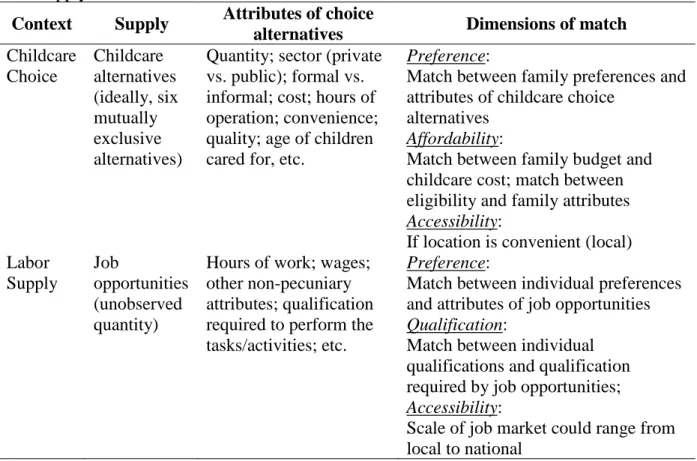
3.1 Heterogeneous Availability in Alternatives (HAA) ...39
3.1.1 Origin in labor supply analysis ...40
3.1.2 Application in childcare choice context ...42
3.1.2.1 Supply ...43
3.1.2.2 Attributes of choice alternatives ...44
3.1.2.3 Dimensions of match ...45
3.2 Spatial Assimilation ...47
x
3.2.2 Geographic dispersion and social mobility ...48
3.2.3 Residential location and childcare choices ...49
3.3 Hypotheses ...49
CHAPTER 4: METHODOLOGY ...52
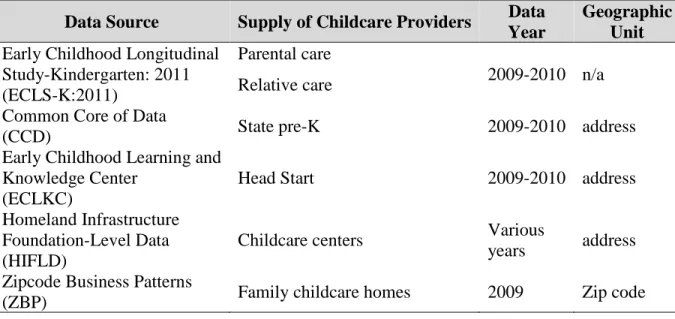
4.1 Data Sources ...53
4.1.1 Early Childhood Longitudinal Study-Kindergarten: 2011 (ECLS-K:2011) ...54
4.1.2 Common Core of Data (CCD) ...55
4.1.3 Early Childhood Learning and Knowledge Center (ECLKC) ...57
4.1.4 Homeland Infrastructure Foundation-Level Data (HIFLD) ...58
4.1.5 U.S. Census Bureau ...60
4.1.5.1 Zip Code Business Patterns (ZBP) ...60
4.1.5.2 American Community Survey (ACS) ...62
4.2 Measures ...64
4.2.1 Childcare choice (outcome measure) ...64
4.2.2 Supply of childcare ...65
4.2.3 Demand for childcare ...67
4.2.4 Immigration context ...68
4.2.5 Neighborhood context ...69
4.3 Data Merging Plan Using GIS ...69
4.3.1 Defining the community ...69
4.3.1.1 Distance parameters ...70
4.3.1.2 Time parameter ...71
4.3.2 Merging data sets using ArcMap10.5 ...72
4.4 Analytic Plan ...73
4.5 Limitations ...75
xi
5.1 Description of the Child, Family, Childcare Choice and Supply, and Community...78
5.1.1 Child, family, and childcare choices ...79
Overall child and family characteristics ...79
Childcare choice patterns ...81
Differences in child and family characteristics by childcare choice ...81
5.1.2 Childcare supply ...83
More access to childcare options among children of immigrants ...86
Disparity between access to and use of childcare centers ...86
Varying magnitudes of change in access to childcare options by buffer size ...87
5.1.3 Contextual factors ...88
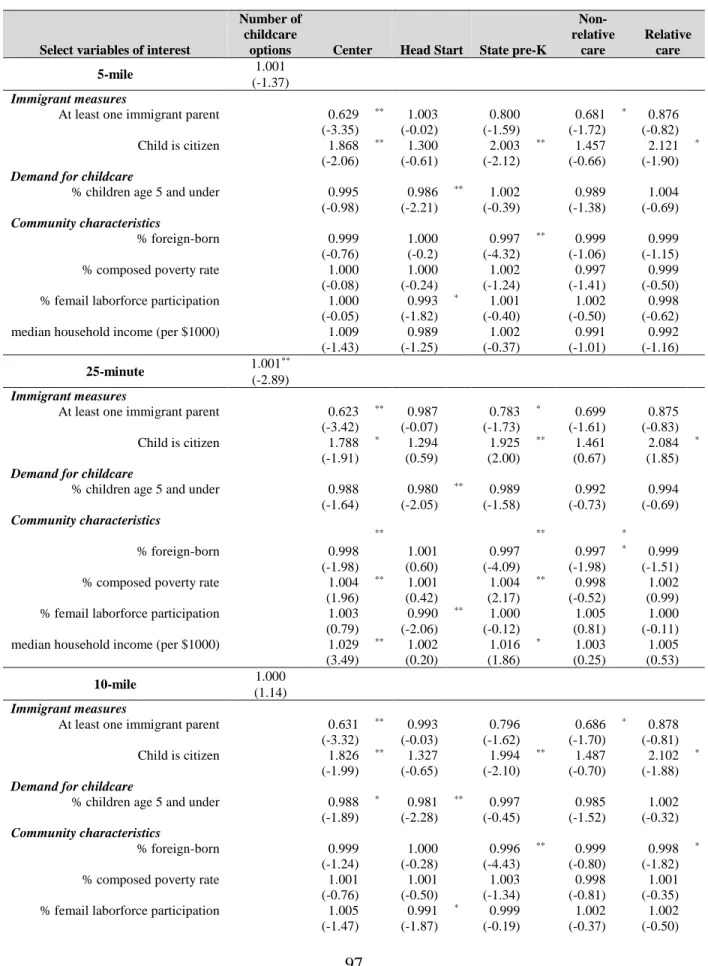
5.2 Determinants of Childcare Choice ...93
5.2.1 Differences in childcare choices as explained by parental immigration status and foreign-born population concentration in the community ...93
Effects of key variables of interest ...94
Effects of other contextual factors ...96
5.2.2 Does childcare supply affect choices differently based on parental immigration status? ...99
5.3 Which Buffer Size is Preferred? ...103
CHAPTER 6: DISCUSSION ...106
6.1 Implications from Findings ...106
6.1.1 Beyond supply ...106
6.1.2 Explaining differential effects across the three preschool types ...107
6.2 Data Infrastructure ...108
6.2.1 Improving survey data ...108
Collecting data on more supply-specific attributes ...108
Verifying zip codes before data release ...109
Reducing nonresponse ...109
6.2.2. Improving administrative data ...109
Reducing nonresponse rate and missing data ...110
Enhancing QC procedures to ensure internal consistency ...110
Providing codebooks to help data users understand the variables/constructs better .110 Aligning with research needs ...111
xii
6.3Future Research Questions ...111
6.4 Conclusion ...112
APPENDIX A TECHNICAL REPORT ...113
A.1 Introduction ...113
A.2 Data Quality of Data Sets ...115
A.2.1 Common Core of Data ...116
Inconsistency...117
Nonresponse ...118
Lack of research-relevant data ...119
A.2.2 Early Childhood Learning and Knowledge Center ...120
Inconsistency...122
Lack of research-relevant data ...123
Lack of year-specific data ...124
A.2.3 Homeland Infrastructure Foundation-Level Data ...125
Lack of year-specific data ...126
A.2.4 Zip Code Business Patterns...126
Lack of research-relevant data ...127
Lack of location-specific data ...128
A.2.5 American Community Survey ...128
Lack of year-specific data ...129
A.3 Spatial Joins using ArcMap and Missingness ...130
A.3.1 Buffer Tool for distance parameters (5- and 10-mile models) ...131
A.3.2 Network Analyst for commute time parameter (25-minute model) ...131
A.3.3 Missingness and data decisions...132
Missingness and multiple imputations ...132
Missingness due to zip code issues ...134
A.3.4 Summary of Data Merging Results ...135
A.4 Estimation Methods and Model Evaluation ...136
A.4.1 Goodness-of-fit tests ...138
xiii
A.4.3 Goodness-of-fit measures ...140
A.5 Sensitivity Analysis...143
A.5.1 Estimated coefficients ...143
A.5.2 Marginal effects ...144
A.5.3 Discrete change of predicted probabilities ...146
APPENDIX B ESTIMATED COEFFICIENT OUTPUTS BY BUFFER SIZE ...147
APPENDIX C MARGINAL EFFECT OUTPUTS BY BUFFER SIZE ...168
xiv
LIST OF TABLES
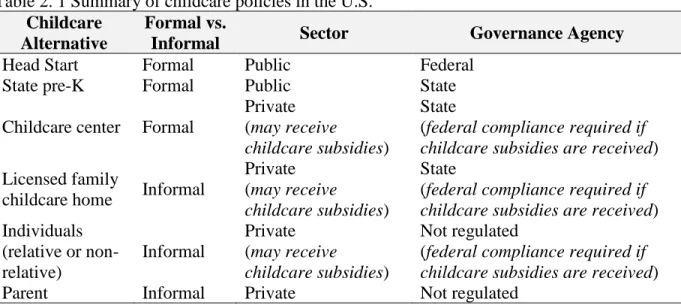
Table 2. 1 Summary of childcare policies in the U.S. ... 14
Table 2. 2 List of studies examining effects of resources and needs ... 20
Table 3. 1 Comparison of contextual and conceptual differences between childcare choice and labor supply contexts...44
Table 4. 1 Data sources for supply of childcare ...54
Table 4. 2 HIFLD data currency by state ...59
Table 5. 1 Characteristics of children and their families by childcare choice and parental immigration status ...84
Table 5. 2 Descriptive summary of supply of and demand for childcare and community characteristics by childcare choice, parental immigration status, and buffer size. ...91
Table 5. 3 Odds ratios of select variables of interest: Conditional logit models ...97
Table 5. 4 Predicted probabilities by parental immigration status, number of centers, and buffer size ...101
Table A. 1 Issues of misspecifications ...116
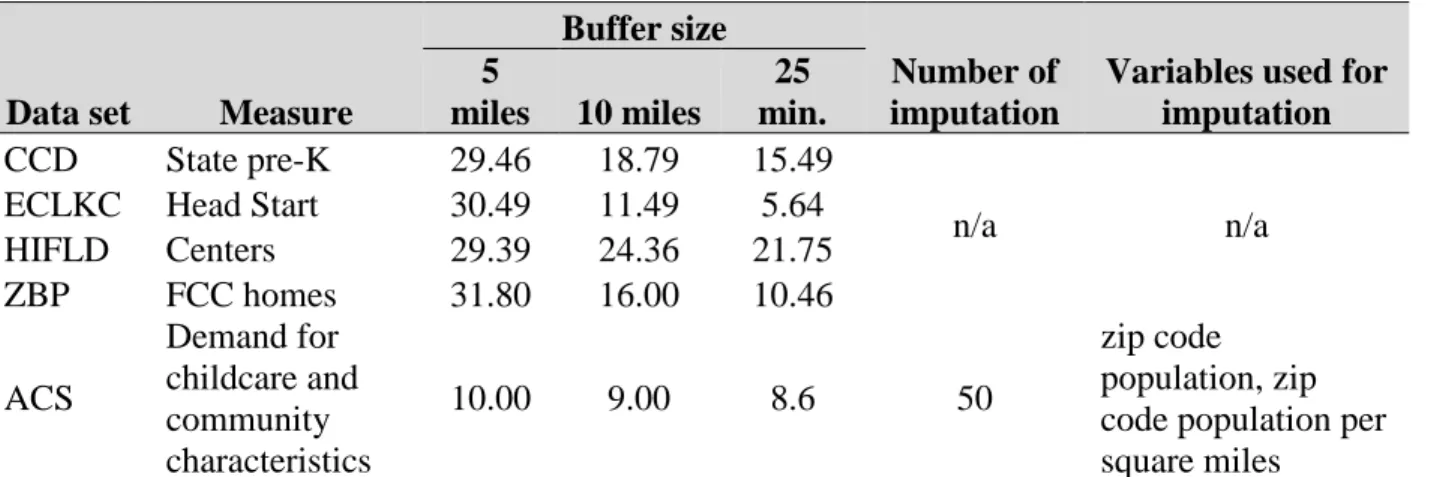
Table A. 2 Percentages of missingness by buffer size. ...133
Table A. 3 Summary of data set attributes relevant to data merging process. ...135
Table A. 4 Example of data arrangement, alternative-specific and case-specific variables in the long format (5-mile model). ...137
Table A. 5 Observed and fitted probabilities and residuals of CL model (5-mile model). ...141
Table A. 6 Model fitness parameters by buffer size. ...142
Table B. 1 Stata outputs of estimated coefficients: 5-mile model ...147
Table B. 2 Stata outputs of estimated coefficients: 10-mile model ...154
Table B. 3 Stata outputs of estimated coefficients: 25-minute model ...161
Table C. 1 Stata outputs of marginal effects: 5-mile model ...168
xv
xvi
LIST OF FIGURES
Figure 5. 1 Residual plots by buffer size. ...105
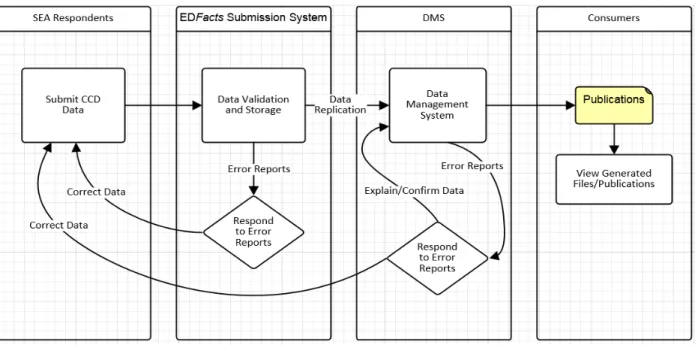
Figure A. 1 CCD data flow from initial state submission to publication ...117
xvii
LIST OF ABBREVIATIONS
ACS American Community Survey
CCD Common Core of Data
CCDBG Child Care and Development Block Grant
CCDF Child Care Development Fund
CLM Conditional logit model
ECLKC Early Childhood Learning and Knowledge Center
ECLS-K:2011 Early Childhood Longitudinal Study Kindergarten Class 2011
FCC Family childcare
GIS Geographic Information Software
HAA Heterogeneous availability in alternatives
HILFD Homeland Infrastructure Foundational-Level Data
MNL Multinomial logit model
SSBG Social Services Block Grant
TANF Temporary Assistance for Needy Families
1
CHAPTER 1: INTRODUCTION
1.1 Background
Children of immigrants constitute the fastest growing population of children in the United States. The number of children from immigrant families has been growing at nearly four times the rate of that of children of U.S.-born parents, accounting for all population growth in children from birth to age 17 since 2000 (Fortuny & Chaudry, 2012). Among children age six and under, children of immigrants make up more than 25 percent of this population (Tienda & Haskins, 2011). This youngest group of children, who are also more racially and socioeconomically diverse than their peers of U.S.-born parents, is further increasing the cultural and linguistic diversity of America’s schools (Sullivan, Houri, & Sadeh, 2016).
Researchers in the fields of sociology, developmental psychology, education, and
2
Though researchers report great heterogeneity in the educational trajectories of children of immigrants across race/ethnicity, socioeconomic status, and parental country of origins (Kao & Tienda, 1995; Leventhal et al., 2006; Rong & Brown, 2001; Vernez, Abrahamse & Quigley, 1996), many agree that, on average, children of immigrants are more likely to start school at an academic disadvantage when compared to their peers of U.S.-born parents (Crosnoe, 2007; Han, 2008; Magnuson, Lahaie, & Waldfogel, 2006). Once in school, children of immigrants are also more likely to attend schools with high concentrations of poor and/or minority students, crowded classrooms, inadequate supplies of textbooks and materials, and poor school climate and safety (Crosnoe & Lopez-Gonzalez, 2005; Han, 2008; Waters, Mollenkopf, & Kasinitz, 2004;
Roopnarine, Krishnakumar, Metindogan, & Evans, 2006).
To mitigate this early divide, researchers and policymakers are considering expanding access to high quality preschool programs. Research has pointed to the benefits associated with high-quality early childhood education and public investments in expanding preschool
enrollment. Benefits accrue to children in form of better academic and socio-emotional outcomes, increased health, and improved educational attainment and employment outcomes (Belfield, Nores, Barnett, & Schweinhart, 2006; Campbell & Ramey, 1994; Reynolds & Temple, 1998). These benefits have led to increases in childcare subsidies and the expansion of
government-funded early childhood education programs, and, subsequently, have dramatically increased center-based preschool participation rates in the United States (Barnett et al., 2016; Magnuson, Meyers, Ruhm, & Waldfogel, 2005; U.S. Department of Health and Human Services, 2016).
3
which may be the first education setting immigrant families encounter before entering the K-12 system, may also be a powerful policy lever to buffer against the set of developmental risk factors associated with growing up in immigrant families in the U.S. It has been well
documented, however, that children of immigrants have lower rates of non-parental care use of any type, including center-based care, than do children of U.S.-born parents (Brandon, 2004; Kahn & Greenberg, 2010; Karoly & Gonzalez, 2011; Takanishi, 2004). On the other hand, little is known about (1) whether they have equitable access to preschool compared to peers of U.S.-born parents, and (2) how their childcare choices differ. Therefore, this study sought to
understand whether and how community-level supply of childcare services contributes to differences in early education experiences by parental immigration status.
1.2 Statement of Purpose
In this study, I adapted two theoretical frameworks—heterogeneous availability of alternatives and spatial assimilation—to guide the study’s problem conceptualization and variable selection. In doing so, I addressed the shortcomings in the current, if small, immigrant childcare choice literature. I combined data from the Early Childhood Longitudinal Study Kindergarten Class 2011, the Common Core of Data, the Early Childhood Learning and
Knowledge Center Head Start data, the Homeland Infrastructure Foundation-Level Data, and the U.S. Census Bureau. Using a conditional logit model, I examined whether and how childcare supply affects the childcare use between immigrant and U.S.-born parents. Specifically, this dissertation answered two questions:
4
2. How does the use of childcare vary between immigrant and U.S.-born parents? And, how does the concentration of immigrants living within a community mediate that use?
Findings from the conditional logit model analyses reveal that children of immigrant parents had more access to centers, Head Start, and state pre-K programs although they were enrolled in centers at lower rates than peers with U.S.-born parents. The number of childcare care centers did not significantly affect the likelihood of enrolling in center care, while having at least one immigrant parent negatively impacted the odds of center participation. In addition, the supply of childcare options, especially that of childcare centers, had differential effects on center enrollment by parental immigration status, and, even having more access to childcare centers did not offset the negative effect associated with having an immigrant parent, as measured by the predicted probabilities.
1.3 Significance
The study adds to our knowledge about childcare choices by conceptualizing those choices as a result of supply (or lack thereof), parental immigrant status, and other family-level attributes. Two frameworks—heterogeneous availability of alternatives from labor economics and spatial assimilation from sociology—contribute to a more realistic and appropriate
framework for studying this complex issue. In addition, I also combined multiple nationally representative data sets to create a comprehensive data set linking the family to the supply of each childcare alternative, using Geographical Information Software (GIS), to prove the
appropriateness of new standards regarding the geographic perimeter around a family’s zip code centroid. A Technical Report was developed and included as Appendix A to describe the
5
methodological contributions, as well as policy contribution are discussed in detail in the following sections.
1.3.1 Research contributions
The study is the first to empirically test whether and how the community-level supply of childcare alternatives affects family-level childcare choices for four-year-olds in the U.S. by parental immigration status, which addresses a persistent gap in the childcare choice literature. Previous research suggests that children of immigrants have lower participation rates in preschool than peers of U.S.-born parents, which, however, is based on the insufficient
assumption that parents are free to choose any care arrangement they prefer. In any real choice situation, the choice alternatives and their attributes, combined with the decision-maker’s
attributes and preferences, always limit the actual choice set available to the decision-maker. The heterogeneous availability of alternatives framework provides a more appropriate lens for
framing the choice situations as complex as they are.
Another research contribution of this study is the application of a new lens—the spatial assimilation of immigrant parents—in examining the intersection between immigration status and childcare choices. Previous research has extensively applied a developmental psychological approach by adding parental immigration status simply as a covariate in the model. This
approach is insufficient because it overlooks the multifaceted nature of immigration status in the childcare choice context. The spatial assimilation framework instead highlights the role
immigrants’ residential locations play in childcare choices, and provides a set of indicators to explain variation in perceived opportunities and constraints for children of immigrants. It
6 1.3.2 Methodological contributions
Earlier studies have detailed the disparities in preschool enrollment rates associated with parental immigration status, and separately, the distributional inequalities of childcare providers across neighborhoods (Fuller, Raudenbush, Wei, & Holloway, 1993; Vandell & Wolfe, 2000). Much less is known about how the community-level availability/supply of childcare services affects family-level choices. This reveals data and methodological limitations in linking community-level supply data and family-level choice data together (Blau, 1993; Fuller et al., 2004).
The first methodological contribution of this study pertains to data comprehensiveness. I combined several nationally representative data sets, including two survey data sets and four administrative data sets, to create a comprehensive data set that represents both the supply of each childcare alternative and the characteristics of a child’s family and residential location. Some of these data sets, such as the Homeland Infrastructure Foundational-Level Data and the Early Childhood Learning and Knowledge Center Head Start data, have not been used in any study before.
7
linking other contextual data to address educational questions that are often situated in complex societal, political, and economic context.
The third methodological contribution is the use of a discrete choice model, the
conditional logit model. Unlike previous empirical models used in childcare choice studies, such as OLS, binary models, or multinomial logit models, that focus only on child or family attributes, the conditional logit model takes into consideration supply-specific characteristics (e.g.,
quantity), in addition to child- and family-specific characteristics. This model not only aligns with the study’s conceptual framework, but is also more realistic in choice situations where supply and demand interact to affect choice outcomes.
1.3.3 Policy contribution
The disparities in enrollment in early education programs between children of immigrant parents and children of U.S.-born parents are concerning because they are consistent with a school readiness gap by parental immigration status (Crosnoe, 2007; Magnuson, Lahaie & Waldfogel, 2006). Because school readiness predicts later academic achievement (Duncan et al., 2007; Magnuson & Waldfogel, 2016), creating public policies that promote equitable access to high-quality early childhood education has potential for narrowing gaps by preparing children academically and socio-emotionally for school. Therefore, it is imperative to first understand the supply of childcare in communities where immigrant families reside. With a better
understanding, policies may be designed to expand access to early childhood education for children of immigrants, especially those living in poverty with limited access to preschool.
8
9
CHAPTER 2: LITERATURE REVIEW
The childcare market in the U.S. is “comprised of organizations and individuals that offer early care and education services” on one hand, and families with varying resources and needs for childcare on the other (Fuller et al., 2004, p.506). As will be shown, a review of the childcare choice literature suggests that our current understanding is heavily drawn from analyses focusing on family and child attributes as predictive influences. While this is important information in explaining the gap in preschool enrollment rates between children of immigrant and U.S.-born parents, little is known about how the childcare supply conditions childcare choice decisions made by immigrant and U.S.-born parents alike.
In this chapter, I began by describing the array of policies that govern early childhood care and education in the U.S., including both public and private childcare alternatives, and the distribution of these services (section 2.1). I then summarized common family and child
attributes that are believed to be associated with childcare choices (section 2.2). Next, I presented studies examining childcare choice patterns by parental immigration status, and discussed
common barriers to access facing children of immigrants (Section 2.3). I ended the literature review with justifications for the current study (Section 2.4).
2.1 Understanding Childcare Choices in the U.S.
10
individual care providers, and parental care. These childcare alternatives not only differ in history, governance, and eligibility requirements (section 2.1.1), but are also disproportionately distributed across communities, creating different choice sets for individual families (section 2.1.2).
2.1.1 Early childhood polices in the U.S.
Prior to the 1960s, government involvement in pre-kindergarten education for four-year-olds in the U.S. was minimal, as the care of young children before school entry was widely considered a family responsibility (Rose, 2010). Today, a wide array of federal and state policies has been initiated to provide either free or subsidized preschool education, primarily targeted at children from economically disadvantaged backgrounds. The expansion of public funding to support low-income children’s participation in center-based programs, especially Head Start and state pre-K, has led to an increased proportion of low-income families’ participation in formal childcare during the 1990s (Magnuson, Meyers, & Waldfogel, 2007).
2.1.1.1 Head Start
11
program has served eligible children in all 50 states, the District of Columbia, and the outlying area of the U.S. Today, Head Start enrolls about 10% of the nation’s four-year-olds and remains the sole federal program for preschool education (Barnett et al., 2016). With an enrollment over 925,000 preschool children, Head Start has more than doubled its enrollment since the 1980s (Office of Head Start, 2014).
2.1.1.2 State pre-kindergarten
Over the past 50 years1, the notion of state pre-K has evolved from the rather ambiguous
term “public preschool” piloted in a handful states to a well-defined educational program linked to the K–12 educational system in 42 states plus the District of Columbia (Bushouse, 2009; Rose, 2010). Now the largest public preschool provider, state pre-K programs enroll 28% of all four-year-olds in the U.S. (Barnett et al., 2016). State pre-K is a classroom-based preschool education program funded and administered by the state with the goal of educating four-year-olds, most of whom are “typically-developing” and living in poverty (Barnett, Friedman, Hustedt & Stevenson-Boyd, 2009; Gilliam & Zigler, 2000; Magnuson et al., 2004). Income requirements for program eligibility, targeted state pre-K as most state programmed are called, vary
dramatically across states, ranging from below 100% to below 300% of the federal poverty level (Barnett et al., 2016). State pre-K enrollment has experienced even more dramatic expansion than Head Start, especially during the past decade and half, doubling from 14% of four-year-olds in 2002 to 28% in 2015 (Barnett et al., 2016).
1 California, New York, and the District of Columbia were among the first to initiate state-funded pre-kindergarten
12 2.1.1.3 Childcare subsidies
Childcare subsides help eligible families with children under age 13 pay for childcare so that parents can seek/maintain work or participate in training or education activities (Blau, 2000; Blau & Tekin, 2003; Mckernan, Lerman, Pindus, & Valente, 2001). When it comes to preschool-aged childcare, childcare subsidies can allow parents to choose care arrangements that they could otherwise not afford. Parents typically receive vouchers that they can use to reimburse private providers directly (Smolensky & Gootman, 2003). Childcare subsidies have three major federal funding streams: the Childcare and Development Fund (CCDF), the Temporary Assistance for Needy Families (TANF), and the Social Services Block Grant (SSBG). In FY 2014,
approximately 1.41 million children and over 850,000 families per month received childcare assistance. Among them, 67% were children under age 6, and 72% were cared for in a childcare center (Office of Head Start, 2015).
2.1.1.4 Special education and early childhood education
The Individuals with Disabilities Education Act Amendment of 1986 (PL 99-457) extended the free and appropriate public education guarantee to preschool children with special needs (Bushouse, 2009). This federal mandate also expanded the criteria of public preschool eligibility to include not only economic disadvantage but also disability—two statuses that have become the universal eligibility criteria across targeted state-funded pre-K programs (Gilliam & Zigler, 2000). Nationwide, three percent of all four-year-olds are enrolled in preschool programs through this provision (Snyder & Dillow, 2016).
2.1.1.5 Private childcare provision
13
families or ensure free preschool education for children with special needs, parents can also look to the private sector for childcare which is often fee-based. Private providers generally include organizations, such as childcare/daycare centers or preschool (center), and individuals, such as licensed family childcare (FCC) home providers, or relatives, babysitters/neighbors/friends to whom parents pay a relatively smaller amount of money compared to what they would pay for center care. The only type of childcare provided in the private sector that is free is parental care where the child is cared for by a parent.
Associated with the cost difference is the stringency of state regulations each type of childcare providers is required to follow. Childcare center, for example, are required to comply with state regulations on health and safety, child-staff ratios, staff qualifications and training, curriculum, and developmentally appropriate activities. Recently, the federal government has added rules for childcare providers serving children who receive the Child Care and
Development Fund financial assistance. In 2014, the CCDBG Act was signed into law. The law identifies minimum health and safety requirements, training requirements, and monitoring requirements to ensure that childcare used by children receiving the CCDF financial assistance protects their health and safety. This applies to licensed family childcare home providers, who generally comply with some relaxed regulations. Other than these, individual providers are often unregulated care providers, and parents use them at their own discretion.
14
caregivers who have a formal degree and specific training in child development. Informal care used herein refers to care provided in a home setting, either at the child’s or caregiver’s home, by an individual, such as a nanny/babysitter, a relative, a friend or a neighbor, or by a licensed individual at a family childcare (FCC) provider.
Table 2. 1 Summary of childcare policies in the U.S. Childcare
Alternative
Formal vs.
Informal Sector Governance Agency
Head Start Formal Public Federal
State pre-K Formal Public State
Childcare center Formal
Private (may receive
childcare subsidies)
State
(federal compliance required if childcare subsidies are received) Licensed family
childcare home Informal
Private (may receive
childcare subsidies)
State
(federal compliance required if childcare subsidies are received) Individuals
(relative or non-relative) Informal Private (may receive childcare subsidies) Not regulated
(federal compliance required if childcare subsidies are received)
Parent Informal Private Not regulated
2.1.2 Distribution of childcare supply in the U.S.
As shown above, six formal (center, Head Start, state pre-K) and informal (licensed FCC homes, individual providers, parent) childcare alternatives, together, constitute the provision of childcare services in the U.S. As with differences in costs and compliance requirements, these childcare alternatives vary greatly by setting (home vs. center), schedule (half-day, full-day, extended hours), cost, and quality (Blau, 2001), leading to stark distributional inequalities of childcare provision between less and more affluent areas (Fuller, Kagan, Caspary, & Gauthier, 2002; Fuller, Loeb, Strath, & Carrol, 2004; Gordon & Chase-Lansdale, 2001; Kreader,
Brickman, Collins, Piecyk, & Collins, 1996; Queralt & Witte, 1998).
15
Barnow, 2008; Queralt & Witte, 1998), zip code level (Fuller & Liang, 1996; Fuller, Loeb, Strath & Carrol, 2004; Gordon & Chase-Lansdale, 2001; Hatfield, Lower, Cassidy, & Faldowski, 2015), and county level (Ficano, 2006; Fuller & Liang, 1996). These studies have found a clear association between childcare supply and three characteristics of the local community—level of poverty; employment patterns of the community’s population, in particular, female labor force participation; and residential stability (Queralt & Witte, 1998).
The provision of formal childcare in poor communities is especially problematic at the zip code and census tract levels (Fuller, Coonerty, Kipnis, & Choong, 1997). For example, in examining the relationship between community socioeconomic characteristics and the local supply of childcare, studies show that significantly fewer childcare centers and fewer center slots were available in low-income communities (Burstein & Layzer, 2007; Collins, Layzer, &
Kreader, 2007; Lee et al., 2004), although there was a better supply of family childcare homes in these poor communities (Gordon & Chase-Lansdale, 2001; Queralt & Witte, 1998). On the other hand, communities with higher female labor supply, greater numbers of highly educated females, and more children ages five and under, have a greater number of accessible childcare slots (center and family childcare homes) (Brandon, 2000; Coley, Votruba-Drzal, Collins, & Miller, 2014a; Dupere, Leventhal, Crosnoe, & Dion, 2010; Gordon & Chase-Lansdale, 2001; Herbst & Barnow, 2008; Queralt & Witte, 1998).
16
residential area and commercial area, have high female labor force participation rates, and have married families with dual incomes more than 50% above the median income.
Studies examining the distribution of childcare supply at the county level reveal similar inequalities in childcare availability associated with county urbanization level and demographic features (Ficano, 2006; Fuller & Liang, 1996). Despite the expansion of the childcare industry at the county level as measured by the number of childcare workers, the increase has not been evenly distributed across counties. For example, less urbanized or rural counties experienced more viable changes in childcare quantity per child than their urban or urbanized counterparts (Ficano, 2006). Moreover, counties with growing proportions of Hispanic residents exhibit decreased expansion in the quantity of formal care arrangements (Ficano, 2006). This finding is consistent with other studies that note a preference toward kin care among Hispanics (e.g., (Brown-Lyons, Robertson, & Layzer, 2001).
2.2 Predicting Childcare Choices
Despite these handful studies that inform us about the supply of childcare and its
17
dependent on family income, parental educational attainment and employment, and family structure (e.g., Greenberg, 2011).
This literature, most of which relying on national samples and focusing on low-income families (Coley, Chase-Lansdale, & Li-Grining, 2001; Fuller, Kagan, Caspary, & Gauthier, 2002; Loeb, Fuller, Kagan, & Carrol, 2004; Zaslow, Oldham, Moore, & Magenheim, 1998), has conceptualized family and child attributes into two domains. As discussed below in detail, the first domain consists of each family’s unique resources and needs (Buriel, Raymond ; Hurtado-Ortiz, 2000; Crosnoe, Purtell, Davis-Kean, Ansari, & Benner, 2016; Huston, Chang &
Gennetian, 2002; Peyton, Jacobs, O’Brien, & Roy, 2001). These refer to a set of observable and unobservable attributes of the parents, family, and the child, such as family income, parental employment status (especially the mother’s), parental educational attainment, marital status, number of children, the child’s developmental stage (section 2.2.1). The second domain includes family preferences for certain type of care and perceptions of available childcare options within their communities (Chaudry et al., 2011; Fuller et al., 2004). These reflect parental priorities for desirable characteristics of childcare options based on values, beliefs, and assessments of available care options within the community, and are often unobservable (section 2.2.2). Mismatch between the two domains is discussed (section 2.2.3).
2.2.1 Resources and needs
Resources and needs refer to the financial and human capital as well as employment-related and child-employment-related demands. Table 2. 2 summarizes these family- and child-level
attributes. Most of the resource measures are often observables, such as family income, parental education, marital status, number of children, and race and ethnicity. The need measures,
18
terms of temperament and developmental level, can help predict what type of childcare parents are likely to choose, the employment-related demands, such as employment related location and schedule, are often unobservable in the childcare literature. These attributes are discussed in the order of its prevalence in the literature in this section.
2.2.1.1 Family income
Childcare choices remain highly stratified by family income. It has been well documented that higher-income families are more likely than lower-income families to use center-based care (Blau, 2001; Bridges, Fuller, Rumberger, & Tran, 2004; Capizzano, Adams, & Sonenstein, 2000; Connelly & Kimmel, 2003; Duncan, Morris, & Rodrigues, 2011; Hirshberg, Huang, & Fuller, 2005; Kimmel, 2006; NICHD, 1998). For example, families from the top income quintile are nearly 1.5 times more likely to use center care than families from the lowest two income quintiles (Magnuson & Waldfogel, 2016). Despite the overall increases in preschool enrollment for all four-year-olds since the late 1960s (Magnuson, Meyers, & Waldfogel, 2007), longitudinal analyses from the Current Population Survey reveal that the income-related gap in preschool enrollment has been persistent, ranging from 15% to 30%, between less- and more-affluent families over time (Bainbridge, Meyers, Tanaka, & Waldfogel, 2005; Magnuson & Waldfogel, 2016).
19
Aware of America, 2016). It is speculated that childcare can become a financial burden too heavy to be offset even with incomes for some families (Herbst & Barnow, 2008; Kimmel, 1998), therefore, excluding families with limited financial resources from choosing this option. 2.2.1.2 Parental employment status
Another factor that has been shown to predict childcare choices is parental employment status, especially that of the mother’s. As the child’s primary caregiver, the mother’s employment status has the most direct impact on whether the family enters the childcare market to look for care outside the family. The relationship between maternal employment status and childcare choices, however, is often viewed as bidirectional. It follows that, while the mother’s wage can affect which care option(s) are most affordable for the family, she needs to secure childcare first before she can join the workforce (Blau, 2003). Using the labor supply model and consumer choice theory to analyze maternal employment and childcare choices, economists speculate that the childcare choice reflects a mother’s considerations overthe childcare costs of different types, household wages, and budget constraints (Baum, 2002; Blau & Hagy, 1998; Connelly, 1992; Han & Waldfogel, 2001; Leibowitz, Linda, & Witsberger, 1988; Ribar, 1995). Higher childcare cost increases the likelihood that mothers with young children will not work (Anderson & Levine, 1999); Baum 2002; Kimmel, 1998; Jean Kimmel & Powell, 2006; McCall, Tittnich, & Snyder, 1994).
On the other hand, Census data from 2011 show that more than 7 out of 10 children under age 4 with employed mothers are in some form of non-parental care (Child Trends, 2016).
Variations in childcare choices made by families with working mothers are often related to the mother’s profession, race, marital status, and geographic location. Mothers who have
Table 2. 2 List of studies examining effects of resources and needs
Attribute Effects Studies
Family income
Family income is positively associated with center participation
Bainbridge, Meyers, Tanaka & Waldfogel, 2005; Blau 2001; Bridges, Fuller,
Rumberger & Tran, 2004; Capizzano et al., 2000; Connelly & Kimbel, 2003; Duncan, Morris & Rodrigues, 2011; Hirshberg, Huang & Fuller, 2005; Kimmel 2006; NICHD, 1998; Magnuson & Waldfogel, 2016
Parental employment
Bi-directional:
Mother’s employment status and wage are
related to the use and type of non-parental care; Mother needs to secure non-parental care first which allows her to join the workforce
Anderson & Levin, 1999; Baum, 2002; Blau, 2001; Blau & Hagy, 1998; Brandon, 2004; Casper, 1997; Connelly, 1992; Connelly & Kimmel, 2003; Han & Waldfogel, 2000; Han & Waldfogel, 2001; Kimmel, 1998; Kimmel & Powell, 2006; Leibowitz, Waite & Witsberger, 1988; McCall, Tittnich & Snyder, 1994; Ribar, 1995
Parental education
Mother’s education is positively associated with center enrollment
Bridges et al., 2004; Child Trends; 2016; Duncan, Morris & Rodrigues, 2011; Hirshberg, Huang & Fuller, 2005; Kim & Fram, 2009; Leibowitz et al., 1998; Wolfe & Scrivner, 2004
Marital status
Married couples have more resources to accommodate employment and childcare needs, and with the spouse comes another set of family members or relatives who may be able to provide additional social support to care for the child
Connelly & Kimmel, 2003; Edgell & Moen, 1999
Number of children
Number of children is negatively associated with center use
Bridges et al., 2004; Burstein & Layzer 2007; Chaudry, 2004; Chaudry et al., 2011; Hirshberg, Huang & Fuller, 2005; Singer, Fuller, Keiley & Wolf, 1998
Race and ethnicity
Inconsistent findings:
racial/ethnic differences may reflect mean differences in family socio-demographic characteristics;
families vary in the degree to which they maintain their own culture or embrace the wider societal norms
Barbarin et al., 2006; Brown-Lyons et al., 2001; Capizzano, Adams & Ost, 2006; Collins & Ribeiro, 2004; Delgado,2009; Early & Burchinal, 2001; Fuller et al., 1996; Fuller et al., 2002; Grogan, 2012; Huston et al., 2002; Liang et al., 2000; Magnuson & Waldfogel, 2016; Shlay, 2010; Singer, Fuller, Keiley & Wolf, 2000; Tang, Coley & Votruba-Drzal, 2012
Child attributes
The traits and behaviors of young children draw responses from parents who are sensitive to their child’s age, level of development, and temperament when making childcare decisions
21
live in central cities, have higher likelihood of choosing center-based care, and vice versa (Blau, 2001; Brandon, 2004; Casper, 1997; Connelly & Kimmel, 2003).
2.2.1.3 Parental educational attainment
In addition to family income and maternal employment, parental educational attainment, particularly the mother’s level of education, is positively associated with choosing center-based care (Bridges et al., 2004; Duncan, Morris & Rodrigues, 2011; Hirshberg, Huang & Fuller, 2005; Kim & Fram, 2009; Leibowitz et al., 1998; Wolfe & Scrivner, 2004). Among children ages three to six, 79% of those whose mother has a bachelor’s degree were enrollment in preschool, while the ratio was only 43% among children whose mother did not graduate from high school (Child Trends, 2016).
22
2.2.1.4 Family structure: marital status and number of children
Some researchers are also interested in knowing how family structure or household composition, such as marital status and number of children, predict the type of childcare used. They believe that it reflects how a family allocates existing resources to meet varying needs (Connelly & Kimmel, 2003; Becker & Moen, 1999). Compared to single parents, married couples have more resources to accommodate employment and childcare needs, and with the spouse comes another set of family members or relatives who may be able to provide additional social support to care for the child. The number of children in a family has a negative association with choosing center care. Compared to families with fewer children, families with more
children tend to choose informal care arrangements, such as parental, relative, family childcare homes, neighbors, and friends (Bridges et al., 2004; Burstein & Layzer, 2007; Chaudry, 2004; Chaudry et al., 2011; Hirshberg et al., 2005; Singer, Fuller, Keiley, & Wolf, 1998). Again, this may be related to the cost associated with center care for all children if these children are close in age.
2.2.1.5 Race and ethnicity
Race and ethnicity, which have been extensively studied in their relation to childcare choices, yield inconsistent findings (Capizzano, Adams, & Ost, 2006; Early & Burchinal, 2001; Fuller, Kagan, Caspary, & Gauthier, 2002; Huston, Chang, & Gennetian, 2002; Shlay, 2010; Singer et al., 1998; Tang, Coley, & Votruba-Drzal, 2012; Fuller et al., 2002; Huston et al., 2002; Shlay, 2010; Singer, Fuller, Keiley & Wolf, 2000; Tang, Coley & Votruba-Drzal, 2012). African Americans are found to be more likely to use center care than White and Latino families
23
et al., 2001; Collins & Ribeiro, 2004; Fuller et al., 1996; Liang et al., 2000; Magnuson & Waldfogel, 2016). With regards to aspects of preferred care, Barbarin and colleagues (2006) found ethnic differences in the parental definition of quality. White parents often cite emotional climate of the classroom as a factor in their choice, while African American parents care about home-school partnerships and close relationships with staff.
However, other studies show that after controlling for family socio-economic and child characteristics, race and ethnicity is not a significant predictor of childcare choices. For example, Delgado (2009) finds that Latinos and non-Latino White parents do not differ in their use of care. Grogan (2012) assessed parents’ considerations to enroll in state pre-K programs and found that parents’ traditional and progressive beliefs about childrearing and parents’ involvement at home and school do not affect their quality and practical considerations about state pre-K program differently by race or ethnicity.
The existing literature offers some possible explanations for the inconsistent findings about the effects of race and ethnicity on childcare choices. First, racial/ethnic differences may reflect mean differences in family socio-demographic characteristics. For example, African American and Latino families may be more likely to fall on the lower end of the socioeconomic spectrum, and socio-economic status has stronger predicting power than race and ethnicity in explaining the variation in childcare choices (Early & Burchinal, 2001; Grogan, 2012). When it comes to parental employment, African American mothers with young children are more likely to work full time than White mothers, while Latino mothers are less likely to be employed (Fox, Folk, & Beller, 1993).
24
practices at home align with wider societal norms. For example, home language is considered as an indicator of family integration in society. Latino parents who primarily speak English at home follow closely the childcare choice patterns of White middle-class families (Liang et al., 2000). Latino parents who speak Spanish at home, along with members of language minority groups, are less likely to choose center care (Fuller et al., 2002; Liang et al., 2000).
2.2.1.6 Child attributes
The final factor in the resources and needs domain that affects parental decisions about childcare choice is the child him/herself (Crosnoe et al., 2016). From a child development and developmental psychology perspective, the interaction between the child and his/her
environment is considered bidirectional (Bronfenbrenner, 1981; Darling & Steinberg, 1993; Kuczynski, 2003). The idea is that children can act as agents in their development within the family influences (Cummings, Davies, & Campbell, 2002), and are capable of affecting parents’ behaviors, and, subsequently, the environments they live in (Bell, 1968; Bell & Harper, 1977; Belsky, 1984). In the childcare choice context, the traits and behaviors of young children draw responses from parents who are sensitive to their child’s age, level of development, and
temperament when making childcare decisions (Casper, 1996; Coley, Votruba-Drzal, Collins, & Miller, 2014; Crosby, Gennetian, & Huston, 2005; Fuller et al., 2002; Gamble, Ewing, &
Wilhlem, 2009; Greenberg, 2011; Lowe & Weisner, 2004).
In terms of selecting childcare to best fit the child, Crosnoe and colleagues (2016) proposed that parents may have two seemingly opposite considerations—compensatory
elicitation or enrichment elicitation. Compensatory elicitation refers to purposefully selecting the type of care to help the child who is developmentally delayed or difficult to manage. For
25
reveal that parents of children with special needs often select care arrangements to meet their children’s therapy needs more than their own scheduling or employment needs or other logistics. Enrichment elicitation, on the other hand, refers to the selection of care that could meet the developmental needs of the child who is more developmentally advanced (Clarke-Stewart & Allhusen, 2005; Grogan, 2011; Pianta & Walsh, 1996), for instance, by enrolling them in preschool earlier than four years old (Greenberg, 2011).
2.2.2 Preferences and perceptions
Beyond these family-level attributes that are generally observable, the second domain includes family preferences for certain type of care and perceptions of available childcare options within their communities (Chaudry et al., 2011; Fuller, Holloway, Rambaud, & Eggers-Pierola, 1996; Uttal, 1999). This set of studies provide insights into more intangible aspects that may affect parents’ childcare choice decisions, such as parents’ ideas about their childcare options in terms of what parents think they have access to, what they consider high quality, and what they feel best meets the needs of their family and the child. With data collected from nationally represented samples, or interviews and surveys with parents sampled from smaller geographic units, these studies reveal that parents have different preferences and perceptions over different types of childcare arrangements. Unlike most measures in the resources and needs domain, measures in this domain are often unobservable to the researcher.
2.2.2.1 Preferences
26
preschool, they often value program components such as providers with education and training, promoting social skills, and a structured curriculum (Early & Burchinal, 2001; Gamble et al., 2009). Parents who prioritize family over work use less non-parental care arrangements, and when they do need childcare, they are less likely to use formal preschool (Huston et al., 2002). Certain parents prefer relative or friend care because trust is important to them. They trust relatives or friends more than center-based caregivers for reasons such as similar childrearing practices, same home language, and ease to communicate with (Chaudry et al., 2011; Fuller, Kagan, Suzuki, & Chang, 2001).
2.2.2.2 Perceptions
Perceptions refer to parents’ assessments of the local childcare market with regards to the affordability and accessibility of available childcare options under more practical considerations (Meyers & Jordan, 2006). These perceptions may or may not be accurate due to the lack of comprehensive information to know all available options and/or know the options well. This may be due to several reasons: parents are content with their current care arrangement and therefore do not need to explore other care options; parents lack personal contacts with experience or knowledge of childcare options; or, parents do not have information about or access to local agencies to apply to and secure public assistance. In addition, parents may not be able to seek information about childcare options due to barriers to access information, such as language and literacy, time pressures, or family obligations (Chaudry et al., 2011). Regardless of the accuracy, parents’ perceptions of their neighborhoods are believed to affect how they interact with
27
preferences, tend to involve more practical considerations. For example, center-based care, despite being viewed positively for its educational benefits, is often perceived by low-income parents either as too expensive to afford (Head Start and state pre-K are basically free program for income eligible families) or too restricted to meet parents’ schedule needs (Chaudry et al., 2011; Crosnoe et al., 2016; Fuller et al., 2002).
2.2.3 Mismatch
Given the complex set of factors parents take into consideration when making childcare choices, it is not surprising that parents often express a mismatch between the type of care they preferred and the type of care they use (Buriel & Hurtado-Ortiz, 2000; Hirshberg et al., 2005). This has several implications. To begin with, as discussed in section 2.1.1 (early childhood policies in the U.S.), the nature and purposes of childcare alternatives defined by federal, state and local policies differ, which could restrain the childcare choice set available and accessible to individual families (Baum, 2002; Urban & Olson, 2005). Next, it may indicate that childcare choices are often constrained by family resources and needs. For example, parents have to balance between preferences and more practical considerations, such as childcare cost, location, schedule, and convenience. On the other hand, this mismatch could also indicate a shortage of or barriers in access to certain childcare options experienced by different groups (Barbarin et al., 2006; Fuller, Holloway, Rambaud & Egers-Pierola, 1996; Morrissey, 2008; Queralt & Witte, 1998; Rose & Elicker, 2010).
28
gap in our current understanding of the relationship between community-level childcare supply and family-level childcare choices (section 2.4).
2.3 Uneven Access to Preschool by Parental Immigration Status
Similar to those examining childcare choices in general, studies of immigrant families’ childcare choices have focused on factors at the family level—family characteristics,
immigration contexts, as well as cultural preferences—that facilitate or hinder the use of center-based care for preschool-aged children growing up in immigrant families. These studies, in general, have found that children of immigrants have lower preschool enrollment rates than children of U.S.-born parents (section 2.3.1). This gap in preschool enrollment by parental immigration status has been explained by a set of barriers including a lack of financial, human, and social capital, cultural preferences, a lack of childcare supply, and information barriers (section 2.3.2). Overall, the factors discussed in the previous resources and needs domain apply to the immigrant context and affect childcare choices in similar ways.
2.3.1 Childcare choice patterns among immigrant families
29
enrollment during the pre-K year has been persistently evident over time and across several nationally representative data sets, such as the ECLS-K (Crosnoe, 2007; Magnuson et al., 2006; Turney & Kao, 2009), the 2005 National Household Education Survey (Kahn & Greenberg, 2010), the ECLS-B (Miller et al., 2013), the Head Start Impact Study (Greenfader & Miller, 2014), and the SIPP panel data (Brandon, 2004).
2.3.2 Barriers in access to preschool among immigrant families
Findings from empirical studies on childcare choices, combined with interviews with immigrant parents, highlight a set of factors and/or barriers that immigrant families struggle with when looking for childcare. Some barriers, such as lack of financial, human, and social capital, informational barriers, and lack of childcare supply, affect disadvantaged immigrant children in similar ways as they affect their similarly disadvantaged counterparts with U.S.-born parents. The other, cultural preferences, may be common to certain racial groups regardless of
immigration status.
2.3.2.1 Lack of financial, human, and social capital
30
immigrant families, compared to 44% of peers with U.S.-born parents (Jiang, Ekono, & Skinner, 2015).
In addition to risk factors common to low-income families in general, two unique human capital disadvantages for immigrant parents—limited English proficiency and status (either legal or illegal)—may further deprive immigrant families of access to center care. Although parental English proficiency varies by the parent’s country of origin, ranging from nearly 100% among Canadian immigrants to less than 40% among Mexican immigrants, more than one out of four immigrants live in linguistically isolated households, meaning no one over the age of 13 speaks English exclusively or very well (Hernandez, Denton, & Macartney, 2009). The influence of language barrier goes beyond the linguistic skills parents impart to their children. First, limited English proficiency is found to have negative effects on immigrants’ access to other human services (Brown at al., 1999). Second, parents who are English language learners are less likely than fluent English speakers to find full-time, stable, and better-paid jobs. Similarly, in regard to the parental immigration status, children of undocumented parents are significantly less likely to use center care out of fear of deportation (Ha & Ybarra, 2014; Karoly & Gonzalez, 2011). Distrust of government programs is also common among undocumented immigrants (Karoly & Gonzalez, 2011).
31
limited English proficiency, or are undocumented may feel intimated by preschool teachers and staff who speak English, so they may avoid using center-based care at all.
Moving beyond the individual-level attributes that put immigrants at disadvantage for choosing formal childcare, certain groups of immigrants are more likely to live in inner-city or ethnically segregated neighborhoods with fewer social services (Borjas, 1999). This may have negative impact on the families (Ficano, 2006). On the individual level, with the concentration of similarly low-income, less educated immigrants, immigrant families with young children living in these communities often don’t have the needed social capital to navigate the childcare market. On the structural level, the limited childcare supply in poor communities where some groups of immigrants tend to concentrate can not meet their childcare needs for flexible hours, subsidized spaces, or bilingual or culturally competent staff (Adams & McDaniel, 2009; Karoly &
Gonzalez, 2011).
2.3.2.2 Cultural preferences
32
2013, 2014; Obeng, 2007; Vesely, 2013), and/or relatives that provide culturally similar practices (Brandon, 2004; Hirshberg et al., 2005; Lowe & Weisner, 2004).
2.3.2.3 Informational barriers
Given the lack of financial, human and social capital and cultural preferences discussed above, it is not surprising that many immigrant families may be less resourceful than their U.S.-born counterparts of childcare services available in their communities or unaware of public assistance they are eligible to receive (Adams & McDaniel 2009; Matthews & Jang 2007; Obeng 2007; Perreira et al., 2012). They may also have misconceptions which can negatively affect enrollment in formal care arrangements (Brandon, 2004; Fix & Passel, 2002; Karoly & Gonzalez, 2011; Liang, Fuller, & Singer, 2000; Matthews & Ewen, 2006), such as stigma associated with public assistance dependence, fear of deportation, and perceived preschool cost even for programs that are no- or low-cost (Brandon, 2004; Fix & Passel, 2002; Karoly & Gonzalez, 2011; Liang, Fuller, & Singer, 2000; Matthews & Ewen, 2006). Matthews (2010) implies that immigrant families may mistakenly equate using federal benefits, including childcare assistance, to being a public charge, which in turn, could potentially affect their
application for permanent residency or citizenship or the family’s eligibility to bring other family members to the U.S. To the contrary, accessing childcare subsidies is not considered in making a public charge determination, and the receipt of public benefits does not affect eligibility for citizenship (U.S. Department of Justice, 1999).
2.3.2.4 Lack of childcare supply
While it is true that family-level attributes discussed above help explain lower
33
constraints on childcare choices, especially center participation. These studies reveal that lower preschool participation rates could be attributable to a lack of affordable, accessible center care in immigrant communities, rather than a preference for relative care (Matthews & Jung, 2007; Calderon, 2007; National Task Force on Early Childhood Education for Hispanics, 2007).
In a survey study, Buriel and Hurtado-Ortiz (2000) find that foreign-born Hispanic mothers would have liked to increase center use had there been more child centers available. Uttal (1999) discovers that African and Hispanic American families with extensive nearby family networks are more likely to use relative care. Hirshberg and colleagues’ interviews (2005) with Hispanic parents from three California counties reveal that parents in neighborhoods with more available center-based care slots are more likely to use it than not. Similarly, Greenfader and Miller (2014) suggest that, if randomly assigned a spot in Head Start, Spanish-speaking dual language learners were more likely than monolingual-English children to attend it. Although their samples were not nationally representative (Buriel & Hurtado-Ortiz, 2000; Hirshberg et al., 2005; Uttal, 1999), nor is the scope of childcare studied comprehensive of all childcare types, these studies inspire me to empirically explore the supply side of the childcare market and its role in determining childcare choices among immigrant families.
2.4 Justification of the Present Study
34
2.4.1), need for a more comprehensive data set (section 2.4.2), and a more appropriate empirical model (section 2.4.3).
2.4.1 Need for a new conceptual framework
As discussed earlier, the reality facing families in need of childcare is more complex than what a set of observed family-level attributes can describe, an approach commonly used in developmental psychology. Similarly, when adding the immigrant context into the childcare choice context, there is a need for a more thoughtful framework rather than just including
immigrant indicators (parental immigration status, region of origin, etc.) into the childcare choice equation. I would speculate that this common approach to handle the immigrant context in the current childcare choice literature is in part due to the lack of a more comprehensive and realistic approach accounting for the supply side to begin with.
This study addresses the complexity by building upon the heterogeneous availability of alternatives framework from the field of labor economics. It also addresses the lack of an appropriate immigration theory in the immigrant childcare choice literature by adapting the spatial assimilation framework. The heterogeneous availability of alternatives framework
acknowledges the constraints individuals often face when making decision among a set of choice alternatives, which is often individual specific, random, and latent. It is applicable to the
childcare choice situation wherein parents, acting as decision-makers, have access to only a limited set of childcare alternatives as a result of family attributes, preferences, and supply constraints.
35
constraints for children of immigrants is relevant for the problem of childcare choices among immigrant families, where access to formal childcare or lack thereof can be viewed as
opportunities or constraints to the benefits of preschool education. In this framework, parental immigration status and its impact on childcare choices are characterized as resulting from the residential location immigrant parents choose.
2.4.2 Data limitations
Constraining researchers’ abilities to study childcare choices is data availability in the field of early childhood education. Most studies that examine childcare choices lack measures of the supply. While the commonly used ECLS data sets include a rich set of family- and child-level characteristics from nationally representative samples, they do not provide much information on the supply of childcare. Data from individual states often do incorporate
condition of the childcare supply within the state (e.g., Hatfield et al., 2015; Herbst & Barnow, 2008); however, studies that use them often lack information of individual families and their actual childcare choices. As a result, our ability to study the link between the childcare supply and family childcare choices has been limited.
A second issue related to data limitations has been the use of proxy variables in the study of childcare supply. There have been efforts to use proxy variables for specific childcare
36
under state and local contexts. In addition, when it comes to measuring individual care providers, it has always been difficult to capture measures that proximate their availability, such as the number of individual provider locations (Herbst & Barnow, 2008).
Another proxy variable researchers have used for childcare supply is public funding levels (Greenberg, 2010; Magnuson et al., 2007). However, this measure can be problematic too when used in cross-state studies, because it assumes that state pre-K slots are funded with equal amounts across states. States vary greatly in their per-pupil expenditures for state pre-K. Even when studying pre-K within the same state, most studies do not differentiate the amounts of public funding allocated, which may vary by community characteristics, and assume instead that public funded preschool spots are equally distributed across communities regardless of the local socio-economic conditions. In addition, states’ expenditures on state pre-K programs do not necessarily correlate with the number of state pre-K slots because some expenditures may be targeted at quality improvement or integration efforts to link pre-K data with K-12 data, rather than program expansion. Therefore, state funding may not be a good indicator for the quantity of state pre-K provision at the community level.
37 2.4.3 Methodological constraint
In addition to data limitations that may have constrained the ability of prior research to link childcare supply to individual families’ childcare choices, there is a need for an empirical model that can account for supply-side attributes, such as the number of service providers, and the real choice situation. Among existing studies, researchers have predominantly employed the multinomial logistic model (MNL) to predict childcare choices. Similar to constraints cast by data limitations, the MNL does not control for attributes of the choices themselves. In other words, using an MNL approach, one could only predict childcare choices based on family-level attributes. In this study, I used a conditional logit model (CLM) to address this issue. From a conceptual perspective, the CLM is a discrete choice model that allows me to account for attributes of the choice alternatives, which may be individual specific and vary across